Tag Archives: Wonder Woman

My Justice League Review (And Why The Criticisms Are Unwarranted)

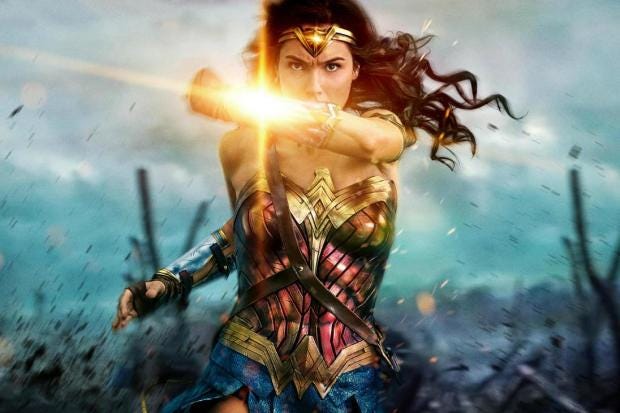
When I did my review for the “Wonder Woman” movie earlier this year, I did so under fairly favorable circumstances. The movie was already getting a lot of positive buzz from critics and general word-of-mouth. I was excited to see it in any case, but that buzz certainly set a positive tone when assessing the merits of that movie.

With “Justice League,” I face the polar opposite of those circumstances. While I generally try not to give much weight to critics or Rotten Tomatoes scores, it was hard to avoid this time. Unlike “Wonder Woman,” the buzz for this movie was entirely negative and it showed in the box office returns, also known as the only real measure that studios care about.

For a movie that was set to be a major milestone, finally putting DC’s most iconic heroes into one movie, it has since become an outright scandal. How can a movie with so much superhero star power do this poorly? That’s a question I am not equipped to answer, especially since people much smarter and more well-connected than me already have.

Instead, I’m going to walk right into this ongoing firestorm of whining and anger to give my spoiler-free review of this movie. I wanted to do it sooner, but I decided to let that firestorm die down just a bit before I offered my take. That might have been a mistake on my part. There’s a lot of noise surrounding “Justice League,” but not much insight.

With that in mind, I’m going to keep my review simple. I’m not going to try and extrapolate a bigger picture, like I did with “Wonder Woman.” I’m just going to focus my review on one simple question.

Is “Justice League” a good movie?

Before I go into detail and try to talk over all the noise, I want to answer this question with my honest and sincere sentiment. Given how much I’ve talked about comic books, superheroes, and superhero movies, including the sexy parts, I like to think my answer has at least some weight. However much stock you put into my opinion, here’s my ultimate conclusion on “Justice League.”

It is a good movie.

Yes, I realize that sentiment doesn’t reflect its Tomatometer score. Keep in mind, though, that score reflects the opinions of critics who are paid to see and/or overthink movies. It doesn’t reflect how actual fans feel about it, which actually shows in the response for this movie.

Even critics can’t deny that this movie went out of its way to please fans, especially those who were dissatisfied with “Batman v. Superman: Dawn Of Justice.” It directly dealt with the aftermath of that movie, as well as the characters’ reaction to it. It even dealt with the aftermath of “Wonder Woman,” building upon a foundation and creating connections, exactly like a real movie universe should.

Those connections weren’t too critical to appreciate the movie as a whole. It also works very well on its own, creating a simple, concise plot that really ramps up the scale. Again, it’s entirely consistent with the effort to make a large, inter-connected movie universe, just as Marvel has done with so much acclaim.

However, that’s not my primary reason for me saying that “Justice League” is a good movie. In simplest terms, this movie is good because it sticks to the basics and does them very well. It doesn’t try to be overly elaborate. It doesn’t attempt to reinvent the characters to an excessive degree. Yes, those characters have some variations, compared to their comic counterparts, but it’s nothing that warrants confusion or outrage.

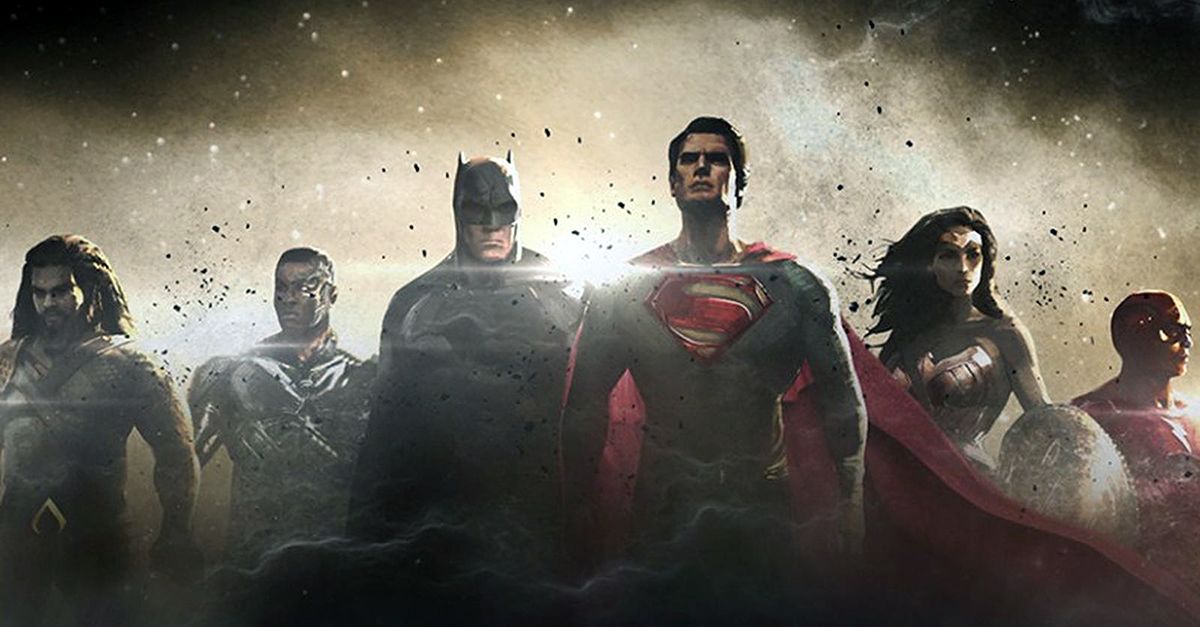
Superman is still Superman. Wonder Woman is still Wonder Woman. Batman is still Batman, even if it is through the brooding demeanor of Ben Affleck. Getting those three right is critical to the success of any “Justice League” movie and this one makes it a point to do that early on.

It doesn’t stop there, though. It puts time and energy into developing the rest of the league, namely Flash, Aquaman, and Cyborg. These three characters had only brief cameos in “Batman v. Superman: Dawn Of Justice,” but they achieved much greater depth here.

These supporting members weren’t just there to fill out the ranks. They each had their own personal story to follow. Through that story, Flash, Aquaman, and Cyborg gain a personal stake in “Justice League.” It’s not just about saving the world for them. They’re struggling for something greater and, through the story, they achieve it.

At times, there are a lot of plots unfolding simultaneously. The personal stories of all those involved tend to mix. While it does get somewhat messy, it never gets chaotic. The story never goes off-track and it never becomes too confusing, which was a common criticism levied against “Batman v. Superman: Dawn Of Justice.”

A major reason why the story remained so concise was because of the main villain, Steppenwolf. While he’s not as iconic a villain as Lex Luthor, Loki, or Darkseid, who is mentioned multiple times, he does plenty to establish himself as a powerful threat and a highly motivated villain.

Like the other members of the league, his role in the plot has a personal component. He doesn’t just show up, wanting to destroy the world for shits and giggles. There’s an actual reason behind his actions and those reasons never become excuses, something that should carry weight for any character.

On top of those reasons, Steppenwolf’s story helps build the bigger picture of the DC Extended Universe. Through it, we learn that there are much larger conflicts in this universe that go beyond the Justice League. It helps establish a larger role for the Amazons, who showed their strength in “Wonder Woman.” It also establishes the Atlanteans and Green Lantern Corp, who are set to show theirs in future movies.

If the secondary goal of “Justice League” was to build a world and expand the possibilities, it certainly succeeded. If its primary goal was to bring each hero together in a way that was entertaining, flashy, and dramatic, then it succeeded as well.

There were plenty of powerful moments. There were plenty of dramatic moments. There were even some funny moments, most of which involved Ezra Miller’s Flash. Few of the moments felt forced or contrived. None felt empty either. There was purpose in every moment, decision, and action. By those most basic of standards, “Justice League” works.

I would even argue that this movie works better than a lot of Marvel movies. I would certainly put it above titles like “Avengers: Age Of Ultron” and “Iron Man 3,” movies that I think get more praise than they deserve. “Justice League” even makes the effort to improve on the mistakes of its predecessor, something few franchises even try, as “Amazing Spider-Man” can attest.

None of this is to say that “Justice League” is without flaws. It certainly has a few. The effects aren’t as flashy or colorful as other movies. Even “Man Of Steel” had better effects, by comparison. It’s also worth belaboring that Ben Affleck is no Christian Bale and Steppenwolf is no Darkseid. It really did feel as though the movie held back, at times.

If that’s the biggest shortcoming of “Justice League,” though, then I still say it qualifies as a good movie. It tells a story. It fleshes out characters. It tells a big, flashy story, full of big battles and satisfying conclusions. There’s a sense of emotional catharsis at the end that is much more uplifting than what we got in “Batman v. Superman: Dawn Of Justice.” When put in the context of the greater DCEU, it acts like frosting on the cake.

Why, then, does it receive such hate and scorn from critics? If this movie does have a major crime, it’s that it isn’t crafted in the same mold as Marvel with their cinematic universe. I don’t deny that Marvel sets a very high bar. However, this movie cannot and should not operate by those same standards. If it did, then those same critics would just whine that it’s ripping off Marvel too much.

There are other criticisms of “Justice League,” but when so many of them revolve around Henry Cavill’s digitally-removed mustache, those criticisms are downright petty. It is possible to hate and criticize this movie by focusing on those petty issues, but that’s hardly a fair way to judge the actual substance of the movie.

In terms of actual substance, “Justice League” has it and plenty more. It Superman being Superman, Batman being Batman, and Wonder Woman being Wonder Woman, just in case her movie didn’t give you enough of that. For that reason, “Justice League” deserves far more praise than it has gotten and far less petty criticism.

In the end, it still gives us a satisfying, live-action Justice League movie. That, in and of itself, makes it inherently awesome

4 Comments

Filed under Comic Books, Jack Fisher, Superheroes, Movie Reviews, Wonder Woman

Why Wonder Woman Is The Most Important Member Of The Justice League

There’s a lot that can be said about the “Justice League” movie. Granted, not a lot of it has been good lately. The horrendous critical reception, despite the solid audience reception, has effectively muted the sheer accomplishment of creating this movie in the first place.

It is a hell of an accomplishment, creating a live-action “Justice League” movie just two decades after “Batman and Robin” nearly ruined the genre completely. While the success of movies like “The Avengers” has undermined the novelty of the concept, it still means something to those like me who grew up loving these characters in comics and cartoons.

I could spend multiple blog posts discussing and dissecting the issues with the “Justice League” movie, but I’ll save them for another time. For now, I want to take a moment to highlight an important point that the “Justice League” made, despite all the controversies and shortcomings that hounded it. That point is this.

Wonder Woman is THE most important member of the Justice League.

I know that sounds like something a hopeless fanboy would say, particularly those who enjoy talking about the kinkier elements of Wonder Woman’s history. It’s probably something most Wonder Woman fans would agree with and not give much thought to. However, I’d like to take a moment to make my point, even to those die-hard fans of Superman, Batman, and even Plastic Man. You know who you are.

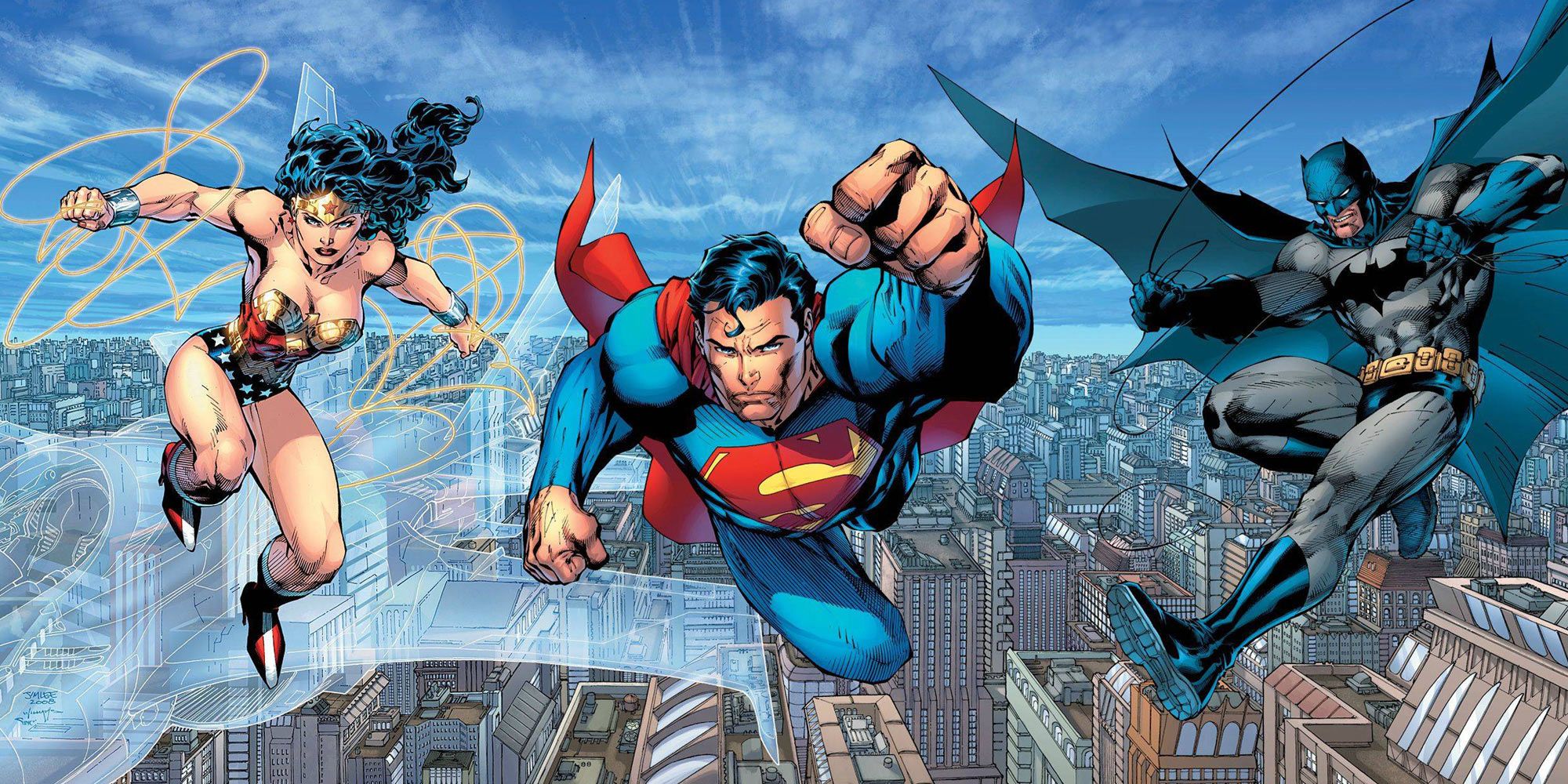
Even among those die-hard fans, there’s no denying that Wonder Woman is part of DC’s superhero trinity. For decades, Superman, Wonder Woman, and Batman have been the anchor of DC’s entire superhero universe, both in terms of popularity and importance. That superhero foundation is unlikely to change anytime soon.

Most of the time, though, Superman or Batman wield the most influence. Between Batman’s cast of iconic villains and Superman’s iconic status, they have a lot going for them, in terms of influence and depth. I don’t deny the strength of their status, nor do I think Wonder Woman trumps them on every level.

However, I still contend that Wonder Woman is the most important member of DC’s superhero pantheon in terms of impact, theme, and narrative. She may never get as many movies as Batman. Considering she has the same number of movies as Catwoman, though, I don’t think that’s a fair measure of Wonder Woman’s importance.

The reason I believe she is that important has less to do with her role within the world of DC and more to do with how she goes about being a hero and an icon. Her situation is very different from that of Batman, Superman, or any other hero in the DC universe, male or female.

Wonder Woman didn’t enter a flawed world that needs heroes by accident or tragedy. In fact, she had every possible reason to not join that world. Her situation before becoming a hero was as ideal as it gets without ripping off a Disney movie.

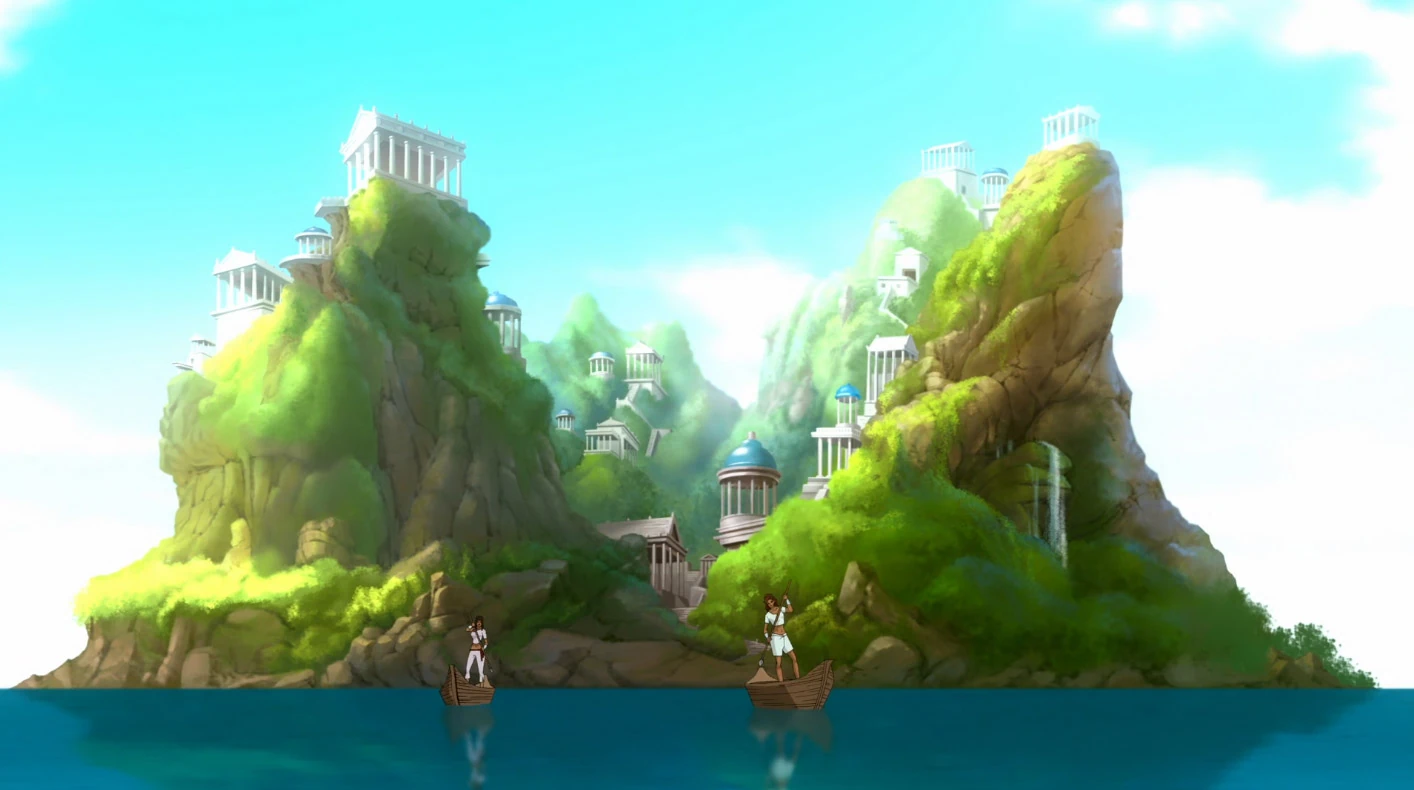
She was a princess on Themyscira, a literal island paradise. As the daughter of Hippolyta, she wanted for nothing. She was surrounded by love, support, and luxury of every kind. Who would ever be inclined to leave such a place to begin with? Those who saw the “Wonder Woman” movie remember that her mother did not want Diana to leave and did what she could to dissuade her.

Despite this, Diana still left her paradise home. She chose to enter a world full of gender inequality, oppression, and bad reality TV. She chose to confront all those flaws and fight them, both with her fists and her heart. She didn’t need to lose someone or be forced by tragedy. That alone makes her a greater hero than most can hope to be.

Contrast that with Batman or Superman. Batman became who he is because of tragedy. Crime took his parents so he built his entire heroic persona out of a response to that tragedy. It helped drive him to become the hero he is. It also led to some pretty insane feats, even by comic book standards.

Superman’s heroic persona wasn’t built on quite as much tragedy, but like Batman, he was somewhat guided into the heroic role. From the time he was an infant, these ideals were in stilled in him. Those who saw the classic 1978 “Superman” movie remember the message his father gave him, through the famous voice of Marlon Brando.

Live as one of them, Kal-El, to discover where your strength and your power are needed. Always hold in your heart the pride of your special heritage. They can be a great people, Kal-El; they wish to be. They only lack the light to show the way. For this reason above all, their capacity for good, I have sent them you…my only son.

Whether by accident or luck, Superman ended up with perfect loving parents who helped nourish those ideals in him. Between those ideals and his immense powers, him not being a hero was never really an option.

With Wonder Woman, she didn’t need circumstances or guidance. She chose the path that led her to becoming a hero. She even chose that path when there were obstacles in her way, namely her mother. Beyond that choice, though, Wonder Woman’s heroism takes on an even greater context when you look at how she goes about it.

Superman may be the ideal when it comes to heroic values. Batman may be the ideal when it comes to seeking justice. However, Wonder Woman’s ideals are even greater in the sense that they’re concepts that ordinary people can relate to. Despite all her power, her approach is something that is wonderfully unifying, if that’s not too fitting a term.

She doesn’t just provide a standard with which to measure heroism. She goes out of her way to confront the good, the bad, and the frustrating of the modern world and not always with her firsts.

In the “Wonder Woman” movie, she doesn’t just criticize the attitudes of early 20th century England, which weren’t very progressive to say the least. She smiled and cheered when she saw a woman with her baby. She also went from fighting alongside men on a bloody battlefield to celebrating with them afterwards.

Along the way, she always wore her heart and her emotions on her sleeve. However, they weren’t a weakness, as they’ve been with Superman. They weren’t her primary motivation either, as is often the case with Batman. She channels her emotions and her passions to win over the hearts of men, women, children, and everyone in between. That’s a power that far exceeds anything form Superman’s strength or Batman’s gadgets.

That ability to embrace a flawed world, confronting its ugliness and its beauty, is something that everyone can do and not just Wonder Woman. She just does it better than most and inspires others to join her. She certainly inspired Steve Trevor in the “Wonder Woman” movie. The fact it got Chris Pine naked was just a nice bonus.

It’s an approach she utilizes in every other medium, from comics to cartoons. For those who enjoyed seeing Wonder Woman’s capacity for heart and strength, I urge you to check out the “Justice League Unlimited” cartoon from the early 2000s. There’s no naked Chris Pine, but Wonder Woman still shines in so many meaningful ways.

Every one of those ways comes back to her heart and her willingness to embrace a flawed world with love and compassion. It’s not just about what is right and wrong, just and unjust, or masculine or feminine. It’s about tempering hate and oppression with love and compassion. Those are powerful principles that work just as well in the real world as they do the fictional one.

While those principles might not help the critical reception of “Justice League,” those who’ve seen the movie have likely seen all the ways Wonder Woman uses her heart and her skills to the utmost. It may not convince everyone that she’s the most important member of the Justice League, but I hope it makes a powerful case.

It’s a concept that will likely carry over into future movies in the DC Extended Universe, but has already shown itself to be true throughout the comics, especially in recent years. Superman and Batman have their place and their status among the world of superheroes. However, Wonder Woman’s impact extends far beyond any comic book or movie. It’s an impact that we would all be wise to learn from.

2 Comments

Filed under Celebrities and Celebrity Culture, Comic Books, Jack Fisher, Superheroes, gender issues

When A Controversy (That Involves Scantily Clad Women) Should NOT Be A Controversy

We live in a controversial time within a controversial place surrounded by all sorts of high-tech tools that allow us to spread controversy in every direction. It may very well be the first time in human history where controversy of any kind has a chance to spread discord among large swaths of people with too much free time and a cell phone.

That can be a good and a bad thing in that it makes us more aware of the world outside our immediate surroundings. However, when it’s a bad thing, it’s bad for frustratingly insipid reasons. Lately, whenever those reasons involve beautiful women, the people who admire them, and sexism, it becomes even more frustrating.

Like many other self-professed comic book fans, I’ve been eagerly following the news surrounding “Justice League.” After the success of “Wonder Woman,” this movie marks a huge step in the development of DC’s evolving cinematic universe, which Warner Brothers is hoping will compete directly with the cinematic juggernaut known as the Marvel Cinematic Universe.

That kind of competition is bound to attract some controversy, if only from angry fans trash-talking each other about whether Wonder Woman could beat up Thor. Sometimes, that controversy is healthy. This is not one of those times.

Just days before the movie came out, this little incident sparked the wrong kind of controversy for all the wrong reasons. Unfortunately, it involves beautiful women in sexy attire. It’s something that should be innately fun, enjoyable, and positive for everyone who isn’t a celibate monk seeking to avoid temptation. Instead, it sparks Round 8,839,272,093 of another angry debate about gender and sexism.

Now, I’m as sick of these debates as everyone else. I’d much rather be focusing on enjoying this movie and seeing how it measures up to “Wonder Woman,” but certain people just can’t help themselves whenever they see an opportunity to evoke some fresh outrage.

This time, it has to do with how the Amazons are dressed. After their introduction in “Wonder Woman,” which made for some truly wonderful moments, they’re set to participate again in “Justice League.” That should be a good thing. They’re a tribe of powerful ancient warriors. Why shouldn’t they participate in a battle to save the world?

That fact might as well be an afterthought for some people because apparently, they’re not dressed appropriately. I must have missed a meeting because at some point, someone passed a rule that said you couldn’t look sexy while saving the world. As an aspiring erotica/romance writer, I oppose such a rule with every fiber of my being.

Wherever it came from, it seems to be an issue now. There are real people who insist on making this a major issue, which requires them to ignore the fact that a tribe of badass warrior women is involved in the first place. Instead, they’re just focusing on how they’re dressed. Seriously, is this really worth that level of outrage?

Never mind the fact that warrior women kind of have to be really fit and being fit is a major factor in sex appeal. The fact that “Justice League” dares to offer that kind of sex appeal in any capacity is somehow an affront to women, feminism, and progress in the 21st century. If I could write that with more sarcasm, I would.

Before I go on too angry a rant, it’s worth noting that this sort of thing stands in direct contract to Gal Gadot’s own message that women should dress however the hell they want. It’s also worth noting that one of the actresses, Brooke Ence, who plays one of the Amazons, did not see much controversy with the attire. In a USA Today interview, she said this:

As she recalls, not every warrior wore a two-piece, and “the girls on set, we never thought of (the new costumes) as a sexy version. It felt a little more glamorous, if anything, because we had bigger, beautiful hair, which I loved.”

In fact, the CrossFit champion, who gets a heroic scene in the new movie, added, “I’m an athlete first, right? (Usually) I can’t wear anything without someone commenting about my (muscular) body. So for me, it was actually really cool to be able to show it and not immediately feel masculine, but still very feminine.”

By the actual words of a woman who actually wore that attire, she liked that sexy attire. She thought it was glamorous and showed off the body that she clearly worked so hard to sculpt. There’s no hint, whatsoever, that she was forced to dress this way to appeal to horny men.

That implies, shockingly enough, that sometimes women want to dress sexy. It implies that it’s okay to look sexy and it’s okay for men to appreciate that. I even made a formal announcement about it last year. I guess some people didn’t get the memo.

I’ll try to limit the sarcasm from here on out, but this is the key factor in determining whether a controversy involving scantily-clad women even warrants controversy to begin with. This is not an old Carl’s Junior ad or necessarily softcore standards utilized by Victoria’s Secret. These are female characters in a movie that is trying to appeal to everyone, including men.

The women wearing that attire never claimed they were being exploited. There was no noticeable uptick in sex crimes as a result of this attire being worn. The only offense anyone took were those claiming to be offended on behalf of all women. Therein lies the problem, though.

If one of the actresses had come out and said they felt degraded by that attire, that would be one thing. If it came out that some asshole producer forced them to wear it after they’d objected, that would be quite another. Given the recent climate surrounding sexual exploitation, they probably would’ve had a lot of allies.

That didn’t happen, though. Instead, those allies jumped the gun. They didn’t wait to hear from the women wearing the sexy attire. They didn’t even ask how they felt about wearing it. They just assumed, outright, that it was degrading, offensive, and sexist. That’s not just arrogant and presumptuous. It’s counterproductive because it turns allies in the fight against sexism into assholes.

In order to be offended for everyone, you have to assume everyone feels the same way you do. That’s a flawed, egotistical, narcissistic assumption. That’s exactly the kind of selfishness that Wonder Woman and Gal Gadot oppose with their emphasis on compassion and understanding. Anyone who feels as though they have to be offended for someone other than themselves is basically forcing unwarranted outrage.

This is the kind of thing that gives feminism, men’s rights activists, and people who make excuses for being arrogant dicks a bad name. It’s not that they react to something that’s controversial. They have to either create it or bend it to fit their agenda. I guarantee that as I type this, there are countless debates going on about the merits of sexism, scantily clad women, and sex appeal that aren’t making anyone horny.

That’s not to say that scantily clad women are always positive. Even an aspiring erotica/romance writer understands there’s a line between beauty and gratuity. There’s nothing about the Amazons’ attire that’s so gratuitous that it should require someone’s credit card number and a quick clearing of their browser history. The fact that it has been addressed by those who participated in it should be the end of the story.

Sadly, I suspect this won’t be the end. Even after the outrage over this issue passes, there will be another. For reasons that I wish I didn’t have to discuss, there will still be controversy every time a beautiful woman decides to show more skin than a priest, monk, or mullah deems appropriate.

Until we’re all comfortable in our own skin, or find a way to upgrade our brains to avoid the outrage before it starts, I suspect these kinds of controversies will continue. Just remember that if it has to be forced by those not involved, it’s not a controversy of merit. All it does is take away from those who just want to enjoy being sexy or admire those who are.

1 Comment

Filed under Celebrities and Celebrity Culture, Comic Books, Jack Fisher, Superheroes, gender issues, sex in media

How To NOT Screw Up The Captain Marvel Movie

It’s a sad fact of life in an overly flawed world. You hope for the best, but it’s rare that it ever actually happens. Even when it does, it’s not always as much fun as you hope. Ask anyone who lost their virginity during a dare or stood in line for hours to see the Star Wars prequels.

In my experience, it’s rarely feasible to build your anticipation around something for what it can be if everything goes flawlessly. In the real world, there’s no such thing as flawless. People make mistakes. Parties go horribly wrong. Hearts get broken. Michael Bay is given too much money, cocaine, and high explosives.

When it comes to superhero movies, though, it’s not possible to hit a home run at every turn. You can’t expect them to blow your mind and give you the kind of mental orgasm that takes a week to recover from. At best, you can just hope that it doesn’t suck. I love those kinds of orgasms as much as the next guy, but let’s face it. They’re rare and awesome for a reason.

Some movies come close to achieving that kind of cinematic bliss, though. “Wonder Woman” sure did, but as I pointed out in my review, it did have its shortcomings. They were still very minor and by nearly every measure, it is the most successful female superhero movie to date.

More importantly, “Wonder Woman” proved that female superhero movies can be successful. They don’t all have to be box office bombs like “Catwoman.” That opens the door for other female heroes to follow in Wonder Woman’s footsteps. At the moment, though, the only female solo movie besides the Wonder Woman sequel is “Captain Marvel.”

Marvel may have DC beat in almost every other aspect of its movie universe, but now there’s one area where it can’t say it dominates. Sure, it has a lot of strong female characters like Black Widow, Gamora, and the Scarlet Witch. However, they’ve largely been in supporting roles. They’ve never had a chance to shine like Wonder Woman did in her movie.

Captain Marvel will get that chance. She’s the closest hero Marvel has to Wonder Woman, thanks largely to the efforts of writers like Kelly Sue DeConnick. As much as Marvel has dominated DC at the box office, it now has a sub-perfect record. Given the amount of ego and cocaine in Hollywood, there’s no way that Marvel Studios will let that stand.

I don’t doubt that Kevin Feige and the powers that be at Marvel Studio will make every effort to ensure that “Captain Marvel” matches and exceeds “Wonder Woman.” They’ve already cast the beautiful and talented Brie Larson as Carol Danvers. They also announced some major details about the movie at the San Diego Comic Con.

On paper, it looks like this movie has what it takes to match “Wonder Woman.” Then again, on paper I’m sure “Batman and Robin” seemed like a good idea. While I have high hopes for this movie, just as I did with “Wonder Woman,” I’m not going to set my expectations too high. Between the two “Matrix” sequels and “Wolverine Origins,” I’ve been burned too many times.

With that in mind, I intend to do for “Captain Marvel” what I did for “X-men: Dark Phoenix.” I’m going to provide some tips that I’m sure Kevin Feige will never see on how to avoid screwing up the “Captain Marvel” movie.

Wonder Woman” set the bar pretty damn high and looked dead sexy while doing it. It’s unreasonable to expect “Captain Marvel” to exceed it on every level. However, there are a few simple tips to ensure it doesn’t end up enduring the same infamy with “Catwoman.”


Tip #1: Let Carol Fly High (And Take The Audience With Her)

This is the most important tip, right up there with the Marvel Studios logo and Samuel L. Jackson dropping F-bombs, as only he can. Carol Danvers has a few defining traits beyond just looking awesome and kicking ass on a cosmic level. One of those traits is what makes her feel both distinctly human and someone we want to cheer for.

Throughout her history, Carol Danvers has been ambitious in a very particular way. Everybody, male or female, will look up at the stars at night and admire their beauty. Carol, however, doesn’t just want to admire. She wants to actually go there. She doesn’t want to shackle herself to this tiny little mud ball full of killer clowns, spiders, and the Kardashian family.

That’s why she joined the Air Force and fought to outperform everyone in her path. The fact she did that without a penis was secondary. Even before she got her powers, she aspired to go to the stars. Once she got those powers, she was determined to fly higher and go farther than anyone had ever dared, regardless of whether or not they had a penis.

Therein lies the key. Carol dares to venture out into the unknown and kick the ass of anyone or anything that tries to hold her back. That’s the kind of ambition people can get behind. That’s the kind of drive that people admire and want to follow.

It’s part of what makes Wonder Woman so endearing as a character to men and women alike. She has bold ambitions, but she isn’t an asshole about it. She doesn’t just seek to prove herself. She seeks to inspire others. That’s what Captain Marvel needs to do with her desire to go to go to the stars and carry the audience along for the ride.


Tip #2: Tie Carol’s Story Into That Of Mar-Vell’s

I get that there are times when it’s not possible to incorporate certain elements from the comics into a movie. That’s why we didn’t see any not-so-subtle BDSM themes in the “Wonder Woman” movie. However, the movie still made a concerted effort to capture some of the core details of Wonder Woman’s mythos, such as her iconic outfit and her relationship with Steve Trevor.

In the same way Wonder Woman needs her lasso and a desire to have sex with men who look like Chris Pine, there are some core elements to Carol Danvers’ story as a superhero that cannot and should not be glossed over. One of the most important elements involves her connection with Mar-Vell, the original Captain Marvel whose title Carol took on after his death.

Theirs is an unique connection, one with very different dynamics compared to Wonder Woman and Steve Trevor. While there were some romantic overtones early on, their connection was more of a partnership rather than a romance. You can’t tell Carol’s story or get a feel for how she becomes a hero without telling Mar-Vell’s story as well.

That story doesn’t need to take up half the movie, but it does need to feel relevant. Mar-Vell’s story isn’t exactly boring either. He was an alien spy posing as a human on Earth on behalf of the Kree, a race that made it’s presence felt in “Guardians of the Galaxy.” There’s already some connections to build on. This movie just has to do it without a talking raccoon.

The key here is to use Mar-Vell’s story as an alien spy who grows fond of a beautiful Earth woman to supplement Carol’s story. That story is part of how Carol becomes Captain Marvel. That’s why when Kelly Sue DeConnick had Carol take on that title, it had a lot dramatic weight to it. That kind of drama is key for any successful movie, regardless of whether or not it has a talking raccoon.


Tip #3: Give Carol An Attitude (And Make It One To Rally Around)

One of Wonder Woman’s most defining traits, on top of being a beautiful warrior princess, is her capacity for love and empathy. Sure, she’ll fight with all her heart against demons, monsters, aliens, gods, and whatever asshole decided that “Ant Man” should get a movie before her. It’s that heart that makes her personality so endearing.

I point that out because Carol Danvers is not like that. Carol has an attitude and it’s not Wonder Woman. Just because Wonder Woman made a successful movie doesn’t mean Carol has to be too much like her because, in nearly every part of her 40-year history, she’s not like that.

Carol Danvers is a tough, hard-nosed woman who always pushes herself a little farther than anyone dares. That’s to be expected because she’s no princess. She’s a pilot in the United States Air Force. You need to have some attitude to make it there. There are real women who have succeeded in that effort. Let those women be the template.

The key is to do it in a way that doesn’t make her an arrogant bitch. I don’t doubt that’s going to be a challenge because the line between assertive and bitch is exceedingly blurred, more so for women than men. It’s an unfair double standards that people love to whine about, but never do anything to fix. Some argue it can’t be fixed.

That’s not an issue that “Captain Marvel” can hope to resolve over the course of a single movie. As such, it’s important that she walk that fine line in crafting her attitude. Again, Kelly Sue DeConnick struck the perfect balance when she took over Carol’s story in 2012.

She gave her a personality that was tough, but welcoming. She made her someone you want to hug, but don’t want to fuck with. Carol Danvers is ambitious and tough, but also has a strong sense of duty. Being a soldier, a pilot, and a hero, she sees that as part of her mission. It’s what makes her so likable as both a character and a hero.

She can have an edge, but she doesn’t have to be an asshole about it. Being an asshole is one of those traits that knows no gender. Brie Larson is a great actress who has proven that she can play tough, balanced roles. Let her do that and look sexy as hell in the process. That’ll help any movie.


Tip #4: Acknowledge Carol’s Faults And Let Her Bear Burdens

In addition to her attitude, Carol Danvers does has faults. Again, and it’s worth repeating, she is not Wonder Woman. She’s not some demigod princess whose beauty and strength were forged by gods. She’s an ordinary American woman who got her powers because she ended up working with an alien spy. She a fallible, mortal human being with tangible flaws. Any movie about her shouldn’t hide those flaws.

Some of those flaws are more obvious than others and I’m not just talking about the unpleasantness surrounding the plot with Marcus Immortus. Despite being ambitious and determined, Carol tends to be a bit of an adrenaline junkie and is prone to take stupid risks. This has gotten her into trouble before and quite recently in the comics.

With that in mind, it shouldn’t be too surprising that she’s also an alcoholic. However, it’s not the kind of alcoholism that we see with Iron Man. His brand of alcoholism is largely a product of irresponsibility and poor coping skills. Carol’s alcoholism is more about escaping her problems.

In the context of her character, that makes sense. She grew up looking at the stars and wanting to actually go there. She’s always pushing herself to fly a little higher and faster. When she’s unable to do that, she looks for an escape.

For her, accepting limitations is not easy. That’s how her alcoholism got so destructive in the comics, so much so that even Iron Man noticed it. When Iron Man says you have a drinking problem, you can skip the intervention.

That doesn’t mean that Carol has to be a total drunk in the movie. It doesn’t even have to be overtly stated. The reason why Carol drinks is more important than her actually drinking. Accepting limits is difficult for her. It’s a key part of her story and her personality. Let her endure those burdens. Let her confront those flaws. She doesn’t have to be Wonder Woman. Let her be human, with or without her powers.


Tip #5: Make The Kree/Skull War As Epic As Possible

This is somewhat indirect of Carol’s story, but one that’s vital if “Captain Marvel” is to be a fitting addition to the Marvel Cinematic Universe. Beyond just being one of Marvel’s most powerful female characters, her movie also has to expand the overall mythos of the MCU. “Wonder Woman” did that too with DC, albeit on a very limited scale.

In this case, though, that scale needs to be turned up to eleven and given an unlimited supply of crack. That’s because it was announced at the San Diego Comic Con that the “Captain Marvel” movie would introduce the world to the Kree/Skrull war. Talk to any long-time Marvel Comics fan, like yours truly, and they’ll tell you two things. One, She-Hulk is uncomfortably sexy. Two, the Kree/Skrull war is insanely epic.

We like to think we humans are pretty damn good at war. We’ve fought so many of them over our history. Compared to the Kree/Skrull war in the comics, though, we might as well be a bunch of two-year olds playing with melted action figures.

This war is beyond anything Stephen Spielberg or Christopher Nolan could ever capture. For one, this war is on a galactic scale. It’s not just about warring tribes who don’t agree on how many goats to sacrifice during the summer solstice. These are two very different species with very different visions for the galaxy. As big as the galaxy is, it’s just not big enough for them to co-exist.

This massive war has influenced many areas of the Marvel Universe within the comics. It’s usually inevitable that the Avengers, X-men, or any major superhero team from Earth gets caught up in it whenever they dare to leave the planet for more than five minutes. It’s a huge part of the cosmic elements to Marvel, which “Guardians of the Galaxy” just started exploring.

Given the success of those movies, “Captain Marvel” has plenty to build on. Carol Danvers is a soldier. Putting her in the middle of an epic war the likes of which few humans can even fathom will help bring out the best in that soldier. That’s why the Kree/Skrull war has to be as epic as a galactic-level war deserves to be. It’ll bring out the best and worst in all those involved.


There are a lot more tips I can give, but these are the big ones. Unlike “Wonder Woman,” Captain Marvel doesn’t have the burden of proving that female superheroes can hold their own. That has already been proven, so much so that even Ryan Reynolds from “Deadpool” acknowledged it.

More than anything else, “Captain Marvel” must show that Carol Danvers is someone who deserves to be in the same league as Wonder Woman. She’s not the same icon that Wonder Woman is, but she has the potential to be. This movie could finally help realize that potential. It could also be a “Catwoman” level screw-up and no character, male or female, deserves that.

6 Comments

Filed under Comic Books, Jack Fisher, Superheroes

The Captain Marvel Movie: News, Challenges, And Kinks

It’s official. Successful female superhero movies are a thing. Thanks to the success of “Wonder Woman,” the trauma left by the likes of “Catwoman” and “Elektra” can finally be laid to rest. Hollywood can no longer use those affronts to all things heroic, female, and shaped like boobs as an excuse to relegate lady superheroes to backup roles and eye-candy.

Chances are, with “Wonder Woman” being such a boon with critics and fans, we’re about to get bombarded with a bunch of movies that will try desperately to emulate her success. We saw it with “Die Hard.” Now, it’s time for the ladies to get their time as Hollywood’s go-to gimmick for fresh pools of money.

At the moment, though, there’s only one female superhero with a movie in active development and an official release date. That honor goes to “Captain Marvel,” who will attempt to do for the Marvel Cinematic Universe what “Wonder Woman” did for DC’s Extended Universe.

It’s a noble and entirely understandable goal. To this point, Marvel has upstaged DC in damn near everything involving superhero movies. Then, “Wonder Woman” happens and suddenly they can claim they made a successful female superhero movie before Marvel did. If you think there aren’t some bloated egos at Marvel who don’t like that, then you clearly underestimate the impact of money, press, and cocaine.

That hasn’t stopped some at Marvel from praising Wonder Woman. It is, somewhat, a relief that someone managed to do a good female superhero movie. There’s only so much cocaine can do to make Hollywood throw money at what they feel is a losing concepts. Now, “Wonder Woman” has established female superheroes as a viable part of the superhero genre.

On the surface, “Captain Marvel” looks like the perfect character with which to give the Marvel Cinematic Universe its own Wonder Woman. Talk to most Marvel fans not arguing about Thor’s hammer today and they’ll agree. Carol “Captain Marvel” Danvers is the closest thing Marvel has to Wonder Woman.

She definitely checks all the right boxes. She’s a fun, charismatic, badass fighter who regularly goes toe-to-toe with some of the Marvel universe’s biggest foes. She’s one of Marvel’s heaviest hitters. When someone like Thanos, Galactus, or the Red Skull comes to start something, she’s usually on the front lines.

However, there are some aspects to Captain Marvel that make her a challenging character for a movie. Some of them are more daunting than others. First and foremost, Captain Marvel is not Wonder Woman in terms of iconic status. That much is clear and few, even among die-hard Marvel fans, would claim otherwise.

For one, Carol hasn’t had nearly as much time to establish herself as an iconic hero compared to Wonder Woman. While she debuted as a character in 1968 in the pages of “Marvel Super Heroes,” she didn’t get her own series until 1977 and at the time, she went by “Ms. Marvel.” In fact, that’s the title she carried for most of her life.

Even with that title, a long list of potent powers, and undeniable sex appeal, most fans in those days probably wouldn’t have called her Marvel’s version of Wonder Woman. She would still be in the top five on anyone’s list of Marvel’s greatest female heroes. However, most fans would put characters like Storm of the X-men or the Invisible Woman of the Fantastic Four above her.

Despite this, Carol established herself as Ms. Marvel and was a powerhouse who could match Wonder Woman in terms of strength and grit. However, she never really established herself as Marvel’s premier female hero until recently, although the reasons for this are way more convoluted than most non-comic fans think.

This, in essence, is where Captain Marvel faces both some challenges and a few kinks. Yes, by the way, some of those kinks are of the sexual kind that will probably get skipped in any movie about her.

It’s the same challenge Wonder Woman faced, albeit in a different context. As I’ve discussed many times before, and will probably discuss again because it’s just too damn sexy, there were some very kinky BDSM undertones built into Wonder Woman’s character. For reasons that I assume involve exceedingly knotted panties, that kinky history has been purged from her history, although sometimes it pops up.

Carol Danvers’ history isn’t quite that kinky, but there is one element to it that’s kind of a headache for those who see her as Marvel’s version of Wonder Woman. It involves one of her earliest stories and includes elements such as abduction, brainwashing, rape, incest, and impregnation. Trust me, it’s even less kinkier than it sounds.

In that less-than-iconic story, Carol is abducted by a walking feminist nightmare named Marcus Immortus, the son of Kang the Conqueror, one of the Avengers’ greatest foes. He then proceeds to brainwash her into falling in love with him. They then do what people in love do. They get naked and they get frisky. That results in Carol getting pregnant.

Here’s where it gets even weirder and creepier. That kid she gives birth to isn’t exactly the apple of her and her brainwashing lover’s eye. That kid is just another version of Marcus. That means when he got her pregnant, he basically got her pregnant with himself. Trust me, it’s as confusing to the brain as it is to the genitals.

The reasons for this are too convoluted to explain, even to other comic book fans. Simply put, Marcus was aging rapidly and needed to be reborn so he just did what any deranged son of a villain would do. He found a beautiful woman, seduced her, and knocked her up with an infant version of himself. Who among us wouldn’t resort to something similar?

I’ll turn off the sarcasm for now because as the years have gone by, this part of Carol Davners’ story has become even more infamous than Wonder Woman’s BDSM past. At least with Wonder Woman, the BDSM was playful and kinky. The story involving Carol and Marcus is neither. Many, in fact, claim it counts as rape.

In some parts of the world, that claim would have some legal validity. In countries like the United States and Great Britain, there is something called “rape by deception.” It basically means that if someone lies, cheats, or gains sexual consent from someone under false pretense, then that counts as a form of rape.

Now this isn’t a universally held opinion, which is why not every country recognizes it. Some, especially those in the douche-bag pick-up artist community, would argue that consent under a false or half-false pretense is still consent. With a competent lawyer, that argument might actually hold up in court.

For Carol Danvers, though, it’s still a distressingly uncomfortable story. It also doesn’t help that it was one of her first major stories. She’d barely begun to establish herself at Marvel and this certainly didn’t set a very upbeat tone. Granted, comics had used brainwashing before, including the infamous Superman/Big Barda sex tape. However, it had never been taken this far before.

In defense of the writers at the time, this was 1980. It was long before the politically correct era where people get into fist fights over proper pronoun usage. While it wasn’t quite as bad as the world of “Mad Men,” you could still get away with making jokes about a woman’s skirt length. I also assume some were still recovering from disco, cocaine, and Quaalude binges.

Much like Wonder Woman’s BDSM origins, though, this part of Carol’s story has been subject to many “retcons,” as comic fans call it. It didn’t take years either. The process began in 1981 where Chris Claremont, the legendary X-men writer behind the famous Phoenix Saga, had Carol’s brainwashing undone, courtesy of the X-men.

From that point forward, Carol Danvers’ story underwent various forms of growth and development. She took on various titles along the way and worked with many teams, including the X-men, the Avengers, and the Guardians of the Galaxy. Like Wonder Woman, she made her presence felt on multiple fronts throughout the Marvel universe.

However, it wasn’t until a brilliant female writer named Kelly Sue DeConnick came along that Carol Danvers truly became Marvel’s Wonder Woman. If anyone wants a clear understanding of why Carol is getting her own movie starting Brie Larson, I urge them to read this series. It will make clear why she deserves to be on the same level as Wonder Woman.

It’s in this series where Carol Danvers becomes Captain Marvel. That title had been previously held by another character, an alien named Mar-Vell, no less. Unfortunately, Mar-Vell had died, as superheroes tend to do with frustrating regularity. While reluctant at first, Carol takes on that title and she’s wielded it brilliantly every since.

This is the Captain Marvel that the movie will portray. It’s also the one that has helped push Carol Danvers to the front of the lines in Marvel’s effort to appeal to a more diverse audience. While some of those efforts have been subject to a few setbacks, Captain Marvel’s status at Marvel has never been greater. The time is perfect for build on the foundation that Wonder Woman created.

Doing so, however, will be challenging in ways that even Wonder Woman never had to endure. Like Wonder Woman’s BDSM origins, it’s easier to just ignore some of those unpleasant elements of Carol’s early years. However, that won’t stop some from bringing it up.

Given the nature of the story, I can see it becoming one of those issues that certain people belabor for all the wrong reasons. If you think that’s being paranoid, remember that people actually made a big deal about Wonder Woman’s armpit hair in the movie. They’ll find a way to do something similar to Captain Marvel.

Whether or not the Marcus Immortus story becomes an issue remains to be seen. Unlike Wonder Woman’s BDSM history, it was not a major part of Carol’s development or growth as a character. If anything, it was an early obstacle that she had to overcome on her path towards becoming who she is now.

In the end, she overcame those early growing pains. She managed to carve her place in the world of comics as a great female hero in her own right. It took a while for Marvel go develop a clear plan for her, but that plan worked out in the end and I hope it works out in the movie as well. A world with a beautiful, blond, high-flying, kick-ass female superhero is objectively better for everyone.

5 Comments

Filed under Comic Books, Jack Fisher, Superheroes

Professor Marston & The Wonder Women Trailer (A Non-Traditional Love Story)

When we look back on 2017, I think it’s safe to say that many will see it as the year that Wonder Woman shined and the year that the “mic drop” officially became overused.

There’s no doubt about it. This has been a damn good year for Wonder Woman. Her movie was a hit with critics and fans alike. Her comic raised the bar for female heroes while also letting her get laid. She’s on a winning streak right now that we don’t usually see unless the New York Yankees and the New England Patriots are involved.

However, 2017 isn’t done with Wonder Woman just yet. It’s not enough that her movie may have single-handedly saved the DC Extended Universe, established Gal Gadot as an A-list actress with A-list sex appeal, and raised the bar for female directors like Patty Jenkins. Wonder Woman, being the iconic female hero that she is, just has to go the extra distance.

That brings me back to the man who created this sexy female icon, William Marston. In a sense, Wonder Woman is one of those characters that could never have emerged from a traditional mind looking to create a traditional hero. For her to become the icon she is now, she needed an unconventional mind and William Marston was definitely that.

I’ve talked a bit about the origins of Wonder Woman and the not-so-secret BDSM elements within that origin. A lot of that is a direct result of the non-traditional thinking that William Marston used in creating Wonder Woman. It was also the product of a very non-traditional life, some of which had some very kinky connotations.

The story behind that kinky life is now about to get some overdue attention and at the best possible time. Wonder Woman’s star couldn’t be flying higher. Why shouldn’t the man behind the sexy icon get a little attention? It’s 2017. Kink is already mainstream, thanks to internet porn and best selling novels based on Twilight fan fiction. The timing couldn’t be better.

That leads me to the upcoming quasi-biopic on William Marston, “Professor Marston & The Wonder Women.” Admit it. You probably didn’t know that a movie like this was being made. Even ardent Wonder Woman fans probably didn’t know.

It’s happening, though. This is not some weird fan film or parody to poke fun at Wonder Woman’s BDSM origins. This is a real movie starring Luke EvansRebecca Hall, and JJ Feild. It’s even being directed by a woman, Angela Robinson, who was a writer/producer on the sexy bloody spectacle that was “True Blood.” This movie is coming out later this year and last week, the trailer dropped.

It’s a very different trailer compared to “Wonder Woman.” It’s supposed to be different. It might not have as many warrior women. It might not have a naked Chris Pine. However, it does have some sexy, but kinky connotations.

Unlike Stan Lee, Bob Kane, or Jack Kirby, who are icons in their own right for the characters they created, William Marston kind of gets forgotten. Granted, he didn’t create nearly as many iconic characters as Stan Lee and Jack Kirby. However, it was his non-traditional views and the non-traditional life he lived that might have made it easier for people to dissociate the man from his creation.

As the trailer shows, Marston was an unusual voice at a time in history before the modern feminist movement and before the sexual revolution. He believed in peace through submission, seeing submission as an act of love. He also believed that women were more honest than men in certain situations. He never said they were superior, but he made it a point to highlight female strengths, as often revealed in Wonder Woman.

On top of those unusually progressive views at a time when women were still seen as nurses, teachers, and baby-makers, Marston had a non-traditional view of love. He was married to Elizabeth Holloway Marston, but theirs was a somewhat open marriage in that he also had a relationship with a woman named Olive Byrne.

It was not at all akin to the kinds of open relationships that make for raunchy TV shows about Mormons or the kinky softcore porn series that used to play on premium cable. It was a real relationship and, as the trailer showed, it was very different in terms of substance and approach. In a sense, you can say that Marston had a non-traditional relationship to match his non-traditional views.

Even today, his views on men, women, and the ways they relate to one another would be odd. Chances are, he would evoke protests from the overly politically correct crowd. That probably wouldn’t dissuade him, though. If anything, those protests would prove a part of the point he was trying to make, which was reflected somewhat in the trailer.

He claimed that there was peace and happiness to be found in submission. To the ardent individualist, which is very much at the heart of western culture, that sounds abhorrent. That sounds like something slave-masters would say to keep their slaves content, which was a thing, sadly. However, that’s not the kind of submission Marston was talking about.

In Marston’s kinky world, to submit to someone willingly is an act of love and to accept that submission with love is the apex of human connection. He sees the endless struggle to dominate everything around you, be it a person, a job, a pet, or World of Warcraft, as the source of conflict.

He also labels that kind of dominating persona as a very masculine trait. While it’s not exclusively masculine, he sees it as a common thread among male-driven narratives. Conversely, he sees women as having a greater capacity for that kind of loving submission. Wonder Woman is, in his point of view, embodies the greatest capacity for that kind of love.

Wonder Woman loves and embraces everyone around her. Her capacity for love, regardless of gender, is well-documented over her 70-year history. Sure, the kink has been largely filtered out with a few notable exceptions, namely “Wonder Woman: Earth One.” That only makes the elements Marston used in creating her all the more profound.

In some ways, William Marston was ahead of his time in creating a female hero that emphasized what he saw as female traits. He never tried to make Wonder Woman as strong or as capable in the same way as Superman or Batman. She wasn’t supposed to prove that women could be as strong as men. Just being a woman gave her a unique strength all her own.

You could also say he was ahead of his time, with respect to how he conducted his personal life. He didn’t bother with the ideal of monogamy, one man and one woman being in love until the day they died. He and the two women in his life forged their own brand of love and family. They followed their own romantic path.

They never claimed their non-traditional brand of love made them superior. That would’ve defeated the point. In Marston’s kinky world, any effort to dominate others through force, shame, or debate was pointless. In the end, the best way to bring peace is to conduct yourself in a way that makes others want to submit to your loving authority.

That’s not just my interpretation. When he was once asked by The American Scholar in 1943 about why Wonder Woman would appeal to men, he said this.

“Give them an alluring woman stronger than themselves to submit to, and they’ll be proud to become her willing slaves!”

As a comic book fan, a fan of beautiful women, and a fan of female strength in general, I whole-heartedly agree. The success of the “Wonder Woman” movie, over 70 years of comics, and a top place in the pantheon of iconic female heroes says a lot about our willingness to submit. Perhaps “Professor Marston & The Wonder Women” will help us appreciate that even more.

1 Comment

Filed under Comic Books, Jack Fisher, Superheroes, Jack Fisher's Insights

Wonder Woman Exceeds Deadpool At The Box Office (And Deadpool Is Okay With That)

I talk about movies fairly frequently on this blog, especially the sexy kind. Sometimes I talk about the sex appeal they have in the present. Sometimes I explore the potential for sex appeal in the future. When it comes to specific movies though, the two I’ve discussed most are “Deadpool” and “Wonder Woman.”

The reasons for this should be obvious. They’re both awesome movies with an insane amount of sex appeal. One of them has the most iconic female hero of the past century coming to life in her first, big-budget solo movie. The other has a naked Ryan Reynolds. It’s hard to get more awesome and sexy than that.

Recently, though, both movies made the news in a wonderfully fitting way. First, the “Wonder Woman” box office total achieved a milestone, raking in $373 million domestically. That puts it beyond the $363 million that “Deadpool” pulled in. While “Wonder Woman” still hasn’t matched the international total for “Deadpool,” it’s closing the gap fast and has a good chance of matching it.

Now, that’s not to say both movies are entirely on an equal footing. Remember, “Deadpool” was a bloody, R-rated poop joke that included Ryan Reynolds getting naked and enough F-bombs to make a Mormon faint. It managed to rake in nearly $800 million worldwide despite this rating, not being released in China, and on a paltry $58 million budget.

That’s not to undermine the accomplishments of “Wonder Woman” in any way. This movie, despite having nearly three times the budget, was made for $100 million less than “Batman v. Superman: Dawn of Justice” and still managed to make more domestically.

In addition, Gal Gadot did not have the same profile as Ryan Reynolds did when he made Deadpool. Other than her role in “Batman v. Superman: Dawn of Justice,” she hadn’t established herself as a draw like Reynolds did. She also accomplished all this with a female director in Patty Jenkins, who had proven herself in TV, but not in movies.

For “Wonder Woman,” a female superhero starring in her own movie after “Catwoman” nearly killed the genre, that’s still a hell of an accomplishment. Deadpool actor, Ryan Reynolds, understands this as well as anyone who has been following superhero movies for the past two decades. Being the awesome, formerly sexiest man alive that he is, he even responded.


That’s right. In the spirit of good sportsmanship and dirty jokes about body odor, Reynolds congratulated “Wonder Woman” for accomplishing so much. In such a highly competitive, cocaine-fueled world, that just warms my heart.

Gal Gadot, being badass beauty that brought Wonder Woman to life, responded as well on Twitter. True to the heart of her character, she acknowledges and accepts the loving sentiment of others, regardless of whether they’re male, female, or used to be married to Scarlett Johanssen.

After talking about such dire topics like fascism on this blog, this really made my week. As a fan of superhero movies and people being decent to each other, it just put a smile on my face in the best possible way.

Deadpool and Wonder Woman may be two characters owned by different companies. They may be very different in how they operate, what they stand for, and how they go about making awesome movies. However, for them to unite in the spirit of making awesome superhero movies is just too fitting.

Excuse me. I just teared up a little.

5 Comments

Filed under Comic Books, Jack Fisher, Superheroes

Wonder Woman And Sex Positivity

download

I know I’ve been talking about Wonder Woman a lot lately. No, I’m not going to apologize for that. I’ve had a perfectly valid reason and no need for excuses. It’s not unreasonable to say that Wonder Woman is having the best year she’s had in her 75-year history and that includes the era in which she made Lynda Carter a sex symbol.

The “Wonder Woman” movie is an unabashed success. Just this past week, it surpassed both “Batman v. Superman: Dawn of Justice” and “Suicide Squad” to become the highest-grossing DC Comics movie to date on the domestic front. It managed to do all this with a female director in Patty Jenkins, a strong female lead in Gal Gadot, and a naked Chris Pine. I think ladies everywhere deserve to flex their ovaries this year.

As great a year as she’s had, there’s been another major development with Wonder Woman that will likely slip under the radar. That’s a shame too because it’s an important development, which is another way of saying it has very sexy implications. Given the nature of this blog, it would be a professional failure on my part if I didn’t talk about it.

In this case, it has to do with what’s been going on with Wonder Woman in the comics. Now, I don’t deny that a very small percentage of the people who saw the “Wonder Woman” movie actually follow the current comics. Most have probably read Wonder Woman comics in the past, seen her in various cartoons, or watched the old Lynda Carter TV show.

The current comics, however, are kind of an afterthought. That’s understandable in some cases. If you only saw the “Captain America” movie, you might be a little confused to find out he’s a Hydra agent in the comics. If you only ever saw the “Iron Man” movie, you might even more confused to find out that Tony Stark is in a coma and Iron Man is a 15-year-old black girl from Chicago.

The comics are confusing, convoluted, and frustrating to say the least. I say that as someone who has been closely following comics for nearly two decades. There are so many different interpretations, alternate universes, and re-launches that most reasonable people would decide it’s not worth the aggravation. I like to think I’m reasonable in most instances, but I guess my love of comics is just that strong.

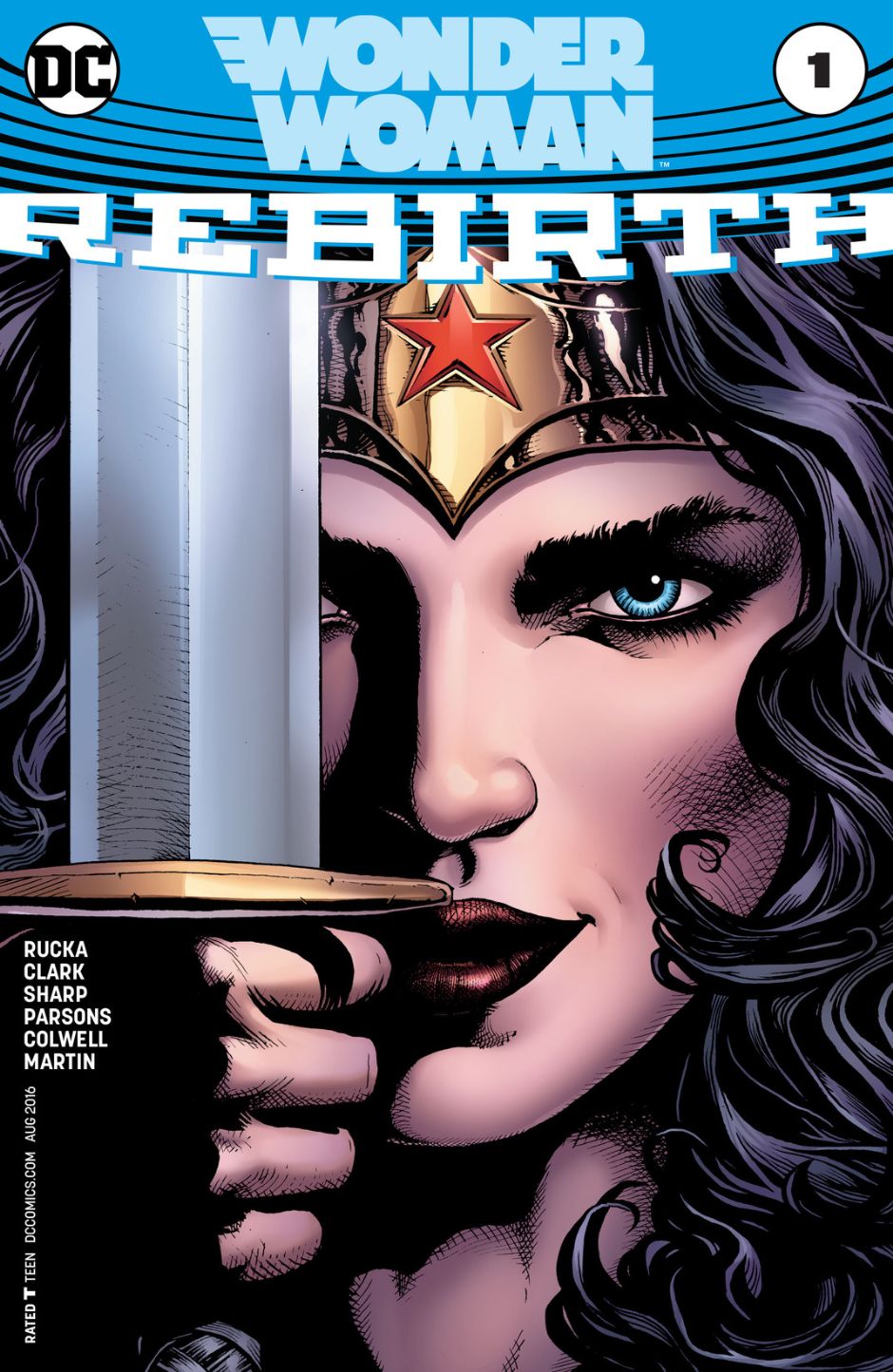
For those Wonder Woman fans who do follow DC’s iconic comics, they got an overdue, but extra-satisfying treat. As part of DC’s ongoing Rebirth initiative, Wonder Woman’s comic was re-launched and revamped in a way that helped streamline a mess of conflicting continuities and scrambled timelines. Trust me, it’s much more complicated than it sounds. Just look up something called “Flashpoint” to see what I mean.

If you’re a Wonder Woman fan, though, you don’t need to know the cow shit to appreciate the flowers. Under the pen of Greg Rucka, an accomplished comic book writer who has written Wonder Woman in the past, and Liam Sharp, an equally-accomplished comic book artist, Wonder Woman’s entire story underwent an overhaul.

That story is one that I cannot recommend enough to Wonder Woman fans. If you loved the movie, then you’ll love these comics. They cover everything that makes Wonder Woman great. Her heart, her compassion, her warrior spirit, and her sex appeal is all on highlighted in all the right ways for all the right reasons. It may very well be the most balanced she’s ever been as a character.

However, it’s the conclusion of that story, which culminated just last week with the release of Wonder Woman #25, that introduces an important element to Wonder Woman’s story. It goes beyond simply capping off a successful run on an iconic comic book series in a satisfying way. That alone is pretty remarkable, especially at a time when comic companies can’t resist killing major characters for a sales boost.

Specifically, it has to do with Wonder Woman’s sexuality. I know that’s a favorite topic of mine and for good reason. Her sexuality is actually pretty broad compared to other male heroes who simply want to bang supermodels all day. Her origins have strong ties to the world of BDSM and in recent years, she has been revealed to be bisexual.

Despite these details, Wonder Woman has been one of those characters who has been sexually nullified, so to speak. For a good chunk of her history, she’s never been allowed to be overtly sexy. Sure, her attire is sexy and she’s not exactly shy about showing off her body. When it comes to having an actual sex life, though, it might as well be on par with the Hulk’s penis. We know it’s there. It’s just not something we talk about.

Sure, she’s allowed to have love interests. Steve Trevor, who was played by Chris Pine in the movie, is her most famous. She’s had others, including Batman in the Justice League cartoon and Superman in the comics at one point. However, the sexuality in all those relationships is severely muted, if not outright ignored.

That changed somewhat in Wonder Woman #25. Greg Rucka and Liam Sharp actually acknowledged that Wonder Woman can be sexual and it doesn’t have to be some big, shocking ordeal. She’s a powerful woman and she has sex. That should not be shocking on any level.

On top of that, Rucka and Sharp make it a point to mix Wonder Woman’s sexual inclinations with her romantic inclinations. Remember, Steve Trevor? Well, now he’s not just the man who managed to get Chris Pine naked in  the “Wonder Woman” movie. He’s the one who makes love with Wonder Woman in Wonder Woman #25. I’m sure both Chris Pine and Gal Gadot would approve.

Wonder Woman (2016-) 025-029

It was a sweet, beautiful scene that mixed both romance and sexuality. After a long journey that had many heart-wrenching moments, Wonder Woman returns to Steve, who prepared a romantic night for them. She opted to skip most of it, head into the bedroom, and make love. I’m not going to lie or apologize. That moment made me shed tears of joy and gave me a boner.

It may not seem like a big deal, Wonder Woman getting frisky with her oldest and most well-known love interest. Trust me, both as an erotica/romance writer and a comic book fan. It’s a huge deal and it adds a critical dimension to Wonder Woman’s character that tends to get censored way too often, which is sex positivity.

I’ve talked about sex positivity before, namely how it stands in contrast to sex negative feminism. I’ve even talked about distinctly sex positive superheroes like Starfire. Given Wonder Woman’s status as a feminine ideal, you’d think she would be naturally sex positive. That thinking wouldn’t be dead wrong, but it wouldn’t be right either.

It may be a result of her having not-so-subtle BDSM origins. It may also be a byproduct of the heavy censorship comics endured for most of its history, thanks largely to a bullshit moral panic from the 1950s that nearly killed the industry. Whatever the reasons, Wonder Woman’s BDSM origins were purged and her sexuality was effectively ignored.

She was still a woman, but her sexuality was about as prominent as her appendix. Her entire persona, even into the modern era, emphasized her warrior woman status. She only fought and looked good while doing it. That was pretty much the core of her character.

Now that’s not to say she had no other appeals. She most certainly did. However, her sexuality, and even her attitudes towards sex, were either ignored or circumvented. That’s why this new development in Wonder Woman #25 is so critical.

In this case, Wonder Woman actually did something even Starfire struggles to accomplish. She created a perfect balance of sexuality and love. Starfire may have a very healthy attitude towards sex and nudity, but she tends to be too casual when it comes to romance. She’s perfectly comfortable having sex, but expressing love through sex is a bit trickier.

For Wonder Woman, it’s a natural manifestation of her loving, compassionate personality. She has love for her friends, her fellow heroes, and Steve Trevor. Rucka and Sharp just let her express it through her sexuality in a way that was sincere, meaningful, and perfectly appropriate for the context of the story.

That kind of sex positivity is exceedingly rare these days. I’ve said before that the world needs more of it. There are ominous signs that society is becoming more sexually uptight. Sexuality, especially of the female variety, is still very much a taboo. Men and women alike seem to have conflicting attitudes that can manifest in unhealthy ways.

How fitting is it that Wonder Woman, the most iconic female hero of the last century, finds a way to achieve a beautiful balance between sexuality and romance? It’s a powerful element that I hope DC Comics doesn’t censor once more. A female hero knows how to fight, love, and make love in a meaningful, compelling way is a beautiful story in its own right. You could even say it’s a true wonder.

Yes, I know that sounds cheesy as hell. No, I’m not going to apologize for that either.

13 Comments

Filed under Comic Books, Jack Fisher, Superheroes

Five Female Superheros That Deserve Their Own Movie

Image result for female superheroes

It’s been a damn good week for female superheroes. Whether you’re a man, woman, or something in between, it’s hard to deny the historic significance of this past weekend. “Wonder Woman” is officially a hit. The glass ceiling for superhero movies is shattered. We can all finally lay the failures of “Catwoman” and “Elektra” to rest.

It’s sad that it took over a decade to make another female superhero movie that succeeded, but good things are worth waiting for. Anyone still waiting for a decent Fantastic Four movie should take comfort in that.

For Wonder Woman, at least, the wait is over. She has proven that female superheroes can succeed. They can carry their own movie. The fact that Wonder Woman had to prove this in the first place is kind of asinine, but that’s a trivial detail at this point. “Wonder Woman” succeeded and that doesn’t just break the myth that female superheros can’t succeed on their own. It opens the door for other female superheroes to shine.

Image result for Wonder Woman success

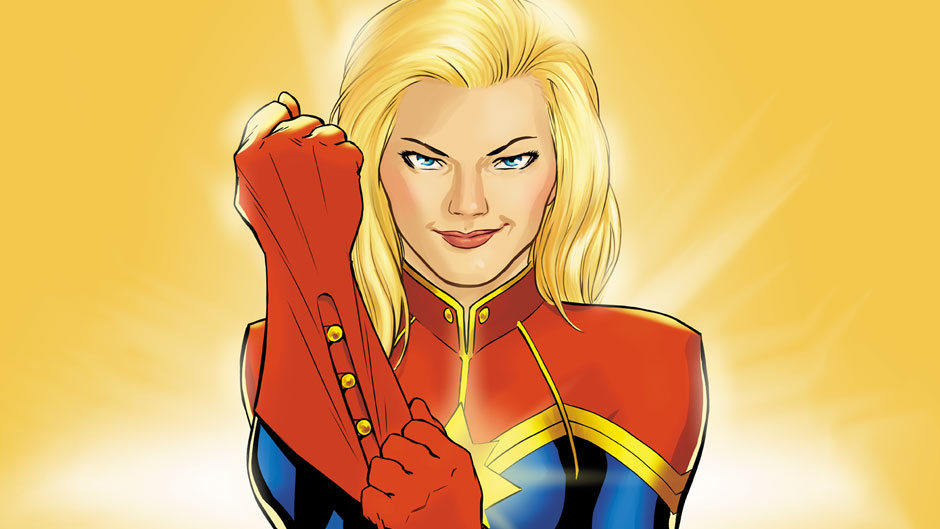
As I write this, there is only one other female superhero besides Wonder Woman who is set to star in her own movie. That character is Carol “Captain Marvel” Danvers, whose movie is set for release in 2019. With Brie Larson having been cast, the movie is already in the works. Wonder Woman’s success can only help.

Unlike Wonder Woman, though, Captain Marvel does not have the kind of iconic status as Wonder Woman. In fact, she only recently gained a surge in popularity when writer, Kelly Sue DeConnick, launched “Captain Marvel: In Pursuit Of Flight.” This series, which any Wonder Woman fan would love, effectively revamped a character who had only ever been a secondary character in the Avengers.

Since that run, Captain Marvel has become the closest character Marvel has to Wonder Woman. As such, it makes perfect sense for her to get a solo movie, if only to keep up with DC.

Image result for Captain Marvel

However, as excited as I am to see more female superheroes get their own movie, there aren’t many others to look forward to. Earlier this year, Avengers director, Joss Whedon, announced that he was pursuing a “Batgirl” movie. As exciting as it sounds, though, this movie is tentative at best. With no release date or cast, this movie could languish in development hell, as Whedon’s own Wonder Woman movie did in 2007.

With “Wonder Woman,” the floodgates have been opened. There’s a new avenue for pursuing big bucks with superhero movies and, seeing as how Hollywood values money over all else, we’re likely to see plenty more female superhero movies in the future.

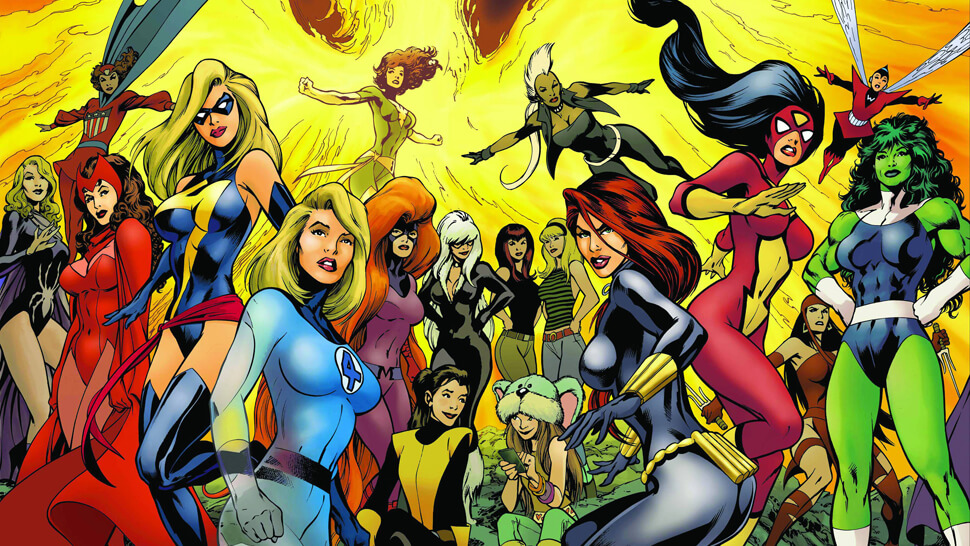
With that in mind, I’d like to offer my own wishlist of sorts. Wonder Woman is a great female hero and a pop culture icon in the highest degree, but she is far from alone. There’s a wealth of great female heroes in the world of comics who would thrive in their own movie. Below is my personal list of female superheroes who I feel should get their own movie.


#1: Laura “X-23” Kinny

Image result for Dafne Keen X-23

This one is, by far, the most obvious and logical. After the success of “Logan,” in which X-23 was the breakout star, there’s already a lot of buzz around this possibility. Both Dafne Keen, the actress who played her, and director James Mangold have expressed interest in pursuing an X-23 solo movie.

Given the performance we saw in “Logan,” it would be foolish not to capitalize on X-23’s breakout success. Hugh Jackman gave X-men fans 17 wonderful years as Wolverine. X-23 is in a perfect position to carry on the mantel. She already did so in the comics, adopting both the title and the costume of Wolverine. Why not do the same in the movies?


#2: Thor (Jane Foster)

Image result for Jane Foster Thor

This one might be the most controversial. Back in 2014, Marvel made a decision that still has some comic fans whining to this day. They made Thor unworthy of wielding his hammer, Mjolnir. Since the world still needed a Thor, Jane Foster stepped in and took up the mantle, which she’s wielded effectively ever since.

Controversial or not, there’s no denying the strength of the story that followed. Jane Foster had always been a supporting character for Thor. Putting her as the main lead was a bold, but powerful move. Jane isn’t just some glorified arm-candy for any Chris Hemsworth look-alike, though. She’s very much her own character.

In the comics, Jane was dying of cancer before she picked up the hammer. By becoming Thor, she’s trying to make the most of whatever time she has left. That’s a powerful struggle and a meaningful story, especially to anyone who has lost someone to cancer. Plus, being played by Natalie Portman can only help her cause.


#3: Black Canary

Image result for Black Canary

When most people think of DC’s most iconic female heroes, they almost immediately think of Wonder Woman and rightfully so. She is, and likely always will be, the standard by which all female superheroes are measured.

That said, some female heroes make it a point to set themselves apart. That’s what Black Canary does. Dinah Lance is not a demigod warrior like Wonder Woman. She’s not a brooding vigilante like Batman either. She has her own set of superhuman abilities. She’s a tough fighter who’s gone toe-to-toe with some of the most capable fighters in the DC universe. She also looks damn sexy in fishnets.

In addition, Black Canary has a track record of sorts as a supporting character in “Arrow.” Being a successful character in TV doesn’t always translate well into movies, as Baywatch recently learned, but someone with Black Canary’s skill and sex appeal can certainly make that transition.


#4: Starfire

Image result for Starfire

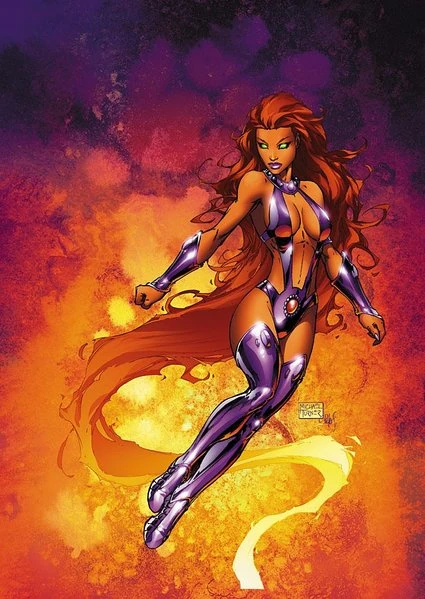
Admit it. You knew I was going to put her on this list. It was just a matter of how I’d be able to justify giving a solo movie to a female hero that is so comfortable with nudity. I went out of my way to praise Starfire as a sex-positive superhero, one whose open sexuality is both fun and heroic in its own unique way.

Now, I know this one would be a real stretch. However, the success of the “Deadpool” movie has given me hope that there is a future for R-rated, sex-positive superhero movies. It may take a while, given the recent trend in outrage over any female character that dares to be sexy. Remember, people made a big deal about Wonder Woman’s armpits for crying out loud.

At some point, though, there will be a market for a female hero that just doesn’t give a flying fuck about nudity. At some point, fans are going to get sick of being shamed for wanting to see a sexy female hero in a bikini. When that day comes, Starfire will be the perfect female superhero for a generation in need of a sex-positive icon.


#5: She-Hulk

Image result for She-Hulk

To date, there have been two lackluster Hulk movies. In both cases, the story was fairly the same. You’ve got a man dealing with serious anger issues, struggling to function in a world that just keeps finding ways to piss him off. Most people are familiar with that story. Those same people, however, are less familiar with She-Hulk’s story.

Jennifer “She-Hulk” Walters is not just a female version of the Hulk. If anything, she’s a very different kind of Hulk. She’s Bruce Banner’s cousin who became the Hulk due to a blood transfusion. Unlike Bruce, she doesn’t need to get angry to become big, strong, and green. She’s pretty much stuck in her Hulk form.

That means she’s more in control of her faculties, so much so that she manages to continue her work as a lawyer. That’s right. This Hulk has a day job and it doesn’t involve smashing. Now most lawyer-driven movies since “My Cousin Vinny” have had limited entertainment value. Add a big, strong, sexy green female hero to the mix and suddenly, there’s a lot more value to go around.

4 Comments

Filed under Comic Books, Jack Fisher, Superheroes

My (Spoiler Free) Wonder Woman Movie Review

Image result for Wonder Woman movie

I’ve been obsessing over it. I’ve been anticipating it. I’ve found any possible excuse to talk about it on this blog, including those involving hidden BDSM undertones. If you still weren’t convinced of how excited I was about the “Wonder Woman” movie, then I can’t help you and neither can Superman. Well, after years of waiting and agonizing over the failures of lesser female heroes, it happened. The “Wonder Woman” movie has arrived.

I’ve been following this movie since the release of its first trailer, making it clear along the way that this is one of the most important movies of the past decade. It’s not just an important step towards making us forget about “Catwoman.” It’s an overdue, understated milestone in the growth of female superheroes and female characters in general.

Wonder Woman is, by most measures, the most iconic female character of the past century. She is the standard by which all female heroes, and many female characters in general, are measured. She embodies the ideals of womanhood, generating hope for some and conflict for others. For her to have waited this long to get a movie while Ant Man of all characters got one is a travesty.

Image result for Wonder Woman

However long it took and whatever controversy emerged along the way, including those involving armpits, doesn’t matter anymore. The movie has arrived and I made it a point to see it, despite the crowds and overpriced candy. That leaves just one pressing question that doesn’t need the lasso of truth for an answer.

Is the “Wonder Woman” movie actually good?

Well, I’m here to say as part of my official review that yes. It is good. It’s every bit as good as its Rotten Tomatoes and Metacritic score would indicate. This is not a “Dawn of Justice” type scenario where critics and fans don’t see eye-to-eye. The consensus is clear. “Wonder Woman” is a damn good movie.

What makes it good, though? Well, that’s where it helps to understand the challenge this movie faced, as well as the scope of the story it told. Unlike Batman and Superman, Wonder Woman’s origins aren’t as universally known and again, I’m not just referring to the BDSM elements.

Related image

Most people know she’s an iconic female superhero. Most know she’s a warrior princess from an island populated solely by women. Few people actually know the details of that story or the emotional undertones behind it. Even fans of the old Lynda Carter TV series only ever got part of the story.

This movie doesn’t assume that the audience knows the core of Wonder Woman history or what makes her who she is. Patty Jenkins, the director tasked with deciding which assumptions to make, made a concerted effort to explore both who Diana is and where she came from.

The parts about her being a warrior on an island of female warriors is still there. What makes it resonate is how the movie adds emotional elements to the story. There’s an undeniable innocence at first, seeing Diana as a child, running around her paradise island of Themyscira, eager to see more than others allow her to see.

Image result for Wonder Woman and the Amazons

This establishes and important tone for the story and for Wonder Woman’s character, as a whole. Even on an island paradise run by women, Wonder Woman dares to break with tradition and do more than what others would dare. She’s willing to test the rules of the Amazons and the rules of men alike. She is, at her core, a free spirit who seeks out wrongs to right and will step up when others won’t.

This makes her emergence as a warrior all the more meaningful because it gives her the strength and means break with tradition and fight the battles that no one dares. She doesn’t just become strong for the sake of being strong. Her training, her desire, and her capacity to kick ass has purpose. She makes the audience want her to succeed.

That kind of emotional resonance never wanes as the larger conflicts unfold. This is where Wonder Woman’s supporting cast really shines, especially in Chris Pine’s portrayal of Steve Trevor.

Image result for chris pine as steve trevor

It might have been the trickiest part of the movie, handling how Wonder Woman’s long-time companion and frequent love interest, Steve Trevor, was handled. There have been instances in the comics and cartoons where Steve Trevor has been a beta male. There have also been times where he’s just been an glorified nanny to Wonder Woman, trying to keep her on a leash and not in a kinky sort of way.

That doesn’t happen in this movie. Chris Pine’s take on Steve Trevor is one that men and women alike can appreciate. He’s very much his own character who earns the respect of both Wonder Woman and everyone he works with. He doesn’t just show that he’s worthy of Wonder Woman’s affection. He earns it.

It’s probably the greatest accomplishment of the movie. Wonder Woman’s partnership with Steve Trevor and his allies is all about complementing one another, not hindering one another. Trevor isn’t just some man trying to put Wonder Woman in her place. He and his friends try to guide her through the conflict, doing their part whenever they can and letting Wonder Woman do hers.

Image result for chris pine as steve trevor

Those looking for a movie that shows Wonder Woman attacking male oppression and exposing men for the pig-headed brutes they are will be disappointed. There are heroic men and villainous women in this movie. There’s no gender agenda at work here. There are times when gender dynamics are explored, but it’s never done with the impression that one is worse than the other.

The movie gets the message and the dynamics right. It gets the characters and their personalities right. Needless to say, Gal Gadot gets Wonder Woman right and looks absolutely stunning in that outfit in every single frame. On top of that, the various fight scenes and acrobatics that go with any hardened Amazonian warrior are a spectacle to behold.

Image result for Wonder Woman

It checks so many boxes. It has so many satisfying moments from beginning to end. There are moments of humor, including those of the crude, sexual kind. Chris Pine even gets naked at one point. Granted, he’s no Hugh Jackman, but I think most heterosexual women and gay men will be happy with what they see.

So are there any issues with this movie? Is “Wonder Woman” the most flawless work of cinema since “Godfather II?” Well, this is the part where I have to be somewhat petty because this movie isn’t perfect. It does have some flaws, but none of them are overly egregious.

If there are any shortcomings, it’s in the limited time it spends exploring Themyscira and its culture. There is some time spent on the mother/daughter dynamics between Wonder Woman and her mother, but it feels somewhat minimized, as do the rest of the Amazons. Many do get to shine in a few fight scenes, but none get a chance to be all that memorable.

Image result for Wonder Woman

There’s also the matter of the mythology behind the main conflict. Wonder Woman has always drawn heavily from Greco-Roman Mythology, so much so that it fuels a great deal of Wonder Woman’s iconic stories. However, the mythology in this movie is fairly flat and streamlined. It presents a very simple, bland view of the gods that are so integral to the Amazons. It feels like an oversight, but one that doesn’t derail the story.

Overall, I would not proclaim “Wonder Woman” to be the greatest superhero movie of all time. I would still put movies like “Deadpool” and “The Avengers” above it, but not by much. It is still very much in the top echelon of superhero movies. It is also groundbreaking in that it is the first female solo movie that succeeded where too many others have failed.

Image result for Wonder Woman

It’s impossible to overstate how critical this movie was for DC Comics, Warner Brothers, and superhero movies in general. “Wonder Woman” had so much riding on it from the get go, but it succeeded. It rose to the challenge. Much like Wonder Woman herself, this movie dared to defy convention and do something special.

If I had to score this movie, I would give it a solid 4.5 out of 5. It has all the right elements. It’s concise, compelling, and satisfying. It is a wonder unto itself. It was a long time coming, but like so many things, it was worth the wait.

Image result for Wonder Woman

17 Comments

Filed under Comic Books, Jack Fisher, Superheroes