
Tag Archives: sexual health

Artificial Wombs, Declining Fertility, And The (Potentially Distressing) Implications

When I first discussed the prospect of artificial wombs, I did so knowing it would evoke distressing sentiments from those who are familiar with the classic novel, “Brave New World.” That’s not just because it’s Aldous Huxley most famous novel. It perfectly illustrates the dystopian implications of a world where society is engineered like an assembly line.

I don’t discount the seriousness of those implications. A world where birth, life, and death are so mechanized that peoples’ lives are barely distinguishable from robots is not an appealing world, to say the least. It’s not very sexy, either. Like “1984,” another famous novel I’ve mentioned, “Brave New World” highlights just how bad these advances in technology can get if not handled properly.

As cold and callous as “Brave New World” might have been, though, it still has the same fundamental flaw as “1984” and every other dystopian narrative. It relies on extreme worst case scenarios that depend on humanity exercising its worst traits. As someone who has emphasized having faith in humanity, I have a problem with those assumptions.

Flawed or not, humanity has proven time and again that we can adapt to major technological advances. However, there may be other complications associated with this particular technology.

Like contraception before it, including near-future advancements, artificial wombs will be subject to extra scrutiny because it involves human reproduction. Human reproduction, in case you’ve forgotten, also involves sex and that’s bound to make a lot of people exceedingly uncomfortable. We already know who some of those people might be.

Also like contraception, though, artificial wombs will help address a serious problem. One of the driving forces behind the development of contraception, going all the way back to ancient times, was the need to control our fertility. Between the various health issues for women and problems caused by unfettered population growth, there were a lot of incentives to drive this advancement.

With artificial wombs, however, the situation and incentives are very different. In fact, they’re unprecedented. I’ve already talked about a potential demographics problem for the industrialized world, as a result of low birth-rates. I won’t go so far as to call it a crisis, but that hasn’t stopped others from using apocalyptic rhetoric.

Assuming that lower birth rates and decreasing sexual activity become dire enough to warrant that rhetoric, artificial wombs are in a position to address it. I’m not just talking about infertile couples being able to have children or having children while both parents continue to work either. Unlike contraception, this technology will completely change the rules to human fertility.

This is where some of the dystopian concepts in “Brave New World” get a bit too real. To understand those concepts, we need to stop thinking like ordinary citizens who just want to have babies without stretch-marks and morning sickness. Instead, we need to channel our inner bureaucrat and think about the functioning of society, as a whole.

With that context in mind, here’s the scenario your society faces.

  • You’ve got a sizable population with a functioning economy
  • That economy relies heavily on people buying and producing services
  • The government provides various benefits and welfare to older or disabled citizens, relying on taxes paid by able-bodied workers/consumers
  • The ability to keep the economy growing relies on increasing the population in order to increase the consumer base
  • The ability to provide government services and welfare depends on there being enough citizens of working age to generate the necessary capital
  • However, the population has stopped growing, the people aren’t having children, and fewer workers are in place to support an aging population

What I just described is similar to the demographics issue facing many industrialized countries. As it stands, the solutions are few and far between. However, in this scenario, the powers that be have a tool that nobody else has at the moment. They have functional artificial wombs.

Suddenly, there’s a solution. Instead of trying to get citizens to have more sex and make more babies, they can just skip that part entirely and breed a new crop of citizens in artificial wombs. Sure, it requires some questionable ethics, but it’s not like that has ever stopped governments before.

Ignoring, for a moment, the distressing implications of governments breeding and conditioning its own citizens, it’s an easy solution that doesn’t rely on stubborn citizens to go along with it. In other words, it’s the kind of solution that governments and authority figures love.

On paper, it works perfectly. In some shadowy government site ripped right out of “Star Wars Episode II: Attack Of The Clones,” rows upon rows of artificial wombs birth a steady supply of healthy citizens. Unlike the chaotic breeding habits of its citizens, though, this operation could be tightly controlled and perfectly optimized.

In a sense, it would be even more efficient than natural birth. If the artificial womb technology is sufficiently advanced, then it could be configured to ensure that only healthy, disease-free children are born. Maybe the government would even gather information on the gene pool of their society and filter it so that only the best traits are passed down.

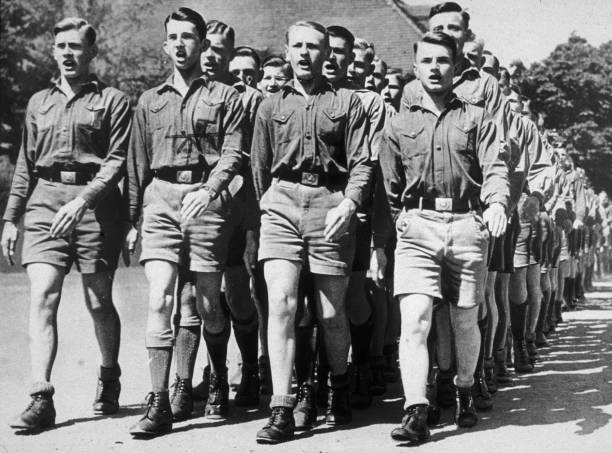
If that idea sends a chill down your spine, then chances are you’re painfully familiar with eugenics and infamous political movements from 1930s Germany. I don’t deny that the similarities are there, nor do I deny the disturbing ethics involved.

Despite these connotations, though, it doesn’t change the fact that artificial wombs present a functional solution to societies facing demographics issues. Through the use of this technology, the government can ensure that the population can keep growing at the necessary pace to maintain the system.

What may make this solution more appealing and more egregious is that it focuses on bolstering native populations. Given the rise in anti-immigration rhetoric, that’s going to appeal to certain societies, some more than others. Those obsessed with keeping their societies and cultures “pure” will jump at the chance to use artificial wombs to guide their demographics.

It’s a concept that even “Brave New World” didn’t explore. That’s because Huxley was more concerned about the impact of reducing basic human activity to a detached, mechanical process. I believe if he were alive today, he would see how increasing tribalism would prompt societies to use such technology in different ways.
These are all distressing implications, but we can take some comfort that artificial wombs are still a ways off. Chances are they won’t be perfected within the next couple decades, but that doesn’t mean the incentives to use them will go away. In fact, they may intensify as demographic issues continue to evolve.

However, me being the hopeless optimist I am, I believe this technology won’t drive the kind of dystopian, eugenics-driven society that give die-hard racists wet dreams. I believe humanity is better at adapting to these technologies than we give it credit for. If we did it with nuclear weapons, we can do it for artificial wombs.

Sure, there will still be issues, both ethical and pragmatic. There will probably be a sizable contingent of people who dread and fear this technology. However, just as the real 1984 was nothing like anything Orwell had imagined, a world with artificial wombs will be nothing like Huxley or aspiring erotica/romance writers can imagine.

2 Comments

Filed under gender issues, sex robots, Sexy Future

Gender Equality, Artificial Ovaries, And The End Of Menopause

There are certain situations where, if you take away modern medicine, social institutions, and various life hacks, there’s an inescapable gender disparity. I know that by saying that, I’m inviting all sorts of nasty comments. There are those who claim that just hinting at inherent gender differences is to empower the patriarchy, oppress women, and probably strangle puppies in the process.

This piece isn’t directed at those people, nor is it directed at those who want to fight Round 2,697,206,077 of never-ending the gender wars arguments that the internet has made exceedingly easy to wage. I write this with the intent to inspire hope, excitement, and maybe a few sexy thoughts beyond those I share every Sunday.

When it comes to helping men and women operate on a level playing field, technology has been the great equalizer. It’s because of technology that we’ve helped women gain a greater level of control over their fertility. It’s because of technology that men who otherwise wouldn’t have been able to have children can now do so. A huge chunk of modern society is built around having greater control over our sexual health.

For men, that control has gotten pretty darn robust. Thanks to advancements in modern medicine, as well as tireless marketing efforts from pharmaceutical companies, men can enjoy continuous sexual function well into old age. Say what you will about the greed of pharmaceutical companies, but the collective sex lives of men are better because of it.

While that’s great news for men who want to stay sexy into their golden years, this does widen a particular gender disparity that is rarely discussed, if only because it evokes distressing thoughts about what our grandparents do in their private time. While modern medicine allows men to keep humping like they did in their youth, women face the biological equivalent of a brick wall as they get older.

It’s called menopause and like reverse puberty, it’s a fact of life for women. It typically happens in a woman’s late 40s or early 50s. It’s effects vary from woman to woman, but its signature trait is that a woman stops menstruating. That means they no longer have periods, they no longer ovulate, and they can no longer have children.

At the moment, it’s basically a fact of life. If a woman lives long enough, this is what they deal with. It’s like graying hair, wrinkly skin, or liver spots. At a certain point, their reproductive systems cease functioning. While they can still have sex, the various biological changes associated with menopause can make that difficult.

In terms of the gender scorecard, this definitely deducts some points for women. Whereas men have a way to keep their dicks functioning well into their elder years, women’s options are much more limited. Sure, there are a few medical ways to deal with it, some of which can be purchased at a local pharmacy for less than twenty bucks. However, the biology is still behind the curve.

What if a woman wants to continue having children late in life? What if a woman couldn’t have children in her youth, but later wants them even after her fertility has declined? Whereas men can still father children into their 90s, women seem to be out of luck.

However, and this is where I offer a glimmer of hope to those dreading their unsexy elder years, that may change thanks to recent advancements in biotechnology. According to MIT Technology Review, our ongoing research into regenerative medicine is drawing us closer to the day when we can actually regrow a woman’s ovaries. Here are the basics of this amazing and inherently sexy work.

The work, carried out at Wake Forest Baptist Medical Center, suggests a potential alternative to the synthetic hormones millions of women take after reaching middle age. A paper describing the findings was published Tuesday in Nature Communications.

When tested in rats, the pieces of tissue, known as organoids, were better than traditional hormone replacement drugs at improving bone health and preventing weight gain. The treatment was also as good as hormone drugs at maintaining healthy tissue in the uterus.

In essence, this is like treating your organs as rusty car parts that need replacing. Ovaries, like any other organ in the body, tend to break down as time goes on. We’ve already grown some basic organs in the lab. Growing ovaries, though, has far greater implications than simply keeping your body humming along.

Ovaries, as anyone who sat through a health class knows, are the organs that produce the various hormones and androgens that make up a woman’s biology. It plays key roles in just about everything having to do with female sex and reproduction. Once it shuts down, it’s like the main generator of a building going down. Sure, some parts have backup power, but that’s not enough to keep it running.

The ability to regrow fresh, healthy ovaries completely changes that dichotomy. In some respects, it puts the women out ahead of the men in terms of sexual function in their golden years. Unlike little blue pills or even bionic penises, these re-grown ovaries are entirely functional organs. It’s like resetting, rebooting, and re-energizing a woman’s sexual function.

This doesn’t just mean that women can still have healthy children well beyond their golden years. It means they can also avoid the various downgrades to their sexual function that often comes with menopause. They don’t need to take pills or constantly replenish hormones. They’ll have entirely functional organs inside them to do that for them.

Now, ignoring the possibility that creating new ovaries may also lead to creating enhanced ovaries, this does more than just improve the sex lives of older women. In many respects, it puts them on the same level as their elder male counterparts.

Their sexual function and their reproductive function don’t have to decline with age. Like older men, they can still have sex for fun. They can still have sex to make babies. Their options are just as open. If you’re a fan of gender equality, then this is an advancement that’s every bit as vital as advances in male birth control.

While I’m sure this will still generate some unpleasant mental images about our parents and grandparents, the incentives are already in place and too great to ignore. Sure, there will be some women who opt not to get fresh ovaries, just as there are some men who don’t mind having a less active penis later in life. However, the fact that medical science will give people these options is a true game-changer.

Technology has always changed our society in immense ways, but technology that affects our sex lives and our reproductive health tends to have bigger impacts than most. What happens to our family structures when our grandparents are still having children at the same time as our parents? What happens when getting older is no longer associated with succumbing to menopause and sexual dysfunction?

These are the kinds of questions that don’t have easy answers now, but those answers may end up finding us sooner than we expect. Since I’m in the business of erotica/romance novels, it may very well affect me at some point. Then again, having more people who stay horny into old age might be good for business.


1 Comment

Filed under gender issues, Second Sexual Revolution, sex in society, Sexy Future

Bryan Singer, Harvey Weinstein, And The Double Standards Of Sexual Abuse

What does it say about the state of our culture, our society, and our sexuality when every week seems to bring a new sex scandal to light? That’s not a rhetorical question, by the way. That’s a question that many are trying to answer. I’ve certainly tried to answer parts of it, but with every new scandal, that effort gains a new complication.

By now, most people know the famous names, the ruined careers, and the sordid extent of the allegations. Names like Harvey Weinstein, Louis C.K., and Bill Cosby are now etched into the public consciousness for all the wrong reasons. The outrage and anguish surrounding their egregious actions evokes all sorts of passions.

It eventually culminated with Time Magazine recognizing the women who brought these scandals to light as the collective person of the year. For the most part, these women have been hailed as brave and strong for coming forward and exposing these crimes. It’s because of them that these powerful men can no longer hide their misdeeds, which is a good thing.

I don’t deny the importance of what these women have done. They’ve helped kick-start a movement that has made people more aware of these egregious crimes. It’s because of those efforts that even powerful people who are inclined to use that power to exploit women can’t hide from the consequences of their actions. In the name of furthering a just society, I think that’s a good thing.

However, and this is where I know I may upset some people, there’s a part of that effort that’s still incomplete. There’s a missing piece of this ongoing battle against sexual misconduct, one that has the feel of a very subtle, but deeply distressing double standard. Having talked about the less obvious double standards in our society, I feel like the extent of this one is only growing.

Recently, a fresh sex scandal came to light involving another powerful name in Hollywood. Bryan Singer, the accomplished director behind “The Usual Suspects” and the architect of the X-men movie franchise, has been accused of raping a 17-year-old boy. We’re not talking about loose bath robes, groping, and shady casting couches. This story involves full-blown rape.

It’s not the first time Singer has been accused of sexual misconduct. To date, he hasn’t been proven guilty in a court of law, which is an important detail to note. False accusations do happen and people in positions of power, like Hollywood, are easy targets.

I’m not going to speculate how true or exaggerated the accusations against Singer are. The details are still not clear and information is still coming out. However, there’s an important element to the news of this scandal that’s worth pointing out.

Unlike the scandals with Weinstein and Cosby, the victims in this case weren’t women. They were men. If you don’t think that matters, then take a second to recall the reactions to other scandals.

When the sordid stories about Weinstein came out, they generated all sorts of outrage. It was a hot topic on the news, social media, and even “Family Guy” jokes. The fact that these men did such disgusting things to women got a lot of people talking. However, when the victims are men, the narrative is different.

Before Bryan Singer, the only notable scandal involving men was that of Kevin Spacey. However, the outrage he generated had less to do with the gender of his victim and more to do with how he used the scandal to come out as homosexual. That upset people, but the alleged crime he committed against his male victim became an afterthought.

This is where the double standard gets uncomfortably apparent. We, as a society, agree that assaulting and harassing women is a terrible crime. We rightly condemn it. However, when it happens to a male victim, and it happens more often than we think, we’re not quite as vocal with our outrage. It’s still a crime. It still involves exploration and pain. When the victim is a man, though, we don’t see it the same way.

I’ve highlighted this to some degree with a thought experiment. However, it plays out in other ways throughout our culture. Stories about women being victims are often harrowing and brutal. Stories built around male victims of sexual assault, though, can be comedies starring Will Ferrall and Kevin Hart.

There are any number of reasons as to why that is. Male victimization, especially in matters of sexual misconduct, carries with it some unique taboos. There’s this idea that men, being the ones with more power and influence in this world, can’t be victims in the same way as women. Never mind the fact that the pain any victim feels is real, regardless of gender. We still treat one victim differently than another.

It plays into this notion that men are just supposed to shake off that kind of victimization and women need some sort of special treatment. In a sense, it’s insulting to both genders and obscures the actual substance of the crimes involved. Whereas there’s an entire movement behind the effort to combat sex crimes against women, the crimes against men just fall to the wayside.

That’s not to say it’s being completely ignored. Some are making an admirable effort. Corey Feldman, a former child star, has been among the few celebrities who have been outspoken about the abuse young men have suffered in the entertainment industry. Terry Crews, a successful actor and former Old Spice Man, has spoken out against it as well.

However, to date their efforts haven’t generated the kind of notoriety and outrage as the movement to protect women from these same crimes. Their voices are often drowned out by other scandals that fit into this overall narrative of creepy, sinister men in power exploiting women.

For reasons that are too voluminous for one blog post, the narrative surrounding scandals like that of Bryan Singer aren’t quite as enticing. The notion of a powerful man victimizing another man just doesn’t come off as the kind of struggle that makes everyone feel more virtuous by joining.

It certainly doesn’t help that the taboos surrounding these scandals also mix with other taboos involving homosexuality. Those attempting to take a stand against male victimization have to be careful with their outrage because if they don’t, they can get labeled as a homophobic bigot and that’s not the crowd most people want to be part of.

In a sense, voicing outrage against the female victimization is easier and safer. There’s little ambiguity. A powerful man victimizing a vulnerable woman has clear, defined lines of injustice. The only emotions we deal with are those involved with our aversion to injustice.

With male victims, those emotions are still there, but they’re complicated by these uncomfortable ideas that don’t fit that narrative. It goes beyond double standards in that it requires us to contemplate the kind of crime that we don’t want to believe happens as often as it does.

That mentality is downright dangerous because it creates the sense that some victims are more important than others. Whereas a female victim will get all the love and support that hashtags and talk shows can offer, male victims have to fend for themselves. That’s a problem because fighting the same injustice with different standards is an injustice in and of itself.

The allegations against Singer remain to be proven and may end up being false, but the fact that this scandal doesn’t carry the same weight as others involving women reveals that ongoing efforts to combat sexual misconduct are incomplete. Until some of these double standards are confronted, then the injustice will continue.

11 Comments

Filed under Celebrities and Celebrity Culture, gender issues, sex in society, sexuality

When A Controversy (That Involves Scantily Clad Women) Should NOT Be A Controversy

We live in a controversial time within a controversial place surrounded by all sorts of high-tech tools that allow us to spread controversy in every direction. It may very well be the first time in human history where controversy of any kind has a chance to spread discord among large swaths of people with too much free time and a cell phone.

That can be a good and a bad thing in that it makes us more aware of the world outside our immediate surroundings. However, when it’s a bad thing, it’s bad for frustratingly insipid reasons. Lately, whenever those reasons involve beautiful women, the people who admire them, and sexism, it becomes even more frustrating.

Like many other self-professed comic book fans, I’ve been eagerly following the news surrounding “Justice League.” After the success of “Wonder Woman,” this movie marks a huge step in the development of DC’s evolving cinematic universe, which Warner Brothers is hoping will compete directly with the cinematic juggernaut known as the Marvel Cinematic Universe.

That kind of competition is bound to attract some controversy, if only from angry fans trash-talking each other about whether Wonder Woman could beat up Thor. Sometimes, that controversy is healthy. This is not one of those times.

Just days before the movie came out, this little incident sparked the wrong kind of controversy for all the wrong reasons. Unfortunately, it involves beautiful women in sexy attire. It’s something that should be innately fun, enjoyable, and positive for everyone who isn’t a celibate monk seeking to avoid temptation. Instead, it sparks Round 8,839,272,093 of another angry debate about gender and sexism.

Now, I’m as sick of these debates as everyone else. I’d much rather be focusing on enjoying this movie and seeing how it measures up to “Wonder Woman,” but certain people just can’t help themselves whenever they see an opportunity to evoke some fresh outrage.

This time, it has to do with how the Amazons are dressed. After their introduction in “Wonder Woman,” which made for some truly wonderful moments, they’re set to participate again in “Justice League.” That should be a good thing. They’re a tribe of powerful ancient warriors. Why shouldn’t they participate in a battle to save the world?

That fact might as well be an afterthought for some people because apparently, they’re not dressed appropriately. I must have missed a meeting because at some point, someone passed a rule that said you couldn’t look sexy while saving the world. As an aspiring erotica/romance writer, I oppose such a rule with every fiber of my being.

Wherever it came from, it seems to be an issue now. There are real people who insist on making this a major issue, which requires them to ignore the fact that a tribe of badass warrior women is involved in the first place. Instead, they’re just focusing on how they’re dressed. Seriously, is this really worth that level of outrage?

Never mind the fact that warrior women kind of have to be really fit and being fit is a major factor in sex appeal. The fact that “Justice League” dares to offer that kind of sex appeal in any capacity is somehow an affront to women, feminism, and progress in the 21st century. If I could write that with more sarcasm, I would.

Before I go on too angry a rant, it’s worth noting that this sort of thing stands in direct contract to Gal Gadot’s own message that women should dress however the hell they want. It’s also worth noting that one of the actresses, Brooke Ence, who plays one of the Amazons, did not see much controversy with the attire. In a USA Today interview, she said this:

As she recalls, not every warrior wore a two-piece, and “the girls on set, we never thought of (the new costumes) as a sexy version. It felt a little more glamorous, if anything, because we had bigger, beautiful hair, which I loved.”

In fact, the CrossFit champion, who gets a heroic scene in the new movie, added, “I’m an athlete first, right? (Usually) I can’t wear anything without someone commenting about my (muscular) body. So for me, it was actually really cool to be able to show it and not immediately feel masculine, but still very feminine.”

By the actual words of a woman who actually wore that attire, she liked that sexy attire. She thought it was glamorous and showed off the body that she clearly worked so hard to sculpt. There’s no hint, whatsoever, that she was forced to dress this way to appeal to horny men.

That implies, shockingly enough, that sometimes women want to dress sexy. It implies that it’s okay to look sexy and it’s okay for men to appreciate that. I even made a formal announcement about it last year. I guess some people didn’t get the memo.

I’ll try to limit the sarcasm from here on out, but this is the key factor in determining whether a controversy involving scantily-clad women even warrants controversy to begin with. This is not an old Carl’s Junior ad or necessarily softcore standards utilized by Victoria’s Secret. These are female characters in a movie that is trying to appeal to everyone, including men.

The women wearing that attire never claimed they were being exploited. There was no noticeable uptick in sex crimes as a result of this attire being worn. The only offense anyone took were those claiming to be offended on behalf of all women. Therein lies the problem, though.

If one of the actresses had come out and said they felt degraded by that attire, that would be one thing. If it came out that some asshole producer forced them to wear it after they’d objected, that would be quite another. Given the recent climate surrounding sexual exploitation, they probably would’ve had a lot of allies.

That didn’t happen, though. Instead, those allies jumped the gun. They didn’t wait to hear from the women wearing the sexy attire. They didn’t even ask how they felt about wearing it. They just assumed, outright, that it was degrading, offensive, and sexist. That’s not just arrogant and presumptuous. It’s counterproductive because it turns allies in the fight against sexism into assholes.

In order to be offended for everyone, you have to assume everyone feels the same way you do. That’s a flawed, egotistical, narcissistic assumption. That’s exactly the kind of selfishness that Wonder Woman and Gal Gadot oppose with their emphasis on compassion and understanding. Anyone who feels as though they have to be offended for someone other than themselves is basically forcing unwarranted outrage.

This is the kind of thing that gives feminism, men’s rights activists, and people who make excuses for being arrogant dicks a bad name. It’s not that they react to something that’s controversial. They have to either create it or bend it to fit their agenda. I guarantee that as I type this, there are countless debates going on about the merits of sexism, scantily clad women, and sex appeal that aren’t making anyone horny.

That’s not to say that scantily clad women are always positive. Even an aspiring erotica/romance writer understands there’s a line between beauty and gratuity. There’s nothing about the Amazons’ attire that’s so gratuitous that it should require someone’s credit card number and a quick clearing of their browser history. The fact that it has been addressed by those who participated in it should be the end of the story.

Sadly, I suspect this won’t be the end. Even after the outrage over this issue passes, there will be another. For reasons that I wish I didn’t have to discuss, there will still be controversy every time a beautiful woman decides to show more skin than a priest, monk, or mullah deems appropriate.

Until we’re all comfortable in our own skin, or find a way to upgrade our brains to avoid the outrage before it starts, I suspect these kinds of controversies will continue. Just remember that if it has to be forced by those not involved, it’s not a controversy of merit. All it does is take away from those who just want to enjoy being sexy or admire those who are.

1 Comment

Filed under Celebrities and Celebrity Culture, Comic Books, Jack Fisher, Superheroes, gender issues, sex in media

Making Exercise Obsolete (While Still Looking Sexy)

About nine years ago, I finally came to the realization that I was not as healthy, attractive, or fit as I wanted to be. I was weak, undersized, unassuming, and got winded just by walking around the block a few times. I had next to no sex appeal and hesitated to remove my shirt at the beach. Sadly, it wasn’t until five years ago that I got serious about getting healthy.

Why did it take so long for me to get my act together? It’s simple. That kind of health and sex appeal takes work. It takes a lot of work. To look like I do now, I go running for at least a half hour, six times a week. I go to the gym and lift weights at least twice a week. I also try to limit my sugar intake and drink plenty of water.

While the results have done wonders for my confidence and my sex appeal, it still took a lot of work. Most people, especially those who were die-hard couch potatoes like I was, are reluctant to do that kind of work. It’s strenuous, inconvenient, and downright uncomfortable at times. Go try running four miles in 102 degree weather to see why. Yes, I’ve done that. No, it’s not the most pleasant feeling in the world.

It’s a big reason why most diet and weight loss efforts fail. It’s also why most people tend to break their New Years Resolution to get healthy. Given the extent of the obesity epidemic, it shouldn’t take that much to motivate people into being healthier. However, the work it takes to get that kind of sex appeal is pretty significant, especially when you lack the genetics of a supermodel.

This is now the part where I get peoples’ hopes up about a sexier future, but have to temper them because we’re not quite there yet. However, in reflecting on how hard I worked to reach my current level of health and sex appeal, I think this is something that should give hope those who have given up at becoming sexy something.

For years, diet companies and bad infomercials have been looking for that magic diet pill. You’ve probably heard and/or fantasized about it to some extent. It’s that special pill that you take one a day, change nothing about your lifestyle, and still lose weight. It’s magic because, by and large, that’s literally what such a pill requires in order to work.

Many people claim to have discovered it. Dr. Oz has discovered it no fewer than 16 times. The fact that obesity is still a problem and people still need to exercise in order to lose weight and gain sex appeal shows just how bogus these products are. If you’re depressed now, please bear with me because there is some good news here.

That magic pill that Dr. Oz keeps failing to find might actually be possible, minus the magic. According to research conducted at Leiden University, in the Netherlands, it is possible for a pill that will not only help them lose weight, but mimic the effects of exercise. It basically means that you can get the equivalent of a two-hour workout and never leave your couch. It’s a lazy person’s ultimate dream.

How is that possible, though? How can it not rely on magic? Well, if you’ve been reading this blog for any amount of time, you already know how much I belabor the inherent flaws in the human body. The human body, despite its beauty and sexiness, is kind of crude. It can easily be tricked, hacked, and hijacked like an old computer running Windows 95.

According to the research, the miracle drug involved, unoriginally called GW501516, basically tricks the body into doing the same thing it does when you actually exercise. As it turns out, there are all sorts of basic, but varied process that happen when you work out. Your heart rate goes up, your metabolism spikes, and your body basically stresses itself into burning energy, becoming fitter and sexier in the process.

Those same processes are, like I said, fairly crude. Exercise is just the reaction your body has. If a pill can induce that same reaction, then your body won’t know the difference. It doesn’t have to do the same workout as Dwayne “The Rock” Johnson. It just has to react as though it did.

If it sounds like cheating, that’s because it is, from a biological perspective. Unlike professional athletes and certain World of Warcraft players, the only consequence is washboard abs, toned arms, and legs that can kick a soccer ball across the field. Biology is pretty lousy at punishing cheaters, especially when it helps them look sexier and survive.

Now, if you’re wondering why this miracle drug isn’t already making billions turning everyone into fitness models, there’s a damn good reason. The drug, in its current state, has some nasty side-effects, one of which is cancer. No matter how much you want those washboard abs, cancer isn’t worth paying that kind of price.

However, the fact that pill worked is a proof of concept. Finding ways to mitigate those side-effects, or remove them entirely, is simply a matter of refinement, research, and testing. Given that the weight loss market it worth $66 billion, rest assured there are plenty of incentives to get this drug right.

It’s promising, but still a ways off, as many of the other advancements I’ve mentioned tend to be. However, unlike major breakthroughs such as smart blood, this one is probably closer than most. Given the incentives and the scale of the obesity epidemic, it’s only a matter of time before someone turns this into a true magic bullet for obesity.

It also means that, when that time comes, it’ll be possible for more people to get in shape, get sexier, and stay that way without maintaining a ridiculous workout routine. I’m not going to lie. If I could just take a pill instead of running 15 miles a week, I’d do it in a heartbeat. Who among us wouldn’t?

It might very well make the very concept of exercise obsolete. Who would want to go to the gym or run every day if they didn’t have to? While that may upset gym owners, I think a fitter, healthier, sexier population is a price worth paying.

2 Comments

Filed under gender issues, Sexy Future

Cheap Sex, Sexual Revolutions, And Why It’s A GOOD Thing

When something is cheap, you tend to get what you pay for. I learned that the hard way when I tried to spend as little money as possible on a trip to Florida. I ended up staying in an awful hotel with dirty sheets, piss-poor room service, and towels that felt like sandpaper. I definitely paid for not wanting to pay too much.

In any functional economy, that’s how it’s supposed to work. If you’re not willing to put effort and resources into a product, then you’re not going to get much out of it. It’s the cornerstone of how western society has prospered, according to Adam Smith. With sex, however, you can’t always apply the same rules.

Granted, I’ve often tied certain sexual attitudes to economic factors. I still stand by some of those comparisons, but I don’t deny some special circumstances, with respect to sex. Unlike the stock market, new smartphones, or junk bonds, sex isn’t a product, nor is it a simple service.

We’re not hard-wired to want to buy the new iPhone X, even if some people feel otherwise. We are, however, hard-wired to seek sex. It’s one of the most basic drives any animal can have, including humans. Unlike other markets, we can’t just opt out or cash in our investment, so to speak. Even those who try to avoid it, the desire is still there. In some cases, avoiding it can have a high cost as well.

I bring this up because current sexual trends have certain people who care a lot about how much sex other people are having seem to be taking our society into uncharted territory. Even though sexual activity among younger people is down, there’s a growing sentiment that the sex people are having is cheap, dispassionate, and empty.

Now, I’m certainly not the one saying this. As a man who writes erotica/romance novels, I always put a special premium on all thing sexy. That may make me an anomaly, but others interpret our sexual trends differently.

That brings me to the article that inspired this post. According to Ian Snively of the Daily Signal, our society is being undermined by the notion of cheap sex. While I certainly don’t agree, this is the argument he makes.

He says people’s dependence on “cheap sex” has a lot to do with the influences of the “sex market.” Specifically, the products and media that promote sex don’t cater to women’s best interests.

“The mating market no longer seems to favor women’s interests like it once did,” said Regnerus. “It favors men’s interests, which is why so many women find dating in their 20s and early 30s so frustrating.”

Regnerus thinks that because women generally want a long-term commitment in a relationship, their interests make selling sex more difficult. Instead, the sex market plays into the interests of men, who generally prefer less commitment.

“If you asked men and you asked women, ‘What is your ideal relationship?’” he said, “more men than women will say, ‘Oh, I would love something short-term, where I can just go over, and replace whenever I feel like it.’”

And because the market has exposed society to “cheap sex” for so long, Regnerus thinks people have a hard time getting out of that mindset.

“People have been so trained into cheap sex, that they don’t know how to get out of this pattern that’s been bothering them,” he said.

Now, I’m going to resist the urge to go on a long-winded tirade about how this man interprets our current sexual climate. In many ways, he’s not much different from any priest, mullah, monk, or rabbi who claims that too many people aren’t having monogamous, missionary-style sex for the sole purpose of producing new adherents/tax payers/workers/etc.

The one aspect in which he’s all too similar to these age-old, anti-sex sentiments is how he makes the broad assumption of what women want in a long-term commitment and what men want, conversely. The idea that all women want the same thing and men always want something inherently different is, to be honest, both insulting and misguided.

Mr. Snively doesn’t entertain the possibility that maybe some women might want a casual relationship wherein the sole purpose to have regular, recreational sex for the sole purpose of enjoying the toe-curling pleasure it brings them. At the same time, he doesn’t entertain the possibility that men actually want love and commitment.

He’s basically assuming that every gender stereotype that every teen movie ever made is correct. Never mind the fact that movies have a horrible track record when it comes to reflecting reality, especially with firearms. The man here is building his entire understanding about “cheap sex” around assumptions that anyone with even a little non-Hollywood life experience knows are flawed, at best.

Mr. Snively calls these trends in cheap sex a new sexual revolution. Having already written about the prospects of future sexual revolutions, I can say his standards for revolutions are laughably low. In addition, just researching sexual revolutions reveals that there’s nothing revolutionary about cheap sex.

No matter what religion, government, culture, or peer pressure tries to do, horny men and horny women, alike, will seek outlets. Some will be legitimate. Some will be illicit. In any case, the culture and attitudes will ascribe a cost to getting that outlet.

If the cost is high and sex is expensive, then not everyone can afford it. Sure, the rich and the powerful will have their mistresses, concubines, and side-lovers. The not-so-rich, however, will have a problem. They will have an unmet need that their biology won’t allow them to ignore completely. Like famine, you can only do so much to ignore how hungry you are.

It’s for this reason that others have argued that societies full of sexually-deprived people will be an unstable one. When the cost of sex is that high and your biology won’t let you forget you have this unmet need, you’ll do anything to meet that need, no matter how irrational or horrific it might be.

That’s cost of expensive sex. Flip the scrip, make sex cheaper, and suddenly, there’s a different dynamic at work. In a world of cheaper sex, it’s easier to meet those needs. With the rise of dating apps like Tinder and eHarmony, it’s easier today to seek both cheap sex and deeper relationships. Individuals have options to pursue, depending on what they seek and why.

Mr. Snively sees this as revolutionary. It’s really not and I’m not just talking about the old hippie concept of free love. There have been numerous cultures where sex was even cheaper than it is today. Those cultures functioned and faltered in their own unique way. The cheapness of sex was not seen as all that groundbreaking.

That’s not to say that cheap sex came without a cost. It certainly did. Cheap sex does have consequences that include increased transmission of diseases, unwanted pregnancies, and unstable family structures. However, I would argue that those costs are far less than the alternative.

I’ve mentioned before how fascist regimes need to control sexuality to some extent. Therein lies the key, though. It takes an extremely authoritarian government to impart the kind of force necessary to counter something as powerful as the human sex drive. Pretty much every government/church that has tried that in the past has failed in the long run.

In a sense, the cost of trying to make sex more expensive is actually far higher than making it cheap. It requires a lot of power, suppression, and micromanaging to manage, let alone contain the sex drives of every person in a society. That kind of effort requires a level of cost and resources that no government can hope to manage, especially in the long run.

That’s why I believe Mr. Snively is wrong. Cheap sex is not that revolutionary. In addition, cheap sex is actually far better for a free and open society than the alternative. In that sense, it should be celebrated and I intend to use my sexy novels to contribute to that effort.

1 Comment

Filed under Current Events, gender issues, Second Sexual Revolution, sex in media

Scare Tactics, Sex Education, And The (Post-AIDS) Future

Let’s face it. We all have embarrassing memories about how we learned about sex. It might as well be a law of physics among youth. At some point, you’re going to learn about sex. Shortly after that, you’ll probably learn something you didn’t want to learn from a parent, teacher, or priest.

For me, one particular memory stands out and it’s one I suspect most people my age share, as well. It happened in health class during middle school, just as puberty kicked in. It had nothing to do with male or female anatomy. I already knew about that, thanks to my parents. This particular lesson was more basic in that it had a simple message.

“If you get AIDS, you will die.”

It wasn’t as much a lesson as it was a warning. Everyone in that class had been learning about sex, at least as much as any public school was allowed to teach us. We were all at that age when we started thinking, wanting, and obsessing over it. Then, this distressing caveat gets thrown into the mix and suddenly, these overwhelming desires we can’t turn off take on a whole new context.

I’m not going to lie. That was pretty terrifying. The idea that doing something you were hardwired to do, and needed to do for the propagation of the species, could kill you was akin to being forced into a cage match with a chainsaw-wielding John Cena.

It’s one thing to avoid angry predators, sharp cliffs, and confined spaces with O.J. Simpson. It’s quite another to avoid the natural horniness that comes with being human. It gives the impression that sex is so dangerous and so risky that we might as wear hazmat suits while doing it.

Thankfully, I was mistrustful enough of my health teachers to learn more on my own. Even with lousy, dial-up internet, I was able to find out that a some of the dangerous claims my teachers had given me about sex, disease, and all those other lurid topics was not entirely accurate.

Granted, I understood why they used those kinds of tactics on young, hormonal pre-teens like me. Back then, AIDS was a death sentence. A diagnosis with AIDS was like a diagnosis of terminal cancer. When it started claiming the lives of celebrities like Rock Hudson and Eazy-E, even hormonal kids took note of the danger.

It was still a dick move, though, using those kinds of scare tactics on hormonal teenagers. I remember entire classes dedicated to teaching kids the horrors of AIDS and other nasty diseases that we could get if we didn’t have sex in the way the Catholic Church or the Saudi Arabian government approved. In case you’re wondering, yes, some schools still use these tactics.

Ignoring, for a moment, the outright cruelty of scaring kids like that, it’s worth noting that the situation with AIDS and other diseases is very different. Medical science has advanced. Innovations in antibioticsanti-viral drugs and vaccines have improved treatment or even cured some of those terrible diseases that my teachers used to scare me with.

While AIDS still has no cure, it’s not a death sentence anymore. Just ask Magic Johnson. There’s even a pill called Truvada that, when taken daily, can prevent the spread if the HIV virus. While it’s still a huge problem in places like Sub-Saharan Africa, we’re at the point in modern medicine where it can be managed.

However, it’s not going to stop there. At some point, medical science will cure diseases like AIDS. We’re already closer than you think and I’m not just referring to recent advances in technology like CRISPR.

Just this past month, a research team at the Scripps Research Institute developed a method that effectively blocks the HIV virus from infecting new cells. They’re calling it a “functional cure” in that, while it doesn’t remove the virus from the body, it effectively stops it from spreading.

This news comes shortly after the National Institutes of Health announced that they had produced an anti-body that blocks 99 percent of all HIV strains. If the results are replicated, that means a functional vaccine is not that far off. Add tools like CRISPR to the mix and it’s entirely possible that there are children alive today that will never have to worry about diseases like AIDS.

Given the amount of suffering this disease has caused, that’s an undeniable good. However, it removes a major tactic from the arsenals of sex educators who don’t want teenagers experimenting with their genitals. Now, I can understand that worry to some extent. Teenagers do have a history of doing stupid things and not just with their genitals.

Even without that stupidity, how are teachers going to convince horny teenagers to keep their pants on when they can’t scare them with diseases like AIDS? How many parents are going to gasp in horror at the notion that their precious little angels might be able to have sex with minimal consequences?

I ask these questions only half-jokingly. I also ask them with the full understanding that I may have kids of my own at some point and I too might vomit uncontrollably at the thought of them having sex. Given our collective capacity for excuse banking, I don’t doubt that anxious parents and teachers will come up with some sort of scare tactic to discourage teenagers from having sex.

It’s just going to get a lot more challenging in a world where diseases like AIDS are no longer a factor. History is certainly not on the side of those clinging to such puritanical attitudes. As I’ve mentioned before, the advent of modern antibiotics played a major part in the sexual revolution of the 1960s. A cure for AIDS might incur the same.

If that weren’t challenging enough, advances in contraception are sure to compound that effort. Advances like Vasalgel for men and IUDs for women will make it so that even the fear of pregnancy won’t be much of a scare tactic. Unlike every other generation of teenager, those in the near future may never have to worry about the kinds of consequences that have plagued horny teenagers for centuries.

That naturally doesn’t sit well with the uptight regressive crowd that belabors personal responsibility and bemoans any level of sexual freedom that goes beyond what the Catholic Church sanctions. In years past, they could refer to diseases and unwanted pregnancy to justify those attitudes. Once those factors are removed, what will they have left?

Never mind the fact that teenagers are already having less sex now than previous generations. In the minds of parents, priests, and health teachers, it’s still too much. I could bemoan how much of that reflects our poor, unhealthy attitudes towards sex, but that’s not going to change minds or sell sexy novels.

A part of me genuinely worries that there will be some people who actively oppose treating diseases like AIDS. There’s already a precedent. There are people out there who oppose the widespread use of Gardasil, a vaccine meant to treat HPV, a common virus that is often transmitted during sex and known to cause cancer.

Think about that for a moment. There are people in this world who are willing to risk young people, including their own children, getting cancer rather than risk them having care-free sex. That shows the lengths certain people will go to in order to ensure sex still has serious consequences. It says something about these attitudes when they feel they need those consequences to get their message across.

In time, some of these regressive attitudes may fade. These days, most people aren’t going to be publicly scorned for not being a virgin on their wedding night. Some parts of the world still cling to those attitudes, but most people in the developed world don’t have to worry about the Spanish Inquisition bursting into their bedroom and arresting them for having sex just for fun.

Better education will help improve attitudes and addressing the orgasm gap will go a long way, as well. It’s hard to know for sure what a future health class will look like in a world without AIDS or major disease. That world isn’t here yet, but it’s fast approaching. Parents, priests, and puritans of all stripes need to prepare. However, we should worry about how far they’ll take those preparations.

1 Comment

Filed under gender issues, Marriage and Relationships, Second Sexual Revolution, Sexy Future

The Unspoken Gender Disparity (Of Sex Toys)

I talk a lot about our current attitudes towards sex and the various problems it causes in our society. There are a lot of ways those attitudes manifest and my sexy novels can only do so much to expose them. Many of those attitudes have a clear and frustrating gender bias, which always inspires heated debates.

To reveal the breadth of this disparity, here’s a quick little test you can take. It doesn’t matter if you’re a man, woman, or something in between. It’ll reveal a little something about yourself and the way this disparity affects us. It goes like this.

A young woman walks up to you. She seems healthy, happy, and sane. She then tells you, “I own a vibrating dildo that has the look, feel, and texture of a real penis and I use it regularly to pleasure myself.” How do you react?

Shortly after, a young man walks up to you. He seems just as healthy, happy, and sane. He then tells you, “I own a sex doll that has the look, feel, and texture of a real vagina and I use it regularly to pleasure myself.” How do you react?

If we’re being honest with ourselves, and I know that’s not always easy or possible, we’ll react very differently to the man than we do the woman. Fundamentally, they’re both saying the same thing. They use a sex toy as a means of satisfying their basic desires when they don’t have a partner.

However, we don’t see either person the same way. The idea of a woman using a sex toy conjures all sorts of lurid mental images about a woman alone, surrounded by candles, touching herself in all sorts of wonderfully erotic ways. That imagery is the basis of a good chunk of the porn out there.

The idea of a man doing something similar conjures a very different kind of imagery. We don’t see that scene as erotic. Most likely, we’ll picture an ugly, lonely man in his basement, humping an imitation of a vagina because he’s too pathetic to experience the real thing.

Unlike the woman, there’s nothing sexy about it. At most, it just reminds us of that iconic scene in “American Pie” that had Jason Biggs going to down on a pie. On top of making everyone inherently suspicious of warm pies, it acts as a testament to how hilarious/pathetic men can be in their pursuit of sex.

It’s a double standard in the highest order, a concept I’ve explored before. It’s just one of those double standards that gets lost in arguments about a woman’s body image or the basics of sexual harassment. You could even argue that it’s an extension of the war on horny men. It’s hard enough being that horny. Any effort to satiate it is going to be met with added scrutiny.

In the middle of this huge double standard is a fundamental engineering challenge that mankind has yet to solve. Specifically, it involves sex toys. While these wondrous tools of pleasure have made incredible advances in recent years, there are still certain deficiencies that further the disparity for men and women.

Go into any place that sells sex toys and chances are you’ll be bombarded by every phallic-shaped accessory that it’s possible to imagine. If you want something that looks like an erect penis, you have an abundance of riches.

You can choose a penis made of glass, plastics, or a hyper-realistic synthetic. You can get one that vibrates. You can get one that has a clitoral stimulator. They even come in every imaginable size, shape, and color. Given the simple, basic structure of an erect penis, it’s fairly easy to replicate with our amazing tool-making skills. That’s a major reason why dildos are among the oldest, most successful sex toys of all time.

Contrast this with the options for toys resembling female genitalia. Sure, you’ll see the occasional blow-up doll, hand-held pussy, or molding based on a famous porn star, but chances are it won’t look or feel very real. These things are basically rubber and plastic. They’re incapable of mimicking the intricacies of actual vaginas.

While this is a testament to wonder that is a real vagina, it leaves the straight men who seek them at a frustrating disadvantage. It’s bad enough their natural, fully-functioning penises can never compete with a dildo that is always hard and vibrates to stimulate the deepest recesses of female anatomy. They don’t have something similar that delivers an equally intense experience.

At the moment, the closest approximation men can enjoying a real, artificial vagina comes from extremely advanced sex dolls like those made by Real Dolls. However, those super-real synthetics are extremely expensive, especially when compared to the average dildo.

It’s possible to get a quality vibrator these days for around fifty bucks and no shame. Even the cheapest accessory offered by Real Dolls will run you over four hundred dollars. On top of that, a man who admits he owns one is going to be subject to a fair amount of scrutiny and ridicule. Bud Bundy from “Married With Children” is proof enough of that.

That kind of disparity is bound to cause problems and not just through egregious double standards. As technology advances and sex dolls become more advanced, as well as full-fledged sex robots, the realism gap will narrow. It may have taken way too long, but there will come a day where a sex toy will give a man a sexual experience that’s indistinguishable from that of a woman.

However, this has already inspired controversy. There are some out there who would decry the use of such realistic sex toys because it literally objectifies the female body into something men can purchase. That’s something the radical, sex-negative crowd has been bemoaning for decades.

Ironically, these same individuals are relatively silent when it comes to the continued sale of realistic dildos. I imagine if someone came along and argued that if sex toys that mimic the female body should be banned, then all those penis-shaped accessories should be banned too in the name of gender equality. I imagine that would not go over well, even among radical feminists.

For now, though, the disparity remains. A woman has access to every kind of penis-shaped satisfaction she could hope for at a price most anyone can afford. An average man with an average income is out of luck and any effort he makes to satisfy his desires will be subject to added scrutiny. If he tries too hard, he’ll be labored a creep.

It’s not fair. It’s a complete affront to anyone who claims to be in favor of gender equality. If we’re going to endure the current disparity between male and female sex toys, we should at least offer a measure of understanding and sympathy.

Both genders have desires. Both genders want to share those desires. Let’s work together in that effort. I intend to do my part with my sexy novels. Those busy/horny scientists in sex toy labs like Real Dolls will surely do theirs. Collectively, in the name of all things sexy, we must be willing to do ours.

5 Comments

Filed under gender issues, sex robots, Sexy Future

Another Sexy College Story (Kind Of In The Way You Think)

By now, I imagine most college freshmen are settling into their new life of exams, late-night studying, and awful cafeteria food. I understand it’s a transition. It takes some getting used to, living on your own for the first time and having to be responsible for your own laundry. It can be jarring at first, but you come to appreciate it quickly.

College is a strange, but amazing experience. It’s like the last rest stop on the road to adulthood and you’re not entirely sure if your bladder is up to task. However, once you go through and do your business, you’re off on your own and ready to be an adult. It’s scare, but you really come to appreciate being able to buy beer without a fake ID.

Compared to the prison sentence/nightmare that was high school, college was breath of fresh air and a mouth full of chocolate fudge. I learned more in those four years than I did the last ten of public school. I actually got to forge my own path, make my own decisions, and carry myself like an adult and not some brooding teenager. It might have been the best therapy I could’ve gotten at that point in my life.

As part of that process, college had its share of sexy experiences for me, but not entirely in the way you think. There were a number of events in college that really made clear to me that I was an adult now and being horny wasn’t something my health teachers would treat like a goddamn chronic illness.

I’ve already shared one of those sexy college experiences on this blog. To date, that still ranks as one of the sexiest. It involved a party, a lot of drinking, and a couple showing off their sex appeal in front of a cheering crowd that I was proud to be part of. You can’t get much more college than that without a John Belushi look-a-like crashing the party.

While that night might have been one of the most memorable experiences I had in college, it definitely wasn’t the only one. Since the last one I shared went over so well with readers, I’d like to share another. This one isn’t quite the spectacle, but it’s still sexy in a more direct sort of way. It doesn’t involve a party or anything. However, it definitely helped inspire the young erotica/romance writer in me.

This particular incident happened in my sophomore year of college. It also happened to be the first year I stayed in a co-ed dorm. It was an upgrade compared to my freshmen year when I stayed in an all-male dorm. Believe it or not, when you put a bunch of young, hormonal men in a confined building who have never been without parental supervision before, it tends to get messy.

Living in a co-ed dorm did help balance things out, somewhat. There weren’t as many fire drills at two in the morning and not as much of the building smelled like sweaty socks. Don’t get the wrong idea, though. Contrary to what “Animal House” rip-offs would have you believe, it’s not as sexy as it sounds.

You learn quickly that putting young men and women in a confined building who aren’t used to being on their own can be just as messy, but with a few twists. When the sexes mix, it changes the dynamics and not always for the better.

It’s not just that young, hormonal men do stupid things when in the presence of women they’re trying to sleep with. Sometimes, the presence of both genders just means both have more chances to do all the crazy stuff they hesitated to do when they were still living at home. This story is a nice reflection of that.

Unlike my previous story, this one doesn’t take place at night or during the weekend. This takes place in the middle of the day, on a weekday, and right around mid-terms no less. It’s a stressful time, to say the least. There aren’t as many parties going on and some of the dorms, mine included, mandate certain “quiet hours” so residents can study.

In terms of timing, it may very well be the least sexy time of year. My roommate, who had a girlfriend, seemed to understand that. I remember him being a lot less energetic during that time, even when his girlfriend was around. However, other couples on my floor didn’t get the memo.

One of those couples, fittingly enough, lived right next door to me. Now, I knew my neighbors pretty well. I often went over there and watched TV with them when my roommate needed some “alone time” with his girlfriend, of which I totally respected. On this day, though, it wasn’t my roommate who was the issue.

It starts at around two in the afternoon. I’m in my dorm, my roommate is in class, and I’ve got my last mid-term of the week in about an hour-and-a-half. Naturally, I’m eager to get it over with and take a breath. Then, just as I’m trying to study, I hear something in the dorm next to mine.

It’s moaning. Namely, it’s the very sexual kind of moaning.

At first, I thought my neighbor accidentally left his speakers on while watching porn. It was kind of an unofficial rule. If you’re going to watch porn, you wear headphones. It’s just common courtesy. Then, as I listen closer, I realize this is not coming from a speaker.

I soon recognize one of the moans as belonging to my neighbor, the same guy who was nice enough to let me watch TV with him and his friends every weekend. I don’t recognize the girl, but I do recognize real, sexy moaning. It doesn’t take a porno connoisseur to know the difference.

Needless to say, I’m a little taken aback here, but I’m also very much intrigued. Remember, these are midterms. These might be the most stressful parts of the semester for some people and yet here’s my neighbor, dealing with it by having sex with his girlfriend. I’m not saying it’s a bad way to deal with stress. I’m just saying it’s a bit surprising, given the circumstance.

I quickly find myself listening a little closer. At one point, I think I stood close to the wall, right next to my closet, to make sure my ears aren’t playing tricks on me. I determine my senses were in perfect working order. This was really happening. A couple was having sex just a few feet from me, separated only by a cinder-block wall.

They weren’t very tactful either. I heard a bed rocking. I heard gasping, grunting, and moaning. It didn’t sound like a gentle, romantic kind of sex. This was the rough stuff and they seemed to really like it. I know because the girl was pretty vocal. I heard a few things from her that would probably get her fined by the FCC, but I doubt she minded.

It created this powerful scene in my head. I could vividly picture my neighbor and his girlfriend in the bed, going at it and loving every second of it. It might not have been romantic, given the setting, but they still made it sweet in their own special way. I like to think it helped lay the foundation for my future efforts as an erotica/romance writer.

I don’t remember exactly how long it lasted. I just know that the moaning and grunting stopped. Maybe they still went at it for a bit longer, but it was hard to hear at that point. That didn’t stop me from listening a bit longer, trying to pick up on the details. Eventually, though, it got quiet again and I surmised they had finished.

All this happened and I still had a mid-term in less than two hours. I’m not going to lie, that was quite a distraction, but one I didn’t mind. If anything, I found it to be kind of refreshing, given how stressful everything had been all week. I remember eventually going to my class, taking my mid-term, and not feeling as overwhelmed as usual. I guess my neighbor and his girlfriend deserve some of the credit for that.

I saw my neighbor again a few times after that. I didn’t mention what had happened that day. Neither he nor his girlfriend brought it up either. Every time I looked at them, though, I couldn’t help but laugh a little. During a stressful time in college, in a less-than-romantic moment, these two found a way to get sexy and intimate. For an erotica/romance writer, that’s nothing short of inspirational.

2 Comments

Filed under Jack Fisher's Insights

Sex Dolls, Porn Stars, And Preserving Sex Appeal

Picture, for a moment, a time when your spouse, lover, or favorite celebrity looked their absolute best. It might have happened years ago. It might have been last Tuesday. Just take a mental snapshot of that image, recounting every minute detail of that beauty everything that went into it. Take all the time you need.

Do you have that image? Good, then keep it in your head for a bit longer because now I want you to imagine being able to preserve it in a physical, tangible, and exceedingly sexy form. It doesn’t just have to be a vivid memory or a daydream, which is prone to fading easily. It can be something you can actually revisit when you’re feeling nostalgic, horny, or both.

Enter the world of RealDolls, the Apple/Google/Amazon of realistic sex dolls. These are not cheap blow-up dolls that a teenage boy hide under his bed. These are advanced, sophisticated replicas that capture the look, feel, and texture of real human flesh. They’re basically the closest we have to sex robots, albeit without the robot part.

I’ve mentioned RealDolls a couple of times on this blog in various articles, often when discussing sex robots. They are currently on the cutting edge of this field, but that edge has tried to sharpen itself in a whole new way recently.

Back in 2013, the company began doing something that was probably bound to happen at some point. It began making its trademark sex dolls using the bodies, figures, and curves of real-life porn stars. That means famous figures, in the literal sense of the word, like Jessica Drake, Asa Akira, and a whole bunch of other names that men pretend they don’t recognize can be the basis for their ideal sex doll.

In a sense, it’s an extension of the porn people already watch. Most viewers will never get the opportunity to have sex with these famous porn stars. These replicas will give them the next best thing without resorting to illegal cloning, which is far more trouble than it’s worth these days. As the technology and materials improve, that gap might eventually become negligible.

In terms of economics, everyone comes out a winner here, in some cases literally. The company, RealDolls, gets perfect models that don’t have to be customized with every purchase. The porn stars get a cut of the profits from each sale. The customers get to actually live out their sexy fantasy, to some extent.

Granted, the men who buy these dolls will be subject to stigma, just as the women who work in porn are subject to stigma. Sex and stigma go together almost as much as dirty bed sheets, candles, and lube. However, that stigma may be stretched more than most expect.

That’s because those same economics I mentioned earlier are changing. The sex industry is undergoing some pretty major shake-ups that most people aren’t aware of, if only to preserve their browser history. DVD sales, website subscriptions, and the live sex shows that once fueled the industry are declining in sales. Between piracy and the porn-centric tube sites that some probably have open in another tab, that’s understandable.

It’s a lot more challenging today to make a living in the sex industry. Whether you’re a big-breasted, big-dick star or a simple producer, you’re feeling the hit on the profit margins in an era where everything ends up online for free and few have the legal muscle to ally themselves with such a seedy industry.

The challenge is how will the porn stars of the future turn a profit from their sexy trade? Even beyond porn stars, what about other celebrities whose star has fallen and need to license their name behind something other than a clothing line? Well, RealDolls has set the precedent. That’s usually all anything takes to become a trend.

Legally speaking, the laws are already in place. RealDolls even says on their website that they cannot legally create a doll to look like a particular celebrity, alive or dead. That would be like Photoshopping someone’s face into unflattering photos. So anyone hoping for their own personal Jennifer Lawrence sex doll will be out of luck.

Then again, who’s to say that Jennifer Lawrence won’t need extra money at some point in the future? What if she, or some other celebrity like Channing Tatum or Taylor Swift, see licensing their appearance as just another revenue stream? Legally, they could do that and make a great deal of money in the process. The box office for “Magic Mike” alone proves there is market for a Channing Tatum sex doll.

It would be difficult now because today, even if you wanted to buy a sex doll that resembled a porn star who has licensed her appearance, it’s still obscenely expensive. These life-like sex dolls cost almost as much as a used car, mostly because of the materials involved and the labor that goes into them.

That process is going to need to improve before celebrity sex dolls become a viable business investment. RealDolls might be on the cutting edge of the industry, but that industry has not yet had its version of Henry Ford or Ray Kroc come along. That person is probably alive right now, but just doesn’t know it.

Once someone finds a way to bring the cost of these things down, then that’s when things get interesting and not just in the sexy sort of way. Again, I need everyone to think back to that mental image I described at the beginning of this post. I promise this is the last time, but it’s part of a larger point.

After the technology behind sex dolls improves, then chances are they won’t just be used for sex. Imagine someone who lost their spouse and refuses to let them go. A lifelike sex doll could provide comfort. Imagine someone develops a terminal disease and can’t easily be intimate with someone. A lifelike sex doll could provide at least some form of intimacy to improve their quality of life.

In the end, that’s the ultimate goal of these products, beyond the sex appeal. Before lifelike robots or Matrix-like virtual reality comes along, these realistic sex dolls may provide a stepping stone, of sorts, that bridge the gap between fantasy and reality. It will likely start with porn, as many technological advances do, but it certainly won’t end there.

5 Comments

Filed under Jack Fisher's Insights, sex robots, Sexy Future