
This is a video from my YouTube channel, Jack’s World.
In this video, I share some of the photos and clips I took from my trip to New York Comic Con 2025. Enjoy!
This is a video from my YouTube channel, Jack’s World.
In this video, I share some of the photos and clips I took from my trip to New York Comic Con 2025. Enjoy!
Filed under Jack's World, New York Comic Con, YouTube
This is a video from my YouTube channel, Jack’s World.
These are various clips and images from my trip to New York Comic Con 2024!
Filed under Jack's World, New York Comic Con, YouTube
This is a video from my YouTube channel, Jack’s World.
This video is part speculation and part thought experiment on the impact of artificial intelligence and the entertainment industry. Since the WGA/SAG strikes of 2023, the impact of AI on entertainment is impossible to ignore. While the technology is still in a very early stage, we’re already seeing it affect the course of multiple industries, but entertainment might be the most profound.
What could this mean for consumers?
What could it mean for the companies, studios, artists, and workers that produce our entertainment?
It’s difficult to determine at this early stage, but I make an effort to imagine what artificial intelligence could mean for the future of entertainment.
Filed under Artificial Intelligence, movies, Neuralink, technology, YouTube
This is a video from my YouTube channel, Jack’s World.
In this video, I explore the world of fame, fortune, and celebrity. And for people of a certain age, none achieved more of that than Michael Jackson. While his legacy in the annuls of pop culture might be a bit mixed these days, it’s hard to overstate just how big an icon he was.
But as monumental a figure he might have been, I strongly believe that NOBODY should ever be as famous as him ever again. That kind of fame might not even be possible anymore. But I feel it’s worth revisiting. Enjoy!
Filed under Celebrities and Celebrity Culture, Jack's World, music, psychology, YouTube

Sometimes, an experience you think is life-changing just turns out to be a fluke. You have one remarkable experience and you think it’s the start of a trend. However, it just turns out to be one experience and that’s it. Nothing ultimately changes.
I’ve had more than a few of those in my life. I thought playing “Final Fantasy X” would make me a final fantasy for life after the experience that game gave me. That turned out to be a one-time thing. It’s not out of disappointment. That’s just how things played out.
For that same reason, I wasn’t entirely sure if the experience I had watching Zack Snyder’s “Justice League” was one of those one-time experiences. Last week, I wrote about how it may have changed how I watched new movies. I did so knowing that this was a unique movie fraught with unique circumstances. I didn’t know if it was the start of something more.
To find out, I used this past weekend as a secondary test, of sorts. I knew “Godzilla Vs. Kong” was coming out on HBO Max, just like “Justice League.” I made it a point to approach that movie the same way I approached “Justice League.” By that, I mean I turned my living room into a make-shift movie theater to maximize the experience.
I ordered some pizza.
I got a six-pack of beer.
I closed the blinds, dimmed the lights, and prepared my couch accordingly.
Now, I need to disclose that “Godzilla Vs. Kong” was not a movie I was particularly excited about. Compared to Zack Snyder’s “Justice League,” it’s the kind of movie I wouldn’t see in theaters on opening night. I’d usually wait a couple weeks until the price of a ticket came down and I could pick my own seat.
It still had all the makings of the kind of movie best enjoyed in theaters. It’s a big-time monster movie full of spectacle and explosions. That’s how it’s billed and, without getting too heavily into spoilers, I can confirm that “Godzilla Vs. Kong” delivers that spectacle in abundance.
As a result, I enjoyed it. I didn’t enjoy it quite as much as “Justice League,” but I still enjoyed the experience. Beyond the enjoyment, though, I confirmed something else. That experience I had with “Justice League” was not a fluke.
I can now say with relative confidence that my approach to consuming movies has changed. This experience of me turning my living room into my own personal movie theater is something I really enjoy. It’s something I want to make part of my movie-consuming experience.
By that, I don’t mean I’ll never set foot in a movie theater again. I still have every intention of doing that relatively soon, especially after I get a COVID-19 vaccine. I just don’t think I’ll ever do it as often as I once did.
It helps that “Godzilla Vs. Kong” came out on HBO Max. Last year, the powers that be decided they would release their new movies in both the theaters and on HBO Max. It’s a decision that upset quite a few people and organizations, but in terms of the bigger picture for the industry, it’s a real game changer.
Like Netflix joining the fray when Blockbuster was at its zenith, HBO Max may very well change how movies are consumed. Other studios are starting to buy in as well. Recently, Disney announced it would do a similar release with “Black Widow.” However, their release would be different in that streaming it from home will cost extra.
It’s a different approach, but one that’s following the same trend. Now, consumers have a choice in how hey consume new movies. They can either go to a movie theater or try to create their own experience at home. It’s a choice that probably wouldn’t have occurred had it not been for the pandemic that nearly destroyed the whole industry.
Be that as it may, I welcome that choice. Personally, I think the industry needs this to happen. Movie theaters and movie studios alike can’t keep clinging to a model that began before the creation of streaming media, 4K televisions, and Grubhub. At some point, they have to adapt to changing consumer habits. Now, they can’t avoid it.
I’ve already made some plans for how I’ll consume movies this summer. Even if all restrictions are lifted and everything goes back to normal, relatively speaking, I don’t think I’ll revert to my pre-pandemic approach to movies. I’ll start weighing my options.
For a movie like “Mortal Kombat” or “Space Jam: A New Legacy,” I’ll probably watch them at home on HBO Max. If I happen to get a date, I’ll probably take her to the theater. Since I can’t assume that’ll happen, my default will be using HBO Max.
With “Black Widow,” I’m a bit less certain. For now, I’m leaning towards seeing that in theaters. It’s not because of the experience. It’s more a matter of cost. If I want to watch that movie at home like I did with “Justice League,” I’ll have to pay extra. Now, for a movie I really want to see, I’m willing to do that. However, I have my limits.
I think $30 just to stream the movie from home is a bit excessive. It amounts to more than I would spend on a ticket and snacks at a movie theater. Even if the price was just $20, I’d still probably see it in theaters. Like many Marvel fans, I’ve been anxious to see this movie for over a year and I want to support it. If that means paying extra at a theater, I’ll do that.
Then again, if I could stream it for free on Disney+ the same way I streamed “WandaVision,” then I might have second thoughts. Given that I’m a lifelong Marvel fan, I might still go to the theater, just to show my support for the franchise. Since that’s not an option, I just don’t know.
For now, those are my plans and they’re always subject to change. I just know that, moving forward, my approach to experiencing new movies is very different. I suspect others are going through something similar. Even after this pandemic has passed, I expect certain movie-going habits to change permanently.
What will this mean for the industry, as a whole?
That, I don’t know. All I know now is that what happened last weekend with “Justice League” was not a fluke and “Godzilla Vs. Kong” proved it. Now, I’m contemplating how I’ll continue adapting my movie-watching experience. For that, I may need to invest in a bigger TV. In the meantime, I’d like to know what everyone else thinks. What has been your experience thus far with respect to consuming movies? Has it changed due to the pandemic? Do you expect it to change even more? Let me know in the comments.
Filed under Current Events, Jack Fisher's Insights, movies, television

Throughout the pandemic-fueled horrors of 2020, I speculated on multiple occasions how movie theaters may never fully recover. I don’t doubt for a second the movie industry, as a whole, will adapt to changing markets and trends. However, the movie-going experience, as we know it, was suddenly in doubt.
I know I’m not alone in this sentiment. Many people far smarter than me have expressed concerns and made equally dire predictions. How things ultimately play out remains to be seen. The 2021 summer movie season will be a major test for theaters, as a whole.
However, there are already signs that the industry has changed forever. It started with “Trolls World Tour” last spring, which ditched theaters together and debuted online exclusively, turning a healthy profit in the process. Then, Warner Brothers escalated things even further by saying all their 2021 movies will release simultaneously within theaters and on HBO Max.
On top of that, Disney is also trying their hand in simultaneous release. They announced that they’ll be releasing the long-delayed “Black Widow” both in theaters and on Disney-plus. While you’ll have to pay extra to see it on Disney-plus, the result is the same. Movie theaters are suddenly less relevant in the movie-viewing experience.
It’s hard to overstate just how big a deal this is for the industry.
It’s also hard to overstate just how big an impact the pandemic has had on the movie industry, as we know it.
It may very well be the case that “Avengers Endgame” was the last true blockbuster. We may never see a movie gross that kind of money ever again. That, alone has many implications.
However, I don’t want to focus too much on those just yet. Instead, I want to talk about my own movie-going habits and how they have changed recently. Like so many others, I was very excited to watch Zack Snyder’s “Justice League” on HBO Max. I built my entire Saturday night around watching it.
There’s a lot I can say about this movie. If you want a full review, you can check the YouTube video I made for it right here.
Beyond my excitement and reaction to that movie, I felt an impact beyond the general experience of seeing a movie that so many had fought to get released. This really didn’t come off as just me settling in on a Saturday night and binging a movie from a random streaming service, which I’ve done plenty of times before.
My experience with “Justice League” was different.
I feel like it may affect other movie-going experiences in the future.
To explain why, I also need to explain what I did to prepare to watch that movie. I didn’t treat it like watching any other movie on HBO Max or any other streaming service. Instead, I went out of my way to recreate the movie theater experience.
I closed the blinds to my windows.
I dimmed the lights in my living room.
I even ordered a pizza and got a six pack of beer. That’s not typically what I get when I go to a movie in the theaters, but since this was a four-hour movie and I wasn’t bound by theater rules, I wanted to make the most of it.
After all, this movie wasn’t ever coming out in theaters. If I wanted that experience, I had to recreate it myself. It was not exactly a perfect duplicate. I don’t live in a fancy house that I could turn into a make-shift movie theater. I haven’t sold enough novels yet.
Despite those limited resources, the experience I created for “Justice League” was both effective and personal. It allowed me to basically consume a new blockbuster movie in my own unique way. While I didn’t expect that effort to have too great an impact, I can say not that it definitely changed the experience.
This wasn’t just me re-watching a favorite movie of mine.
This wasn’t me watching a movie that I saw in theaters.
This was me creating my own experience for a new release.
When all was said and done, I found myself planning to do it again. I may ultimately do it with all HBO Max movies that come out this year. That doesn’t mean I won’t see some in theaters, but watching Zack Snyder’s “Justice League” showed me what a more personal movie-watching experience could be.
It also left me somewhat conflicted on how I’ll see “Black Widow” when it comes out. Before I saw “Justice League,” I had every intention of watching it in the theaters, like I’ve done with every Marvel movie since “Iron Man.” Now, I’m not so sure.
Do I go to a movie theater, buy my favorite refreshments, and watch it like I used to watch all new movies?
Do I try to recreate what I did with “Justice League” and consume movies that way?
I’m honestly torn. I still enjoy going to theaters. I don’t exactly have a big screen TV that comes close to matching the screens at a movie theater. I also don’t have a 3-D TV that can take advantage of that feature. However, I can’t sneak a six-pack of beer into a theater or pause the movie when I need to take a bathroom break.
There are positives and negatives for both. I’ll certainly attempt to refine my movie-seeing experience at home with future HBO releases. In doing so, that may ultimately make watching a movie from home more preferable to watching it in a theater. As a result, me going to a movie theater might become a rarity.
It may be the case that Zack Snyder’s “Justice League” was a one-time thing that I’ll never recreate. If not, then I’m very curious to see if others had a similar experience. I’m also curious to see how this will play out as the world emerges from this pandemic and the movie industry seeks to rebuild. If you had a similar experience Zack Snyder’s “Justice League,” or something similar, please share it in the comments. I have a feeling the way people consume movies and media is bound to change considerably in the coming years and not just because of the pandemic.
Filed under DC Comics, movies, real stories, superhero movies, television

At what point does someone transition into an adult, with all the rights and responsibilities?
It’s not an unreasonable question. It’s also not easy to answer. There are plenty of laws regarding age limits and how people under a certain age are judged. I’m not a lawyer, but I do understand the intent. There are some things that children and people below a certain age just shouldn’t be able to do in a civil society.
At the same time, I don’t deny that not every adult is capable and not every child is ignorant. I’ve known people over 40 who have the maturity level of a 15-year-old. I’ve also known kids who are more mature than people twice their age. Everybody is different in terms of how and to what extent they mature. Some can handle adult situations better than others.
That brings me to strippers. I’m sure I have your attention now.
I bring it up because, this past year, a few strip club owners have been making waves in the news. Specifically, they’ve been protesting a law in Jacksonville from February 2020 that changes the minimum permissible age for a stripper from 18 to 21. That contrasts from many other jurisdictions, in which the minimum age is 18.
However, as what happened with the legal drinking age, this has become somewhat of a legal trend. Other jurisdictions have been seeking to raise the age limit, as well. They’re often met with protests, but so far the limits have been upheld. That may change with this case, as reported by AP News.
AP News: Jacksonville strip clubs fight to lower dancer age to 18
A lawyer representing 13 clubs and four dancers in Jacksonville argued before a federal judge that dancing is a form of expression protected under the First Amendment.
“This is just a ban on speech,” attorney Gary Edinger said.
The city law currently bans dancers under the age of 21 and was passed in an effort to reduce sex trafficking. The measure also requires dancer to have ID city-issued cards.
City attorneys said younger people are more susceptible to the coercion that’s often part of trafficking and argued that 21 is a safer age.
Now, set aside your feelings towards strip clubs for a moment. As someone who has been to more than a few and had a genuinely good time, I’ll make that effort too. I understand that, being a man, my perspective is going to be skewed. I still think it’s a relevant issue. Beyond the titillating undertones, there’s a bigger picture here worth considering.
It goes back to the questions I raised earlier about when someone becomes a legal adult. For much of the United States, reaching age 18 is often seen as a major milestone. It’s the age when you can become legally emancipated, which permits you to do all sorts of things like buy a car, buy a place of your own, and sign a contract.
What is it about that age that is so special? Legally speaking, it’s fairly arbitrary. We, as a society, just agreed that most people when they reach this age are mature enough to handle adult responsibilities. Sure, some take longer than others. Some reach that point before that age. It’s an imperfect judgement for an imperfect society.
However, we do make some exceptions, as we did with alcohol. Now, I don’t know if that exception is warranted. When I was in high school, I knew plenty of people under the age of 21 who drank regularly. Most were fairly responsible. A few couldn’t handle it. They’re just lucky Instagram wasn’t around back then.
If that exception is so flimsy, then what makes 21 better than 18 when it comes to strippers? We’re not talking about ingesting a substance that can kill you if taken in large quantities. We’re talking about people being allowed to show off their sexy bodies for willing customers. What’s the justification for raising the age requirements just three years?
The lawyers say that it’s a means of combating human trafficking. That’s a perfectly respectable effort, but one that is often misused and abused to attack the sex industry, as a whole. It can also be very counterproductive, as I’ve noted before. I can’t find any evidence at how raising the minimum affects human trafficking, but I doubt the lawyers involved in this case need it to win the argument.
You’ll never lose political points for saying you’re against human trafficking. The problem is when your efforts are largely symbolic or arbitrary, the results will lack substance.
Beyond this shallow justification, it’s also inconsistent. How can we explain to a legal adult that 18 is not old enough to allow them to strip for money? At 18, you can legally skydive, give blood, and join the military. All three of those activities come with dangers, but we let 18-year-olds consent to doing them. So, why do we make an exception for stripping?
Again, I’m not a lawyer, but I have a hard time justifying that exception. I’ve heard coherent arguments about the drinking age being 21. I’ve yet to hear a coherent argument about making the minimum stripper age 21.
Just saying it’ll help combat human trafficking isn’t enough. I’d like to see some evidence of that. I’d also like to understand why it’s still legal for an 18-year-old to have consensual sex, but they need to wait another three years before they can get naked for money. That just too arbitrary and inconsistent.
I understand age limits will always be arbitrary to some extent. I also understand that people get very uncomfortable when it comes to sex, nudity, and the people who do it for a living. We can never stop people from being horny or doing sexy things for money. We should have some reasonable regulations in place to govern that sort of thing. My question here is simple. Is raising the age requirements for strippers to 21 reasonable? Please let me know your thoughts in the comments.

Certain technology advances slowly and steadily. It’s why we’re still waiting for a cure for the common cold. Other technological breakthroughs advance at such a fast rate it’s hard to keep up with. Anyone who doesn’t regularly upgrade their cell phone understands that.
That brings me to the technology of deep fakes. I’ve talked about them before and the implications this technology has for the entertainment industry. Well, I’m here to report that this technology might be advancing faster than I thought.
Recently, a new deep fake video hit the web. It’s nothing overly nefarious. It’s actually a play on a real story from the mid-2000s. Before Robert Downey Jr. was cast as Tony Stark in the first “Iron Man” movie, Tom Cruise was in the running for that role.
He has since claimed he was never close to getting that role, but it’s still an interesting idea. For most Marvel fans, it’s hard to imagine anyone other than RDJ donning that now-iconic armor. However, there’s no denying that Tom Cruise being Iron Man would’ve changed a franchise, as well as cinematic history.
Well, thanks to deep fake technology, we don’t have to imagine anymore. We can now see for ourselves what it would look like if Tom Cruise had been cast as Iron Man in the Marvel Cinematic Universe. See for yourself.
Watching this, I have to say it was more than a little jarring. It’s not just that seeing someone other than RDJ as Iron Man is strange. I was genuinely impressed by how real it looked.
Yes, it did become a bit obvious at times that there was some digital trickery at work. I’ve seen enough Tom Cruise movies to know what he looks like. I could tell that the body just did not match the iconic face at times.
However, I’m still impressed at just how seamless it appeared, especially when he was in the Iron Man costume. It really did look like Cruise had embraced the role as much as RDJ had. Even though the voice had to come courtesy of a skilled voice actor, the graphics technology is definitely on pace to cross the uncanny valley sooner rather than later.
The implications here are profound. If the technology is already at this point, then it’s a given that Hollywood and propaganda pushers will start embracing it sooner. For Hollywood, who is reeling in wake of a historic pandemic, they may have more incentives to embrace it than most.
Beyond actors and actresses who get “cancelled” for their behavior, it may start as a cost cutting measure. If it costs too much to put Hugh Jackman or Tom Cruise on a movie set, why not just put a cheaper actor in their place and just deep fake the more iconic figure over it? If the technology is that good and nobody can tell the difference, it almost makes too much sense.
It may get to a point where nobody outside the studio knows whether the figure we see on screen was actually “there” to give that moment life. They may just be a digital scan mixed with digitally audio, which is also advancing.
This has even larger implications with propaganda. If the technology gets to a point where we can make any public figure say or do anything we want, no matter how deplorable, then how can we trust any media image? Would “cancel culture” even be feasible at that point? If people can just claim an embarrassing moment was a deep fake, how would we know?
It’s a distressing thought, but it’s something we’ll have to account for. We may end up having to contemplate it sooner than we thought. This technology can already show us a world in which Tom Cruise was cast as Iron Man. What other worlds will it reveal?
We’ll find out soon enough.

Imagine that you’re young, low on money, and in need of a quick buck. You do a few side-gigs, like drive a taxi or do some yard work. You make some money up front. You’re grateful for it. You wish you didn’t have to do it, but you still did and you’re ready to move forward with your life.
Now, imagine that same work you did ended up making someone else a boatload of money that continues to flow in, even though you’ve long since finished your part. Maybe while mowing the lawn, you discovered a priceless artifact under a tree stump. Maybe while driving a taxi, your car became the site of an infamous crime. Anyone with a white 1993 Ford Bronco SUV can attest to that.
With those ideas in mind, let’s talk about Mia Kalifa. If you don’t know who that is, just ask any straight man with an internet connection and a suspiciously large supply of tissue boxes. You might not get an honest answer, but rest assured, she’s a known public figure and not just because she has over 15 million followers on Instagram.

One of the reasons why she has so many.
She’s worth talking about, but not because she’s a former porn star who still garners a great deal of popularity, despite having not worked in the industry for years. Recently, she made the news after revealing that, even though she was one of the most popular porn stars in the world for a time, she made a total of $12,000 for her entire career.
For someone who was that successful in an industry that’s already exceedingly crowded by an abundance of content, that just doesn’t seem to add up. Most working people make more than $12,000 in a year, even if they’re paid minimum wage. They even get to keep their clothes on. What’s going on here?
There is a context to that story. By her own admission, she was in the industry for about three months. She only got paid a flat rate of about $1,000 for each scene she did and, given how few she ended up doing, it’s still more than minimum wage. She basically made $12,000 for approximately two weeks of work. Ignoring, for the moment, that the work involved making porn, it’s not a terrible rate.

However, what stands out most about her story is that she continues to generate money for the companies that initially paid her. To this day, those scenes she shot still generate traffic for popular sites like PornHub and that traffic still makes its parent company, MindGeek, some additional profit.
Most people don’t know, or want to know for that matter, that the most popular porn sites and studios are owned by MindGeek. Think of any site your significant other won’t admit to visiting. Chances are, they own it. They’re basically the Amazon of porn. They’re so big that there really isn’t a close second.
It’s because they’re so big that Ms. Kalifa’s story isn’t unique. Most people who enter the porn industry, be they male or female, have to go through MindGeek in some form or another. They’re basically a monopoly and because of that, they can get away with shady practices, such as underpaying workers or short-changing them with fine print.

Listed above are sites few will admit to knowing.
Most porn performers, including Ms. Kalifa, only get paid a flat rate per scene. They basically function as independent contractors, which means they’re not salaried employees who get benefits. They’re basically Uber drivers, but with sex. Unlike Uber drivers, though, the top performers can actually make a lot more, but they’re the exception and not the norm. Most performers are in Ms. Kalifa’s situation.
It’s not a situation unique to porn. Other elements of the entertainment industry have used similar practices for years. The music industry has plenty of examples of successful artists who sell millions of albums, but still go bankrupt because most of that money went to the companies they worked for rather than the artists themselves.
It even happens in the comic book industry. Few individuals have created and drawn more iconic character than Jack Kirby, but because he was a work-for-hire, he didn’t technically own his creations. The companies he worked for, both Marvel and DC Comics, owned them. As a result of this, there were some lengthy legal battles with Kirby’s estate. Not surprisingly, the companies won.

Think of any industry that involves performing or creating some kind of art. There’s a good chance that there are cases where someone creates something that becomes successful, but the creators themselves don’t profit from it. Only the companies profit.
Again, there’s a context to that. In industries like music, the top one percent of performers earn over three-quarters of the revenue. Most creative endeavors fail to turn a profit. As someone trying hard to break into the publishing industry, I can attest to how common failure and rejection are. These industries, as shady as their practices might be, need to make a profit and that often requires enduring many losses.
That’s exactly why Mia Kalifa’s story matters. It doesn’t just shed light on the less glamorous aspects of the porn industry. It highlights how the actual people behind popular media don’t reap as much of the benefits as we think. For porn stars, current and former, that’s made even harder by the stigma and taboos surrounding the industry. Ms. Kalifa endured those unpleasant elements more than most.

It’s a system that’s only getting worse. There was a time when porn stars could make considerably more money and even earn some residual income from the booming DVD market. Thanks to the advent of streaming media and excessive piracy, that’s no longer the case. It’s why many porn stars are turning to escorting or licensing products.
Given the dirty nature of the business, few politicians or advocates will loudly proclaim they want to help the people in the porn industry. The last few years have been very difficult for anyone in the sex industry. Laws are making sex work more restrictive and more dangerous to everyone involved. Performers will end up with the stigma, but the companies will get most of the profits.
To some extent, what happened to Mia Kalifa’s career is a microcosm of what’s happening to entertainment in general. We’re currently in an era where big companies are acquiring as much intellectual property as possible. Companies, be they major movie studios or porn producers, have a vested interest in controlling the content at the cost of the performers.

Since so few entertainment products turn a profit, these companies have too much incentive to short-change performers and creators. There’s no law that requires companies to give performers a small percentage of future earnings. There’s no law that stops them from exploiting the content created by performers, even if those same performers don’t want to be associated with the work anymore.
Given the money and influence of these companies, that’s not likely to change anytime soon. However, Mia Kalifa did us all a service by making people aware of this very flawed system. The fact that she did this while fully clothed and being brutally honest in a world that lives in alternative facts might be her best performance to date.
I like to talk about the future. I don’t claim to have any special insight, but I suspect I give it more thought than most. I also believe I tend to think farther into the future than most. Whether it’s contemplating the future of how we’ll organize our society or how our sex lives will evolve, I try to contemplate possibilities beyond the next iPhone upgrade.
One aspect of the distant future that concerns me has to do with boredom, namely how it may become a much larger problem and how we’ll go about alleviating it. I’ve done plenty to argue that boredom can be a dangerous force, from creating immortal super-villains to subverting the very concept of Hell. If our future is to be stable, prosperous, and fun, we’ll need some form of entertainment.

With that critical goal in mind, I’d like to speculate on a potential brand of future entertainment that ties directly with the industry that we know today. Specifically, I’d like to imagine how big entertainment companies like Disney will continue to function in world where advanced artificial intelligence, brain implants, and near-universal access to the internet is a thing.
I feel the time is right to think about such things because just last week, Disney radically altered the entertainment industry by purchasing Fox. Beyond just getting the X-men and Fantastic Four rights back for Marvel, Disney bought a massive library of intellectual property that is potentially worth billions. Being a successful business with shareholders, and all, they’re going to want to make billions more.

How exactly are they going to go about that, though? That’s a question worth asking because the answer for the near future is probably not going to work for the distant future. Sure, Disney will probably rake in plenty of profits at the box office, just as they’ve done with Pixar, Marvel, and Star Wars. However, the movie and toy industry can only go so far.
While box office revenue is up, actual ticket sales are way down. More people are opting to stream their content directly, bypassing pay TV and theaters entirely. The same is true for print media, including comic books. Even toy sales are in decline. This is not good for a company like Disney, which has built its empire on media and merchandise.
That’s not to say things are dire. Disney has been around for almost 100 years. In that time, it has adapted through plenty of upheavals. If it’s going to survive another 100 years, though, it’ll have to adapt to a radically different landscape. Buying Fox is likely part of that process. Disney has already made clear that it plans to start a streaming service to compete with Netflix and Amazon.

That’s a good start, but a streaming service is probably not going to be enough, especially in a future where people live longer, work less, and can share more than just text messages with one another. If Disney wants to continue being at the forefront of entertainment, it’ll have to innovate in ways that leverage future technology in new ways.
After the purchase of Fox, though, Disney may actually be in the best possible position compared to every other entertainment company that exists today. That’s because, unlike its competitors, it has a wealth of intellectual property that it owns outright. From Micky Mouse to Marvel heroes, the library of Disney-owned characters is truly staggering.
In the past, this gave Disney the ability to make or license movies, toys, and games for billions. In the future, those mediums won’t be nearly as profitable, but not because those things will fall out of style. I believe that for Disney to make more billions, it’ll utilize its intellectual property in a very different way, one that will likely require an entirely new approach to entertainment.

Think, for a moment, about the current experience you get from a movie theater, a TV show, or even a life show. You sit in a seat and you just watch. You take in the sights and sounds. If done right, it creates a spectacle that you enjoy. However, the fact that the spectacle only utilizes major senses is somewhat limiting.
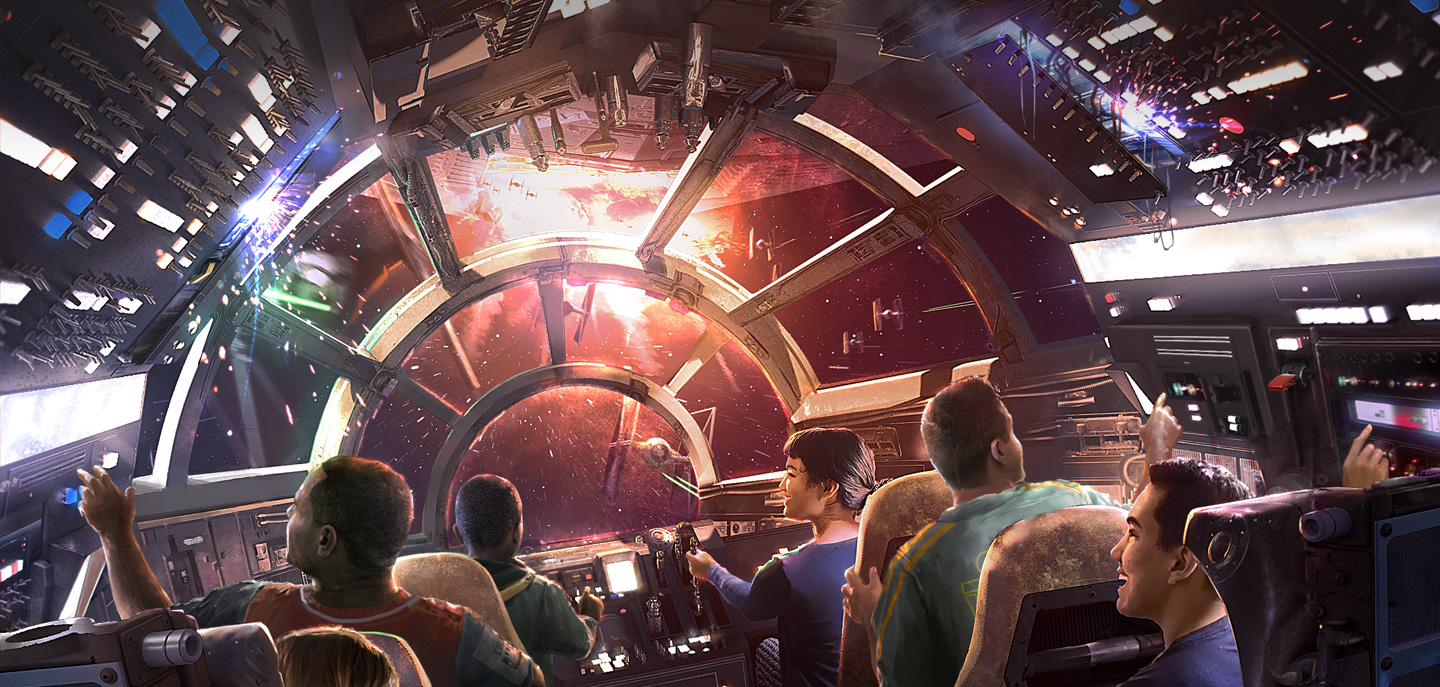
What if, instead, you weren’t just an audience member sitting in a seat? What if it actually felt like you were there? What if you felt like you were standing next to Captain America as he battled the Red Skull? What if you felt like you were there when Micky Mouse, Donald Duck, and Goofy all broke out into a joyous musical number?
I’m not just talking about better animation or virtual reality. I’m talking about a form of entertainment that makes your brain actually feel as though you’re experiencing something. It’s not quite like the holodeck on “Star Trek.” It’s more like plugging into “The Matrix,” but for reasons other than learning Kung Fu or having existential breakdowns.

Unlike “The Matrix,” though, you wouldn’t be the catalyst for the story. That’s something Disney would take care of, providing only the world and the vast array of sensations that come with it. Instead of paying for a movie ticket, you pay for an experience that lets you interact or feel part of a story involving Iron Man, Micky, or Buzz Lightyear.
That will likely be the most valuable resource of future entertainment, powerful experiences that give customers the rush and fulfillment of being there. Instead of going to a theater or theme park, they would just plug something into their brains, possibly through an implant like the ones Elon Musk is developing with Neuralink. From there, the experience will be directly streamed right into their brain.
It may sound invasive, but we already share so much of ourselves online, from what we had for lunch to the most intimate aspects of our personal lives. We’re already in the early stages of merging our technology. We already see our smartphones as integral parts of our lives. Why wouldn’t we do the same for brain implants?
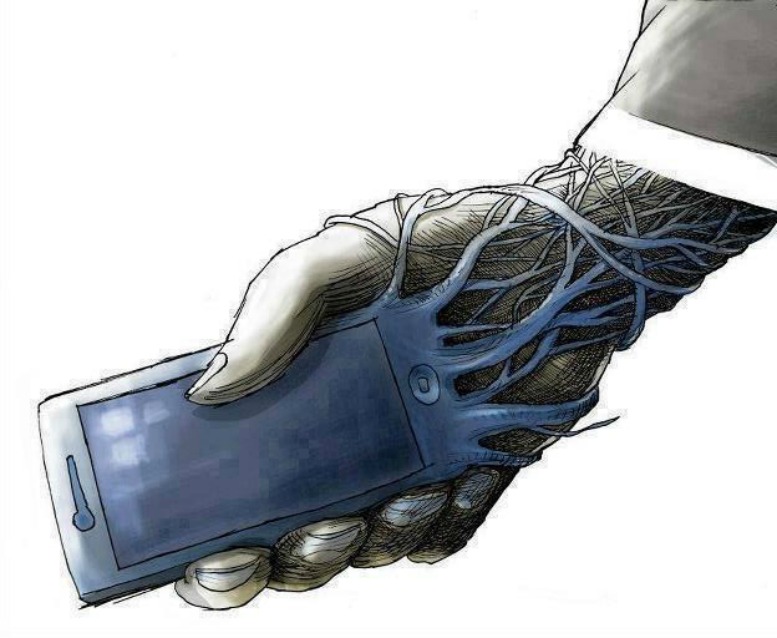
Unlike a smartphone, a machine/brain interface can’t be dropped into the toilet or left behind by accident. That same interface won’t just augment the ability of our brains to access the entire wealth of human knowledge. They’ll allow us to directly stimulate the areas that forge our entire perception of the world around us.
This has huge implications, some more profound than others. For companies like Disney, though, that link will be critical with respect to maintaining its place as a dominant entertainment company. People already pay for powerful experience, be they movies, video games, or a full-body massage at a spa. Disney could simply cut out the middle-men while leveraging its vast library of intellectual property.
Sure, in the future, you could probably pay for fancy experiences like those offered in “Total Recall.” However, if you want an experience that allows you to be a Jedi, an Avenger, or a singing animal, you’ll have to go through Disney and they’ll be happy to sell you that experience for a price.
Every week, you’ll be able to select from a range of intense experiences the same way you navigate your Netflix queue. For some, you don’t need to leave your bed. You just plug a device into your brain and let it go from there. For others, maybe you travel to special venues that function like the holodecks in “Star Trek.” There, you could share the experience with others, making it a communal experience.
Disney would still likely need content-creators to craft those experiences. That means people like George Lucas and Kevin Feige will still have a job in this future. The particulars of those jobs would be very different, but the goal would be the same. They would create experiences and stories that people are willing to pay for.
As unpredictable as the future is, it’s still safe to assume that people are going to want entertainment. Wherever there’s a want, there will be a business willing to provide it. There will be competition. There will be billions, if not trillions, to be made in profits. Not every company around today will survive that competition. Disney, however, is already in the best possible position to thrive.

Filed under Artificial Intelligence, futurism, media issues, movies, Sexy Future, War on Boredom


 Jack Fisher's Official Publishing Blog