Category Archives: human nature

It’s Official: Pandemics Ruin Fridays

These past couple months have taught us a lot about ourselves. Granted, these are things we never wanted to learn, but it’s hard to avoid at this point. We’re in the middle of a global pandemic. It doesn’t matter who you are, where you’re from, what party you belong to, or what your background is. A virulent disease doesn’t give a damn. It infects everyone it can.

This disease has already ruined a lot so far. From sports to movie releases to comic book releases, this pandemic has disrupted everything, large and small. There were some major family events that occurred recently and I couldn’t be part of it because of this damn disease. It breaks my heart and pisses me off, but there’s nothing anyone can do about it.

Well, after nearly two months of isolation, I think I’m ready to declare that this pandemic has ruined something else. For me, at least, this disease has completely ruined Fridays.

I doubt I’m alone in this sentiment. I know plenty of people who will reach out to me on a Friday morning and say “Happy Friday!” in a semi-joking manner. I always appreciate the sentiment. It’s a nice reminder that the weekend is almost here and there’s plenty of fun to be had.

Now, what’s the point of looking forward to the weekend?

Why even get excited on Fridays anymore?

Those aren’t rhetorical questions. I’m not being sarcastic either. Seriously, what makes Fridays special anymore? School has already been canceled for many students. Social gatherings are effectively banned. There are no sports to watch. Movie theaters, bars, and restaurants are all closed. You can’t even throw a party in some states without breaking stay at home orders.

At this point, Fridays are nothing more than just another day that we have to endure in this pandemic-fueled shit storm. There’s nothing to look forward to. There’s no reason to get excited about anything. I usually try to avoid depressing rants, but this has been bugging me for a while. I just wanted to share that sentiment. Like I said, I doubt I’m the only one who feels that way.

With that in mind, let’s all stop saying “Happy Friday!” or “TGIF!” until this shit storm is over. At this point, it’s just a painful reminder of how bad this pandemic has gotten and we have enough of that.

Leave a comment

Filed under Current Events, human nature, Jack Fisher's Insights, rants

How Much Agency Do We Really Have?

How much agency do we actually have in our day-to-day lives?

How much freedom do we actually enjoy on a pragmatic basis?

I ask these questions as part of another thought experiment, albeit one that requires more introspection than the others I’ve posed. I think it’s relevant at a time when we’re dealing with a global pandemic that has severely restricted everyone’s agency to significant degrees. It’s also relevant because it’s something we rarely scrutinize.

There’s another reason I’m discussing matters of agency. It has less to do with current events and more to do with frequent criticisms of certain stories. As an aspiring writer and an avid consumer, especially of superhero media, the agency of certain characters is an integral part of that process. You can’t tell a meaningful story without characters exercising some level of agency.

What has become a major issue in recent years is the source, degree, and structure surrounding that agency. I’ve noticed critics and consumers alike scrutinizing who makes the major choices in a story, as well as what role they play, how they look, and why they’re doing what they do. While these are relevant details, that scrutiny can be misguided.

I see it whenever a female character is perceived as having no agency or having too much.

I see it whenever a male character is perceived as being the only source of agency for every major detail.

I see it whenever a character of a different race, ethnicity, or sexual orientation play a role that isn’t just restricted to tokenism.

It has derailed many meaningful conversations about some genuinely great stories. It has also established this standard for some people that if any character with agency happens to be of a certain gender or ethnicity, they roll their eyes and discount the story as pushing some sort of agenda. I find that to be incredibly shallow and short-sighted.

That’s why I think it helps to analyze how much agency we think we have in the real world. It’s easy to quantify that agency within the rigid structure of a story, but the real world is larger, more complicated, and a lot less predictable. How can we determine how much agency we actually have in the grand scheme of things?

How much agency did you have in being born into a particular time, place, or socioeconomic level?

How much agency did you have in falling in love with the person you married?

How much agency did you have in getting the job you have or the career you pursued?

How much agency did you have in finding the friends and social circles you’re part of?

On the surface, it may seem like you’re exercising your ability to choose in these circumstance. I ask that you take a step back and think a bit harder about it.

When it comes to our lot in life, did we really have much say in the economic and social system that we’re part of? Sure, we can choose to not participate, but in doing so, we either starve to death because we don’t have money for food or we become completely isolated from the world and any semblance of social support.

We think we have choices when we go to the supermarket or a restaurant, but how many of those choices are already chosen for us? We don’t always by the cheapest brand of cereal because we want to. We buy it because we have to. In that same sense, we don’t always buy the car we want. We buy what we can afford.

To a large extent, our agency is incredibly limited by our economic resources. It’s limited even more by our social structure, as well. We can’t always do what we want, no matter how depraved. We can’t just walk outside naked, rub our genitals against the nearest person, and yell racial slurs at the top of our lungs. We’d get arrested, imprisoned, or ostracized, at the very least.

Even if what we do isn’t illegal, we still limit our choices because of peer pressure and social stigma. It’s not illegal to watch porn on a public bus, but it will get you odd looks and plenty of scorn. To some extent, we sacrifice some of our agency to maintain an orderly, functioning society. It’s just a question of how much we sacrifice and how much we’re willing cling to.

With all that in mind, see if you can take stock in the amount of agency you exercise in your day-to-day life. You may be surprised by how little or how much you actually have. It may not be the most interesting thought experiment you can do for yourself, but the implications it offers are profound.

1 Comment

Filed under human nature, outrage culture, philosophy, psychology, Thought Experiment, writing

Funny/Disturbing Stories From (Bad) Sex Ed Classes

Sex is important. Most people would agree, no matter how prudish or repressed they might be.

Talking about it is important too and this is where most people disagree. There’s no getting around it. Talking about sex with anyone, be they teachers, parents, friends, or relatives, is uncomfortable and overwhelming. Most parents avoid talking to their kids about sex and most kids are just as eager to avoid those conversations.

The internet is not always helpful, either. That’s not to say there aren’t good resources for sex education. If you’re looking for something comprehensive, informative, and accurate, I highly recommend the resources from Advocates For Youth. Do not rely on “resources” like PornHub for sex education.

To the parents out there who keep avoiding the conversation, please take note of that. If you don’t talk to your kids about sex, then chances are they’ll learn it from porn and you do not want that. Learning about sex through porn is like learning to drive a car by playing Grand Theft Auto.

Ideally, kids still receive a decent level of sex education from school. I was lucky in that the schools I went to had a fairly comprehensive sex education program. It wasn’t perfect. They did not talk about things like orgasms, intimate communication, female arousal, or how feminine hygiene products work. It was still better than most, which made the kids in my area lucky.

Others didn’t have that kind of luck. Some people receive sex education that’s both inaccurate, bias, and downright damaging. Some comes from repressive religious institutions. Some come from repressive ideologies that barely see women as anything more than baby factories. It can be disturbing. It can also be hilarious. It can even be both.

If you need proof, please check out this funny collection of anecdotes I found, courtesy of the YouTube channel, Planet Reddit. I hope you find it funny and informative. I also hope it hammers home the importance of accurate, comprehensive sex education.

If you make it through the entire video, please spare a thought for the kids who endured those classes. Let’s just hope they didn’t fill the many gaps in their knowledge through porn.

1 Comment

Filed under health, human nature, sex in society, sexuality

Religious Zealots, Vaccines, And (Unavoidable) Hypocrisy

To some extent, a global crisis is the ultimate bullshit filter. You can bullshit your way through a lot of things. Things like politics, economics, theology, and philosophy can all be twisted and obscured by a skilled bullshitter who has little concern for the truth, ethics, or decency. However, no amount of bullshit can circumvent the grim realities of a global pandemic.

A disease like the coronavirus/COVID-19 doesn’t respond to fancy rhetoric, dogmatic beliefs, or ideological divides. It responds only to the immutable laws of physics and biology. To this virus, you’re not a liberal, conservative, Christian, Muslim, atheist, or Satanist. You’re just another host.

It’s a grim, yet sobering perspective. It’s also revealing in other ways. As I’ve noted before, I believe we’ll eventually beat this disease. Not since World War II has there been a crisis that has unified humanity’s effort to a singular cause. It will take time and people will still die, but we’ll ultimately save more lives because of the advances we make. The fact that nobody dies of Small Pox anymore is proof of that.

As hopeful as I am for this outcome, which still seems so far away, it does bring up another issue that will likely emerge once this crisis ends. That issue has less to do with the science and more to do with the religious zealots who have spent decades trying to inject themselves into scientific circles.

I’ve mentioned religion before in pointing out some of the humorous headlines they’ve inspired in this crisis, but there’s nothing funny about this particular issue. As always, I want to disclose that most religious people aren’t zealots. They don’t take their religion, their holy text, or their eccentric leaders too seriously. They believe what they believe, but live their lives as decent, loving human beings.

This is not about them.

The people I’m referring to here are the people who yell the loudest whenever someone points out a scientific fact that contradicts their preferred holy book. These are the people who demand that their theology be treated with scientific credence in a classroom. They’re also the ones who demand special treatment by the government and greater influence in society as a whole.

I single these people out because in a crisis like this, they can’t survive with the rest of society without being hypocrites in the highest order. I say that as someone who freely admits he can’t predict the future to any degree. However, I’ve met enough religious zealots in my life to surmise predictable patterns.

With that in mind, here’s how I predict religious zealots will react when a vaccine or treatment is found for COVID-19.

They’ll thank their deity and not the doctors or scientists.

They’ll eagerly get in line to receive the treatment, whatever it might be.

They’ll later claim that their deity protected them over the course of the crisis

They’ll then claim the crisis was a punishment for insert-hot-button-social-issue-here.

On top of that, they’ll do all of this with a straight face and a clear conscious. They won’t think of themselves as hypocrites, but that’s what they’ll be by the very definition of the word.

They’ll have claimed that prayer heals and protects adherents, but conveniently overlook how it failed to protect anyone during this crisis.

They’ll have claimed that any science that contradicts their theology, namely evolution, has no merit and should not be supported on any level. Then, they’ll gladly enjoy the fruits of that same science once a vaccine is perfected. Chances are they’ll go right back to bemoaning the same science because it doesn’t line up with their holy books.

Even those who openly defied orders by health officials will face few consequences for their behavior. Even if it’s proven that people suffered and died because of their reckless behavior in the face of a pandemic that doesn’t respond to prayers or preaching, they aren’t likely to change their ways. Even if their hypocrisy is thrown in their face, it won’t change them or their zealous dogma.

That’s the most frustrating part. Most reasonable people, regardless of their faith, understand that there’s a time for prayer and a time for working with the science we know to solve a big problem. Many of those working on a vaccine as I write this are religious. Some might even be motivated by their religion to save as many lives as possible. These people are truly heroic in their own right.

Those who build their religious zealotry on false promises, false hope, and even outright fraud deserve no such praise. Their theology depends on a foundation of bullshit and when a crisis like this cuts through it, then the only thing left is hypocrisy.

I take some comfort in the knowledge that, thanks to the internet and social media, a record of their hypocrisy will remain. They might try to bullshit their way around the facts, but at some point, all the bullshit in the world can’t overcome such hypocrisy.

5 Comments

Filed under biotechnology, Current Events, human nature, politics, Reasons and Excuses, religion, technology

Loneliness, Bitterness, And Perspectives From Pandemics

See the source image

The crisis surrounding the Coronavirus/COVID-19 pandemic affected our world and our lives in ways too numerous to list. I hate talking about it and lamenting on all the things we’ve lost because of it, from March Madness to movies to new comics. Unfortunately, it’s unavoidable. Unlike misguided outrage or clickbait, I can’t just step away from my computer and escape. The world around me is still quarantined.

It’s a rare, unprecedented level of awful that will likely resonate for decades to come. It’s awful on so many levels, but it’s often through awful experiences that new perspectives emerge. I’d like to offer one today, if only to divert attention from how bad the news keeps getting.

Let’s face it. If you’re a very social person who enjoys going out, meeting new people, and forging new connections, this experience has been hell. It’s not just that bars, clubs, malls, and movie theaters are closed. You can’t even get close to people to connect with them anymore. Social distancing has made everyone less inclined to get close. For people who value that closeness, it’s nothing short of devastating.

At the same time, the less social crowd has probably noticed just how little their lives have changed. If you enjoyed sitting on your ass all day, watching TV and playing video games, then chances are you’re not feeling the impact that much. You might even take a perverse satisfaction out of the fact that your hobbies and passions have already equipped you to weather this crisis.

Between those extremes, however, lies the insights that are worth noting. Before this crisis took hold, it wasn’t uncommon to cite lonely, anti-social people, most of which were men, as damaged and dangerous. They’re behind many of the insults thrown at the “incel” community or those who debate feminism and social justice on message boards.

I know because I’ve been called that on more than one occasions. It’s often some variation of “basement-dwelling neckbeard” or something of the sort. I honestly don’t pay much attention to those insults. I’ve been on the internet long enough to grow fairly thick skin. At the same time, I think this crisis can offer a new perspective on loneliness to those who aren’t used to it.

Being trapped at home for days on end, unable to go out and socialize, means a sizable chunk of people who haven’t experienced loneliness to this extent can now know what it’s like. While I genuinely hope it ends soon and doesn’t leave any lasting scars on people, I hope it makes the necessary impression.

If you’re lucky enough to have a family, then you’ve got some support. If you’re lucky enough to have a lover, then you’ve got a source of intimate contact that feels like a precious luxury to many. That assumes that nobody you care about is sick, which adds a new level of dread to the loneliness. It’s not a pleasant feeling. It’s also a feeling worth scrutinizing.

To get that point across, I’d like to pose some questions to those who have ever labeled someone an incel, toxic, problematic, or any other insult that makes them unworthy of compassion.

How does it feel to have the desire to connect with others, but not the means?

How does it feel to be cut off from intimate human contact through no fault of your own?

How does it feel to have hours on end to yourself with nothing more than your hobbies to occupy yourself?

How does it feel to feel so utterly alone through no fault of your own?

How does it feel to be completely powerless to change your current situation?

I apologize if any of these questions come off as harsh. I hope they still convey the necessary message. Some of it may be personal for me. I’ve had people insult me whenever I’ve admitted to feeling lonely. Being a man, I feel like I don’t get much sympathy. People just assume I’m not doing something right and it’s up to me to fix it.

While part of that might be true, there are also parts that are simply beyond my control. A global pandemic is one of those things that’s beyond everyone’s control, from young men who play video games to world leaders who wield real power. For once, we’re all at the mercy of the same overwhelming force. We can’t hide from it or its effects.

There’s no patriarchal conspiracy, radical feminist plot, or secret cabal of lizard people working against us. This is just something that emerged from nature and hit us where it hurt at the worst possible time. For once, we’re all on the same page in terms of how vulnerable and concerned we are.

It’s a rare, but bittersweet opportunity. In recent years, there has been this narrative about lonely, bitter men, as well as lonely bitter women. They’re lonely and bitter because the world didn’t give them everything they wanted on a silver platter, so they take it out on everyone else.

They want the world to cater to their sensibilities.

They claim their preferences are right and anything to the contrary is flawed, political, or in some ways invalid.

They cling to their opinions, citing only the facts that justifies them while attacking those that oppose them.

Everyone is guilty of doing this. I certainly am. It’s tempting to write them off as products of a bitter, lonely existence for which they are wholly responsible. If nothing else, this pandemic shows that everyone is at the mercy of their circumstances.

Whatever someone’s attitude may be, even if it is misguided and flawed, it doesn’t make their loneliness any less real. It’s easy to insult those kinds of people when your situation is entirely different and arguably better. Now, this disease has put every one of us in the same boat, relatively speaking.

I hope we all remember this feeling and how much it sucks. I genuinely hope it inspires and educates others to understand how crippling loneliness can be for some people. Not everyone deals with it in a healthy way. Many will continue to cope in unhealthy ways long after this crisis is over.

At least now we know what drives those feelings. Whether you’re a lonely man, a lonely woman, or just lonely in general, we’ve all experienced the struggle it brings. Keep that in mind the next time you judge someone who seems bitter and angry at the world. They may just be lonely and no matter what your politics or ideology may be, it can make us feel as sick as any pandemic.

Leave a comment

Filed under gender issues, health, human nature, men's issues, outrage culture, political correctness, psychology, sex in society, sexuality, women's issues

Why Do We Root For Characters Like Bojack Horseman?

Why do we root for people who do awful things?

Why do we root for the crazed killer in a slasher movie?

Why do we celebrate anti-heroes over traditional, upstanding heroes?

Why do we want people who do irredeemable things to be redeemed?

These are questions are similar in that they have a common theme, but they apply to a wide variety of situations. It feels like those questions have become more relevant in recent years as the standards for quality TV, movies, and characters has risen, which I’ve called the Walter White effect. While it can make for compelling stories, the questions themselves have distressing implications.

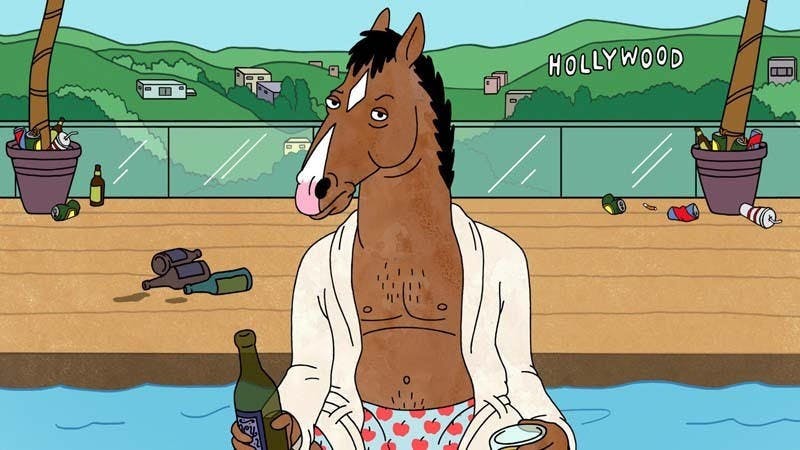
I’ve found myself contemplating those questions more seriously after the final season of “Bojack Horseman.” While I love this show and have praised its themes in the past, the final season really pushed the envelope on how far a show could go in telling stories about broken characters.

There’s no getting around it. From the first episode to the series finale, it’s abundantly clear that Bojack Horseman is not a respectable person. He’s a self-centered, narcissistic, alcohol, ego-centric asshole who has hurt people, exploited people, and taken full advantage of his celebrity status. If we knew someone like this in real life, we would never root for them. We’d probably root against them.

However, as I watched this show over the years, I still found myself rooting for Bojack. In following his story, learning about who he is, where he comes from, and how he deals with his problems, I genuinely hoped that he would find some semblance of peace in the end. Even as his sordid deeds started to come to light in the final season, a part of me didn’t want to see him fall, especially when he’d made so many strides.

Bojack isn’t the only character with this issue. There are countless other characters in popular culture, such as Don Draper and Wolverine, who do many awful things throughout their story. I’m a fan of those characters, especially Wolverine. At the same time, I can’t ignore the fact that he’s done terrible things that are on par with Bojack’s crimes.

At the same time, I root for Wolverine. I also find it easier to root for him over Bojack because while Wolverine is largely a product of what others have done to him, Bojack is a product of his own awful decisions.

Bojack has no special powers or excuses, outside being a celebrity. He has his share of issues and circumstances, from verbally abusive parents to substance abuse to legitimate mental illness. However, throughout the show, he’s still the one who makes the choices that ultimately hurt him and his loved ones. Moreover, he spends a great deal of time avoiding the consequences or downplaying them.

This is why I think the final season of Bojack Horseman” was so impactful. While I did often root for Bojack throughout the show, the final season made it a point to remind everyone of the terrible things he’s done. The show is brilliant in how it has everything collapse around Bojack, but not because of circumstance. Once again, his own terrible choices and endless excuses are what do him in.

Seeing him face real, actual consequences for his decisions helped give the show a sense of balance when it ended. Bojack didn’t have a happy ending. Very few characters did. At the same time, he wasn’t killed or endlessly punished. It just left him in an uncertain state where he faced consequences for his past choices. Now, he has to make new choices moving forward.

It’s not satisfying for anyone who’d been rooting for Bojack. At the same time, it’s cathartic for that part of us who wanted him to face consequences for the awful things he’d done. Even so, the fact we rooted for him in the first place is oddly jarring and I think it speaks to a part of our nature that’s difficult to understand.

On some level, I feel like people want to see horrible people redeem themselves. Redemption stories are powerful in both the world of fiction and the real world. I think it’s in our nature to want to see good in everyone, even when they’ve done awful things. The power and desire to forgive is real.

However, does that mean we should let horrible deeds go unpunished? It’s one thing to forgive someone for a lie, but what about someone who abandons his best friend when he gets fired? What about someone who nearly chokes a woman to death in a drug-fueled rage? What about someone who takes advantage of a woman with amnesia?

Those deeds are all things that Bojack did over the course of Bojack Horseman.” There are many others, some of which he never faced consequences for. Even though he’s an extreme example, even by fictional character standards, we still root for him. We still want him to find redemption. I think that says more about us than it does about him.

Awful people will do awful things, but when we see them trying to make things better, it’s hard not to cheer them on. I believe its in our nature to want to see others be the best they can be. The challenge is balancing that inclination to root for them and the need to punish shitty behavior.

Bojack’s story is over, but there are plenty of other characters like him that we root for. It’s not wrong to root for them, but it’s important to maintain a proper perspective. Redemption can be a powerful story. However, can there be any redemption without consequences?

I don’t know the answer. If you have some insights, please share them in the comments.

1 Comment

Filed under Bojack Horseman, human nature, media issues, psychology, television

What The “Mass Effect” Trilogy Revealed About Paragons, Morality, And Human Nature

I genuinely believe in the inherent goodness of humanity. I know that’s not a popular opinion, these days. I’ve even tried to remind people of it a few times. You need only look at the news, history books, or headlines from Florida to undermine your faith in human nature. I don’t deny that there’s plenty of bad, but there’s also a great deal of good. Sometimes, you find it in unexpected places.

In this case, the place is the epic space opera that is “Mass Effect.” It’s not just one of my favorite video game franchises of all time, which I often go out of my way to reference. It’s a game that dares to give players a choice in how moral or immoral they want to be. There are plenty of games out there that let you play virtuous heroes and deplorable anti-heroes. This game lets the player decide which path they want to follow.

In the original trilogy, it’s called the Paragon/Renegade system. Throughout all three games, you’re given choices on what to say or what to do in various situations. Some are inherently selfless and heroic, such as saving the Rachni from extinction. Others are just pure dick moves, like punching a reporter or shooting Mordin.

The path you choose doesn’t prevent you from completing the game, but it does affect the story. It also effects the endings of certain games and the plots of others. You can basically play the same three games and forge a very different story. You can be a pillar of virtue and nobility or you can be a total dick who still gets the job done. It’s entirely up to you.

I’ve played this game so many times that I’ve done both, but I prefer the path of the paragon. It just feels more rewarding at the end, even though it doing so does come at a price throughout the game. Recently, in an article by Forbes that featured one of BioWare’s developers, I found out that I’m not the only one who shares that sentiment. In fact, that sentiment is revealing in ways that go beyond the game.

Forbes: You’ll Be Surprised What Percent Of ‘Mass Effect’ Players Chose Paragon

The information comes from BioWare’s John Ebenger, who was retweeting a meme on Twitter about how devs give players choices to be evil villains in games, yet people always pick the nice options anyway. And it turns out that’s even more true than the meme suggests, as Ebenger laments that with all the work they put into the Renegade content in Mass Effect, that something close to a whopping 92% of players chose Paragon in any given moment.

Those bold parts are my doing. Regardless of your math skills, 92% is not a slim margin. That’s an overwhelming majority of players. Given the many stereotypes of gamers, it’s somewhat refreshing. When given the choice to be a hero or be a dick, they choose to be a hero.

That’s a profound notion because this is a video game. There are no real stakes outside beating the game. Players have no real incentive to be good or evil, but they still choose good. Even when making the renegade choices comes with legitimate advantages, players still go with the way of the paragon. I think that says more about people in general than it does about those who play games like Mass Effect.”

Say what you will about the genuinely evil people in this world. They exist. They make the news. They’re the kind of people we can’t overlook, but therein lies the critical context. We’re aware of such evil because it’s so rare. When most of the people are simply making paragon choices, it’s not noteworthy. It’s considered normal.

As someone who has faith in humanity and loves all things “Mass Effect,” I find that genuinely uplifting. It proves to me that most people are inclined to be good and decent. Even if you put them in a galaxy-spanning adventure against rampaging Reapers, they’ll still do the right things for the right reasons.

In a sense, Commander Shepard gave us insight into the nature of humanity and showed us that most of us have the heart of a true paragon. That’s something worth celebrating and cherishing.

Leave a comment

Filed under human nature, Mass Effect, psychology, video games

Telework, Online Learning, And What A Global Pandemic Can Teach Us About Both

See the source image

In general, people don’t radically change their habits unless there’s a huge incentive and/or a major disruption. By that, I don’t just mean habits relating to drug addiction, exercise regiment, or bedroom kinks. I’m mostly referring to peoples’ overall tendency to keep doing things the way they’ve been doing them, even if they have major flaws.

While it’s rare to get huge incentives to change those tendencies, it’s just as rare to face the kind of disruption that would force people to re-evaluate how they do things. People are, broadly speaking, pretty stubborn. It takes a lot of time and energy to abandon old habits in exchange for new ones. There’s no guarantee they’ll work. Sometimes, they’ll fail miserably.

In terms of disruptions, it’s hard to top a global pandemic. There’s just no way to overstate how big an impact something like that can have on a society. Pandemics have changed the course of history, as well as the course of society. They are the million-ton sledgehammer to whatever stable social system we have in place.

The ongoing crisis surrounding the Coronavirus/COVID-19 pandemic is the biggest disruption our society has faced in over a century. It has jarred us all from our comfort zone, to say the least. Between cancellations of major events and concepts like social distancing, we’ve had to reassess how we go about our daily lives.

As frustrating and frightening as it has been, these kinds of disruptions also present rare opportunities. We may never face a situation like this that affords such opportunities, so we would be wise to take advantage of it. In this case, it has to do with how we go about work and school.

We all have this time-tested notion of what it means to have a job and get an education. Having a job means going to an office or work site, doing your work there, and then coming home after a certain amount of time. It varies from person to person, but that’s the general approach.

Going to school is similar. You get on a bus, go to some building across town, stay there for six or seven hours while going to multiple classes, and then you come home. That’s what we think of when we think about getting an education and going to school.

Now, thanks to a global pandemic, this time-tested system has been disrupted. Going to crowded facilities is now a health hazard. Kids can’t go to some big school facility and workers can’t go to some crowded office for a third of their day. Instead, people are having to telework or utilize online classes. For now, this is just a temporary measure while we endure all this massive social upheaval.

At the same time, it also gives us a rare opportunity to see just how necessary it is to go somewhere else to do our work or get our education. It’s a relevant issue that goes beyond our current crisis. These questions are worth asking.

How necessary is it for us to go to some office or school to achieve what we seek?

Is that system really the best we can do?

What are the limitations of telework and online schooling?

What can be done to mitigate those limitations within the current infrastructure?

Can people be more productive with telework and online schooling?

How effective is our current system at supporting these options?

Now, I’m the last person who should defend the current school system. My past experiences with public school give me a somewhat heavy bias in assessing it. However, I doubt I’m alone in saying the current system has room for improvement.

When it comes to telework, I have less experience. In the past, I’ve had instances when I’ve been successful with telework. It depends on the situation and what I’m working on. I suspect that’s common for many jobs. An accountant and a brain surgeon work in very different spheres. One is easier to do at home. The other is a lot messier, to say the least.

It’s worth taking note of just how much we’re able to function over the next few weeks with respect to telework and online schooling. If a sizable chunk of the population demonstrates they can get the job done this way, be it with telework or online schooling, then that’s valuable insight that we should not ignore.

I understand that there are some jobs that cannot be done from home. There are also some things you can’t learn remotely. However, looking back at my experience in school, I’d say about 80 percent of what I learned could’ve been learned online. In terms of work, over half of what I did could’ve been done from home with a laptop and an internet connection.

There’s no reason we should be locked into this mindset that work involves leaving our house or that learning has to take place within a school. There are other ways to do these things and certain people might function better that way.

During a massive upheaval like this, things cannot and should not go back to exactly how things were. We have an opportunity to find a new approach to school and work. I say we take advantage of it as best we can.

1 Comment

Filed under Current Events, Environment, futurism, human nature, technology

Quarantines, Cabin Fever, And Baby Booms

As I write this, the state I live in has declared a State of Emergency. In my local jurisdiction, every school is closed for the next two to four weeks. Every non-essential worker is encouraged to work from home. On top of that, every major sports league has canceled every game, movie premiers have been pushed back, the stock market has tanked, and major gatherings have been banned.

This is bad. There’s no way around it. The Coronavirus/COVID-19 is officially a worldwide pandemic. There’s no way to spin it. There’s no way to twist the facts or interpret the data. This is a historically significant event that’s sure have long-lasting consequences for years to come.

However, I don’t want to focus on all the negatives. Instead, I want to offer one seamy little tidbit that feels perfectly appropriate for an aspiring erotica/romance writer. I don’t want to make light of this situation. It’s still very bad. I just want to speculate on one not-so-minor effect that will likely go unreported.

This extended quarantine and societal shut-down may lead to a miniature baby boom.

Before you roll your eyes, just take a moment to consider the situation here. For the next couple weeks, people are going to be stuck at home for extended periods with nothing to do. No big movies are coming out. No major sporting events are on TV. No big events can happen. At some point, people are going to get bored. When people get bored, they do crazy things to alleviate it.

For couples who happen to be in close proximity of one another, that usually means they’re going to have sex. It might not be romantic. It might not even be that memorable. However, if they have enough spare time, sufficient food, and excess energy, they’re going to get horny at some point and they’re going to have sex. Unlike the world before this plague, there just aren’t enough distractions to stop it.

I suspect this could lead to a miniature baby boom, not unlike the kind documented in cities that have won major championships. We probably won’t see it until January 2021, but if it happens, it’ll be noticeable and we’ll be able to connect the dots.

I’m not saying it’s inevitable. I’m just saying that for the next two weeks, couples are going to have a lot of free time on their hands. People don’t need a lot of excuses to get frisky. Even when they’re afraid of the news, they’re still going to get horny. For some people, fear makes them horny. It’s going to happen. It’s just a matter of when, how, and to what extent.

Personally, I encourage. There are worse ways to cope with this situation. I just hope that before anyone gets frisky, they remember to stay safe. That includes washing their hands.

2 Comments

Filed under Current Events, human nature, Marriage and Relationships, sex in society, sexuality

A Quick Perspective On Controversy, Scandals, Politics, And Elvis’ Hips

Every controversy seems absurd when you look at it with enough hindsight. Think of all the big social and political controversies going on right now. From mansplaining and safe spaces to all-female movie remakes to sexy Super Bowl Halftime shows, there’s no shortage of outrage and moral panics. In general, I try to avoid contributing, but I’d be lying if I said I wasn’t affected to some extent.

Even if the issues feel genuinely serious, it’s worth taking a step back and maintaining a certain perspective. What seems serious now won’t always end up being that serious in the grand scheme of things. Things like the Cuban Missile Crisis were serious. The impact of playing Dungeons and Dragons don’t even come close. For the most part, these controversies become obscure footnotes in the history of pop culture.
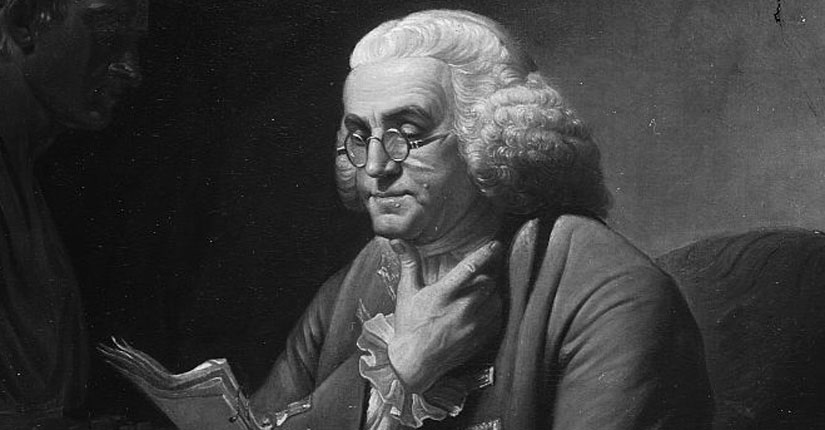
In the interest of preserving a balanced perspective, I find it helpful to think back to Elvis’ hips. For anyone under the age of 50, I’m sure that sounds strange, but make no mistake. At one point in time, Elvis’ hips were the most controversial thing in the world.

It’s hard to imagine now, given the accessibility of sexy music videos and internet porn, but there was a time when Elvis Presley shaking his hips on live TV was the most scandalous thing in the free world. People at the time deemed his dancing too sexual and obscene. There was serious, genuine concern that this was just too shocking and lurid for innocent eyes to see.

Granted, this took place in 1956. The world was a very different place in 1956. However, that’s not exactly an ancient time period. There are plenty of people alive today who were alive in 1956. They lived through that controversy. They might have even watched that fateful episode of the Ed Sullivan show where Elvis dared to shake his hips in too sexy a way. Now, compared to a standard Beyoncé video, it almost seems quaint.

Even if it sounds absurd now, take a moment to appreciate the context of this controversy. There was a time when people genuinely thought Elvis shaking his hips was too obscene. These same people genuinely thought such overt sexuality would do serious damage to society.

Now, look at everything we deem too obscene, controversial, or damaging today. How much of it will seem just as absurd as the sexiness of Elvis’ hips several decades from now? We may think that our standards have been fully refined, but history has shown time and again that this rarely holds. What is obscene today may be mundane tomorrow and obscene again a decade from now.

Controversies are fleeting, petty, and often build on a foundation of absurdity.

People are often irrational, following emotions over logic while claiming every emotion is perfectly logical.

Trends are unpredictable and fleeting. In 1956 it was Elvis’ hips. In 2003 it was Janet Jackson’s nipple. Who knows what it’ll be this year or in the years that follows?

With time and perspective, it rarely ends up being as serious as we thought. Even if it was, people and society adapt. That’s what we have to do, as a species. We might make fools of ourselves along the way, getting worked up over something that ended up being so petty and contrived. The best we can do is laugh and learn from it.

Think about that the next time someone complains about a halftime show or a music video. Remember Elvis’ hips and the perspective they offer. It’s every bit as powerful as his music.

Leave a comment

Filed under censorship, human nature, media issues, outrage culture, political correctness, politics, psychology, sex in society, sexuality, Uncategorized