Tag Archives: virtual reality

Artificial Intelligence, The Entertainment Industry, And Their (Uncertain) Future

This is a video from my YouTube channel, Jack’s World.

This video is part speculation and part thought experiment on the impact of artificial intelligence and the entertainment industry. Since the WGA/SAG strikes of 2023, the impact of AI on entertainment is impossible to ignore. While the technology is still in a very early stage, we’re already seeing it affect the course of multiple industries, but entertainment might be the most profound.

What could this mean for consumers?

What could it mean for the companies, studios, artists, and workers that produce our entertainment?

It’s difficult to determine at this early stage, but I make an effort to imagine what artificial intelligence could mean for the future of entertainment.

1 Comment

Filed under Artificial Intelligence, movies, Neuralink, technology, YouTube

Why I’m Excited About Apple’s Vision Pro (But Won’t Buy One Just Yet)

Henry Ford did not invent the car, but he did create a model that made the car affordable, useful, and accessible to the masses. He was also despicable racist and bigot, but that’s neither here nor there.

Nintendo didn’t create the first gaming console, but they did create a model that made gaming fun, endearing, and accessible to the masses. Now, they’re so successful that they can make a billion dollar movie as a side-project.

I make this point because technology and the products created from it don’t always become successful by their creators. Sometimes, an advancement is just not adequately refined, poorly marketed, or just too ahead of its time. We can never truly know if some new technology is ready for the mainstream until we have the benefit of hindsight.

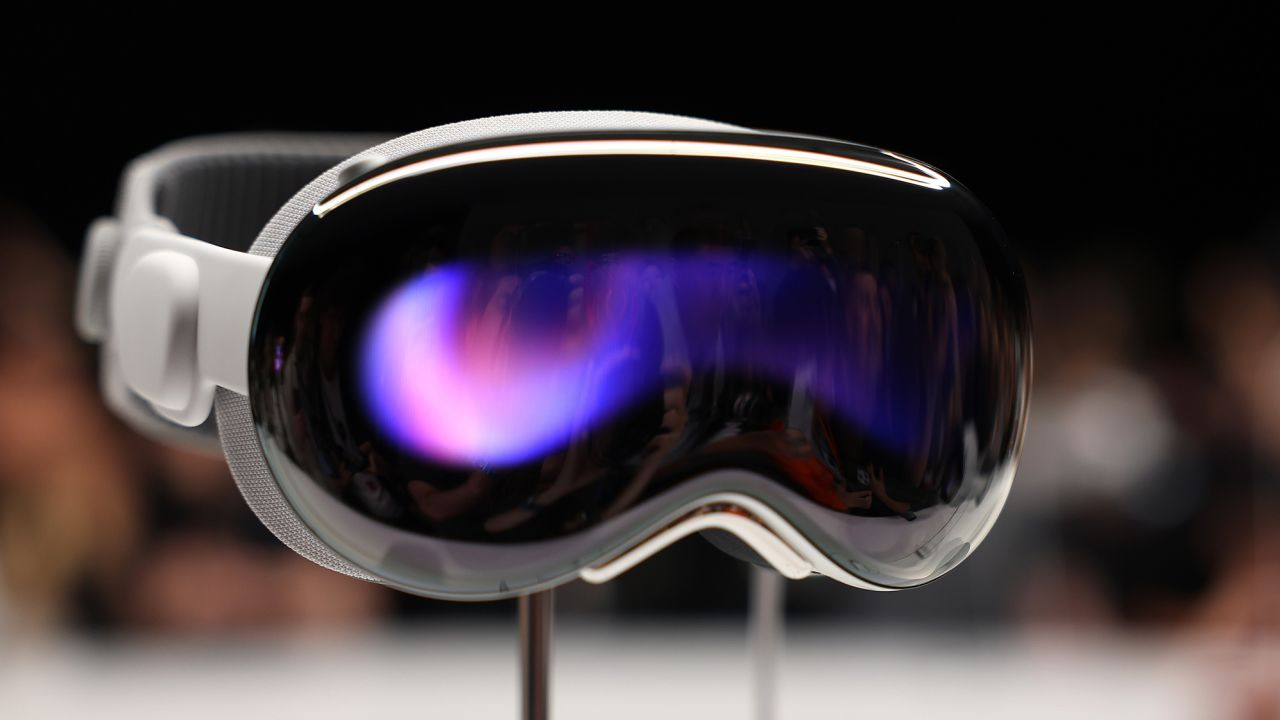
With all this in mind, I’m still comfortable saying with confidence that Apple’s recently announced Apple Vision Pro will be a game-changer on so many levels. And a decade from now, when I might be writing something like this while using one, we may see this announcement as important as the original iPhone.

I know that sounds like me buying into mindless tech hype, which is something I’ve been guilty of before. I freely admit that I am not qualified to judge what technology is overhyped and what will truly change the world. So, do not take me as an expert in that regard.

However, I’ve seen enough major technological changes and overhyped failures in my lifetime to see certain patterns. And with the Apple Vision Pro, I genuinely believe this will change how we see computers, virtual reality, augmented reality, and reality in general.

For one, this is not Elon Musk claiming that we would have a full self-driving car by 2017. This is a real, tangible product created by Apple, a company with a proven track record of disrupting major areas of the tech industry for decades.

Apple didn’t invent the personal computer, but they were among the first to create a user-friendly model for the masses in the 1980s.

Apple didn’t invent the smartphone or the MP3 player, but they created products that were so superior to the competition that they fundamentally changed the industry around them. If you need proof, just try finding a Tower Records in your area.

This is not a company that regularly to create strange, ambitious products that the public has never seen before. This is a company that sees what’s going on within an emerging industry, poaches the talented individuals working in that industry, and creates a product that goes onto dominate that industry in its own unique way.

You can certainly make the case that Apple’s tactics in this endeavor aren’t always ethical. They’re a multi-billion-dollar tech company. You don’t have to look hard to uncover some of their less savory practices.

But when it comes to producing a product that works better than anything that came before it, Apple is second to none. And I’ve been hoping for years that someone would find a way to perfect the many flaws in the virtual reality and augmented reality fields.

I may be dating myself here, but I remember years ago when Nintendo tried to create a VR gaming console called the Virtual Boy. I even tried it at a toy store a few times. I thought it was amazing, even though it was uncomfortable at times and gave me a headache. I genuinely hoped it was the start of a new trend.

But it didn’t happen.

Over the years, other companies tried to make better VR and AR hardware. I’ve used products like the Oculus Rift and the Playstation VR headset. They’re both good, but limited. They don’t do much other than run a few niche programs and games.

But Apple’s Vision Pro promises to do so much more. It won’t just run a few distinct programs. It won’t just be a novelty meant for a few specific tasks. In the demonstration Apple released, this product promises to integrate multiple features from multiple fields, from the stuff you’d usually do on a desktop to immersive gaming to watching 4K video content.

Even if you’re very skeptical about VR and AR technology, you can’t deny that’s a very different approach compared to others in the field. And you also can’t deny that Apple has a proven track record of making clunky technology work.

Watching this demonstration, I couldn’t help but imagine what it would be like to watch a football game with this thing. I also imagined what it would be like to play a game like Skyrim, interact with friends and family, or just relax in my bed while enjoying beautiful scenery and music.

I want to try this thing.

I want it to succeed on the same level as the iPad and iPhone, two products that have been a huge influence over my everyday life.

However, I’ll also go on record as saying that I probably won’t buy this first model and not just because the price tag is $3,500. But my reason for that has little to do with my faith in the technology or Apple. This is just how I usually approach embracing new tech gadgets, in general.

I was not among those to buy an iPod or iPhone when it first came out. That’s because I prefer to wait until the early kinks and bugs are worked out. And even for Apple’s most successful product line, there was a refinement period. Just go back and look at the features of the original iPhone. It was pretty limited in many ways. It also had its share of growing pains.

But over time, with further investment and refinement, it became more polished. By the time the third generation came along, it was so polished and so well-developed that that the value was immense, despite the inflated price. When I finally bought my first iPhone, it worked so well that it felt like a massive upgrade by default.

That’s what I hope will occur with the Apple Vision Pro. It may take several years. But eventually, it’ll get to a point where the software, the hardware, and the experience are such that it’ll exceed any alternative, present or future. When that time comes, I will gladly buy in.

Yes, I realize I may still end up paying a hefty price for the experience.

But if that experience means watching the Super Bowl in an immersive, 4K experience or reading comics on a screen that feels like IMAX, then I say that’s a price worth paying.

Leave a comment

Filed under futurism, technology

Jack’s CreepyPastas: Hell VR

This video from my YouTube channel is a CreepyPasta that I wrote and narrated myself. Enjoy!

Leave a comment

Filed under CreepyPasta, Jack's World, YouTube

Would You Willingly Plug Yourself Into The Matrix? A Serious Question

The following is a video from my YouTube channel, Jack’s World. This video is both a thought experiment and a deep dive into some of the concepts explored in the Matrix, both the original and The Matrix Resurrections. It explores the idea of creating virtual worlds that feel every bit as real as the real. It also touches on the larger implications of this technology while also asking under what circumstances we would willingly enter such a world.

Leave a comment

Filed under Artificial Intelligence, futurism, Jack's World, movies, Neuralink, YouTube

Would You Willingly Plug Your Brain Into The Matrix?

The Matrix' Code Came From Sushi Recipes—but Which? | WIRED

What if there was a virtual environment that was so real and so lifelike that it was completely indistinguishable from the real world?

What if you had an opportunity to upload the entire contents of your mind into that environment?

Would you do it? Even if you didn’t have a full measure of control over the environment, would you still venture into this virtual world?

I’m not just asking these questions as another thought experiment, nor am I asking it as an excuse to talk about “The Matrix: Resurrections.” Yes, the prospect of another movie in the mold of “The Matrix” did inspire me to pose these questions, but I also think these questions are worth seriously contemplating.

Back in 1999, the year “The Matrix” first came out, the idea of an entirely simulated world seemed like classic sci-fi tech, the likes of which we’d never see in our lifetimes. That’s understandable. In 1999, the most advanced simulations we knew could only be rendered by a Playstation 2 and those hardly looked realistic.

Since then, computing power and graphics technology has come a long way. These days, graphics in video game consoles are so realistic that it’s nearing Uncanny Valley territory. It won’t be that long before we have computer renderings that are so advanced, so lifelike, and so realistic that our brains can’t tell the difference.

At that point, creating an entirely simulated world is just a matter of computing power, scale, and interface. Since brain/computer interfaces are already being developed, it’s not unreasonable to think that we won’t have a Matrix-like simulation available within the next 40 years. Many people alive today who are under the age of 50 might very well live long enough to see that technology.

Once we have it, we’ll have some important decisions to make. Some of those decisions will be societal. If people suddenly have access to a virtual world where they can be anyone, do anything, and immerse themselves in any conceivable experience, then what does that do to society? What does that do to people, communities, nations, and social structures?

Those are far messier questions to contemplate, which is why I’m not going to belabor them too much at this point. Instead, I want to keep this question within the context of individuals. Everyone’s circumstances and beliefs are different. As a result, that may impact whether you’d take advantage of such an opportunity or what kind of environment you’d seek to create.

Personally, if I ever had an opportunity to upload my mind into a virtual environment on par with the Matrix, I would do it, but the extent and circumstances would vary. I suspect others may feel the same.

If I could create my own personal virtual environment before I uploaded my mind into it, then I would certainly be more willing. I think that’s an important factor. The humans in “The Matrix” didn’t have any measure of control over the environment they were in. I think that would complicate any that anyone would have in such a world.

It would also depend heavily on my physical state in the real world. If this technology became available and I was old, weak, and in poor health, then I would certainly be more inclined to use it. That assumes that any technology involving human enhancement hasn’t progressed significantly and people still age, get sick, and die.

Like it or not, our physical bodies in the real world will break down. If the technology to manage and reverse that isn’t available, then virtual environments might be the only way we can continue to live in any meaningful capacity. I certainly hope that isn’t my only opinion when I get to be that age, but if it is, then that simplifies my decision.

It’s hard to know what sort of options we’ll have. I still believe that technology involving human enhancement and creating virtual worlds will advance in parallel. One would, by default, need the other in order to properly interface with these environments. As such, it would complicate any decision about venturing into virtual environments.

Then, there’s the actual nature of those virtual environments. If we can control what environment we go into, then that opens the door to even more possibilities. Within these worlds, you could be a billionaire playboy, a medieval king, a famous celebrity, or super athlete. From your brain’s perspective, it would feel every bit as real as what you’re feeling right now.

Whether or not our brains would accept it is a different story. I suspect there may be some who, once they enter these worlds, would never want to leave. There may even be some who willingly erase their own memories of the real world so that this new virtual world is their new “reality.” That’s exactly what Cypher desired in “The Matrix” and I suspect others might share that desire.

It really does depend on the person, their situation, and what sort of virtual world they seek to create. We probably won’t know the full impact until we create our first true Matrix-like virtual world. I sincerely hope I live long enough to see that. If you’re reading this, hopefully you get to see it as well. It should give you plenty of time to contemplate these questions and whether you’ll venture into those world.

Leave a comment

Filed under Artificial Intelligence, biotechnology, futurism, Sexy Future, Thought Experiment

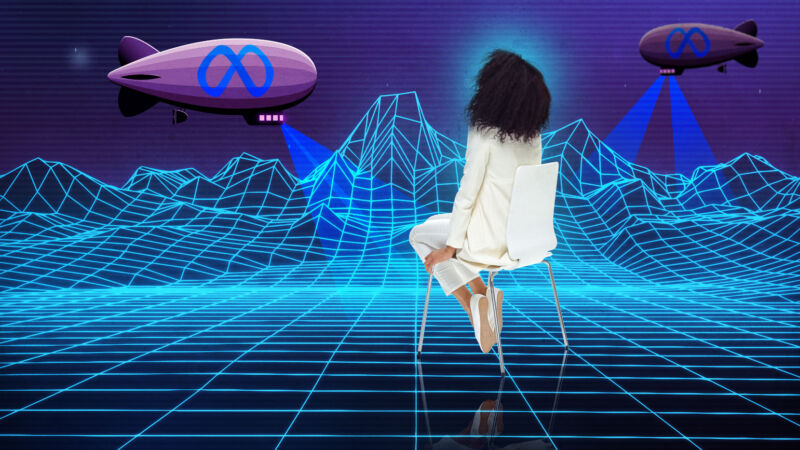
The Metaverse: What It Is, Why It Matters, And Why You Should Be Concerned About FaceBook’s Plans For It

So what is “the metaverse,” exactly? | Ars Technica

There was a time, not too long ago, when if you said words like “email,” “texting,” “hashtag,” and “internet” to most people, they wouldn’t know what you’re talking about. I am old enough to remember when the internet was only a fringe interest, known only to computer nerds and tech gurus.

Yes, that makes me feel older than I wish it did, but that helps illustrate my point.

Now, you’d be hard pressed to find someone who didn’t know what the internet was or what a hashtag entailed. These have all become parts of our lives, for better and for worse. Checking our email and texting our friends is just part of everyday life now. Most don’t even give it a second thought.

It should give us all pause in the sense that we don’t always know when some new technology or trend becomes that integral with our lives. We usually don’t realize it until many years after we’ve embraced it to such an extent that life before it seems strange by comparison.

At this very moment, we may be at such a state with an emerging technology called the metaverse. You’ve probably heard of it, if only in passing. The recent news surrounding FaceBook’s pending name change is at the heart of it, but who can honestly say they know what it is or why it matter?

I certainly won’t claim to be an expert on the metaverse. I am not the most qualified to explain it to most ordinary people. However, as someone who does follow this kind of tech news closer than most, I think it’s worth discussing. I also feel like the concept of the “metaverse” is in a similar position that we saw with the early internet.

In terms of basics, the metaverse is basically a more ambitious form of virtual reality. It’s not quite on the level of “The Matrix,” but it’s a lot more varied than a standard model of the Oculus Rift. It’s not just for playing games or creating elaborate avatars for ourselves. This is supposed to be something more personal.

According to an article in NPR, the metaverse is described as this.

Think of it as the internet brought to life, or at least rendered in 3D. Zuckerberg has described it as a “virtual environment” you can go inside of — instead of just looking at on a screen. Essentially, it’s a world of endless, interconnected virtual communities where people can meet, work and play, using virtual reality headsets, augmented reality glasses, smartphone apps or other devices.

It also will incorporate other aspects of online life such as shopping and social media, according to Victoria Petrock, an analyst who follows emerging technologies.

That may not seem too revolutionary at the moment. Then again, you probably could’ve said the same thing about email and texting back in 1994. It’s so new and poorly understood that most people don’t see the appeal or the potential, but I personally believe the metaverse represents an evolution of the internet, as we know it.

I also believe we should be very concerned that FaceBook, of all companies, is trying to be at the forefront of it all. To say that FaceBook has a credibility problem would be like saying a sewage plant has an odor problem.

In many respects, I don’t blame FaceBook for investing in the metaverse. Like every tech company, they’re looking to the future. They’re seeking the next big thing that they can develop, dominate, and monetize to the utmost. It doesn’t matter that they’re already a billion-dollar company. There are many more billions to be made in the metaverse, if not trillions.

If anything, the potential of that market intensified in wake of the COVID-19 pandemic. During this crisis, we all learned just how critical it is to stay connected to the internet. It wasn’t just a form of entertainment anymore. It became vital to continue working and going to school. Many even realized just how much they could get done from home with nothing except a computer and an internet connection.

With the metaverse, we could potentially do even more. One of the big limitations that the pandemic also revealed is the inherent limitations of a screen. While applications like Zoom and FaceTime allowed us to interact, it was still so impersonal. It didn’t have the same impact of being in someone’s physical presence.

The same limitations go beyond work and school. Even though we do a lot of shopping online these days, there are times when we can’t do everything we would usually do in a store. I can personally attest that buying a good pair of shoes or a dress shirt online can be a gamble. Even when you think you got the right size, it doesn’t always fit when you get it.

The metaverse could help change that. It could help us explore the internet in ways that go beyond a typical screen. It could help us create Zoom meetings that feel more like gatherings around a conference table. It could make shopping feel more like browsing a physical space, complete with more personalized selections.

It could even make for more engaging entertainment. Instead of just staring at a screen and watching a game play out, we could actually feel like we’re present and play a larger part of what happens.

Yes, that will likely include porn.

Yes, that will likely cause discomfort, distress, and all sorts of other issues that will get certain prudish crowds fired up.

No, that won’t stop the metaverse from evolving.

In the beginning, it probably won’t feel like that much an upgrade over how we interact with the internet at the moment. Chances are it’ll probably start off looking like something akin to “Second Life,” a game where people create and interact in their own virtual world. It’s a big idea, but it still looks like a game.

That will change as the interface and computing power improve. At some point, it’ll get to a point where going into the metaverse won’t feel at all like a game. The imagery and graphics could ultimately get so life-like that it’ll be hard to distinguish from the real thing. Going to a store in the metaverse could appear no different than going to a mall, at least from your brain’s perspective.

It won’t just stop at appearing lifelike, either. Add in more advanced interfaces, like the ones being developed by Neuralink, and there may come a time when going to the metaverse will feel like going into “The Matrix.” Within that virtual space, what we could ultimately do would only be limited by our computing power and network connection.

The possibilities are tantalizing.

However, keep in mind that much of these possibilities will be developed, packaged, and sold by FaceBook. This is already a company we know engages in shady business dealings, to say the least. We also know they’re not exactly careful with our private information. The idea of them being in control of this new virtual world should be concerning to everyone.

Thankfully, they’re not the only ones seeking to develop the metaverse. Other major tech companies are already making investments in creating this new virtual space. Will that be enough to ensure FaceBook and Mark Zuckerberg aren’t the undisputed overlords of the virtual world? I don’t know, but I hope there’s some semblance of balance in that world. As much as I’d like to explore that world, I’d be quite hesitant if doing so meant entrusting the integrity of the metaverse to a company like FaceBook.

Leave a comment

Filed under Artificial Intelligence, Current Events, Neuralink, technology

The “Perfect” Sex Robot Thought Experiment

There’s a good chance that you’ve encountered someone who has a very strange kink. It’s probably not illegal, disgusting, or damaging. It’s just something that would make most people cringe if said out loud with a straight face. I won’t speculate on what that kink might be. I’ll just trust in the lurid imaginations of anyone reading this article to fill in the blanks.

With that in mind, I’d like to add another detail to that concept. Say you know this person’s kink. It rightly disgusts you. You believe it could be harmful to both the person and whoever they’re doing it with. However, you also know that they’ve never acted on this kink with anyone. On top of that, you know they’ll never act on it. Would you still trust them?

I know that last part is a bit of a stretch. We can never truly predict how anyone will act in the future. They could be the most disciplined person who ever lived, exercising restraint every day of their lives for years on end. They would only have to have one lapse to undermine others’ trust in them.

That’s why I’m framing it as a thought experiment. This is the sort of thing that just has no analog in the real world. It’s still important to contemplate because it can provide insights into who we are, who we trust, and how we conduct ourselves as a society.

Now, I want to throw sex robots into the mix. I promise there’s a legitimate point to that. This isn’t me speculating about the future of sex robots and other technology that’ll likely impact our sex lives. In fact, for this thought experiment to work, I’ll have to push the concept of sex robots to an extreme that is probably beyond any technology we’ll see in our lifetimes.

That’s because it requires that we envision the concept of a “perfect” sex robots. Now, I put “perfect” in quotes because perfection is subjective, especially when it comes to complex issues like human sexuality. It’s just a useful way to envision a form of sexual expression that goes beyond just sex with robots.

For the sake of the thought experiment, here’s a quick definition of what constitutes a “perfect” sex robot.

The robot is of a humanoid form and composed of universally malleable matter. It can effectively shape-shift into anyone, taking on any appearance the user desires, including that of celebrities, fictional characters, or private citizens. The robot can also take on inhuman forms. It can have fully functional sex organs of any gender or entirely new genders.

It also has an artificial intelligence that allows it to perfectly mimic any identity, role, or personality the user wishes. There are no restrictions or taboos. The robot is completely obedient, cannot be harmed, and never suffers.

In essence, the perfect robot is like Mystique from the X-Men combined with Rosie from “The Jetsons.” It can look any way a user wants. It does anything the user wants. It’s basically the ultimate sexual outlet. It doesn’t matter how tame or perverse your kink is. This robot will act it out with you whenever you want.

Why does that matter?

Well, it matters because horrible sex crimes and abuse still happen. As disgusting as it is to acknowledge, people do horrific things to other human beings to obtain sexual gratification. While most people aren’t like that, those deviant individuals still exist. These twisted desires still exist. There are those who don’t act on them, but if the desire is there, it’s still worthy of concern.

I think it’s relevant, given how much concerns over sexual assault and sexual abuse have become in recent years. On top of those concerns, there are other taboos and cultural attitudes that have been skewing our collective sexuality for centuries. From organized religion to sexy video game characters, there are many forces influencing our desires.

That brings me back to the essence of this thought experiment. This is where we have to both use our imaginations and speculate on how we conduct ourselves in a society.

Imagine that this perfect sex robot exist.

Now, imagine that everyone has one or several as soon as they reach an age at which they can consent to sex.

Everyone can carry out whatever depraved sex act they wish with this perfect sex robot, even if it’s illegal.

It doesn’t matter what their income is, where they live, or what their background is. Everyone has access to this perfect sex robot.

People can still form relationships with real people. They can still have children and raise families, like they always do.

What would change in this scenario? How would everyone conduct themselves in a world where they always had an outlet for whatever sexual desires they wanted? From decadent billionaires to working class people, they can all live out whatever fantasy they want with whoever they want.

Take it a step further. Imagine you met someone whose predilections you knew. Maybe they share it with you or you find out. Whatever it is, you find it abhorrent. You believe that, if they did this with anyone other than a sex robot, they’d be guilty of a horrific crime. However, they’ve never done it with anyone other than the robot and never would. Would you still associate with that person?

Even if you had a guarantee that nobody ever acted out their perverse desires on anyone other than a sex robot, would you still be comfortable around that person? Hell, flip the roles. Imagine you told someone about your kinks and they found it horrifying. How would you feel if they resented you, even if you never acted on them with real people and never would?

Keep following the possibilities.

Imagine someone uses their perfect sex robot to sleep with your spouse, parent, sibling, or child.

Imagine someone who claims to be heterosexual, but engages in homosexual acts with their sex robot.

Imagine someone who is never abusive with anyone, but horrifically abuses their sex robot.

I’ll stop short of adding more layers to this experiment. I think I’ve gotten my point across. For now, I encourage everyone to contemplate this. Think about how you would conduct yourself around people in this scenario. Think about what it would mean for society, as a whole.

There are no wrong answers, but the possibilities are as profound as they are kinky.

1 Comment

Filed under health, human nature, sex in society, sex robots, Sexy Future, Thought Experiment

The (Distant) Future Of Marvel, Disney, And Entertainment

unnamed

I like to talk about the future. I don’t claim to have any special insight, but I suspect I give it more thought than most. I also believe I tend to think farther into the future than most. Whether it’s contemplating the future of how we’ll organize our society or how our sex lives will evolve, I try to contemplate possibilities beyond the next iPhone upgrade.

One aspect of the distant future that concerns me has to do with boredom, namely how it may become a much larger problem and how we’ll go about alleviating it. I’ve done plenty to argue that boredom can be a dangerous force, from creating immortal super-villains to subverting the very concept of Hell. If our future is to be stable, prosperous, and fun, we’ll need some form of entertainment.

With that critical goal in mind, I’d like to speculate on a potential brand of future entertainment that ties directly with the industry that we know today. Specifically, I’d like to imagine how big entertainment companies like Disney will continue to function in world where advanced artificial intelligence, brain implants, and near-universal access to the internet is a thing.

I feel the time is right to think about such things because just last week, Disney radically altered the entertainment industry by purchasing Fox. Beyond just getting the X-men and Fantastic Four rights back for Marvel, Disney bought a massive library of intellectual property that is potentially worth billions. Being a successful business with shareholders, and all, they’re going to want to make billions more.

How exactly are they going to go about that, though? That’s a question worth asking because the answer for the near future is probably not going to work for the distant future. Sure, Disney will probably rake in plenty of profits at the box office, just as they’ve done with Pixar, Marvel, and Star Wars. However, the movie and toy industry can only go so far.

While box office revenue is up, actual ticket sales are way down. More people are opting to stream their content directly, bypassing pay TV and theaters entirely. The same is true for print media, including comic books. Even toy sales are in decline. This is not good for a company like Disney, which has built its empire on media and merchandise.

That’s not to say things are dire. Disney has been around for almost 100 years. In that time, it has adapted through plenty of upheavals. If it’s going to survive another 100 years, though, it’ll have to adapt to a radically different landscape. Buying Fox is likely part of that process. Disney has already made clear that it plans to start a streaming service to compete with Netflix and Amazon.

That’s a good start, but a streaming service is probably not going to be enough, especially in a future where people live longer, work less, and can share more than just text messages with one another. If Disney wants to continue being at the forefront of entertainment, it’ll have to innovate in ways that leverage future technology in new ways.

After the purchase of Fox, though, Disney may actually be in the best possible position compared to every other entertainment company that exists today. That’s because, unlike its competitors, it has a wealth of intellectual property that it owns outright. From Micky Mouse to Marvel heroes, the library of Disney-owned characters is truly staggering.

In the past, this gave Disney the ability to make or license movies, toys, and games for billions. In the future, those mediums won’t be nearly as profitable, but not because those things will fall out of style. I believe that for Disney to make more billions, it’ll utilize its intellectual property in a very different way, one that will likely require an entirely new approach to entertainment.

Think, for a moment, about the current experience you get from a movie theater, a TV show, or even a life show. You sit in a seat and you just watch. You take in the sights and sounds. If done right, it creates a spectacle that you enjoy. However, the fact that the spectacle only utilizes major senses is somewhat limiting.

What if, instead, you weren’t just an audience member sitting in a seat? What if it actually felt like you were there? What if you felt like you were standing next to Captain America as he battled the Red Skull? What if you felt like you were there when Micky Mouse, Donald Duck, and Goofy all broke out into a joyous musical number?

I’m not just talking about better animation or virtual reality. I’m talking about a form of entertainment that makes your brain actually feel as though you’re experiencing something. It’s not quite like the holodeck on “Star Trek.” It’s more like plugging into “The Matrix,” but for reasons other than learning Kung Fu or having existential breakdowns.

Unlike “The Matrix,” though, you wouldn’t be the catalyst for the story. That’s something Disney would take care of, providing only the world and the vast array of sensations that come with it. Instead of paying for a movie ticket, you pay for an experience that lets you interact or feel part of a story involving Iron Man, Micky, or Buzz Lightyear.

That will likely be the most valuable resource of future entertainment, powerful experiences that give customers the rush and fulfillment of being there. Instead of going to a theater or theme park, they would just plug something into their brains, possibly through an implant like the ones Elon Musk is developing with Neuralink. From there, the experience will be directly streamed right into their brain.

It may sound invasive, but we already share so much of ourselves online, from what we had for lunch to the most intimate aspects of our personal lives. We’re already in the early stages of merging our technology. We already see our smartphones as integral parts of our lives. Why wouldn’t we do the same for brain implants?

Unlike a smartphone, a machine/brain interface can’t be dropped into the toilet or left behind by accident. That same interface won’t just augment the ability of our brains to access the entire wealth of human knowledge. They’ll allow us to directly stimulate the areas that forge our entire perception of the world around us.

This has huge implications, some more profound than others. For companies like Disney, though, that link will be critical with respect to maintaining its place as a dominant entertainment company. People already pay for powerful experience, be they movies, video games, or a full-body massage at a spa. Disney could simply cut out the middle-men while leveraging its vast library of intellectual property.

Sure, in the future, you could probably pay for fancy experiences like those offered in “Total Recall.” However, if you want an experience that allows you to be a Jedi, an Avenger, or a singing animal, you’ll have to go through Disney and they’ll be happy to sell you that experience for a price.

Every week, you’ll be able to select from a range of intense experiences the same way you navigate your Netflix queue. For some, you don’t need to leave your bed. You just plug a device into your brain and let it go from there. For others, maybe you travel to special venues that function like the holodecks in “Star Trek.” There, you could share the experience with others, making it a communal experience.

Disney would still likely need content-creators to craft those experiences. That means people like George Lucas and Kevin Feige will still have a job in this future. The particulars of those jobs would be very different, but the goal would be the same. They would create experiences and stories that people are willing to pay for.

As unpredictable as the future is, it’s still safe to assume that people are going to want entertainment. Wherever there’s a want, there will be a business willing to provide it. There will be competition. There will be billions, if not trillions, to be made in profits. Not every company around today will survive that competition. Disney, however, is already in the best possible position to thrive.

5 Comments

Filed under Artificial Intelligence, futurism, media issues, movies, Sexy Future, War on Boredom

The Appeal And (Major) Implications Of “Westworld”

westworld

When most people think about the future, they imagine all the ways that technology and progress will solve problems and make our lives better. I’ve certainly imagined that. I’ve even written about it, with respect to how future advances will make us smarter, protect us from disease, and even help us love each other better.

As intriguing as those possibilities may be, it’s also worth taking a moment to contemplate the implications. I’m not talking about the potential existential crisis we may face with advancing technology either. I’m referring more to the practical aspects of a future where disease, suffering, and toil are largely mitigated by technology.

Beyond just living in a world with less suffering and less struggle, how exactly would we entertain ourselves? That may seem like a mundane question, given the more serious implications of advances like genetic engineering and advanced robotics, but it’s one of those issues that effects individuals on a personal level.

If we’re always health, physically strong, and have our basic needs met through some universal basic income, then what exactly are we going to do with all that free time? I’ve expressed concern that this may create an epidemic of boredom that’s every bit as serious as any major pandemic. No matter how strong, healthy, or affluent you are, boredom can have some pretty debilitating effects.

Enter the fanciful world of “Westworld” and all its implications, sexy and otherwise. For those of you who don’t get HBO, it’s a TV show inspired from an old movie produced by Michael Crichton, also known as the guy who wrote “Jurassic Park.” It’s no “Game of Thrones,” but it has a fair amount of gratuitous violence, nudity, and sex, albeit with much less incest.

Graphic content aside, it’s the underlying concept behind “Westworld” that makes it such an intriguing show. That same concept also has even greater implications for what the future may hold in terms of immersive entertainment, managing artificial intelligence, and how we treat sex robots. For once, I’m not going to focus entirely on the sex robots, since I give that subject plenty of attention.

The appeal of “Westworld,” as both a concept and a show, is built around a company called Delos Inc., which offers its high-paying customers a chance to immerse themselves in a unique experience. For a while, they get to leave civilization, modernity, and all its associated infrastructure behind and live in rugged, lawless world of the old west.

It’s not some movie where they just get to see images of scenery. It’s not some virtual reality that just makes them feel like they’re there, either. It’s a fully realized artificial world, complete with intelligent androids that have the look, feel, and presence of real people. Sure, some still act as sex robots, but that appeal goes far beyond that.

This is a world where you can live a different life, experience in a different time, and explore a world that no longer exists. You don’t watch it. You don’t listen to it. You don’t follow along through the eyes of a protagonist. You are the protagonist. You actually get to live out a real fantasy where the participants aren’t just role playing. They’re sophisticated androids that really believe they are what they are.

Now, the operation and function of those androids has been a major source of conflict within the show. As the show has progressed, controlling these androids and seeing them develop a sense of self has made for great drama. I would argue it’s one of the most engaging aspects of the show. It creates powerful moments that reflect real existential issues with respect to artificial intelligence, some of which I’ve contemplated.

While those issues are profound, in and of themselves, I find myself more interested in how “Westworld” may reflect the evolution of entertainment itself. Look past the issue with managing intelligent androids for a moment and think about the business Delos Inc. is employing here.

On paper, it’s not just brilliant in terms of potential profitability. It may very well embody the future of entertainment. Take a moment to contemplate how the entertainment industry has evolved over the past 30 years. We’ve gone from analog to digital, standard definition to high definition, and now high definition to 4k.

I’m still old enough to remember the lousy picture quality of TV shows, the pre-IMAX movie theater experience, and theme parks with less-than-polished exhibits. I still vividly remember going to see “Men in Black” in a theater that was crowded, dirty, and cramped. It was fun, but not that immersive.

Over time, the general trend of entertainment, both with movies and with TV shows, has been to make it more interactive. Movies have done that with the rise of 3D movies. TV shows have done that through things like live-tweeting. Video games, especially, have become much more immersive, both through virtual reality and through online interaction.

This trend reflects the understanding from producers and consumers alike that the most powerful form of entertainment is the kind that offers the most immersion. A game on your smartphone is fun and all, but it’s just data on a screen. It’s not going to engage too many senses.

The same goes for virtual reality, which is basically just putting that same screen over your eyes and bombarding you with sound to make you feel like you’re somewhere you’re not. It also doesn’t change the fact that you don’t have to move your body, exert yourself, or engage in the kind of activity that would lead you to believe that the experience is real. Granted, the brain can be fooled, but only to a point.

What “Westworld” does is logical in terms of crafting an experience that makes people feel like it’s truly real. The customers of Delos Inc. aren’t just observing or following along. They’re actually engaging with this fantasy world. It’s not on a screen. It’s not being projected into their brains. It’s real and they get to be part of it.

That world can literally be anything they Delos Inc. wants it to be. With their resources and their army of life-like androids, they can create all kinds of worlds for customers to explore. These worlds don’t have to be confined by the laws of modern civilization, current social norms, or even notions of reality.

Perhaps they can create an apocalyptic world where participants can kill zombies and live the lives of rag-tag survivors, like those of “The Walking Dead.”

Perhaps they can create a medieval world in the mold of “Game of Thrones” where participants can live the lives of brave knights, lecherous kings, or privileged queens.

Perhaps, if the Marvel Cinematic Universe continues to grow, there can be a world where people either get to interact with the Avengers or even get to be the Avengers. As a comic fan, I would definitely pay for that experience. I would be shocked if Disney isn’t working on something like this now, as we speak.

It doesn’t even have to involve an elaborate fantasy world either. Perhaps there’s a world where participants can live the lives of rock stars in 70s and 80s, complete with cocaine, groupies, and massive concerts where they’re the stars.

In theory, there’s no limit to the kinds of worlds a company like Delos Inc. can create. The old wast in “Westworld” is just one of them. The key is making the world perfectly immersive, but still safe to the point where the costumers aren’t ever hurt and face no repercussions for what happens during the experience.

However, it’s in that key safeguard in which the implications of “Westworld” get more distressing. It even plays out a few times in the show. In this immersive world of the old west, participants can carry out acts that would be wrong, immoral, or downright abhorrent in the real world.

The androids in “Westworld” may be more intelligent than the average exhibit at Disney World, but they’re still just robots playing a role. If a participant kills, rapes, or tortures one of them, there’s no repercussion. The android can just be cleaned up, fixed, and reloaded with a new program like it never happened.

It’s that kind of moral void, so to speak, that may make this brand of entertainment questionable. Say there’s someone willing to pay a lot of money to a company like Delos Inc. to create a world where they could go on a killing spree, murdering and raping as much as they want. This person is a law-biding citizen who has never acted on any violent impulses. Would the company be unethical in accommodating that fantasy?

There may be plenty of other distressing requests. Maybe someone wants a world where they can live the life of an 19th century slave-owner because they want to abuse slaves. Maybe someone wants a world where they’re the Nazis and they get to commit any number of unspeakable atrocities.

Remember, what they do in this world isn’t done to real people. They’re just paying for an experience. It’s not like the kind they would get in “Total Recall” where they only get memories of an experience. In a world like that of “Westworld,” they actually interact with that world. They make choices and do things, but no matter what they do, there’s no consequence or repercussion.

It raises many disturbing questions that are impossible to answer now. “Westworld” attempts to answer some of them, but there are plenty more that are simply beyond the scope of the show. It may do a commendable job focusing on what happens when intelligent robots start to get a will of their own, but it doesn’t do much to explore the implications that this form of entertainment inspires.

It’s going to be quite a while before we have the technology that we see in “Westworld,” but even if the human race progresses to a point where people and society are free from most conflict, there will be a need for entertainment. The form that entertainment takes may just reveal more about us than we care to know.

1 Comment

Filed under Artificial Intelligence, futurism, human nature, sex in society, Sexy Future, Thought Experiment, War on Boredom

Artificial Intelligence, Deep Fakes, And The (Uncertain) Future Of Reality

deepfakes

Picture the following scenario that may or may not end up being a common occurrence in the near future. It’s not a thought experiment. It’s not a prediction either. It’s just a possible manifestation of what our future might hold.

It’s late at night and you decide to check out some porn. You struggle to decide which one you want to watch. You’re in the mood for something new so you search a little more. You find some elaborate scene where Amy Shumer is a transvestite and she’s doing it with Justin Bieber.

Eventually, you settle on the hottest new scene that just came out the other day. It has Kevin Hart, Steph Curry, and Michael B. Jordan all taking turns with Scarlett Johansson in a sauna in Paris. The scene plays out. You love ever minute of it and decide to save it.

I admit that scenario was pretty lurid. I apologize if it got a little too detailed for some people, but I needed to emphasize just how far this may go. It’s an issue that has made the news lately, but one that may end up becoming a far greater concern as technological trends in computing power and artificial intelligence mature.

The specific news I’m referring to involves something called “deep fakes.” What they are doesn’t just have huge implications for the porn industry. They may also have major implications for media, national security, and our very understanding of reality.

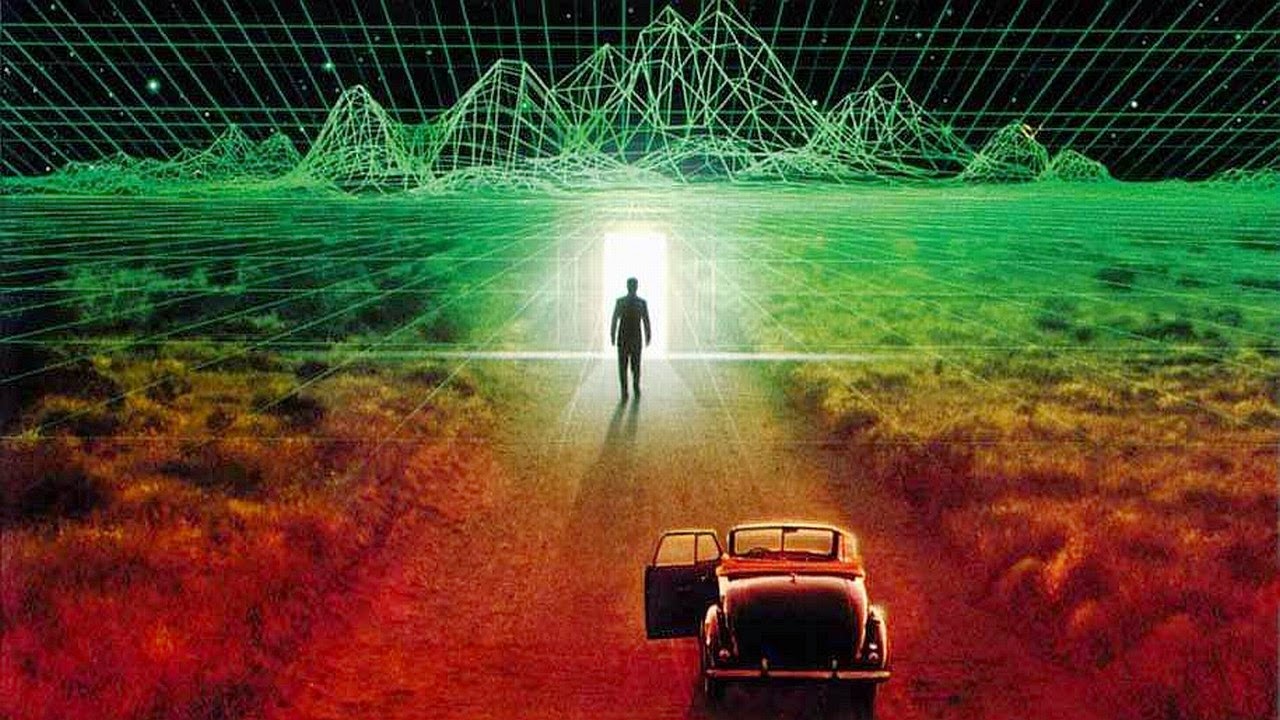
Image result for The Matrix

In essence, a deep fake is a more elaborate version of Photoshopping someone’s face into a scene. That has been around for quite some time, though. People pasting the faces of celebrities and friends into pictures from porn is fairly common. It’s also fairly easy to identify as fake. The technology is good, but not indistinguishable from reality.

That may be changing, though, and it may change in a way that goes beyond making lurid photos. Computer technology and graphics technology are getting to a point where the realism is so good that it’s difficult to discern what’s fake. Given the rapid pace of computer technology, it’s only going to get more realistic as time goes on.

That’s where deep fakes clash with the porn industry. It’s probably not the biggest implication of this technology, but it might be the most relevant in our celebrity-loving culture. In a sense, it already has become an issue and it will likely become a bigger issue in the coming years.

Related image

It started when PornHub, also known as the most popular porn site on the planet, took a major stand at removing deep fakes from their website. Specifically, there was a video of Gal Gadot, also known as Wonder Woman and a person I’ve praised many times on this blog, being digitally added in a porn scene.

Now, it’s not quite as impressive as it sounds. This wasn’t a fully digital rendering of an entire scene. It was just a computer imposing Gal Gadot’s face onto that of a porn actress for a scene. In terms of pushing the limits of computer technology, this didn’t go that far. It was just a slightly more advanced kind of Photoshopping.

Anyone who has seen pictures of Gal Gadot or just watched “Wonder Woman” a hundred times, like me, could easily tell that the woman in that scene isn’t Ms. Gadot. Her face literally does not match her physique. For those not that familiar with her, though, it might be hard to tell.

Image result for Gal Gadot

That’s exactly why PornHub removed it. Their position is that such deep fakes are done without the explicit permission of the person being depicted and constitute an act of revenge porn, which has become a major legal issue in recent years. These are PornHub’s exact words.

Non-consensual content directly violates our TOS [terms of service] and consists of content such as revenge porn, deepfakes or anything published without a person’s consent or permission.

While I applaud PornHub for making an effort to fight content that puts beloved celebrities or private citizens in compromising positions, I fear that those efforts are going to be insufficient. PornHub might be a fairly responsible adult entertainment company, but who can say the same about the billions of other sites on the internet?

If that weren’t challenging enough, the emergence of artificial intelligence will further complicate the issue of deep fakes. That’s because before AI gets smart enough to ask us whether or not it has a soul, it’ll be targeted to performing certain tasks at a level beyond any programmer. Some call this weak AI, but it still has the power to disrupt more than our porn collection.

Image result for fake images

In an article with Motherboard, an artificial intelligence researcher made clear that it’s no longer exceedingly hard for someone who is reckless, tech-savvy, and horny enough to create the kind of deep fakes that put celebrities in compromising positions. In fact, our tendency to take a million selfies a day may make that process even easier. Here’s what Motherboard said on just how much we’re facilitating deep fakes.

The ease with which someone could do this is frightening. Aside from the technical challenge, all someone would need is enough images of your face, and many of us are already creating sprawling databases of our own faces: People around the world uploaded 24 billion selfies to Google Photos in 2015-2016. It isn’t difficult to imagine an amateur programmer running their own algorithm to create a sex tape of someone they want to harass.

In a sense, we’ve already provided the raw materials for these deep fakes. Some celebrities have provided far more than others and that may make them easy targets. However, even celebrities that emphasize privacy may not be safe as AI technology improves.

Image result for celebrities taking selfies

In the past, the challenge for any programmer was ensuring every frame of a deep fake was smooth and believable. Doing that kilobyte by kilobyte is grossly inefficient, which put a natural limit on deep fakes. Now, artificial intelligence has advanced to the point where it can make its own art. If it can do that, then it can certainly help render images of photogenic celebrities in any number of ways.

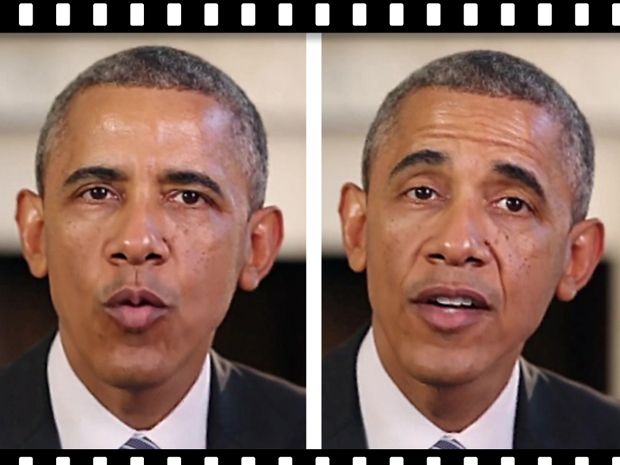
If that weren’t ominous enough, there’s also similar technology emerging that allows near-perfect mimicry of someone’s voice. Just last year, a company called Lyrebird created a program that mimicked former President Obama’s voice. It was somewhat choppy and most people would recognize it as fake. However, with future improvements, it may be next to impossible to tell real from fake.

That means in future deep fakes, the people involved, be they celebrities or total strangers, will look and sound exactly like the real thing. What you see will look indistinguishable from a professionally shot scene. From your brain’s perspective, it’s completely real.

Image result for realistic digital obama

One of these is real and the other is fake. Seriously.

That blurring of virtual reality and actual reality has huge implications that go beyond the porn industry. Last year, I pointed out how “Star Wars: Rogue One” was able to bring a long-dead actor back to life in a scene. I highlighted that as a technology that could change the way Hollywood makes movies and deals with actors. Deep fakes, however, are the dark side of that technology.

I believe celebrities and private citizens who have a lot of videos or photos of themselves online are right to worry. Between graphics technology, targeted artificial intelligence, and voice mimicry, they’ll basically lose control of their own reality.

Image result for reality fake

That’s a pretty scary future. Deep fakes could make it so there’s video and photographic evidence of people saying and doing the most lurid, decadent, offensive things that it’s possible for anyone to do. You could have beloved celebrities go on racist rants. You could have celebrities everyone hates die gruesome deaths in scenes that make “Game of Thrones” look like an old Disney movie.

The future of deep fakes make our very understanding of reality murky. We already live in a world where people eagerly accept as truth what is known to be false, especially with celebrities. Deep fakes could make an already frustrating situation much worse, especially as the technology improves.

For now, deep fakes are fairly easy to sniff out and the fact that companies like PornHub are willing to combat them is a positive sign. However, I believe far greater challenges lie ahead. I also believe there’s a way to overcome those challenges, but I have a feeling we’ll have a lot to adjust to in a future where videos of Tom Hanks making out with Courtney Love might be far too common.

4 Comments

Filed under futurism, gender issues, sex in media, sex in society, sexuality