Tag Archives: social issues

The (Dark) Secrets Of The Millennial Mind

In recent years, it’s become a popular past-time to hate millennials and anything associated with them. Browse any non-pornographic part of the web for more than five minutes and you’re bound to find some angry anti-millennial rant about how their hashtags, safe spaces, and compulsive need to take selfies is ruining the planet.

I tend to roll my eyes at those articles, just as I tend to roll my eyes at any rant that bashes a particular generation. I’ve read enough random crap and talked to enough bitter old people to know that every generation bashes the other to some extent.

The World War II generation whined about all the hippie types in the Baby Boomer generation. Those same Baby Boomers whined about the brooding, selfish, cynical, I-don’t-care-and-I-don’t-need-anybody attitudes of Generation X. In many respects, the millennials are just next in line. It was bound to happen because it’ll always happen, for as long as old people complain about young people.

Never mind the fact that the millennial generation is the most education generation of all time. Never mind the fact that the millennial generation is the most diverse generation of all time and are coming into a world with the lowest crime rates in modern history. Let’s also not forget that, unlike any other generation before it, millennials are the first generation to have unlimited, near-universal access to information.

No matter what type of world the millennials inherit, or what sort of advantages they have, older generations will find a reason to complain about them. It’s not so much that young people actively rebel against old people, as we see in one too many teen movies. It’s more the fact that they’re young and old people are older. I know that sounds inane, but that’s usually the heart of the issue.

Young people don’t have the same life experiences as old people. They can’t understand their perspectives because they haven’t lived them. Their world, and how they see it, is just so different and that frustrates older people because they can’t relate to it. Some will try, but successes will be limited, at best. As such, every generation is going to seem strange, deviant, and/or frustrating to one another.

I’ve certainly experienced this myself, at times. I think everyone has to some degree. They’re young, they talk to an older person, and that older person tells them all about how much better their generation was. They overcame so much more and did it without the aid of smartphones. Somehow, that makes them inherently better and then they wonder why young people tune them out.

In general, I try not to have those kinds of arguments because they’re pointless. As someone who falls in age range of a millennial, I know there’s nothing I can say or do to convince an older person that my generation is as good or better than theirs. That’s not not an argument anyone can win. It’s also pointless, in the grand scheme of things.
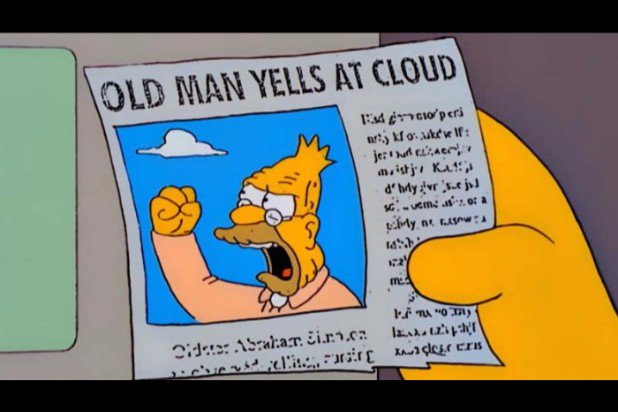
However, I do feel as though the millennial-bashing has gotten out of hand in recent years. It’s not so much that older people are complaining about millennials constantly texting on their phones. It’s more a matter of them conducting themselves in such a strange, erratic way that neither Baby Boomers or Generation X can make sense of.

Anyone who has worked with millennials knows this first-hand. This new crop of young adults are incessantly needy, easily offended, and overly emotional about trivial issues. They are the kinds of people that John Lennon, Kurt Cobain, and Madonna would’ve made fun of at every turn.

Now, I’m not going to try and dispel every myth and stereotype of the millennial crowd. Again, that’s not an argument anyone can win. Since I am a millennial, though, and I’ve worked with many my age, I feel like I can offer some context to the general weirdness of my kind.

I have to warn you, though, that context has some dark undertones. Even other millennials don’t always understand it. In a sense, there are some distressingly subversive forces that inspired many of those annoying stereotypes that other generations despise. Some of them have a basis in events that took place long before their time. Some have a basis in simple human nature.

Whatever the case, the mind of a millennial isn’t all hash-tags and cat videos. It’s actually governed by some pretty dark forces that older generations don’t even try to understand. While I doubt this will earn millennials sympathy from Baby Boomers or the Generation X crowd, I hope it provides some critical insight.

With all that said, here are five dark secrets of the millennial generation. These aren’t necessarily guarded secrets, but they are very much a factor in how they see the world. If you know or work with millennials, I sincerely hope this fosters a greater understanding.


Secret #1: We Are Paralyzed With Uncertainty

This is the first and most critical secret that every generation, including millennials themselves, need to acknowledge. It will help make sense of so many of the weird, annoying things they do, albeit for less-than-flattering reasons.

If you’re wondering why uncertainty is such a big deal to us, then stop for a moment and think about how much or how little you knew about the world in your youth. Before the age of computers and smart phones, your world was small. Everything you knew and needed to know could fit in your street, your city block, or your farm. The only uncertainty you dealt with was what you would have for dinner.

For millennials, the world is much bigger and much more accessible. They are connected, plugged in, and in tuned with mind-bogglingly huge amounts of information, from news to personal insights. On top of that, and this is worth repeating, they are the most educated generation of all time.

While that’s great for trivia games, it does have a major side-effect. As a result of so much education, millennials are basically walking examples of a Socratic Paradox. The more they know, the more they realize they don’t know. It’s a byproduct of learning more than what your limited brain can handle.

I’ve felt this first-hand. Just getting into something like superhero comics is daunting when you start to learn how vast and convoluted their history is. That’s just comics, though. Apply this to the world, as a whole, and millennials are utterly paralyzed by knowing so much and realizing how much more they need to know.

That’s why it’s not uncommon to hear millennials constantly asking for clarification, certainty, or reassurance. They think they know, but they don’t know for sure. With so much information, as well as growing trends in “alternative facts,” it’s almost impossible to be totally certain of all the information at a millennial’s disposal.

Keep that in mind next time a young person is constantly checking their phone. It’s not that they’re detached or inconsiderate. They’re just plagued by uncertainty of not knowing what’s going on, what’s happening with their friends, and how everyone is reacting to them. All that uncertainty kind of requires them to be plugged in all the time and it can be exceedingly stressful, among other things.


Secret #2: We Have (Extreme) Trust Issues

This feeds directly off the crippling uncertainty that millennials deal with. It’s not just a by-product. It’s an inescapable obstacle that comes with being educated, informed, and connected.

Millennials have serious trust issues. I’m not talking about the kind of paranoid, conspiracy theory, the-CIA-put-a-chip-in-my-brain type trust issues either. The extreme trust issues that millennials have is more subtle and, in many ways, a side-effect of trends that began in previous generations.

It was the Baby Boomers and Generation X that began rebelling against authority. They were the ones that started youth protests, giving the finger to authority, and brooding with unending cynicism. They helped exposed leaders and icons as hypocrites, crooks, and frauds.

They exposed multiple presidents as liars. They exposed celebrities as monsters. They exposed the corruption of once-cherished institutions. While all that might have been important with respect to pursuing justice, it also created a world where millennials cannot or are very reluctant to trust anyone.

Thanks to all the information at a millennial’s disposal, they can find out that great figures of history were also racist slave-owners. They can find out that beloved scientists and inventors were bullies. They can find out that the celebrities they love are real assholes. In essence, they can’t trust anyone to be true or genuine.

You want to know why superhero movies have become so huge with millennials? Well, that’s because they have no real-life heroes anymore. They’ve all been destroyed or discredited. They’re basically stuck with fictional heroes. That’s all they have left.

Beyond a lack of heroes and leaders who aren’t total frauds, millennials are so flooded with information that they have a hard time trusting the source. Everything seems biased. Everyone has an agenda. There’s fake news everywhere and nobody seems to know what the hell is going on, which I’ve noted out before.

So when you’re dealing with a millennial and they seem detached, that’s part of the reason. It’s also why they seem misinformed and misguided. They don’t know what or who to trust because every generation before them has given them way too many reasons not to. Add unlimited access to abundant information, fake and real, and how can anyone expect them to trust anything?


Secret #3: We Are Drowning In Debt (That We Can’t Escape)

This is one of those quirky issues that does get reported fairly regularly, but not everyone truly grasps the implications. It’s an undeniable fact that millennials are the most indebted generation of all time. A lot of that has to do with the growth of student loan debt, which recently surpassed credit card debt. There are all sorts of factors that led to this growth, but I want to focus on the effects for this.

Now I’ve seen some Baby Boomers and Generation X people roll their eyes at this issue, claiming that young people are stupid for taking out so much debt, just to get a useless college degree in underwater basket weaving. When most millennials hear that, though, assume they’re gritting their teeth to hold back their blinding rage.

That’s because a huge consortium of parents, guidance counselors, and raunchy movies have glorified college as this important next step that ever young person needs to take after high school. If you don’t take it, then something must be wrong with you. You must be stupid, lazy, or unambitious.

Since so many young people now feel inclined to go to college, that drives up demand. When anything is in that much demand, it gets more expensive. That’s just basic economics.

As a result, millennials have no choice but to take out student loans to go to college, just like the older people said they should. Then, those same people give them crap for taking out so many loans in the first place.

Beyond the frustration, those debt loads can be downright debilitating. When I was in college, I had a friend who had around $120,000 in student loan debt. In years past, that wasn’t a student loan. That was a goddamn mortgage. That means there are entire generations of people coming out of college who basically have to pay the price of a house without being able to live in it.

On top of that, millennials still get crap for having to live with their parents. They are in multiple no-win situations, both in terms of stigma and their overall futures. Unlike most other forms of debt, student loans cannot be discharged in bankruptcy. A millennial is stuck with it, no matter what they do.

If that weren’t enough, and it’s already too much, the job prospects for anyone without a college degree are abysmal. If you don’t have a college degree, then your ability to get a job that keeps you out of poverty is very low. Sure, you can point out that Steve Jobs and Bill Gates didn’t go to college all you want, but they never had to pay off a goddamn mortgage before they were 25.


Secret #4: We Have No Margin For Error (Or Offense)

A lot has been made about how easily offended millennials are. That’s how the term, snowflake, actually became an insult. Now, I don’t deny that young people take political correctness way too far. I’ve even talked about it a few times on my blog. However, like most things, there is a context and it’s kind of dark.

A big part of the millennial desire to not offend anybody comes from the self-esteem movement that began before they left the womb. An entire generation has been conditioned to have a bloated sense of confidence in a world where they can’t trust anyone, are constantly uncertain about everything, and have huge debts to pay. Naturally, that’s going to cause some inner conflict.

It’s not just that millennials hate bullies, racists, sexists, and bigots. For one, millennials are a far more diverse cohort than their predecessors, thanks largely to the efforts of previous generations. They have to be a bit more sensitive and understanding to others who are different because there are so many different perspectives to consider now. Millennials have to temper their sensibilities in order to get along.

Beyond that, and this is where it gets dark, the consequences of screwing up are enormous. Entire lives have been ruined by one off-hand tweet. A single off-hand comment has ruined reputations. In a generation that’s plugged in and connected all the time, nothing you say or do goes without scrutiny. You can’t have any private sentiments. If you do and they’re somewhat problematic, then you’re in trouble.

It’s another reason why millennials are so obsessed with their online life and how people perceive them. They live in a world where one text, one tweet, or one offensive image that they shared on social media can destroy their reputation, their friends, and their livelihood.

People get fired for offending others. Peoples’ lives are ruined, both financially and socially. When you’re young and you have a massive amount of student debt to pay off, you have to walk on egg-shells every day because if you mess up, there’s little recourse. Once something happens and it’s documented on the internet, it’s there forever.

Millennials didn’t create the world that made such hypersensitivity necessary. They also didn’t create the technology that they obsess over either. They were just born into a perfect storm, of sorts. If they dare rock the boat in any direction, then they’re tossed overboard without a life preserver.

Remember this next time a millennial obsesses over offending or not offending someone. It’s not just out of hypersensitivity. It’s basic survival. Older generations who have already carved a place for themselves can afford to be offended, literally in some cases. Millennials don’t have that luxury.


Secret #5: We (Have To) Rely On Our Passion

With every new generation comes new circumstances and with those circumstances comes a need to adapt. The Baby Boomers had to adapt to the generation that won Wolrd War II. Generation X had to adapt to the generation that protested Vietnam. The way they adapted shaped a great deal of their culture and identity. With millennials, it’s no different.

With the other secrets, I’ve described a pretty rough set of circumstances for millennials to adapt to. They’re uncertain, can’t trust anyone, drowning in debt, and living in constant terror of offending someone in a way that will ruin their lives. How can anyone adapt to that?

Well, human beings are nothing if not adaptable. It’s one of our most defining traits. With millennials, the options are limited, but they’ve made the most of them by becoming a very impassioned, very vocal generation. Whereas the Baby Boomers had their rebellious streak and Generation X had their cynicism, millennials have their passions to guide them.

By that, I mean the millennial crowd will put a lot of passion into whatever they do, be it protesting pronouns or posting videos of their cat. Due to debt, uncertainty, and trust issues, there are a lot of boxes they need to check before they commit to something. That’s part of why millennials aren’t getting married and why they’re having less sex. They can’t afford to be too casual, literally in some cases. There needs to be passion.

That’s why millennials will make a big deal about making whatever job or hobby they enjoy having some sort of passionate undertone. It’s how they can fill the many gaps left by so much uncertainty and such limited trust. It’s also how they can justify working a job that they know probably won’t help them pay off that massive debt they have. Without that passion, why would they bother?

The most tragic part of that element is that having such passion is really the only option millennials have in some cases. It’s a big part of why they’ll make such a big deal about certain issues that seem trivial to older generations. The older crowd has options. Millennials don’t.

Having passion, and a lot of it, is a big part of how they drive themselves. Sure, they can get annoying about it. I’ve lost track of how many overly passionate arguments about Wonder Woman’s costume I’ve heard on comic book message boards. When that’s all you really have, though, then that’s what’ll drive you.


While I doubt this will make millennials seem less annoying to older generations, I hope it provides some insight into what makes this generation tick. I don’t claim for a second that these insights are definitive. Millennials, like every generation that came before it, are a diverse group of people full of many variations, some more annoying than others.

However, this is their situation. This is how the world is shaping them. It’s a never-ending struggle, one that’s sure to plague the next generation just as much. I’m sure millennials will find an entirely different set of excuses to whine about that generation. I don’t doubt those excuses will be every bit as petty. I just hope I can sell enough of my novels by then to not care.

13 Comments

Filed under Current Events, gender issues, Jack Fisher's Insights

On Nice Guys, Women, And Whining

We’ve all heard it before. We’ve either experienced it, know someone who has, or seen at least fifteen movies built around the concept. There’s a guy sitting myself, his head held low as his lips quiver with sorrow. He’s sad. He’s lonely. Nobody likes him and women would rather endure amputation rather than touch his cock. When anyone asks about it, he tells the same boring story.

“I’m a nice guy! Why don’t women want to be with me? I’m not some jerk or asshole. What’s wrong with them?”

On some levels, we have sympathy for guys like that. Yes, I know there are women who feel this way too, but a generation of teen movies, romantic comedies, and high school drama has conditioned us to hear a male voice every time we hear this overplayed diatribe of angst.

Since I’m not in a position to undo that conditioning, I won’t try. Just bear with me because this is an important message to anyone who has either said those words or heard them from someone else. I don’t want to underscore the depths of that loneliness and angst. I’ve been there too. However, there is a context worth pointing out here.

Call it what you want. We really don’t have a label for it. I call it it “The Nice Guy Whine.” Unlike the wine you can drink, this one doesn’t get better with age. It’s one of those overplayed tropes that play out way too much in both the real world and in fiction. Movies like “10 Things I Hate About You” and “She’s Out Of My League” try to make it interesting and sexy. It doesn’t make the whining any less annoying, though.

They’re frustrated, isolated, and in utter despair. They’re nice guys. They do the right things. They’re generally well-behaved, law-abiding, and friendly. They don’t hurt anyone or go out of their way to make trouble. They’re just genuinely nice guys. So why won’t the beautiful women they want to get with hook up with them?

I don’t deny it’s hard and I’m not just talking about genitals here. As I’ve said before, we humans are a social, passionate species. We seek connection and intimacy. I’m not just talking about the kind we do between the sheets either, although that is part of it.

We want to find love. We want to be with someone. In terms of core needs, that’s right up there with food, water, and sufficient WiFi. When we don’t get that connection and intimacy, we get lonely and upset. That’s to be expected. Our brains and bodies know we need that intimate connection. When we don’t get it, it tries to do everything possible to get you to seek it, even if it means the occasional awkward boner.

So what’s going on here? Why is it that nice guys just can’t get any? Well, as someone who once asked those same questions and did plenty of Nice Guy Whining himself, I’d like to offer a clear and concise answer. For all the fictional characters and real people in this world who’ve whined like I have, listen up. This might be the most important thing you hear that doesn’t involve the IRS.

“Being a nice guy isn’t enough. The vast majority of the planet is full of nice people. By whining about it, you’re indirectly insulting every man or women who doesn’t want to be with you because you make it about them and not you.”

Reading that out loud, I’m sure it sounds harsh. Trust me, it’s not meant to be that harsh. It’s supposed to reveal a simple truth and it’s actually uplifting on some levels when you think about it.

It’s true. Most of the people in this world, including the guys, are nice. We only think it’s full of mean assholes because they’re the ones who make the news, get reality TV shows, and star in movies, albeit for all the wrong reasons.

The fact that these assholes get our attention is actually proof that most people are nice. Things don’t get our attention unless they’re rare, dangerous, or shaped like female breasts. Even science bears it out. People today are generally nicer and more decent to one another than they’ve ever been.

Why does this matter? Well, it matters because by whining about being a nice guy, you might as well be whining about the sky being blue or water being wet or tits being awesome. You act as though the mere fact you’re alive and not dissecting animals in your basement is reason enough for your dream girl to be with you.

Step back for a moment and think about that. You’re a nice guy. I don’t doubt that. Even so, why should that be your primary appeal to a woman? What else do you have to offer? What sort of skills, passions, and personality traits do you bring to the table? I’m not saying you’re devoid of those things. I’m just saying these are questions you haven’t bothered answering.

I ask them with the full understanding that I’ve done plenty of whining like that too. There were plenty of times, especially in my teenage years, when I whined about the girls I liked not wanting to be with me. For a time, it left me very depressed and extremely isolated. It was not a good feeling.

However, I’m not good at lying to myself so I was able to answer that question on my own. In addition to having a debilitating acne problem, I had piss-poor social skills and did not take care of myself. I like to think I was pretty nice in general, but how does that make up for the utter lack of benefits I would bring to a woman?

I know I have much more to offer now because I’ve actually worked on myself. I’ve taken the time to develop new skills and abilities. In addition to being nice, I’m very physically fit. I run at least 15 miles a week. I lift weights. I try to watch my diet. By most measures, I’m a physically attractive man.

In addition to my looks, I’ve got other benefits to offer. I have a car. I have no credit card debt. I have a steady job. I’m very skilled in terms of writing passionate, sexy stories meant to moisten panties. Believe it or not, these are skills that women find attractive. Just being nice is only a base requirement. Everything else on top of that are premium features.

It may sound cynical, the idea that being nice isn’t enough and you actually have to sell yourself somewhat. It gives the impression that people only want to be with you because you can do something for them. Well, how is that any different than what you want from them? It’s a bit crass, I know, but it’s entirely pragmatic when you think about it.

Part of being a social creature is bringing something unique to the table. Maybe it’s a skill. Maybe it’s a personality. Maybe it’s a certain type of energy that stands out from the others. Whatever it is, it’s part of the overall package that is you and you actually control what’s in that package. You have the ability to make yourself appealing. There’s nothing, other than sheer laziness, to stop you.

By just whining about being a nice guy, it’s like you’re trying to shame others for not having lower standards. You give the impression that someone is evil just because they prefer a smartphone with more features than an old flip phone.

In a sense, that undercuts your whole “nice guy” persona because wanting to do the absolute minimum to achieve the maximum desired results isn’t very nice. If anything, it’s as big a dick move as any Biff Tannen wannabe ever pulled off.

With that, all those whining nice guys out there have their answer. You know why being a nice guy isn’t getting you anywhere with your current crush. I even told you how to fix the situation. It may be harder for some than others, but the opportunity is there. You just have to take advantage of it. I’ll even add that most women, in my experience, will be attracted to men who takes advantage of those opportunities.

Leave a comment

Filed under Jack Fisher's Insights

How To Resist A Fascist Government (And Survive)

There’s been a lot of talk about fascism lately and I don’t deny that I’ve contributed to it. I tried to make that contribution meaningful and even sexy, but I know I’m facing some pretty strong headwinds that have managed to undermine far more relevant voices, like CNN.

Even if it is an uphill, fruitless discussion to have in the long run, it’s still worth having, if only to understand the forces behind it. It’s only when we understand something so daunting and dire that we can better deal with it. Like divorce, a death in the family, or a slow internet connection, it helps to maintain some sense of perspective.

With that in mind, I want to shift the discussion somewhat to something more practical. No, that doesn’t mean I’m about to trivialize the horrors of fascist regimes or make light of their victims. I like to inject sex appeal into everything I talk about, including fascism, but even I can’t make those topics sexy.

To that end, I’d like to focus on what people can do to actually resist a fascist regime. The topic of “resistance” has been a major issue lately, especially after what happened in the 2016 Presidential Election. There have been major protests, some of which I’ve discussed and some of which have become talking points for major media figures.

There’s plenty of angry rhetoric. There’s plenty more whining, yelling, and personal insults. I’m pretty sure that everyone’s mother has been called a whore at least once since January 2017. None of it is very productive, though. Most of it is just fodder for cable news and cheap laughs for those in power.

The truth of the matter is that there’s a right way to do a resistance movement, even against a fascist regime. Even the most authoritarian governments in history are vulnerable to collapse. It’s worth pointing out that nearly every major empire in history has collapsed, including the repressive ones. It may seem like a fascist regime can never fall. History, to date, says otherwise.

So with that in mind, I’d like to make another contribution to the discussion about fascism and the best ways to resist it. Moreover, I want to list the ways people can resist and have a good chance of surviving.

History shows that the kind of violent uprisings glorified in movies like “Red Dawn” may get people excited, and even horny in some cases, but it also shows that such violence tends to breed more violence. You need only look at the French Revolution or the Tiananmen Square protests for proof of that.

To bring down a fascist regime requires patience, foresight, and perseverance. Most importantly, the resistance needs to have easy tactics that everyone can do. That’s why I’ve compiled a quick list of easy tips on how to resist a fascist regime the smart way. It’s easy to do. It requires no violence. It just requires patience, perseverance, and a little luck. If done right, you’re much more likely to survive.

Please keep in mind, though, these tips only apply to fascist regimes that are run by humans, administered by humans, and populated by humans. That means subjects of advanced alien overlords like the Borg or superhuman despots like Dr. Doom need not apply.


Tip #1: Leave If You Can, But Survive If You Can’t

This is the simplest, most obvious tip to anyone unlucky enough to be living under a fascist government. I understand it isn’t always possible. I also understand that dealing with refugees are a complex hot-button issue. However, when it comes to bringing down a repressive government, it can’t be avoided.

One of the ways a fascist regime is inherently unstable is how it deals with it’s smart, highly skilled population. Fascist leaders tend to not like anyone smarter than them. That usually means brilliant, highly skilled people end up leaving the country, taking their knowledge and expertise with them. Nazi Germany found that out the hard way.

Countries like Iran are finding out too. When your country is a repressive, uptight society that won’t let well-paid, well-educated people have a beer or go to a strip club in peace, they tend to take their talents elsewhere. Without that professional class of people, a fascist regime can’t really accomplish much. It’s hard to make weapons of doom when you scare all the mad scientists away.

For those who aren’t highly skilled individuals and are unable to leave, the best thing you can do is survive. I know that’s much easier said than done, especially in the inherent poverty of fascist countries. However, being alive is important because it means the state still needs you. Without you, who’s going to provide the slave labor and constant adulation that a fascist leader demands?

Brutal or not, a fascist regime still has to care for its citizens to some extent. It needs to spend time, money, and resources ensuring that its people are actually capable of providing the labor and human resources to make the system work.

They may not provide much, especially if you end up in prison or a work camp, but the mere act of being alive still undermines the regime. So long as your existence forces the regime to spend time and money making you a productive member of their agenda, you’ve got the edge to some extent. Letting yourself die would only do them a favor. So in a sense, the best resistance anyone can do in such a horrible situation is just survive.


Tip #2: Tell Rulers Exactly What They Want To Hear (But Don’t Mean It)

This is another one of those inescapable pitfalls of living in a fascist regime. On paper, it may sound like you’re just emboldening the regime. That’s true, if you’re only looking at it in the short-term. If you’re willing to play a little three-dimensional chess, though, you can turn the tables.

There’s no doubt that living in a fascist regime will require you to glorify some despotic leader. You may hate their guts. You may pleasure yourself to the idea of them dying a violent death. That’s fine. Keep that hatred and kink strong within you, but keep it within you. If ever you have to put on a fake smile and tell the ruler how big their dick is, just grit your teeth and do it.

You’ll hate it in the short-term, but you’ll see the benefits in the long run. It’s one of those few times when the harshness of reality is on your side. If people only ever tell a dictator what they want to hear, they’ll avoid telling them about serious issues that need to be addressed. They won’t give the full story. They’ll avoid the hard facts, but those facts won’t avoid them.

As a result, fascist rulers will have a poor understanding of a situation or crisis. They’ll be incapable of making the kinds of decisions that strengthen their hold on power. Eventually, those decisions will erode the regime’s ability to function. They’ll leave their society in such a poor state that no amount of adulation will change it. At that point, the regime is as good as gone.


Tip #3: Conform In Public, Defy In Private

This ties directly into the previous tip. If you’re going to survive a fascist regime, you’re going to have to put on a public face you hate and do everything the regime demands that you to do in order to be a good citizen. You’ll hate it inside, but you’ll still do it because that’ll help you survive.

In private, however, you can afford to let yourself go. In fact, doing so will help inoculate you from the propaganda that all fascist regimes depend on to keep their population in line. Even repressive places like Iran are finding out the hard way that while some people show the necessary piety in public, they tend to get really freaky in private.

Now, I understand this would be even harder in a regime like the one described by George Orwell in “1984.” However, keep in mind that the kind of surveillance described in that book is pretty much impossible in the real world. Even North Korea has a hard time preventing smuggling.

If anything, more intensive surveillance means that your actually winning. All that surveillance, costing the regime time and money that it would rather spend strengthening its power. Having to micromanage its citizens is a huge drain on any regime, fascist or otherwise.

Welcome that kind of micromanaging whenever you can. In the long run, the regime will run out of money before you run out of things for them to manage. That way, when the regime starts to collapse, it’ll be easier for you and others dissatisfied with the regime to help it collapse. All you had to do was be deviant in private. Most people do that anyway so it’s something everybody can do.


Tip #4: Create Impossible Issues For Rulers To Deal With

This is a bit harder, but still fairly critical. By creating impossible issues, I don’t mean protest and complain to the fascist government. That’s usually a quick way to end up dead, in prison, or in a forced labor camp. You can still frustrate the regime, but you can do it indirectly.

The easiest way to do this is to just not do your job very well. Channel your inner Wally from “Dilbert” and do just enough to avoid getting into trouble, but nothing more than that. Don’t do your best. Don’t go the extra mile. That forces the regime to commit more resources to doing something that shouldn’t take so many to begin with.

Beyond just being a marginal worker, go out of your way to make day-to-day issues complex and tedious for the authorities. Think of it as a form of trolling, minus the insults to other peoples’ mothers. The key is to get the government to deal with multiple issues on multiple fronts. They don’t need to be big issues. In fact, the smaller the issue, the better.

Small issues frustrate governments far more than larger issues. Government, and its assorted bureaucracy, is a blunt instrument by nature. It can’t deal with smaller issues for the same reason a doctor can’t perform brain surgery with a baseball bat. It just doesn’t have the tools. That won’t stop it from trying. It’ll just made a mess of things and that works to your advantage.


Tip #5: Weaponize The Power of Apathy, Boredom, And Dispassion

This goes along with the previous tip in that it takes being lousy at your job a step further. One of the most important tools that fascist rulers use is their ability to rally up the passions of the public. They use their gift for rhetoric and giving fancy speeches to work people into a frenzy so that they’ll ditch all forms of critical thinking and follow them into battle.

While it helps fascist governments come to power, it’s not very useful when it comes to maintaining power. Sure, fascist governments will hold military parades and create these big, gaudy monuments to their glory. However, it amounts to an oversized toilet for pigeons if it can’t generate the same solidary.

That solidarity is the glue that holds a fascist society together. Apathy, Boredom, and utter dispassion is the solvent that breaks up that glue. If a government spends all that time and money blaring their glorious message to the populous, only to have them look back with blank and tired stares, they’re screwed.

If the people aren’t united and in an orgasmic frenzy of support, they’re less likely to sacrifice or aid the regime. Sure, they’ll follow the rules. They’ll march in the parades. They’ll even put on happy faces. They just won’t put much energy or effort into helping the regime stay together. That’s why the greatest tool any citizen in the resistance can have is their apathy. Without that, a fascist society just falls apart.


Tip #6: Let The Rulers Frustrate Themselves (And Stay Out Of Their Way)

This is probably the most enjoyable tip on this list and not just because it doesn’t require much effort. Technically, you really don’t have to do anything to make this happen, so long as you follow the other tips I’ve listed.

That’s because government and bureaucracy, at least those run by humans, are inherently flawed. That’s because people are inherently flawed. No matter how dedicated or passionate they may be, they’re going to make mistakes. They’re going to fall flat on their faces. All you have to do is let them.

This is especially true of dictators, who everybody is afraid to restrain. Eventually, they’ll get back up, blame everyone but themselves, and try to correct it. Chances are, they’ll fall flat on their face again. They’ll get even angrier. That kick-starts a brutal cycle that the dictator can’t escape. Eventually, they’ll frustrate themselves to the point of utter failure. Once they fail, the regime fails.

When this happens, the best thing anyone can do is stay out of its way. Every fascist regime has inherent flaws. You just have to be patient enough and tough enough to let them happen. It can be grueling and downright dangerous. In the long run, though, human nature and inept dictators will be on your side.

That, in essence, is the greatest and most fitting irony of fascism.

6 Comments

Filed under Jack Fisher's Insights

Why Fascists Want To (And Need To) Control Your Sex Life

Whenever I bring up a topic on this blog, be it advances in biotechnology or news on the “Wonder Woman” movie, it’s only a matter of time before I explore the sexy side of that topic. Sometimes that also involves the kinky side, but sometimes sexy and kinky aren’t mutually exclusive issues in certain topics.

Now, when it comes to issues of fascism and totalitarian governments, it’s hard to make that too sexy. However, it’s hard to discuss these issues without also discussing the implications on our sex lives. Even the most repressive governments still need people having sex o they can make babies that will eventually become works, soldiers, etc.

Throughout history, the government has always had some interest or policy in our sex lives. From state-sanctioned fertility festivals in Ancient Rome to rigid traditions in Ancient China, there’s always been some amount of government between the sheets. So those yelling for government to get out of their bedrooms probably don’t realize just how long it has been there.

For the most part, a government’s only real interest in your sex life extended to whether or not you were producing children that would become soldiers, workers, and tax payers. Beyond that, it could care less what you do with your genitals and how you do it. Those governments usually lacked the power, resources, and will to micromanage.

There were some exceptions, primarily with the sex lives of rulers and aristocrats. Since preserving the royal lineage was of the most vital importance, often leading to massive upheaval in a kingdom, they had to micromanage to some extent. If they weren’t producing heirs to the throne or to inherit the family land, then that was a problem. The entire premise of “Game of Thrones” is proof of that.

However, the world has changed a great deal since the days of kings, feudalism, and fertility rituals. Industrialization, modernization, and a better understanding of how our sexy anatomy works has changed how the people and the government approaches matters of sexuality. Sure, some people in government still have a poor understanding of certain lady parts, but our knowledge is more comprehensive for the most part.

It’s because of that knowledge, though, that a fascist or overly authoritarian regime has an even greater interest in controlling your sex life. At least the kings and emperors of the ancient world lost interest at the part where your sex life made the babies that would become soldiers and workers. Modern rulers with a keen interest in controlling a population know to go much further than that.

The best example of this is how Nazi Germany and Fascist Italy approached its citizens’ sex lives. For these governments, it wasn’t enough for people to make babies that would become soldiers and workers. They had to make perfect, super-babies and a lot of them. That whole “master race” ideology wasn’t just about subverting minorities. At some point, they need to have the race they prefer to propagate.

Sometimes, they did this through incentives. Giving birth to a healthy, racially pure baby in Nazi Germany came with all sorts of benefits. However, those benefits sometimes hid the heavy hand of the state. Women in this society were not expected to work. Their sole focus was supposed to be on producing more racially pure babies.

It wasn’t much different or better for women in Fascist Italy. While it didn’t rely heavily on concepts of genetic purity or racial supremacy, there was this ideal espoused by the state. The perfect woman, in their eyes, was supposed to be poor, subservient, and doing everything she could to give birth to as many babies as possible.

Beyond simply controlling the population, these fascist states also sought to control the nuts and bolts of family life. There was only one ideal family structure and one form of acceptable sexual activity. Any citizen that deviated from it in any way, be it homosexuality or watching certain types of porn, was prohibited.

Again, it goes several steps further than the prudish policies we sometimes get in non-fascist states. In America, we had policies like the Comstock Laws that effectively made talking about sexual issues a crime. Even today, issues surrounding sex education, which are prescribed by the government, are subject to plenty of controversy.

However, it’s that very presence of a controversy that highlights just how different a fascist state approaches sexuality compared to a non-fascist one. Say what you will about America and western governments. At least it’s possible to have a debate about sexual issues. It’s not always productive, but having that debate won’t get you killed.

The same can’t be said in a fascist state because controlling sexuality isn’t just necessary for population control. It’s a primary component of maintaining its overall power. A fascist state, by definition, needs to exercise a lot of control over its people. In general, people don’t like to be controlled. History shows it’s hard to control people. Even organized religion is finding this out.

For any fascist state to maintain control, it needs to be able to control the two most important drives in human beings, namely survival and reproduction. It needs to make sure that the citizens are completely dependent on the state to fulfill those drives.

It’s somewhat easier to confiscate food and use hunger to keep people in line. If someone is hungry, they’ll say or do anything to get a good meal, especially if a government dangles it in front of them as incentive.

The same applies to sex. Through policy, policing, and public shaming, it can dissuade people from exercising their sexuality in ways that the fascist state does not sanction. Like hunger, those who are horny will do anything they can to fulfill that basic drive. Some religions have already weaponized this drive. A fascist state would make it part of a larger system.

It’s because of that systemic approach to sexuality that it’s hard to claim that modern conservatives or liberals are seeking to control sexuality on the same levels as a fascist state. I know I make a lot of jokes about Rick Santorum’s views on sexuality, but he’s never favored creating an entire bureau of government to ensure that people have only the kind of sex that he approves of.

I also make a lot of jokes about how sex-negative radical feminism is making us more sexually uptight. While those on the more extreme liberal side of the spectrum may protest and shame those who dare exercise a form of sex they don’t like, they don’t actively ask the government the manage the sex lives of others.

That’s not to say both sides don’t have ridiculous, harmful, and often detrimental views of sexuality. They’re just not even in the same hemisphere as a fascist state, which would use human sexuality as a method of controlling its population.

It’s not just that a fascist state tends to be inherently prudish and tradition. It has to control things like sexuality because it has to control the people to achieve its goals, be it stability or some sort of racial agenda. So if and when the day comes when you need government approval to have an orgasm, you’ll know you’re living in a fascist state.

4 Comments

Filed under Jack Fisher's Insights

Politics, Safety, And The Impossible Paradox

political_debates_in_the_usa_by_brokenteapot

As I’ve said before, I really don’t like talking about politics. I’ve learned over the course of my life, often the hard way, that nothing makes people less comfortable, less horny, and more insufferable than politics. It couldn’t have less sex appeal without involving a clogged toilet, a dead rabbit, and Sean Hannity.

For the most part, I try not to get too political on this blog. I’d much rather be talking about comic books, sex robots, and Leslie Knope. However, there are times when I feel compelled to say something about a particular issue. I often do that with gender issues like feminism because that indirectly ties to the sexier topics I talk about. I try not to take too strong a position. More than anything else, I try to give perspective.

That’s what I did with my post about the health care debate. I tried to be fair to both sides. I tried to frame the issue in a way that both Michael Moore and Ted Nugent could appreciate. I didn’t offer any easy fixes. I didn’t try to denigrate one political ideology over the other. I just tried to point out the inherent flaws in the issue itself.

In the course of writing about that particular debate, I wanted to apply it to a few other issues. However, I quickly realized that there was no way I could do so in a single article and remain concise. When I write on this blog, I tend to assume that part of the audience is drunk, horny, or some combination of the two. That means I can’t drone on for too long, even though I have a habit of doing that when it comes to comics.

Health care is just one issue. Granted, it’s an exceedingly complex issue, but it’s still one issue. The underlying argument I made was that, beyond the complexity, both sides of the political spectrum have the same goal. The problem is that what they want isn’t just logistically difficult. It’s physically impossible.

It’s another hard truth, one that I’d argue is even harder than the truth surrounding O.J. Simpson. Sometimes, even when the politics involved have a noble goal, the particulars of an issue are just beyond our capabilities as humans to produce. We humans can do all sorts of amazing things, from the Great Pyramids to solar-powered vibrators. However, we are a species of many limits, many of which we often fail to acknowledge.

This leads directly to an even bigger picture, of sorts. It also involves something that’s currently impossible in a world without superheros, super-powers, or computers that can’t be hacked for hilariously stupid reasons. Until we start enhancing ourselves, it’ll remain impossible for the foreseeable future.

I call it the impossibility paradox because most people, regardless of their political persuasion, act as though the impossible aspects aren’t there. They’re often smart, driven people who are every bit as driven as their ideological opponents. They work so hard to accomplish something that’s physically impossible. Then, they’re surprised when they come up short.

On top of that, the people they claim to represent or help get upset with them because they didn’t accomplish what they promised. Never mind that what they promised was never possible to begin with. Human beings just aren’t that reasonable, even if they like to pretend that they are. Everybody is still subject to the constraints of reality and, like a moody dominatrix, it doesn’t mind telling us who’s dominant.

Now, apply that dynamic to what might be an even bigger issue than health care for some people. Whether you’re gun-toting conservative or a pot-smoking liberal, most agree that a central function of any government entity is to keep citizens safe.

No state, kingdom, or Dungeons and Dragons guild can survive without providing some level of safety. People, society, and the economy can’t function unless there’s some level of safety. Nobody wants to make iPhones and exchange brownie recipes if there are barbarian hordes just a few miles away, ready to raze your home to the ground.

Since the dawn of civilization, every functioning society has had to provide some measure of safety and protection to its citizens. In exchange, citizens pay taxes to the state so that it can have the resources to perform these duties. Ideally, they’ll use those taxes carefully in accomplishing this goal. In the real world, however, nobody will ever say with a straight face that all taxpayer money is spent wisely.

However, this is where even the anti-government, Ron Swansons of the world have to face another cold, hard fact of reality. It’s every bit as inescapable as the health care debate. Even if, however unlikely, a government spent every penny of taxpayer money wisely and dedicated every resource into ensuring safety and security, it still wouldn’t be enough. That’s because of one simple truth.

“Nobody knows ALL the facts and nobody CAN know all the facts.”

If that sounds a bit too similar to the advice I recently gave on making sense of the world, then bear with me. There’s a reason for that. It’s similar, but not the same because the scope of the issue is different. Every issue takes on twisted, often frustrating new dimensions when politics enter the picture. Just ask Major League Baseball.

When it comes to safety, though, there’s an inescapable complication that has plagued every government entity that ever existed and will continue to plague governments until our robot overlords take over. To provide safety, you need to know everything about a situation and have the resources to deal with it. Unfortunately, or fortunately for privacy-minded folks, nobody can know everything about a given situation.

Nobody can know for sure when and where a terrorist attack will occur.

Nobody can know for sure whether or not a rival nation is plotting against them.

Nobody can know for sure whether a handful of countries are colluding to undermine them.

Nobody can know for sure whether that weird-looking guy walking down the street is about to go on a shooting spree or just skipped laundry day.

There are just so many unknowns in the world of geopolitics. There are a lot of unknowns for individuals as well. Hell, we still can’t figure out just how useful or useless pubic hair is. How are we supposed to know everything about the threats to our safety and sovereignty as people?

That’s just it, though. We can’t know. It’s physically impossible for any one human or group of humans to know everything about a certain situation, individual, or threat. Sure, the CIA could bug your phone and hack your browser history. That may even give them plenty of reason to believe that you’re conspiring with a hidden network of BDSM enthusiasts to take over the entire state of Montana.

At the end of the day, though, even the CIA can’t know for sure and that has proven costly throughout history. No agency, no matter what they call themselves or what sort of fancy acronyms they use, can know everything about a situation. I’m sure they’d like to know. If you’re of the mind of Alex Jones, you might even believe they’re working with aliens to remedy that.

Even if they did have some way to read all our thoughts, there’s still the matter of sifting through random daydreams and outright plots. Honestly, who hasn’t contemplated whipping out a can of lighter fluid and setting a coffee shop on fire because they got your order wrong? The difference between those thoughts and real action, though, is huge.

I’m not saying that governments and police forces should give up trying to keep people safe. We still need some measure of safety in order to function as a society. The problem is that because of this safety paradox, we end up in these brutal cycles that only make us more fearful. It goes like this.

  • Some strange, complex, dire threat is out there and the media blows it up to scare people

  • The people demand action from their politicians and authority figures

  • Those politicians and authority figures try to respond, if only to maintain their hold on power

  • Those politicians and authority figures fail to provide perfect safety because doing so is impossible

  • The public gets upset with the existing people in power and looks for alternatives

  • Some new power-seeking people enter the picture, making impossible promises to fix impossible situations’

  • The citizens, desperate to fix the impossible problem, put these people into power because anything seems like an improvement over the status quo

  • The people who made the impossible promises, predictably, fail to deliver and generate another round of disillusion

  • The cycle starts all over again

This is part of why congress’ approval rating is so low. It’s also why western countries keep cycling through political parties, constantly voting new people into office in hopes that they’ll find a way to solve impossible problems. In every case, they are unable to deliver. Most people don’t see the impossible logistics, though, so they just look to the next power-broker who can deliver.

For now, we’re very much at the mercy of impossible situations and the people who claim they can solve them. Some of these situations will become less impossible as we develop better tools. Until then, though, let’s be mindful of the impossible demands we make on those we entrust with our safety. It’s often when we have impossible standards that we doom ourselves to unlimited disappointment.

7 Comments

Filed under Jack Fisher's Insights

How To Break A Taboo (Or Stop It From Becoming One)

It’s not easy talking about taboos, sexual or otherwise. It’s kind of in the definition. Taboos, by default, are hard to talk about and hard to make sense of. Some don’t even make sense indirectly. If you’ve seen more than two seasons of “South Park,” you understand that.

In talking about weird taboos and the quasi-logic behind them, I try my best to make sense of them. We all have to do that to some extent over the course of our lives. I just try to do it in a way that’s sexy and could potentially lead to sexy stories that I can turn into novels.

While every taboo is unique in the sense that it’s uniquely weird, they are prone to fads, trends, and people just getting bored of them. As I’ve pointed out before, there are certain innocuous behaviors that we do every day that most used to be on par with public masturbation.

A lot of taboos fade over time, often as new generations enter the picture and form taboos of their own. Some linger and refuse to die gracefully. That’s why we still have blurred female nipples on cable TV and not a hint of BDSM in the “Wonder Woman” movie. I refuse to believe that there’s any justification for blurring nipples on network TV in the area of ubiquitous internet porn.

There’s no doubt that we’ll be dealing with taboos for as long as we’re a bunch of cavemen running around with smartphones and nuclear weapons. That may change when we get around to upgrading our brains, but even that may inspire a whole host of taboos that we can’t begin to imagine, although I did try.

For now, there aren’t many ways to break a taboo or stop something from becoming taboo. In some cases, it’s downright impossible. No matter what you do, people are going to get weird around certain proclivities, some of which involve some pretty kinky fetishes. Look up something called “cake farts” and try to find a way to not make that weird.

While there may not be a way to completely eliminate some taboos from our society, there are some ways to confront them. It is possible to break certain taboos and/or avoid them from becoming one altogether. Now, that’s not to say it can be done overnight or with a few strategic tweets. People are really stubborn when it comes to taboos, but they will come around if the conditions are right.

With that in mind, here are some of my tips on breaking and/or circumventing taboos. A lot of these tactics can apply to the sexy kind of taboos, but they also apply to others, many of which involve poor people and minorities. Again, don’t take this as a magic pill or something. Breaking taboos is hard and for good reason. We’re a petty species, but we can be reasonable if the conditions are right. That’s a big if though.


Tip #1: Make Taboos Profitable And Lucrative For Business Interests

This probably won’t surprise anyone who tips generously and has never found used bubblegum wrappers on their pizza. Money talks. It talks a lot. It also influences, more so than we’re comfortable admitting. It can, and often is, a source of corruption. In some parts of the world, that corruption is a big part of the economy. When there’s money to be made by politicians and business people, it can get messy.

That said, it’s a two-way street. Money and business interests can be corrupt, but that same corruptive force can be channeled. We’re seeing that with the growth of the marijuana industry. We saw it with the rise of the porn industry. These industries generate billions of dollars. That’s a lot of money by any measure.

No matter how regressive or uptight people may be, when there’s money to be made, people generally follow the money. A taboo that makes nobody any money is easy to clamp down on. A taboo that generates billions of dollars and significant tax revenue is a lot harder to fight.

While I don’t agree with Gordon Gekko’s famous quote about greed, it can sometimes work to others’ advantage. When it comes to legitimizing a taboo, being profitable and taxable on some level really goes a long way. At some point, the money just overpowers the weirdness.


Tip #2: Make Taboos Expensive To Preserve

This is more a preventative than confrontational measure. After a taboo becomes entrenched, it can usually find ways to endure any number of expensive lawsuits and litigation. Just look at the Church of Scientology. Truly robust taboos will find ways of exploiting the legal system to their advantage.

If you have a chance to be proactive, though, the legal system can work for you. It’s not too hard to sue for discrimination or harassment, these days. If you’re a minority, it’s even easier and you may end up on the news with Bernie Sanders. They key here is to focus more on the bigger picture, though. One lawsuit alone isn’t going to break a taboo. Many lawsuits, however, will make it impossible to maintain.

This is how a lot of our modern anti-discrimination laws emerged, using a series of successive lawsuits that made preserving old taboos too damn expensive. People may be stubborn, but when it comes to getting their lawyer’s bill, they will eventually grit their teeth and change their perspective. Even if they have the money to pay the lawyers, you can’t always put a price on frustration.


Tip #3: Make Sure Taboos Scare And/Or Inconvenience Rich People

This is one of those uncomfortable, if not infuriating, aspects of taboos and social norms. There are usually a disproportionate number of them that are directly effected, or in some cases imposed, by the rich and powerful. Taboos can be a form of excuse banking, helping rich people justify their treatment of the poor and minorities.

That’s how many people justified segregation, slavery, and feudalism. The system was such that any changes would’ve grossly inconvenienced the rich and powerful. In some cases, it might have completely ruined them.

Say what you will about rich people. They can afford to accept such criticism. They, like any other rational human being, seek to preserve their resources and their power. That’s the entire theme of the “Star Wars” movies. If giving minorities equal rights or allowing women to show their tits in public somehow undermines profits or power, then you can bet they’ll fight it with every ounce of their considerable resources.

Conversely, the act of frustrating the rich can help break taboos and even end them. Rich people want more money. Powerful people want more power. One of the major problems with segregation, among many, is that it effectively cut off an entire customer base. Once minorities could work and earn money, they wanted to do what everyone else does and spend it. The desire to spend money knows no race or gender.

Eventually, rich companies will want that money. At the same time, powerful people will want those votes and support. At that point, a taboo’s days are numbered. Being a racist asshole may be fun for some people, but it gets old fast once it starts costing money.


Tip #4: Make A Taboo Boring Or Bland

I’ve spoken before about the power of boredom. It can create super-villains and drive teenagers to cold-blooded murder. It is a powerful force, one that’s plenty powerful to break a taboo.

It’s not easy, though. In fact, I would argue that this is probably the hardest tactic to use if you’re trying to combat a taboo. Taboos usually emerge because something gets a rise out of people, often revulsion or outrage. It’s hard to temper that sort of thing. However, it can be done.

It’s happening right now with taboos surrounding marijuana. When I was growing up, the mere mention of marijuana conjured fear and horror. These days, it mostly conjures scenes from Seth Rogen movies. You could make the argument that public attitudes changed because of growing awareness of the effects of marijuana compared to alcohol. I would argue that the debate just got too boring.

Now that marijuana is becoming a full-fledged industry, there’s a financial incentive to break the taboo. However, it’s the lack of horror and outrage that comes with smoking a joint these days that really undermines the taboo. Say what you will about Seth Rogen. The man isn’t exactly scary. Without that fear, boredom usually follows.


Tip #5: Give A Taboo Political Connections

This is another aspect of making a taboo too expensive to preserve. Sometimes, it’s just not enough that taboos cost businesses money, as racial segregation often does. Even when the economics are on your side, you still need powerful allies when combatting or preventing a taboo.

This is where it pays to have powerful friends who owe you money and/or favors. You don’t always need compromising pictures of them either, but that can help. This is a big part of how the gay rights movement got off the ground. They had the support of billionaires and well-connected individuals who could influence people in power. Money talks, but sometimes political connections shout.

Again, it can cut both ways. There are billion-dollar organizations that fight to preserve taboos, but at least it’s a level playing field. Unlike the working poor, some taboos have billionaires who spend time, money, and favors to fight them. That’s a big part of how same-sex marriage became legal.

So as a rule-of-thumb, it helps to have both rich people and powerful connections in fighting a taboo. Granted, those same taboos could use similar tactics, but they’re at the mercy of the same limits. That means that if, despite the battles between billionaires and power brokers, a taboo simply doesn’t jive with our caveman brains, then it’s going to fail in the long run.


Tip #6: When In Doubt, Turn A Taboo Into A Party

This tactic is probably the most enjoyable, as well as the most satisfying. We humans love to party. We’ll look for any excuse to throw a party, have some fun, and take our clothes off without public shame. Taboos can be serious, scary, and depressing. Parties are the exact opposite of that.

Fighting a taboo with a party is like fighting fire with a waterfall. It’s using a diametrically opposing force to combat something. Mix in music, dancing, alcohol, festivities, exposed body parts, and an excuse to leave work early and you have the perfect antidote to a taboo.

This is what Mardi Gras does once a year. This is what Brazil does with Carnival. Taboos, reservations, anxieties, and fears all melt away in the spirit of having fun and enjoying yourself. This is especially potent for sexual taboos. These taboos, and the social norms built around them, tend to be frustrating and difficult for those who preserve them. A party is like a release, one that’s easy and enjoyable for all those involved.

So if you want to start the ball rolling on breaking a taboo, don’t hire a lawyer or make friends with a billionaire. Start by throwing a party. Make it fun, festive, and happy for all those involve. No taboo will stand a chance.


There are probably more tips and tricks for beating taboos that I didn’t list. There are likely a lot more that I didn’t even think of. Again, I’m not an expert. I’m an aspiring erotica/romance writer who tends to overthink certain subjects more than most, be they comic books or sleeping naked.

While I don’t expect these methods to spare us from a future of censor bars and blurred tits, I hope it makes people aware of the mechanisms behind taboos. They’re rarely logical and they tend to reflect certain proclivities in our society that we’d rather ignore. If we’re to make progress as a species, though, we should confront them and, if necessary, kick them in the ass.

4 Comments

Filed under Jack Fisher's Insights

Weird Taboos (And Why They Exist)

When it comes to taboos, we love to laugh at the crazy practices of the past while ignoring the equally-crazy ones in the present. We look at how ancient people used to sacrifice goats, sheep, and parts of their genitals and laugh and/or cringe. Then, we go back to wearing our lucky underwear because we think it’ll help our favorite football team win.

The failure to see the irony in that sentiment reveals the power of taboos. I’ve talked about them before, but usually in a narrower context. Being an aspiring erotica/romance writer, I’m naturally going to focus on the distinctly sexy taboos, as well as the overtly non-sexy ones. I doubt that surprises anyone.

However, taboos actually get much more ridiculous than what we can or can’t do with our genitals. You don’t even have to go back to the Bronze Age to see them. Some of those taboos happened within the past two centuries. Some of our grandparents were alive when they were popular. It’s kind off funny when you think about it, but it’s also kind of tragic.

Recently, our old friends at Cracked.com did a little article on some of the weird/crazy taboos we had in the past. They called it “15 Everyday Things That Used To Be Scandalous.” Today, they seem so innocent. Back then, though, they were a big deal. Breaking them meant social stigma, condemnation, or even arrest. These days, most people are just concerned about becoming an internet meme.

Make no mistake, though. A lot of these taboos are pretty ridiculous, even by non-21st century standards. There’s a damn good reason why they didn’t last or fell out of favor. We humans may be slow when it comes to embracing social change, but we eventually get around to it. It’s just never as fast as we’d like.

To give you an idea of how ridiculous those taboos were, here’s a quick sample from the Cracked article. Remember, they may seem crazy now, but there was a time when simply talking about it would earn you unwanted attention from the nearest constable, priest, or parent/teacher association.

Entry 15

Entry 14

Entry 12

Entry 7

Entry 6

Entry 1

I know. They are pretty ridiculous. I mean soda pop and reading at night? How could that possibly count as taboo? You can kind of understand why people would be a little reluctant about women in bikinis, especially in the days before internet porn, but soda pop?

Ridiculous or not, there are a few common themes in these taboos. If you go back far enough and look at some of the most overt taboos, you’ll notice how a lot of them deal with female sexuality, rebellious teenagers, and empowering poor people in any way. I know that all sound like stuff that angry rich old men whine about when they haven’t taken their meds, but it actually runs much deeper than that.

Taboos don’t happen in a vacuum. People don’t just make them up because they want another excuse to be a dick to each other. We already have plenty of those. There are reasons they often take the shape they do. It’s rarely due to some grand, patriarchal/communist/hippie conspiracy. A lot of it just has to do with people being weary of things they don’t see as “normal.”

I put “normal” in quotes because the very concept of “normal,” even in a legitimate scientific context, is laced with bullshit. However, there is something to be said about the unspoken social norms under which we all live. Those norms, as crazy as they might be, are an integral part of how we function as a society and a species. The fact those norms tend to screw up our sex lives is kind of a nasty side-effect.

The way it works uses a mix of both caveman logic, faulty brain writing, and skewed common sense. We, as individuals and as groups, tend to function better when there’s a sense of predictability. If we can be more certain of how people will react in certain circumstances, then that can help us create a system, of sorts, to carry out the various functions of a tribe or a society.

Think about it. The systems we have for standing in line, driving on the highway, and complimenting someone’s ass all have certain checklists of sorts that we go through in our minds. Not all of them are enforced by laws. Some aren’t even enforced by anything. It’s just one of those basic understandings that we all collectively acknowledge, albeit indirectly.

Here’s a simple example. When I was going through the soul-crushing process that was high school, there was this unspoken taboo on the bus. When you got on, you never just sat in the front seat. You always went to the back and filled it up from there. If you did dare sit up front, you got weird looks, as though you’d just rubbed your ass on the window. Nobody ever talked about why we did this. We just did it.

That’s a fairly simple display of how unspoken social norms manifest. Considering it happened in high school, it wasn’t even the tenth most awkward thing I endured. However, it does help put some perspective into these ridiculous taboos.

Now, take that perspective and add a little sex appeal to it. Suddenly, you’ll sense a few assholes tightening. There’s no getting around it. Even in 2017, we still have weird attitudes towards sex, especially when it comes to female sexuality and teenage sex. We have almost as many weird attitudes about the poor. As such, it makes sense that so many of our taboos are built around both.

To understand the ridiculousness behind those taboos, you have to imagine yourself in a society that’s very different from your own and operates under a very different set of social norms. That’s not easy for some people. Being an aspiring erotica/romance writer, I like to think I have more imagination than most.

You’re living by a certain set of norms and practices. They don’t always seem logical. Maybe you never wear red clothes on a Friday. Maybe you salute every pregnant woman you meet in public. Maybe you shave your ass every other Tuesday as part of some elaborate cleansing ceremony. It can be anything really. The key is that it just doesn’t have to be too detrimental to our ability to survive and reproduce.

By living with these norms and practices, they start seeming right. They seem like this is how society is supposed to function. Anyone who questions them might as well be promoting dead puppies on every street corner. You, and everyone around you, are convinced that these taboos have merit, even when they have no logic behind them.

That sentiment is understandable to some extent, but it’s when you inject sex and social class into the mix that it gets really messed up. As I’ve pointed out before, people have all sorts of weird hang-ups and attitudes about sex. Some of them have some merit, such as the real health issues that often come with sexual promiscuity. Others are more subversive.

The key to any successful society is some measure of stability. To have stability, you need some level of control over various social functions. Like it or not, sex is a major social function. Without it, societies can’t propagate. New generations can’t take over for those that die off. Naturally, people are going to put a lot of emphasis on it, sometimes directly and sometimes indirectly.

This is why you get societies where most marriages are arranged and marrying for love is actually taboo. It’s also why controlling female sexuality is so heavily emphasized. They’re the ones who carry the babies inside them. They’re the ones who nurture them after their born. Since sex makes babies, people are going to want to control it to some extent, as fruitless an effort that might be.

It’s just as bad for the poor. In every society thus far, there has to be some sort of underclass that toils in factories, farms, and various low-paying, low-skilled labor. I say there has to be because, until we can get robots to do it for us, their work is literally the foundation on which civilization is built.

That puts the rich despots, kings, and business people in a tough position. They understand on some levels that if the poor knew how much they were being screwed over and how their toil subsidized the obscenely lavish lifestyles of the rich, they wouldn’t be too happy about it.

That’s why having taboos that discourage laziness, education, and questioning persist. That’s why there’s an entirely mythology around the “dignity of work.” They’re an indirect way of maintaining existing social norms and protecting whoever happens to be benefiting from them from the horrors of inconvenience.

Not every taboo can be attributed to repressing sexuality or keeping the poor in their place, but the dynamics are the same. They have just as much potential to be ridiculous, illogical, and even downright cruel, as many boys can attest. So long as our caveman brains keep using them to preserve our social norms, they’ll always be here. I just hope we can one day ditch those that involve mutilating our genitals.

13 Comments

Filed under Jack Fisher's Insights

Idiots And How They Effect Your Love (And Sex) Life

For certain topics, there’s just no way to be subtle. There’s no way to soften the blow. The facts are just too plain and too true. This is one of them so I’m not going to try and be funny, witty, or sexy about it. I’m just going to come out and say it.

The world is full of idiots.

I doubt that sentence will shock anyone. Hell, even other idiots would agree with it. There are so many idiots in this world that it’s hard to keep up.

There are people who kill each other over what they think happens when they die, but fail to see the irony. There are people who pay more money to drink water from a bottle than from a faucet, even when the water from the faucet is just as good. There’s just no way around it. The world is full of idiots.

I bring up this simple, inescapable truth to highlight an issue that is both relevant and timely. At the moment, the school year is ending for many kids out there. While I’m sure plenty of them are looking forward to a summer of sleeping until noon and then taking a nap, the issue of education as a whole is much bigger.

Also, and you knew this was coming, it does affect your sex life. I’m not referring to the inherently futile issues surrounding teenagers and their insatiable desire to bone either. I’m talking about our collective sex lives, both as teenagers and adults. Education does affect that. It affects our sex lives a lot, often in ways we don’t think about.

For me to talk about this must make me sound like a hypocrite to some extent because I’ve repeatedly and excessively bemoaned how much I hated high school. Let me make one thing clear before I continue. Yes, I hated high school. No, that doesn’t mean I hate education in general. I actually enjoy learning and not just with respect to comic books, cartoons, and female breasts. I’m a curious person in general. I like learning new stuff.

Curiosity is one of those universal traits that’s hard-wired into our brains. We see such a crazy, complex world around us and want to learn more about it. That’s a good thing. By understanding it more, we’re able to adapt, survive, and prosper. It’s one of the few instances where caveman logic works to our advantage and doesn’t screw us over.

The problem is that when it comes to education, we’re still going about it like idiots. It’s like trying to get an idiot to fix your computer. Sometimes, he or she might do something right by accident. Other times, however, they’ll just make things worse.

Idiots are a reason why we still have so many problems. Crime, corruption, injustice, and inequality are largely driven and/or propagated by idiots. That’s not to say those idiots are malicious or cruel. Being idiots, they just don’t know any better. They see what they’re doing as right and can’ think on a level that allows them to understand why their approach is stupid in the first place.

Idiots are also a reason why we have so many problems in our love lives. Think about it. How many bad relationships or failed romances are a byproduct of stupid decisions from people who didn’t know the difference between genuine love and hopeless obsession? Why else would we have creepy stalker pop songs and iconic romances that are uncomfortably unhealthy?

Beyond the dumb decisions we make in our love lives, it gets even worse when we apply that to sex. Even though nature wired our anatomy to ensure that even idiots can successfully reproduce, we still find ways to screw it up.

There are still boys who don’t know the first thing about how a woman’s vagina works. They don’t understand there’s a right way and a wrong way to ensure their partner enjoys the process. At the same time, there are girls who don’t know the first thing about how a man’s penis works or how to keep it working. They either overestimate its durability or underestimate its efficiency.

This is why we have issues like the orgasm gap, which I’ve discussed before. It’s also why we have people who develop unhealthy attitudes about sex, love, and relationships in general. It’s not just that they’re idiots. They’re never given the kind of education that would allow them to improve the situation.

Make no mistake. Education does a lot to improve our situation. It improves our job prospects. It improves our ability to make informed choices about the economy. It improves our ability to form stable, loving relationships that turn into successful marriages. It improves our ability to raise our children. It also improves our sex lives. If a man or women knows how their lover’s anatomy works and can maximize that knowledge, then they have everything they need for a great sex life.

This isn’t a controversial position. Everyone from every side of the political spectrum, with the exception of some religious zealots who want to keep society locked in the first century, agrees on the value of education. They may not agree on the type of education that we should champion, but they do understand the value of having a society with fewer idiots.

In a sense, we’ve made a lot of progress on educating the human race and reducing the number of idiots in the world. Literacy, as a whole, is at an all-time high. More kids today have access to schooling and educational resources than at any point in human history. This is an objectively good thing. It’s why poverty has gone down. It’s why violence has declined to its lowest level in history, despite what the news may tell you.

However, there’s still room for improvement. There are still some woeful inefficiencies in our education system. I know this because I, and anyone else who survived high school, have lived through those inefficiencies.

There were times during my schooling where I really didn’t learn much. There are a few painfully long stretches where the only lesson that stuck was how much I hated school and how to count down the seconds until it ended. Pretty much every year after the fourth grade was like that for me.

Conversely, there were some times when education taught me a lot and really sharpened my thinking skills. A lot of this happened in college. That’s where I learned a lot more about the world and how to make sense of it. That’s also where I refined many of the writing skills that I employ now on my novels. Getting a college education is probably one of the most enlightening experiences I ever had.

That education didn’t come cheap, though. I know I’m lucky. There are some who simply can’t afford getting the kind of education I got. It also doesn’t help that the rise of student loan debt has turned an entire generation of otherwise well-educated students into debt slaves, which is almost as bad for society as being an idiot. That’s a major flaw that prevents too many people from enjoying the benefits of an education.

There are some countries that do a better job. The education systems of Finland and South Korea are well-known for their achievements in education. It shows in their rankings as first-world nations. They are, by nearly every metric, some of the most prosperous nations on the planet. There are other countries that are catching up, but it’s a race with no losers in the long run.

If there’s one message I’d like to belabor when it comes to education, it’s that the world needs less idiots. There are over seven billion people on this planet and it takes only a few idiots to ruin something for the rest of us. By having fewer idiots, the world is inherently better for our societies, our families, and our sex lives. Even if you hate school, chances are you still hate idiots just as much. Whether we’re still in school or graduated decades ago, we should all remember that.

3 Comments

Filed under Jack Fisher's Insights

Why Bigotry And Prejudice Can NEVER Be Resolved (For Now)

https://i0.wp.com/cdn.thedailybeast.com/content/dailybeast/articles/2014/09/28/why-bigotry-persists/jcr%3Acontent/image.crop.800.500.jpg/47066895.cached.jpg

It’s all around us. It generates protests, outrage, and angry rants of every variety on cable news. It floods social media, infects college campuses, and drowns out any and all meaningful dialog that might actually lead to productive change. I don’t even have to reveal it at this point. Everybody knows what I’m talking about on some level or they at least have a vaguely accurate idea.

It goes by many names. Call it racism, reverse racism, sexism, man-hating, homophobia, islamophobia, or transphobia. It all falls under the same overly-divisive rhetoric that is bigotry and prejudice. It always seems to be in the news. It always makes a conversation awkward and unsexy. It seems to get better some days and regress the others.

Now I know I’m making everybody’s panties very dry by bringing this up, but bear with me. This post is not going to get as bleak or depressing as it would if it were a Michael Moore documentary. I prefer to convey a more optimistic spirit to my audience. It puts them in a better mood, which is important if you’re trying to sell erotica/romance novels.

On the surface, though, there’s no way around it. This is as ugly a topic as it gets these days, the concepts of bigotry and prejudice. If it isn’t the stereotypical white male patriarchal types bemoaning how lazy and violent minorities are, it’s the radical left-wing hippies who call everyone who doesn’t support interracial gay couples kissing in the streets Nazi supporters.

It really is a strange, distressing state in which we find ourselves in. There used to be just one extreme in terms of prejudice, namely that which tried to preserve the overtly-unequal status quo that favored one particular group, be it white men or one particular religious group. Now, the extremes are all over the place.

I’ve talked about a few of them, like radical feminism. They’re just one of the many extremes that have emerged in recent years, often in conjunction with trends in identity politics. It’s not peace-loving hippies who put flowers in guns anymore. It’s angry, entitled, hashtag-starting narcissists who go into a Hulk-like rage whenever someone dares contest their utopian worldview.

There’s an extreme for women, who want men to suffer for their historical crimes against gender. There’s an extreme for race, some of which favor completely disenfranchising all white men for their historical crimes. There’s even an extreme for those who dare to use the wrong pronouns when describing boys and girls. Yes, it really has gotten that crazy.

That says nothing about the craziness that has emerged from extremes within religious groups, but we’re all kind of used to that. We expect extremes in religion, whether they’re favoring the execution of cartoonists or demanding that their particular religion be given a right to discriminate. It’s just the same bigotry and prejudice, but with holy decrees and a convenient excuse to not pay taxes.

No matter the extreme, the outcome is the same. It divides people. It makes them angry, unruly, and hateful. It makes the comments section in every YouTube video about feminism and race relations a raging tire fire that undermines whatever faith in humanity you might have had at this point.

It’s as frustrating as it is tragic. It often leads us to ask the same question Rodney King once asked. Can’t we all just get along? Well, with all due respect to Mr. King, I’m sorry to say that there’s a wholly valid answer to that question.

Unfortunately, the answer is a definitive no. We cannot.

That’s not the solemn musings of cynical man who has read one too many BuzzFeed articles. It’s a cold, inescapable fact. However, there is a context here and a fluid context, which means we shouldn’t be too cynical. If anything, we should be even more hopeful.

The reason why prejudice and bigotry exist is simple and it has nothing to do with some vast, elaborate conspiracy by cisgendered white heterosexual males. Any conspiracy involving that many straight men probably involves fantasy sports or a “My Little Pony” marathon. Once again, this immutable problem in our society has roots in our biology.

It’s another byproduct of caveman logic. Those same settings in our brains that haven’t been updated in 200,000 years essentially guarantee that there will always be some level of prejudice and bigotry. The fact we’re able to function as well as we do as a global society is nothing short of miraculous.

To understand why this is, you need to recall the circumstances of our distant ancestors. They did not live in big cities full of a diverse mix of people from various cultures and ethnicities. They didn’t even live on farms in rural towns where cow-tipping counts as entertainment. They were hunter/gatherers, roaming and foraging in small, close-knit tribes.

For most of the history of our species, that’s how we lived. As such, that’s how our brains are wired and that wiring has not changed much. Due to the slow, clunky processes within our biology, it really can’t and that’s the crux of the problem.

Modern neuroscience has revealed a great deal about our brain’s capacity to form groups and cooperate. These groups become tribes and we, being the very social species that we are, come to tie our identity to those tribes. We work with them. We trust them. We rely on them. Most importantly, as it pertains to prejudice, we defend them and make endless excuses for them.

Picture, for a moment, how this works in our hunter/gatherer context. You’re an individual living 100,000 years ago. You have only a loin cloth, a spear, and functioning genitals. On your own, you’re not going to survive for very long. In a fight against a hungry lion, you’re basically a walking snack.

Then, you join a tribe. You ally yourself with other people who can help you, share resources, and give you an opportunity to use your genitals with others in a more enjoyable, intimate way. Suddenly, that hungry lion loses its appetite. One human is easy to maul. A hundred humans, each armed with spears and an incentive to impress fertile women, is much harder.

Being in that tribe, you come to rely on them and cherish them. Being around them gives you a sense of purpose and identity. You come to love and respect them. You form your own rituals and quirks. You sing certain songs. You do certain dances. You wear certain loin cloths that you think are stylish as hell. This tribe makes you feel complete.

Then, one day, you encounter another tribe. However, this tribe is not yours. They look different. They talk funny. They believe weird things. They wear weird clothes. They follow different rules. Everything about them is so strange and that freaks you out, so much so that you cling harder to your tribe.

Maybe there’s something about that other tribe that’s scary. Maybe they have weapons that are bigger. Maybe they have talents that your tribe can’t do. Maybe their food tastes better and their gods are more powerful. This is all causing you some serious stress and when your brain gets stressed, it does a lot of crazy things to mitigate it.

The next thing you know, your tribe goes to war with the other tribe. Your tribe loudly proclaims that theirs is the greatest tribe in the world. Their gods are better, their food is better, and their rituals are better. The other tribe is so wrong and misguided that they can’t be human. As such, killing them or demeaning them isn’t a big deal. It’s no more distressing than putting down a rabid dog.

Now, extrapolate this tribal mentality, carry it out a billion times in a billion ways within large multi-cultural societies, and apply the reaction to the comments section of a Justin Bieber video, and you now understand why prejudice and bigotry exists. You also understand why nothing can be done about it for now.

Remember those last two words though. I bolded them for a reason. This is where I offer readers a sliver of hope. Does racism, sexism, and homophobia truly disturb you? Do you wish that our society could move past it and forge a more peaceful existence? Well, you may live to see that day.

Keep in mind, these traits that make us so hateful and divisive all stem from our brains. It’s that flawed wiring that still thinks we’re hunter/gatherers picking nuts out of elephant shit on the African savanna that fosters so much bigotry and prejudice. We humans are capable of a great many technological and intellectual feats, but we cannot circumvent the wiring of our brains.

Thanks to companies like Neuralink and advances in human enhancement, like smart blood, we are very close to finally tweaking those outdated settings that make us mute certain people on Twitter. It may very well happen in our lifetime. We may see a new breed of humans whose brains can function beyond brutish tribalism.

We don’t know how these humans will think, how they’ll function with those still stuck in caveman mode, or how they’ll relate to one another. If they aren’t as hateful or petty as we are today, then perhaps they’ll find creative new ways to relate to one another, connect with one another, and make love to one another.

We can only imagine/fantasize for now, but I do take some comfort in the progress we’ve made as a species. We’ve done remarkably well, despite our caveman brains. It’s fun to imagine how much more we can do once we update the software. It may make for a more promising future and some very sexy stories, some of which I intend to write.

24 Comments

Filed under Jack Fisher's Insights