

Most people under the age of 40 are too young to remember the controversy surrounding Dr. Jack Kevorkian, also known as “Dr. Death.” For a time, he was one of the most polarizing figures in the world because he made assisted suicide a major socio-political issue. From 1989 to 1998, he took part in approximately 130 assisted suicides. It’s because of him that every state has a law regarding the practice.
Before I go any further into this very sensitive, exceedingly emotional issue, I want to make one thing clear. I don’t have a strong position on assisted suicide. I’ve had a hard time arguing in either direction. On one hand, I can understand someone in chronic pain wanting to end their life. On the other, I also worry that making such a practice mundane could undermine efforts to treat debilitating conditions.
I have people in my family who have fought debilitating illnesses. Some have lost those fights. Others won out and are stronger because of it. I believe that if you had talked to them on a particularly bad day, they might have seriously considered assisted suicide as an option. It’s a heart-wrenching issue that I’m not qualified to debate.

Despite those qualifications, I believe I’m still capable of scrutinizing certain aspects of the debate. Reasonable people can make reasonable arguments for and against assisted suicide. I’ll leave that part of the debate to people smarter and more informed than me. For the bad arguments made by unreasonable people, however, I think I’m as qualified as anyone.
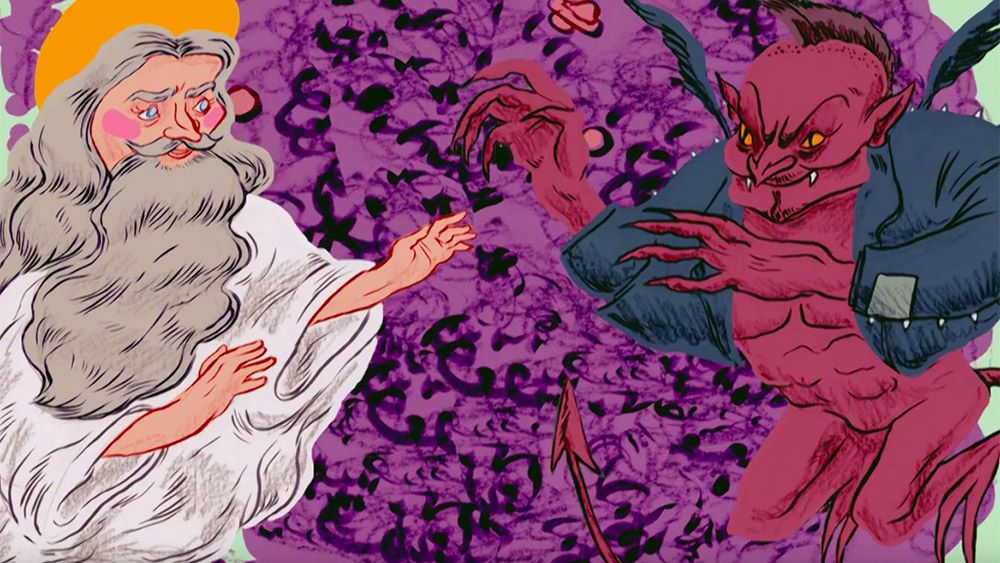
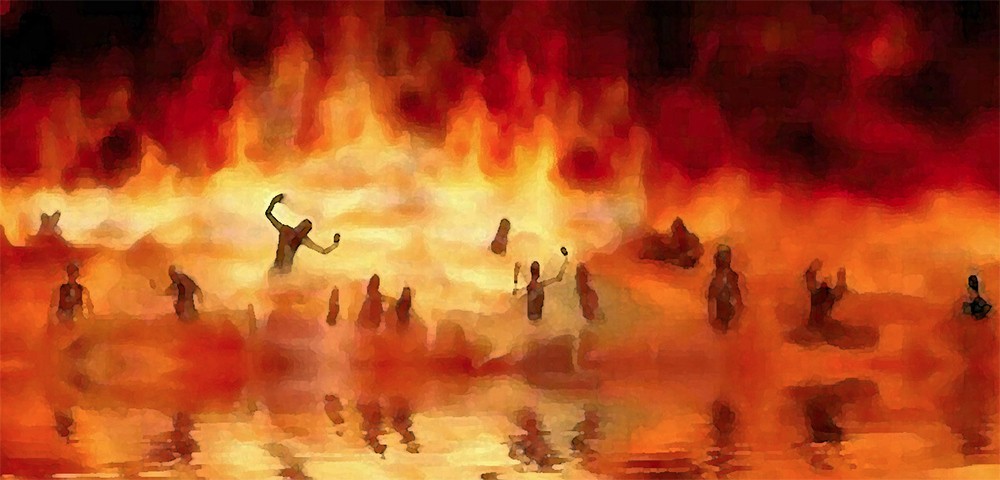
One of the most vocal opponents of assisted suicide come from organized religion, especially the Catholic Church. Their position is fairly clear. Suicide is an egregious sin and a crime against human dignity. Even if you’re in debilitating pain, it’s not your place to take your own life. Only the all-powerful, all-knowing deity of their faith can do that. Some go so far as to claim that suicide automatically condemns a soul to Hell.
Setting aside, for a moment, the kind of theology that would condemn suffering people to more suffering in the afterlife, it’s worth taking a step back to ask why assisted suicide is an issue for organized religion in the first place. What interest could any religion have for getting involved in such an immensely personal issue?

To answer that question, it’s also necessary to distinguish between organized religion and the personal faith that people have. Your personal faith is personal. It’s between you and your loved ones. When religions get organized, they become impersonal and subject to different influences. As demonstrated by corporations or governments, those influences aren’t always holy, to say the least.
An organized religion, be it a huge institution like the Catholic Church or just a small denomination of churches, temples, and mosques, are driven by the same incentives. They need money, adherents, labor, and support from as many followers as possible. How they go about obtaining those resources varies from faith to faith. When it comes to maintaining those assets, however, things get less varied.
I’ve noted before how religious institutions have used dogma to maintain and reinforce social inequality. Any institution, religious or not, has a strong incentive to keep its followers in a state of ignorance, poverty, and dependence. It also can’t have too many people questioning the dogma, nor can it have people with enough resources or comforts to function without its help.

With religion, those incentives are easier to codify because it can claim that their doctrine doesn’t come from law, money, or brute force. It’s ordained by a powerful deity that is on their side. People can argue against politicians, protest greedy businesses, and question long-standing traditions. They can only do so much against a powerful, invisible deity.
It’s within this context that organized religion clashes with assisted suicide. Like with inequality, assisted suicide directly undermines the manpower and resources of religious institutions. It doesn’t just take from them an adherent or a potential convert. It strikes at the foundation on which organized religion builds its influence on people.
In the same way that a business needs customers with money to spend on their goods, organized religion needs people who feel deficient, impoverished, or desperate. It’s a well-documented phenomenon. Those who are poor, hungry, and suffering tend to gravitate towards organized religion.

Sometimes, this is a good thing because there are religious organizations out there who provide food, comfort, and care. Even if doing so acts as an indirect way to recruit adherents, it still provides tangible help to people who need it. That’s an aspect of organized religion that deserves respect. When it comes to suffering and dying, however, the practices aren’t nearly as commendable.
When people are dealing with a suffering loved one, it’s incredible difficult. It takes an emotional toll on both the individual and their family. It’s heart-breaking on so many levels. It’s also an unscrupulous opportunity for organized religion.
While they won’t outright prey on someone else’s suffering, they’ll often act as a source of relief and comfort. They’ll try to act as a shoulder to cry on, telling both the person suffering and their families everything they want to hear. It earns them points from both them and the larger community. They can claim they’re helping a suffering family, but without actually helping them.

They stop short of paying for an expensive, life-saving procedure. They’ll also stop short of paying medical bills that might have piled up. They’ll sometimes promise to promote scientific research to treat whatever is causing so much pain, but in terms of over-arching incentives, that makes sense in the context that any organization wants to keep its adherents alive.
When assisted suicide enters the equation, the religious organizations miss out on that opportunity. Instead of comfort from a priest, mullah, rabbi, or monk, those suffering can get relief from a simple medical procedure. Their family can also enjoy a sense of closure in that their loved one isn’t suffering anymore. No religious influence is necessary here.
For some, that’s not just a problem. That’s a threat. Anything that subverts the need for the religious organization undermines its ability to maintain and grow its influence. Assisted suicide does all that and then some. However, it goes beyond simply not having the chance to endear themselves to sick people and their families.

From their perspective, assisted suicide sets a dangerous precedent. If too many poor, desperate, suffering people start killing themselves to escape, then they lose one of their best sources of new adherents. It’s the same reason why they discourage abortion and contraception, hoping that adherents produce more adherents for the organization. It all comes back to maintaining and growing the institution.
That usually isn’t the stated purpose. Almost every major religion that discourages assisted suicide will argue from a moral perspective. However, the indirect effect is certainly there. That’s not to say that the heads of these religious organizations secretly meet in dark rooms and craft their dogma with these factors in mind. It’s simply a byproduct of large groups of people responding to incentives.
Even if the implications of opposing assisted suicide are indirect, it’s still not a good reason to oppose the practice. It requires that people overlook the suffering and pain of others while convincing them that they don’t have the right to make important choices in their lives. That effort only leads to more suffering and that can never be justified, no matter how much dogma is applied.

As always, I want to make clear that I’m not calling all religious organizations malicious for opposing assisted suicide. I don’t believe that those within these organizations are out to cause more suffering. Most believe, in their heart of hearts, that they’re doing the right thing. The problem is that dogma, doctrine, and powerful incentives can overshadow those efforts.
There are good, legitimate reasons to oppose assisted suicide. Unfortunately, organized religion rarely relies on those reasons. On top of that, they have one too many incentives not to focus on those reasons.











/cdn.vox-cdn.com/uploads/chorus_image/image/61408593/BoJackS5_EP6.0.png)



























 Jack Fisher's Official Publishing Blog
Why “Last Action Hero” Was Almost A Great Movie
Some movies and TV shows just fail to find an audience when they initially come out. Some are even ahead of their time in terms of concepts, themes, and storytelling. It’s how movies like “The Princess Bride,” “The Big Lebowski,” or “Community” go onto become cult classics, despite not getting much acclaim when they came out.
I have a soft spot for those movies too. Everyone has at least one movie that they feel strongly about in a way that doesn’t quite match the popular sentiment surrounding it. It’s not always the case that you love a movie that everyone else hates, although that does happen. In some cases, you just have that one movie or show that confounds you with so many mixed feelings.
A part of you loves it on a personal level.
Another part of you hates it for certain flaws you can’t overlook.
Overall, you’re just not sure what to make of it. For me, this perfectly sums up my feelings on “Last Action Hero.”
First off, if you’ve never seen this movie, I recommend that you check it out. It’s a movie that feels very out of place in an era dominated by superhero movies, Pixar movies, and Oscar bait. This movie was a sloppy convergence of trends in the mid to late 90s. It was an era in which Arnold Schwarzenegger was at the height of his power and every month brought at least one “Die Hard” rip-off.
As a concept, it was still groundbreaking for its time. “Last Action Hero” built a story around a movie-loving kid named Danny getting pulled into a generic, over-the-top Schwarzenegger action flick through the use of a magic movie ticket. Action, comedy, and hi-jinks ensues. It has plenty of objectively great moments that demonstrate why Schwarzenegger movies are so entertaining.
However, at the end of the day, it’s not a great movie.
I say that as someone who watched this movie multiple times in the late 90s. Even then, I understood it had a shady reputation, even among fans of Schwarzenegger. I even remember the jokes some people made about how bad it was. While I don’t think the movie is that bad, it’s still not great. It could’ve been great, but it fell short in critical areas.
Even as a kid, I saw the flaws. For one, it’s too long. The movie suffers from a lot of bloat and side-plots. At times, it drags, especially towards the end. It tries to balance itself out with more action and comedy, but it doesn’t work. If anything, it makes things worse.
In addition to the length, it’s a movie that tries too hard to do too many things. On paper, it has two compelling concepts. One involves a kid actually venturing into an action movie and experiencing what it’s like first-hand. The other involves someone finding out that they’re a fictional character within a fictional world and having an existential crisis about it.
These are both quality concepts that could make for great stories. However, “Last Action Hero” fails at handling both because it tries so hard to blend them together. If it had stuck with just one and pursued it to the utmost, then it would’ve been a very different movie. I also think it would’ve been a better movie. By trying to use one plot to supplement the other, they just end up falling apart in the end.
For its time, it was a bold idea. It went out of its way to parody some of the overplayed clichés that dominated every other action movie at the time, including ones starring Arnold Schwarzenegger. I think if the movie came out today, it would actually work better. Audiences respond more to that kind of meta-commentary than they did in the 1990s, as the success of “Deadpool” can attest.
Even if it did come out today or just five years ago, I still think it would fail to find an audience. It’s just too messy and disorganized. It has everything else going for it, from the plot to the acting to the concept to the effects. It just doesn’t blend together.
That’s a shame because it’s still a fun movie. I often find myself watching the first half-hour and enjoying it. Right around the halfway point, though, I usually turn it off because that’s when it starts to drag.
Ultimately, “Last Action Hero” is one of those movies that could’ve been something really special. It still has the feel of a cult classic. It has aged somewhat better than many other action movies of the era. It was almost a great movie. It could’ve been a great movie. It just didn’t pan out.
It still has a special place in my heart and it always will. For that, it’s good enough in my book.
Leave a comment
Filed under movies, philosophy, rants, superhero movies
Tagged as 4th wall, 90s action movies, 90s movies, action comedy, action movies, Arnold Schwarzenegger, Austin O'Brien, bad movies, cinema, classic movies, cult classic, great movies, Jack Slater, Last Action Hero, meta, meta commentary, movies, overrated movies, philosophy, superhero movies, underrated movies