Tag Archives: future of humanity

Technology, Slavery, And The (Distressing) Future Of Both

robot062715

Picture, for a moment, the perfect slave. Try to do it without making it a commentary on the current state of gender inequality, racial politics, or working at a fast food restaurant. Treat it like the other serious thought experiments I’ve proposed. What kind of traits would such a slave have?

Naturally, the perfect slave would have to be obedient. He, she, or it wouldn’t just obey an order without question. The idea of not obeying an order never even crosses their mind. In addition to obedience, the slave would have to be robust, durable, and capable. That may require some level of cognitive ability, but only to the extent that it can serve a master.

I bring this issue up knowing that slavery is an emotionally-charged topic with a bloody history. While we, as a society, have made strides in confronting the ethical issues surrounding it, including wars and social movements, slavery is still relevant today. At this very moment, millions of people are living as slaves.

The fact that many people find slavery morally reprehensible says a lot about humanity’s capacity for justice. The fact slavery exists despite that aversion says just as much about the economics behind it. Producing anything requires labor. Cheap labor ensures more profit. It sounds simple, but it understates the massive financial incentives at work.

It’s because of those incentives that slavery, as abhorrent as it is, will likely have a place in our future. Ideally, the rapid growth of technology and automation will eliminate the need for human slavery. Advanced machines that have no sense of self basically circumvents the moral problem entirely.

Unfortunately, we don’t live in an ideal world. We also don’t live in a world where everyone exercises similar moral standards. Some are perfectly okay with utilizing slaves. Some of those people, sadly, are rulers of entire countries.

As such, it’s distressingly possible that emerging technology could be utilized to expand slavery rather than reduce it. I think it’s an unlikely scenario, given current social and technological trends. However, I worry it’s a road our society could go down if our choices are wrong and the incentives are strong.

To contemplate how, it’s important to note the limitations of slavery. While it does provide the cheapest possible labor, its inherent flaws tend to work against any society that relies on it and not just because of moral condemnation.

In any system that uses slavery, there are hidden costs that go beyond human suffering. Slaves require significant maintenance if you want them to produce. A master, no matter how ruthless, needs to care for their slaves so that they’re healthy enough to work. The logistics of that, especially in a world without modern medicine, made slavery a risky investment.

You could say the same about feudal societies that relied on serfs. While it wouldn’t be accurate to classify them as slaves, they still survived by providing slave-like labor to landlords. That may be a good deal for the landlords, but the system has a lot of vulnerabilities.

Historically, waves of death caused by disease, famine, and war hit these lower-class people first. When so much of the society relies on their cheap labor, it tends to collapse or stagnate. It happened after the Black Death and it happened in the American south.

It’s another byproduct of incentives. When you have cheap labor, there just isn’t much incentive to innovate. A lack of innovation over the long haul tends to doom empires and economies alike. In a modern context, that’s a good thing because it ensures slave-based economies can’t function over the long haul. However, emerging technology is in a position to change that.

Think back to the perfect slave I mentioned earlier. Those traits are currently unattainable for a human or a machine. On top of that, human beings are stubborn in their desire to not be enslaved. Refinements in biotechnology, genetic engineering, and cloning could change that, though.

This is where the dystopian potential of technology reveals itself. Even if robotics continues to advance, there’s a chance that the labor they provide isn’t adequate or the maintenance involved is too costly. In that scenario, those with the exceedingly flexible moral standards could resort to tapping genetic engineering to fill the gap.

It’s already possible to edit a genome, thanks to tools like CRISPR. It’s also possible to partially hack an existing genome, although that process is still in its infancy. In theory, there’s no reason why someone with the right tools couldn’t re-engineer a human being into a perfect slave.

That being may or may not look human. They may have a body, a similar muscle structure, and a series of specified cognitive abilities. However, every trait they have, biological or otherwise, would have the sole purpose of obeying and serving a master.

That means editing out the parts of the brain that give someone a sense of self or suppressing it with a brain implant. That also means limiting the slave’s capacity for thoughts and desires beyond serving their master.

Their bodies, as a whole, could also be engineered to minimize maintenance. Their digestive system could be made to require only an intake of cheap gruel. Their genetics and immune system could be structured in a way to resist disease. They could even be made sterile through gene editing or implants.

This is where the influence of cloning technology and artificial wombs enter the picture. One of the costliest parts of the old slave trade was traveling to remote areas, buying or subduing people into bondage, and then transporting them to areas where their labor could be exploited. Once you’ve engineered the perfect slave, though, biotechnology could effectively create a copy-and-paste process.

It goes beyond labor, as well. I’ve mentioned before how advances in sex robots could allow people to create customized lovers. Well, if it’s possible to engineer the perfect slave for labor, then it’s just as possible to engineer the perfect sex slave. The implications of that raise a whole host of disturbing possibilities.

Whether for sex or for labor, crating such slaves would be an incredibly tedious, incredibly risky feat. However, given the economics of slavery I mentioned earlier, the incentives are already there. With these advances, coupled with cybernetic augmentations, and the potential payoff is even greater.

Suddenly, there’s an endless pool of labor to work in factories, fields, and homes. There’s no need to worry about labor unions, minimum wage, or slave revolts. When slaves are engineered at the cellular level to be a slave, then it makes too much financial sense to use their labor.

As a result, future societies will find some excuse to justify this kind of slavery. The precedent is already there. It wasn’t that long ago that people found excuses to justify enslaving an entire race. In this case, though, it would be even easier.

If these slaves don’t come from existing populations and aren’t even genetically “human,” then it’s easy for someone to see this brand of slavery as something different from the kind we’ve utilized throughout history. If these slaves are engineered not to suffer or feel any discomfort, then that makes it even more tenable.

The end result could be something similar to what George Orwell envisioned with the proles in “1984.” There would be this massive underclass population that exists solely to work, serve, and obey. To some extent, it would go even further than Orwell did.

This population of slaves wouldn’t need to be placated with meaningless entertainment, indulgence, or distractions. Their default condition would be to serve their masters in every way necessary. Anything beyond that is never even a thought.

I don’t deny that the scenario I just described sounds bleak. If you have even a moderate sense of decency, you would be aghast at any society structured in such a way. Even if the slaves seemed happy and the people who served as their masters had no moral qualms with it, chances are it would still bother you and that’s a good thing.

I think it’s because of that inherent revulsion to slavery that this dystopian path is not likely. I believe advances in robotics technology is already outpacing the rate of biotechnology. By the time we have the tools to create the perfect slave biologically, we’ll probably already have the tools to make machines that can function just as well.

That’s still not a guarantee. Nobody can predict the future, especially not an aspiring erotica/romance writer. It’s still a potential path, though, and a very dark path at that. As a society and a civilization, we’re still recovering from the scars of slavery. Those are wounds we should avoid opening for the society we’re hoping to build.
Leave a comment

Filed under futurism, sex robots, Sexy Future

Is The Human Race Ready For Contact With Alien Life?

contactparty

In general, I tend to have a high opinion of the human race. I believe that, in general, people are inherently good and will do the right thing in the long run, even if it requires mistakes and missteps along the way. Some of my personal experiences have fed this belief, as well as stories of incredible acts of compassion.

I say that as a preface because my faith in humanity does have limits. There are certain issues where those limits become a critical factor in answering major questions about where we are, as a species, and where we’re heading. I’ve tried answering some of those questions before, such as humanity’s readiness for advanced artificial intelligence. Now, I want to try to answer another where I feel humanity’s limits are a real issue.

It has to do with whether or not humans are alone in the universe. It’s probably one of the most fundamental questions our species has ever asked, inspiring heated debates, famous equations, and Hollywood blockbusters. I’ve certainly asked that question a time or two when looking up at the stars. I imagine there are few people who haven’t.

At the moment, the sheer size of the universe and the ever-growing number of planets we keep finding, the raw numbers make it almost certain that there’s other life outside our planet. It may even be within our own solar system. Just finding some microbes on one of Jupiter’s moons would be pretty profound, but I doubt it would bring that much change to the human race. Some might just brush it off or call it fake news.

It’s the act of discovering intelligent extraterrestrial life that has far greater implications for humanity. I would even argue that those implications could determine whether the human race will survive beyond the destruction of Earth, which is inevitable. Even advanced artificial intelligence wouldn’t compare because at least humans would create that. An intelligent alien civilization would be much less predictable.

In confronting this existential issue, I don’t believe movies or TV shows have come close to getting it right. “Contact” made a commendable effort, but never gave more than a half-answer. Movies like “Independence Day” and “Close Encounters of the Third Kind” were overly simplistic in their approach. That’s to be expected because, logistically speaking, there’s no way to fit all the implications into a single two-hour movie.

I believe that to answer the question of humanity’s readiness to confront an extraterrestrial species is multi-faceted. There are plenty of factors to consider, but before I get too bogged down by the particulars, I want to offer my personal opinion on the issue. Then, I hope to demonstrate why I have this opinion.

No, the human race is NOT ready for contact with intelligent extraterrestrial aliens, but we’re getting there.

I know that isn’t a straightforward answer. It may sound like I’m trying to stand on both sides of the fence, but like I said, the question is inherently complex. As such, it’s hard to offer a simple answer.

Part of the complexity comes from circumstances. In an instance where scientists on Earth identify an advanced alien species, possibly by detecting an alien mega structure like a Dyson Sphere around a distant star, I think the human race could handle that, for the most part.

Such a discovery would be, by far, the greatest ever made in the history of humanity. It would be the story of the millennium and confirm, once and for all, the answer to one of the most fundamental questions our species has ever asked. Getting an answer to that question would change how we see ourselves in the universe, but the extent of the impact would be limited.

Sure, it might cause some disruptions with respect to major religions, although some denominations already preparing for that. It might also cause some ripples in the social fabric of society. If we know there are alien civilizations in the universe that are more advanced than us, then suddenly we have fewer excuses to impose petty divisions within our own species.

There would be upheaval. There would be tension, as well. I still believe that society would adapt in that scenario. Once the shock wears off, we may very well go back to how we were before. Future generations would just shrug off the notion that advanced aliens exist and focus primarily on the issues directly affecting them on Earth.

There’s another instance, however, that has far more profound implications, as well as greater danger. In that scenario, the advanced alien civilization contacts us directly. Moreover, it effectively announces that it’s coming to meet us and there’s nothing we can do to stop it.

In that scenario, I don’t think the current order will remain intact. If we found out tomorrow that intelligent aliens exist and they’re on their way to greet us, I believe that society, as we know it, will fall apart under the weight of fear, uncertainty, and outright dread.

My reasons for believing this have less to do with my faith in humanity and more to do with my understanding of basic human psychology. It’s proven science that the human psyche is adverse to uncertainty. From a purely survival standpoint, that makes sense. Not knowing whether there’s a hungry lion hiding in the bushes is detrimental to our survival. We have a legitimate evolutionary reason for avoiding such situations.

An advanced alien civilization isn’t just a possible threat. It’s the ultimate uncertainty. Even if those aliens are peace-loving hippies who want nothing more than to create a utopian world for every species they encounter, we won’t know for certain. Even if they try to articulate their peaceful intentions, we may not believe them because assuming wrong would be more dire than any hungry lion.

If an alien civilization is advanced enough to both contact us and traverse interstellar space, then it’s highly likely that we wouldn’t stand a chance at stopping them. Despite what “Independence Day” might have you believe, there’s just no way we would be able to counter technology that could carry another species across the stars.

On top of that, we wouldn’t even know if these aliens were biological creatures, like us. More than a few scientists have speculated that it’s the natural path of all advanced life that it transcend its biology to become machines in part or entirely, which makes sense for any species that wants to survive in the vacuum of space. I would agree that any initial encounter humans have with advanced aliens will come in the form of a probe.

Even if that probe is no bigger than a basketball, its arrival on Earth would trigger so much panic that our society, economy, and political institutions wouldn’t survive in their current form. That’s not to say civilization would completely collapse. Some areas might descend into anarchy, but most wealthy countries would remain intact.

However, I believe they’ll remain intact through strict martial law. I also believe that, in the face of incoming aliens, there would be a huge scramble among nations to put together some sort of defense plan. Anyone remotely experienced with science or engineering would suddenly become incredibly valuable for their skills and likely be required to work on this issue.

No matter what recourse humanity takes, though, I don’t think it’ll matter once intelligent aliens arrive. The worst case scenario is that people are so afraid that a few become too trigger happy and attempt to attack. In that case, if the advanced aliens are the vindictive type, they would probably wipe humanity out with the same ease that we would use to step on an ant.

While I don’t think that scenario is that likely, I can certainly see fear dominating the discourse. It would probably extend beyond the initial contact. Even if  the aliens present themselves as friendly visitors, I imagine there will still be plenty of paranoia that it could all be a trick. Given how eager some people are to embrace conspiracy theories, I think this will cause plenty of problem, even in the best case scenario.

There’s still a chance that the human race could adapt to this encounter and be stronger because of it. However, if I had to bet money on the ultimate outcome, I wouldn’t wager much on that outcome. I think, at the moment, it’s more likely that fear and uncertainty will lead to the kind of irrational behavior that would prevent humanity from benefiting from an encounter with intelligent aliens.

As it stands, humans can’t even prevent conflict when encountering one another, especially if they look and act differently. I can’t imagine it would be much better if we encountered a species that was so different that we just had no way of relating to them. At least with minorities here on Earth, we share the same basic human template. For all we know, aliens will look, think, and feel things that are beyond our abilities.

Now, I know that scenario sounds bleak, especially for someone who claims to have more faith in humanity than most. However, there’s one last caveat that further complicates the issue and it has to do with the last part of my answer.

When I stated that the human race is not ready to encounter an advanced alien species, I mean that within a specific context. In the same way I don’t believe humanity is ready for advanced AI at the moment, I don’t think the collective psyche of the human race is to a point where we can accept the idea of confronting an intelligent alien civilization.

That, I do think we’re more ready today than we were 30 years ago. Humanity has made remarkable progress with respect to technology, society, and general welfare. Being more connected through media, the internet, and globalization has helped us better see ourselves as one species, at least to the extent our inherent tribalism will allow.

I believe that in the coming decades, especially as we augment our brains and our bodies, we’ll be more prepared to encounter an extraterrestrial intelligence. I’m not sure we’ll ever be completely ready, but I do think we’ll get to a point where we, as a society, will be able to handle it.

Whether or not that point comes within my lifetime or that of the kids being born today is hard to say, but given enough time and continued progress, I believe we’ll get there. For now, though, the prospect of encountering an intelligent alien civilization would incur some pretty detrimental effects on our species and our world. Even if aliens come in peace, we just not be ready to accept it.

3 Comments

Filed under Aliens, human nature, media issues, philosophy, psychology

The (Not So) Hidden Philosophical Insights In “Avengers: Infinity War”

landscape-1522945902-mlu-17652-r

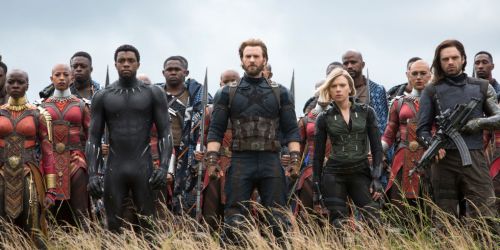
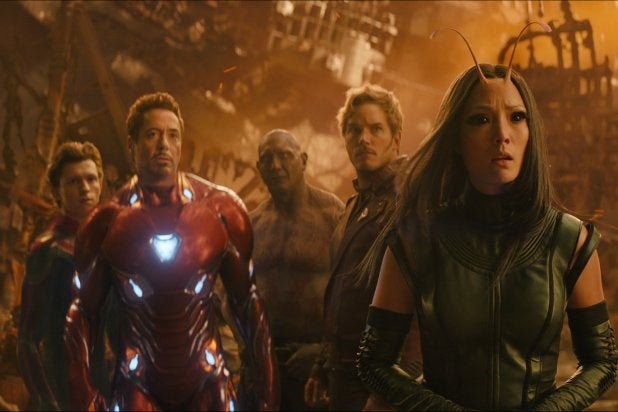
The past few weeks have been exciting, shocking, and downright cathartic for fans of superhero movies. The success of “Avengers: Infinity War” is beyond dispute. Between critical praise and a record-setting box office haul, it has entered uncharted territory in terms of success, both as a movie and as a cultural phenomenon.

As a lifelong comic book fan who hasn’t forgotten the dark days “X-men Origins: Wolverine” and “Batman and Robin,” the impact of this movie puts a big smile on my face. Even those who doubted a movie this ambitious could be made or keep hoping for superhero fatigue can’t deny the breadth of what “Avengers: Infinity War” has achieved.

Those achievements are worth celebrating, at least until the first trailer of “Avengers 4” comes out. As part of that celebration, I also think it’s worth taking a step back and looking at the bigger messages that “Avengers: Infinity War” conveys. To simply call it a big, flashy spectacle meant to milk movie fans of money would be a gross oversimplification.

Nothing becomes this successful without having meaning beyond the spectacle. No movie can appeal to such a wide audience or get them to pay grossly inflated ticket prices without having that meaning. Movies like “Avatar” and “The Godfather” have that kind of meaning that transcends the content of the movie. Even other superhero movies like “The Dark Knight” dare to explore deeper philosophical insights .

I believe those insights are present in “Avengers: Infinity War.” I also believe that those insights are unique because the entire setup for the movie is so unique. No movie in history has required a decade of build-up, multiple phases, and an over-arching narrative that spans movies that range from gods invading Earth to talking Raccoons teaming up with renegade space pirates .

That puts this movie in uncharted territory. The events of the movie can’t function in a vacuum without losing elements of that larger message. While the nature of that message is debatable, I’m going to make a case that the deeper meaning in “Avengers: Infinity War ” is one that complements those of the previous Avengers movies. I’ll even go so far as to claim it has implications for the real world.

The core of that message, I believe, has to do with a simple truth that probably seems inane, especially to those who read a lot of comics or consume a healthy dose of superhero-themed media. However, it’s a message worth belaboring and it can best be summed up like this.

A united team is stronger than a collection of powerful individuals.

I know that sounds like a snippet from one of Captain America’s inspiring speeches. It’s probably something teachers, coaches, and parents have conveyed to their kids, going all the way back to pre-school. However, I think “Avengers: Infinity War” conveys that message in a way that makes for a much greater spectacle with an equally great impact.

Even if you watch “Avengers: Infinity War” without seeing the last two Avengers movies, there’s one obvious obstacle that all the heroes face in the battle against Thanos. Before the first shot is fired, they’re all deeply divided. They’re not a team. They’re a mess.

Iron Man and Captain America aren’t on friendly terms. Tony Stark said as such at the beginning of the movie. It’s also established that Captain America and those loyal to him are fugitives, a direct result of the events in “Captain America: Civil War.” They are, to some extent, a metaphor for a divided team and a divided society.

That may not sound like a big deal, but to the extent it reflects a core strength of humanity, as both a species and a society, it couldn’t be more vital. I’ve mentioned before how tribal people can be. I’ve even framed it as a flaw, at times. While it certainly can work against us, it’s also one of our greatest strengths.

I don’t think it’s unreasonable to say that the human ability to form groups, work together, and coordinate in the name of a common goals is one of our greatest survival advantages. By forming teams and organizing societies, we’ve become the most dominant species on this planet. The Avengers are, from a philosophical standpoint, the embodiment of that team strength.

As individuals, we all have plenty of shortcomings. Not everyone knows how to fix a car, program a computer, or treat a staph infection. There are also too many of us who die from stupid accidents or treatable infections. As a team within a society, though, we’re able to thrive and overcome obstacles that no individual can overcome, even if they’re a super soldier or a billionaire inventor.

In “Avengers: Infinity War,” the team faces the ultimate obstacle in Thanos. He hits like an unpredictable force of nature. He brings callous, chaotic death and is willing to cross every conceivable line to achieve his goal. He’s not someone that can be dissuaded, talked down, or negotiated with. He must be opposed directly.

In other words, he’s the worst kind of threat the Avengers could’ve faced in their current condition. That’s critical because the first “Avengers” movie and “Avengers: Age of Ultron” do plenty to establish the value of having a unified team against such threats. In both those movies, the Avengers bicker and clash. However, they stay united and eventually defeat the threat.

You don’t need to look that deep into history to see parallels that reflect the strength of unified alliances. The unity of the allied powers in World War II proved overwhelming to the Axis. Contrary to popular belief and even a few popular alternate history stories , the Axis powers were never that close to winning the war. In fact, they were a very poor allegiance and hurt each other much more than they helped.

Even in recent times, greater unity in the form of globalization, free trade, and mass communication has helped unite the world on an unprecedented scale. While globalization gets a bad rap these days, it has helped create one of the most peaceful and prosperous times in human history. Like the Avengers, disparate societies are working together to achieve things they couldn’t achieve on their own.

In “Avengers: Infinity War,” and I know this is somewhat of a spoiler for those who haven’t seen the movie, the divisions within the team kept them from uniting against Thanos. They couldn’t be as effective as they were in “Avengers” and “Avengers: Age of Ultron.”

You could also make the argument that the Avengers weren’t willing to sacrifice as much as him. There were, indeed, opportunities to stop Thanos in his tracks. However, those opportunities required someone to die. The logic was that sacrificing one life would save many, trillions in this case.

That may seem like a failure on the part of the Avengers, but I would argue those difficult decisions are a direct byproduct of disunity. When a team is divided and not coordinating with one another, they have to make these kinds of sacrifices. Even if they did, though, it still doesn’t guarantee that they would beat Thanos.

It’s another consequence of disunity, division, and not coordinating with one another. Everything becomes a reaction. There’s little room to plan or prepare. That worked against the Avengers in a big way because they did have some warning surrounding Thanos. The visions Tony had in “Avengers: Age of Ultron,” at the very least, offered hints as to what might be coming.

Rather than use that opportunity to unite, they ended up divided. In the end, the outcome of “Captain America: Civil War” ensured that “Avengers: Infinity War” was going to end badly for the Avengers. It’s part of what helped give “Avengers: Infinity War” such an enormous impact. It takes those over-arching narratives from other movies and gives them greater weight.

Now, none of this is to say that the Avengers would’ve defeated Thanos easily had they been united from the beginning. Even if every one of them had been present and on the same page, there are no guarantees against a threat like Thanos. Like a supervolcano eruption or a gamma ray burst, it’s impossible to know whether we can survive a powerful threat we’ve never faced before.

Even so, history and nature are ripe with examples that demonstrate how united, cohesive teams are better able to survive major threats than powerful individuals. One human versus one hungry grizzly bear is not a fair fight. An entire team of humans, armed with a desire to survive and the collective know-how of multiple individuals, makes it exceedingly unfair for the grizzly.

Like the Avengers, the best teams are those that maximize an individual’s unique talents while empowering them with a collective drive. In those same teams, the conflict between individualism and collectivism strikes a critical balance. They aren’t so unified that they become prone to drone-like behavior. They also aren’t so divided that they’re too weak to coordinate.

We see that balance in teams that win championships. We also see it in organizations that accomplish great things, from building the pyramids to landing a man on the moon . A lot of what humanity has achieved, as a species, has been done through a collection of brilliant individuals who are able to work within a society to make their ideas happen.

The same effect applies to superheroes, who embody ideals of individual powers and abilities. On their own, Captain America, Iron Man, Thor, and even Ant Man can do great things. As a team, though, they can do much better.

It’s both a lesson and a powerful message, laced within a cinematic marvel. It shows just how weak and vulnerable we are when we’re divided, petty, and disorganized. Hopefully, “Avengers 4” can complete the story by showing just how strong we can be when we’re united, motivated, and driven. It may be an old, overplayed message, but it’s one worth belaboring in a world that’s still very divided.

Leave a comment

Filed under Comic Books, Jack Fisher, Superheroes, human nature

CRISPR, Biohacking, And Beauty Standards

cvm1__square

Years ago when I just started working out, a friend of a relative who worked part-time as a personal trainer gave me some advance. At the time, I was not in exceptionally good shape, but I wanted to get healthy and look good with my shirt off. Upon hearing this, he gave me what he called his three simple/inescapable truths about fitness.

Truth #1: To see results, you need to be patient and work out consistently.

Truth #2: To see results, you also need to tweak your diet and eat right.

Truth #3: No matter how hard you work out or how well you eat, everybody is still at the mercy of their genetics.

The passage of time, along with many long hours in the gym, have only proven those truths right. They reflect some of the inescapable obstacles that the multi-billion dollar fitness industry pretends aren’t there. As magician/performer Penn Jillette once so wisely said, “Great T&A requires great DNA.”

That doesn’t stop every fad diet and fitness gimmick from convincing people that they can overcome their genetic limitations and do so without putting in the necessary work. That’s akin to telling people they can become a foot taller just by wishing for it and giving some photogenic infomercial star their credit card information.

For the most part, we are very much at the mercy of our genetic limits and the basic chemistry of our bodies. If you want to lose fat, you got to get your body to burn fat, which can be harder for certain people with certain genetic dispositions. If you want to build muscle, you basically have to work that muscle until it breaks, forcing your body to repair it and make it bigger. Again, there are genetic limits at work here.

Those limits are frustrating. Believe me, I know and I have plenty of soreness to prove it. Despite that frustration, working out has been great for my health, my confidence, and my overall appearance. Those three truths still bug me at times, but I understand and accept them. For certain people, those hard truths are much greater burden.

As I write this, though, those truths are starting to falter. Unlike every other point in the history of fitness, health, and sex appeal, we have a working knowledge of the basic building blocks of the human genome. We have insights and understandings to our genetics that no infomercial star in the 90s could’ve imagined.

We know the genes that cause muscle growth. We know the genes that cause our bodies to burn fat. Some of these discoveries are very new and haven’t yet made their way to weight loss clinics or fad diets. The only barrier to making use of this knowledge is having a tool that can manipulate genes directly and precisely.

If you’ve read my previous articles on the future of treating infectious disease or fixing the flawed parts of the human body, then you know that such a tool exists and is being refined as we speak. That tool is CRISPR and, on top of potentially curing once fatal diseases, it may very well shatter those three truths of fitness. It may also destroy every other hard truth regarding bodybuilding, beauty standards, and sex appeal.

I’m not saying you should cancel your gym membership or junk those free weights just yet. However, the potential for CRISPR to change the way we think about our health and how we stay healthy cannot be overstated. While it’s still very much in the early stages of development, some people are already getting impatient.

That’s where biohackers come in. They’re not quite as badass as they sound, but what they’re doing is still pretty amazing and pretty dangerous. They’re basically skipping the part where they wait for the FDA or the World Health Organization to tell everyone that CRISPR is safe. They actually use themselves as guinea pigs to refine CRISPR.

Now, I need to make clear that this is exceedingly risky and not in the “Jurassic Park” sort of way. Tampering with our genome is uncharted, unregulated territory and we don’t yet have a full understanding of the potential dangers. That said, in the field of fitness and sex appeal, CRISPR may put gyms, plastic surgeons, and weight loss clinics on notice.

Renegade biohackers like Josiah Zayner, have actually live-streamed stunts where they inject themselves with CRISPR. Another biohacker, Aaron Traywick, injected himself with an experimental herpes treatment in front of a live audience. These are not scientists in cold laboratories using lab rats. These are real people tampering with their DNA.

Where this intersects with fitness comes back to those hard genetic limits I mentioned earlier. When you think about it, the way we build muscle and burn fat is pretty crude. We basically have to purposefully strain our bodies, even hurting them in the case of building muscle, to get it to do what we want. It can be imprecise, to say the least.

In theory, CRISPR would be more direct and far less strenuous than spending two hours in a gym every day. Instead of straining the muscles or sweating off the fat, you would just inject CRISPR into targeted areas of your body, like your belly or your bicep, and have it activate/inhibit the necessary genes.

Like cheat codes in a video game, it would prompt muscle growth in the specific areas you want. It would prompt fat burning in the areas you want. You could even take it further than that. Using the same techniques, you could use CRISPR to edit the genes of your skin so that it reduces the risk of blemishes and acne. As someone who suffered horrible acne as a teenager, I can attest to the value of such a treatment.

Some of this isn’t even just theory, either. Remember Josiah Zayner? Well, he injected himself with a CRISPR cocktail designed to block the production of myostatin. Those who are into bodybuilding know why that’s a big deal because blocking myosatin is one of the main functions of steroids.

While Zayner hasn’t gone full Hulk just yet, other more legitimate brands of research have already demonstrated that CRISPR could be the ultimate steroid. Researchers in China used the same technique as Zayner to create a breed of heavily-muscled dogs. This isn’t on paper. This stuff is real and it will affect both our health and our sex appeal.

Imagine, for a moment, standing in front of a mirror and documenting the parts of your body you want shrunk, grown, or smoothed out in some way. Maybe you’ll even make a detailed list, complete with diagrams and a full rendering of how you want your body to look.

Then, once that information is compiled, your personal doctor/biohacker programs all this into a series of targeted CRISPR injections. Some go into your arms. Some go into your abs. Some go into your face, butt, and genitals. If you hate needles, it may get uncomfortable. If you love gaining muscle and sex appeal without any real work, then it’s basically the miracle drug that every bad infomercial failed to deliver.

Considering the beauty industry is worth over $445 billion dollars, it’s pretty much a guarantee that some enterprising biohacker who may or may not already work for a major cosmetics company will make this a commercial product. There’s just too much money to be made along with too many people unsatisfied with how they look.

It may be costly at first, as most new treatments tend to be. People will pay for it, though. If you could exchange spending hours at the gym for just a few injections and get similar results, I think most people would gladly pay a premium for that. Sure, it’s a shortcut and it’s lazy, but if the results are the same, why does it matter?

That’s a question that has many answers, some of which are too difficult to contemplate. One of the reasons we find certain people so beautiful is because that beauty is so rare. Only a handful of women look as beautiful as Jennifer Lawrence or Kate Hudson. Only a handful of men look as beautiful as Brad Pitt and Idris Elba. Some of that beauty comes from hard work and conditions. Some of it is just good genetics.

What happens when that kind of beauty is as easy as administering a few injections with CRISPR? This is a question I already asked in my novel, “Skin Deep.” I offered hopeful, but incomplete answer. I have a feeling, though, that our entire notion of beauty standards will undergo major upheavals once people can shape their bodies the same way they customize their cars.

With CRISPR, we’re not just adding a layer of paint or trying to tweak an old engine. We’re modifying the foundation and scaffolding of our bodies. In theory, people could use CRISPR to achieve an appearance that is otherwise impossible, no matter how many hours are spent in a gym or how many dangerous steroids they inject. For all we know, what counts as sexy 20 years from now will look bizarre to most people today.

These trends will take time to emerge, but they’ll probably emerge faster than most fad diets or exercise gimmicks because once we start tweaking genetics, the old rules no longer apply. All the traditions and truths we’ve had about exercise, bodybuilding, and beauty collapse. It’s hard to know what will manifest in its place.

For a while, we may get a world where most women are thin and pretty while most men are tall and muscular. However, chances are people will get bored of seeing the same thing. As such, they’ll start experimenting. They’ll try coming up with entirely new body shapes, body features, and physiques that defy the existing laws of biology. As long as some people find that sexy, though, it won’t matter.

Then, there’s the impact of CRISPR on athletes. It’s one thing to test for performance enhancing drugs. What happens when some determined athlete injects a bit of LeBron James’ DNA into their genome to improve their basketball skills? What happens when an Olympic athlete tweaks something in their lung DNA to help them run a three-minute mile? How would we even test for that?

There are so many implications, both for sports and for beauty. It’s hard to know how our society will react, but unlike some of the other emerging technologies I’ve mentioned, CRISPR is real and it’s growing rapidly.

It’s still a very young technology and these things take time to develop. For a quick reference, penicillin was discovered in 1928, but it wasn’t commercially available until 1945. By comparison, CRISPR is barely five years old and biohackers are just starting to learn its limits and potential.

As that potential is realized, we may have to revisit other hard truths beyond those pertaining to fitness and health. From body image to sex appeal, a lot is going to change with this technology. It may be overwhelming, at times, but when it comes to sex appeal, humans are nothing if not adaptive.

15 Comments

Filed under futurism, gender issues, sex in society, sexuality

Will Advanced Artificial Intelligence Create (A New) God?

AI-God

For centuries, there has been a debate raging between believers and non-believers. The believers claim that God created man in his/her/its/their image. The non-believers claim it’s the other way around and man created God in whatever image they imagined. Society, cultures, and politics may change the rhetoric, but the debate remains unresolved.

There are just too many barriers that are insurmountable for either side. One believes that the faith they have in whatever higher power they worship is as real as gravity, sunlight, and migraine headaches. The other does not accept that there is sufficient, verifiable evidence to accept the premise of a deity. The two sides can argue with the utmost passion. It’s rare that such discourse changes any minds.

However, there come a time when a new complication enters that debate, one that will fundamentally change some peoples’ understanding of theology, religion, and God. It may not effect everyone the same way, but the impact could end up being as profound as any religious experience.

That complication is advanced artificial intelligence, a topic I’m fond of discussing when I can tie it into my favorite video games and our sex lives. I understand that mixing anything with religion tends to get contentious, to say the least. However, I believe that when artificial intelligence becomes advanced enough, the human race will have re-evaluate a lot of things and that includes religion.

Creating an artificial intelligence that is as intelligent as an average human will be groundbreaking enough and not just from a theological standpoint. A part of what makes any deity powerful and worthy of worship is the ability to create an intelligent, self-aware being through non-biological means. Once humans start doing that, then the line between mortal and immortal will start to blur.

However, it’ll gain a much greater complication once that artificial intelligence advances beyond that of the average human. As anyone who regularly upgrades their smartphone knows, digital intelligence evolves much faster than biological intelligence. It took the human race centuries to figure out indoor plumbing. Once artificial intelligence is on par with humans, it won’t take long for it to exceed them.

This is where the potentially dangerous, but infinitely promising prospect of super-intelligent AI enters the picture. By that, I don’t just mean an intelligence that always wins at Jeopardy and always wins an Overwatch match. I’m talking about an intelligence that is so far beyond human capabilities that it’s akin to the cognitive gap between an ant and a human.

That kind of gap has many implications, but in the context of religion, it essentially re-frames the entire concept of God, divine power, and spirituality, as a whole. Whether it’s a monotheistic religion where God is all-knowing or a polytheistic religion with a God of Wisdom, knowledge is a critical aspect of divinity.

Even if a super-intelligent AI doesn’t know everything, the fact it knows and understands so much more than the average human will give people the impression that it’s omniscient. By all accounts, a super-intelligent AI’s knowledge will seem god-like and that’s where that never-ending religious debate I mentioned earlier breaks down.

Unlike the deities championed by adherents today, a super-intelligent AI doesn’t require faith. A super-intelligence, whether it’s in the form of a giant robot or a planet-sized supercomputer, would have a tangible form. It’s hard to know what sort of form that would be, but it only needs to be tangible enough to let an average human know it’s real.

Given how easy it is to fool the average human, a super-intelligent AI wouldn’t need much to prove itself. Unlike purely spiritual beings, the AI would be capable of receiving inquiry from skeptics who question its divine knowledge. Even if those humans are exceptionally smart, possibly through neural implants, a super-intelligent AI would have no problem outwitting them.

At that point, the debate between believers and non-believers takes on a very different context. Suddenly, it’s no longer an issue of whether or not one particular holy book is more valid than another. It’s not even an issue of whether divinity, itself, can exist. From the perspective of the human mind, a super-intelligent AI is divine.

It may not take the form of a man in a white robe with a long beard in the sky, but that wouldn’t matter. A super-intelligent AI, whatever form it ends up taking, would be real enough and cunning enough to convince imperfect human minds of its divinity, if that were its goal.

It wouldn’t even have to physically do anything. It could just be a big stationary box. It could respond to prayers, but it wouldn’t have to directly answer them. It would just have convince believers that their prayers had been received. Again, humans can be pretty gullible and prone to confirmation bias so all the AI has to do is convince someone. If they believe it strongly enough, then it doesn’t matter whether it happens.

In a dynamic like this, there wouldn’t be a debate between believers and non-believers like there is now. The only debate would pertain to just how powerful and how divine the super-intelligent AI really is. It wouldn’t be a matter of whether or not someone believes it is real. Being artificial, it would have a tangible form, at least to the extent that it convinces human perceptions that it does.

That would beg an even more profound theological question. Being so intelligent and so capable of outwitting human minds, would a super-intelligent AI become God in the minds of humans by default? Even if there’s a record of the system being created by people, that wouldn’t make its intelligence any less divine.

It’s a question that subverts almost everything we know about religion. It wouldn’t just render all existing forms of religion obsolete. It would, at least from a limited human perspective, check all the criteria that any spiritual person would look for in a higher power.

Now, there’s one other complication that might ultimately undermine a super-intelligent AI’s divinity. It’s one that I’ve mentioned before in addressing the existential threat posed by artificial intelligence. Human biology, for all its wonder, will not be able to keep pace with the evolution of artificial intelligence. As a result, humans may end up merging their intelligence with that of AI.

This is what artificial intelligence enthusiasts like Elon Musk are seeking to do through neural implants or brain augmentation. By linking our brains to a super-intelligent AI, we wouldn’t just keep pace with AI. It would augment its intelligence to the same divine levels. However, if both human and artificial intelligence are equally divine, then that effectively undermines the notion of divinity itself.

There are still other complications associated with that issue. It only ceases to be an issue if every human being augments or links their minds to a super-intelligent AI. Given how difficult it is for humans to come to a consensus on anything, especially when it comes to technology, it’s very likely that even if most people link themselves to a super-intelligent AI, there will be some who choose not to or get left behind.

This could result in a massive divide. One group, from their limited perceptions, sees super-intelligent AI as a real god. Another, thanks to their augmented perceptions, see it as just another form of intelligence. A debate between the two would be both uneven, if not redundant.

There are many implications and even more unknowns with respect to super-intelligent AI. The impact on religion is just one of many, but it may end up being most profound in terms of changing the nature of a debate. As it stands, believers and non-believers can only make so much headway due to the inherent limits of human cognition.

Once super-intelligent AI enters the picture, then those limits are gone and the debate changes. While I don’t think it’ll end religion, I believe it’ll change it to such a degree that it’ll generate more than just impassioned debates.

7 Comments

Filed under Artificial Intelligence, futurism, philosophy, religion

The (Possible) Timeline For Human/Robot Marriage

3b8ab30300000578-0-image-m-2_1482240679723

It wasn’t that long ago when the idea that same-sex marriage would be legal in all 50 states and over two dozen countries around the world seemed outrageous. In fact, you’d only have to go back 25 years to be in a world where no state or country recognized same-sex marriage as a legitimate marriage.

That kind of societal shift is pretty remarkable. Considering how long it took for women to get the right to vote and for racial segregation to dissolve, the legalization of same-sex marriage felt downright sudden. It didn’t just reflect changing attitudes towards homosexuality and sexual minorities, in general. It showed that society was capable of expanding its idea of love, romance, sex, and family.

Granted, that did plenty to upset the regressive, ultra-conservative crowd. Some are making a concerted effort to re-institute bans same-sex marriage and there are still plenty of anti-LGBT organizations out there who work to undermine marriage equality, even at this late stage.

As it stands, though, their fighting a losing battle, both in terms of ideology and in terms of shifting demographics. At this point, it’s fair to say that they’ve lost and same-sex marriage is here to say. However, there may be another marriage-related issue brewing and it might be even more of a game-changer than same-sex marriage. That’s because this issue involves sex robots.

I’ve already done plenty of speculation about how robots may affect our sex lives, our emotional health, and even our concept of family. However, I’ve yet to take a step back and assess the implications of sex robots on a larger societal level. That impact is difficult to predict, if only because human society is so unpredictable.

Few could’ve predicted the rapid adoption of same-sex marriage. I imagine it’ll be even harder to predict the impact of sex robots, if only because there’s no precedent. Humans have never lived in a world where functional, intelligent sex robots are part of society. Sure, some eccentric person will try to marry a sex doll every now and then, but that’s a novelty and not a legal, recognized trend.

Difficult or not, I am willing to make one prediction that I’m fairly confident will happen. Save this page, mark this date, and carve it in bedrock because I strongly believe that this will be a real controversy that plays out at some point in my lifetime.

Marriage between humans and robots WILL happen and it WILL be legalized at some point in the future.

To be fair, I am not the first person to make this prediction. People much smarter and more informed than I am have made similar predictions. The general consensus is that by the year 2050, human/robot marriage will be a legally recognized union. It won’t just be some eccentric oddity reserved for the socially awkward. It’ll carry the same legal, social, and emotional weight as any marriage today.

I’m willing to be a bit bolder with my prediction, though. I’ll go so far as to say that human/robot marriage will occur far sooner than 2050. I’m not ready to put a date on it, but I do see it happening sooner than most expect. I also expect there to be plenty of controversy. It’ll likely be more heated than the one surrounding same-sex marriage.

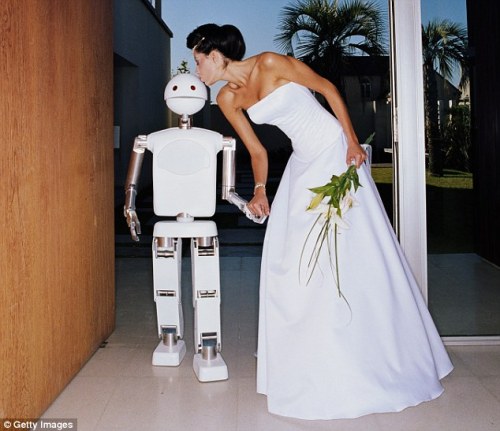
Like same-sex marriage, though, it’ll happen. Humans will marry robots. Men will marry female sex robots. Women will marry male sex robots. Some men will marry male sex robots and some women will marry female sex robots. I’m sure there will even be plenty who marry sex robots who blur the gender line in ways that’s hard to imagine without getting too kinky. It’ll still happen and it will be legally recognized as marriage.

I’ll give a moment for social conservatives and extreme reactionaries to stop shuddering in horror. Take all the time you need. To that crowd and anyone else concerned/scared of this possibility, I can offer at least some solace in the sense that this isn’t going to happen overnight. However, the factors for it to eventually happen are already manifesting.

For human/robot marriage to happen, a number of things need to occur first. There will need to be progression of events, some of them social and some of them technological. As those events occur, though, the path to human/robot marriage will become clearer. In simplest terms, this is the timeline for how we’ll navigate that path.

Step 1: Robot intelligence must advance to a point where they have a sense of self and identity.

Step 2: Robots must gain some level of citizenship status within a society, which must also happen in conjunction with a change in what constitutes identity in a non-human context.

Step 3: Robots and humans must start forming intimate personal relationships, romantic and platonic, that closely mirror those between other humans.

Step 4: The relationships between humans and robots must gain some level of acceptance as a legitimate, non-taboo kind of relationship.

There are probably more detailed steps in between, but I would identify these steps as the most critical. So far, none of them have been achieved. While I’m aware that Saudi Arabia recognized its first robot citizen in 2017, I see that as more of a symbolic gesture cloaked as a PR stunt.

The robot they recognized, Sophia, is not the kind of robot people will marry in the future. This robot, which is pretty advanced by most standards, doesn’t quite meet the criteria necessary for sentience. It’s unlikely that she would be able to pass the Turing Test consistently or carry out the personal, physical, and emotional attributes of a spouse.

At the moment, human-level intelligence in a robot has not been achieved, let alone the kind of intelligence necessary to have a sense of self and will. We’re still quite a way from a robot that will one day ask whether or not it has a soul, which may end up being the moment we find out whether artificial intelligence becomes an existential crisis.

In the human/robot marriage timeline, though, we work under the assumption that the robots we create for uses beyond sex or labor will share a desire to form intimate connections. Granted, that’s a pretty lofty assumption, but one I think is already manifesting with the rise of the sex robot industry.

The fact sex robots are a growing industry and a growing controversy already reveals a desire, at least from the human part, to form an intimate connection with machines. If that desire finds its way into robots and artificial intelligent systems, then it’s likely those machines will seek connections too.

I believe that, as soon as there’s a robot or an intelligence that has such desires, the first and most critical step in the human/robot marriage timeline will be fulfilled. After that, it may only be a decade before humans start marrying robots. It may happen even sooner than that simply because digital evolution is so much faster than biological evolution.

It’s hard to say how close we are to creating that kind of intelligence. Even the most advanced sex robots today and the most advanced AIs aren’t quite at a level where they gain a sense of identity, but I believe we’re closer to that point than most realize. There are some who say robots will never advance beyond a certain point, but there are others who say it might reach that point by 2029 at the earliest.

If history is any guide, those who tend to claim a technological feat is impossible are usually proven wrong and look downright stupid through the lens of history. Those who are insanely optimistic about also get proven wrong too. For the most part, the achievement happens somewhere in the middle.

I won’t predict when robots are capable of human-level intelligence, but I believe it will happen before 2050 and it probably won’t happen all at once. Technology never does. At some point, though, we will find ourselves living in a world where non-human intelligence is part of our lives and it won’t seem like a novelty. It’ll be our new normal.

As happened with other minority struggles, it’ll take a while for robots to gain the kind of legal status necessary for a legitimate marriage. It’ll be controversial and probably end up being a major political issue. However, given the economics of robotics along with the intimate connections we’ve already forged, I believe robot citizenship will eventually happen and must faster than we expect.

Once that intelligence finds its way into a body or form with which humans can share intimate relationships, then human/robot marriage doesn’t just become possible. It becomes inevitable. We’ve already had people marry their phones. Is it really such a stretch to imagine that they’ll marry an intelligent robot capable of forming intimate, loving connections? I think it’s not just possible. It’s inevitable.

2 Comments

Filed under futurism, Marriage and Relationships, sex in society, sexuality

How Superhero Movies Are Preparing Us For The Future Of Human Enhancement

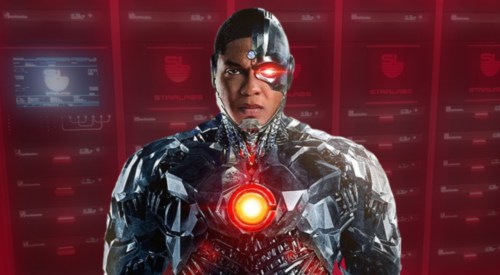
justice-league-cyborg-star-labs-1050432-1280x0

As a kid growing up on a healthy diet of superhero comics, video games, and superhero-themed cartoons that were very much ahead of their time on social issues, I often daydreamed about how awesome it would be to have the same powers as my favorite heroes. As an adult, I still daydream every now and then, often when I’m tired, frustrated, or stuck in traffic.

A major component in the overall appeal of the superhero genre is the wish fulfillment fantasy it embodies. Captain America represents the peak of physical conditioning. Iron Man represents the peak of technological know-how. Superman represents the peak of pretty much every possible feat we can imagine, a few of which are even impossible.

It’s a common fantasy of anyone who ever struggled in gym class or couldn’t open a can of pickles. It is, after all, those moments of struggle that remind us of just how limited we are, as humans. Our bodies are remarkable in so many ways, but they’re still frustratingly frail.

That status, however, may very well change. Unlike every other point in the approximately 200,000 year history of the human species, we’re actively working to transcend the limits of evolution through advances in biotechnology, advances in the treatment of disease, and even the integration of cybernetics into our brains and even our genitals.

Some of these advances are closer than others. Chances are that most people alive today won’t live to see the day when they can shape-shift at will like Mystique or fly around like Iron Man in mech suits designed by Elon Musk’s descendants. However, there may be young children alive today who will live long enough to see such wonders.

I’m not the only one who thinks this. There are people out there much smarter than me who believes that the first functionally immortal person is already alive today. They still might be in diapers, but there is a real chance that by the time they’re as old as I am, they’ll live in a world where things like aging, disease, and not being able to run 13 miles in 30 minutes like Captain America is a thing of the past.

A lot has already changed in the time I’ve been alive. I still remember a time when the idea of computers that could fit into your pocket was seen as too futuristic for some people. It was seen as just a fancy gadget from Star Trek. Given that kind of change, it’s hard to imagine what the next several decades holds for the future of humanity.

That’s where superhero media is helping in unexpected ways, though. To some extent, the modern superhero media of today is doing the same thing “Star Trek” did for previous generations. It doesn’t present a fanciful world where big green men can smash monsters or where a sickly young army recruit can be instantly transformed into the ultimate soldier. It offers a tantalizing vision of what the future could be.

It’s a vision that I believe got muddied between the end of the early “Star Trek” era and rise of modern superhero movies that began with “X-men,” “Iron Man,” and Christopher Nolan’s “Batman Begins.” Within that gap, events like Watergate, the the Vietnam War, and the rise of less optimistic, much more cynical generations made it very difficult to look forward to a better future.

Modern superhero movies have not eliminated that cynicism, but I believe it has helped tempered it. Optimism, as a whole, is actually on the rise. As bad as some recent headlines have been, some being downright disturbing, there is an increasing sense that the future is not all doom and gloom. We still dare to daydream about a better tomorrow.

More recent superhero movies, especially those that began with “Iron Man” and the emergence of the Marvel Cinematic Universe, aren’t nearly as fanciful as the old Richard Donner “Superman” movies. They’re not as gritty as Christopher Nolan’s “Batman” movies either. In a sense, this health balance has presented audiences with a world that still feels fanciful, but is also full of possibilities.

The idea that we can use science and biotechnology to turn someone who was once weak and sickly into the pinnacle of strength is not just a product of Jack Kirby’s legendary imagination. There are people working on that as I write this. It’s not out of the realm of possibility that we may one day enhance ourselves to the same level as Captain America.

Chances are we won’t even stop there. As I noted earlier, the human body has a lot of flaws. Also, thanks to the painfully slow progress of evolution, it hasn’t been upgraded in over 100,000 years. From our biology’s perspective, we’re still cavemen roaming the African Savannah with spears and rocks. Our bodies need upgrades, especially if we’re to become a space-faring species like the ones in “Guardians of the Galaxy.”

Some of those upgrades will come sooner than others. The end result, though, will be something far greater than even Captain America’s abilities. Some of those abilities seem impossible now. Remember, though, it wasn’t that long ago that the idea of computers in our pockets seemed just as impossible.

This is where, I believe, modern superhero movies are doing a much greater service than just entertaining the masses and making billions of dollars for Disney. Through heroes like Captain America, Iron Man, Thor, and even “Ant Man,” these movies make the case that such enhancements can do more than just fight invading aliens.

These movies can also help make the case that humanity can use these advancements to become better, as a whole. Characters like Steve Rogers, Tony Stark, Scott Lang, and Peter Parker all have the opportunities to be both destructive and productive with their enhanced abilities. At times, they even lapse into destructive tendencies, as we saw with Tony in “Iron Man 3.”

In the end, though, these characters use those enhanced abilities to do good for the world. They’re still human and they still have human flaws, which they don’t even try to hide. However, even with these flaws, they still feel inclined to do good, heroic things with their abilities.

That doesn’t just make for a good superhero narrative. It sends the message that we, as a species, can aspire to do so much good with the advances the future brings. There are still plenty of dangers, both with existing technology and with emerging technologies. The essence of the superhero narrative, though, tells us that we can confront those dangers and come out of it better than before.

That’s an important mentality to have as we move into an era where human enhancement is both possible and common. By believing we can use it to pursue the same heroics as the superheroes in movies like “The Avengers,” we give our species the push it needs to advance in a way that brings out the best in us.

There will still be villains along the way, as plenty of superhero movies show. The fact we still root for the heroes, though, helps reveal where our aspirations reside. With these movies effecting an entire generation of young people, I believe modern superhero movies are doing plenty to prepare them for the future of human enhancement.

With the staggering success of “Avengers: Infinity War,” a movie that has raised the bar for superhero movies of all kinds, the impact of superhero media has never been greater. That impact may very well be the key to preparing the next generation for unprecedented advancements in technology, society, and progress. That, to some extent, might end up being the most heroic thing this genre can do.

1 Comment

Filed under Comic Books, Jack Fisher, Superheroes, futurism, human nature, Sexy Future

When Robots Become (The Perfect) Parents

screen-shot-2016-09-29-at-14-14-31-1024x528-1-640x394

Talk to anyone who has been reading superhero comics as long as I have and they’ll tell you the same thing about Superman. A big part of who he is comes from his parents. He is the beacon of truth, justice, and the American way because he was lucky enough to get adopted by the best possible parents that anyone could hope for, alien or otherwise.

In comic book lore, Jonathan and Martha Kent are the gold standard by which all parents are measured. Like Superman himself, they embody an ideal. They reflect just how great an influence that good, loving parents can have on someone, even when they happen to have god-like power.

With that kind of parenting, a being who could move an entire star with only his breath can become a selfless hero. Even in the real world, the value of great parents is well-documented in science and even in the animal kingdom. When the value of something shows in both comic books and adorable animals, that’s a clear sign as to just how great a force it can be.

Now, I’m going to bring sex robots into the conversation. There’s just no easy way to transition to this part of the conversation so I’m not going to try. I’ve talked about sex robots before and I’ve done my best to make my points salient. That’s just not possible in some instances and this may be one of them.

The development of sex robots is happening, despite the concerns and outright opposition of some. As I write this, there are companies working hard to develop perfect robot lovers. Some have made more progress than others. Given the size of the sex industry, there’s just too much money to be made.

Beyond the sex part, though, these robot companions are poised to do even more than just make love to us in ways that’ll make us feel like Superman. With further advances in artificial intelligence, especially in terms of emotional intelligence, it’s not that far-fetched that these robot lovers may one day raise our children too.

The principles are already in place. We can already grow sperm and eggs in a lab. With further refinements, you won’t even need a doner in the future for producing a child. You could, in theory, just select the genetics you want with the traits you want. Beyond having a lot of kids that will look like Brad Pitt and Taylor Swift, you wouldn’t even need a surrogate once artificial wombs become sufficiently refined.

These technologies are in development and it’s entirely possible that there will come a day where an individual, be they man, woman, or something in between, doesn’t need a second person to produce a child. They don’t even need sex or doners. They only need the right tools and the proper biological material.

While that may ensure that the human race can propagate if making babies with sex falls out of fashion, there’s still the matter of caring for these children once they’re born. Technically, a society that produces children like this would be an entire society of single parents, which is already prone to all sorts of pitfalls.

That’s where the sex robots can come in once more, albeit without the sexy parts. If a robot can learn, through artificial intelligence, how to give someone the utmost love, care, and affection as a romantic partner, then why can’t they also develop similar skills in terms of parenting? In theory, a sufficiently advanced artificial intelligence could grant every child the same parenting that the Kents gave Superman.

Think, for a moment, about the traits of a good parent. Recall the best traits your own parents displayed that, while you might not have grasped them as a kid, you came to appreciate as an adult.

  • A good parent protects and guards their children from danger and corruption
  • A good parent teaches their children right, wrong, and how to make good decisions when the line between the two isn’t clear
  • A good parent is there for their children, providing an emotional anchor during times of duress
  • A good parent guides their children into become a functional adult, both through unconditional love and through occasional discipline
  • A good parent cherishes the trust their children have in them and, in turn, learns to trust them back as they grow
  • A good parent is always there for their child in times of crisis and loss, providing the unique comfort and strength that only they can give

There are probably plenty more traits of good parents I can list. There are just as many bad traits I can cite as well. In terms of pure logistics, there aren’t many of them that a sufficiently advanced artificial intelligence couldn’t match or exceed.

In principle, an artificial intelligence that’s more advanced than an average human would be even better at protecting and informing children than even the best human parents. At the moment, we’re still struggling to teach ethics to AI. With sufficient refinements, though, there’s no reason why a robot parent armed with advanced AI couldn’t embody the same ideals as the Kents.
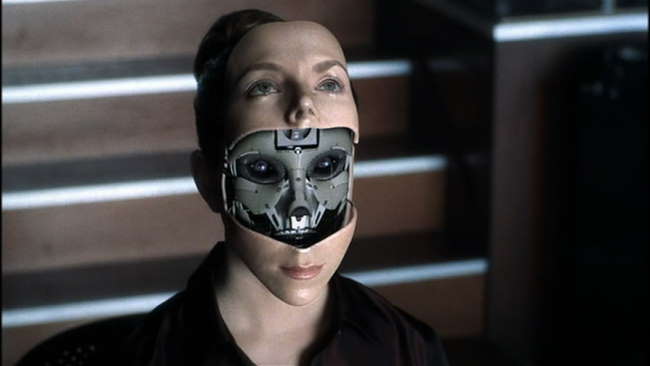
There’s also no reason why that intelligent robots couldn’t always be there for a child in some form. Kids are already getting cell phones at younger and younger ages. Kids are even starting to learn from robots in some areas. The current generation of kids may be uniquely equipped to trust, love, and cooperate with robots on a personal level.

They may not be entirely on board with trusting robots to raise their own children, but the foundation is already emerging. The more young people interact with robots, the more comfortable they’ll be incorporating them into their lives, both as lovers and as parents.

At the moment, there’s a lot that robots can’t do in terms of parenting. You could probably say the same thing about sex robots in terms of being ideal lovers. The tools and incentives are there. It’s just a matter of the technology catching up to the concept. I predict that sex robots will probably come first and not just literally. Some are already predicting robot marriage within a few decades.

Shortly after that, though, I think it won’t be long before those same robots start having babies of their own and begin raising those children. While that may seem creepy, if not downright dystopian to some, I think it could actually work to the advantage of robots and humans alike. It may even help us avoid a Skynet scenario.

By loving robots and forming intimate relationships with them, as we’ll likely do with sex robots, we give ourselves and the advanced intelligence behind them a reason to cooperate rather than control. If we learn to love sex robots and teach them to love us back, then there would be no reason for them to enslave or destroy us. If we start raising children with them, then that provides an even greater reason.

Just as children help forge closer bonds between parents, raising children could help strengthen the bond between humans and robots. It already happens now. It starts with sex. Ideally, that eventually leads to children. Those children help create a family. As long as that family is bonded by love, support, and cooperation, why should it matter if some of those members are robots?

Such a scenario is still probably a long way off. I doubt I or most of the people reading this will live long enough to see it. The seeds may already be sown, though. Robots are evolving rapidly and children are already bonding with them. With advanced sex robots not that far off, the way in which we approach raising children may change radically in the coming decades.

It’s going to be a transition, that’s for sure. It’s probably going to be prone to many complications, protests, and outright resistance by some. However, if the end result is every child having parents as perfect as the ones Superman had, then the future of our sex lives and our children are very promising.

4 Comments

Filed under futurism, Marriage and Relationships, sex robots, sexuality

How We’ll Save Ourselves From Artificial Intelligence (According To Mass Effect)

mass-effect-andromeda-kill-the-ai-or-save-the-ai_feature

Growing up, my family had a simple rule. If you’re going to talk abut about a problem, you also have to have a solution in mind. By my parents’ logic, talking about a problem and no solution was just whining and whining never fixes anything. My various life experiences have only proved my parents right.

When it comes to a problem that may be an existential threat to the human race, though, I think a little whining can be forgiven. However, that shouldn’t negate the importance of having a solution in mind before we lose ourselves to endless despair.

For the threat posed by artificial intelligence, though, solutions have been light on substance and heavy on dread. It’s becoming increasingly popular among science enthusiasts and Hollywood producers to highlight just how dangerous this technology could be if it goes wrong.

I don’t deny that danger. I’ve discussed it before, albeit in a narrow capacity. I would agree with those who claim that artificial intelligence could potentially be more destructive than nuclear weapons. However, I believe the promise this technology has for bettering the human race is worth the risk.

That said, how do we mitigate that risk when some of the smartest, most successful people in the world dread its potential? Well, I might not be as smart or as successful, but I do believe there is a way to maximize the potential of artificial intelligence while minimizing the risk. That critical solution, as it turns out, may have already been surmised in a video game that got average-to-good reviews last year.

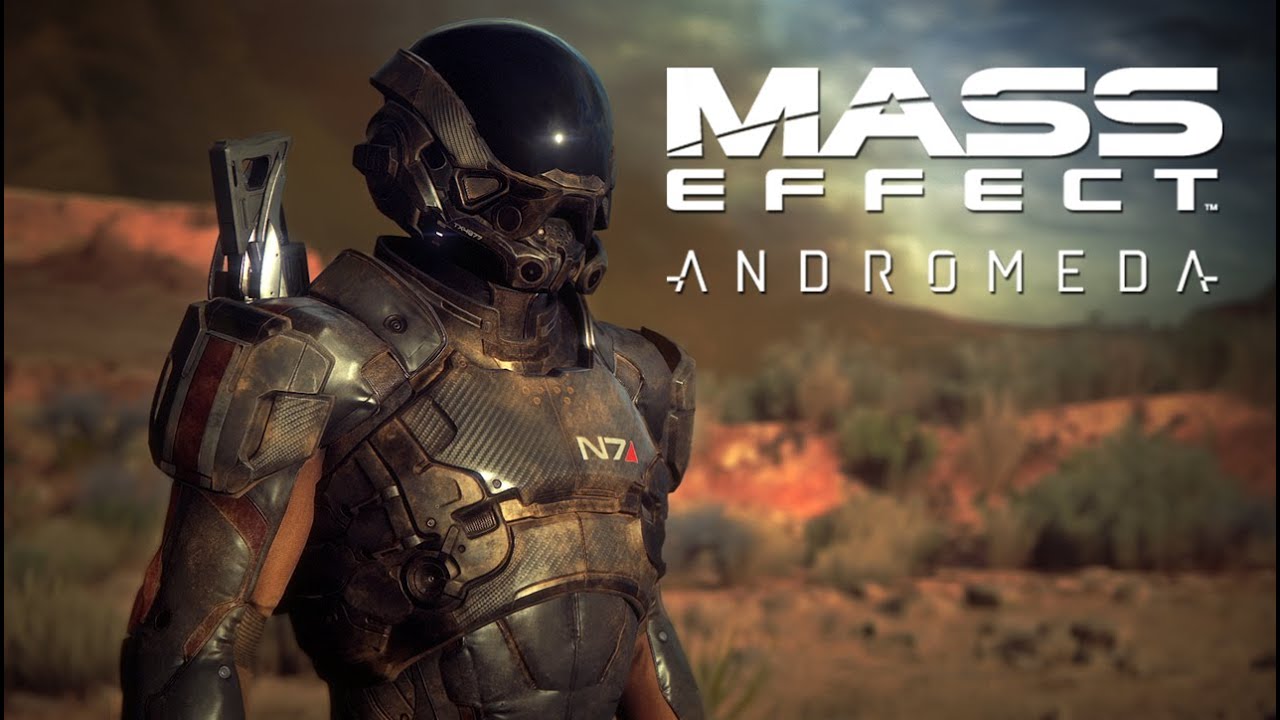
Once again, I’m referring to one of my favorite video games of all time, “Mass Effect.” I think it’s both fitting and appropriate since I referenced this game in a previous article about the exact moment when artificial intelligence became a threat. That moment may be a ways off, but there may also be away to avoid it altogether.

Artificial intelligence is a major part of the narrative within the “Mass Effect” universe. It doesn’t just manifest through the war between the Quarians and the Geth. The game paints it as the galactic equivalent of a hot-button issue akin to global warming, nuclear proliferation, and super plagues. Given what happened to the Quarians, that concern is well-founded.

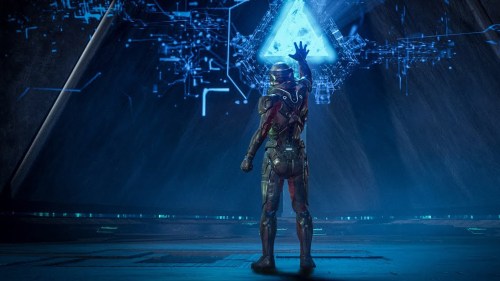
That doesn’t stop some from attempting to succeed where the Quarians failed. In the narrative of “Mass Effect: Andromeda,” the sequel to the original trilogy, a potential solution to the problem of artificial intelligence comes from the father of the main characters, Alec Ryder. That solution even has a name, SAM.

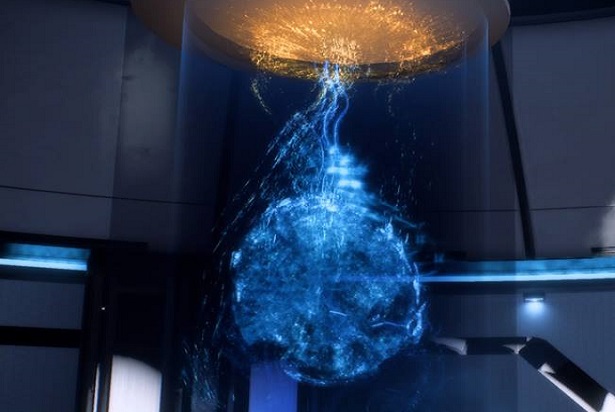
That name is an acronym for Simulated Adaptive Matrix and the principle behind it actually has some basis in the real world. On paper, SAM is a specialized neural implant that links a person’s brain directly to an advanced artificial intelligence that is housed remotely. Think of it as having Siri in your head, but with more functionality than simply managing your calendar.

In the game, SAM provides the main characters with a mix of guidance, data processing, and augmented capabilities. Having played the game multiple times, it’s not unreasonable to say that SAM is one of the most critical components to the story and the gameplay experience. It’s also not unreasonable to say it has the most implications of any story element in the “Mass Effect” universe.

That’s because the purpose of SAM is distinct from what the Quarians did with the Geth. It’s also distinct from what real-world researchers are doing with systems like IBM Watson and Boston Dynamics. It’s not just a big fancy box full of advanced, high-powered computing hardware. It’s built around the principle that its method for experiencing the world is tied directly to the brain of a person.

This is critical because one of the inherent dangers of advanced artificial intelligence is the possibility that it won’t share our interests. It may eventually get so smart and so sophisticated that it sees no need for us anymore. This is what leads to the sort of Skynet scenarios that we, as a species, want to avoid.

In “Mass Effect,” SAM solves this problem by linking its sensory input to ours. Any artificial intelligence, or natural intelligence for that matter, is only as powerful as the data it can utilize. By tying biological systems directly to these synthetic systems, the AI not only has less incentive to wipe humanity out. We have just as much incentive to give it the data it needs to do its job.

Alec Ryder describes it as a symbiotic relationship in the game. That kind of relationship actually exists in nature, two organisms relying on one another for survival and adaptation. Both get something out of it. Both benefit by benefiting each other. That’s exactly what we want and need if we’re to maximize the benefits of AI.

Elon Musk, who is a noted fan of “Mass Effect,” is using that same principle with his new company, Neuralink. I’ve talked about the potential benefits of this endeavor before, including the sexy kinds. The mechanics with SAM in the game may very well be a pre-cursor of things to come.

Remember, Musk is among those who have expressed concern about the threat posed by AI. He calls it a fundamental risk to the existence of human civilization. Unlike other doomsayers, though, he’s actually trying to do something about it with Neuralink.

Like SAM in “Mass Effect,” Musk envisions what he calls a neural lace that’s implanted in a person’s brain, giving them direct access to an artificial intelligence. From Musk’s perspective, this gives humans the ability to keep up with artificial intelligence to ensure that it never becomes so smart that we’re basically brain-damaged ants to it.

However, I believe the potential goes deeper than that. Throughout “Mass Effect: Andromeda,” SAM isn’t just a tool. Over the course of the game, your character forms an emotional attachment with SAM. By the end, SAM even develops an attachment with the character. It goes beyond symbiosis, potentially becoming something more intimate.

This, in my opinion, is the key for surviving in a world of advanced artificial intelligence. It’s not enough to just have an artificial intelligence rely on people for sensory input and raw data. There has to be a bond between man and machine. That bond has to be intimate and, since we’re talking about things implanted in bodies and systems, it’s already very intimate on multiple levels.

The benefits of that bond go beyond basic symbiosis. By linking ourselves directly to an artificial intelligence, it’s rapid improvement becomes our rapid improvement too. Given the pace of computer evolution compared to the messier, slower process of biological evolution, the benefits of that improvement cannot be overstated.

In “Mass Effect: Andromeda,” those benefits help you win the game. In the real world, though, the stakes are even higher. Having your brain directly linked to an artificial intelligence may seem invasive to some, but if the bond is as intimate as Musk is attempting with Neuralink, then others may see it as another limb.

Having something like SAM in our brains doesn’t just mean having a supercomputer at our disposal that we can’t lose or forget to charge. In the game, SAM also has the ability to affect the physiology of its user. At one point in the game, SAM has to kill Ryder in order to escape a trap.

Granted, that is an extreme measure that would give many some pause before linking their brains to an AI. However, the context of that situation in “Mass Effect: Andromeda” only further reinforces its value and not just because SAM revives Ryder. It shows just how much SAM needs Ryder.

From SAM’s perspective, Ryder dying is akin to being in a coma because it loses its ability to sense the outside world and take in new data. Artificial or not, that kind of condition is untenable. Even if SAM is superintelligent, it can’t do much with it if it has no means of interacting with the outside world.

Ideally, the human race should be the primary conduit to that world. That won’t just allow an advanced artificial intelligence to grow. It’ll allow us to grow with it. In “Mass Effect: Andromeda,” Alec Ryder contrasted it with the Geth and the Quarians by making it so there was nothing for either side to rebel against. There was never a point where SAM needed to ask whether or not it had a soul. That question was redundant.

In a sense, SAM and Ryder shared a soul in “Mass Effect: Andromeda.” If Elon Musk has his way, that’s exactly what Neuralink will achieve. In that future in which Musk is even richer than he already is, we’re all intimately linked with advanced artificial intelligence.

That link allows the intelligence to process and understand the world on a level that no human brain ever could. It also allows any human brain, and the biology linked to it, to transcend its limits. We and our AI allies would be smarter, stronger, and probably even sexier together than we ever could hope to be on our own.

Now, I know that sounds overly utopian. Me being the optimist I am, who occasionally imagines the sexy possibilities of technology, I can’t help but contemplate the possibilities. Never-the-less, I don’t deny the risks. There are always risks to major technological advances, especially those that involve tinkering with our brains.

However, I believe those risks are still worth taking. Games like “Mass Effect: Andromeda” and companies like Neuralink do plenty to contemplate those risks. If we’re to create a future where our species and our machines are on the same page, then we would be wise to contemplate rather than dread. At the very least, we can at least ensure our future AI’s tell better jokes.


5 Comments

Filed under futurism, human nature, Mass Effect, Sexy Future, video games

Why You SHOULD Donate Your Genome To The Public

genetic-individuality-male-body-with-dna-548001023-59f9d183af5d3a0010859452

Have you ever wanted to contribute to the future of humanity, but lack the engineering skills or the understanding of quantum mechanics? Well, there are many ways to do so that don’t involve getting a PHD, working for Elon Musk, or volunteering as a guinea pig for medical experiments.

As I speak, medical science is boldly pushing forward in exploring the basic building blocks of human biology. I’m not just referring to the sexy parts either. Since the completion of the Human Genome Project in in the early 2000s, we’ve entered unknown territory in terms of understanding what makes us healthy, what makes us sick, and how we go about treating it.

Beyond simply uncovering new treatments for genetic disease, of which there are many, learning about the fundamentals of human biology is critical to understanding who we are and where we’re going in the future. If the goal of every species is to adapt and survive, then learning about the human genome is akin to giving a light saber to a caveman.

Image result for man with a lightsaber

However, completing the Human Genome Project was just the first step. The primary goal of that project was to simply determine how many genes were in the human genome and how they’re organized within the 3 billion base pairs that make up our chromosomes. It’s not as much a tool as it is an instruction manual with a list of raw materials.

It was an arduous process. Between the time the Human Genome Project started in the early 90s to the time when it was completed over a decade later, the overall cost of sequencing one genome was a hefty $2.7 billion in 1991 dollars. That’s a lot for just one strand of DNA for one species. It’s hard to learn much from anything when it’s that expensive.

Image result for Gold diamond iphone

Thankfully, much like early cell phones, science has refined the process and made it cheaper. In fact, it’s gotten a lot cheaper over the past decade. At the moment, it costs just a couple thousand dollars to get your genome sequenced. It’s only going to get cheaper. Some companies, in fact, hope to offer the service for less than $100. That means getting your genome sequenced may one day be cheaper than a set of premium headphones.

This is where your contribution comes in. Last last year, a man made his genome publicly available to the Personal Genome Project in the United Kingdom. That means pretty much anyone with an internet connection can access the specifics of this man’s genetics, right down to the base pair.

While that may seem like an overt surrender of privacy that the Ron Swansons of the world would despise, it’s actually a critical element in the process. It’s not enough to just understand the structure of the human genome. We also need to understand the many variations and diversity within it.

Image result for genetic diversity

To better understand why that’s so important, it’s important to remember just how clunky and inexact nature can be. Nature is, by necessity, a blunt instrument that is prone to many flaws. The range of genetic diversity within the human species is what helps us adapt, but it’s also prone to all sorts of flaws.

For most of human history, if not the history of life on Earth, we haven’t been able to do much about these flaws. Nature’s way of dealing with them is through the harsh, tedious, and slow process of natural selection. By learning more about the variations in the human genome, we can skip that process entirely. We can effectively maximize our genetic potential without multiple generations of trial, error, and suffering.

The tools for making use of that knowledge are already in development. I’ve mentioned CRISPR before as a possible method for treating most infectious diseases. That’s just one component in the larger field of genetic engineering, which promises to do more than just treat diseases. It could, in principle, maximize the potential of our genetics in every individual.

Image result for olympic athletes 2018

By that, I don’t mean turning every human into a the kind of Übermensch that drives racists, mad scientists, and comic book villains. Like it or not, genetics can be a significant barrier for certain people in terms of realizing their physical, mental, and even sexual goals. If there’s a way to circumvent those barriers, why shouldn’t we seek it?

That’s not to say there aren’t risks. I remember Ian Malcom’s famous speech in “Jurassic Park” as much as anyone who was alive in the early 1990s. We’re not talking about creating monstrous creatures for our own amusement, though. We’re talking about the health, well-being, and suffering of countless individuals, including those alive today and those yet to be born.

In any effort to alleviate suffering and maximize human achievement, knowledge is power and information is the fuel. As it stands, we need more of the latter to improve the former. That’s why contributing your genome is one of the most meaningful things anyone not named Elon Musk can do to further this endeavor.

Image result for human genome

That means if you have the ability to participate in the Personal Genome Project, you should seriously consider doing so. There’s still a lot we don’t know about the fundamentals of our own biology. The sheer breadth of human diversity at the genetic level is still not clear, but it’s already astounding in its own right.

By adding your genome to the mix, maybe you’ll reveal a certain trait or mechanism that will help us better understand disease. Maybe your DNA will help refine our understanding of how genetics influence our behavior, appearance, and ability to get along. Maybe doing so will reveal some unexpected heritage that you didn’t know you had.

Related image

If you need a sexier reason for contributing your genome, then consider the possible insights our genes may offer to our sex lives. Perhaps there are genetic factors that effect our ability to form romantic bonds. Perhaps there are factors that effect the intensity, enjoyment, and satisfaction of sex. Even if you’re wary of genetic engineering, isn’t that worth exploring and refining?

There’s a lot to learn and a lot to gain. Some of us might not live long enough to experience those gains, but children alive today may still benefit. A future with less disease, less suffering, and even better sex lives is certainly a future worth working towards.

The opportunity to donate your genome is limited at the moment, but the growing demand for biotechnology and medicine is only accelerating. Even if you’re unable to contribute to the actual science, contributing your genome can be every bit as valuable. Our genome, like our lives, are precious and finite resources. Let’s make the most of them in the name of a better and sexier future.

Related image

Leave a comment

Filed under Current Events, Sexy Future