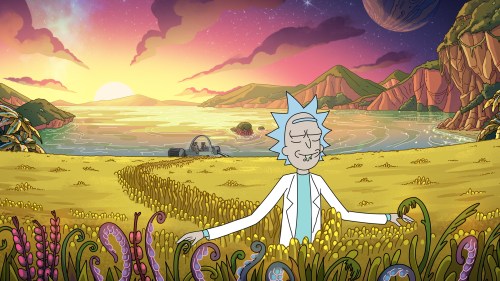
Category Archives: philosophy

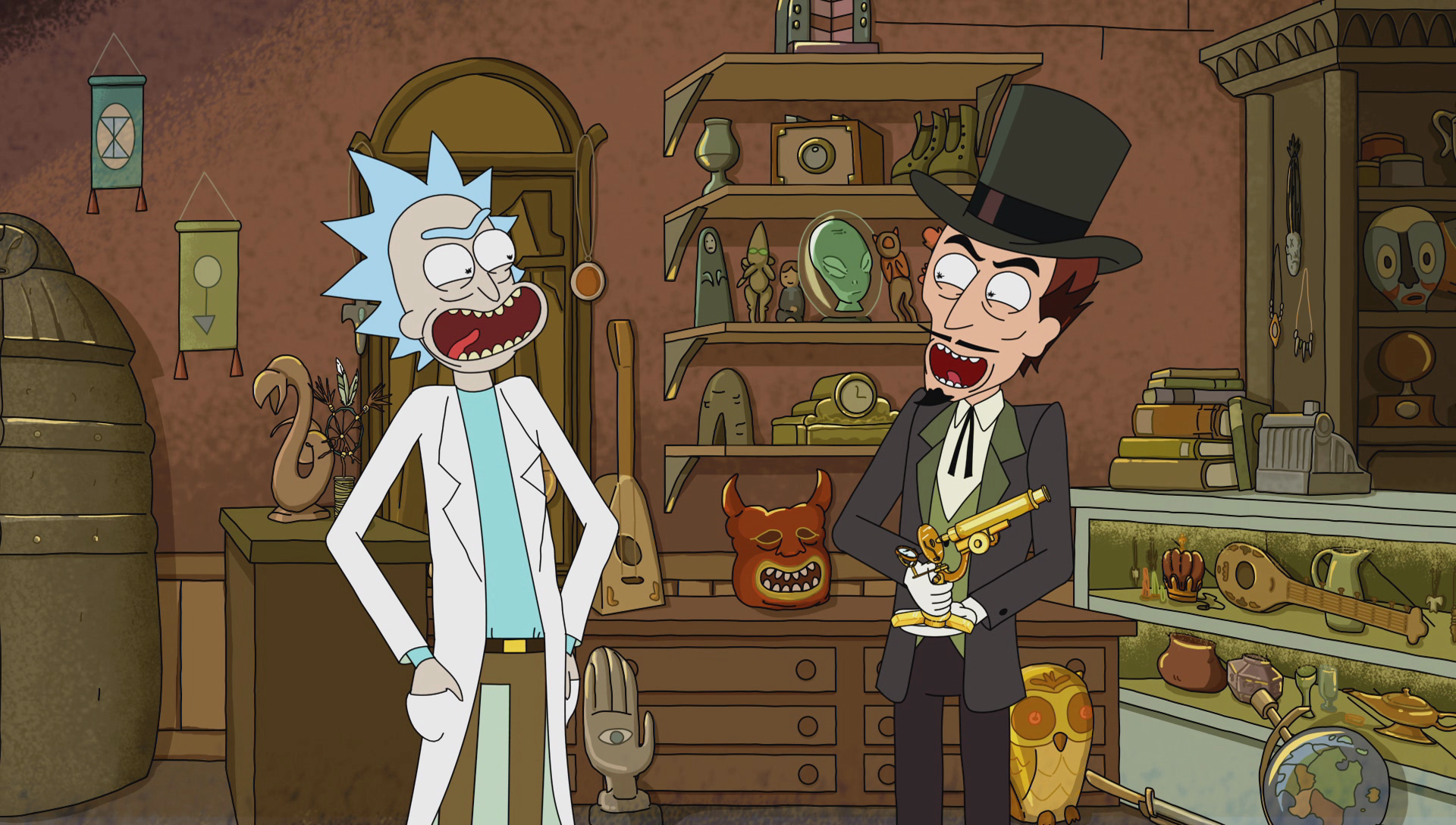
“Rick And Morty” Season 4 Premier: Is Morty Poised To Become Evil?

Rick and Morty Season 4 Credit: Adult Swim

Some things are worth waiting for, but when that wait spans nearly two years, that’s pushing it. Patience is a virtue, but after a certain amount of time, it becomes a test in how much you can tolerate frustration. For fans of “Rick and Morty,” the line between patience and frustration got real blurry for a while.

The last episode of Season 3, “The Rickchurian Mortydate,” aired on October 7, 2017. That might as well have been another lifetime and several universes ago. In that time, a lot happened behind the scenes. Show creators Justin Roiland and Dan Harmon explained in 2018 why it took so long and, delays aside, there was a legitimate reason for it, which hopefully helps the show in the long run.

That didn’t make the wait any less arduous. However, on November 10, 2019, it finally ended with the premier of Season 4, Episode 1, “Edge of Tomorty: Rick Die Rickpeat.” To say I was excited would be like saying Kalaxian Crystals help lighten the mood at a lame ass party. I built my entire day around it. I even cussed at the clock many times for not moving faster.
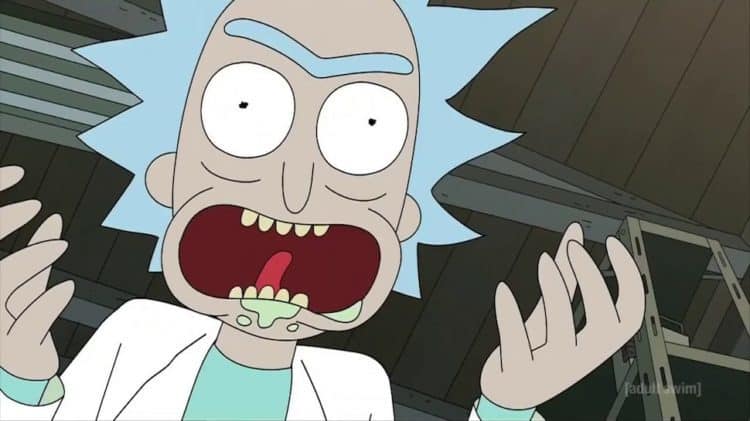
This was basically me all day.

As frustrating as the two-year wait was, I can attest that it was worth it. This quirky, colorful piece of nihilistic sci-fi didn’t miss a beat. Everything in “Edge of Tomorty: Rick Die Rickpeat” is a testament to why the show is so awesome and engaging. By the end, I quickly forgot about how frustrating the wait was. I’m just glad the show was back.

There’s a lot to unpack with this episode. The premise is fairly simple by the eccentric standards of “Rick and Morty.” Morty joins Rick on a quick space excursion to harvest valuable death crystals. These crystals have the ability to show someone how they’re going to die, which makes them both useful and terrifying. From there, plenty of violence, hilarity, and jokes about fascism ensue.

Yes, the show jokes about fascism about a time when fascism is no laughing matter to some people. Then again, this is the same show that gave us Abradolf Lincler so I don’t see why anyone should be surprised.

However, it’s not the fascist jokes that really made this episode stand out for me. What I found more intriguing was how this episode furthered Morty’s story. It’s a story that has changed a great deal since the first season.

When the show began, Morty is a deer-in-the-headlights teenager who is constantly overwhelmed by Rick’s exploits. He often comes off as scared, inexperienced, and naïve. He tries to maintain some level of idealism in the face of Rick’s misanthropic nihilism, but it rarely pans out. Sometimes, it’s downright traumatizing.

Then, beginning with “Close Encounters of the Rick Kind” and really further escalating in Season 3, especially with “The Ricklantis Mixup,” the show began hinting that Morty had a dark side. The hints weren’t subtle, either. Rick once stated that an overly confident Morty is a dangerous thing, which has fueled plenty of fan theories about where Morty is heading.

This episode will likely add more fuel to those theories because it shows what Morty can do when he’s motivated. Season 3 already showed that Morty has become more and more capable. He has been able to utilize Rick’s technology and solve Rick’s life-threatening puzzles. If the first episode of Season 4 is any indication, he’s capable of going even further when he’s got a strong incentive.

In “Edge of Tomorty: Rick Die Rickpeat,” the incentive is simple. He wants to pursue a future in which he dies happy with his long-time crush, Jessica. It’s a simple desire and one most people can understand without the aid of portal guns or magic crystals. On the surface, it’s not the kind of thing that would lead someone to committing egregious acts that require military intervention.

However, true to the high-level absurdity that is “Rick and Morty,” this is exactly what where Morty takes things. He’s not content to just know that this future is possible. He’s willing to go to great lengths to make it happen, even if it means going against Rick, bullies, the police, the military, and anything else that gets in his way.

It’s scary, yet revealing to see Morty go this far. It’s certainly not the first time the show has explored his dark side. In “Rest and Ricklaxation,” we find out that when Morty is purged of his toxic side, which includes his limitations, fears, and poor self-esteem, he becomes an full-blown sociopath.

Conversely, in that same episode, we find out that when Rick has his toxic side removed, he becomes kinder, more understanding, and downright affable. He doesn’t even randomly burp without excusing himself anymore. It implies that the toxic parts of Rick are part of what make him so misanthropic and cynical. Behind that toxic shell is someone who does have a sense of humanity, albeit to a certain extent.

For Morty, it’s the opposite. Strip away that shell that makes him feeble, inept, and whiny, as was often the case in the early episodes of the show, and his core persona is very different. He’s darker and more self-centered. Whereas Rick’s motivations rarely go beyond petty self-interest, Morty demonstrates more high-level narcissism. He’s willing to bend the world around him to his will in order to get what he wants.

Beyond adding more fodder for the popular “Evil Morty Theory,” it hints that Morty has a dark side in the mold of Walter White. I’ve mentioned before how Walter White walks a unique path into becoming a villain. A key part of that path involves a villain revealing that he has a dark side of himself was always there, but never came out because there were no influences to draw it out.

In “Breaking Bad,” a number of events compounded over time to bring out Walter White’s dark side. It started with him claiming that he did what he did for the good of his family. By the end, he flat out admitted that he did what he did out of selfishness. While Morty’s circumstances are very different, the signs are there too.
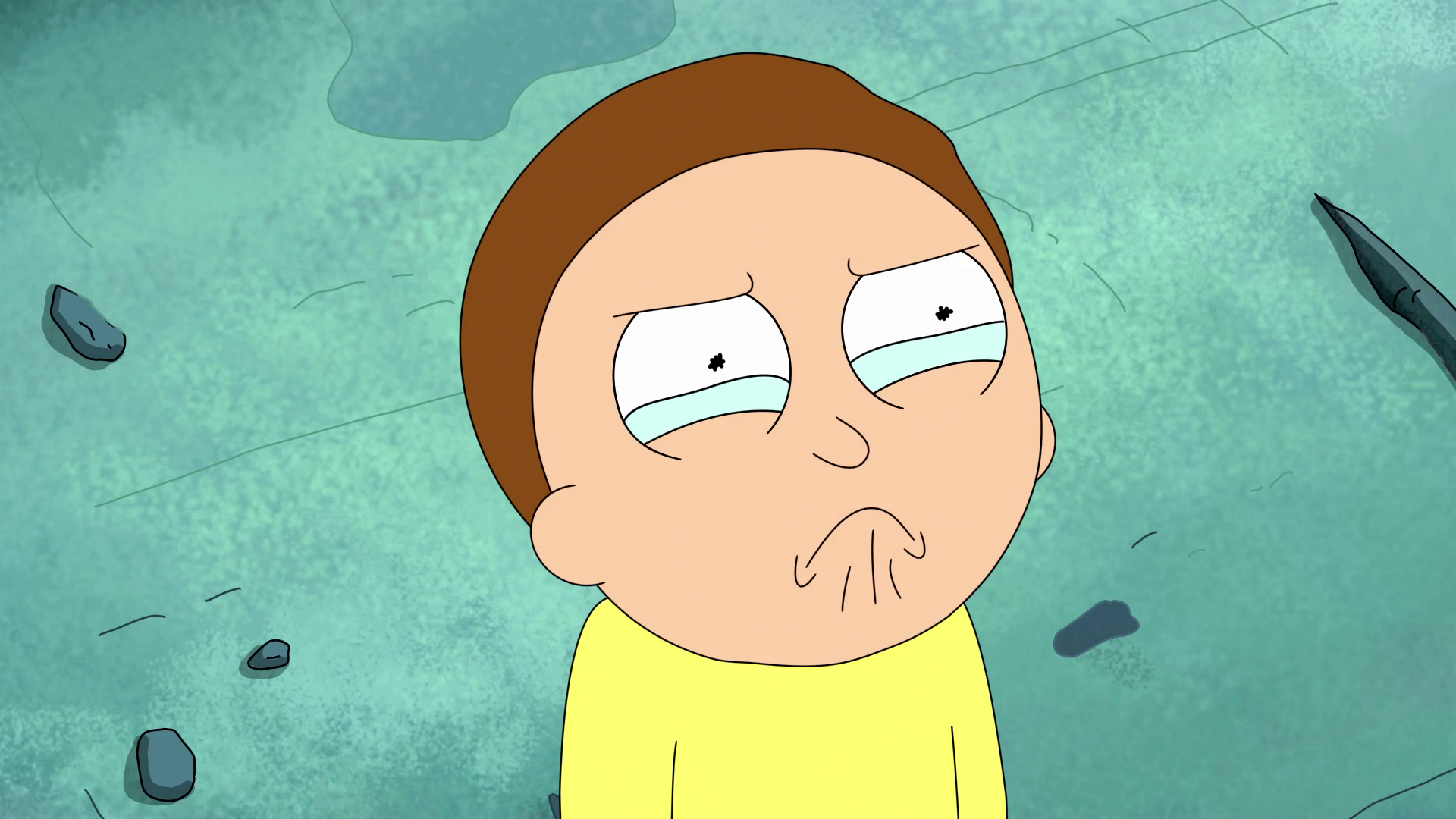
When Morty is inclined to be selfish, he can be downright dangerous. He hasn’t completely broken bad yet, but if “Edge of Tomorty: Rick Die Rickpeat” is any indication, he can walk that path and he won’t always be able to blame Rick for it. These were ultimately Morty’s decisions and, given how the show has emphasized choice in the past, that’s a potentially relevant development.

Whatever happens with Morty, I’m just glad this show is back. I’m looking forward to seeing how it plays out over the course of this season. I’m sure there will be controversy, debates, arguments, and outrage. That’s part of what makes “Rick and Morty” artifact in our cultural landscape.

Until then, wubba lubba dub dub!

Leave a comment

Filed under philosophy, psychology, Rick and Morty, television, Villains Journey

How The Internet Has Weakened (But Not Destroyed) Organized Religion

pic

The current state of organized religion is ripe with conflict and mixed messages. On one hand, religious affiliation has significantly declined over the past 30 years. According to a 2018 survey from Eastern Illinois University, around 23 percent of the US population identifies as having “no religion.” For comparison, that number was only 5 percent in 1972.

In other industrialized countries, the decline is even more pronounced. Throughout Europe, more and more people are drifting away from organized religion. That’s especially true of young people, who are one of the least religious demographics in modern history. In terms of the bigger picture, organized religion is facing a generational time bomb that’s just starting to go off.

At the same time, however, religion still exercises an absurd amount of political power. Religious groups, particularly those who align themselves with conservative politics, have enormous influence. Its platform is tightly woven with that of a major political party. Many people in positions of power identify as religious. Many more rely on a religious base to get elected.

It’s a strange trend that seems counter-intuitive. How can something be weakening due to declining adherents, but still wield so much power? In an age where the egregious crimes of religious institutions have been exposed and more people are educated on the many absurdities of various holy texts, it feels as though organized religion should be on its death bed.

While there are many factors behind this situation, I believe that one particular factor is more influential than most. It also happens to be the same factor that has done the most to weaken religion while helping to sustain its political and social influence. It’s a force that has already radically changed everyone’s life, regardless of their affiliation.

That force is the internet and its impact on religion cannot be overstated.

I’m old enough to remember what it was like to talk about religion in the pre-internet days. You listened to your parents, relatives, priests, mullahs, rabbis, and monks. They told you the history and tenants of their religion. You might ask questions. You might not understand the philosophy behind it. No matter how curious or skeptical you were, you could only do so much to question it.

Most of the time, you just had to trust your elders that they knew what they were talking about. You also had to trust that they wouldn’t lie to you, which is often a risky bet. If you were really motivated, you might go to a library and do some research. Even then, you’d have an uphill battle a head of you, given the many complexities behind religion and why people believe in it.

These days, it’s exceedingly simple to fact check an absurd religious claim. If someone were to claim that a 900-year-old man built a 300-foot wooden boat that housed two of every kind of animal for 40 days during a global flood, you wouldn’t have to spend years in college to learn why that’s absurd. You could just pull out your phone, do a few simple searches, and find out why this claim is completely wrong.

Even a kid who has only taken a basic science class can look up any of the stories their priest, mullah, rabbi, or monk tell them to find out whether they’re based on real history or embellished folklore. Religious institutions, parents, and schools can fight to control the information their young people receive. Many organizations do engage in activities that are outright indoctrination.

However, as demographic trends show, the effectiveness of those efforts only go so far. The information about the absurdities, inconsistencies, lies, and agendas is still out there. It’s widely available to anyone who can access a smartphone or a computer. There’s only so much anyone can do to prevent someone from accessing that information.

As a result, organized religion will never have the same sway it once did in centuries past. No matter how much conservative reactionaries complain, it’s impossible to go back. The combination of modern education and accessible information ensures that major religious institutions will never wield the power they once did.

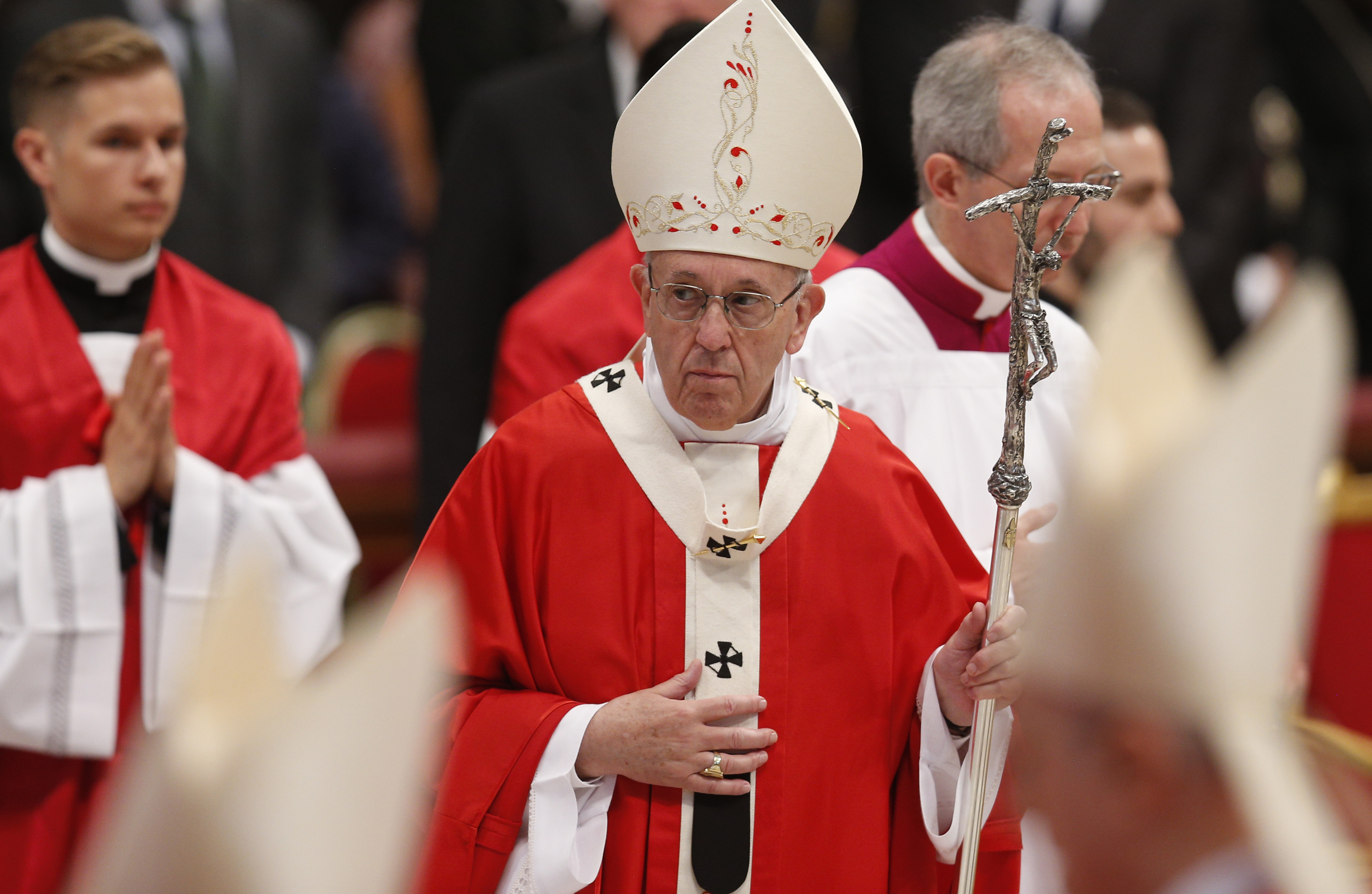
Given the complexities of modern societies and the geopolitics surrounding it, it’s just not practical for a centralized religious institution to exist. The Vatican can still make statements about morality, ethics, and spiritual matters. It just has no means of enforcing them, as evidenced by how little typical Catholics follow their edicts.

Even without this power, the same internet that has permanently weakened religion is also the same thing that sustains some of its considerable influence. In fact, the internet might act as a catalyst that can turn certain individuals from nominal adherents to ardent zealots.

Think back to the young people sitting in churches, mosques, synagogues, or temples. While some might casually look up the religious claims out of curiosities, others might go out of their way to find information that confirms these claims. Even if they’re factually wrong, they’ll look for any bit of information that they can twist to make it seem true and cling to it.

This is why creationism still persists, despite extensive resources that thoroughly debunk it. If someone is really determined to find information that affirms their beliefs, they’ll find it on the internet the same way people find cat videos and knife-wielding crabs. There will even be unscrupulous people to exploit them, including those who are convicted felons.

Like it or not, there are people who sincerely want to believe their preferred religion and will cling to anything that strengthens that belief. Given the open nature of the internet, shaped by the whims of users rather than objective truth, it’s distressingly easy for someone to customize what kind of information they receive.

If someone only wants news and memes about how their religion is true while everyone else is doomed to eternal torture in Hell, then that’s what they’ll get. They can get their news and information from exceedingly bias sources while brushing off others as fake news. There’s nothing from stopping anyone from using the internet in such a manner.

We already see how this has divided people along political lines in recent years. I would argue that this has been going on with religion for even longer. The rise of the religious right and the prevalence of religious media has done plenty to tighten their grasp on ardent believers. While less people may identify as religious, those who do tend to be more dogmatic about it.

Since those kinds of believers can be mobilized and pandered to, they’re a more unified political force. As such, appealing to them means gaining power. That power may be tenuous and limited, but it’s still viable power that plenty of politicians exploit, sometimes to an egregious extent.

In a sense, the internet has made it easy for both the extreme zealots and the inherently skeptical. Those who might have identified as religious out of tradition in the past are more comfortable identifying themselves as non-religious today. It also helps there’s not as much stigma to being a non-believer as there used to be.

At the same time, those who were devout before can become outright zealots if they consume enough extreme content. In fact, their declining numbers in the general population might give them more reasons to become zealous. History has shown that small bands of religious zealots can do a lot of damage. The internet might hinder their ability to gain adherents, but it might also make them more desperate.

It’s a scary possibility, but one I tend to believe is remote. While I might not be a fan of organized religion, I still have many friends and family members who are religious and wonderful human beings. The internet hasn’t changed that. In the long run, I believe that basic humanity that binds us all will win out in the long run. The internet won’t always help, but it’s certainly a valuable tool.

2 Comments

Filed under extremism, human nature, philosophy, politics, religion

Why “Joker” Is Brilliant, But Controversial (For The Wrong Reasons)

960x0

Every now and then, a movie comes along that’s brilliant in so many ways, but undermined by the circumstances of its release. In the same way certain movies come along at just the right time to become a cultural phenomenon, others hit theaters with unexpected forces working against them.

When “The Dark Knight” came out in 2008, its timing was perfect. It struck all the right notes from a cinematic, narrative, and cultural perspective. On top of that, Heath Ledger’s performance as the Joker went down as one of the greatest displays of acting prowess of all time, and not just for a superhero movie. For many, myself included, Ledger’s version of the Joker will always be the one by which all others are measured.

By contrast, “Joker” couldn’t have been timed worse. The current social, political, and cultural landscape is vulnerable and hypersensitive to every one of the themes it explores. On top of that, the movie explores those things very well, so much so that it warrants being in the same conversation as “The Dark Knight” in terms of how it portrays the Joker.

While Heath Ledger’s Joker is still superior in almost every way, what Joaquin Phoenix accomplished in this movie deserves plenty of praise. At the very least, it helps cleanse the memories of those still cringing at Jared Leto’s rather eccentric take on the character in “Suicide Squad.”

This movie, as well as Phoenix’s performance, comes at a time when taboos about mental health and disturbed lonely men are hot-button topics. On top of that, a string of mass shootings perpetrated by disturbed men, some with disturbing manifestos, has created real-life horror while stoking genuine fears. The story in “Joker” neither avoids nor downplays those issues.

This movie also dares to do something that few beyond Alan More has been able to achieve, which is to give the Joker a backstory. For many lifelong comic fans, especially Batman fans, the very concept of fleshing out this character undermines the core of his appeal. He has always functioned better as a chaotic force of nature rather than a person with a tangible history.

Ever since his creation in 1940, his life and his story have been vague. He has been defined as a perfect counter to Batman’s never-ending crusade. Whereas Batman seeks justice through clear, defined rules, the Joker seeks chaos and laughs at such rules. He can never be too defined, as a character, if he’s to personify that chaos.

Despite these challenges, “Joker” finds a way to tell his story and, like “The Dark Knight” before it, actually manages to make the Joker even more terrifying. Through the character of Arthur Fleck, we see a disturbed mind trapped within an environment that does everything to make his condition worse. Through both unavoidable circumstances and fateful choices, we see this broken mind become something far more dangerous.

It doesn’t happen all at once. There’s no single trigger, like falling into a vat of chemicals. There’s a cumulative effect to Arthur Fleck’s transformation. It’s not always logical or smooth, which comes off as intentional from the beginning. The only constant is that Fleck gets more twisted and unhinged with each escalating event.

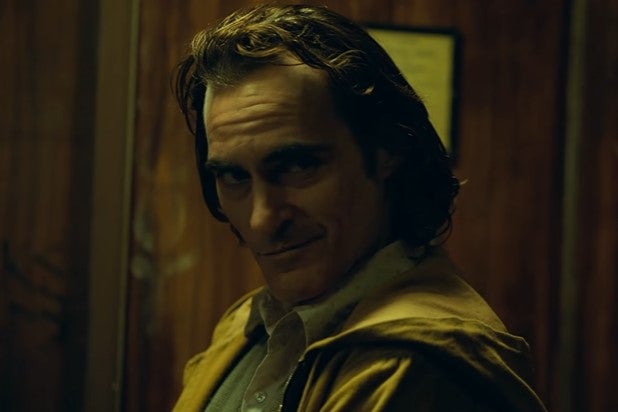
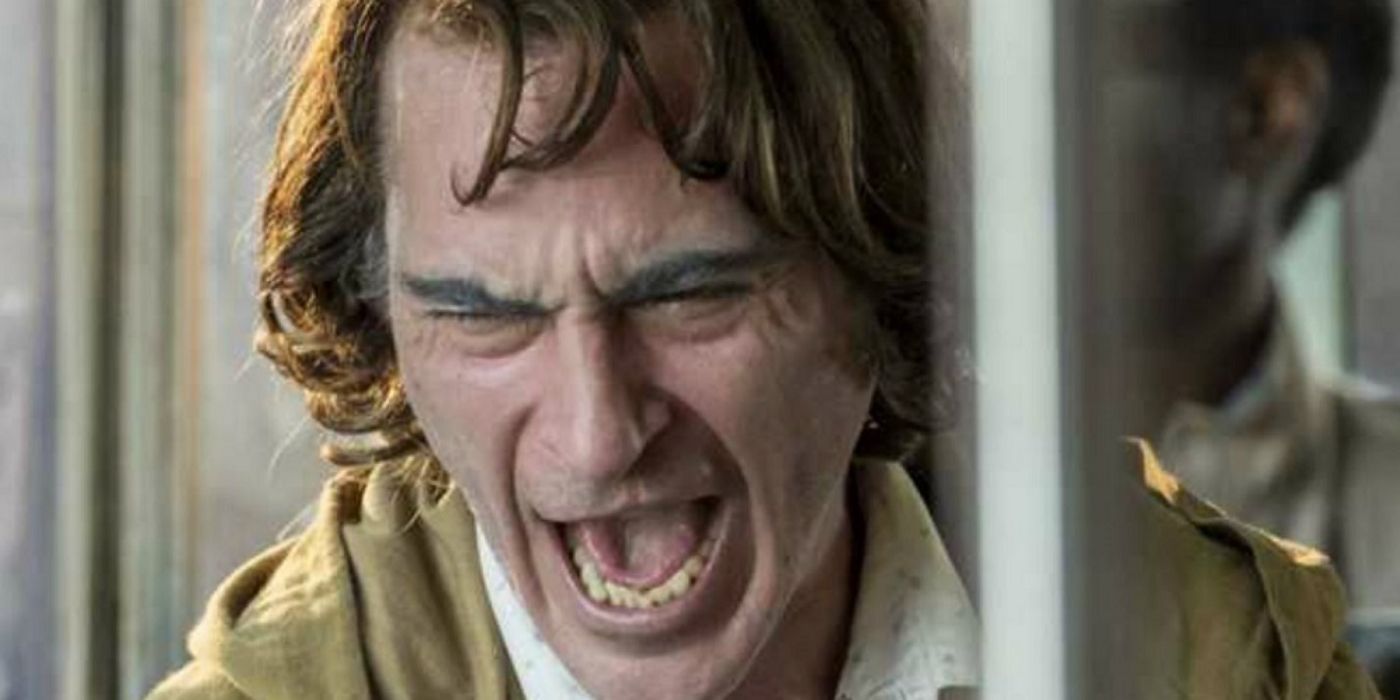
This is where Phoenix’s performance really shines. He carries himself with a presence that feels very close to what Ledger captured in “The Dark Knight.” He starts off as simply being mentally ill and struggling with it. However, what he does with his illness and what it does to him turns him into something more than just another disturbed loner.

It’s here where the controversy behind the “Joker” takes hold. I would argue it’s a dumb controversy, but it was serious enough for Aurora, Colorado to cancel screenings of the movie. While it feels like an overreaction, it’s somewhat understandable, given what happened in Aurora in 2012.

If that were the extent of the controversy, then “Joker” would only be a passing concern for most people. Then came the idea the movie celebrates or glorifies “incel culture” through Fleck’s story. While I usually try to be balanced when scrutinizing certain ideas, even if they’re absurd, I can’t do that this time.

Simply put, this part of the controversy is just plain stupid. There’s no better way to say it.

Worrying that this movie might somehow inspire lonely, disturbed men to go on killing sprees is completely without merit. It’s akin to worrying that “Friday the 13th” will inspire anyone who wears a hockey mask to brutally murder camp counselors. Moreover, the absurdity of this controversy undercuts the more substantive messages of this movie.

There is a real message in “Joker” and it has nothing to do with incels, masculinity, or even violence. In this world, Gotham City is the perfect symbol of a grossly flawed society that tries to pretend those flaws can be fixed by staying the course. From the perspective of people like Arthur Fleck, this notion is a complete joke.

Much like our world, there’s a small segment of very rich, very powerful people who benefit the most from this society. The Wayne family is the perfect manifestation of this joke. Even when they carry themselves as responsible, upstanding pillars of the community, they still look down at those who are dissatisfied. On top of that, they think their dissatisfaction is a flaw.

Arthur Fleck is as caught up as anyone in this decaying society. Then, through details I won’t spoil, he starts something that inspires chaos that would make Heath Ledger’s Joker proud. That chaos may or may not be entirely justified, but it’s understandable. In a sense, the Joker is just an extreme manifestation of something that seemed inevitable.

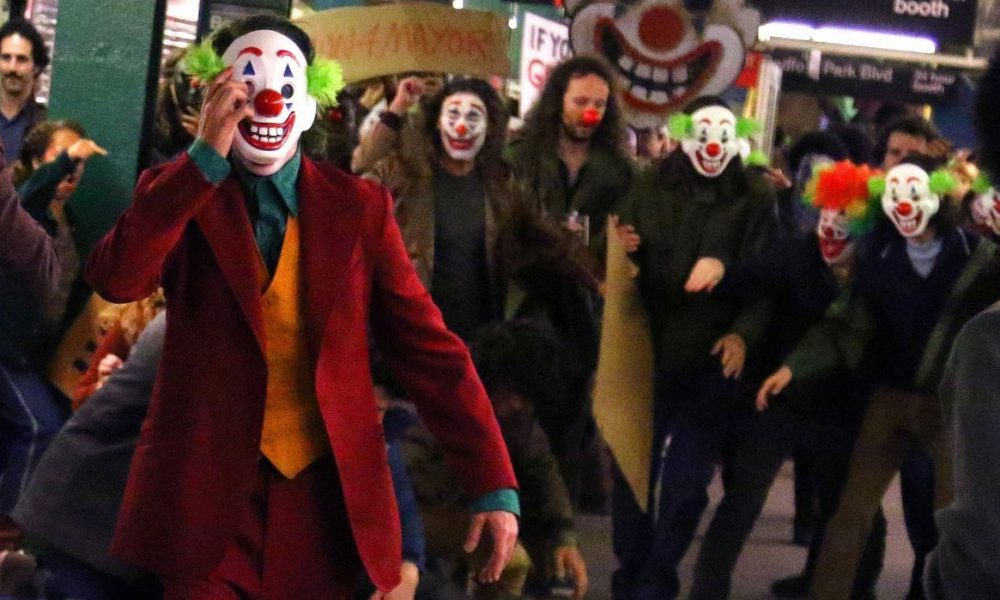
If there is a real controversy with “Joker,” it’s that the wrong issues became controversial. This movie conveys a message to the rich, powerful people who benefit the most from society that things aren’t as rosy as they seem. Those same people who think they know the solutions have no idea what people at the bottom are going through and dismissing them as “clowns” only makes things worse.

We’ve already seen this happen in the real world. The powerful who seek greater power call those who lash out as unimportant or misguided. They think those who protest loudly have nothing of merit to say, which only feels like an excuse to not listen. In that sense, it’s probably not surprising that many media outlets have turned on this movie, albeit for the wrong reasons.

At its core, “Joker” highlights the craziness that compounds craziness. In a world that’s unfair, unjust, and full of lies, how can sane person not be driven insane by their circumstances? Arthur Fleck had more circumstances than most and his mental illness only compounded the situation.

There are times when it’s not entirely clear when the events unfolding are real or vivid delusions. It nicely reflects the uncertain nature of the Joker’s origins, as both the Killing Joke and “The Dark Knight” have previously established. There’s a point in the movie where it becomes unclear where Arthur Fleck truly comes from or whether that name is truly his.

In the end, his name doesn’t matter because once he becomes the Joker, he becomes something more than just a mentally ill loner. For certain people who have seen mentally ill loners commit atrocities in the real world, it sparks real fear. At the same time, “Joker” makes clear that’s the wrong target.

After seeing “Joker,” I feel like I just saw a movie that people are going to be talking about for years to come. It’s a movie that can be interpreted in many ways, which is perfectly befitting of the Joker’s chaotic nature. At the same time, I knew some of those interpretations would be used in the name of an agenda and not in a good way.

In another time, “Joker” would be hailed as a movie worthy of praise on the level of “The Dark Knight.” However, because it came out at a time when people fear the lonely, deranged men more than the society that creates them, it’s not able to have the same impact. It’s still an excellent movie and one that will have a unique place in cinematic history for years to come.

1 Comment

Filed under human nature, outrage culture, philosophy, political correctness, politics, psychology, superhero comics, superhero movies

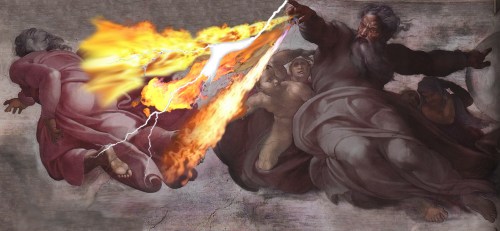
The Lying God Paradox: An Inherent Flaw Of All-Powerful Deities

michelangelo_creation_of_the_sun_moon_and_plants_01

In general, I believe that arguing with religious people is a waste of time. While I’ve made no secret of my distaste for organized religion, I prefer not to discuss it. As I’ve noted before, I have people in my family who are deeply religious. They are wonderful, loving people and they get genuine fulfillment from their religion.

There was even a time in my youth when I went out of my way to debate religion. At one point, I genuinely believed I could convince people of the absurdities of religious dogma. That was before I learned just how strong these beliefs can be and how far people will go to hold onto them.

I now accept that there’s no argument I can make or fact I can list that would ever convince someone that their religion is wrong. For the most part, people have to change their own minds. The most you can do is get them thinking about their dogma and let them make up their own mind.

For that reason, I still find it helpful to share my thoughts on certain aspects of religion. It’s not always possible to engage in meaningful discussions, but I think it’s worth pursuing. I find that the more you connect with people who don’t necessarily agree with you, the more you humanize them and vice versa.

That being said, I have a feeling that this latest thought is not going to win me many friends from the religious crowd. I know this because I’m about to make a statement about gods, all-powerful deities, and an inherent flaw that comes with incorporating them into any theology. That would encompass the three major Abrahamic faiths, as well as most other monotheistic religions.

This statement is a simple explanation for why there are so many different religions, each of which can have many denominations and sects. It also assumes there is an all-powerful deity with the ability to effect human affairs. While I know that’s a lofty assumption, especially for the non-believing crowd, it still exposes an important flaw in the theology and dogma behind religion. It can be summed up in two simple words.

God lied.

I know that idea may make many believers recoil in disgust, but I urge those people to take a moment to contemplate the implications. We’re not talking about a miracle or some divine act that breaks the laws of physics. This is something that ordinary people do every day without the need for immense power. If simple mortals like us can do it, then why can’t an all-powerful deity?

An all-powerful being can literally do anything. Lying would be one of the easiest, least strenuous ways to effect change, especially among a species like ours that is prone to believing lies. On top of that, when you take a step back and look at how religion has manifested over the centuries, a lying deity makes more sense than any other deity.

It explains why there has never been a single, unified religion.

It explains why there has never been a concept of divinity that every human society shares.

It explains why there are so many different religious texts that vary considerably in terms of theology, morality, and practices.

Simply put, God lied to everyone. Whether by prophecy, revelation, or divine inspiration, it was all a lie. It wouldn’t even have to be an elaborate lie. An all-powerful deity could just present the ideas to a few select people in history and let them do the rest. If the goal of the deity was to create a wide variety of religious dogma, then that’s working smart rather than hard.

The fact that it helps make sense of all the disagreements and discords within religion also creates a paradox, of sorts. Religion, by its nature, is built around belief. Peoples entire understanding of gods, spirits, and the supernatural are contingent on how ardently they believe in a particular theology. However, if that understanding is built on lies, then the entire religion is a product of an inherent untruth.

It’s a distressing thought, the notion that such a powerful being could or would willingly lie. That’s why most believers of any faith usually scoff at the notion. They’ll often claim their deity cannot lie because their deity is all-good on top of being all-powerful. Even if their holy text contains some objectively terrible atrocities that a deity committed or condoned, they’ll still make the claim that their deity is inherently good.

However, that only exchanges one paradox for another. If a deity is all-powerful, then that means the deity can do anything by definition, regardless of whether it’s good or evil. If a deity is all good, then that means it is incapable of doing anything evil. As such, it cannot be all-powerful. A deity that can only do good simply cannot be all-powerful, by default.

A lying deity resolves both paradoxes. The ability to lie, whether it’s for good or for evil, is perfectly within the capabilities of an all-powerful being. Even if that deity is all-good, then perhaps it can still lie, but only for good reasons, which do exist. That deity just can’t be all-powerful.

Even with these paradoxes, I doubt adherents of a particular faith would accept the possibility that their deity ever lied to them, their ancestors, or their fellow believers. They may accept that lesser or evil deities lie to others who don’t share their beliefs. However, those same people could make the same claim about them and there would be no difference, in terms of merit.

Non-believers will often cite the vast diversity of religious beliefs, both today and throughout history. They all can’t be right, but they all can be wrong. That’s perfectly in line with the law of non-contradiction.

That won’t stop believers from arguing passionately that they have the right answer to these profound questions. Even if they don’t have a way of verifying that belief, they’ll still believe in what they see is divine truth. However, the paradox of a lying god further complicates that idea.

Even if there is an all-powerful deity that has interacted in human affairs, how does anyone know whether said deity lied? Being all-powerful, the deity wouldn’t even need a reason. Lying would just be another exercise of that power. In that case, a lying deity is indistinguishable from a non-existent one. Logistically, there’s no way to verify either.

I know making this claim isn’t going to win many arguments with the devoutly religious. I don’t doubt that even suggesting that their god is liar has offended some people. I understand that. At the same time, I think it’s an idea worth scrutinizing. Just contemplating the possibility that a deity has lied adds what I believe is a necessary wrinkle to religious dogma.

Religion is such a powerful force in peoples’ lives. For better or for worse, it guides society, politics, and culture all over the world. People believe what they believe with great passion and piety. Nobody wants to entertain the notion that such a big part of their life is based on a lie. For something this powerful, though, I believe it’s worth thinking about.

2 Comments

Filed under human nature, philosophy, psychology, religion, Thought Experiment

Why Heaven Is As Unjust As Hell

2016403_univ_lsr_xl

There are many aspects of religion that warrant criticism. I’ve certainly levied a few, from how it intensifies inequality to how it fosters a form of morality akin to the mafia. I always try to preface those criticism by acknowledging that most religious people are decent, honorable human beings. I also have close relatives who are religious and that doesn’t detract from their character whatsoever.

Even with that in mind, I believe that religion deserves a special kind of scrutiny. It’s a huge influence on people, society, and also government. Something that influential deserves no immunity, especially when certain tenants have serious implications. I’ve pointed out how the concept of Hell is rendered moot by boredom and undermines pro-life ideology. Now, I’m going to give similar scrutiny to the concept of Heaven.

While the problem of Hell and eternal punishment for finite transgressions have been discussed by people far smarter than I’ll ever be, there are far less criticisms levied against Heaven. That makes sense. Heaven, whatever form it takes, is one of those ideas that’s pleasant to contemplate. Even if you’re an atheist, imaging a blissful afterlife won’t inspire dread or outrage.

However, I would argue that the concept of Heaven is as immoral and unjust as Hell. While I don’t deny infinite torture is more deplorable than infinite bliss, I submit that the implications are just as damning, if that’s not too loaded a term.

Most people know the basics of Heaven. Their particular religion, sect, or denomination might not call it that, but the premise is simple. Those who are righteous, moral, and pious to a particular standard, as determined by a deity or doctrine, are rewarded after death with passage to an eternal paradise.

What makes this place paradise is often vague. Some see it as a place without suffering or sin. Others see it as a place of endless indulgence. Whereas Hell is the ultimate punishment, Heaven is the ultimate reward. Whatever form that reward takes, the attributes that make it unjust are the same.

To illustrate, consider two individuals who lived good lives. One is just a typical, every-day adherent. Most of us know someone like them. They’re kind, decent, and upstanding. They live their lives ethically and responsibly. They go to whatever church, temple, or mosque their religion requires. They play by the rules and do all the right things, but that’s it. They don’t have much impact beyond their community.

Then, consider an individual like Dr. Norman Borlaug. I’ve mentioned him before, but the good this man did for the world is worth belaboring. This isn’t just a man who lived a good, upstanding life. This is a man who saved millions of lives because of the work he did. His contributions to the green revolution are a big reason why countless people don’t go hungry at night.

The face of a real life hero.

If ever there was an individual who deserved a reward in the afterlife, it’s Norman Borlaug. Even those of differing faiths wouldn’t argue that a man like him deserves to go to a place like Heaven. That’s where the chief problem of Heaven comes in and, much like Hell, it has to do with its eternal nature.

Whenever eternity enters the equation, absurdities usually follow. In the case of Heaven, the implication is that a man like Norman Borlaug gets the same reward as the other person who didn’t save a billion lives and win a Nobel Prize. There’s nothing extra for someone who really goes the extra mile for humanity. With eternity, that’s just not possible.

It’s not unlike a group project where one person does most of the work, but everyone still gets the same grade. Most reasonable people would call that unfair. Human beings, like other animals, have an innate sense of fairness. When a reward or punishment is exceedingly disproportionate, it tends to cause distress, guilt, and resentment.

With Heaven, however, people make an exception. There’s no uneasiness or distress about someone like Norman Borlaug getting the same reward as some random person who just went to church every Sunday. Some of that might be due to an inability to process concepts like eternity, but I think the problem runs deeper than that.

On top of the reward being disproportionate, there’s also the issue of the standards for determining those who get it. For those who adhere to a dogmatic faith, including those of the Abrahamic traditions, it doesn’t matter how many lives men like Norman Borlaug save. It also doesn’t matter how little the typical adherent does. What matters, ultimately, is whether they believe the tenants of the faith.

It’s an issue that also comes up when discussing problem of Hell. Within the core of these theologies, the works they do in life don’t matter as much as what they believe. If they die believing the right deities for the right reason, then that’s enough. They get to go to Heaven. If they’re wrong, yet still do all sorts of objective good, then they still go to Hell to face eternal torment.

That’s not just unfair. That’s infinitely unjust. It’s infinitely immoral. It completely devalues the action, intentions, and sincerity of those doing their best to live their lives. If the only thing that matters in the end is what deity and doctrine they believe, then where’s the incentive to make life worth living for those alive today and those yet to be born?

It still gets worse than that. What about those who lived in a different time and place in which they only knew the particular theology of their community? There are still places in the world that violently resist any intrusion or visitation from the outside world. These people love their families and friends as much as anyone. Are they still denied eternal bliss and doomed to eternal suffering?

If even one person who lived a good, honorable life is condemned to infinite suffering because of what they believe, then that, by default, is infinitely unjust. By the same token, one person who gains infinite bliss just because of what they believe and nothing more, then that is every bit as unjust.

Heaven may be a pleasant, comforting thought for most people. It offers a tantalizing promise for adherents and their loved ones that death is not the end. There’s a better existence waiting for everyone, but only if they believe a certain set of tenants in accord with a specific deity. Having dealt with the death of close loved ones, I understand why that’s so appealing.

At the same time, it’s difficult to get around the problems that arise when infinite concepts are applied to finite lives. Regardless of what deity you believe, the very concept of eternal rewards alongside eternal punishments ensure that divine justice can only ever be infinitely unjust.

2 Comments

Filed under philosophy, psychology, religion

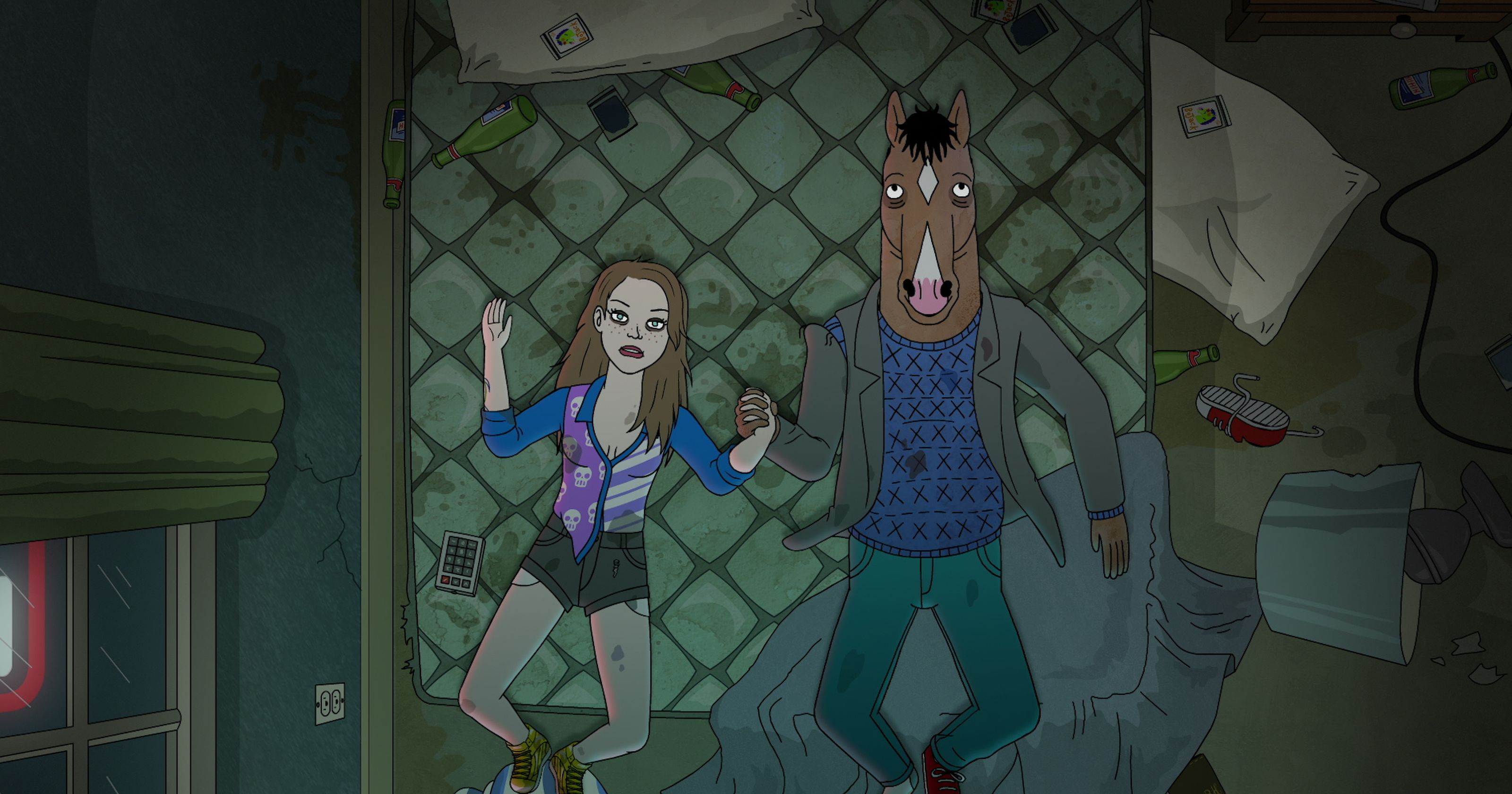
The Flaw In Happy Endings According To “Bojack Horseman”

1351058-1419981-zoomed

The world can be a harsh, unforgiving place. The extent of that harshness often depends on circumstances, attitude, and even blind luck. Most people, no matter how rich or successful they are, learn that lesson at some point in their lives. It’s rarely pleasant and often leaves scars that don’t heal.

Even with those scars, many cling to a hopeful, wide-eyed idealism about how much better the world could be. Moreover, that world is worth pursuing at every turn. TV shows, movies, music, and literature convinces us that it can be done and still have plenty of room for commercials, ads, and movie trailers. Nearly every great narrative tries to sell us on some unique kind of world-healing happy ending.

Then, there’s the strange and exceedingly depressing world of “Bojack Horseman.” If ever there was a show that went out of its way to kill happy endings with the force of a billion gut punches, it’s this one. Think of all our most cherished ideals from popular media, social movements, and ideology, in general. “Bojack Horseman” finds a way to crush it all while still being funny, albeit in its own dark way.

I promise it’s funnier than you think.

I say that as someone who has watched “Bojack Horseman” since the first season, but I find myself appreciating its dark themes more and more lately. However, it’s not just because the harshness of the real world is a lot harder to hide in the era of the internet and social media.

Recently, I had a chance to re-watch the past couple seasons. In doing so, I noticed just how much our collective worldview is built around our hope for a happy ending. Almost every character on the show, from Bojack Horseman to Diane Nguyen to Princess Caroline to Mr. Peanutbutter, is driven to achieve some idealized ending for themselves.

For Diane, she seeks to become a successful writer who exacts meaningful change through her work.

For Princess Caroline, she seeks to be an accomplished, independent woman who has it all, both in terms of career and family.

For Mr. Peanutbutter, he seeks to make everyone around him happy and pursue every new project with wide-eyed passion.

For the titular character, Bojack Horseman, pursuing that ending is more complicated. Through him, the harshness of reality seems to hit everyone and everything he comes across. It’s not always through his actions, which are often selfish, reckless, and downright deplorable. His story, which helps drive the show from the beginning, reveals how pursuing idealism can leave us vulnerable at best and destroyed at worst.

To understand how the show does this, it’s necessary to understand what makes this show both unique and appealing. If you only watch the first few episodes, then “Bojack Horseman” doesn’t come off as all that deep. It just seems like a story about a narcissistic washed-up actor who happens to be an anthropomorphic horse in a world full of various human/animal hybrids.

After a while, though, you start to appreciate how Bojack reflects the ugly reality of self-centered celebrities. Whether they’re at the height of their popularity or have been out of work for years, they live in a world that basically requires them to be utterly self-absorbed and completely detached from reality. Living in that world tends to obscure what reality is and provides one too many mechanisms for escaping it.

In the show that made him famous, “Horsin’ Around,” everything was skewed. Every problem was solved within a half-hour. Everyone was happy by the end of the episode. Bojack seems at his happiest and most fulfilled when the cameras are rolling and the show is on. Behind the scenes, which is where most of the show takes place, the ugliness of his reality takes hold.

Without the show, that ugliness consumes him. Over time, it wears on him, causing him to seek that idealized ending that his show often espoused. Throughout multiple seasons, it leads him down many paths. At the same time, others like Diane, Princess Carolyn, and Todd Chavez attempt paths of their own.

From this foundation, any number of ideals can take hold. In Hollywood, or “Hollywoo” as it comes to be called in the show for hilarious reasons, an entire industry is built around telling stories or crafting media that either champion those ideals or distract people from reality. For someone like Bojack, who gets crushed by reality harder than most, it’s the worst place for him to be.

Bojack, and his colorful cast of supporting characters, either embrace or get sucked into this fanciful world. Throughout the show, they get put into positions where they can pursue their dreams, achieve what they think will make them happy, and even are allowed to succeed in some instance. If this were any other show, then that would be the happy ending that both the characters and the audience expect.

Bojack Horseman” is different in that it goes out of its way to expose the flaws in those idealized endings. The creator of the show, Raphael Bob-Waksberg, has even gone on record as saying that he doesn’t believe in “endings,” at least in the way that TV, movies, and popular media present it. In a 2015 interview, he said this about endings.

Well, I don’t believe in endings. I think you can fall in love and get married and you can have a wonderful wedding, but then you still have to wake up the next morning and you’re still you. Like, you can have the worst day of your life, but then the next day won’t be the worst day of your life. And I think it works in a positive and a negative, that all these things that happen are moments in time. And that because of the narrative we’ve experienced, we’ve kind of internalized this idea that we’re working toward some great ending, and that if we put all our ducks in a row we’ll be rewarded, and everything will finally make sense. But the answer is that everything doesn’t make sense, at least as far as I’ve found. Maybe you’ll interview someone else today who’s like “I’ve figured it out, here’s the answer!” But I don’t know the answer, and so I think it would be disingenuous to tell our audience “Here’s the answer!” It’s a struggle, and we’re all trying to figure it out, and these characters are trying to figure it out for themselves.

This sentiment plays out time and again over the course of the show. On more than one occasion, Bojack seems like he’s on the verge of achieving that happy ending and turning those ideals into reality.

He thinks getting cast in his dream role as Secretariat will give him that ending, but it doesn’t.

He thinks being nominated for an Oscar will give him that ending, but it doesn’t.

He thinks being cast in a new TV show will give him that ending, but that only makes things much worse.

At every turn, reality catches up to him. Whether it’s his many vices, his habitual selfishness, or his terrible choices, it always comes back to haunt him. Even when that happy ending seems achievable, it always becomes mired in complications that Bojack can’t always control. The same complications often impact other characters seeking their own happy endings, as well. For some, it ends up being downright tragic.

At times, the show paints a grim picture about even attempting to pursue a happy ending. Even when Bojack has insights into the process, it’s never as easy as his old TV show makes it out to be. However, the fact he and others around him keep pursuing that ending says a lot about everyone’s need to achieve something greater.

Even in a world without talking horsemen, that’s something a lot of people can relate to. Most of us build our lives around hopes and aspirations that we’ll forge our own happy ending. There may even be moments when we feel like we achieve it, whether it’s graduating high school, getting married, having children, or finally beating level 147 in Candy Crush.

However, even after those moments, the credits don’t roll. Things don’t end. The things that led you to that moment only work to the extent that they led you to that one singular moment. Life still continues and the happiness fades. Bojack experiences this at greater extremes, some of which are downright absurd, but people in the real world experience it too throughout their lives.

I can personally attest to this. When I finally finished high school, I thought that was like slaying the final boss in an impossibly hard video game. I felt the same way after graduating college, getting my first girlfriend, or publishing my first book. If the credits started rolling at that moment, it would’ve made for a great ending.

Unfortunately, life just doesn’t work like that. “Bojack Horseman” belabors that every chance it gets while still managing to inject some meaningful comedy along the way. It’s a lesson worth learning, especially for Bojack. It’s one he’ll probably keep learning in future seasons. Chances are, we’ll all learn with him along the way.

In many respects, the one who best summed up this sentiment isn’t Bojack himself. In Season 3, it’s Diane who lays out the harsh reality that everyone in the real and fictional world struggles to accept.

“It’s not about being happy, that is the thing. I’m just trying to get through each day. I can’t keep asking myself ‘Am I happy?’ It just makes me more miserable. I don’t know If I believe in it, real lasting happiness. All those perky, well-adjusted people you see in movies and TV shows? I don’t think they exist.”

It sounds depressing, but that’s par for the course with “Bojack Horseman.” Reality is often depressing, but it’s not utterly untenable because happy endings are impossible. There are many points in the show that try to make that case. Even Bojack himself tries to make that case, albeit in his own twisted way.

I would even argue that the show’s brutal attack on the very concept of idealized happy endings is uplifting, in and of itself. By making the case that all the happy endings we see in the idealized versions of fiction are flawed, it shows how futile and counterproductive it is to pursue them. The real world is harsh and brutal, but you can find moments of happiness along the way. They’re not endings. They’re just part of life.

5 Comments

Filed under Bojack Horseman, Celebrities and Celebrity Culture, human nature, nihilism, philosophy, psychology, television

Why We Are All Jerry Smiths In A World Of Jerry Smiths

jerry_post

If you’re reading this, then chances are you’re not a famous scientist, celebrity, politician, intellectual, or cultural icon. If you are, I’m flattered and a little shocked that you’re reading a site built around sexy short stories, erotica romance novels, and multiple pieces on sex robots. Whatever your status, I hope you find this both informative and revealing. It’ll also help if you’re a fan of “Rick and Morty.”

I know I’ve used that show many times to make points about everything from love to nihilistic morality. It’s not my fault the show is so brilliant in how it presents complex issues in a way that’s entertaining, hilarious, and vulgar. Sometimes, we need certain concepts presented in such a way in order to make sense of them, especially if the implications are unpleasant.

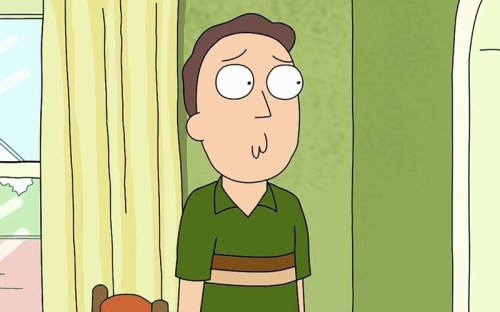
While “Rick and Morty” explores many concepts through many colorful characters, some more memorable than others, there’s one particular character who embodies a particularly distressing concept. That character is Jerry Smith, Morty’s father and Rick’s son-in-law. You could argue Jerry represents a lot of things in this show, but I would argue that Jerry Smith, more than any other character, represents us.

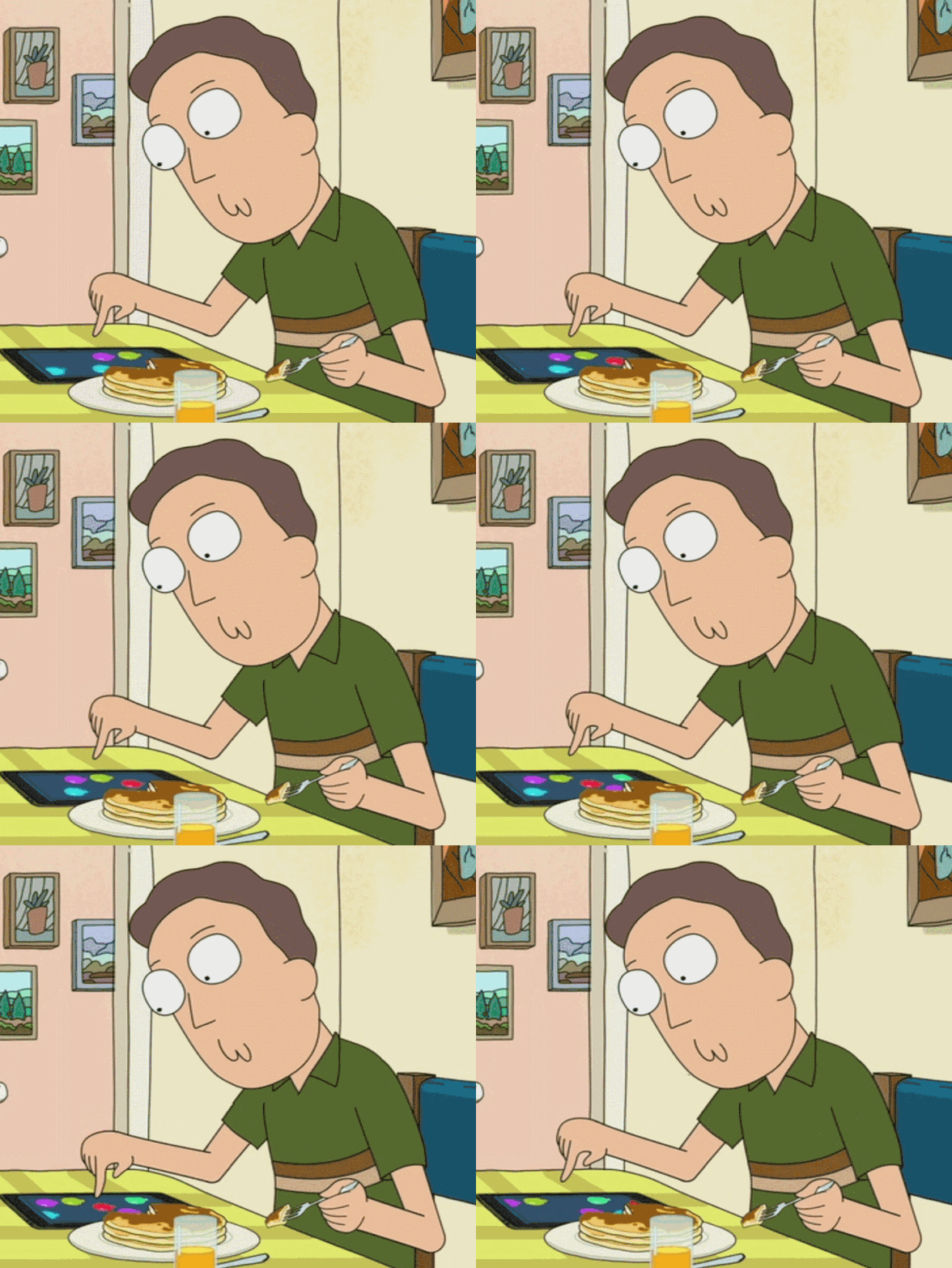
Chances are you’ve done something like this today.

By us, I don’t mean the people who watch regularly “Rick and Morty.” I’m not even referring to those exceedingly passionate fans who went ballistic on McDonald’s employees for not having any Szechuan Sauce. When I say that Jerry Smith is us, I mean that this colorful character that we love to laugh at represents the hopes, dreams, flaws, and foils of the entire human race.

To understand this sentiment, it’s necessary to know who Jerry is and what role he plays in over-arching mythos of “Rick and Morty.” For the most part, he’s neither a protagonist nor an antagonist. He’s rarely a hindrance to the cosmic antics of Rick Sanchez and while he tries to be a capable father to Morty, his influence is limited, at best. For the most part, he’s an afterthought at best and an inconvenience at worst.

When the family has to ban together to fight off alien parasites, Jerry doesn’t do any fighting.

When the family first encounters the Council of Ricks, Jerry either cowers or is fodder for pranks.

Even when he does play a significant role in an episode, Jerry tends to make the problem worse with his actions or is the underlying catalyst for them.

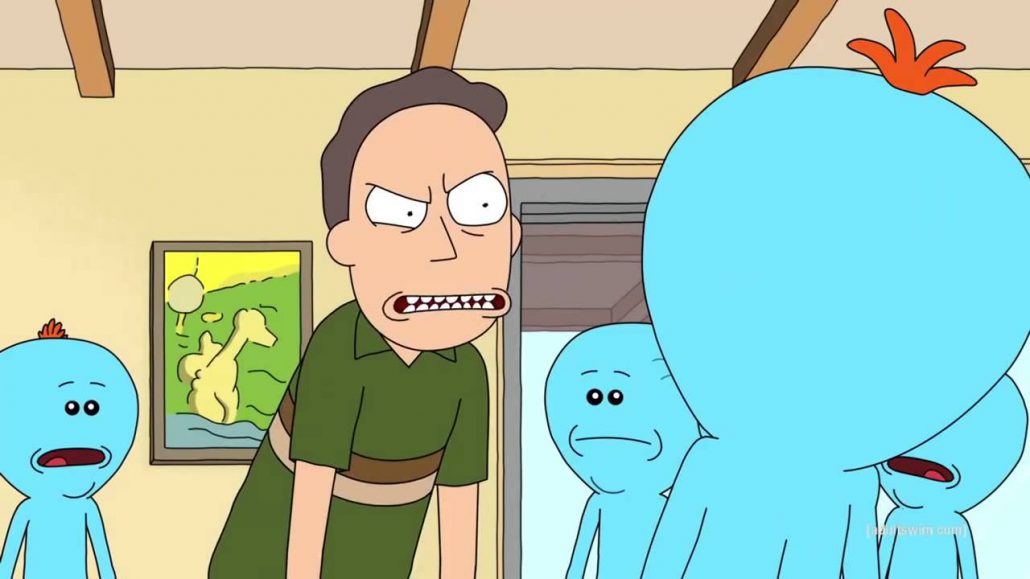
Chances are you’ve been this frustrated recently.

It wouldn’t be accurate to say he’s completely inept. By and large, he is a respectable person who tries to do his best with his current situation. Granted, nobody in his family makes that easy for him, but there’s no doubting his intentions. He wants to do what’s best for his family, but his capabilities are exceedingly limited.

That’s understandable, given who he deals with. Rick Sanchez is an alcoholic super-genius who can travel across universes, enter other peoples’ dreams, and build intelligent robots whose sole purpose is to pass butter. His wife is a skilled horse surgeon who can also hold her own against Rick-level threats. His two kids are young, but still capable of handling themselves in a post-apocalyptic wasteland.

Pretty much every character in “Rick and Morty” demonstrates that they can handle themselves in the crazy situations that Rick often puts them in. When aliens, parasites, or intelligent dogs enter the picture, they can confront the situation and even help resolve it. Jerry has never shown that ability. Every time he tries, he either fails or makes it worse.

Or just looks foolish.

The reasons for his failure aren’t entirely his fault. Jerry’s biggest shortcoming is that he’s an ordinary person in a family of extraordinary people. In any other circumstance, he would be able to relate, understand, and cooperate with others. In an environment where alien creatures are kept in his garage, this just isn’t possible.

In essence, Jerry Smith is as powerless and inept as almost anyone else would be in that situation. That even extends to a real world full of Jerry Smiths and exceedingly few Rick Sanchezes. Unless your name is Elon Musk, Bill Gates, Tim Cook, or Barack Obama, you’ll have more in common with Jerry than you will with anyone else in “Rick and Morty.”

In many respects, that’s a little distressing. It reflects a hard truth that most people aren’t able to effect meaningful change that ripples across the multiverse. For the most part, they’re at the mercy of the powerful forces around them and people like Rick Sanchez who are able to guide them to some extent.

Drunk or sober, Rick will guide you.

Even when Rick Sanchez espouses his nihilistic rhetoric, it seems to hit Jerry and everyone else like him a lot harder. Even if nothing Rick does matters, he’s smart enough and skilled enough to pursue what he wants while minimizing the consequences. Jerry can’t do that. He can only ever react to the random meaningless chaos surrounding him.

Most everyone in the real world is in a similar position. When something crazy happens, be it a natural disaster or a controversial election, there’s little any of us can do about it. A select few, such as lawyers, judges, and other powerful politicians, may be in a position to effect some change. Everyone else is stuck watching, hoping, and living their meaningless lives along the way.

We can react to the meaningless chaos, but we rarely be proactive. If most people had that opportunity, they would likely mess it up in the same way Jerry messed up a simple Meeseeks Box. Even if your intelligence is above average, your credit score is good, and you have no criminal record, you’re still just one person. You can only do so much without a portal gun and a high-tech lab.

However, it gets even more depressing than that. Throughout three seasons of “Rick and Morty,” Jerry isn’t just shown to be inept whenever faced with a crazy situation. He’s also completely replaceable. This is best demonstrated in the episode, “Mortynight Run,” in which Rick takes Jerry to a special adult daycare center that’s specifically caters to keeping Jerrys from multiple universes safe.

It’s hilarious, but pragmatic for someone like Rick Sanchez because it gives him a place to keep Jerry from undermining his plans. It’s also disturbing how effective it is because as soon as Jerry arrives, he finds himself surrounded by other versions of himself. While upset and insulted, at first, he quickly finds himself enjoying the amenities that are tailor-made to pacify him.

By the end of the episode, it’s hard to tell what separates this Jerry Smith from all the other Jerry Smiths in the multiverse. In the end, even Rick and Morty don’t seem to care which one they take home. One Jerry is as good as any other. He’s basically an interchangeable part that fulfills as basic role and little else.

It’s a role in which many people in the real world find themselves. Modern society, especially after the industrial revolution, has reduced most ordinary people of Jerry Smith’s abilities to that of societal cogs. They’re not individuals as much as they are a mass of humanity that produces, consumes, and provides support for the select few who can achieve the kind of impact of a Rick Sanchez.

More than one episode of “Rick and Morty” has explored how society can dehumanize people and there are plenty of examples in the real world, as well. That dehumanization is just easier to inflict on someone like Jerry Smith. While Rick Sanchez may realize when he’s in a simulation, Jerry likely wouldn’t. In fact, he would be quite comfortable and content in such a simulation.

That’s the ultimate flaw in the character construct of Jerry Smith. By being so unremarkable, he is easy to outwit and even easier to placate. He’s basically a sheep that herders can keep docile just by making sure there’s fresh grass to eat. While Rick Sanchez isn’t always the herder, he and others like him knows how to guide the sheep whenever it benefits him.

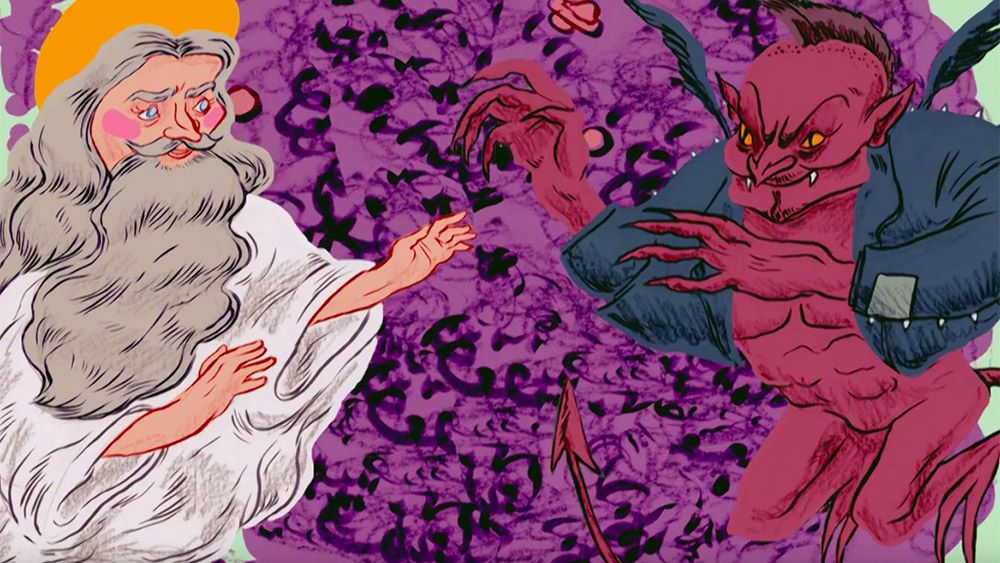
Even the Devil is not immune.

Nobody will ever admit they’re just a sheep. People will tell themselves whatever they have to in order to believe that their lives have greater meaning than they actually do. Jerry does this more than once throughout the show. People in real life do so when they carry themselves as the heroic underdogs of their own movie. More often than not, it doesn’t amount to much, which even Morty points out at one point.

Like it or not, most people who aren’t rich, beautiful, or well-connected will always have more in common with Jerry Smith than with any other character in “Rick and Morty.” The number of Jerrys in the world will always vastly outnumber the Ricks. A huge chunk of society is structured around having a vast population of unremarkable, but easily placated Jerrys.

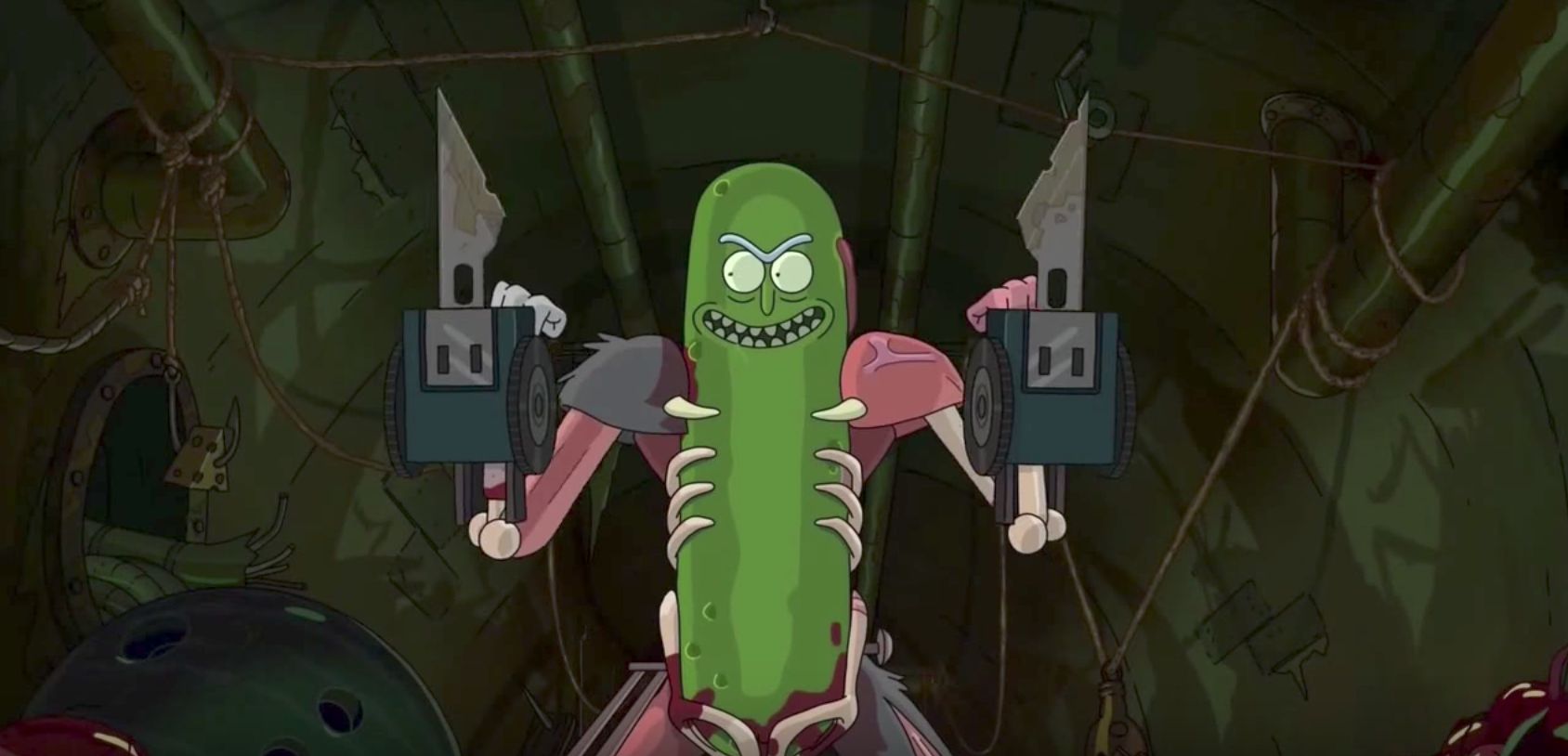
Whether we admit it or not, we are part of that system. We are the Jerrys who act as the cogs while the Ricks act as the operators. We don’t have the resources or genius of a Rick Sanchez so we can’t do much to subvert it. Even Rick can only do so much, even with his immense capabilities, which includes turning himself into a pickle.

It’s a bit depressing, but at the same time, there’s also a strange serenity that comes with the character of Jerry Smith. Even if he isn’t as capable as Rick or his family, he’s still someone who can find contentment and even peace in a chaotic world. Compared to Rick, whose famous catch-phrase masks his own inner pain, Jerry is probably happier overall, despite his meaningless lot in life.

Sometimes, ignorance is bliss, even if we’re oblivious to how ignorant we really are. In the long run, finding happiness will be easier for Jerry than it’ll ever be for Rick. For him, and the countless others who are just like him, the best recourse may be the same advice Rick often gives Morty.

Simply put, just don’t think about it.

2 Comments

Filed under human nature, philosophy, psychology, Rick and Morty, television

How Religion (Indirectly) Re-enforces Inequality

vatican-museums-st-peter-s-and-sistine-chapel-tickets-and-skip-the-line-private-tour_header-18646

I once knew a guy who worked a job he hated for an overpaid boss he’d once described as a cross between Patrick Bateman and Darth Vader. I can’t put into words how much he resented that man. To make matters worse, he was one of those bosses whose family had connections. He couldn’t get fired, let alone disciplined. Even if he did, he had a trust fund that ensured he’d never work a day in his life.

My friend shared all sorts of horror stories with me, but I often found myself asking why he stayed at that job for so long. I also asked why he didn’t try to do something about it. I’m no lawyer, but I’m fairly confident that he could’ve sued his boss and won. He never did and gave plenty of reasons, some more understandable than others.

However, one particular reason stood out to me. While I don’t remember his exact words, this is what he told me.

“I’m not concerned. I know that one day, that asshole will die and when he gets to the gates of Heaven, he won’t be able to hide anymore. He’ll go to Hell. I’ll go to Heaven. I believe God is just. No matter how bad things get in this life, the scales always balance in the next.”

Now, I wasn’t surprised by this sentiment. This particular friend of mine was very religious. He’d gone to church every Sunday. He and his pastor were on a first-name basis. He could quote bible verses the same way I could quote X-Men comics. He knew his theology and I don’t doubt it helped him endure that awful job that he somehow endured for several years.

While I respect my friend and his faith, I find the notion of taking comfort in someone’s afterlife punishment more than a little unsettling. It’s not just due to the schadenfreude inherent in that sentiment. What I find most troubling is how this common theological concept perpetuates imbalances, injustices, and inequalities, albeit indirectly.

The very notion of an afterlife, especially with respect to concepts of Hell, has plenty of troubling issues. From both a theological and non-theological standpoint, it frames everything that occurs in the current life we’re living as a prelude for the much grander life to come. Even if a view of the afterlife has no concept of Hell, it still devalues our current lives to some extent.

However, when divine justice enters the equation, as it often did for my friend, there’s a less obvious impact that has real consequences in the non-religious lives of many. I would even argue that those consequences influenced society on multiple levels at many points throughout history. The extent of those consequences are hard to gauge, but the implications are unavoidable.

To illustrate, think back to the terrible boss my friend described. Think of him as a placeholder for any rich, entitled, over-privileged class of people in history. He could be a king, a warlord, a cleric, an emperor, or just some powerful tribal leader. By any measure, this individual has more power and wealth than almost everyone else.

While that earns them many benefits, from having all the nice stuff to attracting all the best sexual partners, it also makes them a target. What exactly entitles them to have all that power and wealth? Did they earn it? Did they fight for it and win it? What do they have to do to maintain it?

The answers vary, depending on circumstance and context. Some are more responsible with wealth and power than others. However, if we’re going to grasp the bigger picture here, we have to acknowledge the general guidelines of human nature and, chief among them, is the inclination to take the path of least resistance.

Like it or not, human beings are wired to take the easiest possible path to resolve an issue. That’s especially true of difficult tasks, such as maintaining an objectively unequal status within a society. Seeing as how humans, and even other primates, have an innate sense of justice, this is an issue that the rich, wealthy, and powerful cannot avoid.

That’s where religion enters the picture. Logistically speaking, it offers some convenient justifications for an objectively unequal situation. It’s not just that the boss, cleric, king, warlord, or rich asshole inherited their status. It was divinely granted to them.

That helps solve several major problems for the rich and powerful off the back. It means those who consider themselves pious and devout can’t just rebel against those of greater wealth. Doing so would mean protesting the will of the divine. For anyone concerned about facing divine wrath, that’s a major incentive to accept the current situation. In some cases, they even celebrate it.

That kind of divine excuse has another benefit, as well. For people like my friend, who have to toil under wealthy, entitled bosses, it gives them comfort about their current lot in life. While they could go through the trouble of fighting back, that’s both laborious and risky. Historically, powerful people don’t react kindly to being challenged and they don’t always fight back with lawyers.

Religion provides them another, less exhaustive option. Instead of going through all that trouble and taking all those risks, they need only keep living their current lives. They need not worry about contesting people like my friend’s tyrannical boss. He’ll face justice after he dies. That’s not just comforting. It plays directly into our natural inclination to resist change.

The only change these people believe in.

On a larger scale, this has minor personal benefits to the devout, but major benefits to the wealthy and powerful. If the vast majority of people are convinced that oppressors will get theirs in the afterlife, they’re not going to be as inclined to protest the status quo or, in the worst-case scenario, demand change that requires a loss of wealth and power.

This is especially important for religious leaders who, unlike governments or business elites, have to keep justifying why people devote their time, labor, and money to the institution. That’s tough when religious organizations don’t pay taxes, enrich top officials, and wield significant authority on geopolitical level.

It’s considerably easy, though, if the theology in question convinces adherents that the wealth and power of the institution is divinely granted. As a result, the inequality between the average believer and the top official is justified. That’s how the deity wants it. Even if some are corrupt, and there have been many, they’ll eventually face justice in the afterlife.

It gets even easier when adherents and believers are uneducated and uninformed. My friend wasn’t stupid, but he didn’t get much of an education, which was why he got stuck in a lot of bad jobs. His story is not uncommon. In general, the less educated you are, the more religious you tend to be. On top of that, less education often means a higher chance of living and staying in poverty.

In that context, it makes sense for religion to discourage critical thinking and higher education that isn’t specifically sanctioned by their institutions. If people aren’t educated, then they’re not just ill-equipped to question authority. They’ll remain in poverty and so too will their children, who are more likely to adopt their parents’ piety.

It’s a self-reinforcing cycle. People are born into their current lot. They either appreciate or resent it. Religion helps provide justification for it, however good or bad it might be. It gives them an excuse to accept it and pass it onto the next generation. Any inequality or injustice within that system remains in place and can even widen under the right circumstances.

Now, this is the point where I try to temper my rhetoric because I know the mechanisms I just described seem cynical. It gives the impression that every religious figure throughout history was just some greedy schemer who knew they were lying to gullible people and taking advantage of their faith to benefit themselves. I want to make clear that this is not the message I’m trying to send.

Are there religious and non-religious people who are that corrupt? There most certainly are. Some are more egregious than others. Some are historically egregious. I believe that most people, even those at the top of the hierarchy, are sincere in their piety. They don’t see their religion as a mechanism for propagating inequality and injustice. That’s why I see this impact as indirect.

Even if all organized religion disappeared tomorrow, I don’t doubt for a second that the wealthy and the powerful would find some other way to protect their status. For now, and for a good chunk of history, religion has been a powerful tool to justify and maintain this immense disparity.

Relying on the afterlife is convenient, but it requires assumptions that no human being can know for certain. Nobody truly knows what happens, if anything, after we die. We only know that no matter how rich or wealthy you are in life, death still affects you all the same. It is, in many respects, the ultimate equalizer.

In many respects, that’s the most valuable asset that the religious and the wealthy have going for them. The fact that nobody truly knows means that nobody can prove them wrong when they say their power is divinely protected. It also means that people like my friend can’t be proven wrong when they take comfort in the idea of his boss getting divine justice at some point. The result is still the same.

People on both ends of the inequality spectrum have an excuse to not change the situation. While there are some circumstance that are unalterable due to forces beyond anyone’s control, there are certainly some that can and should be confronted. As long as people find excuses in divine forces that cannot be confirmed, the inequality will only continue.

9 Comments

Filed under Current Events, extremism, human nature, philosophy, psychology, religion

How “The Society” Humanizes Teenagers In A Refreshing (And Overdue) Way

the-society-netflix

As someone who hasn’t been a teenager for many years, I admit I have some unflattering perceptions of that demographic. Ask anyone over the age of 30 what they think of teenagers today and chances are you’ll hear more than a few complaints.

They’re too obsessed with their phones.

They’re too emotionally fragile and prone to outrage.

They’re too entitled, coddled, and sheltered from the real world.

You’ve probably heard those rants before and not just from Fox News. With those stereotypes in mind, imagine what would happen if a large collection of teenagers were left unsupervised and isolated in a large area for long stretches of time. What do you think would happen? How do you see that playing out?

Something like this, probably.

I don’t deny that I’d make some unflattering assumptions such a scenario. I would fully expect that they act erratically and irresponsibly. I would also expect for them to falter emotionally if left alone for too long. Having lived their whole lives within some system of authority and supervision, I wouldn’t expect them to function for very long on their own.

It’s those very assumptions that that “The Society,” a very binge-worthy Netflix show, dares to challenge. This thriller/mystery/drama is one of those shows that has all the right ingredients to play up every tired trope that teen-centered television show has explored for years. That was certainly what I expected when I discovered the show. I freely admit that those expectations were wrong.

The premise of “The Society” is built around a strange mystery that “Lost” fans should appreciate. One day, a large contingent of high school students get on a bus and leave the affluent New England town of West Ham for a 10-day camping trip. For reasons not yet revealed, the buses turn around and drop them off exactly where they picked them up.

Upon returning, these teenagers find out that all the adults in their town are gone. Near as they can tell, everyone just picked up and left. To further compound the mystery, they find out that all the paths leading out of the town have become dead ends. There are no neighboring towns to visit. As far as they know, there’s nothing but endless forests in every direction.

It’s genuine mystery with distressing implications. While the specifics are only partially explored in the first season, the mystery is only part of what makes the “The Society” such a compelling show. It doesn’t just put a bunch of hormonal, irrational teenagers in an enclosed area and let the drama tell the story. The show dares to humanize teenagers in a way that is exceedingly rare in a TV show.

By that, I’m not just referring to a handful of character that are well-developed and fleshed out. While there are certainly plenty of those in this show, it approaches how teenagers conduct themselves with more balance and nuance. It even makes the case that, in dire situations, they can come together and cooperate as well as full-fledged adults.

In the beginning, that’s not immediately apparent. When they all return to West Ham and find out the adults are gone, they react the way most would expect of decadent, hormonal teenagers if they were left unsupervised all night. However, the extent of their decadence never goes beyond a certain point.

To a point, being the key term.

Sure, many drink, they dance, and they hook up. A few just go home and turn in for the night, thinking nothing is amiss. They don’t do anything too outrageous, though. In essence, they conduct themselves the same way most single adults would if they knew there were no police or authority figures to stop them.

After that first night, though, things start getting serious. These teenagers, who still come off as kids in the first few episodes, realizes that something has gone very wrong. Their parents are gone. The adults are gone. Their entire town is completely cut off. They have no connection to the world beyond their town. They have a finite supply of food and little experience in terms of governing themselves.

It’s a scary situation. Some handle it better than others, but a few start to crack under the pressure. For some, especially Campbell Eliot and Lexie, the situation reveals sides of their personality that probably wouldn’t have otherwise emerged. That tends to happen with most people in extreme circumstances, but being a teenager tends to raise the stakes even more.

The fun and games quickly end. People start getting hurt. There are even a few deaths, which has a significant impact on everyone in the town. It sends a clear, unambiguous message. This isn’t just about hanging in there until their parents find them. They have to survive and they can’t do that unless they work together.

On paper, it sounds like it can only end in disaster and it certainly comes close, especially towards the end of the first season. Again, these are teenagers. Most people don’t expect them to function beyond a certain point. While “The Society” doesn’t strip away everything in the mold of “Lord of the Flies,” it removes enough to make the situation dire.

They still have electricity, running water, and shelter. However, their food supply is finite and there’s a distressing lack of expertise in everything from basic medical care to fixing a car. In order to survive, they must create a system of governance to keep the peace. If they don’t, then everybody suffers.

This is where “The Society” really shines, both as a story and as a concept. It’s also where it explores how teenagers, despite their maturity and lack of experience, can come together when they have to. They’re not perfect, but neither are experienced adults. They do find themselves in painful, heart-wrenching situations that include murder, illness, and despair. However, things never totally fall apart.

To anyone who has ever tried to explain student loan debt to a teenager, it almost seems absurd. The idea that a bunch of unsupervised teenagers can somehow form a functioning society just doesn’t fit with the common narrative surrounding teenagers.

In that narrative, things always tend to devolve until the adults return to impart the proper amount of discipline. Look at any movie, sitcom, or rowdy music video and the themes often come back to teenagers being out of control and needing the discipline of responsible adults. “The Society” makes the case that teenagers can become responsible on their own, albeit after some setbacks.

There are still many factors working against them. We’ve yet to see what happens to the citizens of New Ham, as they dubbed it, when the food runs out and they have to start farming the land. We also haven’t seen them endure a harsh New England winter. However, “The Society” never gives the impression that these young people are incapable of overcoming these challenges.

By the end of the first season, it’s easy to root for them. The emotional toll is palpable and so are the difficult decisions that many end up facing. Over the course of the show, however, it’s easy to see the progression that they all experience. It’s hard to even see them as teenagers anymore. Some conduct themselves as true, full-fledged adults.

While the mystery surrounding “The Society” is still unfolding, complete with fan theories and potential clues, the show’s approach to depicting teenagers is its greatest accomplishment in my opinion. If there is a second season, I’m definitely interested in seeing how these characters and their over-arching story progresses.

I doubt “The Society” will change anyone’s current attitudes of teenagers. There will surely be other shows and movies that double down on the many stereotypes surrounding them. If nothing else, “The Society” shows that teenagers are capable of carrying a story without adults complaining about them.

2 Comments

Filed under human nature, philosophy, psychology, television

“King of the Hill” Vs. “F is for Family” And The Evolution/Disillusion Of The American Dream

image-20160331-28459-18j5spk

What happened to the American Dream? That’s a question more and more people are asking these days. It’s a question people have been asking in some form or another for decades. Even if you’re not American, it’s relevant because as politics and economics become more global, there’s a sense that a great many people are being left behind. More recently, it feels like that trend is accelerating.

Since I’m not a political scientist or an economist, I’m not qualified to break down all the factors behind these trends. However, given my age and relative experiences, I’ve witnessed many of the changes and upheavals that have shaped the current state of affairs. Over that period, I’ve even seen those changes reflected in two iconic animated TV shows from two disparate eras.

One is “King of the Hill,” a colorful slice of the late 90s/early 2000s cultural zeitgeist. The other is “F is for Family,” a show that, despite taking place in the 1970s, heaps plenty of scathing criticism on current American ideals. I’ve written about both shows before, citing the former as a lesson in work ethic and the latter as a perfect satire for its time. I also consider myself a fan of both shows.

Combined

On their own, they each have their own sense of style, story, and overall humor. They’re both entertaining and endearing in their own unique way. When placed side-by-side, though, they reflect an even greater message that goes beyond the themes of either shows. That message can be summed up with one harsh realization.

The American Dream isn’t just failing. Those who pursue it are being punished.

I know it sounds bleak, if not fatalistic. It’s certainly not a message that “King of the Hill” and “F is for Family” ever state overtly. However, when placed in the context of their time and their over-arching themes, the overarching themes are clear, if not unavoidable.

In terms of ideals, Hank Hill and Frank Murphy have a lot in common. They’re both hard-working American men who see themselves as embodiments of American values. They take pride in their roles and responsibilities as husbands, fathers, and providers. They’re active in shaping the identity of their community. They both have an idealized vision of what the American Dream entails.

Some of those similarities extend to their family and how they impact the structure of the show. Many plots in “King of the Hill” and “F is for Family” revolve around Hank and Frank reacting to events that happen within their family. They have wives that seek their own path and kids who rarely appreciate the work they do. Much of the comedy in each show emerges from these conflicts.

The face of many such conflicts.

Things really start to differ when the bigger picture of their respective worlds comes in. Whereas “King of the Hill” reflects a more optimistic view of the world that was more prevalent in the late 1990s, “F is for Family” paints a more dire picture. In Frank’s world, American ideals are failing and he’s struggling just to keep that vision alive.

In just three seasons, Frank has lost his job, struggled to provide for his family, and had his dreams derailed again when his wife gets pregnant. While his temper and his penchant for threatening to put people through walls don’t help, many of the factors that put him in such situations aren’t his fault. In fact, his tendency to do things the right way, as Hank often does, often work against him.

This isn’t even Frank’s worst day.

Within this dynamic, “King of the Hill” and “F is for Family” diverge in a critical way that speaks to the larger issues surrounding the American Dream. In the world of “King of the Hill,” doing the right thing and following American values are rewarded. It’s one of the show’s most common themes over the course of 13 seasons.

In this world, working hard at a blue collar job is fulfilling, respectable, and rewarding.

In this world, a man can support his family with a job that involves selling propane and propane accessories.

In this world, people who take short-cuts or try to avoid hard work ultimately fail.

In this world, a man who marries the woman he impregnates is rewarded with respect, support, and admiration.

Simply put, adhering to principles of hard work, high morals, and personal responsibility will help someone achieve the American dream. Hank Hill, with his quaint suburban house and supportive community, is the personification of these principles. It’s not always easy for him, given his influences, but that only makes his adherence to those principles more respectable.

This is virtuous system is not present in “F is for Family.” If anything, it’s turned upside down. Frank Murphy followed those principles as closely as Hank. He put his personal goals on hold when his wife got pregnant. He served his country dutifully when he got drafted. He works hard and provides, despite having a slob for a boss. However, his efforts go unrewarded. If anything, they’re punished.

In Frank Murphy’s world, a hard-working man can save the company he works for, but still get fired.

In Frank Murphy’s world, marrying your pregnant girlfriend instead of following your dreams will only get you ungrateful kids, a miserable wife, and an unfulfilling job.

In Frank Murphy’s world, people who eschew hard work and behave irresponsibility are rewarded with cocaine-fueled parties and trophy wives.

In Frank Murphy’s world, a corporation can steal your idea and make millions off it while you don’t even get credit.

The system is harsh, unfair, and completely unconcerned with who adheres to American ideals. The only thing that ever seems to matter is dumb luck and already having significant wealth or privilege. Sadly, this is a lot more consistent with the current state of affairs where the rich and powerful exact immense influence, creating a system that benefits those at the top while straining everyone else.

Frank yelling on behalf of America.

This unfair system even extends beyond the political and economic sphere. In “F is for Family,” there are multiple characters who seem to succeed, no matter how little they work or how unmotivated they are. It’s not unlike those who flaunt their lavish lifestyles on Instagram, which is often fueled by inherited wealth that they did not work for or earn.

That kind of system wouldn’t just leave Hank Hill aghast. It would completely undermine his world, his identity, and his ethics. Whether he would resort to putting people through walls instead of just kicking asses is difficult to determine, but the bigger picture is clear. The American Dream in his world is intact whereas its reversing course in “F is for Family.”

To some extent, this reversal is consistent with how the world has been trending since the late 1990s and early 2000s. People have become increasingly cynical and trust in institutions is declining. Thanks to the media and the internet, it’s getting harder to hide the harsh realities of a world where just doing the right thing isn’t enough anymore. Despite taking place before the internet, “F is for Family” perfectly reflects this reality.

The face of that harsh reality.

It creates a dynamic that’s bound to create more Frank Murphys and fewer Hank Hills. People are told that the American dream is still in their grasp. They just have to be like Hank, playing by the rules, working hard, and not taking shortcuts. Those who buy into that dream aren’t just let down. They’re outright punished.

Frank didn’t become a profanity-spewing rageaholic overnight. As perfectly depicted in the show’s opening credits, the various machinations of this unfair system just kept hitting him and no matter how hard he worked or how much he sacrificed, he never got closer to the American Dream. If anything, it just kept getting farther away.

Both “F is for Family” and “King of the Hill” have plenty to offer in terms of insights. Their respective worlds may take place in an animated world where former presidents and future serial killers can show up, but such exaggerated dynamics help each show convey a certain message that fit perfectly within the context of a certain time.

The idealism in “King of the Hill” and the satirical deconstruction in “F is for Family” paint conflicting pictures of the American Dream. Both still glorify it as an ideal, but each present a different understanding of how it plays out. Within the comedy, there are genuine, relevant messages worth considering.

For many people in the real, non-animated world, the American Dream still matters. Many still work as hard and as passionately as Hank Hill and Frank Murphy. It’s hard enough when those efforts go unrewarded, but when doing the right thing becomes a liability, it’s hard to call it a dream.

2 Comments

Filed under Current Events, F is for Family, human nature, King of the Hill, philosophy, political correctness, psychology, television