Category Archives: media issues

Has Tribalism And Ideology Supplanted Religion?

If you’re an American, chances are you’re painfully aware that 2020 is an election year. That means that, on top all the other awful crap that has transpired this year, we’re in the midst of a political firestorm that regularly brings out the worst in people. Trust me, my non-American audience. It’s even uglier than you think.

As proud as I am to be an American, I’ve grown increasingly frustrated with politics and discourse. I know that’s not saying much. I didn’t live through the turbulent eras of the 60s and 70s. My parents have told me it has been very bad before, but even they admit that this year is a special case of awful. They almost long for the hippie-style protests of the 60s.

I won’t get into why things have become so contentious, although most people can probably discern the most noteworthy source. I don’t have the patience or the sanity to digest that. Instead, I want to offer an observation that I’ve noticed as this election drama has played out. It has to do with both politics and religion, two incredibly divisive forces with a strong basis in absurdities.

I’ve done plenty to highlight the flaws, failures, and outright atrocities that have been committed or justified in the name of religion. I’ve also touched on some of the frustrations and annoyances that manifest in politics. Together, both can be extremely damaging to people and society alike. History has proven that on multiple occasion.

Lately, however, I get the sense that a new kind of zealotry has taken hold. It’s not entirely political or entirely religious. It just take the most destructive elements in both and channels them in a way that inspires some objectively deplorable behavior.

In essence, the same dogmatic stubbornness that often fuels religious extremists has now been applied to someone’s political leanings. By that, I don’t just mean what party they belong to or who they voted for in the last election. I’m saying they now see their political affiliation in the same light some see their religious adherence.

To some extent, this makes sense. Organized religion, in general, has been in a steep decline for decades. The rise of the internet, as well as a more educated public, has significantly undermined religion’s ability to lock in adherents for generations. However, a lack of a religion doesn’t make someone any less inclined to believe absurd, misguided, or demonstrably false concepts.

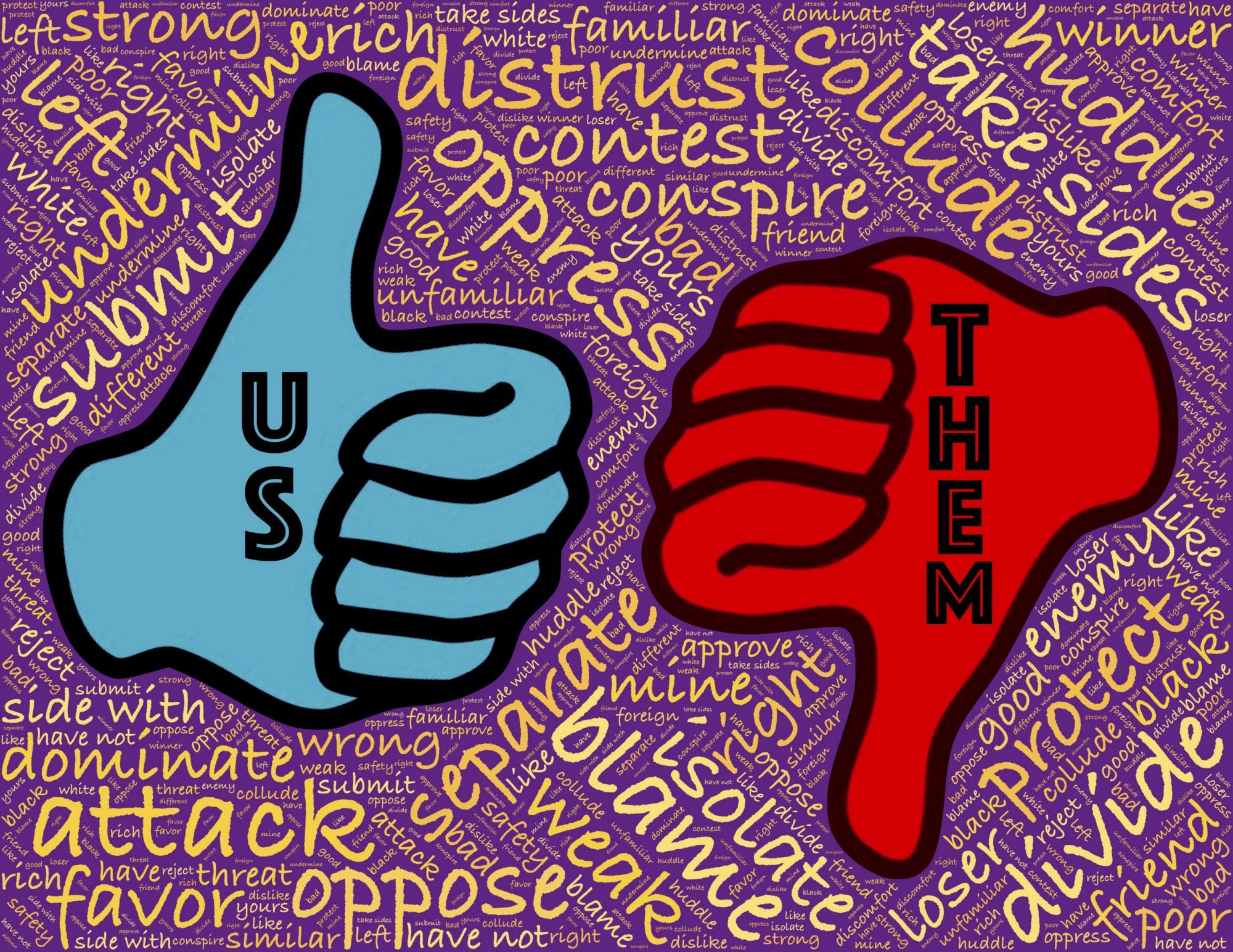
The same tribalism that often fuels religious rhetoric is becoming a larger factor in politics. I won’t go so far as to say that political ideology is replacing organized religion outright. I just think that same tribalism is becoming a more prominent factor.

It often goes like this. In the past, I often saw discussions like this play out.

Liberal: I believe the minimum wage should be raised to $15 an hour.

Conservative: I respectfully disagree. I think a minimum wage ultimately harms the working poor by limiting the number of entry level jobs.

Liberal: I don’t think the data bears that out, but can we agree to disagree?

Conservative: Of course.

That’s fairly civil. Ideally, that’s how political debates should go. It’s not an argument about whose deity is better and who’s going to Hell when they die. It’s just a simple exchange of ideas to further a discussion about real-world issues. It can get ugly at times, but it rarely ventures into the same damaging extremism that often comes with religion.

That kind of civil exchange now feels so long ago. These days, you need only look at a comments section or a thread on social media to see how outrageous the discourse has become. It tends to go more like this.

Liberal: I believe the minimum wage should be raised to $15 an hour.

Conservative: You American-hating, baby-murdering, politically correct cuck! What kind of Marxist wannabe are you? Get the fuck out of this country! You don’t belong here!

Liberal: Fuck you! You’re a racist, sexist fascist, gay-bashing hypocrite! Go back to Nazi Germany and beat your women somewhere else! You’re destroying America!

Conservative: No, you’re destroying America!

Liberal: No, you are!

Conservative: Fuck you!

Liberal: Fuck you!

I admit, this is a generalization, but it’s not that far off. Between Reddit, Twitter, Facebook, and 4chan, this kind of hateful rhetoric is fairly common. Even the street preachers who hold up signs, telling everyone that their deity wants to send them to Hell, isn’t nearly this vitriolic. Anyone who tries to be civil or inject some simple facts into the discussion is quickly drowned out by hateful dogma.

The internet and social media has acted as a catalyst, of sorts. It’s one thing to hold extreme, dogmatic political views. It’s quite another to share them in a community that constantly reinforces, reaffirms, and encourages those views. It’s become incredibly easy to exercise your own confirmation bias. If you have an opinion or want evidence for a crazy belief, chances are you can find it on some dark corner of the internet.

It’s at a point where if you try to criticize someone’s political leanings, it’s not just a point of disagreement. It’s treated as outright blasphemy. I’ve seen it on both sides, although I think those who lean right/conservative are worse offenders. Trying to convince any side that they’re wrong is akin to trying to convince a creationist or flat-Earther that they’re wrong. It just evokes more extremism.

This is not a healthy trend. Religious extremism is bad enough. Plenty of people have died because someone was convinced that a certain holy text was literally true and it was their duty to attack those who don’t agree. To religious zealots, the mere act of disagreeing and disbelieving as they do is seen as an insult, an affront, and an act of violence. That can’t be how we treat politics.

At the same time, the ugly forces of tribalism are still as strong as ever, if not more so in the age of the internet. Those influences aren’t going away anytime soon. Being part of a tribe or group is fine. We’re a very social species. It’s part of why we’re so successful. However, that same force that unites us can also inspire the ugliest kind of hate.

At its worst, it makes view anyone who disagrees with us as a non-person. They’re not sub-human, but they are someone we would rather not have in our domain. It’s not enough to disagree with them. We’d prefer they not even exist in any way that affects us.

It’s a special kind of dehumanizing and something religion has done for centuries, weaponizing the age-old us-versus-them mentality. We can only do so much to temper our tribal nature, but there comes a point where the line between differences and hatred become too blurred. We share this same planet. We also live in countries full of people who don’t agree with us.

That’s okay. We can still be friends with these people. We don’t have to hate, scold, insult, demean, or dehumanize them. That’s a conscious choice we make and, unlike religion, it requires little in terms of indoctrination. As society becomes less religious, it’s important to remember why we’re moving away from organized religion in the first place.

In the same way most religious people are decent, good people, most people of any political affiliation are the same. We’re still human at the end of the day, but I sincerely worry that the increasing ugliness of politics is making us forget that.

Leave a comment

Filed under Current Events, human nature, media issues, outrage culture, political correctness, politics, religion

Deep Fake Technology Can Now Make Tom Cruise Iron Man: Signs And Implications

Certain technology advances slowly and steadily. It’s why we’re still waiting for a cure for the common cold. Other technological breakthroughs advance at such a fast rate it’s hard to keep up with. Anyone who doesn’t regularly upgrade their cell phone understands that.

That brings me to the technology of deep fakes. I’ve talked about them before and the implications this technology has for the entertainment industry. Well, I’m here to report that this technology might be advancing faster than I thought.

Recently, a new deep fake video hit the web. It’s nothing overly nefarious. It’s actually a play on a real story from the mid-2000s. Before Robert Downey Jr. was cast as Tony Stark in the first “Iron Man” movie, Tom Cruise was in the running for that role.

He has since claimed he was never close to getting that role, but it’s still an interesting idea. For most Marvel fans, it’s hard to imagine anyone other than RDJ donning that now-iconic armor. However, there’s no denying that Tom Cruise being Iron Man would’ve changed a franchise, as well as cinematic history.

Well, thanks to deep fake technology, we don’t have to imagine anymore. We can now see for ourselves what it would look like if Tom Cruise had been cast as Iron Man in the Marvel Cinematic Universe. See for yourself.

Watching this, I have to say it was more than a little jarring. It’s not just that seeing someone other than RDJ as Iron Man is strange. I was genuinely impressed by how real it looked.

Yes, it did become a bit obvious at times that there was some digital trickery at work. I’ve seen enough Tom Cruise movies to know what he looks like. I could tell that the body just did not match the iconic face at times.

However, I’m still impressed at just how seamless it appeared, especially when he was in the Iron Man costume. It really did look like Cruise had embraced the role as much as RDJ had. Even though the voice had to come courtesy of a skilled voice actor, the graphics technology is definitely on pace to cross the uncanny valley sooner rather than later.

The implications here are profound. If the technology is already at this point, then it’s a given that Hollywood and propaganda pushers will start embracing it sooner. For Hollywood, who is reeling in wake of a historic pandemic, they may have more incentives to embrace it than most.

Beyond actors and actresses who get “cancelled” for their behavior, it may start as a cost cutting measure. If it costs too much to put Hugh Jackman or Tom Cruise on a movie set, why not just put a cheaper actor in their place and just deep fake the more iconic figure over it? If the technology is that good and nobody can tell the difference, it almost makes too much sense.

It may get to a point where nobody outside the studio knows whether the figure we see on screen was actually “there” to give that moment life. They may just be a digital scan mixed with digitally audio, which is also advancing.

This has even larger implications with propaganda. If the technology gets to a point where we can make any public figure say or do anything we want, no matter how deplorable, then how can we trust any media image? Would “cancel culture” even be feasible at that point? If people can just claim an embarrassing moment was a deep fake, how would we know?

It’s a distressing thought, but it’s something we’ll have to account for. We may end up having to contemplate it sooner than we thought. This technology can already show us a world in which Tom Cruise was cast as Iron Man. What other worlds will it reveal?

We’ll find out soon enough.

Leave a comment

Filed under Artificial Intelligence, futurism, media issues, superhero comics, superhero movies, technology, YouTube

A Note On The Criticisms Of THAT Scene From “Avengers: Endgame”

I love the internet. In general, I think it does more good than harm. Our lives are objectively better because of it. I know it has its share of baggage and drawbacks. Like anything, you take the good with the bad.

However, there are times when taking the bad is just annoying as hell. I’m fine with challenges and struggle. Those help us become stronger, in the long run. The same can’t be said of annoyance. That helps no one. It just makes you want to bang your head against the wall.

This brings me to what I feel is one of the weakest, emptiest, most pathetic displays of internet outrage I’ve seen in recent years. It unfolded last year, but has become relevant again this year. Even in the midst of a global pandemic, certain people still find the time and energy to be so insanely petty about something so banal.

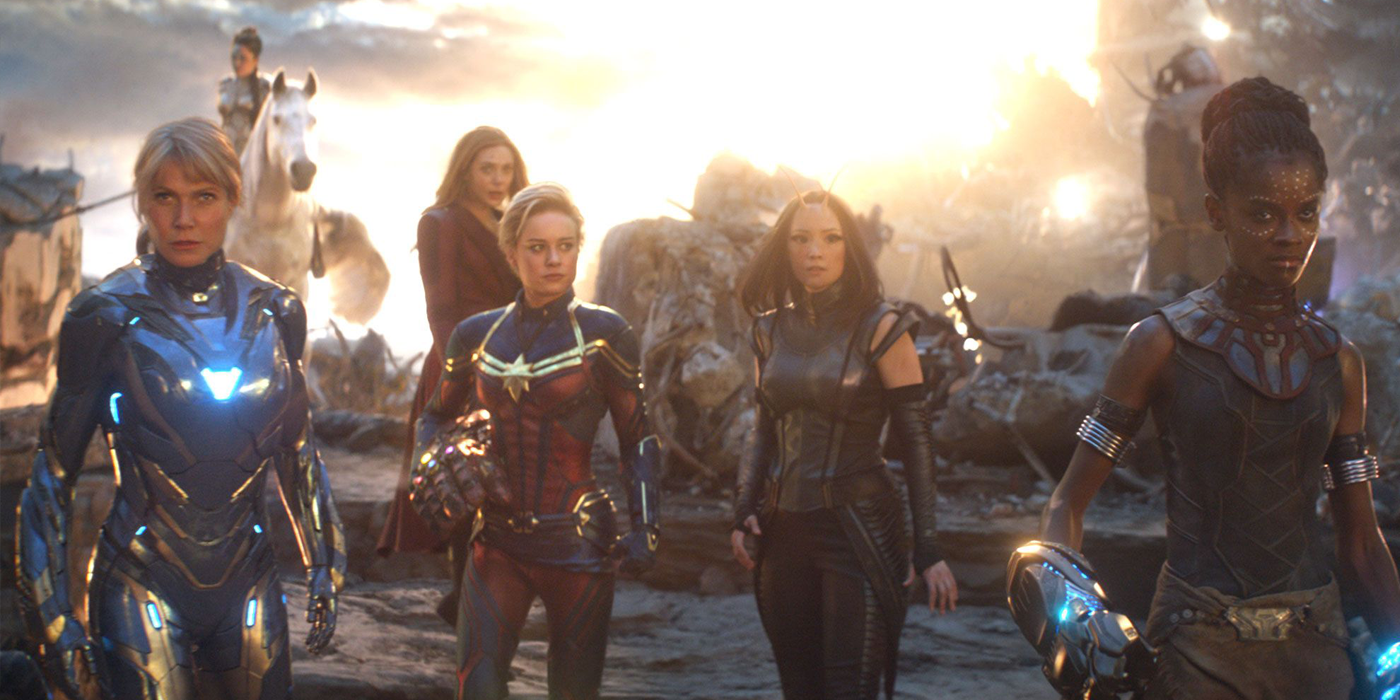
It stems largely from that scene in “Avengers: Endgame.” You probably know the scene I’m referring to. I doubt I have to be too specific. For general reference, here it is.

Just playing it again, I can easily imagine a certain group of people whining like babies, as though someone just stole a piece of their birthday cake. It’s a shot of some of Marvel’s most notable female characters, all in the same scene, getting ready to kick more ass in the final battle against Thanos.

Yes, people actually got upset over this.

Yes, it’s as dumb, pathetic, and petty as it sounds, and then some.

They’re not just men who complain about a female superhero’s bra size. They’re not just women who complain how these costumes are woefully impractical. They call this scene cringy. That’s usually code for, “This doesn’t pander exclusively to me and it hurts my precious feelings!”

Many probably whine about other people who whine about things they don’t agree with, be it politics, video games, or which celebrity had an opinion that hurt their precious feelings. This scene just caught more attention than most, being part of the highest grossing movie of all time.

The outrage unfolded as soon as the movie came out. Here’s just one of the responses on Twitter.

Trust me, this is tame compared to some of the other rage tweeting that went on. Most of it boiled down to people saying the scene was so forced and tried too hard to make a political statement. Naturally, you can’t make political statements these days without attracting trolls, assholes, idiots, and narcissists.

I say that as someone who has made his share of political statements, some of which I know won’t age well. I know I make certain people cringe with what I say and how I say it. Most of the time, it’s understandable. I have enough empathy to realize that hearing something you don’t agree with can be distressing.

This scene, however, is not one of those instances. To see this scene and assume Marvel Studios is making this bold political statement about feminism, female characters, and how men should be ashamed for not letting women shine isn’t just contrived. It’s just plain goddamn stupid.

I’m sorry. I wish there was a more articulate way to say that. Sometimes, you just have to be as blunt and straightforward as possible. There are things worth cringing over. There are things worth getting outraged over. This isn’t one of them.

It’s just a very brief, very colorful moment within a two-and-a-half hour movie that took all but seven second. Somehow, that was enough to evoke whining, outrage, and trolls? Seriously, how does that make sense?

The reason I’m bringing this up now is because this scene has become relevant again, thanks to Amazon Prime’s “The Boys.” Now, I love that show and the comic that inspired it. I hope I’ve made that clear. I love the scene that re-opened this old wound, too. It was a great scene. Watching Starlite, Maeve, and Kimiko beat up Stormfront was very satisfying.

There was nothing political about it, but now it’s getting political because of how it supposedly contrasts with the “Avengers: Endgame” scene. I say supposedly because they’re both very different scenes with very different stories told in a very different context. Linking one to the other to make a larger political statement is just asinine.

When I see the “Avengers: Endgame” scene, I don’t see anything political. I just see an epic shot of Marvel’s female heroes. That’s it. That’s all there is to it. It’s just a fun scene that nicely depicts how many great female characters have developed over the years in the MCU. Can’t it just be that?

The same goes for the scene in “The Boys.” Can’t that scene just be a fun display of three of the show’s best characters beating up some Nazi-loving bitch? There’s no politics in, either. It’s entertainment. It’s fun.

If you’re going ascribe politics to either scene, then you’re missing the point. You’re also whining like an immature child, incapable of accepting a world that doesn’t always pander to every one of your sensibilities at every hour of every day. I don’t care where you lean politically. That sort of misguided outrage isn’t the least bit justified. It’s just flat out pathetic.

Leave a comment

Filed under gender issues, LGBTQ, Marvel, Marvel Cinematic Universe, media issues, movies, outrage culture, political correctness, sex in media, superhero comics, superhero movies, women's issues

A Band, A Song, And A Music Video That Has Aged Too Well

It’s a sad fact of life. Certain movies, TV shows, songs, toys, and products just don’t age well. For every timeless classic, like “Citizen Kane” or Mozart operas or Betty White, there’s an “All In The Family” or “Gone With The Wind.” That’s not to say these pieces of popular media are bad or should be censored. They just have a cringy impact in today’s climate.

I love classics as much as the next guy, but even I can’t deny that the lyrics for songs like “Brown Sugar” or “Under My Thumb” by the Rolling Stones have some distressing connotations. I don’t judge anyone who still enjoys those songs or loves the Rolling Stones. Let’s just acknowledge that times change, societies change, and certain media just doesn’t fit anymore.

That being said, it’s also possible for something to age a little too well. Again, I’m not just talking about Keanu Reeves or Betty White. Every now and then, you revisit an old movie, show, or song that doesn’t just fit right into the current cultural climate. It almost fits too well.

That’s how I felt recently while going over some old music. I was updating my workout playlist when I came across some old songs I had from Rage Against The Machine, a band I hadn’t followed closely since high school. In re-listening to some of those songs, I realized two things.

One, they still rock. They rock every bit as much as they did when I was a teenager.

Two, their music has aged way too well in the current political climate.

Now, if you know anything about this band, the kind of music they play, and what they stand for, you’re probably not surprised. Rage Against The Machine is not subtle. Their music is very political. It always has been, going back to their formative years in the mid-1990s.

They’re anti-authoritarian, revolution-heavy act that you don’t see much outside the heyday of the hippie era in the 1960s. As a teenager, I didn’t appreciate that kind of political rhetoric in music. At the time, the only politics I cared about involved how many snow days we were allowed at school.

Now, having grown up and become painfully aware of the current state of politics, I find myself appreciating Rage Against The Machine even more. I know it’s a couple decades too late, but it’s still profound. Just listening to the songs I have, I feel like they could’ve come out today and be just as relevant.

The best example that I came across just happens to be my favorite Rage Against The Machine song of all time, “Sleep Now In The Fire.” When I hear this song, it blows my mind that it came out in 1999. It feels so long ago, but it still rings so true.

Even the music video, which I remember seeing on MTV regularly, has aged remarkably well. I would argue it aged too well. Just see for yourself.

To anyone born after the year 2000, please take a moment to appreciate what the band did here. They defied a decision made by New York City. They played on the steps of the Wall Street Stock Exchange for this video. That could not happen today. In a world after September 11, 2001, they wouldn’t get off with a fine or a warning. They’d go to prison.

Then, there are the lyrics. Just take a moment and read over these lyrics. How much more relevant are they now compared to 1999?

Yeah
The world is my expense
The cost of my desire
Jesus blessed me with its future
And I protect it with fire
So raise your fists and march around
Just don’t take what you need
I’ll jail and bury those committed
And smother the rest in greed
Crawl with me into tomorrow
Or I’ll drag you to your grave
I’m deep inside your children
They’ll betray you in my name

[Chorus]
Hey, hey
Sleep now in the fire
Hey, hey
Sleep now in the fire

[Verse 2]
The lie is my expense
The scope of my desire
The party blessed me with its future
And I protect it with fire

[Pre-Chorus]
I am the Niña, the Pinta, the Santa Maria
The noose and the rapist, the fields’ overseer
The agents of orange, the priests of Hiroshima
The cost of my desire
Sleep now in the fire

[Chorus]
Hey, hey
Sleep now in the fire
Hey, hey, hey
Sleep now in the fire

[Verse 3]
For it’s the end of history
It’s caged and frozen still
There is no other pill to take
So swallow the one that makes you ill

[Pre-Chorus]
The Niña, the Pinta, the Santa Maria
The noose and the rapist, the fields’ overseer
The agents of orange, the priests of Hiroshima
The cost of my desire
Sleep now in the fire
Yeah

It’s downright eerie. The whole song is about how the rich, powerful, and well-connected can get away with anything. They lie, cheat, and steal with impunity. They’ll pay lip service to revolution and change, but never hesitate to throw people in a fire if they get out of line.

It feels like a perfectly dystopian indictment of the current political rhetoric. People on both sides of the political spectrum, liberal and conservative, jealously protect their power and influence. They’ll tell people what they think they want to hear, stoking hatred and fear, all while enjoying the fruits of their position.

Regardless of your politics, you can’t help but appreciate this kind of hard-hitting message. It feels like we’re always at the mercy of the rich and powerful. They play political games. We’re just brought along for the ride.

Rage Against The Machine was making music about this long before the internet, social media, and cable news made those politics so hateful. They dared to rage against a corrupt system before it became a common tool of political theater.

They warned us.

They yelled it out in song.

We didn’t listen and we should’ve.

At the very least, they still rock.

Leave a comment

Filed under Current Events, media issues, music, political correctness, politics, YouTube

On Privilege, Resentment, and Lottery Winners

Think of a person you knew in high school that you just didn’t like. The reason why you didn’t like them isn’t important. They’re just someone you don’t care for and would prefer not to think about them in any capacity.

Now, imagine that same person won the lottery.

Suddenly, this person you seriously resent has been gifted a glut of random, unfeeling luck. They now have access to wealth, resources, and opportunities that you can only dream of.

From afar, they look happy and thrilled. Their life seems destined to be one of excitement, leisure, and fulfillment. They did nothing to deserve it. They didn’t work for it or earn it. They just got lucky.

Would that make you resent them even more? Before you answer that question, ask yourself another.

Is it even right to resent a person who just got lucky?

Most reasonable people might have a problem despising someone, just because they got lucky. It’s petty, resenting someone for their good fortune. It implies that you don’t think they deserve it.

It also implies that you think you deserve it more. There’s something inherently wrong with a system that allows someone like that to get lucky while you are stuck in your current circumstances.

I bring this up because it helps illustrate the hot-button debates surrounding privilege. It has become somewhat of a dirty word in recent years. In many discussions surrounding race, politics, religion, and gender, the topic of which group has which privileges tends to come up. These discussions can get downright ugly, especially when they’re racially charged.

Now, I’m going to be very careful with my words here. I want to make a valid point, but I don’t want it to inspire even more ugly discussions. I also don’t want to give the impression that every side of the issue is equally substantive. Some arguments are more absurd than others. That’s an unavoidable pitfall when discussing sensitive issues. That’s where you’ll get argumentative equivalent of flat-earthers.

With that context in mind, I want to try and deconstruct the rhetoric surrounding which group has privilege, what it implies, and why it matters. The concept of social privilege is pretty simple. In a diverse, multi-cultural society, like the one we’ve established over the past few centuries, certain groups have inherent advantages over others. However, not all of those advantages are the same.

If you’re a straight, cis-gendered man, you have certain advantages.

If you’re a straight, cis-gendered woman, you have certain advantages.

If you’re white in a society that’s predominantly white, you have certain advantages.

The same concept applies to disadvantages. Being a minority in most societies, regardless of development, will incur some disadvantages. If you’re black, gay, Muslim, Jewish, transgender, bisexual, or disabled in a society where the majority is none of those things, you will face challenges that others won’t. For anyone who values fairness, justice, and equality, that’s an issue.

It can be even subtler than that. If you’re born with natural beauty, you’ll have advantages as well. Like it or not, people tend to help someone who’s physically attractive. The same applies if they happen to have a special talent, such as throwing a football or playing an instrument. People without those skills are at a disadvantage, if only with respect to attention.

As a social species, humans already have an innate sense of fairness. These disparities don’t go unnoticed by both the majority and minority. Like playing a game where someone is using cheat codes, people are going to strive for greater fairness.

Some will be more aggressive than others in that pursuit. At the same time, those who have those advantages will try to maintain them. They may not even see them as advantages.

While that seems simple in the context of a game, it gets exceedingly complex when you apply it to society at large. It also gets contentious, as both historic and contemporary protests have shown.

It has even become popular to tell people to “check their privilege” at the door when entering a conversation. Even if it’s done in the spirit of fairness, it can still come off as downright resentful.

That may be understandable, to some extent. It may even be acceptable for some because achieving perfect fairness and perfect equality just isn’t realistic. There’s always going to be someone who gets lucky or is just naturally more talented or beautiful. It’s the nature of reality. It still doesn’t answer the same question I posed earlier.

Is it right to resent a person who just got lucky?

For anyone attempting to answer it, there’s probably a short and long version of that answer. It may depend on the nature of the luck involved. Someone who wins the lottery is easy to envy, but difficult to resent. If you don’t know the person, then chances are you’re not going to resent them. You’ll just be jealous of their luck.

However, the random luck of a lottery winner isn’t that different from the random luck that makes someone straight, white, Christian, and male at a certain point in history within a certain society in which they have advantages. When we’re born, we don’t have a choice in the circumstances. We simply grow, develop, and react within them along the way.

Those circumstances can include some very distressing facts. There’s no getting around the fact that certain groups have brutally oppressed others and effected the system to preserve their advantages while disadvantaging others. Even if it happened centuries ago, the effects of those injustices are still felt today.

Most reasonable, decent people are in favor of righting such injustices. However, the right way to go about it is where a lot of resentment starts to emerge. Some of that is unavoidable, given how easy it is to derail an argument, but there’s another component to discussions about privilege that goes beyond lottery winners.

Whenever someone protests the privileges of any group, be they white men, affluent middle-class women, or people born with natural beauty, there’s often an angry backlash and not just from those seeking to protect their privilege. In fact, most of that backlash comes from people who fit the generalization, but are not privileged.

There are straight white men who, despite their demographics and circumstance, have no advantages whatsoever. They’re poor, destitute, and miserable. They work every bit as hard as those in minority groups, but still struggle.

Then, despite their dire circumstances, they hear rhetoric that claims they’re somehow the most privileged people in the world. Chances are, they’re going to feel resentful too.

That’s because, statistically speaking, only a handful of people who fit the stereotype of “privileged” individuals really enjoy those advantages. These are individuals in positions of power and authority, both politically and economically. Some are identifiable by name. Others are just indirectly influential, due to their wealth, status, and resources.

The vast majority of men don’t have a say in how patriarchal or egalitarian society is.

The vast majority of white people don’t have a say in how racially segregated society is.

The vast majority of women don’t have a say in how men are disadvantaged men are in divorce court, child custody, or alimony.

The vast majority of straight people don’t have a way in how the law handles issues LGBTQ discrimination.

The vast majority of Christians, Muslims, Jews, Buddhists, and Hindus have no say in how their religion conducts itself as an organization.

However, since there’s rarely a single, mustache-twirling villain who exists solely to oppress on certain issues, our only choice is to generalize. We’re already a tribal species, by nature. It’s depressingly easy to channel that into what we perceive as the source of an injustice.

It’s also easy to resent people who are clearly privileged and go out of their way to abuse it. Those individuals deserve that kind of resentment. Like a lottery winner who becomes an insufferable asshole because of his luck, the resentment is both understandable and justified.

The problem with resenting the privilege of entire groups is that it’s difficult to see the forest from the trees. The existence of one asshole lottery winner doesn’t mean that every lottery winner is an asshole by default. By that same token, the existence of one group of people who enjoy egregious advantages doesn’t mean everyone like them enjoys them as well.

There are all sorts of complexities and nuances that go into what gives certain people advantages over others. Sometimes, it’s objectively unfair how certain people exploit their advantages and we should all work for a more fair and just system.

However, it’s a simple matter of removing the privileges to level the playing field. It’s also not realistic to yell at people until they purposefully disadvantage themselves for the sake of others. That’s akin to demanding that lottery winners give up their winnings in the spirit of fairness. It doesn’t just defeat the purpose. It makes us the resentful assholes.

Leave a comment

Filed under Current Events, extremism, gender issues, human nature, LGBTQ, media issues, outrage culture, political correctness, politics, psychology

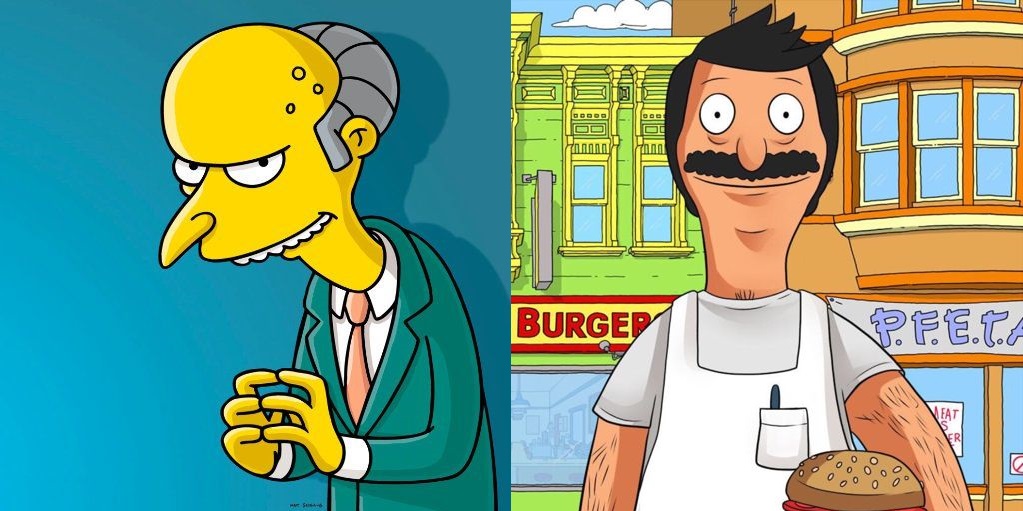
Extremes In Capitalist Tropes: Bob Belcher Vs. Montgomery Burns

The following is a video for my YouTube channel, Jack’s World. It’s a bit of a shift from my previous videos. In this, I try to dissect certain TV tropes from some of my favorite shows. For this video, I’m breaking down how capitalism manifests in two distinct characters, namely Montgomery Burns from “The Simpsons” and Bob Belcher from “Bob’s Burgers.”

I’m very curious to see what kind of response I get here. If you like what you see with this video and want to see more like it, please let me know. Thanks and enjoy!

Leave a comment

Filed under Current Events, extremism, human nature, Jack's World, media issues, political correctness, politics, television, YouTube

PSA: Disagreeing With Someone Is NOT A Violent Act

There are certain basic, inherently decent truths in this world. Most reasonable people understand them to some extent. We don’t need to be persuaded of their merits.

Being a selfish asshole is a bad thing.

Lying, cheating, and stealing is a bad thing.

Compliments and kind words help us and others like us.

Not everything you see on the internet is true.

These are just a few. I hope they’re not controversial. I like to think I have enough life experiences to make these statements with some credibility. Ideally, we don’t need to remind each other of these simple truths. They should be a given for anyone with a functioning brain.

Unfortunately, we live in an exceedingly imperfect world and years like 2020 only intensify those imperfections.

So, in that frustrating spirit, I’d like to make a quick public service announcement that I hope will function as a simple reminder. Please note I’m not referring to one particular person or a single group. I’m addressing as many people as possible. If you can, please forward this along because this needs to be said, reinforced, and belabored.

Someone disagreeing with you is not a violent act against you, nor should it be construed as one.

I know. That sounds like common sense. It is, for the most part. Most of us learn in grade school that someone disagreeing with you is not a big deal. You don’t have to like it. You may feel angry about it, but it’s hardly damaging. We live in a diverse society with diverse people. You’re going to encounter people who don’t think or believe like you do.

That’s fine.

That’s life.

However, lately it feels like the mere act of disagreeing with someone is somehow construed as this aggressive, violent political statement. Just telling someone you don’t agree with their politics or voted differently in the last election is no longer a simple point of disagreement. It’s an outright affront.

I see it in social media, comments sections, and in person debates. It gets incredibly ugly and it escalates way too fast. It often goes like this.

Person A: I voted for this candidate/hold this position/support this effort.

Person B: Really? I voted for the other candidate/position/effort.

Person A: You horrible piece of fucking shit! You’re ruining this country and this world! I hate your fucking guts and everything you stand for! You should fucking die a horrible death!

I wish I could say that was hyperbole. I really wish I could. Sadly, that’s a painfully accurate paraphrasing of the rhetoric I see whenever people start arguing. Whether it’s about politics, pop culture, video games, or which fictional characters they like, it gets so ugly, so fast that it’s disturbing.

It’s not treated as a difference of opinion. Some treat simple, differing opinions as a series of kidney punches delivered by Ivan Drago. It’s a gross, irrational, unbalanced response to the mere act of holding an opinion. If you don’t believe me, just try making these comments on any social platform.

I enjoyed Star Wars: The Last Jedi.

I support professional athletes protesting police injustice during the national anthem.

Brie Larson is a great actress.

There should be more diversity in certain franchises.

These are innocuous opinions. They don’t physically harm anyone. They reveal only a tiny sliver of who someone actually is. However, the mere utterance of these opinions is often a trigger for the most vile, hateful, rage-fueled reactions you can imagine.

That’s not just wrong.

That’s not just misguided, either.

It’s fucking stupid.

There’s no other way to describe it. These reactions are not the least bit warranted. Someone disagreeing with you is not an act of violence. It’s just not. Treating it as such is absurd, not to mention regressive.

Nobody, I don’t care who you are, is ever going to live in a world where everyone agrees with them. Humans just aren’t wired like that. Getting so upset about it is not a productive use of our time, energy, and passions.

I realize this will likely fall in deaf ears for some, but I hope others will take a step back and reassess how they react to someone voicing an opposing opinion. This world is messy enough. Let’s not make it worse by fighting each other for petty, unwarranted reasons.

Leave a comment

Filed under Celebrities and Celebrity Culture, censorship, Current Events, human nature, media issues, outrage culture, political correctness, politics, rants

The (Pathetic) Virtue Signaling Of Those Who Whine About Virtue Signaling

The internet and social media are wonderful. They’ve done plenty of good for the world. People have connected like never before. Knowledge, information, and personal connections have never been easier. These are objectively good things for a social species like ours.

I make that disclaimer because I’m about to talk about one of the biggest negatives that the internet has fostered. I also concede there are far worse negatives. The internet and social media have done far greater harm in certain areas, plenty of which make the news. Some of that harm is just genuinely deplorable behavior. Some is outright illegal.

However, I would argue that one of the most infuriating, yet perfectly activities that the internet has enabled is virtue signaling. I’ve bemoaned it before and for good reason. Virtue signaling is a toxic combination of narcissism, groupthink, clickbait, and trolling. Take everything you hate about the worst people on the internet. Much of it is incorporated into virtue signaling.

It’s the selfish, ego-stroking act of loudly proclaiming that you’re so in favor or opposed to something that you demand acknowledgement and affirmation from total strangers. It’s not enough to just have a strong opinion or do something that’s actually virtuous. These people need the whole goddamn world to pat them on the back and assure them they’re a special snowflake.

There are far worse ways to describe this phenomenon. For my own sanity, I’ll leave it at that. I trust my readers to fill in the blanks without breaking their computer screens. All you need to know is that virtue signaling comes in many forms. Some acts are far worse than others. Like most things on the internet, there’s a spectrum to it.

Like any meme or trending hashtag, there’s a certain range of behaviors that constitute virtue signaling. Sometimes, it’s obvious. You need only see videos and articles whining about how video games, movies, and TV shows are ruining the world by empowering the patriarchy. However, I’ve noticed one particular brand of virtue signaling that’s becoming more common.

Specifically, it comes from the people who are usually the first to whine about virtue signaling. It’s every bit as hypocritical as it sounds, and then some. Virtue signaling is bad enough, but adding hypocrisy to the mix only makes it 10 times worse.

I’ve seen more and more of this pernicious virtue signaling in recent weeks, especially as the NBA playoffs wind down and as the NFL season gets going. It shows up in Twitter feeds, Facebook posts, and pretty much any poorly moderated comments section. It usually goes something like this.

“These self-entitled athletes dared to protest social issues! I’m canceling my subscription!”

“Get your damn politics out of sports! Until then, you won’t get a cent of my money!”

“Boycott this league and all the snowflake cucks who work in it!”

“I will never support a league that doesn’t stand proudly for the flag/anthem/whatever political symbol I’ve decided to champion!”

Trust me, it gets worse. It gets much worse.

At the same time, it compounds the cringe. I imagine the people making these comments don’t think they’re virtue signaling. They may see themselves as heroic underdogs resisting some nefarious foe looking to destroy them and everything they care about.

Again, these are sports leagues. They’re a business. They’re main goal is to entertain, make money, and attract the widest possible audience. Sometimes, that audience includes people who aren’t you.

That’s a concept that seems to fly over the heads of everyone who whines and complains about politics in sports, video games, comics, movies, etc. Pick any form of media. Give it any kind of controversial or political undertones, even if it’s indirect. Chances are you’ll get people who call that virtue signaling and some of those people protest by virtue signaling how much they’re against it.

They don’t always see the hypocrisy, but it’s painfully apparent at times. The biggest catalyst, in my opinion, was the very public protest by Colin Kaepernick back in 2016. He stated very clearly that he was protesting police brutality and not disrespecting the American flag or veterans. He belabored and reiterated that countless times.

It didn’t matter. A sizeable chunk of people, who I won’t identify because they make their affiliations all too clear, decided he was this anti-American radical. He didn’t just want to protest injustice. He wanted to ruin America, the NFL, and sports in general. I’ve seen many toxic comment sections and Twitter threads in my time. This was probably the worst.

Again, most of it was just virtue signaling from the other side. Everyone seemed to compete for the right to proclaim they loved America, stood for the National Anthem, and hated Colin Kaepernick with every fiber of their being. They do all of that while calling someone like Kaepernick and other players who protested with him whiny, virtue-signaling America haters.

It’s a cycle of hypocrisy that doesn’t just miss the point. It goes out of its way to avoid the actual substance of what the issue was. Remember, and I wish I didn’t have to reiterate this, the man was protesting police brutality against young black men. That’s a legitimate issue that hurts innocent people. It should be confronted.

Instead, the hypocritical virtue signalers of the internet decide to ignore that issue entirely and make it all about who loves their country and flag more. It’s the digital equivalent of a pissing contest. Everyone wants to yell how much they hate the NFL and NBA. They want everyone to know that they don’t support their league and won’t be watching any games.

First off, I don’t believe them for a second.

I suspect the people who make comments like that will get bored one day, flip through the channels, and settle on a football or basketball game. Nobody will ever call them out on it. Chances are, nobody will ever find out. They may or may not feel a twinge of guilt for the hypocrisy, but they’ll pay no price.

Second, if you go out of your way to post comments in feeds to tell the world how much you hate something, you’re not just virtue signaling. You’re being an asshole of the highest order. The NFL and NBA are not out to get you. They’re not out to destroy America. They just want to entertain and make money. Sometimes, that means catering to a diverse audience.

Certain snowflakes on certain extremes of the political spectrum may hate it. They can whine about it all they want, telling as many people as they can how they’re not going to participate. They’re still the bigger assholes here and considering the scandalous behavior of organizations like the NFL, that’s saying something.

I’m sorry if this rant is dragging, but as someone who’s genuinely excited for football season and doesn’t mind at all seeing athletes protest causes they believe in, this kind of virtue signaling just pisses me off more than most. If you hate the NFL just because they dare to raise awareness of social issues, then I don’t know what to tell you. That’s petty, shallow, and just plain stupid. Virtue signaling is bad enough. Let’s not make it worse by adding whining and hypocrisy to the mix.

2 Comments

Filed under Current Events, extremism, football, human nature, media issues, outrage culture, political correctness, politics, rants

Upheavals At DC Comic: My Concerns And Hopes

Let’s face it. Pretty much every industry not associated with health care, masks, streaming media, and Zoom calls has been hit hard this year. That’s especially true for certain segments of the entertainment industry. Basically, if you’re a movie studio, a movie theater, a comic shop, or a mall, this year has been like 100 punches to the gut, jaw, and genitals by a crack-fueled Ivan Drago.

That’s how bad global pandemics are. They pull no punches and will hit anything that attempts to prosper, both directly and indirectly.

Those blows extended to the comics industry, as well. As a lifelong comic book fan, I certainly felt it. I haven’t forgotten the weeks on end of having no new comics to enjoy for the first time in over a decade. It was not a pleasant experience. As elated as I was to see New Comic Book Day return, I didn’t doubt for a second that there would be some lasting scars.

Well, now it seems some of those scars are starting to fester and the first one to feel the pain is DC Comics. According to The Hollywood Reporter, the entire DC Comics operation has been hit with major layoffs and restructuring. It’s still intact, but make no mistake. This is the single biggest purging of personnel from a major comics publisher since the mid-1990s.

THR: DC Comics, DC Universe Hit By Major Layoffs

Monday’s WarnerMedia layoffs have affected a significant number of high-level figures at comic book powerhouse DC, multiple sources tell The Hollywood Reporter.

Among those said to be losing their positions are editor-in-chief Bob Harris, senior VP of publishing strategy and support services Hank Kanalz, VP of marketing and creative services Jonah Weiland, VP global publishing initiatives and digital strategy Bobbie Chase, senior story editor Brian Cunningham, and executive editor Mark Doyle, who oversaw the rollout of the Black Label graphic novels. Jim Lee remains the CCO.

Roughly one third of DC’s editorial ranks are being laid off, according to sources.

Insiders also say the majority of the staff of the streaming service DC Universe has been laid off, a move that had been widely expected as WarnerMedia shifts its focus to new streaming service HBO Max.

I can’t understate how big a deal this is to the larger world of comics, but I don’t want to overstate it, either. This situation is objectively bad. There’s no way around it. It’s also not the definitive end of DC Comics. That’s a narrative I don’t want to fuel.

That hasn’t stopped some of the whiniest, dumbest segments of the comics crowd from claiming otherwise. I won’t name names, but they are affiliated with a certain movement in comics that has only become less credible and more insufferable with time. The box office return of the “Captain Marvel” movie is proof enough of that.

Don’t be fooled by what some asshole voices on social media claim. This restructuring is not because DC Comics had too much diversity. It’s more a byproduct of DC Comics having lost its sense of vision, scale, and identity. This is something that happens from time to time in comics. After a while, the whole line loses its sense of self and needs some revitalization.

I can say, as a longtime comic fan, that DC has become somewhat stale in recent years. Even before the pandemic, I felt as though it had lost momentum outside its mainstays. It has primarily been relying on the strength of Batman, Wonder Woman, Superman, Green Lantern, and Flash. As iconic as those characters are, they just can’t sustain the entire line.

There are many reasons for that. I think DC Comics, as a whole, hasn’t had a consistent vision since the days of DC Rebirth. It just got bogged down too much with competing visions, like DCeased and Injustice: Gods Among Us. It also endured way too many delays with its last big crossover event, Doomsday Clock.

The onset of the pandemic just exacerbated a problem that was starting to grow. As bad as things are now, there’s also an opportunity to set things on a better path. That’s my greatest hope for whatever restructuring DC pursues next. It still has plenty to build on. The success of the Harley Quinn show is proof enough of that. It’s just a matter of what form that will take.

That said, I do have major concerns. Comic lines have gone through upheavals before, but never during a global pandemic. This is uncharted territory for the comics industry, as a whole. This is not the era of newsstands and comic shops where top books could easily sell hundreds of thousands of copies. Paperbacks alone are not going to make this industry succeed.

Comics, in the current system, work best as a garden from which new characters, stories, and ideas can blossom. The fruits of that system can later become the basis for TV shows, movies, merchandise, and so much more. DC Comics already has a major media partner in its owner, AT&T. The structure is there. They just have to carve their niche into it.

I understand that’s easier said than done. Right now, a lot of factors are working against DC and the comics industry, as a whole. When all is said and done, comic shops may become much more diminished and trade paperback sales may dwindle to just a handful of titles. I’m not looking forward to that kind of status quo.

The ultimate setup may one day involve DC Comics just abandoning its publishing system, as a whole, and shift to licensing its characters to other companies, such as IDW. That’s very much a last resort, but one that may be more likely if DC can’t get its comics in order.

I want to be hopeful, but I’m also going to brace for the worst. If 2020 has taught me anything, it’s that things can always get worse and the things we love are always capable of succumbing to forces beyond our control. It’s a sad, nihilistic mindset, but one that a global pandemic tends to affirm. Only time will tell and I’ll be waiting with baited breath.

Leave a comment

Filed under DC Comics, media issues, superhero comics

A Quick Note: Fact-Checking Is NOT Censorship

In general, I am very against censorship. I’m a strong advocate of ending the outdated and asinine practice of bleeping profanity and blurring female nipples. There is no reasonable justification for that kind of censorship. It’s just a dumb, misguided effort to try and cover up certain words and images that some people find offensive. That kind of censorship has no place in a free society.

In that same spirit, I am also very much in favor of fact-checking. I’ve been on the internet long enough to know the near-infinite volumes of bullshit that fill websites, social media, and even blogs like mine. In fact, given the recent trends in politics and a preference for “alternative facts,” I think fact-checking has never been more critical.

For that very reason, it’s important to make clear that fact-checking is not the same as censorship. Verifying whether some bullshit claim about chemtrails or shape-shifting lizards is valid does not constitute censorship. It’s consistent with a sincere and honest effort to filter bullshit from meaningful facts.

I bring this up because certain groups and movements are having a difficult time discerning between the two. More recently, anti-vaxx groups on social media sites like FaceBook have been whining about censorship of their extreme, unsubstantiated views. ARS Technica recently reported that this whining has escalated into a full-fledged lawsuit.

ARS Technica: Anti-vaccine group sues Facebook, claims fact-checking is “censorship”

A notorious anti-vaccine group spearheaded by Robert F. Kennedy Jr. filed suit today in federal court in California alleging that Facebook’s fact-checking program for false scientific or medical misinformation violates its constitutional rights.

Children’s Health Defense claims in its suit that Facebook, its CEO Mark Zuckerberg, and the organizations Science Feedback, Poynter, and PolitiFact acted “jointly or in concert with federal government agencies” to infringe on CHD’s First and Fifth Amendment rights. The suit also alleges Facebook and the fact-checking organizations colluded to commit wire fraud by “clearing the field” of anti-vaccine ads.

As anti-vax movement gets weirder—and dumber—Facebook announces crackdown
Facebook has “insidious conflicts with the pharmaceutical industry and its captive health agencies,” CHD claimed in a press release. “Facebook currently censors Children’s Health Defense’s page, targeting its purge against factual information about vaccines, 5G and public health agencies.”

“This is an important First Amendment case testing the boundaries of government authority to openly censor unwanted critiques of government policies and pharmaceutical and telecom products on privately owned internet platforms,” Kennedy added in a written statement.

Now, I’m not a lawyer and I have no legal expertise on the nature of censorship and free speech in the internet age. However, I’m smart enough and sane enough to understand the difference between actively censoring ideas that I don’t want to hear and trying to verify a ridiculous claim shared on social media.

I’m also informed enough to understand that FaceBook isn’t the government, even though it tries to be at times. It’s a platform. It can decide for itself whether or not it wants to remove certain content. Every private organization does that to some extent, especially ones with such a vast reach.

The content they permit has a tangible effect on their brand image. It’s why FaceBook’s reputation is not on the same level as 4chan, even if that’s not saying much. Their efforts to verify or discredit claims on their platform is perfectly in line with standard practices. It doesn’t actively punish or fine anti-vaxxers like the government did when Janet Jackson’s nipple popped out during the Super Bowl. It just removes or flags the content.

You can call that a lot of things. You may not like that companies like FaceBook can decide what is and isn’t appropriate on a platform that has had such a spotty history with censorship, to say the least. In this case though, it’s not censorship.

If anything, fact checking medical claims during a global pandemic is probably the most responsible thing a company like FaceBook can do. Hosting those claims can potentially do a great deal of harm to those who don’t know the difference between clickbait and a legitimate news story. People could actually suffer and die.

When feelings and sensibilities are the only thing at stake, then it’s fine to talk about the merits of censoring content. However, when lives are at stake on a large scale, there is no merit. Claims that may or may not affect those lives should be fact-checked. You can complain about it all you want in a lawsuit, but unless you can verify your bullshit, then that’s exactly how it’s going to be labeled and that’s not FaceBook’s fault.

Leave a comment

Filed under censorship, Current Events, extremism, media issues, politics