Category Archives: human nature

How Much Money Do You Really Need?

Most people aren’t born into wealth. The vast majority of the population has no idea what it’s like to be a billionaire, a millionaire, or someone who just doesn’t live with the constant dread that they’re just one missed paycheck away from total ruin. There’s a reason why they’re called the one percent and it goes beyond basic math.

I admit I’ve often contemplated what it would be like if I suddenly became wealthy. I’ve even articulated some of those musings in detail. I suspect most people have day-dreamed at some point what they would do if they suddenly had a billion dollars at their disposal. For most people, it’s difficult to contemplate because, like it or not, money changes people and not always for the better.

When someone asks what you would do with a million dollars, it’s easy to come up with all sorts of answers. Some are inevitably going to be more absurd than others. The movie “Office Space” articulated that point perfectly. However, there’s another question that I feel is worth asking and I also feel it’s more revealing.

How much money do you really need?

I’m not talking about fantasy wealth here.

I’m not talking dream vacations, dream homes, or spending sprees.

How much money do you actually need to live a happy, comfortable life by whatever standards you define it?

That’s a harder question to answer because it varies for everyone. There are some people in the world who think a million dollars isn’t enough. Depending on where you live in the world, that’s not an unreasonable position. Even with those variations, it still doesn’t zero in on the answer. How much is enough?

I’ve seen how people act when the lottery gets above the $300 million mark. In my experience, once things get over $100 million, that’s when even a typical day dream isn’t enough to appreciate just how much money that is. I’ve tried to imagine it and in every case, I come to the same conclusion.

If I had that much money, I honestly wouldn’t know what to do with it.

It’s not that my needs are simple or cheap. I think my costs are fairly average for someone living in a suburban area. If I had $100 million, didn’t invest a penny in stocks or bonds, and stopped making money today, I still wouldn’t be able to spend it all before I turned 100.

I probably couldn’t even spend $50 million. When things get into the billion-dollar territory, it gets even more absurd. Even millionaires have a hard time fathoming how billionaires operate. Most people, even with decent math skills, don’t understand just how much money a billion dollars is.

At that point, you’re way beyond basic needs and wants. You’re in a domain in which you literally cannot spend all that money at once. You have to legitimately try to lose it all and while some people have done that, it often happens in the process of seeking even more billions to add to their fortune. It rarely occurs just by spending money on your day-to-day needs.

In that context, contemplating how much money you actually need says more about you and your situation than it does about your understanding of finance. If you need that much money to be comfortable, then that says something about your mindset and it’s not just about greed. Some want to change the world for the better with that money. Some want to impose their will on it. It depends on who you are and what drives you.

For me, personally, I don’t think I need anything above $10 million. I probably wouldn’t need more than $5 million just to maintain my current living costs, adjusting for inflation, and planning for my future. That might change if I ever get married and have kids, but for now, that’s my perspective.

I’m interesting in hearing how others would respond to this question. How much money is enough for you? How much would you need to be content, stable, and happy? Let me know in the comments. I’d be happy to revisit this issue again down the line.

Leave a comment

Filed under Current Events, human nature, philosophy, politics, psychology

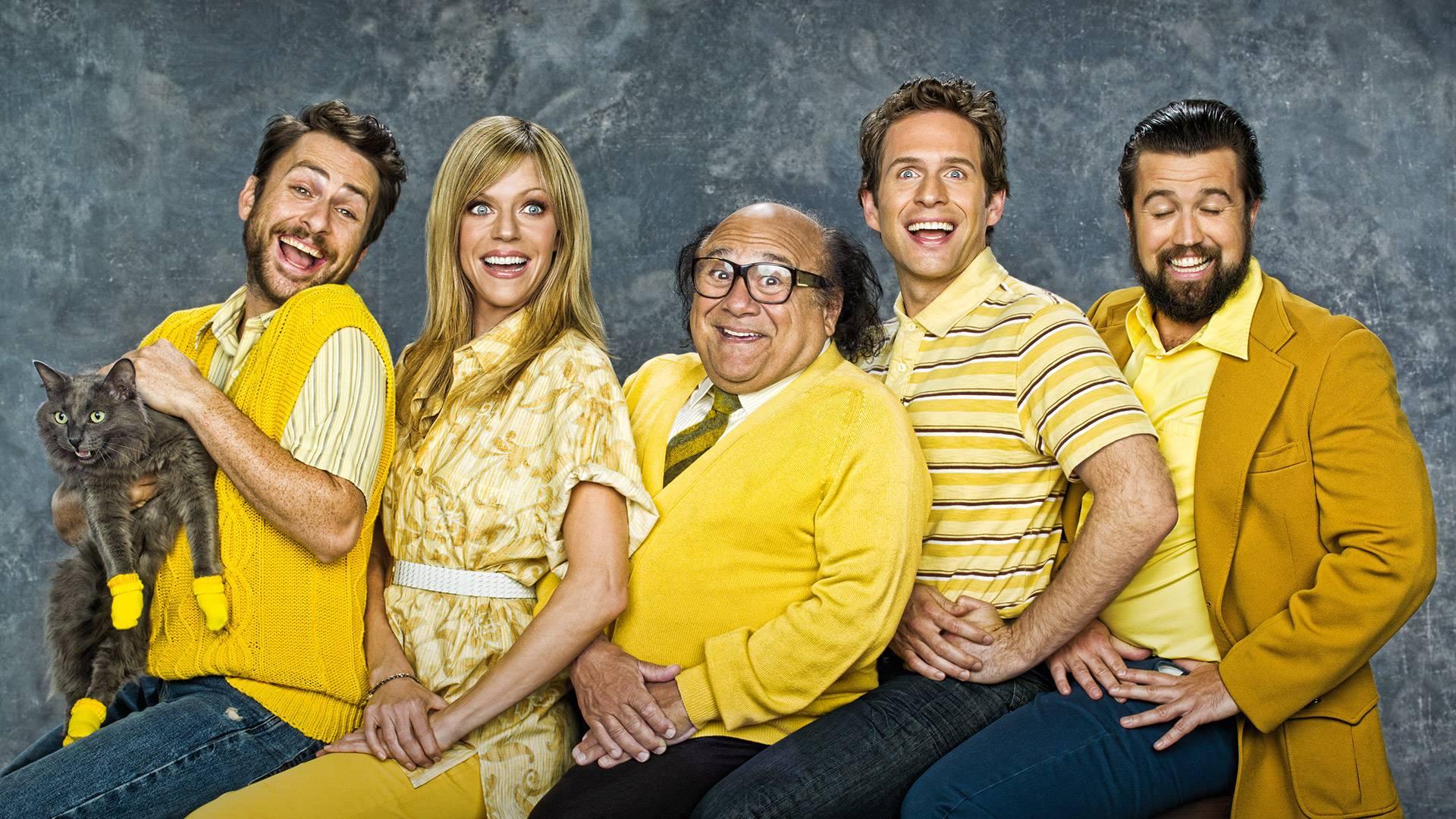
The “It’s Always Sunny In Philadelphia” Filter: A Simple Process For Making Choices

How do you make good choices?

How do you know when something is right, just, and ethical?

How do you go about determining the morality and ethics of any given situation?

These are the kinds of questions that lawmakers, philosophers, scientists, religious leaders, and YouTube commenters debate constantly. It’s one of those deep, fundamental issues that everyone contemplates regularly, but few can claim to understand. The world is so chaotic and complicated. It’s incredibly difficult to surmise a simple, concise, consistent standard for making good choices.

However, there are ways of simplifying that daunting process. It may still be impossible to completely resolve such issues for every person in every situation, but we can make it easier. As it just so happens, one of the greatest TV shows of all time, “It’s Always Sunny in Philadelphia,” provides us with an important tool that also happens to be hilarious.

Using that tool is simple. It goes like this.

If a certain choice, response, or recourse seems like someone that the Gang would do in It’s Always Sunny in Philadelphia,” then chances are it’s not the one you should follow.

To anyone who has watched this show in any capacity, that makes total sense. For those who haven’t had a chance to watch this hilariously obscene middle finger to every sitcom ever made, here’s just a sample of what I’m talking about.

Even if you’re not familiar with the show, this should at least get you familiar with the implications. I’ve written aboutIt’s Always Sunny in Philadelphia” in the context of its masterful handling of dark comedy. I concede that this is one of those shows that isn’t for everyone. It’s hard to explain to most people the appeal of a show that finds humor in baby funerals, crack binges, and unauthorized Lethal Weapon sequels.

At the same time, it’s because this show dives head-first into dark comedy that it paints a clear picture on what goes into making bad decisions. There’s no getting around it. The characters in this show, also known as the Gang, are not morally upstanding people. In fact, they don’t even try to be moral. Nearly every episode involves them pursuing some elaborate plot based entirely on selfishness, greed, ego, or misguided pettiness.

They’re not stupid on the level of Homer Simpson or Peter Griffin, but they aren’t very smart either. Everything they do, from hoarding gasoline in an oil crisis to stalking a waitress, is incredibly simplistic. It can always be reduced to a basic level of selfish narcissism that never goes beyond basic.

It’s because the Gang’s choices are so basic and self-serving that the show is so funny in the first place. “It’s Always Sunny in Philadelphia” essentially takes the unique setup of a sitcom to amplify all the terrible traits and tropes that frequently go along with other shows that try too hard to be deeper.

At its core, It’s Always Sunny in Philadelphia” doubles down on the simplicity of having characters who don’t even try to be moral. Through 14 seasons, the Gang actively avoids any effort to change or grow in a meaningful way. Charlie, Dee, Dennis, Mac, and Frank are the same selfish narcissists they are in Season 14 as they are in Season 4.

Even as the show has gotten bolder and more absurd with the Gang’s antics, their motivations are the same. They don’t need to be overly complex to be funny. That’s what makes these characters and the entire premise of “It’s Always Sunny in Philadelphia” such a great filter.

The next time you’re in a situation where you need to make a decision, try and apply this filter. What would Sweet Dee do? What would Frank Reynolds do? What would Dennis, Mac, and Charlie do? If you can determine that, then you can also determine exactly what not to do.

Even if it’s not specific, the moral filter of It’s Always Sunny in Philadelphia” can act as a reminder. If you’re going to be exceedingly selfish and narcissistic in making decisions, then you’re tempting fate the same way the Gang does with every absurd antic. Doing so will rarely pan out well for you and those around you.

If you need further proof, just look at Rickety Cricket.

Leave a comment

Filed under human nature, philosophy, political correctness, psychology, television

A Perspective On Generation Gaps

As a general rule, I try not to talk about politics with anyone. I avoid getting into political debates online, as well. I used to actively seek that out. I’ve since learned there are less frustrating ways to waste my time.

A significant part of that frustration comes from talking politics with people who are significantly older or significantly younger than me. I’m in my thirties now. I still remember my teen years, but I also can’t deny that I’m different now than I was back then. I’m still the same person. Time and perspective just have a cumulative effect.

I think most people experience the same thing, regardless of their age. I’ve talked about issues regarding generation gaps before. I imagine they’ll become even more prominent as Generation Z comes of age. It’ll only get more divisive as the Baby Boomers start to retire.

I know this because I’ve gotten into more than a few debates with older relatives and family members. Every time politics comes up, they’ll share stories with me about how things used to be, how they see things now, and how they think things are going to pan out in the future. I’m not going to lie. It has led to more than a few “Okay Boomer” moments.

Those moments shouldn’t define the discourse, nor should it be an intractable barrier. I’ve faced similar barriers in talking politics with people far younger than me. It’s hard to explain the complexities of the world to teenagers when their experiences are so limited.

With that in mind, I’d like to take a moment to offer a brief perspective on generation gaps and discussing controversial issues. Whether it’s politics, society, or life in general, I feel it might help to take a step back and try to see the forest from the trees. To that end, here’s a quick insight that I hope people from every generation can appreciate.

Your attitudes, beliefs, and assumptions are not the same as they were 10 years ago.

Your attitudes, beliefs, and assumptions will not be the same as they are 10 years from now.

However, at your core, you are still the same person.

The attitudes, beliefs, and assumptions of every functioning adult you’ll encounter are not the same as they were 10 years ago.

The attitudes, beliefs, and assumptions of every functioning adult you’ll encounter will not be the same 10 years from now.

However, at their core, they’re still the same people.

You and the people around you may change, but change is never anyone’s first inclination. It only takes hold when it feels right, necessary, or convenient.

Whether you’re young, old, or middle aged, I hope this helps make sense of things. I don’t claim to be smarter or more insightful than anyone else with an internet connection. I just believe that making sense of this chaotic world and the many people within it starts with a balanced perspective.

You won’t be able to understand every idea from every generation, but it’ll remind you that people have more alike than they are different. We don’t have to identify with all those differences. It’s just easier to get along when we remember just how similar we are.

Leave a comment

Filed under Current Events, human nature, philosophy, political correctness, politics, psychology

Sex Vs. Violence (And The Distressing Standards Behind Them)

What makes something obscene? I know the law has its own esoteric definition, but there’s no universal standard. What’s obscene to one person may be mundane to others. How else do you explain old cigarette commercials to millennials or the Super Bowl halftime show to baby boomers?

I ask this question because someone pointed out recently just how many of the biggest, most successful box office movies of the past 10 years rely on violence to sell tickets. I’m not knocking it. I was among those cheering during the final battle scene at the end of “Avengers Endgame.” I also freely admit I watched every season of “24” and was entertained by all the violence it included.

However, that same person who pointed out how much violence was part of these big-budget entertainment products, but was still PG-13. At the same time, if even one of those products included a single image of a female nipple or a depiction of a male penis, then it wouldn’t just be rated R. It would be deemed too obscene for children.

Think about that for a moment. A network TV show can freely depict a scene where Jack Baur tortures a prisoner and a PG-13 movie can depict Captain America beating the crap out of nameless thugs in an elevator, but the viewing public just can’t handle the sight of a female nipple. That’s just too much.

The only thing that could make it worse is the depiction of a penis. That wouldn’t just make a movie or TV show rated R. It would be classified as porn. Never mind the fact that half the population has a penis and even kids know what a penis looks like. Just a depiction of one in any form of media is enough to make it obscene. Meanwhile, you can buy a shirt that has Captain America punching the President.

Now, I know I’m bias because I write sexy stories and talk about sexy topics, but I feel it’s a relevant question to ask.

Why are we more comfortable consuming violent content than sexual content?

I get that sex makes people uncomfortable. I also get why parents don’t like talking to their kids about it. However, when it comes to violence, it’s okay to keep that in a proverbial blind spot.

I remember cartoons in the 80s and 90s. Those cartoons, in addition to being glorified toy commercials, used some form of violence to resolve a plot or tell a story. Some parents complained, but nobody thought it was obscene.

I remember watching “R-Rated” movies as a kid too. I put that in quotes because, by today’s standards, these movies would barley qualify as PG-13. The first “Terminator” movie was rated R. I saw it as a kid. My parents didn’t make a big deal about the sex scene in it, but that was often cited as the scene that made that movie R-rated.

If those same kids watched a simple depiction of two naked people making love, minus the violence, then that content would still be considered mature. If that scene didn’t hide genitals, then it would be considered porn. It doesn’t matter if the scene is romantic, tasteful, and completely consensual. It’s still as pornographic as the most depraved parts of the internet.

Why is that the case?

Why is this a fair standard?

Why do depictions of violence get a pass while depictions of sex are subject to rigid standards?

I understand sex makes people uncomfortable. I also understand that people can be immature about it. They can be just as immature about violence too, but people are willing to confront and tolerate it. With sex, however, it’s always obscene. It’s always taboo. There’s no room for nuance or context.

Going back to the standards of obscenity I mentioned earlier, I think there’s room for improvement. Violence, by definition, harms people. Sex, when done right, does the exact opposite. If we’re going to have standards for obscenity, then let’s at least keep things in perspective.

Leave a comment

Filed under censorship, human nature, outrage culture, political correctness, psychology, sex in media, sex in society, sexuality, video games

Hard Life Lessons You Can Only Learn Later In Life

Life is full of hard lessons that can only be learned through hardship. Anyone who isn’t rich, beautiful, or well-connected understands that. You’re going to go through periods in life when it feels like fate, luck, and divine forces are conspiring against you. That’s not a good feeling. I understand that. It’s also a feeling that’s worth embracing.

I say that as someone who stagnated and stumbled through much of his teen years and early 20s. In terms of social skills and overall outlook, I was behind the curve longer than most. I’ve shared my various struggles from high school. I’ve also shared personal stories of major low points in my life. I don’t doubt that others have endured far worse, but the over-arching themes are the same.

When you’re young and inexperienced, you see the world a certain way. When you’re older and more experienced overall, you see it another. Time, perspective, and basic human psychology has that effect on most people as they live their lives. An unfortunate byproduct of that is there are some lessons that you can’t learn until you’re older.

That’s a sentiment I’m sure many teenagers hear on a regular basis. Some will roll their eyes and I don’t blame them. I probably did the same when I was that age. It’s also a message that most adults have a difficult time conveying because they have the benefit of hindsight. Make no mistake. Some lessons are only visible through hindsight.

For those who struggled as teenagers, like me, I imagine that’s not news to them. I also imagine there are many other lessons that weren’t obvious until many years later in life. My own parents have shared some of those lessons with me. I’ve tried to share those lessons with younger friends and relatives. It’s hard to get across. In some cases, it’s impossible.

Those lessons are still worth putting out there, if only to act as reminders through the filter of hindsight. Here are just some of the lessons that I’ve learned personally or seen in others. If you have others to share, please do so in the comments.

Lesson #1: The world doesn’t owe you anything and whining about it won’t change that.

Lesson #2: You can’t know how right or wrong someone is for you until you’ve spent more than a few years with that person.

Lesson #3: You never know for sure what you want to do with your life before and during puberty.

Lesson #4: A single failure won’t ruin your life if you learn from it.

Lesson #5: Every opportunity is a gamble, but you can control the odds to some extent through determination, work ethic, and talent.

Lesson #6: There are people in the world who are far smarter and capable than you’ll ever be, no matter how hard you work or believe in yourself.

Lesson #7: Convincing people to change their minds about anything is one of the hardest things you’ll ever do.

Lesson #8: It’s okay to be disappointed or upset, but at some point, you have to try to get over it.

Lesson #9: Like or not, having the right attitude can be the difference between happiness and misery.

Lesson #10: It’s just as easy to fall out of love as it is to fall in love.

Lesson #11: Habits, both good and bad, are difficult to break, but can be managed to some extent.

Lesson #12: People may be driven by basic needs, but are more complicated than you realize.

Lesson #13: It’s never too late to change your path or reinvent yourself, but the longer you wait, the harder it will be.

Lessons #14: Many of the things you think are important now won’t be important years from now.

Leave a comment

Filed under human nature, Jack Fisher's Insights, psychology

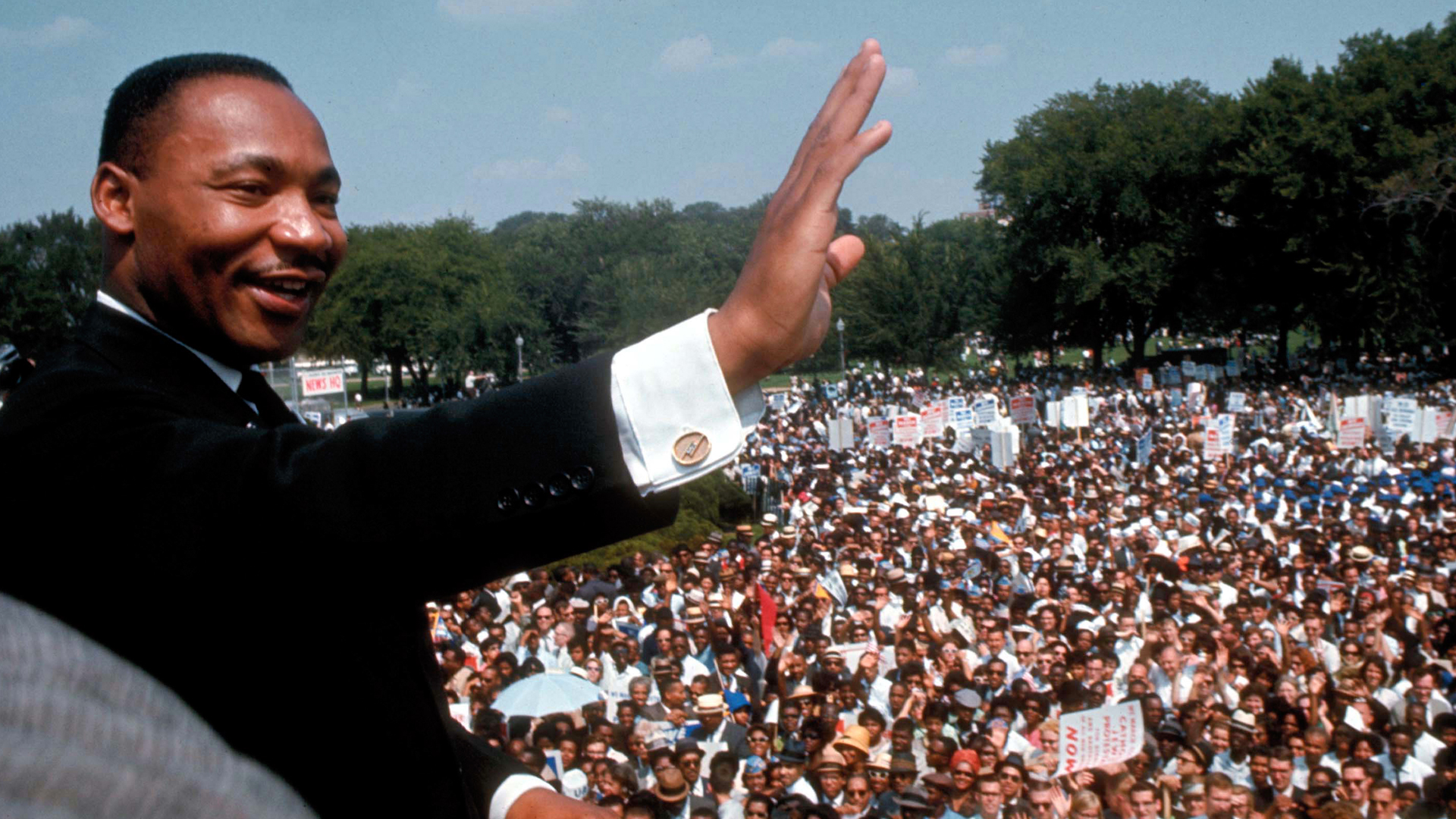
Martin Luther King Jr. Day: Pursuing A Dream

Today is a day in which we remember a dream. In a world that’s full of hard truths, fake news, and gross injustices, we need that dream more than ever. It’s a dream I like to think that humanity has always had on some level, but it took a remarkable man named Martin Luther King Jr. to put it into words that will resonate for generations to come.

In general, I don’t like talking about politics. I’ve written about sensitive issues before, but I honestly think it’s a waste of time. I don’t think it’s possible to change someone’s mind by just debating the issues. I also don’t think it’s possible to convince someone that they’re wrong through discourse alone. It’s not impossible, but it’s exceedingly difficult.

Dr. King did something remarkable during his tireless pursuit of justice and civil rights. He confronted hatred, but he didn’t fight back with it. He dared to inspire, appealing to ideals greater than politics or tradition. He presented a dream of a better world. He preached a message of hope and love. It might not have changed the minds of his opponents at the time, but it inspired generations of others to pursue that dream.

It’s a dream that’s still worth pursuing. Some may argue that we’ve regressed. I respectfully disagree. While we haven’t made as much progress as most would prefer, signs of progress are there. There’s still room for improvement, but the dream is relevant as ever. As Dr. King himself once said, “The arc of the moral universe is long, but it bends towards justice.”

If you need another reminder as to why that dream is still important, you need only listen to Dr. King’s most famous speech. It’s a speech that made the dream feel real and it’s a dream worth pursuing now and for generations to come.

Leave a comment

Filed under Current Events, human nature, political correctness, politics

Nature Vs. Nurture: A Case Study In “The Big Bang Theory”

mv5bzjg4mgnlzdgtmmm5oc00zmmxltg3y2etzmzjogjlndu4ngnhxkeyxkfqcgdeqxvymtgxotiznzk40._v1_

What makes someone an uptight, narcissistic control freak who refuses to admit when they’re wrong and will never let anyone else sit in their spot on the couch?

What makes someone a needy, whiny, emotionally stunted man-child who is chronically insecure and in constant need of approval?

What makes someone an outgoing, overly social free spirit who is also habitually irresponsible, exercises poor judgement, and intellectually dense?

These are all personal questions that have a multitude of answers, none of which are definitive. There are entire fields of study devoted to answering such questions, none of which are perfect. It often comes down to a question of whether someone was born with certain traits or are simply a product of their environment.

It’s the classic nature versus nurture debate and, in almost every case, it’s neither one nor the other. Some people are born with certain traits or personality quirks that physically manifests in their brains. Others are heavily influenced by the people and environment they grow up around. In between all of this is a multitude of other factors that are difficult to quantify.

Figuring people out what makes them tick and how they got that way is challenging, even if you consider yourself a very insightful person. People, in general, tend to be complicated. Human beings might have basic drives to survive, reproduce, and find a tribe, but there are countless variations beyond those drives.

Many of those exaggerations are also pushed to hilarious extremes with fictional characters. Between the Hulk’s anger issues and Lex Luthor’s narcissism, fictional worlds can provide useful insights into the whole nature/nurture dynamic. Whereas someone like Lex Luthor was born with little empathy and way too much ego, the anger issues of the Hulk were a more complicated, as well as disturbing.

These characters, like real people, often have a combination of nature and nurture that helps influence who they, how they got that way, and what they eventually become. It’s often subtle and building a story around it is difficult. However, there’s one group of fictional characters that I believe embody the nature versus nurture dynamic better than most.

Those characters are the cast of “The Big Bang Theory,” a show that recently ended it’s remarkable 12-year run as one of the highest-rated sitcoms of all time. While the show has garnered plenty of criticism and outright hate, there’s no denying that the show struck a chord. No show involving the same group of characters lasts for 12 years without resonating with audiences on some personal level.

While there are certainly parts of the show that I don’t care for, I still consider myself a fan of it. I even admit that I got emotional when I saw the series finale. I thought it was incredibly well done and it marked a fitting end for the journey that Leonard, Howard, Raj, Sheldon, and Penny began 12 years ago. Many other fans of the show agreed with that sentiment.

Love it or hate it, and plenty did hate it, the show had a great deal of appeal outside its cheesy jokes and comical portrayal of geek culture. After seeing the finale and watching a few reruns, I think one of the most endearing appeals was how much the characters grew over the years. Given that it was a sitcom and character growth in sitcoms are notoriously slow, I think it’s one of the show’s biggest accomplishments.

From the beginning, the personalities of each character are established with distinct traits that were heavily exaggerated for comedic effect.

Leonard was needy, insecure, and weak-willed. He was basically the ultimate beta-male nerd from every 80s teen comedy.

Howard was obsessive, selfish, and immature. He also had some stalker-like creepiness baked into his approach towards getting women.

Raj was passive, effeminate, and quirky, but largely defined by his inability to talk to women.

Sheldon was self-centered, stubborn, and egotistical. He might have also been autistic.

Penny was a bubbly, upbeat, lovable free spirit. However, she was also irresponsible and exercised poor judgement, especially when it came to her personal life.

Like every sitcom, every major plot and iconic gag was built off these traits. From Leonard trying desperately to win Penny’s affection to Howard’s efforts to pick up women to Sheldon’s inability to keep a secret, “The Big Bang Theory” had plenty to work with in terms of eccentric personality quirks. I believe a large part of the show’s success is a direct result of how well it made use of those quirks.

As the show progressed and we learned more about these character, we also learn more about where they came from and what influences them. We find out that Leonard’s insecurities might stem from the relationship he had with his mother. He also learn how much living with his loud-mouthed mother has effected Howard. We learn where Penny came from and how that informed her personality.

We learn plenty about Sheldon too, but it would take a long time to go over his many issues. He was, by far, the most eccentric character on the show and one of the most controversial.

For each character, we get a strong sense of their nature. More than most sitcoms, “The Big Bang Theory” belabors and reinforces the core personality of each character. If you watch just a few episodes, you can get a fairly decent feel for their behavior and how they would react in most situations.

At the same time, however, the show also demonstrates how new influences change these characters over time. In fact, the foundation for this change is established in the pilot episode when Penny first moves in to the apartment across from Sheldon and Leonard. She is a very different kind of influence on these two and vice versa. You could even argue that it’s the most important catalyst for the entire show.

It’s only after we learn about the nature of each characters that we appreciate what a critical moment that was in the context of each character’s journey. Before Penny’s arrival, Sheldon and Leonard didn’t have many disrupting influences. They were surrounded in familiar territory. They had nothing prompting them to change or grow in new directions.

The same goes for Penny. Before she arrived, she was just a simple girl from the mid-west who had never lived around hardcore geeks and accomplished scientists. She never even showed much interest in science, geek culture, or anything of the sort. While it didn’t seem to affect her at first, there were signs of their influence as the show progressed.

Both Howard and Raj went through similar transformations. In the early seasons, there were many sub-plots built around both of them trying to get the attention of women, despite Raj not being able to talk to them without being drunk. Most of them fail spectacularly. Some were downright pathetic at times and not in a funny way.


Then, new influences came into their lives. Howard met Bernadette, who underwent her own transformation as she became a bigger part of the group. While their relationship had its upheavals, it did more than anything to humanize Howard. It still didn’t fundamentally change him. He was still immature and obnoxious at times, but he also showed that he could be a respectable family man.

Raj’s growth wasn’t quite as dramatic, but he did eventually learn to talk to women without the aid of alcohol. He also went from just wanting to get the attention of women to seeking love, marriage, and family. He even gains more self-confidence and assertiveness as the show went on, some of which was a result of interacting with Penny and the rest of the group.

Then, there’s the growth of Sheldon Cooper. More than any other character, Sheldon demonstrated the value of having quality influences.
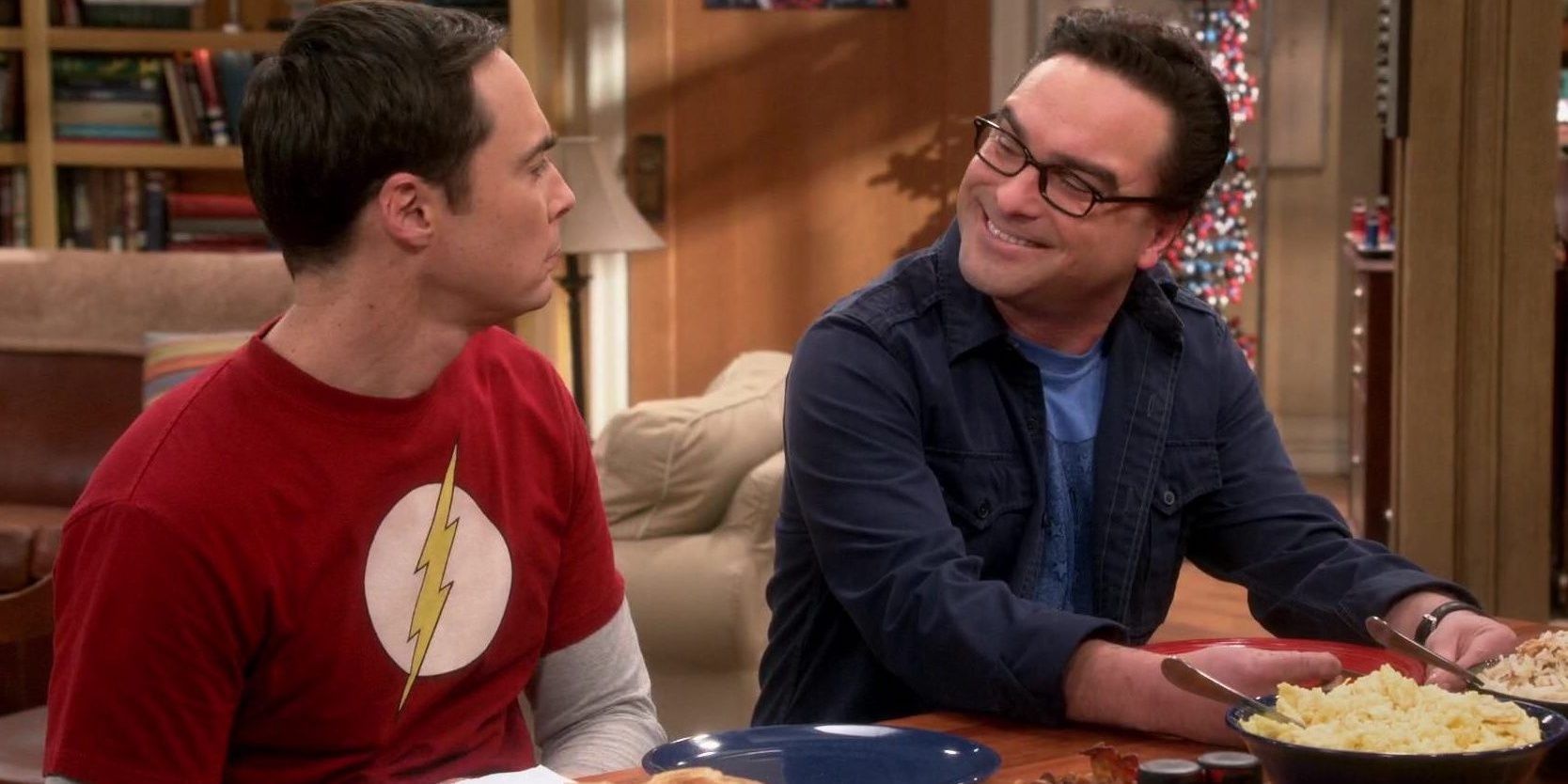
His nature is, by far, the most eccentric and extreme. It’s the nurturing forces, however, that I think had the greatest impact on both his character development and the overall progression of the of the show.

There’s no getting around it. In the first few seasons, Sheldon was a stubborn, selfish egotist. For a time, it was even a popular refrain to note that Sheldon was just one lab accident away from becoming a supervillain. Given that most supervillains tend to be petty, eccentric, and self-centered, I think that’s an accurate statement disguised as a joke.

Thankfully, that accident never happened. Instead, Sheldon was frequently nudged and, in a few cases, shoved into being less insufferable. Penny was usually the one to get him out of his comfort zone in the early seasons. Then, Amy Farrah Fowler came along and gave him a nurturing force that seemed almost impossible in the earlier seasons.

Amy brought issues of her own to the table, but like Bernadette did with Howard, she proved to be a stabilizing presence for Sheldon. She didn’t fundamentally change him, nor did she even demand it. She simply provided new influences. Granted, he stubbornly fought them, at first. He fought harder than anyone else in the group. In the end, though, he still embraced these changes and was better because of it.

It was that change that made his Nobel Prize acceptance speech at the end of the show so perfect. In that moment, he achieved something he’d been hoping to achieve since the earliest season. It was the ultimate affirmation of his genius and his abilities, which he’d bragged and boasted about to no end. It could’ve been the ultimate ego trip for him.

Instead, he thanked his friends. He demonstrated humility on a stage in front of a huge crowed of people. For someone who started the show seeming incapable of empathy and nuance, it was a powerful moment. It showed that this weird, colorful character that we loved and hated at times had really grown. He even acknowledged the source of that growth in a genuine, heartfelt gesture.

When you look at that moment in the context of the entire show, you can see just how powerful those influences can be. These chaLracters, all of which were set in their ways to some extent, showed just how much those influences can change. Even for characters with idiosyncrasies like Sheldon Cooper, people can change in positive ways.

Sheldon, Leonard, Howard, Raj, and Penny wouldn’t have undergone those changes without nurturing one another to some stent. At times, that nurturing took the form of annoyance and frustration. That only makes the change more fitting because most people resist that change. Even in the real world, our default reaction is to keep doing what we’re doing and make every excuse along the way.

While many sitcoms have their characters undergo plenty of upheavals, “The Big Bang Theory” goes the extra mile in showing how people can be changed by the people and influences around them. They’ll still stay true to their nature.

Sheldon will always have that distinct Sheldon-like persona, as will Penny, Leonard, Raj, and Howard. However, with the right kind of nurture, they can become endearing characters in their own right. Say what you will about the quality of the show, but its place in TV history has been secured.

Bazinga!

Leave a comment

Filed under health, human nature, Marriage and Relationships, media issues, psychology, romance

Christmas As A Kid Vs. Christmas As An Adult

5a26c47b19000089290349dd

As adults, we tend to see things very differently than we did when we were kids. There are exceptions, of course. I’m almost certain the look on my face when I re-watch an old episode of “X-Men” or “Spider-Man” is the same now as it was when I was a kid. For most things, though, our thinking and our perceptions evolve.

This tends to manifest a lot during the holidays. As kids, we know why we loved Christmas. We got presents. We got over a week off of school. We got to hang out with friends, show off our toys, and eat whatever sugary treats our parents, grandparents, aunts, uncles, and neighbors put in front of us. What’s not to love?

As adults, it changes considerably and the extent of that change differs from person to person. I know people who tend to see the holidays as a chore as they get older. They rarely look happy or festive. They just look stressed out and constantly complain about how hard it is to find parking at the mall in the weeks after Thanksgiving. Honestly, I feel bad for these people.

For others, Christmas becomes more a formality. It’s like Thanksgiving, but with more decorations, presents, and eggnog. It means having a few days off work and catching up with family, especially if you didn’t get to over Thanksgiving. I can appreciate this too. Most of the people I know tend to see Christmas this way and I think it’s perfectly appropriate.

For me, however, Christmas has taken on a whole new appeal since I became an adult. While I don’t see it with the kind of wide-eyed excitement I did when I was a kid, I still get giddier about it than most people my age. I know this because other people, including close friends and relatives, have told me this directly.

That appeal still took a while to evolve. When I was in college, there was only so much I could do for the holidays. I was flat broke, in debt, and still dependent on my parents for all things festive. For several years, I had to do most of my shopping in the campus mall. While my family and friends never gave me a hard time about it, it did dampen my holiday spirit for a time.

Then, after I graduated, started making my own money, and moved out of my parents’ house, things changed. Suddenly, I could celebrate Christmas in my own unique way. For the first couple years, I didn’t even know what that entailed. Once I got going, though, I learned quickly.

I bought my own Christmas tree. I put it up in mid-November and put way more lights on it than my parents ever did. I started wearing ugly Christmas sweaters and novelty ties. I began shopping for Christmas gifts with more money than a broke college student. They were exciting times, to say the least. In the process, I learned something important about Christmas as an adult.

As a kid, Christmas is all about getting.

As an adult, Christmas is all about giving and giving with heart.

I know that sounds corny. I’m sure that will evoke some groans among those who love complaining about how Christmas has become so commercialized and materialistic. I feel bad for those people too because I couldn’t disagree more.

As kids, it makes sense for Christmas to be about getting stuff. We’re kids. We can’t get our own stuff yet. We can’t work, earn money, and celebrate on our own accord. We’re dependent on our parents and our family. Say what you will about that dynamic, those are the logistics we have to deal with.

Once we become adults, we learn what it means to be part of a community and a family. In that community, we can’t just obsess over getting stuff and not just so we don’t become a villain in a Charles Dickens novel. In the adult world, to get the things we want, be it love or a new iPad, we need to cooperate and connect with one another.

Sometimes it’s with friends.

Sometimes it’s with total strangers.

Sometimes it’s with co-workers, peers, or employers.

One way or another, we have to give ourselves to others in order to get what we want, regardless of what day of the year it might be. That’s what it means to be in a family, a community, and a society. It doesn’t always involve giving something material or wrapped in colorful wrapping paper. More often, it means giving our time, our attention, our affection, and our passion.

It may sound like a chore for some, but it’s very rewarding in amazing ways that science has documented. We are a social species, after all. Socializing, forming bonds, and making others around us happy makes us happy, in turn. Around the holidays, we just add lights, food, family, and festivities to the mix, which tends to amplify the effect.

I can attest to the power of this effect. As an adult, some of my favorite Christmas memories from the reactions I see on the faces of friends and loved ones when they open my gifts. The joy I see when I manage to get them something that they love is a true sight to behold. Given how I take gift-giving more seriously than most people in my family, they know I don’t take it lightly.

Those efforts help make the holidays more rewarding for me and my family. For me, it’s not about getting presents. I still enjoy that part as much as anyone who enjoys getting gifts, but I’ve become more and more fond of the giving part of the holidays. By making it more enjoyable for my loved ones, whether it’s through a gift, a treat, or me wearing a goofy sweater, I get more enjoyment out of it as well.

Maybe my idea of Christmas will evolve again once I meet that special someone and have kids. Until then, I have a clear plan for the many Christmas festivities to come. I’ve already completed my shopping. I’m preparing treats and activities, as well. I intend to give my family everything they’ve come to love and enjoy about Christmas. I may not top the previous year, but I will make that effort. That much, I can promise.

Leave a comment

Filed under human nature, Jack Fisher's Insights, psychology

How (And Why) Boredom Undermines Gender Equality

istock-535894841

Imagine, for a moment, you’re in relationship of perfect equality. You and your partner are the personification of gender equality. You share equal roles and responsibilities. In terms of who does what, gender doesn’t factor into the equation. You do your part and your partner does theirs. From dishes to child care to paying the bills, it’s as equal as any relationship can be.

In essence, your relationship is the ideal that feminism, egalitarians, and even most Men’s Rights Activists champion when they describe the fair and just society they’re fighting for. In a perfect world, your relationship would be the standard. Even if you can’t imagine your current relationship being that perfect, you can still appreciate the ideal.

As with most ideals, though, there’s a major flaw and it has to do with boredom.

The scenario I just described above isn’t another one of my thought experiments. It was inspired by a story in Pluralist about a woman who is frustratingly bored with her perfect feminist husband. To get an idea of how frustrated she is, here’s a direct quote from the article.

“Don’t get me wrong, I love him and this year we celebrated 17 years together – 13 of them married – but I wish he’d lie, cheat, defame or slander just once, so that I could feel better about my own less-than-perfect character. Simply put, I’m bored of being married to a paragon of virtue.”

Now, I know it’s tempting to roll your eyes at a woman making this kind of complaint about her love life. The idea that a spouse is too perfect is like a billionaire complaining that the seats in their new Lamborghini are too soft. I’ve seen more than a few comments on social media criticizing this woman for being so petty. Some have used her story as proof that women can’t handle nice guys and men just can’t win with women.

I don’t think that criticism is fair. I also don’t think that her story proves or disproves a particular aspect of gender politics. However, I believe it does highlight how boredom can complicate the push for gender equality. It’s a factor that rarely comes up in discussions surrounding feminism, men’s issues, LGBT issues, and the societal factors that exist in between. It still has immense influence.

After reading the Pluralist story, I felt sympathy for the woman. I know it’s hard to feel much for someone in such a perfect relationship, especially for those of us who are single, but I can understand how boredom can undermine a seemingly ideal situation. To some extent, this woman’s story shows how boredom can complicate the otherwise noble efforts to pursue gender equality.

In making sense of the woman’s feelings, I found myself thinking back to the high school. If that sounds like an odd connection, I promise there is a logic to it. Now, I’ve made clear in the past how much I hated high school. To say my experience was not ideal would be a gross understatement. That said, the idea behind high school has some useful parallels to gender politics.

The ideals of high school are simple. You take a large group of teenagers, put them into a structured environment, educate them to a particular standard, and send them out into the world with all the knowledge and skills they need to become functional adults. Again, that’s the ideal. While that effort works fine for some, there are many more for whom it fails.

For this particular woman, she represents the lucky few who ace every test, pass every class, and follow every rule. As a result, she should be perfectly equipped to enter adulthood. By all accounts, she does. There are no surprises or setbacks. Everything goes according to the plan and the ideals behind it.

It’s here where the boredom takes hold. That lack of major upheavals means there’s little in terms of challenge or growth. The path is already set. The obstacles have already been cleared. You just have to walk it and you’ll get to where you’re going. There’s no strain, but there’s no sense of achievement, either. In the grand scheme of things, you didn’t overcome anything.

In the context of gender equality, it’s akin to a clear, unobstructed path that doesn’t test or excite anyone. That directly conflicts with the basic psychology of boredom that craves novelty and seeks more intense sensations. Perfect equality, be it in a relationship or a high school, doesn’t leave much room for any of this.

This isn’t just about people being inherently flawed or needing something to complain about. In practice, true equality means the outcome of every challenge is determined. The woman herself stated that she knew how a situation would play out in her marriage. There’s never any negotiation or exchange. With such clear-cut equality, everything is pre-determined.

“If I told him on Friday I was spending Saturday chilling at a spa, he’d probably drop me there so I didn’t have to drive, then take the kids to their clubs before making sure the house was tidy.”

When everything is that predictable, then boredom is practically unavoidable. When there’s nothing to gain or lose, then it’s only a matter of time before malaise sets in. It’s not the woman’s fault and it’s not her husband’s fault, either. That’s just how boredom works.

The article went onto cite a number of studies that indicate couples in equitable relationships have less sex, but they primarily focus on the symptoms of boredom and not the underlying cause. For the woman in the story, I think her frustration has little to do with her husband sharing in the work and everything to do with how predictable everything is.

If I could talk to this woman, I would caution her against wanting her husband to lie, cheat, or develop a bad attitude with her. That might shake things up for her in the short-term, but would do a great deal of damage to the both of them in the long run. I would advise that she and her husband seek new challenges outside gender roles. Both she and her husband may benefit from shaking things up for a while.

What that may entail depends on the nature of their relationship. The article didn’t get into too many personal details and understandably so. Without getting to know this woman or her husband, I can’t be certain what else might be fostering such boredom. There could be other issues beyond their relationship that are causing these feelings.

Whatever the case, the corrosive power of boredom is difficult to work around. Equality is generally a good thing, but when equality fosters predictability, boredom is an unfortunate byproduct. This woman, whatever her politics, knows this better than anyone.

I still support efforts to improve gender equality, especially within relationships. I think it’s beneficial to everyone when roles and responsibilities are shared in an equitable manner. However, I also believe that human beings need challenges and obstacles. Without that, pursuing a greater good takes a back seat to escaping crippling boredom.

Leave a comment

Filed under gender issues, human nature, men's issues, outrage culture, philosophy, psychology, romance, sex in society, sexuality, War on Boredom

July/August 2020: A Local Baby Boom Triggered By DC Sports?

babiescms

As a lifelong fan of sports who lives in the Baltimore/DC metro area, I’m very aware of major events and achievements in sports that affect these areas.

I was very aware when the Washington Redskins won the Superbowl in 1992.

I was very aware when the Baltimore Ravens won the Super Bowl in 2012.

I was very aware of when Robert Griffin III took the league by storm in 2012.

I’m also aware that Lamar Jackson has the Baltimore Ravens looking like Super Bowl contenders this year.

When there’s reason to cheer, I tend to notice. After 2012, however, this area didn’t have many reasons to be cheerful. The Baltimore/DC area has had mixed luck at best when it comes to major sports. The DC area was especially unlucky in that, until very recently, no major sports team had won a championship since the Redskins did it in 1992. That’s a long drought, albeit not the longest.

That finally changed in 2018 when the Washington Capitals won the Stanley Cup. Make no mistake. This was a big deal for the area. My ears are still ringing from some of the cheering I heard. It also made the area subject to an interesting, but sexy side-effect of winning a championship. It may or may not have inspired a bit of a baby boom in the area.

Now, that makes sense intuitively. When your team wins, especially after a long drought, fans are going to celebrate. Sometimes, the celebrations get sexy. When things get sexy, babies sometimes get made. That’s just the nature of celebrations and they’re a beautiful thing.

While it’s hard to determine how much or how little of a baby boom there was once the Capitals won the cub in 2018, there was a notable uptick in babies being named after players. There has also been some previous research about cities or regions that win the Super Bowl on whether a championship causes a spike in birth rates. To date, the research is inconclusive.

However, there is some reason to suspect that championships in certain areas cause a baby boom. When the Chicago Cubs won the world series in 2016, ending a championship drought that was over 100 years old, there was a documented uptick in births nine months later. That implies that whether or not a baby boom occurs after a championship depends heavily on the city.

This brings me back to the DC area. Just a month and a half ago, the Washington Nationals capped off a historic playoff run to win their first World Series since the franchise moved from Montreal back in 2005. It also marked the first World Series won by a DC baseball team since 1924.

As someone who lives near the area, I can confirm that this was an emotional achievement. I have family members who remembered vividly when DC lost its baseball team back in the 1970s. It was a sad time for the region. Some thought they would never see baseball in DC again.

Then, the Washington Nationals came back and, for most of their early history, they were terrible. Even when they got good, though, they developed a reputation for choking in the playoffs. For them to win it all this year, especially after starting 19-31, was nothing short of astounding.

The celebrations this achievement triggered were a sight to behold. It also had me check my calendar. The Nationals capped off their championship on October 30, 2019. That means in late July, early August 2020, we’ll find out just how much celebrating DC sports fans did after that historic achievement.

I’ve already got my calendar marked. I’m going to be keeping an eye on the local news to see if there’s an uptick in births throughout the area during that time. If I find something, I’ll be sure to share the results. Honestly, as a long-time resident of the DC/Baltimore area, I hope there is a bit of a spike. If nothing else, it’ll show the people in my area know how to celebrate in sexy ways.

1 Comment

Filed under human nature, sex in society, sports