Category Archives: Comic Books, Jack Fisher, Superheroes

Storm And Black Panther: How NOT To Do A Superhero Romance

comics20superheroes20heroes20black20panther20comics20marvel20comics201401x197620wallpaper_www-animalhi-com_89

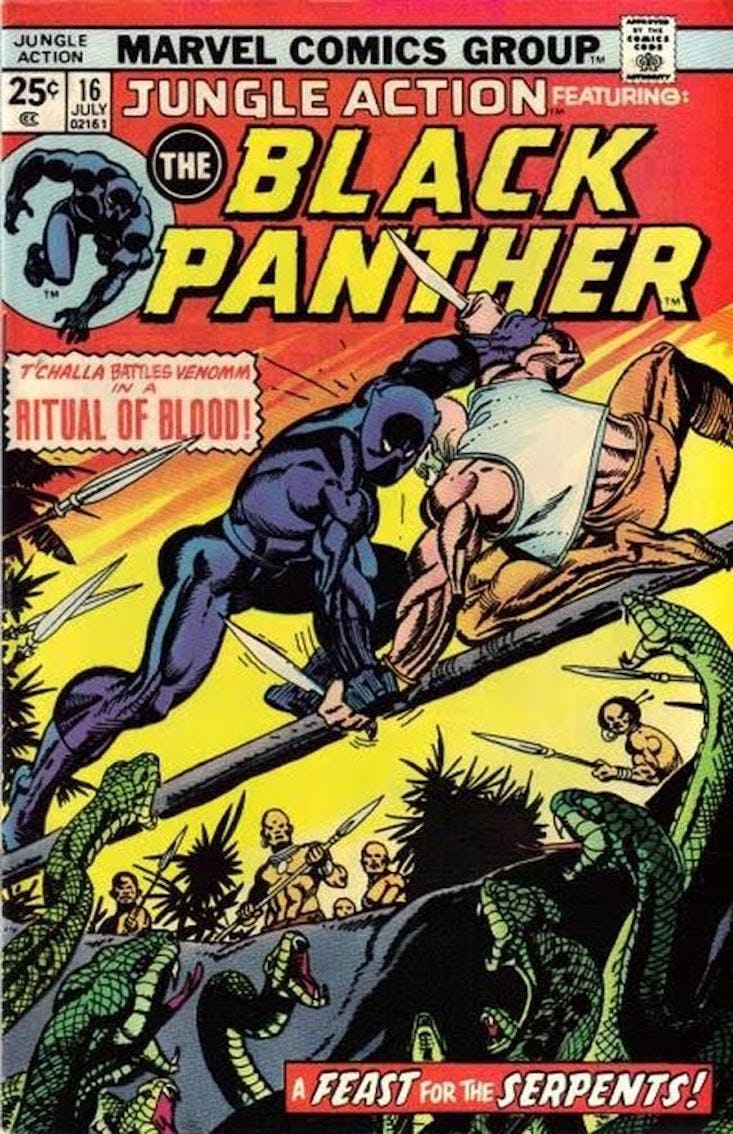
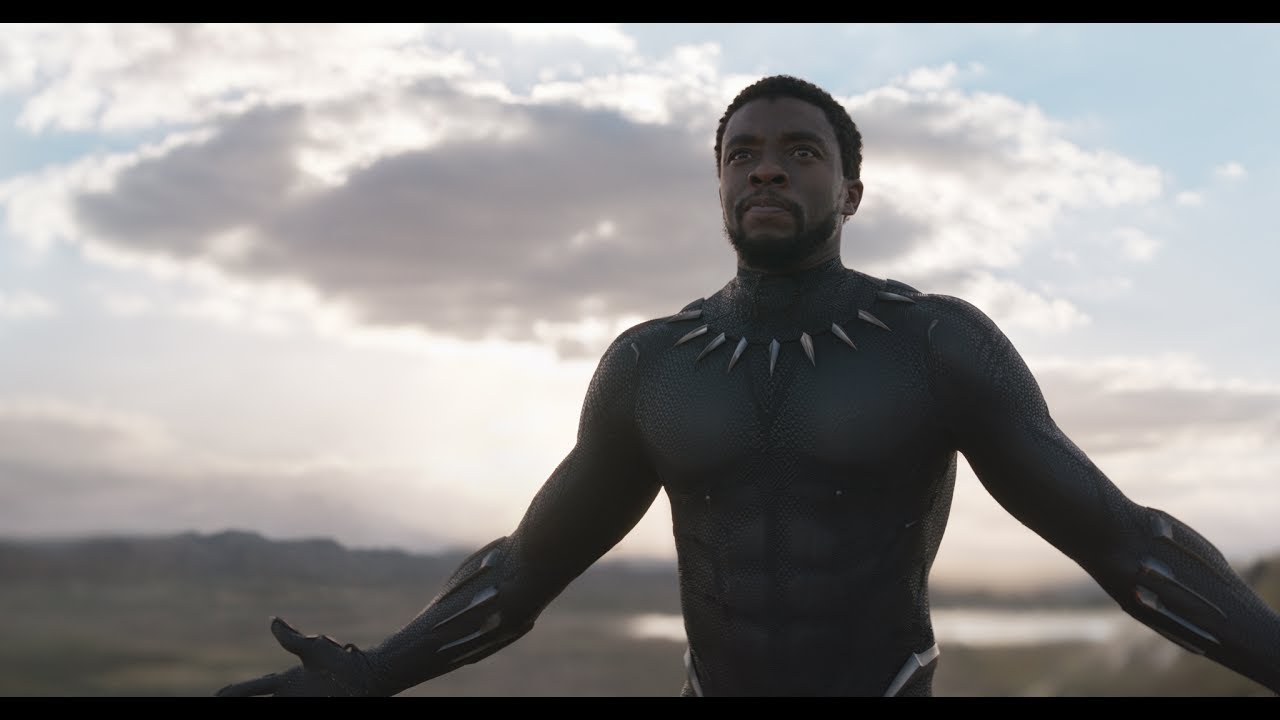
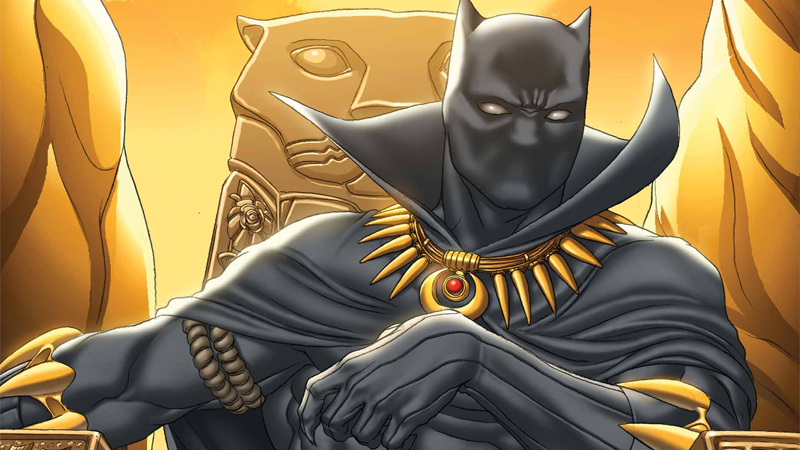
Say what you will about these tumultuous times. One thing is still clear. It’s a damn good time to be a fan of Black Panther. Whether you’re a long-time reader of the comics or Chadwick Boseman enjoying a meteoric rise in fame, these are the best of times for T’Challa, Wakanda, and everything in between.

As of this writing, the “Black Panther” movie has topped $700 million worldwide in just over a week since its release. It’s well-poised to cross the $1 billion mark that only a handful of movies have reached. Things are going very well for Black Panther is what I’m saying.
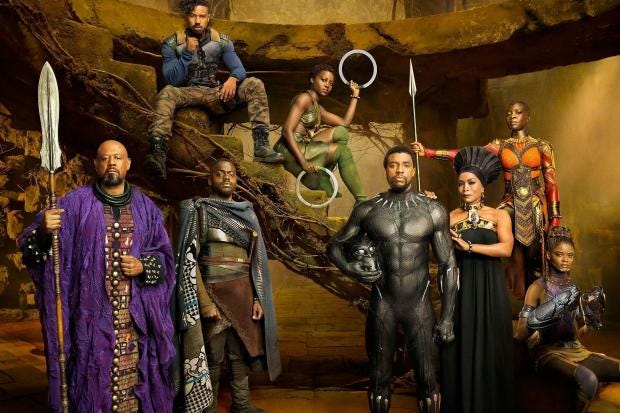
Image result for Black Panther movie cast

I cite all this good news surrounding Black Panther because what I’m about to discuss is not going to show him in the best of light. None of it detracts from the character, nor does it undercut the remarkable achievements that the “Black Panther” movie has accomplished. Given the promising future of Black Panther’s future, though, I think now is probably the best time to bring it up.

Once again, it has to do with superheroes and romance. Long-time readers of this blog probably aren’t surprised by that in the slightest. I talk about superhero romances a lot, citing instances where those romances embody the best elements of a love story and those that are inherently flawed. I’m afraid this is going to be about the latter.
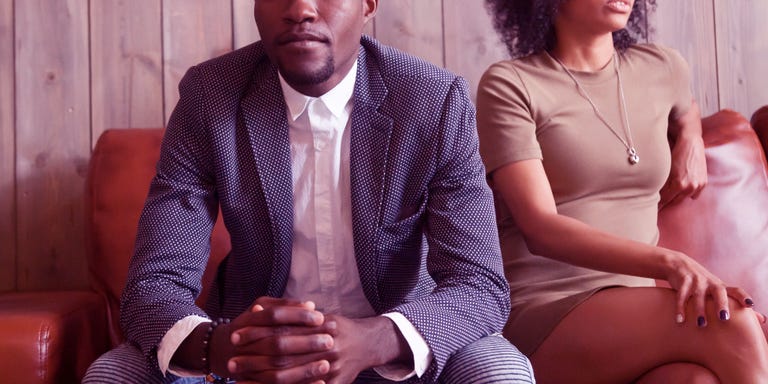
Image result for worst love story

Black Panther is a great character and has a lot of things going for him, right now. Between a successful movie and a successful ongoing solo series, which you should definitely check out, he has a lot has gone right for him. Unfortunately, that does not extend to his love life.

To those who only know T’Challa through the “Black Panther” movie, I’m not referring to Nakia, who is his primary love interest in that story. I’m referring to a much higher-profile relationship he had with a much higher-profile character in the mid-2000s. That character is Storm, a character I’ve praised before and not just for her love of foreplay.

It’s true. In Black Panther Volume 4, Issue 18, which came out in 2006, Storm and Black Panther got married in what was billed as the highest-profile superhero marriage since the wedding of Cyclops and Jean Grey. It even managed to temporarily stop the ongoing hostilities in Marvel’s now-famous Civil War event.

Image result for Storm/Black Panther wedding

On paper, it was billed as the union between two of Marvel’s most prominent black superheroes. It was presented as a union between a weather goddess and a king. It couldn’t have had more going for it without being the central plot of a Disney movie, which isn’t impossible at this point.

There’s just one glaring, omega-level problem with that approach. The relationship between Storm and Black Panther is one of the shallowest, emptiest, and least compelling romances in the history of superhero comics. Yes, it’s even worse than the time Juggernaut had a fling with She-Hulk.

For two character who are so iconic, well-rounded, and endearing, that’s quite a statement. I imagine that more than a few people disagree with it, but there’s a reason behind that statement and it’s not an overly petty one. Between being a die-hard fan of superhero comics and an aspiring erotica/romance writer, the flaws in this relationship stand out more than most for me.
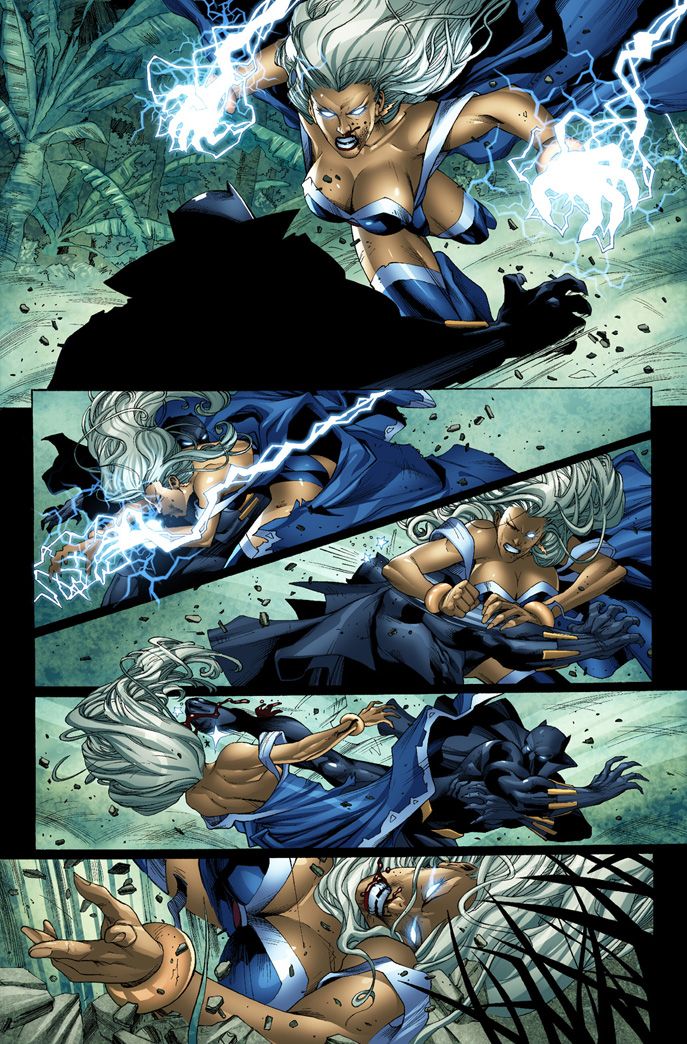
Image result for Storm and Black Panther fighting

The most glaring flaw, by far, is just how forced the relationship was in the first place. I won’t say it was quite as bad as the relationship between Jean Grey and Logan was in the X-men movies, but it was pretty damn close. From the beginning, it was less about the chemistry between these two characters and more about the fact that they were two prominent black superheroes.

Never mind having an actual reason to want to be together. Never mind actually tying their respective stories together in a compelling way. The approach was as lazy as it was empty, essentially relying on the iconic status of both characters and nothing more. By that logic, Taylor Swift and Ed Sheeran should’ve gotten married already.

Even if the approach was lazy, the premise could’ve worked if there was time and effort into developing the Storm/Black Panther romance compelling. Sadly, that’s not the approach Marvel used. They were in such a rush to get these two married that they skipped the part where they told a dramatic love story that brings these characters together in a meaningful way.

Image result for Storm X-men angry

As a romance fan and a comic book fan, that was as satisfying as food poisoning and a hangover. Instead of presenting valid reasons as to why these two characters should be in love, Marvel rewrote Storm and Black Panther’s history to establish that they met each other when they were young and shared a strong connection. That’s all well and good, but there’s one glaring problem.

By rewriting the past, it devalues the emotional depth in the present. Instead of actually building that depth, it’s just suddenly revealed that these two characters had a long-standing history. There’s no need to tell a more elaborate story. It already happened in the past and they’re only acknowledging it now. If I could write that with more sarcasm, I would.

Now, history being rewritten in comics is nothing new. That’s what comic fans refer to as a “retcon” and it’s basically the narrative equivalent of a mulligan. When used correctly, it can help clear up convoluted elements. When used poorly, however, it can be very destructive. Just ask Captain America fans.

Image result for Captain America hail hydra

A retcon is the ultimate contrivance and that was the foundation of the Storm/Black Panther relationship. If every good relationship starts with a strong foundation, then the Storm/Black Panther relationship was built on a mix of quicksand and moldy bread.

I get the intent. In order for Storm and Black Panther to get married, they needed to establish that their relationship was somehow worthy of being on the same level as Superman/Lois Lane or Mr. Fantastic/Invisible Woman. Unfortunately, the only way to do that is to rewrite their entire history so that their love was something that had depth. It just happened entirely behind the scenes.

Image result for Storm/Black Panther wedding

Contrast that with the love story we saw in the “Black Panther” movie between T’Challa and Nakia. There was nothing contrived about that story. These two characters both had their own narrative. In pursuing that narrative, they came together in a way that felt organic, genuine, and sincere. It was probably the most sincere love story in a superhero movie since the original Deadpool movie.

That shared narrative has huge gaps with Storm/Black Panther and not just because it required a rewriting of their respective history. Even before that retcon, Storm and Black Panther followed very different narratives.

Storm, since her debut in 1975, has been an integral part of the X-men and their story. She was a key player in some of the most defining moments in X-men history. Along the way, she’s had various romantic relationships with the likes of Bishop, Nightcrawler, and Forge. For a time, she had a pretty passionate relationship with Wolverine.

Image result for Storm/Wolverine

The fact she had all those relationships while Black Panther had plenty of his own, most notably with former Captain Marvel, Monica Rambeau, makes the idea that they shared this powerful bond in their youth seem not so powerful. Even if there were other forces pushing them apart, the fact they followed such distinct narratives really undermines the sincerity of their relationship.

It also makes for some pretty distressing implications. Throughout the X-men’s history, the team has been on the run and on the brink every other week. In some cases, it led to some pretty brutal tragedies. All these things were happening with the X-men and Storm was often on the front lines.
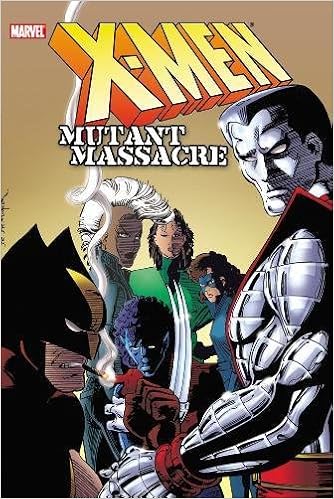
Related image

The fact that she and her friends struggled so much while T’Challa, king of the most advanced nation in the Marvel universe, never did a goddamn thing to help her or her friends just makes the situation even worse. Unlike Wolverine or Forge, he wasn’t there to share in all the struggles. Granted, T’Challa had his own struggles, but neither he nor Storm ever went out of their way to support one another.

Sharing struggles is one of the most important components of a believable, functional romance in both the real world and in superhero comics. Without that, it’s like trying to build furniture without a hammer. You can try, but if you don’t have the right tools, the results are going to be limited at best.

It’s the fact that Storm and Black Panther shared such different struggles that their marriage in the comics ended in a fairly ugly fashion. When the Avengers and X-men clashed in the aptly-named “Avengers vs. X-men” event, Storm and Black Panther were on opposite sides. The conflict was so bad that it left Wakanda in ruin and by the end, their marriage was annulled.
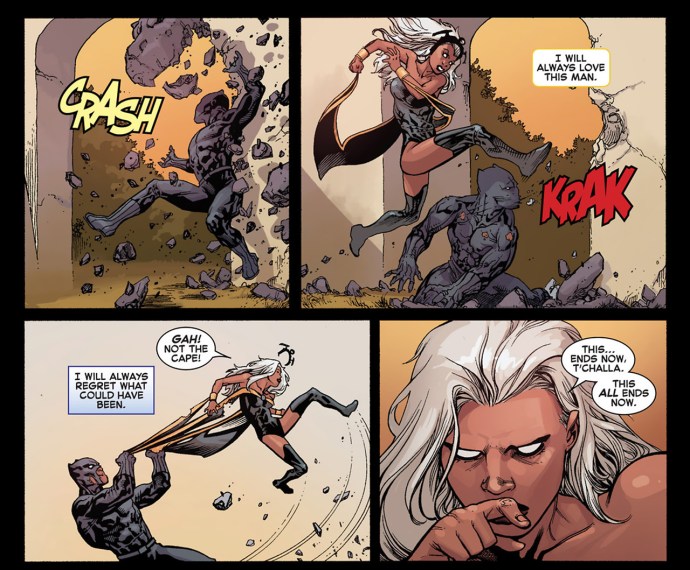
Image result for Storm/Black Panther in Avengers vs. X-men


It was an inglorious ending to a romance that Marvel tried hard to make iconic. Unfortunately, they went about it in all the wrong ways for all the wrong reasons. There’s no question that Storm and Black Panther are among Marvel’s highest-profile black heroes, even more so now with the success of the “Black Panther” movie. That’s still not the sole reason why they should be romantically involved.

The relationship was so forced and so flawed that even the X-men’s most iconic writer, Chris Claremont, says the whole thing was a big mistake. Storm and Black Panther may have potential, but by forcing it and rushing it to such an egregious extent, it’s hard to take that romance seriously.
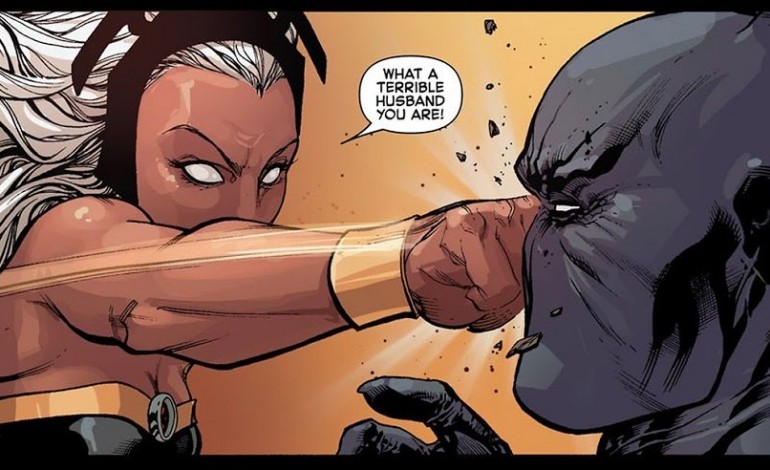
Image result for Storm/Black Panther

If nothing else, the Storm/Black Panther relationship should provide a cautionary tale for superhero romances and real romances alike. Most importantly, it reinforces the notion that genuine romance can’t be forced. Strong couples share in their respective struggles, supporting one another and guiding one another.

Storm and Black Panther did none of that. Marvel’s approach to forging their relationship only gave them more reasons not to be together. Both characters have a bright future in their own respect, but that future cannot and should not be forced or contrived.
6 Comments

Filed under Comic Books, Jack Fisher, Superheroes, Marriage and Relationships, X-men

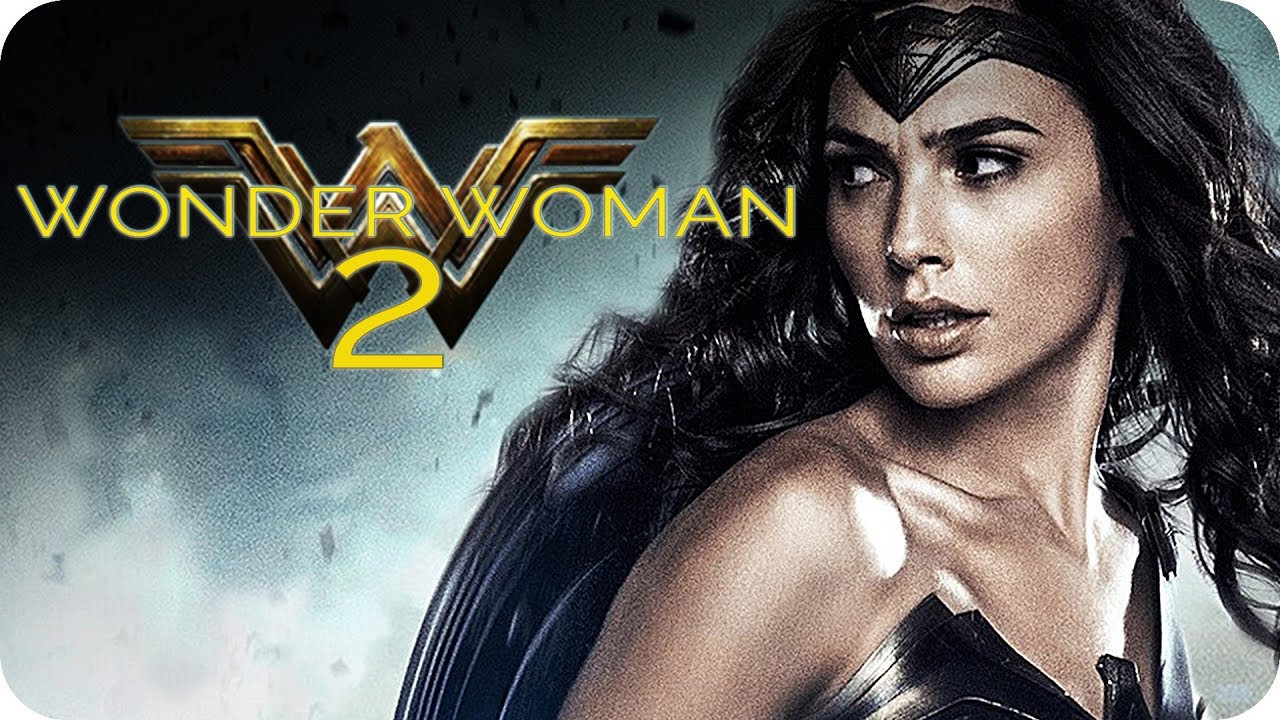
Why Cheetah Should Be The Main Villain In Wonder Woman 2

It’s been a while since I talked about Wonder Woman, DC Comics, or developments surrounding the planned sequel to her first movie, which I praised to no end last year. Even though a sequel was announced shortly after the movie’s historically successful debut, not much news has come from it.

There’s a reason for that, albeit a distressing one. The news surrounding anything related to DC’s movie universe has been pretty grim since “Justice Leagueunder-performed at the box office. While I enjoyed the movie and gave it a glowing review, I can’t deny that it’s perceived shortcomings have caused all sorts of problems for the DC movie universe.

Image result for henry cavill mustache

Those problems aside, Wonder Woman is still seen as the lone bright spot in a bleak outlook, especially as Marvel keeps raising the bar with their movies. To date, “Wonder Woman” remains the highest rated, highest grossing DC Comics movie. That makes the success of the sequel, still only known as “Wonder Woman 2,” of paramount importance to the future of superhero movies.

To date, there hasn’t been much news surrounding “Wonder Woman 2.” The only official details we have thus far are that Gal Gadot will continue to play Wonder Woman as only she can and Patty Jenkins is once again set to direct it. According to Jenkins herself, it will to be a very different movie compared to the first one. These are her words:

“We’re actually making a totally different film with a lot of the same, similar like things that we love, but it is its own movie completely, so it’s not ‘two’ to us. It’s an entirely new adventure together that we couldn’t be luckier [to do].”

I’m certainly excited about it, as I am with all things related to Wonder Woman. However, there’s one element that I believe will determine whether “Wonder Woman 2” is a “Dark Knight” level success or a “Batman and Robin” sized disaster. By just referencing “Dark Knight,” I think most superhero movie fans know where I’m going with this.

Image result for Heath ledger joker

It’s all about the villains. Regardless of the studio making the movie, the heroes involved, or the sex appeal of said heroes, the movie often succeeds or fails by how compelling or forgettable the villain is. Nobody will ever forget Health Ledger’s Joker in “Dark Knight.” Conversely, I’m pretty sure everyone has already forgotten Steppenwolf in “Justice League.”

Wonder Woman” may not have had an iconic villain on the same level as Heath Ledger’s Joker, but the combined narratives of both Ares and Dr. Poison worked because they supplemented Diana’s journey towards becoming Wonder Woman. Since the core of “Wonder Woman” was built around that journey, she didn’t really need a villain of Joker caliber.

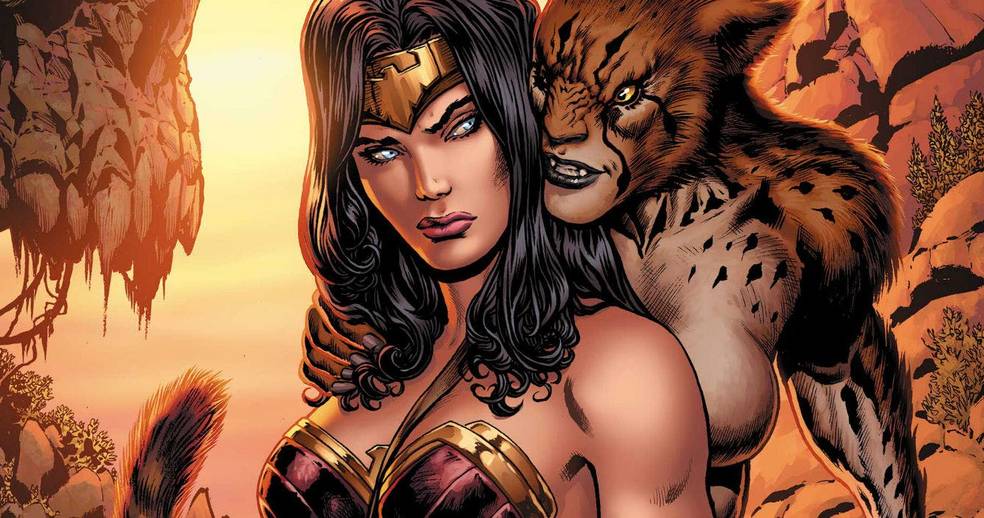
However, she’ll need one for “Wonder Woman 2” and that’s where Cheetah comes in. She has already been rumored to be the villain of the movie. She’s no Joker, but she is probably Wonder Woman’s most well-known villain. The fact that she isn’t an embittered child of Zeus, a story so old that it pre-dates movies, comics, and the printing press, makes that status all the more remarkable.

Image result for Wonder Woman Cheetah

From a pure comic book stand point, Cheetah makes the most sense as the main villain for “Wonder Woman 2” because she’s also one of Wonder Woman’s oldest foes. Her origins go all the way back to the earliest, and also kinkiest, era forged by Wonder Woman’s creator, William Marston.

Like many other classic villains, Cheetah’s persona mirrors Wonder Woman’s in many respects. In her earliest incarnation, Priscilla Rich, she’s an aristocrat woman born to a powerful family. Her mother isn’t a queen, like Diana, but just being in that privileged position from birth puts a great many expectations and temptations on her. It brought out the best in Diana, but it brought out the worst in Cheetah.

From a purely thematic standpoint, that’s an important component for Wonder Woman’s journey. In the same way characters like General Zod embody the kind of person Superman might have become, Cheetah shows Wonder Woman the much darker path she could’ve walked.

Related image

That path already has a very lengthy gap for Patty Jenkins to work with. The conclusion of “Wonder Woman” and the events of “Batman Vs. Superman: Dawn Of Justice” reveal that Diana had been secretly living in the modern world since the end of World War I. That’s a lot of time for her journey to take many turns, some of them darker than others.

That significant breadth of time actually plays to Cheetah’s advantage because her title is not tied to one person. In some instances, it’s a legacy that others take on. In others, it’s a curse that gets transferred from one person to the other. In every case, though, Cheetah embodies a persona that directly clashes with everything Wonder Woman’s stands for.

Wonder Woman fights for compassion. Cheetah fights for herself.

Wonder Woman believes in blessings. Cheetah believes in curses.

Wonder Woman is deeply empathic. Cheetah is exceedingly callous.

Wonder Woman is loyal to her friends. Cheetah betrays them.

Wonder Woman believes in love. Cheetah is driven by hate.

These contrasts were best embodied in Cheetah’s earliest incarnations, but it’s actually her more modern persona in Barbara Ann Minerva that, I believe, has the most potential for “Wonder Woman 2.”

Related image

Like other Cheetah’s before her, Barbara is a privileged woman from a powerful family in which she has all these expectations thrust upon her. As a result, she shares many of the selfish, arrogant, neurotic traits of Priscilla Rich and every spoiled rich brat that ever lived. However, what makes Barbara’s story more compelling is that in her most recent incarnation, she started off as a close friend of Diana.

It’s an element to the villain’s journey that makes their story more entwined with that of the hero. By starting off as a friend, it makes the inevitable clash that much more dramatic. Given the high drama we got in Diana’s final battle against Ares in “Wonder Woman,” it makes sense to take a similar approach with “Wonder Woman 2.” Diana, as we’ve seen, is at her best when drama and passions run high.

Image result for Wonder Woman fights Ares

The Barbara Ann Minerva that Diana knows in the most recent comics can come off as a spoiled brat at times, but she has a genuine fascination with gods, mythology, and the divine. In that context, it’s only natural that Diana would start out as an ally and a friend.

For Diana, especially after how her first movie ended, she would need a friend. After losing Steve Trevor, she would need someone to connect with in a world that is still very new to her. Conversely, Diana can give Barbara the connection she seeks to the world of gods, demigods, and magical lassos that make for hilariously awkward moments.

These two women have everything they need to forge a powerful friendship. At the same time, though, they have everything necessary to create a bitter rivalry as well. In the comics, Barbara’s ambitions and bad choices are what turns her into the feral, villainous Cheetah. It’s those differences in choices doesn’t just make their clash dramatic. It makes it genuinely heartbreaking for Diana.

Image result for Wonder Woman vs cheetah

To some extent, making a new friend and seeing them become an enemy would be even worse than losing Steve Trevor. It would also provide a legitimate explanation as to why Wonder Woman remained hidden from the world for so long, up until the events of “Batman Vs. Superman: Dawn Of Justice.”

Cheetah can do for Diana what Killmonger has recently done for Black Panther. She can give Wonder Woman an enemy that forces her to confront the harsher parts of a world that is still new to her. Back home on her paradise island of warrior women, she was sheltered from all these hardships. Now, she’s all alone in having to face them. That struggle is what will forge her into the iconic female hero that we know and love.

Image result for Wonder Woman vs cheetah

This is, of course, my own personal sentiment and I understand that doesn’t account for much. I’ve already made a wish list of all the things I want to see in “Wonder Woman 2” with the understanding I’ll probably only get a fraction of it, at most. After the first movie, both Gal Gadot and Patty Jenkins have done plenty to earn my trust.

It’s simply my hope that a sequel to such a wonderful, ground-breaking movie will find new ways to raise the bar for superhero movies and female superheroes, in general. That bar is still rising and I believe a character like Cheetah can help raise it for Wonder Woman.


1 Comment

Filed under Comic Books, Jack Fisher, Superheroes, Wonder Woman

The following is a link to a review I wrote for PopMatters on “Wonder Woman #40.” Enjoy!

PopMatters: “Wonder Woman #40” Review

Leave a comment

February 16, 2018 · 5:47 pm

Romance And Tragedy Done Right (In An X-men Comic)

598135-_sx1280_ql80_ttd_

When it comes to two genres that are often associated with one another, romance and tragedy are the literary equivalent of peanut butter and jelly. When you think of one, it’s not long before you associate it with another. Romance without tragedy is like fries without ketchup. Both are still good on their own, but it’s only when they’re together that they maximize their potential.

In that same spirit that the likes of Shakespeare and “Titanic,” superheroes often follow that narrative, but with more spectacle than old playwrights and even James Cameron could ever imagine. Being such a huge fan of superhero movies and comic books, I’m more familiar with their take on romance and tragedy than most aspiring erotica/romance writers.

As such, when an amazing, uncanny, astonishing, or whatever other adjective that a comic book puts before their title tells a story that truly embodies those ideas, I take notice. Seeing as how I’m also an unapologetic romance fan on top of being a comic book fan, those kinds of stories resonate especially well for me. They don’t come around too often, but when they do, they’re worth appreciating.

This particular story involves the X-men, which should surprise nobody who has followed this blog over the past couple years. It also involves the romance/tragedy of Cyclops and Jean Grey, which should also not surprise anyone. I’ve mentioned them before when talking about balanced romances and insufferable love triangles. This might end up being the most heart-wrenching, albeit for all the right reasons.

The name of the story is called Phoenix Resurrection: The Return of Jean Grey by Matthew Rosenberg. Now, if you don’t want to be spoiled, I strongly encourage everyone to read it. Either buy it at a comic shop or buy the digital version. Even if you’re not a comic book fan, it’s a great story that will still evoke all the right emotions.

That’s because this story does something that’s very rare and very difficult to do. It’s something that everyone form Shakespeare to Tolken to Stan “The Man” Lee struggled with at some point in their creative endeavors. It gets the balance between romance and tragedy right. It gets it so right, in fact, that I intend to judge all future romance/tragedies by this comic. That includes any I write.

To understand how I came to this conclusion, it’s important to understand the context of the story and why it had such a powerful impact. To do that, it’s necessary to point out the circumstances of this story. When it was announced last year, it’s stated goal was to bring Jean Grey back from the dead. Anyone who has even a passing familiarity with comics knows that’s not all that groundbreaking.

Superheroes have been dying and coming back to life for decades. While “The Death of Superman” might have been the most high-profile, the initial death of Jean Grey in the original Phoenix Saga is probably the most iconic. That story established Jean Grey as a character who would be defined by death, rebirth, and everything in between. That’s part of the reason it’s the foundation of the “X-men: Dark Phoenix” movie.

That original story had a lot of romantic elements in it, but it was largely defined by its tragic ending. In that original story, Jean Grey willingly sacrificed herself in front of Cyclops and her friends to stop herself from becoming corrupted by the cosmic power of the Phoenix Force.

It was a truly gut-wrenching moment. It’s because of that moment, though, that it’s often singled out as one of the best X-men stories of all time. It was the culmination of Jean Grey’s struggle to deal with the immense power with which she’d been imbued. Moreover, she reached out to that power in order to do the impossible to protect those she loved, even if it corrupted her.

That’s an important detail to note because that’s a theme that would go onto play out on many occasions for Jean, eventually culminating in her second death in 2004. Her constant struggle to manage the immense power granted by the Phoenix Force and the corruption that often came with it is one of the primary driving forces behind Jean’s character. It’s also a big part of her appeal.

Rosenberg uses those same themes, as well as the immense power afforded by the Phoenix Force, to build the tragedy and romance that plays out in Phoenix Resurrection: The Return of Jean Grey. It’s a story that has more drama going for it than most because, despite the presence of time travelers, Jean Grey has been dead since 2004. Her coming back after such a long absence is a big deal for X-men fans and for her character.

The challenge Rosenberg faced was making that resurrection feel more compelling than overdue in an era where dead characters come back all the time. On top of that, Jean’s association with a cosmic force known for death and resurrection means her character basically has a built-in cheat code for bringing her back. How can that be so compelling, let alone raise the bar for romance and tragedy?

This is where the spoilers come in so again, please take the time to read the comic if you can. That’s because the way Jean comes back in this story has less to do with tragedy and more to do with agency. Way back in the original Phoenix Saga, Jean reached out to Phoenix Force in an act to save her friends. It was a choice of desperation.

Well, since that fateful choice, the Phoenix Force has been like a clingy ex, wanting desperately to stay bonded to her, even thought it often corrupts her. I’ve argued before how the context of that corruption might be more complicated than it seems, but on the basis of history alone, Jean Grey has many reasons to regret that choice.

The Phoenix only gives her another in this series. After having bonded with plenty of other hosts since her death, it goes to great lengths to bond with Jean again. It goes so far as to resurrect both her and everyone she ever cared about, creating this own little world in which Jean never experiences the many tragedies that befell her. It’s like the Matrix, but with a volatile cosmic bird running the show.


As part of that fantasy world, Jean Grey’s long-time love, Cyclops, is alive and well. That’s critical because, at least for the time being, he’s also dead. The Phoenix Force basically gives her everything to be happy, content, and loved. Keep in mind, though, it’s not doing this out of pure altruism. It wants to bond with Jean again. That’s the goal and the fantasy world is just a means to an end.

That makes the tragedy inevitable. As is often the case with fantasy worlds, even those created by a cosmic power, they tend to crumble under the harsh weight of reality. The way in which this happens is best revealed through the story. However, the part of the story that really balances out that tragedy occurs in the final issue.

In that issue, the fantasy world crumbles, thanks largely to the efforts of Jean’s fellow X-men. Naturally, the Phoenix Force fights this and tries to tempt Jean into bonding with it again, saying its power can give her everything she desires. It can even bring back those she loves.

As part of a last-ditch effort, it demonstrates this by bringing Cyclops back to life. He’s not a clone. He’s not a time traveler. He’s not some illusion either. He’s the real, flesh-and-blood Cyclops, complete with the thoughts, feelings, and passions of the man she married.

It’s a dick move on the part of the Phoenix Force, to say the least. It’s also the moment where the romance balances the tragedy in an important way. That’s because in that moment, Jean makes another fateful choice, one every bit as dire as the one she made in the original Phoenix Saga. This time, though, she lays her heart on the line, knowing damn well it’ll be broken.

Rather than just reject this tactic as another attempt by the Phoenix to lure her in, she embraces it for a brief moment. In that moment, she gets to say goodbye to her husband. She and Cyclops even go out of their way to make clear how much they love each other, both in life and in death. Even if you’re not a big romance fan, this is a moment of pure, unadulterated heart.

27336727_267041877163590_5082078064572181652_n

We still know the tragedy is coming. We know it’s a moment that’s going to end with tears and sorrow. Anyone that ever had to read “Romeo and Juliet” in high school English class knows it’s coming and is might think they’re numb to it, especially if they flunked the test.

That’s why it was so important for the story to reaffirm that sentiment. Rosenberg did something critical when he had Cyclops and Jean Grey remind each other just how deep their love went. He gave even greater weight to the loss.

At least with “Romeo and Juliet,” the characters involved had just met. They barely knew each other. Cyclops and Jean Grey’s love story spans 50 years of X-men comics, complete with weddings, clones,  and raising a child together in the future. To know the extent of their love is to know just how much that tragedy hurts.

27540538_267041950496916_4695939471462432658_n

That, more than anything, is what puts Phoenix Resurrection: The Return of Jean Grey in a league of its own in terms of romance and tragedy. Instead of the tragedy defining the romance, it’s the other way around. It’s the romance that gives that tragedy such immense weight.

In too many stories, both in comics and in other mediums, tragedy relies too heavily on its own weight to make an impact. Making a love story dependent on that tragedy gives the impression that the love needed it in order to have depth. That’s why, when the tragedy eventually occurs, it doesn’t always hit all the emotional chords.

Rosenberg left no emotional chords unstruck with this story. It’s because Jean shared that special moment with the man she loved that her decision to reject the Phoenix Force carries so much weight. That decision comes with so much pain, anguish, and sorrow. It’s one thing to just depict it. It’s quite another to truly convey it.

That’s what truly makes Phoenix Resurrection: The Return of Jean Grey so special. It conveys both the breadth of the romance and the extent of the tragedy. Moreover, it does that in a way where one complements the other. For a romance built heavily around two characters operating as equals, I can’t think of anything more fitting.

Again, if you’re fan of romance, tragedy, or both, check out Phoenix Resurrection: The Return of Jean Grey. Even if you hate comics and the X-men, this one will evoke all the right emotions. You’ll shed tears of sorrow and joy at the same time. It’ll feel so weird, but so right.

8 Comments

Filed under Comic Books, Jack Fisher, Superheroes, Marriage and Relationships, X-men

What Colossus And Kitty Pryde Of The X-men Can Teach Us About Love

I know it’s been a while since I talked about comic books, comic book romances, or general life lessons from comic books. As a self-proclaimed comic book fan who loves to tie that passion into other sexy topics, I feel like I owe myself and certain readers an apology. Consider this part of my effort to make up for it.

Just because I haven’t been writing about comics much lately doesn’t mean I haven’t been following them. It also doesn’t mean I’m not aware of the major developments unfolding in the comic book world. As I write this, there’s a lot going on, from Tony Stark’s return as Iron Man to the return of Superman’s iconic red trunks.

If you’re a comic book fan, though, you already know about this and I don’t need to say anything to get you excited. If you’re a comic book fan who also happens to be a big romance fan, there are other stories that excite you. I mentioned one late last year with the big announcement that Batman and Catwoman are getting married. Now, I have another.

Kitty Pryde and Colossus of the X-men are getting married too!

The big announcement was actually teased last November in the form of a wedding invitation that designated the summer of 2018 as the big day. It also highlighted some of Marvel’s most famous superhero marriages. Never mind the fact that Marvel has a shaky track record with married characters. It’s still exciting news, especially for X-men fans like me.

It’s big news for Marvel as well. They’re already promoting this as a major event for these characters and for the Marvel universe as a whole. Sure, it may just be their way of competing with the upcoming Batman/Catwoman wedding, but that doesn’t make the sentiment involved any less genuine. It also doesn’t make the promo video for X-men Gold #30, the wedding issue set to come out this summer, any less sweet.

I know Kitty Pryde and Colossus are not exactly on the same level as Superman and Lois Lane, Batman and Catwoman, Cyclops and Jean Grey, or even Deadpool and tacos. In the pantheon of superhero romances, they’re not exactly top five, but they’re not afterthoughts either.

Their romance has never been a major plot in an X-men movie, nor has it been a focus in any X-men cartoons. However, for those familiar with the X-men comics, this relationship is as special as it is unique. It’s one of those romances that blossomed in unique and sometimes controversial ways.

Chief among that controversy was the age difference between the characters when they first met. When Kitty first joined the X-men in Uncanny X-men #129, she was 14-years-old and Colossus was 19. Needless to say, it didn’t sit well with Marvel’s editors at the time when writer Chris Claremont had Kitty develop a crush on him.

That crush, however, never got as creepy as some of the other romances that Marvel had teased. As the characters grew, aged, and developed within the pages of the X-men comics, that teenage crush evolved into something more serious. Eventually, they developed one of those relationships where they always seemed to find their way back to one another.

I won’t recount all the chaotic elements of their romance. I’ll just point out there have been many times where they’ve gotten closer, been friend-zoned, ended up in other relationships, and even died on one another, which happens a lot in comics. I’ll also say that the love between Kitty Pryde and Colossus carries with it some unique insights into love, relationships, and how they blossom.

So, in the spirit of celebrating the upcoming nuptials of these fictional characters that I hold dear, I’d like to share some of those insights that translate into real-world lessons on love. Being both a romance fan and a comic book fan, I’m especially fond of the parallels that tie works of fiction into serious matters of the heart.

Whether or not the marriage of Kitty Pryde and Colossus lasts or prospers in the X-men comics remains to be seen. Regardless of Marvel’s poor track record with marriage, they’re a couple worth rooting for and this is what they can teach us.


Lesson #1: Failed Relationships Can Still Succeed

For many fictional romances, especially those involving superheroes, the romantic dynamics are often idealized, pure, and heavy on melodrama. They’re basically “Romeo and Juliet” with superpowers, built around a love that’s so pure it can only ever be corrupted by a horribly contrived love triangle.

Colossus and Kitty Pryde are decidedly not that. Theirs is a more clumsy romance, one where they sort of stumble their way towards one another. Throughout their history, they have tried to forge a relationship, but failed on multiple occasions, sometimes due to circumstances and sometimes due to hard choices.

In those failures, Kitty Pryde dated other men, like Pete Wisdom and Iceman. Colossus dated other women, like Domino. Along the way, they each followed their own stories. They each grew in their own way. They weren’t dependent on each other. They didn’t have to be together to become strong.

These failures may have derailed their romance at times, but it didn’t end their love or their desire to be together. Eventually, they found themselves in a position to act on that love in the pages of X-men Gold. Now, they’re getting married. Ironically, their past failures helped get them to that point.

Learn from failures in a relationship and build a better one from the ashes. That’s not just a critical lesson. In a world where the ideal love stories of “Romeo and Juliet” are reserved for high school English classes, it’s a much more realistic way to approach love.


Lesson #2: Love Who Someone Is Trying To Be (And Not What They Were)

This kind of gets into those creepier elements I mentioned earlier. It’s true. Kitty and Colossus had a sizable age gap when they first met. Age gaps in young romances are taboo and for good reasons, beyond just the legal reasons. However, that age gap hid another important lesson that Kitty and Colossus later embodied.

Beyond the basic flirty exchanges they had in their youth, Kitty Pryde distinguished herself as a special character by how quickly she grew and matured throughout the pages of Uncanny X-men. Sure, she was a vulnerable young girl when she first joined the X-men, but she didn’t stay that way.

The same goes for Colossus, who underwent more than his share of upheavals. Some of his greatest moments involved him trying to be a kinder, gentler soul, despite having the kind of obscene strength that steroid-laden meatheads can only envy.

Again, a lot of complications get in their way, as is often the case with superheroes, but whether or not they manage those complications isn’t the point. It’s who they’re trying to be, as individuals, that makes them who they are. It’s that striving that often draws them together. It’s that constant effort to be better that fuels their chemistry.

That chemistry is built less on who they are and more on who they’re trying to be. Kitty and Colossus saw who they were trying to be in the midst of the chaos that comes with being X-men. That’s the person they fell in love with and in a chaotic world where everyone has to better themselves just to keep up, that’s an important and underrated facet of love.


Lesson #3: Seek To Grow With AND Love Someone

This also ties, somewhat, to the age gap between Kitty Pryde and Colossus, but without the taboo. Age gaps matter when two people are young, immature, and don’t have a firm grasp of their emotions. They matter less and less at time goes on. I say that as someone whose parents have an age gap that’s actually wider than Kitty and Colossus.

In a sense, the age gap worked to Kitty and Colossus’ advantage because they didn’t just see each other in their impressionable youth. They actually watched each other grow into adults. While they weren’t always on the same team, they were able to grow together within a similar environment. In doing so, that innocent crush evolved into something deeper.

That’s an important distinction that a lot of young people, myself included, don’t often realize until much later in life. We focus so much on the here and now when it comes to loving someone that we forget that we’re still growing as individuals. Sometimes, two don’t realize we’re growing apart until it’s too late.

I’ve seen this happen in the real world with once strong relationships that just drift apart as the couple gets older. I’ve also seen it happen in the opposite direction, watching two people grow closer as they actually seek to grow with someone, as well as love them. Kitty Pryde and Colossus are a perfect embodiment of the latter.


Lesson #4: Let The Moment Be Right For Love (And Guide It If You Can)

I know I keep repeating this and it’s worth belaboring, but Kitty Pryde and Colossus had a lot of obstacles when it came to getting together, the least of which involved Colossus dying at one point. It’s worth belaboring because it reflects how hard these two had to work in order to get together over the course of several decades of X-men comics.

Within those complications, though, is an important lesson that best played out in Joss Whedon’s legendary run on Astonishing X-men. The circumstances aren’t always right for two people to come together. However, when that moment is right, don’t be afraid to act on it. You can’t force those moments. You can only let them unfold and embrace them.

For Kitty Pryde and Colossus, those moments were rare, but they weren’t random. When Colossus returned from the dead, they had every reason to just jump each other’s bone in an overly dramatic moment. They didn’t do that, though. They didn’t try to force that moment. They just led each other to it.

A similar situation unfolded in X-men Gold. They had an opportunity to jump back into their relationship, but they didn’t. Sure, they made excuses at first, which I found annoying, along with many other long-time X-men fans. However, by taking it slow and letting the moment come to them, it made the eventual culmination in X-men Gold #20 that much more satisfying.

You can’t force a romantic moment, nor should you. However, you can guide the situation towards those moments. If the love is strong, like it is with Kitty Pryde and Colossus, it’ll happen and it’ll be beautiful.


Lesson #5: Don’t Make Excuses For Loving (Or NOT Loving) Someone

This is a common and annoying trope with fictional romances. For those not built on love-at-first-sight or sickeningly-pure infatuation, a romantic sub-plot in most stories will be full of excuses on why they should not be together. Given my take on excuses, it should surprise no one how much this annoys me.

Kitty Pryde and Colossus made a lot more excuses than most and not just because of the early age gap. Sometimes it was because they were on different teams. Sometimes it was because they were caught up in other relationships. Sure, some of those excuses were valid, like being dead or trapped in a giant bullet flying through space. Those that kept them apart, however, were often shallow or contrived.

Now, some of this might have been due to whoever was writing the X-men comics at the time. As I’ve noted before, there have been instances where bias writers force contrived plots to keep certain characters apart. Chris Claremont’s efforts with Cyclops, Jean Grey, and Wolverine are well-documented.

The efforts surrounding Kitty Pryde and Colossus, though, never got that extreme. They also never undid the chemistry between them or fundamentally changed the elements that attracted them to one another. In that respect, they didn’t make excuses. They didn’t hide from those emotions, even if they avoided them. That ended up strengthening their relationship in the long run.

It’s another important lesson about excuses and reasons. When your reasons for not being with someone are built on excuses, then you’re missing the point. Kitty and Colossus stopped making excuses in X-men Gold #20. If they can do it, then there’s hope for everyone, real and fictional alike.


5 Comments

Filed under Comic Books, Jack Fisher, Superheroes, Marriage and Relationships, sexuality, X-men

Can “Tomb Raider” Succeed Like “Wonder Woman” (And Begin A Larger Trend)?

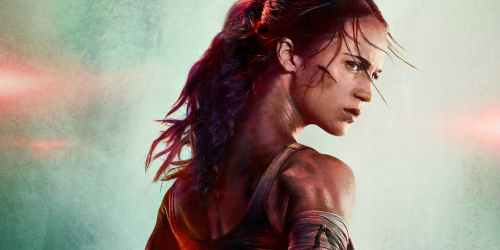
Tomb-Raider-Poster-Alicia-Vikander

It seems so long ago, but there was a time when movies based on superheroes were in the same sorry state as those based on video games. The fact I’m old enough to remember those days makes me feel way older than I want, but it’s still remarkable to consider at a time before big budget superhero movies like “The Avengers” and “Iron Man 3” grossed over a billion dollars.

That’s a huge shift from the mid to late 1990s, an era where such craptacular cinematic turds like “Batman and Robin” and “Super Mario Brothers” created the sentiment that those kinds of movies were box office poison. I’m sure some have yet to forgive Joel Shumacher and whoever thought casting Dennis Hopper as Bowser was a good idea.

That all changed, at least for superhero movies, when “X-men” hit theaters in 2000. Even with the stench of Shumacher’s failure lingering, that film proved that superhero movies can be both good and make a lot of money. As a result, the modern era of superhero movies was born.

While that has been great for the superhero movie genre, the video game genre didn’t fare as well. It’s not just because “Super Mario Brothers” was that bad, though. It’s more a matter of bad timing, bad execution, and movie studios just plain not knowing how to make a decent video game movie.

There have been attempts, including one “Doom” movie and fiveResident Evil” movies. None of them were the kind of hit that could kick-start an entire genre. Granted, Milla Jovovich made a respectable effort. Like the nipples on George Clooney’s Batman costume, though, it just didn’t take. As such, video game movies remain a punchline instead of a genre.

That may be about to change, though. Just this past week, a second trailer dropped for a movie that could do for video games what “X-men” did for superheroes. That movie is “Tomb Raider,” the same title of one of the most successful video game franchises of the past 20 years, which also happens to star one of the most famous, not to mention sexiest heroines of all time.

Unlike “Resident Evil” or “Super Mario Brothers,” Lara Croft is the kind of character who can work just as well in an action movie as she does a video game. Her being a digital sex symbol is just a nice bonus. The fact that Warner Brothers cast Alicia Vikander to play her role, an Oscar winning actress who did plenty to establish her sex appeal in “Ex Machina,” shows they’re really trying this time.

Just watch the trailer. Even for those who have never played a “Tomb Raider” game or cared much for Lara Croft can’t deny the potential. I still hesitate to say it, but this might just be a true video game movie that doesn’t suck.

I say that not just because of the trailer. Modern audience have learned since “Snakes on a Plane” that an awesome trailer rarely makes for an awesome movie. I’m daring to have confidence in this movie because it looks like it’s trying to capture the theme and spirit of the game without sacrificing the quality of the movie. For video game movies, that’s unprecedented.

Beyond the apparent effort, though, there’s something else “Tomb Raider” has going for it. Thanks to the success of “Wonder Woman” last year, which I so happily documented, this movie is coming along at the best possible time.

It’s not just generic male heroes or John McClane rip-offs that appeal to audiences anymore. “Wonder Woman” proved that there is a market for female heroes. Not only was that movie critically praised. It made a lot of money, more than all five “Resident Evil” movies combined. Nobody can argue that female heroes don’t sell anymore. Wonder Woman proved they do and “Tomb Raider” can take it a step further.

I believe this because the Lara Croft that’s set to show up in this movie is not the same Lara Croft that once drew so much ire from whiny pop culture critics who think every attractive female character is just fodder for horny male gamers. This a different, more complex Lara Croft than the one that Angelina Jolie tried to bring to life in two previous “Tomb Raider” movies.

Now, I don’t want to dwell too much on those movies or the associated flaws with them. I’ll just say that, while I don’t consider those movies bad, they really were just generic action movies slapped with a “Tomb Raider” logo. Angelina Jolie certainly had the sex appeal, but it did little to make Lara Croft that interesting, which showed in the critical response and the box office for both movies.

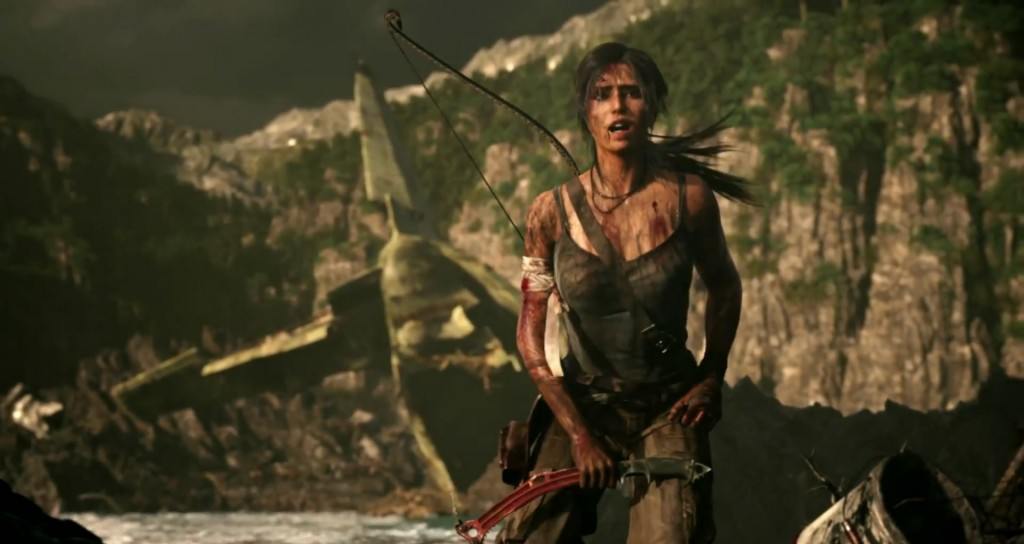
The Lara Croft that Alicia Vikander is playing in this movie has more complexity and nuance to her. That version of Lara came to life in the 2013 “Tomb Raider” video game that rebooted her story. Having played that game multiple times and joined the chorus of its many critical praises, I can say with confidence that this trailer captured those critical elements from that game.

In the 2013 game, Lara doesn’t start out as the sexy, sassy archaeology enthusiast who loves to shoot guns and run around in hot pants. She’s an ambitious, but inexperienced young woman who is still growing into that persona and over the course of the game, she eventually develops into that character that so many video game fans know and love.

As other successful movies have shown, establishing growth in a character and making them someone we can root for goes a long way towards making a movie compelling. Part of what made “Wonder Woman” so great was that we got to see her grow into the beautiful female icon that so many cherish. The previous “Tomb Raider” movies, and most video game movies in general, barely tried.

Instead, most video game movies make the mistake of assuming the audience already knows the characters and just plops them into an action-heavy story with no purpose, heart, or major drama. If there is any drama, it’s usually forced or contrived. This version of “Tomb Raider” looks like it will take those same dramatic elements that made the 2013 game so compelling and translate them into the movie.

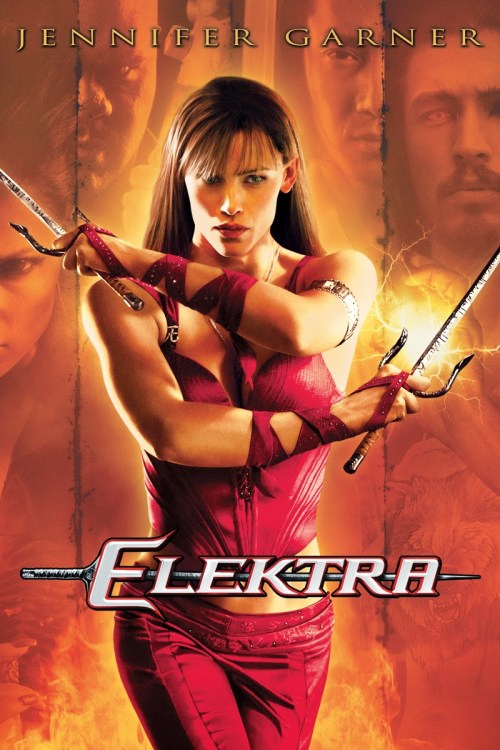
This version of “Tomb Raider” also has the benefit of coming out at a time when there’s a legitimate push for female-led movies. It’s very different from the Angelina Jolie era, whose movies came out a time when legendary flops like “Elektra” and “Catwoman” were setting back female heroes for a decade. Studios can’t get away with being that reckless with female characters anymore.

It’s for that reason that I have genuinely high hopes for this movie. It’s also because of the success of “Wonder Woman” that I believe there’s already an audience that’s eager to help “Tomb Raider” succeed.

Hollywood is already trying to capture that audience with movies like “Atomic Blond” and “Red Sparrow.” The recent announcement of a “Black Widow” movie being in development by Marvel Studios is only adding more momentum to the future of female heroes in movie.

Tomb Raider” succeeding will do even more than just build upon that momentum. It will establish that the success of “Wonder Woman” was not a fluke. It is possible to build a successful, lucrative franchise around more than one powerful woman. Lara Croft may not be an amazon warrior, but she has the potential to carve a place for herself in an increasingly competitive market.

Now, I don’t discount the potential that this movie could also fail. Like I said, video game movies have an abysmal track record, to say the least. That legacy is going to be difficult to overcome, but as “X-men” showed in 2000, it only takes one hit to start a trend. It’s a trend that I believe needs to happen for the good of the entire movie industry.

Even if you’re among the crowd who thinks the media is trying way too hard to push diversity in movies, video games, comics, and whatever other form of media is trying to turn a quick buck, it’s better for everyone that we have heroes who actually vary from time to time. There shouldn’t be that many similarities between John McClane, Luke Skywalker, and James Bond and every major movie icon of the past 50 years.

There is room for female heroes. There’s also room for movies based on video games. It’s not good for the industry, as a whole, if the only successful franchises come from Disney, Marvel, and the collective minds of Jack Kirby and Stan Lee. By succeeding, “Tomb Raider” will open the door for a broader array of movies and female character.

That added variety need not come at the expense of the established male characters that we all know and love. “Wonder Woman” didn’t have to knock Superman or Batman down a peg in order to succeed. She found a way to succeed on her own and the superhero movie genre is better because of it. Lara Croft is fully capable of succeeding as well and the video game movie genre will be better too.

I’ll be keeping a close eye on this movie. Like “Wonder Woman,” it’s success will have far-reaching implications beyond the movie itself. It has everything it needs to succeed, from quality source material to an Oscar-winning actress to a market that’s recently demonstrated that iconic female characters can make millions at the box office. It just needs to follow through.

It’s doubtful that “Tomb Raider” will succeed at the same level as “Wonder Woman,” but it doesn’t have to. It just needs to turn a profit and capture all the elements that make Lara Croft great. If it can achieve that, then the future for both video game movies and female heroes is brighter than ever. It may not make us forget “Super Mario Brothers,” but it’ll help us move forward.

1 Comment

Filed under Comic Books, Jack Fisher, Superheroes, gender issues, Movie Reviews, sex in media, Wonder Woman

The Secret Appeal Of Marvel’s “Black Panther”

As a fan of all things related to comic books and superheroes, I often find myself digging deeper into the messages and meanings behind these fanciful narratives. I’ve done it on this site before, using superheroes to highlight the value of uniquely balanced romances and the inherent dangers of excessive boredom. I’ll likely keep doing it, so long as my kinky mind keeps making these quirky connections.

Sure, there’s are plenty of times when I just prefer to pour myself a glass of whiskey, sit back, and just enjoy the raw entertainment value of a comic book or superhero movie. Given the sizable slate of superhero movies set for release in 2018, I’m probably going to need more whiskey.

There is one particular movie, however, that is making waves that I haven’t really talked about before. I’m referring to the upcoming “Black Panther” movie, a movie that is already setting pre-sale records on Fandango. While every movie produced by Marvel Studios these days seems to blow up the box office and enrich Disney, this particular movie is unlike anything they’ve ever tried before.

There’s a reason why I haven’t talked much about it. For the most part, I haven’t come up with any meaningful discussions that I think are worth sharing. Like most self-professed Marvel fans, though, I am excited about this movie. It takes a character who has been underrated and overshadowed for most of his history and elevates his position in the larger narrative of the MCU.

The fact that Black Panther is one of Marvel’s most prominent black heroes is certainly another important aspect. In the ongoing effort to promote more diversity in Hollywood and popular culture, “Black Panther” checks all the right boxes. He’s a prominent minority character who holds his own alongside other Avengers, as we saw in “Captain America: Civil War.” He’s ready for his own movie.

Now, before I go any further, I want to make clear that I don’t wish to get into all the racial undertones and white-washing controversies that have plagued Hollywood in recent years. As a comic book fan, I’m just excited to see Black Panther get a chance to elevate his presence. I sincerely hope that Chadwick Boseman can do for T’Challa what Robert Downy Jr. did for Tony Stark.

However, in seeing the growing excitement surrounding this movie, I feel as though the movie is revealing something about the current state of the world that’s not easy to see. It also reveals something profound about the character of Black Panther, as well, that might be even more telling in these sensitive times we live.

It might not be the message that the “Black Panther” movie is trying to convey. I don’t doubt for a second that Marvel Studios and Disney see this movie as just another part of the process of maximizing profits at the box office. However, when you look at the context of this movie and the character it’s built around, there’s one unexpected, but remarkable insight that emerges.

“Black Panther embodies the ideal king that everybody wants to live under.”

Unlike some of the other insights I’ve tried to ascribe to certain character, it’s not too hard to see this concept reflected in the character of T’Challa. Whether you only know him from his role in the movies or are familiar with his history in the comics, this trait is a core aspect to his persona. He’s not just an Avenger, a superhero, and a prominent black character. He’s the ultimate king that people want to be ruled by.

If it sounds like that conflicts with my assertion that Dr. Doom is the ultimate ruler, then please bear with me. I am going to address that in a way that will hopefully make sense. To understand why this is key to Black Panther’s character, as well as being a big part of his appeal, it’s important to know a few details about his story.

In both the comics and the MCU, Black Panther isn’t just a prominent superhero who also happens to be black. He’s the king of the fictional country, Wakanda, a secretive land in Africa that is extremely advanced and extremely wealthy. This is largely due to its rich deposits of Vibraniam, an equally fictional super-material that is more valuable than anything we have in the real world.

The particulars of Wakanda are important because, like Krypton, Asgard, or Gotham City, it embodies a particular concept. Wakanda is, in many respects, the embodiment of an exotic land that prospers without the influence of the modern world. A key trait of Wakanda is that, for much of its history, it shut itself off from the outside world and actively fought those who tried to change that.

That isolation doesn’t just give Wakanda its exotic appeal. It also insulates it from what we, in the outside world, see an increasingly corrupt system of world governments that don’t do a good job of helping people prosper. Despite all the data that clearly shows the world is improving with each passing year, there’s still a sense that there’s this one magical place that can do it better.

Wakanda is that place. Wakanda is technologically advanced, fully developed, and extremely prosperous. The fact that it’s a country in Africa, which is home to some of the poorest countries in the world, makes it all the more remarkable. The idea that it achieved all this without the aid of other nations helps add to the appeal.

This is where Black Panther’s appeal as the perfect king comes in. Beyond just being advanced and prosperous on its own accord, it’s not ruled by a flawed democracy, a corrupt dictator, or an inept republic. It’s ruled by a wise, competent, and compassionate ruler who also happens to be a superhero on the side. Black Panther, in many respects, embodies all the ways in which rulers wish they were seen.

He wasn’t elected, nor did he come to power in a coup. He rules because he’s the son of a previous, equally competent ruler. It’s basically a traditional monarchy, one that doesn’t require corrupt elections or elaborate legal traditions. While that seems antithetical to the freedom-loving crowd who scoff at living under kings, it does have great appeal.

Like Superman, Black Panther embodies everything people want in a ruler. This is what sets him apart from Dr. Doom. While Doom might be smarter and more capable, most people would not be lining up to live under his rule. Black Panther is different. He’s the kind of king people actually want to live under, even if it means living under the rule of a powerful monarch.

Black Panther and his exotic homeland are insulated from the corruption and ineptitude we associate with our existing rulers. It’s because Black Panther is from such an exotic place that prospered, despite being so isolated, that his ability to rule seems fittingly superhuman. He carries himself as the kind of king who won’t create crazy cults of personality or fail spectacularly.

That appeal is even greater these days because of the growing perception that all leaders are inherently corrupt. The 2016 Election was basically a year-long parade celebrating everything people hate about inept, corrupt leadership. It created this sentiment of hopelessness that no matter which leader end up in power, they’ll still be corrupt.

The events after the 2016 Election have only further reinforced this notion. In a sense, “Black Panther” is coming along at the best possible time because the general public is so disillusioned with the rulers they know. The idea that there’s this powerful, uncorrupted king who benevolently rules a prosperous land isn’t just appealing. It embodies a near-universal desire to live in a perfectly governed society.

At this point, it’s worth noting that this sort of appeal clashes significantly with the harsh truths of the real world. In the same way there’s nobody who can ever be as powerful or as good as Superman, there’s nobody who can ever be as good a ruler as Black Panther. His persona, as well as his country, simply could not exist in the real world.

There are actually countries in this world that are extremely rich in resources, not unlike Wakanda. There are also countries that isolate themselves from the rest of the world and attempt to thrive on their own, absent outside influence. Most of these countries are either extremely poor or extremely corrupt.

Even with semi-competent rulers, it’s impossible for any country to thrive like Wakanda. It’s equally impossible for any ruler to be as effective as Black Panther because no government, be it a dictatorship or a democracy, that can ever manage the never-ending chaos or accommodate infinite needs of the people with its finite resources.

In a sense, rulers like Black Panther and societies like Wakanda are large-scale wish fulfillment for those dissatisfied with their own society. We may not acknowledge that such a ruler and such a society are impossible in the real world, but neither are shape-shifting aliens or silver-skinned men on surf boards. The stories surrounding such concepts act as a unique kind of escapism, which is at the heart of every movie’s appeal.

Now, I’m not saying that this sort of appeal will be the sole reason “Black Panther” succeeds at the box office. I believe that if it succeeds on the level that some are already projecting, it’ll be because of a multitude of factors, much of which can be attributed to the winning formula that Marvel Studios has refined.

Whatever the racial or cultural undertones of a movie like “Black Panther,” it has already struck a chord. It’ll likely strike even more after it’s released. Most probably won’t be related to Black Panther being the perfect king or Wakanda being the perfect society, but the undertones are there. As people become more dissatisfied with their leaders and their society, they’re likely to become more overt about it.

7 Comments

Filed under Comic Books, Jack Fisher, Superheroes

My Wish list For “Wonder Woman 2”

I know it’s been a while since I talked about Wonder Woman. In my defense, there have been a lot of distractions between the holidays, the response to the “Justice League” movie, and recent news stories to which I just couldn’t resist responding. Make no mistake, though. I haven’t forgotten about Wonder Woman or the fact that she had a breakout year in 2017.

In many respects, Wonder Woman was one of the best parts of 2017. She didn’t just amaze audiences by proving that there is a market for female superheroes, even after “Catwoman.” She raised the bar for the entire genre, both in terms of critical and commercial success. That bodes well for other female-led superhero movies.

While other female superheroes play catch-up, though, Wonder Woman is set to continue rising the bar. She’s Wonder Woman. That’s what she does through Gal Gadot’s charisma and she does it with uncanny grace. Shortly after her movie came out, a sequel was announced to the surprise of no one. At the moment, “Wonder Woman 2” is slated for release on November 1, 2019.

While that date seems so far away, some details are already starting to trickle in. Director, Patty Jenkins, has already started teasing details. At the recent Palm Springs Film Festival, she indicated that the sequel would be a very different film compared to its predecessor. Naturally, she didn’t give too many details, but it’s enough to get Wonder Woman fans excited.

Since I consider myself among those fans, I already find myself contemplating what a “Wonder Woman” sequel will entail. It wouldn’t be the first time I’ve contemplated such things, either. While it’s too early to know or even speculate what “Wonder Woman 2” will bring, we can still hope and imagine the wondrous possibilities.

In that spirit, here is a brief, but basic wish list for what I hope to see in “Wonder Woman 2.” Granted, if Ms. Jenkins is serious about this being a very different movie, chances are not much on this list will apply. I understand and accept that. This is just the giddy Wonder Woman fan in me daring to imagine how wonderful this movie can be.


Wish #1: Establish More Villains (And Make It Personal)

If Wonder Woman has any flaws, beyond those that assholes and trolls point out, it’s that her list of villains isn’t quite as iconic as that of Batman or Superman. For much of her history, Wonder Woman’s greatest battles have been tied to those of the Justice League or those of her fellow Amazons. She’ll be a major force in those battles, but they rarely have major personal stakes.

Wonder Woman 2” presents a golden opportunity to change that because there are a few villains with strong personal ties to Diana. While Ares was more built up boss battle in the first movie, villains like Cheetah can test Diana’s heart, as well as her skill.

The recent Wonder Woman comics have done an excellent job establishing the deep personal struggle between Wonder Woman and Cheetah. While there are multiple women who have gone by Cheetah, the overall theme is the same. She is Diana’s rival, but there was a time when she was also her friend.

Having to fight her friends is an agonizing challenge for Wonder Woman, which we saw play out in the “Justice League” movie. It brings out her heart and her passions for all the right reasons. A more personal villain can only help expand that appeal in “Wonder Woman 2.”


Wish #2: Maintain A (Very) Distant Connection From The Other DCEU Films

While I stand by my statement that “Justice League” did not deserve the negative reviews it got, I don’t deny that the “Justice League” movie has become somewhat of a toxic brand. It’s not quite on the same levels as “Batman and Robin,” but at this point there’s just no way to salvage the backlash.

It’s for that reason, among many others, that I hope “Wonder Woman 2” maintains an extremely distant connection from the larger DC Extended Universe. I’m not saying it should cut itself off entirely. Even the first movie made it a point to establish that this movie was part of a larger world. The sequel should reflect that.

However, the events of “Justice League,” however big they might have been, shouldn’t be a major driving force in the narrative. Whether it takes place in the modern day or in the past, like the first movie, it can’t be too beholden to the events of other major DC movies.

A big part of the success of “Wonder Woman” was its ability to stand on it its own, apart from the rest of DC’s main superheroes. “Wonder Woman 2” should build on that and I imagine Patty Jenkins isn’t going to want to be too constrained by the burdens of other movies. For Wonder Woman, despite her kinky past, there can be no such restraints.


Wish #3: Build On The Amazons’ Mythology (And Diana’s Family Ties)

There were a lot of positives in “Wonder Woman” and I went out of my way to acknowledge them in my review of the movie. However, if there was one flaw in the overall narrative, it had to do with the limited exposure of the Amazons. That’s because in nearly every medium, Wonder Woman’s story is inherently enriched by her Amazon heritage.

The first movie did enough to establish who the Amazons were, why they are so important, and how important they are to Wonder Woman. Unfortunately, it didn’t do much more than that. After Diana left Paradise Island, we didn’t hear from them again. That’s why I hope “Wonder Woman 2” takes the time to expand on the story of the Amazons.

They already showed how badass they can be in “Justice League.” I sincerely hope they get more opportunities in “Wonder Woman 2.” Between Diana’s mother and her more notable siblings, there’s a wealth of material for Wonder Woman to build on. It further raises those personal stakes I mentioned earlier, which can only help expand the appeal of Wonder Woman’s world.


Wish #4: Let Wonder Woman Address Social Issues (In Her Own Unique Way)

Given Wonder Woman’s iconic status as a female icon, it’s unavoidable that she’s going to provoke discussions about social issues. These days, that leads to many heated, hateful, and downright counterproductive conversations. However, that’s exactly why I still want Wonder Woman to address those issues in “Wonder Woman 2.”

Gal Gadot has already shown that she gets the unique spirit of love and compassion that Wonder Woman espouses. Sure, she is prone to making a few controversial remarks, but overall she gets what Wonder Woman is about. She even showed this in the first movie, having Diana navigate the very patriarchal world of the early 20th century, but without using that as an excuse to hate it.

Like it or not, there are a lot of social issues going on in the world. For the most part, we do a poor job debating those issues, as a society. Wonder Woman, with her emphasis on compassion and love for all, is the perfect antidote to that.

I don’t know how she’d go about it in “Wonder Woman 2.” A lot of that depends on the setting, the time period, and the conflicts involved. Whatever form it takes, though, I think it’ll be good for the audience and for the superhero genre to see Wonder Woman confront these social issues as only she can.


Wish #5: Expand The Emotional Stakes (And Let Gal Gadot Channel Her Passions)

This is more of a broader hope for “Wonder Woman 2.” While there are quite a few specific things I’d love to see in this movie, I think it’s more important that it embody the necessary theme that makes Wonder Woman so endearing. Like with some of my other wishes, those themes revolve heavily around the emotional stakes of Wonder Woman’s journey.

We didn’t see too much of that in “Justice League,” but we saw plenty of that in the first movie. Every battle she fought was an emotional struggle. That struggle gave Gal Gadot the opportunity to emote in a way that would make any Amazon warrior proud. Wonder Woman has never just been about fighting injustice or kicking ass. That is always secondary to her heart.

Some of the best moments in “Wonder Woman” just involved her taking a moment to smile, explore, and share herself with others. Whether it was making Steve Trevor feel awkward or making friends with Etta Candy, we got to see Wonder Woman share her passions with others outside the battlefield. That helped make her endearing on so many levels.

Wonder Woman is already a very likable, very passionate character. She’s the kind of person that men and women, alike, can rally behind. Any successful sequel will take those themes and run with them. There’s so much to love about Wonder Woman and how Gal Gadot brought her to life. If “Wonder Woman 2” can build on those themes, then it already has the most important ingredient for more wonderful success.

3 Comments

Filed under Comic Books, Jack Fisher, Superheroes, Wonder Woman

Why Rey From “Star Wars” Is NOT A Mary Sue

There are a handful of character types that tend to evoke a collective groan from most audiences. Being an ardent comic book fan, as well as a general fan of sci-fi, romance, and fantasy, I’ve listened to those groans and even contributed to them. At a time when it’s easier than ever to share opinions and/or voice frustration, these frustrating characters tend to be more vulnerable than ever.

Chief among those groan-inducing characters is the dreaded Mary Sue. Chances are you’ve heard that cute little colloquialism after browsing gaming and sci-fi message boards for more than five minutes.

Usually, it applies to a female character, but can just as easily fit apply to a male character as well, often in the form of the equally groan-inducing label of Gary Stu. Sometimes it’s a criticism of a character. Sometimes it’s a flat-out insult. In most cases, it rarely has a positive connotation.

It’s for that reason that characters slapped with the Mary Sue label tend to be either controversial or destructive to an underlying narrative. Many writers, myself included, go out of their way to avoid crafting characters that might attract that label. I certainly made that effort when I wrote “Skin Deep” and “Passion Relapse.” I doubt I’m the only one who tries to avoid it.

These days, though, there’s one particular character getting slapped with that label and it has been generating discussions for a couple years now. It comes from “Star Wars,” one of the biggest franchises in the history of modern fiction and one of many productive cash cows for Disney. The character in question is Rey and I know that discussions about her tend to bring out the dark side in any “Star Wars” fan.

Now, I personally really like Rey. After seeing “Star Wars: The Last Jedi,” she solidified herself as one of my favorite “Star Wars” characters of all time. I wasn’t entirely sold on her potential after seeing “Star Wars: The Force Awakens,” but I’ve since been convinced. Rey is a great character and one of the best things to come out of this new generation of “Star Wars.”

That said, I’m aware of the criticisms levied against her. She is very much at the center of an ongoing debate about female characters, in general, and what constitutes a Mary Sue. I tried to avoid those debates after “Star Wars: The Force Awakens,” but I feel comfortable entering the fray now after seeing Rey develop over the course of two movies.

Before I offer my assessment on whether or not Rey deserves the label of a Mary Sue, it’s helpful to highlight just what a Mary Sue is. There’s actually not any clearly-defined criteria, to date, and that criteria is constantly evolving. According to TVTropes.org, the simplest definition of a Mary Sue is a character that’s just too good to be true. More specifically, those traits include the following:

  • A bland, shallow personality that’s overly pure, overly good, and incorruptible
  • Flaws that are forced and only ever meant to glorify her purity and goodness
  • Beauty that is either flawless or idealized for any given world, fictional or otherwise
  • Physical skills that are exceedingly good to the point of never facing any real challenges
  • Mental acuity to the point where she’s never wrong, never foolish, and always on the moral high ground
  • Unlimited and contrived access to every tool or resource, be it something mundane or a Deus ex Machina
  • Always ending up with the perfect romantic partner and/or forging friendships with every meaningful character
  • Being at the center of every plot and sub-plot by default

Again, these are just a few traits associated with a Mary Sue and there are likely more. There are far more thorough insights into the traits of a Mary Sue, one of which was done by the YouTube channel, Overly Sarcastic Production. After their wonderful breakdown of strong female characters, I would put their assessment far above my own.

Whatever the criteria, the Mary Sue is such a fluid concept, which is part of why it’s such an empty criticism. However, it has become a more serious criticism and since it’s being applied to “Star Wars,” it’s definitely carries more weight than usual.

With all that said, does Rey fit that criteria? Is it a valid criticism to call Rey a Mary Sue whose portrayal is weighing down the overall narrative of “Star Wars?” It’s a debate I’m sure will continue for quite some time, but here’s my definitive response, for what it’s worth.

No. Rey is NOT a Mary Sue…for the most part.

Now, I’m aware I’m being somewhat vague by adding that little caveat at the end. However, there’s a reason for that and I’m fairly confident that they qualify as reasons and not excuses.
For one, Rey’s story is not complete. That much needs to be said from the beginning. It’s something that I find many debates involving Rey tend to overlook. Yes, her story is lagging a bit more than those of Luke, Leia, and Han Solo did in the original trilogy. There are other reasons for this, but they’re unrelated to the debate at hand.

Even with an incomplete story, I believe that Rey has done enough over the course of two movies to prove that she’s not a Mary Sue. I think she established that shortly after her appearance in “Star Wars: The Force Awakens.”

In terms of appearance, she comes off as someone who could put on a set of clothes from Wal-Mart, walk into a typical high school, and not generate much reaction. She doesn’t radiate the kind of beauty or royalty that often defines a Mary Sue. Even if she later proves to have a special destiny, that basically puts her in the same category as Luke Skywalker and every other legendary hero.

In terms of personality, she’s not exactly gushing with love and likability, which is another key trait of the Mary Sue. In many respects, Rey is somewhat cold and detached when she first shows up. She doesn’t whine or lament about her less-than-extraordinary life, nor does she eagerly jump at the chance to join the resistance when she encounters Finn. Hers is a more complex journey.

In terms of skill, this is where I think most of the Mary Sue accusations come from. I admit that I thought her excessive skill with the Force, flying the Millennium Falcon, and defeating Kylo Ren pushed the bounds of her character a bit too much. Even I was tempted to throw that label on her after seeing her accomplish so much with so little training.

However, when I step back and look at the larger plot, as well as incorporate the events of “Star Wars: The Last Jedi,” I see that those traits aren’t enough to warrant calling her a Mary Sue. They are a flaw in her character. That much, I don’t deny. Just having that flaw, though, doesn’t make her a Mary Sue.

I think “Star Wars: The Last Jedi” did a lot to help distance her from that label. It did so by having her make a few bad judgment calls while also not winning her battles quite as easily. When you look at the sequence of events in that movie, she didn’t actually succeed in most of what she sought out to do. Most of the success in that movie came from others, namely Kylo Ren, Finn, and Poe Dameron.

While I wouldn’t go so far as to say that Rey failed miserably in her efforts, I think “Star Wars: The Last Jedi” established that her skills have limits. She has all sorts of natural talent, but she doesn’t always apply it effectively. That’s not unusual for real and fictional characters. You could even make the argument that her missteps help really help to improve her likability.

A Mary Sue is supposed to be sickeningly perfect and hopelessly ideal, so much so that there’s no need for a plot since they just fix everything with their charm. Rey isn’t like that in either movie. In fact, the final battle in “Star Wars: The Last Jedi” didn’t really involve her. More than anything else, her role really complemented all the others by the end of the movie.

Now, I’m certain there are more than a few ardent “Star Wars” fans with X-wings tattooed on their chests who will claim I’m dead wrong. Those arguing that Rey is a Mary Sue have more than a few points to make and I don’t deny that some of those points are valid. I just don’t think they’re sufficient.

Rey is a great character, but one with some obvious flaws. I would call her overpowered and over-skilled, but you could levy that criticism against other iconic characters like Superman, Wonder Woman, and even Batman. Unlike those iconic characters, though, Rey is very new to the cultural landscape and her story still has room to unfold, as director Rian Johnson has pointed out.

I don’t doubt that debate over whether or not Rey is a Mary Sue will continue for quite some time. While I don’t think the next “Star Wars” movie will definitely resolve that, I’m of the opinion that it doesn’t have to be at this point. I think Rey has done enough to subvert this dreaded label.

She’s still a great character with a number of conceptual flaws. I think she has a bright future in our culture. She’ll always have her critics, but all great characters do. It’s just a matter of how they navigate that criticism. Given the cultural weight “Star Wars” carries, I’d say she’s handled it much better than most non-Jar Jar characters could ever hope.

2 Comments

Filed under Celebrities and Celebrity Culture, Comic Books, Jack Fisher, Superheroes, Current Events, gender issues

Why Dr. Doom Is The Ultimate Jedi

If you’re a “Star Wars” fan in any capacity, then these are truly exciting times. It doesn’t matter if you’ve got the blueprints of the Millennium Falcon tattooed on your back or just think porgs are adorable, this is basically your Mardi Gras. Another new “Star Wars” movie is set for release and, by all accounts, “Star Wars: The Last Jedi” is set to give Disney a fresh pool of money to swim in.

Now, I love “Star Wars” as much as anyone who grew up on a healthy diet of sci-fi and comic books. I’ve seen every movie in theaters. I had more than my share of “Star Wars” toys as a kid. I do intend to be in line to see “Star Wars: The Last Jedi” on opening night. Like X-men and football, I’m that passionate about the things I love.

It’s because of that passion that I often find myself coming up with strange, if not eccentric, interpretations of the story. Part of that stems from my love of fan theories and my inclinations to create my own. “Star Wars” has such a rich, vibrant mythology surrounding it. Naturally, it’s going to inspire more theories than most.

However, in getting my mind one with the Force in anticipation of the release of “Star Wars: The Last Jedi,” I found myself contemplating some unexpected ideas. In doing so, I came to a realization that isn’t so much a fan theory as it is an observation, and one that will probably incur the wrath of every adherent of the Jedi Order, which is a thing by the way.

I’m willing to take that chance, though. I don’t know whether the Force will be on my side after this, but in the name of digging deeper into the “Star Wars” mythos, I want to put this out there. If you’re prone to Sith-level outrage, you might want to put up your deflector shields because I’m about to make a statement that strikes at the very heart of what it means to be a Jedi. That statement is this.

Dr. Doom is the perfect embodiment of the Jedi.

I’ll give “Star Wars” a moment to stop seething and Marvel fans a moment to stop laughing. Take all the time you need. I know this sounds like something a man only comes up with after he’s had a few too many glasses of whiskey while re-watching “The Empire Strikes Back” one too many times. Make no mistake. I’m dead serious about this.

By every measure, Victor Von Doom, the same character who is regularly regarded as the greatest villain of all time, represents the values of the Jedi Order better than any other character. Given Doom’s villainous nature, which I’ve discussed before, that sounds like the equivalent of claiming that Jar Jar Binks was a Sith Lord. Actually, that might be a bad example.

However, I do believe there is an argument to be made here and not just because the designs for Darth Vader might have been inspired by Dr. Doom. To understand this argument, we must first understand the core tenants of the Jedi Order. According to the official Star Wars wiki, the Jedi Code is built around these principles.

There is no emotion, there is peace.
There is no ignorance, there is knowledge.
There is no passion, there is serenity.
There is no chaos, there is harmony.
There is no death, there is the Force.

Anyone who has watched at least two “Star Wars” movies can probably see plenty of examples of these tenants. In every movie, in some form or another, the Jedi espouse principles of non-attachment, harmony, knowledge, and an overall understanding that death is neither the end, nor the beginning.

Those who have studied philosophy and theology in any capacity will probably recognize that these concepts are very similar to major principles of Taoist philosophy. In fact, the whole Sith/Jedi dichotomy nicely reflects that of Yin and Yang, which is probably the most well-known Taoist principle.

With those concepts in mind, you might instinctively believe that Dr. Doom would more closely align with the tenants of the Sith. Like the Jedi, they too have their own unique code. Again, according to the official Star Wars wiki, that code is as follows:

Peace is a lie. There is only Passion.
Through Passion I gain Strength.
Through Strength I gain Power.
Through Power I gain Victory.
Through Victory my chains are Broken.
The Force shall free me.

While those tenants may sound like something Dr. Doom embraces, a closer examination of how Doom conducts himself reveals something else. You don’t even have to dig too deep to see just how much Doom embodies the ways of the Jedi.

One of the most distinct differences between a Sith and a Jedi is how they approach passion. Sith, as Anakin Skywalker so nicely demonstrated in “Star Wars: Revenge of the Sith,” are fueled by their passions. Their anger and hate fuels them. Jedi see those emotions as temptations that send Force-wielders down a dark, selfish path. Anakin’s descent into the dark side nicely documents that fall.

However, while Dr. Doom can become annoyed and frustrated, he rarely demonstrates Sith-level anger. In fact, most of the time, Doom’s emotional state is one of cold, callousness. When he donned his famous, obscenely overpowered armor, he did so with the intent of shedding the passions that he believed had held him back.

As a result, Dr. Doom is largely devoid of the kinds of passion that would make him a Sith. If anything, that lack of emotion, along with the immense intelligence that makes him one of the smartest minds in the Marvel universe, grants him two of the key Jedi tenants by default.

The Jedi Code also focuses on tempering chaos, promoting harmony, and achieving serenity. In a sense, these are all perfectly in line with Dr. Doom’s goals. Stan Lee himself, the guy who co-created Dr. Doom, went so far as to say that Doom isn’t a villain in that he seeks to rule the world because he believes he can do a better job.

In a sense, Doom sees the same thing the Jedi sees. The world around him is full of chaos. People, in general, are consumed with chaos. Nothing but destruction will come from that chaos and they both seek to temper it. The only difference is that Doom does more than just attack it with a light sabre.

Dr. Doom’s desire for order are even reflected in the crossover event, Doomwar. It’s in that event that Dr. Doom learns from Bast, the Panther God, that the only future in which mankind is free from suffering, want, and chaos is one where he rules. In a sense, Doom see’s ruling the world as his destiny. Given how often the Jedi and the Sith make a big deal about destiny, Dr. Doom fits right in with those principles.

Even in matters of life and death, Dr. Doom aligns himself with the Jedi, albeit in more overt ways. For him, death is hardly a barrier. Whereas Sith fear and dread death, as Anakin Skywalker did in trying to prevent the death of his loved ones, Dr. Doom basically brushes it off. He doesn’t just cheat death with his army of Doombots. He has actually become a god on more than one occasion.

Whereas a Sith like Anakin will lament the loss of his mother and wife, Dr. Doom will sacrifice the woman he loves to a demon without batting an eye. Like the Jedi, he does not care for personal attachments or petty passions that might hold him back. He sees himself as too smart and too capable for such things. It’s not that he sees himself as a god among men. He’s just smart and powerful enough to prove it.

In a sense, Dr. Doom is the ultimate endgame for a Jedi. He is the ultimate extreme of what happens when you take the Jedi Code and push it beyond the limits of frail human minds. It leads someone to becoming numb to their passions, empowered by knowledge, and driven to forge harmony out of chaos.

With that in mind, I want to acknowledge that there are other intricacies to the Jedi Code with which Dr. Doom is inherently incompatible. Unlike Doom, Jedi don’t seek to rule whereas Sith Lords do. Also unlike the Jedi, Dr. Doom can be pretty damn selfish and arrogant, which are hardly in line with the selflessness championed by the Jedi.

However, when evaluating the code of the Jedi and the Sith, Dr. Doom still checks more boxes with the Jedi. Her certainly wouldn’t get along with the likes of Yoda, Mace Windu, or anyone on the Jedi Council, for that matter.

Then again, Dr. Doom doesn’t get along with anyone and that’s kind of on purpose with him. He doesn’t care whether or not anyone gets along with him. He only cares that they honor his authority and superiority. Like a Jedi, he is beyond petty emotions or blind ignorance. His strength, knowledge, and abilities speak for themselves. He needs no passion or anger to fuel him. He just needs to be Doom.

In writing this, I imagine I will upset and/or anger many “Star Wars” fans whose knowledge of the franchise is far greater than my own. There may even be a few details that effectively nullify my claim about Dr. Doom’s status as the ultimate Jedi. I welcome those discussion, provided they’re not on par with a Sith-level temper tantrum.

Given the upheaval in the Jedi order so artfully promised in “Star Wars: The Last Jedi,” I just felt as though this observation was worth sharing. It’s impossible to know whether Dr. Doom would make for the perfect Jedi, the ultimate Sith, or something in between. It’s just interesting to see how the ideals he embodies fits into this iconic sci-fi mythos.

Leave a comment

Filed under Comic Books, Jack Fisher, Superheroes