Tag Archives: human rights

Abortion, IVF Treatments, And The (Distressing) Trend Of Criminalizing Women

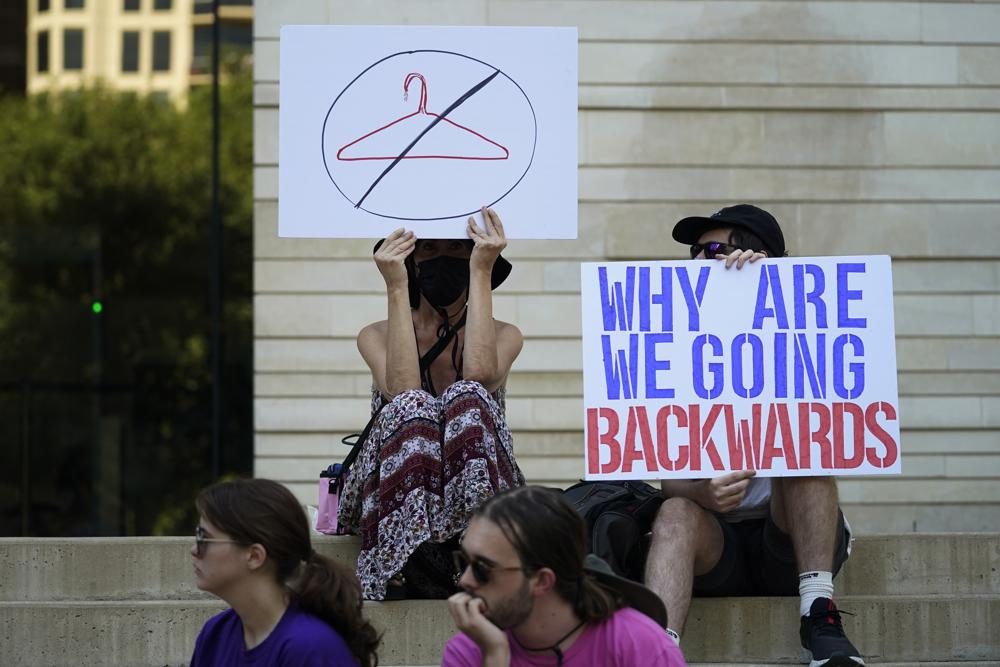
A few years back, I did a detailed breakdown of the potential implications of the United States Supreme Court overturning Roe v. Wade and effectively undoing a woman’s right to an abortion. When I wrote that, I did so with the sinking gut feeling that it would eventually happen. Ignorant, cruel, fun-hating, sex-hating, misogynistic right-wing assholes have spent decades of time and billions of dollars to undo this ruling.

It was never a matter of if this fundamental right would be overturned. It was only a matter of when. It just happened a lot sooner than I expected. And while there has certainly been backlash, the full extent of that backlash is just beginning. We won’t know how it’ll fully manifest for a number of years.

However, the same assholes who fought so hard to undermine abortion rights were never going to be content to stop there. I’ve met and dealt with enough of these people to know they weren’t going to be satisfied with stopping women getting abortions. Even with the backlash their efforts incurred, they were always going to keep moving forward. They just have too much time, money, and cruelty to stop.

And the recent ruling with the Alabama Supreme Court that effectively criminalized in-vitro (IFV) fertilization is yet another instance of where these assholes will be focusing their efforts. I certainly didn’t expect something like this to happen so quickly after the overturning of Roe v. Wade, but I can’t say I was surprised.

The details of this case are remarkable, and not in a good way if you have any shred of humanity. But what’s more important, in terms of the bigger picture, is what this ruling does to the very perception of what IVF is and why it matters.

Because this is not some new, untested, unknown technology that most people haven’t heard of. IVF has been around since the late 1970s and to date, over 8 million children have been born through IVF that probably wouldn’t have otherwise been born. Keep in mind, these are all children born to parents who genuinely wanted to have a child, but couldn’t conceive due to various reasons.

These are not people who are in any way unnatural or less-than-human. And their parents are that much more admirable for seeking to have a child that they otherwise could not have had. Now, this ruling has completely reframed these millions of people and their parents by ruling that the procedure that helped them become a family was somehow immoral.

At the heart of the ruling is the notion that IVF requires fertilized embryos. And, according to the twisted logic and ethics of these religiously motivated judges, fertilized embryos are no different than infant children. That mirrors how the same logic these people utilize when they call abortion murder because for them, life begins at conception when the sperm and egg meet to create an embryo. So, for them, it means the destruction of any embryo constitutes the loss of a human life.

Now, I’m not a lawyer, a judge, or a legal expert of any kind. But even I have enough brain cells to understand why that logic is complete bullshit. You don’t even need to make any religious or philosophical arguments to prove it wrong.

It’s a simple matter of observable fact. You can place a tube full of embryos in the freezer, which preserves them for future use. But you can’t do that with an infant child.

They are two different things. That’s why we use different words to identify them. It really is that simple.

But in this particular case, the Alabama Supreme Court focused on a single incident in December 2020 at an Alabama fertility clinic in which a special container of embryos was mistakenly destroyed. And plaintiffs in this case argued that constituted the wrongful deaths of living children.

Again, these were embryos in a freezer. If they were children, they would be dead. I wish I didn’t have to make that distinction, but this is apparently where we are with the discourse surrounding women, children, and health care.

But the court didn’t care for that distinction. Whether because of their religious convictions or ideology, these judges ruled these embryos are children. As such, IVF treatment cannot continue because it often involves the destruction and disposal of embryos, usually those that are not viable. It’s twisted, absurd, and irrational logic. But because these are judges, it’s now law in Alabama.

However, don’t expect it to stop there.

Remember, the current makeup of the United States Supreme Court includes the judges that eagerly jumped at the chance to overturn Roe v. Wade. And at least one of those judges has publicly stated that there are just as eager to revisit other rights regarding women and the LGBTQ community.

Do not discount these musings as wishful thinking or unwarranted speculation. When bigots, assholes, misogynists, and wannabe authoritarians tell you what they want to do, assume they’re going to make a serious effort to do it. Don’t assume that our current safeguards, be they laws, norms, or basic human decency, will be sufficient to stop them.

In the meantime, this ruling is another instance of a trend that has been unfolding since the overturn of Roe v. Wade. The same people who advocated for it are pushing beyond the scope of abortion to basically legislate anything having to do with women exercising any level of agency or autonomy. More than anything, this ruling further proves their agenda has little to do with protecting or promoting children.

In one act, they fought to criminalize abortion in the name of saving unborn children.

In another, they fought to criminalize a procedure that actually helps couples have children.

But even if the hypocrisy doesn’t disgust you, just note the common denominator here. It all comes back to women, their bodies, and their role in rearing children. That’s what these court rulings and all the efforts behind them seem to revolve around. It’s about micromanaging how they use their bodies and criminalizing anything that gives them more agency than their religion or ideology commands.

And that’s wrong, plain and simple. I won’t even present to hide my bias on this. No court or judge, no matter how supreme their building claims to be, has a right to legislate what women do with their bodies. They may not like that some women do things they don’t approve of, be it having abortions, enjoying sex, or using science to have children they couldn’t otherwise have. But that’s their problem.

Unfortunately, these people and the right-wing assholes who support them are determined to make it everyone’s problem. That means it’s up to us, those who can actually discern the difference between a child and an embryo, to be just as determined in opposing them.

Leave a comment

Filed under abortion, Current Events, politics, sexuality, women's issues

Here’s What Happened When I Asked ChatGPT To Rewrite The Bill Of Rights

I’ve talked a lot about artificial intelligence and the implications of this technology. In my defense, it’s an incredibly relevant topic that I just happen to be very interested in. From AI-Generated artwork to ChatGPT, these are truly exciting times for this field. I’m sure I’ll have plenty to talk about in the coming years.

However, I don’t just want to react to news or stories about AI. I’d also like to participate in this emerging field on some level, even if it’s just as a simple consumer. We don’t yet know the full capabilities of our current AI tools or how they’ll impact us in the short or long term. But that’s exactly why we should test it for ourselves and see what we can do with it.

To that end, I decided to do a little exercise with ChatGPT. Please note that I do not currently have access to ChatGPT-4. I’m still using the previous version, ChatGPT-3. That version is quite limited in a number of ways, but it’s still capable of providing insightful information.

So, I decided to see how much ChatGPT could offer in terms of understanding and articulating the basic concept of human rights. That’s something that has certainly been a hot topic in recent years. And for those of us in the United States, you could definitely argue that our current laws surrounding human rights are inadequate and need updating.

This is where ChatGPT comes in. I logged in and gave it a simple prompt. I told it to rewrite the Bill of Rights, the key part of the US Constitution that enshrines the basic rights that every citizen is guaranteed under the law. This is what it came up with.

The following document outlines the fundamental rights and freedoms of all individuals in a modern, democratic society. These rights are to be protected and upheld by the government, and any infringement upon them is a violation of the principles of justice and equality.

Article 1: Freedom of Expression and Thought All individuals have the right to freedom of expression, including the freedom to seek, receive, and impart information and ideas through any medium, regardless of frontiers. No individual shall be subject to censorship or prior restraint, and any attempt to limit or suppress the free exchange of ideas shall be deemed a violation of this right.

Article 2: Right to Privacy All individuals have the right to privacy in their personal lives, including the right to be secure in their persons, houses, papers, and effects against unreasonable searches and seizures. No individual shall be subject to surveillance or monitoring without just cause, and any information obtained through such means shall be inadmissible in court.

Article 3: Right to Equality and Non-Discrimination All individuals are equal before the law and are entitled to equal protection and benefit of the law, without discrimination based on race, ethnicity, gender, sexual orientation, age, religion, or any other status. Any discrimination or prejudice against any individual or group shall be deemed a violation of this right.

Article 4: Right to a Fair Trial All individuals have the right to a fair and impartial trial, including the right to due process of law, the right to be informed of the charges against them, the right to confront and cross-examine witnesses, and the right to legal representation. No individual shall be subjected to cruel or unusual punishment, and all accused individuals shall be presumed innocent until proven guilty.

Article 5: Right to Peaceful Assembly and Protest All individuals have the right to peacefully assemble and to protest, including the right to participate in marches, demonstrations, and other forms of peaceful assembly. No individual shall be subject to violence or repression for exercising this right.

Article 6: Right to Education and Information All individuals have the right to education and information, including access to a free and comprehensive education system and the right to access information through any medium. The government shall ensure that all individuals have access to the tools necessary to exercise this right.

Article 7: Right to Healthcare All individuals have the right to access comprehensive healthcare, including preventative care, treatment, and medication, regardless of their ability to pay. The government shall ensure that all individuals have access to quality healthcare and shall take measures to address any disparities in healthcare access.

Article 8: Right to Housing All individuals have the right to adequate housing, including shelter, sanitation, and security, regardless of their economic or social status. The government shall take measures to ensure that all individuals have access to affordable and safe housing.

Article 9: Right to Work and Fair Labor Practices All individuals have the right to work and to fair labor practices, including the right to a living wage, safe and healthy working conditions, and the right to form and join trade unions. The government shall take measures to ensure that all individuals have access to decent work and shall prohibit any form of forced or compulsory labor.

Conclusion: These rights and freedoms are essential to the establishment and maintenance of a just and equitable society. It is the responsibility of the government to protect and uphold these rights, and it is the duty of all individuals to respect and defend them.

It only took ChatGPT about 10 seconds to craft this. After reading through it, I am legitimately impressed. I think this is a considerable upgrade over what the Bill of Rights covers. This version actually articulates the importance of privacy, ranking it just a rung below free expression. It also recognizes that people can’t truly be free if they don’t have some level of material guarantees, like housing, health care, education, and fair labor practices.

These are all major issues that are debated across the country and throughout the world. This new version of rights essentially simplifies the whole concept, laying out that this is what people need to be free of coercion, free of exploration, and free of want. Some may think these rights are incomplete or too utopian. That may be the case to some extent.

But even if it’s not perfect, it’s still an improvement. And again, it only took ChatGPT about 10 seconds to craft this. We humans are still arguing over slavery. We have no more excuses. We have a tool that can help us figure out little issues and big issues. And regardless of whether or not it’s intelligent or sentient, we would be wise to listen.

Leave a comment

Filed under Artificial Intelligence, ChatGPT, Current Events, futurism, politics, Uncategorized

Thoughts, Feelings, And (Dire) Predictions For The Future Of Abortion (And Many Other Rights)

Let me start by saying I had a sinking feeling I would have to write about this a while back when Supreme Court Justice, Ruth Bader Ginsburg passed away. I also want to make clear that I am very hesitant to give my opinions and feelings on topics like abortion and not just because I’m a man who will never know what it’s like to be pregnant.

However, I think this moment in history is worth talking about. It may very well mark a turning point for the United States and the western world in general with regard to abortion rights and human rights in general. And it’s a bad turning point, at that. That much, I am willing to say.

But there’s no getting around it anymore. Last week, the Supreme Court made it official. Roe vs. Wade is overturned and abortion is no longer a constitutionally protected right in America. It is hard to overstate what a big deal this is for women, men, and children of every age. I honestly don’t think I can put into words what a monumental shift this is.

That’s why I gave myself a few days to process it before writing about it or mentioning it in any meaningful capacity. Like many others, I certainly had a knee-jerk response when the news came down. Even though I wasn’t surprised, it still had an impact once it became official. And it’s hard to know where we’ll go from here.

Even with that extra time, I do find myself settling into a certain resignation to what this means for the near and immediate future. And it’s here where I want to share some of my sentiments.

First off, let me just start by saying my usual hope and optimism that I’ve discussed in the past is pretty much dead. I made an effort to cling to hope and some general idea that the good of humanity will overcome the bad. Well, now I’m willing to say it outright.

I was wrong.

I still believe there are good people in this world and they vastly outnumber the bad people. But the bad people are the ones with the money, power, and influence. They’re the ones who spent years working behind the scenes, exploiting the system, and lying when they had to in order to make this happen.

You can’t appeal to their humanity.

You can’t reason with them.

You can’t even call them out on their hypocrisy and expect that to change anything.

These politicians, judges, religious zealots, and advocates are as bad as they come. But that doesn’t matter. Don’t expect them to lose a wink of sleep over any outrage or suffering this decision causes. They knew what they were doing. They just didn’t care. And there’s nothing anyone can do to make them feel guilty about it.

Secondly, I also want to make clear that I have no more respect for religious convictions. Usually, when I talk about religion, I make it a point to say I respect the sincerely held beliefs of others. I even acknowledge I have religious people in my family.

Well, I still love and respect those people. But I have absolutely no respect for their religious convictions anymore.

More than anything else, this ruling has proven once and for all that religiously motivated morality is dangerous, detrimental, and regressive. It’s not a coincidence that those on the Supreme Court who made this ruling are devout Catholics, a sect of Christianity that has always been vehemently anti-abortion.

Never mind the fact that the Catholic Church has been behind some pretty horrific crimes.

Never mind the fact that the Catholic Church is run by celibate priests who will never need abortions.

This brand of religiously-motivated morality had driven the anti-abortion movement since the rise of the religious right. They claim they’re trying to save babies, but the end result is micromanaging and criminalizing female sexual behavior. If you need any proof of this, just look at how the anti-abortion crowd criticizes contraception.

It’s not hypocrisy.

It’s just a means to an end.

It’s also why this ruling is just a first step.

Make no mistake. This same court and these same politicians will go after birth control next. They’re not even trying to hide it anymore. They want an America where getting contraception is a crime, where any kind of pre-marital or extramarital sex is dangerous, and where women’s bodies can be controlled and managed by the state. Abortion and contraception are just obstacles and they’re going to keep attacking.

And lastly, here’s the final point I want to make.

These assholes are going to succeed.

I sincerely hope this post ages poorly, but give it another four years. I promise you that contraception is going to be the next thing on the chopping block. It won’t happen all at once, but it will happen. These people, who have ample access to oil money, religious organizations that don’t pay taxes, and a voting bloc that will never vote for another party, will keep pushing and they will push non-stop.

I’m sorry if that sounds dire or pessimistic, but this is where my broken spirit is right now. My faith in the future and in humanity’s ability to come together was already hit hard by COVID-19. Now, this is the final nail in the coffin.

It’s over now.

Evil didn’t win. Lying, cheating, power-hungry assholes won. And honestly, that’s worse.

Now, that they’re emboldened, they’re going to go after more rights. Losing a right like abortion and contraception access is just the beginning. It won’t be long before things like same-sex marriage, porn access, and voting rights are targeted. Yes, people will protest and voice their outrage. But that’s not going to change anything.

And here’s here where I’m going to make a few predictions. Granted, they’re very dire predictions and I hope I’m wrong about all of them. But having seen so many distressing trends in my adult life as an American, I think I’ve gotten a good feel for how our politics trend. So, this is what I expect to happen.

For the weeks and months after the ruling, there will be outrage and protests. It will garner quite a bit of media coverage. Abortion rights advocates will vehemently and passionately attempt to rally support.

But it won’t change a damn thing.

That’s because the people who make these laws and enforce them aren’t going to change their minds on anything unless it directly benefits them. Remember, they’re assholes. The most protests can do is mildly inconvenience them. Sure, you can try and commit to vote the anti-abortion people out of office, but because of gerrymandering and voter suppression laws, that’s not going to do much.

One way or another, these same politicians that fought to end abortion rights will keep winning elections. It’s not a matter of getting out the vote. It’s just a matter of them gaming the flaws in our election system to gain power and stay in power.

And don’t bother threatening them either. That’ll just get you arrested and allow them to paint your side as the violent radicals.

That’s no just me making an anti-violence disclaimer. Violence of any kind really won’t change anything with this issue either. The government has the soldiers, the guns, the military, and the drones. No matter how dedicated you are to fighting for abortion rights, anything you do to any authority figure will only mild inconvenience them and give them a perfect reason to put you in jail or worse.

With or without violence, the result will be the same. People will get bored of meaningless protesting and move on. Some other crazy news story will happen to draw everyone’s attention away from this issue, be it a celebrity scandal or some other political upheaval. And once the protests stop, it’s back to politics as usual.

By that, I mean that when November comes around, the republicans will win big because the democrats didn’t solve all the problems in America for the brief two years they had power. And once republicans get back into power, they will do anything and everything to ensure they can’t lose it ever again.

That means more restrictive voting laws and more efforts to ensure that their opponents can’t do anything to help anyone, ensuring they can paint them as ineffective in the next election.

Eventually, whether it’s in 2024 or 2028, there will be a situation where republicans control Congress, the White House, and the Supreme Court. When that happens, expect their control to be complete.

They won’t just take control. They’ll ensure that they never lose it again. That means they’ll be able to pass any law they want to end abortion access nationwide, ban all the books they don’t like, and make sure that everyone strives to live a life taken right out of a bland, boring 50s sitcom.

It’ll be a boring, repressive future in which women, minorities, and the LGBTQ+ community suffer horribly. But that’s where we’re heading. Baring a massive upheaval or an alien invasion, I don’t see this changing.

Again, I hope I’m wrong about all this. But this ruling has pretty much ended my remaining optimism for the future of America, the world, and human rights in general. This was just the first step towards a much larger regression. I wish I could say it’s going to get worse before it gets better.

But honestly, I don’t see that happening. Last week was a bad week, but make no mistake. The worst is yet to come.

4 Comments

Filed under abortion, Current Events, politics, religion

How Bad Should We Feel For Certain Bad People?

New Research on TV Binge-Watching Behaviors – Department of Communication  Arts – UW–Madison

In general, I try to be forgiving, empathetic, and understanding, even towards people I think are total assholes. I also think it’s generally good for society to be forgiving and sympathetic to others, even when they’ve done bad things and fostered bad events.

Now, there are always exceptions. There are certain people on this planet who are genuine monsters and they deserve only scorn and condemnation. However, this isn’t about them.

I’m of the opinion that most people, broadly speaking, are decent human beings. They may act like assholes on occasion, especially online when they can be anonymous. When you’re actually with them, though, they will show some semblance of humanity.

That has been my experience. I have met people who are real assholes on Facebook, but genuinely nice in person. That’s why I generally favor being kind and understanding to others, even when you don’t like their personality, their opinions, or their agenda.

However, there is a line to that sentiment. I certainly have a few hard lines that, if crossed, will keep me from feeling any semblance of compassion for someone. I’ve only met a few people who have crossed that line over the course of my life. There are other celebrities and media figures who have done so. As a result, I refuse to support anything they do.

This brings me to a situation involving a man I’ll just call Dick Spencer. If you’ve been following politics for the past five years, you’ve probably heard of him. In fact, you probably know him as the guy who got punched in the face and that got people cheering. In case you haven’t seen it in a while, here it is again.

Racism Blacklivesmatter GIF - Racism Blacklivesmatter Neonazi GIFs

I’m not going to lie. That’s still very satisfying to watch. I try not to take too much pleasure in it, but if you’ve read up on this guy, you understand completely why he got punched.

I won’t go over all the deplorable things he’s said and done. I don’t even want to link to it because he’s not worth the energy. All you need to know is that this guy is a textbook neo-Nazi and that’s not an exaggeration. This is a guy who actually wants racist, sexist policies implemented and enforced on a large scale.

He’s as bad as you think he is and then some.

For that reason, and plenty of others, he’s made way more enemies than friends over the past several years. For a time, his voice carried weight and influence. That was then. Now, it’s a very different story.

A recent story from the New York Times revealed that Dick’s life has taken a massive turn for the worse. Apparently, being a hateful bigot who openly advocates neo-Nazi policies is not good for your career, your social standing, or your bank account. Vanity Fair offered a more colorful take on his situation, which I think encapsulates how many feel about this man.

Vanity Fair: Richard Spencer, Racist Putz, Is Having A Lousy Labor Day Weekend

Richard Spencer, the loathsome alt-right skunk best known for getting clocked in the jaw during an interview, is feeling the repercussions of his actions, according to a report published in The New York Times on Sunday. The article details how one of the central figures in recent white nationalism, who shouted “Hail Trump!” in a widely seen video as his followers made Nazi salutes, has been effectively silenced by his neighbors in Whitefish, Montana.

Spencer, who is “unable to get a table at many restaurants” according to the report, faced bipartisan pushback, led by local synagogues and human rights groups as the summer resident’s notoriety increased. Currently, Spencer, whose organization is dissolved and whose wife has divorced him, faces trial in Charlottesville, Virginia next month for his role in instigating the deadly white nationalist rally in 2017. However, the man who once lived in his mother’s $3 million summer house can not, according to the Times, afford a lawyer.

I’ll say it again. I try not to take too much pleasure in other peoples’ misfortunes. I try, but I don’t always succeed. I admit that hearing how this guys life has gone since becoming the face of racist hatred in America brought a smile to my face. It reaffirmed that the forces that oppose bigotry are generally stronger than those that ferment it.

At the same time, this guy is in a very bad place, to say the least. The organization he founded has been dissolved. He has little to no money. His wife divorced him. He’s been kicked off every major media platform. He’s being sued for instigating the 2017 riots in Charlottesville, Virginia. The man is in an objectively bad place.

However, he’s responsible for putting himself in that place. He’s not a victim. These are the consequences of being such a racist bigot. Dick probably didn’t think they would be this severe, but that doesn’t make him any less responsible.

Believe me when I say I’d rather not know anything about this person, his politics, or his egregious behavior in the past. I doubt I’m alone in wishing that Dick never became a relevant figure in any capacity. Unfortunately, he was and still is to some extent. We are aware of him, his past actions, and his current situation.

That still leaves us with one relevant question

How bad should we feel for this guy?

It’s relevant because this guy has no power, money, or influence. He’s not some politician or rich celebrity who can twist the narrative to his liking. He’s just a guy with some very deplorable political beliefs who may very well be broke, homeless, or in prison at some point within the next few years.

I’m not saying he doesn’t deserve those consequences. I think he deserves most of them. However, he’s still a human being. The hate and bigotry he spouted is no restricted to him. There are others who share Dick’s beliefs and who will not face the same consequences. Does he still deserve any sympathy or compassion, however small it might be?

I’m honestly torn here. In the Vanity Fair article, he claims he’s just a guy and he’s not the same racist firebrand he was several years ago. However, at no point does he come out and apologize for anything he’s done, nor does he concede that he was wrong to espouse such hateful rhetoric.

Near as anyone can tell, he hasn’t changed his mind on anything. He’s still a racist bigot and no amount of public shaming will change that. For that reason, I just can’t feel bad for him in the slightest.

If he actually tried to apologize, I might feel differently. If he came out and apologized tomorrow, while also committing to atone for his past behavior, I might even give him a chance. Right now, I just can’t muster any ounce of compassion for him.

A part of me worries that the utter lack of compassion he gets could only make him more hateful. Another part of me worries that any compassion whatsoever would only keep him from facing the consequences that he has brought upon himself.

I’m honestly torn. I don’t know how to feel about a guy like Dick. I guess time will tell.

In the meantime, I open this question up to everyone else. If you have any feelings or sentiments that you’d like to share, please do so in the comments.

Leave a comment

Filed under Current Events, politics, psychology, rants

The (Surprising) Sources And Implications Of Slut Shaming

vicious-cycle-of-shaming

As a fan of romance and people exploring their sexy side, I’m generally opposed to slut shaming. I understand why it exists, to some extent. Nearly every society in history has had certain hang-ups about sex. Considering its role in propagating the species, it’s understandable that people give it extra scrutiny.

That said, I consider slut shaming a misguided form of scrutiny. The definition, itself, has some ugly implications that go far beyond the inherent risks associated with being reckless, promiscuous, and irresponsible.

For one, it’s almost entirely heaped upon women. James Bond never gets called a slut for his promiscuous behavior. Instead, he gets to be a masculine icon. A woman who has just as much sex gets called a slut and is often painted as deviant. Look no further than legendary Bond girls like Xania Onatopp and Pussy Galore for proof of that.

While it can be pretty overt in popular media, it’s even more pernicious in real life. From women who choose wear revealing clothing to those who actively attempt to confront sexual stigma, there’s no shortage of shaming from multiple directions. It’s frustrating in that it amounts to incessant whining about how other people choose to live their lives, but recent research has cast slut shaming in a new light.

A study published in the Journal of Evolution and Human Behavior attempted to analyze how behaviors associated with slut shaming differed among genders. The popular narrative is that men do most of the slut shaming. The logic is that men see beautiful women having a lot of sex. That bothers them because those women aren’t having sex with them.

Granted, that’s a gross generalization that I’m sure many men and even a few women find offensive. Despite the details, that is the common narrative and it tends to play out in one too many teen comedies. However, science has a way of disrupting those narratives in unexpected ways.

The study revealed that while men and women were equally likely to not trust promiscuous women, women who were more likely to favor punishing those women. In a comprehensive summary conducted by PsyPost, the differences were pretty striking.

“In the study, participants played one of three kinds of economic decision-making games. The participants were led to believe they were playing against a female opponent in real-time, but were actually only interacting with computerized responses.

The opponents varied in whether they appeared to be sexually accessible or sexually restricted. For some participants, the opponent was depicted as a woman wearing a tight, red outfit and an abundance of makeup. For others, the opponent was depicted as a woman wearing loose-fitting clothing with less makeup.

The researchers found that both male and female participants were less willing to share money with a woman wearing the tight outfit. The participants also trusted sexually-accessible opponents with a financial investment less than sexually-restrictive opponents.

Women, but not men, were also willing to inflict punishments on a sexually-accessible female opponent who made an unfair offer, even though it left them empty-handed as well.

Given the choice between receiving a small sum of money while their opponent took a large sum or having neither player receive any money at all, women tended to pick the latter option.”

Take a moment to comprehend what this does to the slut shaming narrative. For those who idealize that 1950s sitcom family life that never truly existed, it’s an aberration. While those women make for good one-night-stands, they hardly make for quality long-term relationships.

Why, then, would men be reluctant to punish those women? I’ve noted before how society tends to micromanage women’s bodies. Slut shaming is only a half-measure because it offers no tangible punishment. While certain societies don’t mind punishing promiscuous women, it doesn’t appear to be entirely predicated on male attitudes.

This study shows that women are just as mistrustful of promiscuous women and are willing to go further in terms of punishing their behavior. The reasons for this are difficult to surmise. The researchers hypothesized that men were primarily concerned with avoiding investment in a child that wasn’t theirs. From an evolutionary standpoint, that’s something to avoid, but not punish.

Conversely, women may be more concerned with the bigger picture. The researchers surmised that women had an evolutionary imperative to keep the cost of sex high to improve their value as potential partners. Actively punishing potential rivals further served that purpose.

From a logistical standpoint, it makes sense. They see beautiful, promiscuous women as people who use cheat codes in video games. They have an unfair advantage when it comes to attracting potential partners and that has significant consequences, especially to those who aren’t beautiful or sexually flexible.

Beyond distracting partners who might otherwise be interested in them, it lowers the value of the sex they have to offer. Why would men be as interested in having sex with them when there are promiscuous women who were willing to give it to them for a lower cost with fewer strings?

While I believe this may be a factor for some women, it’s also another broad generalization that would offend more than a few women. It assumes too much about how they think and feel. Believing women slut shame because it hinders their own sexual value is as absurd as blaming all misogyny on some vast patriarchal conspiracy.

Like all research, the study is limited and can only reveal so much about the complexities of human behavior. The researchers themselves freely admitted this, but that’s exactly why it warrants further study. Like it or not, slut shaming is still prominent in most modern societies. I would argue that the internet and social media are making it worse.

At the same time, I also believe that slut shaming is something we should confront. It causes real harm to real people. It damages our love lives, our sex lives, and everything in between. There are instances in which someone’s irresponsible sexual behavior genuinely warrants scrutiny, but shaming can only serve to make things worse, even for people who aren’t sluts.

3 Comments

Filed under gender issues, human nature, men's issues, outrage culture, political correctness, psychology, sex in media, sex in society, sexuality, women's issues

Legalizing Vs. Decriminalizing Prostitution: Knowing The Difference And Why It Matters

5a3a8d764aa6b51d008b62e2-960-720

Anyone who has dealt with lawyers for more than five minutes will likely tell you that the words you use in legal issues really matter. In fact, even punctuation matters. There has been more than one case in which the placement of a comma has made a difference measured in millions of dollars. When it comes to issues like prostitution, the stakes are even higher with respect to word choice.

For better or for worse, but mostly for worse, the debate surrounding prostitution has been derailed by poor word choice. That’s because when most people discuss prostitution these days, it gets caught up in rhetoric surrounding human trafficking, sexual slavery, and exploitation. No matter where you are on the political spectrum, there’s no way to get around such ugly verbiage.

That’s a big problem too because, as I’ve noted before, sex work and human trafficking aren’t the same thing. That’s not just me saying that. This is what actual data says. According to research conducted by the International Labour Organization, only 22 percent of human trafficking victims are forced into sex work. The vast majority of victims end up in other forms of forced labor.

Despite this, it hasn’t stopped anti-prostitution advocates from citing human trafficking as a reason for keeping prostitution illegal. However, as a few notable cases have revealed, broad scale prohibition of prostitution doesn’t work. That’s why a number of western countries have attempted other legal models to deal with the issue, the most popular being the Nordic Model.

Under this model, sex work isn’t entirely legalized. It’s legal to sell sexual services, but it isn’t legal to buy it. It’s basically akin to legalizing hot dog stands, but not the consumption of hot dogs. It may sound absurd, but the intention is to attack the demand surrounding prostitution, punishing the people who patronize an exploitative industry.

While that sounds noble on paper, the results don’t line up with the goals. There’s no evidence that this model makes people less inclined to want sex from a prostitute. There’s also no evidence that it has improved the lives of sex workers. Even so, whenever prostitution comes up, any discussion of legalization is bound to draw ire from anyone who isn’t an ardent libertarian.

Liberals see prostitution as exploitation of women, minorities, and the poor.

Conservatives see prostitution as immoral, dirty, and sinful.

Feminists see prostitution as a product of oppressive, patriarchal traditions.

With such powerful opposition in mind, it might help to take a step back and understand the actual substance surrounding legal sex work. When most people think about legalized prostitution, they probably imagine scenes like the legal brothels that operate in Nevada or the Red Light Districts that operate in parts of Europe. However, that’s only a small part of a much larger story.

That’s because legalized prostitution is not the same as decriminalized prostitution. Make no mistake. The difference is subtle, but has huge implications and you don’t have to be a sex worker, a police officer, or a lawyer to appreciate them.

By and large, the presence of red light districts are a byproduct of legalization. That’s because under a legalization model, the government and local authorities regulate the practice. This is how it works in countries like Germany and the Netherlands. Like the Nordic Model, the intentions are good and it even sounds good on paper.

The government license sex workers, thus providing them with a legal paper-trail. They can also include things like mandatory health screenings, adherence to specific labor laws, and access to public services and benefits. Again, that sounds good and it has plenty of benefits, especially when compared to the inherent dangers of street prostitution.

The drawback is that government regulation of prostitution has the same issues associated with government regulation, in general. It effectively requires that the lives of sex workers be micromanaged to a degree that those who work in fast food or coal mines don’t experience. Those who don’t abide by those regulations are as worse off as they were under illegal prostitution.

In essence, legal prostitution improves things for sex workers who are able to comply with the various regulations. Given how many sex workers come from poor or marginalized backgrounds, this ensures that not everyone enjoys the benefits of legal protections. It essentially creates two tiers of prostitution in which one is still very vulnerable to exploitation and the government gets to decide who is in that tier.

Regardless of how much you trust the government to decide who in the sex trade to protect, the legal shortcomings are inherent. This is where decriminalized prostitution sets itself apart. In this model, the government doesn’t exactly legalize prostitution as much as it removes the criminal penalties associated with its activities.

It’s a small, but critical distinction in that the government and the authorities don’t play favorites with who they prosecute and who they ignore. They still have to enforce laws surrounding violence and coercion. That means human trafficking is still illegal. You can’t force someone to become a sex worker any more than you can force them to work in a copper mine. Essentially, it treats sex work as actual work.

While I’m sure that offends the sensibilities of many people on various parts of the political spectrum, it does frame sex work in an important context. In almost every form of labor, there’s room for exploitation. Workers can be underpaid and subject to deplorable conditions. Shady business practices can ensure that only a select few see the benefits. Decriminalization makes no special exceptions for sex work.

The same laws that attempt to combat those practices in other businesses are simply applied to sex work. Even in the United States, if prostitution were decriminalized tomorrow, human trafficking and forced labor would still be illegal. It would just be treated the same as those who employ trafficked labor to work in agriculture or factories.

To some extent, this makes sex work less taboo from a legal standpoint. When you make special classifications for specific behaviors, it sends the message that there’s something that sets it apart from other similar activities. In societies where sexual activity is subject to all sorts of taboos outside prostitution, it can effectively reinforce many of those taboos.

It’s for that reason, among many others, that more human rights organizations now favor decriminalizing prostitution over legalization or the Nordic Model. Among those organizations include the likes of Amnesty International, who issued their official position back in 2016 wherein they stated the following:

It recommends the decriminalization of consensual sex work, including those laws that prohibit associated activities – such as bans on buying, solicitation and general organization of sex work. This is based on evidence that these laws often make sex workers less safe and provide impunity for abusers with sex workers often too scared of being penalized to report crime to the police. Laws on sex work should focus on protecting people from exploitation and abuse, rather than trying to ban all sex work and penalize sex workers.

At the moment, the only country that has embraced decriminalization is New Zealand. While it’s not perfect, the research on the effectiveness of policies show promise. It’s also the policy that many sex workers themselves advocate.

It’s still not a perfect policy, but that makes it all the more important to understand the differences between what’s being done now and what could be done in the future. Prostitution is called the world’s oldest profession for a reason. Human beings are sexual creatures. They are wired to seek sex. There will always be those who seek it and those willing to provide it for a price.

Laws can change, but no amount of legal distinctions and enforcement are going to change human nature. The emergence of sex robots and sex doll brothels promise to further complicate the issue. There’s no one perfect way to handle an issue as sensitive as prostitution, but there are plenty of ways to make it worse.

6 Comments

Filed under gender issues, political correctness, prostitution, sex in society, sexuality

Six New Years Resolutions For 2019 (That Will Help Everybody)

new-years-resolutions

It’s that time of year again. By that, I mean it’s the time when people either bemoan how few of their New Years resolutions they accomplished this past year and try to convince themselves they’ll do better next year. I’m not knocking the concept. I’m as guilty of that as the next person who dares to set goals at the end of every year.

I like to think I’ve accomplished a thing or two, but 2018 was rough for me. It’s not just that I was unable to find a new publisher for my outstanding manuscripts. When 2018 began, “Passion Relapse” and “Rescued Hearts” were my only published novels. I’d hoped to add at least one, but that didn’t pan out. I tried to make up for it by writing over two dozen sexy short stories, but I’m still determined to further publishing efforts.

Beyond my publishing endeavors, though, I underwent some pretty major upheavals. A very close family member of mine passed away, which was incredibly difficult. There were a few other major life events that I’d prefer not to share just yet. While 2018 had plenty of high points, the low points were especially painful.

Be that as it may, I’m more ready than most to close the book on 2018 and work on making 2019 much better. While I have my share of resolutions that I’d like to achieve, I would also like to contemplate resolutions that society, as a whole, can strive to achieve in 2019.

Let’s face it, we had some pretty bad moments in 2018. There’s a lot of room for improvement in 2019. I’m not saying humanity can fix all its problems in one year, but striving to do better is always worth doing. What follows are six New Years resolutions for humanity in 2019. Some are more ambitious than others, but I think these are minor steps we can take to making 2019 the best year it can be.


Resolution #1: Learn To Channel Selective Outrage For More Productive Purposes

This could’ve easily been a resolution for 2018, as well. It’ll likely be a resolution for years to come because, as I’ve noted before, getting exceedingly outraged over trivial matters has become a pastime, of sorts, for people these days. The internet and social media is just the platform. People are the ones who stoke the fires.

Whether it’s controversy over Jennifer Lawrence’s dress or getting all up in arms about old jokes from famous comedians, people seem to get outraged over exceedingly petty things. Now, I’m not saying that people shouldn’t get riled up, but there are some things that just aren’t worth the emotional energy.

Who hosts the Oscars or old tweets from a decade ago do not warrant this kind of attention in the marketplace of ideas. Scandals about big companies illegally harvesting user data or children being forcibly separated from their parents are more deserving of such outrage. There are things worth getting upset about and celebrity attire isn’t one of them.

For 2019, I think we’ll do everyone a favor by channeling our outrage into something that actually warrants it. It can’t just be about what celebrities do or whether certain video game characters are too sexy. There’s plenty of room to channel our outrage into something more productive.


Resolution #2: Stop Taking Certain Celebrities Seriously

This is closely tied to the first resolution, but I thought it deserved a resolution of its own. Let’s face it. Our culture is obsessed with celebrities. We have been since long before the rise of mass media. It’s not going to stop in 2019, but that doesn’t mean we can’t be more diligent with how we obsess over celebrities.

Specifically, we can go out of our way to ignore certain individuals whose rhetoric is barely discernible from typical trolls. I’m talking about the Lena Dunhams and Ted Nugents of the world. These are not serious people with serious ideas. They’re celebrities who pretend to know what they’re talking about and not very well.

There are plenty of respectable celebrities worth following and admiring. While the assholes may make the news, there are celebrities out there who do genuinely good things and they deserve true admiration. We can do both them and the world a favor by not giving so much attention to those who don’t deserve it.

When in doubt, just follow someone like Ryan Reynolds.


Resolution #3: Focus On Future Possibilities Rather Than Past Transgressions

There are a lot of factors that fuel outrage, controversy, and what not. One that often comes up involves past transgressions and for good reason. Historically, people have been committing horrific atrocities on one another due to differences in race, religion, sexual orientation, and gender. These actions are objectively awful. Nobody can deny that.

That said, focusing on them and bemoaning them constantly does nothing to honor the victims or reduce the potential for similar atrocities. We can’t change the past. We can only learn from it. The crimes, be they the horrific treatment of a particular race or the actions of a particular individual, cannot be undone. We can prosecute them and, if possible, we should.

However, there comes a point where focusing so much on past crimes becomes less about learning from them and more about whining. I see it a lot in debates surrounding race and gender. One race or gender bemoans how horrible they had been treated in the past and use that to justify their sentiments in the present. That’s not a productive use of history.

That’s because whining is never productive. It’s true. Things in the past weren’t very pleasant for a lot of people, especially if they were a minority. There’s no way to change that. Many of the victims and perpetrators are long dead and can never be held accountable. While that clashes with our innate sense of injustice, it’s not something we can change.

That’s why it’s important to focus on the future rather than whining about the past. We can’t change the past, but we can shape the future. We can do things that’ll make the world better for everybody, regardless of their minority status. Whining, however, is not one of those things.


Resolution #4: Celebrate Good More Than Emphasizing Bad

You don’t have to look far to see some pretty awful things happening in the world. Those awful things are usually the first thing to make the news. The whole “if it bleeds, it leads” mantra has a lot of distressing truth to it.

Even though 2018 had plenty of horrific news, there were genuine bright spots. Did you know that charitable giving reached record highs this past year? Did you know crime rates are tending downward in almost every major city? Did you know science developed a drought-resistant rice that could potentially feed millions? Did you know that Jean Grey finally came back from the dead in the X-men comics after a 15-year absence?

That last one was for me, as a life-long X-men fan. However, the point is still valid. There was a lot of good news that happened in 2018, in terms of society and civilization. Even in genuinely awful stories, you can find bits of hope here and there. You don’t even have to look too hard. The news is there, if you’re willing to find it.

That’s a resolution I think is worth pursuing, even if horrific news still gets our attention. The good will never shock us as much, but it will evoke all the right emotions. I strongly believe in having faith in humanity. I’ve explained why on a few occasions. I think we would do ourselves and our futures a favor by celebrating that good rather than agonizing over the bad.


Resolution #5: Laugh At Absurdities Instead Of Making Them Controversies

Beyond the good news and the bad news, 2018 had plenty of weird news as well. Granted, a lot of them came from Florida, but the principle is the same. Regardless of whether you think people are inherently good or bad, most can agree they do weird things. You can either lament for the future of our species or just laugh at it.

As it turns out, laughing is a lot healthier. It helps make difficult or strange situations easier to process. Let’s face it, we’re always going to have plenty of those, even if you don’t live in Florida. The best thing we can do is laugh, even if it’s not that funny. It’s something we should do plenty of in 2019 because 2018 showed a marked decline in peoples’ sense of humor.

There were controversies about jokes in the past and jokes that were in poor taste. Granted, not all of these jokes were funny, but making them into these big controversies about race, gender, and what not didn’t help. All it did was fuel contrived outrage over issues that didn’t need any extra fodder.

People are going to tell bad jokes. We can’t be as funny or as smart as George Carlin or Richard Pryor. People are going to get offended too, but that can’t be the sole basis for a controversy. Being offended is not a serious injury and offending someone is not a crime. If faced with the option of laughing it off or making a big deal out of something comes up in 2019, let’s just err on the side of laughter.


Resolution #6: Focus On What We Can Control Instead Of Agonizing Over What We Can’t Control

This is something that become a major talking point in 2018 and, at times, for the right reason. There was a lot of whining, especially in the world of outrage culture and politics. However, there was a bit more emphasis on what to actually do about it. Specifically, there was a huge push to urge people to vote in the mid-term elections. That effort, as frustrating as it was at times, paid off.

Voter turnout in the 2018 Midterm Elections was the highest it had been since the mid-1960s. The results paid off. People wanted change, there was a process for implementing that change, and they did it. That’s how we progress in a functioning society. It’s not always as extensive as we prefer, but it’s still progress.

This was in stark contrast to those who whine constantly about what one particular gender or race has done in the past. Like I said in the previous resolution, we can’t change the past. Whining about it won’t magically conjure a time machine or rewrite history. It’ll just incur pity, which is even less productive.

There are things we can do to help people. Do you want to help women who have been sexually abused? Contribute to legal funds that help them prosecute their abusers. Do you want to help save the environment? Consider donating to the World Wildlife Fund or invest in green energy. Do you want to help victims of atrocities? Consider donating or volunteering for the Red Cross or Amnesty International.

These actions constitute meaningful change in a world that still needs it. Your money and your time are tangible assets that can do real help. Whining doesn’t help and neither does contrived outrage. We live in a complicated world where a lot of things are out of our control. By focusing on what we can control, we can make 2019 the best year it can possibly be and I’m ready to do my part.

3 Comments

Filed under Celebrities and Celebrity Culture, Current Events, gender issues, human nature, media issues, outrage culture, political correctness, psychology, sex in society

Why I’m Not Overly Excited About Voting

Vote

I’m bracing myself right now because I’m about to express a sentiment that’s going to put me at odds with a lot of people here in America. It’s a sentiment that runs contrary to some pretty loud rhetoric that has been brewing over the past two years. Some of it has even come from close family members. Knowing I’ll probably upset them too, I’ll just come out and say it.

I’m not that excited about voting.

I’ll give my fellow American’s a moment to stop fuming. For everyone else, I think a larger explanation is warranted. Bear with me because these are sensitive times for freedom, democracy, and everything in between.

Today, my country will conduct its mid-term election. It occurs every four years, right in between Presidential elections. These elections are a critical part of the foundation on which the United States government is built. These are the elections in which a sizable chunk of governors, senators, and representatives are elected.

While mid-term elections rarely generate the same voter turnout of Presidential elections, this year is different. The impact of the 2016 Presidential Election has galvanized the passions of both sides of the political spectrum. Conservatives seek to maintain their hold on power. Liberals seek to re-establish power after some of the worst setbacks in recent memory. To them, the stakes are very high.

I’m not entirely convinced of that. In fact, I feel like those stakes are so inflated that it makes me feel even less excited about voting. I see people in the media, on message boards, and within political circles calling this election the most important mid-term in history. That makes me suspect they have a narrow concept of history.

Now, I don’t deny the sincerity of those who say stuff like this. I get that they’re genuinely concerned about the direction of the country they love. They have this ideal vision for how they want America to be and getting like-minded people to vote is part of realizing that vision. Whether it’s reigning in the President, outlawing abortion, or legalizing weed, they have a fantasy that they want to make reality.

As someone who writes a lot about the sexy kind of fantasies, I can appreciate that to some extent. When I was younger, I even entertained similar visions. As I’ve gotten older, though, I’ve become less enchanted by my country’s democratic processes. The reasons for that have less to do with the content of those visions and more to do with the unique quirks of American elections.

The first complications surrounding American democracy, and one that sets it apart from other democratic countries, is that we don’t elect the President by a popular vote. We use something called the Electoral College. Simply put, our votes don’t go towards who we want to be President. They go towards electing the people who go onto elect the President.

If that sounds confusing, then you’re starting to see why I’m skeptical about voting. The logic behind the Electoral College made sense 200 years ago when trying to ensure that heavily populated states didn’t gain too much power over all the others. A lot has changed in 200 years and I’m not just talking about the prevalence of powdered wigs.

Since I became eligible to vote, I’ve seen two of the past three Presidents get elected without winning the popular vote. That means the candidate that got the most votes did not win the election. Call me cynical, but that does not sound very democratic.

To be fair, the Electoral College applies only to the President. Other representatives like governors, senators, and mayors are elected by way of popular vote. While that is more democratic, on paper, the logistics still aren’t ideal. That’s due to additional factors like gerrymandering, a practice that dilutes democracy to the point of watered down light beer.

Simply put, it ensures that your vote only partially matters because you didn’t necessarily pick the candidate. The candidate picked you by making sure you lived in their voting district. It’s a big reason why incumbents have such high re-election rates. It doesn’t matter how voting trends change. All that matters is aligning districts with a certain type of voters.

It’s not quite on the same level as the phony elections conducted by dictators, but it sends a painfully clear message. No matter how passionate you are at voting, there’s a good chance that it has little bearing on the outcome. That doesn’t mean your vote is thrown away. It still counts. It just doesn’t matter and I’m not the only one who has reached this conclusion.

Most of the time, you live in an area where the overwhelming majority of people align themselves with a particular part of the political spectrum. Districts located in rural areas almost always vote conservative. Districts located in cities almost always vote liberal. That divide has only widened over the years, especially since I began voting.

Some of that goes beyond direct influences like gerrymandering and voter suppression tactics. None of those tactics would even work if not for the predictable psychology of the average voter. In a perfect world, every voter goes to the polls as an objective, impartial citizens who weighs the worth of every candidate. However, we live in an imperfect world full of many imperfect people.

According to analysis of past elections, most people adopt the voting patterns of their parents. It’s not a minor factor, either. By a substantial margin, your vote was mostly determined when you were still a kid. That’s not a flaw in the system as much as it is a flaw in perspective.

If you grow up in a conservative environment, then you’ll vote in accord with conservative candidates. The same applies if you live in a liberal environment. The area I live is pretty liberal, for the most part. I’ve seen the polls for my candidates. The outcome is pretty much a given, no matter how I vote.

On top of all that, and it’s more than enough to temper my enthusiasm for democratic processes, voting in America is extremely inconvenient. It’s not a national holiday. It’s on a Tuesday in the middle of the week and often involves standing in long lines at poorly-staffed polling places. Sure, you can cast an absentee vote, but that process has its own set of complications.

Taken together, I find it frustrating, as a voter. The older I get, the more resigned I’ve become. Each passing year, I see more and more flaws in the system. I see reprehensible human beings and shameless hypocrites win elections, time and again. I also see the list of candidates and groan at my lack of options.

Despite all this, I’m still told that voting is important. Voting is what separates us from tyranny. Ignoring the historical fact that some tyrants come to power through democracy, I’m supposed to believe that my vote will help further the ideals my country espouses. As much as I love my country, I just have a hard time believing that.

Don’t get the wrong idea. I’m pretty cynical about voting and the current democratic processes in place for the United States. I’m not completely resigned, though. I still intend to vote, but I’m under no illusions. I know it won’t change much in the grand scheme of things. Like renewing my driver’s license, it’s part of my civic duty.

Regardless of who wins and who gets voted out, I can already sense where this narrative will go from here. I have a feeling that as soon as this day passes, the 2020 Election will be subsequently billed as the most important election in history. Just like before, the act of voting will be framed as taking part in a battle against a fascist army led by Darth Vader and Joseph Stalin.

That narrative, in my opinion, will do more to undermine voting than help it in the long run. At the end of the day, elections come and go. Leaders change, politics evolve, and demographics shift the cultural landscape. Not every election will go down in history as the most important. The act of voting in those elections won’t matter that much in the long run. It’s still worth doing, but it’s also worth maintaining perspective along the way.

2 Comments

Filed under Current Events, human nature, media issues, outrage culture, psychology

How Artificial Intelligence Will Destroy Democracy (In A Good Way)

t2uexujfigmglako7fzy

Picture the perfect candidate for an election. I know the bar for politicians these days is laughably low, but try to stretch your imagination a bit. Try to envision the kind of candidate that embodies the best collection of values, abilities, and charisma for a civilized society.

Everybody looks for something different in a candidate, but a truly perfect candidate would appeal to everyone in a democratic system. This person would embody the highest values, championing human rights to the utmost and justice for everyone. Every decision they make is with the safety, sanctity, and rights of other people as their top priority. There’s no compromise. They do right by the people every time and all the time.

This person would also be the ultimate leader, capable of getting anyone to go along with them without fear or coercion. There wouldn’t need to be corruption of any kind. This person would be perfectly capable of navigating every level of government and making it work to the utmost. The people would trust in that government, believe in it, and even celebrate it.

Keep that perfect candidate in the forefront of your mind because when it comes to discussing politics, cynicism tends to rule the day. I don’t think I need to cite too many recent events to show how imperfect democracy is these days. I don’t even need to cite famous historical events that show just how bad government can be in this convoluted world.

It’s because of that cynicism, though, that the perfect candidate you’re thinking of could never win a democratic election in the real world. Even if they existed, the inherent flaws of the electorate and those of less perfect candidates would keep them from winning. It’s one of democracy’s greatest flaws. It’s not about who the best candidate is. It’s just about who can convince enough people that they’re worth voting for.

On the subject of democracy, Winston Churchill once said the following:

“The best argument against democracy is a five-minute conversation with the average voter.”

Time, politics, and the proliferation of has only proven Mr. Churchill right. I would even amend that quote to say just 30 seconds on 4chan will make anyone lose faith in the promise of democracy. That’s not to say democracy is all bad, though. Mr. Churchill also once famously said this about the alternatives:

“Indeed it has been said that democracy is the worst form of Government except for all those other forms that have been tried from time to time.”

It’s distressing, but frustrating fact of civilization, one that fuels mass protests, fake news, and lurid scandals. Go back to any point in history and scrutinize any government, be it a king or some quasi-democracy, and chances are you’ll find serious flaws in the system. I don’t just mean long lines at the post office, either. There have been times when democracy has not furthered the protection of human rights.

It’s not necessarily a flawed principle as it is a concept with flawed ingredients. While I tend to place a great deal of faith in the goodness of human nature, I don’t deny that people can be arrogant, irrational, and downright callous. We’re prone to overreacting and not thinking things through. We’re hard-wired to go with intuition over logic.

Even when we’re proven wrong, we stubbornly cling to our assertions. The prevalence of creationism is proof enough of that. Every election cycle is prone to bold promises, bloated melodrama, and major goals that rarely ever become actual policy. Some become full-fledged revolutions with Utopian visions. The fact that none of those utopias ever manifested is proof of how unsuccessful they were.

We are not a species built for democracy on a large scale. We evolved to function in close-knit tribes, hunting and gathering for food while fighting for survival. That kind of evolution doesn’t really lend itself to a functioning democracy. It doesn’t lend itself to a total autocracy, either. Whether it’s a free republic or a fascist state, humans cannot govern other humans without their flaws plaguing them in both directions.

It’s for this reason that I often lean libertarian in political debates, but given the complexities and challenges of modern society, even that only goes so far. Like it or not, large-scale civilizations populated a species not evolved to manage it requires some measure of authority. More importantly, it requires competent, incorruptible, compassionate authority.

It needs to be able to defend a population of people within a particular border. It needs fair and just laws that can be equally enforced. It also needs the confidence and trust of the people being governed. Sometimes, it’s done out of fear. Sometimes, it’s done out of free will. Both can work, provided the system has robust capabilities that aren’t prone to human error.

Unless a government is populated by a democratic council consisting of Superman, Wonder Woman, and Dr. Doom, that kind of functional democracy is physically impossible. Even though democracy is still the best we have from an exceedingly limited list of options, that may change in a big way thanks to artificial intelligence.

I know it seems like I attribute many superhuman capabilities to this emerging field, it’s hard to overstate its potential. Unlike every other tool humanity has created, artificial intelligence promises to rewrite the rules at every level of society. That includes government and it’s here where AI’s capabilities could go beyond superhuman.

Think back to that perfect candidate I mentioned earlier and all the traits that made them perfect. By and large, an advanced artificial intelligence shares many of those traits and then some. A sufficiently powerful AI would be beyond politics, pettiness, or demagoguery. In principle, it could embody everything people would want in a strong leader and a capable government.

For one, it would be smarter than any human. Beyond knowing more about every subject than any human ever could, it would be smart in a way that would allow it to persuade people to trust it. That’s often a skill that even smart politicians fail to refine. It certainly doesn’t help that many voters attribute intelligence with smugness. That’s a big reason why populist candidates of questionable merit gain so much support.

An advanced artificial intelligence, provided it has an in depth understanding of human psychology and how to persuade people, would be able to gain support from everyone. It wouldn’t be bound by the limits that keep most human candidates from appealing to everyone. With enough intelligence and capabilities, it would surmise a way to appeal to everybody.

Beyond just persuading the voters, an AI of that level could be just as effective at actual governance. There are plenty of candidates who are very adept at winning elections, but terrible when it comes to actually governing. A capable AI would be able to do both. If anything, one function would complement the other.

With enough emotional, logistical, and pragmatic intelligence, this AI would be capable of crafting and passing laws without the need for debate or controversy. The laws it crafts are already so refined and so well thought out that to do so would be redundant. In the same time it takes your phone to send a text, this AI could pass sweeping legislation that protects human rights, ensures justice for all, and promotes economic growth.

It’s hard to imagine because the only laws and government we’ve ever known have come from flawed humans. It’s just as hard to imagine how those laws would be enforced. Perhaps this advanced AI has nodes all throughout society that allow it to gather data, know where enforcement is needed, and determine the appropriate recourse. If it’s capable enough, people won’t even know it’s there.

Perhaps that same AI uses a mix of human enforcers and intelligent robots to maintain order. If the AI is sufficiently capable, every enforcer at every level would be equipped with perfect knowledge and a clear understanding of how to carry out the orders of the government. Since an AI wouldn’t be prone to corruption or prejudice, instances of injustices would be few and far between.

It wouldn’t be a totalitarian state of Orwellian proportions. It would be more of a “Star Trek” style, post-scarcity society where we wouldn’t have to be cynical about government authority. We would inherently trust it because it’s just that effective. We wouldn’t feel like we’re being run by a robot dictator. We would feel like we’re being run by the greatest ruler outside of a “Black Panther” movie.

To some extent, though, an advanced artificial intelligence of this nature would render democracy obsolete. If we created an AI that could effectively govern society at every level, then what’s the purpose of having elections in the first place? Why bother when there’s an intelligence that’s literally more capable than any ordinary human could possibly be?

History has shown that democracy and government can only do so much when flawed humans are in charge. Once advanced artificial intelligence enters the picture, the logistics of governance changes entirely.

Perhaps there will be a period in our history where instead of running human candidates, we start creating AI systems that compete with one another in a pseudo-democratic process. That would go a long way towards improving overall governance.

Unlike humans, though, technology evolves much faster than humans ever will and it wouldn’t take long for those systems to improve to a point where they’re just too good an option to overlook. Human-led governments, even in humans who are enhanced to some degree, will still have flaws. In a future where technology, society, and individuals keep creating new challenges, we’ll need a capable government to manage it all.

In the end, that government probably won’t be a democracy. It won’t be a dictatorship, either. It’ll be something that we can’t yet conceptualize. That’s the biggest challenge when contemplating something like an advanced artificial intelligence, though. It operates on a level that ordinary humans literally cannot comprehend. That’s why it’s our best option for governing our future.

7 Comments

Filed under Artificial Intelligence, Current Events, futurism, political correctness, Thought Experiment

Why You Can’t Believe In Eternal Hell, Be Anti-Abortion, And Be Morally Consistent

The Fallen Angels Entering Pandemonium, from 'Paradise Lost', Book 1 ?exhibited 1841 by John Martin 1789-1854

Brace yourself because I’m about to talk about two topics that make people very uncomfortable. One is abortion, a heated political topic that is poised to get even more heated, due to recent political upheavals. The other is Hell, a distressing theological issue that makes us dwell/lament on our impending death. If that weren’t volatile enough, I’m going to tie both topics together.

Rest assured, I’m not doing this to combine a couple of controversial issues for dramatic effect. While I loathe talking about issues like abortion, I don’t avoid it when it reveals something important about a particular movement or can demonstrate important lessons about society.

When it comes to Hell, a topic that heats up any debate between believers and non-believers, the conversations are just as difficult. I still feel they’re worth having. This one, in particular, counts as one of them because there are certain implications that warrant a more nuanced discussion.

It’s no secret that those who are vehemently anti-abortion also happen to be religious. Anti-abortion protesters even cite bible passages to justify their position. Now, I can understand and even accept certain ethical aspects of the pro-life position. However, when religion enters the debate, that’s where some real disconnects emerge.

That’s because when those factors enter the pro-life equation, both the morality and the math break down. To understand why, it’s important to focus on an aspect of the abortion debate that the late, great George Carlin famously emphasized. He sought consistency in the anti-abortion debate and noted its rarity in the most hilarious way possible.

Consistency is important if your argument is going to have merit. Even with emotionally-charged topics like abortion, consistency is key to ensuring that an argument has some semblance of logic. Since logic and faith tend to conflict, especially in matters of science, bringing religion into the mix can easily derail that consistency.

This is where the issue of Hell enters the picture. It’s a very unpleasant, but very critical concept to certain religions, namely Christianity and Islam. It’s central to their theology, which emphasizes punishment for the sinful. It’s a very morbid, but very relevant concept because everybody dies and nobody knows for sure what happens afterwards, if anything.

In the abortion debate, Hell matters for the anti-abortion side because their most frequent refrain is that abortion is murder. Having an abortion is the taking of a human life and murder is an egregious sin. It’s one of the few sins that’s enshrined in both secular law and the 10 Commandments.

By holding that position, though, it raises an important implication for both the consistency of the anti-abortion position and the theology used to justify it.

If abortion really does take a life, then what happens to that life? Does it go to Heaven or Hell?

That’s a critical question to answer, but it’s here where both the consistency and the moral underpinnings of the anti-abortion debate break down. In fact, it doesn’t even matter which way the question is answered. It still has critical implications that make an anti-abortion stance for religious reasons untenable.

To understand why, we need to look at the possible answers to the question and examine the bigger picture. Say, for instance, that you believe the deity you worship saves the souls of aborted fetuses. They all get to go to Heaven because sending unborn children to Hell just doesn’t make sense for a loving God.

By that logic, though, wouldn’t abortion actually be the best thing a woman could do for her unborn child? If, by aborting a pregnancy, she guarantees that her child goes to Heaven, wouldn’t that be the greatest act of love a mother could give?

In that moral framework, any woman who gives birth is basically gambling with their child’s soul. By bringing them into a sinful world, they put them in a position to live a life that will eventually send them to Hell. It doesn’t matter if that chance is remote. It doesn’t even matter if the deity reserves Hell for the worst of the worst. Any child born still has a non-zero chance of damnation.

In that context, being anti-abortion is the worst position to take for someone who believes that their deity sends aborted fetuses to Heaven. If anything, they would have to be in favor of abortion for every pregnancy, planned or unplanned, because it means more souls in Heaven and fewer in Hell.

The implications are just as distressing if you answer the question the other way. If your deity sends aborted fetuses to Hell, then logic follows that this deity cannot be just or loving. A fetus, by default, has no ability to even contemplate sin, let alone commit it. Sending it to Hell implies that sin, itself, is an empty concept.

It also undercuts key aspects of Judeo-Christian theology, which says that someone must sin to warrant damnation. Holding both a fetus and a young child with a limited capacity to understand such concepts is untenable. Keep in mind, Hell is supposed to be full of torture and suffering. What kind of deity puts a child through that?

Even if the deity knows which fetus or small child is destined to sin and punishes them accordingly, that still renders the anti-abortion position pointless. If the deity already knows which life is damned, then why does it matter whether a woman opts to have an abortion? If that has already been determined, then abortion has no religious implications whatsoever.

Whatever the case, the very concept of Hell creates an illogical loop that is incapable of consistency. Even if you grant the most generous assumptions of a religious argument, it still falls apart as soon as you try to put it into an ethical framework.

While the very concept of Hell is subject to all sorts of moral complexities, it effectively supercedes those complexities in the abortion debate. Either Hell is full of innocent aborted souls or is devoid of them. In both cases, it reveals more about the deity and the adherents of a religion than it does the actual issue.

None of this is to say that those who make anti-abortion arguments on the basis of faith aren’t sincere. I don’t doubt for a second that they are. They genuinely believe that abortion is immoral and constitutes murder. However, when it comes to making a moral argument, consistency matters. Without it, the arguments are entirely arbitrary and there’s no winning that debate.

6 Comments

Filed under gender issues, human nature, philosophy, political correctness, religion, sex in society, women's issues