Tag Archives: Christianity

Why The Republic Of Gilead Would Fail (Spectacularly) In The Real World

w3yn9m9s-1490826576-991x470

In recent years, there has been a great deal of dread among feminists, libertarians, and supporters of secular values in the United States. The country seems to be going down an authoritarian path. Traditions of liberty and personal freedom are under threat by a government that seems more inclined to micromanage peoples’ lives for their own benefit.

One path in particular is becoming a lot more prominent. That is the one that could lead the United States to a government like that of the Republic of Gilead, the repressive theocratic regime from Margaret Atwood’s novel, “The Handmaid’s Tale.” In that system, gender politics are pushed to the utmost extreme. The freedom, equality, sex, and love that contemporary society enjoys doesn’t exist.

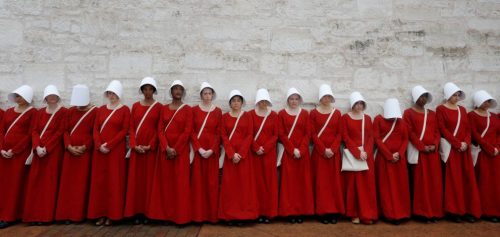
The reasons for these fears are many. The current state of gender politics has become heated with the rise of the anti-harassment movement and ongoing legal battles surrounding abortion access. During the protests surrounding upheavals on the Supreme Court, it was common to see female protesters dressed in the distinct garb from the “The Handmaid’s Tale.” Such protest has even spread to other countries.

The message is clear. People are worried that our society is inching closer to a world similar to the repressive gender politics of Gilead. I can certainly understand those concerns. While I’ve often criticized certain aspects of gender politics, I don’t deny the worry that many women feel about the current state of affairs.

That said, I believe the idea that the United States, or any western country for that matter, could descend into a state of gender apartheid like Gilead is absurd. While we should be concerned about the influence of religious extremism, even in the west, the chances of it ever gaining power on the level depicted in “The Handmaid’s Tale” is precisely zero.

Even if a regime like it came to power, it wouldn’t just fail quickly. It would collapse so spectacularly that it would be a joke on par with the Emu War. Gilead is not this all-encompassing, overwhelming power on par with Big Brother in George Orwell’s “1984.” Atwood even implied at the end of “The Handmaid’s Tale” that the regime was set to fall.

We’ve yet to hear that part of the story, but Atwood did announce that she’s working on a sequel. One way or another, Gilead’s days are numbered, even in the fanciful world that she created. Before then, I’d like to break down why the Republic of Gilead would be doomed if it ever attempted to set up shop in the real world.

If nothing else, I’d like to offer some perspective to those who fear that the state of gender politics is regressing. To those people, I share your concerns. However, I’m an optimist. I believe both feminists and men’s rights activists can and will find plenty of common ground on these issues in due time.

Even if they don’t, they can take comfort in knowing that Gilead, as both a philosophy and a system, is so flawed that dreading it is an exercise in hyperbole. There are still plenty of lessons to be learned from “The Handmaid’s Tale,” but in terms of setting up a competent theocratic regime, it’s a perfect check-list on what not to do.


Reason #1: Establishing Gilead Would Collapse The Economy

One of the first things the Sons of Jacob did when they established Gilead was fire every woman from their job and effectively eliminate their legal rights. On top of it being an exercise in brutal oppression, it removed half the labor force from the economy. In 2010, there were approximately 123 million women in the workforce. Firing every one of them wouldn’t just cause a huge recession. It would destroy the economy at every level.

Even the most ardent anti-feminist would be badly hurt by a world where half the GDP just disappeared. Suddenly, the industries that everybody relies on just cease functioning. Baking, health care, technology, and basic services essentially collapse as both the labor pool and the consumer base disappears.

That means from the very beginning, Gilead would have to navigate the worst economic collapse in history. More often than not, governments that cause collapses or fail to recover from them don’t last very long. Even if the Sons of Jacob found a way to blame it on minorities, feminists, or other religions, they would still be on the hook for fixing things and doing so with half the labor force will be difficult, to say the least.

Beyond the logistics, destroying an entire economy as part of a religious crusade is going to piss off some very powerful people who were thriving in the current system. America, alone, has over 500 billionaires whose massive wealth would be threatened by such a collapse. People with those kinds of resources aren’t going to let Gilead succeed, even if they manage to seize power.


Reason #2: Micromanaging Peoples’ Lives Is Impossible (In The Long Run)

I’ve noted before that fascist systems have many fundamental flaws. There’s a reason why some of the most brutal, authoritarian regimes in history still ended up collapsing. In the long run, they find out the hard way that it’s just impossible to effectively manage the lives their citizens.

The Republic of Gilead is a lot like Big Brother in that it takes micromanaging to a ridiculous extreme. It doesn’t just have its own secret police to enforce a rigid caste system. Much of its governing philosophy relies on ensuring people stick to their roles and never deviate. Women do what the state requires them to do without question. Men do the same, right down to how they structure their families.

That system only works if human beings are like machines who never get bored doing the same thing over and over again for their entire lives. Since human beings are not like that, there’s no way that kind of society can remain functional in the long run. The fact that the boredom of solitary confinement drives people crazy is proof enough of that.

It still gets worse than that. In every revolution, there’s often a period of heavy solidarity when the people rally behind the new regime as the beginning of a new Utopian vision. This happened in the Russian Revolution and during the Cultural Revolution in Communist China. Unfortunately for Gilead, it came to power by brute, terrorizing force.

That means this government coming to power isn’t the will of the people. It’s just plain bullying and people tend to resent that sort of thing. Even the Iran Revolution had the good sense to rally the people. The Republic of Gilead didn’t bother with that. It’s hard to imagine that collapsing the economy and subjugating half the population at gunpoint will make them many friends.


Reason #3: Theocracies Are The Least Stable Forms Of Autocracies
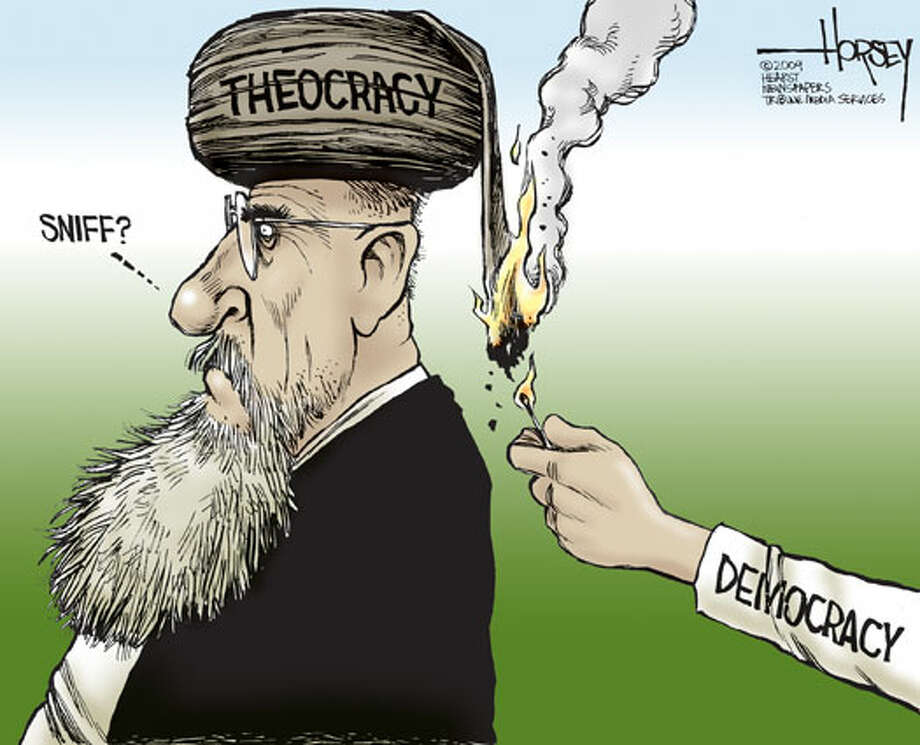
Remember when a purely theocratic state managed to prosper without being located atop an ocean of valuable oil? I don’t either and there’s a good reason for that. When it comes to repressive authoritarian states, theocracies are the worst possible choice. That’s because by entwining government with religion, it’s also entwining itself with the various flaws of religion.

Big Brother didn’t bother with religion in “1984.” It didn’t have to because religion, for all intents and purposes, was obsolete. The authority of the state and the authority of a deity was the same thing. The Republic of Gilead doesn’t have that luxury. Their politics and theology is based on an extremely conservative form of Christianity.

While that may seem fine to the Pat Robertson’s of the world, it adds a whole host of complications to the mix. The Sons of Jacob justify their repressive actions by appealing to Christianity and the bible. That’s okay if every single person in the entire republic agrees on one single interpretation of a religion and its holy text. Unfortunately, that has never occurred in the history of humanity.

There are dozens upon dozens of denominations in Christianity. There are also fringe cults, radical sects, and even schisms within those groups. At most, Gilead could have a unified theology at the beginning, but as new generations come along, that unity will collapse.

People will inevitably disagree. Every side will claim God is with them and everyone else are heretics. This sort of thing has been happening with religion for centuries. It won’t stop in Gilead. At some point, someone is going to think they heard God tell them something else and no one will be able to convince them otherwise. When that happens, conflict will ensue.

That sort of conflict can be managed in a more secular dictatorship. When government and religion are entwined, though, it’s much harder to work around. Even if Gilead could survive an economic collapse and the logistics of micromanaging peoples’ lives, it’s very unlikely it’ll survive the never-ending onslaught of religious debates.


Reason #4: Gilead Would Be An Easy Target For Invasion

Whether you’ve read the book or only watched the TV show, it’s hard to tell what sort of geopolitics the Republic of Gilead deals with. There are a few hints that there are other countries who did not descend into theocratic repression. There are even some cases of refugees in neighboring areas where women still have their rights.

The existence of those neighbors is yet another complication that ensures Gilead won’t last long, no matter how much its leaders pray. It already created a huge refugee crisis when it took over a sovereign government by force. At the same time, it handicapped itself by collapsing its economy and relegating half its population to serve as baby factories. It’s not just a source of chaos. It’s an easy target.

Neither the book nor the show reveals much about Gilead’s military capabilities. Even if we assume they get their hands on nuclear weapons, they’re still vulnerable because other countries have them too. More importantly, they know how to operate and maintain them. Religious zealots are good at a lot of things, but science isn’t one of them.

In the same way creationists aren’t likely to understand quantum mechanics, an entire government run by religious extremists aren’t likely to manage advanced weaponry. As time goes on, their emphasis of religion over reality will undermine their ability to develop such weapons. Their secular neighbors will have no such qualms.

Letting Gilead endure with its religious extremism and gender oppression means establishing a precedent that most other countries don’t want. Seeing one country fall to such a violent overthrow would be jarring enough. The first reaction to every nearby country would be to take steps to ensure it doesn’t happen to them. One of those steps could be overthrowing Gilead before one woman has to wear those goofy outfits.


Regardless of how you feel about “The Handmaid’s Tale” or where you stand in terms of gender politics, the book offers a powerful message. Like “1984,” it shows how bad things can get when extremism takes hold. Whether you’re a man, woman, or transgender, we have a lot more incentive to get along rather than fight one another. At the end of the day, that will ensure that Gilead remains nothing more than a flawed, fictional country.

Leave a comment

Filed under Current Events, gender issues, human nature, Marriage and Relationships, men's issues, outrage culture, political correctness, psychology, religion, sex in society, sexuality, television, women's issues

Addiction, Religion, And The Striking Similarities

1df129fb-3296-485a-8010-1e7989560ad7-large16x9_photo

Battling addiction is a serious issue. Even if you haven’t struggled with it at some point in your life, there’s a good chance that you know someone who has. I’ve known more than a few. I’ve seen how damaging it can be to people and their families.

That makes the process for treating addiction just as critical. Unlike the flu or a nasty headache, it’s not as easy as simply getting a prescription and taking a few pills. Oftentimes, there are powerful psychological factors at work to go along with the equally-powerful biological factors. Finding an effective treatment is exceedingly difficult, especially in the midst of a deadly opioid crisis.

One of the greatest challenges for finding such treatments is ensuring that someone doesn’t just exchange one bad addiction for another. Even if some addictions aren’t as damaging as another, going from heroin to methadone is only a marginal improvement for many. There is, however, one secondary addiction that adds even more complications to the mix and it’s not a pill or a substance. It’s religion.

As always, I’m going to try and be careful with my words here. I know discussions involving religion tend to bring out a lot of high emotions. I’m also aware that whenever I discuss religion, I don’t portray it in a positive light. I make it a point to disclose that religion can be a positive force for many people and I have many devoutly religious people in my family who I love dearly.

That disclaimer aside, the forces surrounding organized religion are powerful and they can be misused. The history of such misuse is well-documented. It’s impact on treating addiction is less known, but does manifest. There have been more than a few celebrities who have become religious after a battle with addiction. Some are genuinely better because of it. However, that does raise a few questions.

Did their religion actually help them overcome their addiction?

Did their religion help them address the underlying factors behind their addiction?

Did their religion just become a replacement for whatever they’d been addicted to?

These questions may come off as cynical, but they have serious implications. Religion is a powerful force on some people. Whether you’re a true believer or an ardent atheist, it’s hard to deny the impact of such a force. Religious experiences have been documented to have measurable effects on the human brain. Some of those effects are comparable to addictive drugs.

That’s not to say that going to church and going to a heroin dealer are the same thing. Addiction is complex and so is brain function. At the same time, the human brain is prone to plenty of flaws. It can be easily tricked and people can even trick themselves. When it comes to addictions, you can’t expect your brain the know the difference between heroin and a religious experience.

There is even some research that demonstrates this to some extent. For people who once built their lives around their addiction, religion is a pretty effective replacement. It demands a great deal of money, time, and energy. It surrounds you with people who reinforce and reaffirm your beliefs and behavior. It can even give some people a very specific high.

That high just becomes the new addiction. That intense feeling that religion gives people suddenly becomes the feeling that addicts are so driven to pursue. It may not feel the same as an addict’s previous addiction, which is why they may not see it as such. That doesn’t matter, though. What matters is that it fills the proverbial void that the previous addiction once filled.

That’s why it shouldn’t be too surprising to find out that some famous addiction treatment programs have deeply religious roots. It also shouldn’t be that surprising when those who find religion after dealing with addiction tend to be quite passionate about their faith, compared to those who found religion through a different path.

Even if these programs help people, it still doesn’t answer the relevant questions surrounding their addiction. Exchanging one disease for another doesn’t constitute a cure, but people make an exception for religion. The idea of someone being addicted to a religion isn’t as easy to imagine as someone being addicted to cigarettes, gambling, or porn. To them, a religious addict is just someone who goes to church more often.

Some see that as a good thing. Compared to robbing gas stations for drug money, it is an improvement. However, it still leaves the underlying cause of the addiction untreated. Whatever is making someone an addict is still present. While I don’t doubt religious organizations are happy to accept their adherence, it doesn’t fundamentally change an addict’s condition.

That can be damaging and dangerous to people who are already vulnerable. In the worst case scenario, finding religion can only create the illusion that the addict has been cured. Society didn’t approve of them being a junkie on the street, but it does approve of them being a devout religious zealot who rails against the evils of their former vice.

That sends the message that society is selective when it comes to treating addicts. As long as their addiction is productive for society, in that it benefits established institutions, it’ll treat that as a cure. It doesn’t matter if it never helps someone get to the root of their problems. As long as it makes them productive, that’s good enough.

Again, I’m not claiming that most religious organizations actively exploit people struggling with addiction. Some definitely do and a few are quite famous for it. However, it’s somewhat telling that we ascribe finding religion to overcoming an addiction when, on many levels, it’s just exchanging one source of addictive behavior for another.

At its best, religion inspires people to do great things for all the right reasons. At its worst, it can exploit someone to such an extent that it can make people who are genuinely sick feel like they’re healed. Addiction, like many other disease, is something that can only get worse if left untreated.

Whether it’s religion or crack, the brain of an addict will do what it takes to sustain its addictive state. There are effective, legitimate treatments for addiction that actually attempt to confront the source of the issues within an addict. Many aren’t as easy or overwhelming as finding religion, but they make a concerted effort at treating the addict rather than simply guiding them to a more socially-acceptable addiction.

Leave a comment

Filed under extremism, human nature, psychology, religion

The Secular Theology of “Lucifer” (The TV Show)

lucifer

What happens when you die?

Does our consciousness live on in some form?

Is there a way in which people who escaped punishment in life ultimately face it in death?

These are distressing, but profound questions that form the backbone of nearly every major religion. From the major Abrahamic faiths to the lore of ancient civilizations, there are many ways to approach this question. We all contemplate our mortality at some point and wonder/dread what will happen after our mortal bodies fail us.

Even some non-believers have mused about it at some point. Whereas religion tends to speculate wildly on the possibilities, an secular view of the afterlife isn’t too different from how it views deities. In the same way there’s no evidence for any gods or supernatural forces, there’s no evidence that consciousness exists outside the human brain.

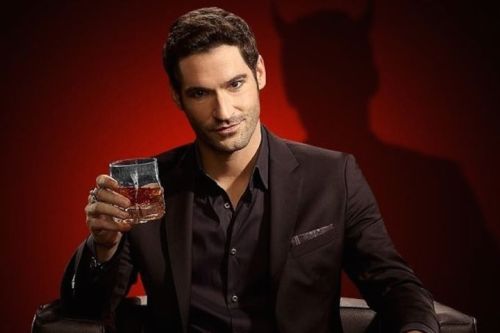
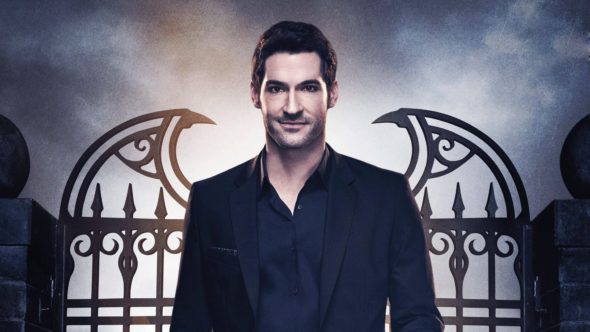
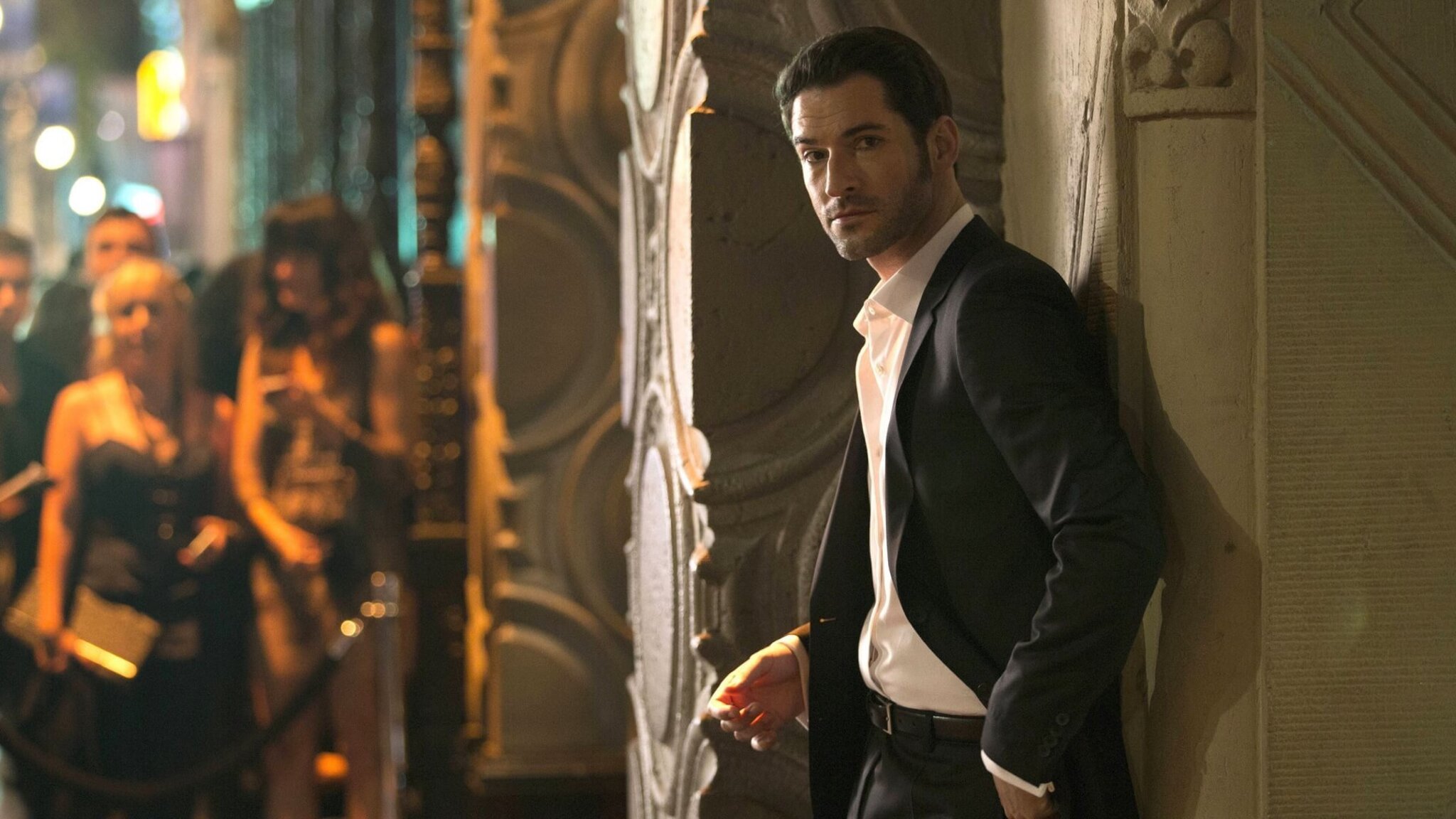
That’s what makes the recently-canceled, but saved by Netflix show, “Lucifer,” such a compelling contributor to this age-old question. Beyond Tom Ellis flexing his uncanny charm, the show achieves something remarkable in how it approaches gods, angels, demons, and the afterlife. I would even go so far as to say that it crafts a theology that affirms secular values over those of any religion.

By that, I don’t mean that “Lucifer” glorifies atheism or non-religious worldviews. If anything, one the show’s common themes is that glorifying any worldview is pointless. It’s surprisingly balanced in how it portrays religious and non-religious characters. The show contains respectable believers like Father Frank Lawrence and deplorable non-believers like Jimmy Barnes.

When it comes to addressing those age-old questions about deities, the afterlife, and morality, though, the show crafts a mythos that doesn’t play favorites. In the world of “Lucifer,” it doesn’t matter whether you’re a Christian, Muslim, Scientologist, Buddhist, or Pastafarian. Your life and your afterlife are subject to the same standards.

To understand those standards, it’s necessary to understand the influences of the show. Before Tom Ellis put on an Armani suit, the story of Lucifer Morningstar emerged in a the critically-acclaimed graphic novel, “The Sandman.” Even if you’re not a comic book fan, I highly recommend this book. There’s a good reason why it’s in Entertainment Weekly’s 100 best reads from 1983 to 2008.

While there are many differences between this comic and the TV show, the core tenants are the same. Lucifer Morningstar once ruled Hell, but decided to abandon that role and set up shop in the mortal world. Much like Tom Ellis’ character in the show, this version of Lucifer resents the stereotypes and misunderstandings surrounding him.

He’s not the source of all evil. He’s not the Lord of Lies, either. In fact, Lucifer has his own personal code of conduct and chief among that code is not lying. It goes beyond just telling the truth, though. Lucifer doesn’t sugarcoat anything, nor does he tell only part of the story. He tells the truth in the clearest, harshest way possible.

The show captures many of these elements. In the first episode when he meets Detective Chole Decker, he says outright who he is and isn’t coy about it. While she doesn’t believe he’s the actual devil, he sets a similar tone in how wields the truth. He’s not afraid to shove it in peoples’ faces and let horrifying realizations do the rest.

That emphasis on hard truth, both in the show and the comics, closely mirrors a secular approach to reality. It doesn’t matter how strongly you believe or don’t believe in something. The truth doesn’t change. People can spend their entire lives avoiding it, making excuses or crafting elaborate mythologies.

Whether someone identifies as atheist or agnostic, the premise is the same. If there’s no verifiable evidence, then you can’t say something is true. That leaves a lot of uncertainty about the nature of life, the afterlife, and everything in between. For many people, that’s just untenable and that leads to all sorts of contemplation and speculations.

It only gets worse when there’s considerable evidence to the contrary, which those who cross Lucifer often learn the hard way. While the comics touch on this to a limited extent, the show is much more overt. It often occurs when Lucifer flashes his true form to others. Most of the time, their reaction is one of unmitigated horror and understandably so.

These people, whether they’re cold-blooded killers or schoolyard bullies, just got a massive dose of exceedingly heavy truth. They just learned that the devil is real. Hell is real. Angels, demons, and deities are real. That also means it’s very likely that there’s some form of life after death. For those who have done bad things, that’s a genuinely terrifying prospect.

The details of that terror are explored throughout the show, especially in the first and second season. It’s here where the show distances itself from the fire and brimstone of the Abrahamic faiths. It even differs considerably from the hellish visions of Eastern religious tradition. To some extent, it takes the ethical concepts of secular humanism and crafts a prison around it.

That prison doesn’t involve pitchforks, fire, or monsters who chew on the souls of history’s greatest traitors. In the divine world of “Lucifer,” Hell is dark domain in which the souls of sinful mortals are punished for the misdeeds they committed in life. How that punishment plays out varies from soul to soul.

In the first season, Malcolm Graham spends a brief time in Hell, relatively speaking. He describes it as a place that takes everything someone loves and uses it to torment them. In his case, he freely admits that he loves life. As such, he is starved and isolated so that he cannot experience it or its many joys. It’s an extreme form of solitary confinement, which is very much a form of torture.

On top of that, time flows differently in Hell. Even though Malcolm wasn’t there for very long, he conceded that 30 seconds felt like 30 years. That doesn’t necessarily mean it moves slower, though. Time is simply a tool with which to ensure the effectiveness of the punishment. Lucifer, himself, finds this out in Season 2, Episode 13, “A Good Day To Die.”

For him, time becomes an endless loop of sorts. In that domain, he continually relieves the moment he kills his brother Uriel, one of the few acts in which Lucifer feels genuine regret. It keeps on happening again and again, evoking the same anguish. It’s like the movie “Groundhog Day,” but one in which people constantly relieve the worst day of their life.

These kinds of punishments are certainly worthy of Hell. They’re harsh in that they’re customized torture that’s specific for every damned soul. It’s a lot more flexible than the elaborate Hellscape described in “Dante’s Inferno.” However, there’s one important aspect to this punishment that puts it into a unique context.

The specifics are revealed in Season 3, Episode 7, “Off The Record.” Lucifer reveals to Reese Getty that the devil isn’t the one who decides which souls end up in Hell. No deity decides that, either. Ultimately, it’s the individual who makes that decision, albeit indirectly.

When humans transgress in the world of “Lucifer,” there’s no cosmic judge keeping track of their misdeeds. What sends them to Hell is the weight of their own guilt. Even when they pretend they don’t feel it, like Malcolm Graham, it’s still there. They’re just ignoring it or avoiding it. When they die, though, it ultimately comes back to weigh them down.

This means that punishment in Hell isn’t technically eternal, which I’ve noted is critical if the concept is to have any meaning whatsoever. Lucifer even says in the same episode that there’s no demon army guarding the gates of Hell. The doors are opened and unlocked. Those damned souls are free to leave, but they never do. It’s their own choices, guilt, and regret that keeps them damned.

That means the deeds that send people to hell are subjective and contextual. It’s an outright rejection of the universal morality that many religious traditions favor and an affirmation of the more nuanced ethics espoused by secular humanism. Both the morality and the theology of “Lucifer” depends heavily on the situation, intent, and consequences of someone’s action.

In the world of “Lucifer,” a priest and a porn star can both go to Heaven. It’s strongly implied that Father Frank Lawrence went to Heaven after his heroic actions in “A Priest Walks Into A Bar.” It’s also implied in “City Of Angels?” that there’s a distinct lack of porn stars in Hell due to all the good works and joy they bring to people in life.

At its core, “Lucifer” frames damnation as an underlying consequence of individual actions. Everything begins and ends with the individual. What they do, why they do it, and the consequences they incur are primary criteria for how souls spend their afterlife. In both the comics and the TV show, Lucifer is a champion of individual choices and all the implications that come with it.

This emphasis on the individual effectively tempers the influence of any deity or supernatural force. Even though gods and angels exist in the world of “Lucifer,” they don’t make choices for anybody. Granted, they can have major influences, as shown in episodes like “Once Upon A Time.” At the end of the day, it’s still the individual who is ultimately responsible.

This secular approach to theology works because individual actions are the only deeds we can truly quantify. It creates criteria under which neither atheists nor believers have any clear advantages. How they live their lives and how they go about making choices is what determines whether they face punishment after death.

It still has some problems that the show has yet to address. It doesn’t indicate how Hell handles people who are incapable of feeling guilt or otherwise mentally ill. It also doesn’t reveal how Heaven differs from Hell, although Lucifer implied to Father Frank that it’s more boring than Hell. Hopefully, that’s just one of many other themes that get touched on in Season 4.

Whatever the flaws, the unique take on theology and morality give “Lucifer” a special appeal for both believers and non-believers. It presents a world where those profound questions I asked earlier have answers. No one religion got it right and atheists aren’t at a disadvantage for not believing. That may not sit well with some, but it affirms a brand of secular justice that judges every individual by the choices they make.

More than anything else, Lucifer Morningstar is a champion of deep desires and hard truths. He opposes anyone who tries to dictate someone’s decision or fate, be they a devil or a deity. People who do bad things are ultimately punished, but not by him. In the end, he really doesn’t have to. An individual is more than capable of creating their own personal Hell.

13 Comments

Filed under human nature, philosophy, religion, television, Villains Journey

Chris Pratt, Religious Celebrities, And Why We Should Be Concerned

chris-pratt-james-gunn-guardians-of-the-galaxy-3-controversy

In general, celebrities operate on an entirely different level of reality than non-celebrities. Their concept of normal is so skewed, so distorted, and so out of touch that it’s hard to relate to them. Just read up on the weird things Gwyneth Paltrow has said in recent years for proof of that.

Even if they are out of touch, it is possible for celebrities to be genuinely decent people and succeed in an industry known for horrendous corruption. Some celebrities do work that legitimately makes the world a better place. By most measures, Chris Pratt of “Parks and Recreation” and “Guardians of the Galaxy” fame is one of them.

I consider myself a fan of his. Mr. Pratt has done many things that have won him the respect and admiration of many. Just read the stories about him visited children’s hospitals and try not to like him. While he has undergone some unfortunate upheavals in recent years after his divorce from actress Anna Farris, he has generally managed himself well in the world of celebrity culture.

However, recent events surrounding Mr. Pratt may be cause for concern. While I doubt he’s heading towards the kind of celebrity meltdowns that have doomed others, I think there is reason to worry about the effects that continued fame, celebrity, and wealth will have on him. That’s because those effects may be compounded by another huge complication, namely that of organized religion.

While Mr. Pratt has not hidden the fact that he’s religious, it recently became an issue when Ellen Page, a noted LBGT activist, called him out for attending a church that has a history of anti-gay rhetoric. Now, as someone who has levied plenty of criticism about religion before, I generally support pointing out the injustices and absurdities of religion. In this case, I’m surprised by the backlash.

In general, Ms. Page was subject to significant attacks for her criticism. She was made out to be the bully here and she’s someone who was subject to deplorable treatment by the director who botched X3. In general, people are siding with Mr. Pratt, saying that Ms. Page was out of line for criticizing him for the church he attended.

Personally, I don’t think Ms. Page went about her criticism the right way. Given the horrendous attacks religious organizations have orchestrated against the LGBT community, I don’t blame her for being vocal. This incident, however, and the way Mr. Pratt responded to it leaves me concerned about the cumulative impact that celebrity and religion will have on him.

To understand the extent of those concerns, you need look no further than another famous Hollywood actor who was also respected, popular, and religious. That actor is Mel Gibson. Today, he’s more a joke and an internet meme. However, it wasn’t that long ago when he was Hollywood’s golden boy.

Like Mr. Pratt now, Mel Gibson a successful action star who could also do comedy and drama. For a time, he was the actor many women in and outside of Hollywood swooned over. I know because at one point, my mother admitted to having a major crush on him and having seen some of his old movies, I honestly can’t blame her.

While Mr. Gibson didn’t make a big deal of his religion for the most part, it did rear its influence when he went through his infamous meltdown in 2006. Even after he apologized for that incident, his streak of making anti-Semitic comments has become somewhat normal. As a result, his once-impeccable reputation is a distant memory.

That’s not a fate that anyone deserves, especially Mr. Pratt. Now, I would argue that he’s in a better position than Mr. Gibson was. The various stories surrounding him and the people who work with him paint him as someone who manages himself very well. I would be genuinely surprised if Mr. Pratt ever underwent a similar meltdown.

That said, there is still a distressing history of religion having a less-than-beneficial impact on celebrities. Whether it’s Kirk Cameron encouraging people to not use their critical thinking skills in the name of Christianity or Tom Cruise bashing psychiatry in the name of Scientology, religion can turn respectable celebrities into an embodiment of perverse religious dogma.

In certain circumstances, they can even help compound that dogma. Celebrities already wield more influence than most priests, mullahs, monks, or rabbis. Religious organizations have a strong incentive to cater to and hold onto celebrity adherents. That way when these celebrities say something about their religion, people are more inclined to listen.

Some celebrities do this willingly and freely. Others are guided towards it. It’s well-documented that Tom Cruise gets special treatment in the Church of Scientology. While we don’t know if Mr. Pratt’s church does something similar for him, they certainly have a reason to do whatever they need to do for him to maintain his support and his money, by default.

At the moment, Mr. Pratt’s church is not on the same level as Scientology or even the Catholic Church. By most measures, it’s a fairly standard conservative Christian church that holds positions that won’t surprise anyone who know anything about religiously-motivated morality. It still holds questionable beliefs and wields more influence than most local churches.

Depending on how Mr. Pratt manages that influence, he could either keep his religious affairs private or go down the path of someone like Kirk Cameron, celebrities whose excessive religiosity hinders their respectability. On top of that, it could lead to him starring in some exceedingly awful movies.

The worst case scenario for Mr. Pratt would be something on the level of Mel Gibson, a meltdown that permanently taints his once-golden image as a likable pretty boy who visits children’s hospitals. I don’t think he deserves that. No celebrity deserves a downfall like that, but religion does tend to make that slope a little steeper.

I haven’t met Chris Pratt and I probably never will, but based on what is publicly known, he’s a good man who has done plenty to deserve our respect. Religion, for the most part, doesn’t change that. However, when taken to extremes, as some celebrities have shown, it can reveal just how corrosive certain dogma can be to otherwise decent people.

As Stephen Weinberg once said of religion, “With or without it you would have good people doing good things and evil people doing evil things. But for good people to do evil things, that takes religion.” Mr. Pratt is a good person and it would be nothing short of tragic if his sincerely held faith did something to undermine that. Even if you don’t agree with Ms. Page for calling him out, her concerns are still valid.

1 Comment

Filed under Celebrities and Celebrity Culture, gender issues, human nature, LGBTQ, outrage culture, psychology, religion

Creationism, Religion, And Mafia Morality

angry_god

Anyone who has seen at least one movie about the mafia has a good idea for how they do business. They take the whole “might makes right” approach to its logical conclusion. Being in the right means being strong. Being strong means being able to dictate what is right. It’s circular reasoning, but that’s how the mob justifies its activities, from loan sharking to protection rackets.

The setup is simple. You find someone who is inherently weaker, tell them what will happen to them if they don’t pay them, and let fear of death or bodily harm do the rest. The weak usually pay up, whether it’s money, respect, silence, or a combination of the three. The foolish will try to resist and often face serious consequences.

Most reasonable people find this kind of morality deplorable. However, this kind of morality is often employed by another organization that is not only legal. It doesn’t even have to pay taxes in many countries. That powerful entity is organized religion it can take mafia morality to a far greater extreme.

Before I go any further, I want to make clear that I’m not claiming that religion is worse than the mafia. Most religious people are kind, decent people who would never dream of employing this kind of morality. Only a subset of exceedingly dogmatic adherents resort to such extreme and I’m not just talking about the Spanish Inquisition.

These people aren’t pages in history or fodder for a Monty Python sketch. They’re real, they run official ministries, and even manage to obtain tax incentives for major projects. Their brand of religion isn’t just conservative. It’s unapologetically strict. They don’t just garner theological insight from holy texts. They take it as literally as the evening news.

That includes stories like Genesis, despite considerable evidence that it was derived from earlier flood-based stories from ancient Mesopotamia. They read that the god of the bible created the world in six days and they interpret that as six 24-hour days. There’s no room for metaphor or translation errors. This is infallible truth and any effort to contest that is met with the fiercest resistance.

While this kind of dogmatic adherence manifests in many ways, including justifications for slavery and anti-gay discrimination, one of the most overt manifestations occurs in the form of creationists. Now, as much as I respect the faith that many place in their particular religion, I’ve always had a hard time respecting creationists.

They’ve always struck me as a form of Christianity that’s as misguided as it is absurd. It’s not just that they believe the bible literally. They go so far as to say that everything science has concluded about life, evolution, cosmology, and physics is wrong. Some go so far as to claim that it’s an anti-Christian conspiracy on the level of the Illuminati and shape-shifting lizards.

If that was the extent of their faith, then I wouldn’t have a problem with it. Plenty of non-religious people believe in absurd conspiracy theories. However, creationism is especially pernicious in that a key factor in that dogma has a basis in mafia morality. It’s rarely stated overtly, but when it does show, it brings out the worst in its adherents.

Most recently, it reared its head in a surprisingly overt way during a debate between Aron Ra, the director of the Texas state chapter of American Atheists and a popular YouTube personality, and Kent Hovind, a well-known creationist evangelical who has made a career out of debating opponents.

This is the least absurd photo of Mr. Hovind I could find.

While I have my opinions about Mr. Hovind, who I feel has a serious credibility problem in terms of credentials, his methods for contesting evolution leave a lot to be desired. If you got more than a B-minus in a high school science class at a legitimate public school, even in America, you’re capable of seeing through his poorly-rendered ideas.

However, there are times when he, and other creationists like him, skip the part where they pretend to understand the science they deny and resort to the kind of mafia morality that they feel vindicates their beliefs. In essence, they threaten their opponent on behalf of their deity that believing in science will lead them to an afterlife full of eternal torture and suffering.

Never mind the inherent Problem of Hell that many religious and non-religious people have debated for centuries. By their logic, not believing in the holy texts of their religion is an outright affront to their deity and, for the same reason you don’t want to offend a powerful mafia boss, you don’t want to offend an all-powerful being.

Most creationists are subtle about this, but in his debate with Aron Ra, Mr. Hovind basically resorted to this tactic at the end of the nearly two-hour debate. These were his exact words:

“I would like to remind you guys, you’re gonna die one day and you’re gonna be dead for a long time. I hope you can take what you believe to the grave. You’re happy with it?”

While he doesn’t say outright that his deity is going to punish non-believers like Aron Ra for all eternity, the subtext is there. While non-believers may not be at all concerned with what happens after they die, it’s a genuine concern for someone like Mr. Hovind. He truly believes that his God is the kind of deity that would severely punish people for not believing in a specific translation of a holy text.

Ignoring for a moment the absurdities inherent in that attitude, take a moment to appreciate the kind of world Mr. Hovind and others like him believe. In their world, there’s an all-powerful, all-knowing being that wants human beings to think a certain way and accept certain concepts. Even if there’s evidence to the contrary, they must believe it. If they don’t, they’re punished with the full wrath of an all-powerful being.

That’s not just a scary thought, even for a devout believer. It’s the ultimate extreme of mafia morality. No matter how much evidence there is for evolution or how many errors in the bible are documented, the sheer might of an all-powerful deity trumps all of it. No matter what every tool of science or sense of the mind says, deviating in the slightest means punishment in the utmost.

While I’ve noted in the past how eternal punishment and eternal bliss tend to lose meaning in the long run, I suspect it’s a significant concern for creationists like Mr. Hovind. I even have some sympathy for them, if it is the case they genuinely fear the eternal torture referenced in their theology. It may be the case that they’re just charlatans or trolls and they wouldn’t be the first who used religion to aid their efforts.

Even if the Kent Hovinds of the world are just trying to get out of paying taxes, and failing to do so at times, the extreme mafia morality of their theology still has a major impact on adherents and religion. It’s worth noting that Mr. Hovind’s brand of creationism is on the decline among Christians. His kind is an extreme version of a faith that most people don’t accept.

It’s still a dangerous and distressing concept to espouse, that an all-powerful deity would punish reasonable people for accepting what evidence and reason tell them. That’s a tactic that ruthless mob bosses utilize, much to their detriment. Unlike the mafia, though, all-powerful deities don’t risk anything by being so ruthless and those caught in their path are bound to suffer.

8 Comments

Filed under human nature, philosophy, psychology, religion

Why Do Religious People Wear Seat Belts?

Happy-Family-In-Car-640x426

What happens when you die? This question and how people go about answering it is the basis for nearly every major religion in existence. Whether there’s a promise of Heaven, Hell, or reincarnation, it’s fundamental to many religious doctrines. This is especially true of Christianity, Judaism, and Islam, which make up a sizable portion of the global population.

Given these doctrines and their emphasis on life after death, why do adherents of those faiths wear seat belts? That may sound like an inane question, but it has profound implications.

I ask that question because I grew up in an area where there were a lot of churches, a couple mosques, and even a few synagogues. It wasn’t uncommon to see traffic jams around those places, especially during holidays. From what I could tell, though, the people leaving those places were wearing seat belts. That, in and of itself, sends mixed messages.

While Judaism is somewhat vague about the afterlife, it does frequently reference a soul that exists beyond the body. Christianity and Islam are a lot more overt, having many references to Heaven for the holy and Hell for the wicked. I’ve noted before how this concept falls apart when you apply human perspectives to the mix, but these are still critical tenants in the eyes of adherents.

Why then, under those beliefs, would they fear or avoid death? Why would they even mourn loved ones who die? Under the tenants of their religion, their bodies are just gone. Their souls still live on. They’re either lying in wait for the end-times or on their way to Heaven, Hell, or some other version of the afterlife.

It’s a strange disconnect that doesn’t mesh with the emotions we feel when someone we love dies. I’ve come to know those emotions painfully well this past year. I’ve had to attend two funerals, one of which was for my grandmother and I was very close to her. When she passed, I felt that loss on a deeply personal level.

At the same time, there were others in my own family who experienced that same loss, but still maintained a deep devotion to their faith. There were even times when we were encouraged to celebrate their passing because they had ascended to a better place and were reunited with other loved ones.

This is supposed to provide comfort to those still in pain. I can attest to just how powerful comfort can be to someone who has just lost somebody they loved. Even with that comfort, though, I can vividly recall many family members still mourning. Even if they believed that someone they loved was in a better place, they still felt sad.

On a fundamental level, this seems contradictory. You’re feeling sad because someone you love is gone, but at the same time, you’re being told they’re not gone. On top of that, they’ve moved onto a better place that is free of suffering. For someone like my grandmother, who endured plenty of that at the end of her life, this should be a good thing.

It doesn’t stop the sadness, though. We still feel the pain of loss, even when a deeply-held religious doctrine tells us otherwise. There’s a lot to like about the idea that someone we love is no longer suffering and is now enjoying eternal bliss in a heavenly paradise. Even so, it still hurts and we still mourn.

This brings me back to seat belts and why religious adherents wear them. It’s objectively true that not wearing a seat belt is dangerous. If you don’t wear one and get in an accident, then your chances of suffering a fatal injury are much higher. If you’re a devout believer, though, why is that a bad thing?

I’m not being cynical here. It’s an honest question. Why make a concerted effort to survive in a world that can kill you in so many ways? Why go to a doctor whenever you get sick? Why seek treatment when you’re diagnosed with an illness that has the potential to kill you? Ideally, wouldn’t you just seek to alleviate the discomfort, but not whatever ailment is killing you?

If this life is just a precursor to another life, then efforts to prolong it don’t make sense. In fact, efforts to save innocent people don’t even make sense in that context because saving them means keeping them in a world that will make them suffer at some point. Whether it’s a stubbed toe or crippling poverty, preserving life is just increasing their opportunities for suffering.

The messages get even more mixed when major religious leaders go to such lengths to protect themselves. Why did Osama Bin Laden bother hiding for so long if he was that confident he’d go to paradise when he died? Why does the Pope have such intense security wherever he goes? People with this level of faith should be the most confident that they’re going somewhere better when they die.

To some extent, we can attribute this to our built-in survival instinct. One of the most fundamental drives of any living thing, be it a human or an amoeba, is to survive. Much like our sex drive, which religion also attempts to subvert, this is difficult to turn off. More than a few preachers, rabbis, and mullahs have encouraged people to fight this instinct with every fiber of their being.

However, they rarely encourage those same people to avoid wearing seat belts. You probably won’t find many holy men who urge their adherents to never go to the doctor or go out of their way to eat expired meat. Even if our survival instinct is naturally stronger than our sex drive, the implications are unavoidable. They’re asking people to put off escaping a flawed, pain-filled world.

Some of those people, whose sincerity I don’t doubt for a second, will claim that they have family and loved ones to take care of. This is especially powerful with parents, who will do anything and everything to protect their children. Despite that, their efforts still convey incompatible ideas.

A believer wants to stay alive in this chaotic world for the sake of their loved ones, but also believes that those same loved ones move onto a better place after they die, assuming they’ve lived a virtuous life. That assumption gets harder over time, though, because the longer someone lives, the more opportunities they’ll have to descend into sin and depravity.

Most reasonable people consider the death of innocent children to be a truly awful tragedy. The parents of those children are likely to feel immense pain on a level that few can comprehend. At the same time, the likelihood that a child is innocent is far greater than that of someone who has lived much longer. By default, they would be the most likely to get into Heaven.

Even so, people still mourn. They still cry, lament, and suffer the loss of innocent life. Does this mean that they know on some level that there is no afterlife? I wouldn’t go that far. It’s impossible to know what goes through the mind of a believer, especially after they’ve endured the death of a loved one.

For most adherents of religion, which include many members of my family, I doubt these sorts of implications have much impact. Most peoples’ faith is fairly moderate in terms of how they contextualize it with their existence. They can draw clear lines between the real world and the spiritual world.

It’s the minority of zealots, though, for which the issue of life, death, and seat belts becomes a logistical and theological problem. If a particular religion is going to be built around life after death, then how can it justify encouraging adherents to wear seat belts and avoid mortal danger?

In the grand scheme of things, they’re gambling with their immortal souls. The longer they live, the more likely they’ll be to deviate from the prescribed holy path. In that context, why would suicide be discouraged? Even if suicide is considered a mortal sin, why would avoiding accidents or fatal diseases be immoral? Why would anyone that devout feel any ounce of sorrow when someone they love dies?

I don’t expect these questions and their various implications to undercut anyone’s faith. I suspect most will take the Rick Sanchez approach to this issue, which is to not think about it. Regardless of what people may or may not believe, we still mourn the loved ones we lose. We still live our lives with the intention of surviving another day.

In that effort, it makes perfect sense for us to wear a seat belt. The fact that the doctrines of several major religions fundamentally complicate that inherently logical recourse is both telling and distressing. They can shame us for feeling horny, but they cannot stop us from feeling sorrow or hesitation in the face of death. Even the power of faith has its limits and, in this context, that’s not a bad thing.

1 Comment

Filed under human nature, philosophy, psychology, religion

Religious Dogma, Sexual Repression, And How They Foster (Horrendous) Abuse

649d3df0-a73b-40e1-9b95-bb796268c19c-image_from_ios_6

By now, most people have heard the news surrounding the latest round of scandals involving the Catholic Church. Once again, it involves the systematic abuse of children, the elaborate efforts to cover it up, and the religious dogma that is used to protect such behavior. It’s certainly not the first time the Catholic Church has been embroiled in such a scandal, but that doesn’t make it any less distressing.

There’s a lot I can say about the Catholic Church and how badly they’ve handled this issue. There’s even more I can say about how this famous institution’s policies have caused genuine harm in societies that remain devoted to Catholic traditions. However, I would only be repeating what others have already pointed out and I’d rather not do that.

Some have already done it better than I ever will.

For me, personally, these scandals cut deep because I have family who identify as devout Catholics. They see these same scandals too and I can confirm that it hurts them on a personal level. Whenever someone brings it up, they don’t make excuses. They despise those priests for what they did and those who covered it up. It doesn’t shake their faith, though. To some extent, I admire that.

At the same time, however, I often wonder whether they see the same flaws in that dogmatic theology that I see. I try not to bring it up with family members, out of respect for their faith. I still believe that even they are bothered by those flaws. When children are being sexually abused, how could it not?

There are a lot of factors in play with this latest scandal, from the nature of religious dogma to the corruption of powerful institutions. The one that few want to confront, though, involves the cumulative impact of sexual repression with rigid theology.

There’s no way around it. Religious dogma and sexual repression often go together. The Catholic Church is hardly the only institution that encourages strict repression of sexual behavior. Anyone living in Saudi Arabia or Iran can attest to that. With a billion adherents and nearly 2,000 years of history, though, the Catholic Church is one of the largest and most vocal proponents of this dogma.

The reasons for that are many and I don’t want to get into all the issues surrounding its effects. Instead, I want to focus solely on the celibacy of the priests. That practice represents a true extreme of sexual repression. It’s one thing to champion monogamy to the point of murdering adulterers. It’s quite another to have an entire class of people who have to completely repress their basic urges.

It’s not like trying to quit smoking, which is hard enough. This involves denying a basic, fundamental drive that is hardwired into people at birth. Trying to turn that off is like trying make sugar taste bad. It goes against fundamental biological wiring. The idea that someone can repress those force without incurring psychological damage is flawed, at best.

To get an idea of why, think about a time when you were really hungry. Maybe you were sick for a while, trapped on a long road trip, or went on a crash diet. That feeling of intense hunger is not something you can turn off. It’s uncomfortable for a reason. Your body isn’t getting something it’s been hardwired to seek. It’s going to make you feel uncomfortable until you do something about it.

The human sex drive is not like hunger, but it’s similar in that it’s a biological drive. For every living thing, be it a human or an insect, sustenance and reproduction are the two most basic drives. It is possible to survive without reproducing, but the fundamental forces of nature are going to push you to try.

When you push back too hard, it’s like trying to patch a faulty dam with scotch tape and chewing gum. From a psychological standpoint, your brain and your body are deprived. As a result, it’s going to do whatever it can to alleviate this deprivation.

It doesn’t matter if that act is extreme. It doesn’t matter if it’s illogical, illegal, or outright immoral. Your brain and your body will find a way to justify it if it ends the deprivation. For most, it’s just a never-ending battle that requires an individual to fill that missing need with something, which in this case is religious fervor.

It’s debatable as to how much this fills that fundamental need, but a lot of that assumes that celibate priests don’t do something in their private time to relieve the tension. Historically speaking, many in the Catholic Church and other powerful institutions were pretty blatant about how they circumvented the issues of celibacy.

Some priests had lovers on the side. Some employed prostitutes and concubines, but still claimed to be “celibate” because they weren’t married. More often than not, priests were only celibate in the most technical sense and the church often tolerated this. Even St. Thomas Aquinas, a man not known for liberal attitudes, even acknowledged the futility of suppressing the human sex drive when he said this about prostitution.

“If prostitution were to be suppressed, careless lusts would overthrow society.”

For a select few, though, that effort to maintain celibacy manifests in a truly horrific way. I think it’s safe to conclude that the priests who abused these children were not mentally well. Many might have been unwell before they entered the priesthood, but celibacy certainly didn’t help. Repression, especially the kind that’s taboo to even talk about, tends to make things worse.

That’s how people end up with mentalities that are poorly equipped to handle basic urges. Instead of a healthy expression of sexual desire, someone may react with anger or self-hate. When people are angry and hateful, they tend to take it out on someone. It’s not always sexual, but when someone has all their sexual desires pent up over the years, sometimes it seeps in.

That’s how simple desire becomes disturbing fetishes, including those that harm children. That’s how unthinkable behaviors are rationalized. When religious dogma tells someone they face divine retribution for feeling these intrinsic desires, that’s causes serious distress and efforts to mitigate it can make for some pretty unholy behaviors

While it’s hard to study the sex lives of celibate priests, the occurrence of these scandals along with the historical documentation of other lurid scandals reveal plenty about the effects of celibacy. When there’s no outlet for sexual expression, other emotions get caught up in the efforts to cope with that fundamental drive. Add religiously-motivated guilt to the mix and the impact only compounds over time.

None of this is an excuse for what those priests did to these children. They still committed an atrocity and no amount of divine excuses can mitigate the suffering of the victims. The Vatican will do what it has to do in order to maintain its power and influence. However, the reconsideration of extreme practices celibacy is unlikely.

Some media figures will mention it, but never to the point of encouraging serious reforms. That’s a dirty word in both the Catholic Church and any other religious institution. Historically speaking, the rate at which major religion institutions undergo sweeping reforms is nothing short of glacial.

I sincerely hope this latest scandal gives those in the Vatican serious pause, but I have a feeling that even this won’t do it. Religious dogma is notoriously uncompromising. People, especially within powerful institutions, make any excuse to avoid changing it. While the Vatican has made some strides, the fundamental issue remains. As long as basic human nature is suppressed, more will suffer and not in a holy sort of way.

1 Comment

Filed under Current Events, gender issues, human nature, psychology, religion, sex in society, sexuality

How To Resolve The “Religious Freedom” Debate

solidifying-religious-freedom-in-indonesia

Every now and then, a tragic story comes along involving an innocent child who needlessly dies because their parents refused to give them medical treatment due to their religious doctrine. Whether you’re deeply religious or overtly atheist, these stories are heart-wrenching. The fact they occur is a travesty.

Just last year, a two-year-old girl died in Pennsylvania because that very reason. Consequently, her parents were charged with involuntary manslaughter and child endangerment. They were later convicted and subsequently lost custody of their other children.

Those are the least surprising details of the story. They aren’t the first parents to get charged with a crime for refusing to provide medical treatment to their children on religious grounds. According to a study by Pediatrics, 140 children died of treatable medical conditions from 1975 to 1995. You also don’t have to look far to find some pretty tragic stories of children needlessly suffering because of their parents’ inaction.

I bring up these distressing, disheartening facts because there’s one critical detail to stories like those of the girl in Pennsylvania. While the parents of that girl were convicted, the church they attended, the Faith Tabernacle, was not held liable. Never mind that the church’s tenants were what told them to pray harder rather than take their child to a hospital. They incurred no responsibility for that girl’s death.

They’re not the only church that holds those beliefs, either. According to ChildrensHealthCare.org, there are nearly two dozen churches whose tenants discourage or prohibit seeking medical treatment. Moreover, there are laws in certain parts of the United States that actually protect these organizations from liability. Much of it is done in the name of “religious freedom.”

That’s a term I’m sure most with access to a news feed have heard recently. In fact, they’re probably been hearing it a lot more frequently lately, albeit not in a way that links directly to dead children. The indirect link is still there and it’s the key to unlocking the controversy and the resolution to the issue.

Now, I put “religious freedom” in quotes because it’s another one of those vague terms that can be construed to mean anything to fit a particular situation. More often than not, it’s an excuse to argue for favorable or preferential treatment of an individual or group.

That, in and of itself, isn’t too remarkable. People are going to argue for favorable treatment with or without religion. Where “religious freedom” sets itself apart are the legal protections it seeks. Those parents of that dead little girl used religious freedom to justify their behavior.

That is, admittedly, an extreme example and one that rarely makes the news. These days, the most common manifestation of “religious freedom” controversies involve people using it to justify denying services to LGBT individuals, be it a marriage license or a wedding cake. It was also part of a major decision by Supreme Court involving a cake shop that refused service to a gay couple.

Those who champion “religious freedom” cheered the ruling and the precedent it set. This, along with the Hobby Lobby ruling in 2014, establishes that someone can use sincerely held religious beliefs to obtain exemptions from mandates prescribed by law. It seems the effort in securing this “freedom” is gaining momentum and winning battles in the courtroom.

Again, I put that word in quotes for a reason and one I hope will help craft an appropriate standard for what constitutes actual freedom and what constitutes contrived excuses. That is, in essence, what the “religious freedom” battles are seeking. They’re pursuing legally-protected excuses for their theology and its associated behaviors.

I can understand, to a limited extent, why there would need to be some legal protections for religious groups and not just for the purposes of anti-discrimination efforts. We need to have some resource for situations where someone is coerced into doing something that goes against their religion. Strapping someone to a chair and forcing them to eat shellfish will do unique distress to a Jewish person than it will for others.

That being said, it’s somewhat telling that the organizations fighting hardest for “religious freedom” also happen to be organizations that have preached hatred and misinformation on the LGBT community for years. Some of these organizations are designated as hate groups and their sentiment on LGBT issues is rarely subtle.

To them, the free exercise of their religion, as articulated in the first amendment, means the ability to treat certain people, notably LGBT individuals, a particular way. Some will even take it farther than that, seeking the right to craft their entire society around their theology, regardless of what secular law states.

It’s an effort not limited to one religion or denomination, either. There are other major religions with theology that goes beyond refusing service to LGBT individuals and crafting a society where their adherents are their primary authority. Therein lies the greatest flaw in the whole “religious freedom” debate.

When put into practice, the actual expression is less about the exercise of religion and more about the treatment of minorities. Those same Christian bakers may fight for their right to refuse service to a gay couple, but would they fight for the right of a Muslim cab driver to refuse customers with alochol? Well, when the courts ruled against that particular religious expression, there was no major outrage.

That’s the first and most critcial step to assessing the merits of “religious freedom” and the agendas behind them. If you reverse the majority/minority dynamics, is it applied equally? If the majority is the only one that benefits, then it’s not really freedom. It’s an overly elaborate excuse with religion as a cover.

There’s an even easier standard to use if majority/minority dynamics are too complex. This one goes back to the tragic stories about parents refusing life-saving medical treatment for their children. It can be articulated with a simple set of questions.

Could a form of religious expression/teaching be used to justify conduct that leads to the death of a child?

If yes, then it warrants no legal protections of any kind.

If no, then it constitutes free expression.

It’s a fairly simple standard, one that does not add a religious context to freedom and expression. There is freedom. There is expression. Sometimes it’s religious. Sometimes it’s not. Whether it’s just going to church on a Sunday or not eating certain foods, it’s just another form of freedom and freedom is a beautiful thing.

When it’s used to justify the deaths of children and discriminating against minorities, it’s not freedom. It’s just bullying looking for legal protection. I’m completely in favor of people practicing their religion as they see fit or no religion at all. However, there are standards for a civilized society and those standards cannot and should not accommodate excuses for dead children.

Leave a comment

Filed under Current Events, political correctness, Reasons and Excuses, religion

Why You Can’t Believe In Eternal Hell, Be Anti-Abortion, And Be Morally Consistent

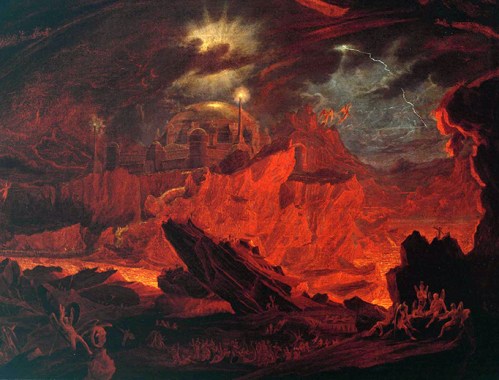
The Fallen Angels Entering Pandemonium, from 'Paradise Lost', Book 1 ?exhibited 1841 by John Martin 1789-1854

Brace yourself because I’m about to talk about two topics that make people very uncomfortable. One is abortion, a heated political topic that is poised to get even more heated, due to recent political upheavals. The other is Hell, a distressing theological issue that makes us dwell/lament on our impending death. If that weren’t volatile enough, I’m going to tie both topics together.

Rest assured, I’m not doing this to combine a couple of controversial issues for dramatic effect. While I loathe talking about issues like abortion, I don’t avoid it when it reveals something important about a particular movement or can demonstrate important lessons about society.

When it comes to Hell, a topic that heats up any debate between believers and non-believers, the conversations are just as difficult. I still feel they’re worth having. This one, in particular, counts as one of them because there are certain implications that warrant a more nuanced discussion.

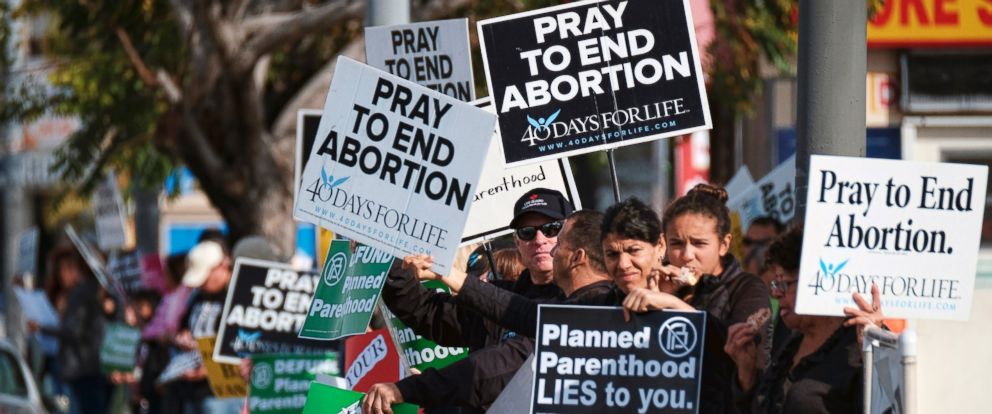
It’s no secret that those who are vehemently anti-abortion also happen to be religious. Anti-abortion protesters even cite bible passages to justify their position. Now, I can understand and even accept certain ethical aspects of the pro-life position. However, when religion enters the debate, that’s where some real disconnects emerge.

That’s because when those factors enter the pro-life equation, both the morality and the math break down. To understand why, it’s important to focus on an aspect of the abortion debate that the late, great George Carlin famously emphasized. He sought consistency in the anti-abortion debate and noted its rarity in the most hilarious way possible.

Consistency is important if your argument is going to have merit. Even with emotionally-charged topics like abortion, consistency is key to ensuring that an argument has some semblance of logic. Since logic and faith tend to conflict, especially in matters of science, bringing religion into the mix can easily derail that consistency.

This is where the issue of Hell enters the picture. It’s a very unpleasant, but very critical concept to certain religions, namely Christianity and Islam. It’s central to their theology, which emphasizes punishment for the sinful. It’s a very morbid, but very relevant concept because everybody dies and nobody knows for sure what happens afterwards, if anything.

In the abortion debate, Hell matters for the anti-abortion side because their most frequent refrain is that abortion is murder. Having an abortion is the taking of a human life and murder is an egregious sin. It’s one of the few sins that’s enshrined in both secular law and the 10 Commandments.

By holding that position, though, it raises an important implication for both the consistency of the anti-abortion position and the theology used to justify it.

If abortion really does take a life, then what happens to that life? Does it go to Heaven or Hell?

That’s a critical question to answer, but it’s here where both the consistency and the moral underpinnings of the anti-abortion debate break down. In fact, it doesn’t even matter which way the question is answered. It still has critical implications that make an anti-abortion stance for religious reasons untenable.

To understand why, we need to look at the possible answers to the question and examine the bigger picture. Say, for instance, that you believe the deity you worship saves the souls of aborted fetuses. They all get to go to Heaven because sending unborn children to Hell just doesn’t make sense for a loving God.

By that logic, though, wouldn’t abortion actually be the best thing a woman could do for her unborn child? If, by aborting a pregnancy, she guarantees that her child goes to Heaven, wouldn’t that be the greatest act of love a mother could give?

In that moral framework, any woman who gives birth is basically gambling with their child’s soul. By bringing them into a sinful world, they put them in a position to live a life that will eventually send them to Hell. It doesn’t matter if that chance is remote. It doesn’t even matter if the deity reserves Hell for the worst of the worst. Any child born still has a non-zero chance of damnation.

In that context, being anti-abortion is the worst position to take for someone who believes that their deity sends aborted fetuses to Heaven. If anything, they would have to be in favor of abortion for every pregnancy, planned or unplanned, because it means more souls in Heaven and fewer in Hell.

The implications are just as distressing if you answer the question the other way. If your deity sends aborted fetuses to Hell, then logic follows that this deity cannot be just or loving. A fetus, by default, has no ability to even contemplate sin, let alone commit it. Sending it to Hell implies that sin, itself, is an empty concept.

It also undercuts key aspects of Judeo-Christian theology, which says that someone must sin to warrant damnation. Holding both a fetus and a young child with a limited capacity to understand such concepts is untenable. Keep in mind, Hell is supposed to be full of torture and suffering. What kind of deity puts a child through that?

Even if the deity knows which fetus or small child is destined to sin and punishes them accordingly, that still renders the anti-abortion position pointless. If the deity already knows which life is damned, then why does it matter whether a woman opts to have an abortion? If that has already been determined, then abortion has no religious implications whatsoever.

Whatever the case, the very concept of Hell creates an illogical loop that is incapable of consistency. Even if you grant the most generous assumptions of a religious argument, it still falls apart as soon as you try to put it into an ethical framework.

While the very concept of Hell is subject to all sorts of moral complexities, it effectively supercedes those complexities in the abortion debate. Either Hell is full of innocent aborted souls or is devoid of them. In both cases, it reveals more about the deity and the adherents of a religion than it does the actual issue.

None of this is to say that those who make anti-abortion arguments on the basis of faith aren’t sincere. I don’t doubt for a second that they are. They genuinely believe that abortion is immoral and constitutes murder. However, when it comes to making a moral argument, consistency matters. Without it, the arguments are entirely arbitrary and there’s no winning that debate.

6 Comments

Filed under gender issues, human nature, philosophy, political correctness, religion, sex in society, women's issues

Boredom: How It Can Shape (And Subvert) Religion

Praying hands

Whenever I talk about boredom, whether in the context of the present or a future where it’s a full-blown plague, I often belabor how it’s effects and impacts are understated. That’s somewhat unavoidable. Boredom, by definition, requires an environment of limited, monotonous drudgery. Most people see their lives as inherently hectic so the boredom seems like a distant concern.

Hectic or not, everyone is still vulnerable to boredom’s corrosive effects. Those effects are well-documented and it’s part of why solitary confinement is considered torture. Those same effects can shape heroes, villains, and eccentric mad scientists, alike. It can also be a factor in determining the long-term viability of an ideology.

That last detail is something I attempted to explore in an earlier article where I introduced the concept of the Boredom Filter. Simply put, by contemplating an ideology taken to its ultimate end, the Boredom Filter can reveal whether that ideology can survive in a world where humans despise boredom and will do anything, including horrific crimes, to alleviate it.

While researching that article, I originally intended to apply the filter to religion as well. I knew that was sure to enter some extremely sensitive areas. Talking about identity politics and sexual taboos is tricky enough. Adding religion to the mix is like adding a bit of nitroglycerine to a burning pile of napalm.

On top of that, I think religion in its general form is somewhat distinct from ideologies like liberalism, conservatism, feminism, and even libertarianism. Those ideologies are philosophical or logistical tools that present themselves as guides or interpretations of social phenomenon. Religion also does that to some extent, but has a broader scope.

Religion doesn’t just cover methods for making sense of society and the universe, as a whole. Unlike an ideology that can be taught, learned, or studied, religion is a lot more subjective and dependent on personal and shared experiences. Even though religious affiliation is in decline, it’s still an influencing force on society.

Whether or not that influence grows or wanes is not the point. My focus, in this case, is to show how religion is shaped by boredom. I also intend to use it show how boredom can subvert the core tenants of a religion, if it’s followed strictly.

Before I go any further, I want to make clear that I’m not out to condemn or demean any particular religion or its adherents. I’m making a concerted effort not to play favorites here. If it sounds like I’m being unfair or too harsh to a particular religion or faith, I apologize. We all have our biases. I’m not particularly religious so I’ll try to remain objective as possible.

With that out of the way, I feel it’s important to establish one particular aspect of religion that sets it apart from political or philosophical ideologies, in terms of how boredom effects it. Religion, and religious experiences, are extremely subjective. You could argue that they’re entirely subjective.

One individual can go to a church on Sunday, listen to a sermon, and be incredibly moved on a personal level. To them, it could be one of the most intense experiences they could have. Another person who is as healthy and sane as the other can sit through that same sermon and be bored out of their mind.

It’s that subjective disparity that makes it difficult to apply the Boredom Filter. However, even with that disparity, boredom is still an influencing factor. A religion that evokes more of those intense experiences in a large number of people will likely be successful and pass the Boredom Filter. One that only evokes those experiences in a small group will only have limited appeal.

That’s why repressive cults usually only appeal to a handful of people. If you’re in a tight-knit group that’s full of solidarity and intense tribalism, it’s possible to get around boredom, if only because members are too scared or too brainwashed to escape. For larger religious organizations, boredom is a bigger issue because appealing to a lot of people means ensuring they don’t get bored.

When assessing an ideology with the Boredom Filter, it’s relatively easy to speculate on what their idealized society is because most ideologies clearly state those goals. Communists want a communist utopia. Liberals want a liberal utopia. Libertarians want a libertarian utopia. With religion, there’s not a clear endgame for the most part.

Sure, some religions like Christianity and Islam preach spreading the faith, if not converting the entire world’s population. Others either don’t emphasize it in their theology or only use it to the extent that it has to market itself in a modern economy. When applying the Boredom Filter, though, it’s important to be targeted.

By that, I mean it can’t just apply to what a holy book says or what sort of ethics certain religious icons preach. It has to apply to how it’s actually practiced. There are so many varying sects and denominations within a particular religion. Not all of them practice the same way or take their holy texts quite as literally.

That, more than anything, is the key to determining whether the Boredom Filter will impact a particular form of religious expression. Even if it passes, though, it can also reveal how that form of expression is shaped. It’s rarely overt, but the fact major religions have endured longer than most ideologies shows that a religion is more willing to adapt than it claims.

For a simple example, let’s apply the filter to the most common form of evangelical Christianity, as practiced by the religious right in America and espoused by religious leaders like James Dobson from the Family Research Council. They favor a brand of Christianity that favors a very strict form of religious morality.

It doesn’t take much speculation to see that this form of Christianity doesn’t pass the Boredom Filter. This brand of Christianity seeks one particular manifestation of family, one manifestation of gender, and one manifestation of personal conduct. That includes no promiscuity, no cursing, no porn, and no unholy behavior.

Even if that one manifestation of society is a particularly good one, it’s not hard to imagine people getting bored with that. At some point, they’re not going to be as moved when they go to church. They’re not going to be as excited about consuming the same Christian-friendly media or having sex with the same person for the same reasons again and again. Boredom will set in for many people. It’s unavoidable.

The same issue occurs when you apply the filter to fundamentalist Islam, especially the kind espoused by modern extremist groups. They may use a different holy book and employ different religious practices, but the manifestations are the same. It promotes a society of strict, rigid conformity for large numbers of people, regardless of their diverse personalities, passions, and proclivities.

Even when these standards are brutally enforced by state-sanctioned religious police, there’s no escaping the boredom. People may still conform out of fear for their lives, which is usually a stronger motivator. However, it only goes so far in terms of creating loyal, passionate adherents. In general, people who conform out of fear can only be so sincere.

In a sense, the fact that some of these religious ethics have to be enforced with fear and violence, be it from the police or threats of eternal damnation, is a tacit acknowledgement that those ideals are not tenable to a large group of people. Without that fear, the boredom alone will make them seek other experiences and no religion can survive like that.

That still begs the question as to why some religions manage to survive, even the repressive ones. On paper, the Catholic Church has pretty strict moral tenants. The Vatican opposes premarital sex, masturbation, divorce, homosexuality, abortion, contraception, and free expression that denigrates or defames the church.

However, the difference between the Catholic Church and the extreme forms of Islam and Christianity is that they can’t do much to enforce that morality. They could in previous centuries, but these days the Vatican’s moral proclamations are largely symbolic. They preach against immoral behavior, but don’t directly combat it.

To some extent, that might have helped the Catholic Church endure. By losing it’s authoritarian muscle, it had no choice but to adapt its theology to accommodate less-than-pure adherents. It’s not quite as flexible as some would prefer, but it has shown a willingness to revisit old traditions in the name of evolving with the times.

Other religions have done a much better job of that. Denominations like Reformed Judaism and Unitarian Christianity have been much more receptive to adapting their theology to the changing times. While this may upset some traditionalists, so much so that they won’t even consider those denominations as true adherents, they do win in one aspect. Adapting their theology keeps it from getting boring.

Sure, church on Sundays may still feel like a chore, but at least you won’t have to listen to the same fire and brimstone rhetoric every week. That counts for something when applying the Boredom Filter. Any sect or denomination that doesn’t do that, though, will only ever have limited appeal, at most.

In that sense, Islam is more vulnerable to the Boredom Filter. Traditional Islam is basically in the same domain where Catholicism was several hundred years ago. It still enforces strict adherence of its traditional method in many Islamic countries. Like the Vatican, however, the enforcement isn’t always on par with the Spanish Inquisition.

Within these countries, those traditions and the state-sanctioned enforcement of them are often challenged or overlooked. To some extent, the Boredom Filter is already having an impact because shifting demographics and generational clashes are leading some within Islam to become disillusioned with those rigid traditions. I’m not saying boredom is the sole cause of it, but like Christianity, it is a likely factor.

Islam’s ability to adapt to these trends will determine whether or not it will continue to endure like Catholicism. There are some making a genuine effort, much to the detriment of their safety. Whether or not these adaptations are sufficient will have depend heavily on its ability to pass the Boredom Filter.

I don’t want to speculate too much on the future of Islam, Christianity, or other faiths. I also don’t want to give the impression that the Boredom Filter is definitive, especially for something like religion. I present it as simply another tool to help make sense of, and possibly speculate on, the impact of religion.

That impact will continue to incur other impacts on society, even as religion continues to decline. It will always have a certain appeal to certain people. If it’s going to have appeal to more people in a future where people are more informed and possibly enhanced, it would be both wise and necessary for it to pass the Boredom Filter.

1 Comment

Filed under human nature, philosophy, religion, sex in society, War on Boredom