Tag Archives: Batman

Why We Should Embrace Married Superheroes

renewvitrine-760x428

What is more emotionally satisfying than seeing someone you care about find happiness? Whether it’s a friend, a sibling, or even a celebrity you admire, don’t you feel a twinge of joy when you see them achieve something special? Unless you’re a cynic or a sociopath, you’ve probably had those feelings at least once in your life.

With those warm and fuzzy feelings inside, why shouldn’t that also extend to the iconic superheroes we know and love? When our favorite heroes finally get around to marrying the love of their life, it’s natural to want to cheer them on the same way we would cheer for our best friend as he and his bride do karaoke at the reception.
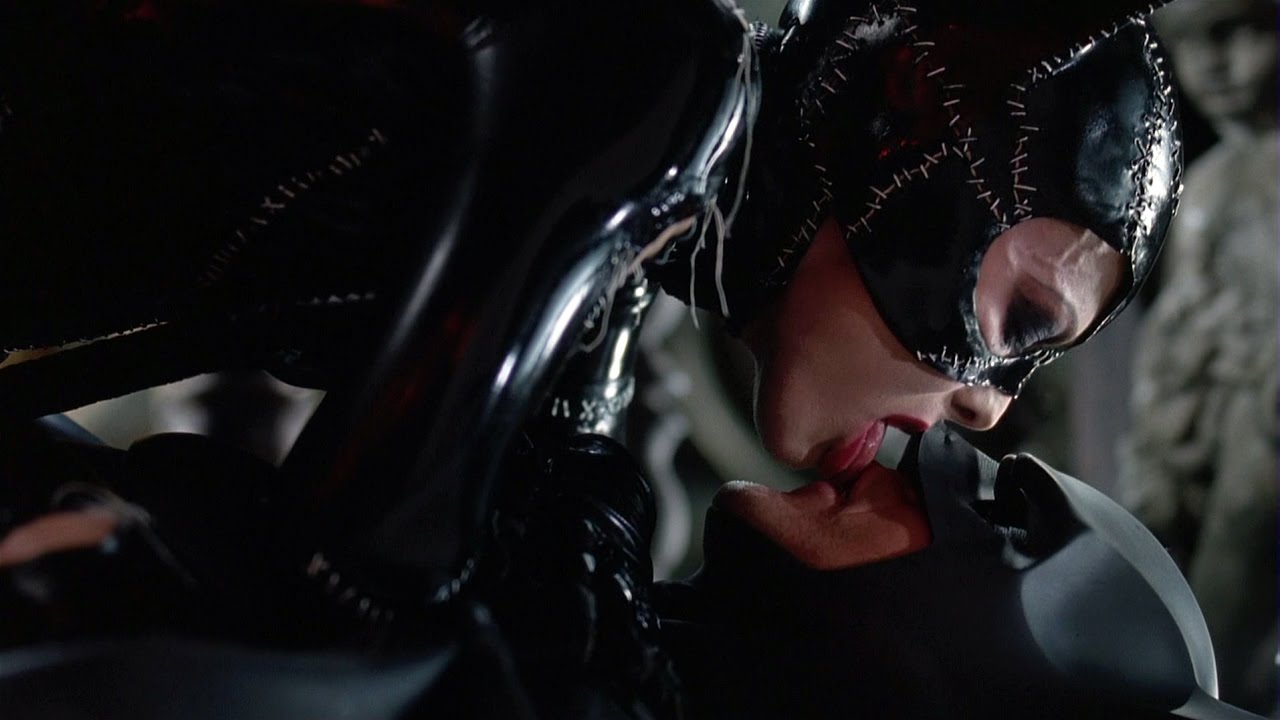
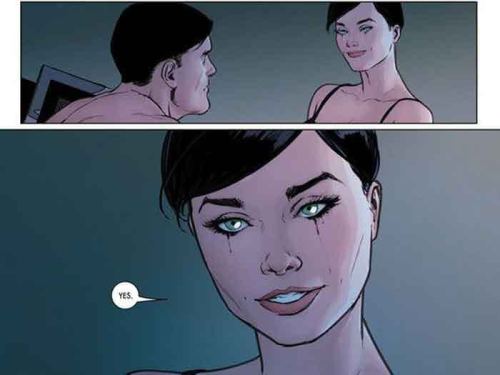
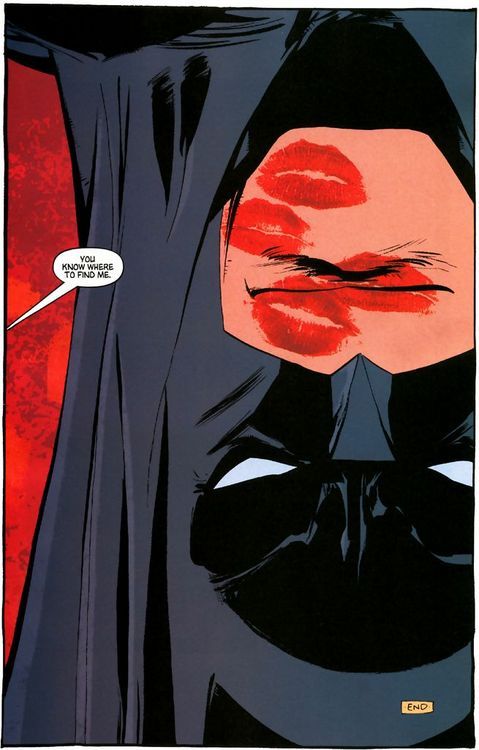
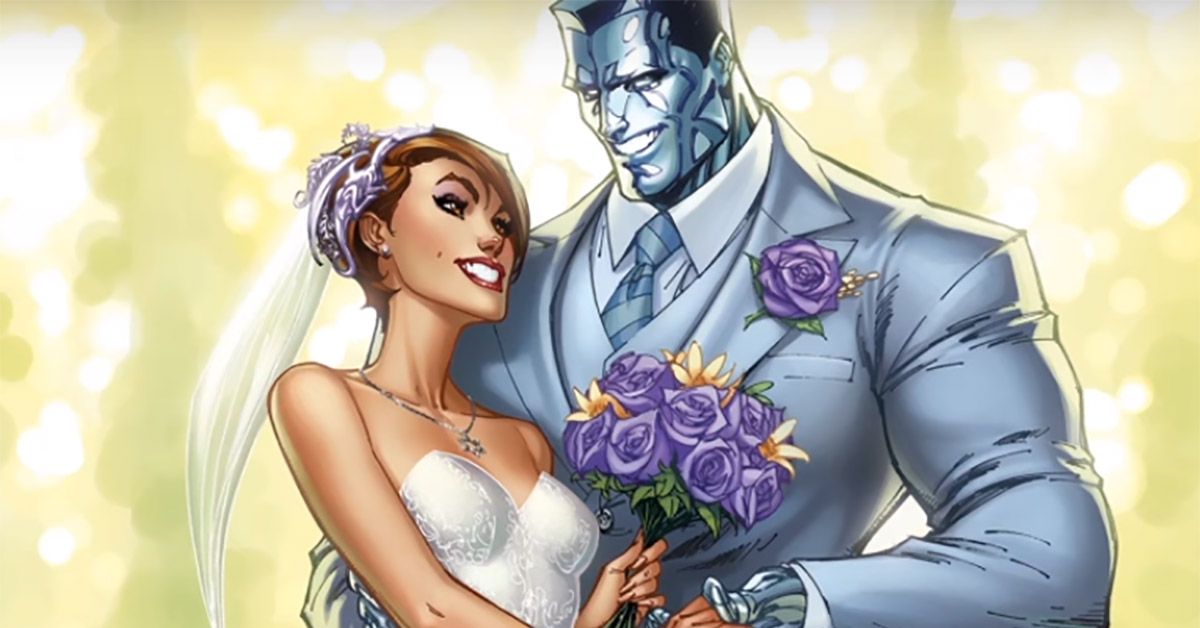
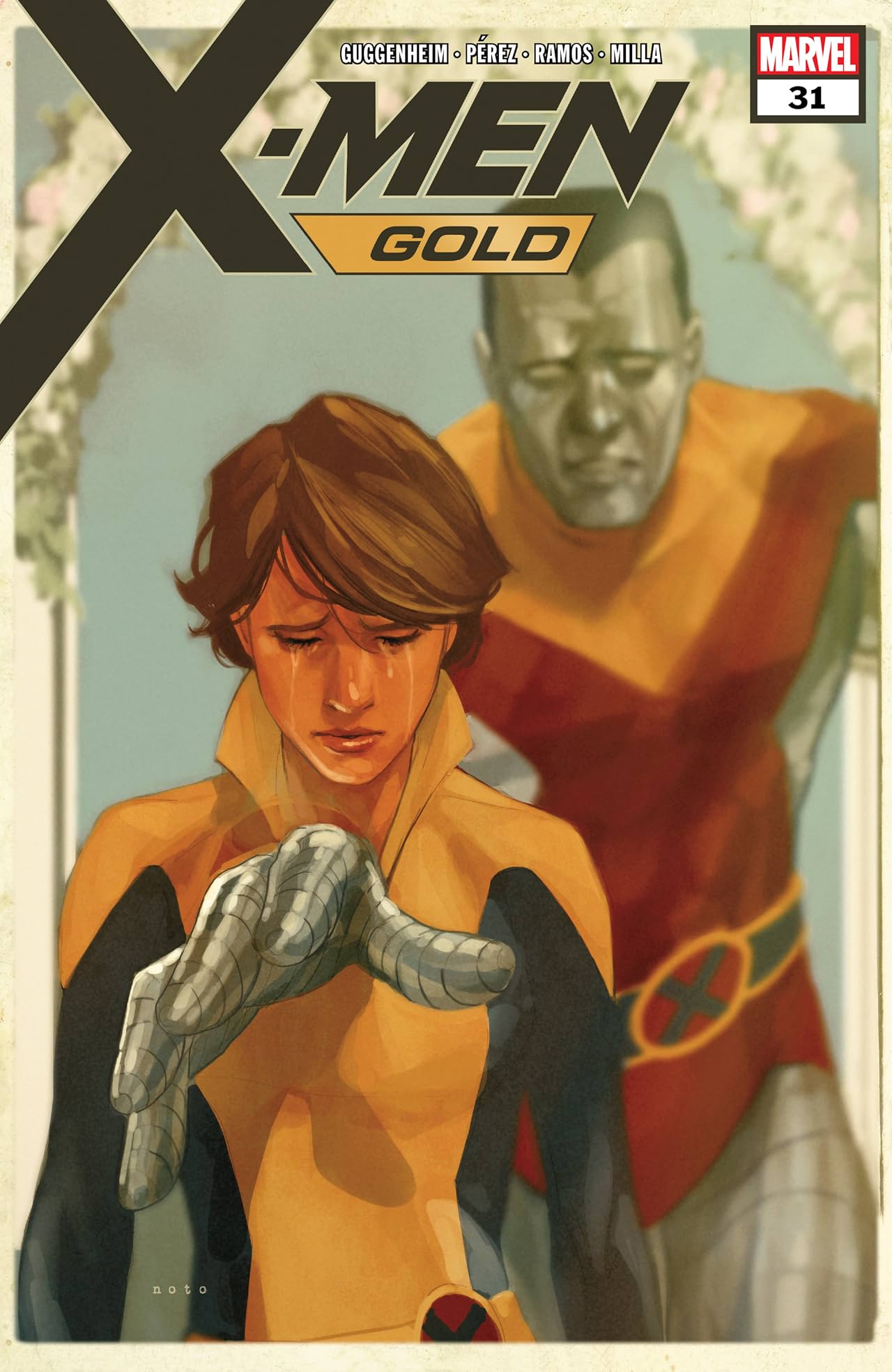
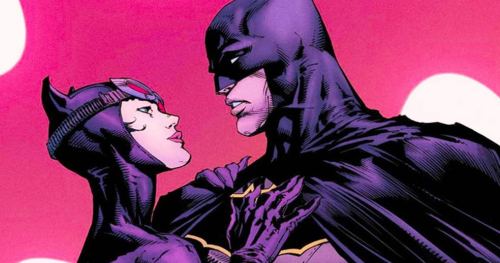
However, those tasked with building the canon seem to have an aversion to married superheroes. Just this past summer, that aversion was on full display. Two major superhero weddings were set up, one involving Kitty Pryde and Colossus in X-men Gold #30 and the other involving Batman and Catwoman in Batman #50.

Sadly, both events ended without tearful vows and a drunken toast, although one salvaged a matrimonial quickie at the last second. I’ve already broken down how one wedding just prolonged an already drawn out romance while the other denigrated the entire concept of romance, as a whole. Rather than bemoan those romantic misfirings, I’d like to step back and look at the bigger picture of married superheroes.

This is actually a controversial issue among fans of superhero comics and those who create them. I’ve been browsing comic book message boards for years. I can attest to just how much fans care when their favorite characters get married. They continue caring long after the wedding reception.

On the other side of the controversy, though, there are the creators that work for Marvel, DC, and their corporate overlords. They have a slightly different view of married superheroes and one that’s not nearly as sentimental. To say their views are complex is like saying a plumber has mixed opinions on food poisoning.

While many of those writing, editing, and producing superhero media are fans themselves, they often have to leave their fandom at the door. Companies like Marvel and DC Comics don’t pay them to write fan fiction. They pay them to tell stories that will sell, increase the value of their brand, and improve market share.

A writer or editor’s ability to do this is prone to many challenges. Fans, especially comic book fans, are notoriously fickle with their passions. If they see something they don’t like happening to a character they love, they’re pretty vocal about it. Just ask fans of Captain America, the Fantastic Four, or Cyclops of the X-men.

In that respect, I have some sympathy for the people responsible for handling beloved characters. They’re basically playing with someone else’s toys and getting paid for it. However, if they break those toys or damage them in any way, there can be hell to pay. Just look at the current situation with Star Wars.

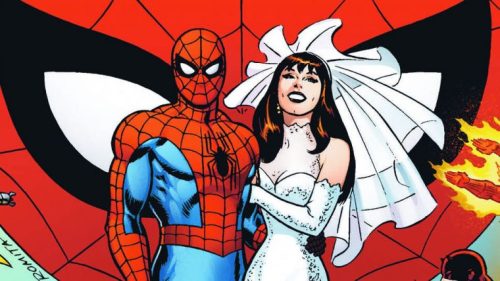
That sympathy, though, only goes so far and I can’t extended to how some at Marvel and DC have approached marriage. DC Comics editor, Dan Dido, once went on record as saying that superheroes should not get married. Long-time Marvel editor and COO, Joe Quesda, even had to justify breaking up Spider-Man’s marriage to Mary Jane Watson by claiming that it “stabilized” Spider-Man too much.

Now in general, I try to be understanding and respectful when people hold positions that I disagree with. I’ve even tried to do that with hot-button issues like abortion, feminism, and organized religion. In this case though, I just have to call bullshit.

Claiming marriage does too much to stabilize a superhero is like saying ketchup makes food too red. It gives the impression that stability is somehow a liability with superheroes, as though they can only be interesting when their world is falling apart and they’re one stubbed toe away from a nervous breakdown.

It’s true that we superhero fans love seeing our favorite heroes fight back invading aliens, punch Nazis, and even take on renegade alien gods. However, it’s also true that we don’t expect or want that to be the only story that superheroes tell. We’re also interested in the lives they live outside their flashy costumes. It doesn’t just humanize them. It gives us more reasons to root for them.

Both Mr. Quesada and Mr. Dido try to make the case that part of being a hero involves sacrificing parts of their personal life in order to serve the greater good. There’s little doubt that being a hero comes at a price, as many of Batman’s former lovers can attest, but that doesn’t have to involve outright isolation.

It also doesn’t mean being a superhero makes a functioning marriage impossible, either. Yes, it’s a lot harder to be a loving spouse and a superhero, but I wouldn’t say it’s as daunting as battling planet-eating space gods or surviving a team-up with Deadpool. In fact, it can enhance their heroics in ways that go beyond romance.

I’m not the only one to make that point either. In wake of the recent wedding debacles by Marvel and DC, Comic Books Resources asked why publishers are so afraid of married superheroes. They cited the same excuses I did about heroes needing to sacrifice, but they also pointed out how these kinds of real-life, mundane events help people connect with these characters.

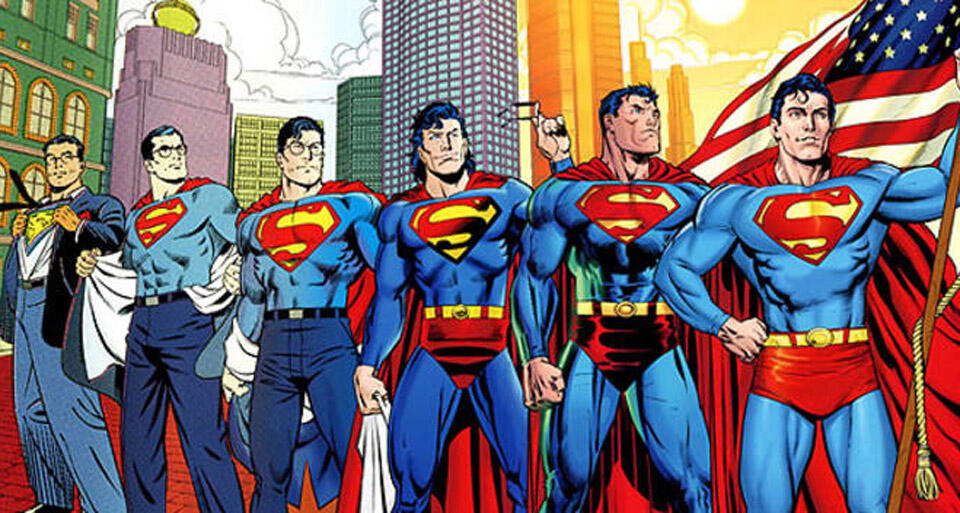
What the article didn’t get into is why this matters. Superman is a hero with god-like power who can move planets and create diamonds with his bare hands. He’s also married to Lois Lane and still has to put in the effort to make that marrage work, even when it becomes prone to complications.

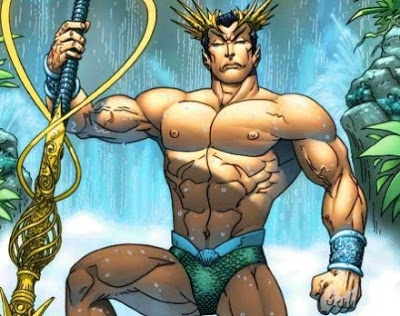
Reed Richards of the Fantastic Four is among the smartest beings in the entire Marvel Universe. He creates thought projectors, flying cars, and personal robots without breaking a sweat. He too has to work hard to keep his marriage and family functioning, especially when a handsome Atlantean king keeps trying to sleep with his wife.
Then, there’s Spider-Man. I know I’ve brought him up a number of times and not always in a positive light, but what happened to him and his marriage is still one of the most controversial things that have ever happened in comics. In many ways, he embodies the ultimate flaw in the excuses to undercut married superheroes.

In the infamous story, One More Day, Spider-Man’s marriage to Mary Jane Watson wasn’t just undone. He actually made a deal with Mephisto, Marvel’s stand-in for the devil, to sacrifice his marriage in exchange for saving his Aunt May’s life. Considering his Aunt had told him just a few issues ago that she didn’t want to be saved, Spider-Man still went through with it.

To say fans were upset by that decision would be like saying the Hulk has a slight anger management problem. This act didn’t just undercut an iconic superhero romance. It essentially reverted Spider-Man back to the state of an immature loser who had barely grown up since high school.

Again, Marvel made plenty of excuses. Long-time Spider-Man writer, Dan Slott, claimed that Spider-Man has to remain within a particular status quo. He has to keep being this lovable loser who is always struggling to hold down a job, keep a girlfriend, and still be a hero. In order to keep that unique appeal he has, and all the merchendising money it makes, he can’t be married.

I understand that logic, but I still call bullshit. You know what happens to characters who never change, grow up, or evolve over time? It’s the same thing that happens to real people. They become boring and unlikable. In Spider-Man’s case, he becomes something worse. He becomes the guy who sold his marriage to the devil to save someone who didn’t even want to be saved. That’s not heroic. That’s just plain selfish.

That’s the price a superhero pays for remaining in a prepetually regressed state. I contend that price is far higher than any associated with the inherent difficulty of writing married characters. With Spider-Man, One More Day established that no matter what he did in his personal or heroic life, he would never change. He’d always end up sleeping on his Aunt May’s couch.

It doesn’t matter if he pursues a new romance. It doesn’t matter if he becomes a billionaire and runs his own company. A reader can just assume he’ll screw it all up somehow and end up right back where he started. It’s just hard to root for any character that keeps regressing like that.

It’s like rooting for a sports team that never wins. Even terrible teams can turn it around at some point. Yes, that includes the Cleveland Browns. If that team never wins, though, why even root in the first place?
This is why marriage is so vital to the growth and evolution of superheroes. When a hero gets married, it’s not just an excuse to have a big event full of superhero-themed cakes. It’s a culmination of a much larger story about love, growth, and strength. It takes a lot to make a marriage work and not all of it can be done with superpowers.

Therein lies the ultimate appeal, though. When a superhero gets married, they go from simply pursuing a relationship to actually making it work. They have to learn how to build a life with another person and become part of a larger family, something that cannot and should not be exclusive to the Fantastic Four.

It fundementally changes how superheroes approach their lives, in and out of costume. It adds new layers of complexity and intrigue. Yes, it’s considerably harder than telling stories about Superman rescuing Lois Lane from Lex Luthor’s evil clutches. That’s exactly what makes it more compelling.

I don’t doubt that Marvel and DC will continue making excuses about married superheroes. Whether or not their approach to the issue evolves remains to be seen. However, since they’re in the business of keeping their characters relevant, they will have an incentive to adapt these characters for changing times and maturing audiences.

Being the romantic I am, I believe love will eventually win out in the end because love is part of why we root for superheroes in the first place. Love isn’t just about being unselfish. It’s also about achieving something special after so much sacrifice. Fans of superheroes want to see them achieve the things they struggle for. It affirms that all those heroics have meaning and purpose.

Marriage doesn’t have to be the ultimate achievement for a superhero. It can be part of it, though. It doesn’t have to be an end. It can be a beginning, as well. Until Marvel and DC lets its heroes get to that point, though, those stories won’t get told and hearts will keep getting broken for all the wrong reasons.

1 Comment

Filed under Comic Books, Jack Fisher, Superheroes, Love Or Obsession, Marriage and Relationships, romance, superhero movies, X-men

The Emerging Problem Of Superman And Lois Lane

1234599567267158119

I think I’ve made it fairly clear that I’m a big fan of superhero romances. I’m a big fan of romance in general, but romance between superheroes has a special place in my heart. I was a comic book fan before I was a romance fan. As the years have gone by, it has been among my favorite combinations. I put it up there with pizza and a cold beer.

It certainly helps that superhero comics have inspired some of the most iconic romances of the past century. Say what you will about Rose and Jack in “Titanic.” I still find the love story between Batman and Catwoman is much more complex and compelling in terms of depth, not to mention many times sexier.

Superhero comics have informed a lot with respect to my fondness for romance. I also think they offer unique insights into the complexity of romance. Love is complicated enough. Adding superpowers and super-villains into the mix only compounds the drama. Sometimes it can end in tragedy. Sometimes it can make for some truly epic romance that strikes all the right emotional chords.

In some instances, though, mixing romance and superheroes can cause problems. Like relationships in the real world, there are many ways to screw it up. Comics have done plenty to mishandle romance. Just ask any Spider-Man fan about a story called One More Day and watch them recoil with disgust. I’ve even noted a few examples.

However, there are some instances where romance in superhero comics cause unique problems that are subtle in substance, but vast in implications. It doesn’t always involve relationships that are inherently toxic to multiple characters. Sometimes, those problems can emerge in even the most iconic relationship.

In the pantheon of superhero romances, the top spot is usually reserved for Superman and Lois Lane. In terms of romance in superhero comics, they are the gold-encrusted diamond standard by which all others are measured. Their love is isn’t just iconic. It’s a foundational component for both characters.

Superman loves Lois Lane. Lois Lane loves Superman. That romance is established in the pages of Action Comics #1. It’s a critical part of how both characters evolve over the years. You can’t tell Superman’s story without Lois Lane and you can’t tell Lois Lane’s story without Superman.

In the same way Superman always does the right thing and Deadpool always makes the dirtiest joke, this dynamic is fundamental. It establishes the kind of romance that is pure, unconditional, and uncorrupt. There’s no need for a previous love interest to die or a love triangle to provoke drama. Superman and Lois Lane just love each other and that’s all there is to it.

However, even with a romance this iconic, there is a problem and it’s actually a very recent problem. It affects both Superman and Lois Lane, but I believe it affects Lois to a much greater extent. It stems from an issue that I’ve been noticing more and more lately with certain romances. When it shows up in the most iconic romance in the history of comics, though, I take notice.

The nature of the problem has less to do with love and more to do with how a relationship defines certain characters. In both fiction and real life, it’s common and even romantic for two people to become so close that their lives become heavily entwined. There comes a point, though, where it stops being romantic and starts being destructive.

For most of their history, Superman and Lois Lane’s romance was built around simple, but effective dynamics. Lois Lane loved Superman, but not Clark Kent, who she didn’t know was Superman. Superman kept his identity from her to protect her many years, which created plenty of tension and made for some great moments.

Eventually, Superman reveals his identity to Lois and they eventually get married. I remember that moment. It was an amazing milestone for both romance and comics lore. The problem only came when that dynamic was complicated by a new theme that has since permeated the narrative.

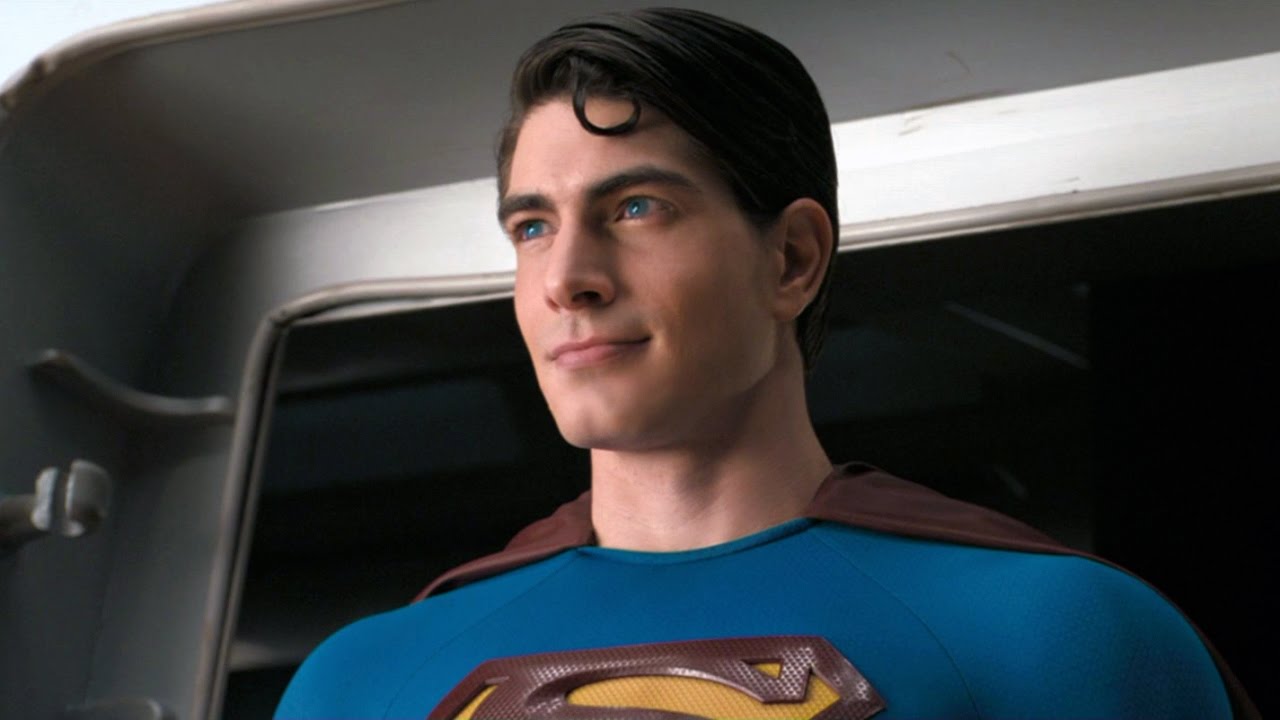
It didn’t start at any particular date, but I think “Superman Returns” marked the unofficial turning point. That movie, on top of turning Superman into a deadbeat dad, made a small, but critical tweak to the Superman/Lois romance. In essence, it turned their love from a strength to a liability that is detrimental to the ideals of Superman and romance, as a whole.

At the beginning of that movie, Superman’s actions are the same as they’ve always been. He does the right thing because it’s the right thing. That’s who he is and why he’s so iconic. Towards the end, though, what he does becomes less about doing the right thing and more about resolving his relationship with Lois Lane.

Suddenly, doing the right thing and saving Lois aren’t just supplementary plots. They’re indistinguishable. One is the other and that’s a problem for reasons that go beyond romance and heroism. It wouldn’t have been that big an issue if it had only played out in one sub-par Superman movie, but in recent years, the problem has escalated.

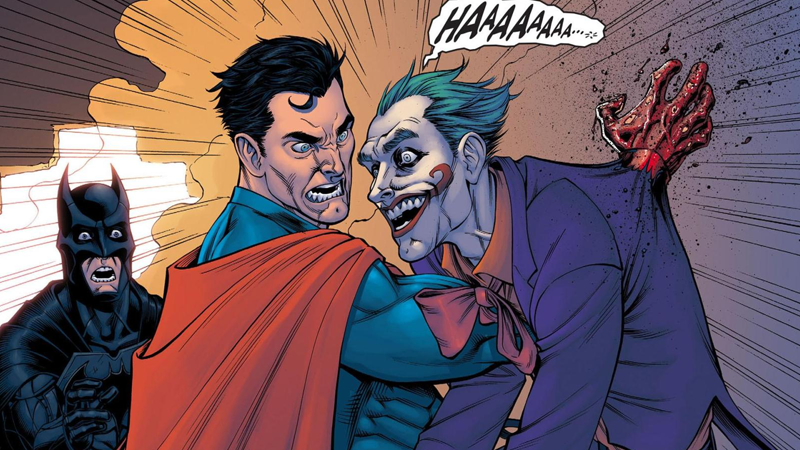
It manifested in its most overt form in “Injustice: Gods Among Us,” a video game with a comic book series tie-in that essentially provides a worst-case-scenario for Superman. In this story, Superman is tricked into killing both Lois and his unborn child by the Joker. It’s not just an atrocity and a tragedy. It fundementally breaks Superman.

I’m not just referring to his spirit either. The death of Lois Lane also marked the death of Superman, as an ideal. In both the game and the tie-in comics, he’s no longer a hero. He’s a tyrant who becomes everything he once fought against. I wouldn’t go so far as to call him a villain, but he’s definitely not the beacon of goodness that so defines his character.

While it makes for a powerful story, the particulars of that transformation are profound and not in a good way. It implies that Superman’s heroism is directly tied to Lois Lane and not supplemented by it. If she dies, then Superman ceases to be that iconic hero who stands for truth and justice.

That sends the message that Superman’s love for Lois Lane isn’t a strength. It’s a crutch. She’s not just his connection to humanity. She’s his lifeline. Beyond putting a burden on a character whose appeal is her ambitious pursuit of truth, it reduces Lois Lane to a singular role and one that’s impossible to maintain.

Unlike Superman, Lois is human. She’s going to age. She’s going to eventually die. Under this dynamic, Superman will eventually lose sight of his ideals. He’ll eventually stop being the hero that fights for truth, justice, and the American Way. Without Lois, he’s destined to give up and for a character who once moved the sun, that’s pretty weak.

This issue came up again in the plot for “Batman v. Superman: Dawn of Justice.” While I enjoyed the movie and don’t think it deserved half the criticism it got, there was one major issue that I felt undercut the story. Once again, it came back to Superman’s relationship with Lois.

Throughout the movie, Superman constantly questions his role and responsibilites as a hero, especially after seeing Batman’s approach to pursuing justice. That’s perfectly appropriate with respect to humanizing his character, but at the end of the day, he bases much of his decision to save the day around saving Lois.

That’s not to say that there isn’t merit to saving a lover, but this is Superman we’re talking about here. This is a hero whose entire appeal is built around him having god-like power, but still doing the right thing. When the right thing is only ever in the context of saving his girlfriend, then that undercuts both the ideals and the romance itself.

It’s largely for that reason, among others, that I find the romance between Superman and Wonder Woman more compelling. Back in 2012, there was a brief period in DC Comics where the timeline was tweaked, which happens fairly often, and Superman’s marriage to Lois Lane was nullified. That gave these two iconic heroes a chance to be together.

I could probably write several more articles about why I think the Superman/Wonder Woman romance is special in its own right. In many respects, I think it’s healthier than the Superman/Lois Lane relationship. It may never be as iconic, but it fundementally avoids this problem.

Wonder Woman can take care of herself. She can save herself and be a hero on her own terms. Lois Lane, however, is becoming more and more defined by how she defines Superman. For the most iconic superhero couple of all time, that’s pretty shallow.

The recent comics have done little to address this issue. With yet another tweak to the timeline, Superman is back with Lois. They even have a child now. However, the nature of their relationship is still on uncertain ground. I still feel it lacks the complementary dynamics that made it work so well for so many years.

There’s a chance it could change. Given the fickle nature of comic book continuity, it’s very likely that the Superman/Lois Lane dynamic will continue to evolve. However, I think it’s going in the wrong direction if Superman’s reasons for doing the right thing are that dependent on Lois.

Whether or not this problem deepens or subsides remains to be seen. Superman and Lois Lane are still the most iconic romance in the history of comics. That will continue to hold true, even if the problem deepens. Superman and Lois Lane are great characters in their own right. That aspect cannot and should not get lost under the weight of their iconic romance.

As much a romantic as I am, I don’t deny that it is possible for a love story to go too far. Loving someone and being dependant on them are not the same thing, especially when superpowers get involved. If a relationship becomes too dependent, then it can be more damaging than a mountain of kryptonite.

65 Comments

Filed under Comic Books, Jack Fisher, Superheroes, Marriage and Relationships, romance, superhero movies

How To Disappoint (But NOT Destroy) An Iconic Romance In Batman #50

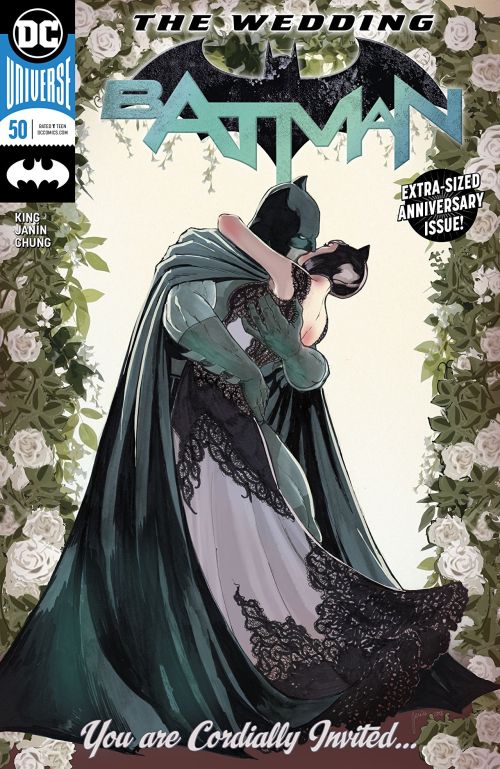
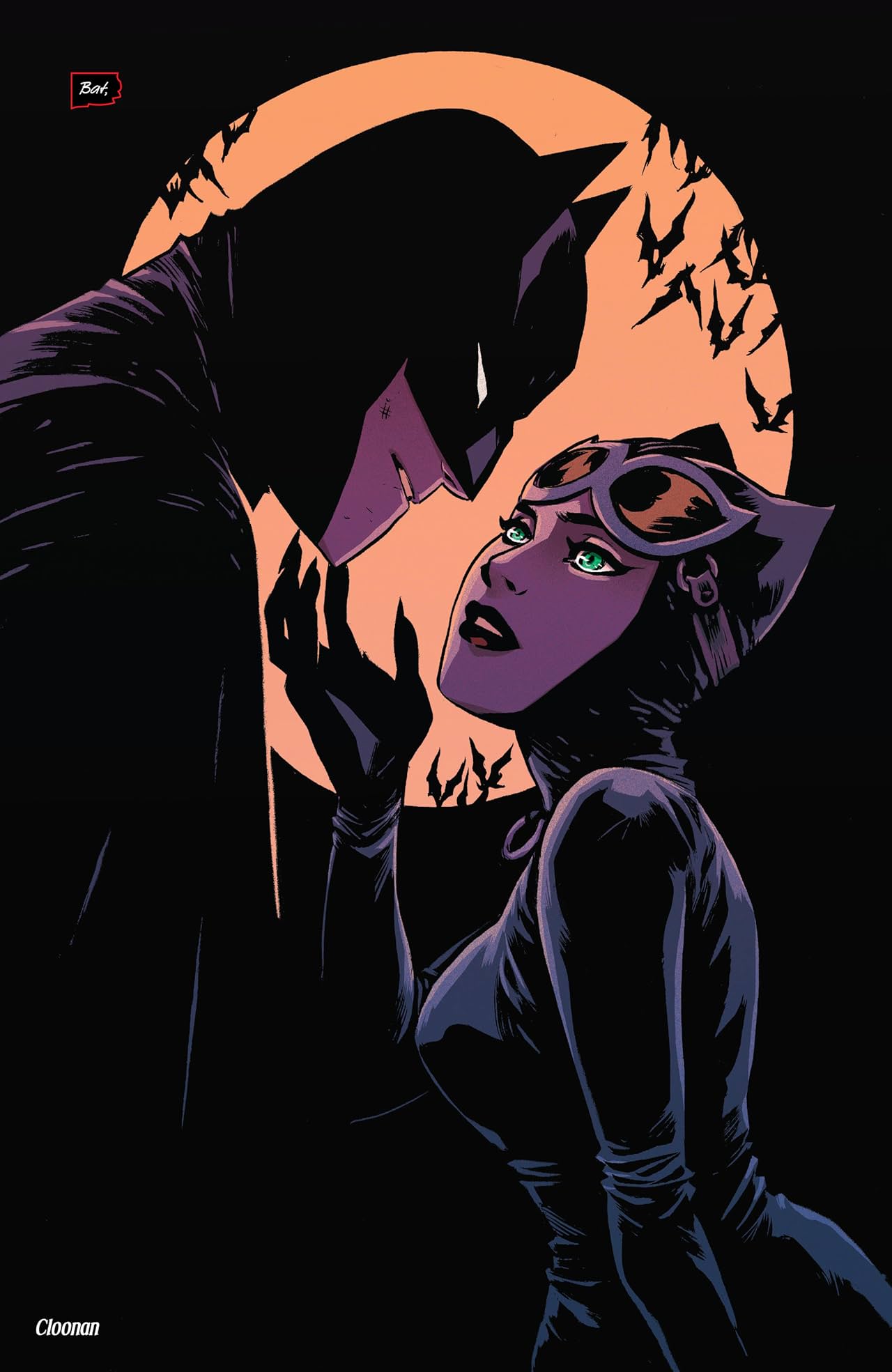
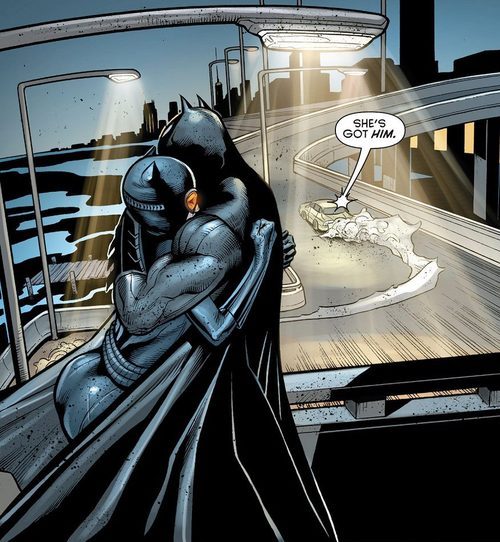
688356-_sx1280_ql80_ttd_It’s been a rough summer for fans of romance, superheroes, and superhero weddings. In fact, in all the years I’ve been reading comics and following romantic sub-plots, I can’t remember a time when there was this much melodrama and heartbreak. I understand that any epic romance is going to involve a healthy bit of emotional strain, especially when it involves superheroes. There comes a point when it just becomes too much.After the deconstruction and denigration of superhero romance that unfolded in X-men Gold #30, I feel like we’re dangerously close to that point. It’s as though everyone involved in making superhero comics is admitting that superheroes can’t get married. They can’t have a functional, compelling romance and still be interesting.That sort of sentiment is basically an affirmation of Marvel’s justification for undoing Spider-Man’s marriage to Mary Jane Watson in the infamous One More Day story. Given the relative infamy of that story line and the recent upheaval with the X-men, many fans of both superheroes and romance were placing a lot of hope that the wedding of Batman and Catwoman could help stop the bleeding in Batman #50.I certainly counted myself among those who was very excited about this event. I even admit I really wanted this to make up for the disheartening outcome of X-men Gold #30. The romantic in me wanted at least one superhero wedding this summer that didn’t end in heartbreak or tragedy.Well, if you saw the same spoilers in the New York Times that I did just two days before Batman #50 came out, you already know that’s not what happened. Bruce Wayne and Selina Kyle did not get married. That means in terms of superhero weddings, the summer of 2018 is now 0 for 2.However, that outcome did not compound my lingering disappointment from X-men Gold #30. I’ll even go so far as to say that Batman #50 didn’t send the state of superhero romance past the point of no return. It didn’t improve the state of affairs. It was disappointing, but not to the point where it damaged a story or a romance beyond repair.Before I explain, I want to establish that many of the details beyond this point are heavy spoilers. Seeing as how this comic was already spoiled a couple days prior to its release, much to the chagrin of comic retailers, I don’t think I need to place too many warnings. I still recommend that people buy the comic, but there’s more going on here than a wedding that didn’t happen, much more so than what we saw in X-men Gold #30.By nearly every measure, Batman #50 approaches the concept of a superhero wedding differently than X-men Gold #30. The wedding of Kitty Pryde and Colossus was set up as this big, momentous affair between an established couple that overcame a lot just to have the opportunity to get married. They brought in friends, family, and fellow superheroes from across the X-men comics.In contrast, the ceremony in Batman #50 was very small. In fact, there wasn’t much of a ceremony to speak of. The only ones who were present besides Batman and Catwoman were Aflred, Bruce Wayne’s butler and long-time confidante, and a lone judge who was already drunk so that he wouldn’t remember his or Catwoman’s identity. Batman always has a plan for that sort of thing. That’s why he’s Batman.On top of that, Batman is the one who proposed to Catwoman back in Batman #24. He’s the one who pitched the idea of getting married in the first place. That’s critical because Kitty Pryde was the one who proposed to Colossus in X-men Gold #20. That matters because she’s also the one who broke it off and at the last second, no less. Things were a bit less cruel in Batman #50 and that’s saying something for a Batman comic.At one point in the story, Batman makes clear that he still wants to marry Catwoman. He’s not having second thoughts. It’s Catwoman who makes the fateful decision to break it off and she doesn’t wait until half-way through the ceremony, either. To put that another way, an admitted jewel thief who enjoys having sex on rooftops showed more decency than Kitty Pryde on her failed wedding day.It’s not a public spectacle that turns into an equally public debacle. It’s a private affair that simply doesn’t pan out. There’s no awkward reception. There’s no attempt to salvage it by shoehorning another romance into the mix just so someone gets married, as though such romances can be swapped out like batteries. It just doesn’t happen.Moreover, Catwoman actually gives a reason for not going through with the wedding and, unlike Kitty Pryde, it’s not a wholly contrived. She establishes throughout Batman #50, through a series of montages documenting their romance over the years, why she loves him and why he’s such an effective hero. In the process, she reveals something profound about Batman.What makes Batman both effective and iconic is how he takes the pain of a tragedy, namely the death of his parents, and turns it into strength. The same pain that would break a lesser man drives him to do so much more. He’s the Dark Knight who defends Gotham. He’s a hero who deserves to fight alongside demigods and aliens on the Justice League. For him to be Batman, he needs that pain to fuel him.From Catwoman’s perspective, Batman finding happiness means denying him the fuel he needs to be Batman. That’s not a realization that just randomly pops into her mind at the last second, though. This is something the Joker actually points out to her in Batman #49. It has less to do with whether or not she loves him and more to do with him being the hero that Gotham needs.That doesn’t make Catwoman’s decision any less disappointing, but it’s still nowhere near as callous or selfish as Kitty Pryde’s decision in X-men Gold #30. I know it’s somewhat unfair to keep comparing the two, given the different circumstances of their relationship, but those distinctions highlight an important element that the failed Batman/Catwoman wedding has that the Colossus/Kitty Pryde wedding didn’t.What happens in Batman #50 is definitely a setback for Batman and Catwoman’s relationship, but it doesn’t fundamentally destroy it. In fact, there’s a very critical detail at the end of the issue that leaves the door open for this romance to keep evolving. I won’t spoil it, but it unfolds in such a way that makes romance fans like me want to root for this relationship.The same definitely cannot be said for the Colossus/Kitty Pryde relationship. After the way things played out during their wedding, it really feels as though their romance is damaged beyond repair. It’s no longer a love story. It’s an outright tragedy, one that would need an even greater contrivance to repair at this point. In a universe with shape-shifting aliens, though, that’s not wholly unfeasible.In the grand scheme of things, Batman #50 is still disappointing in the sense that it doesn’t let Batman and Catwoman take their love story to another level. In fact, not a whole lot changes. The way it plays out feels more like a setback rather than a tragedy. The writer of the comic, Tom King, even claims it’s just part of a much larger narrative between Batman and Catwoman.How that story will play out remains to be seen. Given how long it took Batman and Catwoman to get to a point where they try to get married, Batman #50 already gives the impression that their romance is being dragged out. For a couple who has been off and on again since the 1940s, that’s saying something.If I had to score Batman #50, as both a comic book fan and a romance fan, I’d give it a 6 out of 10. It’s a bit of a letdown, but it’s not nearly as soul-crushing as X-men Gold #30. It still leaves the state of superhero romance in a very precarious state, but at the very least, this book gives me reason for hope.I’ll still be very skeptical of any future superhero wedding for the foreseeable future, though.
5 Comments

Filed under Comic Books, Jack Fisher, Superheroes, Marriage and Relationships, romance

The following is a review I wrote for PopMatters for Justice League #1. Enjoy!

Justice in Its Totality: Justice League #1

Leave a comment

June 12, 2018 · 9:43 pm

Why Superman Is An Icon And Why He Still Matters After 80 Years

action-comics-1000-vo

Take a moment and think about how many artifacts of popular culture have endured for 80 years. Even if you’ve got an extensive knowledge of culture or just spend a lot of time browsing Wikipedia, it shouldn’t take long to realize how short that list is. That makes the icons on that list all the more endearing.

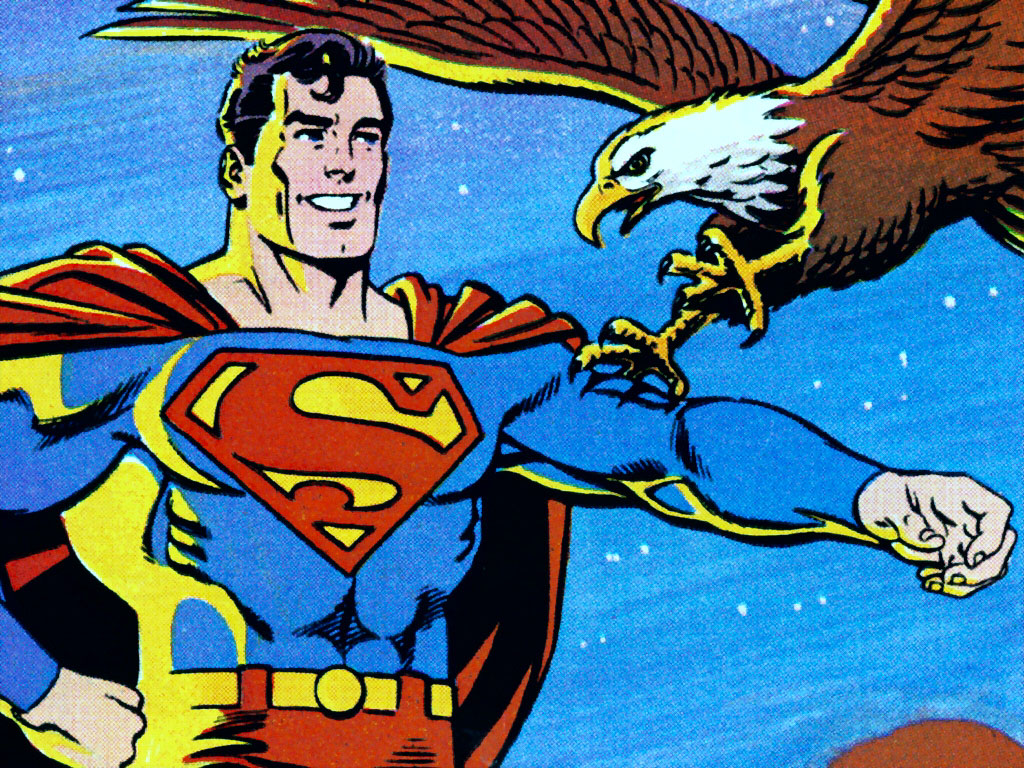
Near the top of that list is Superman. Even if you’re not a comic book nerd and can’t stand to watch more than five minutes of a superhero movie, it’s impossible to deny the special place Superman has in our culture. He’s not just a comic book character. He’s not just a superhero either. He’s in a league of his own that transcends any one genre.

That became abundantly clear this past week when Superman celebrated his historic 80th anniversary with the release of Action Comics #1000. As an admitted comic book fan who goes out of his way to explore the deeper messages and implications of comics, this was a pretty big deal for me.

Now, I don’t consider myself as big a Superman fan as I am an X-men fan. I like to think I’ve made my love of X-men quite apparent on this site. However, I still enjoy my share of Superman content. Beyond the comics, I grew to love Superman through his animated series and the Justice League cartoon that was produced by Bruce Timm. To date, those and the Richard Donner “Superman” movie are the definitive Superman for me.

As much as I love those incarnations, though, I understand that Superman’s history is much broader than that. A character doesn’t endure for 80 years without having a rich history and Superman certainly has plenty of that. In that history, he’s evolved a lot in terms of style and portrayal. From battling Nazis in the early 1940s to ditching his iconic red trunks for a while, Superman has had his share of reinvention over the years.

Through all these changes, though, Superman has always embodied a specific set of ideals that helps cement his status as an icon. From his earliest days to his most recent movie version, Superman at his core is an inspiration. He’s epitomizes just how good a hero can be and how profoundly he can influence others.

Some call him the ultimate Boy Scout. Some call him the perfect goody-two-shoes. Some even go so far as to claim that his nauseatingly good nature that Christopher Reeves captured so perfectly in the movies makes him a boring character. Given the sheer breadth of his power, which include some truly insane feats, I can understand that to some degree.

At the same time, though, I would also argue that same annoyingly wholesome nature is part of what makes Superman something much greater than an overpowered superhero. I would even go so far as to say that’s part of what has helped him endure for 80 years and made him an icon that transcends comic books, movies, and heroics in general.

There’s a long, if not bloated, list of superheroes of varying degrees of power. Some are even more powerful than Superman. However, just having power isn’t enough, as any Batman fan will tell you. It’s how a hero uses that power and why they do what they do that helps define them.

By that standard, Superman is the gold standard. His heroism is very much the standard by which all others are measured. He has the power to do things that aren’t just incredible. They’re outright impossible. He still does them, though, because he’s Superman. However, it’s why he does them that’s more important.

Compared to why other heroes do what they do, Superman’s reasons for using all that power for good is as simple as it is profound. It’s the right thing to do. He doesn’t need someone to kill his parents. He doesn’t need to be bound by duty or driven by guilt. He just does the right thing because it’s the right thing. That’s all there is to it.

It’s so simple that it’s almost inane, but it’s profound in its implications. I even explored some of those implications when I explored the nihilistic implications of Superman’s morality, drawing comparisons to Rick Sanchez from “Rick and Morty” of all characters. Regardless of how strong those comparisons are, it doesn’t undercut the impact of that idea.

It’s a big part of what helps Superman inspire others. It’s very much a part of why he still matters today, especially in an era where every heroic character needs some sort of catalyst to become a hero, whether it’s a princess getting kidnapped or someone shooting their dog. Superman doesn’t need any of that. He just does the right thing with his powers because it’s the right thing. That’s all there is to it.

That might not seem like a big deal, especially compared to the more elaborate journeys that other characters go on the path of heroism. Why would someone even want to follow a journey of someone who just does the right thing from the start and doesn’t need to team up with any talking raccoons along the way?

The answer to such a cynical question comes back to inspiration. It’s something that has only become more valuable as we get bombarded by countless bleak headlines. Superman is capable of so much, both in terms of his immense power and altruistic persona. He has such an immense impact when he saves the world, whether by outsmarting Lex Luthor or snapping General Zod’s neck.

However, it’s how those actions inspire others that elevates Superman’s heroics. He doesn’t wear a mask. He doesn’t hide in the shadows. He lets people see his face. He smiles and talks towards civilians, fellow heroes, and even other villains, as Action Comics #1000 so fittingly explored. It’s not just enough to do heroic things. Superman seeks to inspire the heroism in others.

That sentiment is beautifully echoed through the iconic voice of Marlon Brando in Richard Donner “Superman” movie. Even today, after 80 years, they still help define the spirit of Superman.

Live as one of them, KalEl. Discover where you strength and your power are needed. Always hold in your heart the pride of your special heritage. They can be a great people, KalEl, they wish to be. They only lack the light to show the way. For this reason above all, their capacity for good, I have sent them you, my only son.

These are the words of Superman’s biological father, Jor-El. They don’t just lay the foundation for a hero. They reflect the spirit that eventually becomes Superman. They don’t just encourage Superman to use his immense power to help people. They encourage him to inspire.

That inspiration, the idea that a being of such immense power can do the right thing just because it’s the right thing, is why Superman endures. It’s also why he matters now more than ever. We’ve become so accustomed to seeing other iconic heroes and people in the real world get corrupted by power. Superman sets himself apart, showing that it is possible to have great power and still do the right thing.

In a world full of cynical people who may be getting more nihilistic with each frustrating headline, that’s an important concept to preserve. Having power doesn’t have to corrupt someone in the same way that doing the right thing doesn’t require some elaborate motivation, be they dead parents or some failed prophecy. It’s possible to just do the right thing because it’s the right thing.

It’s not enough to just save the day. Superman gives others the hope, strength, and drive to make a better tomorrow. Say what you will about the ending of “Dawn of Justice,” but the breadth of the impact that Superman had on the world through his sacrifice was powerful. It shows why his greatest power is, and always has been, doing the right thing.

That spirit of incorruptible goodness was critical in 1938 and it’s just as critical now in 2018. I would argue it’ll still be critical in 2118, even if we’ve all evolved into cyborgs at that point. Doing the right thing for others in the spirit of pure, untainted altruism is a powerful message and one that Superman embodies to the utmost. That’s what makes him an icon now. That’s why he’ll be an icon for years to come.

8 Comments

Filed under Comic Books, Jack Fisher, Superheroes, human nature

The following is a review I wrote for PopMatters. Enjoy!

Gloriously Destructive Deconstruction in ‘Batman: White Knight #6’

Leave a comment

March 9, 2018 · 1:34 pm

My Wish list For “Wonder Woman 2”

I know it’s been a while since I talked about Wonder Woman. In my defense, there have been a lot of distractions between the holidays, the response to the “Justice League” movie, and recent news stories to which I just couldn’t resist responding. Make no mistake, though. I haven’t forgotten about Wonder Woman or the fact that she had a breakout year in 2017.

In many respects, Wonder Woman was one of the best parts of 2017. She didn’t just amaze audiences by proving that there is a market for female superheroes, even after “Catwoman.” She raised the bar for the entire genre, both in terms of critical and commercial success. That bodes well for other female-led superhero movies.

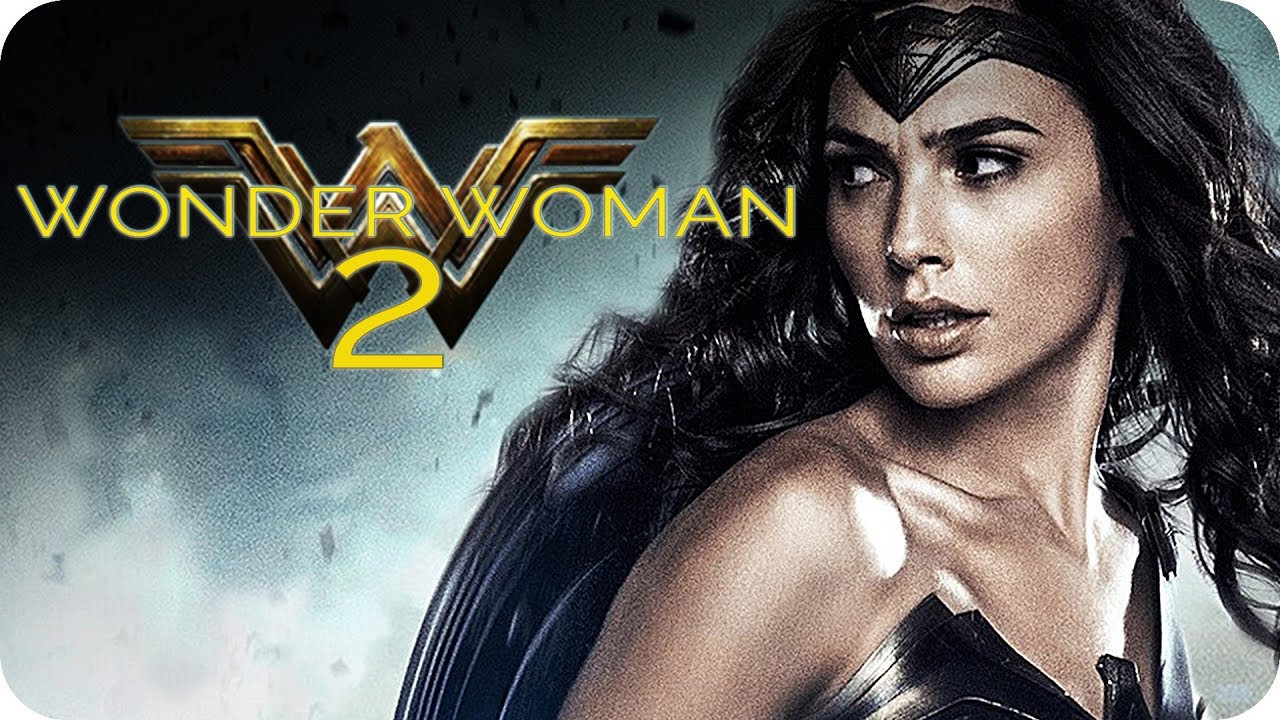
While other female superheroes play catch-up, though, Wonder Woman is set to continue rising the bar. She’s Wonder Woman. That’s what she does through Gal Gadot’s charisma and she does it with uncanny grace. Shortly after her movie came out, a sequel was announced to the surprise of no one. At the moment, “Wonder Woman 2” is slated for release on November 1, 2019.

While that date seems so far away, some details are already starting to trickle in. Director, Patty Jenkins, has already started teasing details. At the recent Palm Springs Film Festival, she indicated that the sequel would be a very different film compared to its predecessor. Naturally, she didn’t give too many details, but it’s enough to get Wonder Woman fans excited.

Since I consider myself among those fans, I already find myself contemplating what a “Wonder Woman” sequel will entail. It wouldn’t be the first time I’ve contemplated such things, either. While it’s too early to know or even speculate what “Wonder Woman 2” will bring, we can still hope and imagine the wondrous possibilities.

In that spirit, here is a brief, but basic wish list for what I hope to see in “Wonder Woman 2.” Granted, if Ms. Jenkins is serious about this being a very different movie, chances are not much on this list will apply. I understand and accept that. This is just the giddy Wonder Woman fan in me daring to imagine how wonderful this movie can be.


Wish #1: Establish More Villains (And Make It Personal)

If Wonder Woman has any flaws, beyond those that assholes and trolls point out, it’s that her list of villains isn’t quite as iconic as that of Batman or Superman. For much of her history, Wonder Woman’s greatest battles have been tied to those of the Justice League or those of her fellow Amazons. She’ll be a major force in those battles, but they rarely have major personal stakes.

Wonder Woman 2” presents a golden opportunity to change that because there are a few villains with strong personal ties to Diana. While Ares was more built up boss battle in the first movie, villains like Cheetah can test Diana’s heart, as well as her skill.

The recent Wonder Woman comics have done an excellent job establishing the deep personal struggle between Wonder Woman and Cheetah. While there are multiple women who have gone by Cheetah, the overall theme is the same. She is Diana’s rival, but there was a time when she was also her friend.

Having to fight her friends is an agonizing challenge for Wonder Woman, which we saw play out in the “Justice League” movie. It brings out her heart and her passions for all the right reasons. A more personal villain can only help expand that appeal in “Wonder Woman 2.”


Wish #2: Maintain A (Very) Distant Connection From The Other DCEU Films

While I stand by my statement that “Justice League” did not deserve the negative reviews it got, I don’t deny that the “Justice League” movie has become somewhat of a toxic brand. It’s not quite on the same levels as “Batman and Robin,” but at this point there’s just no way to salvage the backlash.

It’s for that reason, among many others, that I hope “Wonder Woman 2” maintains an extremely distant connection from the larger DC Extended Universe. I’m not saying it should cut itself off entirely. Even the first movie made it a point to establish that this movie was part of a larger world. The sequel should reflect that.

However, the events of “Justice League,” however big they might have been, shouldn’t be a major driving force in the narrative. Whether it takes place in the modern day or in the past, like the first movie, it can’t be too beholden to the events of other major DC movies.

A big part of the success of “Wonder Woman” was its ability to stand on it its own, apart from the rest of DC’s main superheroes. “Wonder Woman 2” should build on that and I imagine Patty Jenkins isn’t going to want to be too constrained by the burdens of other movies. For Wonder Woman, despite her kinky past, there can be no such restraints.


Wish #3: Build On The Amazons’ Mythology (And Diana’s Family Ties)

There were a lot of positives in “Wonder Woman” and I went out of my way to acknowledge them in my review of the movie. However, if there was one flaw in the overall narrative, it had to do with the limited exposure of the Amazons. That’s because in nearly every medium, Wonder Woman’s story is inherently enriched by her Amazon heritage.

The first movie did enough to establish who the Amazons were, why they are so important, and how important they are to Wonder Woman. Unfortunately, it didn’t do much more than that. After Diana left Paradise Island, we didn’t hear from them again. That’s why I hope “Wonder Woman 2” takes the time to expand on the story of the Amazons.

They already showed how badass they can be in “Justice League.” I sincerely hope they get more opportunities in “Wonder Woman 2.” Between Diana’s mother and her more notable siblings, there’s a wealth of material for Wonder Woman to build on. It further raises those personal stakes I mentioned earlier, which can only help expand the appeal of Wonder Woman’s world.


Wish #4: Let Wonder Woman Address Social Issues (In Her Own Unique Way)

Given Wonder Woman’s iconic status as a female icon, it’s unavoidable that she’s going to provoke discussions about social issues. These days, that leads to many heated, hateful, and downright counterproductive conversations. However, that’s exactly why I still want Wonder Woman to address those issues in “Wonder Woman 2.”

Gal Gadot has already shown that she gets the unique spirit of love and compassion that Wonder Woman espouses. Sure, she is prone to making a few controversial remarks, but overall she gets what Wonder Woman is about. She even showed this in the first movie, having Diana navigate the very patriarchal world of the early 20th century, but without using that as an excuse to hate it.

Like it or not, there are a lot of social issues going on in the world. For the most part, we do a poor job debating those issues, as a society. Wonder Woman, with her emphasis on compassion and love for all, is the perfect antidote to that.

I don’t know how she’d go about it in “Wonder Woman 2.” A lot of that depends on the setting, the time period, and the conflicts involved. Whatever form it takes, though, I think it’ll be good for the audience and for the superhero genre to see Wonder Woman confront these social issues as only she can.


Wish #5: Expand The Emotional Stakes (And Let Gal Gadot Channel Her Passions)

This is more of a broader hope for “Wonder Woman 2.” While there are quite a few specific things I’d love to see in this movie, I think it’s more important that it embody the necessary theme that makes Wonder Woman so endearing. Like with some of my other wishes, those themes revolve heavily around the emotional stakes of Wonder Woman’s journey.

We didn’t see too much of that in “Justice League,” but we saw plenty of that in the first movie. Every battle she fought was an emotional struggle. That struggle gave Gal Gadot the opportunity to emote in a way that would make any Amazon warrior proud. Wonder Woman has never just been about fighting injustice or kicking ass. That is always secondary to her heart.

Some of the best moments in “Wonder Woman” just involved her taking a moment to smile, explore, and share herself with others. Whether it was making Steve Trevor feel awkward or making friends with Etta Candy, we got to see Wonder Woman share her passions with others outside the battlefield. That helped make her endearing on so many levels.

Wonder Woman is already a very likable, very passionate character. She’s the kind of person that men and women, alike, can rally behind. Any successful sequel will take those themes and run with them. There’s so much to love about Wonder Woman and how Gal Gadot brought her to life. If “Wonder Woman 2” can build on those themes, then it already has the most important ingredient for more wonderful success.

3 Comments

Filed under Comic Books, Jack Fisher, Superheroes, Wonder Woman

My Justice League Review (And Why The Criticisms Are Unwarranted)

When I did my review for the “Wonder Woman” movie earlier this year, I did so under fairly favorable circumstances. The movie was already getting a lot of positive buzz from critics and general word-of-mouth. I was excited to see it in any case, but that buzz certainly set a positive tone when assessing the merits of that movie.

With “Justice League,” I face the polar opposite of those circumstances. While I generally try not to give much weight to critics or Rotten Tomatoes scores, it was hard to avoid this time. Unlike “Wonder Woman,” the buzz for this movie was entirely negative and it showed in the box office returns, also known as the only real measure that studios care about.

For a movie that was set to be a major milestone, finally putting DC’s most iconic heroes into one movie, it has since become an outright scandal. How can a movie with so much superhero star power do this poorly? That’s a question I am not equipped to answer, especially since people much smarter and more well-connected than me already have.

Instead, I’m going to walk right into this ongoing firestorm of whining and anger to give my spoiler-free review of this movie. I wanted to do it sooner, but I decided to let that firestorm die down just a bit before I offered my take. That might have been a mistake on my part. There’s a lot of noise surrounding “Justice League,” but not much insight.

With that in mind, I’m going to keep my review simple. I’m not going to try and extrapolate a bigger picture, like I did with “Wonder Woman.” I’m just going to focus my review on one simple question.

Is “Justice League” a good movie?

Before I go into detail and try to talk over all the noise, I want to answer this question with my honest and sincere sentiment. Given how much I’ve talked about comic books, superheroes, and superhero movies, including the sexy parts, I like to think my answer has at least some weight. However much stock you put into my opinion, here’s my ultimate conclusion on “Justice League.”

It is a good movie.

Yes, I realize that sentiment doesn’t reflect its Tomatometer score. Keep in mind, though, that score reflects the opinions of critics who are paid to see and/or overthink movies. It doesn’t reflect how actual fans feel about it, which actually shows in the response for this movie.
Even critics can’t deny that this movie went out of its way to please fans, especially those who were dissatisfied with “Batman v. Superman: Dawn Of Justice.” It directly dealt with the aftermath of that movie, as well as the characters’ reaction to it. It even dealt with the aftermath of “Wonder Woman,” building upon a foundation and creating connections, exactly like a real movie universe should.

Those connections weren’t too critical to appreciate the movie as a whole. It also works very well on its own, creating a simple, concise plot that really ramps up the scale. Again, it’s entirely consistent with the effort to make a large, inter-connected movie universe, just as Marvel has done with so much acclaim.

However, that’s not my primary reason for me saying that “Justice League” is a good movie. In simplest terms, this movie is good because it sticks to the basics and does them very well. It doesn’t try to be overly elaborate. It doesn’t attempt to reinvent the characters to an excessive degree. Yes, those characters have some variations, compared to their comic counterparts, but it’s nothing that warrants confusion or outrage.

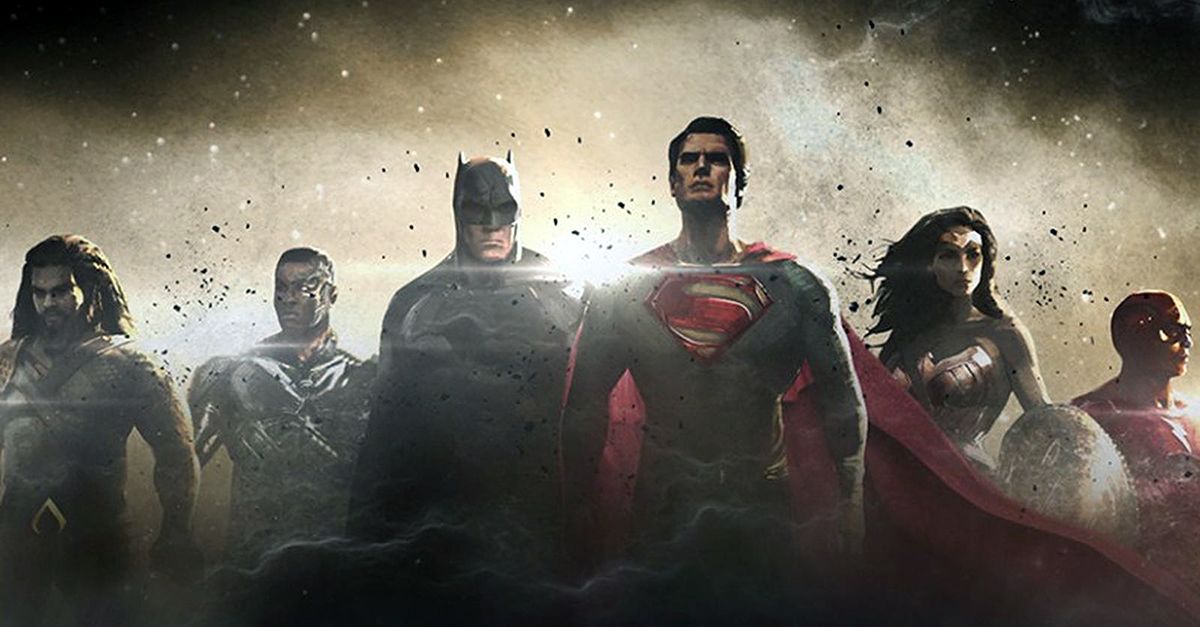
Superman is still Superman. Wonder Woman is still Wonder Woman. Batman is still Batman, even if it is through the brooding demeanor of Ben Affleck. Getting those three right is critical to the success of any “Justice League” movie and this one makes it a point to do that early on.

It doesn’t stop there, though. It puts time and energy into developing the rest of the league, namely Flash, Aquaman, and Cyborg. These three characters had only brief cameos in “Batman v. Superman: Dawn Of Justice,” but they achieved much greater depth here.

These supporting members weren’t just there to fill out the ranks. They each had their own personal story to follow. Through that story, Flash, Aquaman, and Cyborg gain a personal stake in “Justice League.” It’s not just about saving the world for them. They’re struggling for something greater and, through the story, they achieve it.

At times, there are a lot of plots unfolding simultaneously. The personal stories of all those involved tend to mix. While it does get somewhat messy, it never gets chaotic. The story never goes off-track and it never becomes too confusing, which was a common criticism levied against “Batman v. Superman: Dawn Of Justice.”

A major reason why the story remained so concise was because of the main villain, Steppenwolf. While he’s not as iconic a villain as Lex Luthor, Loki, or Darkseid, who is mentioned multiple times, he does plenty to establish himself as a powerful threat and a highly motivated villain.

Like the other members of the league, his role in the plot has a personal component. He doesn’t just show up, wanting to destroy the world for shits and giggles. There’s an actual reason behind his actions and those reasons never become excuses, something that should carry weight for any character.

On top of those reasons, Steppenwolf’s story helps build the bigger picture of the DC Extended Universe. Through it, we learn that there are much larger conflicts in this universe that go beyond the Justice League. It helps establish a larger role for the Amazons, who showed their strength in “Wonder Woman.” It also establishes the Atlanteans and Green Lantern Corp, who are set to show theirs in future movies.

If the secondary goal of “Justice League” was to build a world and expand the possibilities, it certainly succeeded. If its primary goal was to bring each hero together in a way that was entertaining, flashy, and dramatic, then it succeeded as well.

There were plenty of powerful moments. There were plenty of dramatic moments. There were even some funny moments, most of which involved Ezra Miller’s Flash. Few of the moments felt forced or contrived. None felt empty either. There was purpose in every moment, decision, and action. By those most basic of standards, “Justice League” works.

I would even argue that this movie works better than a lot of Marvel movies. I would certainly put it above titles like “Avengers: Age Of Ultron” and “Iron Man 3,” movies that I think get more praise than they deserve. “Justice League” even makes the effort to improve on the mistakes of its predecessor, something few franchises even try, as “Amazing Spider-Man” can attest.
None of this is to say that “Justice League” is without flaws. It certainly has a few. The effects aren’t as flashy or colorful as other movies. Even “Man Of Steel” had better effects, by comparison. It’s also worth belaboring that Ben Affleck is no Christian Bale and Steppenwolf is no Darkseid. It really did feel as though the movie held back, at times.

If that’s the biggest shortcoming of “Justice League,” though, then I still say it qualifies as a good movie. It tells a story. It fleshes out characters. It tells a big, flashy story, full of big battles and satisfying conclusions. There’s a sense of emotional catharsis at the end that is much more uplifting than what we got in “Batman v. Superman: Dawn Of Justice.” When put in the context of the greater DCEU, it acts like frosting on the cake.
Why, then, does it receive such hate and scorn from critics? If this movie does have a major crime, it’s that it isn’t crafted in the same mold as Marvel with their cinematic universe. I don’t deny that Marvel sets a very high bar. However, this movie cannot and should not operate by those same standards. If it did, then those same critics would just whine that it’s ripping off Marvel too much.

There are other criticisms of “Justice League,” but when so many of them revolve around Henry Cavill’s digitally-removed mustache, those criticisms are downright petty. It is possible to hate and criticize this movie by focusing on those petty issues, but that’s hardly a fair way to judge the actual substance of the movie.

In terms of actual substance, “Justice League” has it and plenty more. It Superman being Superman, Batman being Batman, and Wonder Woman being Wonder Woman, just in case her movie didn’t give you enough of that. For that reason, “Justice League” deserves far more praise than it has gotten and far less petty criticism.

In the end, it still gives us a satisfying, live-action Justice League movie. That, in and of itself, makes it inherently awesome

4 Comments

Filed under Comic Books, Jack Fisher, Superheroes, Movie Reviews, Wonder Woman

Why Stupid Love Is Honest Love (According To Batman)

Whenever someone says love is stupid, they’re usually getting over having their heart broken or upset that other people aren’t lining up to fuck them. It’s a cynical, jaded position on one of the most fundamental and powerful emotions there is in the human experience. As an aspiring erotica/romance writer, I’m often reminded of its power.

Sometimes, though, you need other kinds of reminders to appreciate the breadth of love. In a sense, it is stupid, but not in the way ex-lovers, recent divorcees, and Evanescence fans often claim. It is an inherently irrational, exceedingly overwhelming emotion that drives us to do some pretty crazy things. However, that’s exactly what makes it beautiful.

That beauty isn’t easy to see. Sometimes, it manifests in subtle ways. Other times, though, it’s front and center in a Batman comic. No, that’s not some colorful aside. I’m dead serious. The stupidity of love has actually manifested itself in a Batman comic and it’s beautiful to a level that only Batman can achieve.

This beauty was on full display in Batman #35, which picks right up from the huge development that occurred a few issues back when Catwoman accepted Batman’s marriage proposal. It has little to do with wedding plans, overpriced engagement rings, or how good Catwoman looks in skin-tight outfits. It actually goes out of the way to highlight the stupidity of love and all its uncanny beauty.

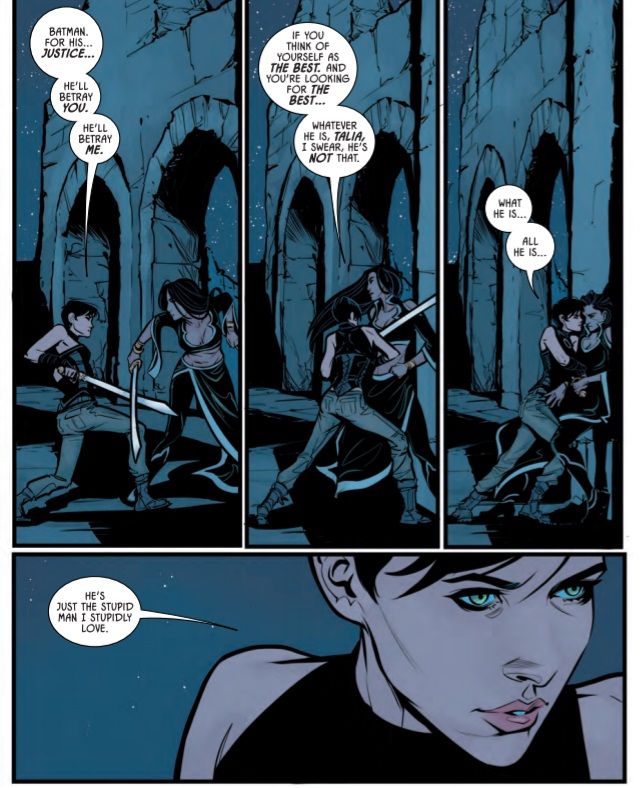
The context of the issue is secondary. If you really want to know the particulars, I highly recommend you read Batman #35 to get the full context of the situation. With respect to the topic at hand, namely the stupidity of love, all you need to know is that Catwoman has a chance to confront one of Batman’s other famous flames, Talia Al Ghul.

That’s a big deal for anyone who dares to get involved with Batman’s personal life. Talia Al Ghul isn’t just someone that both Batman and Bruce Wayne were fond of seeing naked. She’s also the mother of Damien Wayne, but not in the classic sense. He wasn’t conceived in the classic, fun sort of way.

The creation of Damien Wayne, much like Baman’s relationship with Talia, was largely a byproduct of a cold, unfeeling agenda. It had a specific purpose, a defined goal, and very little passion involved. It’s even less sexy than it sounds. It’s basically the antithesis of the stupidity of love.

That’s very much who Talia Al Ghul is. Sure, she looks almost as good as Catwoman in skin-tight outfits, but she’s not much of a romantic. She’s a cold, calculating bitch who sees love as an asset at best and an inconvenience at worst. She’s also the one Catwoman has to deal with in Batman #35 and not just because she’s marrying her baby daddy.

The clash between these two women may not be as sexy as nude oil wrestling at the Playboy mansion. It may not even be as epic as a battle between Superman and Doomsday. However, the way this fight plays out perfectly highlights both the stupidity and the beauty of love. Catwoman herself articulates it perfectly.

It’s not just that loving Batman carries with it a lot of baggage. It’s not just that being involved with the goddamn Batman is overwhelming and not just because he tends to attract homicidal clowns. To love someone like Batman is not to ignore the sheer stupidity of being involved with him in the first place. It’s to embrace it.

It’s a message that fans of romance and aspiring erotica/romance writer alike can get behind. Instead of scrutinizing or overthinking why someone loves another person, you just focus on the love itself. Sure, it’s stupid in the sense that it ignores the logistics. Sometimes, though, that’s the key to making love work.

When you’re in love with a complex person with loads of baggage, like Batman, there’s a lot to think about and scrutinize. It’s one of the many reasons that Batman has had such a colorful history with women. Between being a costumed crime fighter and a billionaire playboy, he’s a complicated man with a lot of moving parts.

It’s because of those complications that many of those women who may genuinely love him find plenty of reasons to walk away. Talia Al Ghul is a perfect example of this because she approaches her love with Batman in a way that’s cold and calculated.

To love him, in her mind, isn’t to embrace his baggage. It’s to re-shape and re-mold it into something she sees as greater. What she tries to do with Batman is very similar to what many people try to do with their lovers in the sense that they try to change and mold them into the person they want them to be, even if it means undermining the person they are.

That’s not just a losing battle that only leads to greater heartache. It goes against the very principles of love. You don’t love someone for who you want them to be. You love them for who they are.

Talia Al Ghul wants Batman to be a certain way for her. She feels she knows what’s best for him, their future, and their family. She’s also willing to lie, cheat, and manipulate him into achieving those goals. She may leave his balls intact, but she’ll make sure his soul is hers to guide. Even Regina George isn’t quite that ambitious.

Catwoman does the exact opposite. She doesn’t try to change Batman into some ideal version of a man that she has in her head. She loves him for who he is and doesn’t want to mold him into something else. On paper, that’s still kind of stupid in the sense that it basically permits him to keep doing the crazy things he does. However, it’s probably the most sincere and honest love anyone can offer.

That does more than contrast Catwoman’s love for Batman from that of Talia Al Ghul. It shows how genuine love compares to the shallow brand of love that comes with caveats. Some people build their relationships around an agenda, much like Talia Al Ghul. They see it as a means to an end. Love, in that context, is indistinguishable from a mortgage application.

Loving someone honestly means loving their flaws as much as their strengths. Catwoman doesn’t overlook or deny those flaws in Batman. Batman himself doesn’t try to hide them either. That honesty, making themselves so vulnerable to one another, is stupid from a purely logistical point of view.

However, that’s exactly what makes their love so sincere. Even if you’re not a comic book fan or a fan of beautiful women in skin-tight outfits, it’s still a love that’s worth celebrating.


2 Comments

Filed under Comic Books, Jack Fisher, Superheroes, Marriage and Relationships

Big Superhero/Romance News: Batman And Catwoman Are Getting Married!

Batman1

I had a whole other topic I wanted to discuss today, but sometimes certain events occur that require you to throw out your plans, spit on your schedule, and love every second of it. Despite some of the tragic news to come about in the last few days, something big just happened in the world of comics, a world with which I’ve made my passions known.

It’s news that appeals to both the comic book fan in me and the erotica/romance fan in me. It’s rare that a combination that potent converges in my world. When it does, my heart and loins are sent into overdrive for all the right reasons. I don’t care if that sounds overly dramatic. I’m in good a mood right now to dampen my spirits.

This time, I’m not going to provide a larger context. I’m not going to give some elaborate backstory on the circumstances to explain an ongoing controversy. Whether you don’t know squat about superhero comics or haven’t felt a romantic sentiment since the series finale of “90210,” you can’t deny this is big.

You don’t need context. You don’t need much insight either. All you need to know is this.

Batman and Catwoman are getting MARRIED! 

Batman2

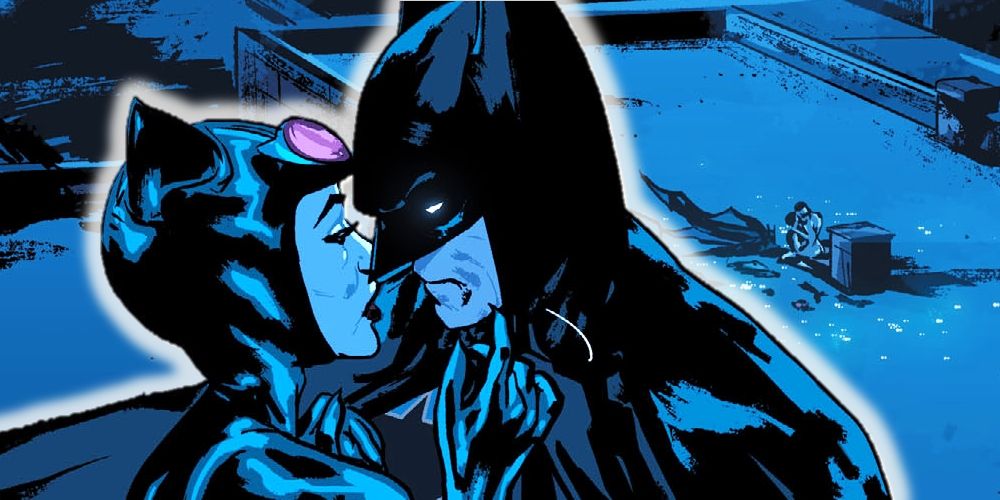
That’s right. USA Today broke the story. In Batman #24, Bruce proposed to Selena on a rooftop. Now, after months of agonizing build-up, Batman #32 gives the answer. The Dark Knight and the sexy jewel thief who dresses in a skin-tight costume are getting married.

In an era where 95 percent of all Batman stories involve him brooding all the time, including those involving Lego-themed characters, Batman is getting married. If you put your ear to a computer screen, you can hear thousands of comic fans squeeing and cheering uncontrollably.

In the context of superhero comics, this is big news and not just because it means seeing Catwoman in her underwear more often. As I write this, superhero comics are going through a rough patch in which iconic romances, especially those involving Marvel’s heroes, are being undone, undermined, or reserved for non-canon alternate universes. It’s a tough time to be a romance fan and a comic fan.

image

Lately, DC Comics has been trying to change that. They’ve been expanding the long-time marriage between Superman and Lois Lane in recent years, building on a family element and even giving them a son to raise. Someone actually had the audacity to think that a loving relationship can have appeal outside of a toxic love triangle. What a concept, right?

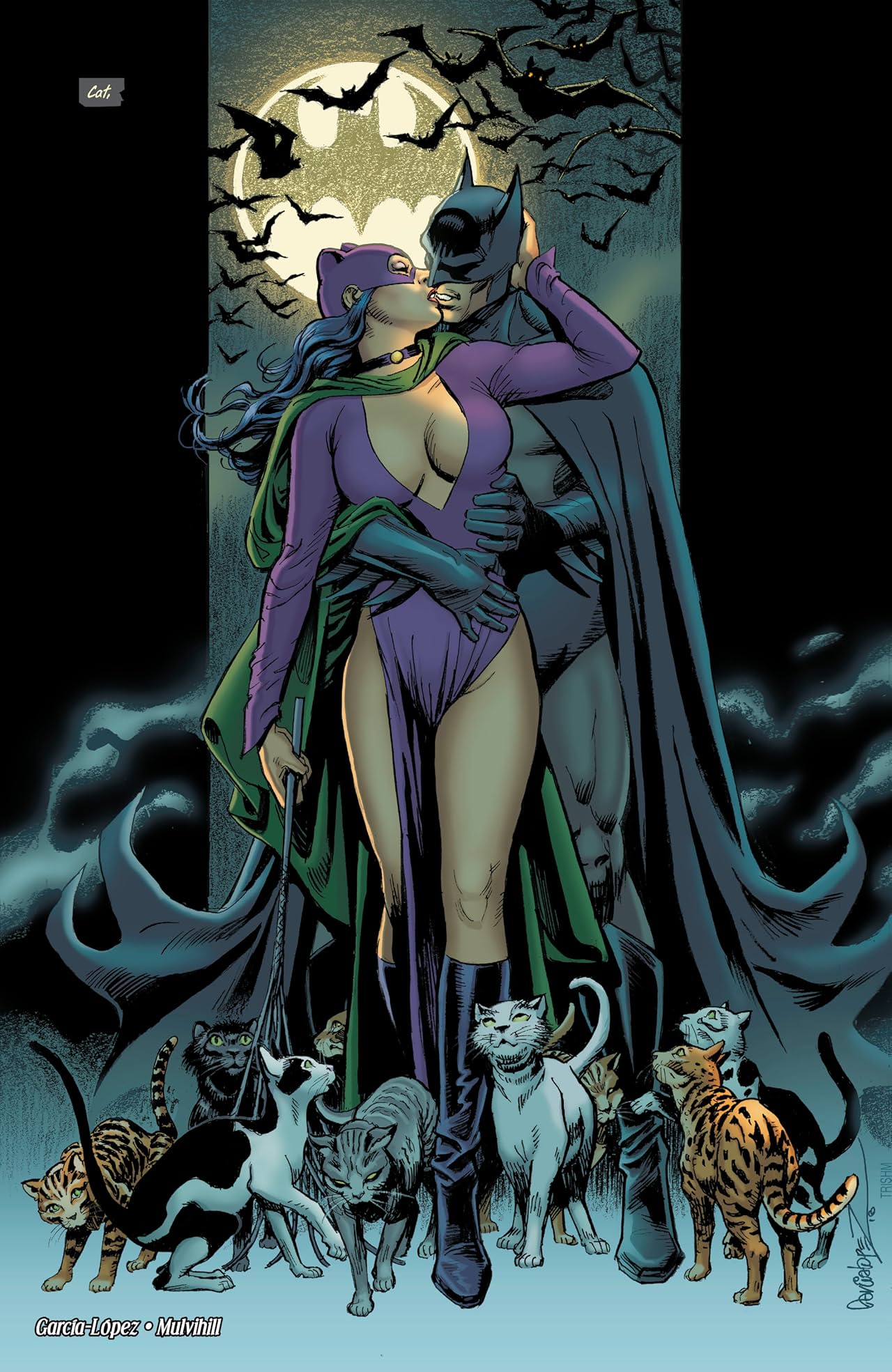
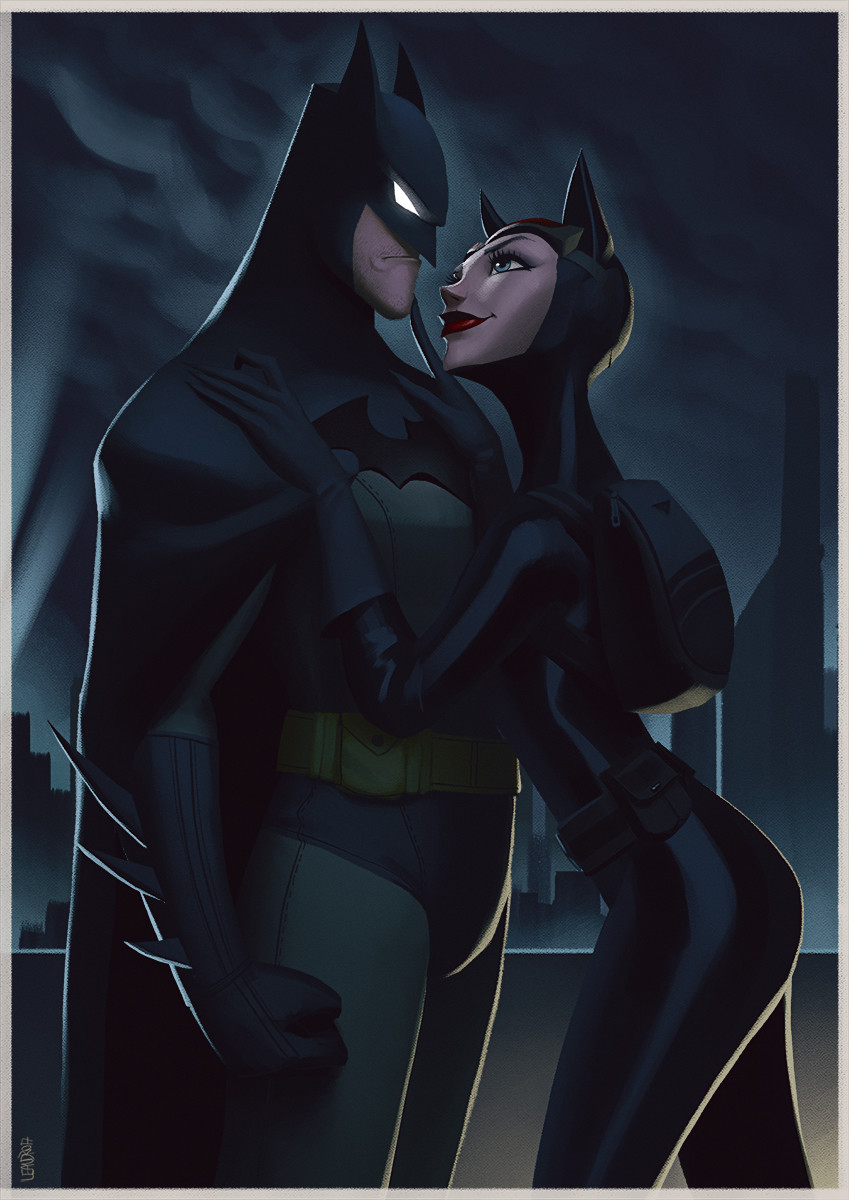
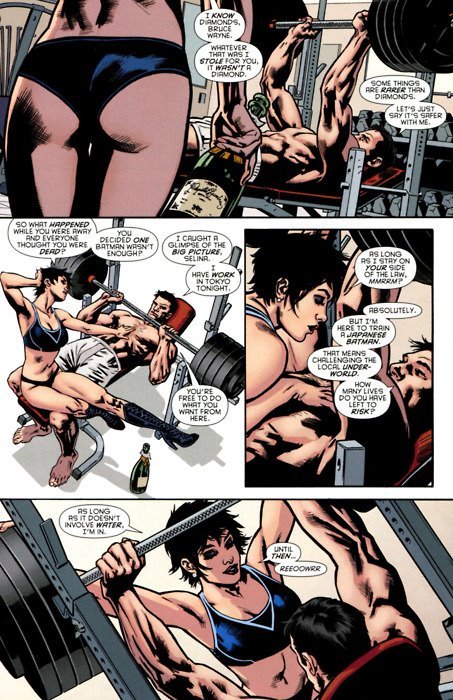
While they may not be as iconic as Superman and Lois Lane, Batman and Catwoman have had their share of romantic and sexy moments. Theirs is not the sweet, cuddly relationship that Superman has with Lois Lane. Theirs is more complicated, but many times hotter and not just because Catwoman looks sexy as hell in her underwear.

image

These are two people who don’t always find themselves on the same side of the law, but they both have lines they won’t cross. They both have principles they won’t compromise. They’re both tough, capable, and know how to handle themselves in overwhelming situations.

He’s the goddamn Batman. She’s the sexy-as-hell Catwoman. Superman and Lois may make sweet, passionate love. That’s fine for them. For Batman and Catwoman, they’ll settle for the hot, exciting, dangerous love that gets the heart and genitals going in all the right ways. It’s even sexier than it sounds.

image

For Batman, a character best known for brooding, growling, and making Christian Bale one of the biggest names in Hollywood, it’s a huge shift in his life. The past several years of Batman comics have expanded his mythos in many ways, even giving him a son, but he’s never really gone beyond brooding and beating up criminals. For a man defined by how tortured he is, this sort of thing adds some badly-needed balance.

Ever since the mid-80s when Frank Miller got his hands on Batman, he’s been such a dark character who is so overly serious in everything he does. At times, he seems to go out of his way to deny himself any measure of happiness. It makes Batman feel less like a hero and more like someone who’s just obsessive and/or mentally ill.

By having him find love with someone, that adds an important dynamic to his character. It means that he doesn’t just want to brood all the time over Gotham City’s crime problem. He wants to find some measure of happiness. Despite the loss his suffered as a kid, he still wants and feels love. Something about that shows just how resistant he is as Batman.

image

Granted, Batman has had his share of love interests over the years, as is the case with most heroes. He’s still nowhere near as bad as Wolverine. However, of all those love interests, Catwoman is probably the most iconic. They’ve been married in other realities with varying degrees of success, but this is the first time DC Comics is giving them the same shot they gave Superman and Lois Lane.

Not much has been revealed beyond Catwoman’s acceptance of Batman’s proposal. I doubt anyone has thought about wedding plans or honeymoons just yet, which for them probably involves beating the snot out of the Joker. There may or may not be a wedding special like there has been with other iconic romances.

All we know is that the desire and the will is there. For Batman and Catwoman, or passionate lovers of any kind in any reality, real or fictional, sometimes that’s all you need.

batman-has-sex-with-catwoman-rebirth-3

6 Comments

Filed under Celebrities and Celebrity Culture, Comic Books, Jack Fisher, Superheroes, Marriage and Relationships