Category Archives: superhero comics

How To Save The Comic Industry (In Four Easy Steps)

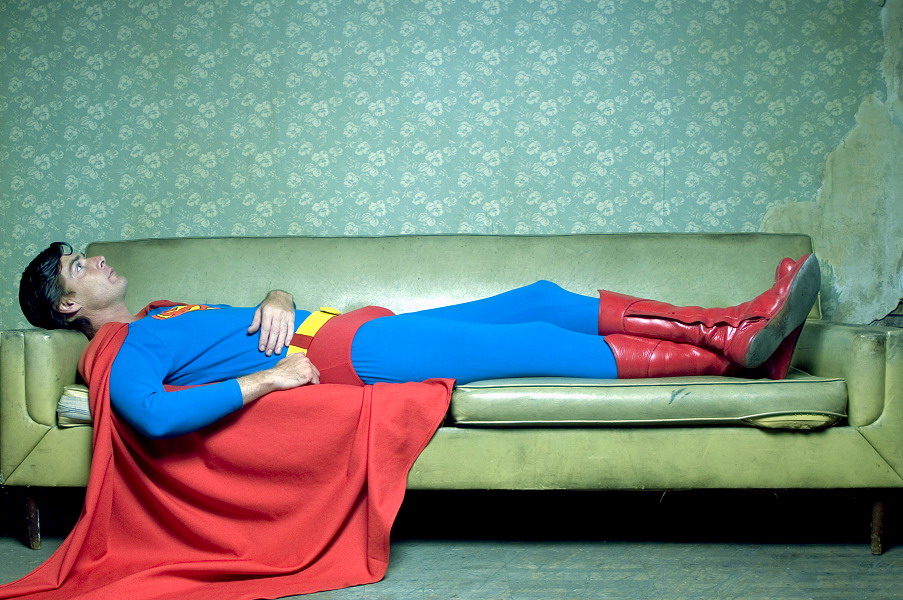
The comic book industry is in a state of crisis. I know you can say that about a lot of industries amidst a global pandemic, but the comics industry has been extremely hard hit. Shipments of new comics have ceased. Comic shops are likely to go out of business without that influx of new product. The industry that I’ve loved since I was a kid has never been this vulnerable.

It’s very depressing. I certainly have felt that after multiple weeks of no new comics. A handful of people, namely the whiny agenda-pushing loser types, have been talking doom and gloom about the comics industry for years. However, this hit has nothing to do with some overly political T-shirt that Mockingbird wore.

Even after the pandemic ends, this industry that I love will never be the same. It can’t go back to the way it used to be. This crisis has shown, among other things, that the current model that the comic industry utilizes just isn’t sustainable. It needs an overhaul of some kind.

I’m certainly not smart enough to know what that overhaul entails. I doubt few people are. However, as a long-time fan and follower of the industry, I have a few ideas. To keep it simple, here are four steps to saving the comic book industry in a post-pandemic world.


Step 1: Emphasize Quality Over Quantity

This is a simple metric. There are just too many books coming out all at once. However, this is a problem that predates the current crisis. It’s a problem that has lingered since the industry almost crashed completely in the early 1990s. It came down to simple economics. Publishers made too many books that not enough people bought. Even if they were only a dollar apiece, there’s only so much consumers can consume.

This is not a sustainable business model. Companies like Marvel and DC Comics grew the most when they were just publishing a dozen or so titles a month, with a few mini-series on the side. You could, conceivably, follow every major event in the Marvel or DC universe for less than $40, adjusted for inflation. That kind of easy access is what helped create the massive fandom that these franchises enjoy today.

That said, this isn’t the mid-1960s. The world is changed. Markets and consumer habits have changed. However, there’s still a place for comics in the publishing world. It’s just a matter of making those products more valuable. Books like DC’s Earth One series are basically single-issue graphic novels that tell a rich, complex story at a higher price and it’s worth every penny.

At a time when people are strapped for cash and looking for value, the comics industry is in a perfect position to tap into it. Make every comic count. Make every dollar feel like it was well-spent. It won’t just keep new fans happy. It’ll help create an entirely new generation of fans who are less inclined to go to crowded movie theaters.


Step 2: Embrace Digital (In A Novel Way)

This step plays directly off the first in that it embraces new technology. Decades ago, comics were easy to access because you could buy them at news stands and grocery stores. As a kid, I got most of my comics from the grocery store at first. They were easy and, much to my parents’ delight, cheap ways of putting a smile on my face.

These days, you can’t find comics in grocery stories. However, digital comics have grown a great deal and are more accessible than ever, thanks to companies like Comixology. Most comics are already released digitally on the same day they come out in shops. That’s great, but it’s basically just an extra convenience for those who don’t live near comic shops. That can’t be the extent of how digital comics impact the industry.

At the moment, digital comics are only a small part of overall comic sales, but they’re growing rapidly. In conjunction with that growth, the industry needs to embrace the other opportunities that digital offers. Services like Marvel Unlimited are nice, but they’re just giving us products that were already released. Why not give us something we can’t get anywhere else?

I’m not sure what that something is, be it a motion comic or something that sets itself apart from a traditional paperback. I’m not smart enough to figure it out, but digital offers so many rich opportunities. The first company to figure it out will make millions and entice a new generation of fans.


Step 3: Make Comic Shops More Than Comic Shops

I love comic shops. Some of my fondest memories have occurred in comic shops. I don’t want them to go away. However, embracing digital comics doesn’t mean the same as ditching these important brick-and-mortar structures. It just means changing their role in the overall comics infrastructure.

When I was a kid, there were two types of stores. One were the stores you could hang out in and the other were the stores in which the owners kicked you out if you lingered for more than 10 minutes. The future of the industry needs to embrace the former rather than the latter.

Comic shops can’t just be about selling comics and merchandise. Too much of that is online and relying on that model is doomed to failure. Instead, comic shops need to be part comic shop and part coffee shop. Make it a place where you don’t just browse the racks for new material. Make it a place where you can sit down with friends, get some coffee, get a snack, and enjoy comics in a communal manner.

Once comic shops are an experience again, people will visit them and not just because there are new comics to buy. If comics can become a popular hang-out once more, then they’ll have a place in a new market.


Step 4: Empower Creators (Instead Of Screwing Them Over)

As much as I love comics, I don’t doubt that it has engaged in some shady business practices. There are many stories about comic creators getting screwed over by major publishers. While every industry has shady practices, the comics industry relies too heavily on brilliant creators to screw them over.

While Marvel and DC have their Disney/WB overlords to please, they can’t just rely on being farms for intellectual property. There has to be a new and better way for compensating creators. Alan Moore may be a cankerous blow-hard, but he really did get screwed over when DC flat out broke their promise to him.

Broken promises always cost more in the long run, especially with respect to comics. It’s not enough for the publishers to just acknowledge the contributions of creators. They need to have a way to profit. It’s not impossible. Apple does it with their app store, creating a means for creative developers to profit from their creations while still making Apple billions.

When both benefit, everyone benefits. It’s really that simple.


I know the comics industry is undergoing rapid change. I don’t doubt I’ll be upset with some of those changes. However, I also understand that the industry needs to change in this increasingly chaotic world. These are just some ideas on how to go about it.

Whatever happens, I hope this industry that I love continues to thrive. I don’t know how, but I do know that a lot of people love it and they’ll find a way to make it work.
Leave a comment

Filed under DC Comics, Marvel, superhero comics

No New Comic Day For The Second Week In A Row (But I’m Finding Ways To Cope)


Another Wednesday morning has come and once again, there are no new comics to wake up to. This is the second week in a row that this tragedy has occurred and it’s not something I want to get used to. The news came down on Monday, so I still had time to brace myself.

It still wasn’t enough.

This is the longest I’ve ever gone without enjoying a new stack of comics since the dark days of waiting by the mailbox on Wednesday afternoons, hoping that my comics weren’t late, which they often were. There were times when stores were closed and entire shipments were delayed, but that was usually because of a blizzard or a severe weather event. Those never lasted this long.

There’s still no timeframe for when New Comic Day will resume, just as there’s no timeframe for when sports will resume. According to the Comixology website, some of my pre-orders and pull lists are set for release on April 15th, but that’s very likely to change. Pretty much every release date is likely to change until the pandemic subsides.

Even for those saying the light at the end of the tunnel is in sight, it can’t come fast enough. It’s hard enough going through the first few weeks of April without watching any baseball or going to the movies. Not having new comics to read on a Wednesday morning is just making it worse.

It’s bad.

It’s frustrating.

It’s downright disheartening.

That said, I am finding ways to cope that still involve comics. As hard as it is not getting anything new for weeks on end, it has given me an opportunity to catch up on some other books that I haven’t had the time or budget to read. Most of these books are compilations or older graphic novels that I’ve been waiting to buy on sale through Comixology. Thankfully, there have been plenty of those sales lately.

It’s pretty much the only way I can get new comics. While most are books that have been spoiled, expanded, or retconned, they still have value to anyone who appreciates comics. In that sense, I intend to make the most of some of these sales and catch up on some of the books that I’ve had on my wish-list for a good long while.

To those looking for something to fill that lingering void that new comics aren’t filling, here’s a brief list of books you can buy now to help tide you over.

Miles Morales: Ultimate Spider-Man Volume 1

New Mutants by Abnett & Lanning: The Complete Collection Vol. 1

Y: The Last Man Volume 1: Unmanned

Sandman Volume 1: Preludes & Nocturnes

Fantastic Four Volume 3: The Herald Of Doom

Avengers by Jonathan Hickman: Volume 1

Red Sonja: Worlds Away Volume 1

The Boys Volume 1: The Name of the Game

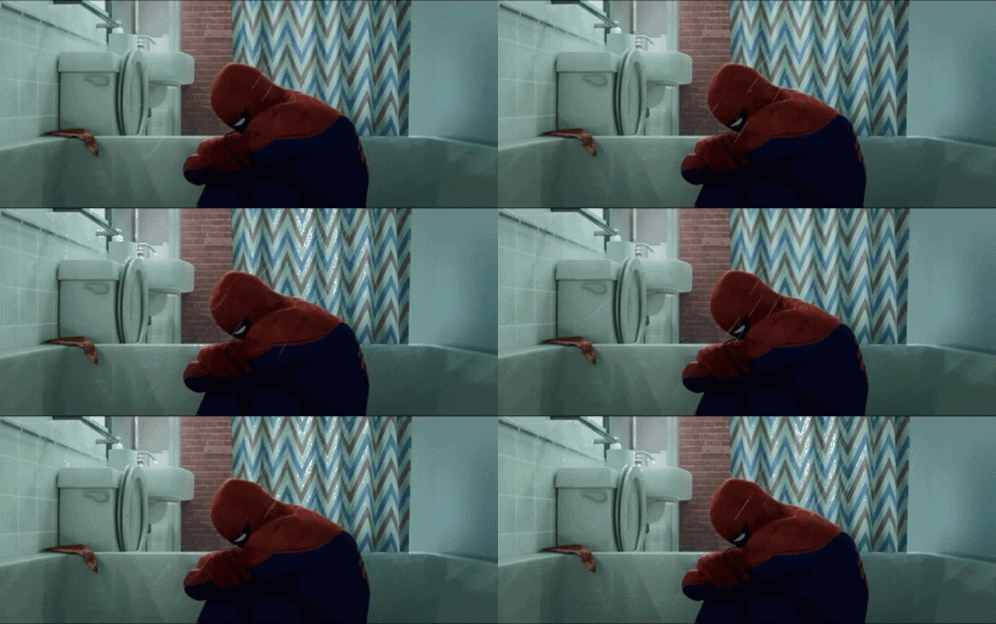
This will end eventually. It just can’t end soon enough. Until then, I’m going to take some extra showers every Wednesday so that I can’t tell how much I’m crying.

Leave a comment

Filed under superhero comics

Wonder Woman, Relationships, And Misguided Standards For Female Heroes

I love superhero comics. I love romance. Naturally, I love it when they’re combined into a perfect package of super-romantic sentiment. I’ve singled out a few favorites of mine in the past, as well as a few not-so-favorites that act as cautionary tales. Chances are I’ll find plenty more excuses to write about superhero romance in the future.

That said, I’d like to take a step back from the specifics of superhero romance and assess the forest from the trees, so to speak. Instead, I thought I’d highlight something that I’ve been noticing within the pages of some of my favorite comics. It’s not necessarily an egregious flaw, but it is a distressing trend for lovers of romance like myself.

It has to do with how superheroes are portrayed when they’re in romantic relationships. Almost every popular superhero is caught up in a romantic sub-plot. Superman has his ever-iconic love story with Lois Lane. Cyclops and Jean Grey have decades of romance and drama. Spider-Man gets around so much that he has multiple iconic romances.

Not every superhero is defined by their romantic sub-plot, although some are more effected by it than others. It’s hard to tell the story of Sue “Invisible Woman” Richards without involving her husband and children. However, certain characters are held to different standards when it comes to romance.

That’s to be expected, given the diverse circumstances of each hero. Not every hero is going to be affected by their romantic sub-plot in the same way. That effect also changes through different eras. Even the iconic relationship between Superman and Lois Lane has changed a great deal over the years, although not necessarily for the better.

However, this particular era has really twisted the standards for female superheroes in romantic relationships and not in a good way. I won’t go so far as to call it a double standard like the others I’ve cited, but the differences are stark. It goes like this.

A male superhero gets caught up in a romantic sub-plot. The plot progresses, he enters a relationship with his romantic interest, and continues being the same hero he’s always been. The relationship supplements his story.

A female superhero gets caught up in a romantic sub-plot. The plot progresses and she enters a relationship with her romantic interest, but the relationship conflicts with her ability to be a superhero. It gets to a point where the act of her being a hero is detrimental to the relationship. She can have one or the other, but not both.

These scenarios are somewhat generic, but they convey a similar message. Male superheroes can be in romantic relationships without it undermining their heroic persona, but female superheroes can’t have those relationships without it becoming an obstacle.

This strange, unbalanced dynamic played out recently in the pages of “Wonder Woman #754.” I’d even go so far as to argue that Wonder Woman suffers the most from this dynamic, despite being one of the most iconic female superheroes of all time. Given that she’s the ideal that other female superheroes are compared to, I think that’s telling.

The main plot of the issue isn’t important. The side-plot is where this dynamic showed up. There were frequent flashbacks that highlighted Diana’s recent “drama” with her long-time romantic interest, Steve Trevor. I put drama in quotes because it feels less like drama and more like forced excuses.

It’s been an issue for Wonder Woman for decades. Despite being her most iconic love interest, going back to the 1940s, Steve Trevor has never been that official with Diana. Even though they’ve professed their love for one another in many forms and in many timelines, they’re rarely ever shown as being in a functional, mature relationship.

It’s not just with Steve Trevor, either. Even in the classic “Justice League” cartoon in which she was romantically linked to Batman, nothing ever became official. There’s was never a point where Wonder Woman went from being single to being in a real, functioning relationship.

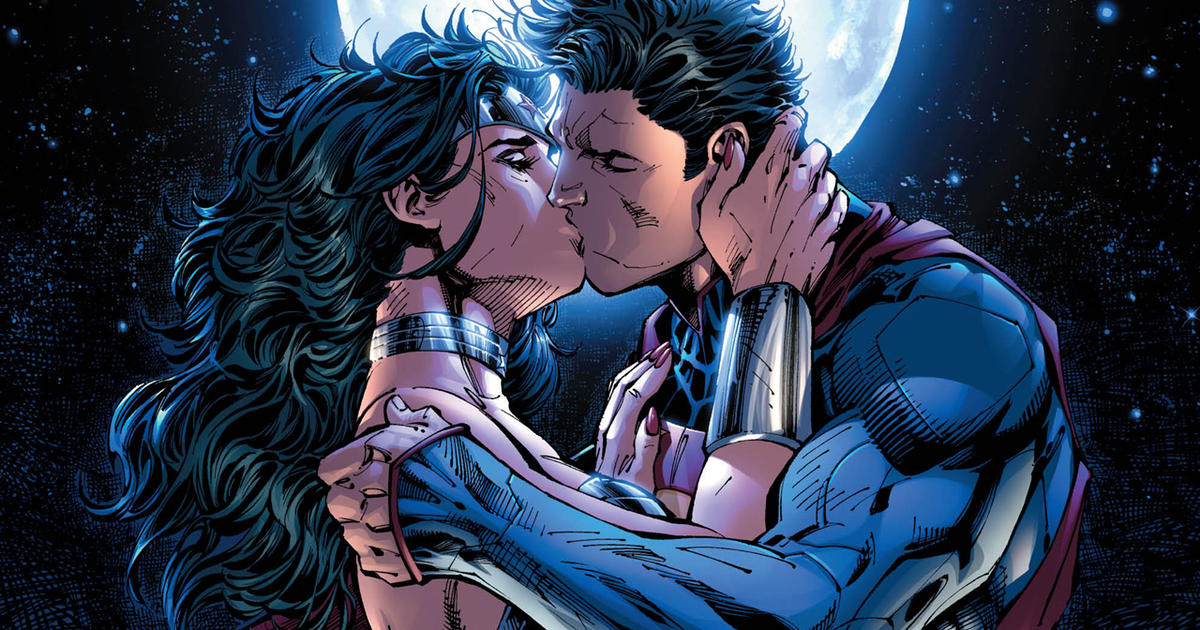
In fact, the only time Wonder Woman was ever in a functional romantic relationship was when she dated Superman during DC’s short-lived New 52 era in the comics. During that time, Wonder Woman and Superman had their own comics and their own stories. Sometimes, those stories became entwined. Sometimes, they didn’t. It never undermined their relationship or vice versa.

I know comic fans have strong opinions about the New 52 as a whole, but I find it telling that this was really the only time Wonder Woman was allowed to be in a relationship while still being Wonder Woman. For her to be someone’s girlfriend and still be the hero she’s always been, her significant other had to be Superman.

Take a moment to think about the scope of that standard. Wonder Woman, the standard-bearer for female superheroes for decades, can be in a functional relationship, but only with someone as capable as Superman. She and Steve Trevor can be in love, but they can’t have a relationship. He’s just an ordinary man. He’d just undermine Wonder Woman’s ability to be the ideal female hero we know and love.

Meanwhile, male heroes like Batman and Spider-Man can become romantically involved with far less capable individuals, many of which don’t have superpowers and can’t fly across the planet to be on time for date night. They’re still allowed to be in those relationships, but Wonder Woman can’t even make the effort with one of her most iconic romances with Steve Trevor.

As a fan of superhero comic, romance, and Wonder Woman, I find this both flawed and frustrating. While the “Wonder Woman” movie did an solid job establishing genuine romance between her and Steve Trevor, they still never got a chance to actually be in a relationship. It’s as though a female hero can’t be in a relationship without losing something. At the same time, a male hero can’t have a complete story without one.

It’s a strange disconnect and I think it’s getting worse. In recent years, superhero comics have made a concerted effort to develop female characters and I applaud that effort. It has led to some major successes. The problem is that, like Wonder Woman, these female characters aren’t really allowed to become anyone’s girlfriend. Being in a relationship is seen as an obstacle to being strong, independent, compelling characters.

Respectfully, I call bullshit.

Being in a relationship isn’t detrimental to any character, male or female, if the relationship is well-written. In addition, female characters don’t have to be completely, 100-percent independent to be great. In fact, making them that emotional single-minded is a good way to make them unlikable and unrelatable because, in the real world, people have relationships. They form bonds, rely on others, and are effected by those close ties.

Now, I don’t deny that writing great female characters is challenging, especially in recent years. It feels like you can’t write female characters without having an agenda anymore, even when it’s not printed on a shirt. Again, I call bullshit. Female characters, like all characters, are deeply affected by the loving bonds they form. They deserve the same development and exploration as their male counterparts.

Why can’t Wonder Woman be in an official relationship with Steve Trevor?

Does being Steve Trevor’s girlfriend make Wonder Woman any less a superhero?

Does any female superhero lose something when they become someone’s girlfriend?

These are relevant questions that are worth asking. If someone as iconic as Wonder Woman can’t be in a relationship with someone without undermining what makes her Wonder Woman, then that’s not a problem with her as a character. That’s a problem with the standards and assumptions we have about superhero romance.

I’m sorry if this rant feels dragged out, but this has been bothering me for a while. I’d be happy to discuss it more. Please share your thoughts in the comments.

Leave a comment

Filed under DC Comics, Marriage and Relationships, romance, superhero comics, Wonder Woman

Marvel’s “New Warriors” Brings Out The Dumbest Criticisms (From Whiny Losers)

A big part of being a fan of anything is enduring the hard times. Whether you’re a fan of a sports team, a celebrity, or a particular author, there are going to be missteps. For every “Dark Knight,” there’s going to be a “Batman and Robin” that’ll make even the hardest of hardcore fans cringe.

It’s no different for superhero comics. There have been times when being a fan of X-Men, Justice League, the Avengers, or Batman have not been pleasant. Sometimes, the quality of the material being produced just isn’t that great. Sometimes, it’s downright infuriating. Just ask any Spider-Man fan about One More Day or the Clone Saga.

However, there’s a big difference between enduring hard times and just whining about something. There’s a big difference between criticism and whining, but some people who claim to be fans can’t seem to tell the difference. A few even manage to whine loud enough to draw an audience, albeit for the wrong reasons.

If you follow comics as closely as I do, you know who I’m talking about. They’re the kind of people who find a comic, single out a few particular elements, and go on these long whiny rants that basically say the same thing.

It’s all blah-blah-blah-SJW-blah-blah-blah-political correctness-blah-blah-blah-it’s too damn woke-blah-blah-blah-the industry is doomed-blah-blah-blah-they’re insulting older fans. I won’t single out any of these frail, emotionally-stunted losers by name or handle. They don’t deserve the extra attention and I refuse to give it to them.

They’ll claim they’re defending the industry they love. They’re just whining loudly and hoping to attract clicks in the process. It’s pathetic. It’s also predictable. That’s why I groaned when I saw this recent news from Marvel regarding a relaunch of their New Warriors series.

Marvel: Introducing The New ‘New Warriors’

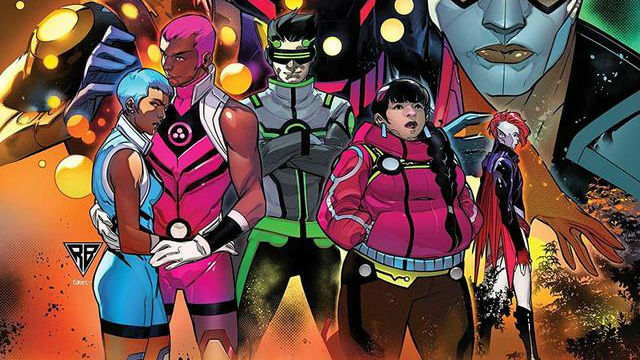
When Kamala’s Law goes into effect in the highly anticipated one-shot, OUTLAWED, super heroics will be left to the adults and underage heroes will be banned unless they have official government assigned mentors. That’s where THE NEW WARRIORS come in.

Now, I’m not the biggest fan of New Warriors. I’ve heard of them before and I know their history to some extent, but this is hardly the most outrageous thing Marvel could’ve done. They’re not killing off older characters and replacing them with young, diverse characters, a la Riri Williams. They’re not radically changing the background or history of established characters, like they did with the Maximoff Twins.

In fact, they’re doing exactly what these same whiny losers always say they should do. They’re creating entirely new characters with diverse backgrounds instead of forcing them into roles that others have occupied. They’re not canceling, changing, or undermining the characters we’ve loved since the days of Stan Lee and Jack Kirby. They’re just creating something new to supplement those characters.

Despite that, these same “critics” still whine about it. They whine the same way they whined endlessly about “Star Wars: Rise of Skywalker.” The mere fact that this new title exists, especially its two non-binary characters, Snowflake and Safespace, is enough to make them cry like immature babies who just had their blanket taken away.

It’s one thing to criticize Marvel for trying to force new characters into the roles of established characters. That rarely works out. It’s quite another to complain when companies like Marvel try to make new characters from scratch who don’t resemble the many other characters around them. It’s almost as if characters aren’t allowed to be different beyond a certain point.

If that weren’t bad enough, these same whiny losers are judging this book before they’ve even read it. I admit it doesn’t look too appealing to me, but I haven’t read it. How am I supposed to know if it’s good? How will I know that Snowflake and Safespace aren’t good characters?

There’s a word for people who judge things before they actually give it a chance. It’s not a very flattering word, but I doubt the same whiners will admit to knowing it. They’ll still claim they’re defending their preferred genre, but all they’re doing is trying to justify their prejudice by whining.

Once again, the wise words of Abraham Simpson sum it up best.

giphy

Nuff said!

2 Comments

Filed under Marvel, outrage culture, political correctness, superhero comics

A Simple Comment On The Criticism/Whining On “Birds Of Prey”

Sometimes, a movie just fails to find an audience.

It’s not because of some larger social agenda that backfired horribly.

It’s not because of some huge backlash caused by misguided marketing strategies, either.

Most of the time, the world isn’t that fanciful. It’s just chaotic, unpredictable, and messy. No matter how much a movie, TV show, or product attempts to appeal to a broad audience, it can just fail. That’s all there is to it.

Trying to fit an agenda into that failure is like trying to build a conspiracy around why you’re stuck in traffic. The world isn’t out to get you or people like you. Most of the time, shit just happens and you’re just caught up in it. That’s not to say that agendas never squeeze themselves into the media. It happens, but it’s effect is often exaggerated. Most of the time, the final product just doesn’t work.

That brings me to “Birds of Prey.” Now, in the interest of full disclosure, I completely forgot about this movie. I had no excitement for it and not just because I was underwhelmed by “Suicide Squad.” I like Margot Robbie. I like Harley Quinn. She’s a great actress who plays a great character. The movie just did not grab my attention.

I saw the trailer. It was fine, but forgettable. I didn’t feel compelled to watch it 10 times in a row, as I did with “Wonder Woman 1984.” I didn’t feel compelled to see the movie, either. Even though it got good reviews, it just didn’t appeal to me. I planned to watch it when it came out on cable. Based on the early box office haul, I’m not alone in that sentiment.

I’d be perfectly fine to leave it at that. In previous years, I wouldn’t even bring it up. However, due to the growing inclination to make everything political, the under-performance of “Birds of Prey” is already getting the wrong people talking about it for all the wrong reasons.

Some are already lumping this movie in the same category as 2016’s “Ghostbusters” or the horrendously bad “Charlie Angels” reboot. Now, I don’t want to get into the politics behind it, mostly because I value the integrity of my brain cells. I’ll just say this. Whether you’re liberal, conservative, feminist, traditionalist, anarchist, or Marxist, there’s one thing to remember.

It’s a goddamn movie. Sometimes, movies just fail to find an audience. That’s it. That’s all there is to it.

Maybe it eventually becomes a cult classic, like “Blade.” Maybe it rebounds with good word of mouth. Either way, it has nothing to do with an agenda. The public, as a whole, just didn’t respond to it. Any criticism/whining beyond that is just asinine.

That’s all I have to say about “Birds of Prey.” Harley Quinn is still a great character and Margot Robbie is still a great actress. Your agenda, whatever it may be, has no bearing on that. It never has. It never will. Get over yourself and just watch the movies you enjoy.


1 Comment

Filed under gender issues, media issues, movies, outrage culture, political correctness, politics, sex in media, sex in society, superhero comics, superhero movies

New Comic Book Day January 15, 2020: My Pull List And Pick Of The Week

In the times before the internet, comic fans like myself built their entire Wednesdays around when and how they could get to a comic book store. As horrifying as a time before the internet might be to most people under the age of 25, some of us remember it. We also remember the challenges, but we don’t miss them.

For me, it was a tough challenge to get around. There would be days in which I couldn’t get to a shop to get my stack of comics and the mail service almost never delivered subscription titles on time. For that reason, and many others, Wednesdays were stressful. Now, thanks to online shops like Comixology, those dark times are distant memories.

It’s because of companies like Comixology, and their Amazon overlord, that Wednesdays are far less arduous. We wake up, log in, and have our entire pull list for the week at our fingertips. Throw in a cup of hot coffee with a pinch of whiskey and you’ve got a perfect storm of morning heaven.

Today is another trip to that heaven. With it, I have a digital pull list tailor made to make my Wednesday as special as it deserves to be. What follows is my pull list for the week and my top pick from that special lot.

Also, I wasn’t joking about the whiskey in my coffee.


My Pull List

Avengers #29

The Flash #86

Jessica Jones: Blind Spot #1

Valkyrie: Jane Foster #7

Saban’s Go Go Power Rangers #27

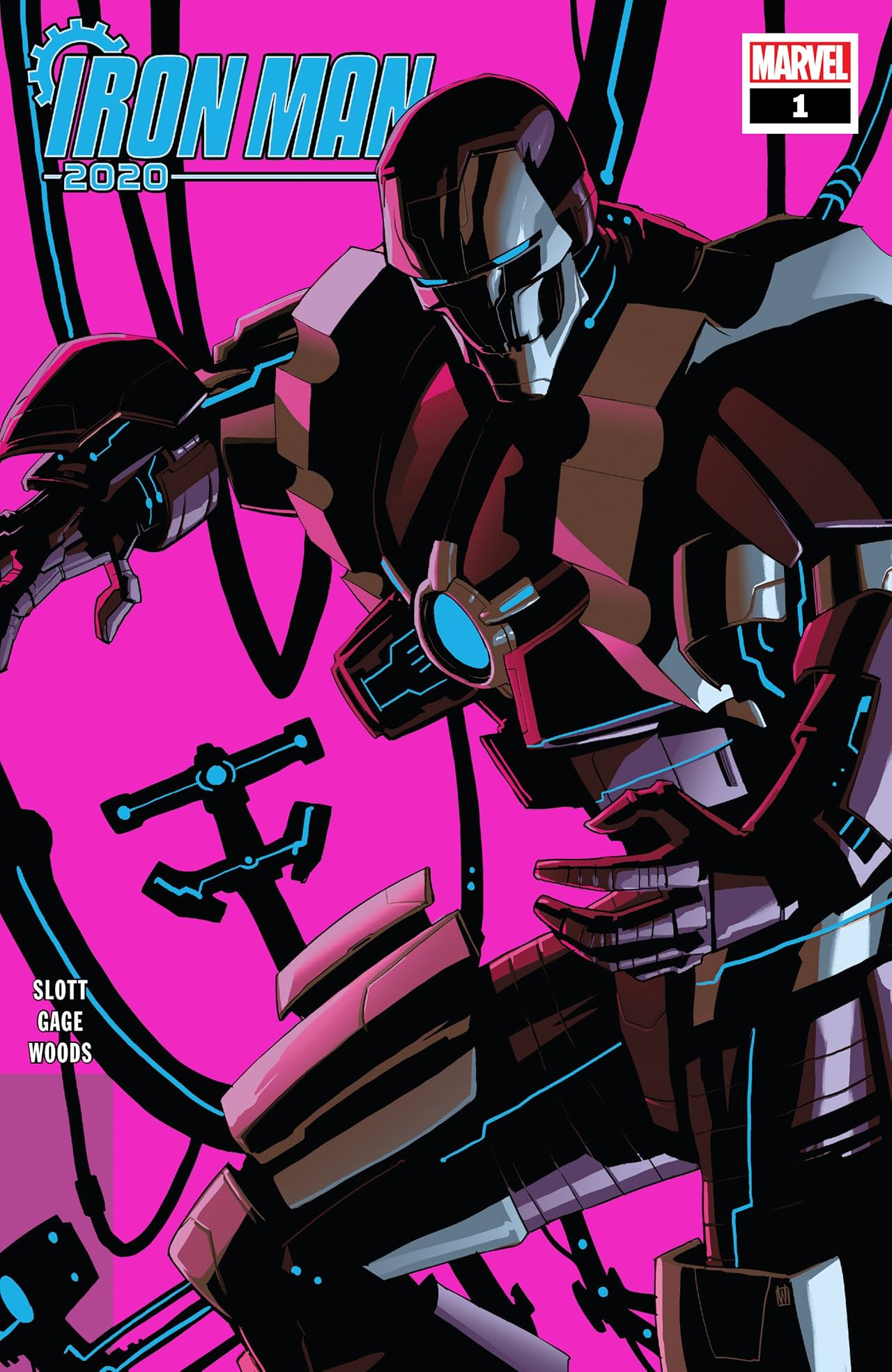
Iron Man 2020 #1


My Pick of the Week

Back in the mid 1980s, Marvel published a mini-series called Machine Man by Tom DeFalco, Herb Trimpe, and Barry Windsor-Smith. This underrated gem envisioned a cyberpunk future in which an emerging class of artificial intelligent beings clashed with humanity. On the front lines of that clash was Iron Man 2020.

At the time, it just seemed like a cool concept and a valid excuse to build a world around epic robot battles. Now, it is 2020. While we don’t have the same robot battles envisioned in that book, there are increasingly serious concerns about the emergence of artificial intelligence and what that could mean for the human race.

Iron Man 2020 #1” doesn’t just take this concept and run with it. It channels the spirit of Jack Kirby in pursuing bold ideas and the bolder implications behind them. Writers Dan Slott and Christos Gage embrace the aesthetics and themes of that old story. The Iron Man that emerges is a different kind if Iron Man.

If you haven’t been following the recent Iron Man comics, that’s not too great an obstacle. All you need to know is that Tony Stark lost control of his company and his Iron Man armor. It’s not because he’s “dead.” I put that in quotes because that’s somewhat of a relative term in this book, as well as many other Marvel books.

The Tony that had been running around as Iron Man was declared not to be the “real” Tony. He was just an artificial intelligence in a fresh body. Legally speaking, that means Tony is dead and everything he once owned now belongs to his brother, Arno Stark. If you don’t know his story, you’d be wise to look it up. For “Iron Man 2020 #1,” it’s not entirely necessary. You just need to know that he’s a new kind if Iron Man.

Tony’s presence still looms large, as do the ideas surrounding artificial intelligence, identity, and how it fits into a society still run by flawed, fleshy humans. There are a lot of new plots on top of ones that have been unfolding for years in the pages of Iron Man. “Iron Man 2020 #1” just sets the stage for what should be a very special year for all things Iron Man.

Leave a comment

Filed under DC Comics, Jack's Quick Pick Comic, Marvel, superhero comics

My (Mixed) Reaction To The “Morbius” Trailer

Whenever a trailer for a new superhero movie comes out, I get excited. It’s basically a reflex at this point. In this golden age of superhero movies, we’re at a point where the bar is high, the variety of movies is fast, and it promises to get even more diverse in the near future.

While movies like “Avengers Endgame” and “Joker” have left fans like me feeling spoiled, it’s still possible for some movies to come along and just not strike any chords. That’s not to say they’re terrible or doomed to “Catwoman” levels of failure. They just come along at a strange time when they don’t seem to fit.

That’s what colored my reaction to the recent release of the “Morbius” trailer. I knew of this movie. I knew it was set to come out this year. I also knew that Jared Leto had been cast in the main role of Michael Morbius. After how poorly his rendition of Joker panned out in “Suicide Squad,” I welcomed this news. Leto is a great actor who just needs to find the right role. I thought Morbius could be that role.

It’s one of those roles that could be great for both Leto and the character. Even if you’re familiar with Marvel comics, especially the Spider-Man branch of the comics, you probably don’t know much about Michael Morbius. He’s not a new character. He’s been around since 1971.

However, he has never been a high-profile hero. He’s best known as an occasional antagonist for Spider-Man, but in terms of notoriety, he’s a far cry from Venom, Doctor Octopus, or the Green Goblin.

Since his debut, he’s tried to stand on his own. Sometimes, he succeeds, but he’s never risen to the same levels as other popular Spider-Man characters. This movie could change, but after seeing the trailer, I’m not so sure.

It’s not bad. It’s not great, either. It didn’t get me excited like “Venom” or “Joker.” It didn’t paint Morbius in a unique light, either. It teases a plot that feels pretty generic. It doesn’t feel bold or groundbreaking. It doesn’t come off as stupid or poorly handled, either. Leto looks great in the part, especially at the end.

I don’t hate it. I don’t love it, either. For the moment, I’m ambivalent about this movie. Compared to the colorful antics of “Birds of Prey” and the horror themes of “New Mutants,” this just doesn’t stand out.

I’ll still give it a chance. I’ll still root for this movie to succeed, but I won’t be surprised if it fails. It could be another “Venom” or it could end up as bad as “Catwoman.” It’s hard to say at this point. Only time will tell.

At the very least, this will be a story in which the vampires don’t sparkle.

1 Comment

Filed under Marvel, Marvel Cinematic Universe, movies, superhero comics, superhero movies

The Ambiguity Of Anti-Heroes And How To Make Sense Of Them (According To Overly Sarcastic Productions)

Certain concepts easy to discuss, but poorly defined. You could get 100 people in a room, get them talking about art for hours on end, and at no point will anyone have a clear definition of what constitutes art. For some, it’s a beautiful painting by a long-dead artist. For others, it’s a banana taped to the wall.

The conflict occurs when discussing anti-heroes. I know because I’ve discussed them before. I’m guilty of throwing that label around and attaching it to certain characters. However, despite having a definition, the concept is still poorly defined. It’s so poor, in fact, that you can argue that almost any character with the “hero” is also an anti-hero to some extent.

Like art, it’s one of those things we think we know when we see. Given the sheer volume of superhero comics I’ve read over the years, I like to think I can point out and define an anti-hero better than most. Even with that experience, I doubt my standards are flawless. In fact, I’m fairly certain most peoples’ standards are ridiculously flawed.

I say this because I recently came across a new video by Overly Sarcastic Productions, a wonderful YouTube channel that I would highly recommend for all aspiring writers. Whether you’re writing adventure, sci-fi, or erotica romance, this channel offers invaluable advice and lessons.

My favorite part of the channel is its ongoing series, Trope Talk. It covers a wide range of writing topics, from paragons and pure evil villains to romantic sub-plots and reformed villains. Recently, it tackled the concept of anti-heroes in a comprehensive, colorful way. What made it even more compelling, in my opinion, are the characters it singled out to make the most important points.

There’s a lot I could say about it. Rather than spoil it, I strongly encourage everyone to watch the video. If you think it’s wrong on some areas or missed something, then please make your case in the comments. As both a comic fan and an aspiring writer, I’m always happy to discuss such topics.

If nothing else, I hope that video convinced you to go watch “Star Wars: The Clone Wars.” Seriously, even if you’re not a Star Wars fan and utterly despised the sequel trilogy, go check it out. It may not have Baby Yoda, but it has plenty to offer, both for anti-heroes and so many other wonderful things.

Leave a comment

Filed under media issues, superhero comics, superhero movies, video games, Villains Journey

The “New Mutants” Trailer And Why I’m Rooting For This Movie

Since the conclusion of “Dark Phoenix,” a movie I genuinely love and have re-watched more times than “Avengers Endgame,” it’s been a strange time for X-Men fans. We know that the X-Men are coming to the Marvel Cinematic Universe. With the Disney/Fox merge finalized, it’s only a matter of time before we see mutants pop up in the Marvel universe. It may even come sooner than we think.

Then, there’s “New Mutants.” This movie, which is based on a well-known, critically acclaimed X-Men comic from the 1980s, is a hell of an anomaly. It was originally supposed to come out in April 2018, but got delayed for reasons that are too complicated and stupid for me to put into words.

Delays aside, it has a bold concept. It attempts to mix horror with superhero movies. It’s a unique combination, but one that doesn’t sound that outlandish. Remember, this is the same franchise that made “Deadpool” a Valentine’s Day movie. However, at a time when Marvel Studios has set such a high bar, it almost feels out of place.

Now, with a firm release date of April 3, 2020, it seems like “New Mutants” is still happening. The director, Josh Boone, has been given the opportunity and the blessing by our Disney and Marvel overlords to see his vision through. Honestly, after seeing the latest trailer, I’m rooting for this movie.

It’s not just that this movie is bringing to life more great characters from the X-Men franchise. This movie is attempting to do something that we’ve never seen in the MCU or from DC, for that matter. It’s daring to mix genres in ways they’ve never been mixed. It’s attempting to craft a different kind of superhero movie. Given the success of “Joker,” I’m genuinely rooting for this movie.

I really do hope it succeeds and not just because I’m a die-hard X-Men fan. I think the superhero movie genre needs this. It needs to show that it can expand, evolve, and grow in new ways. Superhero movies don’t just have to be this colorful, big-scale spectacles backed by Disney’s deep pockets. They can be something different, darker, and bolder.

New Mutants” has had a lot of forces working against it. If it succeeds with critics and fans, then it sends a message to Marvel, DC, and the greater powers that be that there’s room for different kinds of superhero movies. They don’t have to follow the same formula. They can succeed in entirely new ways while still strengthening the brand.

If nothing else, it’ll tell the Martin Sorceresses of the world to piss off in the best possible way.

1 Comment

Filed under movies, superhero comics, superhero movies, X-men

Selling (And Exploiting) Human Enhancement: An Ominous Lesson From “Superior Iron Man”

tumblr_static_tumblr_static_251b2rz5uxz4s4sssw0skg04c_640

How much would you be willing to pay for perfect health, perfect beauty, and a greater capacity to enjoy life as you see fit? This is not a rhetorical question. I would even argue that it’s an increasingly relevant question. In the coming years, answering it might even become more urgent.

I’ve talked about the prospects of human enhancement through emerging technology before. From its impact on our concept of beauty to how our society will function, there are many impacts to consider. Some of those impacts are already manifesting before our eyes. Just last year, the first genetically modified babies were born in China. Like it or not, this is happening.

It’s impossible to overstate the benefits, risks, and upheavals that human enhancement will have on our species and our world. Nobody knows for sure what’s going to happen as this technology matures or how societies, economies, and governments will react to it. Even so, it’s worth contemplating. It’s even worth imagining elaborate scenarios in fictional worlds.

While plenty of noteworthy stories have imagined such scenarios, some more dystopian than others, there’s one in particular I’d like to single out. It’s not entirely dystopian, but it does offer some distressing lessons about the larger economics of human enhancement. It also helps that those lessons come through a forgotten, but criminally underrated Iron Man comic.

Given the rapid rise of Iron Man’s star power over the past decade, his character is uniquely qualified to explore these difficult questions surrounding technology and how we use it. He is, at his core, a visionary who uses technology to solve problems, save lives, and occasionally fight invading aliens. In the series, “Superior Iron Man,” he takes that vision several steps further and cross many lines along the way.

While there are some convoluted circumstances surrounding this series, the ideas it explores are profound, even by the standards of superhero comics. You don’t need to know the specifics of those circumstances. They involve forces like magic and inversion spells, which are far too complicated to explain to those who haven’t followed Marvel comics for more than two decades.

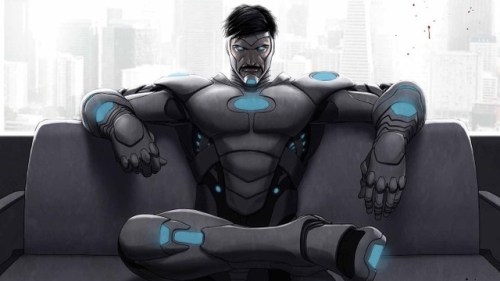
The only detail anyone needs to know about “Superior Iron Man” is that the Tony Stark in this story is not the same lovable character that helped make Robert Downy Jr. one of the most lovable stars in Hollywood. This version of Tony is less bound by concepts of heroism, selflessness, and sobriety. That’s not to say he’s evil, but he’s definitely no hero.

Within this ethically bankrupt state, Tony embarks on a new initiative that’s as selfish as it is lucrative. It revolves around Extremis, an exotic cocktail of nanotechnology and biotechnology that effectively rewrites the blueprint of the entire human body into something better, stronger, and more robust. In essence, it is the ultimate tool for human enhancement.

While the initial version of Extremis was lethal to most people who used it, Tony creates a more commercialized version in “Superior Iron Man” that gives everyone a chance to enjoy its benefits. He calls it Extremis 3.0 and people can access it through a simple smartphone app. With it, people can achieve what Tony describes as physical perfection.

Everyone can be perfectly healthy.

Everyone can be young and beautiful.

Everyone can be functionally immortal.

It sounds like a miracle drug and by every measure, it is. This isn’t some Dr. Oz wannabe pitching vitamins that do nothing other than give you false hope. This technology actually works. With it, Tony gives the entire city of San Francisco a chance to experience the fruits of human enhancement.

Understandably, once people get a taste of what Extremis 3.0 has to offer, they love it. They also take full advantage of it. At one point in the story, Pepper Potts says it’s turning the streets of San Francisco into a non-stop parade of debauchery and self-indulgence. Tony does not see this as a bad thing. If anything, it perfectly complements his plans and his renewed appetite for self-indulgence.

This is where “Superior Iron Man” attempts to answer that question about putting a price on physical perfection. Writer Tom Taylor, alongside artist Yildiray Çinar, doesn’t hide from the disturbing parts of that answer. By the end of the first issue, Tony puts a literal price on that perfection. Needless to say, it causes plenty of conflict and it escalates quickly.

When he initially released Extremis 3.0 onto San Francisco, he gives ordinary people a taste of what it’s like to be as fit as Captain America, as beautiful as Emma Frost, and as physically endowed as Thor. It’s not a drug that just attempts to match that feeling. It physically changes their bodies and their capacity for using them. That taste, however, was just a free sample. To keep enjoying it, they must pay $99 a day.

It’s crude trick right out of the playbook of subscription apps. People get a free trial period that’s just long enough to get them hooked. Then, before they even realize they have to pay anything, they get hit with a paywall. It’s a cruel bait-and-switch, but this isn’t just another streaming video service. This is physical perfection and unlimited self-indulgence. Is $99 a day really that unreasonable?

It certainly rubs plenty of people the wrong way, including many of Tony’s long-time friends and allies. Both Daredevil and Pepper Potts turn against him for such devious tactic. It also has some noticeable effects on the people who use it. By the end of the first issue, a stark class divide emerges between those who can afford Extremis 3.0 and those who can’t.

Naturally, it causes crime and conflict among the residents of San Francisco. Tony, now both feared and beloved by these people, takes it upon himself to manage it. He gains power, wealth, status, and an endless supply of eager party guests for whenever he seeks to indulge. It’s a perfect cocktail of recklessness and irresponsibility.

Without spoiling the rest of the story, which ended too soon, I think it’s worth taking a step back and looking at the bigger picture that “Superior Iron Man” presented. If you take away the iconic characters and the superhero themes, you get a story about a selfish business tycoon who has sole possession of the ultimate biotech product.

The goal isn’t to heal the sick, ease suffering, or evolve the human species. The goal is simply to make a lot of money, feed an inflated ego, and indulge in every conceivable vice without consequences. It’s a worst-case scenario for liberals and conservatives, alike. At the same time, it makes a compelling case that our current system can’t handle the impacts of large-scale human enhancement.

That doesn’t mean it can’t succeed in our current system. The size of the current biotech industry is already measured in the hundreds of billions. Overpriced drugs are nothing new, either. Just this past year, the FDA approved a drug called Zolgensma, which costs $425,000 a year for five years to treat a rare genetic disorder called spinal muscular atrophy.

By comparison, Extremis 3.0 is a bargain with far greater value. Even at $99 a day, the yearly cost of enjoying that physical perfection amounts to around $36,500 a year. That still takes up a good chunk of the average income for most Americans, but considering all the benefits of having a perfect body, is it still a bargain?

For anyone who has overpaid for inflated medical expenses, I suspect they would gladly pay that high price for Extremis 3.0. Tony Stark banked on that in “Superior Iron Man” and he was right. People did pay and it was very lucrative for him. The population of the San Francisco Bay Area in which he unleashed Extremis 3.0 is around 4.6 million. At $99 a day, that’s a potential annual revenue of $167 billion.

In terms of business ranking, that would put Tony’s venture in the top 20 in terms of largest companies by revenue. If he were to unleash Extremis on the entire United States, the potential annual revenue would be near $11.8 trillion. That’s a little more than half of the entire US economy.

Imagine one company, let alone one person, having that much money and influence over a population. Tony was already a billionaire before “Superior Iron Man,” but Extremis 3.0 rewarded him with more than just money. Tony, being the sole provider, held a great deal of power and influence over San Francisco. As is often the case in superhero stories, that power goes to his head.

That story plays out in the real world just as often. In some cases, it brings out the worst in people. For a product like Extremis 3.0, which provides human enhancement into a simple commercial package that anyone can access through an app, the potential for abuse is much worse.

Beyond the greed it would inspire and the recklessness it fosters, it would also widen and solidify a gap in society that might be impossible to close. The wealth gap is in the non-superhero world is already egregious. Adding something like Extremis 3.0 to the mix would only make it immeasurably worse.

More than a few people has expressed concern about the prospects of such an enormous societal divide. “Superior Iron Man” showed just how bad it could get and how quickly it could escalate. While the series only managed to explore this conflict to a point before it got canceled, Tom Taylor did enough to get a powerful point across.

In a world where human enhancement is real and commercially available, how do we go about distributing it among a population? Should we put a price on it? How high should that price be? Who should be in control of it?

Worst case scenario.

Superior Iron Man” never got a chance to explore the answers, but these are questions that will become increasingly relevant as advances in biotechnology accelerate. We may not be close to having a product like Extremis 3.0 and it’s uncertain whether we’ll even develop something like it in the next few decades.

Even if we do, “Superior Iron Man” made one thing clear. We, as a species and a society, are not ready for it.

1 Comment

Filed under biotechnology, futurism, health, human nature, Neuralink, Sexy Future, superhero comics