Category Archives: political correctness

A Note On The “Last Of Us 2” Leaks (And Spoilers In General)

People have mixed, but intense opinions on spoilers. I know people who will get downright violent if you threaten to spoil something to them. I also know people who just roll their eyes and brush them off, as though they’re no big deal. It’s one of those issues where there’s very little middle ground.

In the age of the internet and social media, it’s almost impossible to avoid them. Some movies, video games, and TV shows can be completely spoiled in a single tweet. There are unmoderated anonymous boards like 4chan where every detail can be spoiled, alongside posts of trolls determined to make ordinary people gouge their eyes out.

Personally, I prefer to read spoilers before I see a movie, buy a game, or get invested in a show. When I saw “Dark Phoenix” and “Star Wars: The Force Awakens,” I read spoilers beforehand. They actually made me more excited to see those movies because I liked what I read.

Sometimes, I make exceptions. I avoided spoilers for both “Avengers: Endgame” and “Breaking Bad.” In those cases, I really wanted to feel the impact when I saw how the story played out the first time. While I doubt reading spoilers would’ve made me enjoy both stories any less, there was an element of impact that I couldn’t have gotten otherwise.

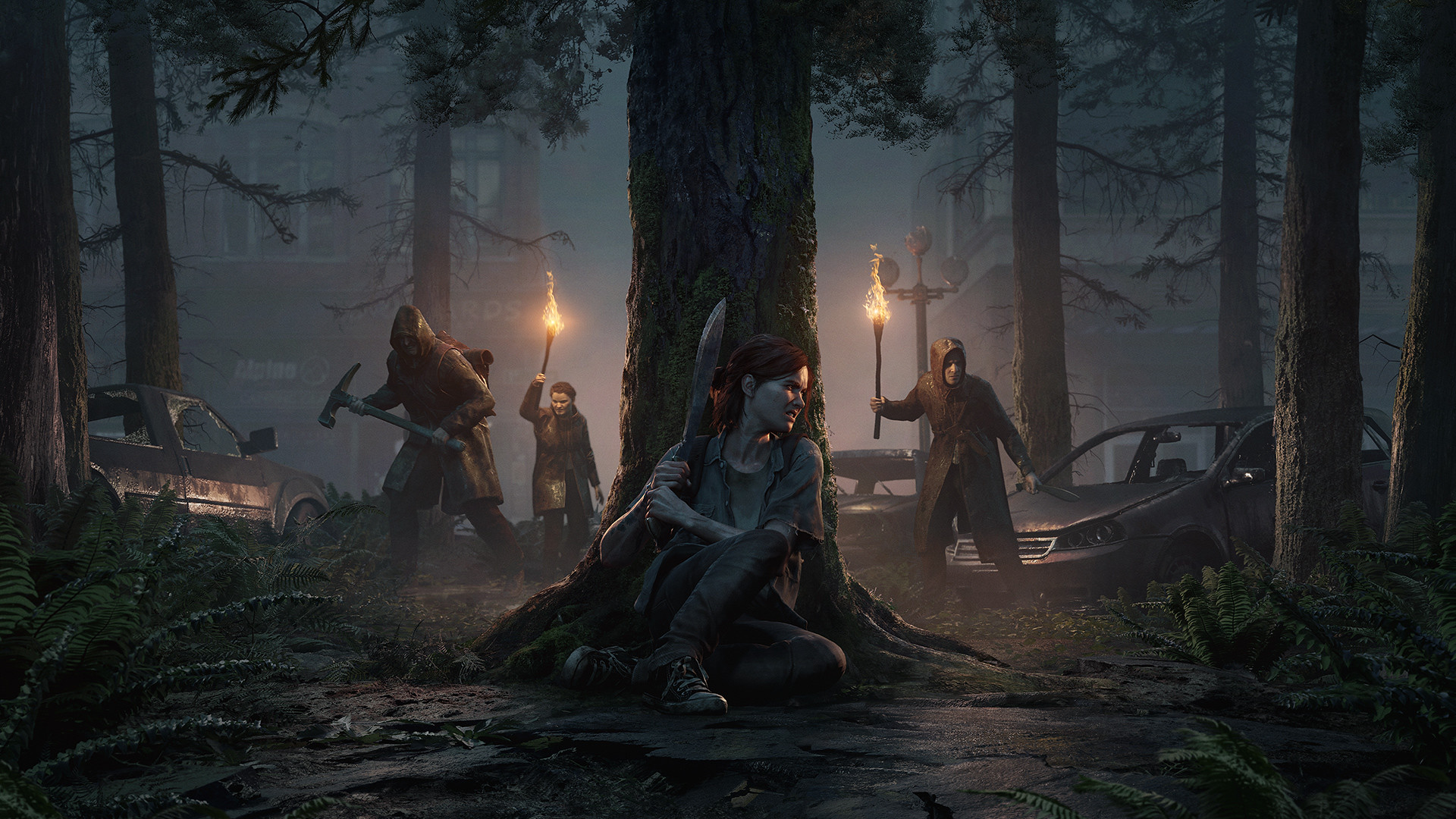
I think a lot of people make exceptions when it comes to spoilers, but sometimes they have an impact that goes beyond spoiling a surprise. That’s what happened recently with “The Last of Us Part 2,” one of the most anticipated video games of the past decade. As someone who played the first “The Last of Us” and praised it on multiple occasions, I was among those brimming with excitement.

Then, an employee at the developer, Naughty Dog, leaked the entire story. Out of respect for those who still don’t want to be spoiled, I won’t go into detail here. I’ll just cite the report by Den of Geek, who also made a concerted effort to avoid such details.

Den of Geek: The Last of Us 2 Leaked Plot Confirmed by Naughty Dog

The Last of Us Part 2‘s story has been leaked. Various clips that showcase nearly the entirety of the game’s story have made their way online. Naughty Dog has recently confirmed the leak via a tweet that asks fans to not spoil the game for others and to avoid spoilers if possible.

The extent of this leak is massive. Not only do these leaked clips include nearly every major cutscene from The Last of Us Part 2, but it seems that fans have also gotten their hands on a leaked level list that details the story structure of the sequel.

Now, I’m going to be careful with my words here because I don’t want to spoil this game for those who don’t want to be spoiled. Even though the leaks have spread on nearly every platform, I don’t want to compound the issue. The primary reason I’m bringing this issue up with The Last of Us Part 2” is because this whole situation with spoilers has some important insights that are worth mentioning.

The biggest insight, thus far, is just how much these spoilers effect the perception of the game. Before the leaks came out, “The Last of Us Part 2” was by far one of the most anticipated games of the year. Naughty Dog’s reputation was very polished and there weren’t many people saying bad things about them.

That situation has been completely reversed.

While it’s hard to gauge every reaction, I’ve seen a fairly consistent pattern. Almost everyone, including those who were very excited about this game, are incredibly disappointed by this. It’s not just that the story was spoiled. The details of that story have rubbed everyone the wrong way.

Without getting into specifics, they effectively undermine some of the most important aspects of the first game. The journey the players took in The Last of Us was a deeply emotional experience. Even if you’d read the spoilers ahead of time, there’s a lot of appeal to that experience. I knew the basic of the game long before I played it. It still had a profound impact on me by the time I got to the end of the game.

With The Last of Us Part 2,” that impact is effectively undercut. The journey that we took in the first game doesn’t matter as much in this game. Everything that made you fall in love with these characters and their struggles is either ignored or overshadowed by something else. For anyone who loved the first game, where’s the appeal in that?

There are also some “political” overtones to the story that have rubbed people the wrong way. I put “political” in quotes because in the world of video games, “political” is usually just code for “political or ideological leanings that I don’t agree.” I’ve never cared much for that. In general, I try to avoid it, but it has become an unfortunate trend in video games, thanks to scandals that have only gotten more absurd with time.

The only aspect of “politics” that I resent in video games, and media in general, is how it tends to hallow out a story. If the point of a story is to just score certain points with certain ideologies, then it renders the story bland and predictable. When done poorly, it becomes outright propaganda.

Based on these spoilers, I won’t say that “The Last of Us Part 2” reeks or propaganda, but the ideological themes are not exactly subtle. While those themes don’t bother me personally, I’ve seen enough internet outrage mobs to know the reaction it’ll incur. That reaction will only obscure any legitimate criticism of the game and its story.

I had not pre-ordered this game, but I was planning to once a new release date was finalized. Now, I’ve no desire to play this game anytime soon. I’ll still follow reviews and feedback. If parts of these leaks prove to be inaccurate, I’ll gladly change my tune. To date, however, nobody at Naughty Dog has denied them. That’s often a sign that they’re real.

To some extent, I’m grateful. I’d much rather learn about this before I dropped over $60 on a game that was only going to disappoint me. During these times, nobody can afford to waste that kind of money. I’ll wait until others play the game to see how the full story plays out. Maybe it’ll work out in the end, but I’m not very hopeful.

It’s a disappointing turn for something that I was genuinely excited about. It also darkens the prospect of this franchise becoming a how on HBO. It’ll be interesting to see how these leaks and the reactions to them effect the sales of the game. If it’s as bad as some dread, then the emotional journey that this franchise took us on could come to an abrupt and tragic end.

2 Comments

Filed under Current Events, LGBTQ, outrage culture, political correctness, psychology, video games

How The Backstreet Boys’ “I Want It That Way” Became Less Romantic Over Time

Some love songs are just assumed to be romantic, regardless of what the lyrics say or how the song was inspired. You hear it on the radio. You see the music video. Like a reflex, you think love. It might be the cheesiest kind of romance there is, but it’s still romance none-the-less.

It has its place in pop music. I certainly appreciate music like that to some degree, but it only works if you don’t think too hard about it. To really enjoy it, you just have to turn off your brain and let it feel like it’s in a bad romantic comedy. This was, to a large degree, a part of what made boy bands so popular in the late 90s and early 2000s.

I remember that era. I was still young at the time. I heard all those cheesy love songs and the fanatical girls who squealed with incoherent joy whenever they heard them. I wasn’t a big fan, but I didn’t hate boy bands. I see their music like overly processed cheese. It’s good, but you can taste how bland and superficial it is.

To me, the absolute apex of the boy band era came with the Backstreet Boys and their sappy super-hit, “I want it that way.” It’s hard to overstate how big this song was in 1999. You could turn on any radio, find a random station, and hear it at some point. It was played on a loop at proms and middle school dances. I imagine more than one teenager lost their virginity because of this song.

It is, by far, the quintessential boy band song. It’s cute hot guys singing about love. You can’t get much more basic than that. Just listen to the music video that MTV played at least once an hour from that era. Even if you weren’t alive during that era, the romantic undertones are overt.

All that said, I doubt anyone who was alive in the late 90s or ever really scrutinized the lyrics. Even though the pace of the song is slow and every word is understandable, I don’t think anyone takes the time to read them in their entirety. The tune and the backdrop is just so romantic that the ambiance overshadows the actual words, but when taken as a whole, those words undermine that romantic intent.

I started noticing this years after the boy band crazed die down. Being a romance lover, I have a tendency to scrutinize all things romantic more than most. I’ve already shared some of my favorite love songs and at one point, this song was on that list. However, over the years, as I’ve listened closer to the lyrics, the song just got less and less romantic.

For reference, here are the lyrics without the backdrop of an attractive boy band and a soothing overtone. Read it closely. Really think about what they’re saying.

Yeah
You are my fire
The one desire
Believe when I say
I want it that way
But we are two worlds apart
Can’t reach to your heart
When you say
That I want it that way
Tell me why
Ain’t nothin’ but a heartache
Tell me why
Ain’t nothin’ but a mistake
Tell me why
I never want to hear you say
I want it that way
Am I, your fire?
Your one, desire
Yes I know, it’s too late
But I want it that way
Tell me why
Ain’t nothin’ but a heartache
Tell me why
Ain’t nothin’ but a mistake
Tell me why,
I never want to hear you say
I want it that way
Now I can see that we’ve fallen apart
From the way that it used to be, yeah
No matter the distance
I want you to know
That deep down inside of me
You are my fire
The one desire
You are (you are, you are, you are)
Don’t want to hear you say
Ain’t nothin’…

Parts of it are romantic. I don’t doubt that. When taken in their totality, though, it walks a fine line between love and obsession. I won’t say that it echoes with the sentiments of a stalker or someone with a creepy obsession, but it does walk the line. I would argue it’s way too close to the line.

Those first few lines about someone being their one singular desire are sweet, but more than a little obsessive. Making someone your deep, loving desire is one thing. Making them your only desire is a little unhealthy.

Then, there are the parts about heartache, being apart, and drifting away. Those are concepts inherent in many great love songs, but it doesn’t quite work here. Again, look at that first line. It’s telling someone they don’t want to hear them say they want something a certain way. It sends the message that what someone else wants is wrong. That’s not really romantic. That’s an accusation of a thought crime.

Wanting someone to love you is one thing.

Wanting them to not want something is very different. It also has some disturbing implications.

The lyrics alone tell a story of two people drifting apart and separated by distance. One person wants it that way. The other person doesn’t. On top of that, the other person has a singular focus on the other and doesn’t want them to feel that way. Is that sentiment love? Is it even romantic?

You can twist the meaning through music and context. You can make the song about longing for someone over a distance, but it requires a hell of a stretch with the words. Anything that requires that much of a stretch shows just how lacking the romance is.

I’m not saying this song isn’t a great song. I think it is. It’s popularity and staying power is proof of that. As a love song, though, it’s one of those songs that gets less and less romantic the more you scrutinize it. For any song that’s supposed to convey a romantic sentiment, why would you ever want it that way?

1 Comment

Filed under Marriage and Relationships, political correctness, romance, sexuality

Loneliness, Bitterness, And Perspectives From Pandemics

See the source image

The crisis surrounding the Coronavirus/COVID-19 pandemic affected our world and our lives in ways too numerous to list. I hate talking about it and lamenting on all the things we’ve lost because of it, from March Madness to movies to new comics. Unfortunately, it’s unavoidable. Unlike misguided outrage or clickbait, I can’t just step away from my computer and escape. The world around me is still quarantined.

It’s a rare, unprecedented level of awful that will likely resonate for decades to come. It’s awful on so many levels, but it’s often through awful experiences that new perspectives emerge. I’d like to offer one today, if only to divert attention from how bad the news keeps getting.

Let’s face it. If you’re a very social person who enjoys going out, meeting new people, and forging new connections, this experience has been hell. It’s not just that bars, clubs, malls, and movie theaters are closed. You can’t even get close to people to connect with them anymore. Social distancing has made everyone less inclined to get close. For people who value that closeness, it’s nothing short of devastating.

At the same time, the less social crowd has probably noticed just how little their lives have changed. If you enjoyed sitting on your ass all day, watching TV and playing video games, then chances are you’re not feeling the impact that much. You might even take a perverse satisfaction out of the fact that your hobbies and passions have already equipped you to weather this crisis.

Between those extremes, however, lies the insights that are worth noting. Before this crisis took hold, it wasn’t uncommon to cite lonely, anti-social people, most of which were men, as damaged and dangerous. They’re behind many of the insults thrown at the “incel” community or those who debate feminism and social justice on message boards.

I know because I’ve been called that on more than one occasions. It’s often some variation of “basement-dwelling neckbeard” or something of the sort. I honestly don’t pay much attention to those insults. I’ve been on the internet long enough to grow fairly thick skin. At the same time, I think this crisis can offer a new perspective on loneliness to those who aren’t used to it.

Being trapped at home for days on end, unable to go out and socialize, means a sizable chunk of people who haven’t experienced loneliness to this extent can now know what it’s like. While I genuinely hope it ends soon and doesn’t leave any lasting scars on people, I hope it makes the necessary impression.

If you’re lucky enough to have a family, then you’ve got some support. If you’re lucky enough to have a lover, then you’ve got a source of intimate contact that feels like a precious luxury to many. That assumes that nobody you care about is sick, which adds a new level of dread to the loneliness. It’s not a pleasant feeling. It’s also a feeling worth scrutinizing.

To get that point across, I’d like to pose some questions to those who have ever labeled someone an incel, toxic, problematic, or any other insult that makes them unworthy of compassion.

How does it feel to have the desire to connect with others, but not the means?

How does it feel to be cut off from intimate human contact through no fault of your own?

How does it feel to have hours on end to yourself with nothing more than your hobbies to occupy yourself?

How does it feel to feel so utterly alone through no fault of your own?

How does it feel to be completely powerless to change your current situation?

I apologize if any of these questions come off as harsh. I hope they still convey the necessary message. Some of it may be personal for me. I’ve had people insult me whenever I’ve admitted to feeling lonely. Being a man, I feel like I don’t get much sympathy. People just assume I’m not doing something right and it’s up to me to fix it.

While part of that might be true, there are also parts that are simply beyond my control. A global pandemic is one of those things that’s beyond everyone’s control, from young men who play video games to world leaders who wield real power. For once, we’re all at the mercy of the same overwhelming force. We can’t hide from it or its effects.

There’s no patriarchal conspiracy, radical feminist plot, or secret cabal of lizard people working against us. This is just something that emerged from nature and hit us where it hurt at the worst possible time. For once, we’re all on the same page in terms of how vulnerable and concerned we are.

It’s a rare, but bittersweet opportunity. In recent years, there has been this narrative about lonely, bitter men, as well as lonely bitter women. They’re lonely and bitter because the world didn’t give them everything they wanted on a silver platter, so they take it out on everyone else.

They want the world to cater to their sensibilities.

They claim their preferences are right and anything to the contrary is flawed, political, or in some ways invalid.

They cling to their opinions, citing only the facts that justifies them while attacking those that oppose them.

Everyone is guilty of doing this. I certainly am. It’s tempting to write them off as products of a bitter, lonely existence for which they are wholly responsible. If nothing else, this pandemic shows that everyone is at the mercy of their circumstances.

Whatever someone’s attitude may be, even if it is misguided and flawed, it doesn’t make their loneliness any less real. It’s easy to insult those kinds of people when your situation is entirely different and arguably better. Now, this disease has put every one of us in the same boat, relatively speaking.

I hope we all remember this feeling and how much it sucks. I genuinely hope it inspires and educates others to understand how crippling loneliness can be for some people. Not everyone deals with it in a healthy way. Many will continue to cope in unhealthy ways long after this crisis is over.

At least now we know what drives those feelings. Whether you’re a lonely man, a lonely woman, or just lonely in general, we’ve all experienced the struggle it brings. Keep that in mind the next time you judge someone who seems bitter and angry at the world. They may just be lonely and no matter what your politics or ideology may be, it can make us feel as sick as any pandemic.

Leave a comment

Filed under gender issues, health, human nature, men's issues, outrage culture, political correctness, psychology, sex in society, sexuality, women's issues

Marvel’s “New Warriors” Brings Out The Dumbest Criticisms (From Whiny Losers)

A big part of being a fan of anything is enduring the hard times. Whether you’re a fan of a sports team, a celebrity, or a particular author, there are going to be missteps. For every “Dark Knight,” there’s going to be a “Batman and Robin” that’ll make even the hardest of hardcore fans cringe.

It’s no different for superhero comics. There have been times when being a fan of X-Men, Justice League, the Avengers, or Batman have not been pleasant. Sometimes, the quality of the material being produced just isn’t that great. Sometimes, it’s downright infuriating. Just ask any Spider-Man fan about One More Day or the Clone Saga.

However, there’s a big difference between enduring hard times and just whining about something. There’s a big difference between criticism and whining, but some people who claim to be fans can’t seem to tell the difference. A few even manage to whine loud enough to draw an audience, albeit for the wrong reasons.

If you follow comics as closely as I do, you know who I’m talking about. They’re the kind of people who find a comic, single out a few particular elements, and go on these long whiny rants that basically say the same thing.

It’s all blah-blah-blah-SJW-blah-blah-blah-political correctness-blah-blah-blah-it’s too damn woke-blah-blah-blah-the industry is doomed-blah-blah-blah-they’re insulting older fans. I won’t single out any of these frail, emotionally-stunted losers by name or handle. They don’t deserve the extra attention and I refuse to give it to them.

They’ll claim they’re defending the industry they love. They’re just whining loudly and hoping to attract clicks in the process. It’s pathetic. It’s also predictable. That’s why I groaned when I saw this recent news from Marvel regarding a relaunch of their New Warriors series.

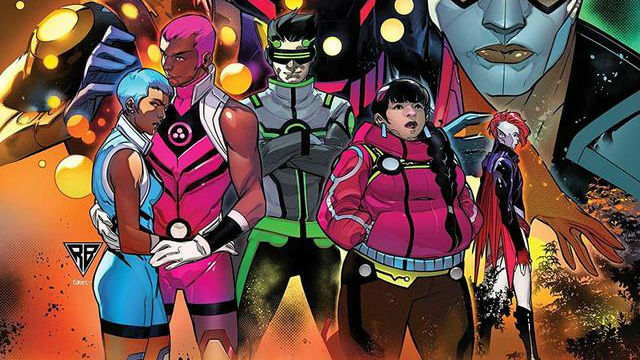
Marvel: Introducing The New ‘New Warriors’

When Kamala’s Law goes into effect in the highly anticipated one-shot, OUTLAWED, super heroics will be left to the adults and underage heroes will be banned unless they have official government assigned mentors. That’s where THE NEW WARRIORS come in.

Now, I’m not the biggest fan of New Warriors. I’ve heard of them before and I know their history to some extent, but this is hardly the most outrageous thing Marvel could’ve done. They’re not killing off older characters and replacing them with young, diverse characters, a la Riri Williams. They’re not radically changing the background or history of established characters, like they did with the Maximoff Twins.

In fact, they’re doing exactly what these same whiny losers always say they should do. They’re creating entirely new characters with diverse backgrounds instead of forcing them into roles that others have occupied. They’re not canceling, changing, or undermining the characters we’ve loved since the days of Stan Lee and Jack Kirby. They’re just creating something new to supplement those characters.

Despite that, these same “critics” still whine about it. They whine the same way they whined endlessly about “Star Wars: Rise of Skywalker.” The mere fact that this new title exists, especially its two non-binary characters, Snowflake and Safespace, is enough to make them cry like immature babies who just had their blanket taken away.

It’s one thing to criticize Marvel for trying to force new characters into the roles of established characters. That rarely works out. It’s quite another to complain when companies like Marvel try to make new characters from scratch who don’t resemble the many other characters around them. It’s almost as if characters aren’t allowed to be different beyond a certain point.

If that weren’t bad enough, these same whiny losers are judging this book before they’ve even read it. I admit it doesn’t look too appealing to me, but I haven’t read it. How am I supposed to know if it’s good? How will I know that Snowflake and Safespace aren’t good characters?

There’s a word for people who judge things before they actually give it a chance. It’s not a very flattering word, but I doubt the same whiners will admit to knowing it. They’ll still claim they’re defending their preferred genre, but all they’re doing is trying to justify their prejudice by whining.

Once again, the wise words of Abraham Simpson sum it up best.

giphy

Nuff said!

2 Comments

Filed under Marvel, outrage culture, political correctness, superhero comics

A Quick Perspective On Controversy, Scandals, Politics, And Elvis’ Hips

Every controversy seems absurd when you look at it with enough hindsight. Think of all the big social and political controversies going on right now. From mansplaining and safe spaces to all-female movie remakes to sexy Super Bowl Halftime shows, there’s no shortage of outrage and moral panics. In general, I try to avoid contributing, but I’d be lying if I said I wasn’t affected to some extent.

Even if the issues feel genuinely serious, it’s worth taking a step back and maintaining a certain perspective. What seems serious now won’t always end up being that serious in the grand scheme of things. Things like the Cuban Missile Crisis were serious. The impact of playing Dungeons and Dragons don’t even come close. For the most part, these controversies become obscure footnotes in the history of pop culture.

In the interest of preserving a balanced perspective, I find it helpful to think back to Elvis’ hips. For anyone under the age of 50, I’m sure that sounds strange, but make no mistake. At one point in time, Elvis’ hips were the most controversial thing in the world.

It’s hard to imagine now, given the accessibility of sexy music videos and internet porn, but there was a time when Elvis Presley shaking his hips on live TV was the most scandalous thing in the free world. People at the time deemed his dancing too sexual and obscene. There was serious, genuine concern that this was just too shocking and lurid for innocent eyes to see.

Granted, this took place in 1956. The world was a very different place in 1956. However, that’s not exactly an ancient time period. There are plenty of people alive today who were alive in 1956. They lived through that controversy. They might have even watched that fateful episode of the Ed Sullivan show where Elvis dared to shake his hips in too sexy a way. Now, compared to a standard Beyoncé video, it almost seems quaint.

Even if it sounds absurd now, take a moment to appreciate the context of this controversy. There was a time when people genuinely thought Elvis shaking his hips was too obscene. These same people genuinely thought such overt sexuality would do serious damage to society.

Now, look at everything we deem too obscene, controversial, or damaging today. How much of it will seem just as absurd as the sexiness of Elvis’ hips several decades from now? We may think that our standards have been fully refined, but history has shown time and again that this rarely holds. What is obscene today may be mundane tomorrow and obscene again a decade from now.

Controversies are fleeting, petty, and often build on a foundation of absurdity.

People are often irrational, following emotions over logic while claiming every emotion is perfectly logical.

Trends are unpredictable and fleeting. In 1956 it was Elvis’ hips. In 2003 it was Janet Jackson’s nipple. Who knows what it’ll be this year or in the years that follows?

With time and perspective, it rarely ends up being as serious as we thought. Even if it was, people and society adapt. That’s what we have to do, as a species. We might make fools of ourselves along the way, getting worked up over something that ended up being so petty and contrived. The best we can do is laugh and learn from it.

Think about that the next time someone complains about a halftime show or a music video. Remember Elvis’ hips and the perspective they offer. It’s every bit as powerful as his music.

Leave a comment

Filed under censorship, human nature, media issues, outrage culture, political correctness, politics, psychology, sex in society, sexuality, Uncategorized

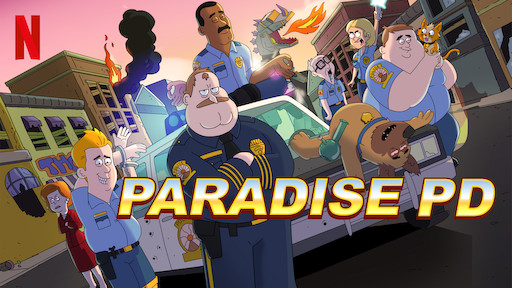
A Message For The Moral Crusaders Of My Childhood (Inspired By The Trailer For “Paradise PD” Season 2)

I’m old enough to remember when parents, teachers, and politicians protested incessantly about shows like “Beavis and Butt-Head” because they were too obscene.

I’m old enough to remember when parents, teachers, and politicians complained endlessly about the lyrics and themes of gangasta rap music.

I’m old enough to remember when parents, teachers, and politicians whined constantly about the violence depicted in every episode of “Power Rangers.”

Hell, I’m even old enough to remember when those same parents, teachers, and politicians said that “The Simpsons” were too immoral for prime-time TV. Those memories make me feel much older than I care to admit, but that’s beside the point.

I have a message for those same parents, teachers, and politicians of that era. I know some are no longer with us, but I know for a fact that plenty are still alive, healthy, and as vocal as ever about bemoaning anything obscene, objectionable, or fun. To those people, I have one simple request.

Watch the following trailer for “Paradise PD” Season 2 and then tell me how you feel about all those other shows you whined about throughout the 1990s. I’d love to hear what you have to say.

For the record, I’m a huge fan of “Paradise PD.” I’m very excited about Season 2. I know it’s a show that takes vulgarity, obscenity, and gratuitous violence to levels that even “South Park” won’t touch, but it’s more fun than a pervert in a panty factory and I intend to enjoy every second of it.

1 Comment

Filed under censorship, political correctness, politics, television

The “It’s Always Sunny In Philadelphia” Filter: A Simple Process For Making Choices

How do you make good choices?

How do you know when something is right, just, and ethical?

How do you go about determining the morality and ethics of any given situation?

These are the kinds of questions that lawmakers, philosophers, scientists, religious leaders, and YouTube commenters debate constantly. It’s one of those deep, fundamental issues that everyone contemplates regularly, but few can claim to understand. The world is so chaotic and complicated. It’s incredibly difficult to surmise a simple, concise, consistent standard for making good choices.

However, there are ways of simplifying that daunting process. It may still be impossible to completely resolve such issues for every person in every situation, but we can make it easier. As it just so happens, one of the greatest TV shows of all time, “It’s Always Sunny in Philadelphia,” provides us with an important tool that also happens to be hilarious.

Using that tool is simple. It goes like this.

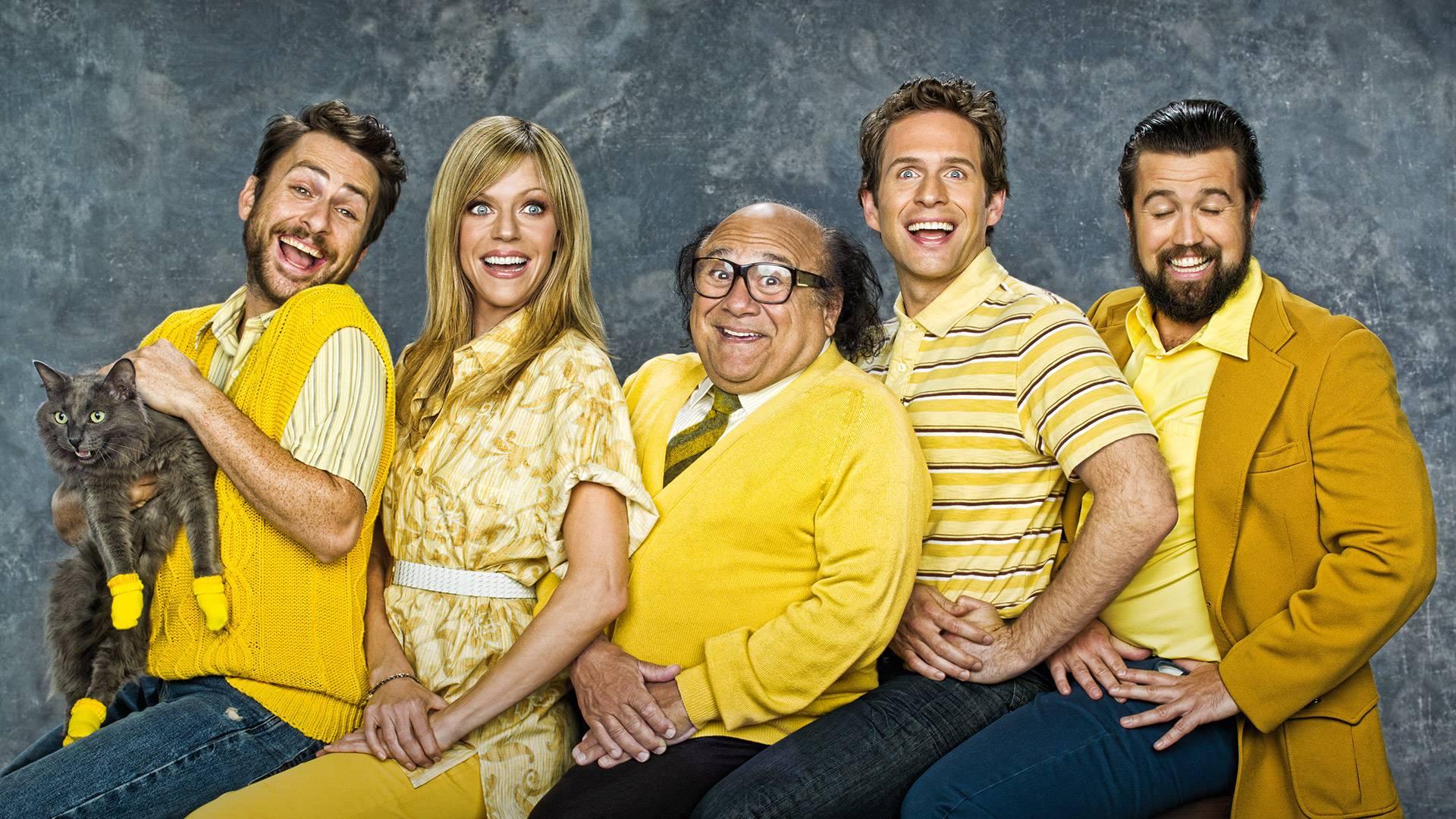
If a certain choice, response, or recourse seems like someone that the Gang would do in It’s Always Sunny in Philadelphia,” then chances are it’s not the one you should follow.

To anyone who has watched this show in any capacity, that makes total sense. For those who haven’t had a chance to watch this hilariously obscene middle finger to every sitcom ever made, here’s just a sample of what I’m talking about.

Even if you’re not familiar with the show, this should at least get you familiar with the implications. I’ve written aboutIt’s Always Sunny in Philadelphia” in the context of its masterful handling of dark comedy. I concede that this is one of those shows that isn’t for everyone. It’s hard to explain to most people the appeal of a show that finds humor in baby funerals, crack binges, and unauthorized Lethal Weapon sequels.

At the same time, it’s because this show dives head-first into dark comedy that it paints a clear picture on what goes into making bad decisions. There’s no getting around it. The characters in this show, also known as the Gang, are not morally upstanding people. In fact, they don’t even try to be moral. Nearly every episode involves them pursuing some elaborate plot based entirely on selfishness, greed, ego, or misguided pettiness.

They’re not stupid on the level of Homer Simpson or Peter Griffin, but they aren’t very smart either. Everything they do, from hoarding gasoline in an oil crisis to stalking a waitress, is incredibly simplistic. It can always be reduced to a basic level of selfish narcissism that never goes beyond basic.

It’s because the Gang’s choices are so basic and self-serving that the show is so funny in the first place. “It’s Always Sunny in Philadelphia” essentially takes the unique setup of a sitcom to amplify all the terrible traits and tropes that frequently go along with other shows that try too hard to be deeper.

At its core, It’s Always Sunny in Philadelphia” doubles down on the simplicity of having characters who don’t even try to be moral. Through 14 seasons, the Gang actively avoids any effort to change or grow in a meaningful way. Charlie, Dee, Dennis, Mac, and Frank are the same selfish narcissists they are in Season 14 as they are in Season 4.

Even as the show has gotten bolder and more absurd with the Gang’s antics, their motivations are the same. They don’t need to be overly complex to be funny. That’s what makes these characters and the entire premise of “It’s Always Sunny in Philadelphia” such a great filter.

The next time you’re in a situation where you need to make a decision, try and apply this filter. What would Sweet Dee do? What would Frank Reynolds do? What would Dennis, Mac, and Charlie do? If you can determine that, then you can also determine exactly what not to do.

Even if it’s not specific, the moral filter of It’s Always Sunny in Philadelphia” can act as a reminder. If you’re going to be exceedingly selfish and narcissistic in making decisions, then you’re tempting fate the same way the Gang does with every absurd antic. Doing so will rarely pan out well for you and those around you.

If you need further proof, just look at Rickety Cricket.

Leave a comment

Filed under human nature, philosophy, political correctness, psychology, television

A Perspective On Generation Gaps

As a general rule, I try not to talk about politics with anyone. I avoid getting into political debates online, as well. I used to actively seek that out. I’ve since learned there are less frustrating ways to waste my time.

A significant part of that frustration comes from talking politics with people who are significantly older or significantly younger than me. I’m in my thirties now. I still remember my teen years, but I also can’t deny that I’m different now than I was back then. I’m still the same person. Time and perspective just have a cumulative effect.

I think most people experience the same thing, regardless of their age. I’ve talked about issues regarding generation gaps before. I imagine they’ll become even more prominent as Generation Z comes of age. It’ll only get more divisive as the Baby Boomers start to retire.

I know this because I’ve gotten into more than a few debates with older relatives and family members. Every time politics comes up, they’ll share stories with me about how things used to be, how they see things now, and how they think things are going to pan out in the future. I’m not going to lie. It has led to more than a few “Okay Boomer” moments.

Those moments shouldn’t define the discourse, nor should it be an intractable barrier. I’ve faced similar barriers in talking politics with people far younger than me. It’s hard to explain the complexities of the world to teenagers when their experiences are so limited.

With that in mind, I’d like to take a moment to offer a brief perspective on generation gaps and discussing controversial issues. Whether it’s politics, society, or life in general, I feel it might help to take a step back and try to see the forest from the trees. To that end, here’s a quick insight that I hope people from every generation can appreciate.

Your attitudes, beliefs, and assumptions are not the same as they were 10 years ago.

Your attitudes, beliefs, and assumptions will not be the same as they are 10 years from now.

However, at your core, you are still the same person.

The attitudes, beliefs, and assumptions of every functioning adult you’ll encounter are not the same as they were 10 years ago.

The attitudes, beliefs, and assumptions of every functioning adult you’ll encounter will not be the same 10 years from now.

However, at their core, they’re still the same people.

You and the people around you may change, but change is never anyone’s first inclination. It only takes hold when it feels right, necessary, or convenient.

Whether you’re young, old, or middle aged, I hope this helps make sense of things. I don’t claim to be smarter or more insightful than anyone else with an internet connection. I just believe that making sense of this chaotic world and the many people within it starts with a balanced perspective.

You won’t be able to understand every idea from every generation, but it’ll remind you that people have more alike than they are different. We don’t have to identify with all those differences. It’s just easier to get along when we remember just how similar we are.

Leave a comment

Filed under Current Events, human nature, philosophy, political correctness, politics, psychology

A Simple Comment On The Criticism/Whining On “Birds Of Prey”

Sometimes, a movie just fails to find an audience.

It’s not because of some larger social agenda that backfired horribly.

It’s not because of some huge backlash caused by misguided marketing strategies, either.

Most of the time, the world isn’t that fanciful. It’s just chaotic, unpredictable, and messy. No matter how much a movie, TV show, or product attempts to appeal to a broad audience, it can just fail. That’s all there is to it.

Trying to fit an agenda into that failure is like trying to build a conspiracy around why you’re stuck in traffic. The world isn’t out to get you or people like you. Most of the time, shit just happens and you’re just caught up in it. That’s not to say that agendas never squeeze themselves into the media. It happens, but it’s effect is often exaggerated. Most of the time, the final product just doesn’t work.

That brings me to “Birds of Prey.” Now, in the interest of full disclosure, I completely forgot about this movie. I had no excitement for it and not just because I was underwhelmed by “Suicide Squad.” I like Margot Robbie. I like Harley Quinn. She’s a great actress who plays a great character. The movie just did not grab my attention.

I saw the trailer. It was fine, but forgettable. I didn’t feel compelled to watch it 10 times in a row, as I did with “Wonder Woman 1984.” I didn’t feel compelled to see the movie, either. Even though it got good reviews, it just didn’t appeal to me. I planned to watch it when it came out on cable. Based on the early box office haul, I’m not alone in that sentiment.

I’d be perfectly fine to leave it at that. In previous years, I wouldn’t even bring it up. However, due to the growing inclination to make everything political, the under-performance of “Birds of Prey” is already getting the wrong people talking about it for all the wrong reasons.

Some are already lumping this movie in the same category as 2016’s “Ghostbusters” or the horrendously bad “Charlie Angels” reboot. Now, I don’t want to get into the politics behind it, mostly because I value the integrity of my brain cells. I’ll just say this. Whether you’re liberal, conservative, feminist, traditionalist, anarchist, or Marxist, there’s one thing to remember.

It’s a goddamn movie. Sometimes, movies just fail to find an audience. That’s it. That’s all there is to it.

Maybe it eventually becomes a cult classic, like “Blade.” Maybe it rebounds with good word of mouth. Either way, it has nothing to do with an agenda. The public, as a whole, just didn’t respond to it. Any criticism/whining beyond that is just asinine.

That’s all I have to say about “Birds of Prey.” Harley Quinn is still a great character and Margot Robbie is still a great actress. Your agenda, whatever it may be, has no bearing on that. It never has. It never will. Get over yourself and just watch the movies you enjoy.


1 Comment

Filed under gender issues, media issues, movies, outrage culture, political correctness, politics, sex in media, sex in society, superhero comics, superhero movies

Sex Vs. Violence (And The Distressing Standards Behind Them)

What makes something obscene? I know the law has its own esoteric definition, but there’s no universal standard. What’s obscene to one person may be mundane to others. How else do you explain old cigarette commercials to millennials or the Super Bowl halftime show to baby boomers?

I ask this question because someone pointed out recently just how many of the biggest, most successful box office movies of the past 10 years rely on violence to sell tickets. I’m not knocking it. I was among those cheering during the final battle scene at the end of “Avengers Endgame.” I also freely admit I watched every season of “24” and was entertained by all the violence it included.

However, that same person who pointed out how much violence was part of these big-budget entertainment products, but was still PG-13. At the same time, if even one of those products included a single image of a female nipple or a depiction of a male penis, then it wouldn’t just be rated R. It would be deemed too obscene for children.

Think about that for a moment. A network TV show can freely depict a scene where Jack Baur tortures a prisoner and a PG-13 movie can depict Captain America beating the crap out of nameless thugs in an elevator, but the viewing public just can’t handle the sight of a female nipple. That’s just too much.

The only thing that could make it worse is the depiction of a penis. That wouldn’t just make a movie or TV show rated R. It would be classified as porn. Never mind the fact that half the population has a penis and even kids know what a penis looks like. Just a depiction of one in any form of media is enough to make it obscene. Meanwhile, you can buy a shirt that has Captain America punching the President.

Now, I know I’m bias because I write sexy stories and talk about sexy topics, but I feel it’s a relevant question to ask.

Why are we more comfortable consuming violent content than sexual content?

I get that sex makes people uncomfortable. I also get why parents don’t like talking to their kids about it. However, when it comes to violence, it’s okay to keep that in a proverbial blind spot.

I remember cartoons in the 80s and 90s. Those cartoons, in addition to being glorified toy commercials, used some form of violence to resolve a plot or tell a story. Some parents complained, but nobody thought it was obscene.

I remember watching “R-Rated” movies as a kid too. I put that in quotes because, by today’s standards, these movies would barley qualify as PG-13. The first “Terminator” movie was rated R. I saw it as a kid. My parents didn’t make a big deal about the sex scene in it, but that was often cited as the scene that made that movie R-rated.

If those same kids watched a simple depiction of two naked people making love, minus the violence, then that content would still be considered mature. If that scene didn’t hide genitals, then it would be considered porn. It doesn’t matter if the scene is romantic, tasteful, and completely consensual. It’s still as pornographic as the most depraved parts of the internet.

Why is that the case?

Why is this a fair standard?

Why do depictions of violence get a pass while depictions of sex are subject to rigid standards?

I understand sex makes people uncomfortable. I also understand that people can be immature about it. They can be just as immature about violence too, but people are willing to confront and tolerate it. With sex, however, it’s always obscene. It’s always taboo. There’s no room for nuance or context.

Going back to the standards of obscenity I mentioned earlier, I think there’s room for improvement. Violence, by definition, harms people. Sex, when done right, does the exact opposite. If we’re going to have standards for obscenity, then let’s at least keep things in perspective.

Leave a comment

Filed under censorship, human nature, outrage culture, political correctness, psychology, sex in media, sex in society, sexuality, video games