Category Archives: media issues

The Fall (And Hypocrisy) Of Jerry Falwell Jr. And Why It’s Both Fitting And Infuriating

I don’t like talking about religion. I think I’ve made my opinion on organized religion and the extremists it enables very clear. Then, a story comes along that I find so distressing and infuriating that I just can’t in good conscious ignore it. That tends to happen when the same ugly religious extremism is mixed with outright hypocrisy. It’s happened before. It will happen again. That’s just the nature of organized religion.

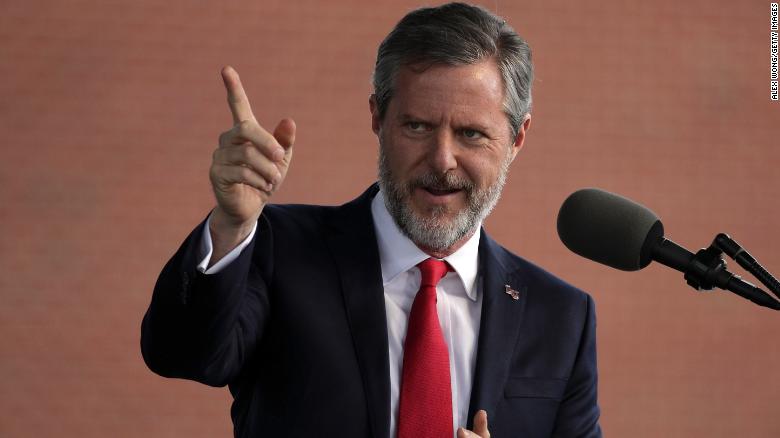
This time, it involves Jerry Falwell Jr.

Now, if anyone follows religious hypocrisy as closely as I do, the name Falwell should be painfully familiar. Between this guy, and his grifting, theocracy-loving, power-hungry snob of a father, that name is associated with the worst parts of the religious right.

Think of the most regressive religious doctrines you can imagine. From killing homosexuals to subjugating women to racial discrimination to promoting creationism to draconian abortion restrictions, these people are for it. They see the repressive government in “The Handmaid’s Tale” with envy. There is really no difference between them and the Taliban.

They see religion and religious values as a means of gaining power and influence. They use it to the utmost and dare to claim they represent truth, virtue, and order. They are hypocrites and frauds of the highest order. I cannot belabor that enough.

If you are a Christian who sincerely believes in the values it preaches, you should be disgusted by the Falwells. They embody a form of Christianity that’s both perverse and backwards. They don’t value the poor. They don’t value truth. They don’t even believe in loving they neighbor if they don’t live, vote, and believe as they do. They couldn’t be more antithetical to Jesus’ teachings.

Now, Jerry Falwell Jr. is embroiled in a lurid sex scandal that forced him to resign from his position at the indoctrination center/college that his father founded, Liberty University. In terms of sex scandals, this is hardly the kinkiest. This doesn’t involve sex with gay prostitutes while on meth. It mostly involves extra-marital affairs with Jr. and his wife, along with some light voyeurism.

In terms of juiciness, this is pretty tame. That doesn’t make it any less hypocritical. Remember, this is a man who once ran a university that had strict rules against any kind of pre-marital or extra-marital activities. It was so repressive that they even had rules against extended hugging, R-rated movies, and dancing. Again, these aren’t that different from the rules the once Taliban enforced.

Falwell Jr. and his supporters all imposed these rules and enforced them, justifying their draconian nature with their religious dogma. It wasn’t just for show, either. I actually been to the Lynchburg area. I’ve met people who have attended the poorly-named Liberty University. These rules are taken seriously. They’re enforced, too. The only way to avoid them is to never get caught.

Well, Falwell Jr. couldn’t handle that last part. He committed the most egregious sin of the religious right, which is to get caught and exposed as a hypocrite. By day, he preached fire and brimstone for anyone who dared to have sex with anyone who wasn’t their Christian spouse, but put in the minimum effort to live by that same doctrine.

I want to say it’s fitting. This scandal did cost Falwell Jr. his job and his credibility among his theocracy-loving cohorts in the religious right. However, it’s hard to take much satisfaction in his downfall.

For one, he will not suffer significant consequences from this scandal. He won’t go to jail. He won’t pay any fines. In fact, by resigning from his indoctrination center/university, he received $10.5 million severance package. That’s right, this wannabe theocrat who protested and condemned any sexual relation outside a 1950s sitcom is getting $10 million to step away from his job.

Even if you consider yourself religious and a bible-believing Christian, how is this justified? How does anyone justify being rewarded for resigning from their job because they engaged in the same sexual relations they so gleefully condemned? Seriously, what kind of mental gymnastics does someone have to do in order to say that’s right on any level?

Now, if Falwell Jr. sincerely sought forgiveness, and I don’t think for a nanosecond he will, he’d donate every penny to charity. There are plenty of charities, both religious and secular, who could do plenty of good with that money. It would be the most Christian thing you can do, given how much Jesus himself preached helping the poor.

However, there’s no way Falwell Jr. will ever do something that virtuous. It’s just not his style, nor was it his father’s. He’s going to keep preaching the same dogma, pretending he was “sick with sin” and now he’s healed. He’ll probably fight even harder to promote a repressive worldview that would see homosexuals murdered, promiscuity punished, and abortion outlawed.

If that weren’t bad enough, the same people who made him resign will probably still embrace him. There will even be a large contingent of right-wing Christians who will eagerly overlook his transgressions because his name is so closely associated with their movement. He might not have the same authority he once did, but he’ll keep fighting for the same repressive world that is so antithetical to American values.

On top of all of that, he’ll do all of this while living comfortably and luxuriously on his $10.5 million nest egg. Keep that in mind if you have even a sliver of sympathy for the man. Jerry Falwell Jr. offers absolutely nothing of the sort. He’s still a perverse manifestation of the kind of people who use religion to seek power, influence, and authority. He’s just a hypocrite on top of all that.
1 Comment

Filed under Current Events, extremism, gender issues, media issues, outrage culture, politics, religion

Why I Think Movie Theaters Will Never (Fully) Recover

The COVID-19 global pandemic is going to have many long-term effects. There’s no way around it. This pandemic will leave lasting scars that will fester for generations. If I ever have kids or grandkids, I’ll likely share harrowing stories about how we survived 2020. I’m sure they’ll have plenty of questions with respect to social distancing, mask wearing, and Zoom calls.

As it stands, those stories aren’t yet complete. We, as a society, are still trying to navigate our way through it. Even if a vaccine is close, it’s going to be a while before we can say with certainty that the pandemic is over. Like many, I eagerly await that day. I’d love to be able to go to a bar, a water park, or a ball game again.

At the same time, we have to face another difficult truth. Some of the things we took for granted before the pandemic are never coming back, at least to the extent we remember. I suspect things like handshakes, poor hygiene, and thoroughly cleaning subway cars only once every 100 years will never be a formality, at least to some extent. Entire industries will have to re-think how they do business form here on out.

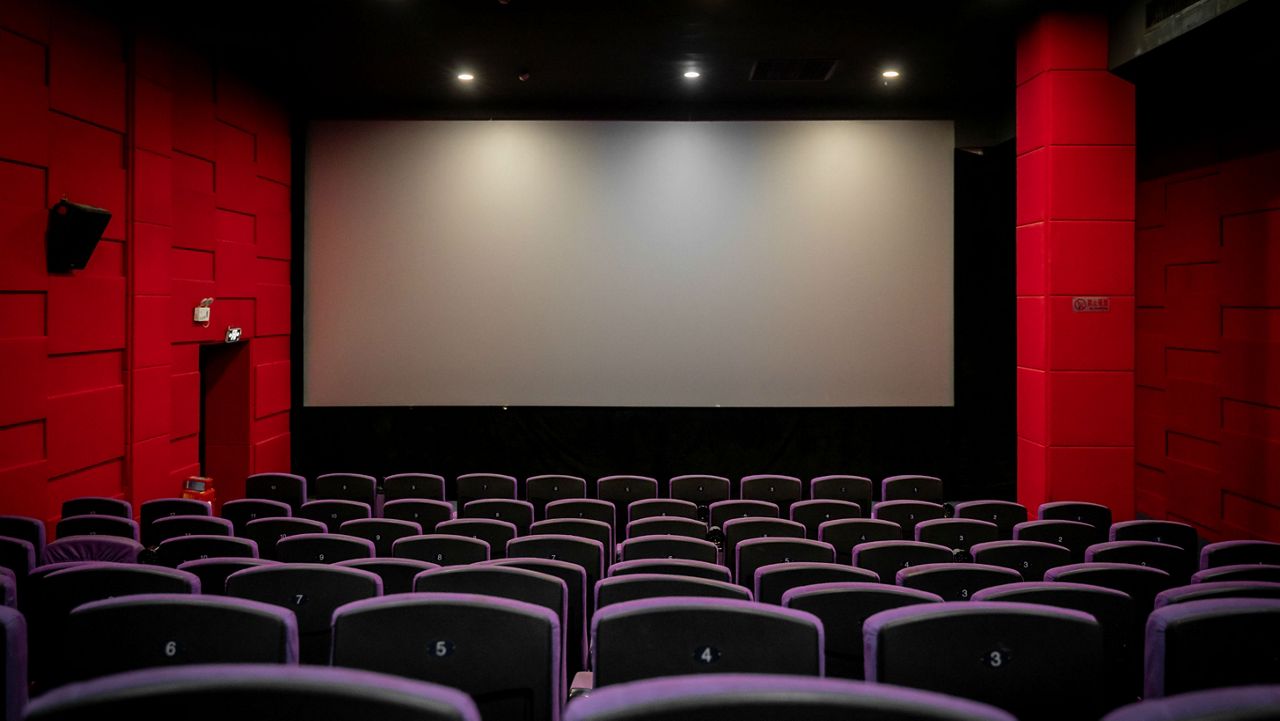
Among those many common activities we once took for granted, I believe there’s one in particular that will change more than most. It involves the once-simple act of going to a movie theater. Just a year ago, this activity/industry maintained a special place in our culture. Big summer blockbusters weren’t just an expected market trend. They were a cultural tradition.

Now, having gone an entire summer without those blockbusters, I suspect this experience will never return to its former glory.

By that, I don’t mean big-budget movies will diminish in importance. There’s definitely still a place for those in the near and distant future. The insatiable demand for new content on streaming services will ensure that. However, the long-standing traditions of going to a movie theater to celebrate one of those blockbusters has probably been permanently diminished.

I say that as someone who both loves going to the movies and laments any loss of these blockbuster traditions. I’m the kind of guy who gets in line early for every Marvel movie and has many fond memories of spending an afternoon or evening in a movie theater. Believe me. I don’t want that tradition to end or decline. I just don’t see how it can ever recover from this.

That’s not to say movie theaters will disappear, like video rental stores. I think that, over the next several years, they’re just not going to be as critical a part of the movie industry. We’ve already seen signs of that over the course of this pandemic.

I think the biggest turning point when movies like “Trolls: World Tour,” “Scoob,” and “Mulan” skipped theaters entirely, going straight to video-on-demand. Even if it was done out of necessity, I think it’s simply accelerating a trend that had started before the pandemic. More and more, movies were just skipping theaters entirely and going straight to streaming services.

These weren’t the kind of straight-to-DVD movies that were so bad they couldn’t get into theaters. These were quality movies that have the potential to become solid franchises. There were also cases in which a movie skipping theaters actually turned a profit. It’s not a huge profit on the levels of an Avengers movie, but it is a profit. That’s all any industry innovation needs to get going.

It won’t happen all at once.

It won’t upend the entire movie industry overnight.

It won’t even be obvious until years after we’re past the point of no return.

I still believe it’ll happen. Years from now, a big blockbuster movie coming out in theaters won’t be the kind of seasonal, cultural event it once was. Movies like “Avengers: Endgame” and any “Star Wars” movie will still make headlines, but they’ll be the exceptions rather than the industry standards.

Movie theaters, themselves, will probably look very different. The theater I live near, which I’ve been going to for years, probably won’t look the same. It’ll most likely look more like an IMAX theater, which provides an experience that isn’t easily duplicated within a typical living room.

Only a handful of movies can complement that experience. Low budget, high-concept movies probably won’t come out anymore, except for a select number of theaters, like drafthouses. They’ll go straight to streaming services. That might even work better for long movies like “The Irishman.”

That might open the door to a new type of movie experience for a new generation of movie-goers. I have a feeling that kids who lived through this pandemic, whose entertainment consumption came primarily through streaming media, will see that as their new normal. The whole concept of movie theaters might seem as strange to them as land lines or pagers.

I don’t claim to know what form the movie industry will take several years from now. I don’t even know what kind of world we’ll have six months from now. I question the honesty of anyone who claims otherwise. The only real certainty is uncertainty. We don’t know what kind of world will emerge when this pandemic is over.

Some things will return, but in a different form.

Some things will never be the same.

As much as I love going to the movies, I believe that experience will just be one of the many casualties of this horrible pandemic.

3 Comments

Filed under Current Events, media issues, movies, technology, television

Jack’s World: Why Conservatives Make Better Villains (For Now)

The following is a video I made for my YouTube channel, Jack’s World. It’s a video version of an article I wrote a while back. I added and removed a few details to the video. If necessary, I’ll do a follow-up. Enjoy!

Leave a comment

Filed under Current Events, extremism, human nature, Jack's World, media issues, philosophy, political correctness, politics, psychology, superhero comics, superhero movies, Villains Journey, YouTube

Why Johnny Depp (And Men Like Him) Will NEVER Get The Benefit Of The Doubt

Let’s be honest with ourselves. We’re all subject to certain biases and assumptions. Whether it involves religion, politics, or which movies you like, we can only ever be so objective. We’re not machines. It’s next to impossible to analyze a situation with cold, unfeeling logic and render a perfectly objective judgment.

I make that disclaimer because I’m about to talk about the ongoing situation between Johnny Depp and Amber Heard. Please note that I’ve been avoiding this topic, but not because it involves serious, emotionally charged issues. I’ve touched on issues of spousal abuse and double standards in the past before. I’ve even attempted to pose distressing thought experiments about gender politics and double standards.

This case, however, is one of those instances where it’s just too late. There’s no possible way to have a balanced discussion anymore. It has gone beyond he said/she said, celebrity gossip, and double standards. At this point, this whole case is just one big, ugly affair in which any side can find a detail to confirm whatever bias they want.

The details of the case are simple, but disturbing. When the anti-harassment movement was picking up steam, Amber Heard accused her ex-husband Johnny Depp of serious abuse. Her stories were disturbing, but enough people believed them that he was ultimately fired from the Pirates of the Caribbean franchise.

At first, Heard’s story checked all the boxes for a standard #MeToo narrative. It was easy to believe because Johnny Depp, whatever you think about his movies, is an odd character. He’s no Tom Cruise, but many see him as eccentric, even by Hollywood standards. It’s not too hard to imagine him having a dark side.

Then, the narrative changed. During a number of legal battles, he accused Heard of being physically and emotionally abusive towards him. It’s not the typical narrative. There’s still a major taboo, as well as a gross double standard, surrounding women abusing men. It’s either not taken seriously or brushed off.

However, there’s one detail about Depp’s accusation that sets it apart from Heard’s. Unlike Heard, there’s actual audio evidence to back up his claims. This isn’t some rumored recording either. It was made public. It included direct quotes of Heard saying stuff like this:

“You didn’t get punched. You got hit. I’m sorry I hit you like this. But I did not punch you. I did not f***ing deck you. I f***ing was hitting you. I don’t know what the motion of my actual hand was, but you’re fine, I did not hurt you, I did not punch you, I was hitting you.”

To date, there has been no evidence to back up Heard’s claims about Depp. That didn’t stop her from doubling down on her claim as an ongoing libel trial wraps up. She still stands by her claims, even though she doesn’t have audio evidence to back up those claims. Even without it, there’s no guarantee the audio will make a difference.

This is where an uncomfortable, but unavoidable truth emerges. Regardless of your gender or your political leanings, this case has revealed something that has and will continue to disrupt any efforts towards gender equality.

Johnny Depp, and men like him, will never get the benefit of the doubt.

In making this statement, I’m not just referring to cases of spousal abuse. In the grand scheme of things, with respect to the various injustices driven by gender politics, we just can’t treat everyone by the same standard. We can try and we really should, but the results are always going to be mixed to some extent.

It’s hard to avoid. Were it not for that audio recording, how many would give Depp’s accusations of abuse by Heard any credence? He’s an eccentric, yet very successful actor in an industry that has a long history of enabling awful men. Him being an abuser just fits the standard narrative of how most people imagine spousal abuse.

Even before the anti-harassment movement, many of us already had that narrative ingrained in us. The idea of a woman abusing a man just doesn’t fit with every idea and assumption. We think spousal abuse and our immediate reflex is to think about a man abusing a woman. That’s the default. Anything other than that is going to draw skepticism.

On top of that, there’s also the beauty factor. That’s another distressing, but understated truth that this case has exposed. Amber Heard, however guilty she might be, is still a beautiful woman by most standards. Like it or not, beautiful women are far more likely to get the benefit of the doubt for pretty much everything, including abuse.

That’s not an extreme opinion. It’s well-documented that beautiful people have things easier and are given more credence. There’s even some biology to it. People are both drawn to beauty and feel compelled to trust, revere, and preserve it. Even if Johnny Depp was just as beautiful as her, relatively speaking, being a woman still gives her an edge.

Like I’ve noted before, women’s bodies tend to be more valued than men. As such, we’re just going to be more inclined to trust them, even if it’s for all the wrong reasons. That means, even with a verified audio recording of Amber Heard admitting physical abuse, we’ll give her the benefit of the doubt before Depp.

It’s not fair.

It’s not right.

It’s certainly not just.

Regardless of your gender politics, abuse is abuse. Women suffer from it, but so do men. Celebrities like Corey Feldman and Terry Crews have been vocal about it for years, but no matter how much awareness they raise, our biases don’t change. In cases of serious abuse, we’ll still never give them the benefit of the doubt.

There’s so much I can say about this case, which is one of the reasons I’ve avoided it. I’ve seen a lot of heated discussions between feminists, anti-feminists, liberals, conservatives, and even moderate-minded people. Very little actually comes of it. There’s no way this case will ever change anyone’s mind or shift their gender politics in any way.

Any instance of abuse is awful. Regardless of the outcome, it’s still going to leave everyone unsatisfied. Depp and Heard will have their respective supporters, but the overall narrative surrounding this case won’t change. A man accused of abuses a woman cannot and will not be viewed the same as a woman who abuses a man.

It’s tragic, as well as frustrating. That’s just the current state of affairs for gender politics. A lot will likely change because of this global pandemic, but this ingrained narrative will likely persist. The end result is more abuse and less justice.

Leave a comment

Filed under Celebrities and Celebrity Culture, Current Events, gender issues, media issues, men's issues, outrage culture, political correctness, politics, psychology, sex in society, women's issues

Why Conservatives Make Better Villains (For Now)

mr._burns_smile

We currently live in a golden age of villains. Between Thanos, Erik Killmonger, the Joker, and Walter White, there has been a veritable surge of complex characters who also happen to be compelling villains. While there’s still a place for the kind of pure evil that Disney villains have relied on for years, this trend in a more refined brand of villainy feels both refreshing and overdue.

I’ve written extensively on villains before. As a lifelong fan of superhero comics and movies, I’ve consumed, contemplated, and scrutinized hero/villain dynamics more than most. In doing so, I’ve noticed plenty of trends. Like most aspects of popular culture, it’s always evolving. Very few themes and details remain constant, especially when it comes to antagonists.

That said, there’s one trend in villains that has remained somewhat constant over the course of my lifetime. It’s also a trend that I see as intensifying, albeit in a subtle way. Some of it coincides with the growing complexity of villains in popular culture, but most of the trend precedes the current era of superhero-dominated media. If anything, superhero media helped accelerate it.

While most villains and heroes rarely identify with a certain political affiliation, it’s usually not hard to discern how most would vote in a contemporary election. I would even argue that it’s easier to surmise what a villain’s political leanings are compared to that of heroes. Take any villain from the past 10 years of movies, be they superhero or otherwise. Chances are a vast majority of them would identify as conservative.

Now, I understand conservatism is an exceedingly broad term. It has a dictionary definition, but as a political philosophy, there are many sub-sets, divisions, and variations. From fiscal conservatives to social conservative to neoconservatives, there are many wildly different ideologies that still identify as conservative. A few actively clash with one another.

Those complexities aside, there are some core tenants associated with conservatism and it’s those very tenants that make it such an effective basis for villains. Chief among conservative values is the idea that traditional norms, institutions, and values be maintained. Change isn’t actively dissuaded, but it is viewed with caution and suspicion. To be conservative is to affirm the status quo, to some extent.

That’s all well and good if the status quo is beneficial to everyone. It’s not so preferable for those who either fail to benefit or are actively screwed over by that same status quo. Since there has never been a society in history that has achieved perfect prosperity for everyone, regardless of their minority status, there’s bound to be people who get left behind.

In our own real-world history, we’ve seen people from those disaffected groups organize and fight the status quo to better their lives. That struggle has played out in the Civil Rights movement of the 1960s, the movement for women’s rights, and the LGBT rights movement that’s still going on today. Those who oppose these movements tend to have, broadly speaking, conservative leanings.

Look at the groups that opposed the Civil Rights movement.

Look at those who actively oppose LGBT rights, women’s rights, and immigrants.

They all espouse rhetoric that would put them at odds with Superman, Captain America, and most other superheroes who value justice, truth, and peace. For some, their talking points sound like ideas that only villains in the mold of Lex Luthor would agree with. While not all of them identify as overtly conservative, the standard principles are there.

Anything too different from the status quo must be wrong or evil.

Anybody too different from the people everyone else in a society must be bad, evil, or devious.

Any idea, trend, or movement that is disruptive or deviant in any way is something to be opposed.

It doesn’t just manifest in superhero movies or underdog stories, either. Look at a movie like “Footloose.” In this story, the people who ban dancing are uptight, dogmatic, religious zealots who likely voted for Ronald Reagan in 1984 when this movie came out. They were the antagonists of that story and the kids, while not overtly liberal, dared to defy them.

It can even manifest subtly in other media. In kids shows like “Recess,” “Hey Arnold,” and “Rocko’s Modern Life,” the most common antagonists are uptight authority figures who have no tolerance for new ideas, big changes, or anything remotely fun. It’s hard to imagine any of these characters voting for someone who builds their slogan around change, reform, and reinvention.

They like things the way they are. Most of them benefit from the current system and will naturally seek to preserve their place in that system. While they won’t always see themselves as villains, it’s difficult for them to come off as heroes. You can only be so heroic when your side is closely aligned with predatory business practices, fun-hating religious zealots, and unabashed war-mongers.

That’s not to say it’s impossible for liberals to be villains too. It does happen and it can be done very well when done right. I would argue that Erik Killmonger in “Black Panther” was more in line with an extreme liberal revolutionary who didn’t just want to pursue change. I would make a similar argument for Ra’s Al Ghul in “Batman Begins.”

These characters didn’t just seek to change society from its current unjust state. They sought to violently destroy it and rebuild it from the ground up. That kind of liberalism exists in the real world and it can make for compelling villains.

However, the number of villains who align with the politics of Killmonger are far fewer than those who would align with the politics of Lex Luthor. In general, it’s easier to resist change rather than embrace it. It’s also necessary to some extent for those to resist change to be uptight authority figures who are okay with coercing others to maintain traditions. Logistically, the villains in many conflicts must be conservative.

Now, that’s not to say that villains will always lean conservative in popular media. What it means to be conservative changes over time. If you were to listen to conservative rhetoric 50 years ago, they would sound very different. They might even sound liberal by today’s standards.

The same goes for liberalism of previous eras. It hasn’t always been closely aligned with the politics surrounding minority rights, income inequality, or political correctness. The liberals of the 1920s would likely clash with the liberals of today. That’s just part of the ever-evolving nature of politics.


For the time being, though, being a villain in popular culture usually means being conservative to a certain extent. Conservatives are more likely to be the rich, greedy business people who would gladly burn down a rain forest or exploit slave labor to raise profits. Conservatives are more likely to be the rule-loving, fun-hating, curfew-enforcing religious zealots who wouldn’t mind electing theocrats with every election.

These types of individuals are far more likely to be villains in a story. At the very least, they’ll side or tolerate the villain. It’s easy to believe that those who side with the religious right and well-connected rich people will generally oppose a selfless, likable protagonist. From a narrative perspective, these kinds of villains are better in that we tend to root for heroes who oppose authoritarian bullies like that.

Again, it’s guaranteed that political and cultural trends will likely change what it means to be conservative, liberal, and everything in between. For the time being, if you were to bet on the political leanings of an antagonist, the odds are mostly in favor of that antagonist being conservative.

1 Comment

Filed under Current Events, extremism, human nature, media issues, philosophy, political correctness, politics, psychology, superhero comics, superhero movies, Villains Journey

What Exactly Does “Canceling” Someone Solve?

In general, I try not to comment on “cancel culture.” It’s not because I don’t have an opinion. I just think it’s a waste of time, for the most part. I’ve never seen it lead to a productive conversation on anything. Most of the time, it just amounts to people publicly whining about something they find offensive to a point where others cave, if only to stop the whining.

I am not a fan of this, to put it mildly.

Every time I see it trend, I want to bash my head on my computer screen while telling some of these people to grow thicker skin.

The world is a chaotic, ugly, offensive place. We can only do so much to change it. No matter how much change we manage to implement, it won’t change the past or the context in which it transpired. That’s especially true if the people others are trying to cancel are long dead.

Now, as much as I despite the term and what it represents, I also understand that it’s not as simple as its critics make it out to be. At times, I find the people who whine about cancel culture to be just as insufferable. Their whining can basically be boiled down to, “Other people want to cancel the stuff I like and it hurts my feelings!” That’s just as pathetic as wanting to blackball a celebrity for old tweets from 2009.

Both efforts are equally absurd.

Both efforts do nothing to make the world a safer, more tolerant, more inclusive place.

Most of the time, I find the effects of “cancel culture” to be inconsistent, at best. People will complain about the lack of diversity in media, politics, business, and certain industries, but those same people can’t be bothered to vote or support the things that reflect those preferences. They always revert to whining.

People on both sides of the political spectrum will do this. The same people who laugh at those who complain about a video game character being too sexy while whine just as much because Brie Larson said something that hurt their feelings. They’ll claim their efforts are not contributing to cancel culture, but it’s the same damn concept.

Unfortunately, despite the best efforts of decent human beings with thick skin and a good sense of humor, cancel culture is still a thing. People are going to condemn celebrities and public figures for things they said or did years ago. We saw it with Kevin Hart, which cost him a chance to host the Oscars. We’re seeing that now with celebrities like Jimmy Kimmel and Sarah Silverman, who once did skits involving blackface.

All this is happening as statues of historical figures who did deplorable things are coming down. Never mind the context or bigger picture of why they’re historical in the first place. They did something awful. Any image that exists that may glorify them in any way is just too much for our tender sensibilities.

In addition to people, the urge to cancel all things offensive has extended to art. Movies like “Gone With The Wind,” which definitely had some offensive imagery, was removed from streaming recently. Shows like “Paw Patrol,” which is geared towards children, was seen as too offensive at a time when police brutality is a hot topic.

Now, I’m not going to justify old tweets or outrage about movies from a different era. I know there’s nothing I can say to change the minds of those who are so offended by statutes, celebrities, or the names of football teams that they want them all canceled. There’s also nothing I can say to change the minds who think it’s part of some elaborate censorship effort meant to destroy freedom.

Instead, I’d like to ask a few simple questions for both sides to consider.

What exactly does canceling something achieve in the long run?

At what point does canceling something amount to censorship?

Why is canceling something more viable than simply growing thicker skin?

At what point does context stop mattering for something that’s offensive?

How does condemning the ugly history of the past make the present or future any better?

What right do you have to be offended by the feelings and preferences of someone else?

I won’t claim these are easy questions to answer, but to those who are behind or protesting certain cancel-this hashtags, I hope they offer perspective. Like it or not, cancel culture isn’t going away anytime soon. People are always going to be offended by something or someone.

In years past, it was uptight religious zealots who were aghast at anything that didn’t reflect or promote the values of a 1950s sitcom. Now, it’s uptight activists who are aghast at anything that doesn’t reflect their utopian fever dream that just happens to align with their politics. The passion is real, but the motivations are misguided.

You can tear down every monument.

You can censor every byte of media.

You can rewrite every textbook or novel that ever reflected outdated attitudes.

It won’t change what happened in the past. It won’t prevent people from being assholes in the future. If anything, it sends the message that people are too weak, stupid, or traumatized to handle certain ideas. That, in my opinion, is the most offensive thing of all.

Leave a comment

Filed under Celebrities and Celebrity Culture, Current Events, media issues, outrage culture, political correctness, politics, rants, television

Apologies For A Post That Did NOT Age Well

We all say, do, or write things that don’t age well and it’s not just because of cancel culture. Sometimes, you just do things that turn out to be dead wrong. It happens. It’s distressing, uncomfortable, and frustrating. It’s also unavoidable. We’re all fallible humans. We’re going to be wrong every now and then. It’s just a matter of degree.

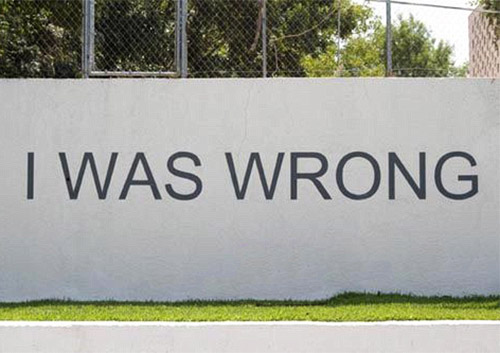
To that end, I’d like to admit my own major error. I probably could’ve just casually ignored this, but I think it’s better that I confront this now rather than later. Back in late February, I wrote something about the coronavirus. Without getting into every detail on that piece, I’ll just say this. I was wrong. I was very, very wrong and I apologize.

For the full story and context, here’s a link and an excerpt.

A (Hopeful) Perspective On The Coronavirus

There’s another perspective worth considering when following the news of the coronavirus. Unlike the devastating plagues of the past, humanity has developed a decent infrastructure for medicine, technology, and research. Granted, it took us centuries of trial, error, and mass death and there’s still plenty of room for improvement, but that system is there. It’s better than nothing. Just ask Medieval Europe.

That system is already doing its job in combating the virus. Already, researchers at the University of Texas in Austin have mapped out critical portions of the virus. That sort of thing couldn’t have been done this quickly or at all just 30 years ago. This data is critical for the development of treatments and, ultimately, a vaccine.

The fact that this happened so quickly after the outbreak is something the news hasn’t reported on. Even if treatments develop and the virus is contained, as we’ve seen with other recent outbreaks, it probably won’t be a huge story within the ever-changing news cycle.

It almost seems quaint. I come off as so hopeful that this isn’t going to be a major issue. This isn’t going to utterly break the world and turn 2020 into a devolving mess of frustration, misery, and outrage. Usually, my optimism helps me navigate tough times, but optimism doesn’t do squat against a global pandemic.

This isn’t a renegade hashtag.

This isn’t some juicy celebrity scandal.

This isn’t even some horrific terrorist attack that brings out the best and worst and people.

Global pandemics are different. They don’t give a damn about politics, economic trends, social trends, or when baseball season is supposed to start. It’s a mindless disease and it’s killing us. Even at my most cynical, I never imagined it could cause this much suffering and death. Now, as a fresh spike in cases is starting to take hold, what I wrote in February only seems more foolish.

As such, I sincerely apologize. I was wrong. I had no idea it was going to get this bad. If you read that article and took comfort in it at the time, I’m very sorry.

I’m still trying to cling to some semblance of optimism. I do believe that this crisis, like many others before it, will pass. It’s just going to get a lot worse before it gets better.

2 Comments

Filed under Current Events, Jack Fisher's Insights, media issues, technology

PSA: Wear A Mask (And Wear Condoms)

Under normal circumstances, we shouldn’t need to remind people to be safe and responsible.

Under normal circumstances, we shouldn’t have to explain why certain safety measures are worth the inconvenience.

These are not normal circumstances. Let’s not pretend otherwise.

We’re in the midst of a global pandemic that has killed hundreds of thousands of people. Thousands more are likely to die, even after we develop an effective treatment. This is serious. There’s a time for debating the balance between public safety and personal freedom. This is not it. Viruses don’t give a damn about politics, borders, race, economic trends, or who gets cast in a Disney movie.

With that being said, I have a simple statement/public service announcement.

Wear a mask when you go out in public.

Yes, it’s not convenient or comfortable.

Yes, it’s not stylish or flattering.

Yes, it’s infuriating that we’ve let it get this bad.

It’s still a simple, sensitive recourse that can help combat this crisis. The science is clear now . Wearing a mask helps in multiple ways. For someone who has the virus, it keeps them from spewing the droplets into the air around them, thus protecting others. For someone who doesn’t have the virus, it prevents those droplets from getting into your nose and mouth.

It’s essentially a double barrier. You protect yourself and you protect others. It doesn’t require a prescription or some overpriced medicine. Most people can make an effective mask with the right materials and a sewing machine. It’s not perfect, but it’s better than nothing. It doesn’t eliminate risk, but it does reduce it considerably.

It’s not unlike condoms, another protective measure that gets caught up in politics, albeit for different reasons. Like masks for your genitals, they do the same thing. They protect your body from outside invaders. It can be just as be as inconvenient and frustrating, but it beats the alternative of getting sick or pregnant. In fact, so long as we’re learning the value of masks, I’ll supplement my announcement.

Wear a condom when you have sex.

I understand the situation is different. Protecting yourself during sex is not like protecting yourself from an air-born virus. We all have to breathe every hour of every day. That’s not the same as sex. The principle is still the same, though.

It’s a simple safety measure that’s cheap, widely available, and effective when used properly. Granted, religious zealots love to make a big fuss about them both, but that’s part of a much larger problem and during a pandemic, you can’t be picky with priorities. Again, there will be a time to deal with them. This is not it.

I’ll say it again, just to belabor the point.

Wear a mask and wear condoms.

They protect you and the people around you. It’s the easiest thing anyone can do. During a global pandemic, that’s the best thing you can do to help stem the tide and save lives. That has to be our top priority now. Too many people have already died. We can prevent more deaths if we all do our part.


1 Comment

Filed under Current Events, health, media issues, politics

How “13 Reasons Why” Handled Male Sexual Assault in The Least Sensitive Way

The following is an article submitted by my good friend, DC-MarvelGirl 1997. We’d both been working on pieces about “13 Reasons Why” and she was generous enough to submit this. She tackles an issue that I was very hesitant to write about and for that, I thank you. She does great work on her website, which I encourage everyone to visit.


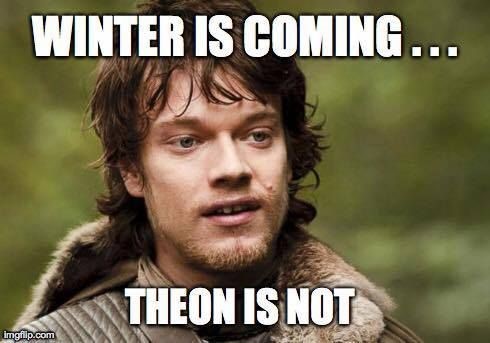
We live in a world filled with double standards. It’s by far one of the biggest diseases we have in society. I’m not putting this to the same standards of COVID 19, which is by far the deadliest pandemic we’ve ever faced in worldwide. Double standards are a different kind of disease, meaning they breed this false sense of contentment. And no, I’m not just referring to the Theon Greyjoy memes, which are truly sad and pathetic. I’ll admit it. When I look up those memes, I at first chuckle. But then I remember why they were made, and it is to point out that Theon no longer has his penis. Suddenly, those memes are no longer funny.

Theon

As much as I wish this article is about those Theon Greyjoy memes, it’s not. That’s what’s painful for me. This article is about the frankly piss-poor representations of male sexual assault in entertainment. And no, I am not referring to Burt Reynolds’ “Deliverance,” which was one of the first movies to put rape of a man into a scene. At least with that movie, it was done well. Even made for TV films like “The Rape of Richard Beck” did it better, because with “The Rape of Richard Beck,” now known as “Deadly Justice,” they blacked it out before the rape happened.

What I’m referring to is the rape scene from the season 2 finale of “13 Reasons Why.” It was the scene that made many people throw up watching it. For those of you who watched it, you know what I am talking about.

scene1

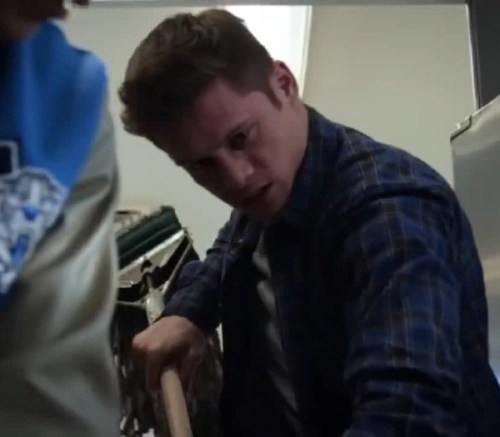
Now, I’ll admit it. I never watched “13 Reasons Why,” because it was banned from my household by my mother. And after hearing about how the show got progressively worse, I’m glad I didn’t watch any other episodes beyond the pilot. It’s a show that psychiatrists cautioned teenagers from watching, because it could be triggering to those thinking about suicide. Not only does it send the contrived message that you can use suicide to get revenge, but it handled male sexual assault in one of the worst ways possible. Because I’ve never watched the show for myself, I had to do a little bit of research on the “13 Reasons Why” wiki pages, and look up articles critiquing it. The male rape scene centers around the character of Tyler, who gets sodomized with a mop handle by a character named Montgomery. Not only was the scene unnecessarily graphic, triggering, and disturbing leaving many either crying, getting sick, or feeling disgusted, but the aftermath of it all is what I’m most critical of.

I understand that “13 Reasons Why” wanted to show that men can be raped as well. But their delivery was terrible. Like I said, the scene was downright disgusting and stomach-churning. But they didn’t bother showing Tyler doing something effective to get the bullying to stop. It doesn’t help that the teachers in the show are portrayed as incompetent of seeing what’s right in front of them, giving this sense that you cannot even trust your teachers to keep you safe. But the show didn’t bother giving us scenes of Tyler handling the aftermath with maturity. They just cut to him wanting to shoot up a school dance, mirroring the Columbine massacre which is one of the most devastating tragedies in US history.

Let’s just say, I would have handled this rape scene and aftereffects a lot differently.

scene2

If I were to write out that rape scene between Tyler and Montgomery, I would have shown the graphic violence of Tyler being drowned in the toilet and having his head slammed against the mirror. Then, I would have an extreme close-up of Montgomery’s hand reaching for the mop handle as the camera shakily backs away to display him leaning over Tyler’s back. Then, the scene would fade to black, signifying what’s to come. After that, I would have it fade into Tyler sitting on the bathroom floor with his pants down. That to me is more than enough to let the viewer know what happened, without giving you every, horrible detail of what happens. Then, there would be other scenes I’d add in.

How about having Tyler go to a hospital to be examined by a doctor? All the signs could be there, showing he’d been raped, but the doctor neglects to acknowledge this and that’s one of the things that pushes him.

How about showing Tyler being interviewed by police, but an officer telling him he was asking for it? That would also give him a reason to want revenge.

The reason why I put those two suggestions above, is because male rape isn’t given the same consideration as female rape. When a female is raped, it becomes a world-wide news story. When a man is raped, it’s not treated the same way. I tried to research cases of male rape in the recent years, and you wouldn’t know if there was, because the news doesn’t talk about it. Look at cases such as Corey Feldman and Brent Jeffs. Brent Jeffs I’m just mentioning, because his story is downright heartbreaking. He was raped by his own uncle, Warren Jeffs, the head of the FLDS. Jeffs’ story is one that many do not consider at all. Of course, people have the knowledge that Warren Jeffs raped and molested boys and girls alike, but they often forget to acknowledge that boys in that “church” were raped. They’re blinded by how horrifically the women and girls in that “church” are treated, that they forget about the boys. That to me is the saddest thing.

scene3

If “13 Reasons Why” bothered displaying how the criminal justice system fails to acknowledge male rape victims, then that would have been a much more powerful impact than Tyler trying to shoot up a school.

Overall, “13 Reasons Why” failed in a major way to display consequences of male sexual assault. They neglected important details with the character of Tyler, and didn’t even bother showing Tyler going to the authorities until season 3. And the fact that Montgomery was just arrested on the spot for raping Tyler, when there’s no rape kit having been done? I don’t buy that for one second.

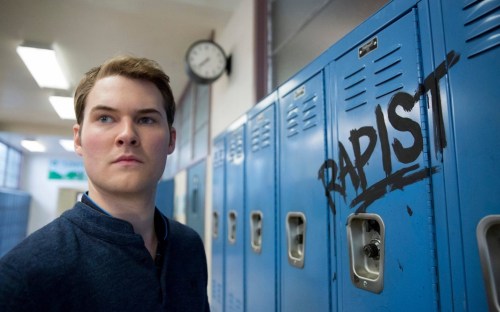
However, keep in mind, they did the same thing with Hannah Baker in season 1. She didn’t go to the police reporting teachers’ negligence. She didn’t go to a hospital to be examined by a doctor. She just blamed everyone for her suicide with tape recordings, claiming it to be all their fault when she didn’t bother going to higher authority for help. And the fact that they display her mother blaming everyone as well? To me, that’s even more pathetic. I understand that you are hurting because your daughter took her own life and that she was raped. But she also failed to get help beyond going to a guidance counselor, who clearly wasn’t doing his job.

Therefore, do yourself a huge favor, and do not watch “13 Reasons Why.”

DC-MarvelGirl 1997

Leave a comment

Filed under health, human nature, media issues, philosophy, psychology, rants, television

The (Many) Reasons Why “13 Reasons Why” Fails At Confronting Serious Issues

There’s a place for mindless, shallow, escapist entertainment in this world. I would argue that place is even greater now as we cope with a global pandemic. Sometimes, you just want to turn your brain off, watch your favorite superhero movie or Michael Bay explosion-fest, and enjoy yourself. There’s nothing wrong with that.

There’s also a place for entertainment that attempts to have a meaningful, serious conversation about a real-world issue. I’d also argue that kind of entertainment is more important now than it was last year. I know this kind of entertainment is risky, especially when it tackles taboo subject or social politics. Sometimes, that effort evokes distress, disgust, or outright hate. It’s still worth doing.

However, that kind of media can be counterproductive when it gets an issue wrong, flawed, or ass-backwards. When the conversation it attempts to have is misguided or contrived, then its effects can be outright damaging.

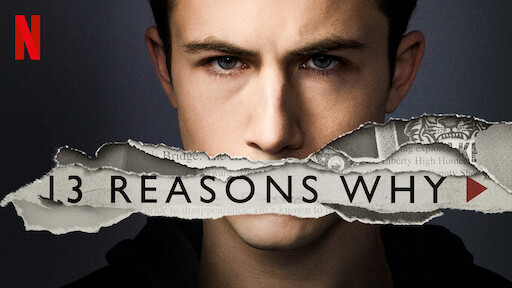
This is how I feel about “13 Reasons Why.” It’s one of Netflix’s most serious shows in that it attempts to confront serious, painful issues. From teen suicide to bullying to sexual assault to mental illness, this show attempts to portray these issues in a way that helps us talk about them. I respect that goal. I think the show’s creators, actors, and producers had good intentions.

I also think they failed in too many critical ways.

I don’t just say that as someone taking the time to critically analyze a show. As someone who was a miserable teenager, I really wanted this show to start this conversation. I wanted it to send a good, meaningful message through its morbid themes. After the first season, I was very disappointed and a little depressed.

The premise of the show has the right ingredients. It revolves around the suicide of Hannah Baker, a teenage girl who took her own life and left pre-recorded tapes behind for her fellow students, namely Clay Jensen, to follow. The story attempts to explore what led Hannah to this grim decision that left her family, friends, and community devastated. Unfortunately, in doing so, it starts the wrong conversation.

That’s not just my opinion. Organizations like the National Association of School Psychologists and the United States Society of Clinical Child and Adolescent Psychology have criticized the show for how it depicts suicide. It has also been linked to an uptick in suicides and suicidal ideation among teenagers. Now, that might just be an unlinked correlation, but it’s still a distressing sign.

Then, there’s the plot of the show itself. This is where I felt the show really lost sight of its mission because, as a show, there’s a need for drama. Unfortunately, incorporating that drama undermines the conversation and, in some cases, turns it against itself.

Beyond the graphic depictions of Hannah’s suicide, which was received so negatively that was subsequently cut out, the whole show is built around a world of teenage caricatures that don’t exist in the real world. It portrays a world that relies heavily on stereotypes, gives little depth to characters no named Hannah or Clay, and makes every issue seem overly simplistic.

That’s good for dramatic moments and concise plots, but not for having real conversations about complicated issues. The people in Hannah’s life, from her parents to her friends, barely function as background characters. The authority figures, namely those in the school or in the police, are even worse. They’re essentially portrayed as never caring in the slightest, only seeing teenagers like Hannah as a nuisance.

For a show that wants to have a real conversation about teen issues, this is a terrible message. Teenagers already have an incomplete view of the world. Many of them already think nobody cares about them. The sequence of events in “13 Reasons Why” only confirms that. How is that supposed to help any teenager who might be contemplating suicide?

That’s still not the worst part, in my opinion. If “13 Reasons Why” has one glaring flaw, it’s how Hannah’s suicide essentially affirmed her motivations. To some extent, Hannah got exactly what she wanted when she killed herself and made those tapes. She punished the people she held responsible. Her story became the story that everyone talked about.

This isn’t just a terrible message with a depressing premise. It effectively misses the entire goddamn point in the conversation about suicide and teenage issues. In effect, Hannah doesn’t commit suicide because she’s clinically depressed or mentally ill. She does it as a very graphic “Fuck you!” to a world that didn’t listen to her.

It doesn’t just hurt her family. It doesn’t just cause more pain to her friends, some of which genuinely tried to help her. It gives the impression that suicide will make someone relevant. It’ll make everyone who didn’t care suddenly care. It ignores the pain caused by someone’s suicide and focuses on how it punishes those who wronged her.

Hannah was wronged. There’s no doubt about that. She was outright raped. She was a legitimate victim. If the show had decided to focus only on sexual assault and avoid suicide altogether, it might have sparked a more meaningful conversation.

However, the show grossly simplifies her issues, as though one egregious act is all it takes to send her overboard. People, even teenagers, tend to be more complex than that. On top of that, Hannah is shown to make bad choices and take little responsibility for her actions. We, the audience, are supposed to sympathize with her, but she makes that more difficult than it should be.

I wanted to like “13 Reasons Why.” I really did. I wanted it to further an issue that I think should be addressed. I was genuinely disappointed with how it panned out. The fact the show got multiple seasons only made it worse, rendering every serious issue as little more than a catalyst for drama. I don’t recommend this show to anyone if they want to confront issues like suicide and depression.

Ironically, if not tragically, Netflix already has a show that addresses these issues in a much more meaningful way. It even manages to do this with cartoon characters that depict humanoid horses. Yes, I’m referring to “Bojack Horseman.”

I understand it’s a cartoon. I also understand it’s a comedy that’s meant to make you laugh at times. However, the fact it still manages to depict the real struggles of depression and mental illness in a relevant only makes “13 Reasons Why” more tragic in the grand scheme of things.

These are serious issues that deserve serious conversations. If you can’t start that conversation better than a cartoon horse man, then you’re doing something very wrong.

Leave a comment

Filed under health, human nature, media issues, philosophy, psychology, rants, television