Tag Archives: TV

Good People, Corruption, And Politics According To “Designated Survivor”

1200x627-q80_254c4e9ea1d7fec00147aba9a99acb7e

Politics is a dirty, cut-throat world that often requires good people to compromise principles, integrity, and basic human decency. Most people wouldn’t argue that. Even before the internet, the corruption that often goes hand-in-hand with politics was well-documented. That corruption has only become more visible in recent years. It’s hard to go more than a week without seeing a fresh case of shady political conduct.

However, instead of dwelling on how ugly politics can get in the age of social media and outrage culture, I’d like to scrutinize the nature of that corruption. I don’t doubt the ugliness or absurdities that politics often breeds, but it also poses some interesting question.

Do politics naturally corrupt the people who get involved?

Is corruption in politics unavoidable?

Do politics only attract corrupt individuals?

Is it possible to get anything done in politics without some amount of corruption?

These are not easy questions to answer. You don’t have to look hard to find corrupt politicians or uncover cases where politics undermined efforts to pursue a public good. However, the extent and the process of that corruption is sometimes difficult to understand. Those of us not involved in politics have a hard time imagining how ordinary people could become so callous.

That’s why a show like “Designated Survivor” is so uniquely compelling. Even as a work of fiction, this show explores the complex world of politics within the most extreme of circumstances. There’s political drama, intense action, and ongoing mysteries that go beyond politics, but the latest season of the show accomplished something unique in terms of how people become corrupt.

The premise of the show starts simple. Tom Kirkman, played by Keifer Sutherland, works at the White House as a fairly low-level department head as the Secretary of Housing and Urban Development. In terms of rank and influence, his authority is barely above that of a typical intern.

Then, prior to the annual State of the Union Speech, he gets picked for the unenviable role of designated survivor, which is a real thing. It’s a role meant to keep the government going in the worst of worst-case scenarios when there’s a catastrophic attack that kills the President, Congress, and much of the government. In the pilot episode, that’s exactly what happens.

Suddenly, this man who has never run for political office or served as an elected official is thrust into the role of President of the United States and after the worst attack in the history of the country. It’s overwhelming, to say the least. It makes for great TV drama, but it also creates a unique experiment in what power and politics do to an otherwise ordinary person.

Before Kirkman is thrust into this role, it’s established early on that he’s somewhat of an idealist. He identifies as an independent who is genuinely concerned with using the political process to pursue a public good. He also demonstrates early on that he has a strict understanding of right and wrong. For him, there’s no compromise or second-guessing when it comes to ethics.

On paper, he has the kind of character and ethics that most people want in a politician. Even the dire circumstances of his ascension are favorable because he never had to raise money from billionaires to finance his campaign. He doesn’t even have to make shady deals or back-stab anyone, which is also an all-too-common tactic in politics.

In a sense, Tom Kirkman comes into this position of power free of corruption. He is in a position where he can govern with his principles and ideals intact. This isn’t “Mr. Smith Goes To Washington.” This is Mr. Smith gaining unprecedented power without having to go through the corrupt process.

Throughout the first and second season of the show, Kirkman tries to do his job with his ideals intact. Whether it’s tracking down who blew up the Capitol or preventing an all-out war in East Asia, he has to constantly render difficult and weighty decisions that test his ability to keep being that affable man from the first episode.

For the most part, he succeeds on many fronts. The conflicts throughout the show often followed a common formula. President Kirkman faces a difficult issue. One side urges him to make one risky, politically-motivated decision. The other side urges something else that’s just as risky and just as political. Kirkman, unwilling to compromise his laurels, has to forge a third option.

Time and again, the integrity of his character shows. By the end of the second season, the extent of that integrity is beyond dispute. Then, the third season arrives, via Netflix, and everything changes and not just due to the sudden increase in profanity.

This season, unlike the previous two, cast aside the formula of the first two seasons, but not without reason. The entire third season is built around Kirkman running for re-election as an independent. At this point, all the good he did with respect to rebuilding the government after a devastating attack is a distant memory. It’s all politics now and this is where his integrity is pushed to the limit.

Almost immediately, Kirkman discovers that just being a man of integrity isn’t enough. The first episode of the third season really sets the tone, highlighting how easy it is for his ideals to get lost in the politics of an election. Just saying what’s true and right isn’t enough. It has to resonate with voters. That’s the only criterion that counts for anything.

His primary opponent in this season is Cornelius Moss. In the second season, he was an ally. He came in as a former president who knew the rigors of the job better than most. He was also an experienced politician. He had experienced the corrupt world of politics and he had successfully navigated it. As a result, he never comes off as having the kind of integrity and principles that Kirkman espouses.

For a while, Moss comes off as an outright villain in the world of “Designated Survivor” and in a season that introduces a full-fledged bioterrorist, no less. He conducts himself the same way most people expect a corrupt politician to behave. He doesn’t care about truth, integrity, or decency. He does whatever he must in order to win the election and secure his power.

In previous seasons, Kirkman would’ve sought a way to counter those tactics and come out with his integrity intact. It was part of what made him so respectable, as both a character and a politician. Season three makes it abundantly clear that this is not going to work this time. If Kirkman wants to win, he’ll have to compromise his principles.

Without spoiling too many plot points, I’ll just state that the conclusion of this struggle leaves Kirkman in a very vulnerable position. He’s no longer the same man he was when he became President. The attack on the Capitol that made him President was an extreme circumstance that he never could’ve known about. What happens with the election in season three is very much a byproduct of his own choices.

It doesn’t definitively answer those questions I listed earlier, but it does offer some insights. More than anything else, season three of “Designated Survivor” makes the case that the political process will ultimately corrupt anyone who gets involved. It doesn’t matter how principled or decent they are. The very nature of navigating power requires that people compromise their ideals.

It’s not just Tom Kirkman who struggles with it, either. The same supporting cast that helped him cling to his principles for the first two seasons, such as Aaron Shore, Emily Rhodes, and Seth Wright, end up compromising, as well. For some, it’s disconcerting. For others, it’s downright traumatic. In the final episodes of Season 3, the reactions of Emily Rhodes nicely mirror those who valued Kirkman’s character.

There’s now an unavoidable disconnect between what Kirkman says and what he does. Even the actions of Cornelius Moss are obscured when he too becomes a victim of shady political dealings. In the end, there’s no one left in “Designated Survivor” whose integrity hasn’t been compromised. There’s also no one left whose morals aren’t muddled by circumstances.

Even in a fictional context, the politics in “Designated Survivor” are surprisingly reflective of real-world complications. Like in the show, every political party or movement believes they’re right and their opponents are wrong. They believe in what they’re doing. They also believe that if they fail, then the wrong policies will prevail.

Conservatives, liberals, libertarians, and even anarchists are guilty of that flawed mentality. It’s one of the many reasons why politics tends to breed polarization. When people are so convinced that they’re the good guys, they become more willing to cross certain lines to defeat the bad guys. Tom Kirkman managed to avoid that for two seasons. He couldn’t in the third.

Whether or not he’s vindicated for his choices remains to be seen. Depending on whether the show gets a fourth season, it’s inevitable that he’ll face consequences for his choices. How he manages those consequences will reveal how much integrity he still has. If he plays his cards poorly, he may not have any left when all is said and done.

Designated Survivor” is a great show that explores difficult issues. Season three had its faults, but it marked a major turning point for Tom Kirkman. He is definitely not the same person he was in the show’s first episode, but he’s not quite at that point where we can say he’s lost sight of his laurels.

Both circumstances and politics did plenty to change Tom Kirkman over the course of the show. You could make the case that these forces corrupted him. After season three, you could also make the case that he’s now on the same path as Walter White from “Breaking Bad” in that these circumstances simply brought out a side of him that was always there.

Whatever the case, the ugliness of politics is something people have to navigate, both in the real world and the fictional world of “Designated Survivor.” Good people will keep trying to do good. Corrupt people will keep pursuing corrupt behavior. Politics, whatever form it takes, can only ever complicate that process.
Leave a comment

Filed under Current Events, human nature, political correctness, psychology, technology

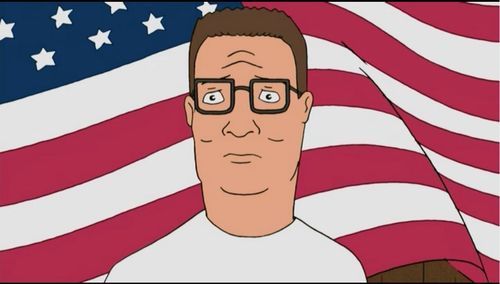
Understanding And Appreciating The Work Ethic Of Hank Hill

nol3t

As kids, we don’t always appreciate the deeper messages of certain TV shows, movies, or songs. I imagine most kids who saw “Jurassic Park” in 1993 didn’t care that much about the larger points Ian Malcom made about tampering with nature. They just loved seeing dinosaurs eat cowardly lawyers off toilets.

That’s why re-watching shows you loved in your youth can be insightful. Sometimes, it can be a little distressing, seeing themes that aren’t quite in line with today’s taboos and social norms. However, I don’t want to focus on those unpleasant instances. Instead, I want to focus on insights that we appreciate more as adults than we do as kids.

This brings me to a show that, even by today’s standards, has uncanny appeal. That show is “King of the Hill,” a show I’ve already singled out as home to Hank Hill, a strong example of noble masculinity. After rediscovering the show, thanks to Hulu, I’ve found myself appreciating the less obvious messages of the show.

One clear message that seems to come up several times over the course of the show’s 13 seasons is the value of a work ethic, especially when contrasted to those who have none. It’s a value few kids and teenagers appreciate. That’s understandable because in the innocence of youth, most go out of their way to avoid hard work or laborious tasks.

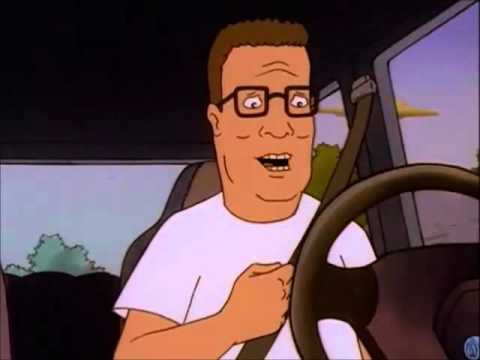
What makes “King of the Hill” stand out, more so to adults than to kids, is how it portrays work and the way people go about it. One of Hank Hill’s core traits is his dedication to his job. Among his most memorable and oft-repeated quotes is that he sells propane and propane accessories. That’s not just his job, though. It’s part of his identity.

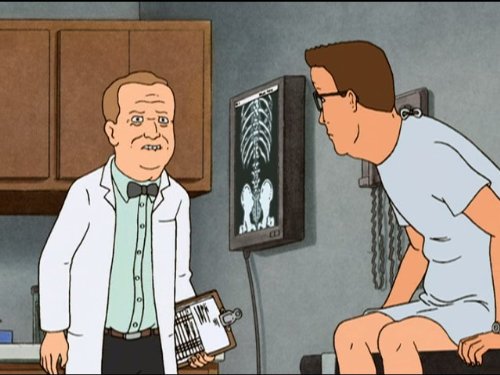
Hank, unlike many male protagonists in animated sitcoms, actually loves his job. It’s not just something he does to pay the bills and provide for his family. He genuinely loves selling propane and propane accessories. That love is played up in plenty of comedic ways. In one episode, “Hank’s Back,” even doctors had a hard time believing that anyone would avoid a worker’s comp settlement.

What makes that comedy work is the common expectation that few people actually like their jobs. If they do, it’s only because they’re rich and it affords them all sorts of fancy perks. However, Hank is not rich. One episode even goes out of its way to show that, even by middle class standards, he’s not that well off. He’s no Al Bundy, but he’s not Charlie Harper, either.

That doesn’t matter to Hank because his is not entirely about money or even the opportunity to make more money. It’s about doing something he loves and deriving real meaning from it. His job selling propane and propane accessories gives him a unique sense of fulfillment that can’t be quantified with money.

This sort of approach to work isn’t just unique among sitcom dads. It reflects an approach to work that is rarely emphasized, even in a world where work is changing due to automation. Growing up, the nature of work and careers is presented in a certain way. It’s not always through the media or movies like “Office Space,” either.

When kids and teenagers are encouraged to think about future careers, it’s almost always framed as a means to an end. First and foremost, a career provides money and resources with which to build a life, whether it’s a family or just a home in general. It’s part of a much larger process of becoming a productive member of society.

Most counselors and teachers will encourage kids to find a career they actually like. That’s the ideal. However, it’s a poorly-kept secret that few people ever land their “dream job.” Just as few people end up working jobs that are related to their college major. On top of that, many of these people who graduate college are underemployed, which put them in a similar position to Hank.

To some extent, Hank Hill is in an ideal career because he’s doing something he loves and he’s getting paid for it. That alone sets him apart from many career-seekers, both in the real and fictional world. However, the love he has for his work and his career actually runs deeper than that.

To him, his job isn’t just a means to an end. It is the end. The work itself is the reward. The money he makes is only ever secondary. For Hank Hill, the best moment of his job isn’t when he gets his paycheck. It’s when he sees the look on a satisfied customer’s face when he sells them a new grill or helps them refill their propane tank.

That kind of fulfillment isn’t just rare in an animated sitcom that includes a self-professed conspiracy theorist who never realizes that his wife cheated on him for years. It’s a rare and unique state of being, having a job in which the work feels so rewarding. Even in the real world, this sort of mindset is rare, which is part of what helps set Hank Hill apart.

For most of human history, people didn’t have careers. They just had things they had to do to survive another day, whether it involved hunting and gathering or growing crops. In modern times, a new host of jobs gave people a variety of ways to earn a living, but the nature of the work was rarely fulfilling and often laborious.

The idea of having a job that you actually like and feeling fulfilled in the work you do is akin to a modern nirvana, of sorts. It takes the very idea of work and turns it into something other than that stuff people have to do in order to make money. Hank isn’t just lucky in that he has that kind of job. He’s got the perfect attitude for it.

That attitude of seeing work as something inherently fulfilling often puts him at odds with other characters and sub-plots throughout the show. On many occasions, Hank’s approach to work often clashes with other characters who go out of their way to avoid hard work or seek to make as much money as they can for as little effort as possible.

His son, Bobby Hill, often embodies that sentiment and not just because he’s terrible in gym class. In multiple episodes, Bobby’s fondness of laziness is not very subtle. When faced with the prospect of having to work hard, he usually does what he can to avoid it. More often than not, trying to avoid the work backfires or ends up being more laborious than the work itself.

He’s not the only one who harbors this attitude. Hank’s loud-mouthed neighbor, Kahn Souphanousinphone, attempts more than one get-rich-quick-scheme throughout the show. To him, work is always a means to an end. Even though his job affords him more money and better material assets, or so he claims, he rarely comes off as fulfilled as Hank.

Even when money isn’t the endgame, others still approach work with a different end in mind. Hank’s wife, Peggy, approaches her job as a substitute teacher with more passion and purpose than most. For her, though, the work she does is less about the money and more about feeding her inflated ego. In some cases, it borders on outright narcissism.

Regardless of intent or goal, “King of the Hill” often comes back to the same theme with respect to work. Hank, for all his faults and shortcomings, has the right attitude when it comes to work. It’s not just about having your dream job and doing what you love for a living. It’s about seeing work as inherently fulfilling, regardless of money or material aspirations.

At a time when the future of work will likely change what it means to have a career, Hank Hill may very well be ahead of his time. Even in the current work climate, his has major value. It’s a perspective that most kids and teenagers don’t appreciate. For some, it may not even be an idea they’ve ever contemplated, the notion that a job could be so inherently fulfilling.

It may still seem like an impossible ideal for many, but Hank Hill shows that it’s not that impossible. Selling propane and propane accessories isn’t one of those jobs that requires a rare set of skills or talents. It requires only basic people skills, salesmanship, and a working knowledge of propane.

Hank didn’t go to college and he didn’t go through some rigorous training to achieve what he achieved. He simply took a simple job selling propane and propane accessories and made it part of his passion. Even in an animated world where impossible things can happen, Hank makes his approach to his job feel attainable, even in the real world.

Appreciating Hank’s work ethic was not the first thing that appealed to me when I watched “King of the Hill” when it was still on the air. However, as I get older and see people wrestle with their careers, I see more and more merit to Hank’s approach to work.

I don’t deny that hard work can be tedious, at times. I also don’t deny that every job, even so-called dream jobs, have bad days every now and then. Even Hank has a few bad days at Strickland Propane throughout the course of the show. That still never discourages him from doing his job as well as he does it and getting genuine fulfillment from it.

There are plenty of lesson in “King of the Hill” that are as relevant now as they were when the show first aired. It’s possible for people of all ages to appreciate those lessons and the comedy that comes with it. That’s part of what made the show so successful for so many years.

When it comes to work ethic and approaching a career, Hank Hill stands out more than most. He sells propane and propane accessories better than anyone has or probably ever will, but that’s not the point. For him, the work itself is the greatest reward. Whether you appreciate his many other quirks or not, that’s a sentiment worth respecting.

5 Comments

Filed under human nature, media issues, noble masculinity, philosophy, television

The Secular Theology of “Lucifer” (The TV Show)

lucifer

What happens when you die?

Does our consciousness live on in some form?

Is there a way in which people who escaped punishment in life ultimately face it in death?

These are distressing, but profound questions that form the backbone of nearly every major religion. From the major Abrahamic faiths to the lore of ancient civilizations, there are many ways to approach this question. We all contemplate our mortality at some point and wonder/dread what will happen after our mortal bodies fail us.

Even some non-believers have mused about it at some point. Whereas religion tends to speculate wildly on the possibilities, an secular view of the afterlife isn’t too different from how it views deities. In the same way there’s no evidence for any gods or supernatural forces, there’s no evidence that consciousness exists outside the human brain.

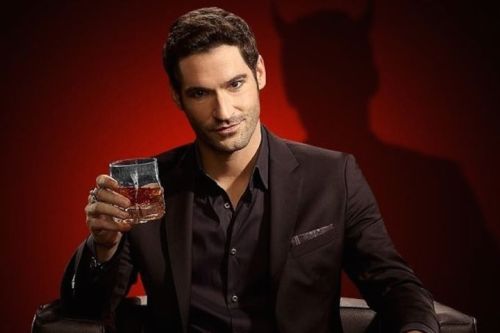
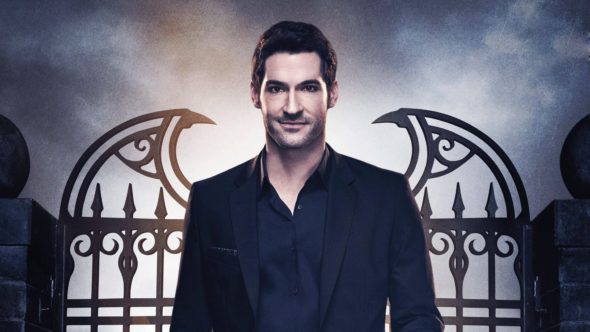
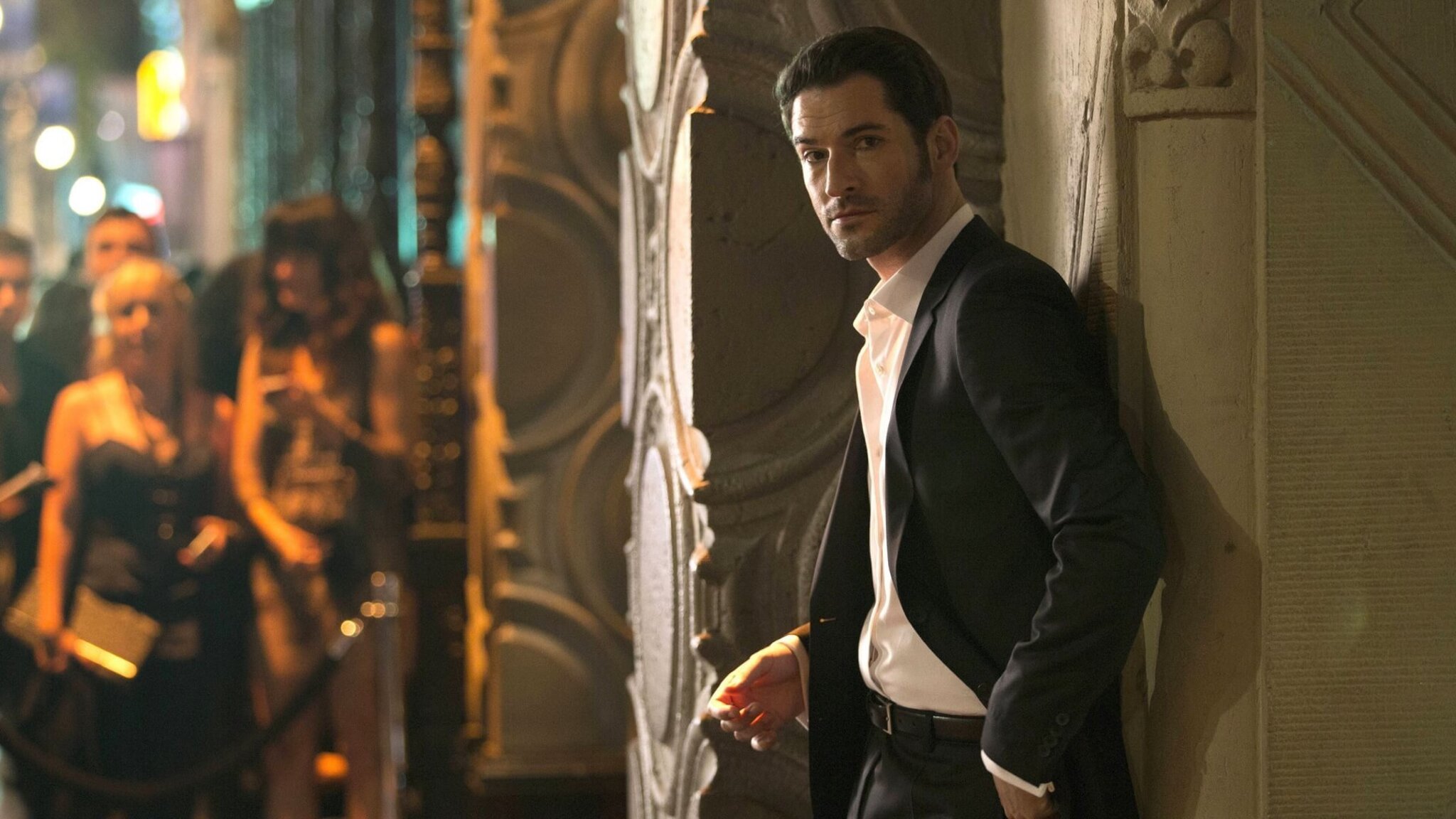
That’s what makes the recently-canceled, but saved by Netflix show, “Lucifer,” such a compelling contributor to this age-old question. Beyond Tom Ellis flexing his uncanny charm, the show achieves something remarkable in how it approaches gods, angels, demons, and the afterlife. I would even go so far as to say that it crafts a theology that affirms secular values over those of any religion.

By that, I don’t mean that “Lucifer” glorifies atheism or non-religious worldviews. If anything, one the show’s common themes is that glorifying any worldview is pointless. It’s surprisingly balanced in how it portrays religious and non-religious characters. The show contains respectable believers like Father Frank Lawrence and deplorable non-believers like Jimmy Barnes.

When it comes to addressing those age-old questions about deities, the afterlife, and morality, though, the show crafts a mythos that doesn’t play favorites. In the world of “Lucifer,” it doesn’t matter whether you’re a Christian, Muslim, Scientologist, Buddhist, or Pastafarian. Your life and your afterlife are subject to the same standards.

To understand those standards, it’s necessary to understand the influences of the show. Before Tom Ellis put on an Armani suit, the story of Lucifer Morningstar emerged in a the critically-acclaimed graphic novel, “The Sandman.” Even if you’re not a comic book fan, I highly recommend this book. There’s a good reason why it’s in Entertainment Weekly’s 100 best reads from 1983 to 2008.

While there are many differences between this comic and the TV show, the core tenants are the same. Lucifer Morningstar once ruled Hell, but decided to abandon that role and set up shop in the mortal world. Much like Tom Ellis’ character in the show, this version of Lucifer resents the stereotypes and misunderstandings surrounding him.

He’s not the source of all evil. He’s not the Lord of Lies, either. In fact, Lucifer has his own personal code of conduct and chief among that code is not lying. It goes beyond just telling the truth, though. Lucifer doesn’t sugarcoat anything, nor does he tell only part of the story. He tells the truth in the clearest, harshest way possible.

The show captures many of these elements. In the first episode when he meets Detective Chole Decker, he says outright who he is and isn’t coy about it. While she doesn’t believe he’s the actual devil, he sets a similar tone in how wields the truth. He’s not afraid to shove it in peoples’ faces and let horrifying realizations do the rest.

That emphasis on hard truth, both in the show and the comics, closely mirrors a secular approach to reality. It doesn’t matter how strongly you believe or don’t believe in something. The truth doesn’t change. People can spend their entire lives avoiding it, making excuses or crafting elaborate mythologies.

Whether someone identifies as atheist or agnostic, the premise is the same. If there’s no verifiable evidence, then you can’t say something is true. That leaves a lot of uncertainty about the nature of life, the afterlife, and everything in between. For many people, that’s just untenable and that leads to all sorts of contemplation and speculations.

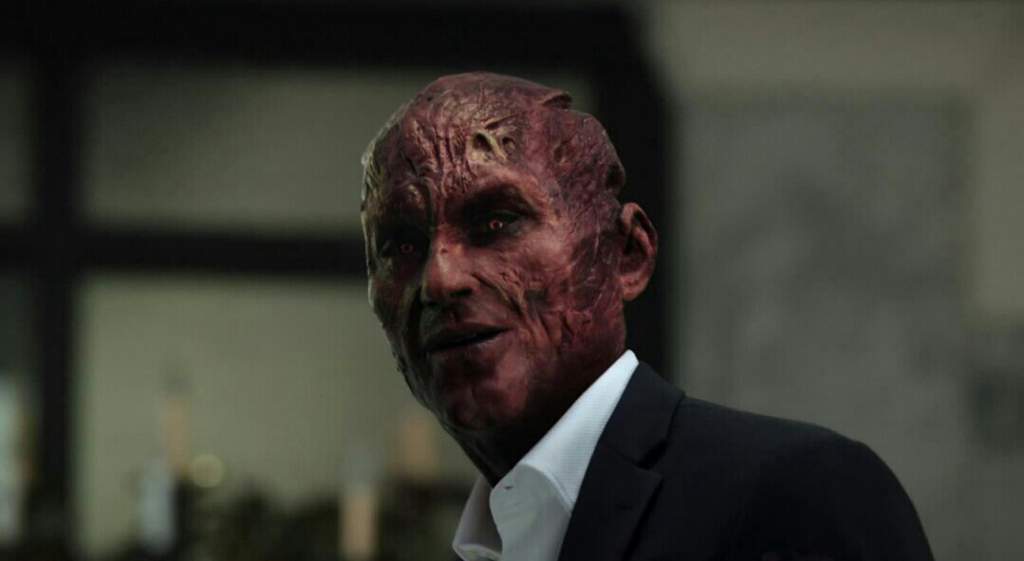
It only gets worse when there’s considerable evidence to the contrary, which those who cross Lucifer often learn the hard way. While the comics touch on this to a limited extent, the show is much more overt. It often occurs when Lucifer flashes his true form to others. Most of the time, their reaction is one of unmitigated horror and understandably so.

These people, whether they’re cold-blooded killers or schoolyard bullies, just got a massive dose of exceedingly heavy truth. They just learned that the devil is real. Hell is real. Angels, demons, and deities are real. That also means it’s very likely that there’s some form of life after death. For those who have done bad things, that’s a genuinely terrifying prospect.

The details of that terror are explored throughout the show, especially in the first and second season. It’s here where the show distances itself from the fire and brimstone of the Abrahamic faiths. It even differs considerably from the hellish visions of Eastern religious tradition. To some extent, it takes the ethical concepts of secular humanism and crafts a prison around it.

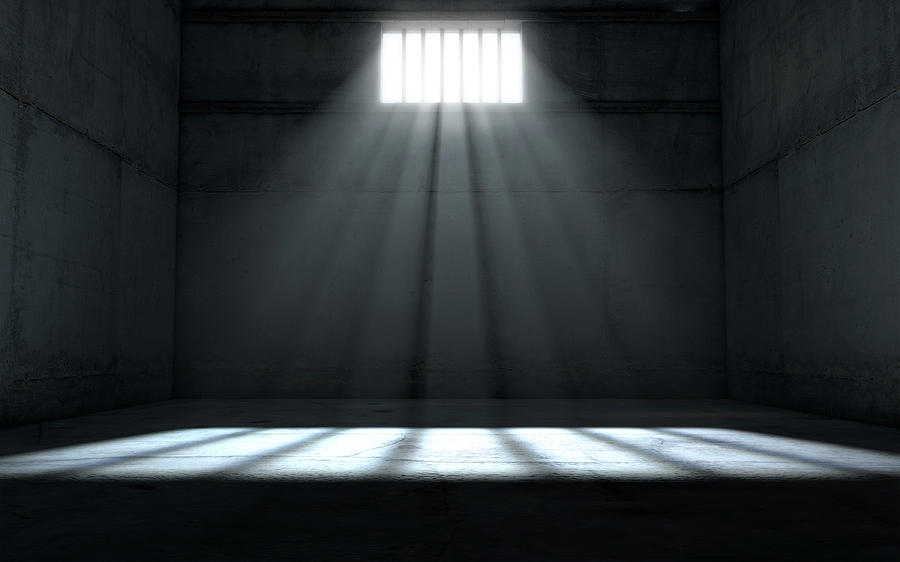
That prison doesn’t involve pitchforks, fire, or monsters who chew on the souls of history’s greatest traitors. In the divine world of “Lucifer,” Hell is dark domain in which the souls of sinful mortals are punished for the misdeeds they committed in life. How that punishment plays out varies from soul to soul.

In the first season, Malcolm Graham spends a brief time in Hell, relatively speaking. He describes it as a place that takes everything someone loves and uses it to torment them. In his case, he freely admits that he loves life. As such, he is starved and isolated so that he cannot experience it or its many joys. It’s an extreme form of solitary confinement, which is very much a form of torture.

On top of that, time flows differently in Hell. Even though Malcolm wasn’t there for very long, he conceded that 30 seconds felt like 30 years. That doesn’t necessarily mean it moves slower, though. Time is simply a tool with which to ensure the effectiveness of the punishment. Lucifer, himself, finds this out in Season 2, Episode 13, “A Good Day To Die.”

For him, time becomes an endless loop of sorts. In that domain, he continually relieves the moment he kills his brother Uriel, one of the few acts in which Lucifer feels genuine regret. It keeps on happening again and again, evoking the same anguish. It’s like the movie “Groundhog Day,” but one in which people constantly relieve the worst day of their life.

These kinds of punishments are certainly worthy of Hell. They’re harsh in that they’re customized torture that’s specific for every damned soul. It’s a lot more flexible than the elaborate Hellscape described in “Dante’s Inferno.” However, there’s one important aspect to this punishment that puts it into a unique context.

The specifics are revealed in Season 3, Episode 7, “Off The Record.” Lucifer reveals to Reese Getty that the devil isn’t the one who decides which souls end up in Hell. No deity decides that, either. Ultimately, it’s the individual who makes that decision, albeit indirectly.

When humans transgress in the world of “Lucifer,” there’s no cosmic judge keeping track of their misdeeds. What sends them to Hell is the weight of their own guilt. Even when they pretend they don’t feel it, like Malcolm Graham, it’s still there. They’re just ignoring it or avoiding it. When they die, though, it ultimately comes back to weigh them down.

This means that punishment in Hell isn’t technically eternal, which I’ve noted is critical if the concept is to have any meaning whatsoever. Lucifer even says in the same episode that there’s no demon army guarding the gates of Hell. The doors are opened and unlocked. Those damned souls are free to leave, but they never do. It’s their own choices, guilt, and regret that keeps them damned.

That means the deeds that send people to hell are subjective and contextual. It’s an outright rejection of the universal morality that many religious traditions favor and an affirmation of the more nuanced ethics espoused by secular humanism. Both the morality and the theology of “Lucifer” depends heavily on the situation, intent, and consequences of someone’s action.

In the world of “Lucifer,” a priest and a porn star can both go to Heaven. It’s strongly implied that Father Frank Lawrence went to Heaven after his heroic actions in “A Priest Walks Into A Bar.” It’s also implied in “City Of Angels?” that there’s a distinct lack of porn stars in Hell due to all the good works and joy they bring to people in life.

At its core, “Lucifer” frames damnation as an underlying consequence of individual actions. Everything begins and ends with the individual. What they do, why they do it, and the consequences they incur are primary criteria for how souls spend their afterlife. In both the comics and the TV show, Lucifer is a champion of individual choices and all the implications that come with it.

This emphasis on the individual effectively tempers the influence of any deity or supernatural force. Even though gods and angels exist in the world of “Lucifer,” they don’t make choices for anybody. Granted, they can have major influences, as shown in episodes like “Once Upon A Time.” At the end of the day, it’s still the individual who is ultimately responsible.

This secular approach to theology works because individual actions are the only deeds we can truly quantify. It creates criteria under which neither atheists nor believers have any clear advantages. How they live their lives and how they go about making choices is what determines whether they face punishment after death.

It still has some problems that the show has yet to address. It doesn’t indicate how Hell handles people who are incapable of feeling guilt or otherwise mentally ill. It also doesn’t reveal how Heaven differs from Hell, although Lucifer implied to Father Frank that it’s more boring than Hell. Hopefully, that’s just one of many other themes that get touched on in Season 4.

Whatever the flaws, the unique take on theology and morality give “Lucifer” a special appeal for both believers and non-believers. It presents a world where those profound questions I asked earlier have answers. No one religion got it right and atheists aren’t at a disadvantage for not believing. That may not sit well with some, but it affirms a brand of secular justice that judges every individual by the choices they make.

More than anything else, Lucifer Morningstar is a champion of deep desires and hard truths. He opposes anyone who tries to dictate someone’s decision or fate, be they a devil or a deity. People who do bad things are ultimately punished, but not by him. In the end, he really doesn’t have to. An individual is more than capable of creating their own personal Hell.

13 Comments

Filed under human nature, philosophy, religion, television, Villains Journey

Why “F Is For Family” Is The Perfect Satire Of The American Dream

netflix-f-is-for-family-bill-burr-e1498677110849

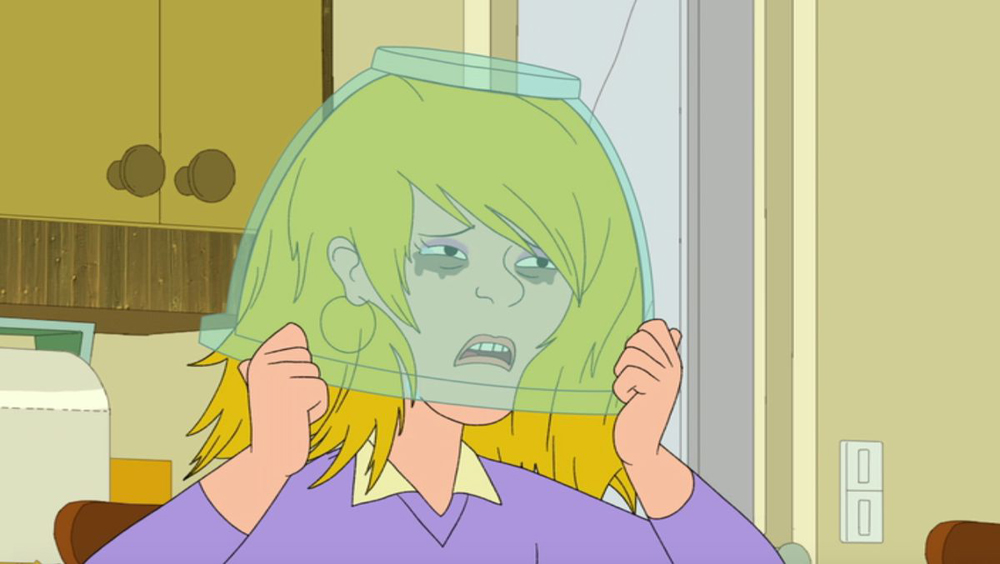
What would you say about a man who constantly yells, curses like a sailor on crack, and constantly threatens to put his kids through a wall? On the surface, it sounds like this guy has some serious anger issues. You would probably suspect there’s something wrong with him and that he needs help from a competent therapist.

Then, after you find out that man’s name is Frank Murphy from the animated show, “F is for Family,” you quickly realize that even the best therapist in the world couldn’t do squat for this man. His anger, cursing, and threats of intentional property damage are entirely understandable. In fact, he would need a therapist if he didn’t exhibit some level of anger.

That’s because Frank Murphy, along with every other major theme in “F is for Family,” is the personification of the disillusion of the American Dream. Take everything you think you know about what it means to work hard, get ahead, and achieve your goals in life. Then, kick it in the gut, spit on it, and throw it through a brick wall. That’s Frank Murphy’s life. That’s what “F is for Family” is all about.

I only recently discovered this show while browsing Netflix and I’m glad I did. “F is for Family” is one of those shows that takes an overdone concept, like a dysfunctional cartoon family, and injects it with some overdue nuance. This isn’t a show about a bumbling dad, a nagging mom, or mischievous kids. The issues and themes in “F is for Family” feel genuinely relevant to the current state of the world.

For a show that takes place in the 1970s, that’s quite an accomplishment. At the same time, it makes sense for this show to take place during that particular time period in America because that’s when the hopes, dreams, and optimism of the post-World War II economic boom began to falter. They just faltered a lot faster for Frank Murphy and his family.

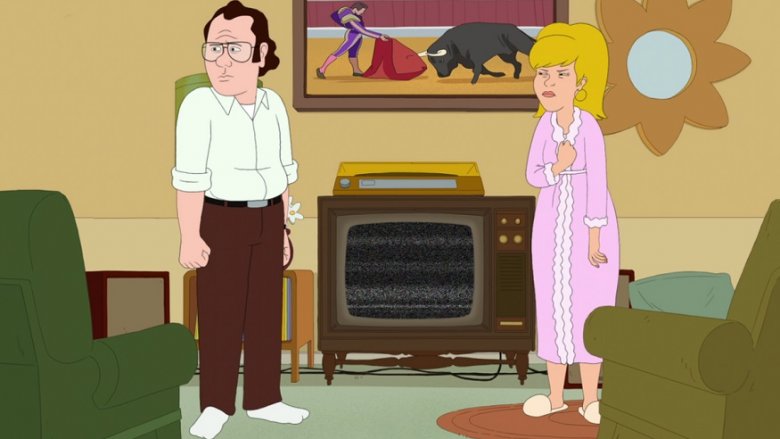
In many respects, Frank’s short-tempered persona is a byproduct of that decline. Throughout the show, it’s clear that Frank underwent a significant transformation. He wasn’t always this rage-filled working stiff who jumps at any chance to cuss out anyone in close proximity. He was once an upbeat, optimistic man who reflected the spirit of his time and his country. This is even reflected in the show’s opening theme.

He starts off as an idealistic youth. Born in 1931, he enters adulthood just as his country returns victorious from World War II. Like others before him, he serves his country after getting drafted in the Korean War. He returns home somewhat scarred, but still optimistic about his future. In 1958, he has dreams of flying airplanes and marrying Sue, a young woman in college at the time.

By all accounts, Frank plays by the rules. He works hard and carries out his duty as well as anyone can expect. He’s not some thick-headed dope like Homer Simpson or Peter Griffin. He’s also not some misanthropic underachiever like Al Bundy. He can speak in complete sentences, form coherent thoughts, and demonstrate an average level of competence.

He is, for the most part, an appropriate representation of a working class man trying to provide for his family. The problem, and the frequent source of his anger, is that his efforts often go unrewarded and unappreciated. In some cases, he gets completely screwed over, both by forces beyond his control and by unexpected consequences from his behavior.

In the first season, he works hard and sucks up to his asshole boss, Lance Dunbarton, to get a promotion at the airport he works at as a baggage handler. He even manages to avert a strike on Christmas Eve. Rather than get rewarded for this effort, he gets fired.

In the second season, he gets a chance to return to work, but the way he confronts his former supervisor, Bob Pogo, ends up making his situation worse.

Along the way, Frank also attempts to deal with the constant dysfunction of his family, which includes a rebellious teenage son, a wimpy pre-teen son who gets bullied at every turn, and a young daughter who refuses to conform to traditional gender norms. On top of all that, his wife is dissatisfied with just being a housewife and her efforts to achieve her own dreams cause plenty of marital strife.

At every level, Frank Murphy’s life is not the at all consistent with what the American dream had promised. Instead of the white picket fence with a content wife and well-behaved kids, his life is a constantly-devolving mess. No matter how hard he works or how much he plays by the rules, nothing seems to improve. Things only ever get more frustrating. After only a few episodes, it’s easy to understand why Frank is so angry.

To some extent, Frank Murphy is a fitting personification of Murphy’s Law. That’s not to say that everything goes wrong for him all the time, but through three eventful seasons, his attempts to improve his lot in life never works out. For every step forward he takes, he suffers a major setback.

He finally gets his job back at the airport where he hopes to pursue his dream as a pilot. Then, he gets his wife pregnant and they have to put their dreams on hold again.

He tries to improve things with Sue by taking his wife out for a romantic evening on their anniversary, but ends up getting into a major fight that makes everything worse.

Even his family isn’t immune to this regressive trap. While Frank struggles to find a stable job, Sue attempts to enter the working world, only to have her dreams crushed when the company she works for steals her invention. On top of that, she works in an office where she’s constantly belittled, harassed, and demeaned by co-workers whose conduct makes Don Draper look like a hippie.

His rebellious son also has dreams of becoming a rock star, but ends up getting kicked out of his band after a breakdown involving his drug-loving neighbor’s busty girlfriend. In season 3, he tries to reinvent himself and he tries to find a sense of belonging with a new group of friends. The end result is him getting arrested and spending a night in jail.

His youngest son, Bill Murphy, learns these harsh lessons even earlier than his father. He also tries to work hard and play by the rules. He tries to stand up for himself and confront the bully who torments him. Like his father, though, he ends up making things worse. I won’t get too deep into spoilers, but I will note that there’s some heavy arson and awkward boners involved.

Even his brainy daughter, Maureen, isn’t immune from it. Being a young girl in the early 1970s, her dreams are limited. Even when she aims low, like winning a ring toss contest on kids show, it still fails and through no fault of her own. Like her parents and brothers, the world seems determined to deny her any semblance of success.

If the essence of satire is to offer scathing criticism of a particular social construct, as those who edit Wikipedia imply, then “F is for Family” is a direct attack on the ideals and assumptions we associate with the American Dream. It never gets overly-nihilistic like “Rick and Morty” or “Bojack Horseman.” With every episode and sub-plot, it chips away at the foundation on which that dream is built.

It’s established throughout the show Frank and Sue were both in a position to achieve that dream. They were on a promising path with Sue being in college and Frank wanting to become a pilot. Even when they faced a major obstacle, namely Sue getting pregnant, they tried to do the right thing. They sacrificed for each other and their family.

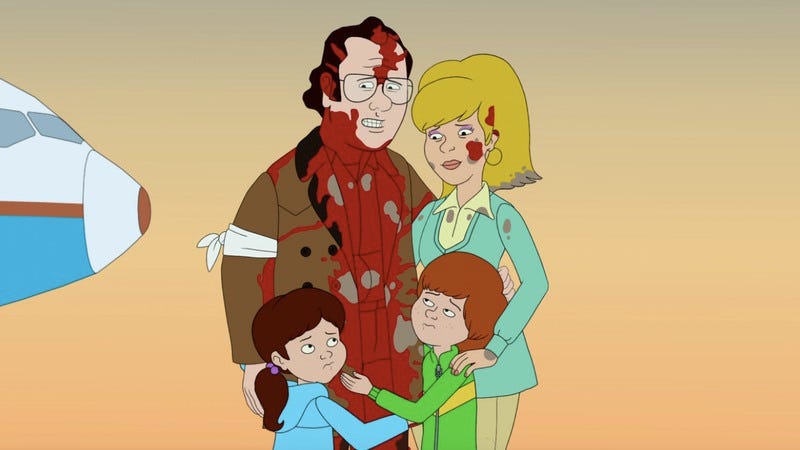
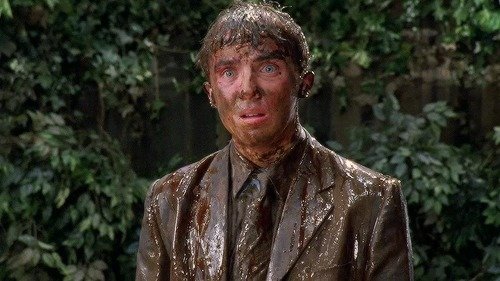
That’s NOT red paint.

In any other narrative, their responsible behavior would be rewarded. By the standards of the American Dream, they did the right thing. They got married and tried to provide for their family. However, despite those sacrifices, they’re repeatedly denied their dreams. At the end of the day, doing the right thing and playing by the rules just doesn’t cut it.

Frank watches as his obese, slob of a boss screws him over on Christmas Eve. Sue watches as the company that made her so miserable steals her idea and profits from it. Their kids watch as the world around them rewards and punishes those who don’t deserve it. The only ones who ever seem to benefit are those strong enough to skirt the rules or well-connected enough to bend them.

In that context, it’s fitting that “F is for Family” takes place in the 1970s. That marked the end of the post-World War II economic boom and the beginning of major economic decline from which working class people never recovered. The well-paying, blue-collar jobs that once allowed a man like Frank Murphy to support his family are long gone thanks to the rise of automation and globalization.

While the show never dives too deep into the complexities of this decline, it provides a great deal of crude tongue-in-cheek humor that reveals just how flawed the American Dream had become at that point. There are not-too-subtle jokes about women, minorities, family life, politics, and the media that highlight just how flawed the system is. Frank Murphy is just the guy who gets screwed more than most.

In the end, though, that’s what makes “F is for Family” the ultimate satire for the idealized narrative we associate with the American Dream. It shows that this notion that a hard-working, self-sacrificing working man who plays by the rules will achieve his dream is nothing more than a bad fairy tale. Frank does everything society expects a working class man to do and rewards him with jack squat.

Given everything he endures, from abandoning his dreams of becoming a pilot so he could provide for a family that rarely shows him any gratitude, I’ll rephrase the question I asked earlier. What would you say about a man like Frank Murphy, who played by the rules and bought into the American Dream, only to see it screw him over at every turn? Can you really blame him for being so angry?

4 Comments

Filed under gender issues, human nature, Marriage and Relationships, men's issues, political correctness, psychology, sex in media, television

The Mixed (Yet Uplifting) Message Of “Malcolm In The Middle”

landscape-ustv-malcolm-in-the-middle-cast-shot

Not every TV show gets to have a series finale. In fact, it’s fairly rare for any show, be it a sitcom, a drama, or a Saturday morning cartoon, to get to that point. More shows tend to get canceled before a finale can ever make it to the drawing board.

When a show does get to that point, though, it’s still no guarantee that the finale will be satisfying. Ideally, the end of a long-running show should tie up loose ends, create a sense of closure, and reward the audience for sticking with the story since it began. That’s the best case scenario. More often than not, finales tend to be mixed.

Truly satisfying finales like that of “M*A*S*H” are a rarity. More often than not, a series finale is going to leave some fans elated and others upset. To this day, there are still people who argue about the finale of “Lost” and I imagine there will be just as many arguments about the finale to “How I Met Your Mother.”

It’s next to impossible to create a finale that satisfies everybody. The most anyone could hope for is a show that at least creates a complete story, even if it remains open-ended to some extent. That’s how the finale to “Breaking Bad” handled things and while not perfect, I think it worked in the context of the show.

There is another show, however, that didn’t try that hard to make the perfect finale. In fact, the show did something unique in that it embraced the idea that there’s no perfect ending, but there is a path forward. There’s no final triumph or ultimate reward for the characters. There’s only the understanding that life goes on, there’s no easy way to do things, and sometimes the things you don’t like will always guide you.

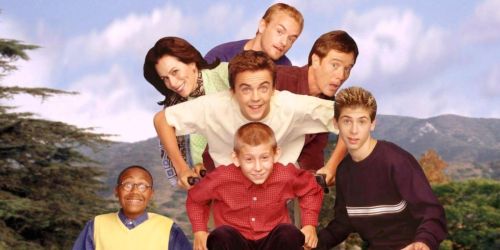
That show is “Malcolm In The Middle,” a quirky, but entertaining sitcom full of juvenile humor and questionable messages. For some, the show just took family dysfunction to an absurd extreme. Even so, it was pretty funny. Between lovable charisma of Frankie Muniz, the physical comedy of Bryan Cranston before he was Walter White, and the overly dramatic presence of Jane Kaczmarek, this show had a lot to offer.

Like “Married With Children” before it, this show went the opposite direction of the typical feel-good sitcom. Malcolm’s family aren’t the upstanding, upbeat models of society in the mold of “Father Knows Best.” They’re a collection of low-class, ill-mannered, under-privileged brutes who always find themselves in bad situations that inspire bad decisions.

They’re the kind of dysfunctional family that give other dysfunctional families a bad name. Part of their appeal was how they navigated that dysfunction. They rarely learned their lessons, they rarely underwent meaningful growth, and they often screw themselves over with their bad decisions. That’s what made it funny.

For seven seasons, the antics of Malcolm and his family followed a fairly successful formula. Malcolm, his brothers, and his parents find themselves in trouble or in over their heads. They struggle to rectify the situation, but often end up making things worse and incurring plenty of memorable comedy along the way.

In the series finale, however, the show takes that formula and injects something unique into the mix. After seven seasons of wild antics, spectacular failures, and memorable monologues, “Malcolm In The Middle” sent a message that went beyond the forces behind family dysfunction. I would even go so far as to say that message is more relevant now than it was when the episode aired in 2006.

The main premise of the episode revolves around Malcolm graduating valedictorian from high school. Being a certified genius, as revealed in the first episode, his life is the only one within his dysfunctional family that has the potential to be something. There are other assorted side-plots to the episode, one of which involves a giant bag of shit that Reese created, but this is the main catalyst for the ultimate conclusion of the show.

Shortly before graduation, Malcolm is given the kind of opportunity that most people can only dream of. Instead of college, he’s offered a lucrative job at a tech company that would’ve given him a six-figure salary, stock options, and a far less hectic life compared to the one his working class family afforded him.

Malcolm makes clear that he wants that job. He wants that life because, unlike his brothers, he has a chance to escape it. Like so many other times throughout the show, though, his control-freak mother steps in and stops it. She makes the decision for him. He’s going to college. On top of that, he’s going to have to work his way through, drudging along as a janitor instead of using his genius to make things easier.

Naturally, he’s not happy about this. It’s not the first time his mother has made choices that affected his entire life. In fact, that’s one of the most prevailing tropes of the show. No matter what Malcolm or his brothers do, they can never escape their mother’s neurotic control.

She doesn’t just want to control what he does after he graduates, either. She wants to put him and/or shove him down a path towards becoming President of the United States. Both she and Hal, played by Bryan Cranston, reveal that they’ve had this in mind for Malcolm since they found out he was a genius. It leaves him baffled, frustrated, and pretty upset.

Among other things.

However, this time his mother gives meaning to her decision that go beyond the usual “I’m your mother so do as I say” excuse. Instead, she does something that nobody on the show ever attempted to do to that point. She imparts upon Malcolm, and the audience by default, a series of harsh truths within the context of the bigger picture.

Those truths all hit hard as they come pouring out in a memorable exchange that helps encapsulate so much of the dysfunction Malcolm’s family endures. At the same time, it also makes a compelling case for why Malcolm should become President.

Lois: That doesn’t matter. What does matter is you’ll be the only person in that position who will ever give a crap about people like us. We’ve been getting the short end of the stick for thousands of years, and I, for one, am sick of it. Now, you are going to be president, mister, and that’s the end of it.

Malcolm: Did it ever occur to you that I could have taken this job, gotten really rich and then bought my way into being President?

Lois: Off course it did. We decided against it.

Malcolm: What?!

Lois: Because then you wouldn’t be a good President. You wouldn’t have suffered enough.

Malcolm: I’ve been suffering all my life!

Lois: I’m sorry. It’s not enough. You know what it’s like to be poor, and you know what it’s like to work hard. Now you’re going to learn what it’s like to sweep floors and bust your ass and accomplish twice as much as all the kids around you. And it won’t mean anything because they will still look down on you. And you will want so much for them to like you and they just won’t. And it’ll break your heart, and that’ll make your heart bigger and open your eyes and finally you will realize that there’s more to life than proving you’re the smartest person in the world. I’m sorry, Malcolm, but you don’t get the easy path. You don’t get to just have fun and be rich and live the life of luxury.

Beyond simply reinforcing how much Lois exerts control over her children, her words reflect the collective frustration of families mired in dysfunction. From the Bundy family in “Married With Children” to the real people in the world who have kids they can’t manage and jobs that don’t pay enough, she articulated a sentiment that is difficult for most non-working class people to grasp.

Malcolm and his family are essentially trapped in the dungeon of modern society. They’re low-class, ill-mannered people who never got the opportunities to climb the social ranks. Lois and Hal work demeaning, low-paying jobs that don’t provide nearly enough to support a large family, let alone one full of rowdy children that get in trouble every other week. How could they not be dysfunctional in that environment?

It’s an environment that keeps anyone who wasn’t born into a good situation from improving their lives. It’s an environment that breeds and reinforces the dysfunction that Malcolm and his brothers so hilariously embody. Any time somebody does get a chance to leave, they jump at the opportunity and never look back. Moreover, they don’t do anything to help those who never get that chance.

Lois knows this. She can already see that happening with Malcolm. If he takes that job, he’ll just get rich and comfortable, forgetting about where he came from and never giving another thought to those who weren’t as fortunate as him. That’s entirely understandable, as Malcolm’s reaction so nicely demonstrates.

Most people do take the easy path out of hardship, poverty, and dysfunction. It’s not just a temptation. It’s a reflex. Growing up poor and dysfunctional is akin to torture and, as is often the case with torture, people naturally do whatever it takes to make it stop. Lois, for all her neurotic tendencies, is pushing Malcolm to endure for the good of every other dysfunctional family like them.

What makes these final moments of the show so powerful is that Malcolm actually listens to his mother in this case. He doesn’t fight her, for once. In the final scenes of the show, he actually follows the path she lays out for him, going to Harvard and working as a janitor to pay his way through. He’ll continue to suffer the effects of his family’s dysfunction, but it’ll help him maintain perspective.

That perspective is something almost no modern President will have. They really can’t because most modern politicians are millionaires. They essentially do exactly what Malcolm suggested, getting rich first and then buying their way into power. The fact that many politicians seem so out of touch with ordinary people, especially the working class, gives further weight to Lois’ words.

Rather than leave his dysfunction behind, Malcolm will carry it with him. He’ll use it to bring a perspective that others either don’t know about or don’t want to confront. Unlike everyone else who tries to raise awareness of working class dysfunction, he’s smarter than them. He’s actually capable of overcoming the traditional barriers that keep people like him from achieving real power.

It’s an unexpected, but satisfying brand of hope. Most episodes of “Malcolm In The Middle” tend to end with a sense of misanthropy that reverts Malcolm’s family back to the status quo. They’re never allowed to get ahead or rise above their dysfunction. At the same time, though, they don’t sink into a defeatist malaise like the Bundy family.

That’s exactly what puts Malcolm in a position to do something more in the end. Everything that held him and his family back is now a catalyst for something greater. He has both the perspective and the aptitude to do great things, such as become a President who actually cares about helping dysfunctional family’s like his.

At a time when income inequality is on the rise and the working class is enduring greater hardship, the world needs leaders who have Malcolm’s perspective. Unfortunately, such leaders are exceedingly rare, especially as powerful institutions become more and more prone to the interests of the rich.

The “Malcolm In The Middle” finale dares people to imagine what we can do when capable people from dysfunctional backgrounds actually get a chance to do something greater. The show doesn’t offer too many details about what happens to Malcolm beyond Harvard, but it’s refreshing and even a little uplifting to think that a show full of so much exaggerated dysfunction could envision a brighter future.

That future may not improve for people like Reese, though, but that’s probably beyond Malcolm’s abilities. Some dysfunction is just too great, even for a genius President.

2 Comments

Filed under human nature, media issues, philosophy, psychology, television

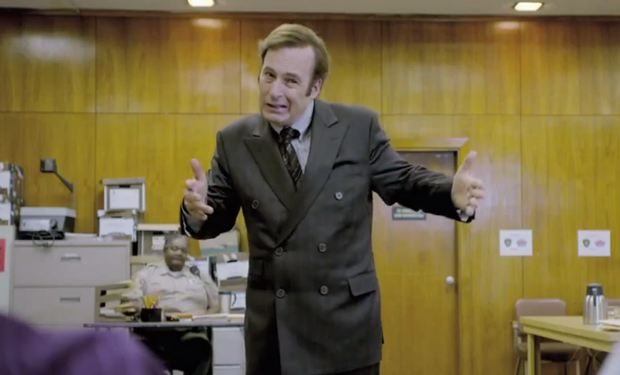
Walter White Vs. Saul Goodman: A Tale Of Two Villains

better-call-saul-644x362

If the road to Hell is paved with good intentions, then the road to villainy has many paths with similar landmarks. Well-developed villains can be every bit as compelling as their heroic counterparts, if not more so. Ever since Heath Ledger’s Joker stole the show and an Oscar in “The Dark Knight,” great villains aren’t just a complement to the heroes. They’re a journey unto themselves.

At the moment, Walter White from “Breaking Bad” is the ultimate embodiment of this journey. His path to villainy made for some of the greatest moments in modern television and Bryan Cranston has the Emmy trophies to prove it. Since then, it seems as though everyone is just struggle to keep up.

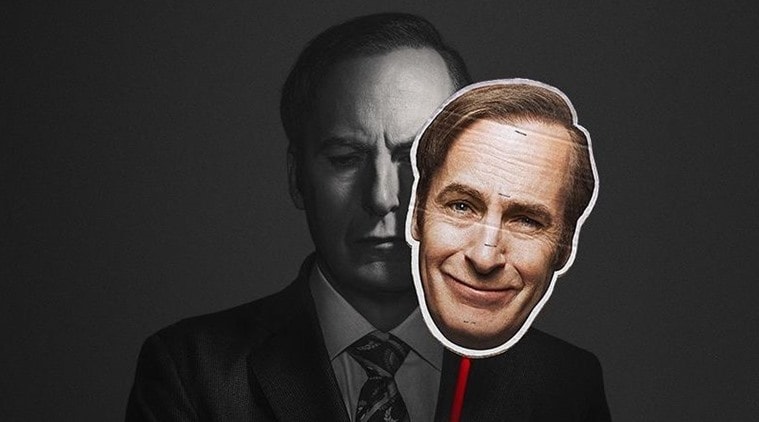
However, there’s one journey that comes very close and is remarkably similar. Fittingly enough, it spins right out of the world of “Breaking Bad.” I’m talking, of course, about “Better Call Saul,” the prequel/spin-off that tells the story of how an aspiring lawyer named James McGill became the morally bankrupt legal guru, Saul Goodman.

I’ve been watching this show closely for a while now. I was originally planning to wait until the conclusion of Season 4 to write about it, but after re-watching the Season 3 finale, I feel like there’s too much to work with. After seeing that episode, I feel like I saw a turning point in the ongoing transformation of James McGill to Saul Goodman. I also saw some important parallels with Walter White that are worth discussing.

At its core, “Breaking Bad” is a story about how a law-biding man goes from an underpaid chemistry teacher to a blood-thirsty drug kingpin. Creator Vince Gilligan nicely summed up Walt’s transformation as going from Mr. Chips to Scarface. That journey, and the story behind it, took an initially unassuming character and turned them into someone they never thought they could be.

The essence of “Better Call Saul” is very different. James McGill is not the same as Walter White. From the very first episode, we can see traces of the unscrupulous con man manifesting in a many ways. The show establishes in Season 1 that James McGill is not some clean-cut straight-arrow like Walt was. His soul was tainted before he ever applied to law school.

James “Slipping Jimmy” McGill is someone who always seems inclined to cut corners, break rules, and cheat to get ahead. That’s something his older brother, Charles “Chuck” McGill, constantly points out over the course of the first three seasons. Every time Jimmy had a chance to do the right thing, he compromised. Just doing the right thing wasn’t enough for him.

Walter White’s decision-making process was similar. In the early seasons of “Breaking Bad,” he showed a reluctance to cross certain lines and go too far. He often found himself pushed or tempted, sometimes by forces beyond his control and sometimes by the consequences of actions. At the end of the day, though, he still didn’t get off that path.

That’s a common thread for many villains in their journey. They find themselves on that path and they see opportunities to leave it, but they choose not to. They don’t seek redemption like a hero would. They just keep making excuses, willfully entering a brutal cycle of corruption and compromise.

Whereas Walt succumbed to that cycle, though, James McGill steadily embraces it. Moreover, he isn’t drawn into that path by tragedy or bad luck. He gravitates towards it. He’s even excited by it. James is at his most animated and charismatic when he’s pulling a con, putting on a show, or crafting a lie. It’s not a necessity like it was for Walt. It’s a thrill.

If James is tempted by anything, it’s the lure of walking the honorable path like his older brother. In fact, Chuck might have been the only positive influence that kept Jimmy from becoming something worse than a sleazy con-man. He and a host of other influence, especially Kim Wexler and Howard Hamlin, play the part of a reverse temptress, trying to keep him off that villainous path.

Early on, there’s a sense that James genuinely wants to be a decent, upstanding lawyer. There are situations where he does the right thing. Some of the causes he takes on, such as a case against an elder care facility that was stealing money from its residents, are objectively noble. In the end, though, doing the right thing isn’t enough for him. The end of Season 1 really cements that.

Walt goes through a similar process early on. Like the “refusal of the call” that heroes experience, Walt attempts to escape the villainous path. However, a combination of circumstances and choices put Walt back on the road towards becoming Heisenberg. By the end of Season 1, there’s a sense that there’s no going back.

Where Walt and James diverge, as villains, it’s how and why they make their choices. Walt becomes Heisenberg because he think he has to, first for his family and later for selfish reasons. James becomes Saul Goodman because he wants to. He tried to be the upstanding lawyer his brother and friends wanted. It just didn’t work for him. Being James McGill just wasn’t enough.

There’s plenty of conflict surrounding those choices. Part of why I love “Better Call Saul” is how it reveals the steady progression from James McGill to Saul Goodman. It doesn’t happen all at once. It doesn’t even happen in a steady, linear narrative. James fluctuates on his journey to becoming Saul. He even hesitates a few times. He still doesn’t avoid it in the end.

That ending, as revealed through the finale of “Breaking Bad” and the flash-forward sequences of “Better Call Saul,” shows one other key distinction between Walt and Jimmy. While both men complete their villainous journey, they both end up in very different places. Walt is dead or at least close to it, as some fan theories predict. However, Saul Goodman’s fate might actually be worse.

In the first minutes of the first episode of “Better Call Saul,” we see what came of James McGill/Saul Goodman after the events of “Breaking Bad.” Gone are the days where he shows up in flashy commercials and hatches elaborate cons on unsuspecting people. Instead, he lives an unexciting, mundane life in Omaha, Nebraska managing a Cinnabon.

Some might argue this is Saul’s personal Hell, trapped in a such a sad and unassuming life. I would say it’s more like his purgatory. In this world, he can’t embrace that villainous persona that gave him so many thrills. Even if he wanted to be that villainous character again, he can’t because it means losing what little he has left.

Just as he frequently did in the early seasons of “Better Call Saul,” James McGill takes the easy way out. Walt tried that too in the last few episodes of “Breaking Bad,” but that didn’t last. He eventually chose to confront the byproduct of his villainous choices. James ran and didn’t look back. The easiest path, in the journey of a villain, is often a coward’s path.

Whether or not James McGill escapes his purgatory or continues wallowing in obscurity remains to be seen. The fact he ends up in this state after undergoing this transformation into Saul Goodman reveals another critical component to the villain’s journey. While the hero ultimately triumphs, the villain eventually loses. It doesn’t always end with them going to jail, but they often endure a less-than-desirable fate.

Breaking Bad” and “Better Call Saul” are both great shows that set a new standard for depicting the evolution of a character into a villain. I won’t claim that “Better Call Saul” is superior to its predecessor, if only because the story isn’t finished. It does, however, accomplish something every bit as remarkable as the story of Walter White.

The process of becoming a villain is a steady, inconsistent journey full of many complications and tough choices. Walter White and James McGill began that journey under different circumstances and ended up in different places. Ultimately, they both crossed lines that sealed their respective fates. It’s tragic in some ways, but it makes for some damn good television.


1 Comment

Filed under human nature, philosophy, psychology, Villains Journey

Five Things I Want From The “Daria” Reboot

96d03d53-c9a4-43ef-a0a2-f99b14256637

Last year, I wrote an article about how the classic 90s MTV show, “Daria,” is more relevant today than it was back when it debuted in 1997. That special brand of misanthropic monotone conveyed a harsh, uncompromising honesty of the world in a way that felt both genuine and endearing.

Well, it appears I’m not the only one who felt that way because according to The Hollywood Reporter, the newly-minted MTV Studios is looking to reboot the show as part of a push to reinvigorate the MTV brand that seemed to fade along with the appeal of boy bands. While I’m skeptical that MTV can ever become relevant again, I couldn’t be more thrilled at the prospect of Daria returning to TV.

I think I speak for many who watched that show back in the late 90s when I say that this world needs her. Specifically, it needs her critical insights into a world awash in fake news, alternative facts, and political correctness. There’s an entire generation emerging whose reality is shaped by their news feed on social media. It feels as though no one is even capable of seeking the truth anymore.

Daria doesn’t just tell the truth like she sees it. She says it in a way that is apolitical, unbiased, and relatable. She doesn’t criticize. She doesn’t have an agenda, either. She sees something she thinks is a farce and she points it out. At a time when every character needs to be an icon for something or someone, that’s nothing short of refreshing. For a character from the late 90s, that says a lot about our current state of affairs.

There’s a lot more I could say about “Daria,” both as a character and as a TV show. For now, I want to create a wish list, of sorts, for what I’d like to see in a “Daria” reboot. I know that’s a bit premature since MTV Studios is in the very early stages of making this happen, but I think the prospect of more “Daria” at this particular point in our history is exciting.

I know excitement is the last trait anyone would associate with Daria Morgendorffer, but I’m willing channel my inner Quinn to entertain the possibilities. What follows are five things I want from a new “Daria” show. I know any rebooted show is subject to reinvention, sometimes for the worse, but I believe if the new “Daria” delivers on these critical elements, it’ll be a success. It might even get Daria herself to crack a smile.

Wish #1: Build Daria’s Agenda Around Exposing Other Agendas

Let’s face it. Today, everyone seems to have an agenda and social media has given people a platform to pursue that agenda, even when they’re dangerous, damaging, and downright hurtful. In the late 90s, media outlets like MTV got a lot of flak for pushing bloated consumerism around bubblegum pop music and reality shows. Today, social media has created countless outlets for countless agendas of varying absurdity.
Daria Morgendorffer can set herself apart in this chaotic landscape by building her agenda around exposing other agendas. She could see right-wing talking points as just excuses to pay fewer taxes and be a dick to poor people. She could see left-wing talking points as utopian fantasies mixed with a pathological need to be outraged over something. With Daria, no agenda is safe.

In any show that would have her take part in the current climate, it needs to give her opportunities to see all this social masquerading for what it really is. As I’ve noted before, people have a frustrating tendency to believe they’re the hero of their own story. In Daria’s world, there are no heroes. There are no villains. There are just people.

That’s a harsh reality, but one Daria refuses to ignore. Her reminding people of that reality in any show would be both refreshing and cathartic, especially to anyone who is sick of people building their agendas around professional trolling.


Wish #2: Continue Daria’s (Unique) Growth From The Show

Throughout five memorable seasons and two made-for-TV movies, Daria’s character remained remarkably consistent. However, she did undergo her share of growth during that time. It was subtle, much more so than that of characters like Jane, Quinn, Helen, and Tom. However, that’s exactly what made it meaningful.

At the beginning of the show, Daria is already her anti-social, misanthropic self. She’s a teenager and a high school student, though. Teenagers go through changes. Even Daria isn’t immune to that. She developed her first crush, had her first serious boyfriend, and even improved her relationship with Quinn, a character who might have been the least likable person on the show.

The show ended with Daria graduating high school and going to college, culminating in one of the most memorable graduation speeches ever made. However, college is rarely the endpoint for anyone who survived high school, even someone as jaded as Daria. Any new show that expands her story should also follow that evolution.

Whether it takes place in college or shortly after, Daria always expressed a desire to get out of Lawndale and do something with her life that she wouldn’t hate. That’s a process a lot of people go through, but few could endure it with the same attitude or crass as Daria. That’s exactly why that story is worth telling.


Wish #3: Keep Her Apolitical And Unbiased

No matter how much she grew over the course of the show or what she encountered, Daria Morgendorffer may very well be the only character in the show, or in real life, who can call themselves truly unbiased. She doesn’t have a political affiliation. She doesn’t identify with one group or the other. She’s just Daria. Her opinions and leanings are her own.

That’s an important facet to preserve in any new “Daria” show. That may prove challenging, though. If you go by current stereotypes, Daria’s age and education levels put her in line with the kind of left-leaning archetypes that Fox News whines about every half-second. However, in terms of her overall worldview, Daria would be just as cynical about the MSNBC crowd.

The core of Daria’s politics is that all politics are stupid. Politics is just one big exercise in people gathering around others who think like they do so that they can rely on someone else to do the thinking for them. That is not Daria’s style. She believes in thinking for herself. Anything beyond that is a waste of time.

Moreover, her worldview is as simple as it is plain. The real world doesn’t care about your beliefs, your principles, or how hard you fight for them. The real world is harsh and whining about it doesn’t change anything. That would put her at odds with liberals, conservatives, and everyone in between. The idea of her getting into debates with some of the politically-minded trolls in the world would certainly be worth watching.


Wish #4: Give Her Supporting Cast A Chance To Support Her

Like any great character, animated or otherwise, a big part of what made “Daria” such a great show was its diverse cast of colorful characters. From her annoying younger sister to her uptight mother to her charismatic classmates, Daria was surrounded by a lot of memorable individuals who helped highlight just what a unique persona she was.

Daria’s closest relationships were with her friend, Jane Lane, and her family that could never understand her. To maximize the strength of her persona, those relationships should definitely be part of a new show. There can also be room for new relationships that put her in entirely new situations.

That may already be in the works. Within the announcement surrounding the possible reboot of the show, there’s a mention of giving Jodie Landon a significant role in the show. That has a lot of potential because Jodie was a great character who didn’t get a chance to develop until the last two seasons of the show. A new show could give both her and Daria new opportunities in a world full of new controversies.

Within the existing cast, there’s also potential for Daria to forge connections with characters other than Jane. There’s also potential to form new romantic entanglements. She does have the capacity for affection, despite what her demeanor may imply. In an age where romantic entanglements are fraught with complications, that could bring out the best in her and the worst in everyone else.


Wish #5: Put Her In The Middle Of Controversial Issues (And Let Her Work Her Magic)

The original “Daria” was a great show in that it didn’t take sides in a controversy or preach to the audience. In fact, those kinds of public service announcements would’ve been antithetical to Daria’s persona. She doesn’t think that it’s the job of other people, be they animated or otherwise, to tell you how to feel about an issue. That’s something you’re supposed to figure out for yourself.

At the same time, however, I felt as though “Daria” avoided too many major issues that could’ve helped make the show even more relevant. While it lightly touched on issues of teen sex and out-of-control consumerism, it didn’t get too deep into the kinds of topics that inspire hashtags and hate mail.

I think that worked well for “Daria” in the late 90s. I don’t think it’ll work as well in today’s hyper-political climate where a new outrage is just a click away. A new “Daria” show won’t succeed if it avoids hot-button issues like the anti-harassment movement, gender inequality, and an emerging generation that may end up being the most nihilistic of all time.

I’m not saying the show has to be built around those kinds of serious topics every other episode. Shows like “South Park” already do that. The biggest appeal to this show would be Daria offering her misanthropic take on those issues to help expose them for what they are.

I believe that there’s definitely a market for that kind of nuance in our current political climate. I also think there’s a growing need for a voice who can sift through the endless shit storms that get kicked up every day for one reason or another. Whether it’s something the President tweets or some dumb comment a celebrity makes, we all need a harsh, but sincere voice to speak the honest truth.


Daria can be that voice. I would still argue we need that voice now more than we did in the late 90s and early 2000s. I hope that this show, assuming it gets made, provides that voice. “Daria” was ahead of its time, as a how and as a character. It’s time we finally catch up with one another.

Daria” was a great show in that it didn’t take sides in a controversy or preach to the audience. In fact, those kinds of public service announcements would’ve been antithetical to Daria’s persona. She doesn’t think that it’s the job of other people, be they animated or otherwise, to tell you how to feel about an issue. That’s something you’re supposed to figure out for yourself.

At the same time, however, I felt as though

1 Comment

Filed under Current Events, gender issues, media issues, political correctness

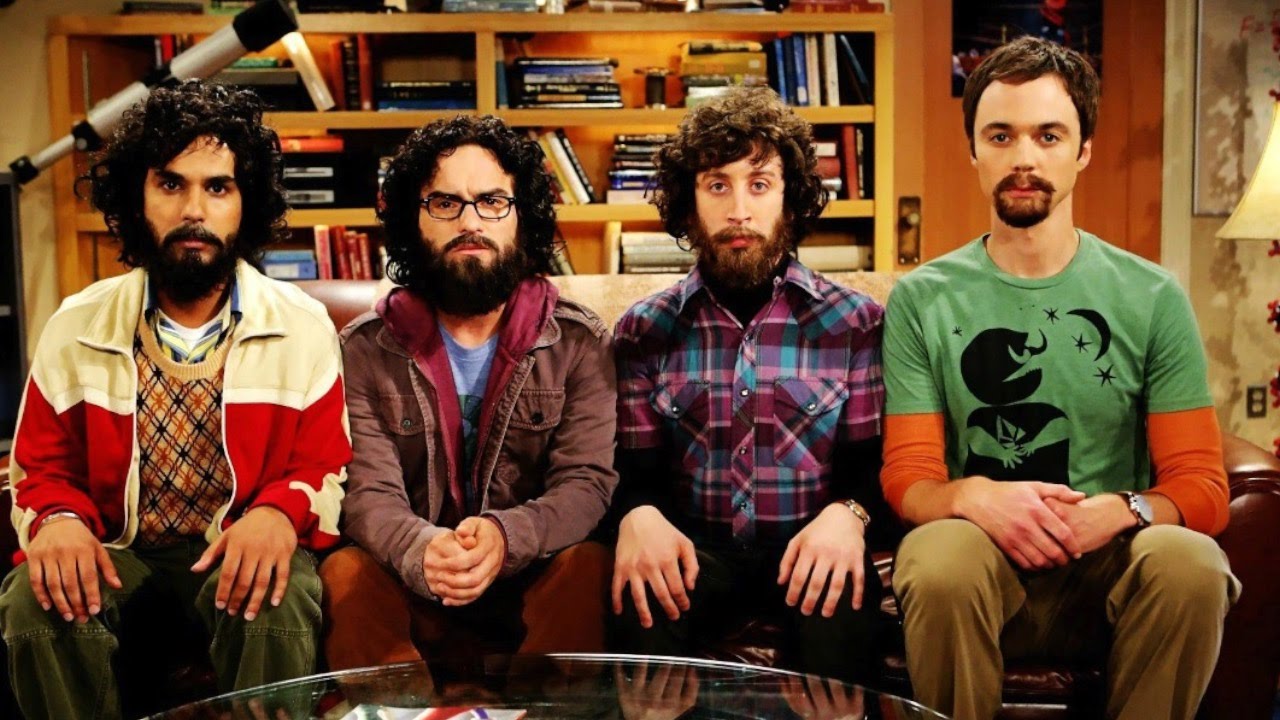
How And Why It Became Trendy To Hate “The Big Bang Theory”

1488462637_058409_1488464865_noticia_normal

There was once a time in the mid-90s when Hootie and the Blowfish was the hottest band in the world. They’re music was everywhere. You couldn’t listen to the radio for more than five minutes without hearing one of their songs. I didn’t consider myself a huge fan, but I found plenty of their songs catchy and fun. I still have “Hold My Hand” on my phone.

Then, for reasons I still don’t quite understand, it became cool to hate them. Suddenly, admitting that you enjoyed your music was akin to admitting that you did shots of paint thinner to win a five-dollar bet. It got to the point when even “The Simpsonsmade a joke about them in an episode.

The same thing happened to Nickelback in the 2000s. They went through an early period of intense success. Their fourth album, “The Long Road,” sold over five million copies. That’s success that most artists only ever dream of. I even admit I have that album and I love it. Their song, “Feelin’ Way Too Damn Good,” is on my workout playlist.

Then, for reasons that I’d rather not speculate on, it became cool to hate them too. While that hasn’t stopped them from selling over 50 million albums and becoming one of the most successful acts of a decade, it’s still trendy to despise them as everything wrong with music. It doesn’t seem to matter how successful they are. For some strange, esoteric reason, they embody everything wrong with the world.

If I would write that with more sarcasm, I would. However, this piece isn’t about Hootie and the Blowfish or Nickelback. I reference them because they’ve already gone through what’s happening to “The Big Bang Theory” seems to be enduring right now. They’ve risen to the top, defying the odds to achieve a level of success that most can only dream of. Then, it becomes cool to hate them for any number of reasons.

Now, I know I’ve criticized “The Big Bang Theory” before. I’ve cited it as the show that contains one of the worst romances in all of fiction. I don’t deny that it’s brand of humor and reliance on nerdy, socially inept men can be dry at times. That said, I do consider myself a fan of the show.

I watch it regularly. I even laugh at it. It has flaws, but I think the things it does well do plenty to overshadow those flaws. Sheldon is eccentric, but funny. Amy is quirky, but endearing. Howard, while creepy in the early seasons, has really grown up in all the right ways over the years. I would even go so far as to say that the show is worth watching just for Raj Koothrappali.

It’s not the best show on television, but like Nickelback and Hootie and the Blowfish, there’s no denying its success. It’s been syndicated and regularly ranks as one of the highest rated prime-time shows. Then, somewhere along the way, it became cool to hate the show as much as Nickelback.

You don’t have to look far to find articles of people whining about the show. Even Cracked, a site I often reference, once wrote a scathing article that flat out insulted anyone who dared enjoy the show. This is a direct quote.

Who are you people? The people watching The Big Bang Theory, I mean. Show yourselves. The world demands explanation. I mean that, too. In every way, shape, and form, this is the Justin Bieber of television shows.

I know the internet is full of this kind of trolling, but we’re not talking about snuff films and public crucifixion here. It’s a goddamn TV sitcom. It tries to be funny and entertaining. It doesn’t always work for everyone, but it still works for some. Are those people, which I guess includes me, somehow damaged just for liking this show?

I could probably ask the same of those who enjoy music from Nickelback and Hootie and the Blowfish. I could even offer a partial answer if I only use the basis of personal taste. That is, after all, what the consumption of all media is, be it music, movies, or TV. You tend to consume what you like. It’s that simple.

However, for an issue like this, there are added complications when something becomes cool to hate. Suddenly, it’s no longer a matter of just liking something different. It’s a matter of having some inherent personal flaw for liking something that has a vocal contingent of critics.

Call those critics whatever you want. Call them hipsters, trolls, or any number of other names that would warrant fines from the FCC. They’re still driven by the same focused outrage that dominates politics, religious disputes, and Overwatch tournaments. The only real question is why a show like “The Big Bang Theory” gets singled out.

It’s a hard question to answer and I’m not qualified to answer it completely. However, I do think something strange happens to movie, TV show, or band when they get so successful and so acclaimed that those who don’t like the show just can’t stop at not watching it.

It’s rare for any show to achieve the kind of success “The Big Bang Theory” has garnered. Success makes a show a bigger target. If shows like “South Park” or “The Simpsons” weren’t so successful, nobody would care how bad some of their jokes were or how controversial a certain character might be.

Some of that might be out of envy. There’s only so much success to go around. The fact “The Big Bang Theory” is so successful means, in the eyes of those who hate it, that it’s robbing success from shows that might be funnier or more worthy of it. Never mind the fact that the humor and worthiness of a show is completely subjective. Fans of that show will see “The Big Bang Theory” as a thief and a fraud.

Like it or not, envy can be a pretty powerful source of emotion. It’s underrated compared to outrage and hate, but still potent in its own right. However, I don’t think that’s the sole reason why “The Big Bang Theory” gets more hate than most prime-time shows that don’t involve CSI spin-offs.

I suspect there’s a deeper reason driving the hatred towards “The Big Bang Theory” that even Nickelback doesn’t have to deal with. I think part of that reason has to do with the archetypes the show uses. I don’t think it’s a coincidence that the combination of nerdy, socially awkward young men and a cute ditzy blonde conjures some heated emotional reactions, to say the least.

There’s no doubt that combination is contrived and relies heavily on old stereotypes. Then again, you could say that about a lot of other shows. The fact this one uses nerds and cute blondes, though, just makes it seem more overt. It makes every joke, every plot, and every gag seem cheap or forced.

It makes some of the resentment to the show understandable, but I think that resentment is even more compounded by trends in political correctness. Chief among those trends is a growing aversion to stereotypes. Characters and archetypes once considered inoffensive are now controversial. Jokes that were once just in poor taste are now the source of intense outrage.

Since its inception, “The Big Bang Theory” has relied a lot on stereotypes for its characters and its humor. Like all shows, it exaggerates certain personas. Sheldon Cooper, alone, is a testament to a character whose quirks are taken to a ridiculous extreme.

By relying on these stereotypes, though, it makes itself an even bigger target. Laughing at the show, in the eyes of some, means accepting some of these stereotypes and having the audacity to find them funny. That appears to be the undertone of the Cracked article I cited earlier. It seems to be the undertone of a lot of the hatred the show gets.

Now, I don’t deny that “The Big Bang Theory” can go overboard with cliches and stereotypes. There are a number of episodes in “The Big Bang Theory” that even I find bland. However, for the most part, I still laugh. I still find myself enjoying the story. Even when I can apply some of those stereotypes to myself, I still laugh.

At the end of the day, “The Big Bang Theory” is still just a TV show in the same way Nickelback is just a band. Nobody forces anyone to watch it. It’s easy to just change the channel and watch something else. However, when a show becomes so successful while relying on a premise that is getting more politically incorrect with each passing year, it’s bound to attract criticism and not just from the hipster crowd.

I still enjoy the show and I intend to keep watching it. I also intend to keep all the songs by Nickelback and Hootie and the Blowfish on my phone for the foreseeable future. If that makes me uncool in the eyes of some, then so be it. To me, it doesn’t matter if something is cool to hate. Petty hate is still petty hate.

I also expect to see plenty more hatred directed at the show for how it treats nerds, women, minorities, and humor. It’s just too successful and too big a target to avoid that kind of scrutiny. In that situation though, as with Nickelback and Hootie and the Blowfish, sometimes the best you can do is just laugh and enjoy it on your own terms. Bazinga!

2 Comments

Filed under human nature, media issues

Why We Should Be Excited (And Worried) About A “Y: The Last Man” TV Show

y-the-last-man

There are certain announcements that certain kinds of comic book fans have been waiting to hear for years. Most people who don’t have boxes and bookshelves full of comics probably won’t appreciate the importance of those announcements when they finally arrive. Ideally, everyone eventually comes to acknowledge how important it is in the long run.

Just recently, one of those announcements hit the entertainment wire and comic book fans like myself are still trying to catch their breath from the excitement. It has to do with a series called “Y: The Last Man,” one of the most critically acclaimed comic book series of the past 20 years. According to The Hollywood Reporter, FX has officially ordered a pilot for a TV series based on this comic.

I know that may not sound like ground-breaking news in an era when TV shows based on comic books account for a sizable chunk of programming. There are shows featuring famous superheroes like “The Flash,” “Supergirl,” and “Daredevil.” There are also shows based on non-superhero comics like “Preacher” and “The Walking Dead.” Why is adding yet another show to that list such a big deal?

Well, as someone who has thoroughly read and deeply enjoyed Y: The Last Man, I can attest that this is one of those comics that is special for all the right reasons. It’s compelling, dramatic, mysterious, and emotional on so many levels. It doesn’t just tell a great story. It builds an entirely new world around a truly catastrophic event.

The premise of Y: The Last Man is simple in concept, but grandiose in implications. One day, all the men in the world just die. They don’t get sick first. There’s no mass pandemic. They all just start bleeding from their mouth and eyes before they keel over and die. It’s not just human men either. Everything with a Y-chromosome just dies.

It happens so suddenly and so quickly. It’s not the flashiest apocalypse, but it’s every bit as brutal and traumatic as it sounds. In the midst of this massive gendercide, only one man survives for mysterious reasons. His name is Yorick Brown, an amateur escape artist who also happens to have a male pet monkey, who also survives.

The story about how he survives in this post-apocalyptic world, while also trying to uncover the mysteries of the plague that killed all the men, is full of intrigue, sorrow, hope, and drama. The fact that it manages to achieve all this without zombies or superheroes makes it all the more remarkable.

Add on top quality writing from by acclaimed comic writer Brian K. Vaughan and top-notch art from Pia Guerra and it’s easy to see why this series received multiple awards, including the coveted Eisner Award back in 2008. The fact that Y: The Last Man wasn’t made into a movie or TV show earlier is both shocking and outrageous.

To be fair, there have been multiple attempts to make a movie based on the series, all of which failed for a wide variety of reasons. Given the scope and nature of the story, though, a TV series is probably more suited and there has been interest in making one since 2010.

Now that there’s finally a pilot in the works on FX, a network that is less inclined to water down the harsher elements of the series, there’s are plenty of reasons for comic fans and fans of apocalyptic dramas to be excited. At the same time, however, there are also a plenty of reasons to worry.

Had this been announced five years ago, I don’t think those worries would’ve been major. Then, gender politics began getting exceedingly heated. From scandals born from video games to new concerns about female representation in movies to the anti-harassment movement, things have gotten a lot more hostile between genders.

This is an era where every action between men and women are subject to greater scrutiny. It’s an era where attempts at rational discussion are overshadowed by ever-present outrage. Buzzwords like mansplaining, social justice warrior, soy boy, and toxic masculinity are now part of our lexicon. I’ve expressed my dismay over such terms and why they’re empty in meaning, but I don’t expect them to disappear anytime soon.

It’s because of these ongoing trends in gender politics that I’m concerned about what form Y: The Last Man will take in this era. I don’t expect a perfect, panel-for-panel recreation of the 60-issue comic series. That’s not always necessary, as the success of “The Walking Dead” has proven.

However, I do worry that the greater meaning and dramatic impacts of the story will get lost, somehow, under the weight of ongoing gender politics. Some of those concerns are even articulated in the Hollywood Report’s announcement. Mr. Vaughan is even quoted as saying this when he met with potential show-runner, Michael Green.

“When [Green] first pitched his take on it to Nina Jacobson and me a long time ago, he came in saying he wanted to do something about toxic masculinity. It felt very relevant, and unfortunately, I think it’s only become more relevant with each passing day. His take on it was really brave and very different, but exciting as well. I really admire how audacious he’s been with his translation.”

It’s the bolded part that really has me worried. I’m not entirely surprised that producers of the show would want to tap into ongoing debates about toxic masculinity, no matter how asinine a term that might be. Like it or not, it is a relevant issue and for a premise that involves killing nearly all the men on the planet, it’s going to influence the story.

It’s just a matter of how different those involved want to make the narrative in Y: The Last Man. What matters most, however, is keeping with the overall theme of the story. Y: The Last Man is not just about an apocalypse involving gendercide. It’s part of a much larger world full of colorful and, at times, eccentric characters.

What happens to these characters is downright traumatic, as is to be expected in the face of a global apocalypse. The world, as they know it, is shattered. Their sons, fathers, husbands, and brothers are all dead. The pain, the loss, the sorrow, and the anger surrounding that trauma is what helps drive the story.

That’s especially true of the lone male survivor, Yorick Brown. In the comic, he’s not a superhero or even a multi-talented super-genius. In fact, he’s painfully human and downright inept at times, especially compared to some of his supporting cast. However, he never comes off as a whiny beta male or a brutish meathead. He’s the kind of character we see in real men throughout the real world.

Any effort to subvert that by turning him into some sort of superhero or some beta male weakling will remove a core aspect of Yorick’s appeal, not to mention the appeal of the overall story. It’s not just Yorick’s story either. The female characters in this story are every bit as rich and diverse, but as we saw with the female characters in “Star Wars: The Last Jedi,” that can be badly mishandled.

There are no Mary Sues in Y: The Last Man. There are no Lara Crofts or Wonder Womans either. These characters, especially Yorick’s sister, Hero Brown, and his bodyguard and traveling companion, Agent 355, are all as human as he is. They fight, struggle, fail, and suffer like real people navigating a traumatic apocalypse.

That’s not to say there aren’t some elements of gender politics in Y: The Last Man. There are aspects of the story that lend plenty of fodder to the radical feminist part of the political spectrum. There are a few characters who go so far as to celebrate the death of all men. The fact that some women in the real world have advocated killing all men shows that this sentiment is very present.

At the same time, there are parts of Y: The Last Man that will appeal to the men’s rights crowd, as well. The way society collapses with the death of all the men will give plenty of credence to those seeking to highlight men’s role in society. As with the radical feminists, though, it might be tempting to take it too far.

The story is not defined exclusively by toxic masculinity or radical feminism. It’s a story that puts men, women, and society in an extreme situation that brings out the best and worst in them. That would be the ultimate failure for a show like this and an egregious insult for a series as celebrated as Y: The Last Man. If it becomes driven by gender politics and not the spirit of the actual story, then that’s tragedy for all genders.


Leave a comment

Filed under Comic Books, Jack Fisher, Superheroes, gender issues, sex in society, sexuality

Five TV Shows That Could NEVER Be Made Today (Thanks To Political Correctness)

It’s amazing how much our culture can change in such a short period of time, relatively speaking. It wasn’t that long ago that mixed-race couples were considered scandalous, depicting a toilet on a TV show was taboo, and Bill Cosby was a respectable public figure. Whether it’s decades, years, or just a few weeks, things can change quickly.

That change, however, isn’t always logical or in the right direction. Hell, I’m still trying to figure out the appeal of fidget spinners. While I like to think that most change in society is progress, I don’t deny there are instances where we all take a step backwards and sometimes fall on our asses.

This brings me TV, an undeniable catalyst for cultural change. For more than a half-century now, TV shaped, re-shaped, and upended our culture in all sorts of ways. From Elvis’ scandalous hips to the rise of music videos to shows like “Breaking Bad,” TV has been a force for better, for worse, and for just pure entertainment value.

There have been any number of shows, specials, and moments from TV that have come to define our culture. However, there are some shows that, if they happened today, would generate a very different response than they did when they first aired.

I’m not just talking about shock value or controversy either. I mean that if some these shows debuted in the current year, they would generate the kind of outrage, whining, and protests that flood social media and spur the kinds of debates that can only ever end with someone comparing someone lese to Nazis.

These are sensitive times for reasons I don’t think I have to articulate. We’ve made progress in some ways, but may be regressing in others. Some blame feminism. Some blame toxic masculinity. Some blame greed, bigotry, or political correctness. Some even blame the illuminati, but that may be pushing it.

Everyone seems to see something wrong in the culture of the past and the present. Everyone likes to blame someone or something different. More often than not, it’s a confluence of forces that make certain TV shows of the past ill-fit for the present.

Some of that is due to seriously outdated views and stereotypes. It’s entirely understandable why those shows would never work today. Most sensible people wouldn’t argue that. There are some shows, however, that would generate enormous outrage for petty, asinine reasons.

What follows is a list of classic TV shows that, whether due to content, style, or theme, would never air today. It would just be too controversial and not necessarily for the right reasons. It may reflect a lot about the sensitive nature of our culture today, but in many respects, it also shows just how erratic our collective tastes can be.


“All In The Family”

This one should be pretty obvious. “All In The Family” was already controversial in its day. It subverted the whole idea that a father figure in a sitcom should be respectable, upstanding, and just. Archie Bunker is none of those things and the show was memorable because of it.

Much of the show was built around Archie being a bigot, but a lovable bigot. In this day and age, that sounds like an oxymoron. At the time though, the early to mid 1970s to be precise, it worked for the same reason Sheldon Cooper works in “The Big Bang Theory.” You can be an asshole in a sitcom, but you can still be lovable.

Unlike Sheldon Cooper, though, making Archie’s bigotry lovable today is next to impossible without making him a B-list villain in a Tyler Perry movie. In nearly every episode, he says a line that would’ve caused legions of anti-racist, anti-sexist, anti-bigot crowds everywhere to erupt on social media. Anyone who even pretended to laugh at that show would be crucified as a Nazi sympathizer.

Beyond Archie Bunker’s bigotry, though, the overall themes of the show would be enough to make it too controversial for TV. The show routinely mentions “the good old days.” Today, though, that idea has been taken to mean the days when people could be assholes to minorities and get away with it. However anyone may feel about the show or its message, it just would just cause too many shit storms to air today.


“South Park”

I know this seems odd because “South Park” is still on the air, having just completed its 21st season. However, even long-time fans of the show can probably appreciate why it should be on this list, especially when you consider how different the show was in its early days.

Even back in the late 90s, this show generated more than its share of controversy for its vulgarity, profanity, and tendency to kill Kenny every episode. It’s the finer details of those controversies, though, that ensure the “South Park” we saw in those earlier seasons could never air today.

Eric Cartman alone would’ve made the show too controversial. Like Archie Bunker, his overt racism, anti-Semitism, and attitudes towards the poor would’ve triggered plenty of outrage. Add depictions of sacred religious icons and characters like Big Gay Al to the mix and the show wouldn’t have made it past the first episode.

The fact that “South Park” is still on the air is less a testament to its staying power and more a testament to its ability to adapt. It is not the same show it was when it debuted in that it doesn’t confront controversy the same way it used to. Even with that adaptation, it still couldn’t debut today, not with someone like Eric Cartman on the cast.


“Two And A Half Men”

This is another show that ended in 2012, which isn’t that long ago in the grand scheme of things. Even so, a lot has changed since “Two and a Half Men” debuted in 2003 and not just with respect to Charlie Sheen’s public persona. In terms of the premise and structure of the show, it could never air today without generating way too much backlash.

This is one of those shows that would enrage both feminists and men’s rights activists, alike. Beyond Charlie Harper’s blatant womanizing, treating nearly every female character a disposable sex toy, there’s also his overly emasculated brother, Alan. In addition to having an ex-wife who routinely screws him over, Alan is needy, submissive, and constantly mooching off of everyone around him.

Even by beta-male standards, Alan Harper is an affront to any man with any measure of self-respect, just as Charlie is an affront to any woman with a shred of feminist inclinations. Granted, that didn’t stop the show from being funny. I admit I loved this show while it was on, even after Charlie Sheen got replaced by Ashton Kutcher. However, its brand of humor would just never work if it aired today.

That says nothing about the depiction of the dim-witted kid, Jake Harper. His depiction would come off as more tragic than lovable than it did in 2003. In terms of the sheer volume of people this show would offend in the current year, “Two and a Half Men” is in a league of its own.


“Baywatch”

First off, I need to make clear that I’m not referring to the sub-par movie that never should’ve been made in the first place. I’m referring to the original “Baywatch” TV show that debuted in 1989, much to the joy of straight heterosexual males everywhere. The show, with its premise built around beautiful women in bikinis and David Hasselhoff’s chest hair, had plenty of appeal.

That appeal is still there today. There’s always appeal for beautiful women and manly men. However, these days it’s become distressingly taboo to admire beautiful women in any capacity that isn’t associated with Wonder Woman movies. We’re at a point where just looking at a beautiful woman is considered harassment by some people.

It’s for that reason that “Baywatch” would never work today. I can already imagine the various angry protests it would incur. People will claim the show contributes to female objectification, rape culture, toxic masculinity, and all sorts of buzzwords meant to make anyone feel guilty for committing the terrible sin of admiring a beautiful woman.

I’ve made clear how absurd this trend is. However, I don’t see it changing anytime soon. As a result, “Baywatch” would just be way too controversial and would probably draw the ire of every feminist or uptight religious zealot with internet access. It’s sad that this world would deny us a show that so nicely depicts Pamela Anderson’s bouncing breasts, but that’s the world we live in.


“Married With Children”

Once again, this show finds a way to be relevant on this site. I’ve mentioned it before in breaking down other topics. I’ll probably mention it again because it touches on so many important aspects of men, women, and family life. Despite that relevance, there’s no denying that “Married With Children” could never be made today.

The list of people this show offended, beyond the angry woman that tried to get it canceled, is as vast as it is comprehensive. This show cracked jokes about women, teenagers, marriage, genitals, animals, fat people, minorities, transsexuals, homosexuals, and pretty much every other minority group you can imagine.

It cracked these jokes in the backdrop of a sitcom that went out of its way to subvert every feel-good family drama that ever existed, so much so that it was originally called “Not The Cosbys.” In many respects, “Married With Children” went even further than “South Park” and “Two and a Half Men” in crafting a sitcom around every offensive trope in the book. It did this with a bravado and glee that you can’t help but respect.

That kind of antipathy to everything that’s supposed to make a sitcom endearing is a big part of what made “Married With Children” so successful. It came along at just the right time to subvert existing trends in TV, creating characters and icons that were raw, unfiltered, and offensive. That timing is also why it could never be made today.

Between the fat jokes, Al joking about shooting his wife, and Kelly Bundy being a stereotypical dumb blond, “Married With Children” would find a way to upset everyone. However, I still think those same upset people would laugh at the show. It was just that funny. It’s a big part of why the show still ranks as one of my personal favorites.

Even if “Married With Children” could never be made today, it still reflects an attitude that I think many people feel whenever anyone gets upset over a TV show. In a sense, it serves as the model for how a show can be so offensive, yet so funny. The fact we’ll probably never see anything like it again makes it all the more special.


4 Comments

Filed under Current Events, gender issues, sex in media, sex in society