Tag Archives: TV

Why We Should Be Excited (And Worried) About A “Y: The Last Man” TV Show

y-the-last-man

There are certain announcements that certain kinds of comic book fans have been waiting to hear for years. Most people who don’t have boxes and bookshelves full of comics probably won’t appreciate the importance of those announcements when they finally arrive. Ideally, everyone eventually comes to acknowledge how important it is in the long run.

Just recently, one of those announcements hit the entertainment wire and comic book fans like myself are still trying to catch their breath from the excitement. It has to do with a series called “Y: The Last Man,” one of the most critically acclaimed comic book series of the past 20 years. According to The Hollywood Reporter, FX has officially ordered a pilot for a TV series based on this comic.

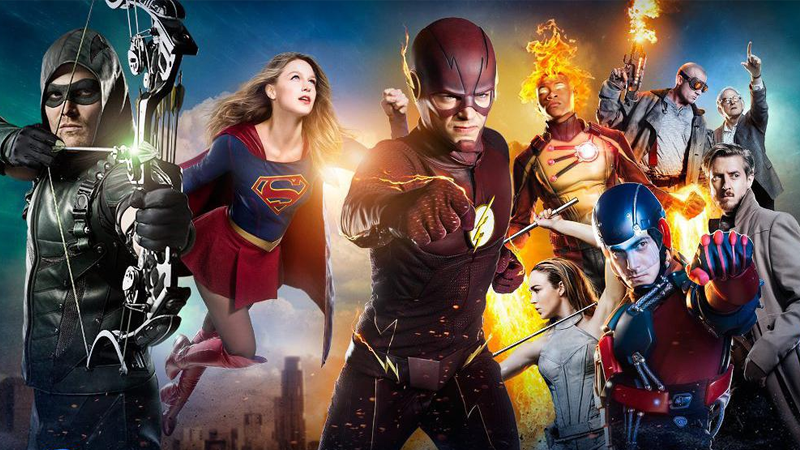
I know that may not sound like ground-breaking news in an era when TV shows based on comic books account for a sizable chunk of programming. There are shows featuring famous superheroes like “The Flash,” “Supergirl,” and “Daredevil.” There are also shows based on non-superhero comics like “Preacher” and “The Walking Dead.” Why is adding yet another show to that list such a big deal?
Well, as someone who has thoroughly read and deeply enjoyed Y: The Last Man, I can attest that this is one of those comics that is special for all the right reasons. It’s compelling, dramatic, mysterious, and emotional on so many levels. It doesn’t just tell a great story. It builds an entirely new world around a truly catastrophic event.

The premise of Y: The Last Man is simple in concept, but grandiose in implications. One day, all the men in the world just die. They don’t get sick first. There’s no mass pandemic. They all just start bleeding from their mouth and eyes before they keel over and die. It’s not just human men either. Everything with a Y-chromosome just dies.

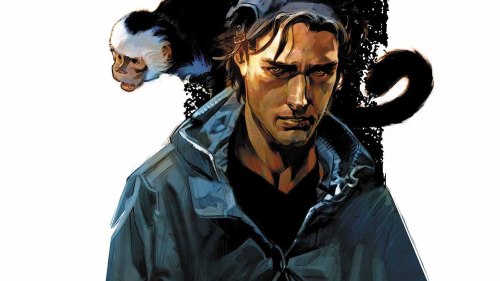
It happens so suddenly and so quickly. It’s not the flashiest apocalypse, but it’s every bit as brutal and traumatic as it sounds. In the midst of this massive gendercide, only one man survives for mysterious reasons. His name is Yorick Brown, an amateur escape artist who also happens to have a male pet monkey, who also survives.
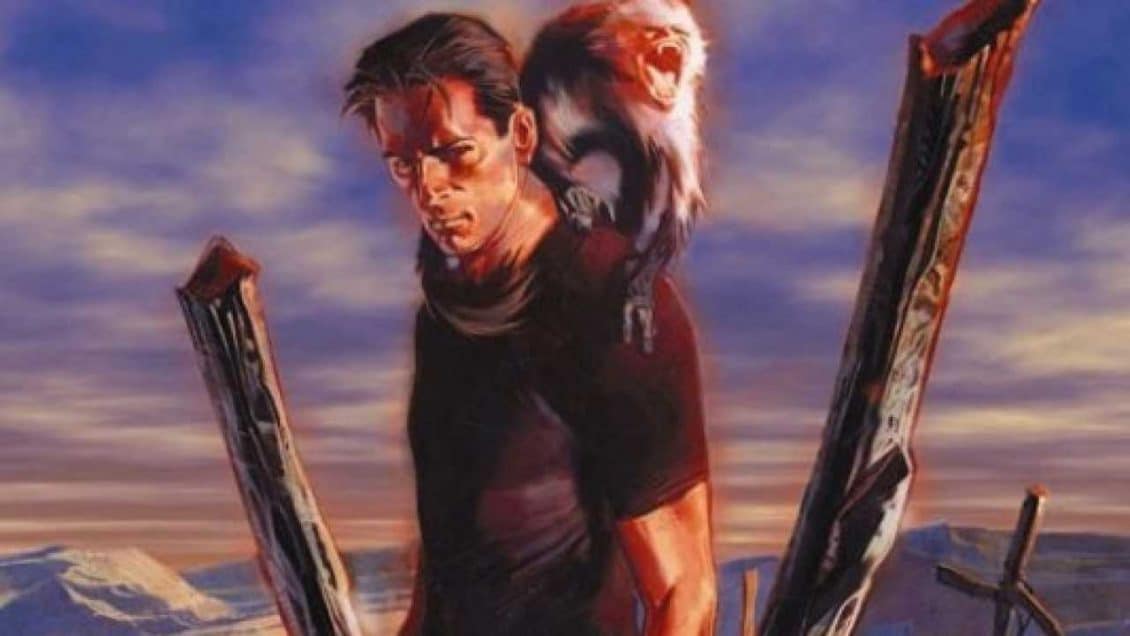
The story about how he survives in this post-apocalyptic world, while also trying to uncover the mysteries of the plague that killed all the men, is full of intrigue, sorrow, hope, and drama. The fact that it manages to achieve all this without zombies or superheroes makes it all the more remarkable.

Add on top quality writing from by acclaimed comic writer Brian K. Vaughan and top-notch art from Pia Guerra and it’s easy to see why this series received multiple awards, including the coveted Eisner Award back in 2008. The fact that Y: The Last Man wasn’t made into a movie or TV show earlier is both shocking and outrageous.

To be fair, there have been multiple attempts to make a movie based on the series, all of which failed for a wide variety of reasons. Given the scope and nature of the story, though, a TV series is probably more suited and there has been interest in making one since 2010.

Now that there’s finally a pilot in the works on FX, a network that is less inclined to water down the harsher elements of the series, there’s are plenty of reasons for comic fans and fans of apocalyptic dramas to be excited. At the same time, however, there are also a plenty of reasons to worry.

Had this been announced five years ago, I don’t think those worries would’ve been major. Then, gender politics began getting exceedingly heated. From scandals born from video games to new concerns about female representation in movies to the anti-harassment movement, things have gotten a lot more hostile between genders.

This is an era where every action between men and women are subject to greater scrutiny. It’s an era where attempts at rational discussion are overshadowed by ever-present outrage. Buzzwords like mansplaining, social justice warrior, soy boy, and toxic masculinity are now part of our lexicon. I’ve expressed my dismay over such terms and why they’re empty in meaning, but I don’t expect them to disappear anytime soon.
It’s because of these ongoing trends in gender politics that I’m concerned about what form Y: The Last Man will take in this era. I don’t expect a perfect, panel-for-panel recreation of the 60-issue comic series. That’s not always necessary, as the success of “The Walking Dead” has proven.

However, I do worry that the greater meaning and dramatic impacts of the story will get lost, somehow, under the weight of ongoing gender politics. Some of those concerns are even articulated in the Hollywood Report’s announcement. Mr. Vaughan is even quoted as saying this when he met with potential show-runner, Michael Green.

“When [Green] first pitched his take on it to Nina Jacobson and me a long time ago, he came in saying he wanted to do something about toxic masculinity. It felt very relevant, and unfortunately, I think it’s only become more relevant with each passing day. His take on it was really brave and very different, but exciting as well. I really admire how audacious he’s been with his translation.”

It’s the bolded part that really has me worried. I’m not entirely surprised that producers of the show would want to tap into ongoing debates about toxic masculinity, no matter how asinine a term that might be. Like it or not, it is a relevant issue and for a premise that involves killing nearly all the men on the planet, it’s going to influence the story.

It’s just a matter of how different those involved want to make the narrative in Y: The Last Man. What matters most, however, is keeping with the overall theme of the story. Y: The Last Man is not just about an apocalypse involving gendercide. It’s part of a much larger world full of colorful and, at times, eccentric characters.

What happens to these characters is downright traumatic, as is to be expected in the face of a global apocalypse. The world, as they know it, is shattered. Their sons, fathers, husbands, and brothers are all dead. The pain, the loss, the sorrow, and the anger surrounding that trauma is what helps drive the story.

That’s especially true of the lone male survivor, Yorick Brown. In the comic, he’s not a superhero or even a multi-talented super-genius. In fact, he’s painfully human and downright inept at times, especially compared to some of his supporting cast. However, he never comes off as a whiny beta male or a brutish meathead. He’s the kind of character we see in real men throughout the real world.

Any effort to subvert that by turning him into some sort of superhero or some beta male weakling will remove a core aspect of Yorick’s appeal, not to mention the appeal of the overall story. It’s not just Yorick’s story either. The female characters in this story are every bit as rich and diverse, but as we saw with the female characters in “Star Wars: The Last Jedi,” that can be badly mishandled.

There are no Mary Sues in Y: The Last Man. There are no Lara Crofts or Wonder Womans either. These characters, especially Yorick’s sister, Hero Brown, and his bodyguard and traveling companion, Agent 355, are all as human as he is. They fight, struggle, fail, and suffer like real people navigating a traumatic apocalypse.

That’s not to say there aren’t some elements of gender politics in Y: The Last Man. There are aspects of the story that lend plenty of fodder to the radical feminist part of the political spectrum. There are a few characters who go so far as to celebrate the death of all men. The fact that some women in the real world have advocated killing all men shows that this sentiment is very present.

At the same time, there are parts of Y: The Last Man that will appeal to the men’s rights crowd, as well. The way society collapses with the death of all the men will give plenty of credence to those seeking to highlight men’s role in society. As with the radical feminists, though, it might be tempting to take it too far.

The story is not defined exclusively by toxic masculinity or radical feminism. It’s a story that puts men, women, and society in an extreme situation that brings out the best and worst in them. That would be the ultimate failure for a show like this and an egregious insult for a series as celebrated as Y: The Last Man. If it becomes driven by gender politics and not the spirit of the actual story, then that’s tragedy for all genders.

 

Leave a comment

Filed under Comic Books, Jack Fisher, Superheroes, gender issues, sex in society, sexuality

Five TV Shows That Could NEVER Be Made Today (Thanks To Political Correctness)

It’s amazing how much our culture can change in such a short period of time, relatively speaking. It wasn’t that long ago that mixed-race couples were considered scandalous, depicting a toilet on a TV show was taboo, and Bill Cosby was a respectable public figure. Whether it’s decades, years, or just a few weeks, things can change quickly.

That change, however, isn’t always logical or in the right direction. Hell, I’m still trying to figure out the appeal of fidget spinners. While I like to think that most change in society is progress, I don’t deny there are instances where we all take a step backwards and sometimes fall on our asses.

This brings me TV, an undeniable catalyst for cultural change. For more than a half-century now, TV shaped, re-shaped, and upended our culture in all sorts of ways. From Elvis’ scandalous hips to the rise of music videos to shows like “Breaking Bad,” TV has been a force for better, for worse, and for just pure entertainment value.

There have been any number of shows, specials, and moments from TV that have come to define our culture. However, there are some shows that, if they happened today, would generate a very different response than they did when they first aired.

I’m not just talking about shock value or controversy either. I mean that if some these shows debuted in the current year, they would generate the kind of outrage, whining, and protests that flood social media and spur the kinds of debates that can only ever end with someone comparing someone lese to Nazis.

These are sensitive times for reasons I don’t think I have to articulate. We’ve made progress in some ways, but may be regressing in others. Some blame feminism. Some blame toxic masculinity. Some blame greed, bigotry, or political correctness. Some even blame the illuminati, but that may be pushing it.

Everyone seems to see something wrong in the culture of the past and the present. Everyone likes to blame someone or something different. More often than not, it’s a confluence of forces that make certain TV shows of the past ill-fit for the present.

Some of that is due to seriously outdated views and stereotypes. It’s entirely understandable why those shows would never work today. Most sensible people wouldn’t argue that. There are some shows, however, that would generate enormous outrage for petty, asinine reasons.

What follows is a list of classic TV shows that, whether due to content, style, or theme, would never air today. It would just be too controversial and not necessarily for the right reasons. It may reflect a lot about the sensitive nature of our culture today, but in many respects, it also shows just how erratic our collective tastes can be.


“All In The Family”

This one should be pretty obvious. “All In The Family” was already controversial in its day. It subverted the whole idea that a father figure in a sitcom should be respectable, upstanding, and just. Archie Bunker is none of those things and the show was memorable because of it.

Much of the show was built around Archie being a bigot, but a lovable bigot. In this day and age, that sounds like an oxymoron. At the time though, the early to mid 1970s to be precise, it worked for the same reason Sheldon Cooper works in “The Big Bang Theory.” You can be an asshole in a sitcom, but you can still be lovable.

Unlike Sheldon Cooper, though, making Archie’s bigotry lovable today is next to impossible without making him a B-list villain in a Tyler Perry movie. In nearly every episode, he says a line that would’ve caused legions of anti-racist, anti-sexist, anti-bigot crowds everywhere to erupt on social media. Anyone who even pretended to laugh at that show would be crucified as a Nazi sympathizer.

Beyond Archie Bunker’s bigotry, though, the overall themes of the show would be enough to make it too controversial for TV. The show routinely mentions “the good old days.” Today, though, that idea has been taken to mean the days when people could be assholes to minorities and get away with it. However anyone may feel about the show or its message, it just would just cause too many shit storms to air today.


“South Park”

I know this seems odd because “South Park” is still on the air, having just completed its 21st season. However, even long-time fans of the show can probably appreciate why it should be on this list, especially when you consider how different the show was in its early days.

Even back in the late 90s, this show generated more than its share of controversy for its vulgarity, profanity, and tendency to kill Kenny every episode. It’s the finer details of those controversies, though, that ensure the “South Park” we saw in those earlier seasons could never air today.

Eric Cartman alone would’ve made the show too controversial. Like Archie Bunker, his overt racism, anti-Semitism, and attitudes towards the poor would’ve triggered plenty of outrage. Add depictions of sacred religious icons and characters like Big Gay Al to the mix and the show wouldn’t have made it past the first episode.

The fact that “South Park” is still on the air is less a testament to its staying power and more a testament to its ability to adapt. It is not the same show it was when it debuted in that it doesn’t confront controversy the same way it used to. Even with that adaptation, it still couldn’t debut today, not with someone like Eric Cartman on the cast.


“Two And A Half Men”

This is another show that ended in 2012, which isn’t that long ago in the grand scheme of things. Even so, a lot has changed since “Two and a Half Men” debuted in 2003 and not just with respect to Charlie Sheen’s public persona. In terms of the premise and structure of the show, it could never air today without generating way too much backlash.

This is one of those shows that would enrage both feminists and men’s rights activists, alike. Beyond Charlie Harper’s blatant womanizing, treating nearly every female character a disposable sex toy, there’s also his overly emasculated brother, Alan. In addition to having an ex-wife who routinely screws him over, Alan is needy, submissive, and constantly mooching off of everyone around him.

Even by beta-male standards, Alan Harper is an affront to any man with any measure of self-respect, just as Charlie is an affront to any woman with a shred of feminist inclinations. Granted, that didn’t stop the show from being funny. I admit I loved this show while it was on, even after Charlie Sheen got replaced by Ashton Kutcher. However, its brand of humor would just never work if it aired today.

That says nothing about the depiction of the dim-witted kid, Jake Harper. His depiction would come off as more tragic than lovable than it did in 2003. In terms of the sheer volume of people this show would offend in the current year, “Two and a Half Men” is in a league of its own.


“Baywatch”

First off, I need to make clear that I’m not referring to the sub-par movie that never should’ve been made in the first place. I’m referring to the original “Baywatch” TV show that debuted in 1989, much to the joy of straight heterosexual males everywhere. The show, with its premise built around beautiful women in bikinis and David Hasselhoff’s chest hair, had plenty of appeal.

That appeal is still there today. There’s always appeal for beautiful women and manly men. However, these days it’s become distressingly taboo to admire beautiful women in any capacity that isn’t associated with Wonder Woman movies. We’re at a point where just looking at a beautiful woman is considered harassment by some people.

It’s for that reason that “Baywatch” would never work today. I can already imagine the various angry protests it would incur. People will claim the show contributes to female objectification, rape culture, toxic masculinity, and all sorts of buzzwords meant to make anyone feel guilty for committing the terrible sin of admiring a beautiful woman.

I’ve made clear how absurd this trend is. However, I don’t see it changing anytime soon. As a result, “Baywatch” would just be way too controversial and would probably draw the ire of every feminist or uptight religious zealot with internet access. It’s sad that this world would deny us a show that so nicely depicts Pamela Anderson’s bouncing breasts, but that’s the world we live in.


“Married With Children”

Once again, this show finds a way to be relevant on this site. I’ve mentioned it before in breaking down other topics. I’ll probably mention it again because it touches on so many important aspects of men, women, and family life. Despite that relevance, there’s no denying that “Married With Children” could never be made today.

The list of people this show offended, beyond the angry woman that tried to get it canceled, is as vast as it is comprehensive. This show cracked jokes about women, teenagers, marriage, genitals, animals, fat people, minorities, transsexuals, homosexuals, and pretty much every other minority group you can imagine.

It cracked these jokes in the backdrop of a sitcom that went out of its way to subvert every feel-good family drama that ever existed, so much so that it was originally called “Not The Cosbys.” In many respects, “Married With Children” went even further than “South Park” and “Two and a Half Men” in crafting a sitcom around every offensive trope in the book. It did this with a bravado and glee that you can’t help but respect.

That kind of antipathy to everything that’s supposed to make a sitcom endearing is a big part of what made “Married With Children” so successful. It came along at just the right time to subvert existing trends in TV, creating characters and icons that were raw, unfiltered, and offensive. That timing is also why it could never be made today.

Between the fat jokes, Al joking about shooting his wife, and Kelly Bundy being a stereotypical dumb blond, “Married With Children” would find a way to upset everyone. However, I still think those same upset people would laugh at the show. It was just that funny. It’s a big part of why the show still ranks as one of my personal favorites.

Even if “Married With Children” could never be made today, it still reflects an attitude that I think many people feel whenever anyone gets upset over a TV show. In a sense, it serves as the model for how a show can be so offensive, yet so funny. The fact we’ll probably never see anything like it again makes it all the more special.


4 Comments

Filed under Current Events, gender issues, sex in media, sex in society

Truth, Lies, And Why “Daria” Is More Relevant Now Than Ever Before

For the past couple of days, I’ve been talking about the best and worst when it comes to fictional female characters. Since I deal in fictional characters as an aspiring writer, it’s a relevant topic of discussion. I want to create great female characters for my novels. I think I’ve made some strides with novels like “The Final Communion” and “Holiday Heat,” but I always feel there’s room for improvement.

That brings me back to Daria Morgendorffer from the classic MTV show, “Daria.” In both my lists discussing the best and worst female characters of fiction, “Daria” found a way to the top of the list. There’s a damn good reason for that too. Daria, as a character, represents something that is more relevant now than it ever was in the late 90s.

As I said in my past posts, Daria is one of those characters who was just ahead of their time, but not in a Nikola Tesla or Elon Musk sort of way. She came during an era when dial-up internet was still popular, boy bands were still relevant, and pagers were still in use. It was a strange and different time.

It was also a time when concepts like “alternative facts” and “fake news” were more associated with skits on “Saturday Night Live” than actual concepts that the general public has come to dread. In that sense, Daria is downright prophetic in the sense that she highlights a concept that become increasingly obscure over the past decade.

Throughout the five seasons of “Daria,” as well as two movie specials, one Daria’s most defining traits is her ability to point out the harsh truth that nobody wants to acknowledge. She doesn’t shy away from it. She doesn’t celebrate it either. She just points it out and lets the harsh truth do its thing.

For the overall narrative of this series, this is kind of necessary because Daria is often surrounded by those who constantly avoid the harder truths of life. Sometimes, as with air-headed dumb-asses like Kevin Thompson and Brittney Taylor, it’s out of ignorance. Other times, as with her sister Quinn and her eccentric teachers, it’s out of hopeless self-delusion.

Daria, being an outcast who isn’t afraid to think for herself, sees all of this from a distance and isn’t afraid to point it out. She doesn’t care that it alienates others. Even her sister, Quinn, refused to publicly acknowledge that they were even related until the final season.

Her parents constantly think something is wrong with her. Her teachers and peers constantly think she’s weird. Everyone thinks there’s something wrong with her. Daria even acknowledges that. However, as crass and callous as she may be, Daria may actually be the most sane person in her world.

This is best shown in Season 4, Episode 47 entitled, “Psycho Therapy.” In this episode, Daria’s family undergo a psych evaluation as part of a screening process for her mother’s promotion. It makes for some odd and entertaining escapades, but the most revealing moment comes when he doctors reach a remarkable, albeit unsurprising conclusion.

Daria, despite being so emotionally withdrawn and overtly sarcastic about everything around her, is by far the most well-adjusted person in her family. She understands and acknowledges all of her family’s quirks, but she doesn’t obsess over them or lament over them. She just accepts them and moves on with her life. I’m not a psychologist, but that’s way more healthy than we can expect of most teenagers these days.

In fact, Daria might as well be a unicorn dipped in gold with diamond-encrusted hoofs. She isn’t just accepting, understanding, and well-adjusted to her surroundings. She actively thinks for herself and no one else. She doesn’t shy away from the facts, nor does she avoid their implications. She is, by all accounts, the very antithesis of this current era of buzzwords, fake news, and alternative facts.

That’s what makes her so much more relevant now than she was back in the early 90s. She came at a time when people who said the cold, hard truth didn’t get it twisted through internet memes, social media feeds, and hashtags. Daria doesn’t do beat around the bush or try to twist the story. If something is true, honest, and blunt, then that’s the end of the conversation.

In an era where everyone, from our politicians to our gym teachers, has to have some kind of personality, Daria Morgendorffer is a breath of fresh air and from 1999 no less. What’s that say about our current state of affairs? I could spend the next 38 blog posts discussing it, but that wouldn’t be very sexy for a blog run by an aspiring erotica/romance writer.

I will say, though, that the attitude Daria embodies is something that’s a lot more critical now than it was in 1999. We live in an era where everyone seems intent on joining a trend, becoming part of a movement, or denigrating those who oppose your movement. Daria, being the consummate realist and independent thinker, would roll her eyes at both.

The idea of someone who just thinks for themselves shouldn’t be such a radical concept, especially when it was the core of a successful animated show that ran for five seasons on a network best known for documentaries about teenage mothers. However, that idea couldn’t be more important in 2017.

We current live in an unpleasant convergence, of sorts, where truth and brutal honesty are easily circumvented by fake news, alternative facts, and online trends. It’s too easy for someone to insulate themselves from the harsh realities of life. We all need a Daria Morgendorrfer in our lives to keep us anchored and too many don’t have one.

Being the optimist I am, I believe Daria’s words of wisdom will one day pierce the many veils of bullshit that permeate our culture at the moment. It may take a while. It may be painful, arduous, and distressing in the process. However, that’s exactly why it’s worth doing.

Thankfully, Daria herself gives us some memorable words of wisdom to make the process easier. In the spirit of celebrating everything Daria represents, here it is.

4 Comments

Filed under Jack Fisher's Insights