Every week, the world gets a brief reprieve from being a chaotic mess when a fresh crop of comics enters the world. Most call it Wednesday. Others, like myself, call it New Comic Day. It’s like a weekly holiday, minus the decorations, gift giving, and crowded airports. On this unique day, I pick one particular comic to single out as worthy of making this day feel extra festive.
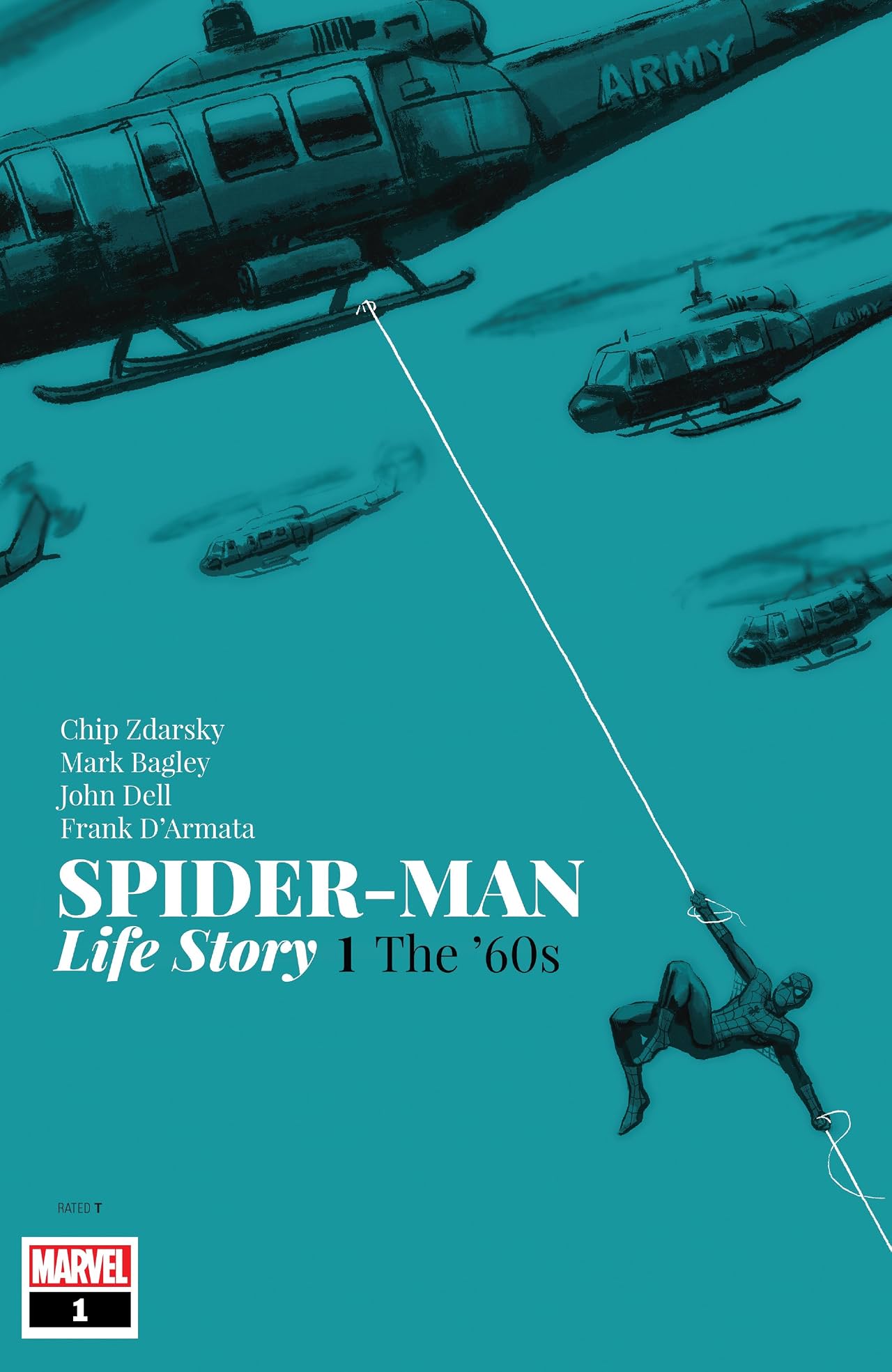
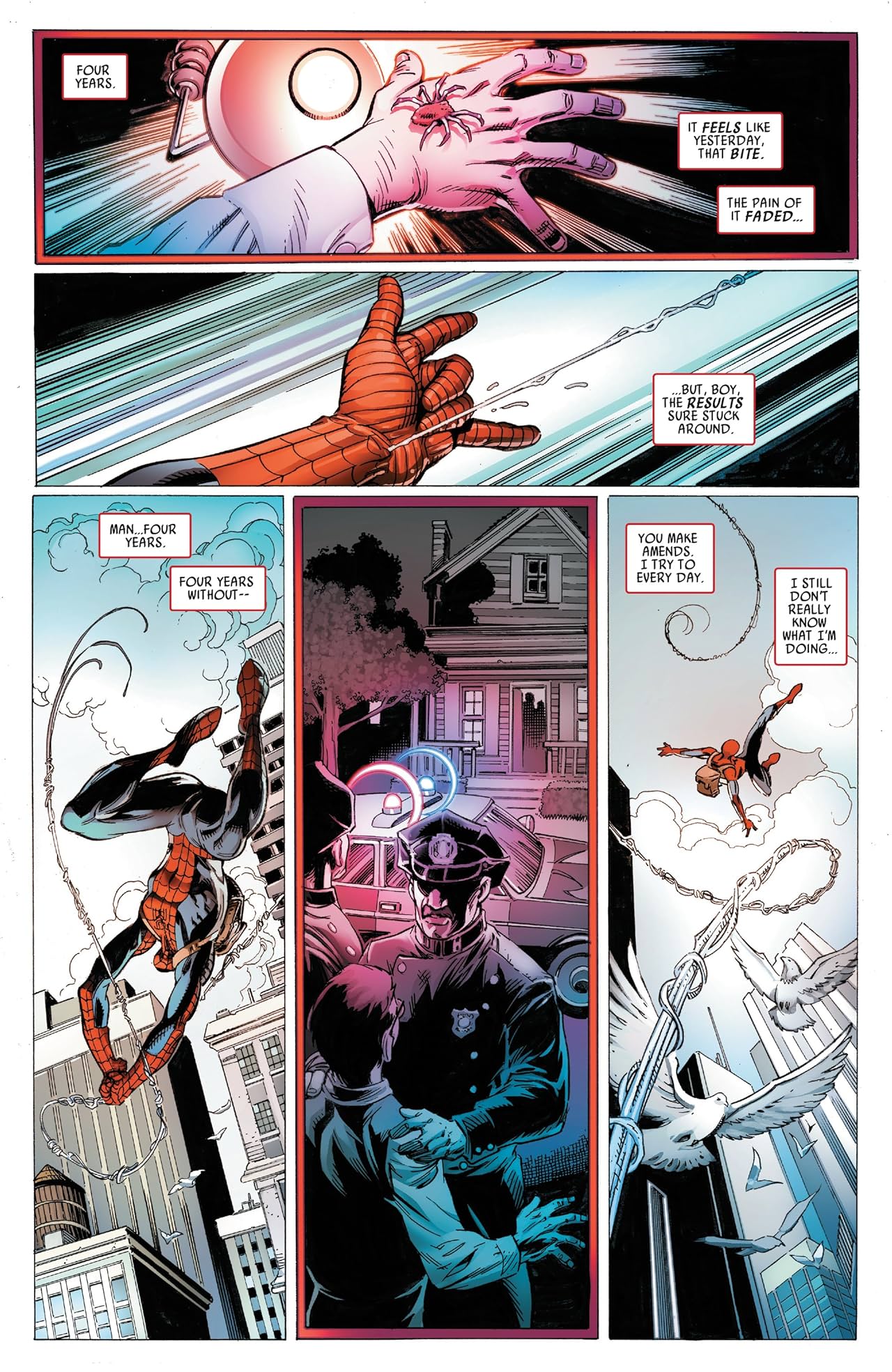
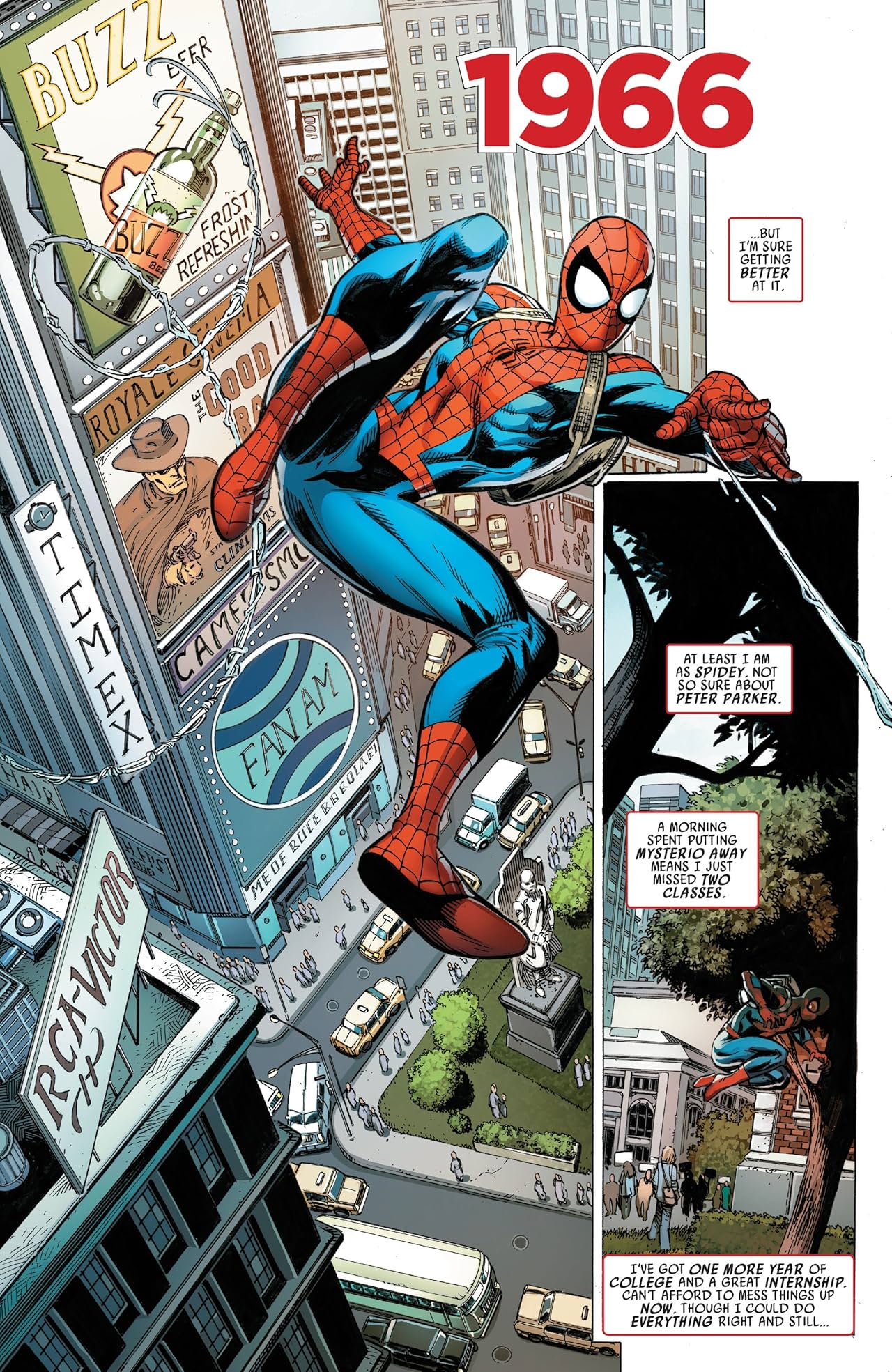
This week brings us a special gem from everyone’s third favorite friendly neighborhood Spider-Man, after Spider-Ham and Spider-Gwen. It comes courtesy of one of Marvel’s top scribes in Chip Zdarsky and one of their top artists in Mark Bagley. While there has always been an abundance of Spider-Man comics, “Spider-Man: Life Story #1” stands out in a uniquely charming way.
For much of Spider-Man’s contemporary history, there has been an ongoing challenge, of sorts, when it comes to keeping him relevant. Writers, artists, and movie producers keep having to update Spider-Man’s story, somewhat, so that he feels modern. That’s not easy for a character who first debuted in 1962, courtesy of Stan Lee and Steve Ditko.
Over the years, Peter Parker has found himself reinvented into many eras, from disco to social media. Marvel has always been somewhat coy about how characters like Spider-Man can show up in these eras and not seem to age, but that’s exactly what makes “Spider-Man: Life Story #1” so unique.
It doesn’t try to put Peter Parker in a more modern context. It doesn’t try to radically change who he is so that he fits into a more familiar world. Instead, Zdarsky and Bagley do the complete opposite and just let his story unfold within the era that first created him.
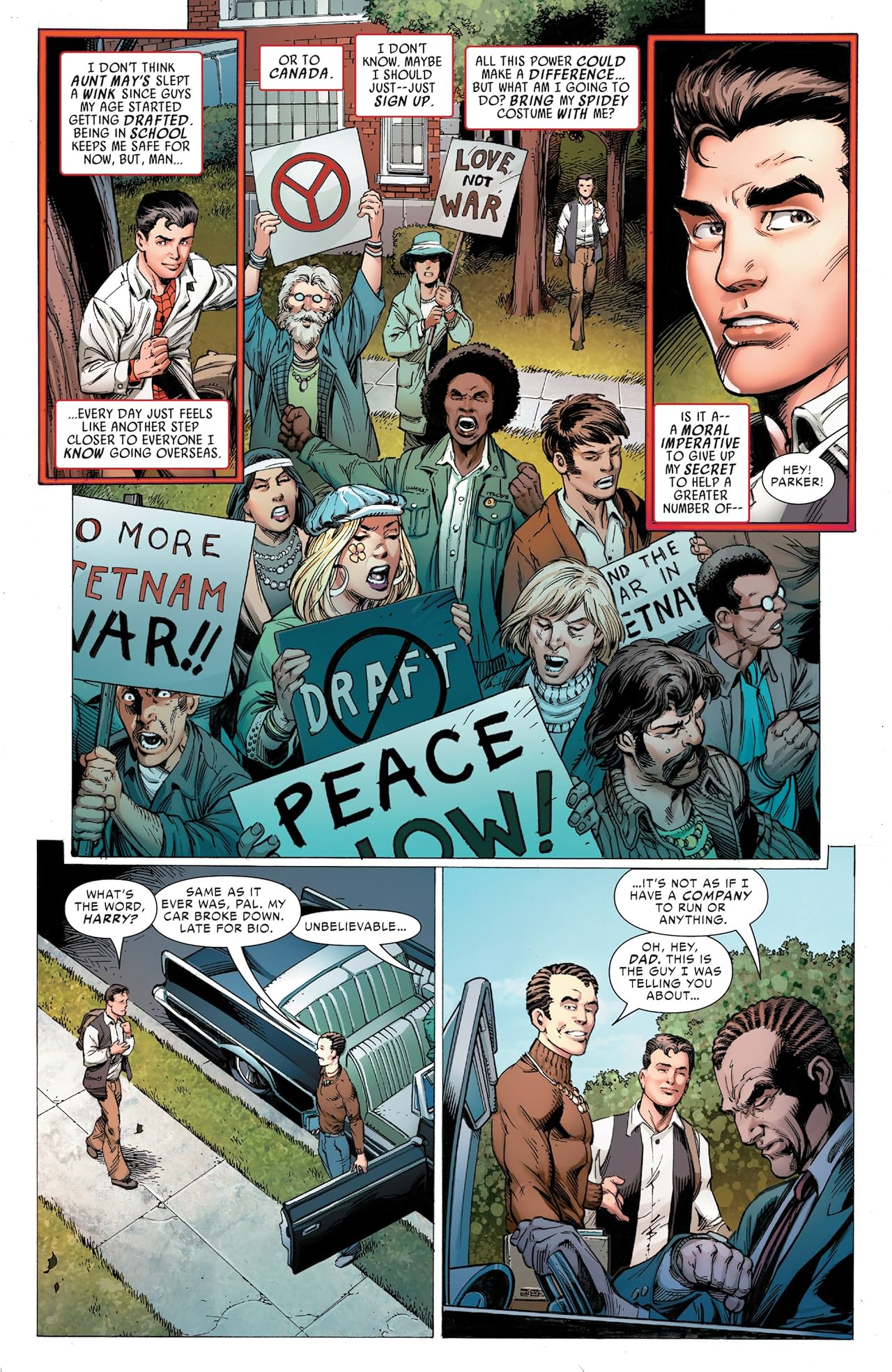
There’s no sliding timescale here. The year is 1966. Peter has had his Spider-Man powers for four years. He’s in college, the Vietnam War is ongoing, hippies are starting to grow in population, and cigarette’s are still advertised for their health benefits. This is the world in which Spider-Man was initially birthed and this is the world in which his story unfolds.
It’s a familiar story, one that frequently relies on Peter trying to balance his life as a college student with his superhero life as Spider-Man. However, that familiarity is exactly what helps “Spider-Man: Life Story #1” work so well as a concept and a setting. While it isn’t bound by the same 50-plus years of comic book continuity, it is bound by the circumstances of the mid-1960s.
This is a very different time for superheroes and non-superheroes alike. It’s not just that soda costs a quarter and the idea of alternative facts can be attributed to bad acid trips. This is a time of major social upheaval, especially in places like New York. Issues surrounding the Vietnam War aren’t just affecting Peter. They’re affecting his friends and other heroes, like Captain America.
It’s a world in which Peter struggles with choices that don’t just involve being on time for class. He’s seeing friends/bullies like Flash Thompson get drafted into a war that is just starting to go poorly. He’s watching other superheroes who don’t have to deal with J. Jonah Jameson make difficult choices about whether to get involved. What does an aspiring superhero do in that kind of world?
It makes for an interesting and dramatic backdrop for “Spider-Man: Life Story #1.” Peter still deals with typical Spider-Man issues, like getting to class on time and pursuing a blossoming relationship with Gwen Stacy. There are also a few battles with familiar enemies, namely the Green Goblin, who’s an asshole in any era. However, neither Peter Parker nor Spider-Man are bigger than the issues of the world around them.
In many respects, it brings out a more balanced Spider-Man. His struggles in dealing with the times and circumstances around him makes Peter Parker feel more real. It has always been part of his appeal, going back to the era of Lee and Ditko. He’s not some billionaire playboy or legendary soldier. He’s just a nerdy kid who got super-powers by accident.
This is a Peter Parker who isn’t bound by the old Comic Code Authority or aversions to political undertones. Zdarsky and Bagley let him live and react to the world of 1966 in a way that’s both believable and engaging. Essentially, they let him be the character that Lee and Ditko created within the times of his creation.
Those turbulent times set up even more drama as issues like the Vietnam War and the growing mistrust between people and authority start to grow. Peter’s youth puts him in the front row of the emerging chaos while the adults around him, including other superheroes, find themselves affected in ways that would’ve abhorred 1960s censors.
In a sense, the times and the larger world of “Spider-Man: Life Story #1” is the biggest appeal of the story. It allows complexity and drama that isn’t typical of a modern Spider-Man comic, but somehow brings out the best in Peter Parker and those around him, even if J. Jonah Jameson is still an annoying blowhard.
At this point, hoping for more is just being greedy. With a sequel to “Venom” in the works and other spin-off projects in the pipeline, it almost feels wrong to hope for something specific. Marvel, Sony, and Disney are already giving us so much. What more can they possibly offer?
Well, I’d like to make the case that there is one particular branch of the evolving Spider-Man universe that warrants greater attention. It’s something that was already hinted at within “Into The Spider-Verse” and I feel she could have a greater than any other Spidy-centric media. The timing is right. The market is ripe for her ascension. It’s just a matter of building on foundation that is already rich with potential.
I’m referring to Spider-Woman, also known as Gwen Stacy, but best known as Spider-Gwen. In the mythos of Spider-Man, she’s a fairly recent development. However, her rise to prominence has been nothing short of spectacular and I believe she has done plenty to warrant her own place in the franchise.
Most Spider-Man fans know the name, Gwen Stacy. She has had a prominent place in the Spider-Man comics for decades. However, like Miles Morales, Spider-Gwen emerged in an alternate universe where known characters are different and events unfold differently. Her sequence in “Into The Spider-Verse” offered a brief overview of who she was, but her story is far richer than that.
That story still contains many of the iconic themes associated with Spider-Man. Issues like power, responsibility, and dealing with J. Jonah Jameson are a huge part of Spider-Gwen’s story. However, there are a few distinct variations that help set her apart and it’s because of those traits that I believe she can carry her own movie.
What follows are just a few reasons for why I feel that way. There are probably plenty more that other Spider-Gwen fans will resent me for skipping. I understand and accept that responsibility. Since these are such great times for Spider-Man fans, I like to think we don’t need that many reasons to give someone like Spider-Gwen her own movie.
Reason #1: She Sets Herself Apart From Peter Parker (Aside From Being A Woman)
If the success of “Into The Spider-Verse” taught us anything, other than the inherent appeal of cartoon pigs, it’s that you don’t have to be Peter Parker in order to embody the themes of Spider-Man. Miles Morales did a lot to set himself apart in terms of personality, circumstances, and abilities. Spider-Gwen does plenty of that too, but she takes it even further.
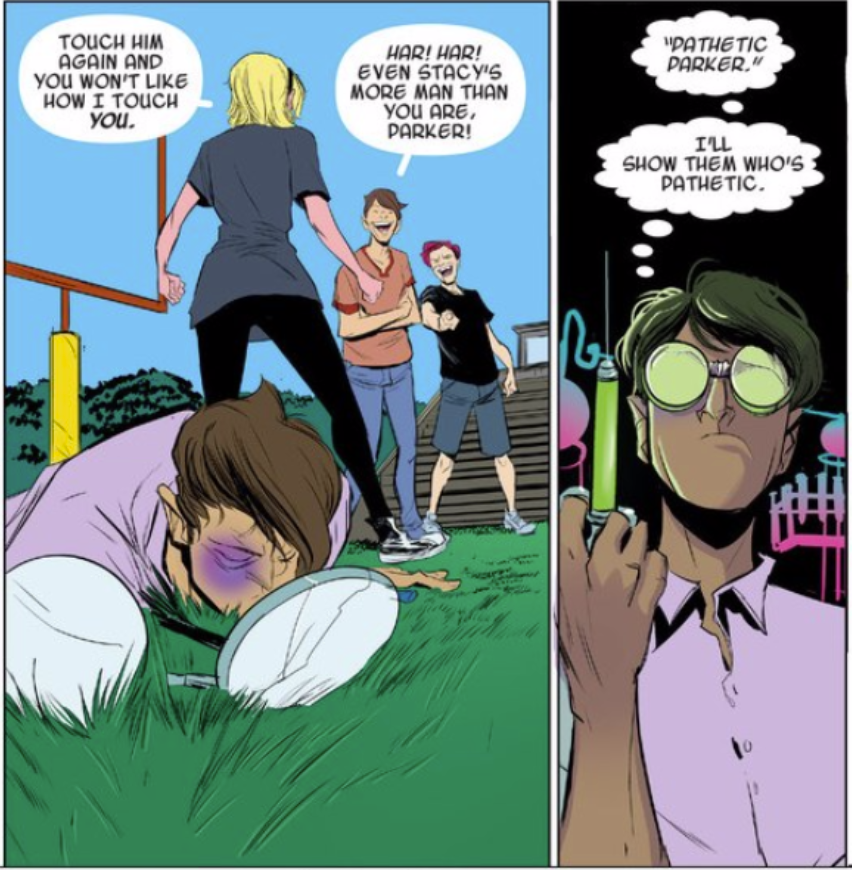
In the world of Spider-Gwen, the story of Gwen Stacy unfolds very differently. She’s not a nerd like Peter. She’s not a biracial teen trying to fit in at a new school. She’s the same sweet girl that Spider-Man fans know from classic stories. That all changes when she gets bit by that radioactive spider instead of Peter.
The Gwen Stacy that emerged after is still Gwen, but she goes about utilizing her powers very differently compared to Peter. They change the way she carries herself. She doesn’t approach them the same way as Peter or other Spider-Man characters. She follows her own path, complete with her own sense of power and responsibility.
Her approach is not radically different from that of Peter Parker, but it still feels distinct. How Gwen becomes Spider-Woman and how this affects her, as a character, is not a story that can be told with Peter Parker, Miles Morales, or any other character, for that matter. The fact she’s a woman at a time when female superheroes have been subject to greater scrutiny is just a nice bonus.
Moreover, the story of Peter Parker has been told and retold many times, already. There have been three distinct timelines with threedifferentactors taking on the role. There’s only so much more that can be done at this point. Gwen Stacy is a different story, but one that’s familiar enough to fit into the greater Spider-Man mythos.
Reason #2: Her Story Brings A Unique Set Of Challenges (Aside From Being A Woman)
Being a masked vigilante is hard. Five decades of Spider-Man comics and three movie franchises have done plenty to establish that. However, Peter Parker never had to deal with being a vigilante while having a cop for a parent. He also never had to be the prime suspect in the death of a friend that he tried desperately to protect.
Those are just some of the challenges Gwen faces throughout her story in the comics. Unlike Peter, she’s not just another high school student trying to balance her personal life with her superhero life. She faces far greater challenges than not having a date to the prom or showing up late to class.
One of her biggest challenges, throughout her story, revolves around being a vigilante while her father, George Stacy, is a cop with the NYPD. On top of that, he’s initially tasked with arresting Spider-Woman because she’s implicated in the death of Peter Parker. Learning that his daughter is Spider-Woman only compounds that challenge.
There’s a lot of drama in that dynamic. If you want to see how it plays out, I strongly recommend checking out the comic series written by Jason Latour. These challenges are things that you won’t find in a Spider-Man story with Peter Parker. Like her counterparts, Gwen bears many burdens and responsibilities, but having a cop for a father only makes it harder.
At a time when the conduct of the police is under more scrutiny than ever, I think a Spider-Gwen movie could explore those conflicts better than most. Beyond giving Gwen different obstacles, it offers a different perspective on what it means to be a hero and how difficult it is to manage when family affairs get involved.
Reason #3: The (Fitting) Tragedy Of Peter Parker In Her World
It’s impossible to tell the story of Spider-Gwen without telling the story of Peter Parker in her world. Her version of Peter is very different in that not getting bit by that radioactive spider sent him down a darker path. His story is one of tragedy, but it’s the kind of tragedy that complements Gwen’s story and fits perfectly with the themes of Spider-Man.
In many respects, Peter fills the role of Uncle Ben in the world of Spider-Gwen, but not in the same way. It’s not a classic case of failing to stop him from getting hurt by a random accident. Gwen actually went out of her way to protect Peter. Getting superpowers actually made that easier for her. She sees him as her friend and wants to help him.
However, in doing so, Peter makes some fateful decisions that result in his death. It’s not just tragic. It’s gut-wrenching for Gwen. She has to watch this boy she cares about die because he wanted to be more like her. She’s very much responsible for what happened to him. On top of that, Spider-Woman is blamed for his death, thanks to shoddy reporting by J. Jonah Jameson.
This version of Peter is powerful in how it twists the classic Spider-Man narrative without warping it entirely. By helping Peter like she did, Gwen ultimately failed him. That’s a different, but effective way to learn the importance of power and responsibility.
Reason #4: She’s Likable In Many Ways (More So Than Peter)
Even in stories where she doesn’t have powers, Gwen Stacy is a genuinely likable character. She’s sweet, fun-loving, and genuine. She’s the kind of girl you can be friends with and/or fall in love with. She’s honest and blunt in how she deals with people. She’s also compassionate and understanding. Getting superpowers only enhances these traits.
What we saw in “Into The Spider-Verse” was just a small sample of a much richer persona. Her attitude, as well as her ability to connect with others in awkward situations, is plenty endearing. In the comics, we see this manifest in many other ways. From the way she deals with her father to how she interacts with her band-mates in their all-female band, the Mary Janes, is likable on so many levels.
I would go so far as to argue that she’s a lot more likable than Peter Parker, if only because she’s less prone to brooding and whining. Throughout the comics, she ends up in some pretty rough situations, which include being actively hunted by the NYPD and unable to go home to her father after he learns of her identity. It’s rough, but at no point does she just whine about it.
As sweet as Gwen is, she also has grit. She knows how to endure a lousy situation and when the going gets tough, she finds a way to get stronger. She still messes up along the way. In fact, she messes up a lot in the comics, but she learns from her mistakes and she grows along the way.
I’m not saying Peter Parker hasn’t grown over the years, but even after five decades of comics, cartoons, and movies, his growth tends to regularly stagnate. Every time he seems to move forward with his life, he takes a step back, whether it’s undoing a marriage or losing his billion-dollar company.
Spider-Gwen may not have had as much time to grow and regress, but her story has been allowed to evolve in many ways since her debut. That development is full of opportunities. Even though she has only been web-swinging since 2014, she has plenty of material for a great movie.
Reason #5: Her Story Is Not Bogged Down By Continuity
This is more a logistical issue than anything else. Peter Parker has been around since the Kennedy Administration. His story has years upon years of continuity that effectively shackle him from radical change. I’ve mentioned before how all superheroes are subject to these constraints. I’ve even argued that Spider-Man is more inept than most at dealing with them.
With Spider-Gwen, however, there are far fewer constraints and many potential avenues for growth. Her story, and that of her distinct alternate universe, is in its infancy, relative to other superheroes. She hasn’t been around long enough for complications and retcons to accumulate. She can follow many different paths, both in the comics and in the movies.
One of the common complaints that comic fans will levy against a movie is how closely it follows the source material. Since Peter Parker is such an icon, there’s not a lot of wiggle room. With Spider-Gwen, there isn’t much source material from which to deviate. “Into The Spider-Verse” already captured the basics. A full-fledged Spider-Gwen movie will have plenty of flexibility.
There are plenty of other reasons I could list to justify Spider-Gwen getting her own movie. She’s a great character who embodies unique aspects of the greater Spider-Man mythos. Given the current state of the superhero genre, especially with respect to box office returns, I don’t think Sony, Marvel, and Disney need many to make Spider-Gwen their next success story.
I also understand that there are people who don’t share those passions. Some may even see them as childish and foolish. That’s perfectly fine. It doesn’t make them a bad person, by default. It doesn’t even mean I can’t get along with them or agree with them on other issues.
The fact I have to make that disclaimer only makes the current state of affairs more frustrating. I feel it’s more necessary now because I’m about to address a topic has evoked all the wrong emotions for all the wrong reasons. Normally, my first instinct is to avoid such controversy, but since it involves superhero comics, I feel inclined to respond.
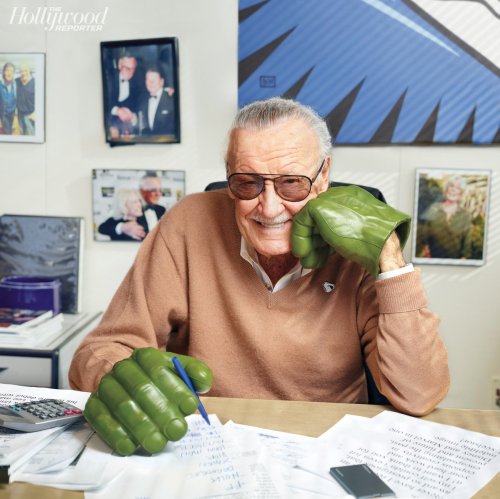
It started late last year with a blog post by Bill Maher, a late night talk show host for the long-running HBO series, “Real Time With Bill Maher.” That blog post came shortly after the death of Stan Lee and, without going too heavily into details, attacked the culture behind comic books and superhero media.
Many took that post as an insult to the legacy of Stan Lee. Having read that post multiple times, I really didn’t get that sense. I won’t deny that I took some offense to it, but I’ve read far more offensive things in the comments section of YouTube videos. The fact that it got such a visceral reaction only skewed the conversation even more.
Then, this past week on his show, Mr. Maher finally addressed the issue again in the closing commentary on his show. If you haven’t seen it, here it is.
The long and short of it is his commentary had less to do with Stan Lee and more to do with people who think comic books warrant serious cultural weight. He goes onto bemoan how people cling to the things they loved as kids as a way of avoiding the adult world. It’s less an indictment on people who like comics and more a criticism of people who whine about adulting, in general.
To some extent, I understand his criticism. There are people in this world who try to avoid adult responsibilities at every turn. They don’t want to deal with the harshness of the real world and cling to fantasies about having superpowers that render those problems moot. Even as someone who loves superhero comics and movies, I think that’s an issue for some people.
For most people though, it’s just fun. Mr. Maher seems to completely overlook that. I don’t care how old you get. Having fun is fun. Comics are a lot of fun to read, follow, and enjoy. The more “serious” pieces of literature that he recommends in his commentary probably have plenty of merit, but they’re not nearly as fun.
The idea that he finds superhero media as childish is understandable. Bill Maher is over 60 years old. For most of his life, comic books and superheroes have been for children. It’s only within the last 30 years that they’ve matured to a point where they appeal to all ages, so much so that they’ve raked in over $20 billion at the box office. You don’t make that much money on childish things.
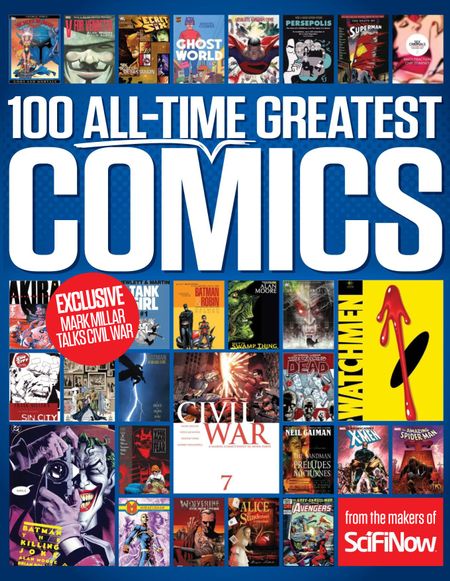
In addition to box office billions, some comics have gained serious acclaim. A select few have even been recognized as some of the greatest literary works in the past 100 years. I doubt Mr. Maher is aware of this because most of these amazing works happened after he became an adult. I imagine that if you were to ask most people his age, they would agree that comics shouldn’t be considered serious literature.
I respectfully disagree with that notion and I know many others disagree as well. That said, I doubt anyone will ever convince Mr. Maher that he’s wrong. He has made his politics very clear on many occasions and I don’t doubt he’ll say other offensive things in the future.
At the very least, I can offer Mr. Maher some perspective. I believe that, if he were to give comics a chance, he would see their literary value. He may still think they’re childish, but I think he would have a greater appreciation for the medium, if only because he sees how it has evolved since he was a kid.
What follows are five comics that I would personally recommend to Mr. Maher. I feel these books would help show just how salient comics can be in terms of society, politics, and art. While I doubt he’ll give them a chance, I hope others who share his sentiments take a moment to see why comic books and superhero media have become such an integral part of our culture.
Watchmen
This is an easy choice and not just because Watchmen routinely ranks near the top as on of the greatest comic books of all time. This seminal work by Alan Moore and David Gibbons actually speaks to the same criticisms that Mr. Maher levied against superheroes. Watchmen is, at its heart, the ultimate deconstruction of the entire concept of superheroes.
This story isn’t just about heroes fighting villains or heroes fighting other heroes. Watchmen is a story with deep, philosophical overtones about what it means to wield power and make peace in a chaotic world. It casts a harsh light on the dangers of relying on superheroes or super-powered beings to solve big problems on the global stage. It’s a sentiment that Mr. Maher himself has made on more than one occasion.
Being a political person, I believe Mr. Maher would find a lot to enjoy about the world of Watchmen. Beyond the art and the complexities of the story, it has a message that goes beyond good guys fighting bad guys.
In many respects, Watchmen was the comic that broke all the rules and ushered the medium into a new era. It proved that a comic could make serious contributions to the world of literature. Between its unique place in the history of comics and the awards it received, I think Watchmen can prove to Mr. Maher that comics can be great works of art that tell relevant messages for the real world.
Sandman
This is another series that routinely gets mentioned in discussions surrounding the greatest comics of all time. Like Watchmen, Sandman pushed the limits on what a comic book could be. It’s not a standard superhero comic. It’s not about heroes searching for some ominous glowing object, which is something Mr. Maher pointed out in his criticism. Sandman is deeper than that.
The writer of Sandman, Neil Gaiman, dared to craft a more mature fantasy. This is a world where mythological figures like Morpheus, Lucifer, and even characters from the bible interact with one another in a complex narrative that provides insight into spirituality, religion, and philosophy.
I believe that insight would appeal to Mr. Maher more than most and not just because he’s a self-admitted stoner. Say what you will about him, but he’s a very intelligent man who went to an Ivy League school. He also majored in English, which I think would make Sandman that much more appealing to him.
The story in Sandman is not something most children will understand or appreciate. Even most adults may struggle to make sense of the various themes that Gaiman explores throughout the book. It’s a powerful story, but one that works best in the medium of comics. I think if Mr. Maher gave Sandman a chance, he would see that.
X-men: God Loves, Man Kills
Even though Mr. Maher singled out superheroes as the most childish element of comics, I believe there are still a select few that would still appeal to him, if only because of his political leanings. Mr. Maher has always identified as a liberal and routinely espouses the value of liberal principles. He grew up watching the civil rights movement unfold and it has clearly had an impact on him.
That’s exactly why a comic like X-men: God Loves, Man Kills would resonate with him. Even though it follows many common superhero themes, this classic X-men story by legendary X-men writer, Chris Claremont, goes much further in linking the struggle of the X-men with that of civil rights.
This story is less about the X-men fighting killer robots and more about confronting the depths of human bigotry. In addition to providing the inspiration for “X2,” it explores a kind of bigotry that feels like it was ripped from the real world. It even throws religion into the mix with the introduction of Reverend William Stryker, a man who has drawn more than a few comparisons with Vice President Mike Pence.
Mr. Maher will probably notice those parallels more than most. He has made no secret of his disdain for organized religion and the people who use it to justify their bigotry. X-men: God Loves, Man Kills tells a story of just how dangerous that kind of religiously-motivated bigotry can get. Even though it’s still a superhero story, it doesn’t hide from the real-world parallels.
Good literature, whether it’s a comic book or a novel, often reflects the controversies of its time. The X-men were created right at the onset of the Civil Rights Movement. Stan Lee has gone on record as saying that elements of the X-men were inspired by real life heroes of the Civil Rights Movement. As both a proud liberal and a critic of religion, Mr. Maher will find plenty to like about this classic X-men story.
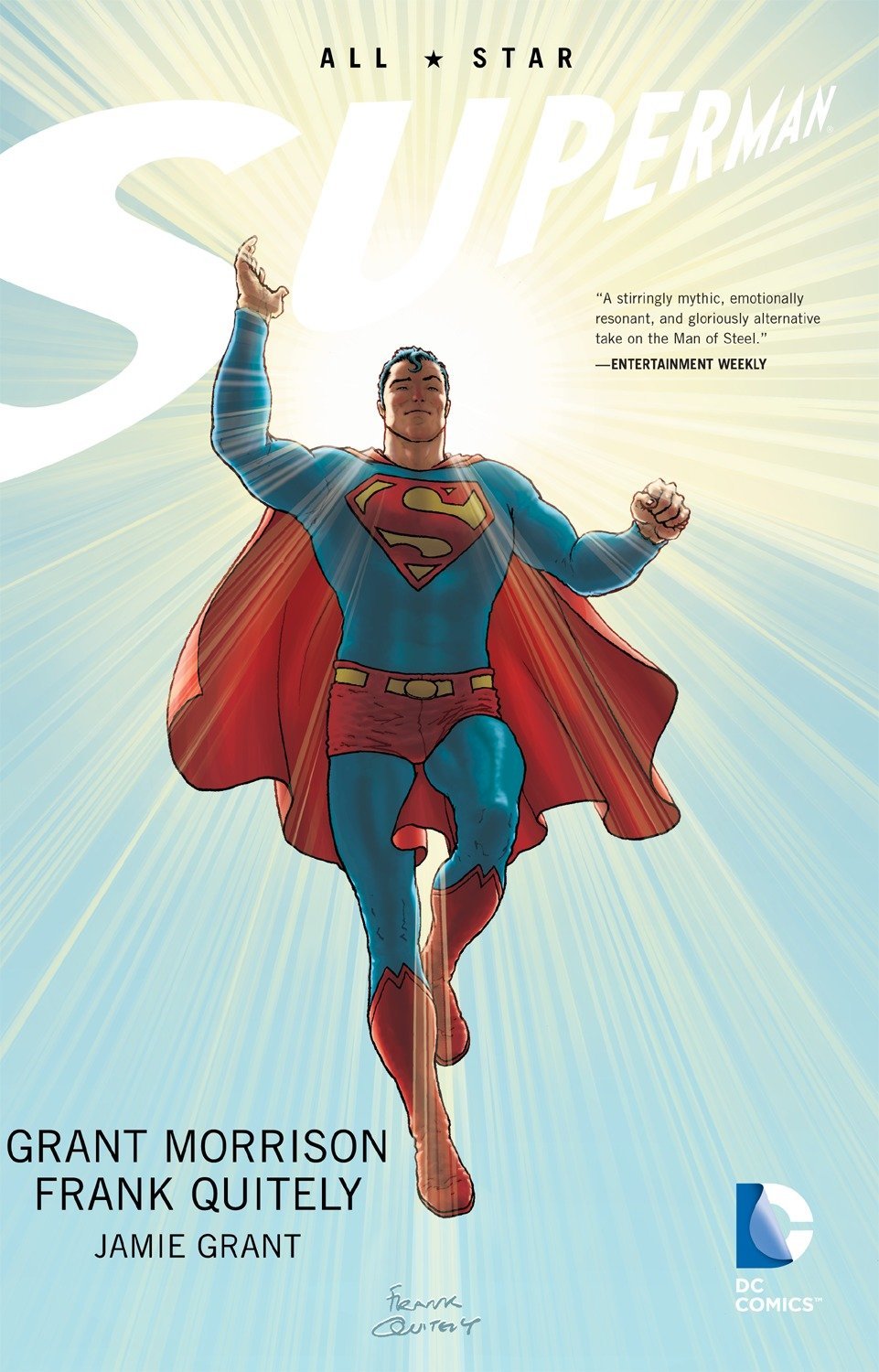
All-Star Superman
This story might be the toughest sell for Mr. Maher. However, I think if any comic can demonstrate the value of superheroes, it’s All-Star Superman. This love letter to Superman and all the fanciful themes surrounding him is a celebration of the ultimate hero. Even if Mr. Maher thinks idolizing heroes is dangerous, I think even he’ll appreciate why Superman is such an icon after 80 years.
What makes All-Star Superman special isn’t in how it depicts the Man of Steel at his best. It’s not just about him saving the day, defeating Lex Luthor, and winning the love of Lois Lane. More than anything else, the story that Grant Morrison and Frank Quietly tell demonstrates just how much Superman inspires those around him.
Throughout the series, there are many great moments that are full of heart, hope, and compassion. Some of it is cartoonishly over-the-top, but it never feels corny. There’s never a point where Superman takes a moment to tell a bunch of kids to eat their vegetables and stay in school. It doesn’t try to make Superman someone he’s not. He’s the ultimate paragon of virtue and this series just runs with that.
To further raise the stakes, this version of Superman is living on borrowed time. As powerful as he is, he has saved the day one time too many. He basically has to do what he can with what little time he has left to make the world a better place. It’s an endeavor that even Mr. Maher can appreciate.
More than once, Mr. Maher has tried to inspire others to be better. Even if his efforts are politically motivated, the will to inspire is something he’s always shown, going back to his days on “Politically Incorrect.” Even if he thinks Superman comics are for kids, he can still appreciate Superman’s efforts to inspire the good in others.
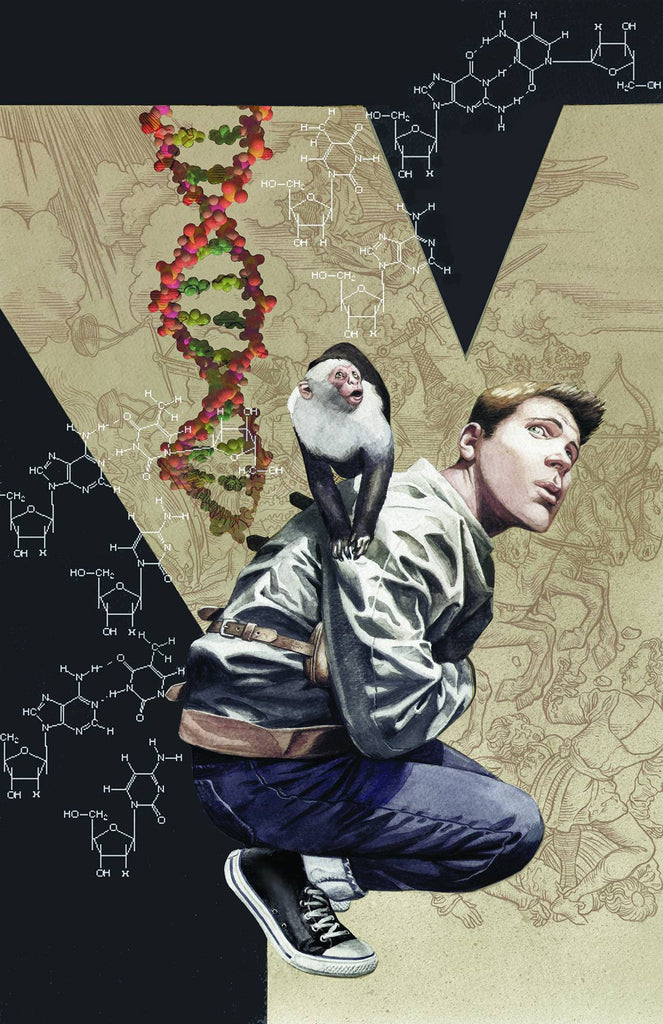
Y: The Last Man
This is another acclaimed comic series that doesn’t rely on superheroes, fancy costumes, or superpowers. At a time when gender politics are such a hot topic, a series like Y: The Last Man is more relevant than ever. This beloved comic by Brian K. Vaughan and Pia Guerra takes issues surrounding gender to an apocalyptic extreme.
As someone who has routinely criticized how the debate surrounding feminism and gender has evolved, I believe Mr. Maher will find a lot to like about Y: The Last Man. This is a story that puts men and women in the ultimate bind. One day, without warning, every creature on Earth with a Y chromosome just keels over and dies. Only one man, Yorick Brown, and his pet monkey, Ampersand, survive.
The story the follows is both a fight for survival and a critical insight into what happens when gender dynamics operate in extremes. The world that Vaughan and Guerra show just how much men and women rely on one another without realizing it. When one is completely removed from the equation, it pushes people beyond the brink.
At the same time, it shows just how resilient people can be in terrible situations. The will to survive knows no gender. It can bring out the best and the worst in someone, but the best is what usually keeps driving us. Mr. Maher has often spoken urgently about issues like climate change. The apocalyptic setting of Y: The Last Man shows why that urgency is necessary.
Again, I don’t expect Mr. Maher to change his mind on much. He has made it abundantly clear in the past that he is very set in his ways. However, if he is genuinely open to seeing the merits of comic books, these titles should help. Comic books may have been for kids when he was a kid. They have since become so much more and their legacy, like that of Stan Lee’s, will continue for generations to come.
In the modern era of superhero movies, Spider-Man is one of the bedrock franchises that has guided the genre through its journey from niche market to global box office dominance. Alongside the first “X-men” movie, Sam Raimi’s original “Spider-Man” is credited with ushering in this golden age of superhero cinema.
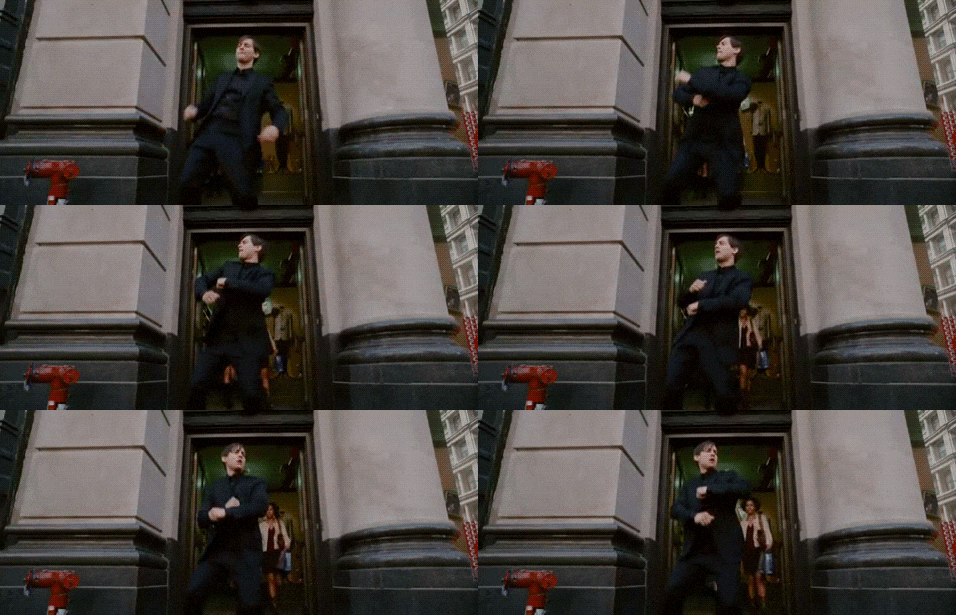
It has been a bumpy road at times. We had high points with “Spider-Man 2” and not-so-high points with “Amazing Spider-Man 2.” Regardless of how these movies fared, the story of Peter Parker shouldering the power and responsibilities of Spider-Man has become ingrained in pop culture. We still could’ve done without that awful dance scene, though.
Given all the weight Spider-Man has for the genre, a movie like “Into The Spider-Verse” has a lot going for it and just as much working against it. The story of Peter Parker has been done, redone, and overdone so much that it feels like there’s no room left for nuance. Well, “Into The Spider-Verse” definitively proves there’s still untapped potential and it runs even deeper than anyone thought.
I don’t want to spoil much about this movie, but I will spoil this. “Into The Spider-Verse” is every bit as awesome as critics and audiences alike have said. It’s a truly groundbreaking achievement for superhero movies, animation, and the Spider-Man franchise. The fact that it managed to do this without being part of the Marvel Cinematic Universe makes that accomplishment all the more remarkable.
This movie succeeds on so many levels. It takes a concept drawn directly from the comics and expands on it, creating a whole new world in which all things Spider-Man do not revolve entirely around Peter Parker. That’s not a typo, by the way. This is a Spider-Man movie in which Peter Parker is not the main driving force of the story.
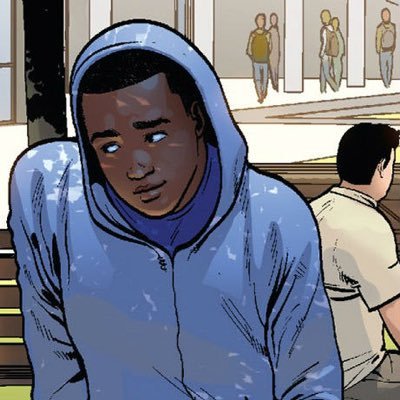
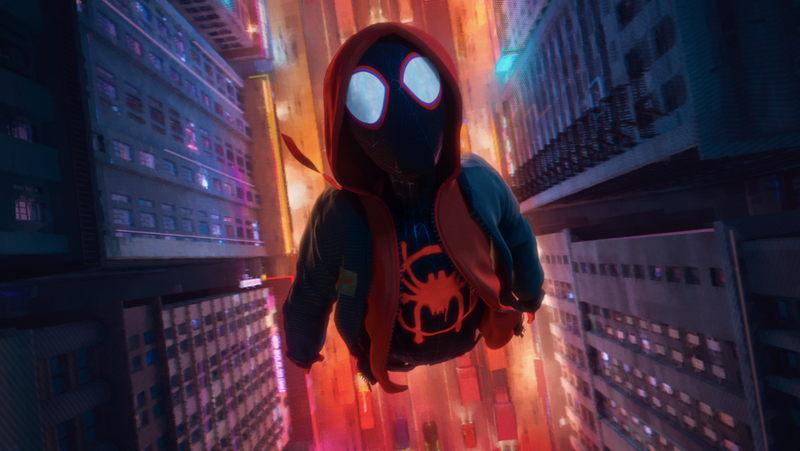
It’s this kid.
He’s still there. He still plays a major part in the story. However, this movie is a story about Miles Morales. Those who follow the comics will recognize that name. He’s not just some unknown character who gets thrust into a central role in the vein of the “Ghostbuster” reboot. Miles has a fairly comprehensive history going back to 2011 and this movie captures the heart of that history perfectly.
Miles is not like Peter in many ways. Beyond the fact that he’s half-black, half-Latino, and the nephew of a dangerous super-villain, his powers are slightly different. His personality is different, as well. He’s not the same nerdy dork that Peter Parker was, but he is very much an outsider who struggles to fit in.
Miles has more confidence, but not in the arrogant hipster Andrew Garfield sort of way. He’s someone who isn’t sure of who he wants to be or where he wants his life to go. On one hand, he’s got his parents who want him to aspire to something greater than a life in Brooklyn. On the other, he has influences like his Uncle Aaron pulling him down a darker path.
Him getting bit by a radioactive spider only compounds these conflicting forces. Part of what makes Miles work when other would-be Spider-Man replacements failed is that his struggle feels genuine. He never comes off as a rip-off or a substitute. What makes Miles a Spider-Man worth rooting for is how Peter Parker inspires him to take on that responsibility.
The comics went about that in one particular way that worked brilliantly. “Into The Spider-Verse” utilizes a different, but similar approach that’s every bit as compelling. Peter Parker has a major influence, but the movie throws in many other influences that send Miles down the path to becoming Spider-Man.
Some of those influences come in the form of other famous alternate-version Spider-Man characters, including the likes of Spider-Gwen and Spider-Ham. “Into The Spider-Verse” manages to give them their own stories that show how they fit into the greater Spider-Man mythos, but for Miles, they embody the responsibility before him.
Like Peter, and so many other Spider-Man characters, he’s initially reluctant to bear that burden. Over the course of the movie, he endures plenty of agonizing decisions and crippling self-doubt. He struggles in ways that we’re not used to seeing Spider-Man struggle, but that’s exactly why “Into The Spider-Verse” works so well in the current landscape of superhero movies.
Going back to the first “Iron Man” movie, we’ve come to expect struggles and setbacks from our heroes. Miles has a lot more than most and not just because of his youth or inexperience. He has huge shoes to fill and the history of characters filling the shoes of iconic heroes is mixed at best.
By the end of the movie, though, Miles effectively proves that he’s worthy of being Spider-Man. He deserves a spot in the greater Spider-Man mythos. It doesn’t have to revolve entirely around Peter Parker. For some Spider-Man fans, that may seem outrageous. “Into The Spider-Verse” shows that there’s plenty of room for characters like Miles.
How it goes about this has greater implications for the future of superhero movies than it does for the present. I would even go so far as to say that “Into The Spider-Verse” might end up being a major turning point for the superhero genre because of how it tells Miles’ story alongside that of Peter Parker.
Aside from just raising Miles’ profile, “Into The Spider-Verse” does something that is overdue for Peter Parker’s story. Specifically, it ages him. The Peter Parker in this story is not some wide-eyed kid with Tom Holland’s baby face. He’s an older, more jaded version of Peter who has made mistakes and lost confidence in himself, as often happens to those who survive to middle age.
The look of a man who has fought one too many muggers.
“Into The Spider-Verse” makes the case that this doesn’t have to be the case. Peter Parker can grow up and even endure a mid-life crisis. For a character who has been around since the early 1960s, it almost feels overdue. His struggle doesn’t have to be the end of his story. If anything, it helps further Miles’ ascension to becoming the new Spider-Man.
It’s a theme that has played out in the comics more recently. Older heroes are inspiring a new crop of younger heroes. Miles Morales was among the first. Others like Kamala Khan and Riri Williams have followed. It feels like a natural progression of the superhero archetype, inspiring others to take up the responsibility and aspire to something greater.
Miles Morales isn’t a replacement for Peter Parker. He’s a supplement to the greater Spider-Man mythos and “Into The Spider-Verse” establishes how well this can work. His story is every bit as endearing as Peter’s, but without supplanting him. As such, it provides a new template for superhero movies in the future.
Not every story has to rely on rehashing and revamping iconic characters from the Stan Lee/Jack Kirby/Steve Ditko era. It’s possible for new characters to emerge without replacing older ones. The world of superheroes can grow and evolve with subsequent generations. It’ll have to and not just because of actors’ contracts expiring.
If I had to score “Into The Spider-Verse,” I would give it an 8 out of 10. It’s a great movie, but it does have some shortcomings. They’re very minor. The pacing of the movie is erratic at times and the designs for certain characters, namely Kingpin and Scorpion, have room for improvement. It never feels chaotic or disconnected, though. The movie has a unique artistic style that fits perfectly with the story.
Every now and then, someone will claim that superhero movies will one day go the way of the western. That may still happen at some point, but “Into The Spider-Verse” shows that there are whole new paths to explore and they have to exist in the MCU. This movie is an incredible achievement beyond just being a great superhero movie and one I hope inspires others for years to come.
Also, the tribute to Stan Lee at the end will bring a tear to your eyes. Be certain of that.
Some characters are iconic from the get-go. Spider-Man, Superman, Wonder Woman, and Batman all managed to establish themselves as special early on in their history. They’re the lucky ones, though. Most characters have to go through a long, arduous process to reach the top tier of superhero icons. A lot of them never make it, but those that do are special in their own right.
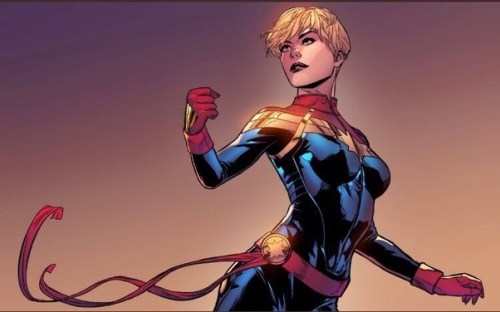
These days, the character who best embodies that spirit is Carol Danvers. You don’t have to go back too far to remember a time when she was relegated to the superhero B-list. As Ms. Marvel, she had her share of fans. I was one of them. She also had her place in the annuls of Marvel lore. However, she was never able to break through and join that elite club occupied almost exclusively of Stan Lee creations.
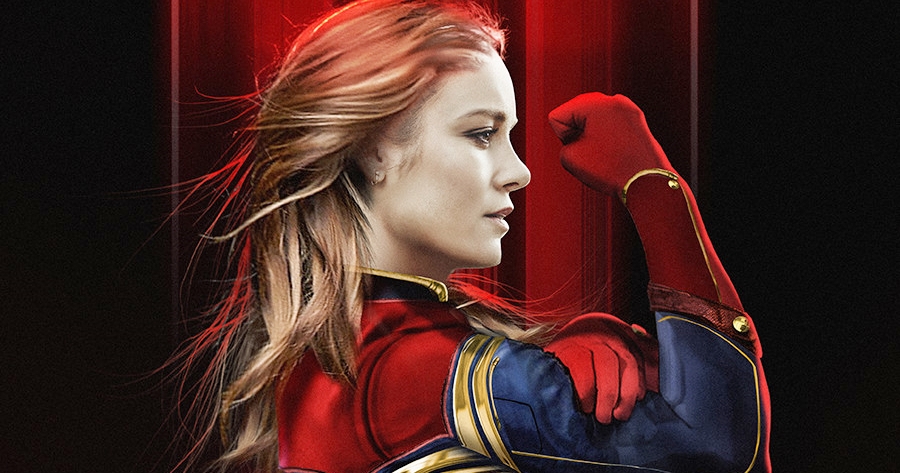
That all changed when Kelly Sue DeConnick came along and reinvented Carol Danvers as Captain Marvel in 2012. That process, which has since become one of my favorite runs on a comic book series of the past 10 years, helped Carol finally break into the upper echelon of superheroes. With a movie coming out in 2019 staring Brie Larson, it’s safe to say she’s entrenched.
I could write a dozen articles about why Carol Danvers’ character resonates more now than it did when she first showed up in 1968. I’ve already mentioned some of the unique challenges she faces as she enters rarefied air among Marvel heroes and female superheroes, in general. However, I want to focus on one particular aspect of her character that helps her stand out.
As it just so happens, it’s also part of her character that recently underwent a major upheaval in the comics. Among other comic book fans, it has been controversial. I’ve certainly seen more than a little whining on message boards and Reddit. I have my share of criticisms too, but I intend to justify why I believe this is a promising new era for Carol “Captain Marvel” Danvers.
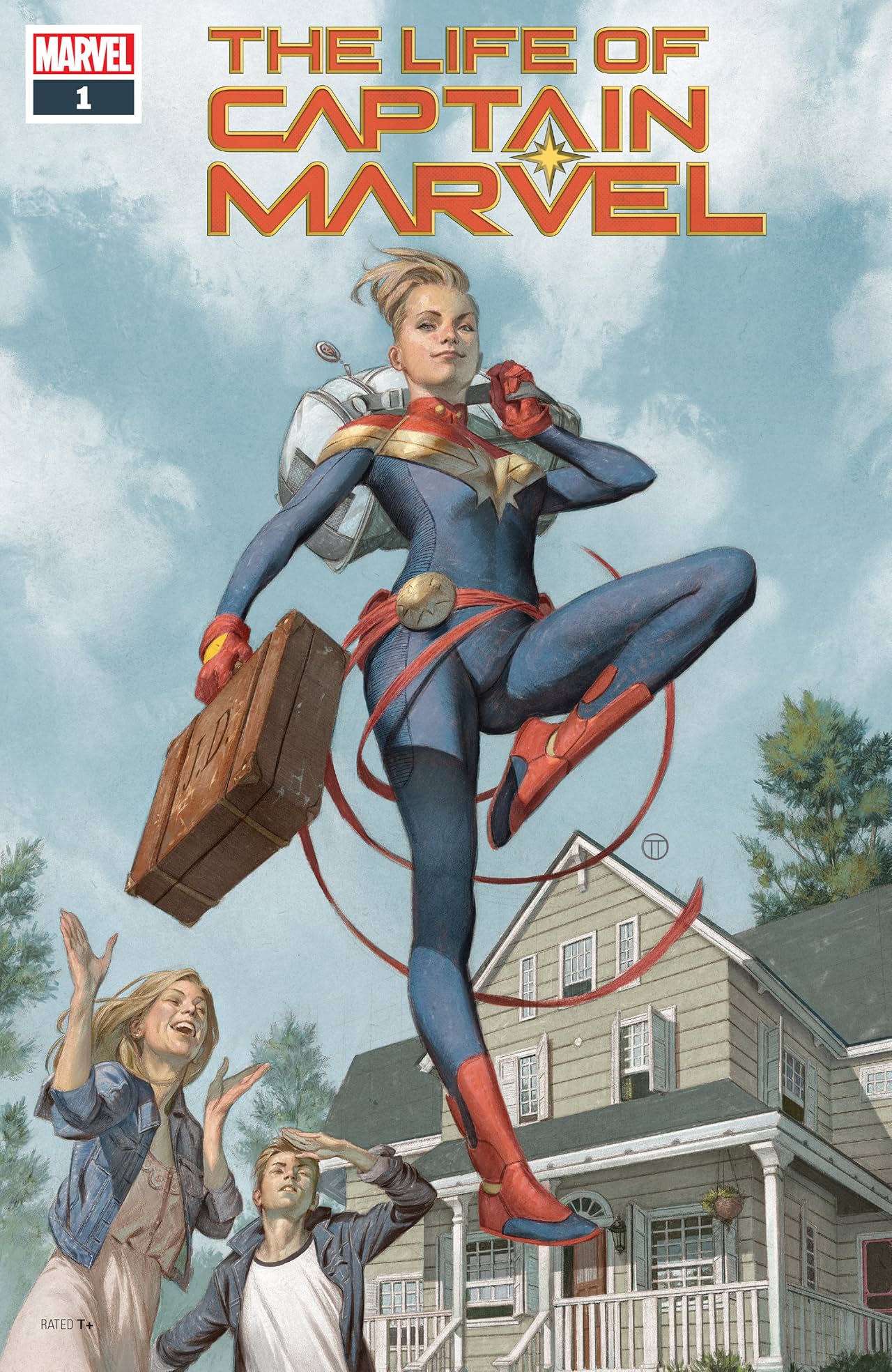
The upheaval in question occurred in a recently-launched mini-series called “The Life of Captain Marvel.” Written by Margaret Stohl, who has been guiding Carol’s journey for several years now, I cannot recommend this series enough. It is, by far, one of the best Carol Danvers stories ever written. Years from now, it will likely mark a major turning point for her story.
That’s because Stohl does something that’s both critical and controversial to Carol’s history. She makes a major alteration to an aspect of Carol’s life that doesn’t change her past, but puts it in a very different perspective. That change, in my opinion, makes Carol a much more intriguing character.
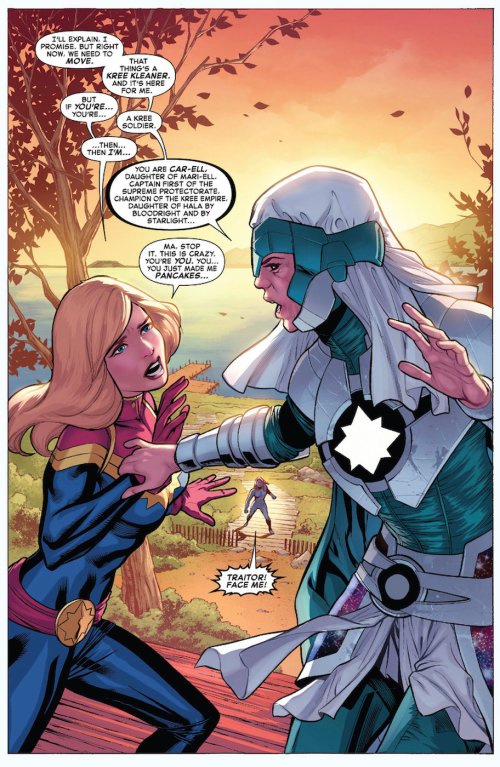
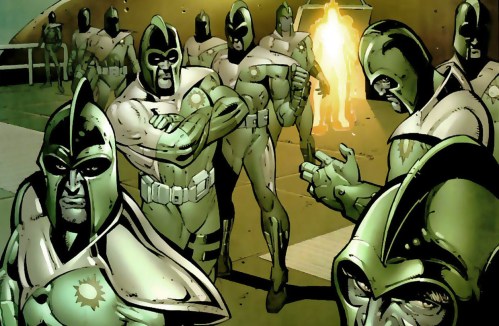
If you want to avoid spoilers, you should probably stop reading here and check out the series. Again, I highly recommend it. The big change, however, takes place in the fourth issue. Here, her mother, Marie, drops a bombshell revelation on Carol that rocks her world. She reveals that she’s half-human and half-alien. Specifically, she’s half-Kree.
The fact that she’s half-alien isn’t that unique. Peter “Starlord” Quill has a similar heritage. The reason it’s such a big deal for Carol is because it changes the context of how she got her powers and the role she plays in the greater Marvel universe.
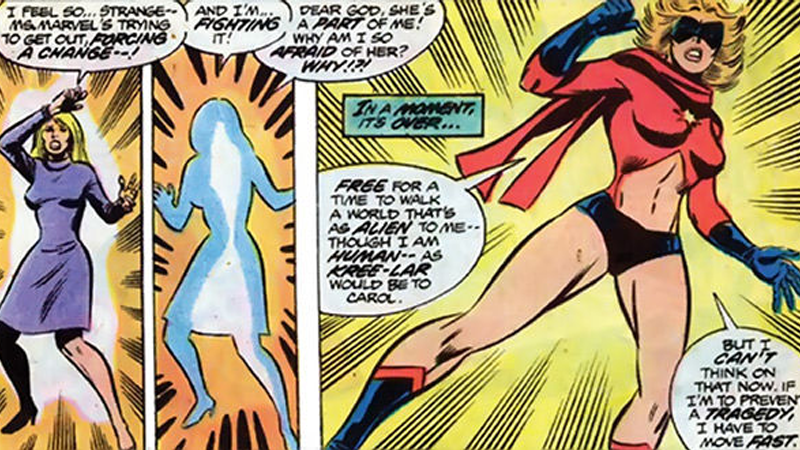
Before this change, Carol’s powers were somewhat of an afterthought. Like Spider-Man, they were the result of an accident. Her’s just involved alien device called the Psyche Magnetron. She got caught in an explosion and that explosion allegedly fused her DNA with Kree DNA to give her superpowers. It’s not the most contrived origins story, but it’s not exactly epic.
To some extent, getting her powers by accident undercut all the work she did before that. Even without powers, she managed to carve out a successful career in the air force and NASA. That work became somewhat superfluous once she got superpowers. Unlike Peter Parker, she was already on a heroic path. Getting powers just seemed like skipping a bunch of steps.
With the revelation by her mother, there’s more connective tissue between her journey as Carol Danvers and her journey as Captain Marvel. Her mother, who comes out as a full-blooded Kree warrior, tells Carol that the accident wasn’t the sole cause of her abilities. It was just the catalyst. These are her exact words.
“What humans see as Kree powers are just our biological adaptations to a life of combat. They’re triggered in battle, usually around adolescence. Sadly, most of us have known war by then.”
This implies that even if she hadn’t been caught in the crossfire of the Psyche Magnetron, her Kree abilities would’ve come out at some point. For some fans, including die-hard Captain Marvel fans, it feels like this is denigrating her origins. I respectfully disagree with that notion. I believe this gives Carol’s story a new kind of appeal.
In terms of how superheroes become iconic, how they get their powers and how they choose to use them plays a huge part in their appeal. I would argue that just making Carol an ordinary human who got caught in an accident has limited appeal. Like I said before, she’s not Peter Parker. She’s not an average person. She’s more like Batman in that she’s an overachiever who strives to do more.
Her being half-Kree adds a new dynamic to the mix because it makes Carol a product of two different worlds. She is born on Earth and lives her whole life as a human. However, she now has this alien heritage that has already influenced her life in ways she didn’t understand. You need only look at the mass appeal of Superman to see why that story is compelling.
Being half-Kree means Carol suddenly has a connection to a race that has waged war on Earth before. She also has a connection to a world that has blatantly experimented on humans before. At the same time, her human life wasn’t exactly ideal. Unlike Superman, she was not raised by picture perfect parents like the Kents.
Her mother, despite being a Kree warrior, was in an unstable relationship with Carol’s very human father. Their family suffered a devastating loss when Carol’s brother, Steve, died in combat. They never really recovered from that and, for most of Carol’s history, that loss kept her parents as a side-note at best in her journey.
With Carol’s mother being a Kree warrior, it changes her into something more than a woman who stayed in a bad marriage. It adds more layers to why she and her husband clashed. Even in the first few issues of “The Life of Captain Marvel,” her father comes off as a generic asshole. Finding out he was dealing with an alien wife makes his struggles a lot less generic.
In many ways, Carol’s parents represent her divided heritage. Her father didn’t want her embracing her Kree side and fighting alien wars. Having already lost a son, who can blame him? Her mother didn’t want to stop Carol from embracing both sides of her heritage, even though that was sure to leave her conflicted.
It effectively connects Carol’s superhero journey with that of her family. Those journeys involve some heavy losses, painful secrets, and destructive alcoholism. It’s something you’re not going to find with Superman, Spider-Man, Batman, or any of the X-men. It leaves Carol Danvers in an uncertain, but promising state.
It’s not yet clear how much of Stohl’s revisions will find their way into the “Captain Marvel” movie. To some extent, it helps that Carol’s origin isn’t as iconic as that of other heroes. The Marvel Cinematic Universe has already done some considerable tweaks to certain characters to make them fit the narrative. I have a feeling we’ll see plenty of that in the movie.
However things plays out on the big screen for Carol, I think her story in the comics just became a lot more interesting. I know there are some fans upset by this. I’ll even concede there are some parts of this revision I don’t care for. There was some appeal to Carol just being an ordinary human who worked her ass off to achieve what she did.
Every major revelation or retcon in a comic or movie comes at a price. You’re bound to upset some people. That’s unavoidable in a world full of such diverse tastes. However, I believe that Carol gained much more than she lost in “The Life of Captain Marvel.” I believe she’s bound to gain a whole lot more, both through her movie and through the new host of stories that can be told.
Whatever the case, I hope Brie Larson takes plenty of notes.
Every Wednesday, a new batch of comics comes out and for comic fans like me, it’s the biggest highlight of the week that doesn’t involve ice cream and whiskey. Within that batch of comics, it’s hard find the gems that really stand out. That’s why every week, I pick out a comic that I feel warrants extra praise.
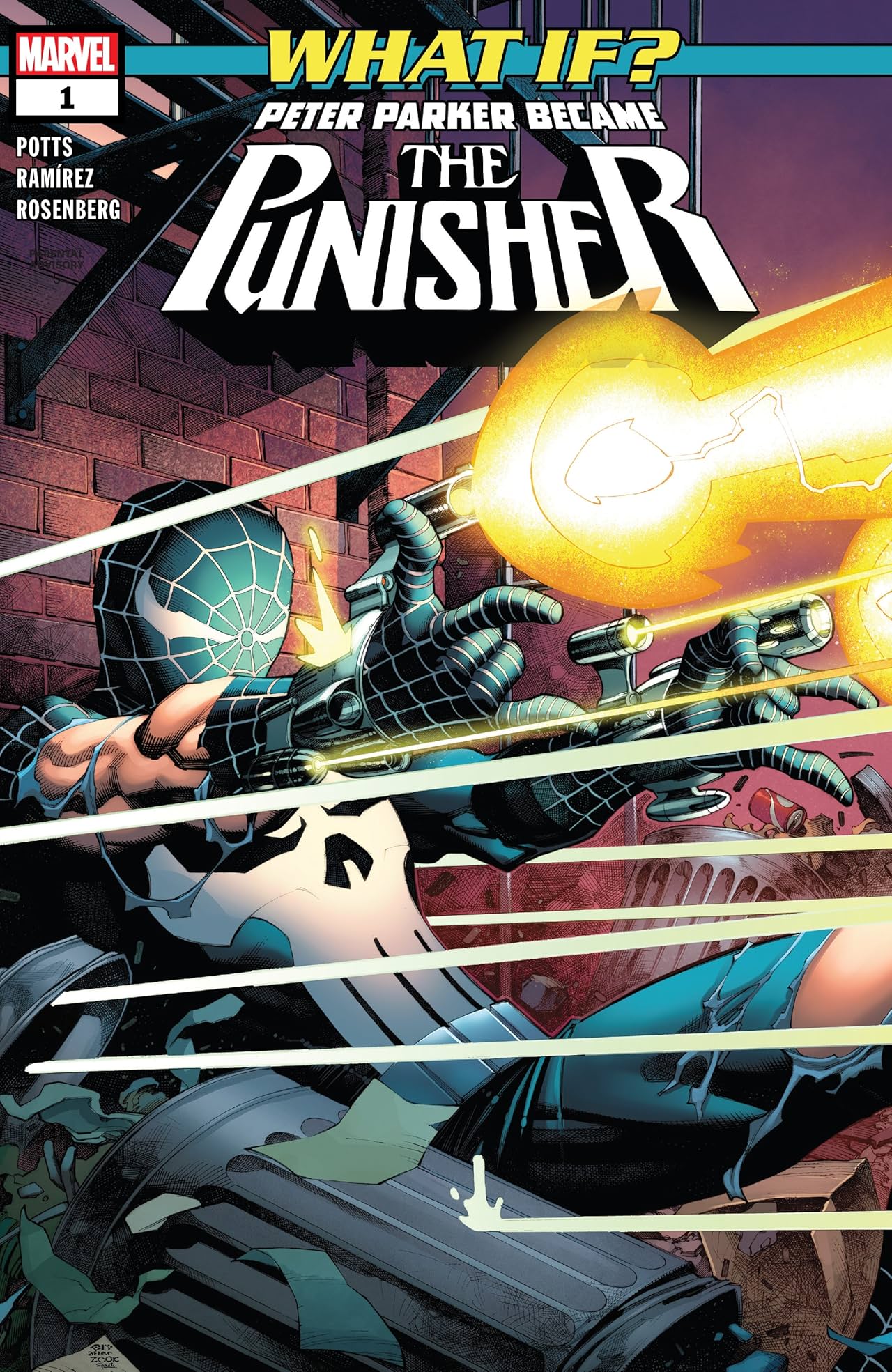
This week, my quick pick is “What If? Punisher #1.” Now, this may seem like an odd selection. In fact, this comic is very much an anomaly. There was once a time where Marvel had an ongoing “What If?” series that basically offered alternate history takes on iconic characters and stories.
Personally, I have mixed feelings about how these stories are handled. For the most part, they’re hit or miss. They’re either really good or really bad. Rarely, if ever, are they fleshed out stories.
“What If? Punisher #1” finds a way to stand out because it does more than speculate on what would happen to Spider-Man if he chose a slightly different path. It actually explores the entire premise that with great power comes great responsibility. It even makes the case that the mainline Spider-Man in the long-running “Amazing Spider-Man” series is wholly irresponsible in his methods.
This is an idea that I’ve actually explored before. I once made the argument that Spider-Man is the most inept hero of all time. I got a lot of hate for that piece, mostly by long-time Spider-Man fans. I don’t blame them for a second. However, this comic actually takes some of the concepts I discussed and puts them into a cohesive story.
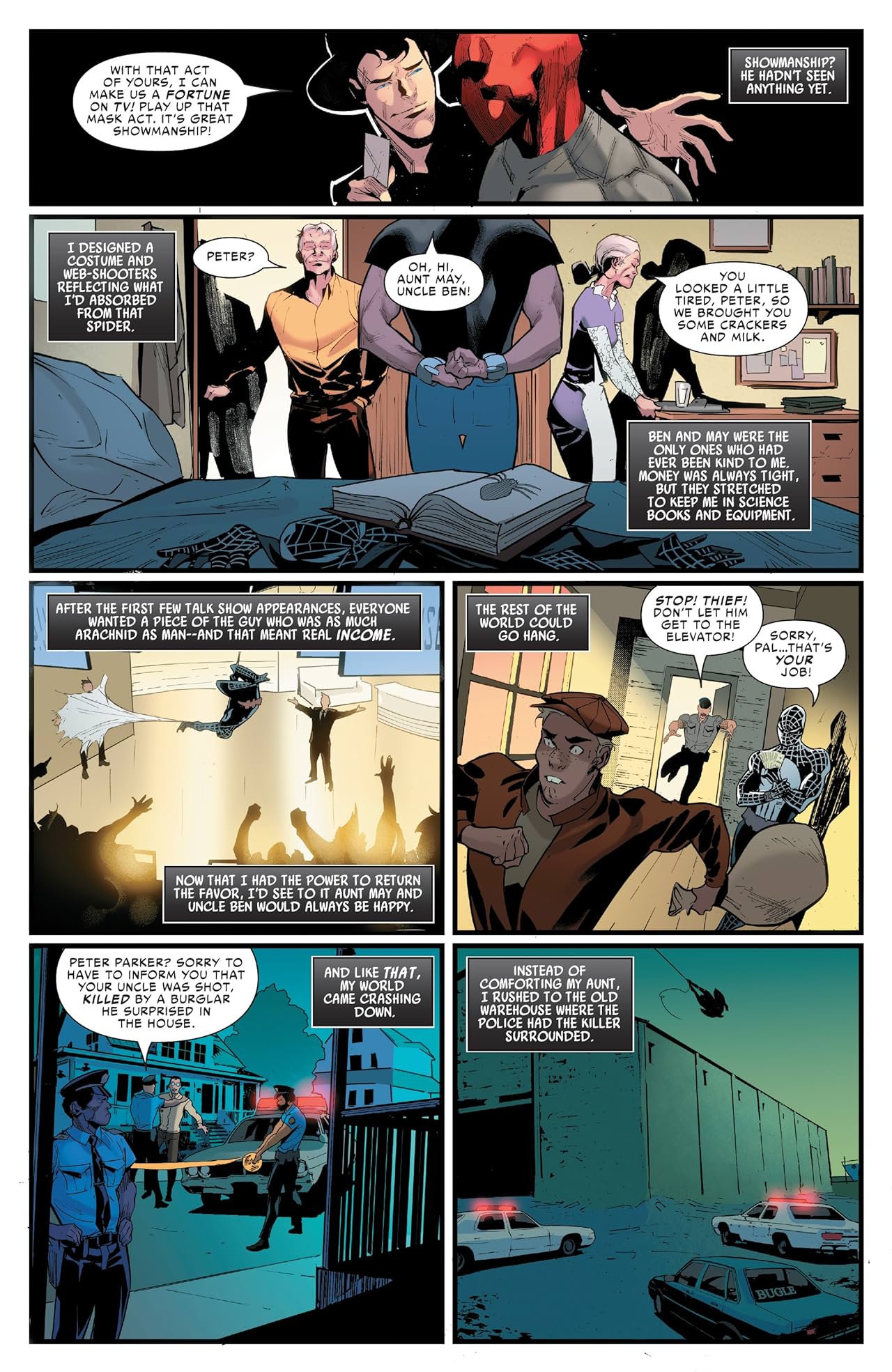
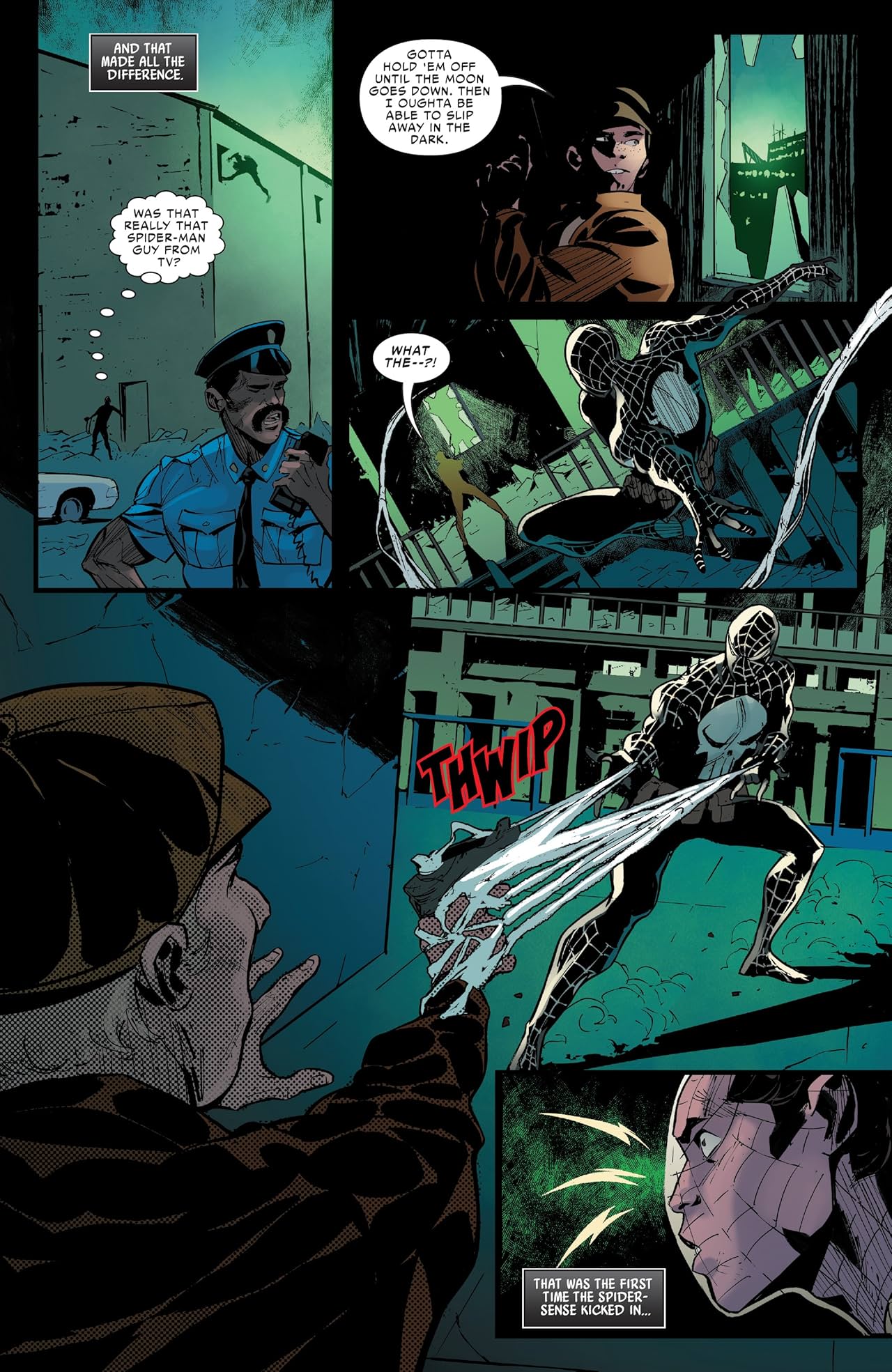
It doesn’t radically reinvent Peter Parker or Spider-Man. It also doesn’t radically alter his origin. He still fails to stop a burglar that goes onto murder his Uncle Ben. From that tragedy, he learns that critical lesson about power and responsibility. The only difference in this timeline is that great responsibility means killing his enemies, just like the Punisher.
It’s a line that the Friendly Neighborhood Spider-Man doesn’t dare cross most of the time. In nearly every famous iteration of Spider-Man, Peter makes clear that he does not kill. However, “What If? Punisher #1” makes the case that not only is this irresponsible. It actually played a part in hurting his loved ones.
How that happens and how it makes this case is something I won’t spoil. Since this is a “What If?” comic, though, there’s not room to dig deeper. There are more than a few gaps and oversights, but most of that is due to logistics rather than merit. At the very least, this comic asks some pretty damning questions about how Spider-Man approaches power and responsibility.
Even though most “What If?” comics are quickly forgotten and have no impact on the actual canon, this issue is worthy of my pick because the concept is so intriguing. It’s too brief and very much incomplete, but the ideas it presents are pretty remarkable. Not all Spider-Man fans will like it, but it’ll definitely get them thinking.
We’ve heard it all our lives from parents, teachers, and cartoon characters. Good things come to those who wait. Patience is a virtue. If something is worth having, then taking your time and going through the process will make it that much more rewarding.
As impatient, overly energetic kids, we hated that. As adults, we still hate it to some extent. However, those inane words of wisdom have proven themselves valid time and again.
To some extent, the Marvel Cinematic Universe has a been a decade-long exercise in patience. That patience has already paid off in so many ways with so many memorable moments, raising the bar for cinematic excellence every step of the way. After ten years of that process, though, how could it possibly vindicate all the patience?
Well, having seen “Avengers: Infinity War,” I’m comfortable saying that all the waiting, hype, and post-credits teasers was totally worth it. Never before has a movie come along that required so much build-up and so much connection from other films over such a lengthy period of time. Never before has a film franchise ever achieved such sustained, consistent success that has raked in billions for its Disney overlords.
By nearly every measure, “Avengers: Infinity War” is the culmination of all those efforts. It’s an effort that spans dozens of movies, made and re-birthed entire careers, and dared to tell the kind of story that required such a lengthy, elaborate process. It’s the kind of movie that, a decade ago, seemed impossible. Well, the impossible has been done and the results are nothing short of astounding.
Beyond the hype, setup, and process that went into making this movie, “Avengers: Infinity War” is a ride like no other. It’s not just about superheroes coming together to battle a common enemy. It’s not just about big battle scenes and witty quips between gods and talking raccoons. This is a movie with a powerful, impactful story that strikes so many emotional chords.
That may seem strange for a superhero movie, which have traditionally been big-budget spectacles meant to delight the inner child/fanboy in us all. The idea that a superhero movie could generate real drama and evoke powerful emotions almost seems like a subversion of the underlying appeal of the genre.
It’s for that reason that “Avengers: Infinity War” is so special. It doesn’t just build around the appeal of all these iconic characters, most of which are older than the actors and actresses playing them. It crafts a story that takes all the emotional stakes that had been set up in other movies and pushes them to the absolute limit.
The emotional journey that began in “Iron Man” and “The Avengers” comes to a head in a way that’s both definitive and powerful. There’s no more teasing surrounding Thanos, the Infinity Stones, and all the agendas surrounding them, many of which began in the earliest phases of the MCU. The stakes are clear, the threat is there, and the battles surrounding both are appropriately epic.
Beyond just the spectacle, though, “Avengers: Infinity War” succeeds in what might be the most important aspect for a movie of this scope and scale. The story and the high-octane clashes that fuel it all unfold in a way that makes the last decade of Marvel movies feel even more relevant.
All those plots gain much greater weight as Thanos fights to retrieve all six stones. Now, all the triumphs and failures of these characters more weight. These characters we’ve been cheering for and connecting with now have to push themselves beyond their limits. The end result is an experience that hits as hard as a punch by the Hulk.
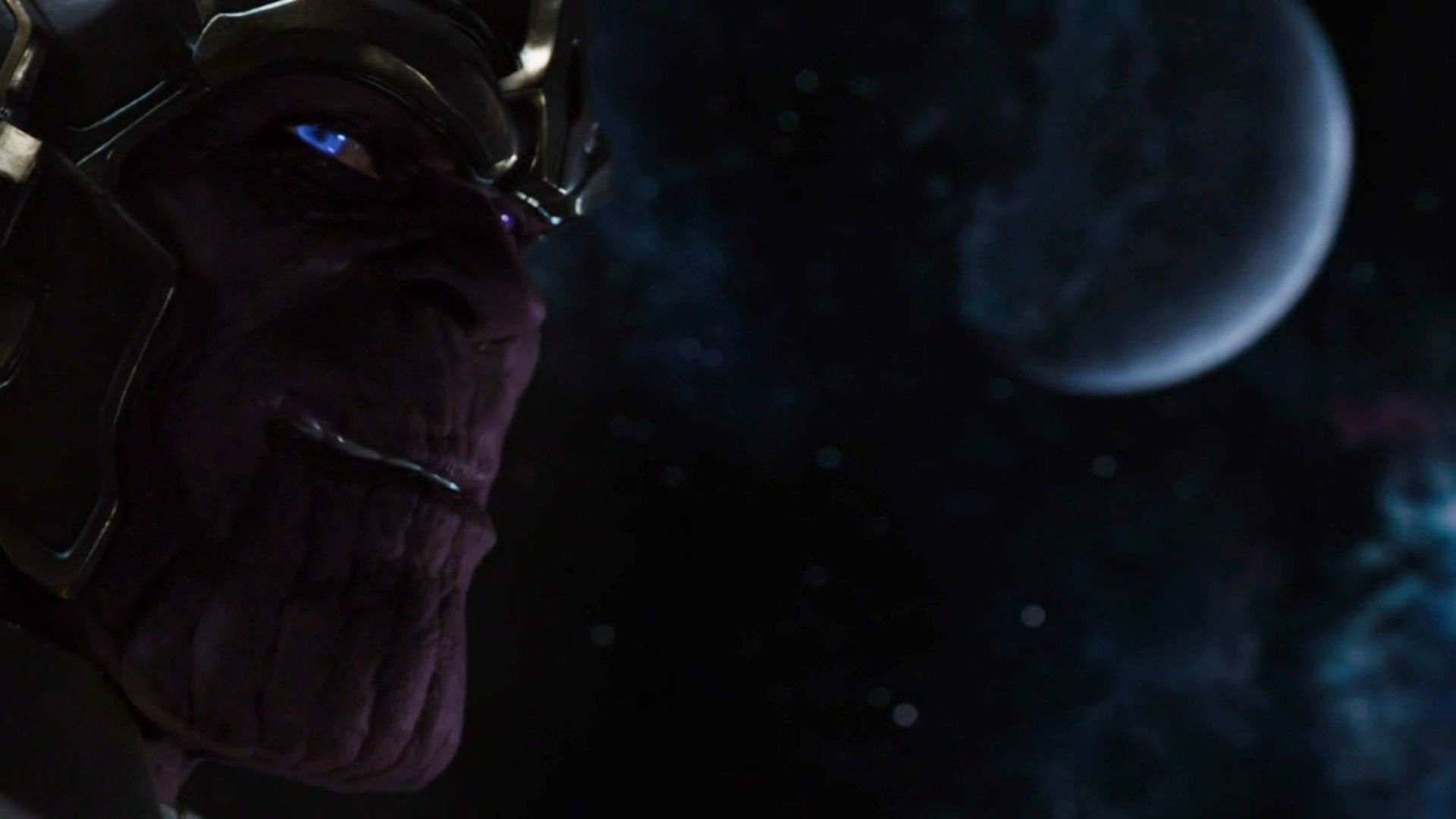
Beyond the connections created by the past ten years of Marvel movies, “Avengers: Infinity War” succeeds in another important way. It crafts the conflict around a powerful, compelling villain. After seeing the movie, I think most would agree that Thanos really steals the show and not just because Josh Brolin’s voice gives us all the right shivers.
It was probably the biggest challenge of this movie, beyond having to build it around a decade of overarching plot points. This movie needed to make Thanos more than just a daunting threat. It had to make him compelling. Given his colorful history in the comics, that was more challenging than most non-comic fans realize.
Thanos needed to be adapted, to some extent, in order for him to work. He couldn’t just be this mad, death-obsessed monster. In a universe that has birthed compelling villains like Loki and Erik Killmonger, he has to have some level of complexity. “Avengers: Infinity War” gives him more than any CGI-generated character could ever hope for.
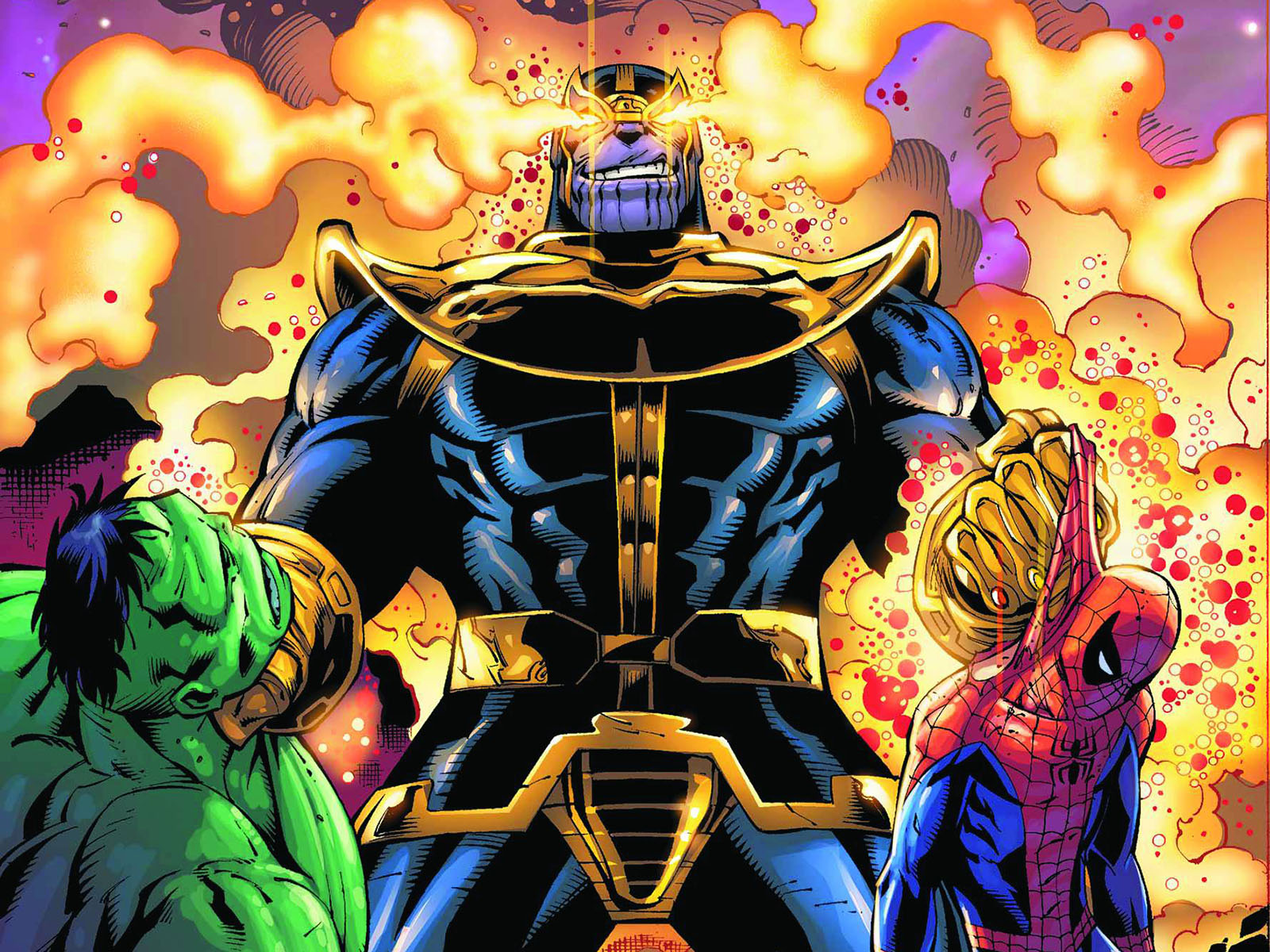
It’s not just that Thanos is menacing, powerful, and able to subdue the Hulk. It’s that he has a clear, unambiguous motivation. He’s very overt about what he’s doing and why he’s doing it. What makes it all the more remarkable is that he finds a way to justify it that doesn’t come off as outright villainous. I would argue that he justifies his actions are better than any other villain in the MCU.
That doesn’t just make Thanos compelling, as both a character and a villain. It helps create moments that establish he’s not just some overwhelming force of evil. He’s a being who has feelings and emotions. Even in the comics, Thanos is a very emotion-driven character. The emotions, in this case, are directed towards something other than wanting to hook up with the living embodiment of death.
As menacing as Thanos is, though, he’s driven by his passions and those passions push him to the kinds of extremes that make all villains so dangerous. It’s not the same kind of greed and ego that makes Lex Luthor’s villainy so overt. As a result, the Avengers have to tap into their own passions to stop him.
This brings out the best in them as well. There are moments between Iron Man, Spider-Man, Vision, the Scarlet Witch, Starlord, Gamora, and Thor that really elevate the drama. There are moments of romance, building on romantic sub-plots from previous movies. There are moments of heart-wrenching loss, more so than any other Marvel movie to date. Most importantly, though, those moments carry weight and impact.
That, more than anything, is what makes “Avengers: Infinity War” a special cinematic experience that was worth waiting a decade for. To some extent, the movie makes clear that it needed those ten years to build up the drama and story. It also needed those ten years to make us, the audience, really care about all these characters. That way, when the final credits roll, we all feel the true breadth of that impact.
You could, in theory, still watch “Avengers: Infinity War” without having seen any other Marvel movie or superhero movie, in general. Even in that context, it’s still a great movie full of action, drama, and memorable moments featuring gods, super soldiers, and talking raccoons. However, without all the movies that came before it and all the connections from them, it just doesn’t carry the same weight.
If “Avengers: Infinity War” has any flaws, it’s that. To truly appreciate the impact of the movie, it’s necessary to know and somewhat care about the other movies in the MCU that helped set it up. Without that, the movie is just another spectacle. It’s still an amazing spectacle full of quality acting and stunning effects. It just relies so much on the foundation that other movies have crafted.
If there’s one glaring flaw in this masterful superhero saga, though, it’s that the movie is clearly organized to be in two parts. Like “Kill Bill” or the latest “Star Wars” trilogy, the story is incomplete, by necessity. As a result, the ending feels abrupt. It’s still more impactful than gut punch by an army of Hulks, but it’s one of those endings that never comes off as an endpoint.
This movie is presented very much in the mold of “The Empire Strikes Back” in that it hits the heroes hard, allows the villains to make devastating gains, and really raises the stakes for the sequel. Just as that movie made you want to see Luke Skywalker battle Dearth Vader again, “Avengers: Infinity War” makes you want to see the Avengers take down Thanos.
There’s so many things to love about “Avengers: Infinity War” and what it managed to accomplish. It is definitely a historic achievement for movies and the superhero genre, as a whole. If I had to score it, I’d give it a 9.5 out of 10. It’s not perfect because it’s incomplete, but it’s as close to perfect as anything can get after ten years of build-up.
The wait was long and agonizing, but so worth it. The wait for “Avengers 4” will likely be agonizing as well, but Marvel Studios has made a glorious habit of rewarding such patience so I certainly don’t mind waiting. “Avengers: Infinity War” once again raised the bar. I look forward to seeing how Marvel and Disney raise it again.
If you’re a “Star Wars” fan in any capacity, then these are truly exciting times. It doesn’t matter if you’ve got the blueprints of the Millennium Falcon tattooed on your back or just think porgs are adorable, this is basically your Mardi Gras. Another new “Star Wars” movie is set for release and, by all accounts, “Star Wars: The Last Jedi” is set to give Disney a fresh pool of money to swim in.
Now, I love “Star Wars” as much as anyone who grew up on a healthy diet of sci-fi and comic books. I’ve seen every movie in theaters. I had more than my share of “Star Wars” toys as a kid. I do intend to be in line to see “Star Wars: The Last Jedi” on opening night. Like X-men and football, I’m that passionate about the things I love.
However, in getting my mind one with the Force in anticipation of the release of “Star Wars: The Last Jedi,” I found myself contemplating some unexpected ideas. In doing so, I came to a realization that isn’t so much a fan theory as it is an observation, and one that will probably incur the wrath of every adherent of the Jedi Order, which is a thing by the way.
I’m willing to take that chance, though. I don’t know whether the Force will be on my side after this, but in the name of digging deeper into the “Star Wars” mythos, I want to put this out there. If you’re prone to Sith-level outrage, you might want to put up your deflector shields because I’m about to make a statement that strikes at the very heart of what it means to be a Jedi. That statement is this.
Dr. Doom is the perfect embodiment of the Jedi.
I’ll give “Star Wars” a moment to stop seething and Marvel fans a moment to stop laughing. Take all the time you need. I know this sounds like something a man only comes up with after he’s had a few too many glasses of whiskey while re-watching “The Empire Strikes Back” one too many times. Make no mistake. I’m dead serious about this.
There is no emotion, there is peace. There is no ignorance, there is knowledge. There is no passion, there is serenity. There is no chaos, there is harmony. There is no death, there is the Force.
Anyone who has watched at least two “Star Wars” movies can probably see plenty of examples of these tenants. In every movie, in some form or another, the Jedi espouse principles of non-attachment, harmony, knowledge, and an overall understanding that death is neither the end, nor the beginning.
Those who have studied philosophy and theology in any capacity will probably recognize that these concepts are very similar to major principles of Taoist philosophy. In fact, the whole Sith/Jedi dichotomy nicely reflects that of Yin and Yang, which is probably the most well-known Taoist principle.
With those concepts in mind, you might instinctively believe that Dr. Doom would more closely align with the tenants of the Sith. Like the Jedi, they too have their own unique code. Again, according to the official Star Wars wiki, that code is as follows:
Peace is a lie. There is only Passion. Through Passion I gain Strength. Through Strength I gain Power. Through Power I gain Victory. Through Victory my chains are Broken. The Force shall free me.
While those tenants may sound like something Dr. Doom embraces, a closer examination of how Doom conducts himself reveals something else. You don’t even have to dig too deep to see just how much Doom embodies the ways of the Jedi.
One of the most distinct differences between a Sith and a Jedi is how they approach passion. Sith, as Anakin Skywalker so nicely demonstrated in “Star Wars: Revenge of the Sith,” are fueled by their passions. Their anger and hate fuels them. Jedi see those emotions as temptations that send Force-wielders down a dark, selfish path. Anakin’s descent into the dark side nicely documents that fall.
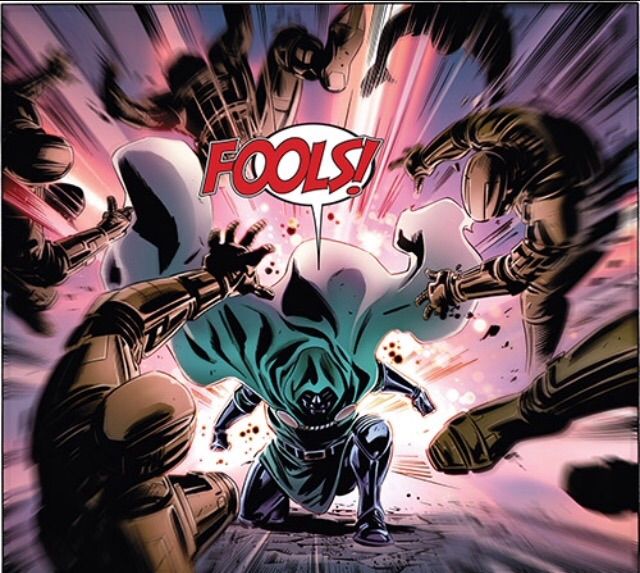
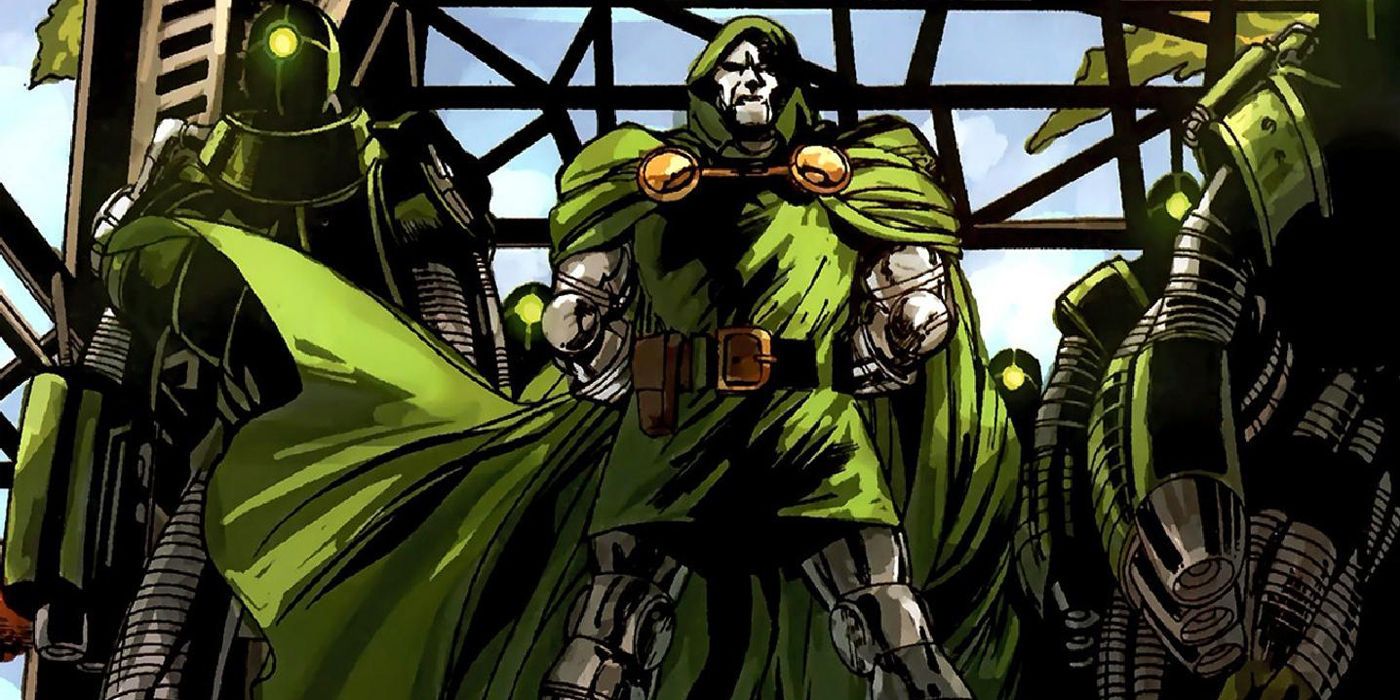
However, while Dr. Doom can become annoyed and frustrated, he rarely demonstrates Sith-level anger. In fact, most of the time, Doom’s emotional state is one of cold, callousness. When he donned his famous, obscenely overpowered armor, he did so with the intent of shedding the passions that he believed had held him back.
In a sense, Doom sees the same thing the Jedi sees. The world around him is full of chaos. People, in general, are consumed with chaos. Nothing but destruction will come from that chaos and they both seek to temper it. The only difference is that Doom does more than just attack it with a light sabre.
Dr. Doom’s desire for order are even reflected in the crossover event, Doomwar. It’s in that event that Dr. Doom learns from Bast, the Panther God, that the only future in which mankind is free from suffering, want, and chaos is one where he rules. In a sense, Doom see’s ruling the world as his destiny. Given how often the Jedi and the Sith make a big deal about destiny, Dr. Doom fits right in with those principles.
Even in matters of life and death, Dr. Doom aligns himself with the Jedi, albeit in more overt ways. For him, death is hardly a barrier. Whereas Sith fear and dread death, as Anakin Skywalker did in trying to prevent the death of his loved ones, Dr. Doom basically brushes it off. He doesn’t just cheat death with his army of Doombots. He has actually become a god on more than one occasion.
Whereas a Sith like Anakin will lament the loss of his mother and wife, Dr. Doom will sacrifice the woman he loves to a demon without batting an eye. Like the Jedi, he does not care for personal attachments or petty passions that might hold him back. He sees himself as too smart and too capable for such things. It’s not that he sees himself as a god among men. He’s just smart and powerful enough to prove it.
In a sense, Dr. Doom is the ultimate endgame for a Jedi. He is the ultimate extreme of what happens when you take the Jedi Code and push it beyond the limits of frail human minds. It leads someone to becoming numb to their passions, empowered by knowledge, and driven to forge harmony out of chaos.
With that in mind, I want to acknowledge that there are other intricacies to the Jedi Code with which Dr. Doom is inherently incompatible. Unlike Doom, Jedi don’t seek to rule whereas Sith Lords do. Also unlike the Jedi, Dr. Doom can be pretty damn selfish and arrogant, which are hardly in line with the selflessness championed by the Jedi.
However, when evaluating the code of the Jedi and the Sith, Dr. Doom still checks more boxes with the Jedi. Her certainly wouldn’t get along with the likes of Yoda, Mace Windu, or anyone on the Jedi Council, for that matter.
Then again, Dr. Doom doesn’t get along with anyone and that’s kind of on purpose with him. He doesn’t care whether or not anyone gets along with him. He only cares that they honor his authority and superiority. Like a Jedi, he is beyond petty emotions or blind ignorance. His strength, knowledge, and abilities speak for themselves. He needs no passion or anger to fuel him. He just needs to be Doom.
In writing this, I imagine I will upset and/or anger many “Star Wars” fans whose knowledge of the franchise is far greater than my own. There may even be a few details that effectively nullify my claim about Dr. Doom’s status as the ultimate Jedi. I welcome those discussion, provided they’re not on par with a Sith-level temper tantrum.
Given the upheaval in the Jedi order so artfully promised in “Star Wars: The Last Jedi,” I just felt as though this observation was worth sharing. It’s impossible to know whether Dr. Doom would make for the perfect Jedi, the ultimate Sith, or something in between. It’s just interesting to see how the ideals he embodies fits into this iconic sci-fi mythos.





/cdn.vox-cdn.com/uploads/chorus_image/image/59516921/avengers_thanos_concept.0.jpg)