Tag Archives: progressive

To Those Behind The Jubilee YouTube Channel: Please STOP!

Seriously, for the good of America, the world, and the human species as a whole, just stop what you’re doing.

I hope I don’t need to go into specifics. If you know what I’m talking about, you can probably fill in the blanks based on the first sentence alone. But if you’re blissfully unaware, I’ll only offer the basics.

Jubilee isn’t just the name of a beloved X-Men character. It’s the name of a YouTube channel that specializes in debates/clickbait. They claim they seek to provoke greater discussions and create better connections between those with different points of view.

That’s bullshit.

Everyone working for this channel knows it’s bullshit. If they’re capable of putting their pants without assistance, they have to know.

They’re not in the business of thought-provoking discussions. They’re in the business of clickbait/rage-bait/anything that will get them trending on social media. They invite controversial figures, mostly “influencers” who operate on the extremes of the political spectrum. And they put them in a room surrounded by people who are diametrically opposed to their viewpoints. Then, they engage in timed debates on various controversial issues.

Now, in the pre-internet era, this would’ve been harmless. Even if you put it on TV, it probably wouldn’t have too great an impact. It would just be a temporary spectacle. But this isn’t just a world dominated by the internet. This is a world where extreme voices can make the most noise and gain both attention and power.

That’s not merely an exercise in free speech. That’s enabling assholes by giving them a large platform, a big audience, and an opportunity to completely change/destabilize public discourse on important topics. I liken it to letting random strangers have a say in important medical decisions while your doctor tells you things you don’t like hearing. Yes, people are free to share their opinions on such matters, but listening to those opinions you prefer is going to have serious consequences.

Now, I admit I did watch a number of these Jubilee debates. I’ll even concede that some of them are entertaining and memorable. But at no point do I ever feel like these debates are productive. I guarantee that not one person changed their mind or even reconsidered a position by watching these debates. If anything, all they do is make everyone more extreme and entrenched.

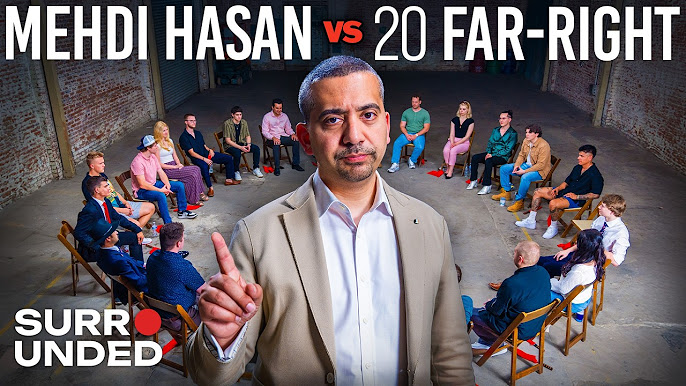
Certain debates have been plenty controversial, given the figures they’ve invited onto this show. But the one that prompted this post involved journalist Mehdi Hasan, who was tasked with debating 20 far-right conservatives.

Now, I don’t want to provide a link to this video. The last thing I want is for this channel to get any extra clicks at my expense. I’ll just say that the label “far-right conservatives” was too generously. Even calling them outright fascists would’ve been too kind. These people who “debated” Mr. Hasan are just assholes in the highest order.

Their politics have nothing to do with policy. They revolve entirely around being a dick to whoever they want, facing no consequences, and getting paid/empowered by their dickish behavior. These aren’t just people who want to live in conservative utopia. They want a world where they’re masters on a planation and everyone else is a slave who does their bidding.

But to write them off or claim they’re not representative of conservative values is missing the point. The fact remains that Jubilee sought them out. Jubilee platformed and emboldened them. Their rhetoric wasn’t just stupid, hateful, and irresponsible. In this current system of clickbait, bots, and algorithms, their assholery will be rewarded.

Sure, one of the participants lost his job for basically espousing Nazi talking points. But then, he used a go-fund-me to raise thousands of dollars to ensure he’ll be rewarded. And any system or society that effectively rewards people who champion Nazi shit is doomed to fail.

Now, as someone who makes YouTube videos who will never have the audience of Jubilee, I understand the desire to get more views, clicks, and subscribers. But at what point is it worth empowering people who champion Nazi shit? No amount of money is worth it. History has shown what happens when assholes like this are emboldened. We cannot let that history repeat itself.

Once again, I call on everyone behind the Jubilee channel to take a step back, think hard about what you’re doing, and realize this shit isn’t just irresponsible. It’s dangerous. If you want to host more debates with Skip Bayless and passionate sports fans, then go for it. That’s far less likely to involve Nazi shit. But what you did with Mehdi Hasan was far beyond any line that should never be crossed.

You have the power to stop.

You have the power to delete the video or at the very least, apologize for it.

Use that power wisely. Because the people who talk Nazi shit sure as hell won’t.
Leave a comment

Filed under politics, rants, YouTube

Real Politicians Are Talking Like X-Men Villains (And That’s Concerning)

I’ve been reading comic books all my life. A good chunk of those comics are superhero comics. And a good chunk of those superhero comics are X-Men comics. I’ve made no secret of this on this website or my YouTube channel. So, I hope my love of comics, superheroes, and X-Men should be beyond dispute.

That’s why I find it so disturbing when something happens in the real world that is dangerously similar to what I’ve read in so many comics. I used to think in my youthful innocence that people in the real world could never be as evil, heartless, or cruel as the villains I saw in comics. In general, I had a high opinion of people in the real world. Sure, there were assholes here and there. But most were good and most at least try to do good.

That opinion has since been shattered on multiple occasions, but nothing has shattered it more than the current state of politics.

Now, I don’t want to go off on a long rant about how divided people are politically and how toxic political discussions have become. I already did enough of that during major elections. I’ll just note that most of the political figures, be they elected officials or media personalities, who sound like villains are coming from one particular part of the political spectrum.

I won’t even bother being tactful. That villainous rhetoric is coming almost exclusively from conservative republicans in the United States, especially those who identify as being religious or sympathetic to the causes of Christian Nationalists.

These are the people who are pushing for laws and policies that do the sorts of things that X-Men villains seek to do. They actively try to marginalize vulnerable minorities, especially those within the LGBTQ+ community. They spew hate, bigotry, and ignorance of these people. They call them horrible names and constantly accuse them of grooming children, despite the fact that children are far more vulnerable to abuses in churches. They haven’t yet unleashed killer robot sentinels against these communities, but I don’t doubt for a second that they would if they had access to them.

It’s been especially bad for the transgender community. They’ve become some of the biggest targets of this particular wing of villainous politics. A decade ago, conservative republicans at least tried to cloak their opposition. They didn’t show outward hatred to people they hated or didn’t agree with. But after 2016, the masks are coming off.

They don’t seem to be trying to hide it anymore. They hate transgender people. They hate the LGBTQ+ community. They hate anyone who isn’t on their team and will do anything they can to marginalize, hurt, or denigrate them. In Florida, which has become immersed in petty right-wing political discourse, it has gotten especially bad. It’s gotten to the point where a real-life republican has actually cited X-Men to justify his bigotry in support of an anti-trans bill.

I wish this were a side-plot in an X-Men comic. But unfortunately, this is real. Here’s what Vice reported.

Vice: Republican Calls Trans People ‘Mutants,’ Totally Misses the Point of X-Men

A Republican lawmaker in Florida called transgender people “mutants and imps” on Monday in an anti-trans rant that appeared to almost imitate vitriolic lines from X-Men movies.

Florida Rep. Webster Barnaby shared anti-trans views at the state capitol while lawmakers deliberated House Bill 1521, a piece of legislation that would criminalize trans people for using public bathrooms that don’t correspond to their sex assigned at birth.

“I’m looking at society today and it’s like I’m watching an X-Men movie,” Barnaby said at the start of his speech.

“It’s like we have mutants living among us on planet earth,” Barnaby continued. “That’s a fact: we have people that live among us today on Planet Earth that are happy to display themselves as if they were mutants from another planet.”

Now, to be fair, Representative Barnaby has come out and apologized for his remarks. In general, I try to be a forgiving and understanding guy.

However, I can only be so forgiving to people who talk like supervillains.

Seriously, fuck this guy. Fuck you, Representative Webster.

In case you don’t understand why his sentiments were so villainous, here’s a quick reminder of what the X-Men stand for.

They are outcasts.

They are freaks.

They are subject to hate, fear, discrimination, and mistrust.

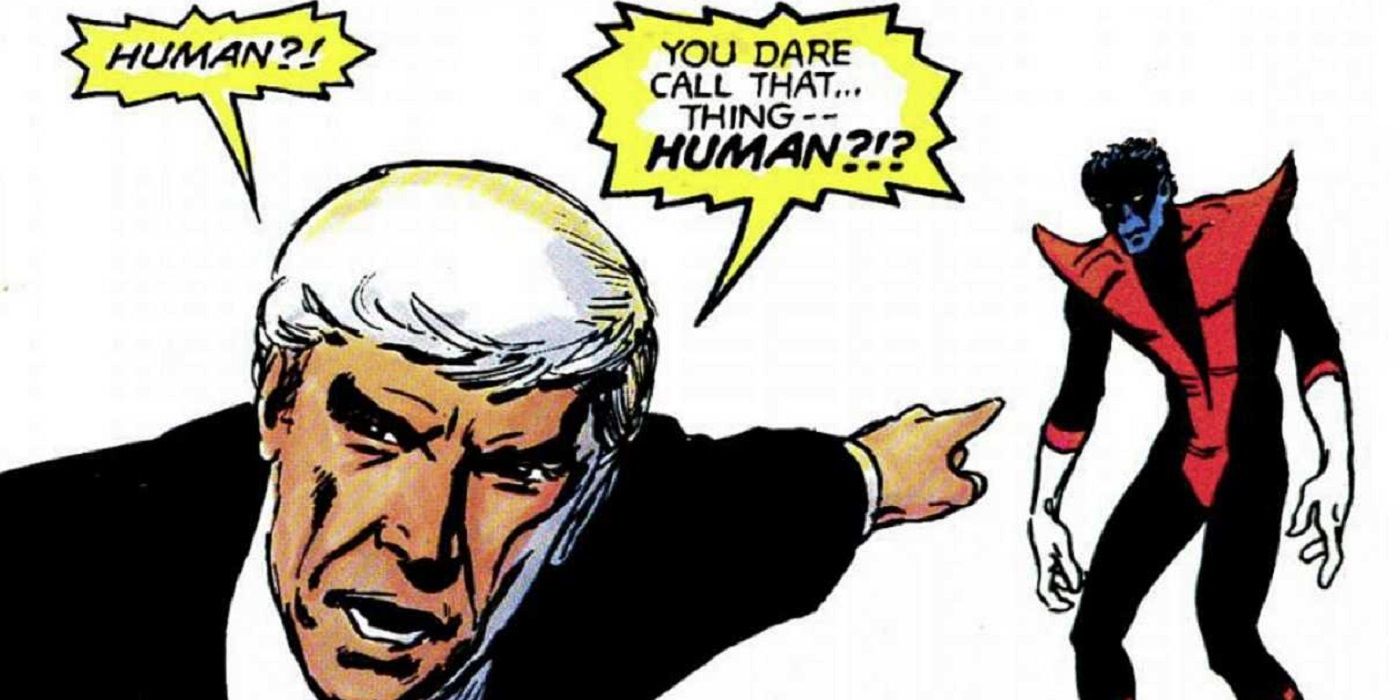
Despite all this, they try to be heroes. But the villains they often face involve humans who either want to wipe them out completely or make their lives objectively worse on every level.

This asshole, who clearly knows what the X-Men are, didn’t seem to grasp that. He might have seen the first X-Men movie and thought it was a tragedy about a brave senator who tried to pass Draconian laws on an entire class of people. Now, he wants to do the same to transgender people, but it will not stop with them.

We’ve already seen this script play out before. It’s happening as we speak with abortion. It’ll keep happening as long as the people in power believe they can get away with it, keep their jobs, and earn money from their doners, who are often villains in their own right.

People like Representative Webster aren’t going to stop with bullshit policies like this. They won’t stop for the same reason the X-Men’s villains never stop. They believe they can get away with it. They believe they’ll get more power, money, and prestige out of it. Some may very well just be hateful assholes who just want to make people they don’t like suffer.

Those people exist.

I’ve had to deal with them.

But unlike the X-Men’s villains, these people are real. They’ll continue doing whatever they think they can get away with, either out of malice, spite, or just plain ignorance. And we can’t expect superheroes to come along and save us. These are villains we’ll have to deal with.

It’s not as easy or cinematic as Wolverine cutting up a Sentinel attacking the Xavier Institute. But it’s something we all need to be aware of. Because the alternative is letting the villains win in the long run. And take it from someone who has read enough comics about dark timelines and dystopian futures.

We must not let the villains to win.

1 Comment

Filed under Current Events, politics, superhero comics, superhero movies, X-men

A Frightening (But Possible) Scenario For The Near Future

It has been a strange, scary, and distressing time for the United States of America. Anyone who has been following the news in any capacity these past five years would likely agree. Between the politics, the culture wars, and people whining about female characters in “Star Wars,” it has gotten quite ugly.

I also sincerely regret that I have likely contributed to that ugliness at times. I don’t deny that I have written things on this site that, in hindsight, were probably misguided in terms of both intent and overall point.

However, I won’t go so far as to delete what I’ve written or deny that I ever felt differently than I do now. I just accept that there have been times in my life where I believed, accepted, and propagated things I thought to be right, but eventually realized were wrong.

That’s neither good nor bad.

That’s just life and how your perspective changes with time.

Except now, I’m at an age where it’s a little easier to see the forest from the trees, with respect to current events. Not long ago, I thought I understood the general arc of politics, trends, cultural issues, and what not. I could see the patterns that began with people whining about Marilyn Manson and “South Park” in the 90s and culminated with people whining about diversity in children’s shows and boob armor today.

I now realize I was wrong, yet again.

I didn’t know just how messy, regressive, and irrational these issues could be, even in a first world country like the United States of America.

If I ever gave the impression that I was more informed than most, I apologize. I’m not. I know now that I hadn’t been on this planet long enough to see just how bad things could get or how much large groups of people could collectively deny objective reality.

As a result, the optimism with which I once harbored about the future of America and the human race in general has taken a severe hit. I won’t say it’s utterly dead, but it is on life support at the moment. With each passing day, I see people with objectively un-American ideas about freedom claiming they’re the true patriots. I also see people exercising blatant, unambitious hypocrisy and paying no price and feeling no shame.

Now, in wake of the Supreme Court’s ruling overturning Roe v. Wade and setting abortion rights back 50 years, I’m just about out of hope. It’s not just that I’m strongly against forcing women to have babies they don’t want or using misguided religious zealotry to justify certain laws, policies, or positions. These are all positions that a vast majority of people don’t agree with.

The same goes for organized religion. It has been in steady decline for decades. Young people, especially, are no longer buying into this old dogma. Despite that, the religious right has never been more powerful and it shows no signs of waning. And I’ve been on this planet long enough to understand something disheartening and distressing.

When uptight, repressive people gain power, they seek to use it. And they will use it in ways that are bound to be unpopular, damaging, and destructive. Since my beliefs, politics, and background are not at all in line with these zealots, I will likely feel that impact. I might not feel it as much as others, but I will feel it.

I don’t claim to know the future. I also know that things always change, no matter how hopeful or bleak they seem. However, given the cycles I’ve seen and the trends I’ve seen throughout my adult life, I get the sense the direction of that change is not going in a good direction. Moreover, it’ll never go in the direction it needs to for more people to prosper.

In order to illustrate this sentiment, I want to offer the following scenario that may or may not be a result of ongoing trends.


The year is 20XX.

The White House, both sides of Congress, and the Supreme Court are dominated by conservative Christian republicans. They’ve spent the past two years furthering their agenda, passing wildly unpopular policies that curtail abortion rights, denigrate LGBTQ communities, undermine public education, and embolden politically connected religious organizations.

Now, the mid-terms are coming up and it looks very likely that they’ll lose control of Congress. Several prominent democrats even promise to block any further policies by the religious right. However, rather than accept the loss of power that comes with every election cycle, leaders in the religious right decide to take action.

First, they start passing laws meant to “preserve democracy,” but end up limiting peoples’ ability to vote.

Then, they start promoting stories claiming that the other side is preparing to cheat during the election.

Then, they elevate news stories of questionable credibility that claim operatives within the democratic party have been arrested or charged with potential election crimes.

Then, in the name of preserving democracy, the upcoming election is deferred several months.

Then, protests and outrage break out across many major cities.

Then, the republican president declares a state of emergency, which includes enacting martial law within multiple states, especially those likely to have democratic governors or majorities.

Then, the National Guard and local police are deployed to quell riots and ensure peace.

Then, mass arrests take place. The fact that many of those arrested happen to be democrats or minorities is claimed to be just a coincidence or unrelated.

Then, voting rights for those arrested and charged with crimes are suspended.

Then, “special elections” take place, but under strict rules governed by a republican Congress and many republican dominated state governments.

Then, democratic leaders sue and attempt to block the act, but the conservative Supreme Court rules against them.

Then, the election results are in and, despite vast swaths of the public not being able to or allowed to vote, the conservative Christian republican candidates win and win big.

Then, armed with this new power, they alter more rules regarding elections and legislation in the name of “preserving the peace” or “protecting the public” or “maintaining democracy.”

In the end, the only citizens who are allowed to or are capable of voting are conservative Christian republicans and the only candidates they can vote for just happen to be conservative Christians. As a result, more regressive laws are passed that are not at all popular, let alone constitutional.

But that doesn’t matter at this point. It’s too late. They have the power and they’re never letting it go again.


Now, what I just described is only one possible scenario. I freely admit it’s an extreme scenario, not unlike what played out in “The Handmaid’s Tale.” However, extreme or not, the possibility is there, as are the disturbing trends.

The reversal of Roe vs. Wade and the domination of the Supreme Court by conservative right wing Christian may very well be the first act in a new trend. I’ve seen throughout my adult life how bold and unapologetic these types of shameless bullies can be.

It doesn’t matter if they’re caught lying.

It doesn’t matter if they’re caught in an act of blatant hypocrisy.

It doesn’t even matter if someone finds out they paid their mistress to get an abortion.

They face no consequences and feel no shame. They keep getting away with their deplorable behavior and they have every incentive to seek more power and influence. So long as they get the right people to vote for them, use the flaws of the system to their advantage, and depend on the relative apathy of most citizens, they’ll remain in power and they’ll keep securing more.

That’s always the endgame. It’ll go on as long as there’s are new opportunities and no obstacles, be they laws or people, to get in their way. And at this point, I honestly don’t know if there’s enough obstacles anymore.

Encouraging people to vote doesn’t seem to work anymore because voting has become so diluted in the United States. Unless you live in a swing state, it really doesn’t matter.

Encouraging people to protest doesn’t seem to matter, either. At most, it just inconveniences people who are rich, powerful, and capable of hiring private security. They literally have no incentive to change anything about what they’re doing or why they’re doing it.

I wish I knew of a solution or recourse. I really do. Maybe there is and I’m just not smart enough to realize it, let alone articulate it. But at the moment, I’ve never been less hopeful about the future of the United States and the human race in general. I really hope I’m wrong about my current outlook, but I’m not sure what could change these distressing trends.

If we’re at a point where we can’t even agree on objective reality anymore, then what hope do we have of creating a better reality for our future?

Leave a comment

Filed under Current Events, politics

A Perspective On Generation Gaps

As a general rule, I try not to talk about politics with anyone. I avoid getting into political debates online, as well. I used to actively seek that out. I’ve since learned there are less frustrating ways to waste my time.

A significant part of that frustration comes from talking politics with people who are significantly older or significantly younger than me. I’m in my thirties now. I still remember my teen years, but I also can’t deny that I’m different now than I was back then. I’m still the same person. Time and perspective just have a cumulative effect.

I think most people experience the same thing, regardless of their age. I’ve talked about issues regarding generation gaps before. I imagine they’ll become even more prominent as Generation Z comes of age. It’ll only get more divisive as the Baby Boomers start to retire.

I know this because I’ve gotten into more than a few debates with older relatives and family members. Every time politics comes up, they’ll share stories with me about how things used to be, how they see things now, and how they think things are going to pan out in the future. I’m not going to lie. It has led to more than a few “Okay Boomer” moments.

Those moments shouldn’t define the discourse, nor should it be an intractable barrier. I’ve faced similar barriers in talking politics with people far younger than me. It’s hard to explain the complexities of the world to teenagers when their experiences are so limited.

With that in mind, I’d like to take a moment to offer a brief perspective on generation gaps and discussing controversial issues. Whether it’s politics, society, or life in general, I feel it might help to take a step back and try to see the forest from the trees. To that end, here’s a quick insight that I hope people from every generation can appreciate.

Your attitudes, beliefs, and assumptions are not the same as they were 10 years ago.

Your attitudes, beliefs, and assumptions will not be the same as they are 10 years from now.

However, at your core, you are still the same person.

The attitudes, beliefs, and assumptions of every functioning adult you’ll encounter are not the same as they were 10 years ago.

The attitudes, beliefs, and assumptions of every functioning adult you’ll encounter will not be the same 10 years from now.

However, at their core, they’re still the same people.

You and the people around you may change, but change is never anyone’s first inclination. It only takes hold when it feels right, necessary, or convenient.

Whether you’re young, old, or middle aged, I hope this helps make sense of things. I don’t claim to be smarter or more insightful than anyone else with an internet connection. I just believe that making sense of this chaotic world and the many people within it starts with a balanced perspective.

You won’t be able to understand every idea from every generation, but it’ll remind you that people have more alike than they are different. We don’t have to identify with all those differences. It’s just easier to get along when we remember just how similar we are.

Leave a comment

Filed under Current Events, human nature, philosophy, political correctness, politics, psychology

Legalizing Vs. Decriminalizing Prostitution: Knowing The Difference And Why It Matters

5a3a8d764aa6b51d008b62e2-960-720

Anyone who has dealt with lawyers for more than five minutes will likely tell you that the words you use in legal issues really matter. In fact, even punctuation matters. There has been more than one case in which the placement of a comma has made a difference measured in millions of dollars. When it comes to issues like prostitution, the stakes are even higher with respect to word choice.

For better or for worse, but mostly for worse, the debate surrounding prostitution has been derailed by poor word choice. That’s because when most people discuss prostitution these days, it gets caught up in rhetoric surrounding human trafficking, sexual slavery, and exploitation. No matter where you are on the political spectrum, there’s no way to get around such ugly verbiage.

That’s a big problem too because, as I’ve noted before, sex work and human trafficking aren’t the same thing. That’s not just me saying that. This is what actual data says. According to research conducted by the International Labour Organization, only 22 percent of human trafficking victims are forced into sex work. The vast majority of victims end up in other forms of forced labor.

Despite this, it hasn’t stopped anti-prostitution advocates from citing human trafficking as a reason for keeping prostitution illegal. However, as a few notable cases have revealed, broad scale prohibition of prostitution doesn’t work. That’s why a number of western countries have attempted other legal models to deal with the issue, the most popular being the Nordic Model.

Under this model, sex work isn’t entirely legalized. It’s legal to sell sexual services, but it isn’t legal to buy it. It’s basically akin to legalizing hot dog stands, but not the consumption of hot dogs. It may sound absurd, but the intention is to attack the demand surrounding prostitution, punishing the people who patronize an exploitative industry.

While that sounds noble on paper, the results don’t line up with the goals. There’s no evidence that this model makes people less inclined to want sex from a prostitute. There’s also no evidence that it has improved the lives of sex workers. Even so, whenever prostitution comes up, any discussion of legalization is bound to draw ire from anyone who isn’t an ardent libertarian.

Liberals see prostitution as exploitation of women, minorities, and the poor.

Conservatives see prostitution as immoral, dirty, and sinful.

Feminists see prostitution as a product of oppressive, patriarchal traditions.

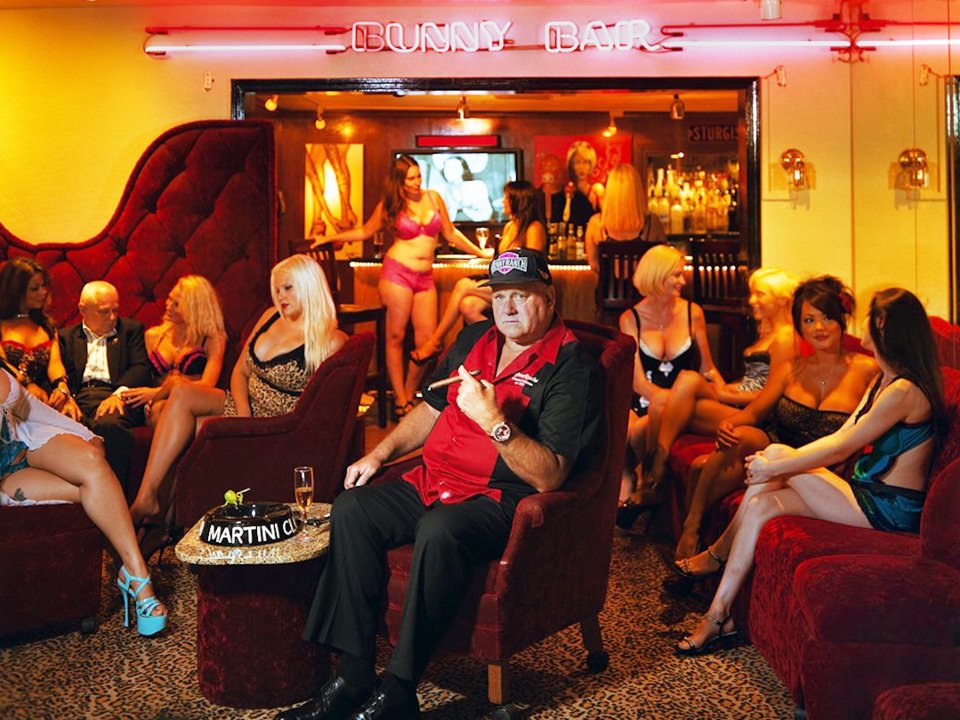
With such powerful opposition in mind, it might help to take a step back and understand the actual substance surrounding legal sex work. When most people think about legalized prostitution, they probably imagine scenes like the legal brothels that operate in Nevada or the Red Light Districts that operate in parts of Europe. However, that’s only a small part of a much larger story.

That’s because legalized prostitution is not the same as decriminalized prostitution. Make no mistake. The difference is subtle, but has huge implications and you don’t have to be a sex worker, a police officer, or a lawyer to appreciate them.

By and large, the presence of red light districts are a byproduct of legalization. That’s because under a legalization model, the government and local authorities regulate the practice. This is how it works in countries like Germany and the Netherlands. Like the Nordic Model, the intentions are good and it even sounds good on paper.

The government license sex workers, thus providing them with a legal paper-trail. They can also include things like mandatory health screenings, adherence to specific labor laws, and access to public services and benefits. Again, that sounds good and it has plenty of benefits, especially when compared to the inherent dangers of street prostitution.

The drawback is that government regulation of prostitution has the same issues associated with government regulation, in general. It effectively requires that the lives of sex workers be micromanaged to a degree that those who work in fast food or coal mines don’t experience. Those who don’t abide by those regulations are as worse off as they were under illegal prostitution.

In essence, legal prostitution improves things for sex workers who are able to comply with the various regulations. Given how many sex workers come from poor or marginalized backgrounds, this ensures that not everyone enjoys the benefits of legal protections. It essentially creates two tiers of prostitution in which one is still very vulnerable to exploitation and the government gets to decide who is in that tier.

Regardless of how much you trust the government to decide who in the sex trade to protect, the legal shortcomings are inherent. This is where decriminalized prostitution sets itself apart. In this model, the government doesn’t exactly legalize prostitution as much as it removes the criminal penalties associated with its activities.

It’s a small, but critical distinction in that the government and the authorities don’t play favorites with who they prosecute and who they ignore. They still have to enforce laws surrounding violence and coercion. That means human trafficking is still illegal. You can’t force someone to become a sex worker any more than you can force them to work in a copper mine. Essentially, it treats sex work as actual work.

While I’m sure that offends the sensibilities of many people on various parts of the political spectrum, it does frame sex work in an important context. In almost every form of labor, there’s room for exploitation. Workers can be underpaid and subject to deplorable conditions. Shady business practices can ensure that only a select few see the benefits. Decriminalization makes no special exceptions for sex work.

The same laws that attempt to combat those practices in other businesses are simply applied to sex work. Even in the United States, if prostitution were decriminalized tomorrow, human trafficking and forced labor would still be illegal. It would just be treated the same as those who employ trafficked labor to work in agriculture or factories.

To some extent, this makes sex work less taboo from a legal standpoint. When you make special classifications for specific behaviors, it sends the message that there’s something that sets it apart from other similar activities. In societies where sexual activity is subject to all sorts of taboos outside prostitution, it can effectively reinforce many of those taboos.

It’s for that reason, among many others, that more human rights organizations now favor decriminalizing prostitution over legalization or the Nordic Model. Among those organizations include the likes of Amnesty International, who issued their official position back in 2016 wherein they stated the following:

It recommends the decriminalization of consensual sex work, including those laws that prohibit associated activities – such as bans on buying, solicitation and general organization of sex work. This is based on evidence that these laws often make sex workers less safe and provide impunity for abusers with sex workers often too scared of being penalized to report crime to the police. Laws on sex work should focus on protecting people from exploitation and abuse, rather than trying to ban all sex work and penalize sex workers.

At the moment, the only country that has embraced decriminalization is New Zealand. While it’s not perfect, the research on the effectiveness of policies show promise. It’s also the policy that many sex workers themselves advocate.

It’s still not a perfect policy, but that makes it all the more important to understand the differences between what’s being done now and what could be done in the future. Prostitution is called the world’s oldest profession for a reason. Human beings are sexual creatures. They are wired to seek sex. There will always be those who seek it and those willing to provide it for a price.

Laws can change, but no amount of legal distinctions and enforcement are going to change human nature. The emergence of sex robots and sex doll brothels promise to further complicate the issue. There’s no one perfect way to handle an issue as sensitive as prostitution, but there are plenty of ways to make it worse.

6 Comments

Filed under gender issues, political correctness, prostitution, sex in society, sexuality

Scrutinizing (And Questioning) The Gender Wage Gap

wage_gap_photo_

There are some assumed truths that we, as a society, don’t question as much as we should. In the era of fake news, alternative facts, and conspiracy theorists who act like living internet memes, it’s hard to know what’s true anymore. Even when things are proven definitively false, people still cling to them. Why else would creationism still exist?

However, there are a few over-arching assumptions that I feel deserve more than just skepticism. There are some common talking points that have significant flaws solely because of their implications. You don’t even need to compile statistics or conduct extensive research. Just asking questions that build directly from the logic are sufficient to expose underlying flaws.

One talking point that keeps coming up in the world of gender politics is the gender wage gap. It’s been an issue for years, but keeps coming up in everywhere from Hollywood to tech companies. Even though I’ve talked about gender politics many times before, I’ve avoided this particular issue because everyone can find numbers to throw at it to support their position. As a result, there’s not much to write about.

That’s why I’m not going to try and debate it with economic studies or statistics. There are plenty of other people far smarter and more qualified to do that sort of thing. Instead, I want to scrutinize this common and contentious issue in a few simple ways that I hope demonstrate why it’s such a flawed issue to begin with. I believe this can be accomplished by asking just a few simple questions.


If Women Are Always Paid Less, Then Why Would A Company Hire Men?

I’m not an economist, a financial specialist, or a business expert, but I understand logistics as well as most people. Last I checked, a good business seeks to maximize profits and minimize costs. That’s the hard of nearly every challenge for every business, whether they’re selling widgets or time shares.

With that in mind, why would any business hire men if they can save money by hiring women? If women are every bit as capable, as many in the halls of gender politics argue, then there’s no reason for them to favor men. If the gender wage gap is true, then any business that hires men is intentionally throwing money away.

I get that the economics of wages, combined with the complexities of gender dynamics, create all sorts of confounding factors. That doesn’t change the math or the incentives surrounding profit. The basics of the wage gap imply that there’s a system in place that allows companies to pay women less for the same work, but they’re not taking advantage of it.

That just doesn’t make sense and I rarely hear those who bemoan the pay gap address this. I feel like since most people don’t understand business or economics, it’s easy to ignore and people just take the path of least resistance.


What Exactly Constitutes Equal Work?

This might be entirely subjective in most cases, but the idea of “equal pay for equal work” is becoming a bigger and bigger part of this issue. I hear politicians, pundits, and protesters using this phrase in any number of speeches in debates. However, they never go into detail.

Equal pay is one thing, but equal work is something else entirely. Human beings are not machines. Even if two people have the exact same skill level, they’re not always going to produce the same product with their work. That’s just not physically possible for non-cyborg humans.

I don’t doubt that a woman can be just as good as a man in many tasks, from typing up reports to carving furniture out of wood like Ron Swanson. Most of these skills are not physically impossible for able-bodied people, regardless of their genital configuration. Even if they’re capable, though, how do you decide that their work is equal?

Is it determined by how much time they put in? Is it determined by the volume of the work or the amount of money it generates? Most businesses use a mix of workers that have a wide variety of talents, skills, and abilities. Given those constraints, the whole idea of equal work seems to break down.

I’m not saying there aren’t cases where a woman is paid less for doing the same work as a male counterpart. That probably has happened before and will happen again. I just don’t see how that can be address beyond a case-by-case basis.


How Do You Enforce Perfectly Equitable Pay?

Beyond just determining what equal work is, there’s the whole concept of enforcing that equality. Passing laws is the most obvious possibility, but implementing those laws can be tricky. In the state of Georgia, there’s a weird law that prohibits people from living on a boat for more than 30 days. How do the authorities go about enforcing something like that?

Like I said before, businesses have all sorts of complex machinations. People have a variety of skills, roles, and duties. Not everyone works the same hours and not everyone will work with the same efficiency. Do they all still get paid the same? How would you even go about determining what constitutes fair pay in every instance?

It’s not just unfeasible. It’s physically impossible. There are so many subjective forces at work and everyone will argue that their work contributed more value than everyone else’s. They all can’t be right, but they all can be wrong and if everyone is wrong, then how can you know the truth? Even if the idea of equal pay seems good and just, it still breaks down when you try to apply logistics.


What Else Can People (Reasonably) Do?

In 1963, the Equal Pay Act was passed and signed into law by President Kennedy. This law stated outright that no employer could utilize sexist discriminatory practices when determining the wages of its employees. That law has been on the books ever since. It’s a federal law so it applies to every state and territory. It can be enforced by legal resources at every level of government.

Paying someone less because they’re a woman is already illegal and has been for decades. What else can people do? Like I said, enforcing a law is difficult, but the law is still there. However, in the same way that drug laws didn’t make illicit drugs go away, laws concerning equal pay don’t make the gaps go away.

Laws can only provide rules. They can only do so much to change society as it is. The pay gap has significantly narrowed, but it’s not perfect. Nothing ever is. Beyond abolishing wages for everyone, which may actually happen one day, what else can be done? I get that many favor hiring more women and minorities, but is that really reasonable for every business in every sector of the economy?


Again, I see the merit and the passion behind the idea. Someone getting paid less for their work just because of their gender is a gross injustice, but righting that wrong in such a complex world just isn’t that easy. Nothing ever is. I know these questions can’t be fully answered, but I hope that simply asking them offers a more complete perspective of the issue.

1 Comment

Filed under gender issues, men's issues, outrage culture, political correctness, sex in society, sexuality, women's issues

When Fighting For Equality Is Counterproductive

632318086-dc-rally-women-march-washington

Have you ever met someone who is just inherently better at something than you? No matter how hard you practice, you just can’t reach their level. They’re still better. It’s an unfortunate fact of life that we all have to learn at some point, but I worry that some people are trying to put that lesson off while others are trying to outright subvert it.

In general, the intent is noble. The world is full of horrendous inequality. There’s wealth inequality, gender inequality, and even inequality in representation within superhero comics. While we have done a lot in the century to reduce inequality, there’s still plenty of room for improvement.

For the most part, people support those efforts. You won’t find many people who aren’t enjoying a fat inheritance that will say outright they want less equality. Segregation, rigid caste systems, and the dehumanization of minorities is largely frowned upon for reasons I hope I don’t have to recount.

Seeking a more equal and just world is a perfectly respectable endeavor. For the most part, I support those efforts. I believe we should work towards a more egalitarian society where the rights and dignity of individuals are protected and respected. Even though we have laws in place, as well as principles espoused at an international level, we could do a better job at enforcing them.

With all that said, there’s still one burning question that I feel is worth answering. It relates directly to the first question I asked earlier and the harsh lesson it teaches us.

How much equality is actually possible?

It’s one of those questions that’s impossible to answer, but evokes many heated debates, regardless of politics or affiliation. Whether it’s economic issues or gender issues, these debates often devolve into one side calling the other a fascist or a bully. Every now and then, there’s some meaningful discourse and even a few novel ideas. In the era of outrage culture, though, this seems to be getting increasingly rare.

We’re at a point where even the slightest hint of inequality is deemed untenable.

Are there too few female superheroes in comic books? That’s not equal!

Are there too few people of color being cast in major move roles? That’s not equal!

Are there too few minorities in Forbes list of 100 richest people? That’s not equal!

Are there too few women in fields of science, medicine, and technology? That’s not equal!

Are there too few dating options for people who are disabled or obese? That’s not equal!

Are there too many beautiful women who only hook up with assholes? That’s not equal!

Are there too many handsome men who only date supermodels? That’s not equal!

I could list dozens of other situations that are grossly unequal. I purposefully omitted big ones like the gender wage gap and racial disparity in criminal arrests because these are cases that best highlight the logistics of promoting equality versus the ideals surrounding equality.

By law, it’s illegal to pay someone less because of their gender and has been since 1963. The courts have also historically ruled that it’s illegal to selectively enforce laws on the basis of race. These precedents are decades old and on the books for any lawyer to enforce. Why is there still so much inequality?

There are many reasons for that and I’m not smart enough to make sense of all of them. However, I think the mechanisms that continue to drive inequality can be best summed up by a terrible Jennifer Aniston movie from 2006 called “The Break-Up.” Yes, I know that sounds ridiculously random. I promise there’s a reason behind it and it relates to the underlying concept of equality.

In that movie, a couple is going through some nasty conflicts that are only mildly amusing at best. However, the most revealing quote from the movie, which also happens to be most relevant to this topic, is when Jennifer Aniston’s character tells her significant other this.

“I want you to WANT to do the dishes.”

It is, without question, an absurd statement that makes an unreasonable demand on someone she claims to love. It nicely sums up the entire conflict of the movie and effectively spoils the ending. These two are not in a functional relationship. In fact, if they had actually stayed together at the end, it would have been unhealthy for both of them.

That’s not because the relationship was unequal. It’s because both Jennifer Aniston’s character and Vince Vaughn’s character had very different ideas of what was “fair.” I put fair in quotes because it was an empty concept in this context. They didn’t just want equality in terms of roles, responsibilities, and privileges. They wanted equality of outcome and consequences.

That’s not just an unreasonable expectation. It’s a catalyst for outrage. It’s one thing to fight for legal equal protection, but fighting for equal outcomes and consequences is a losing battle. You’re better off trying to divert Niagara Falls by spitting at it. On top of that, it sets people up for disappointment and outrage.

The all-female remake of “Ghostbusters” was never going to make as much money or be as beloved as the original.

The push for less sexy video game characters was never going to improve gender relations in the gaming community.

Attempts to replace Iron Man with a 15-year-old black girl from Chicago was never going last for very long.

All these outcomes were fairly predictable, but still generated incredible outrage with people crying discrimination, racism, sexism, and every other kind of insult in keeping with Godwin’s Law. As a result, those still fighting for what they see as “fair” have to step up their game and push harder. That often means becoming more extreme in rhetoric, emotions, and tactics.

Since things like reality, facts, and basic human nature often get lost in extremes, it makes sense that we have such radical segments of the political and social spectrum. I believe most of them genuinely believe they’re fighting for greater equality and greater fairness, as they see it. A few are probably just genuine assholes looking for excuses to be bigger assholes, but they’re the minority.

To some extent, I can appreciate the intent and effort of those fighting for more equality. The world is still imperfect and humanity, as a whole, is exceedingly imperfect. Our collective history is riddled with injustices and atrocities of staggering proportions. We should strive to be better, as individuals and as a civilization. A part of that effort pursuing a society of equal rights, privileges, and responsibilities.

At the same time, some levels of inequality are unavoidable. Sometimes, it’s due to simple demographics. Sometimes, it’s due to the basic laws of biodiversity or sexual dimorphism. Sometimes, there are individuals that are just inherently better at you than something. I could practice basketball every hour of every day for the rest of my life. I’ll still never be as good as LeBron James.

That kind of equality is just not possible in the real world. Until we all become shape-shifting cyborgs, we can only be equal to a certain extent. Many sincere people disagree on where that extent is and where it should apply.

However, there’s a real danger in trying to achieve the impossible and getting upset whenever it’s not achieved. It doesn’t just suck up energy, ideas, and resources from other meaningful endeavors. It fosters hostility towards others and their ideas. In the same way Jennifer Aniston’s character couldn’t make her boyfriend want to do the dishes, we can’t make someone else want our idea of equality.

1 Comment

Filed under gender issues, human nature, Marriage and Relationships, media issues, men's issues, outrage culture, political correctness, psychology, sex in media, sex in society

Are Cheerleaders An Endangered Profession?

cheerlader

There are certain professions that go extinct and for perfectly valid reasons. Occupations like elevator operator, switchboard operators, and milkmen are all jobs that just don’t have a place in the economy or society anymore. Technology and trends have rendered them unnecessary or obsolete.

For a small, but vocal contingent of regressive individuals with a low threshold for outrage, there’s a particular occupation that they’d like to add to that list. That is the profession/hobby of cheerleading, specifically the kind that involves parading beautiful women in sexy attire so they can dance, shake pom-poms, and get a crowd excited. Hell, it’s not like there’s anything inherently appealing about that.

That last sentence was sarcasm, by the way. I want to make clear that, as both a man and an avid sports fan, I love cheerleaders. They embody so many wonderful concepts about the world. They combine sports, sex appeal, dancing, and excitement. They bring happiness, excitement, and spirit to an event. There is literally no downside.

Unfortunately, that regressive crowd who insist on seeing sexism, misogyny, and oppression at every corner sees none of that. They only see beautiful women being paraded around in sexy attire for horny men to gawk at. It doesn’t matter if those women choose to do so or are paid to do. Beautiful women attracting the attention of horny men is seen as inherently oppressive to all women everywhere.


That was sarcasm too. I’m sorry if I’m using more than usual, but I find it’s the best way to highlight the sheer absurdity of this attitude. However, it’s an absurdity with serious implications because it reflects a growing trend. Now, in an era where it’s suddenly scandalous to depict the female body in any sexual context, cheerleading is a growing target.

It’s a target that has already taken a few hits. Earlier this year, Formula One Racing announced that it would no longer utilize grid girls, who are basically cheerleaders for racing. This act was cheered by the radical anti-sex feminist crowd. It was probably secretly cheered by priests, mullahs, and monks, as well. While it did inspire somewhat of a backlash, it hasn’t stopped that same crowd from aiming at other targets.

More recently, NFL cheerleaders are in the spotlight. In terms of cheerleading, as a profession, this is basically going for the very top of the hierarchy. The NFL is for cheerleaders what the Pro Bowl is for NFL players. It’s seen as the very pinnacle of the profession and it may be in danger.

It hasn’t helped that there have been some distressing scandals involving how some NFL cheerleaders are treated. The recent scandal involving the Washington Redskins cheerleading squad has only added more fuel to the outrage. Never mind that the facts of these scandals are limited and anecdotal, in some cases. It gives the regressive crowd everything they need to cry sexism and misogyny.

Now, none of this is to downplay some of the real issues surrounding cheerleading, as a profession. There are certainly issues with respect to how much cheerleaders are paid and how their lives are micromanaged. Those issues should be addressed and reformed. However, that’s not the conversation anyone wants to have.

Instead, cheerleading is getting lumped into other outdated traditions like arranged marriages, virginity tests, and being forced to cover their ankles in public. It’s not a profession or a passion that needs to be reformed and improved. It’s something that needs to be outright purged from society.

That’s not just an extreme reaction to a job that isn’t even the most dangerous or the most prone to sex scandals. It’s an attack on the very idea that beautiful, sexy women can and should be used to promote anything, be it a sports team or a fast food meal. The problem isn’t how the job is unfairly managed. It’s the job itself.

From the perspective of cheerleading’s opponents, it objectifies the female body and commodifies female sexuality for the consumption of men. In an era where sexually harassing a woman is seen as the ultimate evil, whereas sexually abusing a man isn’t nearly as outrageous, that’s just unacceptable.

The attitudes of the women who seek this profession don’t matter. The attitudes of the men who enjoy the sexiness and excitement that cheerleaders inspire especially don’t matter. All that matters is that cheerleaders are too sexually stimulating to the masses and that’s feeding a culture of misogyny and sexism. I wish that were sarcasm, but that’s what these regressive people genuinely believe.

For them, undermining the freedom and agency of those who want to pursue cheerleading and those who want to admire cheerleaders is a price they’re willing to pay. While some, like the Grid Girls, try to fight back, they’re facing an uphill battle and it’s one that cheerleaders might end up losing.

That’s because these are exceedingly sensitive times. Just trying to inject reason and criticism into the movement against sexism is subject to irrational outrage. Matt Damon found that out the hard way. More and more, people are just avoiding the conversation altogether because it just keeps fueling more outrage.

The current dynamic is as simple as it is unfair. If you stand up for cheerleaders, then the regressive crowd can just claim you’re a sexiest who wants to gawk at beautiful women. Even if you’re a woman speaking on behalf of cheerleaders, your criticism can be cast aside because you’re just brainwashed by the patriarchy and you’re for the objectification of women.

Never mind the fact that the very concept of objectification is fundamentally flawed. Never mind the fact that that flawed concept is also prone to some pretty disturbing double standards. The protests against cheerleading is framed as a protest against sexism, misogyny, and patriarchal oppression. It doesn’t matter how wrong or misguided that notion is. That’s the perception and there’s just no way to win that argument.

These days, being called a sexist is bad for business and for your profession. I believe the regressive crowd knows that, to some extent. They understand that the NFL is a business and one that has already been ravaged by negative press. Their success and their profits are dependent on their brand. If they see something as potentially damaging to their brand, then they’re going to either get rid of it or downplay it.

I’m not good at predicting the future, but depending on how these recent cheerleading scandals play out, I suspect that the NFL might just slowly phase out cheerleaders, altogether. It’s the path of least resistance. Keeping them around means keeping the outrage around. That’s just more risk and frustration than it’s worth.

It would be another major loss, one far bigger than the loss of the Grid Girls. However, as much as I love cheerleaders and the sex appeal they bring, I can totally understand why a major organization like the NFL would resort to such an extreme. By just removing cheerleaders, altogether, the crowd of regressive outrage will move onto their next crusade and, hopefully, leave them alone.

It’s a scenario that nobody wins. If the NFL ends up eliminating cheerleaders, it won’t be because they’ve seen the error of their ways and are now champions of women’s empowerment. They’re just protecting their brand. They’re trying to stop the whining, an approach that only offers the illusion of progress and not actual progress.

Personally, I hope the NFL resists the outrage. The more ground we give to regressive attitudes, the more regressive our society becomes. This is a crowd that won’t stop until everything that might potentially evoke sexual feelings or portray women in a sexy way is either eliminated or stigmatized.

As both a fan of all things sexy and an aspiring erotica/romance writer, that’s not a world I want to live in. That’s not a world that even other women want to live in, as the Grid Girls have shown. It’s a boring, unsexy, downright dystopian world that’s worth resisting and I hope there are plenty of cheerleaders, male and female alike, who will cheer on that effort.

Leave a comment

Filed under Current Events, gender issues, media issues, political correctness, sex in society, sexuality, sports

Boredom Vs. A Lack Of Belonging: Which Drives Outrage Culture More?

http3a2f2fi-huffpost-com2fgen2f45348782fimages2fn-group-holding-hands-628x314

Here’s a quick non-rhetorical question. Which is worse, crippling boredom or social isolation? There’s no right answer, but every answer has distressing implications. More than anything else, those answers reinforce why solitary confinement is rightly considered torture.

I ask that question because I had an interesting conversation with someone on Reddit about what drives certain people to be constantly outraged about whatever happens to be controversial that day. I’ve talked a bit about outrage culture before and how professional trolls exploit them, but I haven’t really dug into the mechanisms behind it. Given how new controversies seem to trend every day, I think it’s worth scrutinizing.

In the discussion, I singled out boredom as a possibly underrated factor. Having highlighted the power of crippling boredom, I felt qualified to make the case that boredom may very well be an understated, under-appreciated cause. I still feel there’s a case to be made.

In the grand scheme of things, humanity is in uncharted territory when it comes to boredom. For most of human history, we had to live our lives under the constant threat of plague, famine, war, and natural disasters. Whether we were hunter/gatherers or subsistence farmers, life was chaotic and unpredictable.

Say what you will about those harsh, pre-modern eras, but they weren’t boring. They couldn’t be. There was always work to do. Given the lack of effective birth control, there were children to raise. Even if social media had existed 100 years ago, who would have the time or energy to even be outraged about a man wearing a sexist shirt.

Fast forward to the 21st century and things like war, famine, disease, and crippling poverty are all in decline. This is objectively good on so many ways, but for some people, especially in well-to-do middle class people, it leaves a large void that quickly becomes boring if not filled with something. Sometimes, it can get so bad that it can lead to outright murder.

When I made this argument, I think more than a few people took it seriously on Reddit. It was easy to see how someone whose life is so affluent and devoid of heart-pounding conflict that they will latch onto petty outrages just so they can feel something. Like someone stuck in solitary confinement, they’ll do anything for some sort of stimulation beyond counting the tiles on the floor.

Given how our brains can’t always discern the source of arousal, sometimes it’ll settle for whatever adrenaline rush we get from righteous outraged. Some go so far as to call the rush we get from outrage an addiction and it’s not a wholly inaccurate idea.

However, one person in that discussion pointed another element that also relies on that part of the brain that can’t always discern what gets it aroused. Instead of combating boredom, though, this issue deals with our inherent need to join a group and become part of a larger movement.

It’s very much an extension of tribalism and, like seeking stimulation when there is none, human beings are well-equipped by evolutionary biology to form groups. Whether we’re a small band of hunter/gatherers or a group of Taylor Swift fans, it doesn’t take much for us to form those groups and our brains reward us greatly.

Being part of a group feels good. Being part of something gives us a rush. It’s a major reason why peer pressure works and why tribalism often overrules reason. That solidarity we feel when we’re part of a group isn’t just intoxicating. It’s a fundamental component of any highly social species, which includes humans.

What this means for those constantly outrage isn’t that far off from the implications relating to boredom. Like boredom, our current society is pretty unprecedented in terms of how easy it is to form a close-nit group and share in that solidarity that has been driving our species since the hunter/gatherer days.

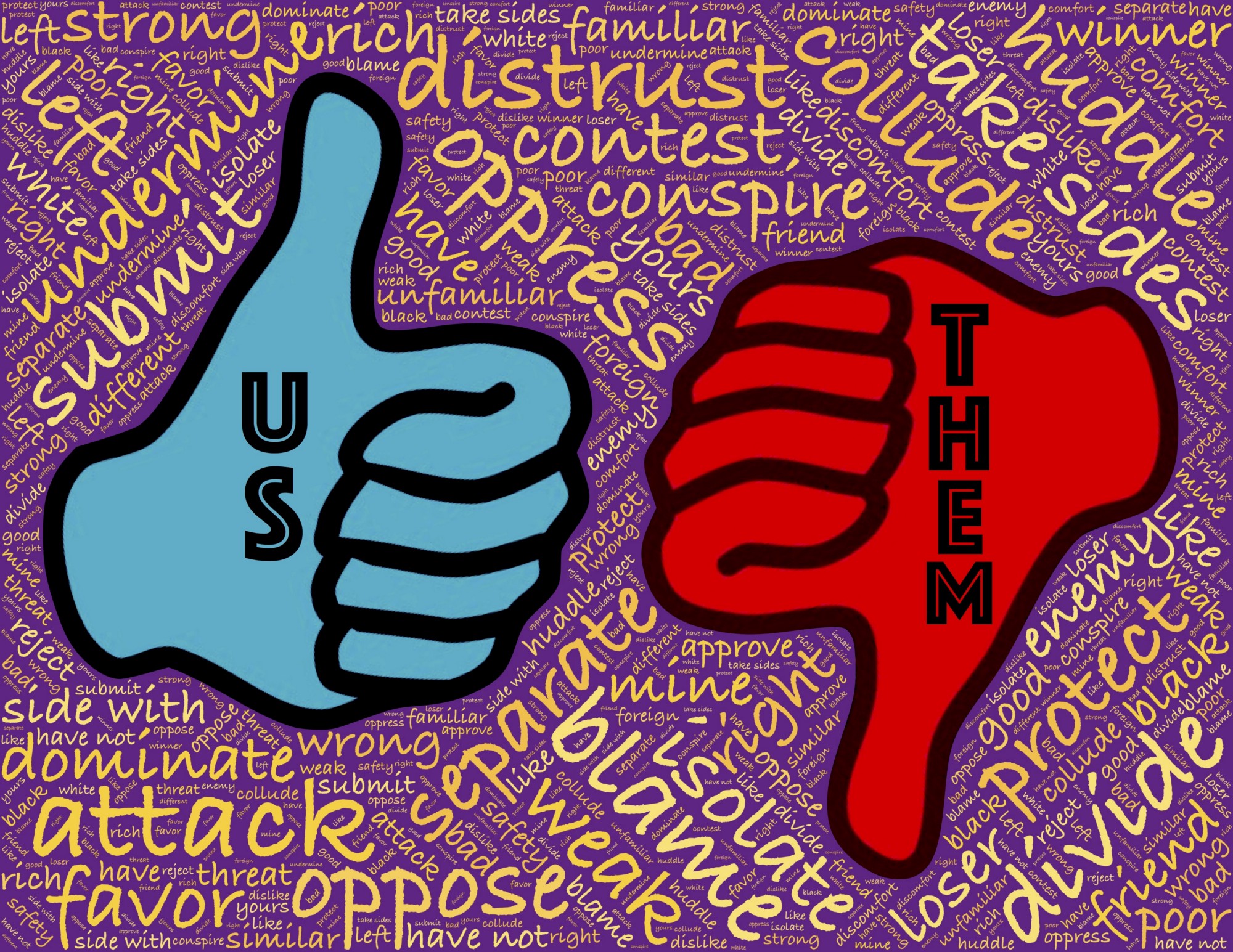
Thanks to social media and mass communication, it’s possible for people to do more than just share their opinions, no matter how outrageous they might be. It’s also possible to connect with those who either share in those opinions or despise them. In terms of forming a tribe, it’s a two-for-one-deal because it creates both a sense of “us” while revealing a “them” to rally against.

For anyone who has spent any amount of time on social media, it doesn’t take much to see the whole us versus them mentality to take shape. If any amount of disagreement goes on long enough, Godwin’s Law usually takes over and the battle lines are set.

On top of this, the social issues in 2018 aren’t quite nearly as clear-cut as they were in decades past. In the past, there were some pretty egregious injustices surrounding civil rights, women’s rights, and LGBT rights that required major social movements to combat. By and large, society has done a lot to improve the state for these marginalized groups.

There’s no question that being part of such righteous movements is laudable. We, as a society, rightly praise civil rights leaders who stand for such righteous causes. Naturally, some people seek to emulate that. Whether by ego or altruism, it’s only natural that they want to experience that kind of accomplishment.

Thanks to the sheer breadth of human progress, though, there causes on the levels faced by Martin Luther King Jr. or Mahatma Gandhi. However, because that drive to be part of a movement is just that strong, those same people will settle for pettier movements that protest sexy women in video games or bemoan the lack of diversity in old TV shows like “Friends.”

Make no mistake. Those outrages are petty and asinine when compared to the real injustices that past social movements have fought, but the brains of the outraged can’t tell the difference. From their perspective, their movement is every bit as righteous as every other civil rights movement in history. The outrage they express and the solidarity they feel is every bit as fulfilling as something that alleviates boredom.

Even if these causes are petty and the outrage is shallow, it’s important to note the alternative here. If these same people who protest the lack of diversity in the tech industry didn’t have this sort of thing to drive them, then what would happen to the group they’d formed?

Absent that outrage and protest, the group has nothing to rally behind. The person has nothing provoking arousal, be it anger or excitement. Without this dynamic, they don’t belong to something bigger anymore. They’re not the ones marching alongside famous civil rights leaders of the past. They’re just alone, by themselves, contributing nothing of value.

For many people, that’s just untenable. I would go so far as to say it’s almost as untenable as crippling boredom. Even self-proclaimed introverts and ardent individualists, we seek an identity and a constant source of stimulation. When we lack one or both, we lack a core element of any social species. In the same way we’re driven to meet the rest of our basic needs, we’ll be driven to find that somewhere, no matter how misguided.

In the past, we might have found that sense of belonging and purpose through our small communities or organized religion. Today, the world is much bigger and more diverse, thanks to technology and civilization. Organized religion is also not effective anymore due to factors too numerous to list. People are still going to seek belonging.

It’s somewhat ironic that civilization has advanced to such a degree that there aren’t as many clear-cut, good versus evil movements to be part of anymore. However, there’s still this longing to be the hero of our own story and be part of something greater, even if it means actually going out of their way to feel outraged.

Getting back to the initial question I posed, I think the influence of boredom and belonging are inherently linked. We agonize over escaping boredom and over having a sense of belonging. We can’t get that same rush our ancestors felt when surviving bear attacks and hunger so we’ll settle for whining about protests during football games. It’s still annoyingly petty, but distressingly understandable.

4 Comments

Filed under Current Events, gender issues, Reasons and Excuses, War on Boredom

Why We SHOULDN’T Judge People For The (Stupid) Things They Say In Their Youth

We all say dumb things when we’re young. That’s not an opinion. That’s an inescapable fact, right up there with gravity, taxes, and the inherent sex appeal of Jennifer Lopez. I doubt anyone would argue that young, inexperienced people say foolish things that they later regret. Despite that, why do we belabor that foolishness later in life?

This is an increasingly relevant question in the era of social media. For much of human history, you could usually get away with saying the dumbest, crudest, most ill-informed shit anyone could possibly say at any age. That’s because peoples’ memories are exceedingly fallible, so much so that even the courts recognize that.

Then, the internet came along and, on top of all the free porn and cat videos, some of that filthy, misguided rhetoric ended up in the digital coffers that are frustratingly robust. It’s become a popular meme that “The internet never forgets.” However, I think it has graduated from meme to a fundamental law of the digital universe.

Like most things, there are benefits and drawbacks to having a system that can remember how foolish and pig-headed we all were in our youth. A little perspective in terms of who we once were and how far we’ve come can actually be healthy. That said, it can also undermine our ability to function as adults who once were pig-headed youth.

This brings me to Cenk Uygur, a media personality that I mentioned earlier this year in a post about winning arguments versus being right. He’s a member of an internet media group called The Young Turks and, for a time, they were at the cutting edge of a new kind of news media.

They were unapologetically progressive in their message, often poking fun at extreme right-wing personalities who probably said less foolish things in their youth. They also provided genuine insight that didn’t always make it into the cable news networks, which was part of why I found them appealing for a while.

Then, the 2016 election happened and The Young Turks began getting more extreme. They became less about covering the news that cable news networks ignored and more about bemoaning the fact that some of their politics were falling out of favor. Cenk Uygur, being one of the most outspoken of the bunch, became one of the loudest voices.

Now, I didn’t care for his exceedingly vocal tactics and have since unsubscribed to the Young Turks network. However, I couldn’t help but feel bad for Mr. Uygur when the laws of the digital universe caught up with him and revealed an old blog post that could only have been written by someone young, uniformed, inexperienced, and in this case, horny.

I won’t get into all the details of the post, since others have already done so. Even by the standards of an aspiring erotica/romance writer who has said more than his share of stupid things on the internet, it’s still pretty crude. Here is just a clip of what Mr. Uygur said.

“Obviously, the genes of women are flawed. They are poorly designed creatures who do not want to have sex nearly as often as needed for the human race to get along peaceably and fruitfully.”

I don’t deny that the rhetoric is crass and offensive. I certainly wouldn’t blame any woman who felt offended reading it. However, and I know this is probably one of those things I’ll end up belaboring again at some point, people say stupid things when they’re young and/or misinformed.

Mr. Uygur may have been in his 30s when he wrote those, but I would still put it under the kind of ill-informed foolishness that we all experience in our youth and even as adults. It’s also worth noting that these blog posts occurred in the early 2000s before YouTube, FaceBook, social media, and cat memes. The internet was a very different place back then is what I’m saying.

Now, because of this crap that he wrote over a decade ago when he was in a different time, place, and mindset, Mr. Uygur is getting all sorts of criticism about this. Just this past week, he got kicked off the board of the Justice Democrats, a group he helped found, no less. Again, it’s not because of crime he committed in the present. It was because of something he wrote over a decade ago.

Think about that, for a moment. Imagine that your boss, parents, or enemies suddenly had access to records for all the stupid, profane, and flat out wrong things you’ve ever dared to say. Most of us, if we’re being honest with ourselves, would be sweating bullets at the prospect. I certainly would. I know there are things I’ve written and said that I would prefer not become public. Who else can claim otherwise?

I’ve often asked this question to some of my older friends and family. I try to get them to seriously contemplate how different their lives would’ve panned out if the internet, cell phones, and social media existed in its current form when they were young. Most don’t really give me a straight answer. A few honest people flat out tell me they would be screwed.

That’s an important perspective to have because our propensity to say and think stupid things goes beyond the internet’s ability to never forget. Youth, inexperience, and an overall limited understanding of the world are unavoidable . We don’t come out of the womb with a sense of context to the complexities of the world. We’re basically limited minds with limited perspectives trying to make sense of an unlimited world.

Have you ever heard a kid, teenager, or horny twenty-something pitch a fit about how the world hates them? Never mind the fact that they live in one of the most prosperous periods in human history and have access to more information than any generation before it. From their perspective, they might as well be a real-life Charlie Brown.

Most people, observing from the outside, would rightly roll their eyes at that sentiment. Even I don’t deny that I’ve engaged in that kind of whining in the past. At the time, though, that’s how it really felt. My perspectives and my understandings of the world were just too limited to convince me otherwise. It wasn’t a flaw in my thinking. It was just a lack of information.

That’s not to say there aren’t truly despicable people in the world who say and think these things, despite having no excuses for seeing the bigger picture. However, I would not put someone like Cenk Uygur, or most people for that matter, in that category.

He said something stupid and offensive years ago. He has since apologized for it and, as I’ve espoused before, we should make an effort to forgive him. People say stupid things when they’re young, dumb, and misinformed. No matter how powerful or robust the internet gets, people will continue saying stupid things. Until we can upgrade our caveman brains, that’s just the nature of who we are.

Accepting that also means understanding that, despite all the stupid things people say, there is a context to consider. Even in a world where the internet never lets us forget any of the stupid things we say or do, we shouldn’t judge someone solely on the basis of the dumbest things they’ve said.

That’s not to say writings like Mr. Uygur’s should be completely overlooked, but it shouldn’t take away from the man he is now and the man he’s trying to be. If we’re not willing to let people learn and grow from the dumb things they say, then nobody will be able to gain the perspective they need to stop saying dumb things in the first place.

2 Comments

Filed under Current Events, Reasons and Excuses