Tag Archives: Morality

Why Sadism Is Necessary For Both Heaven And Hell

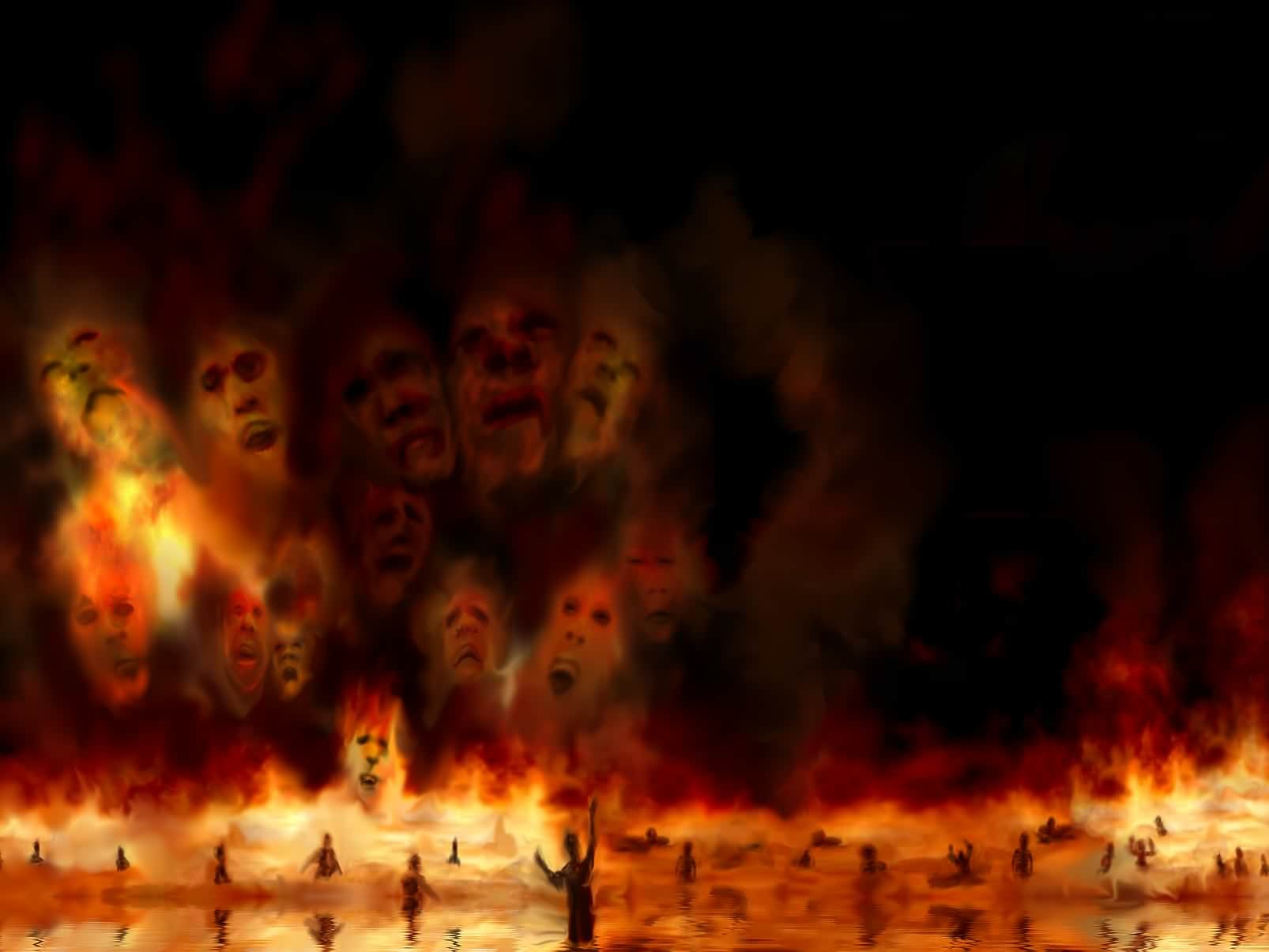
hell-fire

Imagine there’s this big, beautiful house on the top of a hill. It’s opulent, luxurious, and full of every comfort you can imagine. Inside, there are servants and guests that cater to every conceivable whim. There’s no suffering, whatsoever. The people who live there are as happy and content as can be.

In that same house, however, there’s a dungeon in the basement. Within that dungeon, people are being horribly and endlessly tortured. They’re repeatedly beaten, burned, and mutilated without mercy. The suffering is constant and the pain is unbearable. Every day, more and more people are forced into that dungeon and never let out. They constantly cry and scream for mercy, but it never comes.

Everyone in that house knows the dungeon is there. They’re constantly reminded of it. At times, they can even hear the tortured screams of those trapped inside. Some of the people there might even be friends and loved ones. However, they don’t do anything about it. They don’t show an ounce of sorrow or concern. They just continue enjoying the joys and comforts the rest of the house has to offer.

With this scenario in mind, how would you judge the people who weren’t in the dungeon? How would you judge anyone who is perfectly happy when others nearby are suffering horribly? It would be one thing if they didn’t know the torture was happening, but the people in that house have always known, even before they arrived. To still be happy in that house requires more than just an immense lack of empathy.

This is just one of many fundamental disconnects in traditional concepts of Heaven and Hell. While it’s not the first flaw I’ve pointed out, it’s one that I believe is incredibly relevant because it subverts core aspects of our humanity. Regardless of whether you believe humans evolved or were magically created, it’s a biological fact that humans are a very social species. Empathy is a key component of that dynamic.

Empathy doesn’t just allow us to coordinate, cooperate, and relate to one another. It’s at the core of our understanding of right and wrong. You could even argue that empathy is the core ingredient within the Golden Rule that so many religions preach in some form or another, including those that incorporate some form of Hell.

It’s also the foundation on which our innate sense of justice and fairness is built. Both foundations crack once Heaven and Hell enter the picture. However, when eternity enters the picture, which is common in various Judeo-Christian traditions, those foundations shatter.

It’s in that context where simply being callous to the suffering of others, even if you feel they deserve it, becomes unavoidably sadistic. As soon as eternity enters the equation, any sense of proportional justice becomes impossible. Even for the most monstrous individuals who spent every moment of their lives hurting others, a punishment without end eventually becomes unjust.

At that point, the pain and suffering someone endures is no longer about punishment or justice. It becomes part of a sadistic act that only becomes more sadistic the longer it goes on. If Hell is truly eternal, as many devout believers espouse, then its very existence is an act of infinite sadism.

That’s a major problem for any theology that includes an all-knowing, all-loving deity. By definition, a deity cannot be all-loving while exercising infinitely sadistic acts. If that same deity is all-powerful, then that only makes things worse because it means the deity has the power to both stop those acts and prevent them from ever happening. By not doing so, the deity becomes even more sadistic.

Now, there are plenty of traditions that include sadistic gods. The god of the Old Testament certainly qualifies in many respects. If a deity of that power opts to use it for sadistic acts, it doesn’t carry as much weight in terms of how humans approach morality and justice. Granted, it means the people who worship that deity must do so out of fear on some levels, but their approach in that context is understandable.

It’s less understandable when Hell and the concept eternal punishment becomes part of a larger theology because it means adherents must participate in sadistic activities, even if it just means ignoring the torture inflicted by someone else. Everyone in Heaven, no matter how wonderful it is, has to remain numb to the infinite suffering going on below them.

Considering how threats of Hell has been a common tool for proselytizing, the sadism gets compounded even more, both from a human and theological perspective. More than one adherent had used the threat of Hell to warn others about believing in something other than their preferred religion. They likely do so out of genuine compassion and concern for those who don’t believe.

However, once that same person goes to Heaven, they have to become a sadist on some levels. They must now exist in a domain where others they tried to save from eternal damnation are doomed to endless suffering. They know it’s happening at every waking moment. It doesn’t matter if time works differently in the afterlife. Eternity is still eternity.

Even if that same person convinced every person they met to embrace their theology, there’s still the countless others that they never reached. That doesn’t even begin to account for all the other hapless souls that have lived throughout history, practicing other religious traditions with every bit as much devotion and piety. Even if they committed no egregious crimes, they could be damned to Hell.

While many religious traditions offer some recourse for righteous individuals who follow a different faith or lived before those traditions began, the concept is still flawed because it requires some tolerance of injustice. When people are judged by actions or inactions for which they had no opportunity to react, tolerating the results means tolerating injustice.

It doesn’t even work if the deity involved only sends the worst of the worst people to Hell. No matter how bad somebody’s crimes were, they were finite in nature because humans are finite beings. The issues surrounding infinite punishment for finite sins is subject to its own set of theological and moral debates, but the implications are unavoidable.

Think of the most brutally sadistic person who lived 6,000 years ago, a time that even the most conservative Christians agree that humans walked the planet. Over the course of their life, they committed every possible crime and sin. They murdered, raped, tortured, and blasphemed with unrepentant glee. The scars of their crimes lasted years after their death.

However, after a certain amount of time, their deeds cease to have a real impact. The victims and the descendants of those victims move on. The world moves on. Eventually, the memory of the person’s crimes fade. The finite transgression become nothing more than a faded memory. At that point, what’s the purpose of continuing the punishment?

Moreover, what happens to that purpose if and when that monstrous individual seeks to repent? Given enough time and punishment, at least one damned soul would see the light and wish to atone in a way beyond suffering. In most civilized societies, we give those individuals that chance. Hell, if it is truly eternal, offers no such opportunity.

At that point, the punishment is no longer punishment. It’s just sadistic torture. It ceases being a measure of justice and becomes an act of injustice. Even if it takes a trillion years deliver a proportional punishment for a finite person’s egregious behavior, they’ll still be subject to trillions of more years of torment.

All the while, everyone in Heaven has to be okay with this. If part of being a righteous soul means compassion for victims and proportional punishment for transgressors, then nobody in Heaven can remain righteous. Even if the all-powerful deity demands it and they are powerless to change anything, they still have to temper the very empathy that made them righteous in the first place.

Heaven and Hell are difficult, distressing concepts. Whether you’re devoutly religious or a lifelong atheist, it’s never pleasant imaging an afterlife that involves horrendous punishment, even if it’s reserved for the worst of humanity. Not every religious tradition involves an afterlife or traditions of an eternal Hell, but the concept reveals more about our innate sense of humanity than it does any religious doctrine.

Human beings are at their best when they can empathize, appreciate, and understand one another. There will certainly be instances when people commit gross injustices. How we deal with them is critical in terms of how we structure our societies and survive in an ever-changing world. Anything that attempts subverts it or requires that we suspend our humanity will only make every gross injustice infinitely worse.

3 Comments

Filed under human nature, philosophy, psychology, religion

Revealing (And Deconstructing) A Theological Journey In “Lucifer” Season 4

eiujqhlx4fx21

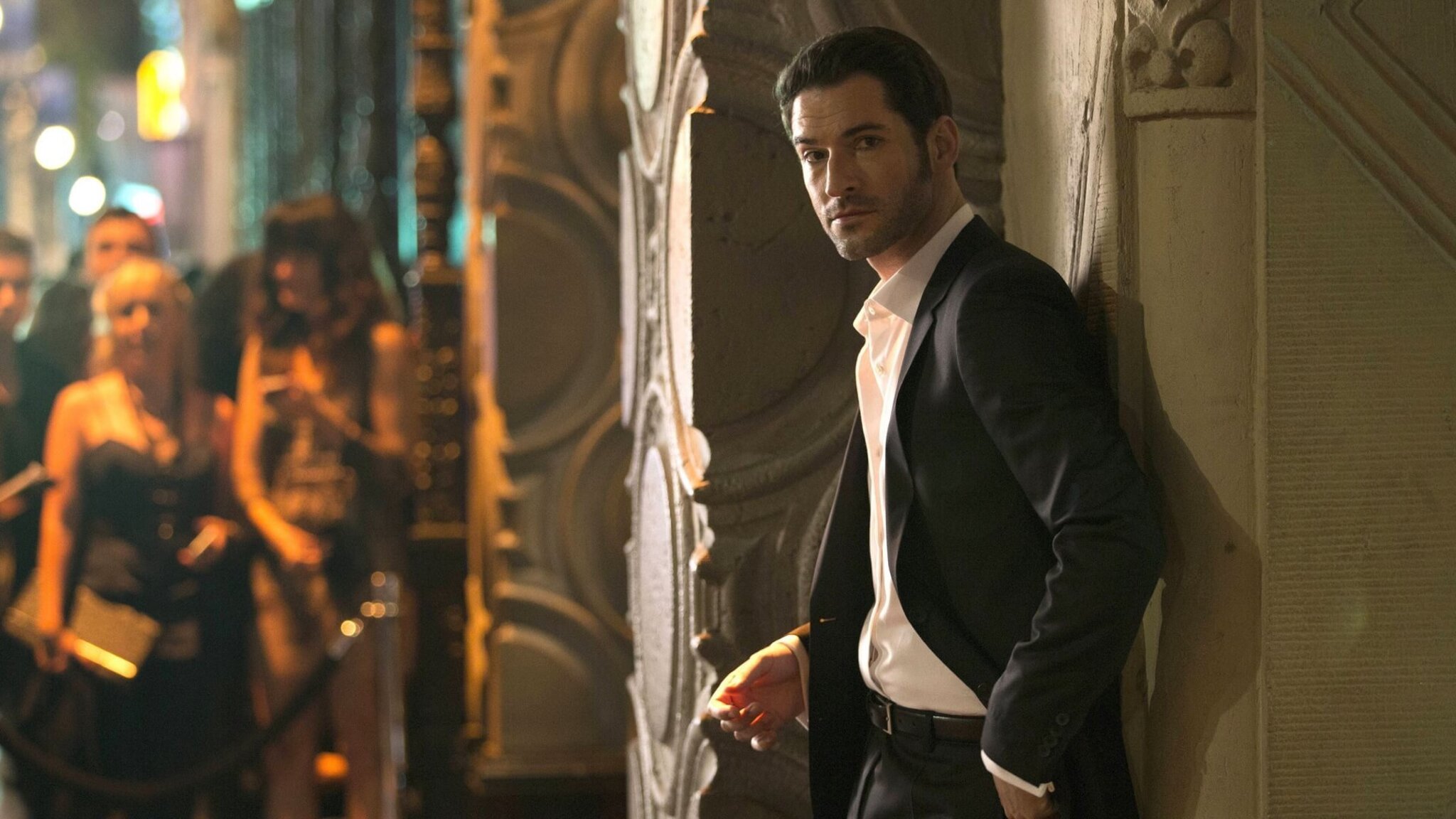
In a world where Heaven and Hell are real, celestial beings exist, and the devil has Tom Ellis’ sex appeal, how do you know what is holy and unholy?

How can you be sure that everything you think you know about divinity, sin, and tradition is true?

How can you even be sure that your beliefs are true?

These are just some of the questions that come up in the first three seasons of “Lucifer.” Most of those questions were explored, but unresolved. For a while, it seemed like they would go unanswered after Fox canceled the show. Then, Netflix performed and unholy miracle and saved it, releasing a fourth season that continued this devilishly journey.

Having been a fan of the show since it debuted, I set aside large swaths of my weekend to binge-watch all 10 episodes and follow Lucifer Morningstar through the next round of hellish endeavors. Through three seasons, “Lucifer” has crafted a uniquely polished theology that emphasizes individual freedom, personal responsibility, and pursuing desires. I had lofty expectations, to say the least.

Lofty expectations personified.

Considering the overt sex appeal in some of the promos, I was more than a little skeptical that it could measure up. Without getting into all the juicy details, some of which includes clear shots of Tom Ellis’ butt, I’ll say without hesitation that Season 4 of “Lucifer” raised the bar for just how divinely great this show can be. I’ll also say it succeeded masterfully in expanding both the drama and the theology of the show.

Through 10 episodes these characters that have undergone so much upheaval take huge in their respective story arcs. In doing so, the overall world and the divine machinations that drive it expand. I could write multiple articles about each character, from Lucifer to Chloe to Amenadiel to Ella Lopez, and how they evolved as characters.

However, after watching every episode and taking the time to process it all, I believe that the biggest success of this season of “Lucifer” is in how it refines its devilish theology while deconstructing others. From the first episode to the tenth, the divine and not-so-divine forces guiding these characters acts as the catalyst that makes every other part of this show work.

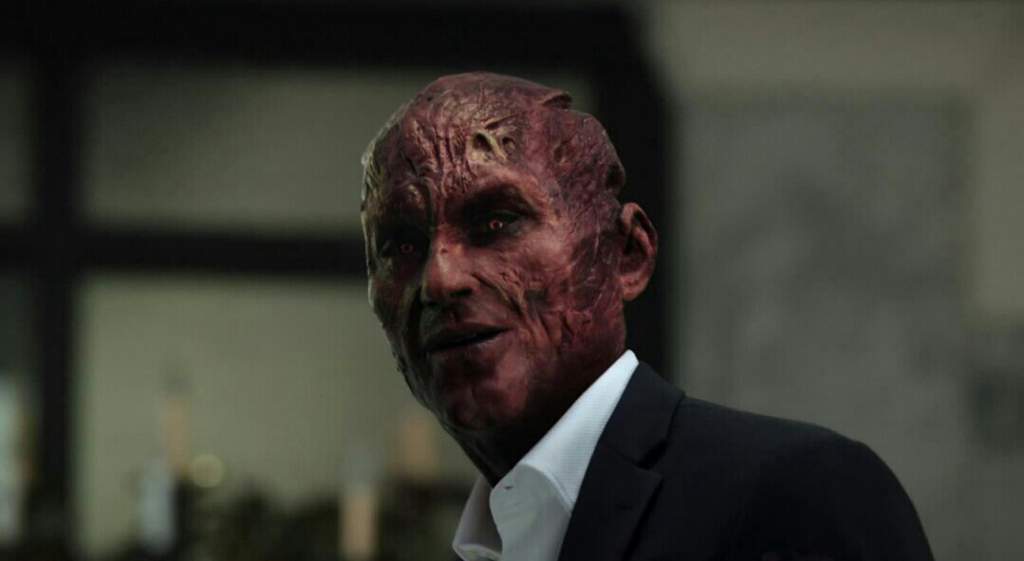
By far, the biggest upheaval of Season 4, if not the entire show, is Chloe Decker accepting that Lucifer really is the devil. It took three seasons to get to that point. For a while, it was a running gag in that Lucifer was so overt about his identity. Chloe, like everyone else, just didn’t believe him. Now, having seen his devil face and his wings, she can’t avoid the truth.

This hits Lucifer almost as hard as Chloe. It adds a huge complication to their relationship, which had been growing deeper since the latter part of Season 3. It changes the dynamics between them considerably. They can’t be as coy or playful as they were with Lucifer’s devilish persona as they were in previous seasons. At some point, the truth must seep in.

Chloe’s initial reaction and eventual acceptance of that persona is incredibly revealing, both in terms of how it impacts her character and how it impacts the theology of the show. After seeing Lucifer’s true face, she faces a daunting challenge. This man, who she has grown so very close to, is the literal devil. How can she possibly process that?

All she has to go on are all the stories people tell about the devil. Many cultures offer various histories of this unholy figure. In some, he’s a fallen angel. In others, he’s evil personified. Whatever his heritage, they all have a similar theme. Lucifer is not one of the good guys. If anything, he’s the standard on which all evil is measured.

None of those stories completely mesh with the Lucifer that Chole knows. While she has seen him act in selfish, narcissistic ways, she has also witnessed his capacity for good. He will go out of his way to pursue justice, ensuring nobody escapes righteous punishment. He also has an admirable code of honor. He doesn’t lie. He doesn’t betray the trust of others. He also makes good on his deals.

These personal experiences do not fit the caricature that generations of mythology and folklore have espoused. It leaves Chloe incredibly conflicted. On one hand, she has all these texts and traditions telling her one thing about the devil. On the other, she has her own personal experiences that she has witnessed first-hand. What is she supposed to believe?

It presents an indirect, but powerful criticism about how others perceive God, Satan, and divinity in general. In many respects, it strikes at the foundation of everything anyone ever assumed about the devil. Most of us only ever have these time-tested traditions to go on when we imagine the persona of the devil. How can we be sure any of them are true?

For most people, it’s impossible to know. As a result, they live their lives thinking they have a clear understanding of who the devil is and where he fits in any divine plan. The fact that so many of these ancient stories agree that the devil is evil comes off as legitimate proof that he cannot be trusted.

This is where Chloe’s work as a detective really pays off. She knows better than most that it is possible for commonly-accepted stories to be wrong. Even before she saw Lucifer’s true face, she demonstrates time and again that even the most comprehensive anecdotes can be flawed. That’s why she always pursues actual, verifiable evidence.

In the first three seasons of “Lucifer,” she sees ample evidence that Lucifer is not evil incarnate. He has plenty of opportunities to do deplorable things and get away with it. He ultimately chooses not to. He even gives understandable reasons, every step of the way. In essence, he gives Chloe his side of the story, which never gets told in religious texts.

It’s true that he rebelled against God. It’s also true that he ruled Hell and oversaw the punishment and torture of countless souls. However, is that enough to make him evil? Is punishing those who deserve it an evil act? He even made clear in one episode that the punishment isn’t technically eternal. People simply endure whatever torment their guilt conjures in a repetitive time loop.

What makes this so revealing, both for Chloe’s story and the overall theology of the show, is how it deconstructs traditional notions of evil, the devil, and how people navigate right and wrong. Chloe has to process all these influences, many of which give her conflicting information. Some tell her Lucifer is evil. Some tell her he’s not. She’s genuinely torn, right up until the final episode.

In the end, the determining factor in “Lucifer” comes back the individual. In both this show and the comic that inspired it, the individual is ultimately responsible for making that choice and shouldering the responsibility. It reflects the heart of Lucifer’s rebellious persona. From the first episode to the dramatic climax of Season 4, it’s all about what an individual chooses.

There’s no divine will to choose for us.

There’s no divine plan that guides us.

There’s only what each individual chooses to do and the consequences of those choices.

The way Lucifer goes about it seems selfish, at times. He and others like him freely pursue their desires, unconcerned with how they offend traditional notions of civility or decency. When there are consequences, they don’t avoid them. It effectively builds an entire theology around individual empowerment and personal desire.

For most of the show, Lucifer is the embodiment of that theology. In Season 4, it’s Chloe who best reflects this sentiment. She is the one who decides whether to accept Lucifer for who he is. She has to sift through all the competing traditions, assumptions, and influences to decide for herself. On top of that, Lucifer must make similar choices about who he is and his place in the world.

By the end of Season 4, both Lucifer and Chloe make critical decisions that have a truly heart-wrenching impact. They’re each perfect personifications of a theological journey centered around the individual. Whether that individual is human or a celestial being doesn’t matter. Their choices are still the most powerful acts they can ever perform.

There are plenty of other ways in which this theology manifests. The parallel story surrounding Amenadiel and Dr. Linda involve some very weighty choices, as well. Ella Lopez and Dan “Detective Douche” Espinoza face their share of touch decisions as well. There are also the choices made by Eve, who is by far the most colorful addition to Season 4.

Then, there’s Mazikeen. She’s just awesome all around and has been since Season 1.

There are many other plots, concepts, complexities to explore with “Lucifer.” Season 4 does more in 10 episodes than the past two seasons, combined. It doubles down on notions of individuals charting their own spiritual path, pursuing their own desires, and taking responsibility for their actions. The results are dramatic in both a holy and unholy context.

There’s still plenty to build upon. While I won’t spoil the end of the final episode, I will note that it lays a solid foundation for Season 5. At the moment, it’s not clear whether Netflix will pick it up again. However, Tom Ellis himself has stated that there’s still more story to tell. Given the rich mythology the show has conjured in four seasons, I totally believe him.

Fittingly enough, the devil is in the details and there are still plenty of details to explore.

2 Comments

Filed under Lucifer, philosophy, religion

The Secular Theology of “Lucifer” (The TV Show)

lucifer

What happens when you die?

Does our consciousness live on in some form?

Is there a way in which people who escaped punishment in life ultimately face it in death?

These are distressing, but profound questions that form the backbone of nearly every major religion. From the major Abrahamic faiths to the lore of ancient civilizations, there are many ways to approach this question. We all contemplate our mortality at some point and wonder/dread what will happen after our mortal bodies fail us.

Even some non-believers have mused about it at some point. Whereas religion tends to speculate wildly on the possibilities, an secular view of the afterlife isn’t too different from how it views deities. In the same way there’s no evidence for any gods or supernatural forces, there’s no evidence that consciousness exists outside the human brain.

That’s what makes the recently-canceled, but saved by Netflix show, “Lucifer,” such a compelling contributor to this age-old question. Beyond Tom Ellis flexing his uncanny charm, the show achieves something remarkable in how it approaches gods, angels, demons, and the afterlife. I would even go so far as to say that it crafts a theology that affirms secular values over those of any religion.

By that, I don’t mean that “Lucifer” glorifies atheism or non-religious worldviews. If anything, one the show’s common themes is that glorifying any worldview is pointless. It’s surprisingly balanced in how it portrays religious and non-religious characters. The show contains respectable believers like Father Frank Lawrence and deplorable non-believers like Jimmy Barnes.

When it comes to addressing those age-old questions about deities, the afterlife, and morality, though, the show crafts a mythos that doesn’t play favorites. In the world of “Lucifer,” it doesn’t matter whether you’re a Christian, Muslim, Scientologist, Buddhist, or Pastafarian. Your life and your afterlife are subject to the same standards.

To understand those standards, it’s necessary to understand the influences of the show. Before Tom Ellis put on an Armani suit, the story of Lucifer Morningstar emerged in a the critically-acclaimed graphic novel, “The Sandman.” Even if you’re not a comic book fan, I highly recommend this book. There’s a good reason why it’s in Entertainment Weekly’s 100 best reads from 1983 to 2008.

While there are many differences between this comic and the TV show, the core tenants are the same. Lucifer Morningstar once ruled Hell, but decided to abandon that role and set up shop in the mortal world. Much like Tom Ellis’ character in the show, this version of Lucifer resents the stereotypes and misunderstandings surrounding him.

He’s not the source of all evil. He’s not the Lord of Lies, either. In fact, Lucifer has his own personal code of conduct and chief among that code is not lying. It goes beyond just telling the truth, though. Lucifer doesn’t sugarcoat anything, nor does he tell only part of the story. He tells the truth in the clearest, harshest way possible.

The show captures many of these elements. In the first episode when he meets Detective Chole Decker, he says outright who he is and isn’t coy about it. While she doesn’t believe he’s the actual devil, he sets a similar tone in how wields the truth. He’s not afraid to shove it in peoples’ faces and let horrifying realizations do the rest.

That emphasis on hard truth, both in the show and the comics, closely mirrors a secular approach to reality. It doesn’t matter how strongly you believe or don’t believe in something. The truth doesn’t change. People can spend their entire lives avoiding it, making excuses or crafting elaborate mythologies.

Whether someone identifies as atheist or agnostic, the premise is the same. If there’s no verifiable evidence, then you can’t say something is true. That leaves a lot of uncertainty about the nature of life, the afterlife, and everything in between. For many people, that’s just untenable and that leads to all sorts of contemplation and speculations.

It only gets worse when there’s considerable evidence to the contrary, which those who cross Lucifer often learn the hard way. While the comics touch on this to a limited extent, the show is much more overt. It often occurs when Lucifer flashes his true form to others. Most of the time, their reaction is one of unmitigated horror and understandably so.

These people, whether they’re cold-blooded killers or schoolyard bullies, just got a massive dose of exceedingly heavy truth. They just learned that the devil is real. Hell is real. Angels, demons, and deities are real. That also means it’s very likely that there’s some form of life after death. For those who have done bad things, that’s a genuinely terrifying prospect.

The details of that terror are explored throughout the show, especially in the first and second season. It’s here where the show distances itself from the fire and brimstone of the Abrahamic faiths. It even differs considerably from the hellish visions of Eastern religious tradition. To some extent, it takes the ethical concepts of secular humanism and crafts a prison around it.

That prison doesn’t involve pitchforks, fire, or monsters who chew on the souls of history’s greatest traitors. In the divine world of “Lucifer,” Hell is dark domain in which the souls of sinful mortals are punished for the misdeeds they committed in life. How that punishment plays out varies from soul to soul.

In the first season, Malcolm Graham spends a brief time in Hell, relatively speaking. He describes it as a place that takes everything someone loves and uses it to torment them. In his case, he freely admits that he loves life. As such, he is starved and isolated so that he cannot experience it or its many joys. It’s an extreme form of solitary confinement, which is very much a form of torture.

On top of that, time flows differently in Hell. Even though Malcolm wasn’t there for very long, he conceded that 30 seconds felt like 30 years. That doesn’t necessarily mean it moves slower, though. Time is simply a tool with which to ensure the effectiveness of the punishment. Lucifer, himself, finds this out in Season 2, Episode 13, “A Good Day To Die.”

For him, time becomes an endless loop of sorts. In that domain, he continually relieves the moment he kills his brother Uriel, one of the few acts in which Lucifer feels genuine regret. It keeps on happening again and again, evoking the same anguish. It’s like the movie “Groundhog Day,” but one in which people constantly relieve the worst day of their life.

These kinds of punishments are certainly worthy of Hell. They’re harsh in that they’re customized torture that’s specific for every damned soul. It’s a lot more flexible than the elaborate Hellscape described in “Dante’s Inferno.” However, there’s one important aspect to this punishment that puts it into a unique context.

The specifics are revealed in Season 3, Episode 7, “Off The Record.” Lucifer reveals to Reese Getty that the devil isn’t the one who decides which souls end up in Hell. No deity decides that, either. Ultimately, it’s the individual who makes that decision, albeit indirectly.

When humans transgress in the world of “Lucifer,” there’s no cosmic judge keeping track of their misdeeds. What sends them to Hell is the weight of their own guilt. Even when they pretend they don’t feel it, like Malcolm Graham, it’s still there. They’re just ignoring it or avoiding it. When they die, though, it ultimately comes back to weigh them down.

This means that punishment in Hell isn’t technically eternal, which I’ve noted is critical if the concept is to have any meaning whatsoever. Lucifer even says in the same episode that there’s no demon army guarding the gates of Hell. The doors are opened and unlocked. Those damned souls are free to leave, but they never do. It’s their own choices, guilt, and regret that keeps them damned.

That means the deeds that send people to hell are subjective and contextual. It’s an outright rejection of the universal morality that many religious traditions favor and an affirmation of the more nuanced ethics espoused by secular humanism. Both the morality and the theology of “Lucifer” depends heavily on the situation, intent, and consequences of someone’s action.

In the world of “Lucifer,” a priest and a porn star can both go to Heaven. It’s strongly implied that Father Frank Lawrence went to Heaven after his heroic actions in “A Priest Walks Into A Bar.” It’s also implied in “City Of Angels?” that there’s a distinct lack of porn stars in Hell due to all the good works and joy they bring to people in life.

At its core, “Lucifer” frames damnation as an underlying consequence of individual actions. Everything begins and ends with the individual. What they do, why they do it, and the consequences they incur are primary criteria for how souls spend their afterlife. In both the comics and the TV show, Lucifer is a champion of individual choices and all the implications that come with it.

This emphasis on the individual effectively tempers the influence of any deity or supernatural force. Even though gods and angels exist in the world of “Lucifer,” they don’t make choices for anybody. Granted, they can have major influences, as shown in episodes like “Once Upon A Time.” At the end of the day, it’s still the individual who is ultimately responsible.

This secular approach to theology works because individual actions are the only deeds we can truly quantify. It creates criteria under which neither atheists nor believers have any clear advantages. How they live their lives and how they go about making choices is what determines whether they face punishment after death.

It still has some problems that the show has yet to address. It doesn’t indicate how Hell handles people who are incapable of feeling guilt or otherwise mentally ill. It also doesn’t reveal how Heaven differs from Hell, although Lucifer implied to Father Frank that it’s more boring than Hell. Hopefully, that’s just one of many other themes that get touched on in Season 4.

Whatever the flaws, the unique take on theology and morality give “Lucifer” a special appeal for both believers and non-believers. It presents a world where those profound questions I asked earlier have answers. No one religion got it right and atheists aren’t at a disadvantage for not believing. That may not sit well with some, but it affirms a brand of secular justice that judges every individual by the choices they make.

More than anything else, Lucifer Morningstar is a champion of deep desires and hard truths. He opposes anyone who tries to dictate someone’s decision or fate, be they a devil or a deity. People who do bad things are ultimately punished, but not by him. In the end, he really doesn’t have to. An individual is more than capable of creating their own personal Hell.

13 Comments

Filed under human nature, philosophy, religion, television, Villains Journey

Creationism, Religion, And Mafia Morality

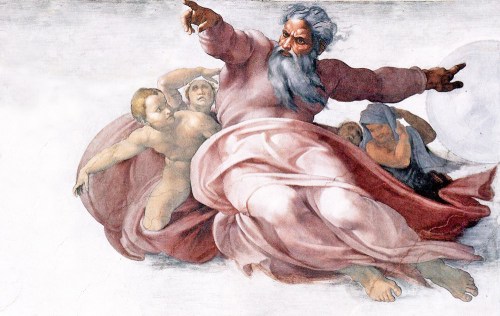
angry_god

Anyone who has seen at least one movie about the mafia has a good idea for how they do business. They take the whole “might makes right” approach to its logical conclusion. Being in the right means being strong. Being strong means being able to dictate what is right. It’s circular reasoning, but that’s how the mob justifies its activities, from loan sharking to protection rackets.

The setup is simple. You find someone who is inherently weaker, tell them what will happen to them if they don’t pay them, and let fear of death or bodily harm do the rest. The weak usually pay up, whether it’s money, respect, silence, or a combination of the three. The foolish will try to resist and often face serious consequences.

Most reasonable people find this kind of morality deplorable. However, this kind of morality is often employed by another organization that is not only legal. It doesn’t even have to pay taxes in many countries. That powerful entity is organized religion it can take mafia morality to a far greater extreme.

Before I go any further, I want to make clear that I’m not claiming that religion is worse than the mafia. Most religious people are kind, decent people who would never dream of employing this kind of morality. Only a subset of exceedingly dogmatic adherents resort to such extreme and I’m not just talking about the Spanish Inquisition.

These people aren’t pages in history or fodder for a Monty Python sketch. They’re real, they run official ministries, and even manage to obtain tax incentives for major projects. Their brand of religion isn’t just conservative. It’s unapologetically strict. They don’t just garner theological insight from holy texts. They take it as literally as the evening news.

That includes stories like Genesis, despite considerable evidence that it was derived from earlier flood-based stories from ancient Mesopotamia. They read that the god of the bible created the world in six days and they interpret that as six 24-hour days. There’s no room for metaphor or translation errors. This is infallible truth and any effort to contest that is met with the fiercest resistance.

While this kind of dogmatic adherence manifests in many ways, including justifications for slavery and anti-gay discrimination, one of the most overt manifestations occurs in the form of creationists. Now, as much as I respect the faith that many place in their particular religion, I’ve always had a hard time respecting creationists.

They’ve always struck me as a form of Christianity that’s as misguided as it is absurd. It’s not just that they believe the bible literally. They go so far as to say that everything science has concluded about life, evolution, cosmology, and physics is wrong. Some go so far as to claim that it’s an anti-Christian conspiracy on the level of the Illuminati and shape-shifting lizards.

If that was the extent of their faith, then I wouldn’t have a problem with it. Plenty of non-religious people believe in absurd conspiracy theories. However, creationism is especially pernicious in that a key factor in that dogma has a basis in mafia morality. It’s rarely stated overtly, but when it does show, it brings out the worst in its adherents.

Most recently, it reared its head in a surprisingly overt way during a debate between Aron Ra, the director of the Texas state chapter of American Atheists and a popular YouTube personality, and Kent Hovind, a well-known creationist evangelical who has made a career out of debating opponents.

This is the least absurd photo of Mr. Hovind I could find.

While I have my opinions about Mr. Hovind, who I feel has a serious credibility problem in terms of credentials, his methods for contesting evolution leave a lot to be desired. If you got more than a B-minus in a high school science class at a legitimate public school, even in America, you’re capable of seeing through his poorly-rendered ideas.

However, there are times when he, and other creationists like him, skip the part where they pretend to understand the science they deny and resort to the kind of mafia morality that they feel vindicates their beliefs. In essence, they threaten their opponent on behalf of their deity that believing in science will lead them to an afterlife full of eternal torture and suffering.

Never mind the inherent Problem of Hell that many religious and non-religious people have debated for centuries. By their logic, not believing in the holy texts of their religion is an outright affront to their deity and, for the same reason you don’t want to offend a powerful mafia boss, you don’t want to offend an all-powerful being.

Most creationists are subtle about this, but in his debate with Aron Ra, Mr. Hovind basically resorted to this tactic at the end of the nearly two-hour debate. These were his exact words:

“I would like to remind you guys, you’re gonna die one day and you’re gonna be dead for a long time. I hope you can take what you believe to the grave. You’re happy with it?”

While he doesn’t say outright that his deity is going to punish non-believers like Aron Ra for all eternity, the subtext is there. While non-believers may not be at all concerned with what happens after they die, it’s a genuine concern for someone like Mr. Hovind. He truly believes that his God is the kind of deity that would severely punish people for not believing in a specific translation of a holy text.

Ignoring for a moment the absurdities inherent in that attitude, take a moment to appreciate the kind of world Mr. Hovind and others like him believe. In their world, there’s an all-powerful, all-knowing being that wants human beings to think a certain way and accept certain concepts. Even if there’s evidence to the contrary, they must believe it. If they don’t, they’re punished with the full wrath of an all-powerful being.

That’s not just a scary thought, even for a devout believer. It’s the ultimate extreme of mafia morality. No matter how much evidence there is for evolution or how many errors in the bible are documented, the sheer might of an all-powerful deity trumps all of it. No matter what every tool of science or sense of the mind says, deviating in the slightest means punishment in the utmost.

While I’ve noted in the past how eternal punishment and eternal bliss tend to lose meaning in the long run, I suspect it’s a significant concern for creationists like Mr. Hovind. I even have some sympathy for them, if it is the case they genuinely fear the eternal torture referenced in their theology. It may be the case that they’re just charlatans or trolls and they wouldn’t be the first who used religion to aid their efforts.

Even if the Kent Hovinds of the world are just trying to get out of paying taxes, and failing to do so at times, the extreme mafia morality of their theology still has a major impact on adherents and religion. It’s worth noting that Mr. Hovind’s brand of creationism is on the decline among Christians. His kind is an extreme version of a faith that most people don’t accept.

It’s still a dangerous and distressing concept to espouse, that an all-powerful deity would punish reasonable people for accepting what evidence and reason tell them. That’s a tactic that ruthless mob bosses utilize, much to their detriment. Unlike the mafia, though, all-powerful deities don’t risk anything by being so ruthless and those caught in their path are bound to suffer.

8 Comments

Filed under human nature, philosophy, psychology, religion

The Future Of Villains And Villainy

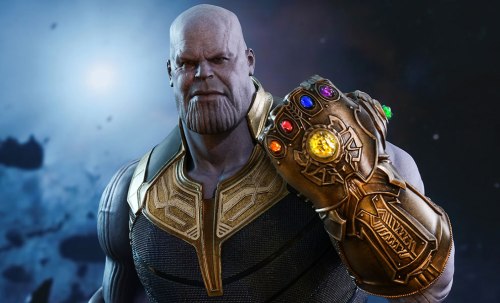
marvel-avengers-infinity-war-thanos-sixth-scale-figure-hot-toys-feature-903429-1

What is happening to villains these days? That’s an entirely reasonable question to ask. Over the past decade, we’ve seen a remarkable shift in how we approach villainy in movies, TV, comic books, and video games. I’m not just talking about the superhero media, either. However, that happens to be the most visible manifestation of this change.

As a long-time fan of both superheroes and quality villains, I welcome this change. At the same time, I’m curious about where it’s leading and what it means for the future. Villains are as old as storytelling itself. From the Bible to “Star Wars,” these stories work best when there’s villainy to oppose the unfolding narrative. Villains have always evolved alongside the heroes that oppose them, but that evolution seems to be accelerating.

I’ve discussed the unique journey that villains undergo and how they set themselves apart from heroes. Traditionally, a villain’s primary purpose was to both oppose the hero and highlight how heroic they are. The sheer malice of characters like Lex Luthor help contrast the pure selflessness of characters like Superman. It’s easier to appreciate those heroes knowing they have to deal such malicious opponents.

Then, something remarkable happened. Audiences began demanding more of their villains. It wasn’t enough to just have a villain oppose a hero. People began wanting villains who were understandable and even relatable to some extent. Ironically, they wanted a villain they could root for.

That helped lead to characters like Walter White from “Breaking Bad.” His impact was so profound that I even called his influence the Walter White effect. However, I think there were others who paved the way for Walter White. If I had to pick one villain that helped kick-start this trend in villainy, it would be Heath Ledger’s Joker from “The Dark Knight.”

From this portrayal of villainy, the emerging state of villains emerged and it may very well set the tone for the future. On the surface, this version of the Joker wasn’t too different from the one who had existed in the comics for years. He’s dangerous, destructive, murderous, and callous, like many villains. Unlike most, though, he does what he does with a laugh and a smile.

What made this version of the Joker so memorable was the principles behind his madness. To him, society is corrupt and people aren’t inherently good. As such, he seeks to point out how laughable it is when others try to save it. Batman’s crusade against crime is the biggest joke of all, which helps drive their rivalry.

It’s a philosophy that few other than terrorists and extreme nihilists would buy into, but it’s one that’s understandable to some extent. We don’t have to agree with them or their methods. We just have to see their twisted logic. They can’t just be standard James Bond villains whose motives are indistinguishable from fascists, communists, or terrorists. There needs to be something more personal at work.

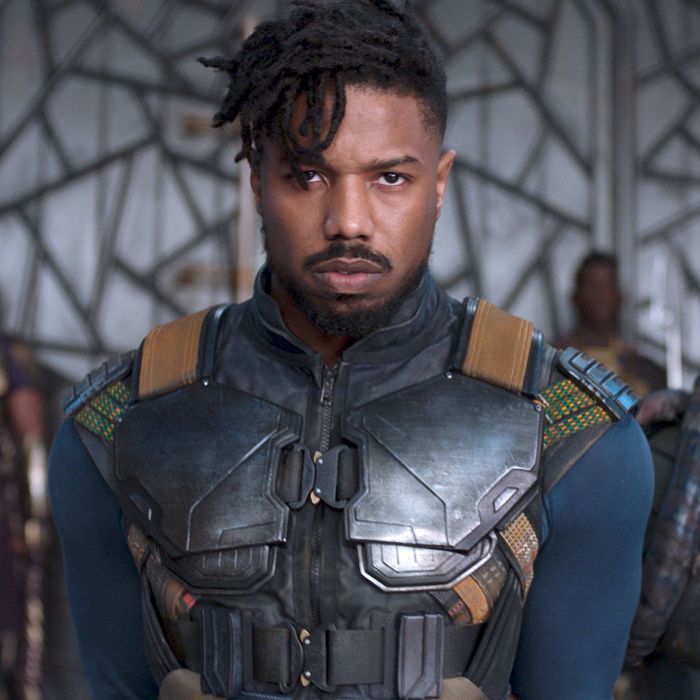
We saw plenty of that in 2018’s biggest movies. From “Black Panther” to “ Avengers: Infinity War” to “Incredibles 2,” the villains all had something personal at stake. Erik Killmonger saw his villainous actions as heroic. He wasn’t out to just take over Wakanda. He had a vision in mind that felt justified to some extent, especially to those familiar with real-world historical injustices.

Thanos raised the bar even more in “Avengers: Infinity War.” He never tries to come off as a hero, but he never sees his actions as villainous, either. In fact, when heroes like Dr. Strange call him out, he frames his desire to cull half the population in the universe as mercy. For him, it’s simple math. Half a population is better than no population at all.

These motivations, as devious they might be on paper, have some semblance of merit to it. Both Thanos and Killmonger think they’re doing the right thing. That significantly impacts how the heroes in their stories go about thwarting them, although I would argue that one story was more complete while the other remains unresolved.

In “Black Panther,” T’Challa doesn’t just stop at defeating Killmonger. He actually sees some of his enemy’s points and takes steps to address them. He doesn’t revert things back to the way they were. Wakanda doesn’t return to the same isolated state it had been at the start of the movie. Instead, he seeks to find a middle ground. That, I would argue, is the new template for how heroes defeat this kind of villain.

The resolution in “Avengers: Infinity War,” however, is not as clear. That’s largely due to the story not being complete. There is a sequel planned, but at no point in the three-hour spectacle did the Avengers attempt to prove Thanos wrong. They only ever tried to stop him. That oversight has not gone unnoticed by audiences.

This, in many ways, sums up the new dynamic between heroes in villains. It’s no longer enough for heroes to just defeat their adversaries. It’s not even enough for villains to be exceptionally devious. There have to be larger principles at work. It can’t just be reduced to general greed, ego, or bullying.

Thanos seeks to kill have the population because he believes that it’ll prevent the complete extinction of all life.

Erik Killmonger seeks to empower oppressed minorities to right past injustices.

Dr. Doom seeks to conquer the world because a world under his rule is the only one free of suffering and want. That’s actually canon in the comics.

It’s makes crafting compelling villains more difficult, but at the same time, it opens the door to more complexity. On top of that, it demands that audiences think beyond the good versus evil dynamic that has defined so many stories, going back to the days of fairy tales. It’s a challenge that some are certain to fail. Some already have, sadly.

It also sets the tone for future forms of villainy. How that villainy manifests is impossible to predict, but given the current trends, I think there’s room to speculate. At the heart of this emerging villainy is the idea that the current system just isn’t working. It’s so bad that the only viable option is to destroy and rebuild it. There’s no room, whatsoever, for reform.

This is where the heroes will have to evolve, as well. They can’t just play “Super Friends” and save the day. They have to actually make meaningful changes to move society forward. King T’Challa did that at the end of “Black Panther.” Other heroes need to be as willing. Otherwise, they won’t be able to call themselves heroes. They’re just defenders of a status quo may not be working as well as they think.

It’s an ideological struggle that parallels many real-world struggles. People today have less and less faith in established institutions. As a result, more people are falling sway to populist rhetoric that promises to break down the current system entirely. By and large, people today aren’t content with just preserving things as they are. They seek more meaningful change.

That presents a serious problem for heroes and a golden opportunity for villains. Historically, heroes haven’t been able to effect change beyond a certain point. Some of that is for logistical reasons. A hero can never create a functioning utopia without ending the story completely, which is something major media companies cannot have. There’s too much money to be made.

Logistics aside, the future of villainy will have plenty of raw materials to work with and plenty of societal angst to draw upon. Heroes who save the day, but do little else won’t be able to call themselves heroes in the world currently unfolding. Villains who have a real vision with understandable motivations will find themselves with more supporters than before.

It’s no longer taboo to root for the villain, especially when the heroes don’t confront the flaws in their rhetoric. In what seems prophetic now, “Avengers: Age of Ultron” may have put it best when Ultron stated:

“I’m sorry, I know you mean well. You just didn’t think it through. You want to protect the world, but you don’t want it to change.”

That’ll be the key to the future of villainy, change in a world that resists too much of it happening at once. It’ll make for some complicated villains, but it will definitely make the struggle of heroes even harder. However it plays out, I believe it’ll be worth watching.

3 Comments

Filed under Comic Books, Jack Fisher, Superheroes, human nature, movies, philosophy, psychology, superhero comics, superhero movies, television, X-men

Why Do Religious People Wear Seat Belts?

Happy-Family-In-Car-640x426

What happens when you die? This question and how people go about answering it is the basis for nearly every major religion in existence. Whether there’s a promise of Heaven, Hell, or reincarnation, it’s fundamental to many religious doctrines. This is especially true of Christianity, Judaism, and Islam, which make up a sizable portion of the global population.

Given these doctrines and their emphasis on life after death, why do adherents of those faiths wear seat belts? That may sound like an inane question, but it has profound implications.

I ask that question because I grew up in an area where there were a lot of churches, a couple mosques, and even a few synagogues. It wasn’t uncommon to see traffic jams around those places, especially during holidays. From what I could tell, though, the people leaving those places were wearing seat belts. That, in and of itself, sends mixed messages.

While Judaism is somewhat vague about the afterlife, it does frequently reference a soul that exists beyond the body. Christianity and Islam are a lot more overt, having many references to Heaven for the holy and Hell for the wicked. I’ve noted before how this concept falls apart when you apply human perspectives to the mix, but these are still critical tenants in the eyes of adherents.

Why then, under those beliefs, would they fear or avoid death? Why would they even mourn loved ones who die? Under the tenants of their religion, their bodies are just gone. Their souls still live on. They’re either lying in wait for the end-times or on their way to Heaven, Hell, or some other version of the afterlife.

It’s a strange disconnect that doesn’t mesh with the emotions we feel when someone we love dies. I’ve come to know those emotions painfully well this past year. I’ve had to attend two funerals, one of which was for my grandmother and I was very close to her. When she passed, I felt that loss on a deeply personal level.

At the same time, there were others in my own family who experienced that same loss, but still maintained a deep devotion to their faith. There were even times when we were encouraged to celebrate their passing because they had ascended to a better place and were reunited with other loved ones.

This is supposed to provide comfort to those still in pain. I can attest to just how powerful comfort can be to someone who has just lost somebody they loved. Even with that comfort, though, I can vividly recall many family members still mourning. Even if they believed that someone they loved was in a better place, they still felt sad.

On a fundamental level, this seems contradictory. You’re feeling sad because someone you love is gone, but at the same time, you’re being told they’re not gone. On top of that, they’ve moved onto a better place that is free of suffering. For someone like my grandmother, who endured plenty of that at the end of her life, this should be a good thing.

It doesn’t stop the sadness, though. We still feel the pain of loss, even when a deeply-held religious doctrine tells us otherwise. There’s a lot to like about the idea that someone we love is no longer suffering and is now enjoying eternal bliss in a heavenly paradise. Even so, it still hurts and we still mourn.

This brings me back to seat belts and why religious adherents wear them. It’s objectively true that not wearing a seat belt is dangerous. If you don’t wear one and get in an accident, then your chances of suffering a fatal injury are much higher. If you’re a devout believer, though, why is that a bad thing?

I’m not being cynical here. It’s an honest question. Why make a concerted effort to survive in a world that can kill you in so many ways? Why go to a doctor whenever you get sick? Why seek treatment when you’re diagnosed with an illness that has the potential to kill you? Ideally, wouldn’t you just seek to alleviate the discomfort, but not whatever ailment is killing you?

If this life is just a precursor to another life, then efforts to prolong it don’t make sense. In fact, efforts to save innocent people don’t even make sense in that context because saving them means keeping them in a world that will make them suffer at some point. Whether it’s a stubbed toe or crippling poverty, preserving life is just increasing their opportunities for suffering.

The messages get even more mixed when major religious leaders go to such lengths to protect themselves. Why did Osama Bin Laden bother hiding for so long if he was that confident he’d go to paradise when he died? Why does the Pope have such intense security wherever he goes? People with this level of faith should be the most confident that they’re going somewhere better when they die.

To some extent, we can attribute this to our built-in survival instinct. One of the most fundamental drives of any living thing, be it a human or an amoeba, is to survive. Much like our sex drive, which religion also attempts to subvert, this is difficult to turn off. More than a few preachers, rabbis, and mullahs have encouraged people to fight this instinct with every fiber of their being.

However, they rarely encourage those same people to avoid wearing seat belts. You probably won’t find many holy men who urge their adherents to never go to the doctor or go out of their way to eat expired meat. Even if our survival instinct is naturally stronger than our sex drive, the implications are unavoidable. They’re asking people to put off escaping a flawed, pain-filled world.

Some of those people, whose sincerity I don’t doubt for a second, will claim that they have family and loved ones to take care of. This is especially powerful with parents, who will do anything and everything to protect their children. Despite that, their efforts still convey incompatible ideas.

A believer wants to stay alive in this chaotic world for the sake of their loved ones, but also believes that those same loved ones move onto a better place after they die, assuming they’ve lived a virtuous life. That assumption gets harder over time, though, because the longer someone lives, the more opportunities they’ll have to descend into sin and depravity.

Most reasonable people consider the death of innocent children to be a truly awful tragedy. The parents of those children are likely to feel immense pain on a level that few can comprehend. At the same time, the likelihood that a child is innocent is far greater than that of someone who has lived much longer. By default, they would be the most likely to get into Heaven.

Even so, people still mourn. They still cry, lament, and suffer the loss of innocent life. Does this mean that they know on some level that there is no afterlife? I wouldn’t go that far. It’s impossible to know what goes through the mind of a believer, especially after they’ve endured the death of a loved one.

For most adherents of religion, which include many members of my family, I doubt these sorts of implications have much impact. Most peoples’ faith is fairly moderate in terms of how they contextualize it with their existence. They can draw clear lines between the real world and the spiritual world.

It’s the minority of zealots, though, for which the issue of life, death, and seat belts becomes a logistical and theological problem. If a particular religion is going to be built around life after death, then how can it justify encouraging adherents to wear seat belts and avoid mortal danger?

In the grand scheme of things, they’re gambling with their immortal souls. The longer they live, the more likely they’ll be to deviate from the prescribed holy path. In that context, why would suicide be discouraged? Even if suicide is considered a mortal sin, why would avoiding accidents or fatal diseases be immoral? Why would anyone that devout feel any ounce of sorrow when someone they love dies?

I don’t expect these questions and their various implications to undercut anyone’s faith. I suspect most will take the Rick Sanchez approach to this issue, which is to not think about it. Regardless of what people may or may not believe, we still mourn the loved ones we lose. We still live our lives with the intention of surviving another day.

In that effort, it makes perfect sense for us to wear a seat belt. The fact that the doctrines of several major religions fundamentally complicate that inherently logical recourse is both telling and distressing. They can shame us for feeling horny, but they cannot stop us from feeling sorrow or hesitation in the face of death. Even the power of faith has its limits and, in this context, that’s not a bad thing.

1 Comment

Filed under human nature, philosophy, psychology, religion

Walter White Vs. Saul Goodman: A Tale Of Two Villains

better-call-saul-644x362

If the road to Hell is paved with good intentions, then the road to villainy has many paths with similar landmarks. Well-developed villains can be every bit as compelling as their heroic counterparts, if not more so. Ever since Heath Ledger’s Joker stole the show and an Oscar in “The Dark Knight,” great villains aren’t just a complement to the heroes. They’re a journey unto themselves.

At the moment, Walter White from “Breaking Bad” is the ultimate embodiment of this journey. His path to villainy made for some of the greatest moments in modern television and Bryan Cranston has the Emmy trophies to prove it. Since then, it seems as though everyone is just struggle to keep up.

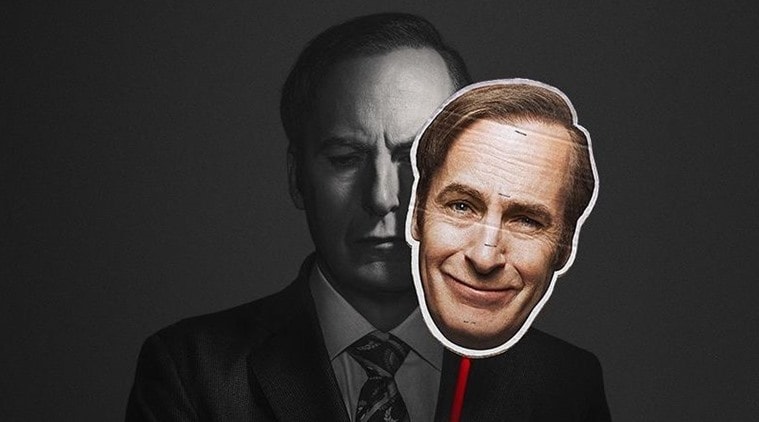
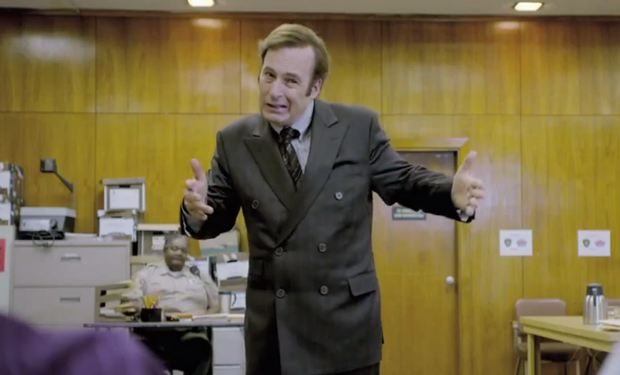
However, there’s one journey that comes very close and is remarkably similar. Fittingly enough, it spins right out of the world of “Breaking Bad.” I’m talking, of course, about “Better Call Saul,” the prequel/spin-off that tells the story of how an aspiring lawyer named James McGill became the morally bankrupt legal guru, Saul Goodman.

I’ve been watching this show closely for a while now. I was originally planning to wait until the conclusion of Season 4 to write about it, but after re-watching the Season 3 finale, I feel like there’s too much to work with. After seeing that episode, I feel like I saw a turning point in the ongoing transformation of James McGill to Saul Goodman. I also saw some important parallels with Walter White that are worth discussing.

At its core, “Breaking Bad” is a story about how a law-biding man goes from an underpaid chemistry teacher to a blood-thirsty drug kingpin. Creator Vince Gilligan nicely summed up Walt’s transformation as going from Mr. Chips to Scarface. That journey, and the story behind it, took an initially unassuming character and turned them into someone they never thought they could be.

The essence of “Better Call Saul” is very different. James McGill is not the same as Walter White. From the very first episode, we can see traces of the unscrupulous con man manifesting in a many ways. The show establishes in Season 1 that James McGill is not some clean-cut straight-arrow like Walt was. His soul was tainted before he ever applied to law school.

James “Slipping Jimmy” McGill is someone who always seems inclined to cut corners, break rules, and cheat to get ahead. That’s something his older brother, Charles “Chuck” McGill, constantly points out over the course of the first three seasons. Every time Jimmy had a chance to do the right thing, he compromised. Just doing the right thing wasn’t enough for him.

Walter White’s decision-making process was similar. In the early seasons of “Breaking Bad,” he showed a reluctance to cross certain lines and go too far. He often found himself pushed or tempted, sometimes by forces beyond his control and sometimes by the consequences of actions. At the end of the day, though, he still didn’t get off that path.

That’s a common thread for many villains in their journey. They find themselves on that path and they see opportunities to leave it, but they choose not to. They don’t seek redemption like a hero would. They just keep making excuses, willfully entering a brutal cycle of corruption and compromise.

Whereas Walt succumbed to that cycle, though, James McGill steadily embraces it. Moreover, he isn’t drawn into that path by tragedy or bad luck. He gravitates towards it. He’s even excited by it. James is at his most animated and charismatic when he’s pulling a con, putting on a show, or crafting a lie. It’s not a necessity like it was for Walt. It’s a thrill.

If James is tempted by anything, it’s the lure of walking the honorable path like his older brother. In fact, Chuck might have been the only positive influence that kept Jimmy from becoming something worse than a sleazy con-man. He and a host of other influence, especially Kim Wexler and Howard Hamlin, play the part of a reverse temptress, trying to keep him off that villainous path.

Early on, there’s a sense that James genuinely wants to be a decent, upstanding lawyer. There are situations where he does the right thing. Some of the causes he takes on, such as a case against an elder care facility that was stealing money from its residents, are objectively noble. In the end, though, doing the right thing isn’t enough for him. The end of Season 1 really cements that.

Walt goes through a similar process early on. Like the “refusal of the call” that heroes experience, Walt attempts to escape the villainous path. However, a combination of circumstances and choices put Walt back on the road towards becoming Heisenberg. By the end of Season 1, there’s a sense that there’s no going back.

Where Walt and James diverge, as villains, it’s how and why they make their choices. Walt becomes Heisenberg because he think he has to, first for his family and later for selfish reasons. James becomes Saul Goodman because he wants to. He tried to be the upstanding lawyer his brother and friends wanted. It just didn’t work for him. Being James McGill just wasn’t enough.

There’s plenty of conflict surrounding those choices. Part of why I love “Better Call Saul” is how it reveals the steady progression from James McGill to Saul Goodman. It doesn’t happen all at once. It doesn’t even happen in a steady, linear narrative. James fluctuates on his journey to becoming Saul. He even hesitates a few times. He still doesn’t avoid it in the end.

That ending, as revealed through the finale of “Breaking Bad” and the flash-forward sequences of “Better Call Saul,” shows one other key distinction between Walt and Jimmy. While both men complete their villainous journey, they both end up in very different places. Walt is dead or at least close to it, as some fan theories predict. However, Saul Goodman’s fate might actually be worse.

In the first minutes of the first episode of “Better Call Saul,” we see what came of James McGill/Saul Goodman after the events of “Breaking Bad.” Gone are the days where he shows up in flashy commercials and hatches elaborate cons on unsuspecting people. Instead, he lives an unexciting, mundane life in Omaha, Nebraska managing a Cinnabon.

Some might argue this is Saul’s personal Hell, trapped in a such a sad and unassuming life. I would say it’s more like his purgatory. In this world, he can’t embrace that villainous persona that gave him so many thrills. Even if he wanted to be that villainous character again, he can’t because it means losing what little he has left.

Just as he frequently did in the early seasons of “Better Call Saul,” James McGill takes the easy way out. Walt tried that too in the last few episodes of “Breaking Bad,” but that didn’t last. He eventually chose to confront the byproduct of his villainous choices. James ran and didn’t look back. The easiest path, in the journey of a villain, is often a coward’s path.

Whether or not James McGill escapes his purgatory or continues wallowing in obscurity remains to be seen. The fact he ends up in this state after undergoing this transformation into Saul Goodman reveals another critical component to the villain’s journey. While the hero ultimately triumphs, the villain eventually loses. It doesn’t always end with them going to jail, but they often endure a less-than-desirable fate.

Breaking Bad” and “Better Call Saul” are both great shows that set a new standard for depicting the evolution of a character into a villain. I won’t claim that “Better Call Saul” is superior to its predecessor, if only because the story isn’t finished. It does, however, accomplish something every bit as remarkable as the story of Walter White.

The process of becoming a villain is a steady, inconsistent journey full of many complications and tough choices. Walter White and James McGill began that journey under different circumstances and ended up in different places. Ultimately, they both crossed lines that sealed their respective fates. It’s tragic in some ways, but it makes for some damn good television.


1 Comment

Filed under human nature, philosophy, psychology, Villains Journey

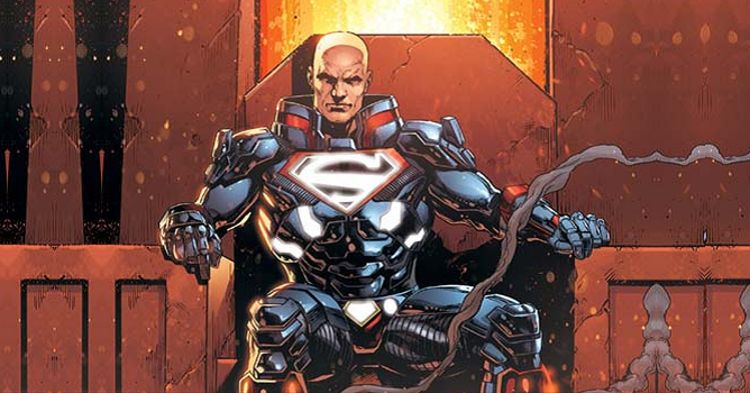
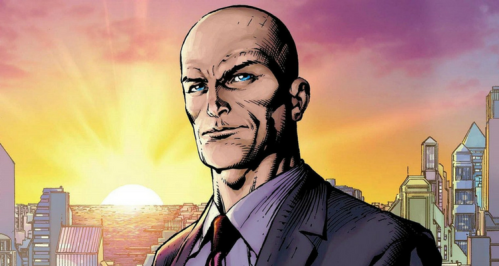
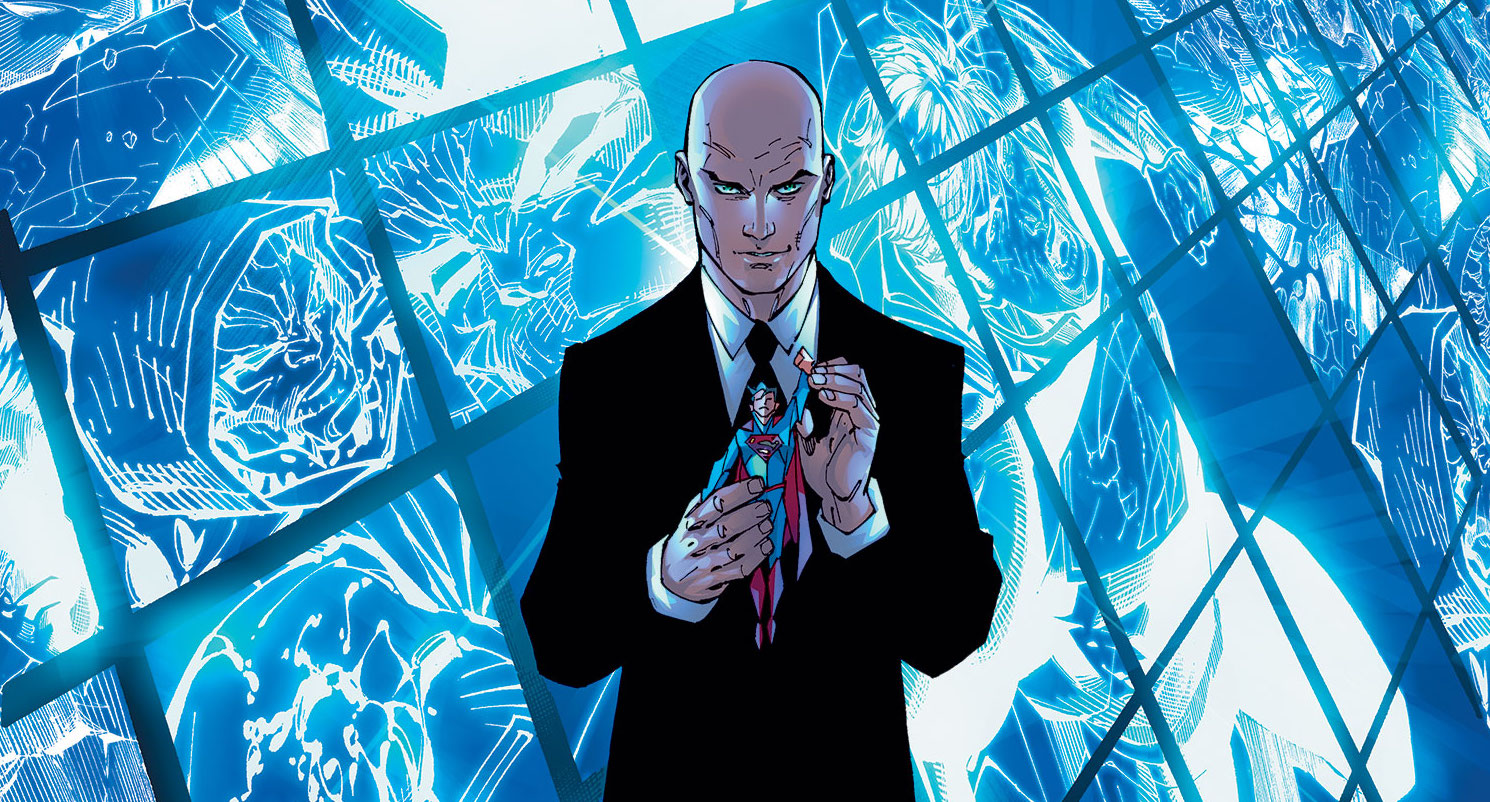
Understanding (And Learning From) Lex Luthor’s Hatred Of Superman

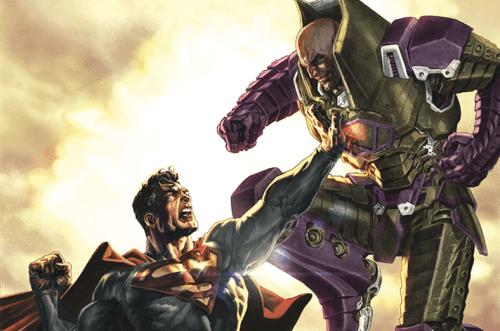
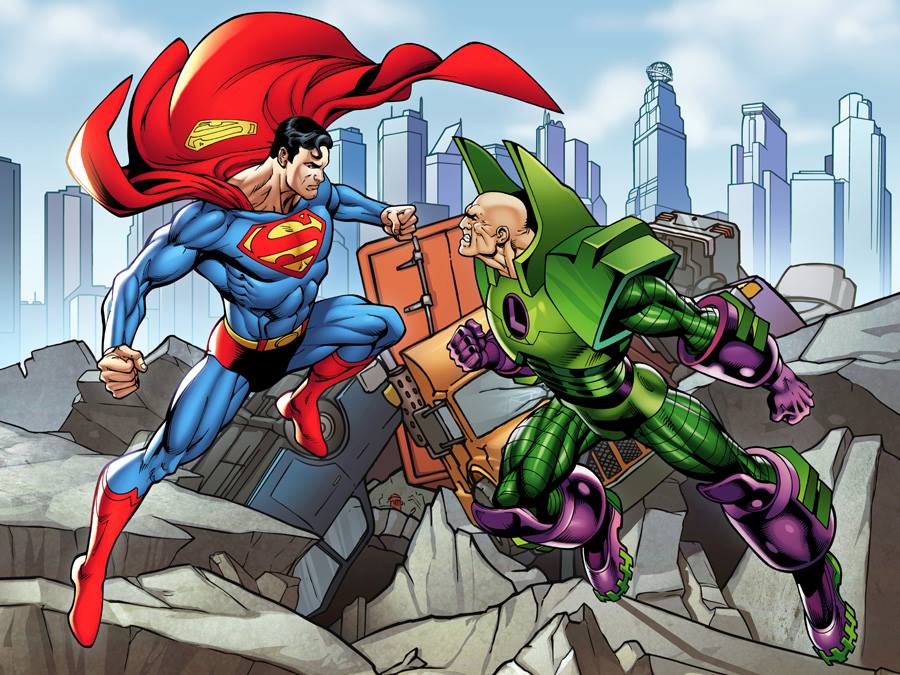
supes-vs-lex

As a lifelong fan of superhero comics and someone who enjoys shows like “Breaking Bad,” I’m genuinely fascinated by villains. Specifically, I’m intrigued by what makes them tick and why they walk the villain’s path. Their journey is distinct from that of a hero, but one that can be just as compelling.

In many cases, these villains have capabilities that allow them to solve many of the world’s problems. I’ve cited Dr. Doom as one of those villains who blurs the lines of villainy because of his intentions. Characters like Dr. Doom genuinely believe that their villainous actions are justified because it will lead to a better, safer, more prosperous world. Heroes also believe that too, which helps fuel their epic battles.

For a character like Lex Luthor, though, the line isn’t that blurry. He’s a villain, plain and simple. He’s selfish, callous, arrogant, cruel, and narcissistic to an extreme. If he existed in the real world, he would check every box for narcissistic personality disorder. In terms of personality, he’s the polar opposite of his nemesis, Superman.

That goes a long way towards giving Superman an enemy who stands against his heroic ideals. I would even argue that Superman couldn’t be the iconic kind of hero he is without Lex Luthor. At the same time, I also think Lex reveals something critical about humanity, morality, and superheroes in general.

That’s difficult to see because for much of Lex’s early years in comics, there wasn’t much depth to his motivation. He just wanted to dominate the universe and Superman was in his way. It’s basic and bland, but that was typical for the early era of superhero comics. Villains like Lex were mostly just obstacles for the heroes to overcome in their journey.

That changed in the late 80s and early 90s with the modern era iteration of Lex Luthor. Finally, Lex got more backstory and depth. He was still no Walter White, but these details helped set the stage for the kind of villain he became. It also helped establish why he hates Superman so much.

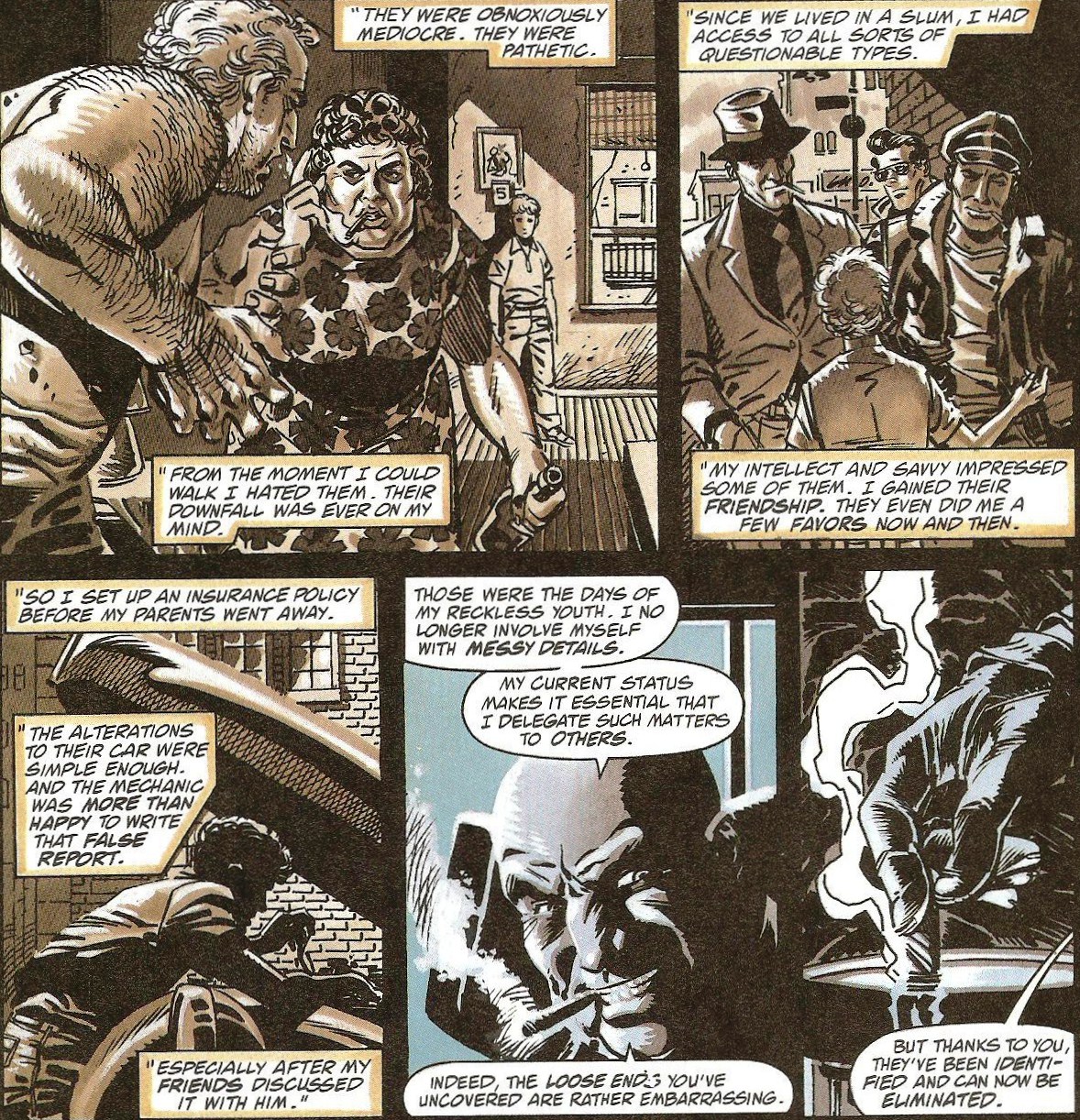
Whereas Superman landed on Earth and was adopted by loving parents, Lex grew up in a rough part of Metropolis called the Suicide Slums and was raised in an abusive household. Right off the bat, Superman gets lucky by having the best parents a child of any species could ask for while he’s unlucky enough to be born with the worst.

As a result, Lex had to be ruthless, manipulative, and cunning. Unlike other villains, though, he didn’t need much tempting. He didn’t agonize over his moral decisions, either. He just did it and didn’t feel a shred of guilt. That includes the role he played in the death of his parents.

That alone establishes Lex Luthor as the kind of ruthless villain who would oppose Superman for any number of reasons. However, as evil as that act was, it’s important to note the motivation behind it. Lex didn’t just kill his parents because murder makes him happy. He did it because they were an obstacle and an opportunity.

They were holding him back, but their deaths meant insurance money that he could use to strike out on his own and build something worthy of his genius. To him, the morality of his decision didn’t matter. Only the results mattered. That’s a critical detail and one that puts Lex Luthor’s villainy into a unique context.

Lex, being one of the smartest characters in the entire DC universe, doesn’t care much for things that are esoteric and obscure. He’s all about results that are tangible and measurable. That means things like truth, justice, and the American way are empty concepts to him. Superman champions those ideals, but for Lex Luthor, they’re just hindrances.

That kind of cold, callous approach to the world gives a unique substance to Lex’s behavior. He’s certainly not the first person to take such a materialistic approach to reality. Rick Sanchez of “Rick and Morty” does the same, but rather than misanthropic despair, Lex Luthor sees it as the key to producing the results he seeks.

Moreover, he has to produce those results without the god-like power that Superman wields. If Superman wants to move the Earth out of the way or destroy an oncoming asteroid, he doesn’t have to build anything or learn anything. He just has to flex his muscles, fly up into the sky, and destroy it with a single punch. There’s no tangible reason to his actions beyond it being the right thing to do.

To Lex Luthor, that’s not just an affront to someone who had to work for everything he ever gained. It’s an insult to his egocentric, results-focused worldview. Just saving the world because it’s the right thing to do doesn’t achieve anything. It does nothing to move humanity forward because nobody had to produce something of merit. It just allows them to continue in the same, unaltered state.

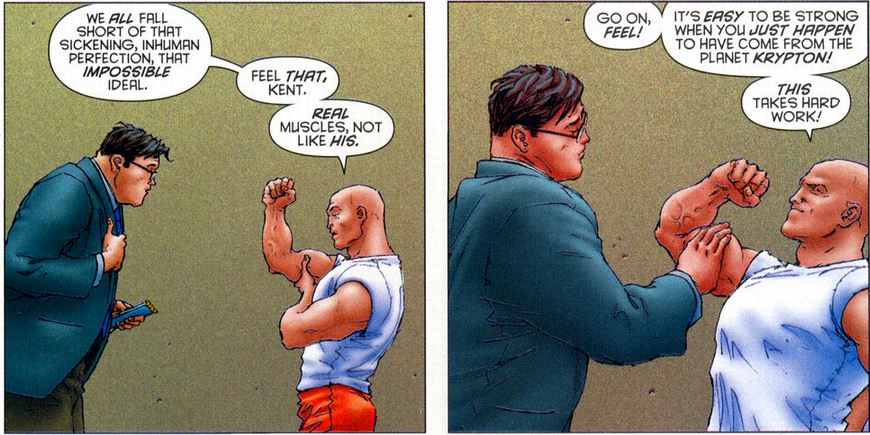
This gets to the heart of why Lex Luthor hates Superman. The extent of that hatred was fully articulated in one of the best modern Superman stories ever told, “All-Star Superman” by Grant Morrison and Frank Quitely. If you only read one Superman comic, make it this one because it perfectly encapsulates the pure heroism of Superman and the cold villainy of Lex Luthor.

In one critical part of the story, Lex tells Clark Kent, who he doesn’t know is Superman, what it means to actually work for his power. Superman, for all his idealism, did nothing to earn his abilities. He just happened to be an alien who landed on a planet with a yellow sun.

It’s like winning the lottery as opposed to working hard for a fortune. One is built on hard work and skill while the other is just dumb luck. Beyond basic jealousy, though, Lex makes another critical point about the ideal Superman sets.

From his perspective, that lofty ideal diminishes the entire human race. By being this other-worldly savior who achieves all these impossible feats, Superman reveals how inept the human race is. More importantly to Lex and his massive ego, it shows just how feeble his achievements are, despite all the work he put in.

Being the extreme narcissist he is, Lex takes that as the ultimate insult. In terms of the bigger picture, it establishes that neither he nor humanity can achieve their full potential. In that context, it’s understandable why Lex dedicated so much time and energy to killing Superman.

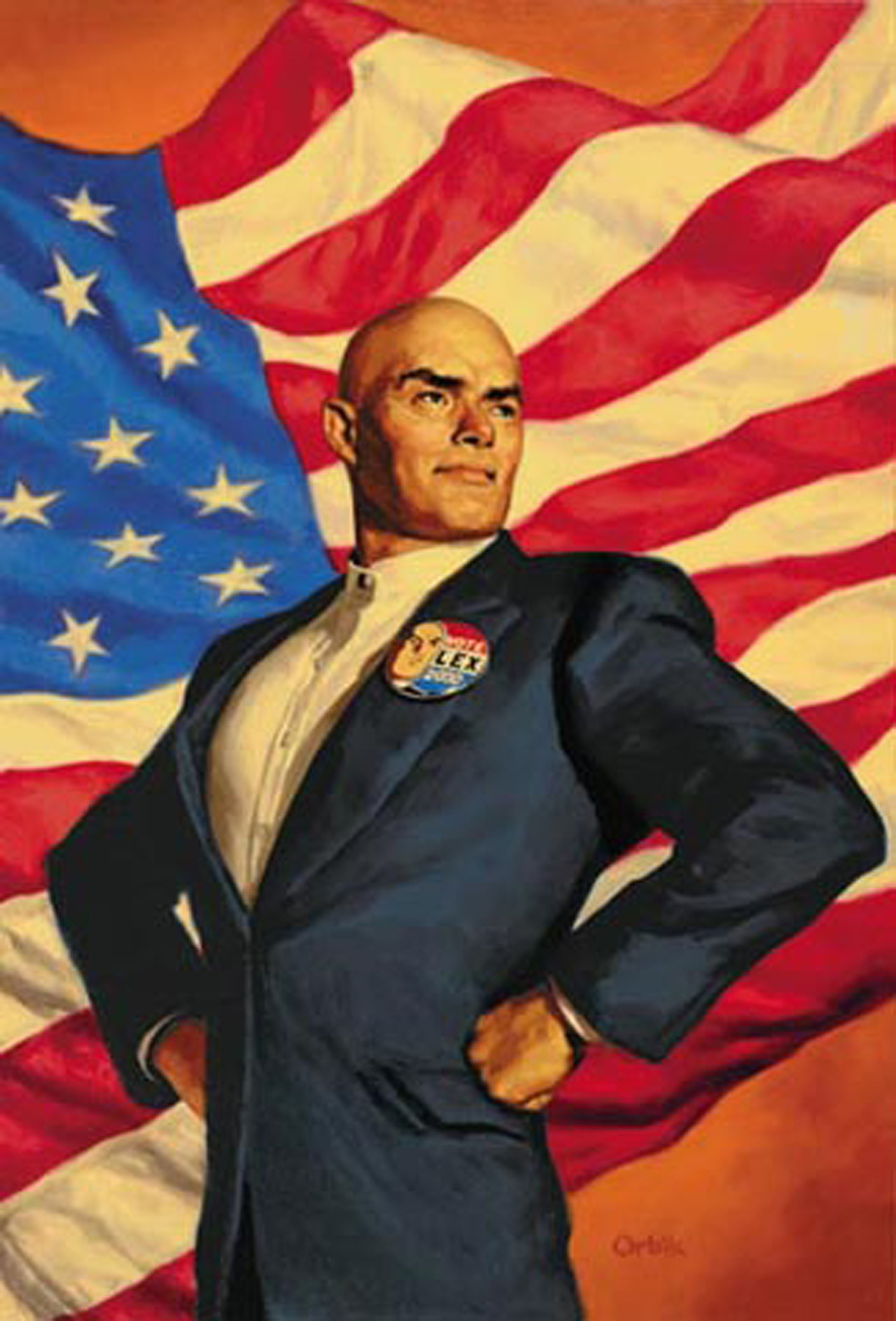
I won’t get into all the ways Lex has tried and failed over the years, although one of his plots did involve him becoming President of the United States. Whatever his methods, I think there’s a larger lesson to learn from Lex’s hatred and for once, it goes beyond his ego.

A big part of what turns someone into a villain is this sense that the world isn’t fair, but could be made better with the right guidance. Lex believes he’s capable of providing that guidance and not just because of his ego. He is, objectively, one of the smartest and most capable human beings on the planet. However, it’s Superman who keeps Lex from making the world less unfair.

Superman believes in the merits of truth and justice. He inspires others to uphold these ideals, even without his vast power. That’s a problem for Lex, who builds much of his power on lies and treachery. To him, though, he doesn’t see that as wrong. He just sees that as the most efficient way to get results.

To uphold truth and justice, in his brilliant mind, is to prevent the world from progressing. Granted, progress in Lex Luthor’s mind means him being in charge, but that doesn’t necessarily undermine the implications.

Like Dr. Doom, Lex is ambitious in that he doesn’t just want to save the world like Superman. He wants to fundamentally change it and he’s willing to cross any line to achieve that. Killing Superman is part of that change, but so is becoming a billionaire and a future President of the United States. If a billion people die in the process, then that’s acceptable because it means humanity is stronger because of it.

There have been times in the comics where Luthor’s vision has manifested. In another critically-acclaimed Superman story, “Red Son” by Mark Millar, Lex has a chance to lead the world into a brighter future. By and large, he succeeds. He’s still an unapologetic narcissist, but he still gets the results he seeks.

Like all great conflicts between superheroes and their arch-nemesis, the dichotomy between Superman and Lex Luthor is stark. They’re two extremes on opposite ends of a spectrum delineating heroism and villainy. By being on those extremes, though, it’s easier to see the inherent shortcomings of both.

While Lex’s shortcomings are easier to identify since he’s an outright villain, he does help identify an important flaw in Superman’s idealism and one that extends to superheroes, as a whole. Superman is willing to save the day, but he’s not willing to cross any lines. He will only ever do the right thing and that means not sacrificing innocent lives or usurping individual freedom.

Those heroics will keep the world turning, but they won’t move society forward. Superman believes in inspiring humanity rather than doing it for them, but Lex Luthor believes his heroism achieves the opposite. It just makes people complacent and dependent on heroes like him rather than crossing the lines that he’ll cross to get things done.

At the end of the day, both in the real world and the world of comic books, we have to determine how much we’re willing to pay for the results we seek. Lex is willing to pay any price. Superman isn’t willing to pay a cent beyond doing the right thing. Most reasonable people, including other superheroes, fall somewhere in the middle.

In the pantheon of super-villains, Lex Luthor is probably the easiest to despise and the hardest to understand. Like Superman, he exposes another side of an ongoing struggle between doing the right thing and achieving more. As society continues to progress, achieving abilities rivaling that of any superhero, it’s a struggle we’ll have to confront.

3 Comments

Filed under Comic Books, Jack Fisher, Superheroes, human nature, philosophy, psychology, superhero comics

Boredom: How It Can Shape (And Subvert) Religion

Praying hands

Whenever I talk about boredom, whether in the context of the present or a future where it’s a full-blown plague, I often belabor how it’s effects and impacts are understated. That’s somewhat unavoidable. Boredom, by definition, requires an environment of limited, monotonous drudgery. Most people see their lives as inherently hectic so the boredom seems like a distant concern.

Hectic or not, everyone is still vulnerable to boredom’s corrosive effects. Those effects are well-documented and it’s part of why solitary confinement is considered torture. Those same effects can shape heroes, villains, and eccentric mad scientists, alike. It can also be a factor in determining the long-term viability of an ideology.

That last detail is something I attempted to explore in an earlier article where I introduced the concept of the Boredom Filter. Simply put, by contemplating an ideology taken to its ultimate end, the Boredom Filter can reveal whether that ideology can survive in a world where humans despise boredom and will do anything, including horrific crimes, to alleviate it.

While researching that article, I originally intended to apply the filter to religion as well. I knew that was sure to enter some extremely sensitive areas. Talking about identity politics and sexual taboos is tricky enough. Adding religion to the mix is like adding a bit of nitroglycerine to a burning pile of napalm.

On top of that, I think religion in its general form is somewhat distinct from ideologies like liberalism, conservatism, feminism, and even libertarianism. Those ideologies are philosophical or logistical tools that present themselves as guides or interpretations of social phenomenon. Religion also does that to some extent, but has a broader scope.

Religion doesn’t just cover methods for making sense of society and the universe, as a whole. Unlike an ideology that can be taught, learned, or studied, religion is a lot more subjective and dependent on personal and shared experiences. Even though religious affiliation is in decline, it’s still an influencing force on society.

Whether or not that influence grows or wanes is not the point. My focus, in this case, is to show how religion is shaped by boredom. I also intend to use it show how boredom can subvert the core tenants of a religion, if it’s followed strictly.

Before I go any further, I want to make clear that I’m not out to condemn or demean any particular religion or its adherents. I’m making a concerted effort not to play favorites here. If it sounds like I’m being unfair or too harsh to a particular religion or faith, I apologize. We all have our biases. I’m not particularly religious so I’ll try to remain objective as possible.

With that out of the way, I feel it’s important to establish one particular aspect of religion that sets it apart from political or philosophical ideologies, in terms of how boredom effects it. Religion, and religious experiences, are extremely subjective. You could argue that they’re entirely subjective.

One individual can go to a church on Sunday, listen to a sermon, and be incredibly moved on a personal level. To them, it could be one of the most intense experiences they could have. Another person who is as healthy and sane as the other can sit through that same sermon and be bored out of their mind.

It’s that subjective disparity that makes it difficult to apply the Boredom Filter. However, even with that disparity, boredom is still an influencing factor. A religion that evokes more of those intense experiences in a large number of people will likely be successful and pass the Boredom Filter. One that only evokes those experiences in a small group will only have limited appeal.

That’s why repressive cults usually only appeal to a handful of people. If you’re in a tight-knit group that’s full of solidarity and intense tribalism, it’s possible to get around boredom, if only because members are too scared or too brainwashed to escape. For larger religious organizations, boredom is a bigger issue because appealing to a lot of people means ensuring they don’t get bored.

When assessing an ideology with the Boredom Filter, it’s relatively easy to speculate on what their idealized society is because most ideologies clearly state those goals. Communists want a communist utopia. Liberals want a liberal utopia. Libertarians want a libertarian utopia. With religion, there’s not a clear endgame for the most part.

Sure, some religions like Christianity and Islam preach spreading the faith, if not converting the entire world’s population. Others either don’t emphasize it in their theology or only use it to the extent that it has to market itself in a modern economy. When applying the Boredom Filter, though, it’s important to be targeted.

By that, I mean it can’t just apply to what a holy book says or what sort of ethics certain religious icons preach. It has to apply to how it’s actually practiced. There are so many varying sects and denominations within a particular religion. Not all of them practice the same way or take their holy texts quite as literally.

That, more than anything, is the key to determining whether the Boredom Filter will impact a particular form of religious expression. Even if it passes, though, it can also reveal how that form of expression is shaped. It’s rarely overt, but the fact major religions have endured longer than most ideologies shows that a religion is more willing to adapt than it claims.

For a simple example, let’s apply the filter to the most common form of evangelical Christianity, as practiced by the religious right in America and espoused by religious leaders like James Dobson from the Family Research Council. They favor a brand of Christianity that favors a very strict form of religious morality.

It doesn’t take much speculation to see that this form of Christianity doesn’t pass the Boredom Filter. This brand of Christianity seeks one particular manifestation of family, one manifestation of gender, and one manifestation of personal conduct. That includes no promiscuity, no cursing, no porn, and no unholy behavior.

Even if that one manifestation of society is a particularly good one, it’s not hard to imagine people getting bored with that. At some point, they’re not going to be as moved when they go to church. They’re not going to be as excited about consuming the same Christian-friendly media or having sex with the same person for the same reasons again and again. Boredom will set in for many people. It’s unavoidable.

The same issue occurs when you apply the filter to fundamentalist Islam, especially the kind espoused by modern extremist groups. They may use a different holy book and employ different religious practices, but the manifestations are the same. It promotes a society of strict, rigid conformity for large numbers of people, regardless of their diverse personalities, passions, and proclivities.

Even when these standards are brutally enforced by state-sanctioned religious police, there’s no escaping the boredom. People may still conform out of fear for their lives, which is usually a stronger motivator. However, it only goes so far in terms of creating loyal, passionate adherents. In general, people who conform out of fear can only be so sincere.

In a sense, the fact that some of these religious ethics have to be enforced with fear and violence, be it from the police or threats of eternal damnation, is a tacit acknowledgement that those ideals are not tenable to a large group of people. Without that fear, the boredom alone will make them seek other experiences and no religion can survive like that.

That still begs the question as to why some religions manage to survive, even the repressive ones. On paper, the Catholic Church has pretty strict moral tenants. The Vatican opposes premarital sex, masturbation, divorce, homosexuality, abortion, contraception, and free expression that denigrates or defames the church.

However, the difference between the Catholic Church and the extreme forms of Islam and Christianity is that they can’t do much to enforce that morality. They could in previous centuries, but these days the Vatican’s moral proclamations are largely symbolic. They preach against immoral behavior, but don’t directly combat it.

To some extent, that might have helped the Catholic Church endure. By losing it’s authoritarian muscle, it had no choice but to adapt its theology to accommodate less-than-pure adherents. It’s not quite as flexible as some would prefer, but it has shown a willingness to revisit old traditions in the name of evolving with the times.

Other religions have done a much better job of that. Denominations like Reformed Judaism and Unitarian Christianity have been much more receptive to adapting their theology to the changing times. While this may upset some traditionalists, so much so that they won’t even consider those denominations as true adherents, they do win in one aspect. Adapting their theology keeps it from getting boring.

Sure, church on Sundays may still feel like a chore, but at least you won’t have to listen to the same fire and brimstone rhetoric every week. That counts for something when applying the Boredom Filter. Any sect or denomination that doesn’t do that, though, will only ever have limited appeal, at most.

In that sense, Islam is more vulnerable to the Boredom Filter. Traditional Islam is basically in the same domain where Catholicism was several hundred years ago. It still enforces strict adherence of its traditional method in many Islamic countries. Like the Vatican, however, the enforcement isn’t always on par with the Spanish Inquisition.

Within these countries, those traditions and the state-sanctioned enforcement of them are often challenged or overlooked. To some extent, the Boredom Filter is already having an impact because shifting demographics and generational clashes are leading some within Islam to become disillusioned with those rigid traditions. I’m not saying boredom is the sole cause of it, but like Christianity, it is a likely factor.

Islam’s ability to adapt to these trends will determine whether or not it will continue to endure like Catholicism. There are some making a genuine effort, much to the detriment of their safety. Whether or not these adaptations are sufficient will have depend heavily on its ability to pass the Boredom Filter.

I don’t want to speculate too much on the future of Islam, Christianity, or other faiths. I also don’t want to give the impression that the Boredom Filter is definitive, especially for something like religion. I present it as simply another tool to help make sense of, and possibly speculate on, the impact of religion.

That impact will continue to incur other impacts on society, even as religion continues to decline. It will always have a certain appeal to certain people. If it’s going to have appeal to more people in a future where people are more informed and possibly enhanced, it would be both wise and necessary for it to pass the Boredom Filter.

1 Comment

Filed under human nature, philosophy, religion, sex in society, War on Boredom

Why Lex Luthor Is The Ultimate Villain

lex-luthor

What makes a villain truly evil? It’s a question with many answers that apply to both the real and the fictional world. History is ripe with real people with villainous tendencies on par with that of any mustache-twirling villain in fiction. The world of fiction is just as vast, full of all sorts of cruel, sadistic, greedy beings that range from alien conquerors to psychotic killer clowns.

Then, there’s Alexander Joseph “Lex” Luthor. What Superman is to heroes, an ideal and a standard to which others aspire, Lex Luthor is to villains. Think back to the question of what makes a villain evil. Lex Luthor checks every box and even a few others you probably didn’t think of.

In the spirit of celebrating Superman’s 80th anniversary, which I went out of my way to honor, I think it’s just as important to appreciate the other, less heroic side of the spectrum. Superman occupies the extreme end of that spectrum, namely the side that embodies truth, justice, and the highest of morals. Lex Luthor, conversely, is at the other end, one where the depths of greed, hatred, and outright cruelty are at their worst.

To that end, it’s impossible to appreciate the values Superman stands for without also appreciating the villainous traits that Lex Luthor personifies. I’ve noted the major differences between the journey that a villain takes, compared to that of heroes. I’ve also singled out characters like Walter White, who have given a new level of complexity to modern villains. However, the villainy of Lex Luthor is as basic as it is profound.

Lex Luthor doesn’t need the same complexity as Walter White, nor does he need the tragic circumstances that help forge villains like Magneto. Lex is a villain to his core. He needs no catalyst or motivation. He is, by his own nature, an arrogant, selfish person who will go to any length to get what he wants and/or deserves, regardless of cost or ethics.

Despite that simple, if not inelegant approach to villainy, Lex Luthor still finds a way to elevate himself above the many other villains that occupy the real and fictional world. It’s not just because he’s Superman’s primary adversary either. At his core, Lex represents something that highlights the breadth of true villainy.

Like most iconic villains, Lex Luthor’s status was closely tied to that of the hero he opposes. He first appeared in Action Comics #23 in 1940, a full two years after Superman debuted. Like most villains in those days, he didn’t get much development or backstory. He was simply the extra devious bad guy who tested Superman more than most.

Over the years, Lex Luthor’s story has evolved, but the extent of his villainy has never waned. The modern version of Lex Luthor, which became canonized after the big 1986 event known as Crisis on Infinite Earths, is defined largely by his greed, ego, and extreme xenophobia. He became less a mad scientist and more heartless narcissists.

Through that evolution, Lex establishes a blunt, but powerful method to his villainy. He is, at his core, a selfish egotist. There isn’t an altruistic cell in his body. Everything he does is for one purpose and that’s to profit and/or glorify himself. It doesn’t matter whether he’s battling Superman or creating a community of low-income housing. It’s all to serve him and his interests.

In the same way you can assume that every decision Superman makes is in the name of truth and justice, you can also assume that everything Lex Luthor does is in the name of benefiting Lex Luthor. Even by Ayan Rand standards, Lex’s motivation are extreme. At the end of the day, he’s out for himself and no one else.

To some extent, though, that’s what makes him even more devious. In his endless crusade to serve himself, Lex will portray himself as less a villain and more a hero who is out to use his unrivaled genius to make the world a better place. He has even become a hero on multiple occasions within the annuls of DC Comics.

Lex Luthor will save the world. He’ll even work with Superman every now and then. However, such efforts are never in the name of doing the right thing. It always comes back to Lex serving his own agenda. He understands, at the end of the day, that no one can glorify him if the world is destroyed.

Even with those circumstances, though, Lex still finds a way to set himself apart from other villains. Characters like Dr. Doom, Thanos, and Darkseid definitely fit the mold of a villain, but even they have motivations that go beyond their ego. You could even argue that villains like Dr. Doom often blur the line because their actions sometimes align with what most consider the greater good.

With Lex Luthor, though, there are no blurred lines. He is not Dr. Doom in that he feels he needs to rule the world to ensure that it’s free from want and suffering. From Lex’s point of view, ruling the world and destroying Superman are simply a means to further glorify his ego and fuel his narcissism.

That’s what makes him so dangerous, but it also reveals something profound about villainy itself. It’s not always simply a product of being greedy and sadistic. To some extent, it’s a byproduct of being entirely self-serving and having no inclinations for selfless acts.

Whereas most people would feel some level of guilt for that level of selfishness, Lex feels nothing of the sort. That’s not to say he’s a sociopath on the level of some serial killers. He just feels that he rightly deserves all the power and aggrandizing he wants. It’s not a matter of morals. It’s a matter of him just being better than anyone else.

It’s in that domain where Lex’s rivalry with Superman becomes truly adversarial. Unlike Superman, Lex is human. However, he also happens to be the smartest human in the world, as well as one of the smartest beings in the entire DC Universe. That means he doesn’t just think he’s better than anyone else. He can actually prove it.

That’s how he’s able to craft insanely advanced technology. It’s also how he managed to get elected President of the United States at one point. It’s not enough to have a massive ego. It’s that he’s smart enough and ruthless enough to outwit anyone into serving him. There’s simply no way for any other human to match him on an intellectual level.

That’s where Superman enters the equation. That’s also what fuels Lex’s unparalleled hatred of him. From his point of view, the very existence of Superman undermines his ability to establish himself as the most superior person in the world. More than that, though, he see’s Superman’s presence as a degrading force to the human race as a whole.

It’s a sentiment that isn’t often touched on in the comics or recent movies, but it is perfectly articulated in the animated feature, “All-Star Superman.” If ever you want a perfect demonstration of Superman’s heroism or Lex Luthor’s villainy, this movie is the current gold standard.

Beyond the condescension, the bragging, and the insufferable ego behind his words, Lex Luthor makes some uncomfortably valid points. In light of Superman’s impossible ideal, every human being falls short. Even him, the smartest human being of them all, can’t hope to match it.

From Lex’s point of view, that’s not just profoundly insulting. It undermines the entire human species. The existence of an alien god-like being reduces humans to a bunch of ants under the boot of a titan. By relying on that being, looking up to him as an ideal, people can only ever hope to be better ants and nothing more.

Even if that thinking is valid on some perverse level, Lex takes it even further by making it the ultimate excuse. By establishing Superman and heroes like him as affronts to his rightful place at the top of humanity, he can basically justify anything. Read into his history and you won’t find any shortage of atrocities.

It’s for that same reason that Lex rejects any notion of truth, justice, and the American way. As he also articulated in “All-Star Superman,” he sees those concepts as inherently flawed. They’re just vague concepts that can’t be touched, measured, or quantified in any meaningful way. In Lex Luthor’s world, all that matters is what he can do with the forces around him and how they can be used to glorify him.

As a villain, Lex Luthor doesn’t live in a world of abstracts, ideals, or faith. His world is cold, calculating, and deterministic. Much like Superman, he puts a face and a name on a particular archetype. Unlike Superman, though, he doesn’t evoke hope or inspiration. He inspires fear, hatred, and mistrust.

By standing against Superman, challenging him in ways that even other god-like beings can’t, Lex Luthor demonstrates just how far someone can take true villainy. In his world, nothing is ever given. It’s either earned, taken, or stolen. Things like compassion, empathy, and love are weaknesses and not strengths. They are barriers to overcome and not strengths to embrace.

Even by the standards of Rick Sanchez from “Rick and Morty,” that kind of extreme callousness is excessive. At least under Rick’s nihilistic outlook, there’s a context to his action. For Lex Luthor, though, the only context that matters is the one that serves Lex Luthor.

Superman is a beloved heroic icon and for good reason. He represents the best to which a hero can aspire. However, the extent of those aspirations and the power of that heroism is hard to appreciate without also acknowledging the villainous side of the struggle.

Superman is the hero he is because he has a villain like Lex Luthor to battle. Lex Luthor is the villain he is because Superman pushes him. However, even in the absence of Superman, Lex would still be the kind of villain who hurts, exploits, and deceives anyone and everyone to serve his agenda. That, more than anything, is what makes him the ultimate villain.

4 Comments

Filed under Comic Books, Jack Fisher, Superheroes, human nature