I normally try not to report the news too much on this blog, unless it’s extremely urgent or extremely sexy. Sadly, this is more in line with the former rather than the latter.
While it’s still only minor comfort for me, as a comic book fan and an X-men fan desperate to erase memories of “X3,” I’m willing to be patient for this movie. To see Sophie Turner do justice to one of the greatest X-men stories of all time is definitely worth waiting for.
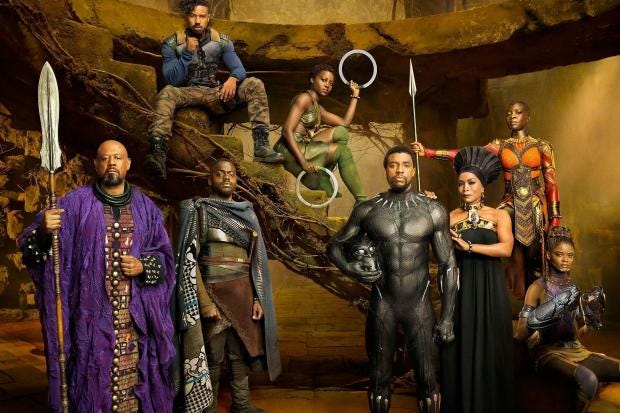
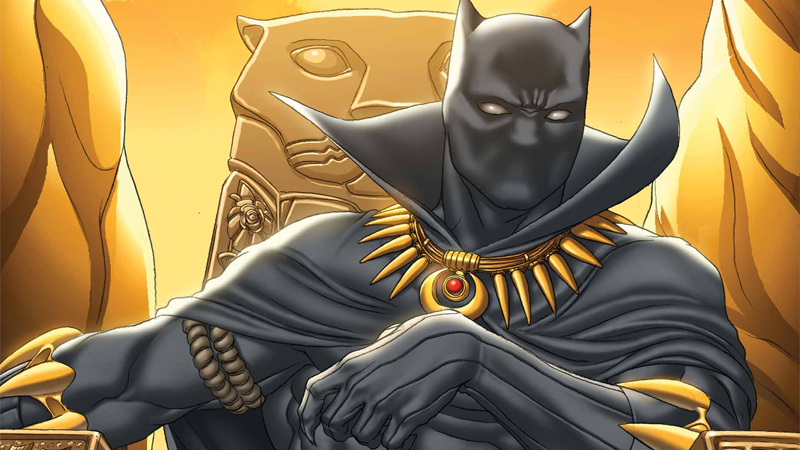
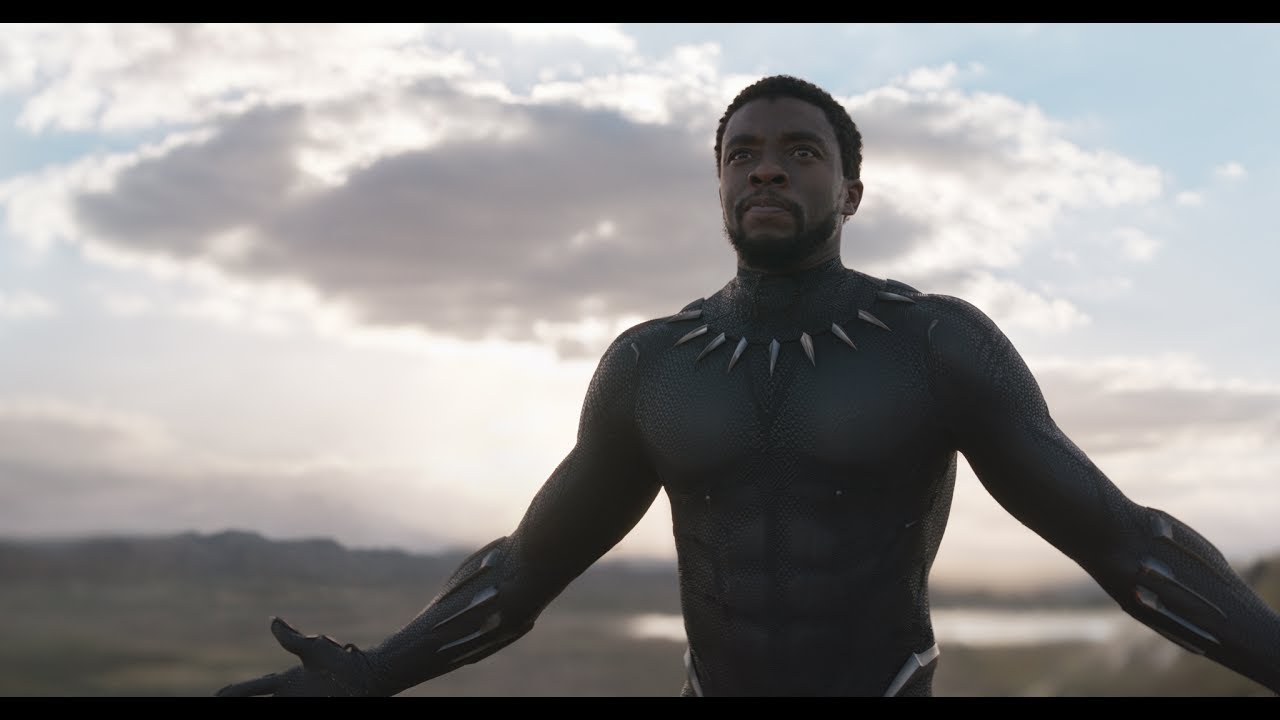
Say what you will about these tumultuous times. One thing is still clear. It’s a damn good time to be a fan of Black Panther. Whether you’re a long-time reader of the comics or Chadwick Boseman enjoying a meteoric rise in fame, these are the best of times for T’Challa, Wakanda, and everything in between.
I cite all this good news surrounding Black Panther because what I’m about to discuss is not going to show him in the best of light. None of it detracts from the character, nor does it undercut the remarkable achievements that the “Black Panther” movie has accomplished. Given the promising future of Black Panther’s future, though, I think now is probably the best time to bring it up.
Black Panther is a great character and has a lot of things going for him, right now. Between a successful movie and a successful ongoing solo series, which you should definitely check out, he has a lot has gone right for him. Unfortunately, that does not extend to his love life.
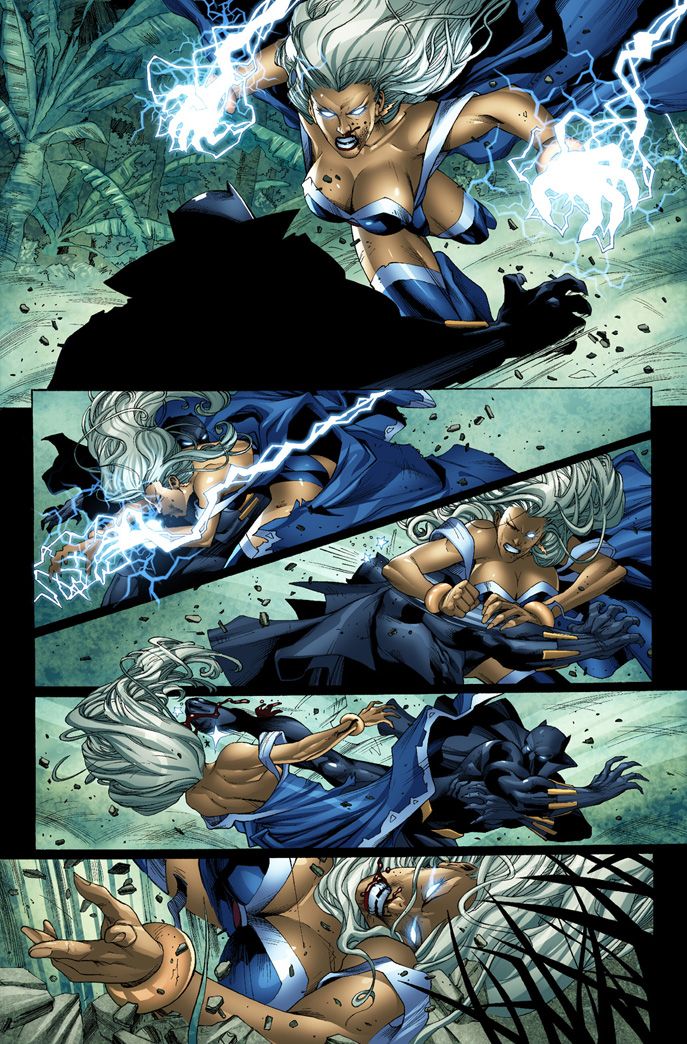
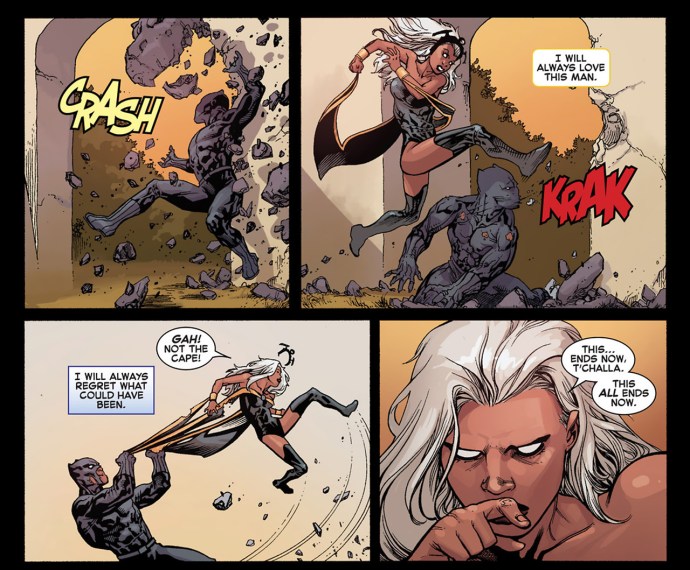
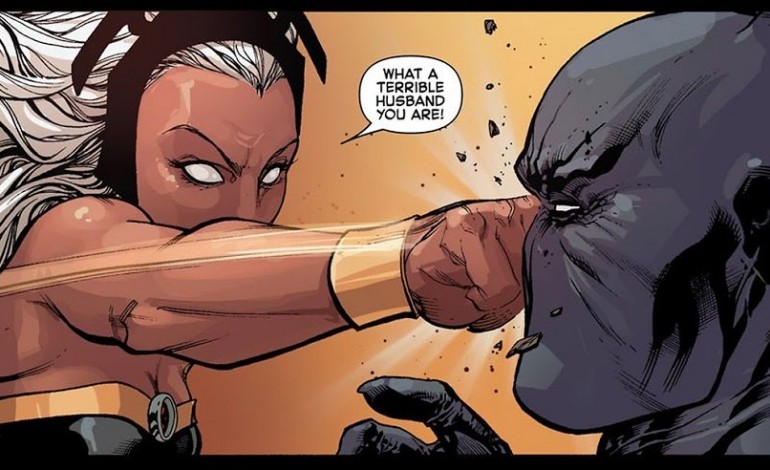
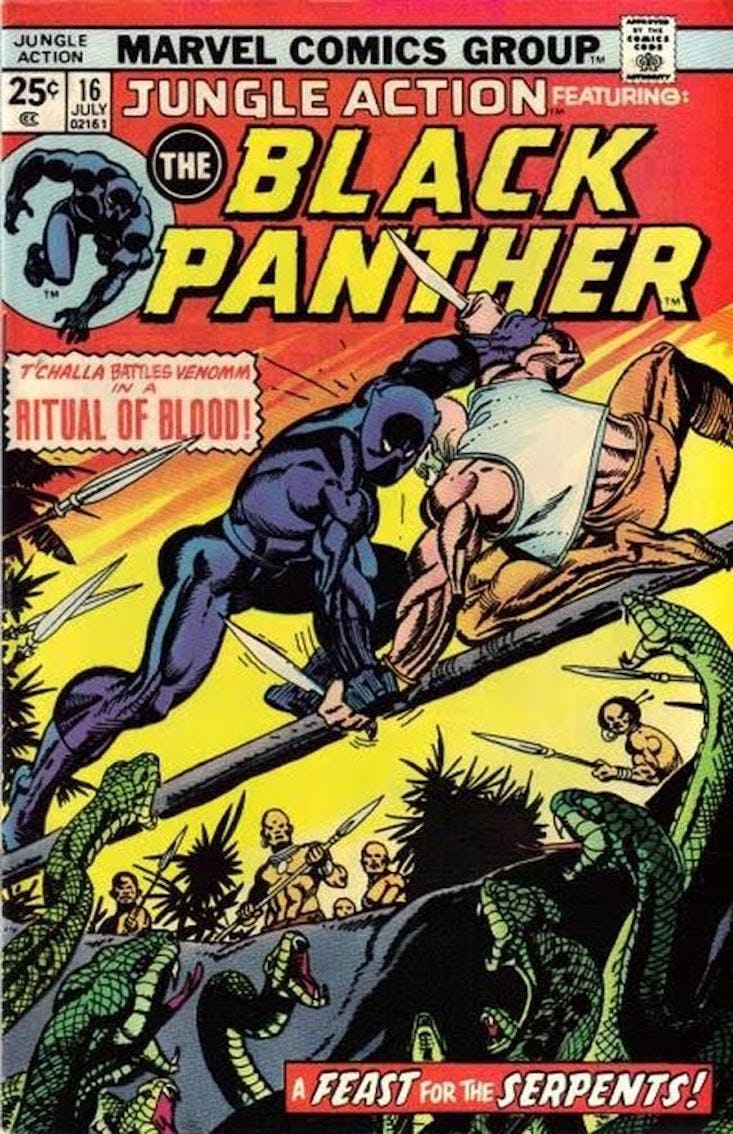
To those who only know T’Challa through the “Black Panther” movie, I’m not referring to Nakia, who is his primary love interest in that story. I’m referring to a much higher-profile relationship he had with a much higher-profile character in the mid-2000s. That character is Storm, a character I’ve praised before and not just for her love of foreplay.
On paper, it was billed as the union between two of Marvel’s most prominent black superheroes. It was presented as a union between a weather goddess and a king. It couldn’t have had more going for it without being the central plot of a Disney movie, which isn’t impossible at this point.
There’s just one glaring, omega-level problem with that approach. The relationship between Storm and Black Panther is one of the shallowest, emptiest, and least compelling romances in the history of superhero comics. Yes, it’s even worse than the time Juggernaut had a fling with She-Hulk.
For two character who are so iconic, well-rounded, and endearing, that’s quite a statement. I imagine that more than a few people disagree with it, but there’s a reason behind that statement and it’s not an overly petty one. Between being a die-hard fan of superhero comics and an aspiring erotica/romance writer, the flaws in this relationship stand out more than most for me.
The most glaring flaw, by far, is just how forced the relationship was in the first place. I won’t say it was quite as bad as the relationship between Jean Grey and Logan was in the X-men movies, but it was pretty damn close. From the beginning, it was less about the chemistry between these two characters and more about the fact that they were two prominent black superheroes.
Never mind having an actual reason to want to be together. Never mind actually tying their respective stories together in a compelling way. The approach was as lazy as it was empty, essentially relying on the iconic status of both characters and nothing more. By that logic, Taylor Swift and Ed Sheeran should’ve gotten married already.
Even if the approach was lazy, the premise could’ve worked if there was time and effort into developing the Storm/Black Panther romance compelling. Sadly, that’s not the approach Marvel used. They were in such a rush to get these two married that they skipped the part where they told a dramatic love story that brings these characters together in a meaningful way.
As a romance fan and a comic book fan, that was as satisfying as food poisoning and a hangover. Instead of presenting valid reasons as to why these two characters should be in love, Marvel rewrote Storm and Black Panther’s history to establish that they met each other when they were young and shared a strong connection. That’s all well and good, but there’s one glaring problem.
By rewriting the past, it devalues the emotional depth in the present. Instead of actually building that depth, it’s just suddenly revealed that these two characters had a long-standing history. There’s no need to tell a more elaborate story. It already happened in the past and they’re only acknowledging it now. If I could write that with more sarcasm, I would.
Now, history being rewritten in comics is nothing new. That’s what comic fans refer to as a “retcon” and it’s basically the narrative equivalent of a mulligan. When used correctly, it can help clear up convoluted elements. When used poorly, however, it can be very destructive. Just ask Captain America fans.
A retcon is the ultimate contrivance and that was the foundation of the Storm/Black Panther relationship. If every good relationship starts with a strong foundation, then the Storm/Black Panther relationship was built on a mix of quicksand and moldy bread.
I get the intent. In order for Storm and Black Panther to get married, they needed to establish that their relationship was somehow worthy of being on the same level as Superman/Lois Lane or Mr. Fantastic/Invisible Woman. Unfortunately, the only way to do that is to rewrite their entire history so that their love was something that had depth. It just happened entirely behind the scenes.
Contrast that with the love story we saw in the “Black Panther” movie between T’Challa and Nakia. There was nothing contrived about that story. These two characters both had their own narrative. In pursuing that narrative, they came together in a way that felt organic, genuine, and sincere. It was probably the most sincere love story in a superhero movie since the original Deadpool movie.
That shared narrative has huge gaps with Storm/Black Panther and not just because it required a rewriting of their respective history. Even before that retcon, Storm and Black Panther followed very different narratives.
The fact she had all those relationships while Black Panther had plenty of his own, most notably with former Captain Marvel, Monica Rambeau, makes the idea that they shared this powerful bond in their youth seem not so powerful. Even if there were other forces pushing them apart, the fact they followed such distinct narratives really undermines the sincerity of their relationship.
It also makes for some pretty distressing implications. Throughout the X-men’s history, the team has been on the run and on the brink every other week. In some cases, it led to some pretty brutal tragedies. All these things were happening with the X-men and Storm was often on the front lines.
The fact that she and her friends struggled so much while T’Challa, king of the most advanced nation in the Marvel universe, never did a goddamn thing to help her or her friends just makes the situation even worse. Unlike Wolverine or Forge, he wasn’t there to share in all the struggles. Granted, T’Challa had his own struggles, but neither he nor Storm ever went out of their way to support one another.
Sharing struggles is one of the most important components of a believable, functional romance in both the real world and in superhero comics. Without that, it’s like trying to build furniture without a hammer. You can try, but if you don’t have the right tools, the results are going to be limited at best.
It’s the fact that Storm and Black Panther shared such different struggles that their marriage in the comics ended in a fairly ugly fashion. When the Avengers and X-men clashed in the aptly-named “Avengers vs. X-men” event, Storm and Black Panther were on opposite sides. The conflict was so bad that it left Wakanda in ruin and by the end, their marriage was annulled.
It was an inglorious ending to a romance that Marvel tried hard to make iconic. Unfortunately, they went about it in all the wrong ways for all the wrong reasons. There’s no question that Storm and Black Panther are among Marvel’s highest-profile black heroes, even more so now with the success of the “Black Panther” movie. That’s still not the sole reason why they should be romantically involved.
The relationship was so forced and so flawed that even the X-men’s most iconic writer, Chris Claremont, says the whole thing was a big mistake. Storm and Black Panther may have potential, but by forcing it and rushing it to such an egregious extent, it’s hard to take that romance seriously.
If nothing else, the Storm/Black Panther relationship should provide a cautionary tale for superhero romances and real romances alike. Most importantly, it reinforces the notion that genuine romance can’t be forced. Strong couples share in their respective struggles, supporting one another and guiding one another.
Storm and Black Panther did none of that. Marvel’s approach to forging their relationship only gave them more reasons not to be together. Both characters have a bright future in their own respect, but that future cannot and should not be forced or contrived.
After I graduated college, I got my first full-time job at a software company providing technical support. Out of respect for my former employer, I won’t name the company or the type of software it made. I’ll just say that, like all software, it sometimes malfunctioned and users got really upset.
For the most part, those seeking support were polite and reasonable. I enjoyed helping them. It made the job feel rewarding, despite the erratic hours and mediocre pay. However, there were certain customers who, for whatever reason, just weren’t satisfied complaining about the product. They basically went out of their way vent all their problems on whoever was unlucky enough to get their call.
At my office, we called these people “rubber wall users” because they weren’t just an impenetrable wall of whining. Any time you tried to throw something at them to fix their issue, it just bounced right back at you. While we tried to be professional, there was an unwritten rule that even my supervisor understood. You say whatever you have to say to get that person off the phone and on with their miserable lives.
I’m sharing that story because it’s a fitting metaphor for a phenomenon we’re seeing more and more of these days. I see it in movies, TV shows, video games, and even novels, which especially concerns me. It involves pressuring artists, producers, and developers to be more inclusive and diverse with their media. Then, when it finally happens, that’s labeled “progress.”
With respect to the sincerity of those efforts, as well as the memories of some of the angry customers I dealt with, I disagree.
That said, there are certain kinds of progress that shouldn’t count as progress. They’re only progress in the same way that getting an unruly customer off the phone with some moniker of professionalism counted as progress at my old job. It’s not motivated by a sincere acceptance of diverse opinions. It’s just a way to stop the whining.
For the past couple years, I’ve found myself wondering just how much of this false progress is being mislabeled. I’ve been seeing it in multiple mediums. Comic books, a medium for which I regularly express my love on this blog, is just one of them.
Beyond the diversity push, Marvel even made an effort to de-sexualize their characters. While that’s only possible to some extent for overtly sexual characters like Emma Frost or DC’s Starfire, some of those efforts have had a noticeable effect on characters like Carol Danvers and Black Cat. It’s now much rarer to see female characters flaunt their sexuality.
For some, that counts as progress. Specifically, for those who believe depictions of sexy female characters promotes misogyny and sexism, it counts as a victory. If it upsets the fans and robs an inherently visual medium of a unique form of beauty, then so be it. That’s the price of “progress.” If I could say that with more sarcasm, I would.
Again, I disagree. In fact, I would go so far as to say those efforts by Marvel backfired and not just because it cost their editor-in-chief his job. Marvel, like all media companies, is a business. Businesses need to please their customers. When certain customers are especially vocal, they have to listen to some extent, just as I had to listen to those customers.
It’s debatable how much those at Marvel actually bought into the “progress” that certain critics were asking for. I don’t doubt that some creators were sincere in their desire to improve diversity and expand the appeal of their comics. However, I also don’t doubt that a part of that effort was just to temper some of the whining by people who know how to be extra loud in the era of social media.
While the impact on Marvel comics concerns me greatly, I noticed a much bigger effort late last year from an industry that has been prone to much louder criticisms. Specifically, it happened in one of my favorite video game franchises of all time, “Mass Effect.” Unlike what happened with Marvel, I’m not sure this beloved series will survive.
In the midst of that scandal, the demand for “progress” soared more than it did for most other mediums. Suddenly, the act of making a video game character too sexy was seen as contributing to a toxic culture of misogyny, sexism, and violence against women and minorities. It’s not like sex appeal had nothing to do with Lara Croft becoming so successful. Again, if I could say those words with more sarcasm, I would.
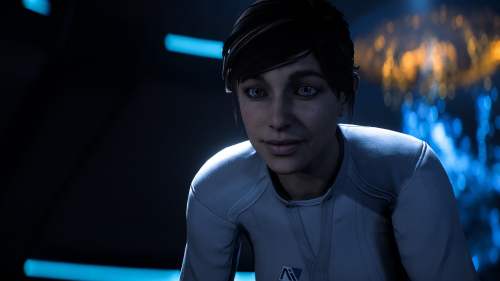
“Mass Effect: Andromeda” was developed in the eye of that storm. EA and Bioware couldn’t use the same approach they did with previous “Mass Effect” games. They had to be very careful with how they designed their characters, especially their female characters. One misplaced curve is all it would take to reignite a controversy that nobody wanted to deal with, given all the negative press the gaming industry had incurred.
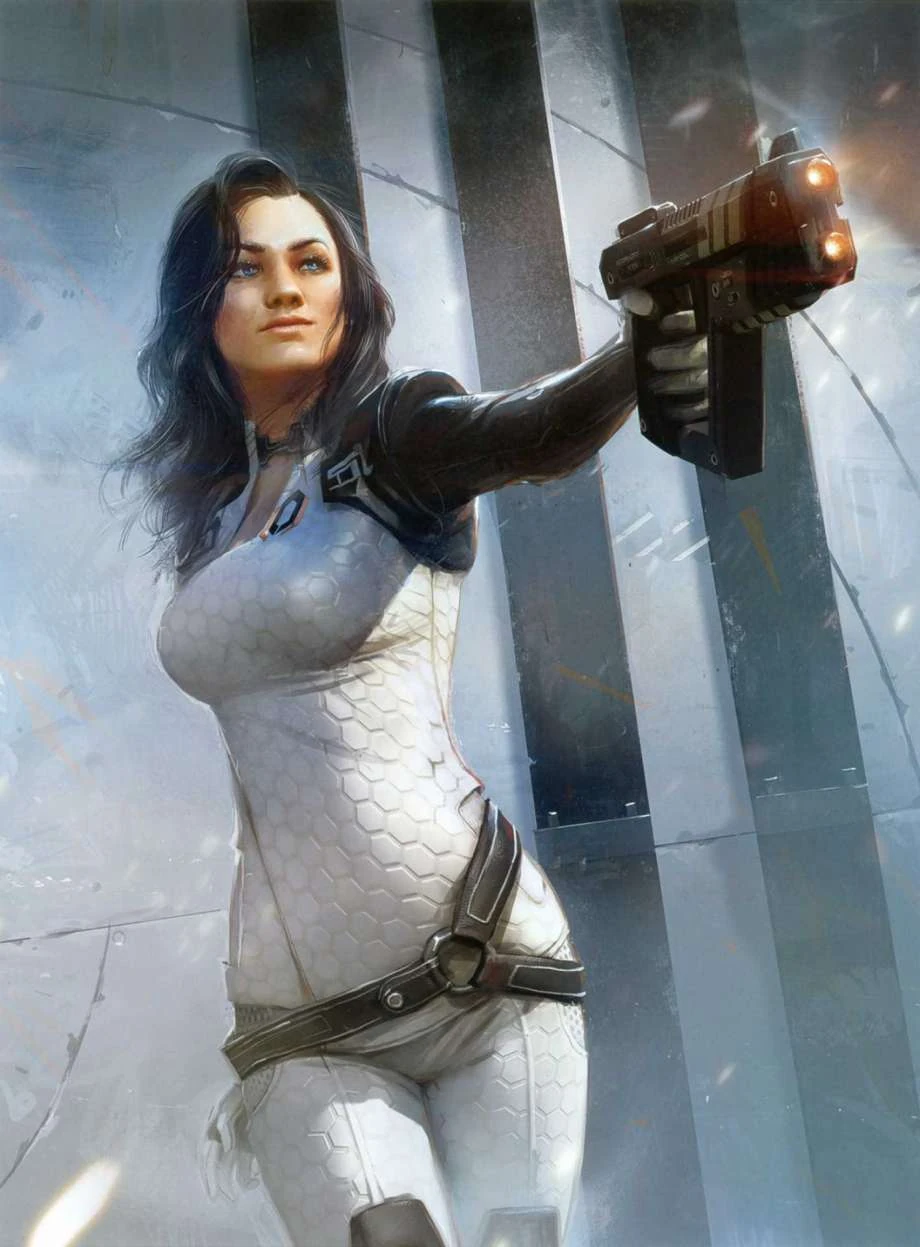
Ryder wasn’t the only female character to have her looks tempered. Pretty much every female character, from the supporting cast to background characters, was designed with minimal sex appeal in mind. That’s not to say the game didn’t have some sexier moments, but compared to what other games attempted before that, it was pretty watered down.
That was just one of many problems that “Mass Effect: Andromeda” faced when it launched in March 2017. Now, games launching with bugs and glitches is nothing new. It’s standard practice for a game to get patched after launch. However, the extent of those bugs in “Mass Effect: Andromeda,” combined with unattractive characters, did not help the game’s reception.
I say that as someone who played the game and still loved it, for the most part. Since I love “Mass Effect” games so much, I found plenty of reasons to love “Mass Effect: Andromeda.” However, I found myself having to overlook more flaws than usual. I also found it hard to really admire the visual aspects of the game. Like comics, undermining that part of the experience can be pretty detrimental.
There were a lot of criticism levied against “Mass Effect: Andromeda.” Some are legitimate. Some are painfully valid. More than any other game, though, it was developed with the intent to promote a more diverse and inclusive product that appealed everyone and offended no one. As the sales and reception seem to indicate, though, even female gamers don’t like looking at unattractive characters.
As a result, nobody really hailed “Mass Effect: Andromeda” as progress. However, nobody staged a mass online protest claiming the game made its female characters too sexy and promoted toxic behaviors among its users. Some might count that as progress too. I am not one of them.
In a sense, “Mass Effect: Andromeda” is a case study in a product where efforts towards progress just masked a desire to avoid outrage. Just avoiding outrage does not count as progress in any capacity. It just counts as a company trying to shield itself from bad publicity that might damaged its brand. Say what you will about corporate greed, but brand still matters to them, often more than money.
I don’t blame Bioware or EA at all for going that route, but simply avoiding outrage set the bar pretty low and it might have doomed “Mass Effect: Andromeda” before it ever had a chance. At the moment, the “Mass Effect” franchise is on indefinite hold because the response to “Mass Effect: Andromeda” was not what the developer had hoped.
Beyond the tragedy of damaging a beloved franchise, “Mass Effect: Andromeda” reflects a dangerous and potentially regressive sentiment in the industry. Rather than focus on pushing the envelope and doing something bold, artists and developers are more concerned with avoiding outrage. The actual quality of the final product can only ever be secondary, at most.
Most agree that video games, like any other media, should work to appeal to a broad audience. However, as Marvel found out, forcing certain kinds of “progress” can have some pretty detrimental effects in the long run. It alienates consumers, frustrates developers, and limits the incentives to innovate and try new things.
At the end of the day, making female superheroes less sexy in comics and making characters in “Mass Effect” less attractive did nothing to reduce sexism, promote gender equality, or foster a more inclusive culture. All it really did was go out of its way to stop exceedingly vocal critics from whining.
Bioware and EA didn’t suddenly become more enlightened about video games, female characters, and the impact of mass media. They simply took the path of least resistance, doing what would generate the least amount of outrage, at least in terms of sexist accusations. That’s not progress. That’s just frustration and, like my old job, very little good comes from it.
When it comes to two genres that are often associated with one another, romance and tragedy are the literary equivalent of peanut butter and jelly. When you think of one, it’s not long before you associate it with another. Romance without tragedy is like fries without ketchup. Both are still good on their own, but it’s only when they’re together that they maximize their potential.
In that same spirit that the likes of Shakespeare and “Titanic,” superheroes often follow that narrative, but with more spectacle than old playwrights and even James Cameron could ever imagine. Being such a huge fan of superhero movies and comic books, I’m more familiar with their take on romance and tragedy than most aspiring erotica/romance writers.
As such, when an amazing, uncanny, astonishing, or whatever other adjective that a comic book puts before their title tells a story that truly embodies those ideas, I take notice. Seeing as how I’m also an unapologetic romance fan on top of being a comic book fan, those kinds of stories resonate especially well for me. They don’t come around too often, but when they do, they’re worth appreciating.
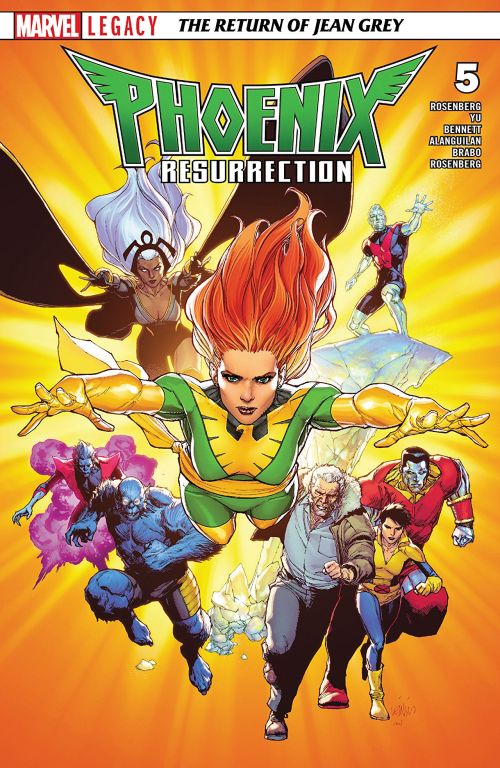
The name of the story is called Phoenix Resurrection: The Return of Jean Grey by Matthew Rosenberg. Now, if you don’t want to be spoiled, I strongly encourage everyone to read it. Either buy it at a comic shop or buy the digital version. Even if you’re not a comic book fan, it’s a great story that will still evoke all the right emotions.
That’s because this story does something that’s very rare and very difficult to do. It’s something that everyone form Shakespeare to Tolken to Stan “The Man” Lee struggled with at some point in their creative endeavors. It gets the balance between romance and tragedy right. It gets it so right, in fact, that I intend to judge all future romance/tragedies by this comic. That includes any I write.
To understand how I came to this conclusion, it’s important to understand the context of the story and why it had such a powerful impact. To do that, it’s necessary to point out the circumstances of this story. When it was announced last year, it’s stated goal was to bring Jean Grey back from the dead. Anyone who has even a passing familiarity with comics knows that’s not all that groundbreaking.
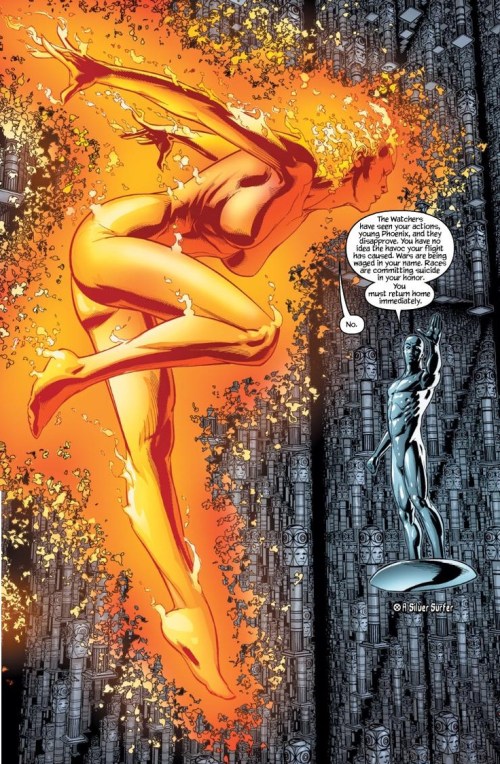
That original story had a lot of romantic elements in it, but it was largely defined by its tragic ending. In that original story, Jean Grey willingly sacrificed herself in front of Cyclops and her friends to stop herself from becoming corrupted by the cosmic power of the Phoenix Force.
That’s an important detail to note because that’s a theme that would go onto play out on many occasions for Jean, eventually culminating in her second death in 2004. Her constant struggle to manage the immense power granted by the Phoenix Force and the corruption that often came with it is one of the primary driving forces behind Jean’s character. It’s also a big part of her appeal.
Rosenberg uses those same themes, as well as the immense power afforded by the Phoenix Force, to build the tragedy and romance that plays out in Phoenix Resurrection: The Return of Jean Grey. It’s a story that has more drama going for it than most because, despite the presence of time travelers, Jean Grey has been dead since 2004. Her coming back after such a long absence is a big deal for X-men fans and for her character.
The challenge Rosenberg faced was making that resurrection feel more compelling than overdue in an era where dead characters come back all the time. On top of that, Jean’s association with a cosmic force known for death and resurrection means her character basically has a built-in cheat code for bringing her back. How can that be so compelling, let alone raise the bar for romance and tragedy?
This is where the spoilers come in so again, please take the time to read the comic if you can. That’s because the way Jean comes back in this story has less to do with tragedy and more to do with agency. Way back in the original Phoenix Saga, Jean reached out to Phoenix Force in an act to save her friends. It was a choice of desperation.
Well, since that fateful choice, the Phoenix Force has been like a clingy ex, wanting desperately to stay bonded to her, even thought it often corrupts her. I’ve argued before how the context of that corruption might be more complicated than it seems, but on the basis of history alone, Jean Grey has many reasons to regret that choice.
The Phoenix only gives her another in this series. After having bonded with plenty of other hosts since her death, it goes to great lengths to bond with Jean again. It goes so far as to resurrect both her and everyone she ever cared about, creating this own little world in which Jean never experiences the many tragedies that befell her. It’s like the Matrix, but with a volatile cosmic bird running the show.
As part of that fantasy world, Jean Grey’s long-time love, Cyclops, is alive and well. That’s critical because, at least for the time being, he’s also dead. The Phoenix Force basically gives her everything to be happy, content, and loved. Keep in mind, though, it’s not doing this out of pure altruism. It wants to bond with Jean again. That’s the goal and the fantasy world is just a means to an end.
That makes the tragedy inevitable. As is often the case with fantasy worlds, even those created by a cosmic power, they tend to crumble under the harsh weight of reality. The way in which this happens is best revealed through the story. However, the part of the story that really balances out that tragedy occurs in the final issue.
In that issue, the fantasy world crumbles, thanks largely to the efforts of Jean’s fellow X-men. Naturally, the Phoenix Force fights this and tries to tempt Jean into bonding with it again, saying its power can give her everything she desires. It can even bring back those she loves.
As part of a last-ditch effort, it demonstrates this by bringing Cyclops back to life. He’s not a clone. He’s not a time traveler. He’s not some illusion either. He’s the real, flesh-and-blood Cyclops, complete with the thoughts, feelings, and passions of the man she married.
It’s a dick move on the part of the Phoenix Force, to say the least. It’s also the moment where the romance balances the tragedy in an important way. That’s because in that moment, Jean makes another fateful choice, one every bit as dire as the one she made in the original Phoenix Saga. This time, though, she lays her heart on the line, knowing damn well it’ll be broken.
Rather than just reject this tactic as another attempt by the Phoenix to lure her in, she embraces it for a brief moment. In that moment, she gets to say goodbye to her husband. She and Cyclops even go out of their way to make clear how much they love each other, both in life and in death. Even if you’re not a big romance fan, this is a moment of pure, unadulterated heart.
We still know the tragedy is coming. We know it’s a moment that’s going to end with tears and sorrow. Anyone that ever had to read “Romeo and Juliet” in high school English class knows it’s coming and is might think they’re numb to it, especially if they flunked the test.
That’s why it was so important for the story to reaffirm that sentiment. Rosenberg did something critical when he had Cyclops and Jean Grey remind each other just how deep their love went. He gave even greater weight to the loss.
At least with “Romeo and Juliet,” the characters involved had just met. They barely knew each other. Cyclops and Jean Grey’s love story spans 50 years of X-men comics, complete with weddings, clones, and raising a child together in the future. To know the extent of their love is to know just how much that tragedy hurts.
That, more than anything, is what puts Phoenix Resurrection: The Return of Jean Grey in a league of its own in terms of romance and tragedy. Instead of the tragedy defining the romance, it’s the other way around. It’s the romance that gives that tragedy such immense weight.
In too many stories, both in comics and in other mediums, tragedy relies too heavily on its own weight to make an impact. Making a love story dependent on that tragedy gives the impression that the love needed it in order to have depth. That’s why, when the tragedy eventually occurs, it doesn’t always hit all the emotional chords.
Rosenberg left no emotional chords unstruck with this story. It’s because Jean shared that special moment with the man she loved that her decision to reject the Phoenix Force carries so much weight. That decision comes with so much pain, anguish, and sorrow. It’s one thing to just depict it. It’s quite another to truly convey it.
That’s what truly makes Phoenix Resurrection: The Return of Jean Grey so special. It conveys both the breadth of the romance and the extent of the tragedy. Moreover, it does that in a way where one complements the other. For a romance built heavily around two characters operating as equals, I can’t think of anything more fitting.
Again, if you’re fan of romance, tragedy, or both, check out Phoenix Resurrection: The Return of Jean Grey. Even if you hate comics and the X-men, this one will evoke all the right emotions. You’ll shed tears of sorrow and joy at the same time. It’ll feel so weird, but so right.
Just because I haven’t been writing about comics much lately doesn’t mean I haven’t been following them. It also doesn’t mean I’m not aware of the major developments unfolding in the comic book world. As I write this, there’s a lot going on, from Tony Stark’s return as Iron Man to the return of Superman’s iconic red trunks.
If you’re a comic book fan, though, you already know about this and I don’t need to say anything to get you excited. If you’re a comic book fan who also happens to be a big romance fan, there are other stories that excite you. I mentioned one late last year with the big announcement that Batman and Catwoman are getting married. Now, I have another.
It’s big news for Marvel as well. They’re already promoting this as a major event for these characters and for the Marvel universe as a whole. Sure, it may just be their way of competing with the upcoming Batman/Catwoman wedding, but that doesn’t make the sentiment involved any less genuine. It also doesn’t make the promo video for X-men Gold #30, the wedding issue set to come out this summer, any less sweet.
I know Kitty Pryde and Colossus are not exactly on the same level as Superman and Lois Lane, Batman and Catwoman, Cyclops and Jean Grey, or even Deadpool and tacos. In the pantheon of superhero romances, they’re not exactly top five, but they’re not afterthoughts either.
Their romance has never been a major plot in an X-men movie, nor has it been a focus in any X-men cartoons. However, for those familiar with the X-men comics, this relationship is as special as it is unique. It’s one of those romances that blossomed in unique and sometimes controversial ways.
I won’t recount all the chaotic elements of their romance. I’ll just point out there have been many times where they’ve gotten closer, been friend-zoned, ended up in other relationships, and even died on one another, which happens a lot in comics. I’ll also say that the love between Kitty Pryde and Colossus carries with it some unique insights into love, relationships, and how they blossom.
So, in the spirit of celebrating the upcoming nuptials of these fictional characters that I hold dear, I’d like to share some of those insights that translate into real-world lessons on love. Being both a romance fan and a comic book fan, I’m especially fond of the parallels that tie works of fiction into serious matters of the heart.
Whether or not the marriage of Kitty Pryde and Colossus lasts or prospers in the X-men comics remains to be seen. Regardless of Marvel’s poor track record with marriage, they’re a couple worth rooting for and this is what they can teach us.
Lesson #1: Failed Relationships Can Still Succeed
For many fictional romances, especially those involving superheroes, the romantic dynamics are often idealized, pure, and heavy on melodrama. They’re basically “Romeo and Juliet” with superpowers, built around a love that’s so pure it can only ever be corrupted by a horribly contrived love triangle.
Colossus and Kitty Pryde are decidedly not that. Theirs is a more clumsy romance, one where they sort of stumble their way towards one another. Throughout their history, they have tried to forge a relationship, but failed on multiple occasions, sometimes due to circumstances and sometimes due to hard choices.
In those failures, Kitty Pryde dated other men, like Pete Wisdom and Iceman. Colossus dated other women, like Domino. Along the way, they each followed their own stories. They each grew in their own way. They weren’t dependent on each other. They didn’t have to be together to become strong.
These failures may have derailed their romance at times, but it didn’t end their love or their desire to be together. Eventually, they found themselves in a position to act on that love in the pages of X-men Gold. Now, they’re getting married. Ironically, their past failures helped get them to that point.
Learn from failures in a relationship and build a better one from the ashes. That’s not just a critical lesson. In a world where the ideal love stories of “Romeo and Juliet” are reserved for high school English classes, it’s a much more realistic way to approach love.
Lesson #2: Love Who Someone Is Trying To Be (And Not What They Were)
This kind of gets into those creepier elements I mentioned earlier. It’s true. Kitty and Colossus had a sizable age gap when they first met. Age gaps in young romances are taboo and for good reasons, beyond just the legal reasons. However, that age gap hid another important lesson that Kitty and Colossus later embodied.
Beyond the basic flirty exchanges they had in their youth, Kitty Pryde distinguished herself as a special character by how quickly she grew and matured throughout the pages of Uncanny X-men. Sure, she was a vulnerable young girl when she first joined the X-men, but she didn’t stay that way.
Again, a lot of complications get in their way, as is often the case with superheroes, but whether or not they manage those complications isn’t the point. It’s who they’re trying to be, as individuals, that makes them who they are. It’s that striving that often draws them together. It’s that constant effort to be better that fuels their chemistry.
That chemistry is built less on who they are and more on who they’re trying to be. Kitty and Colossus saw who they were trying to be in the midst of the chaos that comes with being X-men. That’s the person they fell in love with and in a chaotic world where everyone has to better themselves just to keep up, that’s an important and underrated facet of love.
Lesson #3: Seek To Grow With AND Love Someone
This also ties, somewhat, to the age gap between Kitty Pryde and Colossus, but without the taboo. Age gaps matter when two people are young, immature, and don’t have a firm grasp of their emotions. They matter less and less at time goes on. I say that as someone whose parents have an age gap that’s actually wider than Kitty and Colossus.
In a sense, the age gap worked to Kitty and Colossus’ advantage because they didn’t just see each other in their impressionable youth. They actually watched each other grow into adults. While they weren’t alwayson the same team, they were able to grow together within a similar environment. In doing so, that innocent crush evolved into something deeper.
That’s an important distinction that a lot of young people, myself included, don’t often realize until much later in life. We focus so much on the here and now when it comes to loving someone that we forget that we’re still growing as individuals. Sometimes, two don’t realize we’re growing apart until it’s too late.
I’ve seen this happen in the real world with once strong relationships that just drift apart as the couple gets older. I’ve also seen it happen in the opposite direction, watching two people grow closer as they actually seek to grow with someone, as well as love them. Kitty Pryde and Colossus are a perfect embodiment of the latter.
Lesson #4: Let The Moment Be Right For Love (And Guide It If You Can)
I know I keep repeating this and it’s worth belaboring, but Kitty Pryde and Colossus had a lot of obstacles when it came to getting together, the least of which involved Colossus dying at one point. It’s worth belaboring because it reflects how hard these two had to work in order to get together over the course of several decades of X-men comics.
Within those complications, though, is an important lesson that best played out in Joss Whedon’s legendary run on Astonishing X-men. The circumstances aren’t always right for two people to come together. However, when that moment is right, don’t be afraid to act on it. You can’t force those moments. You can only let them unfold and embrace them.
For Kitty Pryde and Colossus, those moments were rare, but they weren’t random. When Colossus returned from the dead, they had every reason to just jump each other’s bone in an overly dramatic moment. They didn’t do that, though. They didn’t try to force that moment. They just led each other to it.
A similar situation unfolded in X-men Gold. They had an opportunity to jump back into their relationship, but they didn’t. Sure, they made excuses at first, which I found annoying, along with many other long-time X-men fans. However, by taking it slow and letting the moment come to them, it made the eventual culmination in X-men Gold #20 that much more satisfying.
You can’t force a romantic moment, nor should you. However, you can guide the situation towards those moments. If the love is strong, like it is with Kitty Pryde and Colossus, it’ll happen and it’ll be beautiful.
Lesson #5: Don’t Make Excuses For Loving (Or NOT Loving) Someone
This is a common and annoying trope with fictional romances. For those not built on love-at-first-sight or sickeningly-pure infatuation, a romantic sub-plot in most stories will be full of excuses on why they should not be together. Given my take on excuses, it should surprise no one how much this annoys me.
Kitty Pryde and Colossus made a lot more excuses than most and not just because of the early age gap. Sometimes it was because they were on different teams. Sometimes it was because they were caught up in other relationships. Sure, some of those excuses were valid, like being dead or trapped in a giant bullet flying through space. Those that kept them apart, however, were often shallow or contrived.
Now, some of this might have been due to whoever was writing the X-men comics at the time. As I’ve noted before, there have been instances where bias writers force contrived plots to keep certain characters apart. Chris Claremont’s efforts with Cyclops, Jean Grey, and Wolverine are well-documented.
The efforts surrounding Kitty Pryde and Colossus, though, never got that extreme. They also never undid the chemistry between them or fundamentally changed the elements that attracted them to one another. In that respect, they didn’t make excuses. They didn’t hide from those emotions, even if they avoided them. That ended up strengthening their relationship in the long run.
It’s another important lesson about excuses and reasons. When your reasons for not being with someone are built on excuses, then you’re missing the point. Kitty and Colossus stopped making excuses in X-men Gold #20. If they can do it, then there’s hope for everyone, real and fictional alike.
Sure, there’s are plenty of times when I just prefer to pour myself a glass of whiskey, sit back, and just enjoy the raw entertainment value of a comic book or superhero movie. Given the sizable slate of superhero movies set for release in 2018, I’m probably going to need more whiskey.
There is one particular movie, however, that is making waves that I haven’t really talked about before. I’m referring to the upcoming “Black Panther” movie, a movie that is already setting pre-sale records on Fandango. While every movie produced by Marvel Studios these days seems to blow up the box office and enrich Disney, this particular movie is unlike anything they’ve ever tried before.
There’s a reason why I haven’t talked much about it. For the most part, I haven’t come up with any meaningful discussions that I think are worth sharing. Like most self-professed Marvel fans, though, I am excited about this movie. It takes a character who has been underrated and overshadowed for most of his history and elevates his position in the larger narrative of the MCU.
The fact that Black Panther is one of Marvel’s most prominent black heroes is certainly another important aspect. In the ongoing effort to promote more diversity in Hollywood and popular culture, “Black Panther” checks all the right boxes. He’s a prominent minority character who holds his own alongside other Avengers, as we saw in “Captain America: Civil War.” He’s ready for his own movie.
Now, before I go any further, I want to make clear that I don’t wish to get into all the racial undertones and white-washing controversies that have plagued Hollywood in recent years. As a comic book fan, I’m just excited to see Black Panther get a chance to elevate his presence. I sincerely hope that Chadwick Boseman can do for T’Challa what Robert Downy Jr. did for Tony Stark.
However, in seeing the growing excitement surrounding this movie, I feel as though the movie is revealing something about the current state of the world that’s not easy to see. It also reveals something profound about the character of Black Panther, as well, that might be even more telling in these sensitive times we live.
It might not be the message that the “Black Panther” movie is trying to convey. I don’t doubt for a second that Marvel Studios and Disney see this movie as just another part of the process of maximizing profits at the box office. However, when you look at the context of this movie and the character it’s built around, there’s one unexpected, but remarkable insight that emerges.
“Black Panther embodies the ideal king that everybody wants to live under.”
Unlike some of the other insights I’ve tried to ascribe to certain character, it’s not too hard to see this concept reflected in the character of T’Challa. Whether you only know him from his role in the movies or are familiar with his history in the comics, this trait is a core aspect to his persona. He’s not just an Avenger, a superhero, and a prominent black character. He’s the ultimate king that people want to be ruled by.
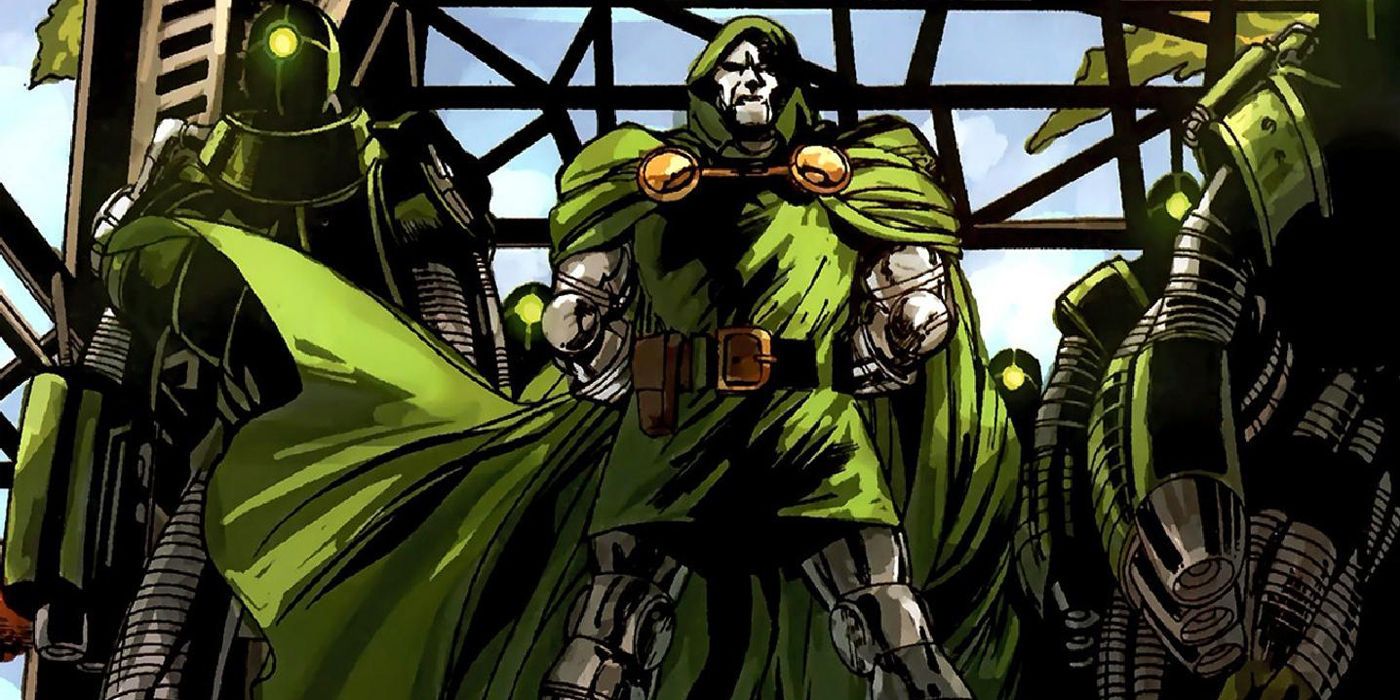
If it sounds like that conflicts with my assertion that Dr. Doom is the ultimate ruler, then please bear with me. I am going to address that in a way that will hopefully make sense. To understand why this is key to Black Panther’s character, as well as being a big part of his appeal, it’s important to know a few details about his story.
In both the comics and the MCU, Black Panther isn’t just a prominent superhero who also happens to be black. He’s the king of the fictional country, Wakanda, a secretive land in Africa that is extremely advanced and extremely wealthy. This is largely due to its rich deposits of Vibraniam, an equally fictional super-material that is more valuable than anything we have in the real world.
The particulars of Wakanda are important because, like Krypton, Asgard, or Gotham City, it embodies a particular concept. Wakanda is, in many respects, the embodiment of an exotic land that prospers without the influence of the modern world. A key trait of Wakanda is that, for much of its history, it shut itself off from the outside world and actively fought those who tried to change that.
That isolation doesn’t just give Wakanda its exotic appeal. It also insulates it from what we, in the outside world, see an increasingly corrupt system of world governments that don’t do a good job of helping people prosper. Despite all the data that clearly shows the world is improving with each passing year, there’s still a sense that there’s this one magical place that can do it better.
Wakanda is that place. Wakanda is technologically advanced, fully developed, and extremely prosperous. The fact that it’s a country in Africa, which is home to some of the poorest countries in the world, makes it all the more remarkable. The idea that it achieved all this without the aid of other nations helps add to the appeal.
This is where Black Panther’s appeal as the perfect king comes in. Beyond just being advanced and prosperous on its own accord, it’s not ruled by a flawed democracy, a corrupt dictator, or an inept republic. It’s ruled by a wise, competent, and compassionate ruler who also happens to be a superhero on the side. Black Panther, in many respects, embodies all the ways in which rulers wish they were seen.
He wasn’t elected, nor did he come to power in a coup. He rules because he’s the son of a previous, equally competent ruler. It’s basically a traditional monarchy, one that doesn’t require corrupt elections or elaborate legal traditions. While that seems antithetical to the freedom-loving crowd who scoff at living under kings, it does have great appeal.
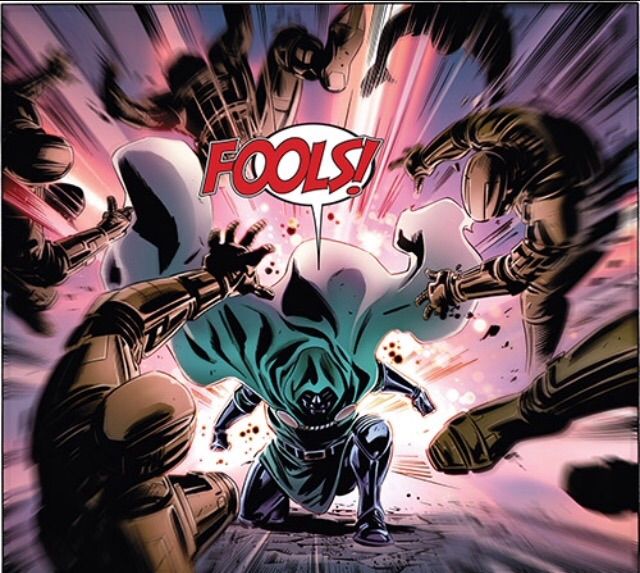
Like Superman, Black Panther embodies everything people want in a ruler. This is what sets him apart from Dr. Doom. While Doom might be smarter and more capable, most people would not be lining up to live under his rule. Black Panther is different. He’s the kind of king people actually want to live under, even if it means living under the rule of a powerful monarch.
Black Panther and his exotic homeland are insulated from the corruption and ineptitude we associate with our existing rulers. It’s because Black Panther is from such an exotic place that prospered, despite being so isolated, that his ability to rule seems fittingly superhuman. He carries himself as the kind of king who won’t create crazy cults of personality or fail spectacularly.
That appeal is even greater these days because of the growing perception that all leaders are inherently corrupt. The 2016 Election was basically a year-long parade celebrating everything people hate about inept, corrupt leadership. It created this sentiment of hopelessness that no matter which leader end up in power, they’ll still be corrupt.
The events after the 2016 Election have only further reinforced this notion. In a sense, “Black Panther” is coming along at the best possible time because the general public is so disillusioned with the rulers they know. The idea that there’s this powerful, uncorrupted king who benevolently rules a prosperous land isn’t just appealing. It embodies a near-universal desire to live in a perfectly governed society.
At this point, it’s worth noting that this sort of appeal clashes significantly with the harsh truths of the real world. In the same way there’s nobody who can ever be as powerful or as good as Superman, there’s nobody who can ever be as good a ruler as Black Panther. His persona, as well as his country, simply could not exist in the real world.
Even with semi-competent rulers, it’s impossible for any country to thrive like Wakanda. It’s equally impossible for any ruler to be as effective as Black Panther because no government, be it a dictatorship or a democracy, that can ever manage the never-ending chaos or accommodate infinite needs of the people with its finite resources.
In a sense, rulers like Black Panther and societies like Wakanda are large-scale wish fulfillment for those dissatisfied with their own society. We may not acknowledge that such a ruler and such a society are impossible in the real world, but neither are shape-shifting aliens or silver-skinned men on surf boards. The stories surrounding such concepts act as a unique kind of escapism, which is at the heart of every movie’s appeal.
Now, I’m not saying that this sort of appeal will be the sole reason “Black Panther” succeeds at the box office. I believe that if it succeeds on the level that some are already projecting, it’ll be because of a multitude of factors, much of which can be attributed to the winning formula that Marvel Studios has refined.
Whatever the racial or cultural undertones of a movie like “Black Panther,” it has already struck a chord. It’ll likely strike even more after it’s released. Most probably won’t be related to Black Panther being the perfect king or Wakanda being the perfect society, but the undertones are there. As people become more dissatisfied with their leaders and their society, they’re likely to become more overt about it.
If you’re a “Star Wars” fan in any capacity, then these are truly exciting times. It doesn’t matter if you’ve got the blueprints of the Millennium Falcon tattooed on your back or just think porgs are adorable, this is basically your Mardi Gras. Another new “Star Wars” movie is set for release and, by all accounts, “Star Wars: The Last Jedi” is set to give Disney a fresh pool of money to swim in.
Now, I love “Star Wars” as much as anyone who grew up on a healthy diet of sci-fi and comic books. I’ve seen every movie in theaters. I had more than my share of “Star Wars” toys as a kid. I do intend to be in line to see “Star Wars: The Last Jedi” on opening night. Like X-men and football, I’m that passionate about the things I love.
However, in getting my mind one with the Force in anticipation of the release of “Star Wars: The Last Jedi,” I found myself contemplating some unexpected ideas. In doing so, I came to a realization that isn’t so much a fan theory as it is an observation, and one that will probably incur the wrath of every adherent of the Jedi Order, which is a thing by the way.
I’m willing to take that chance, though. I don’t know whether the Force will be on my side after this, but in the name of digging deeper into the “Star Wars” mythos, I want to put this out there. If you’re prone to Sith-level outrage, you might want to put up your deflector shields because I’m about to make a statement that strikes at the very heart of what it means to be a Jedi. That statement is this.
Dr. Doom is the perfect embodiment of the Jedi.
I’ll give “Star Wars” a moment to stop seething and Marvel fans a moment to stop laughing. Take all the time you need. I know this sounds like something a man only comes up with after he’s had a few too many glasses of whiskey while re-watching “The Empire Strikes Back” one too many times. Make no mistake. I’m dead serious about this.
There is no emotion, there is peace. There is no ignorance, there is knowledge. There is no passion, there is serenity. There is no chaos, there is harmony. There is no death, there is the Force.
Anyone who has watched at least two “Star Wars” movies can probably see plenty of examples of these tenants. In every movie, in some form or another, the Jedi espouse principles of non-attachment, harmony, knowledge, and an overall understanding that death is neither the end, nor the beginning.
Those who have studied philosophy and theology in any capacity will probably recognize that these concepts are very similar to major principles of Taoist philosophy. In fact, the whole Sith/Jedi dichotomy nicely reflects that of Yin and Yang, which is probably the most well-known Taoist principle.
With those concepts in mind, you might instinctively believe that Dr. Doom would more closely align with the tenants of the Sith. Like the Jedi, they too have their own unique code. Again, according to the official Star Wars wiki, that code is as follows:
Peace is a lie. There is only Passion. Through Passion I gain Strength. Through Strength I gain Power. Through Power I gain Victory. Through Victory my chains are Broken. The Force shall free me.
While those tenants may sound like something Dr. Doom embraces, a closer examination of how Doom conducts himself reveals something else. You don’t even have to dig too deep to see just how much Doom embodies the ways of the Jedi.
One of the most distinct differences between a Sith and a Jedi is how they approach passion. Sith, as Anakin Skywalker so nicely demonstrated in “Star Wars: Revenge of the Sith,” are fueled by their passions. Their anger and hate fuels them. Jedi see those emotions as temptations that send Force-wielders down a dark, selfish path. Anakin’s descent into the dark side nicely documents that fall.
However, while Dr. Doom can become annoyed and frustrated, he rarely demonstrates Sith-level anger. In fact, most of the time, Doom’s emotional state is one of cold, callousness. When he donned his famous, obscenely overpowered armor, he did so with the intent of shedding the passions that he believed had held him back.
In a sense, Doom sees the same thing the Jedi sees. The world around him is full of chaos. People, in general, are consumed with chaos. Nothing but destruction will come from that chaos and they both seek to temper it. The only difference is that Doom does more than just attack it with a light sabre.
Dr. Doom’s desire for order are even reflected in the crossover event, Doomwar. It’s in that event that Dr. Doom learns from Bast, the Panther God, that the only future in which mankind is free from suffering, want, and chaos is one where he rules. In a sense, Doom see’s ruling the world as his destiny. Given how often the Jedi and the Sith make a big deal about destiny, Dr. Doom fits right in with those principles.
Even in matters of life and death, Dr. Doom aligns himself with the Jedi, albeit in more overt ways. For him, death is hardly a barrier. Whereas Sith fear and dread death, as Anakin Skywalker did in trying to prevent the death of his loved ones, Dr. Doom basically brushes it off. He doesn’t just cheat death with his army of Doombots. He has actually become a god on more than one occasion.
Whereas a Sith like Anakin will lament the loss of his mother and wife, Dr. Doom will sacrifice the woman he loves to a demon without batting an eye. Like the Jedi, he does not care for personal attachments or petty passions that might hold him back. He sees himself as too smart and too capable for such things. It’s not that he sees himself as a god among men. He’s just smart and powerful enough to prove it.
In a sense, Dr. Doom is the ultimate endgame for a Jedi. He is the ultimate extreme of what happens when you take the Jedi Code and push it beyond the limits of frail human minds. It leads someone to becoming numb to their passions, empowered by knowledge, and driven to forge harmony out of chaos.
With that in mind, I want to acknowledge that there are other intricacies to the Jedi Code with which Dr. Doom is inherently incompatible. Unlike Doom, Jedi don’t seek to rule whereas Sith Lords do. Also unlike the Jedi, Dr. Doom can be pretty damn selfish and arrogant, which are hardly in line with the selflessness championed by the Jedi.
However, when evaluating the code of the Jedi and the Sith, Dr. Doom still checks more boxes with the Jedi. Her certainly wouldn’t get along with the likes of Yoda, Mace Windu, or anyone on the Jedi Council, for that matter.
Then again, Dr. Doom doesn’t get along with anyone and that’s kind of on purpose with him. He doesn’t care whether or not anyone gets along with him. He only cares that they honor his authority and superiority. Like a Jedi, he is beyond petty emotions or blind ignorance. His strength, knowledge, and abilities speak for themselves. He needs no passion or anger to fuel him. He just needs to be Doom.
In writing this, I imagine I will upset and/or anger many “Star Wars” fans whose knowledge of the franchise is far greater than my own. There may even be a few details that effectively nullify my claim about Dr. Doom’s status as the ultimate Jedi. I welcome those discussion, provided they’re not on par with a Sith-level temper tantrum.
Given the upheaval in the Jedi order so artfully promised in “Star Wars: The Last Jedi,” I just felt as though this observation was worth sharing. It’s impossible to know whether Dr. Doom would make for the perfect Jedi, the ultimate Sith, or something in between. It’s just interesting to see how the ideals he embodies fits into this iconic sci-fi mythos.
Not long ago, the internet stopped for a brief moment and had a shared orgasm over the “Avengers: Infinity War” trailer. I’m not going to lie. I enjoyed my share of the collective ecstasy. I had a smile on my face for the rest of the day. Sure, I had a hard time hiding my comic book loving boner, but compared to other awkward boners I’ve dealt with, I was more than happy to wear loose pants for the rest of the day.
I don’t know if the timing was on purpose. I just know that my erection can only get so hard when it comes to superhero movies. Me being an unapologetic X-men fan, which I’ve belabored more than once on this site, I’m inherently more excited about this movie than I am “Avengers: Infinity War.”
Why, then, should anyone who isn’t an unapologetic X-men fan be more excited about “X-men: Dark Phoenix?” There are many reasons, more so than most who aren’t X-men fans probably realize. Some are more obvious than other. The first, and most notable, can best be summed up by two words: Sophie Turner.
In case anyone needs a reminder why she’s such a big deal, take a look at these first glimpses of Ms. Turner in all her Jean Grey/Dark Phoenix glory. Be sure you have loose pants and clean underwear handy. Don’t say I didn’t warn you.
I’ll give everyone a moment for their heart to settle and their pants to untighten. Take all the time you need. Believe me, it took me longer than I expected.
That one picture, in addition literally burning with Ms. Turner’s sex appeal, checks the most important box I listed in my article about how to not screw up a Dark Phoenix movie. It unleashes the fiery passion of the Phoenix and uses Sophie Turner’s sex appeal to do it.
While I doubt that director Simon Kinberg read that post, it’s a big deal that he’s emphasized this aspect of “X-men: Dark Phoenix.” That’s primarily because that critical element that makes the Phoenix Saga one of the greatest X-men stories of all time was omitted from the last attempt to do a Dark Phoenix movie, “X-men: The Last Stand.” The less said about that craptactular failure, the better.
Beyond capturing the necessary elements for a decent Dark Phoenix story, it also reflects a fundamental difference between this movie and “Avengers: Infinity War.” At its core, the Phoenix Saga is about a beloved friend and hero becoming corrupted. It involves high drama, heart-breaking sacrifices, and beautiful redheaded women kicking ass.
Now, there’s nothing inherently wrong with that approach. In fact, it’s probably the best possible approach for a movie that has been built up over the course of over a dozen big-budget films. Nobody can ever claim that Kevin Feige hasn’t been thorough in establishing the scale for this movie.
The problem, if you can call it that, is because of that scale, it’s difficult for a movie like “Avengers: Infinity War” to be anything other than what you expect it to be. It’s going to be an intense, over-the-top battle that will triple down on the themes that made the first Avenger’s movie so successful. At this point, that’s all it can do.
“X-men: Dark Phoenix” will let the X-men go into space. It’ll let Jean Grey get overwhelmed and surrounded by cosmic fire, something “X-men: The Last Stand” barely even attempted. It’ll even let Sophie Turner get naked. That alone is worth the bloated ticket price.
Those elements, both the cosmic fire and the nudity, don’t even have to be forced. They’re actually in line with the canon X-men comics. Jean Grey has been known to fly around in the cosmic buff every now and then. I won’t say it’s a critical element to Phoenix Saga movie, but as someone who values nudity more than most, I can safely say it’s a hell of a bonus.
While I doubt anyone will pay extra to see Thanos get naked in “Avengers: Infinity War,” there’s one more element that helps sell me on “X-men: Dark Phoenix.” It has less to do with spectacle or nudity and more to do with underlying theme.
In a sense, “X-men: Dark Phoenix” is an opportunity to go beyond superhero movies. Like “Logan” and “Deadpool” before it, this movie has elements that can help it go beyond superhero movies, just as the original Phoenix Saga dared to go beyond stories about super-powered people in spandex costumes defeating villains.
There are all sorts of genres that “X-men: Dark Phoenix” can encompass. It can be a tragedy. It can be a sci-fi adventure. It can be a romance, which I’ve touched on before. It can be so many things, all within a single narrative. The ability for one movie to encompass all those elements, be it a superhero movie or a Disney musical, is a rare and special thing.
For me, someone who isn’t one of Fox or Disney’s accountants, you can’t put a price on the breadth of experiences offered by “X-men: Dark Phoenix.” Given the early fan responses to these new teasers, it’s safe to say I’m not a alone in this sentiment. Hopefully, those sentiments only grow once the first trailer drops.
Also, and it’s worth repeating, the prospect of Sophie Turner getting naked outside a disturbing scene in “Game of Thrones” should appeal to everyone. Besides, why should Jennifer Lawrence’s nudity-loving Mystique have all the fun?