Tag Archives: religion

Politics, Safety, And The Impossible Paradox

political_debates_in_the_usa_by_brokenteapot

As I’ve said before, I really don’t like talking about politics. I’ve learned over the course of my life, often the hard way, that nothing makes people less comfortable, less horny, and more insufferable than politics. It couldn’t have less sex appeal without involving a clogged toilet, a dead rabbit, and Sean Hannity.

For the most part, I try not to get too political on this blog. I’d much rather be talking about comic books, sex robots, and Leslie Knope. However, there are times when I feel compelled to say something about a particular issue. I often do that with gender issues like feminism because that indirectly ties to the sexier topics I talk about. I try not to take too strong a position. More than anything else, I try to give perspective.

That’s what I did with my post about the health care debate. I tried to be fair to both sides. I tried to frame the issue in a way that both Michael Moore and Ted Nugent could appreciate. I didn’t offer any easy fixes. I didn’t try to denigrate one political ideology over the other. I just tried to point out the inherent flaws in the issue itself.

In the course of writing about that particular debate, I wanted to apply it to a few other issues. However, I quickly realized that there was no way I could do so in a single article and remain concise. When I write on this blog, I tend to assume that part of the audience is drunk, horny, or some combination of the two. That means I can’t drone on for too long, even though I have a habit of doing that when it comes to comics.

Health care is just one issue. Granted, it’s an exceedingly complex issue, but it’s still one issue. The underlying argument I made was that, beyond the complexity, both sides of the political spectrum have the same goal. The problem is that what they want isn’t just logistically difficult. It’s physically impossible.

It’s another hard truth, one that I’d argue is even harder than the truth surrounding O.J. Simpson. Sometimes, even when the politics involved have a noble goal, the particulars of an issue are just beyond our capabilities as humans to produce. We humans can do all sorts of amazing things, from the Great Pyramids to solar-powered vibrators. However, we are a species of many limits, many of which we often fail to acknowledge.

This leads directly to an even bigger picture, of sorts. It also involves something that’s currently impossible in a world without superheros, super-powers, or computers that can’t be hacked for hilariously stupid reasons. Until we start enhancing ourselves, it’ll remain impossible for the foreseeable future.

I call it the impossibility paradox because most people, regardless of their political persuasion, act as though the impossible aspects aren’t there. They’re often smart, driven people who are every bit as driven as their ideological opponents. They work so hard to accomplish something that’s physically impossible. Then, they’re surprised when they come up short.

On top of that, the people they claim to represent or help get upset with them because they didn’t accomplish what they promised. Never mind that what they promised was never possible to begin with. Human beings just aren’t that reasonable, even if they like to pretend that they are. Everybody is still subject to the constraints of reality and, like a moody dominatrix, it doesn’t mind telling us who’s dominant.

Now, apply that dynamic to what might be an even bigger issue than health care for some people. Whether you’re gun-toting conservative or a pot-smoking liberal, most agree that a central function of any government entity is to keep citizens safe.

No state, kingdom, or Dungeons and Dragons guild can survive without providing some level of safety. People, society, and the economy can’t function unless there’s some level of safety. Nobody wants to make iPhones and exchange brownie recipes if there are barbarian hordes just a few miles away, ready to raze your home to the ground.

Since the dawn of civilization, every functioning society has had to provide some measure of safety and protection to its citizens. In exchange, citizens pay taxes to the state so that it can have the resources to perform these duties. Ideally, they’ll use those taxes carefully in accomplishing this goal. In the real world, however, nobody will ever say with a straight face that all taxpayer money is spent wisely.

However, this is where even the anti-government, Ron Swansons of the world have to face another cold, hard fact of reality. It’s every bit as inescapable as the health care debate. Even if, however unlikely, a government spent every penny of taxpayer money wisely and dedicated every resource into ensuring safety and security, it still wouldn’t be enough. That’s because of one simple truth.

“Nobody knows ALL the facts and nobody CAN know all the facts.”

If that sounds a bit too similar to the advice I recently gave on making sense of the world, then bear with me. There’s a reason for that. It’s similar, but not the same because the scope of the issue is different. Every issue takes on twisted, often frustrating new dimensions when politics enter the picture. Just ask Major League Baseball.

When it comes to safety, though, there’s an inescapable complication that has plagued every government entity that ever existed and will continue to plague governments until our robot overlords take over. To provide safety, you need to know everything about a situation and have the resources to deal with it. Unfortunately, or fortunately for privacy-minded folks, nobody can know everything about a given situation.

Nobody can know for sure when and where a terrorist attack will occur.

Nobody can know for sure whether or not a rival nation is plotting against them.

Nobody can know for sure whether a handful of countries are colluding to undermine them.

Nobody can know for sure whether that weird-looking guy walking down the street is about to go on a shooting spree or just skipped laundry day.

There are just so many unknowns in the world of geopolitics. There are a lot of unknowns for individuals as well. Hell, we still can’t figure out just how useful or useless pubic hair is. How are we supposed to know everything about the threats to our safety and sovereignty as people?

That’s just it, though. We can’t know. It’s physically impossible for any one human or group of humans to know everything about a certain situation, individual, or threat. Sure, the CIA could bug your phone and hack your browser history. That may even give them plenty of reason to believe that you’re conspiring with a hidden network of BDSM enthusiasts to take over the entire state of Montana.

At the end of the day, though, even the CIA can’t know for sure and that has proven costly throughout history. No agency, no matter what they call themselves or what sort of fancy acronyms they use, can know everything about a situation. I’m sure they’d like to know. If you’re of the mind of Alex Jones, you might even believe they’re working with aliens to remedy that.

Even if they did have some way to read all our thoughts, there’s still the matter of sifting through random daydreams and outright plots. Honestly, who hasn’t contemplated whipping out a can of lighter fluid and setting a coffee shop on fire because they got your order wrong? The difference between those thoughts and real action, though, is huge.

I’m not saying that governments and police forces should give up trying to keep people safe. We still need some measure of safety in order to function as a society. The problem is that because of this safety paradox, we end up in these brutal cycles that only make us more fearful. It goes like this.

  • Some strange, complex, dire threat is out there and the media blows it up to scare people

  • The people demand action from their politicians and authority figures

  • Those politicians and authority figures try to respond, if only to maintain their hold on power

  • Those politicians and authority figures fail to provide perfect safety because doing so is impossible

  • The public gets upset with the existing people in power and looks for alternatives

  • Some new power-seeking people enter the picture, making impossible promises to fix impossible situations’

  • The citizens, desperate to fix the impossible problem, put these people into power because anything seems like an improvement over the status quo

  • The people who made the impossible promises, predictably, fail to deliver and generate another round of disillusion

  • The cycle starts all over again

This is part of why congress’ approval rating is so low. It’s also why western countries keep cycling through political parties, constantly voting new people into office in hopes that they’ll find a way to solve impossible problems. In every case, they are unable to deliver. Most people don’t see the impossible logistics, though, so they just look to the next power-broker who can deliver.

For now, we’re very much at the mercy of impossible situations and the people who claim they can solve them. Some of these situations will become less impossible as we develop better tools. Until then, though, let’s be mindful of the impossible demands we make on those we entrust with our safety. It’s often when we have impossible standards that we doom ourselves to unlimited disappointment.

7 Comments

Filed under Jack Fisher's Insights

Virtue Signaling: What It Is, Why It Matters, And Why You Should Hate It

https://i2.wp.com/www.illiberal-liberal.com/wp-content/uploads/2016/04/Virtue-Signaling-Environmentalism.jpg

There are certain topics and issues that I generally avoid talking about on this blog, but know I can’t entirely avoid. Given the sheer multitudes things I discuss, from sex robots to Wonder Woman’s BDSM origins, it’s only a matter of time before a few particular concepts enter the conversation.

In general, I try not to be too divisive and dogmatic, but when you talk about issues like feminism, abortion, and religious extremism, you’re bound to rub a few people in ways that won’t make them horny. One such concept can apply to many of the social issues I’ve discussed on this blog, some more directly than others.

That concept has become somewhat of a buzzword among discussions of hot-button issues and not always for the right reasons. It’s especially popular among discussions surrounding political correctness and religious extremism, two topics that turn people off faster than a bucket of dead kittens. It’s called virtue signaling and it is, by far, one of the most frustrating manifestations of our faulty caveman brain.

Our brains might be remarkable marvels of nature, but they have a lot of flaws. Why else would Elon Musk be looking to upgrade it with his latest billion-dollar venture? Some of its features had practical uses in the old days before social media made everyone a wannabe guru on current affairs. Virtue signaling exploits nearly every one of those flaws and does it with a goddamn smile.

Unlike some of the other concepts I’ve explored, the definition of virtue signaling is still evolving. It’s a relatively new concept in terms of being something that people mention in a conversation, but the idea isn’t new. According to Wikipedia, which is usually fairly up-to-date, the definition is as follows:

The conspicuous expression of moral values by an individual done primarily with the intent of enhancing that person’s social standing within a social group.

There are other dynamics to virtue signaling, but this definition covers the basics. It is, essentially, a method people use to save face or prove their loyalty to their respective tribe.

Think back to movies like “Animal House.” Remember those initiation rituals that fraternity pledges had to do? They have been known to seriously hurt and kill people, which is why they’ve become more infamous in recent years.

Now, imaging always having to do these rituals to continually prove your allegiance to whatever group or tribe you’re part of. Anyone who ever survived college hazing should be shuddering violently right now. I’ll give you a minute to recover. For those who haven’t, it’s actually worse than it sounds.

Sometimes it’s subtle. Sometimes it’s so minor that it’s not even a factor in how we see ourselves or the groups we belong to. However, in the era of social media and professional trolls, it has become increasingly egregious. To illustrate how insidious virtue signaling can get, here’s a quick scenario.

Picture, for a moment, that you’re walking down the street in a typical city or town. There are a lot of people moving in different directions. Some are heading to parts of the neighborhood you prefer to avoid. Others are heading towards parts you like. You stick with them, for the most part, and are content keep it that way.

Then, as you’re walking towards your preferred destination, you come up alongside someone whose walking the same direction as you. However, they’re not content. They are very agitated.

They keep looking at the people going towards parts of the neighborhood they don’t like. They then start yelling at them with remarks like:

“HOW DARE YOU GO THERE!”

“HOW DARE YOU DO THAT!”

“YOU SHOULD BE ASHAMED!”

“YOU DESERVE NOTHING BUT SCORN AND HATE UNTIL THE DAY YOU DIE AND BEYOND!”

Their yelling is unnerving to some, but others show their approval. Some even join in. They create a flash mob of sorts, going out of their way to find the people going in the direction they don’t like and berate them at the top of their lungs.

You choose not to join in. If anything, you’re someone embarrassed by someone heading in the direction you prefer acting so obnoxious. You’re content to keep walking in that direction and just ignore the loud, confrontational flash mobs.

Then, without warning, that same agitated person turns their attention back towards you. They actually walk up alongside you, try to get your attention, and start yelling at you with remarks like:

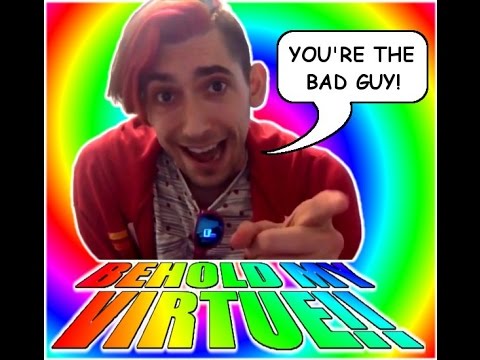
“LOOK AT ME! LOOK AT HOW VIRTUOUS I’M BEING!”

“I’M DOING GOOD! I’M MAKING A DIFFERENCE WITH MINIMAL EFFORT!”

“I AM A MORAL PERSON! I’M MORE MORAL THAN YOU!”

“ACKNOWLEDGE MY MORAL SUPERIORITY! IF YOU DON’T, THEN YOU’RE A GODDAMN NAZI!”

The scenario I described is a gross exaggeration, but one that highlights the major components of virtue signaling. It’s both a method for seeking validation from a group and alleviating mental stress. In that sense, it hijacks some of the wiring in our brains that’s meant to help us cooperate and survive.

The past few years, however, have gone beyond merely hijacking our collective psyche. They’ve effectively attached rockets to the plane and flown it into the side of a mountain. Some of this has to do with social media and professional trolling, but a lot more of it has to do with that painfully divisive and innately infuriating concept of identity politics.

These days, it’s too easy to be labeled a bully, a tyrant, a fascist, or whatever other word you want to use to describe Kanye West. Unlike past years, that label is much harder to avoid. Social media, smartphones, and the 24/7 news cycle that will make way too big a deal about the latest Kardashian drama ensure that once you have that label, it follows you like a festering rectal wart.

As a result, more and more people are resorting to virtue signaling to escape or avoid these negative labels. They’ll go to great lengths, yelling at random strangers and being exceedingly obnoxious, to be anything else. Naturally, that means things like facts, reason, and understanding often get lost in the mix. You just can’t be that particular when you’re trying so hard to avoid being labeled a Nazi.

It happens in gender issues. Feminists, especially the male variety, will go to great lengths to prove they’re not misogynistic, even if it means saying demonstrably stupid things.

It happens in religion. A certain adherent, especially in religions that demand a lot of sacrifice, will make any excuse and fight any battle in order to maintain their allegiance and prove they’re a better adherent. There’s little, if any, sincere belief. There’s just a desire to be part of the community. That can often lead to some truly horrific extremes, from suicide bombings to televangelism.

It happens in race issues. A certain race, especially the ones with a nasty legacy that the internet has preserved forever, will say and do anything to avoid being called a racist. They’ll even resort to favoring other kinds of racism to balance out past racist crimes. It’s as inane as it sounds.

At the end of the day, however, the problem remains. Virtue signaling is, by definition, a selfish endeavor that’s meant to make someone feel better. Either they want to feel more moral than those they consider bullies or they want to cling to a certain group affiliation, be it a particular race or a My Little Pony fan club.

There’s never any actual substance behind virtue signaling. In fact, substance cannot be part of virtue signaling in any meaningful capacity because its goals are entirely personal. Unless it makes someone feel better about themselves or keeps them in good standing with a group, it doesn’t matter in the slightest how true, honest, or valid the actions are.

It is a very troubling, if not tragic manifestation of our caveman brains. We’re a social species. We’re also a species that tries to keep itself balanced amidst a chaotic, ever-changing world that tries to kill us in so many ways. We’re wired to form groups, cooperate, and do whatever we can to alleviate the everyday stresses of life. Virtue signaling is the emptiest form of this effort and is ultimately counterproductive.

If someone needs that kind of validation, either for themselves or others, then there are likely other factors at play. I cannot begin to speculate what those factors might be, but the growing prevalence of such efforts says to me that the world is becoming more stressful and we, as a society, aren’t doing a good job of handling it.

In the end, I see virtue signaling the same way I see an empty gesture. It’s a poor attempt to force a desired reaction without actually going through the process of earning that reaction. Those who don’t end up earning something often end up neglecting it as well.

Think of it in terms of a lover. If someone just pretended to feel a certain way so that you would love them, what would that say about his view of love in general? It wouldn’t bode well for the honesty of your lover and the depths of your love.

There’s a lot more to virtue signaling. I know I’m painting a pretty bleak picture right now, but it’s an increasingly-relevant concept that’s sure to show up in many different forms in the coming years. I’ll definitely mention it again in future posts. I’ll make a concerted effort not to bash my head on my desk.

For now, the best advice I can give those who are just as frustrated with virtue signaling is twofold. Be cynical, but be understanding. Those seeking validation are human, like you and me. Understand that, but try and help them understand that as well.

20 Comments

Filed under Jack Fisher's Insights

Extremism: The Ultimate Excuse Bank

https://i0.wp.com/wp.production.patheos.com/blogs/quranalyzeit/files/2014/04/1900133_513898185402876_874183235_n.jpg

Strap yourselves in and tighten your sphincter because this is another one of those posts that I’m sure is going to offend a few people. I try not to do posts like this too often. I like to leave that kind of offending to shock jocks, Fox News, and Kanye West. I’m an aspiring erotica/romance writer. I’m not Howard Stern.

However, sometimes I need to dip my toes in the piss-filled pool of offense in order to make an important point. I did that last year when I explored the mind of misogynistic men that too many women don’t even try to understand. That was hard to write, but it was something I felt needed to be said.

This post is similar. I knew I was going to write something like this when I began my discussion on reasons versus excuses. I also knew that by doing so, I would offend a few people. I’m not going to apologize for that. Sometimes, a message needs to be offensive in order to get the point across.

In this instance, that point has to do with extremism. I’m not just talking about religious extremism. I’m not just talking about political extremism. I’m not just talking about the extremism you find on Twilight message boards either. I’m talking about extremism in all forms.

I want to keep the context broad so that the topic can be applied to every possible instance. From the Islamic extremism that every news outlet tries to mention a thousand times a day to the political extremism that builds shining “utopias” like North Korea, this issue can apply to all of them. It won’t be the most comfortable application. If anything, it’s akin to applying acid to a contact lens.

To understand the common link between all these various forms of extremism, some of which actively try to murder each other in the streets, we need to revisit the concept of “excuse banking.” Sure, it’s a concept I just invented and has as much scholastic weight as a Will Ferrell movie, but it’s a concept that helps make sense of the irrational whims of people who really think they’re rational.

The basics of excuse banking are simple. They take whatever actions, beliefs, knowledge, or social connections someone has and effectively molds them into a ready-made list of excuses to justify their future actions. Excuse banking is basically akin to stocking up on Twinkies so that when you get hungry, you’re ready.

Remember, we don’t make decisions based on logic. We decide first and then look for reasons or excuses to justify them. That’s just how the human brain is wired. That’s how it has been wired since our caveman days and we can’t change that wiring any more than we can change the color of the sky.

With extremism, excuse banking goes a step beyond justifying your decision to buy a thousand posters of a half-naked David Hasselhoff. Extremism, in many ways, is the ultimate manifestation of excuse banking. It provides people with a set of infinitely malleable, constantly excuses to justify pretty much anything. Why else would actual Flat Earth Societies still exist?

In such an extreme, excuse banking goes far beyond just justifying a decision. When someone has such a malleable excuse in unlimited supply, it can lead to a form of self-hypnosis and self-delusion wherein someone actively avoids looking for reasons. They favor, cling to, and obsess over their preferred excuses.

It takes many forms, but the patterns are fairly similar. In religion, especially in the big three Abrahamic religions, there’s a perfect, all-powerful, all-knowing excuse sitting in the clouds. Call that excuse any name you want, be it Yahweh, Allah, God, or Cthulhu, it still functions the same.

If you have faith in said deity, then that deity will bless you and vindicate you. You don’t need to provide reasons for anything. You can just claim that the deity commands or wishes it and that’s the end of the conversation. You don’t need to justify anything else.

You want to murder an abortion doctor? That’s okay because your deity says it’s justified.

You want to blow up a bus full of civilians? That’s okay because your deity says it’s justified.

You want to take slaves from neighboring tribes? That’s okay because your deity says it’s justified.

You want to mutilate the penises of infant boys? That’s okay because your deity says it’s justified.

Sometimes the justification comes in the form of holy books that cannot be questioned. Sometimes it comes in the form of charismatic cult leaders who want first dibs on all the pretty girls in room. Sometimes it’s just some guy claiming to be a prophet that somehow slipped through the cracks and works at Dairy Queen during the week.

However it happens, the pattern is fairly clear. In terms of excuse banking, it’s almost too perfect. Having vindication from an all-knowing, all-powerful deity is basically like playing an old video game with cheat codes. Nobody can argue with a deity like that. Nobody can even verify the will of that deity.

Think back to what distinguishes a reason from an excuse. Reasons, by their definition, need to be verifiable on some level. Deities can never be verified. That’s why many religious extremists emphasize faith, which is essentially accepting the belief beforehand, absent any reason.

For the Richard Dawkins’ of the world, that seems dishonest. However, from a purely pragmatic perspective, it perfectly meshes with the wiring of our brain. It perfectly aligns with the process of making decisions first and then justifying them. In that sense, religion has far more advantages than atheism ever will. Sorry, Richard Dawkins, but the game is just not in your favor.

Think about any religious zealot. They’ll claim the same thing. Their deity and their holy book condone, promote, and even command whatever behavior they do, no matter how irrational or atrocious it might be. That’s how terrorists justify their atrocities. That’s how someone can harass the families of dead soldiers and still think they’re a good person. They’ve banked the ultimate excuse to justify that sentiment.
Now I’m not just going to harp on religion. I’ll leave that in the capable hands of South Park and Seth MacFarlane. Religion is just the most obvious example. Political ideology is still a close second though.

By political ideology, I mean any ideology that has an extreme element to them, which is essentially all of them. There may not be an all-powerful, all-knowing deity, but there are still a set of infinitely malleable excuses that adherents use to justify anything and everything.

Communism is probably the most famous example. From the Soviet Union to North Korea, communisms as a concept basically functioned as a deity in that its adherents thought it was perfect. Anyone who claimed otherwise was killed and those who did the killing had a valid excuse. They were protecting communism and the god-like leaders that promoted it. How else could Kim Jong Ill get away with those ridiculous glasses?

It also scales to smaller domains. Here in America, we have political parties who treat their affiliation the same way religious zealots treat their deities. That’s how one party can get so outraged when the other does something, but be totally okay with it when they do the same thing.

Through excuse banking, a political party can justify their actions because they see their party as correct, moral, and ethical party. There’s no reason for this and there’s no way to truly justify that sentiment. By blindly accepting it, they have the ultimate excuse. That’s why it’s entirely possible for a party member who claims to be pro-life to pay for his mistresses’ abortion and still be considered moral.

Go beyond political parties and you’ll find extreme excuse banking in all sorts of fields. It has been happening a lot more in fields subject to political correctness, especially in areas like feminism. It’s already evolved its own set of language and terms, much like any religious or ideological movement.

Such excuse banking can end up dividing an ideology that actually has verifiably good ideas. The inequality of women was and still is an unfair practice, something that feminism worked hard to overcome. However, extreme measures of excuse banking led to horrendously misguided subcultures in that movement, some of which joked about the mass murder of an entire gender.

This is the part where I hope everyone can unclench their asshole a bit. I know this is a difficult discussion to have, but these are all topics that affect us profoundly. Whatever the balance in your own excuse bank might be, religion and ideology affect our lives in profound ways. That’s why it’s so important to have a way to make sense of it.

This is also the part where I want to remind everyone that extreme forms of excuse banking in no way makes someone a bad person. I still believe that most people are good people who operate under the same burdens as the rest of us. Some, either by circumstance or endowment, find themselves clinging to certain excuses more than others.

Now I’m not saying that the idea of excuse banking can make sense of every complex sociopolitical situation on the planet. It’s just one tool I’m offering to add to a toolbox that can never be too stocked.

10 Comments

Filed under Reasons and Excuses

Should We Marry For Love? Wait What?!?!

Should we really marry the person we love? That’s not a rhetorical question. That’s not the beginning of some elaborate joke or rant either. It’s an actual, honest question that we, as a society, stopped asking very recently in the grand scheme of things.

As an erotica/romance writer, these kinds of questions are pretty darn relevant. The way people see love, marriage, sex, and everything in between shapes the novels I write. I’ve written several books thus far, but I’ve never really dealt with this question directly. Given the rate at which the concepts of marriage and love are changing, this question is pretty important.

So why is it relevant to begin with? Why should this be a controversial issue? Well, contrary to what registered republicans and the church would have us believe, the modern concept of traditional marriage isn’t that traditional.

In fact, for most of human history, marrying for love was the exception and not the norm. For some people, the very idea of marrying for love was an affront to marriage itself. There’s even an old Egyptian proverb that says:

“One who marries for love alone will have bad days, but good nights.”

Let that sink in for a moment. Up until very recently, and by recently I mean the 17th century in Europe, people didn’t marry for love. They married because it was just part of how old, pre-industrial societies worked. From Europe to China, most marriages were arranged by families. Sometimes, the bride and groom didn’t even meet each other until their wedding day.

This was because marriage was not seen as a romantic gesture. It was seen as a cooperative partnership, of sorts, between families. You didn’t marry your spouse as much as you married into their family. It was how pre-modern societies ensured a proper exchange of property, bloodlines, and procreation.

That’s not to say love was completely absent. Ideally, the hope was that a couple would marry first and then fall in love. It may seem backwards today, but that was the ideal espoused in the past.

Why was this? Why was love divorced from marriage, if that’s not too loaded a term? Well, there is a social and political reason for that, one that a brilliant woman named Stephanie Coontz articulates far better than I ever could. She explains:

In some cultures and times, true love was actually thought to be incompatible with marriage. Plato believed love was a wonderful emotion that led men to behave honorably. But the Greek philosopher was referring not to the love of women, “such as the meaner men feel,” but to the love of one man for another.

Other societies considered it good if love developed after marriage or thought love should be factored in along with the more serious considerations involved in choosing a mate. But even when past societies did welcome or encourage married love, they kept it on a short leash. Couples were not to put their feelings for each other above more important commitments, such as their ties to parents, siblings, cousins, neighbors, or God.

In ancient India, falling in love before marriage was seen as a disruptive, almost antisocial act. The Greeks thought lovesickness was a type of insanity, a view that was adopted by medieval commentators in Europe. In the Middle Ages the French defined love as a “derangement of the mind” that could be cured by sexual intercourse, either with the loved one or with a different partner.4 This cure assumed, as Oscar Wilde once put it, that the quickest way to conquer yearning and temptation was to yield immediately and move on to more important matters.

In China, excessive love between husband and wife was seen as a threat to the solidarity of the extended family. Parents could force a son to divorce his wife if her behavior or work habits didn’t please them, whether or not he loved her. They could also require him take a concubine if his wife did not produce a son. If a son’s romantic attachment to his wife rivaled his parents’ claims on the couple’s time and labor, the parents might even send her back to her parents. In the Chinese language the term love did not traditionally apply to feelings between husband and wife. It was used to describe an illicit, socially disapproved relationship. In the 1920s a group of intellectuals invented a new word for love between spouses because they thought such a radical new idea required its own special label.

In Europe, during the twelfth and thirteenth centuries, adultery became idealized as the highest form of love among the aristocracy. According to the Countess of Champagne, it was impossible for true love to “exert its powers between two people who are married to each other.”

In twelfth-century France, Andreas Capellanus, chaplain to Countess Marie of Troyes, wrote a treatise on the principles of courtly love. The first rule was that “marriage is no real excuse for not loving.” But he meant loving someone outside the marriage. As late as the eighteenth century the French essayist Montaigne wrote that any man who was in love with his wife was a man so dull that no one else could love him.

It sounds as unromantic as it does unsexy, the idea that love is actually a liability in marriage, so much so that people in the past were shunned for loving their spouses too much. However, there is a context to consider.

These are pre-modern, pre-industrial, mostly-agrarian cultures where infant mortality is high, maternal mortality is high, and plagues are exceedingly common. Love, as anyone whoever listened to a Beatles song, is a very fickle emotion. It cannot be channeled, controlled, or changed. Some have tried, but most efforts fail. Just ask anyone who endured conversion therapy.

That kind of chaos just doesn’t fit in a society that is only one bad harvest or one nasty plague away from total collapse. These societies need to exert some level of social control in order to function.

Societies still change. Civilization, as we know it, changes with it. We no longer live in a society where such social control is necessary, but there are still plenty of societies all over the world where arranged, loveless marriages are common. Some will even claim that such marriages are better than love marriages.

It may sound ridiculous to the freedom-loving west, but think about it. Why go through the trouble of finding a spouse when your parents can just do it for you? Besides, who knows you better than your parents? Wouldn’t that save everyone a lot of time, energy, and heartbreak?

That last part wasn’t entirely sarcasm, but that’s the logic behind arranged marriages. The fact it’s still so prevalent all over the world indicates the logic isn’t entirely flawed. It also acknowledges that there are some fundamental issues with marrying for love.

As many writers far more accomplished than me have said, love is a very fickle emotion. It changes on a whim more than it lingers. You could love someone for 30 years and one day find someone else you love even more. It happens. That’s what love can do. That’s why it’s so scary/amazing/powerful.

There’s no doubt that marriage, as an institution, is destined to change even more than it already has. Every church, mosque, and synagogue may fight it. Every social conservative may oppose it. That still won’t stop it. The institution will keep changing, probably in ways that nobody, especially not an aspiring erotica/romance writer, can predict.

This brings me back to my original question. Should we marry for love? Should marriage even be connected to love? It’s as serious a question as anyone can ask, regardless of time period or generation. It’s also a question that we, as a society, will have to answer at some point in our lives. Let’s hope we answer it right.

10 Comments

Filed under Jack Fisher's Insights

Pro-Life Vs. Anti-Sex: Why The Difference Matters

I promise I’m almost done talking about abortion on this blog. Again, I hate talking about this issue. I want to be very clear about that. As a man, I have nothing to contribute to issues of women’s health. I couldn’t be less qualified to talk about this issue if I were a disembodied squirrel.

With that said, there is one last component to the abortion issue I want to address. Unlike the various other complexities of this exceedingly controversial issue, this issue does affect me, albeit indirectly. It affects me because it involves attitudes towards sex and, being an erotica/romance writer, that’s kind of critical to my job.

Granted, sex and abortion are link. Without sex, abortion is a moot point. Abortion without sex is like a car without an engine. One doesn’t work without the other. It’s in this inescapable link that we find a stark divide in the pro-life/anti-abortion movement. It’s a divide in which one side is honest and the other has a mansion built upon a foundation of  wet horse shit.

There are those on one side of the abortion who can call themselves honest and genuine. These are the people who genuinely believe that abortion constitutes murder. They believe that the concept of personhood begins at conception. At the moment the sperm meets the egg in a woman’s womb, the issue ends for them. That’s a human life. Ending it in any way is no different than murder.

That’s a perfectly clear, easily understandable position. It passes through the Simpson Filter with ease. It makes ethical sense, even to our caveman brains. It appeals to both emotion and logic, a rare combination in any bit of political discourse. Granted, the actual science of when life begins is not at all settled, but as a clear position on an issue, this part of the pro-life is both clear and genuine.

If this was where the argument ended, then there wouldn’t be anything left to talk about. I could end this post here and go back to talking about the joys of sleeping naked. Unfortunately, there is another contingent of the pro-life crowd and they’re about as genuine as a Nigerian prince.

This contingent of the pro-life group will make the same claims. They’ll say abortion is evil on par with any notorious spammer. They’ll even march with others who sincerely believe that life begins at conception and abortion is murder. However, in the back of their minds, being pro-life is a form of glorified clown makeup. It just a convenient excuse to hide the fact that they’re anti-sex.

By that, I don’t mean they aspire to live in a world of nuns and eunuchs. By anti-sex, I mean they are vehemently opposed to any form of sexual expression that wouldn’t occur off-scene during a “Father Knows Best” rerun.

In their world, the only kind of sex that is permissible involves a married couple, a dark room, and a maximum of three minutes in the missionary position with the sole intent of producing a child who will grow up into a tax-payer. Orgasms are entirely optional in this case. Anything that deviates from this narrative even slightly is the moral equivalent of being sodomized by demons.

In that context, it’s easy to see why some use the pro-life movement as a cover. History has shown that even in the most repressive periods in history, human sexuality is difficult to contain. Being anti-sex is a losing battle on par with being against blue skies on sunny days. With the pro-life crowd, they can claim, “We’re not against sex! We’re against dead babies!”

This doesn’t just make their position inherently dishonest and insincere. It also has implications that go far beyond those I’ve discussed before on this issue. It’s easy to craft a message that passes the Simpson Filter, but sometimes the implications of that message go far beyond the content of that message, so much so that it’s in the same zip code as basic fraud.

For the anti-sex crowd, it means that abortion is less about dead babies and more about controlling sexuality in general. Make no mistake. This does happen. Some even go so far as to admit it outright. Major presidential candidates have even gone on record as saying they oppose contraception because it permits evil sexual practices, namely those that people might enjoy.

This is the part of the pro-life movement that has zero moral authority. They are about as honest and sincere as hungry lion running a hospital for wounded zebras. They may use politics or religion to justify their sentiment. That doesn’t make it less invalid.

In some cases, it makes parts of the pro-life crowd into outright hypocrites. As I’ve said before, we tolerate a lot of bullshit in our society, but hypocrisy is one of the few lines where the stench cannot be ignored.

In the case of the anti-sex crowd pretending to be pro-life, they cement their hypocrisy by also being against contraception. While most pro-life people don’t oppose contraception, those that do are akin to being football fans who hate contact sports. It’s just not possible for the position to make any sense, logically or morally.

This is where a lot of religion gets into the mix. The Catholic Church is, by far, the most famous entity for opposing both abortion and contraception. Again, it’s the implications that make this position wholly dishonest. To understand those implications, just do the same thing reporters do with lobbyists and follow the money.

For a church, or any religious organization, to thrive it needs money and adherents. Since most religions don’t sell anything tangible, they need to rely on adherents giving them money. Naturally, this creates an incentive to want them to procreate. The more babies they have, the more future adherents the religion will get. More future adherents means more money. In the end, wanting to control sexuality is all about money.

Imagine for a moment that someone claimed that killing puppies was wrong because it cost too much money to bury them. If someone bases their puppy-killing morality on that foundation, we wouldn’t think very highly of them. Hell, we’d probably train our dogs to use that person’s yard as a toilet.

It’s for this reason, and many more that I’m woefully unqualified to explore, that it’s so vital to distinguish those who are genuinely pro-life and those who just don’t want people having sex in ways they don’t like. One has a moral basis for their position. The other has a web of excuses, deceit, and hypocrisy.

If good, decent people truly wins out in the end, then it should be clear which side has the moral authority. There are those who deserve to march in support of their believes and there are those who should be marched over, spit on, and left to whither under the weight of their hypocrisy. In the end, no matter what excuses some people make, hypocrisy will never be appealing or sexy.

13 Comments

Filed under Jack Fisher's Insights

The (Sort Of) Problem With Evil

I’ve decided to take a break from deciding whether music form boy bands and burned out pop stars counts as love or obsession so I can focus on a far more relevant issue. It’s relevant in that it affects more directly than the annoying songs we have to endure. It also affects me as an aspiring erotica/romance writer because it’s an important component of every character, be they protagonists or sidekicks.

Yes, I’m talking about evil again. My first post yesterday ended up covering so much that I quickly realized I’ll have to stretch this out to cover the full range of the topic. Make no mistake. This is an important topic. Evil, whether we believe in it or not, will impact us in some way and I’m not just talking about the kind that gets shows like Firefly canceled.

Our understanding of good, evil, and the morality that governs both is an important part of our civilization and our species, as a whole. It’s one of those things we all acknowledge, but can’t quite agree upon. It’s not unlike George Clooney. We all agree he’s sexy. We just don’t agree why.

This directly ties into the so-called “Problem of Evil.” Anyone who has endured a debate between an overly atheist and an overly religious type is probably familiar with this concept. The “problem” is that evil exists and, as a result, it undermines a lot of theological and ethical issues. It’s something two people can argue about for days on end and not accomplish a goddamn thing.

For me, personally, I have a big problem with calling evil a “problem” in the first place. It’s not that I think it’s unimportant. It definitely is. I just take issue with use of the word “problem.”

While I was in college, one of my professors did this lecture where he said one of the most brilliant things I ever heard from any human being not inspired by George Carlin. He started by saying this:

“We don’t deal in problems. We deal in dilemmas. Problems are easy. Problems, by definition, have solutions. Dilemmas don’t have solutions. Dilemma’s are harder to manage because they often require compromise.”

There are a lot of amazing things I remember from college. Not all of them have to do with how willing some people are to get naked at a party. The professionals there really had some smart things to say. This, more than almost anything, really stuck with me.

I think it nicely applies to the concept of evil because its a concept that’s so diverse and ambiguous, at times. At one point in history, marrying someone from another tribe is considered evil. At another, admitting to owning a Nickelback album is evil. It’s fluid, overly vague concept that keeps moving the goalposts.

As a dilemma, evil can’t have a solution. It can have various understandings. There can be compromises along the way in which the idea of evil skews towards or away from a certain direction. That’s why concepts like slavery took so much time to fade into that special domain of evil and even then, we still have problems eliminating it.

More than most concepts, the dilemma surrounding evil has many religious connotations. Nearly every religion, including those that involve chakra, crystal energy, and aliens, tries to address the source of evil in some form or another. Some use it as a means of proving their particular theology. Others use it as a means of disproving that very theology. It’s a never-ending argument that rarely ends with someone changing their mind.

Even so, it’s an important concept to explore. Even if I do take issue with the use of the word “problem,” it is a concept that reveals many facets of evil and how we see it. Rather than try to break down every one of those facts, knowing that would require more posts than anyone is comfortable reading, I found a very helpful YouTube video that nicely sums it up.

This comes courtesy of Crash Course, a very helpful YouTube channel in terms of explaining complex issues in a simple, basic way. This is basically a 101 class, one that does not get into the finer details of an issue. This reveals the forest without scrutinizing any of the trees. For those who want to learn more about the “Problem of Evil,” this video breaks it down nicely.

Whether you’re religious or non-religious, both sides of the problem/dilemma should give you pause. It certainly has for me. I’ve even seen it in my writing. I’ve had to mold “evil” characters to make the stories in “Skin Deep” and “The Escort and the Gigolo” work. It’s challenging, but it’s an important part of a larger narrative.

The presence of evil raises questions about what we believe spiritually and how we see ourselves as a species. The simple fact we can’t be certain in both the theological and scientific analysis of evil reveals just how complex this issue is. When neither science nor religion can offer a clear-cut understanding, you know it’s a hell of a dilemma, if that’s not too fitting a term.

So what does this mean for evil as a whole? What does this mean for evil in a religious, scientific, and philosophical respect? Well, these are questions I hope to keep exploring. Right now, I want to use the “Problem of Evil” to create the right context.

We live in a world where we can’t help but acknowledge that evil exists, but can’t agree on the source or mechanisms behind it. With every evil act, there seems to be more and more complexity.

The evil of today is not always the evil of tomorrow. Evil characters in novels today can easily become heroes and/or anti-heroes tomorrow. We don’t know when or how this will manifest. We just know it’ll continue to confound and conflict us in our minds and souls, however we define them.

Leave a comment

Filed under Jack Fisher's Insights

The Paradox Of Traditional Romance

The more I read and write about love, sex, and the elaborate hoops we jump through in order to get them, the more I notice something frustratingly profound. When it comes to love and sex, there is no normal. There is no true tradition. There is only the ever-evolving, constantly-adapting dynamics between lovers, love interests, and fuck buddies alike.

Human beings are such complex, diverse creatures. That’s a big reason why our stories about them are so elaborate and varied. I’ve written stories about repressive religious communities that engage in ritualistic orgies. I’ve written stories about strippers who find love in the never-ending party that is Las Vegas.

In each case, there are elements of what some people, namely those who watch too much Fox News, would call “non-traditional” behavior. Whether it’s in love or sex, these people and the mentality they embody represent a standard set of assumptions that we in the Western world cling to, despite any evidence or anecdote to the contrary. They cling to it so hard that it can openly conflict with the very nature that makes us human.

Now I’m not talking about the kinds of assumptions that lead to uptight religious leaders calling same-sex marriage a cause for terrorist attacks or old men thinking granting women equal rights will turn them into lesbians. Those assumptions are the product of one too many intimate encounters between a baseball bat and a skull. They can’t be taken seriously, nor can they be effectively debated.

The assumptions here involve our standard perceptions of sex and romance. Some call it the “standard model” and since I’ve used that term before, that’s the term I’ll keep using until someone comes up with something better/sexier. We all know about these assumptions to some degree. It goes like this:

  • Boy meets girl
  • Girl meets boy
  • Boy and girl fall in love
  • Boy and girl get permission from religion and government to legally have sex
  • Boy and girl move into together, start having babies, and become upstanding members of society
  • Boy and girl constantly struggle to avoid the urge to cheat one another with more exciting sex acts
  • Boy and girl do what they can to abide by societies expectations about how a married couple and family should behave

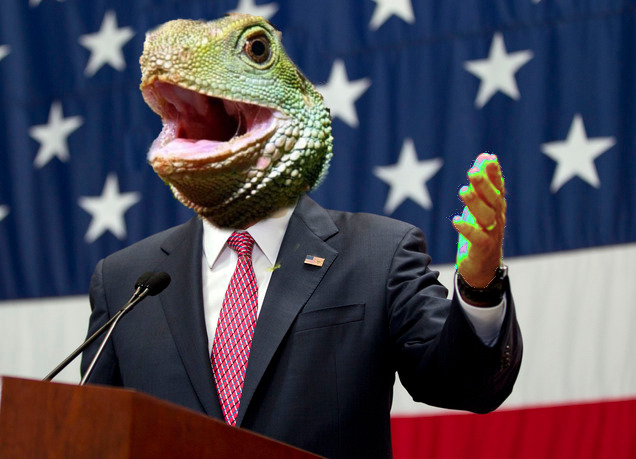
These assumptions are a big part of the narrative in “Sex At Dawn,” a book that continues to intrigue/arouse me with each chapter. In one of the early chapters, this book makes a keen observation that even my dirty mind missed. It’s an observation that’s so painfully obvious that you really do wonder if psychic lizard people are controlling our thoughts to make us think such crazy things.

If this traditional model of sex and romance is so natural, as many traditionalists claim, then why does it need all these elaborate legal, religious, and social institutions to reinforce it. If it’s so natural, then those protections wouldn’t be necessary, would it?

Think about it. There’s no need for a thought experiment this time. Look at all the elaborate tactics that religion, government, and society uses to preserve and reinforce the traditional model of romance and sex.

They make cheesy sitcoms. They make elaborate love songs. Entire countries even create this massive web of benefits for married couples that, until very recently, were reserved strictly for couples that stuck to the standard model of romance and sex.

This says nothing about the draconian extremes that religion went to in preserving this standard model of romance and sexuality. For some, just having laws, TV shows, and legal benefits wasn’t enough. Entire religions had to make this standard model of sex and romance a matter of spiritual importance. To go against it would be to go against an all-powerful deity that doesn’t want you using your genitals in a certain way.

Combine all that together and you start to see an odd pattern. This institution that’s supposed to be so “natural” needs all these elaborate traditions to protect it. It’s almost as if these traditions are not at all conducive to mankind’s natural inclinations for love and sex. If I could say that with any more sarcasm, I would.

Now some will claim that these traditions are necessary because mankind is naturally rebellious and immoral. Hell, that claim is the basis for no less than three major religions in this world. However, if you think about it just a little bit more than any priest or mullah ever dared, you should be able to see the flaws in that logic.

Take a moment to channel your inner Mother Nature. Pretend for a moment you’re programming a successful species from scratch. Why the hell would you install a program that makes the species rebellious and deviant? You want them to survive and reproduce, right? Making them rebellious just means you’re giving them a mechanism to defy the very goals you established in the first place.

That’s not to say that some people don’t have faulty wiring in their brains and their biology. Some really are naturally deviant, rebellious, and arrogant to a point where they get their own reality show on Fox. Those individuals are a byproduct of the diversity that every species have, daring to venture into uncharted territories to pave the way for others. They’re supposed to be the exception and not the norm.

What the assumptions surrounding the standard model of romance and sex do is invert that dynamic. It creates the impression that the norm is the exception. All those powerful mechanisms that urge us to love, hump, and cooperate in ways that make Catholic Bishops cry at night are scolded and shamed. The only way to subvert them is to create entire traditions and cultures that warp peoples’ mind into believing these assumptions.

It is a romantic paradox in many respects. We claim this standard model of romance that is the basis of so many Shakespeare plays and boy band songs is natural, but it still needs all these protections and traditions to propagate.

It’s enough to make you wonder what will happen as these traditions and assumptions fade. It’s another interesting thought experiment, but one I’ll have to hold off on until I finish “Sex At Dawn” in its entirety.

It’s already giving me many interesting ideas for the kinds of sexy love stories that may fly in the face of everything Stephanie Meyer ever wrote, but these are ideas worth exploring. When our love lives and our sex lives are involved, the stakes are pretty damn high. If my erotica/romance novels can flesh out those ideas, then that’s a worthy endeavor if ever there was one.

13 Comments

Filed under Uncategorized

Fear, Dread, And Cute Animals

This is a quick message to all my fellow Americans out there. If you’re living in another country with good internet access at the moment, take a break and count your blessings. I think we can all agree that there are a lot of Americans right now who need a hug, a kiss, and maybe a bottle of hard liquor.

These are scary times, I know. The day after an election has never been this scary before. There are people out there who genuinely fear for their lives, their safety, and their livelihoods. I understand that. Some scary things are happening right now and at the risk of belaboring those things, I’m not going to repeat them. I’ll just say this.

Be calm

Be strong

Relax

The human race has endured its share of dark, dire times. We’ve endured horrific catastrophes that sent our species to the brink of extinction. We’ve fought world wars, major economic depressions, and the collapse of civilizations. We, the human race, have found a way to endure. We’re strong. We’re resilient. We also are very good at making love and making babies to make up for our lost numbers.

With all that in mind, I implore you to take a step back, take a deep breath, and look forward. There’s only so much we can control in this world. The best we can do is keep moving forward and contributing in our own way.

I can’t do much other than tell sexy, romantic stories with my novels. I intend to keep doing that for the foreseeable future. I have so many stories to tell and I look forward to sharing them with a world that really needs to get laid more.

Beyond that, I intend to keep moving forward. For those of you who may find that difficult, I give to you the best possible medicine for fear and dread: funny animal videos. Enjoy!

1 Comment

Filed under Uncategorized

The Forbidden Fruit Factor: How Taboo Skews Our Sexuality

If I were to walk up to you and say, “Don’t kick elephants!” what would be the first thing that pops into your mind? For one, you’d probably be wondering what sort of head trauma I had suffered as a child to issue such a warning. Then, you’d probably think about kicking elephants.

This isn’t just the musings of someone who may have gotten hit in the head with one too many baseballs as a kid because he sucked at little league. This is a mental exercise that author/reporter/TV personality John Stossel uses in his book, “Myths, Lies, and Downright Stupidity.” It’s as colorful a read as it sounds.

The reason I cite this tactic is because it perfectly demonstrates something that I often see in romance/erotica, be it novels, movies, TV shows, or hardcore porn. Some call it taboos. Some call it tradition. I think it’s best described as the “Forbidden Fruit Effect.” Whatever you call it, it affects our culture, our minds, and our sex lives. Being an erotica/romance writer, it affects my career path as well so I feel I should talk about it.

Most of us in Western traditions know what we’re referring to when we talk about “forbidden fruit.” It comes right out of the bible, symbolizing something tempting that some higher authority have told us to avoid. In the bible, it’s an apple. In real life, it can be damn near anything.

For some people, that fruit is chocolate. For others, it’s alcohol, heroin, or cocaine. It doesn’t even have to be drugs. There have been higher authorities warning people about dungeons and dragons, comic books, and  Pokémon. Some of these fruits are legitimate health concerns, especially with drugs. Others, such as those who whine about Pokémon, are just plain stupid.

For the purposes of this discussion, though, the forbidden fruit effect is applied to something that impacts everybody. Yes, I’m talking about sex. Let’s face it, none of us would be alive if it weren’t for sex. That makes it a slightly more important fruit than Pokémon.

There are a lot of forbidden fruit aspects surrounding sex, erotica, and romance. There are so many, in fact, that I’ll probably have to do multiple posts about it to really explore the breadth of this issue. For now, I’d like to keep things general because this is something that I’m exploring for a reason. I am actively developing a new novel that uses the forbidden fruit effect in an extreme (hopefully sexy) way. Consider this a prelude of sorts.

With respect to erotic issues, there is no one forbidden fruit that applies to every culture or every society in every time period. Human beings are just too damn complex/diverse/eccentric. There is one relatively common fruit that is fairly pervasive in Western traditions, particularly those with roots in the three Abrahamic faiths, namely Christianity, Judaism, and Islam.

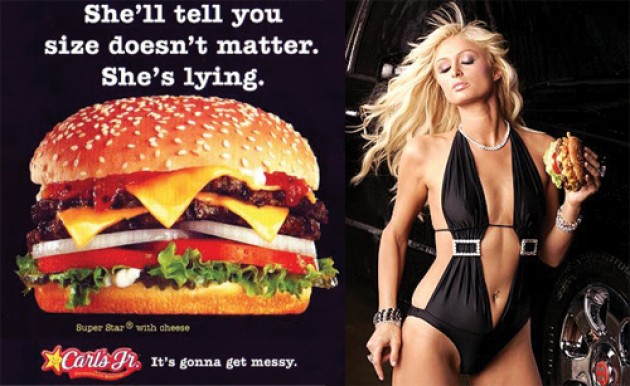
That fruit pertains to female sexuality. It’s not sex in general. It’s specifically female sexuality that takes on the aura of forbidden fruit. For proof of just how much it affects us, look no further than Carl’s Jr. ads like this.

Show an ad like this to an audience where female sexuality is taboo and it’s easy to imagine the reactions. Such an audience sees this and thinks, “Oh my God! Look! It’s a sexy female! A beautiful sexy female! It’s so wrong! So immoral/sinful! It’s making me think impure thoughts! Help me!”

I admit, that’s an exaggeration. It still illustrates the impact that forbidden fruit has on our minds. It doesn’t even always come from a strictly moral stand either. There are people on the other side of the socio-political spectrum that see that ad and think, “Oh my heavens! There’s a sexy female! It’s so wrong! It’s so blatantly sexist/misogynistic! This is an affront to women everywhere and it must be destroyed!”

Yes, that’s another exaggerated reaction. It illustrates the same effect. If a man were in that ad, it may raise a few eyebrows, but it won’t generate full-blown distress. It highlights just how much that we, as a civilization, have skewed female sexuality.

So how did this happen? Why did this happen? When did we, as a society, decide that female sexuality was this succulent, delicious treat that we dare not seek, touch, or even think about?

Well, the Richard Dawkins’ of the world would love to blame religion entirely and granted, religion does play a huge part in fetishizing this basic component of human sexuality. The bible spends a great deal of time and effort making women and the desire to be with them taboo. The Quran continues this tradition and even takes it to greater extremes. However, it is not the sole culprit.

Culture, primarily those built around economic models that require large farms where large families are needed to grow crops, are also major culprits. I’ve discussed it before. When there’s an economic incentive to make sure women have a lot of babies and men have incentive to make sure those babies are his, then society will find every possible excuse, crazy or otherwise, to manage female sexuality accordingly.

As a result of these forces, female sexuality isn’t just a forbidden fruit. It’s basically the ultimate prize for men, a Super Bowl trophy on top of a pile of gold-plated elephant’s tusks. For women, it’s this inherent shame that they must carry and be anxious of every moment of every day. For both genders, it’s pretty damn stressful.

Naturally, it’s going to screw with our minds. Sex isn’t like chocolate, video games, or Pokémon. It’s a hard-wired basic drive. Nature programs every living thing to survive and reproduce. It doesn’t program us to survive, reproduce, and level up our Pokémon. It’s one thing to stop playing Pokémon. It’s quite another to subvert basic human drives.

This is born out in research. Some call it, “The Paradox of Temptation.” When you establish that something is just another option, then your brain tends to assess them on equal footing, which is what it’s supposed to do. That’s a survival mechanism. We need that.

However, when you establish that something is a forbidden option, then the wiring of your brain gets a little clunky. That caveman logic in our brains comes back to haunt us again. It follows the skewed logic that if this is forbidden, then it must be valuable and if it’s valuable, then it must be sought.

These results have even been born out by studies about cigarette smoking by the National Institute of Drug Abuse in 2010. When you loudly proclaim that something is forbidden and wrong, it gets peoples attention and sparks curiosity, which is basically the goal of every annoying advertisement ever made.

It also plays out in our interest and desire towards sex. Utah is famous for being a religiously conservative state run by Mormon, another religious sect that places a high emphasis on sexual morality. By sexual morality, they mean women should not have sex for any other reason than to make more Mormon babies that will grow into more Mormons who will give the Mormon church more money.

Despite Utah’s conservatism, it still leads the United States in terms of porn subscriptions. The same situation plays out in Pakistan, which expressly forbids homosexual relationships, but leads the world in internet searches for gay porn. Making something forbidden just makes people more aware of it.

Why does awareness matter? Well, remember this famous speech by Alec Baldwin?

Ignore the premium-level assholery for a moment and look at the sale strategy called AIDA (Attention, Interest, Decision, Action). What’s the first part of that strategy? It’s simply getting the customers attention. You could argue it’s the most important step because the other three steps can’t happen without the first.

Attention is the first step towards making a sale. It’s also the first step towards making connections, forming relationships, and finding the love of your life. It doesn’t matter if your one true love walks right up to you. If you don’t get his or her attention, it doesn’t amount to jack squat.

By making something taboo and forbidden, you immediately give it some extra attention. Just like when John Stossel says, “Don’t kick elephants!” you end up drawing more attention to it than it would if it were just another mundane choice.

Apply that to sex and we’re bound to skew, disrupt, or undermine our attitudes towards sex in a multitude of ways. We’ve created a set of assumptions and morals in our culture that say female sexuality is forbidden and should not be expressed in ways that a Mormon priest wouldn’t approve of. As a result, we give a lot of attention to female sexuality because we’ve convinced our caveman brains it’s somehow more precious than other forms of sexuality.

When you take into account the gold rushes, tulip manias, and black Friday sales after Thanksgiving, it’s easy to see how excessive attention and skewed value can mess with our heads. It affects how we structure our relationships, how we seek love, and how we deal with our lovers.

It’s one thing to forbid something that’s genuinely harmful, like heroin and meth. It’s quite another to forbid basic sexual expressions that are an intrinsic part of our nature. It’s a concept I’m exploring for a future novel.

I don’t want to reveal too much at the moment because my plans for this book are tentative, but expect it to be a story that confronts forbidden sexual expressions in the most direct way possible. It’ll be direct, but it’ll also be sexy as hell and just as entertaining. I’ll post more details as the story develops.

Until then, think about all the sexual taboos in our world. Look at them closely. Try to filter out the flaws in our caveman logic. Should these forbidden fruits really be so forbidden? It’s a question worth asking.

6 Comments

Filed under Jack Fisher's Insights

One More Point On Gender Double Standards (Courtesy of Cracked)

Are you tired of hearing me talk about gender and double standards? I don’t blame you. Can I guarantee I’ll never talk about this issue again? Of course I can’t. Making promises on the internet is pointless. In a digital world, anything you write (and even some stuff you don’t write that gets attributed to you anyhow) can come back to bite you down the line. So please, I beg of you, don’t make me belabor this more than I have to.

Double standards are important to point out, especially with respect to gender. There’s a reason I chose to explore this subject. It’s not just relevant in an era where Chris Hemsworth is a sex symbol when he takes his shirt off, but Nicki Minaj is a slut for shaking her ass too much. It affects my aspiring career as an erotica/romance writer.

Gender dynamics are kind of an important component of romance and erotica. By important, I mean that trying to work around them is like trying to perform open heart surgery on an angry lion. These dynamics shape and guide relationships, characters, and the overall sexiness of the product. These are all factors I must take into consideration when crafting a sufficiently sexy story.

I don’t just want to tell stories about some random guy or girl going out and falling in love/getting laid with some schmuck. I want to forge a relationship of equals. There are enough of those on the market today, from erotica novels to re-runs of Jerry Springer. Relationships of equal are more difficult and, as a result, much rarer. That’s why I went out of my way to highlight one when it showed up in an X-men comic of all things.

I won’t pretend the results of my efforts are perfect. I’m positive I’ll mess up along the way. Every writer does. Every goal worth seeking requires at least a few mistakes along the way. That’s exactly why we need to be aware of the obstacles in our path and double standards are just one of those obstacles, although finding a publisher has been a bit harder at times.

So in the interest of belaboring double standards just enough to get the point across, I’ll turn back to the fine folks of Cracked.com. They’ve been an insightful source for information and comedy on this blog before. As it just so happens, they did an article earlier this year on double standards we, as a society, just accept or turn a blind eye to.

Some are small and indirect. Others have major political implications that people on talk radio won’t shut up about. They’re all relevant in the sense that they’re a byproduct of these powerful double standards that shape relations between men and women. The more I think about it, the more I’m amazed that either gender can resist the urge to strangle one another.

With that upbeat thought in mind, here is another wonderful article from Cracked.com about double standards and the implications for gender relations. Just to be safe, keep your hands in your pocket for a while after you read it. You’ll thank me later.

Four Gender Double Standards Everyone’s Apparently Okay With

Number Four: Adele – Stalker

Seriously, listen to the lyrics of Adele’s hit song, “Hello.” I love that song too. Don’t get me wrong. However, if you really listen to what she’s saying and what she’s doing, it’s hard to differentiate that from a stalker. If a man sang this same song, then he’d be in line for a restraining order.

And let’s be honest: While in a scholarly way, we’re willing to admit that any scumbag thing a man can do, a woman can do as well, it’s generally with a reluctance that anyone would admit to a sexual crime perpetrated by a woman against a man.

Number Three: Sex Tapes/Selfies In The Media

Let’s be honest here, something that the internet often has a problem with. There are a lot of naked women on the internet. Men like looking at naked women and women (and even other men, to some extent) love to shame them. As for the naked men on the internet?

Well, we just all shrug and go back to searching for pictures of baby kittens on our phones. Jennifer Lawrence gets her phone hacked and nudes of her go all over the internet. Suddenly, she’s this tragic victim who had her privacy violated. Hulk Hogan gets his privacy violated, arguably in a way much worse and nobody can give two licks of a donkey’s ass. Is that fair? Hell no, but since when do double standards give a damn about fairness?

This is just one sad example from a site with the journalistic integrity of me after ten shots of whisky and a bribe, but it’s noteworthy for the way at least some of the media approaches the idea of invasion of privacy: Men have none, while women do. Hulk Hogan, whom not even science wants to watch have sex, must be watched! Jennifer Lawrence, darling girl of the Internet, must be white-knighted to the safety of Gawker towers, where none shall dare even glance at her ankles again!

Number Two: Hillary Clinton vs. The World

I am not going to get overly political on this blog. I would rather bathe in a tub of honey and stick my face in a beehive than talk politics. It’s the fastest way to ruin relationships, kill a mood, or offend everyone around you in a way on par with chronic diarrhea.

That said, I don’t think it’s disputable that Hillary Clinton and female politicians in general have to play a rigged game with a stacked deck. On top of that, she has to play cards that nobody with a white penis ever has to deal with. Again, it’s not fair. Regardless of what you think of her or her policies, the double standard here is pretty disgusting. Seriously, nobody should have to defend their record on anti-poverty spending and fashion choices at the same time.

Except Clinton’s getting raked over the coals for her emails, for her husband banging an intern about 20 years ago, for Benghazi, for various financial and ethical issues, and for her Wall Street ties. In other words, people have an entire list of genuine concerns about her as a politician. And then they want to know why she’s wearing an orange pantsuit. Clinton’s “free pass” costs just as much as any candidate’s, with the added bonus of having a dress code.

Number One: Amy Schumer’s Speech

Specifically, this one refers to a speech that comedian, Amy Schumer, gave back in 2014 where she recalled an incident with her, a drunk guy, and a night of sloppy sex. Now there’s nothing inherently wrong with sloppy sex. It happens. It’s the reason why romance/erotica writers like me have a job. We like to imagine stories where it doesn’t involve alcohol, regret, and a lack of orgasms.

However, if you break down the details of the story, you see a pretty serious double standard here. Listen to it again, reverse the genders, and what do you get? You’ll get a guy whose life is over because in the court of public opinion and Twitter hash-tags, he assaulted her. Anything a woman does while drunk makes her a victim. If a man is drunk though, then screw it. He’s drunk. What does it matter?

The man is so drunk that he’s fumbling and stupid. He can barely get hard. It’s like he doesn’t know what’s going on. My God, Amy Schumer is a sex devil! But read the actual words Schumer spoke, and it actually reads closer to her being the one sexually assaulted. The only difference is that because she was hopeful for the encounter — because she wanted it to be good, to be that fairy tale romantic moment — she allowed it to continue. She didn’t rape the man; she let a drunken bum get off on her while she effectively rubbed a lamp and hoped for a romance genie to appear. But it never did

For safety reasons, I recommend everyone still keep their hands in their pockets for a few more minutes. It’s okay. The kind of sentiment you’re feeling is normal. As I said before, our caveman brains do understand fairness on some fundamental level. By exposing these double standards and the unfairness behind them, we can let caveman logic do the best. It’ll be good for both genders in the long run.

4 Comments

Filed under Jack Fisher's Insights