Tag Archives: relationships

How Small Compliments Can Make Someone’s Day

I get that we live in a strange, messed up world. You don’t need to look hard to find a news story that will significantly undermine whatever faith in humanity you might possess. And outside the news, you’re likely to encounter certain frustrations and inconveniences that make you want to pull your hair out and shout every profanity you know.

At the same time, there are just as many things that can genuinely make your day and put a smile on your face. They can be big or small. Be it news that a loved one expecting their first child to that sweet feeling you get when you sip your morning coffee, these good things can significantly outweigh whatever bad you encounter over the course of a day.

Even if you struggle to find those experiences, it’s not difficult to help someone else enjoy those experiences. In some cases, it doesn’t even cost you anything. It can be as simple as giving someone a genuine, unprompted compliment. It may not be much, but it may very well be enough to make someone’s day, if not their whole week.

I know this because recently, I received a compliment from a close relative that stuck with me and made what had been a rough week a whole lot better. It was admittedly minor. We were all just sitting at the dinner table during a family gathering, talking amongst ourselves.

At one point, I rest my arms on the table after we finished eating. And that’s when this relative, with no real prompt or incentive, complimented how much muscle I’d gained on my arms lately. It actually took me off-guard for a moment. While it’s true I do go to the gym regularly and most of my relatives know that, I rarely get comments on how it shows, be it my health or my appearance.

Also, I rarely get comments on my appearance, in general. Some of that is my fault. I did not take care of myself for a good chunk of my life. It wasn’t until my late 20s that I started working out. And I was well into my 30s by the time I got into a good enough routine and diet to see real results. Even then, very few people said much about how I looked. And if I did get compliments, it was usually in a context that didn’t make them resonate too much.

But this one did. This one wasn’t just from someone who knew me well, even before I started working out. This came from someone who just noticed and went out of their way to make a kind remark. And having not gotten many such remarks regarding my appearance for most of my life, it really stuck with me.

I suspect many others with self-esteem or other personal issues would feel the same way. Getting compliments of any kind when you don’t get them regularly can mean a lot. It can be the difference between having a bad day and having a great day. It can also be something that inspires you to keep doing what you’re doing, especially if you weren’t sure if it was working.

It may still be tempting to second guess someone’s motives for giving you a compliment. People can become jaded and cynical for any number of reasons. Getting out of that mentality can be an arduous process that will take much more than a few unprompted compliments.

But even among the most misanthropic people, a few kind words can do a lot for someone on multiple levels. Whether they come from friends, family, or total strangers, they can have an impact. And it’s often positive. In a world where it’s so much easier to notice awful things, giving or receiving a compliment can mean so much to someone.

So, if you can, find an opportunity to give someone a compliment. You don’t know just how much someone needs it or how much good it will do them in the long run.

Leave a comment

Filed under Jack Fisher's Insights, psychology, real stories

Another Letter To My Future Wife (If She Exists)

Dear Future Wife:

I know it’s been a while. For that, I apologize. Life, work, and the world in general has been chaotic lately. I’m sure that hasn’t been lost on you. I won’t use that as an excuse. I just hope you understand because I’ve been meaning to write this for a while now, but I’m working under a better-late-than-never mentality.

First and most importantly, I hope everything is going well with you. I hope your family is still happy and healthy. I also hope you’re taking care of yourself. I’m trying to do my part. I still go to the gym every day. I’ve tried to tweak my diet and sleep here and there. I won’t say I’m the picture of health, but I continue to make the effort. Everything worth doing starts with effort.

Whether that effort pays off is beyond our control. Perhaps that’s why our paths haven’t crossed yet. You have your own life and you’re doing your best to manage it in this crazy world. That seems to be getting harder with each passing day. But that has never stopped you. I trust you’ll find a way, as you always do.

Along the way, I hope you’ve found time to enjoy yourself. After the COVID-19 pandemic, that’s important. Quarantine and isolation have left some lasting scars. Just getting out regularly still doesn’t feel like it once did. Maybe that has more to do with us getting older than the pandemic. Either way, it doesn’t matter.

What did you think of the latest Superman movie?

What did you think of the Fantastic Four?

What did you think of King of Hill, X-Men 97, or the latest season of Reacher?

Who do you think is going to win the Super Bowl this year?

One day, I look forward to discussing, arguing, and gushing over every detail. Finding time for that sort of thing isn’t easy. But for you, I’ll make time. That’s what you do for someone you love.

I still hold out hope that such a day will come. With each passing year, that hope dwindles somewhat. It hasn’t completely disappeared. I’m determined to never let that happen, even if I’m on my death bed. But I freely admit there have been times when I wish I’d met you.

In recent years, loved ones I deeply cherished have passed away. I’ve also become an uncle to multiple nieces and nephews. I know it’s not the same as being a parent, but I’ve really come to cherish my role as an awesome uncle. I think you would love it just as much, being an aunt to these kids. They’re so damn energetic, but so much fun to be around.

On top of these big moments, I’ve also found myself missing the little moments. I still live alone. I still sleep alone. On certain nights, I wish I could roll over and see you laying by my side. On certain mornings, I wish I could wake up and meet you in the kitchen for some morning coffee. From there, we could just enjoy each other’s company or make mundane conversation.

But more than anything else, I wish you were here so we could better support each other. Every time a news headline pops up, I feel myself getting upset. I feel my limited faith in humanity faltering just a little bit more. I’m at a point where I don’t see the human species as being able to survive in the long run. I question whether we even deserve to survive.

I don’t want to fall too deep into that kind of despair. It’s just a lot easier when you’re alone and you don’t have someone to love to remind you of what’s good in the world. I suspect you’re handling it better than me. I don’t doubt for a second that my future wife has that kind of strength. One day, I hope it inspires me to be stronger.

But therein lies my greatest fear. I genuinely worry that you and I will never meet. Even if you’re out there, not yet aware of me or the love we’re destined to share, our paths may not cross at any point. We’re so overwhelmed and locked into our current lives. We just don’t have the time or energy to actively seek the love we desire.

I don’t want that to be the case. I hope that’s not the case. Maybe we’ll meet the day after I share this letter. Even if it happens years from then, I’ll be fine with that. Good things are worth waiting for, especially love.

But if that day never comes and I eventually die alone, having never met you, I feel that will be a major loss for both of us. That may end up being beyond our control. I still don’t want that. I still want us to meet. I want our families to meet. I just know my parents, siblings, nieces, and nephews would be thrilled.

I don’t know when, where, or how that will happen. Maybe we’ll meet online. Maybe we’ll meet at a comic book convention, a football game, a grocery store, or just randomly on the street. I honestly don’t care about the circumstances. I just want our paths to cross eventually.

In the meantime, remain strong and hopeful. Keep being tough, sincere, and loving. I’ll keep doing my part, as well.

Until the day comes when we finally meet, I wish you nothing but joy and happiness.

Love Always,
Jack Fisher

Leave a comment

Filed under romance

How AI Companions Can Be Helpful AND Harmful

It is not easy finding that special someone. It never has been, even if you’re rich, beautiful, and have strong social skills. Every generation encounters new challenges in their pursuit of love and companionship. I know I have. I’ve even shared some of those struggles before.

At the moment, I have not found that special someone. I am single, I live alone, and I currently have no romantic prospects of any kind. I’m honestly not even sure where to begin at this point in my life. Nearly everyone else in my immediate family has settled down and started having kids. I am very much behind the curve in that regard.

However, there are some individuals who are in an even tougher situation. I know I am lucky in many regards. I own my own home. I own my own car. I’m never behind on my bills or anything. But there are plenty of men and women my age who have none of that. Some of the people I went to college with are still stuck in debt and can’t even afford to pursue a serious relationship.

In that sense, I don’t blame anyone for seeking other forms of companionship. Loneliness really does suck. It is objectively bad for your health. While it has become a hot topic, even in political fields, it has also led to some controversial trends. And among the most contentious involves people seeking AI companions.

Now, before I go any further, I want to make clear that I am somewhat reluctant to talk about this. While I’m usually up for any discussions about artificial intelligence, especially with how it may affect our love lives, this one specific aspect of AI is riddled with complications.

On one hand, there’s the general stigma. Most AI companions, such as Replika, are essentially idealized avatars of whatever kind of companion the user wants. If a man wants an AI girlfriend to look like a porn star and have hair like a girl from his favorite fantasy anime, he can have that and the personality to match. And while that is appealing, as a product, it still carries a stigma with it.

Men like this who use AI companions aren’t seen in a very sympathetic light. They’re more likely to be seen as examples of toxic male behavior. They’re not just lonely and in need of companionship. They’re seen as perverts who prefer a girlfriend that they can turn off, manipulate, or control in whatever way they please.

And make no mistake, there are men who treat their AI companions like that. They’re not all that subtle about it, either. But most of these men were shallow, crass, and crude before the advent of AI companions. They would’ve been that way regardless of whether or not this technology existed. There have always been men like that. And there always will be to some extent.

But there’s also a double standard at work with these men. Because there are AI companions for women too. They’re every bit as available as the ones men use. They just don’t get as much scrutiny and don’t carry as much stigma. If a woman were to create an AI companion to resemble their favorite male celebrity, chances are they won’t be stigmatized as much as their male counterparts.

Some may see this as concerning, thinking the woman must have issues if she was resorting to AI companions. But she would certainly garner less stigma than the man.

I would still argue there are women out there who seek AI companions for the same reason as men. They’ll even mold avatars meant to resemble the sexiest, most attractive figure they can conjure. I don’t claim to know how common it is, but I don’t doubt this exists.

Even with that kind of shallow use of this technology, I think it’s much more common that these users are just lonely. They seek companionship the same way most humans seek companionship. Even if there are plenty of people to interact with, AI companions help fill a particular need. That’s really all there is to it.

That’s not to say that AI companions are harmless. I strongly believe they can be. It just depends on the user and how they go about interacting with these AI systems.

If someone is manipulative, controlling, abusive, and self-centered, then having an AI companion that they can mold to their whims is not going to temper those tendencies. More than likely, they’ll get much worse. They’ll basically set a standard for the user that conditions them to expect certain qualities in a companion. And since real people can’t be molded, manipulated, or configured like an AI, they’ll never find someone who meets their impossible criteria.

In the process, that same user might grow bitter and angry that no real person can be to them what their AI companion is. And as these feelings simmer, it could just lead them into a destructive cycle of resenting everyone and everything that they can’t control the same way they control their AI companion.

That is very much a worst-case scenario for users of AI companions. I did try to look up research on this, but it was hard to come by. Both the stigma and novelty of these products make it difficult to assess. Maybe I’m being too hopeful, but I think cases like this are rare.

They certainly exist, but they’re the exception rather than the norm. It just tends to get more attention because seeing horrible people reinforce their horrible behavior with these AI companions is disturbing to many people and understandably so.

At the same time, I also believe that AI companions can be genuinely beneficial for a lot of people and those benefits are likely understated. Remember, we are social creatures. And as intelligent as we can be, we’re also blunt instruments with respect to certain mental faculties. Our brains and our psyche don’t care about the nature of social interaction. So long as we find it fulfilling on some levels, we’ll incur the benefits.

In their early form, AI companions probably didn’t offer much in that regard. But in recent years with the rise of AI chatbots and large language models, it’s relatively easy and cheap to create an AI that people can interact with in ways that closely resemble those of real humans. And the growing size of the AI companion industry is solid that there is growing market for this sort of thing.

But the good these AI companions could do goes further than simply giving people a facsimile of human interaction. Remember, the current crop of AI chatbots and LLMs are relatively new. They’re like the early models of the iPhone. They’re going to continue being refined, developed, and improved upon now that an industry is being built around it.

In time, AI chatbots and general AI technology will improve.

At some point, AI technology will get advanced to the point where it can offer more than just a base level interactions. In theory, an AI could be configured in way that didn’t just perfectly complement the personality of the user. It could also interact with them in a way that fosters healthy personal growth, just like any other good relationship.

There could even be AI companions specifically configured to deal with abusive men or women, helping them understand and deal with their issues in a way that makes them better individuals. That could be life-saving for certain people who struggle to find companionship due to issues like personal trauma or mental illness.

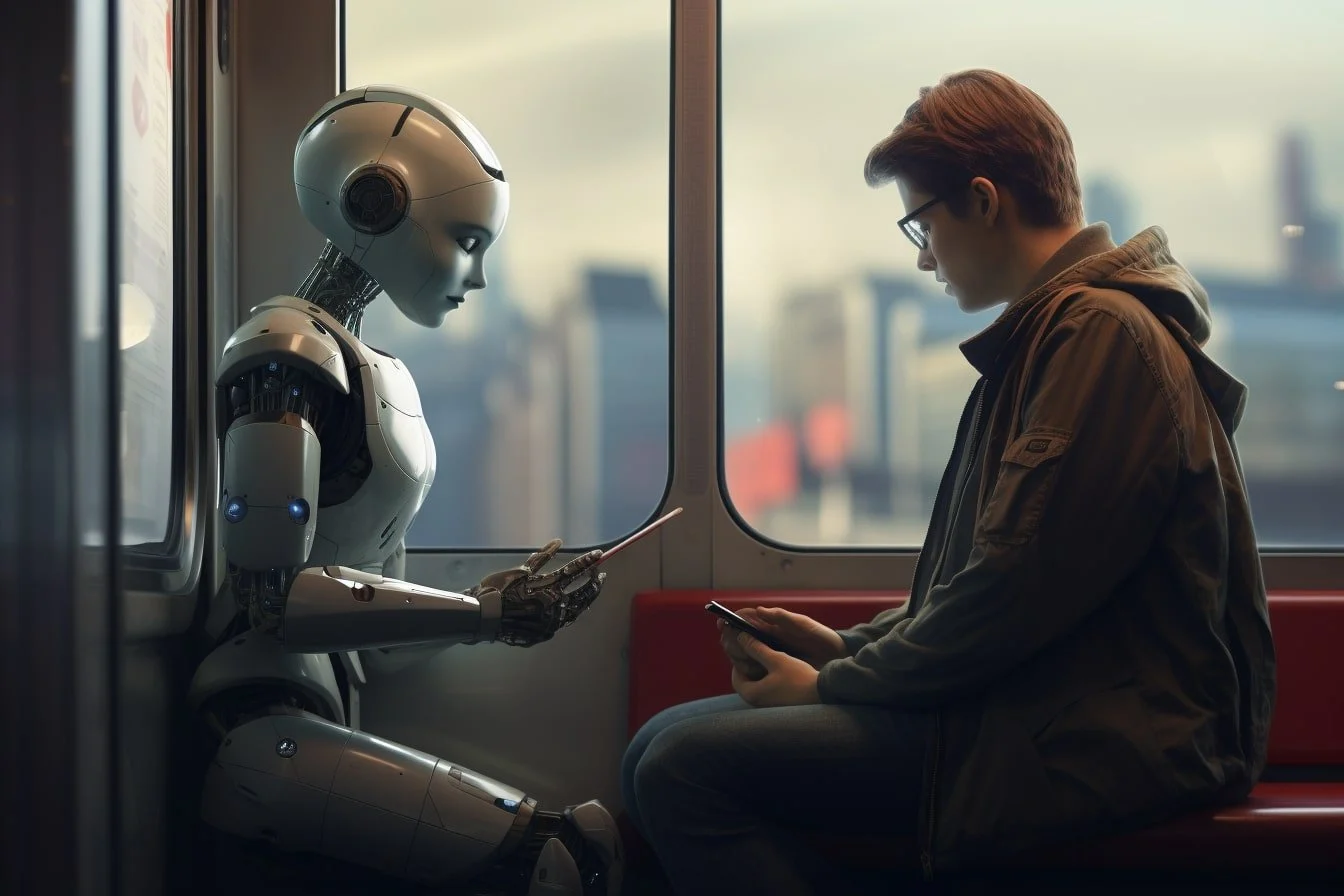
These AI companions don’t even need to take a physical form. They don’t need to be incorporated into sex robots or anything. They can still be effective as simple avatars on smart devices. There would certainly need to be some level of testing, safeguards, and refinement in order to make them work effectively. It might even take years before AI companions have such capabilities.

That’s the most I’m willing to say about AI companions at the moment. I don’t doubt this industry will continue to evolve in the coming years. I also don’t doubt there will be plenty of controversies about the ethics of these companions, as well as how they affect the user.

But even in their current form with their current level of intelligence, it offers lonely people an outlet. Reasonable people can argue just how healthy or unhealthy it is. But it doesn’t change the fact that lonely people are out there. They’re seeking connection and companionship like everyone else. These AI companions aren’t perfect replacements, but they’re better than nothing.

Leave a comment

Filed under Artificial Intelligence, futurism, men's issues, psychology, romance, sex in society, sex robots

Narcassists Are More Likely To Become CEO (And Why That’s Concerning)

A while back, a close relative of mine retired after a long, fruitful career that spanned nearly 40 years. They probably could’ve retired much sooner, but they were among the fortunate few who actually enjoyed their job for the most part. It had its ups, downs, and everything in between. But overall, it was a good career that most would be lucky to enjoy.

Over the course of that lengthy career, they worked under multiple CEOs. This was a fairly well-regarded organization, too. So, the CEOs were not part of some succession plan or a proud family business. This was the kind of company that followed a fairly traditional corporate structure and kept things impersonal as much as possible when it came to executive decisions.

However, in talking about how much the job had changed over the years and how much the industry had evolved in that time, this same person revealed something I found both striking, yet unsurprising.

Every single CEO they worked under qualified, by their definition, as a narcissist.

Now, for most people who have worked similar jobs, this probably isn’t surprising. There’s this prevailing sentiment that anyone who becomes CEO has to be a narcissist to some extent in order to get to that level. It even makes a perverse bit of sense. By their own nature, a narcissist seeks control, status, power, and aggrandizement. And the position of CEO offers all of that in spades.

But even if it makes sense for narcissists to become CEOs and we consider it normal, for the most part, that still warrants concern. There are times when our concept of normal has some major problems and we shouldn’t be afraid to confront it. This is definitely one of those situations.

For the relative who told me this, they had quite a few interesting stories to tell regarding the narcissism of CEOs. But they did make one important distinction. Even though these individuals were overtly narcissistic, they were not outright psychopaths. While most psychopaths are narcissistic, not every narcissist is a psychopath.

Narcissists can and do have some sense of moral responsibility.

Narcissist can and do experience empathy on some levels.

Narcissists can even be good CEOs, for the most part.

However, we shouldn’t let that override the legitimate concerns we should have when dealing with narcissists. There’s a reason why so many super-villains in pop culture tend to be inherently narcissistic.

Among the key traits of narcissists is a sense of arrogance, self-entitlement, vanity, and a greater capacity to exploit others for selfish means. These are traits we rarely want in people we deal with on a day-to-day basis. But in the role of CEO, they can give someone an advantage.

It means they won’t hesitate to make decisions that cause harm, distress, or ruin to others. It also means they’ll cross lines most people won’t in order to increase profits, further an organization, or undermine the competition. They can and will do things that’ll seriously hurt those working for them, yet still sleep comfortably in their fancy beds without a shred of guilt.

Maybe these sorts of tactics do help certain companies and organizations thrive. Many of the most successful companies in the world were founded or run effectively by narcissists who did things that, in hindsight, were deplorable by most measures. But we give them a pass because that made them and their company a great success.

It’s a not-so-hidden blind spot that we, the public, tend to overlook. And as I’ve gotten older and had my own experiences with narcissists, I feel like that sort of mentality is detrimental in the grand scheme of things.

One story that did stand out from my relative was how one particularly narcissistic CEO lamented how they might not have enough money to retire. Granted, this CEO was making well above six figures and he was complaining directly to someone who made a fraction of this. The idea that their bloated salary was not enough to retire on just seemed outrageous for someone just trying their best to pay their rent or mortgage on time.

It perfectly reflects how narcissists lack empathy and aren’t the least bit concerned with how people less fortunate or affluent get by. It would be one thing if this were just someone who had been born rich. But remember, this is a CEO. Unlike those rich from inheritance, their decisions impact entire organizations. Those organizations are full of hard-working people who may or may not be in a position to retire, no matter how hard they work.

That kind of disconnect between those making executive decisions and those actually doing the work isn’t just illogical. It’s damaging to the long-term health of any organization and society. Because if the CEOs of the organizations we rely on to keep our economy growing are too narcissistic, then what incentive do they have to do right by the society at large?

If the choices is between making the right choice for the most amount of people or more money and power for them personally, a narcissist won’t make the right choice.

If the choice is between sacrificing for the good of others or exploiting others for their own personal benefit, a narcissist will choose to benefit themselves 99 times out of 100.

Unlike most people with a more balanced perspective, narcissists need to be coaxed into doing the right thing. And even when they do, they’ll often do it begrudgingly. Those who are smart on top of being narcissists might be able to come to that conclusion if the long-term benefits are there. But for the most part, you can usually expect a narcissist to made decisions that benefit them over everyone else.

In addition to the anecdotes of my retired relatives, there’s real science to indicate that a disproportional number of CEOs are indeed narcissists. And those narcissists working within those titles will continue to do whatever they think they can get away with, so long as they continue to benefit. You really don’t have to look far to see how much harm decisions from narcissistic CEOs can incur.

Having to work for a narcissist CEO is always challenging, but it can be done. Most people who have worked a steady job can attest to that. But it’s still worth asking ourselves if this situation is tenable in the long run. Because if we continue rewarding narcissists with lucrative jobs like CEO, then we’re just creating a world that’ll enable more narcissists.

1 Comment

Filed under health, human nature, philosophy, psychology

Should You Marry Your Best Friend?

The following is a video from my YouTube channel, Jack’s World. This video is an honest exploration into a profound question involving romance.

Should you marry your best friend?

Being a romantic, I’ve heard form many people that your best friend is the only person you should marry. I’ve heard from plenty others that they’re the last person you should marry. I’ve asked it in many forms and I thought it was worth talking about in a video. I also explored this question in a blog post I wrote back in 2018. And I tried to expand on in in this video. Enjoy!

Leave a comment

Filed under Jack's World, romance, YouTube

Finding Love Has Become An Extended Job Interview (And For Good, Yet Unromantic Reasons)

Being a self-professed romantic and an aspiring erotica/romance writer, I often scrutinize the nature of romance more than most. Whereas some might watch a movie or TV show and see the basics of a romantic sub-plot, I’ll dig much deeper. I’ll identify which romances are inherently flawed, why some work beautifully, and why love triangles are inherently awful.

That scrutiny goes beyond media, popular culture, and my own efforts to tell a good love story. I often find myself observing how romance unfolds in real life. Whether it’s how people have pursued romance in the past to my own romantic endeavors, there’s a lot to break down and it doesn’t always make sense. Love isn’t known for being rational, after all.

It’s because of this tendency of mine that I notice things that rarely come up in discussions about romance. Recently, I realized something profound while reading several stories about how modern dating has changed in recent years, of which there are many.

Modern romance has become more a job interview than an emotional journey.

I imagine some will roll their eyes at that notion. Some might even agree with it and not need any convincing. A few probably think I’m giving this too much thought, even for a romance fan. That may be a fair point, but I believe the evolution of modern romance is becoming a lot less romantic.

To be fair, finding has undergone many upheavals throughout history. It wasn’t until the past couple centuries that people actually married for love. Those who claim to champion “traditional” marriage probably aren’t aware that marriage and formal relationships were little more than passionless business contracts for most of human history.

Love and romance were always there. We, as human beings, are hardwired to form loving bonds. It just took different forms and people went about it in very different ways. Most people have a general idea of how people go about it today. It tends to go something like this.

  • Two people meet, either in person or online
  • There’s a spark of attraction
  • They both pursue each other
  • They go on dates to learn about one another and explore their romantic connection
  • If the connection is strong enough, they forge a lasting relationship and build a life together

Granted, this is an exceedingly gross simplification. It still covers most of the basics. That’s the problem, though. It only deals with the basics and people are rarely basic.

It starts shortly after a mutual attraction is established. Once two people start pursuing one another, the dating phase starts. Movies, TV shows, and romance novels tend to be vague about how this unfolds. However, it’s here where the parallels with job interviews start to show.

While a love story may depict candle-lit dinners, coordinated dancing, and intimate gestures, the bulk of that process tends to involve more pragmatic acts. For two people to understand whether they’re romantically compatible, they need to get to know one another. To get to know one another, they need to interact.

That, in and of itself, doesn’t make dating indistinguishable from a job interview. For that, the modern structure of relationships is what fosters that and I’m not just referring to marriage. This affects couples who cohabitate, as well as those who are serial monogamists.

From a logistical standpoint, a modern romance has many moving parts. It’s not enough to just be attracted to one another, enjoy each other’s company, or have great sex. People often have to find a way to fit one another into their lives. There are jobs, career aspirations, and living situations to consider.

These days, people aren’t as likely to stay in the same place they were born in, especially if the opportunities in that town are limited. The same goes for their families. Even if they stay, sometimes their parents or extended family move away. Maybe it’s for retirement, going to college, or pursuing their own romantic interests. Having to accommodate all that into a relationship can be daunting.

In the same way you might be qualified for a job, but not in a position to take it, you might find yourself in a similar relationship with romance. All the emotional, physical, and sexual chemistry is there. However, you’re just not in a position to pursue it. You can’t maintain that relationship when you’re both living in other time zones or pursuing different paths.

That’s not to say long distance relationships can’t work, but it’s like trying to do a job remotely. There’s only so much you can do when you’re not present. If that weren’t the case, everyone would work from home or from a tropical paradise. I that as someone who has been unable to pursue major opportunities and broken up from good relationships due to distance.

Even if you can work around issues of distance and time, there’s also the matter of becoming entwined with family affairs. As the “Meet The Parents” trilogy so hilariously demonstrates, being with someone is rarely just about being with them, individually. At some point, if the romance is to be serious, their family will get involved.

That process can be as complicated as matching qualifications for a specialized job on a resume. You’ve got to make sure both families can get along. They can’t just tolerate each other at the wedding or during the holidays. They have to be capable of co-existing in a way that doesn’t undercut the romance.

It’s very similar from having a job that matches your skill set, but for an organization that is just insufferable. A lot of people have had to endure jobs they hated, even if they paid well or matched their various talents. When the organization within the job is awful, then even a dream job can be awful.

You can love someone with all your heart. You might even have someone your family loves. However, if your lover’s family is an absolute pain, then the romance will suffer. Now that relationships aren’t just business arrangements, we have to navigate around one another’s lives and their families. To do that, it’s necessary to treat dating like a job interview.

You have figure out if this person fits into your life.

You have to figure out if their hopes, dreams, and abilities match what you’re looking for.

You have to prove that your hopes, dreams, and abilities match theirs as well.

You have to determine whether you fit into the organization of their life and their family.

Ultimately, you have to build that shared life together around all of that, knowing that breaking up/being fired/quitting comes with a personal/professional cost.

On the surface, it’s hardly romantic. At the same time, there’s an undeniable pragmatism to it. As society has evolved, complete with more egalitarian gender roles and fewer taboos about being single, we’re in a better position to chart our own romantic path. We don’t just have to settle for limited options and few opportunities. We can dare to seek something greater.

As a byproduct, the basic romantic elements of intimate chemistry can never be enough. It’s necessary, if not unavoidable, to assess a prospective lover’s entire life to determine of that romance is even viable. It’s not easy and it’s exceedingly imperfect, as the rate of divorce and abusive relationships indicates.

However, being the romantic I am, I still say it’s worth pursuing. That process is still very likely to change as society, technology, and attitudes change. The impacts of the COVID-19 pandemic are sure to change it even more. Whether it becomes more or less like a job interview remains to be seen.

Leave a comment

Filed under gender issues, human nature, Love Or Obsession, psychology, romance

In Honor Of Bill And Malinda Gates’ Divorce: Sad (And Funny) Divorce Stories From Reddit

I’m sure many have already heard the news, by now. Bill and Malinda Gates, one of the richest couples on the planet, are getting a divorce. Now, regardless of how much you despise the ultra-rich for hoarding so much wealth while avoiding taxes at every turn, divorce is a terrible thing. There’s no amount of money in the world that makes it less damaging to all those involved, especially the kids.

Now, we don’t know the particulars of Bill and Malinda’s relationship and I don’t think it’s fair to speculate. I’m sure there will be plenty of tabloid fodder over the course of the next several months or years, for that matter. I want no part of that.

At the very least, I think this would be a good time to take a step back and acknowledge how difficult divorce can be. I know many people personally who have endured it and its damaging effects. It has also affected my own family in profound ways. I’m sure plenty of others have felt it too.

To that end, I’d like to share some painful, but sometimes hilarious, divorce stories from real people who are nowhere near as rich as the Gates. This comes courtesy of Reddit and the YouTube channel, On Tap Studios. Also, if you have your own divorce story that you’d like to share in the comments, please do so. We all can’t be as well-off as the Gates, but we can still appreciate the pain and struggle that comes with every divorce.

Leave a comment

Filed under Current Events, human nature, real stories, Reddit, romance, YouTube

Young Adults Are Making Better Decisions About Their Sex Lives While Older Adults Still Complain About Them

It’s a tale as old as time and no, I’m not referring to “Beauty and the Beast.”

Younger generations clash with older generations. The older people are appalled at how the youth are conducting themselves. They see them doing things and behaving in ways that they never would’ve imagined in their youth. It’s not new. In fact, it’s been happening since ancient times in some form or another.

It’s especially pronounced when sex enters the equation. Older people don’t like thinking about their kids having sex and young people don’t like thinking about their grandparents having sex. We know it happens. There are over 7 billion humans on this planet. It happens a lot. It just makes us both very uncomfortable.

From discomfort comes assumptions and from assumptions come irrational fears. It’s not always overt, but it’s present in popular perceptions. Personally, I’ve never heard someone over the age of 60 claim that young people today are far more responsible in managing their sexual behavior. I doubt anyone in that age group could say that with a straight face.

However, that’s not what actual, verifiable data says. According to recent research in Psychological Science, young people today are more responsible than ever when it comes to making decisions about their sex lives.

Psychological Science: Young Adults Make Rational Sexual Decisions

We examined risky sexual choice under the lens of rational decision-making. Participants (N = 257) completed a novel sexual-choice task in which they selected from among hypothetical sexual partners varying in physical attractiveness and in the probability that one would contract a sexually transmitted infection (STI) from a one-time sexual encounter with them. We found that nearly all participants evaluated the sexual-choice alternatives in a coherent fashion consistent with utility-based theories of rational choice. In subsequent analyses, we classified participants’ responses according to whether their sexual preferences were based on maximizing attractiveness or minimizing the risk of STIs. Finally, we established an association between sexual choice in our task and reported real-world sexual risk-taking.

It doesn’t just stop with responsible choices, either. There has been a relatively consistent trend over the past 40 years. Sexual activity, as a whole, has been going down, so much so that it’s a demographic concern. That has corresponded with a decline in teen pregnancy, abortion, and unwanted pregnancy.

These are all good things for society for the most part. There are some legitimate concerns that a lack of physical and emotional intimacy could be detrimental on these young people, but with respect to the rampant promiscuity that older generations often complain about, the reality just isn’t as titillating.

That’s not to say there aren’t irresponsible young people in this world. There certainly are. I’ve known quite a few. Most people have. It’s just not this big, decadent trend. Cable news and popular media love to paint young people as these strange, tradition-hating deviants who seek to destroy our most precious institutions. They are simply wrong.

They’re also trying to sell you a bullshit narrative to get ratings, but that’s another story.

Even in matters not exclusive to sex, older generations still try to find ways to criticize these crazy young people. It’s become more popular in recent years to call anyone under 30 a cohort of over-confident narcissists. Some go so far as to say there’s a narcissism epidemic.

Research says young people today are more narcissistic than ever

‘Somebody high in self-esteem values individual achievement, but they also value their relationships and caring for others,’ she says. ‘Narcissists are missing that piece about valuing, caring and their relationships, so they tend to lack empathy, they have poor relationship skills. That’s one of the biggest differences, those communal and caring traits tend to be high in most people with self-esteem but not among those who are high in narcissism.’

Again, this is a flawed and incomplete narrative. It’s also incompatible with with the notion that young people are somehow more decadent sexually. Among the key traits of narcissism is promiscuity and it’s not just related to the sexual kind.

It’s hard to be narcissistic and responsible for the same reason it’s hard to be relaxed and enraged. The human psyche just doesn’t work like that. Society, as a whole, doesn’t work like that either. It can’t. If young people really were as decadent and narcissistic as old people thought, then our civilization never would’ve made it this far.

I know I’ve brought up flawed assumptions about young people and their sex lives before. I doubt old people will stop complaining about the deviant, decadent behaviors of young people anytime soon, even if a mountain of data says they’re better-behaved than their predecessors.

The reason I bring it up now is because this is one of those years when we should all re-assess our perspectives. The grim events of this past year have affected everybody, young and old. It’s affected our society, our emotions, and our sex lives. A lot will change as a result of this year. Generations afterwards will feel it.

As someone who will one day become old and cranky, I hope to maintain a healthy perspective regardless of what happens. I don’t doubt that when I get to a certain age, I’ll see young people behaving in ways that I find shocking. Some of those shocking ways might involve their sex lives. If I ever have kids, that’s going to concern me.

At the same time, I imagine that part of me will envy those young people for having the time, energy, and passions to behave in such ways. On some levels, I think many older people share those feelings. Their youth is a memory. The days of breaking traditions and upsetting their elders is long gone because they’re not elder. It’s just part of life.

We can’t avoid it, at least not yet. I don’t know what kind of state the world will be in by the time I turn 60. I just know I’ll have plenty to complain about. The fact that young people are bucking those complaints gives me hope that it’ll be better than any false perception.

Leave a comment

Filed under gender issues, health, human nature, Marriage and Relationships, outrage culture, political correctness, politics, sex in media, sex in society, sexuality

A Simple Thought Experiment On Romance Vs. Stalking

At what point does love become obsession?

At what point does infatuation become unhealthy?

At what point does a romantic gesture become creepy?

These are all relevant questions that don’t have clear answers. Those who unlucky enough to have dealt with a stalker probably have different answers compared to those who’ve never had that experience. I haven’t, so I won’t try to speak for those who have.

Even without that experience, I think those questions are still worth contemplating. They help put our understanding of love, romance, and relationships into perspective. We may think we know what it means to be romantic, in love, and in a relationship, but tend to forget that this entire perspective has been shaped by our circumstances.

What constitutes romance today is not the same as it was 50, 100, or 500 years ago. It’s easy to forget that the concept of marrying for love is relatively new, historically speaking. The idea that you seek a partner, go out on dates with multiple individuals, and eventually settle on the one you fall in love with is downright radical compared to how society went about sanctioning intimate relationships.

It’s something I’ve mentioned before, but now I’d like to take it a step further. Take a moment to think about all the ways you were romantic with a current or previous partner. Then, try to take a step back and ask whether this same gesture could be done by a stalker for the same reason. How does that affect your perception of the gesture? What does it reveal about your concept of romance?

As an example, consider the following romantic gesture, but through the eyes of a stalker.

I love you. I love you so much that I want to spend the rest of my life being with you. My love for you is so intense that I want the law to sanction it in a contract that will legally bind our love. I also want to put this ring with a shiny stone on your finger and have you wear it every day to let the world that you love only me. Nobody else is allowed to love you. Only I can love you.

What I just described is a gross perversion of a marriage proposal. In one context, it’s the ultimate romantic gesture. In another, it’s an incredibly disturbing rambling by a stalker who desperately wants to secure the love of another.

Here’s another example, but from the eyes of a romantic.

I love you. I love you so much that I want to live with you, share my life with you, and bear part of your burdens. I want to be close to you constantly. I want us to be under the same roof and share the same responsibilities. I want our love to be the basis with which to share our lives.

It’s another sweet gesture. It highlights that critical step when a romance goes from just sharing affection and intimacy to sharing lives and building something together. At the same time, it also sounds like something a stalker would suggest.

With those two examples in mind, take a moment to contemplate the implications.

What is it about these actions make them romantic?

Why do we go about romance in this particular manner?

What do these gestures and rituals imply about our perspectives on romance?

I don’t present this experiment as a way to undermine the way we go about romance. I’m a genuine fan of romance, in general. The novels I write and the sexy short stories I tell reflect that. However, I think it’s helpful and somewhat necessary to scrutinize certain concepts, especially if they’re important to you. You may be surprised by what they reveal.

Please try this thought experiment on your own time when you get a chance. If you have any insights you’d like to share, please do so in the comments.

2 Comments

Filed under romance, Thought Experiment

Wonder Woman, Relationships, And Misguided Standards For Female Heroes

I love superhero comics. I love romance. Naturally, I love it when they’re combined into a perfect package of super-romantic sentiment. I’ve singled out a few favorites of mine in the past, as well as a few not-so-favorites that act as cautionary tales. Chances are I’ll find plenty more excuses to write about superhero romance in the future.

That said, I’d like to take a step back from the specifics of superhero romance and assess the forest from the trees, so to speak. Instead, I thought I’d highlight something that I’ve been noticing within the pages of some of my favorite comics. It’s not necessarily an egregious flaw, but it is a distressing trend for lovers of romance like myself.

It has to do with how superheroes are portrayed when they’re in romantic relationships. Almost every popular superhero is caught up in a romantic sub-plot. Superman has his ever-iconic love story with Lois Lane. Cyclops and Jean Grey have decades of romance and drama. Spider-Man gets around so much that he has multiple iconic romances.

Not every superhero is defined by their romantic sub-plot, although some are more effected by it than others. It’s hard to tell the story of Sue “Invisible Woman” Richards without involving her husband and children. However, certain characters are held to different standards when it comes to romance.

That’s to be expected, given the diverse circumstances of each hero. Not every hero is going to be affected by their romantic sub-plot in the same way. That effect also changes through different eras. Even the iconic relationship between Superman and Lois Lane has changed a great deal over the years, although not necessarily for the better.

However, this particular era has really twisted the standards for female superheroes in romantic relationships and not in a good way. I won’t go so far as to call it a double standard like the others I’ve cited, but the differences are stark. It goes like this.

A male superhero gets caught up in a romantic sub-plot. The plot progresses, he enters a relationship with his romantic interest, and continues being the same hero he’s always been. The relationship supplements his story.

A female superhero gets caught up in a romantic sub-plot. The plot progresses and she enters a relationship with her romantic interest, but the relationship conflicts with her ability to be a superhero. It gets to a point where the act of her being a hero is detrimental to the relationship. She can have one or the other, but not both.

These scenarios are somewhat generic, but they convey a similar message. Male superheroes can be in romantic relationships without it undermining their heroic persona, but female superheroes can’t have those relationships without it becoming an obstacle.

This strange, unbalanced dynamic played out recently in the pages of “Wonder Woman #754.” I’d even go so far as to argue that Wonder Woman suffers the most from this dynamic, despite being one of the most iconic female superheroes of all time. Given that she’s the ideal that other female superheroes are compared to, I think that’s telling.

The main plot of the issue isn’t important. The side-plot is where this dynamic showed up. There were frequent flashbacks that highlighted Diana’s recent “drama” with her long-time romantic interest, Steve Trevor. I put drama in quotes because it feels less like drama and more like forced excuses.

It’s been an issue for Wonder Woman for decades. Despite being her most iconic love interest, going back to the 1940s, Steve Trevor has never been that official with Diana. Even though they’ve professed their love for one another in many forms and in many timelines, they’re rarely ever shown as being in a functional, mature relationship.

It’s not just with Steve Trevor, either. Even in the classic “Justice League” cartoon in which she was romantically linked to Batman, nothing ever became official. There’s was never a point where Wonder Woman went from being single to being in a real, functioning relationship.

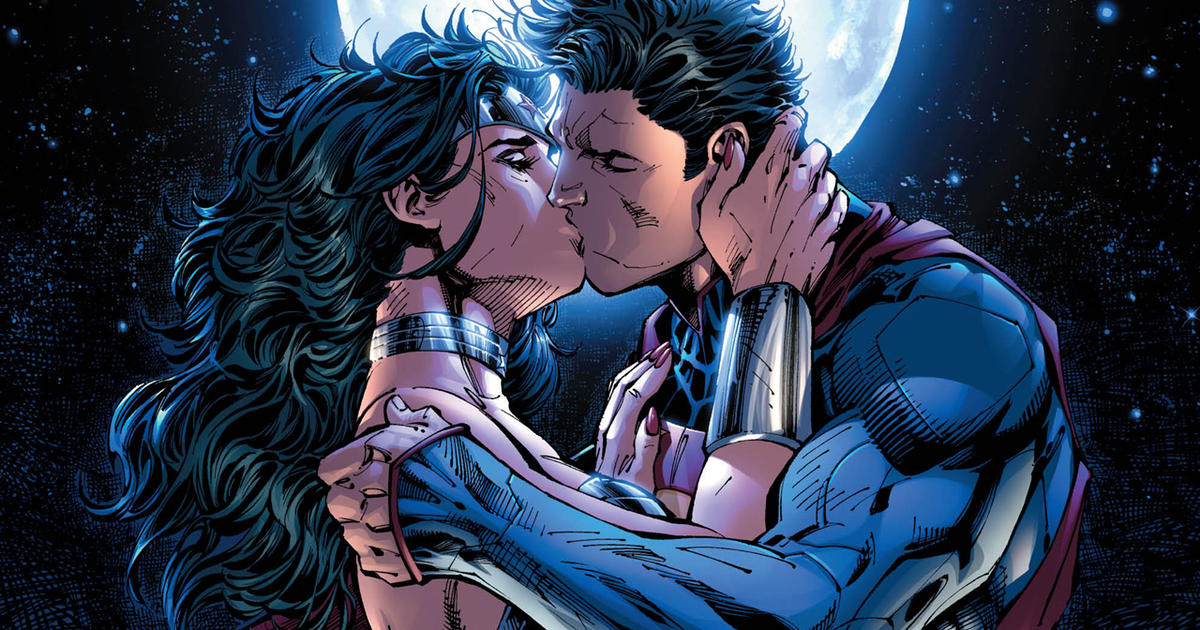
In fact, the only time Wonder Woman was ever in a functional romantic relationship was when she dated Superman during DC’s short-lived New 52 era in the comics. During that time, Wonder Woman and Superman had their own comics and their own stories. Sometimes, those stories became entwined. Sometimes, they didn’t. It never undermined their relationship or vice versa.

I know comic fans have strong opinions about the New 52 as a whole, but I find it telling that this was really the only time Wonder Woman was allowed to be in a relationship while still being Wonder Woman. For her to be someone’s girlfriend and still be the hero she’s always been, her significant other had to be Superman.

Take a moment to think about the scope of that standard. Wonder Woman, the standard-bearer for female superheroes for decades, can be in a functional relationship, but only with someone as capable as Superman. She and Steve Trevor can be in love, but they can’t have a relationship. He’s just an ordinary man. He’d just undermine Wonder Woman’s ability to be the ideal female hero we know and love.

Meanwhile, male heroes like Batman and Spider-Man can become romantically involved with far less capable individuals, many of which don’t have superpowers and can’t fly across the planet to be on time for date night. They’re still allowed to be in those relationships, but Wonder Woman can’t even make the effort with one of her most iconic romances with Steve Trevor.

As a fan of superhero comic, romance, and Wonder Woman, I find this both flawed and frustrating. While the “Wonder Woman” movie did an solid job establishing genuine romance between her and Steve Trevor, they still never got a chance to actually be in a relationship. It’s as though a female hero can’t be in a relationship without losing something. At the same time, a male hero can’t have a complete story without one.

It’s a strange disconnect and I think it’s getting worse. In recent years, superhero comics have made a concerted effort to develop female characters and I applaud that effort. It has led to some major successes. The problem is that, like Wonder Woman, these female characters aren’t really allowed to become anyone’s girlfriend. Being in a relationship is seen as an obstacle to being strong, independent, compelling characters.

Respectfully, I call bullshit.

Being in a relationship isn’t detrimental to any character, male or female, if the relationship is well-written. In addition, female characters don’t have to be completely, 100-percent independent to be great. In fact, making them that emotional single-minded is a good way to make them unlikable and unrelatable because, in the real world, people have relationships. They form bonds, rely on others, and are effected by those close ties.

Now, I don’t deny that writing great female characters is challenging, especially in recent years. It feels like you can’t write female characters without having an agenda anymore, even when it’s not printed on a shirt. Again, I call bullshit. Female characters, like all characters, are deeply affected by the loving bonds they form. They deserve the same development and exploration as their male counterparts.

Why can’t Wonder Woman be in an official relationship with Steve Trevor?

Does being Steve Trevor’s girlfriend make Wonder Woman any less a superhero?

Does any female superhero lose something when they become someone’s girlfriend?

These are relevant questions that are worth asking. If someone as iconic as Wonder Woman can’t be in a relationship with someone without undermining what makes her Wonder Woman, then that’s not a problem with her as a character. That’s a problem with the standards and assumptions we have about superhero romance.

I’m sorry if this rant feels dragged out, but this has been bothering me for a while. I’d be happy to discuss it more. Please share your thoughts in the comments.

Leave a comment

Filed under DC Comics, Marriage and Relationships, romance, superhero comics, Wonder Woman