Tag Archives: liberal

No, Porn Is NOT A Public Health Crisis (But Our Attitudes About It Are)

porn-industry

In his book, “Sex and God,” which I highly recommend, author Darrel Ray tells a brief, but revealing story about the topic of porn addition. It goes something like this:

One day, an anxious and distressed man walks into a therapist’s office. He tells the therapist he’s addicted to porn. He spends no less than six hours a day watching, masturbating at least three times in the process. Needless to say, this habit has completely disrupted his life.

He struggles to hold down a job. He struggles to maintain a relationship. His porn consumption is so all-encompassing that it is a serious detriment to his day-to-day living. He desperately seeks help and the therapist listens intently, hoping to help this man overcome this issue and forge a healthier life.

The next day, another anxious and distressed man walks into the same therapist’s office. He also tells the therapist he’s addicted to porn. However, when the therapist asks how much porn he consumes, the man says he watches only a few hours every week. He does masturbates, but not every day and never more than twice.

He holds down a steady job. He has a wife and kids that he loves dearly. He also comes from a deeply religious community where he’s widely respected. He’s terrified that someone will find out that he watches porn or masturbates. The guilt he feels is so serious and he desperately seeks help.

The therapist still listens intently, but has to find a way to explain to the man that the porn itself is not the problem. It’s the undue guilt he feels that’s causing all these issues.

It’s a basic story, but one that reflects the strange, eccentric nature of our attitudes towards porn. It exists. It’s legal. It’s a multi-billion dollar industry, complete with some of the most heavily trafficked websites on the internet. There have been efforts to ban it in the past, but those efforts rarely succeed. Even in non-democratic countries, porn finds a way to feed the human libido.

Image result for anti-porn crusade

Despite this, there are still efforts by regressive people on both sides of the political spectrum who see porn the same way others see crystal meth. It’s not just an addictive drug. It’s one that has seriously detrimental side effects on those who use it and society as a whole. It’s one of those strange sentiments that both radical feminists and right-wing conservatives share for different reasons.

I don’t want to focus too much on the reasons for those sentiments, nor do I want to break down all the reasons why I believe they’re misguided. That’s not the reason I’m writing this article. In general, I try avoid talking about these sorts of moral crusades because, like other notable crusades, they tend to be more spectacle than substance.

That said, I have noticed the anti-porn crowd shifting their tactics in their quest to temper human desire. Rather than push for outright censorship, which is rarely popular in democratic societies, this crowd is attempting to label porn a public health crisis.

Image result for anti-porn crusade

The government of Utah, the current title holder for most porn subscriptions by state, was the first to declare porn a public health crisis back in 2016. Other states have followed, but the most notable is Florida, who managed to declare it a public health crisis after denying a ban on assault rifles.

Let that sink in for a moment. Florida says that porn is a crisis that warrants greater scrutiny than assault weapons, which actually kill people. If that doesn’t show just how flawed our attitudes are about porn and guns, then I don’t know what does.

Bear in mind that just declaring porn a health crisis has limited effect beyond bad PR for the business. A government cannot censor porn any more than they can shut down another multi-billion dollar industry with massive global reach. As CNN reported, it’s more a symbolic gesture, which is just a fancy way of saying it’s one huge act of virtue signaling. It’s as empty and worthless as any declaration can possibly be.

Image result for anti-porn crusade

While this crowd will eagerly cite studies that claim porn leads to all sorts of negative behaviors that destroy families and relationships, they’re just as eager to ignore the many flaws in those studies. They’ll also ignore data that suggests an increase in porn consumption actually decreases instances of sex crimes.

As I’ve noted before, human beings are complex, multi-layered creatures. Porn is just one of those few things that impacts a wider range of those complexities than most. It strikes at our moral values, our understanding of intimacy, our insights into sex, and our concept of love.

For some people, it has no effect. For some, it has a positive effect. For others, it has a negative effect. You could say the same thing for everything from fast food to video games to stamp collecting. When it comes to the effect, it depends on the attitude of the individual and how they’re wired.

Image result for anti-porn crusade

The republican party in America has made no secret of their attitudes towards porn. That attitude is not unlike the one of the second man who walked into the therapists office that I described earlier. It’s not the porn that made him feel so damaged. It was his attitude and overbearing guilt, which is often religiously motivated.

It’s for this reason that organizations like the American Psychological Association don’t put porn addiction in the same category they do with substance abuse. They’ve noted that the vast majority of porn consumers rarely suffer ill-effects. For some, it even provides significant benefits.

There is, however, a small subset of the population that struggles with it. By small, I mean less than 10 percent. These people are, in their own minds, hopelessly addicted to porn. However, when compared to the prevalence of alcoholism or prescription drugs, porn is hardly a fair comparison. That’s not to take away from the suffering of those people, but there is a context to it.

Image result for anti-porn crusade

Porn is not like a chemical you inject into your brain to directly evoke a particular effect. It’s not sort of mental conditioning, either. For those addicted to it, as with other addictions, there are other factors involved. It’s not the porn itself as much as it is the mentality behind it.

Maybe someone is using it because they’re just a lot hornier than the average person. Maybe it’s because they’re not getting enough sex from their current personal life. Maybe it’s because there’s a particular aspect of their sexuality that they cannot otherwise explore. Whatever their reason, the damage only gets worse when they’re racked with guilt about it.

Image result for racked with guilt

Everyone’s experience with porn, sex, and everything in between is different. Actor Terry Crews claimed he battled porn addiction, but absent any larger context, it’s hard to know whether porn was actually the problem or whether it was an effect of something else.

That’s the ultimate irony of calling porn a public health crisis. It attempts to label an effect as a cause, which isn’t just asinine. It’s utterly backwards and detracts from other, more substantive issues. By calling porn a crisis, it creates the sentiment that there’s this one, simple target that’s the source of all these complex troubles.

I can already spoil the outcome of that effort right now. Even if porn disappeared tomorrow, those troubles would remain. Those attitudes would continue hurting those who were addicted. It won’t solve any problems. It’ll just redirect those issues, waste time, needlessly spend taxpayer money, and further undermine our ability to be comfortable with our sexuality.


Related image

4 Comments

Filed under Current Events, gender issues, sex in media, sex in society, sexuality

When “Thoughts And Prayers” Becomes A Lousy Excuse

ap_18045839657957_c0-209-4984-3114_s885x516

Whenever there’s a major tragedy in the world, there’s only so much you can do. Unless you’re a rescue worker, a doctor, an EMT, a solider, a police officer, or someone who actively participates in providing aid and resources to those effected, all you can really do is mourn for those who suffered.

It’s not just sad. It’s heart-wrenching. Most people have a sense of empathy to their fellow human. When we see or hear about somebody suffering, a part of us feels it too. It’s one of those critical elements of our humanity that often brings out the best in us. It’s part of why I believe that most people are inherently good.

Then, a mass shooting happens and my faith in humanity gets tested/strained. As I write this, the story surrounding the Parkland mass shooting in Florida is still unfolding. So far, 17 people are confirmed dead and the shooter has been identified. However, I refuse to write or say his name. Assholes like him don’t deserve the attention and recognition.

This is a horrific event and it’s not the first one I’ve talked about on this blog. Usually, I make an effort to highlight the more hopeful elements hidden within these events. This latest shooting has them too. The heroic actions of Aaron Feis, who sacrificed his life to save others, are certainly worth noting.

However, there is one element to these mass shootings that is as predictable as it is frustrating. It seems to come moments after the news breaks of the carnage. As people are suffering and dying from these horrific crimes, there’s an outpouring of “thoughts and prayers” from the public. I put that in quotes because at this point, it’s less a sentiment and more an overplayed meme.

The Parkland shooting was no exception. Media figures and policymakers alike are already getting in line to send their “thoughts and prayers” to the community and the victims. I don’t doubt that some of that sentiment is sincere. However, when the response is that predictable, it just becomes empty rhetoric. It’s so empty, at this point, that even shows like “Bojack Horseman” joke about it.

I understand, to some extent, why people express these sentiments. The world is a big, chaotic place and there are 7.6 billion people living on it. When something terrible happens, there’s only so much anyone can do. In fact, most people aren’t really in a position to do anything and that’s a terrible feeling.

As I said earlier, human beings are empathetic creatures. Most people aren’t sociopaths who feel nothing when their fellow human suffers. They see someone suffering and that natural empathy that all social creatures feel compels us to do something. Not doing something is just untenable.

That leads us to resort to things like “thoughts and prayers.” It offers the same shallow sentiment as virtue signaling. Instead of actually doing something meaningful in the face of tragedy, it just gives us the illusion of contributing. “Thoughts and payers” don’t make for any meaningful effort. It’s just a quick and easy recourse that alleviates that untenable feeling.

Again, I don’t blame people for taking that recourse. Someone who uses that approach isn’t inherently a bad person. They’re just exercising their empathetic sentiment in the most convenient form possible. That’s understandable, even if it’s still empty.

There are, after all, more meaningful ways to show support. That includes donating to the Red Cross, who are usually first on the scene in such tragedies. It can also include donating to relief programs, like the one J. J. Watt created to help victims of Hurricane Harvey last year. Those efforts are small, but they do provide tangible help.

However, the whole “thoughts and prayers” mantra becomes a lot less genuine when people use it as an excuse to avoid more complicated issues. This often happens whenever political figures send their “thoughts and prayers” to victims of mass shootings.

Now, I don’t want to get into a protracted debate about gun control. That’s a debate that nobody wins in the long run. However, when people sending “thoughts and prayers” to shooting victims also happen to be getting huge contributions from the National Rifle Association, that really undermines the sentiment.

In that situation, “thoughts and prayers” aren’t just empty. It’s somewhat insulting. People in those positions, be they in government or in pop culture, are in a position to do much more than just offer meaningless gestures. It doesn’t have to involve gun control laws or condemning everyone who has ever owned a gun.

It can be something akin to promoting greater awareness of mental health for youth, which is a thing. It can involve paying off all the medical expenses of the victims. It can even involve something symbolic, like helping create a monument to the victims, as has been done with other mass shootings. Symbolic or not, a monument is more tangible than any amount of “thoughts and prayers.”

At a certain point, when someone has a level of power and influence that the vast majority of people don’t, the use of “thoughts and prayers” to respond to a tragedy becomes more of an excuse than a sentiment. It’s not just the least amount of effort anyone can do to create the impression that they’re doing something meaningful. It’s a means of avoiding actual, tangible effort.

That’s where the concept of “thoughts and prayers” really loses credibility. It’s a sentiment that seems to be losing favor with the public, who are less and less inclined to accept this tired excuse from those who are actually capable of doing more. It may not lead to gun control laws, but it may send the message that “thoughts and prayers” just aren’t going to cut it anymore.

At the end of the day, most people aren’t in a position to do much of anything about a horrific tragedy like the one in Parkland. They couldn’t have prevented it, predicted it, or fixed the situation completely after it happened. Most people can only take in the tragedy, process it in their own way, and hopefully learn from it to prevent future tragedies.

For others, especially those in positions of power and influence, “thoughts and prayers” can’t be an excuse. There’s still a place for that kind of sentiment, but only if there’s something tangible attached to it. We don’t know if the incident at Parkland will lead to meaningful change, but one thing is clear. That change will require much more than mere thoughts and prayers.

1 Comment

Filed under Current Events, human nature, Reasons and Excuses

Being Right Vs. Winning An Argument Vs. Ben Shapiro

There’s an old saying that I just made up a few seconds ago, old being a relative term.

“You can either win the argument by merit or be right in principle, but only one matters in the long run.”

It sounds cynical, but it’s something I think most people realize at some point in our lives. The truth is a harsh mistress and it’s rarely the sexy kind. Truth is the kind of mistress that has no safe word, never offers any lube, and rarely gives overt warnings. When she wants to whip us in our most sensitive areas, she’ll do so without asking for permission or a second thought.

I’ll ease up on the BDSM terminology because I’m trying to make a serious point, one that’s a lot more relative in the era of “alternative facts” and “fake news.” More and more, we’re learning the hard way that our caveman brains aren’t equipped to seek truth. Survival and reproduction are our primary imperatives. Truth is optional, at best, and an afterthought at worst.

Image result for fake news

It’s for that very reason that public debates or major speaking present a false sense of perspective that exploits our caveman brains. It gives the impression that the truth can be presented in a slick, concise, and easy-to-digest message that helps us make sense of the world. That kind of certainty in an world of cheap knock-offs and practical jokes is more valuable to our psyche than gold, diamonds, and good Wi-Fi.

I say that as someone who finds a lot of entertainment value in debates. For a time, one of my favorite things to do was to look up debates between scientists and creationists, which always seems to bring out the best and worst of our caveman brains. They nicely highlight how real, functioning human beings can hold such radically different viewpoints, as well as the excuses they’ll make to cling to those viewpoints.

Related image

I won’t get into all the absurdities behind creationist debates. That’s not what prompted this post. The primary inspiration for this topic came from the recent news surrounding Ben Shapiro’s recent speaking gig at UC Berkeley. By every measure, this incident highlights all the problems with such debates better than any creationist ever could.

For those of you who don’t know who Ben Shapiro is, it’s not too hard to know what he’s about. He’s a fast-talking, quick-witted talking head in a media landscape that’s full of them. He specializes in espousing staunch conservative principles and you could make the case he does it better than almost any other conservative, at this point.

Personally, I like Mr. Shaprio’s style and I agree with some of the points he makes and not just because he makes them well. Many of them are points I’ve come to embrace on my own accord in trying to make sense of this crazy world. However, as much as I respect the man and his principles, he does embody a dangerous phenomenon that is becoming more prevalent in the digital age.

Image result for talking heads on tv

It’s one born from that not-so-old saying I mentioned earlier about being right versus winning an argument. They are not the same thing, but they’re easy to confuse, thanks largely to our caveman brains.

Think back to the Simpson Filter in appealing to large swaths of people. For the Homer and Marge Simpsons of the world, winning the argument is enough to win them over. They leave the truth for the sad, lonely, and miserable Lisa Simpsons of the world that nobody listens to.

Ben Shaprio, and others like him, are highly skilled at using the Simpson Filter to get their message across. They’re slick, compelling, and charismatic in the sense that they check all the boxes that appeal to our tribal instincts, which I’ve noted before are a major source of conflict.

Related image

By appealing to these instincts, they don’t have to be completely right. They don’t even have to be half-right. They just have to get people thinking and feeling that it’s right, so much so that they won’t bother checking the facts, doing some research of their own, or even giving it a second thought. Why would they? Ben Shaprio comes off as so smart and so knowledgable that he’s done the thinking for us.

Therein lies the biggest problem, though. By focusing on the argument and not the truth, it’s easy to conflate the two. Ben Shapiro is not a scientist, an economist, a politician, a philosopher, or even a used car salesman. He’s just a commentator, who happens to be exceptionally well at commentating in an articulate manner. That’s a valuable skill, but it’s not the same as being correct.

This actually played out in another event that occurred earlier this year at Politicon 2017. At that event, Ben Shapiro debated Cenk Uygur, another professional commentator who is at the opposite end of the political spectrum. Like Shapiro, I respect Mr. Uygur and agree with some of his positions. However, he is not as skilled a debater as Mr. Shapiro.

If you watch the debate, listen to the crowd, and note the speaking styles of both men, it’s not hard to see who has more skill and experience in that field. If you read the comments and look at the reactions, most agree that Mr. Shapiro won that debate. I’m sure it’s not the first debate he’s won, nor will it be the last.

That’s just it, though. Mr. Shapiro could win a billion more debates against a billion other people much smarter than Mr. Uygur. He could go down in history as the most skilled debater in the history of the human race. It still wouldn’t change one inescapable fact.

The real world, as in the world that operates outside our caveman brains, doesn’t give two whiffs of dried wolf shit about who wins a debate or by how much. Reality still operates under the same facts, rules, and principles. People still operate in ways that are at the mercy of their caveman brains and their collective circumstances.

Image result for Tribalism

Ben Shapiro could convince every person on this planet that Ronald Reagan was right about everything, that the Jewish religion that he practices is the only correct one, and that everyone whoever worked for Hillary Clinton was an alien spy. That still doesn’t change reality. At the end of the day, the truth is still that same harsh mistress that will whip all our asses without warning.

That’s why, in the long run, it doesn’t matter how many debates Ben Shapiro or others like him win. It doesn’t matter how well they craft their message. In the long run, if their ideas don’t line up with reality, then reality will eventually win out. It always does. People die, take their ideas with them, and leave reality to sort out the rest.

Now, I don’t doubt for a second that Mr. Shapiro is sincere in his beliefs. I also don’t doubt that his opponents, like Cenk Uygur are just as sincere. That’s why I wouldn’t classify them as professional trolls, such as the Ann Coulters and Lena Dunhams of the world.

Image result for Ann Coulter

They don’t say what they say, just to provoke our caveman brains and draw attention to themselves. They aren’t outright con-artists either, like certain televangelists. They’re just good at conveying their ideas and making them feel legitimate. Unfortunately, that’s as far as they can take it.

Ben Shapiro, Cenk Uygur, and everyone like them may think they have the answers. They may even believe that their way will make the world a better place, as a whole. They’re not entirely malicious in attempting to convey their points, but they are misguided.

There’s also a danger to their approach, conflating debates with truth. They present the false impression that an issue like politics, evolution, and economics can be resolved through simple debate through a series of talking points. As anyone who has worked with a tax attorney knows, that’s just not how the real world operates.

Image result for Complex economics

The world is complicated, complex, and chaotic. No human brain, or collection of human brains, is equipped to make sense of it. Some of these issues aren’t just complex, either. They’re impossible to resolve because there just aren’t enough resources for everyone.

A skilled debater, like Ben Shapiro, is good at convincing people there are quick fixes. The world can be improved simply by adopting the policies of his favorite ideology. He may convince you, me, and everyone around you that he’s right.

The truth, however, can never be swayed by fast talking, fancy rhetoric, or skilled arguments. At the end of the day, it will stay on the side of the harsh mistress that is reality. In the short term, the Ben Shapiro’s of the world will be able to bask in many victorious debates. In the long term, however, the truth knows whose asses will be stinging in the end.

Related image

9 Comments

Filed under Celebrities and Celebrity Culture, Current Events, Jack Fisher's Insights

How To Tell When A Protest Has Failed (Besides Violence)

These days, it seems as though America has a new favorite pastime. It’s not baseball. It’s not football. It’s not starting flame wars in the comments section of a Justin Bieber music video either. It’s protesting.

Ever since the migraine-inducing side-show that was the 2016 Presidential Election, there has been a lot of protesting going on. I’ve even commented on some of them. First, there was the women’s march. Then, there was the March For Life. These were more about ongoing issues, though. Other protests, in recent months, have been more vocal, to put it kindly.

It seems everybody’s tribal instincts, which are the same instincts I’ve said will destroy us all if we don’t confront them, are in overdrive. Everybody is picking a side. Everybody thinks their side is the side of truth, justice, and thong bikinis. They all see themselves as George Washington taking down an army of Hitler clones with nothing more than a pistol and the American spirit.

Obviously, they all can’t be right, but they all can be wrong. They can all be horribly misguided as well, some more than others. I understand why protesting is a big deal. People feel very passionate about certain issues. Some issues definitely warrant that passion.

Issues like civil rights, the right to marry the person you love, or the right to craft sexy erotica/romance novels without some government bureaucrat micromanaging every page are worth fighting for. People have fought for those rights in the past. While there have been setbacks, progress usually sides with those who aren’t assholes.

That’s what makes the recent surge in protests so frustrating. I can see the passion. I don’t deny it’s there. I also don’t deny that the people feel strongly about what they’re protesting. I do, however, question the merit behind it.

It’s as though people have just skipped the part where they look at the issue they’re protesting, think critically about the implications, and adjust their message accordingly. That’s kind of a big deal in any protest. From Gandhi to Martin Luther King Jr., the ability to craft and convey the right message was critical to their success.

These days, every issue being protested feels like an extension of a petty flame war on a Harry Potter message board. The attitudes involved can best be summed up with this simple chorus.

“Your worldview doesn’t agree with mine so you must be a terrible person!”

It’s not about justice, although most will claim it is. It’s not about one group feeling marginalized, although most will claim it is. It’s not even about righting a wrong, although all will claim it is. It’s about the world not lining up with someone’s particular ideal, as though the world is somehow obligated to cater to your feelings.

It doesn’t matter which side of the political spectrum you’re on. It doesn’t even matter if you’re a card-carrying anarchist. If the crux of your argument is that the world isn’t doing enough for you beyond not putting you in chains and making you lick lead bricks, then your protests are empty.

This brings me to the most recent string of protests that have rocked the news. Unless you’ve been living in a windowless basement for three days, playing Call of Duty, eating only frozen pizza, and shitting in buckets, you’ll know there has been some pretty major protests in Charlottesville, Virginia.

I won’t get too deep into the substance of the protests. I won’t even break down the two opposing sides. I’ll just acknowledge that these protests, unlike the Women’s March or the March For Life, got pretty ugly. One person is dead and others have been injured. By most measures, it’s a protest that went wrong.

I’ll even go a step further. I’ll say that the protest has outright failed for both sides. I get that’s just my opinion. It’s probably not a very popular opinion, but this is how I feel about it after taking a few days to process the events. I get that the opinions of an erotica/romance writer barely amount to a wet fart in a shit factory, but I still feel compelled to share it.

As to why I think it failed, I’d like to explain by setting up a checklist of sorts. Think of it as a basic criteria for determining whether a protest actually has some substance behind it and warrants further debate. It doesn’t always have to result in a law or formal declaration of victory. It just has to be something that furthers the human condition in some meaningful way.

For the sake of not digging too deeply into inherently unsexy topics, like politics and social injustice, I won’t make the list too long or too specific. I’ll try to make sure it can fit on a notecard. That way, if you see a mob of protesters walking down your street, you’ll know whether they’re worth joining.

  • Can the protester cite a specific law or policy that they’re looking to overturn or pass?
  • Can the protesters cite a specific event or incident that warrants outrage among decent human beings?
  • Can the protesters refer to documented injustices by real people who harmed real victims?
  • Can the protesters claim a greater goal than just shaming certain groups?
  • Can the protesters’ agenda be accomplished in a manner that doesn’t subvert basic human nature?
  • Can the protesters’ claim to utilize methods that don’t personally attack opponents in lieu of arguing their point?

Read over these six questions. Think about them carefully and don’t just answer on a whim, which I know can be hard since that’s how our brains are wired make most decisions. Try to go beyond caveman logic for this because if you’re going to join any protest, you should make sure it’s the right kind.

If, after all that contemplation, the answer to all six questions is no, then there’s no getting around the truth. The protest and the agenda behind it is a failure. It’s either doomed to fail or has already failed. It doesn’t always means that it ends in violence, but it often does and, as we’re seeing in Charlottesville, that tends to override any meaningful debate.

In a sense, Charlottesville is a case study in a protest wherein both sides can’t claim much moral high ground. One side is yelling, “Look at our tribe and how great it is! Acknowledge its greatness and celebrate its glory!” The other is yelling, “Your tribe is awful! You people should be ashamed of who you are!” This is not a meaningful argument, nor is it one anyone can win.

The biggest flaw in both sides is that both sides are reducing the other to some kind of inherent wrongness. There’s no effort at all to understand or even talk about the substance behind their sentiment. Just being part of that particular group somehow makes you a horrible human being and that’s it.

Well, I’ve got news for both sides they would be wise to heed before their next failed protest. Human beings are extremely complicated. An individual is more than the sum of their tribal affiliation. While it’s in our nature to lump groups of people into certain tribes, that can often blind us to the real, genuine sentiments of our fellow human beings.

Granted, some of those human beings will be petty assholes who just want the world to carry it on its shoulders so it can sleep in every morning. You’ll find dishonest, disingenuous assholes in every tribe. It’s just part of the erratic nature of humanity. However, the vast majority of people are genuine. We couldn’t have survived as long as we have if we weren’t.

The world is chaotic and our caveman brains aren’t wired to make sense of it for now. We agonize over the chaos of the world, which often can be unjust, because we feel the need to do something about it. However, if that something involves just demonizing other people instead of actually dealing with them as human beings, then you’re not protesting anymore. You’re just whining.

1 Comment

Filed under Current Events

How To Resist A Fascist Government (And Survive)

There’s been a lot of talk about fascism lately and I don’t deny that I’ve contributed to it. I tried to make that contribution meaningful and even sexy, but I know I’m facing some pretty strong headwinds that have managed to undermine far more relevant voices, like CNN.

Even if it is an uphill, fruitless discussion to have in the long run, it’s still worth having, if only to understand the forces behind it. It’s only when we understand something so daunting and dire that we can better deal with it. Like divorce, a death in the family, or a slow internet connection, it helps to maintain some sense of perspective.

With that in mind, I want to shift the discussion somewhat to something more practical. No, that doesn’t mean I’m about to trivialize the horrors of fascist regimes or make light of their victims. I like to inject sex appeal into everything I talk about, including fascism, but even I can’t make those topics sexy.

To that end, I’d like to focus on what people can do to actually resist a fascist regime. The topic of “resistance” has been a major issue lately, especially after what happened in the 2016 Presidential Election. There have been major protests, some of which I’ve discussed and some of which have become talking points for major media figures.

There’s plenty of angry rhetoric. There’s plenty more whining, yelling, and personal insults. I’m pretty sure that everyone’s mother has been called a whore at least once since January 2017. None of it is very productive, though. Most of it is just fodder for cable news and cheap laughs for those in power.

The truth of the matter is that there’s a right way to do a resistance movement, even against a fascist regime. Even the most authoritarian governments in history are vulnerable to collapse. It’s worth pointing out that nearly every major empire in history has collapsed, including the repressive ones. It may seem like a fascist regime can never fall. History, to date, says otherwise.

So with that in mind, I’d like to make another contribution to the discussion about fascism and the best ways to resist it. Moreover, I want to list the ways people can resist and have a good chance of surviving.

History shows that the kind of violent uprisings glorified in movies like “Red Dawn” may get people excited, and even horny in some cases, but it also shows that such violence tends to breed more violence. You need only look at the French Revolution or the Tiananmen Square protests for proof of that.

To bring down a fascist regime requires patience, foresight, and perseverance. Most importantly, the resistance needs to have easy tactics that everyone can do. That’s why I’ve compiled a quick list of easy tips on how to resist a fascist regime the smart way. It’s easy to do. It requires no violence. It just requires patience, perseverance, and a little luck. If done right, you’re much more likely to survive.

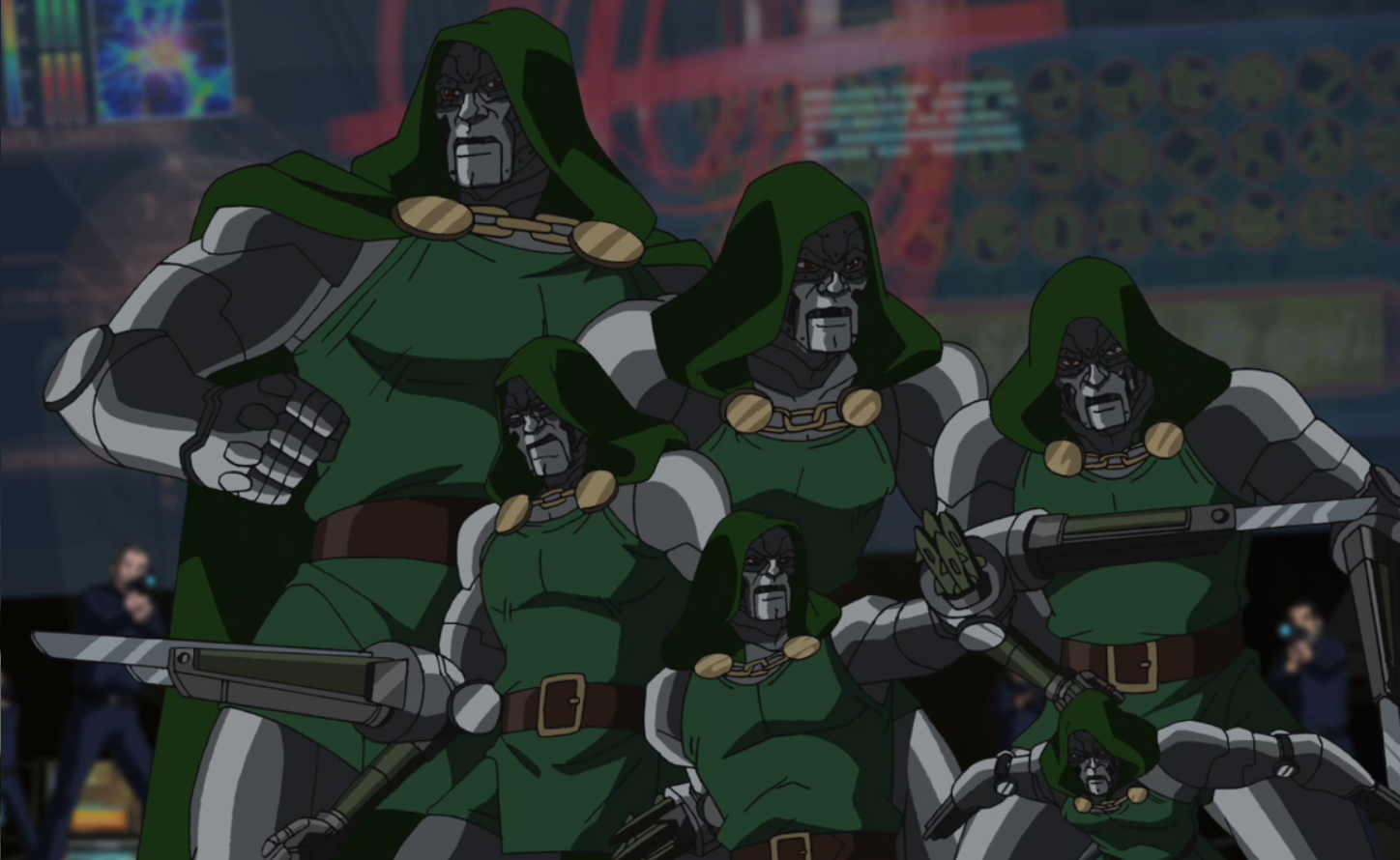
Please keep in mind, though, these tips only apply to fascist regimes that are run by humans, administered by humans, and populated by humans. That means subjects of advanced alien overlords like the Borg or superhuman despots like Dr. Doom need not apply.


Tip #1: Leave If You Can, But Survive If You Can’t

This is the simplest, most obvious tip to anyone unlucky enough to be living under a fascist government. I understand it isn’t always possible. I also understand that dealing with refugees are a complex hot-button issue. However, when it comes to bringing down a repressive government, it can’t be avoided.

One of the ways a fascist regime is inherently unstable is how it deals with it’s smart, highly skilled population. Fascist leaders tend to not like anyone smarter than them. That usually means brilliant, highly skilled people end up leaving the country, taking their knowledge and expertise with them. Nazi Germany found that out the hard way.

Countries like Iran are finding out too. When your country is a repressive, uptight society that won’t let well-paid, well-educated people have a beer or go to a strip club in peace, they tend to take their talents elsewhere. Without that professional class of people, a fascist regime can’t really accomplish much. It’s hard to make weapons of doom when you scare all the mad scientists away.

For those who aren’t highly skilled individuals and are unable to leave, the best thing you can do is survive. I know that’s much easier said than done, especially in the inherent poverty of fascist countries. However, being alive is important because it means the state still needs you. Without you, who’s going to provide the slave labor and constant adulation that a fascist leader demands?

Brutal or not, a fascist regime still has to care for its citizens to some extent. It needs to spend time, money, and resources ensuring that its people are actually capable of providing the labor and human resources to make the system work.

They may not provide much, especially if you end up in prison or a work camp, but the mere act of being alive still undermines the regime. So long as your existence forces the regime to spend time and money making you a productive member of their agenda, you’ve got the edge to some extent. Letting yourself die would only do them a favor. So in a sense, the best resistance anyone can do in such a horrible situation is just survive.


Tip #2: Tell Rulers Exactly What They Want To Hear (But Don’t Mean It)

This is another one of those inescapable pitfalls of living in a fascist regime. On paper, it may sound like you’re just emboldening the regime. That’s true, if you’re only looking at it in the short-term. If you’re willing to play a little three-dimensional chess, though, you can turn the tables.

There’s no doubt that living in a fascist regime will require you to glorify some despotic leader. You may hate their guts. You may pleasure yourself to the idea of them dying a violent death. That’s fine. Keep that hatred and kink strong within you, but keep it within you. If ever you have to put on a fake smile and tell the ruler how big their dick is, just grit your teeth and do it.

You’ll hate it in the short-term, but you’ll see the benefits in the long run. It’s one of those few times when the harshness of reality is on your side. If people only ever tell a dictator what they want to hear, they’ll avoid telling them about serious issues that need to be addressed. They won’t give the full story. They’ll avoid the hard facts, but those facts won’t avoid them.

As a result, fascist rulers will have a poor understanding of a situation or crisis. They’ll be incapable of making the kinds of decisions that strengthen their hold on power. Eventually, those decisions will erode the regime’s ability to function. They’ll leave their society in such a poor state that no amount of adulation will change it. At that point, the regime is as good as gone.


Tip #3: Conform In Public, Defy In Private

This ties directly into the previous tip. If you’re going to survive a fascist regime, you’re going to have to put on a public face you hate and do everything the regime demands that you to do in order to be a good citizen. You’ll hate it inside, but you’ll still do it because that’ll help you survive.

In private, however, you can afford to let yourself go. In fact, doing so will help inoculate you from the propaganda that all fascist regimes depend on to keep their population in line. Even repressive places like Iran are finding out the hard way that while some people show the necessary piety in public, they tend to get really freaky in private.

Now, I understand this would be even harder in a regime like the one described by George Orwell in “1984.” However, keep in mind that the kind of surveillance described in that book is pretty much impossible in the real world. Even North Korea has a hard time preventing smuggling.

If anything, more intensive surveillance means that your actually winning. All that surveillance, costing the regime time and money that it would rather spend strengthening its power. Having to micromanage its citizens is a huge drain on any regime, fascist or otherwise.

Welcome that kind of micromanaging whenever you can. In the long run, the regime will run out of money before you run out of things for them to manage. That way, when the regime starts to collapse, it’ll be easier for you and others dissatisfied with the regime to help it collapse. All you had to do was be deviant in private. Most people do that anyway so it’s something everybody can do.


Tip #4: Create Impossible Issues For Rulers To Deal With

This is a bit harder, but still fairly critical. By creating impossible issues, I don’t mean protest and complain to the fascist government. That’s usually a quick way to end up dead, in prison, or in a forced labor camp. You can still frustrate the regime, but you can do it indirectly.

The easiest way to do this is to just not do your job very well. Channel your inner Wally from “Dilbert” and do just enough to avoid getting into trouble, but nothing more than that. Don’t do your best. Don’t go the extra mile. That forces the regime to commit more resources to doing something that shouldn’t take so many to begin with.

Beyond just being a marginal worker, go out of your way to make day-to-day issues complex and tedious for the authorities. Think of it as a form of trolling, minus the insults to other peoples’ mothers. The key is to get the government to deal with multiple issues on multiple fronts. They don’t need to be big issues. In fact, the smaller the issue, the better.

Small issues frustrate governments far more than larger issues. Government, and its assorted bureaucracy, is a blunt instrument by nature. It can’t deal with smaller issues for the same reason a doctor can’t perform brain surgery with a baseball bat. It just doesn’t have the tools. That won’t stop it from trying. It’ll just made a mess of things and that works to your advantage.


Tip #5: Weaponize The Power of Apathy, Boredom, And Dispassion

This goes along with the previous tip in that it takes being lousy at your job a step further. One of the most important tools that fascist rulers use is their ability to rally up the passions of the public. They use their gift for rhetoric and giving fancy speeches to work people into a frenzy so that they’ll ditch all forms of critical thinking and follow them into battle.

While it helps fascist governments come to power, it’s not very useful when it comes to maintaining power. Sure, fascist governments will hold military parades and create these big, gaudy monuments to their glory. However, it amounts to an oversized toilet for pigeons if it can’t generate the same solidary.

That solidarity is the glue that holds a fascist society together. Apathy, Boredom, and utter dispassion is the solvent that breaks up that glue. If a government spends all that time and money blaring their glorious message to the populous, only to have them look back with blank and tired stares, they’re screwed.

If the people aren’t united and in an orgasmic frenzy of support, they’re less likely to sacrifice or aid the regime. Sure, they’ll follow the rules. They’ll march in the parades. They’ll even put on happy faces. They just won’t put much energy or effort into helping the regime stay together. That’s why the greatest tool any citizen in the resistance can have is their apathy. Without that, a fascist society just falls apart.


Tip #6: Let The Rulers Frustrate Themselves (And Stay Out Of Their Way)

This is probably the most enjoyable tip on this list and not just because it doesn’t require much effort. Technically, you really don’t have to do anything to make this happen, so long as you follow the other tips I’ve listed.

That’s because government and bureaucracy, at least those run by humans, are inherently flawed. That’s because people are inherently flawed. No matter how dedicated or passionate they may be, they’re going to make mistakes. They’re going to fall flat on their faces. All you have to do is let them.

This is especially true of dictators, who everybody is afraid to restrain. Eventually, they’ll get back up, blame everyone but themselves, and try to correct it. Chances are, they’ll fall flat on their face again. They’ll get even angrier. That kick-starts a brutal cycle that the dictator can’t escape. Eventually, they’ll frustrate themselves to the point of utter failure. Once they fail, the regime fails.

When this happens, the best thing anyone can do is stay out of its way. Every fascist regime has inherent flaws. You just have to be patient enough and tough enough to let them happen. It can be grueling and downright dangerous. In the long run, though, human nature and inept dictators will be on your side.

That, in essence, is the greatest and most fitting irony of fascism.

6 Comments

Filed under Jack Fisher's Insights

Dr. Doom, Perfect Rulers, And Ultimate Peace

There aren’t a lot of official rules on this blog. I try not to micromanage the what, how, and why of the content I talk about, beyond my sexy novels. However, there is one rule that might as well be a law of physics . If a particular topic can apply to comic books, then I will apply it to comic books.

I’ve already done it so many times on this blog, from sex-positive superheroes to showing why Magneto is the original Walter White to using an X-men comic to explore concepts of a balanced romance. While I love writing and talking about erotica/romance, I’ll still use every opportunity to tie it into comics.

For the past few days, I’ve been talking about fascism and repressive government. It’s a somewhat relevant topic, even after the 4th of July, because everybody seems to be throwing that word around these days. Liberals think conservatives are fascist. Conservative think liberals are fascist. At this rate, even anarchists will call each other fascist and fail to see the irony.

The concept of fascism is pretty complex. It has a dictionary definition, but that definition tends to get obscured by anyone who thinks a different political opinion is a threat to their own. Major conflicts like World War II have conditioned us to associate all the evils of the world with fascism. If your ideology seems bad, greedy, or evil in any way, then it must be fascist.

While that is a very childish approach to political rhetoric, relatively speaking, it also underscores the reason fascism and authoritarian governments exists in the first place. As George Orwell explored in “1984,” these kinds of systems emerge anywhere people seek security and peace in the midst of war and conflict.

We see it happen all the time throughout history. There are many occasions where a repressive regime has arisen out of bloody conflict. Some of those regimes are still around and frustratingly contentious. At their core, thought, the dynamics are the same.

In times of chaos, conflict, and scarcity, people seek power and influence. Once they have it, they seek to maintain it at all costs. They’ll try to control anything and everything, from the amount of bread everyone gets to how they conduct their sex lives. It manifests in many different ways, but the underlying principles are the same.

At the end of the day, the biggest problem with the systems surrounding fascism and repressive governments is that they still depend on flawed, petty humans with caveman brains. Sometimes, the rulers themselves are mentally unhinged. Sometimes, the people around them are petty, corrupt, or just plain incompetent. Often, it’s a potent mixture of the two.

In some sense, we can thank our own inherent flaws as humans as the ultimate weapon against a fascist, authoritarian state. George Orwell may have highlighted the darker elements of humanity, but he grossly overestimated peoples’ ability to manage others competently.

That leads me to Victor Von Doom, the alpha and omega of Marvel’s long list of iconic villains. In any list of the top villains of all time, Dr. Doom usually ranks near the top. A series of sub-par “Fantastic Four” movies have routinely failed to do justice to the breadth of Doom’s villainy. However, once you understand his roots, you understand why he is the ultimate counter to George Orwell’s dystopian fever dream.

There are too many details about Dr. Doom’s life and history to do him justice in one post. WatchMojo does a fairly good job of summarizing where he came from, but for the sake of this post and how he relates to my discussions on fascism, all you need to know is that Dr. Doom is the perfect ruler.

I don’t just mean that in the sense that he has the power, charisma, and resources to rule a country. I mean that, by almost every objective measure, Dr. Doom is the perfect ruler. Put him at the top of any government, be it a democracy or an authoritarian state, and he’ll make it work. Moreover, he’ll do it in a way that’s terrifyingly efficient.

That’s because Dr. Doom isn’t just some evil sadist who just wants to control people for the fun of it. He’s one of the smartest human beings to have ever lived. He didn’t just master science as a kid. He mastered science and magic. Even Lex Luthor can’t make that claim. He just mastered science. Compared to Dr. Doom, Lex is an underachiever.

Beyond just being smart and mastering things few can ever hope to master, Dr. Doom is extremely driven and makes no bones about it. He doesn’t just think he’s superior to every other human being on the planet. He knows it. If anyone dares question it, he won’t just prove them wrong. He’ll do so in the scariest, most intimidating way possible.

This isn’t just someone you respect. This is someone that scares the hell out of you, but for all the right reasons. As arrogant as he is, he doesn’t see himself as a villain either. Even Stan Lee, his co-creator, doesn’t see him that way. In an 2016 interview, he said this about Marvel’s greatest villain.

“Everybody has Doctor Doom misunderstood,” Lee said. “Everybody thinks he’s a criminal, but all he wants is to rule the world. Now, if you really think about it objectively, you could walk up to a policeman, and you could say, ‘Excuse me, officer, I want to tell you something: I want to rule the world.’ He can’t arrest you; it’s not a crime to want to rule the world. So […] it’s unfair that he’s considered a villain, because he just wants to rule the world. Then maybe he could do a better job of it. So I’m very interested in Doctor Doom, and I’d like to clear his name.”

Therein lies the greatest irony of Dr. Doom’s villainy. Sure, he wants to take over the world and he routinely clashes with Marvel’s most iconic heroes in the process. However, it’s why he does it that makes him stand out.

In one iconic story from 2010 fittingly called “Doomwar,” his true motivations for conquering the world come to light. In that story, Dr. Doom encounters a god-like being named Bast, also known as the Panther God. In that encounter, Bast reveals something critical about the future of the world.

As anyone who has ever followed Marvel comics for any number of years will tell you, there are a lot of alternative universes and timelines. Some are dystopian, even by George Orwell standards. Some are just different in a few minor details.

However, the Panther God saw all these universes and timelines and came to one inescapable conclusion. The only timeline in which humanity was free from suffering and want was a timeline in which Dr. Doom ruled the world. In a sense, that almost makes Doom a hero. Then again, he’s still the same guy who once sacrificed the woman he loved for more power.

Beyond those overtly villainous details, there’s a lot of merit behind that vision and not just because it came from the Panther God. Dr. Doom already knows how to run a country and a government. For much of his history, he’s run his fictional home country of Latveria and, by all accounts, he’s run it very well.

He ran it so well that, when he took over the country, every soldier and citizen that had been fighting for the previous ruler just stepped aside and let him take over. He didn’t force his people to love or respect him into submission. He proved himself. He did such a good job that nobody in Latveria besides the previous rulers wanted to stand in his way.

He didn’t just stop at taking over his home country either. Dr. Doom helped it prosper. In another iconic line of Marvel comics, Dr. Doom turned a country of bankrupt peasants into one of the top 10 economies on the planet within a couple years. That’s the kind of growth that even hardcore libertarians have to respect.

Doom does this because, and this is worth emphasizing, he’s extremely smart. He’s not just smart in that he can outwit gods and cosmic forces. He’s smart in that he knows how to manage a country, a people, and everything in between.

He does this largely through an army of loyal robotic minions, including specialized robots called Doombots. They’re not just ordinary killer robots either. These robots actually think, behave, and act as though they’re the real Dr. Doom. It’s kind of a running gag in the Marvel universe. Every time Doom is “defeated,” it’s often revealed that they just defeated a Doombot.

Beyond being a clever plot device, it also ensures that Dr. Doom’s government never has to worry about insubordination, betrayal, or corruption. His robots, gadgets, and ability to use mind control ensures he maintains perfect control of his government from top to bottom.

Unlike the ruling party in George Orwell’s “1984,” there’s no need for a massive professional class of bureaucrats that need to be constantly monitored. There’s no need to set up a kind of thought police to ensure nobody even thinks about undermining the party. For Dr. Doom, that would be redundant. No matter what any of his citizens think, he knows he’s smarter and more resourceful than any of them.

In addition, the party in “1984” didn’t care much for the welfare of the people. They only cared enough to ensure the stability of their rule. Dr. Doom, on the other hand, does express a genuine concern for the well-being of his people. He will go out of his way to make sure that his people are free from suffering and want. Sure, they’ll still fear Dr. Doom’s wrath, but that’s the only thing they fear.

That, more than anything, is what makes Dr. Doom the perfect ruler. He’s so smart, so capable, and so resourceful that no other human in his home country or any other country could come close to matching him. On top of that, Doom actually produces results. The things that are typically impossible for a government to do, such as providing prosperity for all its people, are easy for someone like Dr. Doom.

Thanks to Dr. Doom’s expertise, cunning, and willingness to cross any line, anyone under his rule will be safe and prosperous. They won’t have to fear anyone harming them because they’d have to go through Dr. Doom first, a man who one-shot the Incredible Hulk and battled a race of space gods. With him, a border wall is both unnecessary and redundant.

Under Doom’s rule, you are as safe as it’s possible to be without locking yourself in an adamantium cage. You’re also probably as free as you’ll ever be. While Dr. Doom is a despot, he’s never shown an inclination to micromanage his citizens’ lives. He doesn’t tell them who to love, how to love, and what to do with their free time. So long as they acknowledge his authority, they can do as they please.

He doesn’t get involved in his peoples’ sex lives. He doesn’t try to run the economy. Near as anyone can tell, he doesn’t even demand that certain words be censored from TV and movies. In that sense, Dr. Doom is less tyrannical than the FCC.

Sure, his citizens are still at Doom’s mercy. If, at any point, they become a threat to Doom, he’ll kill them without a second thought. However, Dr. Doom is not obsessively paranoid like the Stalins and Kim Jong Uns of the world. He’s too smart, too cunning, and has too many Doombots on his side to worry about such trivial things. He is, for all intents and purposes, a benevolent despot.

There is no real-world, or even fictional, equivalent to Dr. Doom. However, much like Superman, Dr. Doom presents an ideal of sorts. He is everything people want in a ruler. He is smart, charismatic, imposing, strong, capable, resourceful, logical, and fair. He has the means, vision, and drive to do everything that people want their government to do.

In that sense, it wouldn’t even matter whether a system is fascist or democratic. So long as there’s someone like Dr. Doom at the top, it’ll work. There are still many parts of his character that make him undeniably villainous. However, it’s hard to deny his ability as a ruler. To live under his authority is to live in perfect freedom and security.

Remember that the next time you get into a debate about fascism or democracy. In the end, the only truth path to perfect governance is through Dr. Doom. That’s enough to make both the Avengers and the Justice League cry.

All Hail Doom!

12 Comments

Filed under Comic Books, Jack Fisher, Superheroes, Jack Fisher's Insights

Why Fascists Want To (And Need To) Control Your Sex Life

Whenever I bring up a topic on this blog, be it advances in biotechnology or news on the “Wonder Woman” movie, it’s only a matter of time before I explore the sexy side of that topic. Sometimes that also involves the kinky side, but sometimes sexy and kinky aren’t mutually exclusive issues in certain topics.

Now, when it comes to issues of fascism and totalitarian governments, it’s hard to make that too sexy. However, it’s hard to discuss these issues without also discussing the implications on our sex lives. Even the most repressive governments still need people having sex o they can make babies that will eventually become works, soldiers, etc.

Throughout history, the government has always had some interest or policy in our sex lives. From state-sanctioned fertility festivals in Ancient Rome to rigid traditions in Ancient China, there’s always been some amount of government between the sheets. So those yelling for government to get out of their bedrooms probably don’t realize just how long it has been there.

For the most part, a government’s only real interest in your sex life extended to whether or not you were producing children that would become soldiers, workers, and tax payers. Beyond that, it could care less what you do with your genitals and how you do it. Those governments usually lacked the power, resources, and will to micromanage.

There were some exceptions, primarily with the sex lives of rulers and aristocrats. Since preserving the royal lineage was of the most vital importance, often leading to massive upheaval in a kingdom, they had to micromanage to some extent. If they weren’t producing heirs to the throne or to inherit the family land, then that was a problem. The entire premise of “Game of Thrones” is proof of that.

However, the world has changed a great deal since the days of kings, feudalism, and fertility rituals. Industrialization, modernization, and a better understanding of how our sexy anatomy works has changed how the people and the government approaches matters of sexuality. Sure, some people in government still have a poor understanding of certain lady parts, but our knowledge is more comprehensive for the most part.

It’s because of that knowledge, though, that a fascist or overly authoritarian regime has an even greater interest in controlling your sex life. At least the kings and emperors of the ancient world lost interest at the part where your sex life made the babies that would become soldiers and workers. Modern rulers with a keen interest in controlling a population know to go much further than that.

The best example of this is how Nazi Germany and Fascist Italy approached its citizens’ sex lives. For these governments, it wasn’t enough for people to make babies that would become soldiers and workers. They had to make perfect, super-babies and a lot of them. That whole “master race” ideology wasn’t just about subverting minorities. At some point, they need to have the race they prefer to propagate.

Sometimes, they did this through incentives. Giving birth to a healthy, racially pure baby in Nazi Germany came with all sorts of benefits. However, those benefits sometimes hid the heavy hand of the state. Women in this society were not expected to work. Their sole focus was supposed to be on producing more racially pure babies.

It wasn’t much different or better for women in Fascist Italy. While it didn’t rely heavily on concepts of genetic purity or racial supremacy, there was this ideal espoused by the state. The perfect woman, in their eyes, was supposed to be poor, subservient, and doing everything she could to give birth to as many babies as possible.

Beyond simply controlling the population, these fascist states also sought to control the nuts and bolts of family life. There was only one ideal family structure and one form of acceptable sexual activity. Any citizen that deviated from it in any way, be it homosexuality or watching certain types of porn, was prohibited.

Again, it goes several steps further than the prudish policies we sometimes get in non-fascist states. In America, we had policies like the Comstock Laws that effectively made talking about sexual issues a crime. Even today, issues surrounding sex education, which are prescribed by the government, are subject to plenty of controversy.

However, it’s that very presence of a controversy that highlights just how different a fascist state approaches sexuality compared to a non-fascist one. Say what you will about America and western governments. At least it’s possible to have a debate about sexual issues. It’s not always productive, but having that debate won’t get you killed.

The same can’t be said in a fascist state because controlling sexuality isn’t just necessary for population control. It’s a primary component of maintaining its overall power. A fascist state, by definition, needs to exercise a lot of control over its people. In general, people don’t like to be controlled. History shows it’s hard to control people. Even organized religion is finding this out.

For any fascist state to maintain control, it needs to be able to control the two most important drives in human beings, namely survival and reproduction. It needs to make sure that the citizens are completely dependent on the state to fulfill those drives.

It’s somewhat easier to confiscate food and use hunger to keep people in line. If someone is hungry, they’ll say or do anything to get a good meal, especially if a government dangles it in front of them as incentive.

The same applies to sex. Through policy, policing, and public shaming, it can dissuade people from exercising their sexuality in ways that the fascist state does not sanction. Like hunger, those who are horny will do anything they can to fulfill that basic drive. Some religions have already weaponized this drive. A fascist state would make it part of a larger system.

It’s because of that systemic approach to sexuality that it’s hard to claim that modern conservatives or liberals are seeking to control sexuality on the same levels as a fascist state. I know I make a lot of jokes about Rick Santorum’s views on sexuality, but he’s never favored creating an entire bureau of government to ensure that people have only the kind of sex that he approves of.

I also make a lot of jokes about how sex-negative radical feminism is making us more sexually uptight. While those on the more extreme liberal side of the spectrum may protest and shame those who dare exercise a form of sex they don’t like, they don’t actively ask the government the manage the sex lives of others.

That’s not to say both sides don’t have ridiculous, harmful, and often detrimental views of sexuality. They’re just not even in the same hemisphere as a fascist state, which would use human sexuality as a method of controlling its population.
It’s not just that a fascist state tends to be inherently prudish and tradition. It has to control things like sexuality because it has to control the people to achieve its goals, be it stability or some sort of racial agenda. So if and when the day comes when you need government approval to have an orgasm, you’ll know you’re living in a fascist state.

4 Comments

Filed under Jack Fisher's Insights

George Orwell, 1984, And The Perfect Totalitarian State

There were a lot of reasons I hated high school. I’ve listed more than a few of them on this blog. Somewhere on that list, but nowhere near the top, involved the books I had to read. To say they weren’t very sexy would be like saying a baseball bat to the head isn’t a very good massage.

However, every now and then, my English and social studies teachers managed to assign a book that didn’t make me want to make me stick my head in a deep fryer. One of my favorite non-sexy books of all time, which also happened to be a homework assignment, is George Orwell’s “1984.” It’s a book that always seems relevant and insightful, albeit for all the wrong reasons.

When I read Orwell’s depiction of the ultimate dystopian future, I see it as the ultimate thought experiment, of sorts. Orwell wrote this book in the 1940s, a time when there were actual, dystopian totalitarian regimes operating in the world. Sadly, one of them was a chief ally during World War II.

He had a lot to reference in his time, much more so than we have today. Other than North Korea, most people today aren’t as familiar with rigid, totalitarian governments. Since the fall of the Soviet Union, there’s an entire generation of people whose idea of a totalitarian regime is relegated to detention at a high school. They can’t even begin to fathom the kind of world that “1984” described.

That’s a good thing in some respects. In a sense, those governments are almost impossible these days. The rise of the internet, modern technology, and complex geopolitics makes it next to impossible for a regime to be as totalitarian as “1984.” North Korea comes close, but even that regime is wholly inept compared to Big Brother.

However, I believe there’s a unique value, of sorts, when it comes to understanding what makes a totalitarian regime work. I also think there’s value in knowing the tenets behind it, the ways in which it operates, and why it takes hold in the first place. Even in an age of people protesting the removal of the McRib from McDonald’s menu, we’re not immune from the threat of a totalitarian regime.

With that in mind, let’s dig a little deeper into Orwell’s extreme thought experiment that played out in “1984.” If you haven’t read the book or had even worse English teachers than I did, you might not be familiar with Big Brother, how it operates, what what it represents. You might have heard the term, but you might not be familiar with what it is.

For the sake of providing context, here’s a quick video from the Alternate History Hub channel on YouTube. It’s a channel that focuses primarily on alternate history scenarios, which I’ve touched on before, but it also provides remarkable insight onto other subjects. Given how many totalitarian regimes are involved in alternate history, it makes sense to explore the ultimate extreme, as it played out in “1984.”

It’s hard for most people in the industrialized world to imagine a system like this. The idea that facts, history, and the very thoughts we think are all controlled by this all-encompassing, all-powerful government seems insane. It’s hard to imagine living in a world like that. It almost seems impossible. In a sense, it is.

No government in history has ever come close to wielding the kind of power that Big Brother does in “1984.” Some have tried. There’s the first emperor of China, the sun king in France, and our old frenemy, Joseph Stalin. They only ever succeeded in part and often failed in the long run.

That’s because, as we’re seeing with the ongoing health care debate in America, human beings are impossibly chaotic creatures. We all have so many different needs and wants. We’re all petty about different things and apathetic towards others. No two people are completely wired the same. We all think different thoughts for different reasons, sometimes with downright kinky undertones.

It’s because of all that chaos/diversity within the human condition that no government can hope to achieve what Big Brother achieved in “1984.” It would require so much power, so much micromanaging, and so much information that it just wouldn’t be practical for any one human or party of humans.

Again, that won’t stop some from trying and that’s where Orwell’s thought experiment becomes relevant. In looking at the structure of Big Brother, we can observe the nuts and bolts of the perfect totalitarian regime. We can see what the ultimate fascist is seeking when they want to create an all-power, completely centralized government.

Impossible or not, the features of this government reveal some common themes that have a basis in the real world. Those are themes worth understanding because they help us know when someone is trying too hard to emulate Big Brother. Without getting too deep into the book, here are the key features of a perfect totalitarian regime.

  • There’s a single, unambiguous ruling party and no opposition of any kind

  • The ruling party makes up a small percentage of the population, never more than one or two percent

  • The members of the ruling party rarely, if ever, interact with the public directly

  • The public consists of two classes, a professional middle class that never makes up more than a quarter of the population and a working lower class that usually makes up over two-thirds of the population

  • The middle class is educated to some degree, but wholly controlled by the ruling party and is completely dependent on them for their livelihood

  • The lower class is uneducated, under-informed, and easily manipulated

  • All economic activity is controlled or guided by the party, ensuring the middle class has just enough to do their job and the lower class has just enough to propagate

  • The ideals for family structure and social structure are imposed by the party with any variations being deemed deviant

  • The lower classes are allowed to be more deviant and decadent in order to keep them content with their state

  • The middle class is held to a higher standard of conduct to ensure their loyalty and submission to the party

  • The flow of information, the accepted knowledge of the world, and the entire history of the state is dictated by the party and accepted by the masses

There are probably more features I could list, but these are the core elements of Big Brother and the society we see in “1984.” Now, some people will attempt to apply these features to whatever state, country, or office environment they’re in at the moment. Some might actually apply, but never to the same degree as Orwell depicted.

The biggest takeaway from these traits, as well as the themes in “1984,” is how a society structures itself in the face of such overwhelming control. At the top, there’s always a ruling class. That class has only one primary purpose, which is to preserve its power. From the Galactic Empire in “Star Wars” to the battle for the iron throne in “Game of Thrones,” preservation is always the top concern of a totalitarian regime.

Part of preserving that power means relying on a professional middle class, of sorts, to deal with the bureaucracy and administration of the state. It’s in this area where totalitarian regimes tend to be most vulnerable. History has shown that authoritarian states like Nazi Germany were anything but efficient, which in turn undermined the ruling party’s primary goal.

It seems like a paradox, but it’s more a matter of pragmatism. A state needs people to run these massive, complex machinations to maintain so much control. To not impose such control would mean granting people freedom and that’s dangerous to any ruling party that wants to preserve control.

This is why those in these middle class professions are subject to such greater scrutiny. A poor, unemployed man taking a piss on a street corner creates no controversy. However, if a highly educated professional did that, it would be a major scandal. We often see this in how major corporate scandals play out.

In a sense, the lower classes have more freedom in this system than the professional middle class. That’s because the ruling party doesn’t really care about them. They don’t have to because they’re not a threat.

Uneducated, lower class people are too stupid and gullible to really pose a threat. So long as they work and breed, the ruling party has no reason to micromanage them. They don’t care if they have orgies in the streets, drink paint thinner for breakfast, or wear horse masks to work. Their only purpose is to work and breed. If they do that, then the ruling party couldn’t care less.

In a sense, the ruling party will always be at odds with a certain segment of the population. In order to exercise control in an authoritarian regime, there needs to be a sizable number of loyal, competent underlings to carry out the functions of the state. Finding people who can act as such underlings with perfect loyalty is difficult, if not impossible.

It’s hard to say whether Orwell knew this on some level. Keep in mind, he was heavily influenced by what he saw around him, a massive world war and the rise of communist states. Perhaps he had studied how powerful, repressive governments had operated in the ancient past and saw parallels in the present. Perhaps he saw that as an inevitable recourse for humanity.

I choose to have a more optimistic, albeit cynical view of human affairs. I don’t believe a system like Big Brother could ever take hold in a world where people can’t even agree on pizza toppings, let alone a singular vision for human civilization. I also don’t believe any government is equipped to exercise the kind of control that Big Brother did in “1984.”

However, that still won’t stop some from trying and the very process of trying can be very dangerous. Seeking order within the chaos is a very human trait, but one that can easily get derailed by pettiness and corruption. That’s why Orwell’s lessons in “1984” are more relevant than ever and may always be relevant to some extent.

6 Comments

Filed under Jack Fisher's Insights

On Fascism (And Why It Fails)

Brace yourself and temper your outrage because I’m about to talk about fascism. No, I’m not talking about the kind of fascism that teenagers whine about whenever they have a strict teacher in high school. I’m not even talking about the kind of fascism that that certain people attribute to college professors, LGBT rights, Hollywood, the NRA, the Catholic Church, and Negan from “The Walking Dead.”

Today, I’m going to talk about actual, real-world fascism and how it functions. I’m also going to talk about why it tends to fail in the long run and why it’s become such an empty term. Now, I know that means putting a big target on my ass and daring the more vocal parts of the internet to take a shot. I like think my ass is harder and more durable than most so I’m prepared to take that chance.

I know people like to throw the word fascism around like middle fingers in mid-day traffic, but it does have a definition. That definition has been twisted and amended many times over the past half-century, so much so that the word evokes so many different connotations.

For the sake of this post, I’ll be using the definition from Merriam-Webster’s dictionary. It offers a fairly concise assessment of what it entails.

A political philosophy, movement, or regime (such as that of the Fascisti) that exalts nation and often race above the individual and that stands for a centralized autocratic government headed by a dictatorial leader, severe economic and social regimentation, and forcible suppression of opposition.

Under this definition, America and most developed countries are not fascist. No matter what some kale-eating hippie or Jerry Falwell wannabe theocrat may claim, the systems and laws in place are antithetical to fascism.

Western countries have codified laws and traditions that value individual rights, protect minorities, and restrain central government power. Now, that’s not to say it’s perfect in practice. There are plenty of examples, historical and contemporary, that of inequality and oppression by the government.

However, those examples are more a product of misguided groups of people and inherent systemic corruption. To call an entire system fascist because of those instances would be like calling an entire swimming pool dirty because a few people spit in it. With fascism, the entire pool is spit so there’s no need for cherry picking.

Thanks to the cruel mistress that is history, we have a few well-known examples of true fascism that even vegan hippies can agree on. By most objective measures, Fascist Italy and Nazi Germany are the alpha and omega of all things fascist. If fascism were music, these two would be Elvis and the Beatles.

These governments were repressive, authoritarian, corrupt, and powerful. They could do whatever it wanted to its citizens and act however it wanted on a national stage, not giving a damn about public support of any kind. There was no hesitation to lie, cheat, and mislead the people. In these governments, people are either pawns or cogs in a machine. The very notion of freedom might as well be as fanciful as a unicorn fart.

There’s no question that these fascist governments did a lot of damage and caused a lot of suffering. There’s also no question that their actions scared and traumatized an entire world. They revealed to a modern world that wars between despots and industrial powers was truly horrific. Most human beings tend to avoid such horrors. A massive world war was enough to make everyone hyper-vigilant of all things fascist.

It’s in this heightened mentality where I think it’s worth having some perspective about fascism. We hear pundits, politicians, and protesters throw that word around, as though it’s the rhetorical equivalent of an “avoid critical thinking” card. It’s an easy label to throw around, but it rarely sticks because actual fascism is actually pretty frail.

In a modern context, fascism is different from the kings and despots of the ancient world. In those times, corrupt and blood-thirsty kings could only get away with so much. A kingdom and a nation state, complete with modern infrastructure, are two very different things.

A king needs to only hold a kingdom together and fight off the occasional invader. A nation state has to deal with bureaucracy, social welfare, and legal issues. No matter how big a king’s castle is, there’s just no way to manage all that in a modern context. There needs to be some sort of system in place.

A fascist government tries to centralize that system and organize it in a simple, stable way that definitively benefits certain persons or groups. Nazis sought to benefit a favored race. Italian Fascist sought to benefit a favored class. The argument could be made that Stalinist Russia and the current regime in North Korea are fascist in nature. I would tend to agree with those claims.

The goal is almost always the same. A fascist government directly and overtly attempts to control and centralize power for a select group of elites. It’s for this very reason that fascism tends to fail in the long run or never succeed in the first place.

Now, don’t go cheering and waving American flags just yet. That’s not to say that fascism inevitably falls under the glowing light of freedom, democracy, and bald eagles. That’s a romantic idea that makes for great war movies and comic book characters. It’s not necessarily reflective of real-world machinations.

The biggest flaw in fascism is its attempt to control and manage an entire state. That’s not just difficult. It’s impossible for any ordinary human or groups of humans. Our caveman brains can barely control when we get horny. How can we expect to control an entire government, let alone one meant to benefit a specific group of people?

The short answer is we can’t. The long answer is that such centralization and power requires a lot of bullying, corruption, subversion, and back-stabbing. That’s why you have Nazi Storm Troopers and Stalinist purges. It isn’t just because powerful people get a thrill out of ordering rampant death. They need to scare, bully, and intimidate everybody into going along with their agenda and being completely loyal.

That’s a huge problem though because, as I’ve pointed out before, it’s impossible to know how truthful someone is. You can never know who is truly loyal and who is plotting against you. That’s why men like Joseph Stalin were obscenely paranoid, which guaranteed that allies and enemies alike would die by his hand. Without those allies, any system is inherently weaker.

On top of that problem, there’s also the issue of the terrified masses who live under a fascist thumb. Say what you will about whiny protesters complaining about weed, but at least they’re willing to tell the government what they don’t want to hear. In a fascist system, the impoverished masses will likely keep their mouth shut.

That may help a paranoid fascist get through the day, but it limits their ability to make it through the year. That’s because in a complex world, having incomplete facts tends to be a huge detriment. If nobody is willing to tell a fascist ruler that their rusty old trucks with canons are no match for drone strikes, then that’s going to be a problem.

That’s why, contrary to what the History Channel and video games may claim, fascist regimes like Nazi Germany were never close to winning the war. Between major blunders and micromanaging, there was never a scenario that didn’t involve time travel or aliens that would’ve allowed them to win.

That’s because a fascist regime can’t trust anyone, be it military generals or the public. At some point, the political ties break down and the system just can’t handle it. They can delay the collapse, but they usually can’t stop it. It’s remarkable that Nazi Germany lasted as long as it did, given all the assassination attempts.

It’s the dirty, but unavoidable secret of almost every fascist governments. They function only to live another day, rather than build a future. Some are better at it than others. Castro’s Cuba has managed to survive for over a half-century, albeit with significant support from other neighboring countries.

The same goes for North Korea. The only reason that country still exists is because China doesn’t want a failed state on its border. At this point, North Korea can only endure, but not build. As the old dynastic cycle in China often proved, a system concerned only with survival tends to collapse in the long run.

I say this not as a way to undermine the horrors that fascism has and could potentially unleash on this world. It is a real danger in a world that’s full of crazy dictators and obscene corruption. However, it’s a danger with an inherent weakness and an expiration date. It’s one instance where you can depend on caveman logic to win out in the end.

It may not inspire the kind of ravenous patriotism that Americans tend to enjoy. However, it does show that, despite protests the contrary, there’s a lot to appreciate about our current system. It’s not perfect, but it’s building towards a better, sexier future more so than any fascist government ever will.

2 Comments

Filed under Jack Fisher's Insights

Why You Should NOT Take Documentaries Too Seriously

Throughout my life, I’ve gone through various phases where I become immersed in certain genres of movies. For a time, I was really into slasher movies. Then, I picked up on the distinct sex-negative themes of those movies and lost interest.

At another time, I became immersed in documentaries. Not surprisingly, that interest also coincided with me getting a subscription for Netflix, a service that puts you in immediate contact with documentaries of all kinds. From government conspiracies involving aliens to stories about porn stars after their career in porn ends. There’s something for everyone is what I’m saying.

On top of that, I also went through a phase where I was pretty big into government conspiracies. It wasn’t just that I believed them to some extent. It was the story around them that fascinated me. Given my love of telling stories, which has since manifested in some sexy novels, it checked all the right boxes for me.

It’s true. There was a time when I actually believed that the government was covering up evidence of an alien presence on this planet. There was also a time when I genuinely believed that the government colluded to manufacture wars from Vietnam to Iraq. I actually believed the government, and people in general, were capable of such confidence. I’ve since learned to temper my expectations.

While I’m no longer a fan of documentaries, I do watch them from time to time. However, I watch them with an overly critical eye. With every documentary I see, even if it has a message I agree with, I still assume that it only offers a tiny part of the story. Chances are a good chunk of this message is a result of cherry picking, clever cinematic, and outright lies.

Now, that’s not to say that the people making these documentaries are total frauds. I don’t doubt for a second that Michael Moore and Morgan Sporlock genuinely believe in the work they’re doing. They wouldn’t sink so much time and money into it if they didn’t. However, these men have agendas. That’s the flaw in every documentary.

This leads me to what specifically inspired this post. Last week, I couldn’t sleep so I decided to fire up Netflix and find some random show. Usually, certain documentaries help make me sleepy, usually the ones that narrated by soft British voices from the BBC. For some reason, I ended up watching a new documentary that came recommended on my list. It was called “What The Health.”

The premise of the documentary was simple. Pretty much all the food you enjoy eating, from fast food to candy to beef jerky to fried eggs, is terrible for you. It’s not just bad for you health-wise. It will give you cancer. I swear on Pamela Anderson’s tits that’s the actual message.

Kip Andersen, the director of this documentary, has a simple message. If your food has any animal products, then you might as well be sprinkling plutonium on your food. It’s also worth mentioning that Kip Andersen is an ardent vegan with a very pro-vegan agenda. He is to health conspiracy theories what Alex Jones is to government conspiracy theories.

That’s not to say that “What The Health” is completely devoid of facts, but it is very much an extended slate of pro-vegan, anti-meat, anti-corporate, pro-hippie propaganda. Even by liberal standards, this documentary is pretty slanted. It would be like a anti-gun control documentary that claims not having a gun makes your penis small, your tits shrink, and your asshole itch. It’s that bias.

Again, I don’t doubt for a second that Kip Andersen believes in what he’s saying. He comes off as the kind of guy who just obsesses so much over his health. That’s what gets him up in the morning. That’s what makes his dick hard at night. What sexy novels are to me, health is to Kip Andersen.

The problem with that, which also happens to be the problem with every documentary, is that it’s produced with an agenda in mind. The size and scope of that agenda varies. There are some documentaries that try to be objective. Most of those produced by PBS tend to be fairly balanced, but even they can fall into the same Alex Jones trap every now and then.

What bothers me about documentaries like “What The Health” is that it’s produced in a way that really preys on our caveman brain’s biggest flaws. There’s just no way to shrug off something like cancer. Pretty much everyone, myself included, knows someone who has suffered from cancer. According to the CDC, cancer killed nearly 600,000 people in 2014 alone. The suffering these people endured cannot be understated.

The problem is that cancer is such a complex disease. There are all sorts of genetic, environmental, lifestyle, disease, and chemical factors that go into it. There’s no one single virus, one single gene, or one single food group that causes it. The human body is too complex, as anyone who has ever studied the female orgasm can attest.

The message “What The Health” sends is not only horribly skewed to the hippie end of the political spectrum, but it’s downright misleading. It gives the impression that cancer and disease have a singular cause. All anyone needs to do to avoid is to just shun animal products, become a vegan, and eat cardboard for the rest of their lives. The fact that this is the same lifestyle as the director is just a hell of a coincidence.

I won’t deny it. “What The Health” does a damn good job of painting itself as credible. However, every documentary does that to some extent. They parade out all these doctors and experts in the field, making bold claims that they can legitimize with their PhDs and titles. However, it’s worth remembering that, as smart as these people are, they’re still human.

It’s also worth remembering that doctors do get things wrong more than we care to admit. There’s also a distressingly large amount of medical research that turns out to be wrong. Like I said, the human body is extremely complex and our caveman brains aren’t wired for that kind of complexity.

On some levels, Kip Andersen and Michael Moore exploit those flaws in our brains. They know how to craft a message that seems credible. They craft a slick, polished narrative that appeals to certain fears and misgivings that everybody has to some degree. They create a false or half-true narrative that preys on our desire to understand the world.

What often happens is that they’re very selective about the information they present. In a sense, they’re taking advantage of the same paradox I pointed out with health care. It’s not just very difficult to offer all the facts in a simple, two-hour documentary. It’s physically impossible. There isn’t enough film on a reel or enough seconds in two hours to convey all that information.

As a result, the message in every documentary is incomplete. In some cases, they’re so incomplete that someone else will try to verify those messages, only to find out how wrong they were.

This actually happened with Morgan Sporlock after his hit film, “Super Size Me.” That movie, much like Kip Andersen, had a very clear agenda. It was anti-corporate, anti-fast food, pro-nutrition. Sporlock even put himself in the line of fire, eating nothing but McDonald’s for 30 days. The proof seemed so clear and apparent.

Then, another documentary called “Fat Head” by Tom Naughton tried to replicate Sporlock’s experiment. There was just one glaring problem, though. The math didn’t add up. He literally could not eat as many calories as Sporlock claimed in “Super Size Me.” You can push an agenda all you want, but if the math doesn’t add up, you’ve got a problem.

On top of that, other people have done similar experiments and come up with different results. A science teacher armed with none of Sporlock’s movie-making resources was able to eat nothing but McDonald’s and actually lost weight. When there’s this kind of inconsistency on all sides, chances are there’s something missing from the story.

Again, I don’t believe that these people do what they do entirely out of malice and greed. Some might, but I choose to have a higher opinion of people in that respect. I think Andersen and Moore sincerely believe the messages in their documentaries, just as creationists ardently believe in their message, despite all the evidence to the contrary.

Now, you can choose to side with men like Moore, Sporlock, and Andersen on various issues. That doesn’t make you a bad or foolish person. However, it’s important to understand that documentaries are not the same as verified, scientific research. They are movies, made for the purpose of telling a story and gaining an audience. They may contain some elements of truth, but they will never tell the whole story.

1 Comment

Filed under Jack Fisher's Insights