Tag Archives: justice

Why People Blame The Victim (And How To Avoid It)

In wake of recent social trends and lurid scandals that took way too long to expose, we’ve entered a precarious moment in our history. I’m not just talking about ongoing issues surrounding gender inequality or trends in our sexual behavior, either. We, the same people who can’t even agree on the color of a dress, have come to a rare consensus on an issue.

Blaming the victims a sexual assault is BAD.

I’ll give everyone a moment to stop cringing and rolling their eyes. I know. This feels like one of those issues that shouldn’t even be an issue to begin with. Unfortunately, it evokes all sorts of heated emotions between men, women, feminists, men’s right’s activists, the transgender community, and certain species of baboons for all I know. It’s that a very loaded, very unsexy a topic.

Now, before I go any further, I want to make one thing abundantly clear. In talking about the particulars victim blaming, I’m not getting behind a particular movement or agenda. I’m choosing to confront this issue for the same reason I’ve used for confronting many unsexy issues.

Issues like sexual assault, and the victim blaming that comes with it, tie directly with our sexuality and our ability to love one another, albeit on the more sinister end of the spectrum. Given my efforts to become a successful erotica/romance writer, I can’t ignore these issues, nor do I want to.

I apologize if the way I go about discussing this issue offends or upsets some people. It wouldn’t be the first time I’ve been clumsy or misinformed with my words. However, this is one issue that nobody, be they a Hollywood producer or erotica/romance writer, should avoid. Sexual assault and sexual harassment are bad enough. Blaming the victim is just the napalm that gets dumped on that fire.

Overall, I think it’s a good thing that there’s rising awareness about sexual misconduct, especially among those in positions of power. Sure, it has been prone to a few misguided controversies, but the overall intent is good. Sexual misconduct is a serious crime. Who could possibly be against it?

That is a rhetorical question, by the way. I’ll skip the part where I recount how various internet trolls would answer that and get to victim blaming, which is where this inherently noble endeavor hits a brick wall and tries to pick a fight with it. Given that brick walls are undefeated against people armed only with profanity and alcohol, it’s a fight that tends to leave everyone bloodied.

It happened with the Harvey Weinstein scandal. It happened with Corey Feldman. It will likely happen again with the next major scandal to break. At some point in the narrative, someone will imply or state outright that the victims bear some or all of the responsibility for what happened to them.

Some will say they put themselves in a bad situation. Some will say they secretly wanted it and just played the victim to score sympathy. Some will say they dressed in a way that made them deserving of it, which is especially common among those who decry beautiful women in sexy attire. There’s another term for this kind rhetoric. It’s called being an asshole.

There’s really not much context here because by every measure, blaming the victim of a crime is a pretty rotten thing to do. Whether you’re a man, a woman, or something in between, scolding someone who just endured a traumatic injustice is right up there with strangling a puppy, drop-kicking a kitten, and slitting a unicorn’s throat.

As nasty a reaction it is, there is also an underlying mechanism behind it. Some of it is tied to the flawed wiring of our caveman brains, but I would argue most of it stems from the inherent difficulty of thinking rationally when we’re in such an emotionally charged state. Given the seriousness of crimes like sexual assault, emotions are often in overdrive.

The moment we hear about sexual assault, it triggers something in our collective minds that makes us want to lash out. It’s such an egregious injustice and most decent human beings seek to right an injustice. It’s actually one of humanity’s best qualities and one of the reasons I believe people are generally good.

However, sexual assault is not like a stolen phone, a damaged house, or a black eye. You can buy someone a new phone. You can help them fix their house. You can give someone with a black eye and ice pack to help sooth their suffering. You can’t easily do that with someone who endured a sexual assault.

Many times, as was often the case with perpetrators like Bill Cosby, the injustices aren’t tangible, nor are they easy to remedy. However, we’re still appalled that such an injustice even occurred. That innate sense of justice that we have hardwired into our brains at birth urges us to right this egregious wrong.

Unfortunately, our brains are still crude instruments that can’t always tell the difference between perpetrator and victim, especially when we’re in an emotional state. As a result, we have a hard time separating the crime from the actual people involved. It’s not some shady, patriarchal agenda. It’s just a byproduct of our inherent need to maintain a just and fair world around us.

Then, there’s the extreme tribalism that comes into play. Yes, that lingering flaw from our caveman past plays a part in this too. Think back to any case involving a sex scandal, be it one involving a celebrity or someone in a position of power. Then, look at those who did the bulk of the victim blaming. Chances are they’ll have some sort of allegiance or admiration to the accused.

That makes sense because we instinctively defend members of our tribe. Whether we share a political affiliation, an ideology, or a fondness for Bill Cosby’s brand of comedy, our first reflex is to defend our tribe, even if it means turning a blind out to cold, hard facts. This is why some people will still defend men like O.J. Simpson against all evidence to the contrary.

On some levels, it’s understandable, even if victim blaming is such an egregious act. Nobody wants to believe that they’re a bad person. Some want to believe they’re the hero of their own story and the world around them is full of villains. That’s where victim blaming becomes a dick move disguised as a defense mechanism.

If anything associated with their tribe becomes affiliated with something as horrible as sexual assault, then it becomes personal for them. When it becomes that personal, then other people can only be targets. As a result, the people those victim-blamers target will, in turn, fire back with the same tactics. Again, the people become disconnected from the injustice and it just becomes a glorified shouting match.

It basically adds another injustice on top of another, turning a crime into a personal struggle to protect your tribe, identity, and certainty that you’re a decent person and those who don’t agree with you are assholes. It’s a great way to rally a tribe in the struggle for survival. In an era where false accusations and poorly-worded tweets ruin lives, it’s downright dangerous.

Within this danger, though, lies the key to confront the fuel that feeds the fires of victim blaming. It’s impossible, at least for now, to know the pain a victim feels or the veracity of an accusation. Absent that certainty, the best we can do is focus on the underlying injustices surrounding sexual assault.

Whether it’s a man exploiting his power to abuse women or a woman going out of her way to ruin a man’s life, the connective tissue to the entire issue revolves around justice. Our desire to live in a just world is one of the few things that transcends tribalism.

To illustrate how that plays out, here’s a quick scenario.

Person One: Help me! That asshole has been sexually harassing me for years!

Person Two: What? What the hell happened? What did you do?

Do you see the disconnect there? The foundation for victim blaming is right there in the initial reaction. If the accused is someone the second person likes or respects, their first instinct will be to defend them. That’s hard to avoid and both sides can turn on each other quickly.

Now, here’s the same scenario with a key change.

Person One: Help me! That asshole has been sexually harassing me for years!

Person Two: What? That’s terrible! Nobody should have to endure something like that.

See the difference? This time, the second person doesn’t immediately personalize the issue. He and the victim are on the same page. They both understand that this is a crime. This is an injustice. That serves as a foundation for fixing it.

I don’t deny that it’s only a minor change and one that’s difficult to utilize in every instance. That’s unavoidable for emotionally charged issues like sexual assault. However, that’s exactly why the effort is so important. Anything we can do to stay on the side of the victims and confront the larger injustices of sexual assault will be far more productive than just attacking one another.

Until we can finally upgrade our caveman brains, egregious acts like sexual assault and victim blaming will likely remain. There are many mechanisms behind it, but there are far more that transcend it. Whatever the long-term outcome of the ongoing efforts to confront sexual misconduct, we have many more reasons to come together than we do to keep casting blame.

4 Comments

Filed under Current Events, gender issues, sex in society, sexuality

Forgiving Sexual Misconduct (And Why We Should Try It)

When someone says they’re sorry, how do you decide whether or not to accept their apology? Some are easier than others. If someone uses your toothbrush by mistake, it’s not a big deal for them to say they’re sorry, buy you a new one, and move on with your lives. It’s only when someone does something that’s really egregious that we find out how forgiving we truly are.

When it comes to egregious behavior, though, sexual assault and sexual harassment are near the top of the list. Recent news surrounding celebrity sex scandals have only solidified that sentiment. Just being a dick to someone is bad enough. Being a dick in a way that makes someone feel violated, used, and abused takes it ten steps further.

As bad as those lurid misdeeds can be, should we still accept their apologies when they express remorse? It’s a hard question to ask and one I’m sure evokes a lot of difficult emotions, especially for those who have been victims. However, forgiveness is a powerful force, more so than most people realize.

I’m not saying that everyone should forget about someone’s crime or overlook how awful it was, but it’s still a question that’s worth asking. Our ability to answer it will reveal a lot about our society and the kind of people we are. Knowing those risks, I’ll say it outright.

Should we forgive those accused of sexual misconduct if they apologize? 

I ask that question with the understanding that some people will never forgive someone for their misdeeds and for entirely understandable reasons. I don’t blame animal lovers for refusing to forgive Michael Vick for what he did to innocent dogs. I certainly wouldn’t blame victims of sexual assault to forgive the likes of Harvey Weinstein or Bill Cosby if they ever came out and offered a heartfelt apology.

However, even if certain people can’t forgive, that doesn’t mean that we, as a society, shouldn’t make the effort. Human beings are flawed creatures. They make mistakes. They do bad things, some worse than others. They may not think of their actions as bad. They may just see what they do as their own twisted version of “normal.”

It’s only when the breadth of their crimes are shoved in their faces that they stop making excuses. For those with power and influence, those excuses can be pretty egregious, as I’ve mentioned in my discussions on excuse banking. Despite those factors, these people are still human, at the end of the day. Provided they’re not sociopaths, they do have feelings and they do experience remorse.

Even if we, as a society, hate what they’ve done, should we give them the benefit of the doubt when they apologize? That may be harder to do for certain celebrities, but I still believe it’s worth doing.

It reflects a sentiment I expressed a while back on our growing lack of faith in people, as a whole. We’ve become so jaded, so cynical about the world that as soon as we see a public figure’s name trending, we instinctively assume the worst. I admit that whenever I see someone on the top trends of Twitter, I brace myself for news that’s going to churn my stomach.

It’s that kind of cynicism that really poisons our perceptions, leading us to assume the worst in people. Beyond making us miserable like extra in an old grunge music video, it numbs us to the possibility that someone can be capable of redemption. If we’re just too cynical, we don’t even bother giving them a chance.

That’s a tragedy, in and of itself, because if we don’t at least try to forgive people for their crimes, then what reason do they have to apologize in the first place? It just gives people more reasons to make more excuses, as Kevin Spacey tried and failed to do when his scandal broke.

Those excuses just leave us more jaded, thereby making those accused more defensive. It’s a brutal cycle that ensures people will become more focused on not getting caught for their misdeeds rather than rectifying them. That’s not a healthy mentality for any society, be it one that exists online or one from our caveman days.

I don’t deny that forgiveness is a challenge, especially as we’ve become more sensitive to certain types of crimes. It’s also a two-way street in that the celebrity and/or public figure has to actually apologize in the first place. That doesn’t always happen. Some people are incapable of such humility.

Some, however, do make the effort. Shortly after news of his scandal broke, Louis CK issued a statement admitting the allegations were true and expressed remorse for them. He didn’t file a lawsuit or go on a PR blitz to quash the story. He confronted it directly and owned up to it. That’s something even non-celebrities struggle to do and for that, he deserves some credit.

Again, that’s not to say that the things Louis CK did weren’t egregious. If possible, he should face the same penalties that any non-celebrity would face if they were in his position, whether that be a hefty fine, a restraining order, or jail time.

However, once he pays his price and admits his guilt, the ball is then in our court. It’s up to us to give him another chance to make amends. Yes, it’s a risk because if he does it again, then there will be another victim that suffers. We still have to ask ourselves, though, what good can possibly come by punishing someone like Louis CK until the day he dies?

Excessive shaming can have some pretty debilitating effects on people, some of which can inspire even more misdeeds. Think back to what I described with learned helplessness and Al Bundy Syndrome. At some point, a person subjected to too much punishment just stops trying to avoid it and does nothing to change their behavior. That too can lead to more victims and more crimes.

That’s why, in the grand scheme of things, it’s in our best interests as decent human beings to give those who express remorse for their sexual misdeeds a chance. First, give them a chance to confront and apologize for their actions. Then, once convinced of their sincerity, give them a chance to be good again.

That means not belaboring or hounding them for their past crimes. That doesn’t mean ignoring them either. What happened in the past is bad, but it should remain in the past. The focus should be on the present and the future. If both sides are on the same page, in that respect, then that’ll do much more to improve our sate of affairs. Let’s not lie to ourselves. We kind of need that right now.

1 Comment

Filed under Celebrities and Celebrity Culture, Current Events

The Unpersoning Of Celebrities (And Why It’s Happening)

These past few weeks have been rough for celebrities, at least to the extent that anyone rich, famous, and powerful can have it rough. Between Harvey Weinstein, Kevin Spacey, and Louis CK, it has been a bad time for male celebrities who have used their fame to justify showing their dicks to women who didn’t ask for it.

I’ve already talked quite a bit about the impact of these scandals and the sexual dynamics that guide them. I don’t want to spend too much time belaboring the severity of these accusations, if they’re true. Some have already been verified. I don’t doubt that more will find their way into the headlines as we collectively agree that celebrities harassing women is not something we’ll overlook anymore.

It’s hard to say how far this probe into the sexual misconduct of powerful men will go. It may very well be the case that celebrity culture is facing an overdue purge of perverse assholes who think their fame gives them a convenient excuse to put their hands and dicks in places they don’t belong. However, it’s the way in which we go about punishing them that I find most revealing.

In George Orwell’s dystopian masterpiece, “1984,” he introduced a number of concepts that one too many authoritarian governments have taken to heart. I’ve talked about a few of them before, but one in particular that stands out is that of “unpersoning.” It’s a phenomenon that many of these accused celebrities are learning about the hard way.

In “1984,” the concept of unpersoning is as nefarious as it is pragmatic. When someone becomes a malcontent or a threat to the established order, it’s not enough to just arrest or kill them. They have to be utterly erased from history, society, and common knowledge.

It’s not just that it becomes illegal or taboo to mention a person. To unperson someone is to remove their existence from the collective consciousness of society. It’s not just that people forget about these individuals. They have to forget that they forgot so that anything this person may have said, done, or thought might as well have never happened.

While our society isn’t quite on the same level as Big Brother in “1984,” that hasn’t stopped us from making a concerted effort. Since the recent revelations, Harvey Weinstein has been ousted from the company that bears his own name. Kevin Spacey has been fired by Netflix and erased from his recent role in a Ridley Scott movie. More recently, everyone seems to be cutting ties with Louis CK.

It’s not quite the same level of unpersoning that we see in “1984,” but the concept is the same. It’s not enough to wait for the courts to sort out these accusations. Public opinion, public perception, and an increasingly low tolerance for this sort of behavior is putting once-powerful people on the wrong end of the social justice equation.

It’s still not clear just how true some of these accusations are and, as a rule, I don’t assume the worst until it is proven in a court of law. However, there sheer volume of the accusations lead me to believe that there’s some truth to the story. Despite what “Ocean’s Eleven” may have you believe, groups of people aren’t that good at subverting the law. Usually, one of them cracks under the pressure.

Even if only a fraction of the accusations turn out to be true, the unpersoning of celebrities is understandable to some extent. Please don’t take that to mean that I’m overlooking the possibility that some accusation may very well be fabricated or exaggerated. With celebrities, though, the situation is a bit different.

If an ordinary, non-celebrity person commits sexual harassment or sexual assault, it usually doesn’t make the news. Most of the time, it’s handled by the police, an HR department, or vindictive friends who put cherry bombs in the perpetrator’s toilet. That’s just basic justice for a functioning society.

The problem, for both celebrities and non-celebrities alike, however, is that proving these kinds of crimes is hard. Our justice system is built on the idea that those accused are presumed innocent until proven guilty beyond a reasonable doubt. The burden of proof is very high and it’s a big reason why people like O. J. Simpson are acquitted.

It’s for that very reason, which O. J. Simpson himself proved, that it’s even harder to convict a celebrity. Unlike most ordinary people, celebrities like Harvey Weinstein and Kevin Spacey have the power, money, and influence to hire the best legal defense that money can buy. It adds even more difficulty to securing a conviction while giving victims even fewer reasons to come forward.

That’s where unpersoning comes in. Multiple generations have watched as celebrities like O. J. Simpson get acquitted for heinous crimes because they had access to resources that most people can only dream of. As such, our collective faith in our rigid justice system is understandably low.

In a sense, social media and the internet has given people a mechanism for doing what the legal system can’t and won’t do. It gives society a way to punish those deemed guilty of crimes that their high-priced legal team and PR consultants won’t allow. In a sense, it’s the only way to ensure celebrities face some form of justice.

Unlike previous eras of Hollywood scandals, it’s not as easy to sweep an incident under the rug. If a celebrity does something horrible, it only takes a few people with functioning cell phones and social media accounts to expose those crimes. Just ask Mel Gibson how bad this can turn out.

A part of me still feels uncomfortable with this form of justice because it’s not hard for it to go too far. It’s both possible and likely that someone will get accused of sexual harassment or sexual assault who is entirely innocent. We saw it with the infamous UVA case and the Duke Lacrosse case. So long as people are willing to lie, there will be false accusations.

At the same time, though, a part of me understands why this is happening. We humans have an innate sense of justice, even as babies. When we feel there’s a serious injustice in our world, we feel compelled to right it. With celebrities, we’ve had precious few recourse that don’t involve overpriced lawyers. Now, through the use of unpersoning, we have a way.

It’s still not on the same level as Big Brother in “1984,” nor is it to an extent that a celebrity will go to prison. At the end of the day, a well-off celebrity will still have millions of dollars and mansions full of servants willing to cater to their every need. Sure, their lives and reputations will be damaged, but they won’t exactly suffer the same as an ordinary person convicted in a court of law.

It’s not perfect. It’s not even wholly consistent with all the tenants of justice. For the moment, though, unpersoning is becoming the new way in which we punish celebrities who commit injustice. Until we find a better way to deal with issues like sexual harassment, it’s the best recourse we have. Only time will tell whether it proves effective.

4 Comments

Filed under Celebrities and Celebrity Culture, Current Events

Hard Truths: Justice, Injustice, And O.J. Simpson

I understand that not everything I say on this blog is going to be popular, sexy, or funny. I don’t doubt that there are opinions I’ve shared and jokes I’ve told that haven’t gone over well. There may be even a few people out there who have read them and felt the urge to punch me in the face through their computer screen.

I understand that. It’s just part of the internet. You’re going to say things people hate and meet people who hate your guts. I’m sure there are people who still haven’t forgiven me for my post on the mind of misogynistic men. I won’t apologize for saying what I say, but please understand that I don’t say it with the intention of hurting or upsetting people.

I say all this as a preface, of sorts, because I know some of the things I’ll say in this post are going to upset some people. If not on this post, I’m sure there will be other posts that draw anger, disgust, and disagreement. Some of these issues are not as innocent as sex robots, Wonder Woman’s BDSM origins, or the sexiness of chest hair. They’re real, serious issues.

The issue, in this case, has to do with something that’s fairly timely in the sense that it often comes up this time of year. Just this past week was the 23rd anniversary of the infamous O.J. Simpson Bronco chase. It happened on June 17th, 1994. It was one of those days where everyone remembers where they were. It’s also one of those days where everyone formed an ardent opinion that still divides people to this day.

At the time, I was fairly young and didn’t really understand the gravity of what was going on. I kept hearing the name O.J. Simpson in the news. I kept seeing people watch the trial on TV, talk about it, and obsess over it. Being so young, I thought it was annoying. All that talk about O.J. Simpson cut into time I’d rather be using to read comics, watch cartoons, and play video games.

I guess you can say I’m part of a generation that only ever knew O.J. Simpson as the alleged murderer who got away with it. Pretty much anyone born before 1982 only knows this side of O.J. Simpson. When they hear his name, they usually think of the Bronco chase, the trial, and the bloody glove. They don’t think of the larger context.

There are members of my own family, as well as major news figures like Keith Olbermann, who’ve tried to explain to me just how big a deal this was. It’s hard for them to convey to people of my generation just how beloved O.J. Simpson once was. Between his Hall of Fame football career, his acting career, and his iconic Hertz commercials, it’s impossible to overstate just how popular this man was.

There was actually a time when the name O.J. Simpson had many positive connotations. He was a celebrity sports icon whose popularity transcended race, class, and everything in between. For someone like him to be accused of a ghastly double-murder was akin to Captain America becoming a Nazi. Actually, that’s a bad example.

It’s because of that other side of O.J. Simpson, namely the one that people of my generation never saw, that his trial became the “Trial of the Century.” That trial, and the controversial verdict that followed, still divides America to this day, often among racial lines.

If you want to have an uncomfortable conversation about race, justice, injustice, and the legal system, pretty much every distressing element you can think of is highlighted by the O.J. Simpson case. It involves spousal abuse, police corruption, racism, media spectacles, and the Kardashian family. Even today, this kind of spectacle would check all the right boxes to become a total media shit storm.

There are so many aspects of the murder trial, the aftermath, the media circus, and the tenuous relationship O.J. Simpson had with his ex-wife, Nichole, that I could highlight. In every case, there are elements to that story that are both unsexy and controversial, dividing and enraging people of every opinion.

However, there’s only one part I want to single out for this particular post. It’s probably going to upset more people than most. I might even get some hate for it. That said, it’s one of those hard truths that needs to be said, even if it’s uncomfortable. Brace yourself because here it is.

The jury in the O.J. Simpson trial got it RIGHT.

Now, it’s my turn to brace myself. I know that opinion isn’t very popular. I also know most of the people in my own family disagree with it. I’ve talked to close relatives about it. They’re all convinced that O.J. Simpson is guilty. They all believe beyond a shadow of a doubt that O.J. brutally murdered his ex-wife and Ronald Goldman. There’s nothing anyone can say or do that can convince them otherwise.

Therein lies the problem, though. It’s one that I’ve pointed out before when I’ve talked about reasons, excuses, and the idea of excuse banking. We all like to think of ourselves as rational, logical human beings that Spock from Star Trek would get along with. In reality, we’re nothing of the sort.

Our brains don’t work through logic. Our brains can use it, but it’s only every a secondary function. Our default caveman setting is to form an irrational opinion first and then look for ways to justify it. It doesn’t matter if it’s racist, sexist, or wholly irrational. That’s how our brains work. That’s how most people look at the O.J. Simpson case.

The problem is, from a legal point of view, that our justice system does everything it can to circumvent those flaws and it’s not always good at it. There’s a reason why criminal justice reform is a major topic these days. The justice system is woefully inefficient at dealing with all crime fairly, especially those committed by minorities.

That’s part of what makes the O.J. Simpson case such an important case, but not for the reason you might think. The reason why it matters so much and why it’s such a harsh truth to digest is because the O.J. Simpson trial highlighted how the justice system is supposed to work. In a perfect world, every criminal would get the kind of legal defense that O.J. Simpson got. The fact that O.J. is black only makes the truth that much harder.

Like it or not, the O.J. Simpson trial got right one of the most important elements of our criminal justice system, at least with respect on how it’s supposed to work. It is built around the idea that a defendant is presumed innocent and must be proven guilty beyond a reasonable doubt.

It can’t just be probable that someone is guilty. It can’t just be likely either. To convict someone of a serious felony, like a double murder, it has to be beyond any reasonable doubt. That’s a very lofty standard and for good reason.

Legal systems in modern western societies emphasize ensuring guilt and not punishing the innocent. There’s a callous practical reason for that too. In a society built around a modern economy, we can’t have the state throwing innocent people in prisons who could otherwise be working and contributing. That’s why if someone is accused of a crime, the system has to make damn sure that they’re guilty.

In O.J. Simpson’s case, and I know this is going to make a lot of people gnash their teeth on a cinder-block, there was reasonable doubt. Pretty much all the evidence against O.J. was either circumstantial or hearsay. On top of that, the LAPD had a sordid history of corruption and racial bias. Police do frame suspects and innocent people do get charged with crimes they didn’t commit.

Unlike most of those innocent people, though, O.J. Simpson had access to the best legal help that money could buy. Those men might be despised now for defending O.J. However, there’s no getting around it. They did their jobs. They did exactly what a lawyer is supposed to do.

They revealed the reasonable doubt surrounding the case and, as upsetting as it might have been, there was reasonable doubt. The blood evidence was immense, but so was the evidence of improper handling and corruption from the officers involved. There are a great many theories as to what actually happened, but that doesn’t matter in the end.

The mere presence of that doubt meant that the jury did the right thing in acquitting O.J. Simpson. It’s a painful truth, especially to the families of Nichole Brown Simpson and Ronald Goldman. Their story will always be the biggest tragedy of the O.J. Simpson case. However, as hard as it is to accept, the justice system was right in this case.

There’s so much more to the O.J. Simpson story that I could talk about. I’m going to avoid it because any discussion about this case is bound to trigger all sorts of anger and outrage. If you want to hear more about this topic, including O.J. Simpson, check out the Unpopular Opinion podcast. They’re usually pretty balanced and pretty funny as well.

Short of a confession, complete with photographs and a bloody knife, we’ll never know what happened in the O.J. Simpson case. It’s that inability to truly know that’s the hardest to accept. Our caveman brains just can’t deal with that kind of uncertainty so we cling to our opinions and excuses.

Personally, I think it’s likely that O.J. did murder his ex-wife and Ron Goldman. At the very least, I think he had something to do with it. However, I don’t know all the facts. Nobody knows all the facts. That’s why, in the context of justice, his acquittal was the right thing to do.

It’s for that very reason, though, that we need a justice system that works around that. We, as a people, are at the mercy of our caveman brains and its inability to use logic properly. That’s the biggest challenge of our justice system, having to deal with all these shortcomings. It’s not perfect. For the O.J. Simpson case, at least, we see first-hand how it’s supposed to work, even if we don’t like the outcome.

4 Comments

Filed under Jack Fisher's Insights

How To Be An Effective Superhero

This is a direct follow-up to my previous post about why modern superheroes are inherently incompetent and designed to stay that way. I felt I needed to scrutinize the cracks in the foundation, so to speak, before I get around to discussing the stuff build on top of it. That will help make the discussion in this post more relevant and concise.

Even without the context of my previous post, it’s not hard to understand or even acknowledge that so many superheroes are inept, irresponsible, and incompetent at their jobs. Their villains always escape. Their friends/lovers/parents always die/suffer. The world they want to better never changes. It’s a flaw in the system as much as it is an exercise in futility.

Now, I’d like to take a step back, acknowledge the forest from the trees, and offer a solution of sorts. As I’ve done with other issues, I don’t just like to point out flaws. I like to offer viable solutions. Those solutions may not be practical or possible at the moment, but I try to make sure that the concept is sound.

https://i0.wp.com/www.chapter3blog.com/wp-content/uploads/2015/05/super-hero-500x300.jpg

I’d like to apply that method to superheroes now. By that, I mean I’d like to create a guide of sorts that helps establish the tactics, strategies, and ethics of being a competent, effective superhero. I say this knowing that it could never work in any comic book or major movie. This is mostly just an exercise in the actual pragmatics of superheroes.

First off, let’s establish some guidelines for a prototypical hero that would utilize these tactics. In order for them to work, they have to meet a certain criteria. Here’s a quick list of what that may include:

  • The goal of the hero is to reduce crime, confront injustice, and undermine corruption

  • The hero has a concerted interest in protecting as many innocent people as possible

  • The strategy in question cannot rely on the use of certain superpowers, although the use of superpowers can help supplement the strategy

  • The strategy is equally usable by male, female, and alien characters

  • The hero in question is willing to operate in a manner outside the framework of traditional law enforcement

  • The hero in question is willing to cross a certain set of moral lines, but only to an extent

I’m sure there are other ways to refine and supplement this list, but for now, this is what I’ll use in devising my strategy. In order to ensure that its applicable, heroes like Batman, Spider-Man, and Daredevil must be equally capable of implementing it.

Keep in mind, though, that some heroes have goals that go beyond just administering justice. Characters like Superman and the X-men have other goals, some of which goes beyond justice. I’ll save those goals for another post. For now, I intend to focus on the traditional superhero goal of justice and countering evil.

https://leadershipspirit.files.wordpress.com/2013/09/hero-leaders.jpg

In order to formulate this strategy, it’s also important to acknowledge a few unpleasant truths that would make Superman and Captain America cry. By that, I mean that the strategy cannot, for practical means, rely heavily on ideals. This is supposed to apply to the real world and, unfortunately, the real world is extremely unforgiving when it comes to ideals. Just ask Bernie Sanders.

So if we’re going to create a strategy that operates in the real world, we must make sure it accounts for the eccentricities of human psychology. It must utilize caveman logic and pass the Simpson filter. It can’t be too concerned with the nuts and bolts of people and why they do the crazy things they do. It must focus exclusively on results.

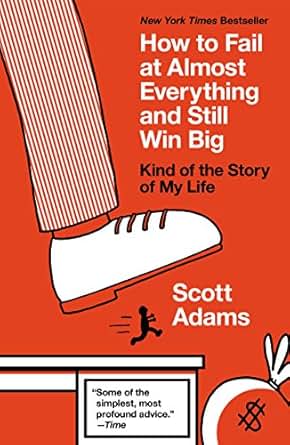
Does your brain hurt yet? Are you wondering if I’m asking you to contemplate dry water, a one-handed clap, or a decent Fantastic Four movie? Bear with me because there is a strategy that checks all these boxes. It’s a strategy I came up with thanks to two books, “Freakanomics” and “How To Fail At Everything And Still Win Big.”

https://i0.wp.com/freakonomics.com/wp-content/uploads/2016/01/Freakonomics-Paperback-298x450.jpg

I’ve read both these books over the past few years and I’m a big fan of their style. They dig deep into the hidden intricacies of how the world works and challenges readers to think about how doing things in new and novel ways. Seeing as how I have the kind of imagination that links robots with a dominatrix, they fit my unique mentality perfectly.

For the purposes of this discussion, I want to cite an article that the authors of “Freakanamics” wrote a number of years ago on terrorism. Basically, with a gross negligence to the high emotions that come with terrorism, the authors used their understanding of economics and human behavior to come up with the most cost-effective way to conduct terrorism. What they came up with was pretty damn terrifying.

My general view of the world is that simpler is better. My guess is that this thinking applies to terrorism as well. In that spirit, the best terrorist plan I have heard is one that my father thought up after the D.C. snipers created havoc in 2002. The basic idea is to arm 20 terrorists with rifles and cars, and arrange to have them begin shooting randomly at pre-set times all across the country. Big cities, little cities, suburbs, etc. Have them move around a lot. No one will know when and where the next attack will be. The chaos would be unbelievable, especially considering how few resources it would require of the terrorists. It would also be extremely hard to catch these guys. The damage wouldn’t be as extreme as detonating a nuclear bomb in New York City, of course; but it sure would be a lot easier to obtain a handful of guns than a nuclear weapon.

Think about that for a moment. If terrorists used a tactic like this, how much fear and dread would it inflict on our daily lives? If those terrorists were even marginally competent, then it would be even scarier. No matter what we did, we would dread that we would be a victim and it wouldn’t be entirely misguided.

This is where “How To Fail At Everything And Still Win Big” comes in. That book talks heavily about how stress and uncertainty affect people. It also teaches on how you can use that to your advantage. It makes painfully clear that the human brain is an irrational device with faulty wiring that hasn’t been updated in 200,000 years. If you’re going to influence it, then you might as well exploit those quirks.

https://images-na.ssl-images-amazon.com/images/I/51sqVXNWHhL._SY445_QL70_.jpg

With these two principles in mind, we can formulate a strategy for our prospective superhero. If utilized, then the criminals, villains, and future threats they face will either be defeated, deterred, or nullified.


  • The hero operates in complete secrecy, working at night or under a different identity. If the hero uses a uniform, then that uniform must not be identifiable or have some sort of stealth feature

This first part of the strategy is simple and not entirely new. Characters like Batman and the Teenage Mutant Ninja Turtles utilize some form of stealth. They operate in the shadows and generally avoid being seen.

Some heroes are even more well-equipped than others. Characters like Solid Snake from the “Metal Gear Solid” video games utilize a stealth suit that utilizes camouflage. Characters like Mystique can shape-shift into looking like someone else. This makes it easier for them to utilize this tactic, but someone as resourceful as Batman could use it just as well.

However, there’s room for improvement.


  • The hero must not have an identifiable name or make themselves known to the media in any way or coordinate with the media. They must, at all costs, avoid creating an identifiable persona

This is where Batman, Spider-Man, and pretty much any hero with a publicly-known name fails. The issue isn’t the name itself. The issue is that by having a name and having some kind of media exposure, they create a tangible, identifiable target.

From a practical perspective, that’s a big problem. That means enemies, be they a mugger or Lex Luthor, have someone they can target and identify. Entire teams of enemies, like the Legion of Doom or the Sinister Six, can rally around a common enemy. That makes enemies stronger and no strategy can succeed with that.


  • The hero must conduct detailed surveillance on villains and criminals, know their crimes and how they connect with others, and focus on those who are high in rank and influence

This is another tactic that most heroes already use to some extent. Batman is probably the most well-known. He uses his detective skills to determine who is a threat, how big a threat they are, and how to go after them. Other heroes, like the Avengers or the Justice League, generally have some type of monitoring system to determine pending threats.

This strategy requires the kind of extensive intelligence and understanding that someone like Batman could appreciate. When Batman determines that someone is a big threat, he’s almost always right. Any hero using this strategy must have similar certainty. Knowing the threat is the first step towards actually defeating it. That’s just a basic rule of war.


  • The hero must defeat their villains/enemies/criminals by making them disappear without a trace, either by killing them and destroying the body or by sending them into a domain from which they can never escape

This is where the strategy conflicts with nearly every major hero, especially the Batmans and Supermans of the comic book world. For the most part, the heroes avoid killing. It’s seen as an ideal. Taking a life is seen as morally abhorrent and for good reason.

However, that moral absolution ends when those same villains, such as the Jokers and Green Goblins of the world, live on to torment again. Despite defeating these villains multiple times, the heroes never do anything to end them. They try and try to lock them away in a prison cell, but they just keep escaping. From a moral standpoint, the suffering those villains inflict is on the heroes’ shoulders.

For most heroes, this means killing is unavoidable. It’s the only sure-fire way to ensure that a villain is never a threat again. For more resourceful/powerful heroes, there are other options like shrinking them to the size of atoms like Ant Man or sending them into the far-distant future, as Superman did with Doomsday.

However, it’s not enough to just kill a villain or enemy in this instance. Superheroes have killed before. Some, like the Punisher, kill a lot, but it still backfires in the long run. Why is that? Well, that’s where the next part strategy comes in.


  • The hero must make sure that nobody knows the villains they kill or disappear are dead, must never take credit for their disappearance, and must do everything possible to disconnect themselves from the villain

This is where even the brutal tactics of the Punisher fail. It’s also where the Freakanomic strategy comes in. The problem with the Punisher’s harsh methods isn’t that they’re harsh or that they result in a lot of killing. The problem is that they give the villains another rallying cry.

The Punisher’s enemies knows he kills. The Punisher usually likes to make clear that he’s the one who killed their associates. While this may shock and horrify some of them, it also has the effect of rallying them against a common enemy. Whether someone is a criminal or a hero, giving your enemies a common threat to rally behind is always a bad idea.

This is why the Punisher’s methods often fail in the long run. Criminals may fear him, but they know he’s responsible. The threat they’re up against has a face. There is a target for them to direct their fear and anger. This means that the criminals and enemies of the hero know who to fight against and in the long run, that never works out for the hero.


  • The hero must make sure that the villains, their allies, and their enemies don’t know why others are disappearing and must never make themselves known. Most importantly, they must make sure the villains are free to make wrong, misguided decisions

Here is where the methods of Scott Adams intersect with “Freakanomics.” In “How To Fail At Everything And Still Win Big,” Adams constantly talks about how people are at the mercy of their caveman brains. When they’re uncertain or anxious about something, they’re prone to making bad decisions for bad reasons. Make too many of those decisions and you tend to doom yourself to failure.

With this method, the hero must make sure that the villain is free and able to keep making those decisions that will ensure they defeat themselves. This is why it’s so important to make sure that the villain never knows that the hero is even fighting against them. They can’t have a mask, a costume, or a symbol to rally against. If it’s one big unknown, then their irrational caveman brains will do the rest.

The Norman Osborns and Lex Luthors of the world will start making up their own targets, irrationally lashing out at what they think is the source of the threat. The hero, for the most part, just needs to sit back and watch it unfold. Let them attack their rivals, make new enemies, and falter under the pressure. So long as they don’t know who or what they’re fighting against, their paranoia will eventually work against them.

In the long run, the villains will lose. They’ll end up dead. They’ll get caught. Most importantly, from the hero’s perspective, they’ll never know who to blame or why. That’s a scary thought, even for a hardened criminal. Nothing scares people more than the unknown.


  • The hero must never seek any kind of recognition, adulation, or compensation for their deeds

This is the final part of the strategy and, arguably, the most important. The problem with characters like Batman and Superman are that they want to be symbols. They want to be recognized for their efforts. Practically speaking, that’s a mistake.

By being symbols, they give their enemies a clear target and something to rally around. No matter how good the hero is at their job, they still make themselves a target. No matter how many villains they defeat, more will emerge and more will know who to fight.

Remove that symbolism. Remove the recognition. Remove the masks, costumes, and iconography of a hero and suddenly, the world of villains is very scary. They don’t know who to fight. They just know that by doing what they do, they could disappear without a trace and never be heard from again.

That’s more terrifying than any torture or punishment because their caveman brains will fill in the blanks with the worst they can conjure.


This caps off my official perfect superhero strategy. To date, no hero in a comic book uses these tactics and for good reason. If it were a comic book, it wouldn’t be very interesting because the outcome would be too final. The hero would be too competent and that’s just not very interesting.

Remove the need for sales, lunch boxes, and porn parodies and imagine how this strategy could work. Say there’s a superhero that wants to take down organized crime. Say that hero has the power of Superman or the Flash. Using their abilities, they quickly locate the top level bosses and associates of these criminals and just make them disappear.

There’s no body. There’s no trace. There’s no police report. There’s no trial. They just disappear. Not knowing who to fight, the criminals start attacking others they think are responsible. When they don’t know who, they just pick random people they think are enemies.

https://spiceaddictionsupport.org/wp-content/uploads/2015/05/paranoid-delusions.jpeg

This makes them more enemies, both from other criminals and law enforcement. No matter what they do, anyone who becomes a boss just disappears and they don’t know why. As a result, nobody even wants to be a crime boss anymore. The organizations just collapse on their own. Criminals still disappear, ensuring even low-level criminals have an incentive to stop. In the long run, the hero accomplishes what they set out to do.

It works with criminals. It works with those who are corrupt. It exploits the quirks of human nature, but also relies on the traits that make us function as a species. Again, it’s a tactic that I doubt any major heroes with movie rights could ever use. However, if they really do care about results, then this is the best way to go. Spider-Man should take notes.

6 Comments

Filed under Comic Books, Jack Fisher, Superheroes

Why Spider-Man May Be The Most Incompetent Hero Of All Time

https://jackfisherbooks.com/wp-content/uploads/2017/03/4f8a2-1420239869401.png

Whenever I talk about comic books and superheroes on this blog, I generally try not to single one particular character out unless I’m trying to make a point. I find that singling out one too many characters is like pointing out all the plot holes in a Michael Bay movie. It just becomes too frustrating and futile in the long run.

That means if I’m going to dedicate a post to a character, it better be for a damn good reason. They must be a uniquely compelling sex-positive female character or a potential prelude for future female villains. Well, after talking about why most superheroes are incompetent by design, I feel compelled to single out one particular character who is, within this context, the worst offender.

That character isn’t some obscure, little-known sidekick from a bygone era either. In this case, the worst case of inept superheroes who take their incompetence to the next level is one of the most recognizable superheroes of the past 50 years. He’s had multiple movies, multiple cartoons, and multiple actors play him with varying degrees of success and/or failure.

Image result for Tobey Maguire Dancing gif

Yes, I’m talking about Spider-Man, also known as Peter Parker. He is, by far, the most recognizable and iconic of Stan Lee’s many creations. He’s also, by a ridiculous margin, the most profitable superhero in terms of merchandise sales. He makes enough money for Marvel every year for them to eat caviar every day off diamond-encrusted gold plates.

So why, then, is he so incompetent as a hero? Why is Marvel’s most iconic character a case study in how not to operate as a superhero? Well, some of it has to do with the built-in incompetence I mentioned before. Spider-Man can’t be too competent, otherwise his overall narrative just wouldn’t be as compelling and his toys wouldn’t sell.

However, compared to the many other orphaned heroes who get their powers through accident or tragedy, Spider-Man sets himself apart by not just screwing himself over, but also by undermining the very principles of power and responsibility that he espouses. That doesn’t just make him an incompetent hero. It just makes him misguided, albeit not on purpose.

So what exactly makes Spider-Man inept by both the standards of a superhero and the standards that he sets on himself? Well, that has everything to do with his tactics and how he goes about them. If you’ve ever read a Spider-Man comic, seen a Spider-Man movie, or watched a Spider-Man cartoon, you know those tactics well. It goes like this:

  • Someone commits a crime
  • Peter Parker springs into action, putting on his costume and mask
  • Spider-Man fights the criminal, making jokes and quips along the way
  • The criminal whines and complains about how he’s ruining their master plan
  • The fight plays out and Spider-Man wins
  • Spider-Man ties the criminal up with his webs for the police
  • Spider-Man goes back to being Peter Parker and uses the pictures he takes of himself to make a living

This is Spider-Man’s primary method for dealing with crime and irresponsibility. It is the primary structure of every major battle he’s ever fought, be it the Green Goblin, Dr. Octopus, or Venom. While he wins/survives many of those battles, and even goes onto marry a supermodel for a while, it’s only when you step back and scrutinize the larger picture that you see how he loses his war against irresponsibility.

First and foremost, it’s important to establish that Spider-Man is one of those heroes who doesn’t kill. Like Superman and Batman, he goes out of his way to prevent the loss of life, be it innocent life or that of his enemy. That’s an understandable position to take. Killing is one of those unambiguous moral lines and many superheroes define their heroics by respecting that line.

For Spider-Man, however, this moral stand against killing is a major liability and the catalyst for his ineptitude. Granted, it’s not intentional, but the byproducts are unavoidable and those close to him have suffered as a result. Just ask Gwen Stacy.

Now I’m not saying Spider-Man is directly responsible for such suffering. Like all heroes, his intentions are good. He wants to help people. He wants to save lives. The problem is that, with his tactics, he’s doomed to hurt far more people than he helps.

This is because his tactics essentially guarantee that he will be a target, his loved ones will suffer, and his enemies will become stronger as a result. This isn’t just because Spider-Man refuses to kill them, although that is part of it. It’s because of the very persona that Spider-Man creates that his efforts are so inept.

Spider-Man, unlike Batman or Daredevil, doesn’t present a very intimidating presence. He’s many things, but intimidating isn’t one of them. His costume isn’t that intimidating. He doesn’t operate in the shadows or anything. He’s actually a well-known public figure, thanks largely to his own efforts and those of his boss, the ultimate blowhard that is J. Jonah Jameson.

This is a huge problem because it ensures that Spider-Man’s presence isn’t considered a major threat or danger to his enemies. He’s more of an annoyance or inconvenience. Whether they’re the Green Goblin or a simple mugger, they know Spider-Man isn’t going to kill them. He’s not even going to seriously wound them. He’ll just fight them, tie them up, and give them over to the police.

Even for those without access to overpaid lawyers, that’s not so much a threat as it is a frustration. On top of that, Spider-Man doesn’t really have meaningful conversations that get people to rethink their choices. He’s just cracks jokes, makes lewd comments, and generally carries himself with the maturity of a 13-year-old. Granted, this is part of his charm as a character, but it also ensures his tactics are doomed to fail.

It’s one thing to anger and annoy an enemy in the heat of battle. That can work to a hero’s advantage. However, the problems with Spider-Man manifest after the battle is over.

By annoying and angering his enemies, all he does is give them more incentive to fight him and hurt those he cares about. On top of that, he wears a flashy, distinct costume that’s easily recognizable in both night and broad daylight. It’s also well-known, thanks to his own efforts at taking pictures of himself and selling them to a newspaper.

Even before the era of smart phones and Twitter hacks, that’s putting a pretty big target on his back. He makes himself an identifiable figure on which his enemies can focus on. Even if they don’t know his identity, they know the source of their frustration. Since Spider-Man doesn’t scare them, they have every possible reason to fight him.

To make matters even worse, he gives his enemies a common threat to rally against. Anyone who knows anything about social psychology, or has just been to a Taylor Swift concert, knows that nothing unites people better than a common cause. He doesn’t just make his enemies stronger as individuals. He makes them stronger as a team. How is that responsible?

In essence, Spider-Man doesn’t intimidate his villains, doesn’t do anything to deter their irresponsible decisions, and gives them a common enemy to really around. If being responsible is deterring the kind of criminals that killed his Uncle Ben, then he’s the most irresponsible hero of all time.

I’m not saying Spider-Man has to start killing like the Punisher. I’m saying that his own tactics undermine his goals. Now you could make a similar criticism to characters like Batman or Daredevil because they don’t kill and their enemies constantly escape to torment them. However, there is one key difference that sets them apart.

Batman and Daredevil, despite their gaudy costumes, are intimidating. In fact, intimidation is a key tactic of theirs. Batman said it himself in the early scenes of “Batman Begins.” He seeks to strike fear in those that prey on the fearful. In this sense, he does succeed.

You could make the argument that because of Batman’s presence, there people in Gotham City who choose not to enter a life of crime. The prospect of dealing with Batman is scary. Fear is a powerful deterrent. Only the truly deranged criminals dare to enter this life and take on Batman. In that context, it makes perfect sense that the kind of villains he faces are the exceedingly deranged kind.

Spider-Man can’t make that claim. He can’t claim that he scares or intimidates people into not choosing a life of crime. If anything, his tactics may annoy ordinary people who wouldn’t otherwise consider such a life, but try it anyways just to shut him up or make a name for themselves.

Every hero is different. Every hero has their own set of tactics, goals, and ideals. However, no hero is as inept, incompetent, or irresponsible as Spider-Man. So long as he keeps doing what he’s doing, and Marvel has a huge financial interest in never allowing it to change, he’ll continue emboldening his enemies while guaranteeing that everyone around him suffers.

It’s both an irony and a tragedy. In his efforts to be responsible with his powers, Spider-Man conducts himself in the most irresponsible way possible. Even if it’s indirect and unintentional, the results are the same. He can still call himself a hero because of his principles. He just can’t call himself a very competent hero.

11 Comments

Filed under Comic Books, Jack Fisher, Superheroes

Why Most Superheroes Are Woefully Incompetent (By Design)

Image result for incompetent superhero

I’ve been meaning to do a post like this for a while now. It’s a topic I’ve actually tried to discuss on comic book message boards. Unfortunately, most comic book message boards too readily devolve into debates about who can lift Thor’s hammer, who Wolverine is sleeping with, and whether or not She-Hulk shaves her pubic hair. Yes, it gets that bad.

Ignoring, for a moment, the immaturity of certain crowds on message boards, there are certain issues pertaining to comic books and superheroes that are too easy to overlook. I say this as someone who is plenty eager to overlook the flaws in a story if it means seeing Starfire, Wonder Woman, Emma Frost, and Storm of the X-men kick ass and look damn sexy while doing it.

One of those flaws, ironically enough, deals with the actual pragmatics that come with being a superhero. Granted, those practical details are usually an afterthought in most superhero comics. Why would anyone give much thought to that when they could instead focus on giant monsters, killer robots, and the Hulk’s penis?

Some of the problem has entirely to do with fans like me. I freely admit that, as a fan, I’m part of the problem. Superheroes, whether they’re in comic books, cartoons, or blockbuster movies, aren’t created with the intent of being really good at their jobs. They’re created as a product to sell. That means they have to be compelling, engaging, and part of a meaningful story.

That’s why we don’t care if Spider-Man fails miserably to stop a criminal or if Superman fails miserably to keep Lex Luthor locked in prison. So long as it’s part of a story, we keep buying in. We increase our emotional and financial investment. It keeps the narrative going and, by default, the money for the company producing the merchandise.

That’s also why there will never be a superhero who is too good at fighting crime, defeating enemies, and solving problems. After a while, they do too much good and the world they live in just doesn’t have enough flaws to be interesting anymore. Who wants to read about Spider-Man anymore after he’s effectively solved New York’s crime problem and spends his days taking photos of hobos pissing on trees in Central Park?

On some levels, comic book companies and movie studios of the world knows this. They’ll never admit it outright, but in the back of their mind, they have to know that they can never let a hero be too competent. Even Superman has to slip up every now and then. Make no mistake though. He definitely has throughout his 70-plus year history, sometimes in laughably disturbing ways.

There’s a very simple reason for this and unfortunately, it’s neither heroic nor sexy. I’ll give you a hint. It’s valuable, it’s green, and it fits perfectly in a stripper’s G-string. If you need more than one guess, you should probably see a doctor.

Yes, I’m talking about money. If anything, it’s kind of ironic, given the values that many superheroes hold and how broke many superheroes often are. They’re created to embody our greatest values, but they’re sole purpose, from an image standpoint, is to make money for the company that owns their rights.

Fortunately or unfortunately, depending on how you look at it, superheroes do succeed in that respect. According to The Hollywood Reporter, Spider-Man alone makes over a billion dollars a year in merchandising. That’s not a typo. I said billion. Batman is a very distant second with a little less than half-a-billion.

Superheroes are big business these days, both in terms of making money and spending it. According to rumors by Bleeding Cool, the next two Avengers movies could collectively cost a billion dollars. Again, that’s not a typo.

It’s because superheroes make so much money and generate so much money for the economy that they have to stay incompetent to some extent. Just look at the superheroes of old, from Greek mythology to the bible to the medieval legends of King Arthur. They all have one defining trait. They all had definitive endings.

Whether tragic or triumphant, the heroes of old were part of a finite narrative that had an ending. King Arthur dies. Hector dies. Jesus Christ triumphs over the Satan. If these were comics, they would never survive in the modern market because they’re too complete. Modern superhero stories can never truly end.

Even iconic comics like Watchmen, which was supposed to have a definitive end, but DC Comics nixed that by incorporating it into their mainline superhero comics. Granted, this thoroughly pissed off Watchmen’s creator, Alan Moore, but he’s been pissed off for any number of reasons for the past 30 years so that’s not saying much.

Instead of ending, modern superhero comics are prone to a tricky phenomenon that most comic book fans know all too well. It’s called retroactive continuity, also known as a “retcon.” This is basically the literary equivalent of a mulligan.

Has Spider-Man become too convoluted, mature, and dark? A retcon will make him a lovable loser again. See “Brand New Day.”

Has Batman become too campy and goofy? A retcon will make him dark and gritty again. See “Batman Begins.”

Have the Fantastic Four become too flat and boring? A retcon will make them a team of jaded young millennials. See 2015’s “Fantastic Four,” although pretty much every Fantastic Four fan would strongly advise against it.

Thanks to retcons, superheroes never age. They can always be reinvented, re-tooled, and adapted for a new audience. Granted, that won’t stop some audiences from whining about it, but it effectively ensures that the narrative never ends and the particulars of the story at every point in the timeline are subject to change.

This can be a good thing sometimes, such as when a retcon gives us a great character like the Winter Soldier in the Captain America comics. However, it can also splatter painfully disturbing details on an established narrative that didn’t need it. Just talk to Spider-Man fans about a story called “Sins Past” and watch them become visibly ill.

In the end, however, it often means that characters never really progress beyond a certain point and the problems they hope to solve never go away. The Joker always escapes. Lex Luthor always returns. Spider-Man’s girlfriend gets killed, injured, or impregnated by his worst enemy. It’s as frustrating as it sounds.

Most superheroes will gloss over this detail by taking a stand against killing. That’s perfectly understandable on some levels. The morality of killing someone is one of those few moral issues that don’t generate too much debate, unless it involves Nazis in video games. However, in some respects, the anti-killing is both an excuse and a sales tactic.

Batman is, by far, the best example in this respect. Despite being the alpha and omega of an ordinary man achieving extraordinary feats without superpowers, Batman still cannot and will not stomach killing any of his villains. No matter how many times they escape, kill, or torment others, he refuses to kill them.

Ignoring for a moment the debate on whether he’s responsible for the deaths those villains subsequently inflict, there’s one other issue that makes Batman’s anti-killing stance more a marketing gimmick than a morality stand. Batman’s villains are iconic characters in their own right.

Just look at the list of famous Batman villains. Then, remember how many of them are popular Halloween costumes. Also keep in mind one of them earned Heath Ledger an Oscar and another got Margot Robbie to put on hot pants. Creating characters this iconic isn’t easy. That’s why comic companies and movie studios are so reluctant to kill them.

This is the dilemma that all superheroes face in modern comics and movies. If Batman kills the Joker, then there are no more iconic battles between the two. If Superman kills Lex Luthor, then there’s no more epic struggle. That means there are fewer comics to sell, toys to make, and slutty costumes to create. That situation, from both a fan and business standpoint, is untenable.

As a result, every modern superhero is, by design, incompetent to some degree. On top of that, the villains are either insanely lucky or ridiculously resilient. That’s why we’ll never see a version of Batman, Superman, or Spider-Man who actually succeed at reducing crime. That’s why we’ll never see the X-men or the Justice League actually create a peaceful world.

It’s not that it’s impossible. It’s just that it ends the story and the ability for big companies to make a boatload of money off them. That ensures every modern superhero is a walking paradox. They can never truly achieve their goal, but they can never stop trying either. It’s not because it’s the right, moral thing to do either. It’s because movie studios and publishing companies still need to make money.

That’s not very heroic, to say the least, but that’s the world we live in. Until money and movie rights stop driving superhero narratives, we’ll never see a truly competent superhero.

5 Comments

Filed under Comic Books, Jack Fisher, Superheroes

Appealing To The Masses: The Simpson Filter

ct-homer-simpson-live-pizza-debate-met-0517-20160516

I was going to make this part of my last post where I gave some tips and advice to the people behind the Women’s March. I am serious about being on their side on most major issues. I want them to succeed in protesting the current regime in Washington DC. I think it’s good for freedom and democracy when there’s a healthy opposition to established power structures.

At the moment, though, I don’t think their message is getting through. I also think their approach needs refinement. The tips I offered in my last post were fairly basic. This tip requires a bit more explanation because it applies a mix of caveman logic, sales techniques, and good old fashioned cunning. It’s basically the same technique people use to sell time shares and get laid. If it works for that, then it works for politics as well.

I’ve even given this bit of advice a name, one that I hope is easy to remember. I call it “The Simpson Filter.” It’s not quite as original as “Caveman Logic” and not just because it deals with something that is heavily trademarked and protected by an army of Fox’s lawyers. I promise there is a legitimate reason behind this label and I hope to make that reason abundantly clear by the end of this post.

So what exactly is the Simpson Filter? Well first off, in order to understand it, you need to know who the Simpsons are. If you’ve been near a TV it all in the past 30 years, that should be the easy part.

Most everybody on each side of the political spectrum knows who the Simpsons are. For the purposes of this tip, I’m going to focus on what they represent. By and large, the Simpsons are not the Waltons. They’re not happy, wholesome, and functional. They’re not the Bundy’s either. There is a sense love, sincerity, and family. On the spectrum of cartoon families, the Simpsons are somewhere in the middle.

Why is this important? Well, despite being fictional and full of exaggerated dysfunction, the Simpsons perfectly embody the sentiment of the average American. In fact, the show itself even acknowledged this in Season 2, Episode 16, “Oh Brother, Where Art Thou?” where Homer’s brother, Herb, wants him to design a car for the average American.

Yes, Homer Simpson fails miserably in that effort, but that only further highlights what makes him the perfect archetype for the average guy. He’s not an expert in a given field. He’s not smart enough to understand the complexities of big issues, be they social, political, or economic. Unless it involves beer and donuts, it’s not going to be a priority for Homer Simpson.

The same applies to Marge Simpson, the more thoughtful and less obnoxious part of the family. Marge also embodies an important component of the average American in that she’s focused primarily on keeping her family intact and semi-functional.

Given the various antics of her family, this is a herculean task, even on a good day. Her uncanny ability to manage her family often shows when she’s not around. This is best shown in Season 3, Episode 14, “Homer Alone,” in which Marge decides to go on a vacation and her family struggles mightily in her absence.

In that sense, Marge embodies the side of American society who struggle daily to keep their family intact and functioning for another day. It’s not that big issues involving the economy, politics, or social issues don’t interest her. It’s that she doesn’t have the time or resources to prioritize them. She can only focus on her more immediate concerns, namely preventing Homer from freaking out about the boogeyman.

Given this context, we can create the particulars of the “Simpson Filter.” If we’re going to use this fictional, animated, overtly dysfunctional family as a model, then any message we craft has to resonate with them. If it’s too much for Homer and Marge Simpson to handle, then it’s too much for most Americans.

For the Women’s March, this is vital. They don’t need to appeal to affluent, college-educated people living in cities and earning more than the median wage. They need to appeal to the vast swaths of less-affluent, less-educated people that occupy the non-urban parts of the country. In short, they need to cater their message to many Springfields of this Country and the Simpson families who live in them.

To appeal to them, it’s not enough to just shout anger and outrage at major protests. It’s not enough to hold large public lectures to inform these people either. Homer Simpson doesn’t do lectures and Marge is too worried about her family to even show up at one.

For any message to work on Homer or Marge Simpson, it can’t just have hard facts about the harsh realities of the world. It’s not enough to list, detail by detail, why the principles and policies they favor are worth supporting.

Homer Simpson doesn’t care for details. Marge can only care so much, given her many other concerns. So for every message about every issue, the contents need to go through a filter to make sure they’ll resonate. That filter includes the following provisions:

  • Get the attention of the Homer and Marge Simpsons of the world, but do it in a way that doesn’t shame or denigrate them for not supporting the message in the first place

  • Don’t assume that the Homer and Marge Simpsons of the world are racist, ignorant, or misogynistic and presume, by default, that they are decent people who just want to get by

  • Keep the message incredibly simple in that if it can’t fit into a commercial between a football game, then Homer and Marge aren’t going to care enough about it

  • Craft the message in a way that appeals to the feelings of Homer and Marge as appealing to emotions is the primary method of generating interest

  • Keep the facts secondary, but never let them be tertiary because in the long run, substance will help strengthen the emotions

  • Make sure the simple, emotional message inspires hope because Homer and Marge are more likely to support something that makes them feel hopeful

  • Link the more complex issues in your message with the simpler issues that affect Homer and Marge directly, ensuring they can associate these issues with their own lives

  • Avoid using language and rhetoric that Homer and Marge don’t understand or makes them feel alienated from those you want them to support

  • The message shouldn’t require that Homer and Marge change who they are, but it should make them want to be better

There are probably many more components to this filter that I haven’t articulated yet. Like Caveman Logic, I hope to refine it in future posts. In following the events of the Women’s March and the issues that will likely be more prominent over the next four years, the Simpson Filter will be a good way of revealing how successful or how flawed a message is.

At the end of the day, how right or valid your message is can only ever be secondary. If it fails to resonate or convince anyone, then it has as much impact as a history lecture by Ben Stein.

It’s an unfortunate, but unavoidable aspect of the human species. It’s not enough to be right or moral. You still have to communicate that message in a way that gets flawed, uninformed, and sometimes misguided humans on your side. If you can’t get Homer and Marge Simpson on your side, then your message has no chance.

9 Comments

Filed under Jack Fisher's Insights

Thought Experiment On Democracy (The Non-Boring Kind)

I imagine that after last week, everybody is sick of politics, elections, and democracy in general. Believe me, I feel your pain. I almost long for the days when the news dedicated most of its time to what was going on with Kim Kardashian’s ass. Now that the 2016 Election is over, we can all stop fighting the urge to throw a brick at our TVs.

Now don’t worry. This post is not going to be about politics, at least not in the Anderson Cooper type tradition. I remain committed to keeping this blog relatively free of overly political bullshit that would otherwise kill the sexy mood I’m trying to create with my novels. While there are some political undertones in this topic, it’s not the kind that make most people want to beat each other to death with a sack of hammers.

This post is about something a bit more thought-provoking, at least that’s my hope. It’s another thought experiment. I’ve posed them before on this blog on other topics like disease and attitudes towards jealousy. I think it’s helpful to get people thinking about a difficult issue and this is as difficult as it comes these days.

More than anything else, the 2016 election in America highlights the flaws in democracy. It is prone to the irrational, irresponsible whims of our caveman brains. Those brains are wired in a way where we don’t give enough of a damn about what is actually true and instead go with how something makes us feel.

This is why demagogues, hypocrites, liars, cheaters, and reality TV stars can run for office and actually win. These people are smart enough to understand that the mass public doesn’t care if you’re a liar or a cheat. If you tell them what they want to hear and make them feel good, they’ll vote for you.

This is exactly why even the great Winston Churchill was critical of democracy. He said it himself.

Democracy, as beautiful a thing it is, has room for improvement. It’s definitely an improvement on the Game of Thrones style governments of the past where kings could routinely spit on peasants and shoot them for sport if he wanted. There are still tyrants in this world, but their governments tend to fail miserably in the long run. Just look at North Korea.

So rather than just throw democracy out entirely, why not give it some added polish? Why not look for ways to make it better? The Founding Fathers of America did that. People often forget that the first form of government they chose wasn’t the Constitution. It was the Articles of Confederation, which was so flawed that it didn’t even last a decade.

With that in mind, let’s channel the wisdom of the Founding Fathers and look at our current forms of government, not just in America, but all around the world. How do we improve it? How do we make it better, more efficient, and more just?

It’s a hard (if not impossible) question to answer. Many have tried though. Listverse even compiled a list of bizarre, hypothetical governments that have never been tried, but do seek to make improvements over the current system.

Some aren’t all that radical. The concept of the Perfect Commonwealth or Jeffersonian Democracy all have concepts that are fairly well-rooted in the real world, if not historically, then most certainly practically. Then, you get much weirder concepts like Liquid Democracy or Technocracy, which require more imagination than bureaucracy.

These are all interesting/strange/downright crazy ideas. So for the sake of this argument, let’s keep them all in mind as we conjure a better form of democracy. Let your imagination go a little crazy and conjure a government that might actually work in the real world.

Having done this thought experiment already in my own slightly crazy brain, I have an idea I’d like to share. It’s not something James Madison would probably approve of, but here it is. I even have a name for it.

Negative Democracy

Now don’t let the name scare you. I’m not talking about a democracy that will allow the King Joffrey’s of the world to reign supreme. I’m talking about a form of democracy that takes the current flaws, turns them upside down, and keeps them there so that the current corruption doesn’t get a chance to return.

So how does it work? Well, it goes like this:

  • There are three tiers: local, state, and federal
  • The local tier elects its leaders by popular vote
  • The state tier elects its governor by popular vote, but legislators are appointed by the local-elected officials
  • The federal tier elects its congressperson by popular vote, but the president/prime mister is appointed by a 2/3 vote by state governors
  • Every year on the first Saturday of November, the people can vote to remove any appointed and/or elected representative at any level if the vote is greater than 2/3 of the population

I know it’s basic, crude, and simplistic. I’m no Thomas Jefferson. That much, I admit. However, I make these points to highlight one key component of Negative Democracy that makes it unique.

It doesn’t focus as much on electing officials to public office as it does on removing those who don’t do a good job. Here in America, we do way too good a job at electing incompetent officials. The Constitution says a lot about how to elect these officials. It says far less about removing them.

That’s the key, Negative Democracy. You remove the incompetent, corrupt elements of government in hopes of allowing better, more qualified officials to fill the void. At some point, somebody who isn’t a total screw-up should come to power. Even politics is subject to the law of averages.

The second key is that democratic elections be held on the local and state level for the most part. Why is this important? That’s because people tend to be more in tuned with the officials in their neighborhood. They’re more likely to interact with the mayor or city council than they are a senator or a President.

As such, those local officials are closer to their constituents. They’re more likely to know them personally and when you know someone personally, you’re less likely to screw them over. It’s one thing for total strangers to hate you. For your own community to turn against you is pretty powerful. Only a select few have the ego and cruelty to try a terrible stunt like that.

Under this system, most of the federal officials are appointed and don’t have to run an election campaign. They can still be voted out of office every year if their constituents don’t like what they’re doing, but the key is they don’t run expensive, dishonest campaigns in the first place. They get appointed, they go to the capital, and they do their job.

If you think that might be prone to corruption, I don’t doubt there’s a chance. There’s a chance for corruption in every form of human-centered governance. It’s just a matter of managing the incentives to cheat as much as possible.

There’s a reason why the Judicial Branch of government in America gets less press and is often seen as the most effective branch. It gets to exercise Judicial Independence. Judges in this branch don’t have to run for office and they don’t need to be re-elected. They can, in principle, lose their jobs if they do something egregious, but those instances are rare.

So much time, energy, and money is spent on just electing officials. In a large, diverse country like the United States, that’s wholly impractical. For every country and society, the emphasis of all government should be to maintain rule of law, protect people from harm, and manage public services. It’s a difficult, if not impossible task to accomplish, but it’s too important not to be improved upon.

With this in mind, I challenge others to conduct this same thought experiment. What sort of new government system would you come up with? What would you call it? How would it work? Share it! During these trouble timed, these are definitely ideas worth exploring.

2 Comments

Filed under Jack Fisher's Insights

Solitary Confinement: The Ultimate Torture?

To those of you out there who think you’re having a bad day, this may lift your spirits in all the wrong ways. To those of you who consider themselves huggers who are fond of intimate contact, as I most certainly do, this will be an exploration of your worst nightmare.

I’ve argued before that our current culture makes it painfully difficult for human beings to be intimate with one another. We have technology that puts screens between us, cultural taboos that prevent us from seeking each other out, and religious dogma that will make up elaborate myths to keep people from seeking satisfying intimacy. As bad as it is, it could still be much worse.

Enter the practice of solitary confinement. For those who consider themselves huggers, this is right up there with waterboarding and power tools in terms of torture. It’s one thing to inflict pain on someone. As anyone who has experimented with BDSM knows, the right kinds of pain can actually be enjoyable. With solitary confinement, however, that potential isn’t there. If anything, it does everything possible to nullify that potential.

According to the ever-reliable sources on Wikipedia, solitary confinement is defined as:

A form of imprisonment in which an inmate is isolated from any human contact.

On the surface, it doesn’t sound nearly as bad as being shanked to death or having fingernails ripped out. However, as is often the case with the worst forms of torture, it’s not the wound that kills you. It’s the festering scar that gets infected and kills you slowly that makes it really nasty.

Solitary confinement is the absolute antithesis of what it means to be a social creature. This is very important to consider because human beings are very social animals. Our brains are hard-wired to seek contact and coordination with others. From the time we’re infants to the time we’re senile old geezers, we naturally seek to be around one another.

First, it’s our parents and siblings. Then, it’s our friend and fellow neighbors. Then, it’s our lovers, our children, and our extended family. At every stage in our biological and social development, intimate and casual contact with other human beings is vital.

Using my favorite tool, caveman logic, this makes perfect sense. Unless we’re Arnold Schwarzenegger on meth, we have no chance of taking down a sabretooth tiger. If we work with other humans, creating tools and forming strategies, then we can do more than just hunt down animals. We can actually hunt them so well that we drive them to extinction.

Being effective social creatures is pretty damn important from an evolutionary standpoint. That’s why simple gestures like hugs have so many physical and mental benefits. It’s also way, according to Health.com, people who socialize more tend to live longer. It’s pretty much beyond dispute. Social interaction is good for us on some basic level.

The practice of solitary confinement kicks that concept in the balls and lights it on fire. It takes people, including those who may not be mentally healthy to begin with, and sticks them in a situation that drives a knife into the core of their psyche. It’s like trying to put out a fire with gasoline. It’s death by a billion paper-cuts. It’s bad is what I’m saying.

Now in the interest of balance, let me acknowledge that there is an element of cold pragmatism to solitary confinement. There are indeed individuals in this world whose brain function is so damaged, so dangerous, and so deranged that putting them around other people is a problem. As bad as solitary confinement is, there are times when it’s the best of the worst possible options.

The primary use of solitary confinement is to isolate these deranged individuals from others. In the past, it was even seen as a more human alternative to flogging and hanging. That may have been true for a certain period in history, but we’re not in that time period anymore and the non-Taliban crowd of the world doesn’t wish to go back.

As a society, I feel we should treat progress the same way I treat my aspiring writing career. We should always strive for improvement. Let’s not let ourselves stagnate or get complacent. There are just some things that are worth improving and this is one of them. We stopped hanging people. We stopped flogging them. We stopped using duels to settle legal disputes. Why can’t we do the same with solitary confinement?

There are organizations out there who classify solitary confinement as torture. The ACLU is one of them and their position on the practice is pretty clear.

With no evidence-based research of its effectiveness, solitary confinement is a form of imprisonment that has been overused and abused. According to the experts, the massive expansion of solitary confinement in America is a failed experiment of the late 20th century.

In recent years, a concerted effort has emerged to combat this practice and seek alternatives. According to the National Religious Campaign Against Torture, multiple states have passed legislation to curtail or regulate the practice. More legislation may follow and as a self-professed hugger, it can’t come soon enough.

Now there will be opponents who argue that not everyone suffers the same horrific effects of solitary confinement. There is even some research to back this claim. Even if this research is valid, this doesn’t justify the practice. Just because some people can handle being tortured and go onto live normal lives doesn’t mean it should be permitted. Not everyone is James Bond or Jack Bauer.

Whatever future research may or may not conclude, we don’t need to wait for the test results on certain aspects of human nature. We’re social animals. We hug, we interact, and we make love. It’s part of what makes us the most successful species on this planet. Solitary confinement is a kick in the balls to that success and I say our balls need not be subjected to such punishment.

7 Comments

Filed under Jack Fisher's Insights