Tag Archives: injustice

The Future Of Villains And Villainy

marvel-avengers-infinity-war-thanos-sixth-scale-figure-hot-toys-feature-903429-1

What is happening to villains these days? That’s an entirely reasonable question to ask. Over the past decade, we’ve seen a remarkable shift in how we approach villainy in movies, TV, comic books, and video games. I’m not just talking about the superhero media, either. However, that happens to be the most visible manifestation of this change.

As a long-time fan of both superheroes and quality villains, I welcome this change. At the same time, I’m curious about where it’s leading and what it means for the future. Villains are as old as storytelling itself. From the Bible to “Star Wars,” these stories work best when there’s villainy to oppose the unfolding narrative. Villains have always evolved alongside the heroes that oppose them, but that evolution seems to be accelerating.
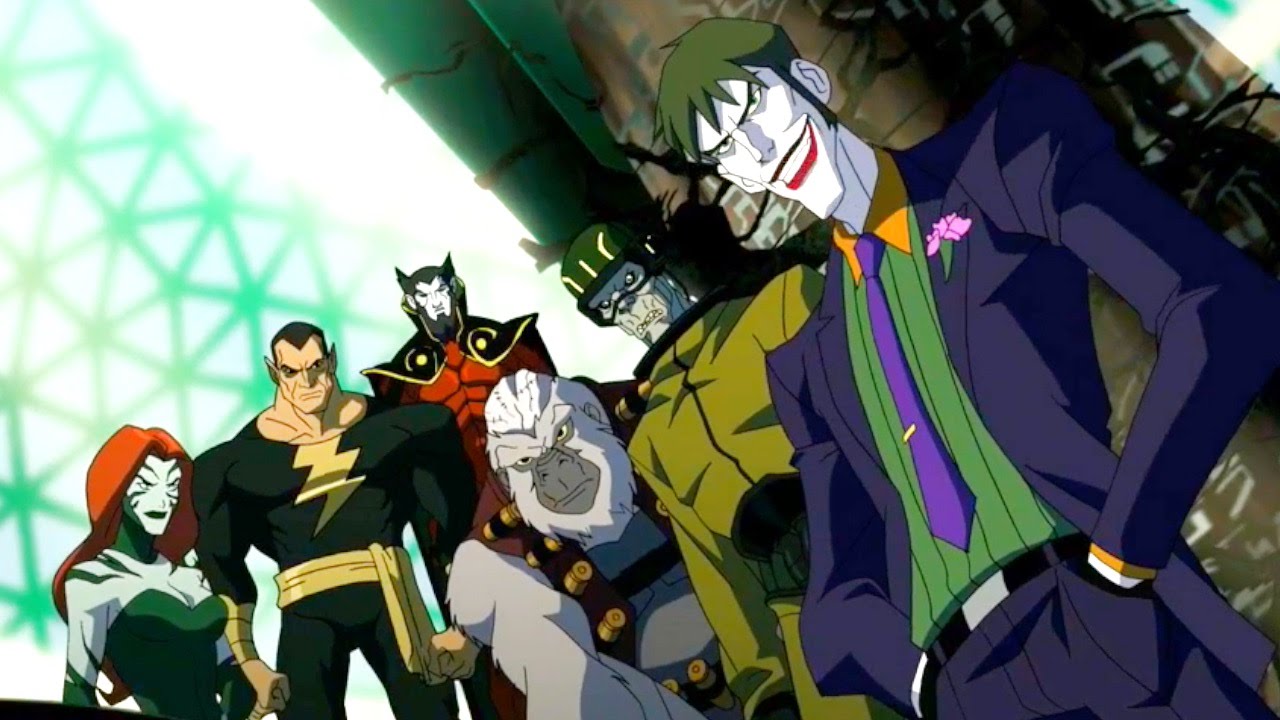
I’ve discussed the unique journey that villains undergo and how they set themselves apart from heroes. Traditionally, a villain’s primary purpose was to both oppose the hero and highlight how heroic they are. The sheer malice of characters like Lex Luthor help contrast the pure selflessness of characters like Superman. It’s easier to appreciate those heroes knowing they have to deal such malicious opponents.

Then, something remarkable happened. Audiences began demanding more of their villains. It wasn’t enough to just have a villain oppose a hero. People began wanting villains who were understandable and even relatable to some extent. Ironically, they wanted a villain they could root for.

That helped lead to characters like Walter White from “Breaking Bad.” His impact was so profound that I even called his influence the Walter White effect. However, I think there were others who paved the way for Walter White. If I had to pick one villain that helped kick-start this trend in villainy, it would be Heath Ledger’s Joker from “The Dark Knight.”

From this portrayal of villainy, the emerging state of villains emerged and it may very well set the tone for the future. On the surface, this version of the Joker wasn’t too different from the one who had existed in the comics for years. He’s dangerous, destructive, murderous, and callous, like many villains. Unlike most, though, he does what he does with a laugh and a smile.

What made this version of the Joker so memorable was the principles behind his madness. To him, society is corrupt and people aren’t inherently good. As such, he seeks to point out how laughable it is when others try to save it. Batman’s crusade against crime is the biggest joke of all, which helps drive their rivalry.

It’s a philosophy that few other than terrorists and extreme nihilists would buy into, but it’s one that’s understandable to some extent. We don’t have to agree with them or their methods. We just have to see their twisted logic. They can’t just be standard James Bond villains whose motives are indistinguishable from fascists, communists, or terrorists. There needs to be something more personal at work.

We saw plenty of that in 2018’s biggest movies. From “Black Panther” to “ Avengers: Infinity War” to “Incredibles 2,” the villains all had something personal at stake. Erik Killmonger saw his villainous actions as heroic. He wasn’t out to just take over Wakanda. He had a vision in mind that felt justified to some extent, especially to those familiar with real-world historical injustices.

Thanos raised the bar even more in “Avengers: Infinity War.” He never tries to come off as a hero, but he never sees his actions as villainous, either. In fact, when heroes like Dr. Strange call him out, he frames his desire to cull half the population in the universe as mercy. For him, it’s simple math. Half a population is better than no population at all.

These motivations, as devious they might be on paper, have some semblance of merit to it. Both Thanos and Killmonger think they’re doing the right thing. That significantly impacts how the heroes in their stories go about thwarting them, although I would argue that one story was more complete while the other remains unresolved.

In “Black Panther,” T’Challa doesn’t just stop at defeating Killmonger. He actually sees some of his enemy’s points and takes steps to address them. He doesn’t revert things back to the way they were. Wakanda doesn’t return to the same isolated state it had been at the start of the movie. Instead, he seeks to find a middle ground. That, I would argue, is the new template for how heroes defeat this kind of villain.

The resolution in “Avengers: Infinity War,” however, is not as clear. That’s largely due to the story not being complete. There is a sequel planned, but at no point in the three-hour spectacle did the Avengers attempt to prove Thanos wrong. They only ever tried to stop him. That oversight has not gone unnoticed by audiences.

This, in many ways, sums up the new dynamic between heroes in villains. It’s no longer enough for heroes to just defeat their adversaries. It’s not even enough for villains to be exceptionally devious. There have to be larger principles at work. It can’t just be reduced to general greed, ego, or bullying.

Thanos seeks to kill have the population because he believes that it’ll prevent the complete extinction of all life.

Erik Killmonger seeks to empower oppressed minorities to right past injustices.

Dr. Doom seeks to conquer the world because a world under his rule is the only one free of suffering and want. That’s actually canon in the comics.

It’s makes crafting compelling villains more difficult, but at the same time, it opens the door to more complexity. On top of that, it demands that audiences think beyond the good versus evil dynamic that has defined so many stories, going back to the days of fairy tales. It’s a challenge that some are certain to fail. Some already have, sadly.

It also sets the tone for future forms of villainy. How that villainy manifests is impossible to predict, but given the current trends, I think there’s room to speculate. At the heart of this emerging villainy is the idea that the current system just isn’t working. It’s so bad that the only viable option is to destroy and rebuild it. There’s no room, whatsoever, for reform.

This is where the heroes will have to evolve, as well. They can’t just play “Super Friends” and save the day. They have to actually make meaningful changes to move society forward. King T’Challa did that at the end of “Black Panther.” Other heroes need to be as willing. Otherwise, they won’t be able to call themselves heroes. They’re just defenders of a status quo may not be working as well as they think.

It’s an ideological struggle that parallels many real-world struggles. People today have less and less faith in established institutions. As a result, more people are falling sway to populist rhetoric that promises to break down the current system entirely. By and large, people today aren’t content with just preserving things as they are. They seek more meaningful change.

That presents a serious problem for heroes and a golden opportunity for villains. Historically, heroes haven’t been able to effect change beyond a certain point. Some of that is for logistical reasons. A hero can never create a functioning utopia without ending the story completely, which is something major media companies cannot have. There’s too much money to be made.

Logistics aside, the future of villainy will have plenty of raw materials to work with and plenty of societal angst to draw upon. Heroes who save the day, but do little else won’t be able to call themselves heroes in the world currently unfolding. Villains who have a real vision with understandable motivations will find themselves with more supporters than before.

It’s no longer taboo to root for the villain, especially when the heroes don’t confront the flaws in their rhetoric. In what seems prophetic now, “Avengers: Age of Ultron” may have put it best when Ultron stated:

“I’m sorry, I know you mean well. You just didn’t think it through. You want to protect the world, but you don’t want it to change.”

That’ll be the key to the future of villainy, change in a world that resists too much of it happening at once. It’ll make for some complicated villains, but it will definitely make the struggle of heroes even harder. However it plays out, I believe it’ll be worth watching.

3 Comments

Filed under Comic Books, Jack Fisher, Superheroes, human nature, movies, philosophy, psychology, superhero comics, superhero movies, television, X-men

Reflecting On The Greatest Advice Rick Sanchez Ever Gave Us

rick-and-morty-season-3-creators-tease-a-return-to-previous-cliffhangers-and-characters-663486

Greetings, and wubba lubba dub dub! By now, you should know that means this will be another article about “Rick and Morty,” one of the greatest animated shows of this century or any other century, for that matter. I know that sometimes means the topics involved are depressing or downright fatalistic. I can’t promise this one will balance that out to any meaningful, but I still hope that this piece is more useful than most.

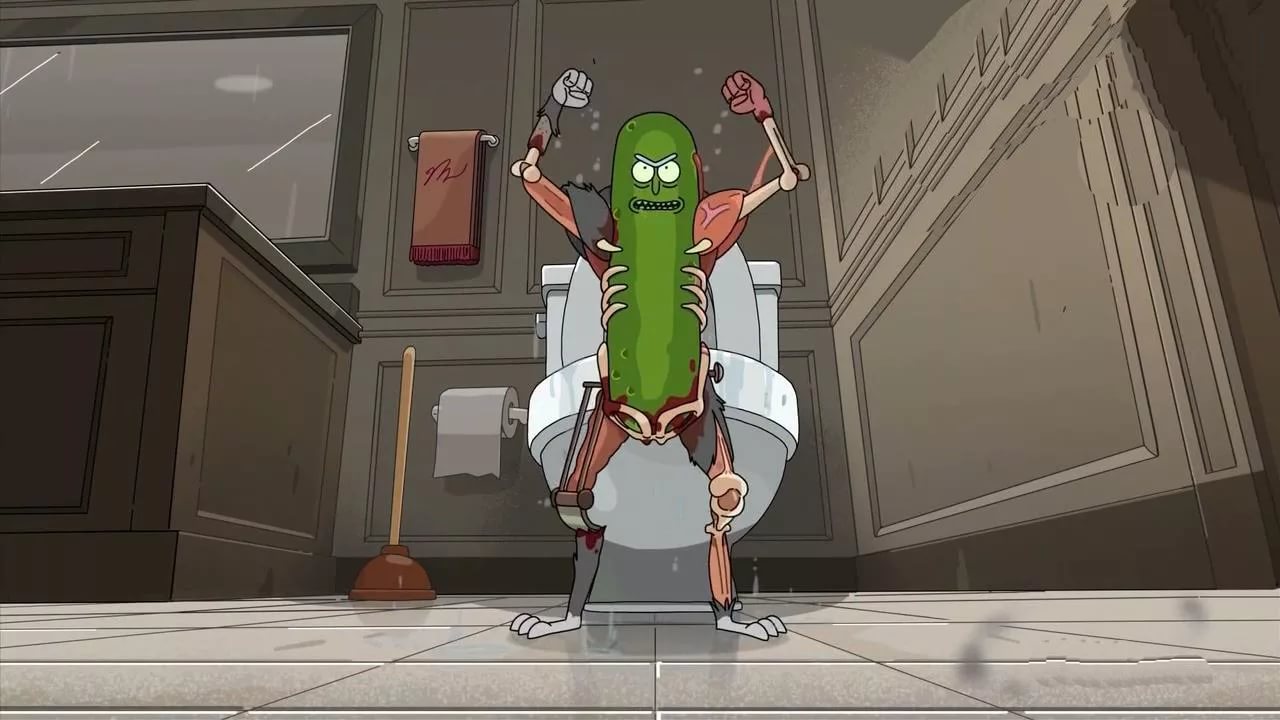
Love it or hate it, either due to its nihilistic undertones or exceedingly passionate fanbase, there are a lot of interesting insights to explore within “Rick and Morty.” From specific episodes that deal with the not-so-hidden appeal of the apocalypse to those built around Rick turning himself into a pickle, there’s a wide variety of lessons and themes to take in.

In this case, I want to focus on what I feel is the best advice “Rick and Morty” has given anyone, both within his animated world and in our own world. It’s a lesson that anyone can use in a multitude of situations, be it dealing with never-ending flood of depressing news to finding out a beloved actor was a total asshole.

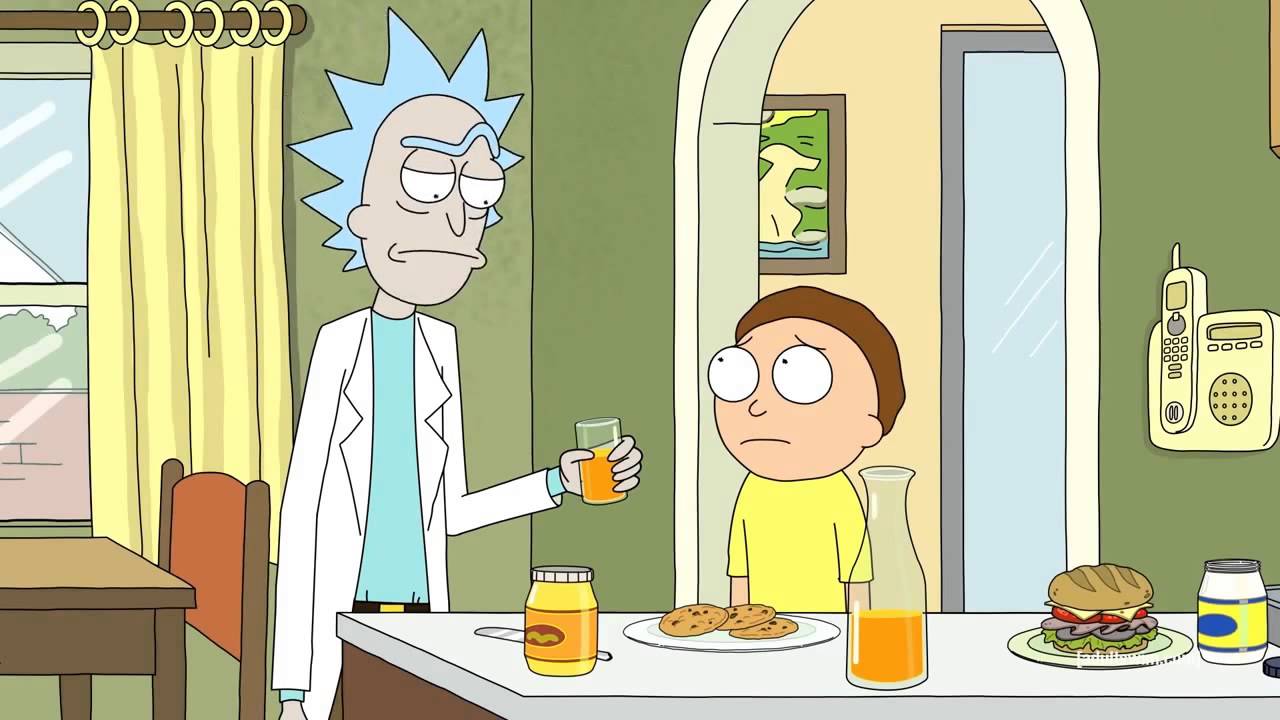
Rick has given this advice to Morty on more than one occasion throughout the show, including the pilot episode and, most notably, in “Rick Potion #9.” It applies to battles against alien security guards, burying the body of your alternate self, and that time you farted in class a bit too loudly. It can be summed up in four simple words.

Don’t think about it!

On the surface, it doesn’t sound too useful. Not thinking about something seems like an elaborate excuse to avoid a particular problem or issue. It sounds like something adults tell children just to shut them up so they’ll stop bothering them. Whether they’re asking about where babies come from or why we can’t stop fighting wars, it feels like the overly easy way to avoid an unpleasant conversation.

However, I don’t think that’s what Rick means when he says that. He’s already proven in multiple episodes that he doesn’t give a Grunglokian fart about unpleasant conversations, as evidenced by his many unfiltered rants around his family. When he says “don’t think about it,” he’s saying it in a particular context that makes it more than just a method for avoiding awkward moments.

Watch any one episode of “Rick and Morty” and you’ll notice more than a few themes, not all of which are based on Rick’s ego or Morty’s obsession with a particular redhead. One of the major over-arching concepts that binds the show, and gives much of its appeal, is the idea that none of the things that people hold dear actually matter in the grand scheme of things.

Whether it’s religion, the economy, love, family, or the formula for concentrated dark matter, it just doesn’t matter in the long run. Religion doesn’t matter because it’s just some arbitrary set of beliefs built on unrelated correlations. The economy doesn’t matter if the value of money is entirely arbitrary. Love and family don’t matter when there’s an infinite number of them in the multiverse.

While that fits with the shows more nihilistic themes, it also speaks to the helplessness and frustration that a lot of people feel when dealing with a chaotic world/multiverse. There’s so much they can do, but so much of it doesn’t matter. The causes they fight for, the wealth they accrue, and the people they encounter simply lose their meaning when you consider the sheer size of the universe and how old it is.

In that context, not thinking about it might actually be helpful. If you work a job you don’t like, pay taxes you don’t like paying, and deal with people you can’t stand every day, the idea that it’s all for nothing in the long run isn’t just untenable. It maddening. How can anyone possibly cope with that kind of existence?

Not thinking about it, though, solves a lot of issues because it allows you to maintain the necessary perspective to function within that existence. Even if the things we do are meaningless, not thinking about it at least gives us the illusion that they’re meaningful. More often than not, perception beats reality and not just in terms of bias news.

It’s a byproduct of human’s being so limited in their thinking. Human brains did not evolve to prioritize reason, understanding, or making sense of an obscenely large universe. They evolved with the primary function to help us survive and reproduce, as individuals and as a species. Anything else is secondary or an afterthought.

Rick Sanchez seems to understand that and constantly exploits those limits for his own ends, whether it involves outwitting the President or outsmarting the devil. Unlike everyone else in a meaningless world within an infinite multiverse, he’s a super-genius. He has a portal gun that allows him to travel to infinite timelines at will, even if it’s just for a pizza.

Nobody else in this world has those capabilities, although I wouldn’t at all be surprised if Elon Musk weren’t working on it. Nobody in this world is as smart or as resourceful as Rick Sanchez. There’s very little he can’t do. This is a man who defeated a Thanos/Darkseid rip-off while blackout drunk. By every measure, what he does should carry more meaning than most.

Despite Rick’s abilities, he’s the one who often belabors how meaningless everything is. Never-the-less, he still operates as though there’s a reason to continue existing. That may send mixed messages when he says not to think about it, but that’s only if you overthink it, which would entirely defeat the purpose.

Rick knows that nothing he does matters in the long run, but he doesn’t think about that.

Rick knows that everyone he cares about are just random clumps of matter in a meaningless universe within an infinite multiverse, but he doesn’t think about that.

Rick knows that love, connection, and emotions are just manifestations of brain chemistry that help our species survive, but he doesn’t think about it.

Instead, he focuses his genius intellect on the things that matter to him. Whether that’s his family or that sweet, delicious Szechuan Sauce, he concerns himself primarily with what he feels gives his cosmic adventures meaning. It doesn’t matter if that meaning is empty in the grand scheme of things because, again, he doesn’t think about it.

It may sound egotistical or selfish, but it’s remarkably pragmatic in a meaningless universe. It keeps us from stepping back, realizing how insignificant we are, and succumbing to despair. It directs our energy and efforts into issues that are localized. For Rick Sanchez, a man with access to a portal gun and a space ship, localized is a relative term. For everyone else, though, it’s just that much more pragmatic.

There’s only so much we can do to exact meaningful change in the world. Unless you’re willing to go through the long, tedious process that involves reshaping government institutions, influencing cultural trends, or educating people on a mass scale, you can’t expect to achieve much change, especially by yourself.

Rick Sanchez could probably achieve all the change he wants, but chooses not to because he knows it’ll bore him or it’s just easier to go to a universe where that change has already occurred. For the rest of us, though, we’re frustratingly limited. We may never see or inspire the change we want. Even if we do, we can’t do it alone.

That kind of helplessness can be depressing. The idea that so little of what we do matters, even when we believe in a cause, is pretty distressing. That’s why Rick’s advice is so relevant. It’s not deep or inspiring, but it gets the job done.

Upset with past injustices upon a particular group? Don’t think about it.

Upset that you can’t change the minds of your friends and family on politics, religion, or ideology? Don’t think about it.

Upset that we’re not doing enough to address climate change? Don’t think about it.

Upset that the economy isn’t doing well and all the best opportunities are gone? Don’t think about it.

These are all things that you can’t change without a portal gun or galactic-level genius. Since Rick Sanchez has that and we don’t, our best recourse is to not obsess over it because there’s not much we can do. Eventually, the heat death of the universe will render everything we do or have ever done totally meaningless.

That can either be depressing or empowering, depending on how you look at it. Yes, not thinking about it won’t undo a traffic ticket, undo a crime you committed, or turn off your biological urges to eat, sleep, love, and mate. Efforts to do so can be damaging. For everything else though, not thinking about it is probably better for your mind, your body, and your overall sense of being.

In that sense, we should all thank Rick Sanchez for this amazingly useful device. While he’d probably say that gratitude is just a polite way of idiots admitting how incapable they are, it’s probably best not to think about his reaction. So long as the advice he gave works, what does it matter? Wubba lubba dub dub!

5 Comments

Filed under Current Events, human nature, philosophy, Rick and Morty

How Much Are We Willing To Hurt The Innocent To Punish The Guilty?

symbol-of-justice

There are certain questions that nobody likes to ask, but still need to be answered. Questions concerning crime, justice, and punishment are usually at the top of that list. Lately, answering those questions has becom more urgent. If current cultural trends continue, that urgency will only increase.

That’s not because people are becoming more keen on justice. It’s more a byproduct of injustice being so much more visible in the age of the internet and social media. Crimes don’t just make the news these days. They can trigger full-blown social movements, destroy careers, and bring down powerful people.

To some extent, this is a good thing. We, as a social species, have an innate sense of justice hardwired into us. When we see something unjust, be it a kid stealing a cookie or a gruesome murder, most sane people want to see some level of justice enacted. When it isn’t, that bothers us. That’s where our sense of empathy comes from.

That said, it is possible for that innate desire for justice to go too far. Nature is a blunt instrument, largely out of necessity. Our desire for justice is no different and in the same way egregious injustices are harder to hide, gross misapplications of justice are becoming more visible as well.

As of this writing, the Innocence Project, a non-profit legal organization that works to exonerate those who’ve been wrongly convicted of a crime, have freed 350 people, some of whom were on death row. Those are the lucky ones, though. In a 2014 study, the National Academy of Sciences estimated that approximately 4 percent of those sentenced to death row may be innocent.

Think about that, for a moment, as a simple math problem. For every 100 people who are executed by the state for their crimes, 4 of them are completely innocent. Whether you’re liberal, conservative, libertarian, or communist, the murder of an innocent person offends our humanity to the core. Only a sociopath would be comfortable with that math.

That murder of some innocent people for the sake of punishing the guilty is an extreme example, but one that nicely highlights the potential pitfalls of our reckless crusade against injustice. I don’t bring it up to start a debate on the death penalty, which is very much a dead-weight issue within politics these days. I’m using it to provide context for misapplications of justice that aren’t as clear cut.

Thanks to social media and global connectivity, it’s a lot easier attack injustice without the rigid bureaucracy of legal justice system. It’s largely because of this emerging technology that the ongoing anti-harassment movement and the push for greater diversity have become more vocal. Instances of injustice that might have been ignored in the past are now much easier to confront.

Instead of hiring a lawyer, getting the cops involved, or going door-to-door to raise awareness, these perceived injustices can be attacked online, which can subsequently lead to offline consequences. While that can be an effective recourse for those who wield great power and have an army of lawyers, it does come at a cost and innocent people have felt that cost.

While there are plenty of cases that don’t become mainstream news, some of the most notable include the Duke Lacrosse incident or the UVA rape case. These are both cases that struck the right and wrong chords at the right and wrong time, evoking in people their inherent aversion to injustice in the utmost. It got people upset and emotional, so much so that they didn’t stop to wonder whether those involved were really guilty.

The alleged crimes were undeniably heinous. There’s no question about that. Anyone guilty of such crimes deserves to be punished. However, in wanting to punish such crimes, innocent people suffered. Some had their reputations temporarily ruined and others have been irreparably destroyed.

There are other lesser known cases of innocent people suffering because of an accusation that later turned out to be false. There are likely more in which the innocent person never gets justice. It’s impossible to know how common they are. Most will point out how rare those instances and in terms of raw numbers, that’s true.

However, that still implies that we have to accept the price that some innocent people will suffer in our pursuit of justice. It also highlights how important it is to have a functioning justice system that includes traditions such as due process and the presumption of innocence.

It’s a tradition worth belaboring too.

It’s an imperfect process, admittedly. There have been notable cases where someone likely got away with a crime because the standards for a conviction are so high. The principle behind that system is that, in the name of not condemning the innocent, we accept the price that some of the guilty may escape justice.

For some people, that’s more untenable than the condemnation of an innocent person. That has become a much more prominent theme in recent years, due to the anti-harassment movement. That’s somewhat understandable, given how long men like Harvey Weinstein got away with their deplorable behavior.

In the effort to prevent or punish such deplorable behavior, though, those critical tenants of our justice system that are supposed to protect the innocent are being cast aside. There are some within the anti-harassment movement who emphasize the importance of believing the victim’s accusations in lieu of the presumption of innocence.

Other, more radical, voices in the movement have favored changing the standards of evidence for rape cases so that they would no longer be subject to reasonable doubt. Granted, these are somewhat extreme measures that probably won’t upend our justice system anytime soon. Others far smarter than me have already pointed out the dangers and debunked many of the assumptions.

None of this is to say that the anti-harassment movement or the effort to hold people accountable for their behavior is entirely misguided. I’m in favor of exposing crimes and having the guilty pay for those crimes, provided they really are guilty. I support efforts to reduce harassment, sexual or otherwise. I support efforts to reduce sexual assault on women and men. Most decent human beings share that sentiment.

What I don’t support is the idea that it’s okay for more innocent people to suffer for the sake of capturing even more guilty people. As I mentioned before with the Innocence Project, our flawed justice system already condemns innocent people. A willingness to let more innocent suffer is the wrong direction to go in fighting injustice.

I know that’s easy for someone like me to say because I’ve never been the victim of a serious crime. I’ve had some stuff stolen before, I’ve been cheated out of some money, and I have been roughed up before, but I’ve never been seriously injured or assaulted. I can’t imagine how someone who has been seriously victimized feels about what happened to them.

Their suffering matters. The suffering of innocent people matters too. It’s why the question surrounding hurting the innocent to punish the guilty needs to be asked, even if the answers make us uncomfortable. The fact those answers make us uncomfortable reflects the flaws of our justice system and how imperfect our world really is.

At the same time, it also reminds us why seeking justice and combating injustice matters. We, as a society and a species, cannot function if there isn’t some semblance of justice. For victims and innocent alike, we need those institutions so that we can prosper and grow as a civilization.

From the anti-harassment movement to crusading prosecutors to overt bias in the court system, there comes a point in the pursuit of justice where compromising the innocent is a price that some are willing to pay. Once that line is crossed, though, it sets a dangerous precedent that relies on dangerous assumptions.

To be willing to compromise the innocent, it’s necessary to believe that people who fit a certain profile are guilty by default. If their gender, race, ethnic group, religion, or nationality checks enough boxes, then innocence becomes an afterthought. It becomes another numbers game in assessing potential guilt over actual guilt.

That’s a precedent that can easily devolve into a panic and, as history has shown, panics tend to harm the innocent far more than the guilty. It also undercuts the suffering of actual victims because if actual guilt becomes an afterthought, then so too does actual victimization.

That, in many ways, is the greatest price that comes with compromising innocence. Punishing a guilty criminal simply rights a wrong. Punishing an innocent person has impacts that go beyond simply making an undeserving individual suffer. It has a ripple effect on the entire concept of justice, much of which cannot be qualified.

That’s why, even if it is as rare as some claim, the punishment of one innocent person should offend our sense of justice more than a guilty person escaping. A guilty person is still going to be guilty, no matter what their high-priced lawyers say. An innocent person who is punished for a crime they didn’t commit often lose so much more than just their innocence and that’s an injustice no one should tolerate.

1 Comment

Filed under Current Events, gender issues, human nature, philosophy, political correctness

Remembering (And Learning From) The Satanic Panic

stufftoblowyourmind-podcasts-wp-content-uploads-sites-24-2015-04-satanic

Lock your doors, hide your children, and pray with the force of a million pious nuns because it’s happening. It’s out there and it’s probably going on as you’re reading this. There’s a vast network of Satanic cults who have infiltrated schools, child day care centers, and major media outlets. They’re coming for you, they’re coming for your kids, and they’re determined to corrupt every soul they can.

I hope everyone who just read that laugh paragraph is either laughing or confused. It was not meant to be serious. The fact that I actually have to clarify that for a certain segment of people who may take it seriously says a lot about the human condition. It also reveals even more, albeit in a way that’s hardly flattering to our species.

When one person has crazy, irrational fears, we can easily shrug them off and move on with our lives. When a large group of people have those fears, though, it’s a bit harder to ignore, especially when it becomes a full-fledged panic that spurs outrage, ruins lives, and wastes resources.

Image result for moral panic

This is exactly what happened in the 1980s during the so-called Satanic Panic. It may sound like the name of a bad heavy metal band or one of those funny church signs, but make no mistake. It was no laughing matter. There was a real, genuine fear among people that there was a conspiracy of Satanists looking to abuse, exploit, and corrupt children.

It got so serious that major news outlets, the FBI, and even Oprah Winfrey began reporting on it. They included disturbing recollections of adults taking children into dark rooms, dressing up in Satanic attire, and subjecting them to unspeakable abuse that often included sex acts. It got pretty horrifying, which is part of why it got so much attention. This is just a small sample of what some kids recalled.

In hours of footage, they talked about how the devil-worshipers preyed on the wealthy community, holding pedophilic orgies and murdering innocent people. They said the Satanists abused and tortured babies, slitting their throats, drinking their blood and dancing while wearing their skulls.

It all sounds too horrible to imagine. The descriptions are objectively horrifying. There’s just one key detail that undercuts that horror. There’s no verifiable evidence that any of it happened. There’s only evidence that the lives of innocent adults were irreparably ruined.

Image result for satanic ritual

It’s amazing to think that something so irrational had terrified and overwhelmed sane, rational people in a civilized society. Actually, that might have been amazing to contemplate five years ago. I think it’s distressingly easy to imagine something like that happening in an era where false accusations can become a viral media spectacle.

Most people may roll their eyes at the notion that history tends to repeat itself from those who don’t heed it’s lessons. Historically speaking, though, those lessons keep popping up in new forms in conjunction with new panics. One day, it’s a conspiracy of Satanists. The next, it’s a conspiracy of Bronies. In each case, a similar pattern emerges. History may not entirely repeat itself, but it sure follows a similar script.

The catalyst for Satanic Ritual Abuse panic was similar to what triggers most panics. One particular story, which may or may not be true, captures the public’s imagination and terrifies parents to no end. The story, in this case, was called “Michelle Remembers” by Lawrence Pazder. This was to Satanic Ritual Abuse what Harvey Weinstein and GamerGate was to the ongoing panic over sexual misconduct.

Related image

The book itself is a disturbing story disguised as a real documentation about a psychiatrist uncovering repressed memories from a woman who had been abused by a Satanic cult. Almost immediately after publication, the legitimacy of the story came into question and Pazder got sued for libel. That didn’t matter, though. The story went onto become very popular and was actually taken seriously.

This culminated in the infamous McMartin Preschool Trial where, after seven years and millions of dollars in legal fees, those accused were found innocent. That didn’t matter in the end. The media coverage, combined with public fears, made them Satan-loving monsters by default. Needless to say, their lives were ruined.

Image result for McMartin preschool trial

As I said before, and it’s worth belaboring, there was no hard evidence that any of these crazy Satanic rituals ever took place. The allegations were pretty elaborate, but the problem from a truth perspective was that they were based primarily on the testimony of young children. That’s a huge problem beyond the fact that most anecdotal evidence, even from competent adults, is unreliable and rarely admissible in a trial.

The testimony of those children was gained largely through something called recovered-memory therapy. It’s not as intensive as it sounds. Therapists just ask impressionable kids leading questions and get them to tell say whatever they want while claiming it’s a real memory.

That proved to be an effective/dangerous tool in provoking the emotions of the masses. It’s one thing when an adult makes a claim that sounds extreme, but when a child says it who may have been horribly abused, that nurturing instinct that most decent human beings have goes into overdrive. It doesn’t matter if there’s no evidence. The mere possibility that it could be true convinces us.

Image result for satanic ritual

Even after more thorough investigations revealed far more mundane truths, there was still plenty of panic. There was even an organization called Believe The Children that advocated accepting their testimony, even if it couldn’t be verified and meant ruining innocent lives.

This is where some of the distressing similarities to the ongoing crusade against sexual misconduct start to manifest. Now, right of the back, I want to make clear that I am not claiming that the movement to combat sexual harassment is as vacuous as the movement against Satanic Ritual Abuse. I really want to make that clear. However, the parallels are worth noting.

Yes, there have been cases of real, verified assault that have been proven in a court of law. There have also been cases where a false accusation put an innocent person in prison. Just like those urging that people believe the horrific stories told by the children, though, there are those who urge that we place a similar belief in anyone who accuses someone of a sex crime.

Image result for false rape accusations

There’s a reason why we have a justice system. There’s also a reason why the standard of proof for a serious crime is so high. There are some who don’t like applying that standard to sexual misconduct, but there’s a reason for that. In a civilized society, we understand that punishing innocent people can be much more damaging than letting a guilty person go.

I know that doesn’t sit well with certain people. One person getting away with a sex crime is one too much, especially for those who have been victimized. However, and I know this is going to strike the wrong chords, but that’s the price we all pay for having a functional justice system.

Image result for justice system

It’s not perfect because humans aren’t perfect. Trying to make it perfect, though, at the cost of innocent lives is a price that undermines the very concept of justice. The Satanic Ritual Abuse craze in the 1980s ruined innocent lives. Their suffering is a crime in and of itself.

In a sense, the unjust suffering of an innocent is twice the injustice of a guilty person getting acquitted because it inflicts unjust guilt on someone and forces them to carry that burden beyond the accusation. That is why presumption of innocence is so important in any justice system.

The ongoing efforts to combat sexual misconduct has noble goals. Even the panic around Satanic Ritual Abuse had noble goals in wanting to protect children. Most decent people are on the same page with those goals. However, when outrage, anecdotes, and hyperbole are the primary tactics, it leaves little room for actual substance.

Image result for satanic ritual abuse

That substance matters because, in terms of the bigger picture, violence against women has gone down significantly over the past 20 years. Women today are far safer and less likely to be victimized than they’ve been in decades past. I know that’s not much comfort to those who have been victimized, but one burning tree doesn’t need to start a forest fire.

In the end, the Satanic Ritual Abuse panic created a pretty scary environment for parents and children, so much so that little things like facts, truth, and justice got lost within the horror. Those little things matter even more with real crimes like sexual assault. If there’s one lesson we should learn from the Satanic panic of the 1980s, it’s that terrible stories can lead to terrible injustices if the truth gets overlooked.

In the interest of ending this on a lighter note, check out this old video from the Satanic Panic and enjoy a good laugh. Yes, they really took it that seriously.


9 Comments

Filed under Current Events, gender issues, human nature, sex in society

Making Sense Of Sexual Misconduct, Valid Arguments, And Matt Damon

We like to think that when there’s a serious problem, our first instinct is to approach it with a logical, reasoned understanding of what it is and how to go about solving it. Ideally, that’s how competent, civil societies go about these things. By those same ideals, though, nobody ever cheats on their taxes, lies on their resume, or downloads free movies from torrent sites.

In the real world, there are some problems where our emotions surrounding an issue are so powerful, so intense that they undercut our ability to approach it logically. It’s part of the flawed wiring in our caveman brains that seems to crop up in every major issue I discuss on this blog.

That brings me back to one of the most emotionally charged issues of the day in sexual assault. It’s an issue that has touched everything from movies to video games to the comic book industry that I’m so fond of. Between the scandals and the movements they inspire, it’s one of the most heated issues that doesn’t involve Star Wars fan theories.

It’s because the emotions surrounding sexual assault and sexual harassment are so heated right now that trying to force any level of logic or context into the discussion is next to impossible. If done poorly, it can come off as victim blaming, which is tends to intensify emotions even more.

This brings me to Matt Damon, an actor who has built much of his career about having to be rescued. Unfortunately, he didn’t get that memo about the current emotional state of this issue. It’s still very raw and very charged. There’s a reason for that, but that reason is secondary right now and he just found that out the hard way.

It happened during a recent interview for ABC’s “Popcorn with Peter Travers.” During the interview, Mr. Damon decided to give his opinion on the issue, as many other celebrities have on the issue. This is what he had to say.

“I think it’s wonderful that women are feeling empowered to tell their stories and it’s totally necessary,” he said. “I do believe there’s a spectrum of behavior. … You know, there’s a difference between, you know, patting someone on the butt and rape or child molestation, right? Both of those behaviors need to be confronted and eradicated without question, but they shouldn’t be conflated.”

The bold parts are my doing. That’s because these are the parts stirring even more emotion within an already heated discussion that shows no signs of settling. Harvey Weinstein triggered it and subsequent celebrity scandals escalated it. Matt Damon may have escalated it even more by trying to put a kind of logic into a discussion that isn’t ready for it.

On paper, what Mr. Damon said isn’t unreasonable. In fact, it’s fairly logical by most standards. There is, indeed, a spectrum of behavior for sexual misconduct, just as there’s a spectrum for behavior of any kind of deviance.

In the same way that stealing a bag of candy from a grocery store isn’t the same as stealing the Mona Lisa, an unwanted hug at an office Christmas party is not the same as a brutal rape in a dark alley. There is a spectrum for that kind of behavior. One warrants serious punishment and prosecution. The other warrants disapproval and scorn, but not much else.

However, that kind of approach is just too logical for something that’s so emotionally charged. I know I keep saying that, but it’s worth belaboring and it really does matter. Sexual assault is an extremely emotional topic, one that incurs an immense amount of trauma and suffering to the victims. To them, logic and spectrums mean as much as the weather on Neptune.

As a result, the reactions to Mr. Damon’s words have been more than a little charged. The most vocal reaction came from Alyssa Milano and Minnie Driver. This is what they had to say on the matter.

Now, I don’t doubt their sincerity. These are two women who have been in the entertainment industry long enough to know more than a few dirty secrets. There’s plenty of emotion and disdain in their words. They go out of their way to focus on the bigger picture that’s fueling the outrage, emphasizing past injustices and systemic problems that pre-dated them, Matt Damon, and most people alive today.

In terms of the emotions surrounding the ongoing discussion, their words struck all the right chords. They focused on the pain and suffering that sexual assault has done to women like them and many other before them. They also emphasize how these injustices went overlooked and unpunished.

That’s where they have Mr. Damon beat because, like I’ve noted before, we have this inherent sense of justice hardwired into us from birth. Injustice rightly makes us upset, uncomfortable, and outraged. However, it’s that same reaction that can also blind us to the logic behind the injustice.

There’s nothing that Ms. Driver and Ms. Milano said that disproves or undercuts Mr. Damon’s points. They don’t even try to argue that everything, from a hug to a rape, is equally egregious when judging sexual misconduct. They just point out that Mr. Damon is a terrible person and part of the problem they’re trying to fight. As such, there’s no reason for them to take his words seriously.

That may help them win the current argument, but it doesn’t necessarily make them right in the long run. I’ve said before that there’s a huge difference between winning an argument and being right. One matters in the long run. The other doesn’t. For an issue as serious as sexual misconduct, that’s a dangerous precedent.

Again, I get the reason why women like Ms. Driver and Ms. Milano react so strongly. It’s very personal for them. I doubt Mr. Damon has ever been a victim of the kind of misconduct they’ve endured. Therein lies the problem, though, if either side is serious about confronting the issue.

It’s so personal for some people. It’s a problem to be solved with logic and understanding for others. At the moment, those sides just can’t coexist. It doesn’t matter whether Matt Damon, a well-known celebrity, makes a valid point. It doesn’t even matter if that’s an important point to make in order to prevent this movement from enduring a backlash, which some have already expressed concerns about.

However, it has to matter. In order for us, men and women alike, to create a more just society that confronts sexual misconduct appropriately, both the high emotions and the logic has to matter. It’s the only way anyone can be motivated and informed enough to do something about it.

I’m not going to say that Mat Damon was wrong for saying what he said. I’m also not going to say that Alyssa Milano and Minnie Driver were wrong for reacting the way they did, either. I’ll only say that overlooking logic and ignoring context never work out in the long run. At some point, reality catches up to us all. In the long run, reality wins every argument, regardless of our emotions.

11 Comments

Filed under Celebrities and Celebrity Culture, Current Events, gender issues, sex in society

Hard Truths: Justice, Injustice, And O.J. Simpson

I understand that not everything I say on this blog is going to be popular, sexy, or funny. I don’t doubt that there are opinions I’ve shared and jokes I’ve told that haven’t gone over well. There may be even a few people out there who have read them and felt the urge to punch me in the face through their computer screen.

I understand that. It’s just part of the internet. You’re going to say things people hate and meet people who hate your guts. I’m sure there are people who still haven’t forgiven me for my post on the mind of misogynistic men. I won’t apologize for saying what I say, but please understand that I don’t say it with the intention of hurting or upsetting people.

I say all this as a preface, of sorts, because I know some of the things I’ll say in this post are going to upset some people. If not on this post, I’m sure there will be other posts that draw anger, disgust, and disagreement. Some of these issues are not as innocent as sex robots, Wonder Woman’s BDSM origins, or the sexiness of chest hair. They’re real, serious issues.

The issue, in this case, has to do with something that’s fairly timely in the sense that it often comes up this time of year. Just this past week was the 23rd anniversary of the infamous O.J. Simpson Bronco chase. It happened on June 17th, 1994. It was one of those days where everyone remembers where they were. It’s also one of those days where everyone formed an ardent opinion that still divides people to this day.

At the time, I was fairly young and didn’t really understand the gravity of what was going on. I kept hearing the name O.J. Simpson in the news. I kept seeing people watch the trial on TV, talk about it, and obsess over it. Being so young, I thought it was annoying. All that talk about O.J. Simpson cut into time I’d rather be using to read comics, watch cartoons, and play video games.

I guess you can say I’m part of a generation that only ever knew O.J. Simpson as the alleged murderer who got away with it. Pretty much anyone born before 1982 only knows this side of O.J. Simpson. When they hear his name, they usually think of the Bronco chase, the trial, and the bloody glove. They don’t think of the larger context.

There are members of my own family, as well as major news figures like Keith Olbermann, who’ve tried to explain to me just how big a deal this was. It’s hard for them to convey to people of my generation just how beloved O.J. Simpson once was. Between his Hall of Fame football career, his acting career, and his iconic Hertz commercials, it’s impossible to overstate just how popular this man was.

There was actually a time when the name O.J. Simpson had many positive connotations. He was a celebrity sports icon whose popularity transcended race, class, and everything in between. For someone like him to be accused of a ghastly double-murder was akin to Captain America becoming a Nazi. Actually, that’s a bad example.

It’s because of that other side of O.J. Simpson, namely the one that people of my generation never saw, that his trial became the “Trial of the Century.” That trial, and the controversial verdict that followed, still divides America to this day, often among racial lines.

If you want to have an uncomfortable conversation about race, justice, injustice, and the legal system, pretty much every distressing element you can think of is highlighted by the O.J. Simpson case. It involves spousal abuse, police corruption, racism, media spectacles, and the Kardashian family. Even today, this kind of spectacle would check all the right boxes to become a total media shit storm.

There are so many aspects of the murder trial, the aftermath, the media circus, and the tenuous relationship O.J. Simpson had with his ex-wife, Nichole, that I could highlight. In every case, there are elements to that story that are both unsexy and controversial, dividing and enraging people of every opinion.

However, there’s only one part I want to single out for this particular post. It’s probably going to upset more people than most. I might even get some hate for it. That said, it’s one of those hard truths that needs to be said, even if it’s uncomfortable. Brace yourself because here it is.

The jury in the O.J. Simpson trial got it RIGHT.

Now, it’s my turn to brace myself. I know that opinion isn’t very popular. I also know most of the people in my own family disagree with it. I’ve talked to close relatives about it. They’re all convinced that O.J. Simpson is guilty. They all believe beyond a shadow of a doubt that O.J. brutally murdered his ex-wife and Ronald Goldman. There’s nothing anyone can say or do that can convince them otherwise.

Therein lies the problem, though. It’s one that I’ve pointed out before when I’ve talked about reasons, excuses, and the idea of excuse banking. We all like to think of ourselves as rational, logical human beings that Spock from Star Trek would get along with. In reality, we’re nothing of the sort.

Our brains don’t work through logic. Our brains can use it, but it’s only every a secondary function. Our default caveman setting is to form an irrational opinion first and then look for ways to justify it. It doesn’t matter if it’s racist, sexist, or wholly irrational. That’s how our brains work. That’s how most people look at the O.J. Simpson case.

The problem is, from a legal point of view, that our justice system does everything it can to circumvent those flaws and it’s not always good at it. There’s a reason why criminal justice reform is a major topic these days. The justice system is woefully inefficient at dealing with all crime fairly, especially those committed by minorities.

That’s part of what makes the O.J. Simpson case such an important case, but not for the reason you might think. The reason why it matters so much and why it’s such a harsh truth to digest is because the O.J. Simpson trial highlighted how the justice system is supposed to work. In a perfect world, every criminal would get the kind of legal defense that O.J. Simpson got. The fact that O.J. is black only makes the truth that much harder.

Like it or not, the O.J. Simpson trial got right one of the most important elements of our criminal justice system, at least with respect on how it’s supposed to work. It is built around the idea that a defendant is presumed innocent and must be proven guilty beyond a reasonable doubt.

It can’t just be probable that someone is guilty. It can’t just be likely either. To convict someone of a serious felony, like a double murder, it has to be beyond any reasonable doubt. That’s a very lofty standard and for good reason.

Legal systems in modern western societies emphasize ensuring guilt and not punishing the innocent. There’s a callous practical reason for that too. In a society built around a modern economy, we can’t have the state throwing innocent people in prisons who could otherwise be working and contributing. That’s why if someone is accused of a crime, the system has to make damn sure that they’re guilty.

In O.J. Simpson’s case, and I know this is going to make a lot of people gnash their teeth on a cinder-block, there was reasonable doubt. Pretty much all the evidence against O.J. was either circumstantial or hearsay. On top of that, the LAPD had a sordid history of corruption and racial bias. Police do frame suspects and innocent people do get charged with crimes they didn’t commit.

Unlike most of those innocent people, though, O.J. Simpson had access to the best legal help that money could buy. Those men might be despised now for defending O.J. However, there’s no getting around it. They did their jobs. They did exactly what a lawyer is supposed to do.

They revealed the reasonable doubt surrounding the case and, as upsetting as it might have been, there was reasonable doubt. The blood evidence was immense, but so was the evidence of improper handling and corruption from the officers involved. There are a great many theories as to what actually happened, but that doesn’t matter in the end.

The mere presence of that doubt meant that the jury did the right thing in acquitting O.J. Simpson. It’s a painful truth, especially to the families of Nichole Brown Simpson and Ronald Goldman. Their story will always be the biggest tragedy of the O.J. Simpson case. However, as hard as it is to accept, the justice system was right in this case.

There’s so much more to the O.J. Simpson story that I could talk about. I’m going to avoid it because any discussion about this case is bound to trigger all sorts of anger and outrage. If you want to hear more about this topic, including O.J. Simpson, check out the Unpopular Opinion podcast. They’re usually pretty balanced and pretty funny as well.

Short of a confession, complete with photographs and a bloody knife, we’ll never know what happened in the O.J. Simpson case. It’s that inability to truly know that’s the hardest to accept. Our caveman brains just can’t deal with that kind of uncertainty so we cling to our opinions and excuses.

Personally, I think it’s likely that O.J. did murder his ex-wife and Ron Goldman. At the very least, I think he had something to do with it. However, I don’t know all the facts. Nobody knows all the facts. That’s why, in the context of justice, his acquittal was the right thing to do.

It’s for that very reason, though, that we need a justice system that works around that. We, as a people, are at the mercy of our caveman brains and its inability to use logic properly. That’s the biggest challenge of our justice system, having to deal with all these shortcomings. It’s not perfect. For the O.J. Simpson case, at least, we see first-hand how it’s supposed to work, even if we don’t like the outcome.

4 Comments

Filed under Jack Fisher's Insights

Thought Experiment On Democracy (The Non-Boring Kind)

I imagine that after last week, everybody is sick of politics, elections, and democracy in general. Believe me, I feel your pain. I almost long for the days when the news dedicated most of its time to what was going on with Kim Kardashian’s ass. Now that the 2016 Election is over, we can all stop fighting the urge to throw a brick at our TVs.

Now don’t worry. This post is not going to be about politics, at least not in the Anderson Cooper type tradition. I remain committed to keeping this blog relatively free of overly political bullshit that would otherwise kill the sexy mood I’m trying to create with my novels. While there are some political undertones in this topic, it’s not the kind that make most people want to beat each other to death with a sack of hammers.

This post is about something a bit more thought-provoking, at least that’s my hope. It’s another thought experiment. I’ve posed them before on this blog on other topics like disease and attitudes towards jealousy. I think it’s helpful to get people thinking about a difficult issue and this is as difficult as it comes these days.

More than anything else, the 2016 election in America highlights the flaws in democracy. It is prone to the irrational, irresponsible whims of our caveman brains. Those brains are wired in a way where we don’t give enough of a damn about what is actually true and instead go with how something makes us feel.

This is why demagogues, hypocrites, liars, cheaters, and reality TV stars can run for office and actually win. These people are smart enough to understand that the mass public doesn’t care if you’re a liar or a cheat. If you tell them what they want to hear and make them feel good, they’ll vote for you.

This is exactly why even the great Winston Churchill was critical of democracy. He said it himself.

Democracy, as beautiful a thing it is, has room for improvement. It’s definitely an improvement on the Game of Thrones style governments of the past where kings could routinely spit on peasants and shoot them for sport if he wanted. There are still tyrants in this world, but their governments tend to fail miserably in the long run. Just look at North Korea.

So rather than just throw democracy out entirely, why not give it some added polish? Why not look for ways to make it better? The Founding Fathers of America did that. People often forget that the first form of government they chose wasn’t the Constitution. It was the Articles of Confederation, which was so flawed that it didn’t even last a decade.

With that in mind, let’s channel the wisdom of the Founding Fathers and look at our current forms of government, not just in America, but all around the world. How do we improve it? How do we make it better, more efficient, and more just?

It’s a hard (if not impossible) question to answer. Many have tried though. Listverse even compiled a list of bizarre, hypothetical governments that have never been tried, but do seek to make improvements over the current system.

Some aren’t all that radical. The concept of the Perfect Commonwealth or Jeffersonian Democracy all have concepts that are fairly well-rooted in the real world, if not historically, then most certainly practically. Then, you get much weirder concepts like Liquid Democracy or Technocracy, which require more imagination than bureaucracy.

These are all interesting/strange/downright crazy ideas. So for the sake of this argument, let’s keep them all in mind as we conjure a better form of democracy. Let your imagination go a little crazy and conjure a government that might actually work in the real world.

Having done this thought experiment already in my own slightly crazy brain, I have an idea I’d like to share. It’s not something James Madison would probably approve of, but here it is. I even have a name for it.

Negative Democracy

Now don’t let the name scare you. I’m not talking about a democracy that will allow the King Joffrey’s of the world to reign supreme. I’m talking about a form of democracy that takes the current flaws, turns them upside down, and keeps them there so that the current corruption doesn’t get a chance to return.

So how does it work? Well, it goes like this:

  • There are three tiers: local, state, and federal
  • The local tier elects its leaders by popular vote
  • The state tier elects its governor by popular vote, but legislators are appointed by the local-elected officials
  • The federal tier elects its congressperson by popular vote, but the president/prime mister is appointed by a 2/3 vote by state governors
  • Every year on the first Saturday of November, the people can vote to remove any appointed and/or elected representative at any level if the vote is greater than 2/3 of the population

I know it’s basic, crude, and simplistic. I’m no Thomas Jefferson. That much, I admit. However, I make these points to highlight one key component of Negative Democracy that makes it unique.

It doesn’t focus as much on electing officials to public office as it does on removing those who don’t do a good job. Here in America, we do way too good a job at electing incompetent officials. The Constitution says a lot about how to elect these officials. It says far less about removing them.

That’s the key, Negative Democracy. You remove the incompetent, corrupt elements of government in hopes of allowing better, more qualified officials to fill the void. At some point, somebody who isn’t a total screw-up should come to power. Even politics is subject to the law of averages.

The second key is that democratic elections be held on the local and state level for the most part. Why is this important? That’s because people tend to be more in tuned with the officials in their neighborhood. They’re more likely to interact with the mayor or city council than they are a senator or a President.

As such, those local officials are closer to their constituents. They’re more likely to know them personally and when you know someone personally, you’re less likely to screw them over. It’s one thing for total strangers to hate you. For your own community to turn against you is pretty powerful. Only a select few have the ego and cruelty to try a terrible stunt like that.

Under this system, most of the federal officials are appointed and don’t have to run an election campaign. They can still be voted out of office every year if their constituents don’t like what they’re doing, but the key is they don’t run expensive, dishonest campaigns in the first place. They get appointed, they go to the capital, and they do their job.

If you think that might be prone to corruption, I don’t doubt there’s a chance. There’s a chance for corruption in every form of human-centered governance. It’s just a matter of managing the incentives to cheat as much as possible.

There’s a reason why the Judicial Branch of government in America gets less press and is often seen as the most effective branch. It gets to exercise Judicial Independence. Judges in this branch don’t have to run for office and they don’t need to be re-elected. They can, in principle, lose their jobs if they do something egregious, but those instances are rare.

So much time, energy, and money is spent on just electing officials. In a large, diverse country like the United States, that’s wholly impractical. For every country and society, the emphasis of all government should be to maintain rule of law, protect people from harm, and manage public services. It’s a difficult, if not impossible task to accomplish, but it’s too important not to be improved upon.

With this in mind, I challenge others to conduct this same thought experiment. What sort of new government system would you come up with? What would you call it? How would it work? Share it! During these trouble timed, these are definitely ideas worth exploring.

2 Comments

Filed under Jack Fisher's Insights

Injustice, Male Privilege, And Why It’s So Unsexy

There are a lot of unsexy things out there that really kill the mood. Dead kittens, an overflowing toilet, and Rush Limbaugh’s voice all come to mind. We all have certain tastes and proclivities that either make our pants feel 10 degrees hotter or make us want throw up in the nearest trash can.

These tastes vary from person to person. Some are more typical of certain cultures. Some are more typical of genders. Men tend to get more aroused by big boobs and women tend to get more aroused by big biceps. It’s basic biology. In terms of what turns us off, that’s a bit less obvious. Aside from the things that involve heavy vomiting and excessive back hair, it’s hard to pin down things we deem universally unsexy.

I contend there is something that does turn us off faster than a picture of Pat Robertson taking a shit. It’s something that’s also ingrained in our biology, beyond the extent of the caveman logic I so often love to cite. Pull your pants up, skip your next meal, and brace yourself because I’m about to tell you the least sexy force in the world:

Injustice

I’ll give everyone a moment to stop gagging. For those of you who are confused, stay with me and skip your next meal as a precaution. It’ll make sense soon enough.

I spent a good deal of time talking about gender double standards and just how much they suck. I know it’s not as sexy a topic as sleeping naked or the different types of orgasms we can have, but I’m exploring these issues for a reason and I promise those reasons are sexy in nature.

In order to convey the extent of that sexiness, however, I need to touch on one more inescapable detail that stems from these double standards. I originally wasn’t going to dig any deeper on this admittedly unsexy topic, but then I came across a powerful video on YouTube that changed my plan.

There’s one feature of gender double standards I’ve tried to avoid, if only because it’s a loaded term. I can’t avoid it anymore so I might as well come clean. It’s the concept of “Male Privilege.”

Now I’m not going to lie. As a man, I do feel like I have my share of privileges. For one, I can walk around without a shirt on and not get arrested. I don’t feel compelled to shave my legs every other day. I don’t feel pressured to put on a certain amount of makeup before I go out. People even assume I’m tougher than I really am, never knowing that I grew up in a family with two older sisters who could kick my ass with their eyes closed.

However, there has been a growing trend in recent years, some from feminists and others from bullshit media controversies, to shame men (particularly white men) for having so many privileges. We’re getting to a point where “male privilege” has become a blanket term to undermine every benefit that any man has ever achieved.

Now I’m all for gender equality. I hope I’ve made that abundantly clear on this blog. Men and women can’t be biologically equal, but we can be socially and legally equal in the eyes of justice and fairness. The problem is we are a woefully imperfect species. That means there’s a long list of instances where men have created horrendous injustices for petty, sexist, bullshit reasons.

However, there’s a problem with this approach and it comes back to that horrendously unsexy force that we call injustice. As someone who grew up on a steady diet of superhero comics and superhero cartoons, I like to think I’m well-versed in what constitutes injustice.

In pretty much every episode of Superfriends and every other issue of Superman, there’s a common message about injustice. You can’t fight it with more injustice. Injustice is like an ant infestation. Fighting injustice with injustice is like trying to fight ants by throwing surge cubes at them. It’s only going to make the problem worse.

The popular perception is that “male privileged” ensures that men get more justice than they deserve. Ignoring for a moment how we measure the quantity of justice each person deserves, let’s not cross our eyes so that we can’t see the forest from the trees. Injustice, like spam email or annoying pop-up ads, finds a way to hit everyone. That includes men.

So what kind of injustices do men face? Are they at all comparable to the injustices that women face? Well, that’s hard to gauge because some of these comparisons are subjective. I’m sure there are women out there who see injustices against men and laugh their ass off at it. It may even make them horny.

These people are despicable excuses for human beings and are beyond reaching. If you are at all okay with injustice against men, please do me a favor and don’t come to my blog, buy my books, or interact with me in any way. I can do without that kind of douche-baggery in my life.

For those with a sense of compassion, decency, and justice, here’s the video that I found so powerful. Whether you’re a man or a woman, I hope it has the same impact on you that it did for me.

I hope this makes those who complain about “male privilege stop and think for a moment. It’s true. There are injustices in the world that are fueled by direct and indirect sexism, but it’s not just women who endure those injustices.

Our society is imperfect. Our species is imperfect. I’ve pointed it out many times before. Our biology is crude, clunky, and prone to errors, overkill, and oversight. Despite this, there’s still some glimmer of hope within those flaws that keeps us honest as a species.

Remember, children as young as two already possess an innate sense of fairness and justice. When we see something that’s unfair, it bothers us. It makes us anxious and uncomfortable. In essence, the feelings we get when we see injustice are the complete antithesis of the feelings we get when we see something sexy. That alone sends a powerful message about the innate sense of justice we all share.

Within that justice, it shouldn’t matter whether they adversely affect men or women. The abuse, harassment, and subjugation of women is a gross injustice. The denigration, dehumanization, and disparity that men endure is just as great an injustice. Writing it off as “male privilege” is just a pitiful excuse to ignore injustice and whenever injustice is ignored, more injustice will follow.

I’ll give everyone another moment for the non-sociopaths out there to swallow their disgust. These injustices should make everyone, male or female, sick to their stomach. That still leaves one burning question. What do we do about it?

I’ve made clear before that I’m not a fan of whining. Just talking about an issue is akin to throwing dirt on a festering wound and calling it medicine. Our society has made progress since the caveman days, but there’s still plenty more to make. With that in mind, how do we go about fixing this? Can it be fixed?

Being an optimist with a dirty imagination, I think it is fixable. I believe we will see more progress than we think. What form will that progress take? Why is a romance/erotica writer even talking about it in the first place? I’ll reveal that in future posts, but there is a reason for it and that reason will become clear very soon.

3 Comments

Filed under Jack Fisher's Insights

Solitary Confinement: The Ultimate Torture?

To those of you out there who think you’re having a bad day, this may lift your spirits in all the wrong ways. To those of you who consider themselves huggers who are fond of intimate contact, as I most certainly do, this will be an exploration of your worst nightmare.

I’ve argued before that our current culture makes it painfully difficult for human beings to be intimate with one another. We have technology that puts screens between us, cultural taboos that prevent us from seeking each other out, and religious dogma that will make up elaborate myths to keep people from seeking satisfying intimacy. As bad as it is, it could still be much worse.

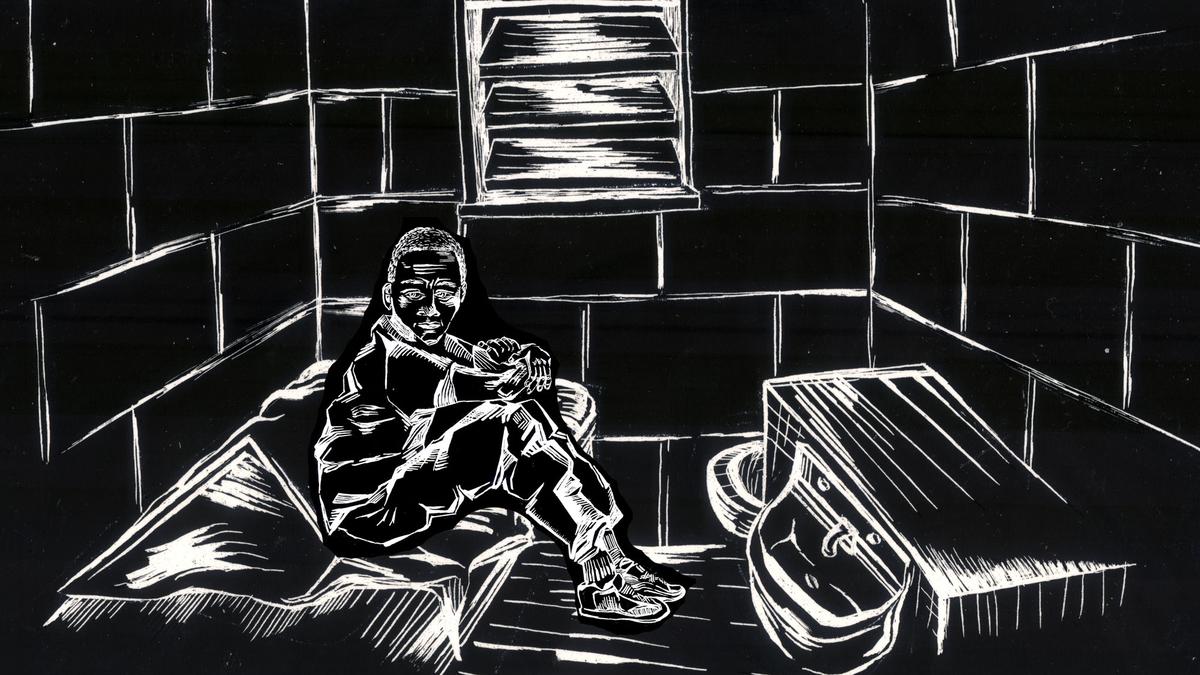
Enter the practice of solitary confinement. For those who consider themselves huggers, this is right up there with waterboarding and power tools in terms of torture. It’s one thing to inflict pain on someone. As anyone who has experimented with BDSM knows, the right kinds of pain can actually be enjoyable. With solitary confinement, however, that potential isn’t there. If anything, it does everything possible to nullify that potential.

According to the ever-reliable sources on Wikipedia, solitary confinement is defined as:

A form of imprisonment in which an inmate is isolated from any human contact.

On the surface, it doesn’t sound nearly as bad as being shanked to death or having fingernails ripped out. However, as is often the case with the worst forms of torture, it’s not the wound that kills you. It’s the festering scar that gets infected and kills you slowly that makes it really nasty.

Solitary confinement is the absolute antithesis of what it means to be a social creature. This is very important to consider because human beings are very social animals. Our brains are hard-wired to seek contact and coordination with others. From the time we’re infants to the time we’re senile old geezers, we naturally seek to be around one another.

First, it’s our parents and siblings. Then, it’s our friend and fellow neighbors. Then, it’s our lovers, our children, and our extended family. At every stage in our biological and social development, intimate and casual contact with other human beings is vital.

Using my favorite tool, caveman logic, this makes perfect sense. Unless we’re Arnold Schwarzenegger on meth, we have no chance of taking down a sabretooth tiger. If we work with other humans, creating tools and forming strategies, then we can do more than just hunt down animals. We can actually hunt them so well that we drive them to extinction.

Being effective social creatures is pretty damn important from an evolutionary standpoint. That’s why simple gestures like hugs have so many physical and mental benefits. It’s also way, according to Health.com, people who socialize more tend to live longer. It’s pretty much beyond dispute. Social interaction is good for us on some basic level.

The practice of solitary confinement kicks that concept in the balls and lights it on fire. It takes people, including those who may not be mentally healthy to begin with, and sticks them in a situation that drives a knife into the core of their psyche. It’s like trying to put out a fire with gasoline. It’s death by a billion paper-cuts. It’s bad is what I’m saying.

Now in the interest of balance, let me acknowledge that there is an element of cold pragmatism to solitary confinement. There are indeed individuals in this world whose brain function is so damaged, so dangerous, and so deranged that putting them around other people is a problem. As bad as solitary confinement is, there are times when it’s the best of the worst possible options.

The primary use of solitary confinement is to isolate these deranged individuals from others. In the past, it was even seen as a more human alternative to flogging and hanging. That may have been true for a certain period in history, but we’re not in that time period anymore and the non-Taliban crowd of the world doesn’t wish to go back.

As a society, I feel we should treat progress the same way I treat my aspiring writing career. We should always strive for improvement. Let’s not let ourselves stagnate or get complacent. There are just some things that are worth improving and this is one of them. We stopped hanging people. We stopped flogging them. We stopped using duels to settle legal disputes. Why can’t we do the same with solitary confinement?

There are organizations out there who classify solitary confinement as torture. The ACLU is one of them and their position on the practice is pretty clear.

With no evidence-based research of its effectiveness, solitary confinement is a form of imprisonment that has been overused and abused. According to the experts, the massive expansion of solitary confinement in America is a failed experiment of the late 20th century.

In recent years, a concerted effort has emerged to combat this practice and seek alternatives. According to the National Religious Campaign Against Torture, multiple states have passed legislation to curtail or regulate the practice. More legislation may follow and as a self-professed hugger, it can’t come soon enough.

Now there will be opponents who argue that not everyone suffers the same horrific effects of solitary confinement. There is even some research to back this claim. Even if this research is valid, this doesn’t justify the practice. Just because some people can handle being tortured and go onto live normal lives doesn’t mean it should be permitted. Not everyone is James Bond or Jack Bauer.

Whatever future research may or may not conclude, we don’t need to wait for the test results on certain aspects of human nature. We’re social animals. We hug, we interact, and we make love. It’s part of what makes us the most successful species on this planet. Solitary confinement is a kick in the balls to that success and I say our balls need not be subjected to such punishment.

7 Comments

Filed under Jack Fisher's Insights