Category Archives: outrage culture

On Privilege, Resentment, and Lottery Winners

Think of a person you knew in high school that you just didn’t like. The reason why you didn’t like them isn’t important. They’re just someone you don’t care for and would prefer not to think about them in any capacity.

Now, imagine that same person won the lottery.

Suddenly, this person you seriously resent has been gifted a glut of random, unfeeling luck. They now have access to wealth, resources, and opportunities that you can only dream of.

From afar, they look happy and thrilled. Their life seems destined to be one of excitement, leisure, and fulfillment. They did nothing to deserve it. They didn’t work for it or earn it. They just got lucky.

Would that make you resent them even more? Before you answer that question, ask yourself another.

Is it even right to resent a person who just got lucky?

Most reasonable people might have a problem despising someone, just because they got lucky. It’s petty, resenting someone for their good fortune. It implies that you don’t think they deserve it.

It also implies that you think you deserve it more. There’s something inherently wrong with a system that allows someone like that to get lucky while you are stuck in your current circumstances.

I bring this up because it helps illustrate the hot-button debates surrounding privilege. It has become somewhat of a dirty word in recent years. In many discussions surrounding race, politics, religion, and gender, the topic of which group has which privileges tends to come up. These discussions can get downright ugly, especially when they’re racially charged.

Now, I’m going to be very careful with my words here. I want to make a valid point, but I don’t want it to inspire even more ugly discussions. I also don’t want to give the impression that every side of the issue is equally substantive. Some arguments are more absurd than others. That’s an unavoidable pitfall when discussing sensitive issues. That’s where you’ll get argumentative equivalent of flat-earthers.

With that context in mind, I want to try and deconstruct the rhetoric surrounding which group has privilege, what it implies, and why it matters. The concept of social privilege is pretty simple. In a diverse, multi-cultural society, like the one we’ve established over the past few centuries, certain groups have inherent advantages over others. However, not all of those advantages are the same.

If you’re a straight, cis-gendered man, you have certain advantages.

If you’re a straight, cis-gendered woman, you have certain advantages.

If you’re white in a society that’s predominantly white, you have certain advantages.

The same concept applies to disadvantages. Being a minority in most societies, regardless of development, will incur some disadvantages. If you’re black, gay, Muslim, Jewish, transgender, bisexual, or disabled in a society where the majority is none of those things, you will face challenges that others won’t. For anyone who values fairness, justice, and equality, that’s an issue.

It can be even subtler than that. If you’re born with natural beauty, you’ll have advantages as well. Like it or not, people tend to help someone who’s physically attractive. The same applies if they happen to have a special talent, such as throwing a football or playing an instrument. People without those skills are at a disadvantage, if only with respect to attention.

As a social species, humans already have an innate sense of fairness. These disparities don’t go unnoticed by both the majority and minority. Like playing a game where someone is using cheat codes, people are going to strive for greater fairness.

Some will be more aggressive than others in that pursuit. At the same time, those who have those advantages will try to maintain them. They may not even see them as advantages.

While that seems simple in the context of a game, it gets exceedingly complex when you apply it to society at large. It also gets contentious, as both historic and contemporary protests have shown.

It has even become popular to tell people to “check their privilege” at the door when entering a conversation. Even if it’s done in the spirit of fairness, it can still come off as downright resentful.

That may be understandable, to some extent. It may even be acceptable for some because achieving perfect fairness and perfect equality just isn’t realistic. There’s always going to be someone who gets lucky or is just naturally more talented or beautiful. It’s the nature of reality. It still doesn’t answer the same question I posed earlier.

Is it right to resent a person who just got lucky?

For anyone attempting to answer it, there’s probably a short and long version of that answer. It may depend on the nature of the luck involved. Someone who wins the lottery is easy to envy, but difficult to resent. If you don’t know the person, then chances are you’re not going to resent them. You’ll just be jealous of their luck.

However, the random luck of a lottery winner isn’t that different from the random luck that makes someone straight, white, Christian, and male at a certain point in history within a certain society in which they have advantages. When we’re born, we don’t have a choice in the circumstances. We simply grow, develop, and react within them along the way.

Those circumstances can include some very distressing facts. There’s no getting around the fact that certain groups have brutally oppressed others and effected the system to preserve their advantages while disadvantaging others. Even if it happened centuries ago, the effects of those injustices are still felt today.

Most reasonable, decent people are in favor of righting such injustices. However, the right way to go about it is where a lot of resentment starts to emerge. Some of that is unavoidable, given how easy it is to derail an argument, but there’s another component to discussions about privilege that goes beyond lottery winners.

Whenever someone protests the privileges of any group, be they white men, affluent middle-class women, or people born with natural beauty, there’s often an angry backlash and not just from those seeking to protect their privilege. In fact, most of that backlash comes from people who fit the generalization, but are not privileged.

There are straight white men who, despite their demographics and circumstance, have no advantages whatsoever. They’re poor, destitute, and miserable. They work every bit as hard as those in minority groups, but still struggle.

Then, despite their dire circumstances, they hear rhetoric that claims they’re somehow the most privileged people in the world. Chances are, they’re going to feel resentful too.

That’s because, statistically speaking, only a handful of people who fit the stereotype of “privileged” individuals really enjoy those advantages. These are individuals in positions of power and authority, both politically and economically. Some are identifiable by name. Others are just indirectly influential, due to their wealth, status, and resources.

The vast majority of men don’t have a say in how patriarchal or egalitarian society is.

The vast majority of white people don’t have a say in how racially segregated society is.

The vast majority of women don’t have a say in how men are disadvantaged men are in divorce court, child custody, or alimony.

The vast majority of straight people don’t have a way in how the law handles issues LGBTQ discrimination.

The vast majority of Christians, Muslims, Jews, Buddhists, and Hindus have no say in how their religion conducts itself as an organization.

However, since there’s rarely a single, mustache-twirling villain who exists solely to oppress on certain issues, our only choice is to generalize. We’re already a tribal species, by nature. It’s depressingly easy to channel that into what we perceive as the source of an injustice.

It’s also easy to resent people who are clearly privileged and go out of their way to abuse it. Those individuals deserve that kind of resentment. Like a lottery winner who becomes an insufferable asshole because of his luck, the resentment is both understandable and justified.

The problem with resenting the privilege of entire groups is that it’s difficult to see the forest from the trees. The existence of one asshole lottery winner doesn’t mean that every lottery winner is an asshole by default. By that same token, the existence of one group of people who enjoy egregious advantages doesn’t mean everyone like them enjoys them as well.

There are all sorts of complexities and nuances that go into what gives certain people advantages over others. Sometimes, it’s objectively unfair how certain people exploit their advantages and we should all work for a more fair and just system.

However, it’s a simple matter of removing the privileges to level the playing field. It’s also not realistic to yell at people until they purposefully disadvantage themselves for the sake of others. That’s akin to demanding that lottery winners give up their winnings in the spirit of fairness. It doesn’t just defeat the purpose. It makes us the resentful assholes.

Leave a comment

Filed under Current Events, extremism, gender issues, human nature, LGBTQ, media issues, outrage culture, political correctness, politics, psychology

A Brief Message To Iman Vellani In Becoming Kamala “Ms. Marvel” Khan

In a year so full of objectively awful news, a tiny bit of good news goes a long way. When that news involves superhero comics and upcoming TV shows, it goes even further with me. On that front, such news has been few and far between. This year has been fraught with major delays and cancelled conventions. Fans like me need some good, exciting news for once. We’re due.

Then, this past week, we got it. It’s been in the works for a while now, but now it’s getting real. One of the big Marvel Studios Disney Plus shows that has been in development, “Ms. Marvel,” officially found their Kamala Khan in Iman Vellani. As an unapologetic Ms. Marvel fan who has sung her praises before, this is just the news I needed.

Deadline reported it. Many others in Hollywood circles praised it. Fans like me were just elated that Kamala Khan is set to enter the MCU.

Deadline: Newcomer Iman Vellani To Play Title Role In Marvel’s ‘Ms. Marvel’ Series For Disney Plus

After a long and hard search, Marvel has found its Ms. Marvel. The studio is tapping newcomer Iman Vellani to star in its Disney Plus series based on the comic-book character. Marvel and the streamer recently named Adil El Arbi and Bilall Fallah, Sharmeen Obaid-Chinoy and Meera Menon as directors on the project.

Now, there’s a lot I want to say about this news, this casting, and the prospects for this show. I’ve already touched on some of that before and I have every intention of highlighting even more as the show develops. Ms. Marvel is very near and dear to me as a character. I’ll be among those cheering the loudest for her and for Ms. Vellani to succeed.

Before I get to any of that, though, I want to offer a special message to Ms. Vellani. I doubt she’ll ever read it. I’m sure she’ll hear from plenty of other voices far more prominent and insightful than mine. I still want to put this message out there because I think it’s worth saying.

Dear Ms. Vellani,

First off, congratulations! You just earned yourself the role of a lifetime with an incredible character. On behalf of many other Ms. Marvel fans, I wish you the best. We’ll all be cheering you on as you bring Kamala Khan to life in the Marvel Cinematic Universe.

It will be challenging. Anything worth doing is. I believe you’re up for it. I also don’t doubt that you’ll face obstacles, some of which have nothing to do with your acting abilities or your love for the character.

The world of superhero media is an amazing place. Both on and off the screen, there a lot to take in. Chances are, it will be overwhelming at time, but once the fans embrace you, they’ll be your greatest ally. It’s what helped Ms. Marvel become such a prominent, beloved character. That’ll help you achieve success on a level that will do justice to her legacy.

Now, there are parts of that world that are less pleasant. As in any genre, there are critics and trolls who will try to tear you down. They’ll attack you, just as they’ve done to the likes of Brie Larson, Daisy Ridley, and Kelly Marie Tran. Do not let them get you down. Do not let them stop you from being the best Ms. Marvel you can possibly be.

Also know that Kamala herself has attracted plenty of trolls. Some of the ugliest elements of superhero fandom have been denigrating Ms. Marvel since the day she debuted. Some go so far as to attack her creators. These people are no different than the villains Ms. Marvel fights. They do not deserve an ounce of your attention.

The love people have for this character is many times greater than those who go out of their way to hate her. That love is what makes Ms. Marvel special. We hope you feel that love as you don that now-iconic costume. May it carry you through the challenges that await and may it enrich your world, just as Ms. Marvel has enriched ours.

Sincerely, Ms. Marvel Fans

1 Comment

Filed under Marvel, Marvel Cinematic Universe, movies, outrage culture, superhero comics, superhero movies

PSA: Disagreeing With Someone Is NOT A Violent Act

There are certain basic, inherently decent truths in this world. Most reasonable people understand them to some extent. We don’t need to be persuaded of their merits.

Being a selfish asshole is a bad thing.

Lying, cheating, and stealing is a bad thing.

Compliments and kind words help us and others like us.

Not everything you see on the internet is true.

These are just a few. I hope they’re not controversial. I like to think I have enough life experiences to make these statements with some credibility. Ideally, we don’t need to remind each other of these simple truths. They should be a given for anyone with a functioning brain.

Unfortunately, we live in an exceedingly imperfect world and years like 2020 only intensify those imperfections.

So, in that frustrating spirit, I’d like to make a quick public service announcement that I hope will function as a simple reminder. Please note I’m not referring to one particular person or a single group. I’m addressing as many people as possible. If you can, please forward this along because this needs to be said, reinforced, and belabored.

Someone disagreeing with you is not a violent act against you, nor should it be construed as one.

I know. That sounds like common sense. It is, for the most part. Most of us learn in grade school that someone disagreeing with you is not a big deal. You don’t have to like it. You may feel angry about it, but it’s hardly damaging. We live in a diverse society with diverse people. You’re going to encounter people who don’t think or believe like you do.

That’s fine.

That’s life.

However, lately it feels like the mere act of disagreeing with someone is somehow construed as this aggressive, violent political statement. Just telling someone you don’t agree with their politics or voted differently in the last election is no longer a simple point of disagreement. It’s an outright affront.

I see it in social media, comments sections, and in person debates. It gets incredibly ugly and it escalates way too fast. It often goes like this.

Person A: I voted for this candidate/hold this position/support this effort.

Person B: Really? I voted for the other candidate/position/effort.

Person A: You horrible piece of fucking shit! You’re ruining this country and this world! I hate your fucking guts and everything you stand for! You should fucking die a horrible death!

I wish I could say that was hyperbole. I really wish I could. Sadly, that’s a painfully accurate paraphrasing of the rhetoric I see whenever people start arguing. Whether it’s about politics, pop culture, video games, or which fictional characters they like, it gets so ugly, so fast that it’s disturbing.

It’s not treated as a difference of opinion. Some treat simple, differing opinions as a series of kidney punches delivered by Ivan Drago. It’s a gross, irrational, unbalanced response to the mere act of holding an opinion. If you don’t believe me, just try making these comments on any social platform.

I enjoyed Star Wars: The Last Jedi.

I support professional athletes protesting police injustice during the national anthem.

Brie Larson is a great actress.

There should be more diversity in certain franchises.

These are innocuous opinions. They don’t physically harm anyone. They reveal only a tiny sliver of who someone actually is. However, the mere utterance of these opinions is often a trigger for the most vile, hateful, rage-fueled reactions you can imagine.

That’s not just wrong.

That’s not just misguided, either.

It’s fucking stupid.

There’s no other way to describe it. These reactions are not the least bit warranted. Someone disagreeing with you is not an act of violence. It’s just not. Treating it as such is absurd, not to mention regressive.

Nobody, I don’t care who you are, is ever going to live in a world where everyone agrees with them. Humans just aren’t wired like that. Getting so upset about it is not a productive use of our time, energy, and passions.

I realize this will likely fall in deaf ears for some, but I hope others will take a step back and reassess how they react to someone voicing an opposing opinion. This world is messy enough. Let’s not make it worse by fighting each other for petty, unwarranted reasons.

Leave a comment

Filed under Celebrities and Celebrity Culture, censorship, Current Events, human nature, media issues, outrage culture, political correctness, politics, rants

The (Pathetic) Virtue Signaling Of Those Who Whine About Virtue Signaling

The internet and social media are wonderful. They’ve done plenty of good for the world. People have connected like never before. Knowledge, information, and personal connections have never been easier. These are objectively good things for a social species like ours.

I make that disclaimer because I’m about to talk about one of the biggest negatives that the internet has fostered. I also concede there are far worse negatives. The internet and social media have done far greater harm in certain areas, plenty of which make the news. Some of that harm is just genuinely deplorable behavior. Some is outright illegal.

However, I would argue that one of the most infuriating, yet perfectly activities that the internet has enabled is virtue signaling. I’ve bemoaned it before and for good reason. Virtue signaling is a toxic combination of narcissism, groupthink, clickbait, and trolling. Take everything you hate about the worst people on the internet. Much of it is incorporated into virtue signaling.

It’s the selfish, ego-stroking act of loudly proclaiming that you’re so in favor or opposed to something that you demand acknowledgement and affirmation from total strangers. It’s not enough to just have a strong opinion or do something that’s actually virtuous. These people need the whole goddamn world to pat them on the back and assure them they’re a special snowflake.

There are far worse ways to describe this phenomenon. For my own sanity, I’ll leave it at that. I trust my readers to fill in the blanks without breaking their computer screens. All you need to know is that virtue signaling comes in many forms. Some acts are far worse than others. Like most things on the internet, there’s a spectrum to it.

Like any meme or trending hashtag, there’s a certain range of behaviors that constitute virtue signaling. Sometimes, it’s obvious. You need only see videos and articles whining about how video games, movies, and TV shows are ruining the world by empowering the patriarchy. However, I’ve noticed one particular brand of virtue signaling that’s becoming more common.

Specifically, it comes from the people who are usually the first to whine about virtue signaling. It’s every bit as hypocritical as it sounds, and then some. Virtue signaling is bad enough, but adding hypocrisy to the mix only makes it 10 times worse.

I’ve seen more and more of this pernicious virtue signaling in recent weeks, especially as the NBA playoffs wind down and as the NFL season gets going. It shows up in Twitter feeds, Facebook posts, and pretty much any poorly moderated comments section. It usually goes something like this.

“These self-entitled athletes dared to protest social issues! I’m canceling my subscription!”

“Get your damn politics out of sports! Until then, you won’t get a cent of my money!”

“Boycott this league and all the snowflake cucks who work in it!”

“I will never support a league that doesn’t stand proudly for the flag/anthem/whatever political symbol I’ve decided to champion!”

Trust me, it gets worse. It gets much worse.

At the same time, it compounds the cringe. I imagine the people making these comments don’t think they’re virtue signaling. They may see themselves as heroic underdogs resisting some nefarious foe looking to destroy them and everything they care about.

Again, these are sports leagues. They’re a business. They’re main goal is to entertain, make money, and attract the widest possible audience. Sometimes, that audience includes people who aren’t you.

That’s a concept that seems to fly over the heads of everyone who whines and complains about politics in sports, video games, comics, movies, etc. Pick any form of media. Give it any kind of controversial or political undertones, even if it’s indirect. Chances are you’ll get people who call that virtue signaling and some of those people protest by virtue signaling how much they’re against it.

They don’t always see the hypocrisy, but it’s painfully apparent at times. The biggest catalyst, in my opinion, was the very public protest by Colin Kaepernick back in 2016. He stated very clearly that he was protesting police brutality and not disrespecting the American flag or veterans. He belabored and reiterated that countless times.

It didn’t matter. A sizeable chunk of people, who I won’t identify because they make their affiliations all too clear, decided he was this anti-American radical. He didn’t just want to protest injustice. He wanted to ruin America, the NFL, and sports in general. I’ve seen many toxic comment sections and Twitter threads in my time. This was probably the worst.

Again, most of it was just virtue signaling from the other side. Everyone seemed to compete for the right to proclaim they loved America, stood for the National Anthem, and hated Colin Kaepernick with every fiber of their being. They do all of that while calling someone like Kaepernick and other players who protested with him whiny, virtue-signaling America haters.

It’s a cycle of hypocrisy that doesn’t just miss the point. It goes out of its way to avoid the actual substance of what the issue was. Remember, and I wish I didn’t have to reiterate this, the man was protesting police brutality against young black men. That’s a legitimate issue that hurts innocent people. It should be confronted.

Instead, the hypocritical virtue signalers of the internet decide to ignore that issue entirely and make it all about who loves their country and flag more. It’s the digital equivalent of a pissing contest. Everyone wants to yell how much they hate the NFL and NBA. They want everyone to know that they don’t support their league and won’t be watching any games.

First off, I don’t believe them for a second.

I suspect the people who make comments like that will get bored one day, flip through the channels, and settle on a football or basketball game. Nobody will ever call them out on it. Chances are, nobody will ever find out. They may or may not feel a twinge of guilt for the hypocrisy, but they’ll pay no price.

Second, if you go out of your way to post comments in feeds to tell the world how much you hate something, you’re not just virtue signaling. You’re being an asshole of the highest order. The NFL and NBA are not out to get you. They’re not out to destroy America. They just want to entertain and make money. Sometimes, that means catering to a diverse audience.

Certain snowflakes on certain extremes of the political spectrum may hate it. They can whine about it all they want, telling as many people as they can how they’re not going to participate. They’re still the bigger assholes here and considering the scandalous behavior of organizations like the NFL, that’s saying something.

I’m sorry if this rant is dragging, but as someone who’s genuinely excited for football season and doesn’t mind at all seeing athletes protest causes they believe in, this kind of virtue signaling just pisses me off more than most. If you hate the NFL just because they dare to raise awareness of social issues, then I don’t know what to tell you. That’s petty, shallow, and just plain stupid. Virtue signaling is bad enough. Let’s not make it worse by adding whining and hypocrisy to the mix.

2 Comments

Filed under Current Events, extremism, football, human nature, media issues, outrage culture, political correctness, politics, rants

The Fall (And Hypocrisy) Of Jerry Falwell Jr. And Why It’s Both Fitting And Infuriating

I don’t like talking about religion. I think I’ve made my opinion on organized religion and the extremists it enables very clear. Then, a story comes along that I find so distressing and infuriating that I just can’t in good conscious ignore it. That tends to happen when the same ugly religious extremism is mixed with outright hypocrisy. It’s happened before. It will happen again. That’s just the nature of organized religion.

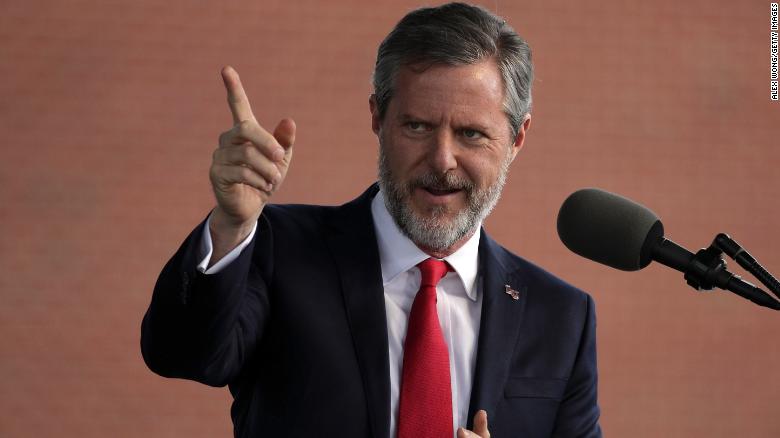
This time, it involves Jerry Falwell Jr.

Now, if anyone follows religious hypocrisy as closely as I do, the name Falwell should be painfully familiar. Between this guy, and his grifting, theocracy-loving, power-hungry snob of a father, that name is associated with the worst parts of the religious right.

Think of the most regressive religious doctrines you can imagine. From killing homosexuals to subjugating women to racial discrimination to promoting creationism to draconian abortion restrictions, these people are for it. They see the repressive government in “The Handmaid’s Tale” with envy. There is really no difference between them and the Taliban.

They see religion and religious values as a means of gaining power and influence. They use it to the utmost and dare to claim they represent truth, virtue, and order. They are hypocrites and frauds of the highest order. I cannot belabor that enough.

If you are a Christian who sincerely believes in the values it preaches, you should be disgusted by the Falwells. They embody a form of Christianity that’s both perverse and backwards. They don’t value the poor. They don’t value truth. They don’t even believe in loving they neighbor if they don’t live, vote, and believe as they do. They couldn’t be more antithetical to Jesus’ teachings.

Now, Jerry Falwell Jr. is embroiled in a lurid sex scandal that forced him to resign from his position at the indoctrination center/college that his father founded, Liberty University. In terms of sex scandals, this is hardly the kinkiest. This doesn’t involve sex with gay prostitutes while on meth. It mostly involves extra-marital affairs with Jr. and his wife, along with some light voyeurism.

In terms of juiciness, this is pretty tame. That doesn’t make it any less hypocritical. Remember, this is a man who once ran a university that had strict rules against any kind of pre-marital or extra-marital activities. It was so repressive that they even had rules against extended hugging, R-rated movies, and dancing. Again, these aren’t that different from the rules the once Taliban enforced.

Falwell Jr. and his supporters all imposed these rules and enforced them, justifying their draconian nature with their religious dogma. It wasn’t just for show, either. I actually been to the Lynchburg area. I’ve met people who have attended the poorly-named Liberty University. These rules are taken seriously. They’re enforced, too. The only way to avoid them is to never get caught.

Well, Falwell Jr. couldn’t handle that last part. He committed the most egregious sin of the religious right, which is to get caught and exposed as a hypocrite. By day, he preached fire and brimstone for anyone who dared to have sex with anyone who wasn’t their Christian spouse, but put in the minimum effort to live by that same doctrine.

I want to say it’s fitting. This scandal did cost Falwell Jr. his job and his credibility among his theocracy-loving cohorts in the religious right. However, it’s hard to take much satisfaction in his downfall.

For one, he will not suffer significant consequences from this scandal. He won’t go to jail. He won’t pay any fines. In fact, by resigning from his indoctrination center/university, he received $10.5 million severance package. That’s right, this wannabe theocrat who protested and condemned any sexual relation outside a 1950s sitcom is getting $10 million to step away from his job.

Even if you consider yourself religious and a bible-believing Christian, how is this justified? How does anyone justify being rewarded for resigning from their job because they engaged in the same sexual relations they so gleefully condemned? Seriously, what kind of mental gymnastics does someone have to do in order to say that’s right on any level?

Now, if Falwell Jr. sincerely sought forgiveness, and I don’t think for a nanosecond he will, he’d donate every penny to charity. There are plenty of charities, both religious and secular, who could do plenty of good with that money. It would be the most Christian thing you can do, given how much Jesus himself preached helping the poor.

However, there’s no way Falwell Jr. will ever do something that virtuous. It’s just not his style, nor was it his father’s. He’s going to keep preaching the same dogma, pretending he was “sick with sin” and now he’s healed. He’ll probably fight even harder to promote a repressive worldview that would see homosexuals murdered, promiscuity punished, and abortion outlawed.

If that weren’t bad enough, the same people who made him resign will probably still embrace him. There will even be a large contingent of right-wing Christians who will eagerly overlook his transgressions because his name is so closely associated with their movement. He might not have the same authority he once did, but he’ll keep fighting for the same repressive world that is so antithetical to American values.

On top of all of that, he’ll do all of this while living comfortably and luxuriously on his $10.5 million nest egg. Keep that in mind if you have even a sliver of sympathy for the man. Jerry Falwell Jr. offers absolutely nothing of the sort. He’s still a perverse manifestation of the kind of people who use religion to seek power, influence, and authority. He’s just a hypocrite on top of all that.

1 Comment

Filed under Current Events, extremism, gender issues, media issues, outrage culture, politics, religion

A Brief Note On Cardi B’s “WAP” For The Ben Shapiros, Religious Zealots, And Regressive Whiners

When I was a kid, one of the most obscene, deplorable things in media was Mortal Kombat. This video game was deemed so obscene, so violent, and so utterly wrong that it would destroy an entire generation.

Yes, people believed this poorly rendered violence would destroy a generation. Honestly, I’m insulted.

Not long after that, it was the overly sexual attire that Brittney Spears wore in her music videos. Apparently, that was deemed too graphic for a generation to handle. It was going to corrupt everyone with horribly impure thoughts about sexuality.

Again, having been young at the time, I’m insulted. Then again, there was one a time when Elvis’ hips were deemed too sexual. We, as a society, still have a lot of issues to overcome with respect to sex. It still makes us uncomfortable and uptight. It makes adults afraid for their children and children afraid of their own bodies. This is not new.

Now, let me make a quick note on Cardi B’s recent song and music video, “WAP.” For those not up on the acronyms, “WAP” stands for Wet Ass Pussy. I’ll give everyone who had one too many health lessons from priests, rabbis, mullahs, and republicans a moment to stop gasping. I’ll give another for the uptight regressive whiners on the left who think anything overtly sexual is somehow damaging to women.

Everybody okay? Good, because I think we should all take a step back and take a deep breath, while we’re at it.


Let me start by saying I’m not a big fan of Cardi B. I don’t like her music or her style, but I totally respect her effort. It’s not easy to achieve the status she has achieved. It’s even harder to stay relevant at a time like this when the dumbest things start trending for no reason.

Even though I’m not a fan, I still find myself respecting her more for the reaction she garnered for this song. From Ben Shapiro to Tucker Carlson, the people who often ally themselves with fun-hating religious zealots who seem to want women to be 1950s housewives are aghast at this song. That shouldn’t surprise anyone. These are the same people who whined about Dungeons and Dragons, for crying out loud.

What should be concerning, though, is how their reaction seems to imply they don’t know how female bodies work. It’s one thing to be ignorant about sexuality in general, but it’s not like Cardi B’s song is breaking new ground. Popular music has had graphic depictions of sex acts and genitalia for decades. Cardi B is just the latest. She just happens to be more overt than most when it comes to depicting female genitalia.

I know that’s going to make a certain crowd very uncomfortable, but so long as they’re thinking about Cardi B and wet ass pussies, I think this is a good time to remind them of something.

Female genitalia gets wet and moist when aroused.

Just like male genitalia getting hard, female genitalia getting wet and moist is part of the process.

In general, that’s a good thing. If a woman is going to enjoy sex, it’s important that she be aroused. That’s why foreplay is so important for both parties during sex. Whether you’re gay, straight, or something in between, this is basic human anatomy. None of this is a medical secret. Anyone can look up the process of female arousal, provided they can sift through the porn.

Cardi B singing a song about why it’s awesome is no different than a male singer celebrating how great it is to have a dick. There’s nothing wrong with, either. We’re all naked underneath our clothes. We all have certain parts of our bodies that garner more attention than others.

It’s okay to celebrate our bodies.

It’s okay to be horny, aroused, or excited.

It’s even okay to know your body well enough to understand what makes it feel good.

I know that’s always been a sore point for some people. The female body is still very taboo. Why else would we still censor female nipples? The idea of women enjoying sex is also taboo, thanks largely to some of those awkward feelings I mentioned earlier. It’s a big reason why we have an orgasm gap.

I’m not saying Cardi B’s song will do anything to mend that gap or temper the taboos surrounding the female body. I’m just think this is a good opportunity to acknowledge how awkward we still are about female genitalia. There are some reasons for that, but few are good or valid.

Female genitalia gets wet when aroused. It’s a good thing, in general. Women understanding how their bodies work is healthy and necessary. There will always be songs and media about the female form, as well as the male form. You can whine about it all you want. That’s not going to change anything.

Also, let this also be a teachable moment for men, women, and everything in between about the value of understanding your partner’s body. At the very least, let us all offer some sympathy and understanding to Ben Shapiro’s wife.

Today, it’s Cardi B’s wet ass pussy.

Yesterday, it was Elvis’ hips.

We have a long way to go with respect to appreciating and understanding sexuality. Let this be a step in that process.

Leave a comment

Filed under censorship, gender issues, health, human nature, outrage culture, political correctness, politics, sex in media, sex in society, sexuality, women's issues

Why Johnny Depp (And Men Like Him) Will NEVER Get The Benefit Of The Doubt

Let’s be honest with ourselves. We’re all subject to certain biases and assumptions. Whether it involves religion, politics, or which movies you like, we can only ever be so objective. We’re not machines. It’s next to impossible to analyze a situation with cold, unfeeling logic and render a perfectly objective judgment.

I make that disclaimer because I’m about to talk about the ongoing situation between Johnny Depp and Amber Heard. Please note that I’ve been avoiding this topic, but not because it involves serious, emotionally charged issues. I’ve touched on issues of spousal abuse and double standards in the past before. I’ve even attempted to pose distressing thought experiments about gender politics and double standards.

This case, however, is one of those instances where it’s just too late. There’s no possible way to have a balanced discussion anymore. It has gone beyond he said/she said, celebrity gossip, and double standards. At this point, this whole case is just one big, ugly affair in which any side can find a detail to confirm whatever bias they want.

The details of the case are simple, but disturbing. When the anti-harassment movement was picking up steam, Amber Heard accused her ex-husband Johnny Depp of serious abuse. Her stories were disturbing, but enough people believed them that he was ultimately fired from the Pirates of the Caribbean franchise.

At first, Heard’s story checked all the boxes for a standard #MeToo narrative. It was easy to believe because Johnny Depp, whatever you think about his movies, is an odd character. He’s no Tom Cruise, but many see him as eccentric, even by Hollywood standards. It’s not too hard to imagine him having a dark side.

Then, the narrative changed. During a number of legal battles, he accused Heard of being physically and emotionally abusive towards him. It’s not the typical narrative. There’s still a major taboo, as well as a gross double standard, surrounding women abusing men. It’s either not taken seriously or brushed off.

However, there’s one detail about Depp’s accusation that sets it apart from Heard’s. Unlike Heard, there’s actual audio evidence to back up his claims. This isn’t some rumored recording either. It was made public. It included direct quotes of Heard saying stuff like this:

“You didn’t get punched. You got hit. I’m sorry I hit you like this. But I did not punch you. I did not f***ing deck you. I f***ing was hitting you. I don’t know what the motion of my actual hand was, but you’re fine, I did not hurt you, I did not punch you, I was hitting you.”

To date, there has been no evidence to back up Heard’s claims about Depp. That didn’t stop her from doubling down on her claim as an ongoing libel trial wraps up. She still stands by her claims, even though she doesn’t have audio evidence to back up those claims. Even without it, there’s no guarantee the audio will make a difference.

This is where an uncomfortable, but unavoidable truth emerges. Regardless of your gender or your political leanings, this case has revealed something that has and will continue to disrupt any efforts towards gender equality.

Johnny Depp, and men like him, will never get the benefit of the doubt.

In making this statement, I’m not just referring to cases of spousal abuse. In the grand scheme of things, with respect to the various injustices driven by gender politics, we just can’t treat everyone by the same standard. We can try and we really should, but the results are always going to be mixed to some extent.

It’s hard to avoid. Were it not for that audio recording, how many would give Depp’s accusations of abuse by Heard any credence? He’s an eccentric, yet very successful actor in an industry that has a long history of enabling awful men. Him being an abuser just fits the standard narrative of how most people imagine spousal abuse.

Even before the anti-harassment movement, many of us already had that narrative ingrained in us. The idea of a woman abusing a man just doesn’t fit with every idea and assumption. We think spousal abuse and our immediate reflex is to think about a man abusing a woman. That’s the default. Anything other than that is going to draw skepticism.

On top of that, there’s also the beauty factor. That’s another distressing, but understated truth that this case has exposed. Amber Heard, however guilty she might be, is still a beautiful woman by most standards. Like it or not, beautiful women are far more likely to get the benefit of the doubt for pretty much everything, including abuse.

That’s not an extreme opinion. It’s well-documented that beautiful people have things easier and are given more credence. There’s even some biology to it. People are both drawn to beauty and feel compelled to trust, revere, and preserve it. Even if Johnny Depp was just as beautiful as her, relatively speaking, being a woman still gives her an edge.

Like I’ve noted before, women’s bodies tend to be more valued than men. As such, we’re just going to be more inclined to trust them, even if it’s for all the wrong reasons. That means, even with a verified audio recording of Amber Heard admitting physical abuse, we’ll give her the benefit of the doubt before Depp.

It’s not fair.

It’s not right.

It’s certainly not just.

Regardless of your gender politics, abuse is abuse. Women suffer from it, but so do men. Celebrities like Corey Feldman and Terry Crews have been vocal about it for years, but no matter how much awareness they raise, our biases don’t change. In cases of serious abuse, we’ll still never give them the benefit of the doubt.

There’s so much I can say about this case, which is one of the reasons I’ve avoided it. I’ve seen a lot of heated discussions between feminists, anti-feminists, liberals, conservatives, and even moderate-minded people. Very little actually comes of it. There’s no way this case will ever change anyone’s mind or shift their gender politics in any way.

Any instance of abuse is awful. Regardless of the outcome, it’s still going to leave everyone unsatisfied. Depp and Heard will have their respective supporters, but the overall narrative surrounding this case won’t change. A man accused of abuses a woman cannot and will not be viewed the same as a woman who abuses a man.

It’s tragic, as well as frustrating. That’s just the current state of affairs for gender politics. A lot will likely change because of this global pandemic, but this ingrained narrative will likely persist. The end result is more abuse and less justice.

Leave a comment

Filed under Celebrities and Celebrity Culture, Current Events, gender issues, media issues, men's issues, outrage culture, political correctness, politics, psychology, sex in society, women's issues

Jack’s World: Kamala Khan vs. America Chavez: How to Succeed (and Fail) With Female Superheroes

K0

Below is a video I made for my channel, Jack’s World. It’s based on an article I wrote a few years back by the same name. It tried to expand it in a few key areas, but the spirit of the piece is still there. I also added in a few visuals that I hope supplement my points. Enjoy!

Leave a comment

Filed under gender issues, Jack's World, Marvel, outrage culture, political correctness, politics, superhero comics, YouTube

What Exactly Does “Canceling” Someone Solve?

In general, I try not to comment on “cancel culture.” It’s not because I don’t have an opinion. I just think it’s a waste of time, for the most part. I’ve never seen it lead to a productive conversation on anything. Most of the time, it just amounts to people publicly whining about something they find offensive to a point where others cave, if only to stop the whining.

I am not a fan of this, to put it mildly.

Every time I see it trend, I want to bash my head on my computer screen while telling some of these people to grow thicker skin.

The world is a chaotic, ugly, offensive place. We can only do so much to change it. No matter how much change we manage to implement, it won’t change the past or the context in which it transpired. That’s especially true if the people others are trying to cancel are long dead.

Now, as much as I despite the term and what it represents, I also understand that it’s not as simple as its critics make it out to be. At times, I find the people who whine about cancel culture to be just as insufferable. Their whining can basically be boiled down to, “Other people want to cancel the stuff I like and it hurts my feelings!” That’s just as pathetic as wanting to blackball a celebrity for old tweets from 2009.

Both efforts are equally absurd.

Both efforts do nothing to make the world a safer, more tolerant, more inclusive place.

Most of the time, I find the effects of “cancel culture” to be inconsistent, at best. People will complain about the lack of diversity in media, politics, business, and certain industries, but those same people can’t be bothered to vote or support the things that reflect those preferences. They always revert to whining.

People on both sides of the political spectrum will do this. The same people who laugh at those who complain about a video game character being too sexy while whine just as much because Brie Larson said something that hurt their feelings. They’ll claim their efforts are not contributing to cancel culture, but it’s the same damn concept.

Unfortunately, despite the best efforts of decent human beings with thick skin and a good sense of humor, cancel culture is still a thing. People are going to condemn celebrities and public figures for things they said or did years ago. We saw it with Kevin Hart, which cost him a chance to host the Oscars. We’re seeing that now with celebrities like Jimmy Kimmel and Sarah Silverman, who once did skits involving blackface.

All this is happening as statues of historical figures who did deplorable things are coming down. Never mind the context or bigger picture of why they’re historical in the first place. They did something awful. Any image that exists that may glorify them in any way is just too much for our tender sensibilities.

In addition to people, the urge to cancel all things offensive has extended to art. Movies like “Gone With The Wind,” which definitely had some offensive imagery, was removed from streaming recently. Shows like “Paw Patrol,” which is geared towards children, was seen as too offensive at a time when police brutality is a hot topic.

Now, I’m not going to justify old tweets or outrage about movies from a different era. I know there’s nothing I can say to change the minds of those who are so offended by statutes, celebrities, or the names of football teams that they want them all canceled. There’s also nothing I can say to change the minds who think it’s part of some elaborate censorship effort meant to destroy freedom.

Instead, I’d like to ask a few simple questions for both sides to consider.

What exactly does canceling something achieve in the long run?

At what point does canceling something amount to censorship?

Why is canceling something more viable than simply growing thicker skin?

At what point does context stop mattering for something that’s offensive?

How does condemning the ugly history of the past make the present or future any better?

What right do you have to be offended by the feelings and preferences of someone else?

I won’t claim these are easy questions to answer, but to those who are behind or protesting certain cancel-this hashtags, I hope they offer perspective. Like it or not, cancel culture isn’t going away anytime soon. People are always going to be offended by something or someone.

In years past, it was uptight religious zealots who were aghast at anything that didn’t reflect or promote the values of a 1950s sitcom. Now, it’s uptight activists who are aghast at anything that doesn’t reflect their utopian fever dream that just happens to align with their politics. The passion is real, but the motivations are misguided.

You can tear down every monument.

You can censor every byte of media.

You can rewrite every textbook or novel that ever reflected outdated attitudes.

It won’t change what happened in the past. It won’t prevent people from being assholes in the future. If anything, it sends the message that people are too weak, stupid, or traumatized to handle certain ideas. That, in my opinion, is the most offensive thing of all.

Leave a comment

Filed under Celebrities and Celebrity Culture, Current Events, media issues, outrage culture, political correctness, politics, rants, television

Why The World Needs “Beavis And Butthead” Now More Than Ever

This is cool.

This news is so cool.

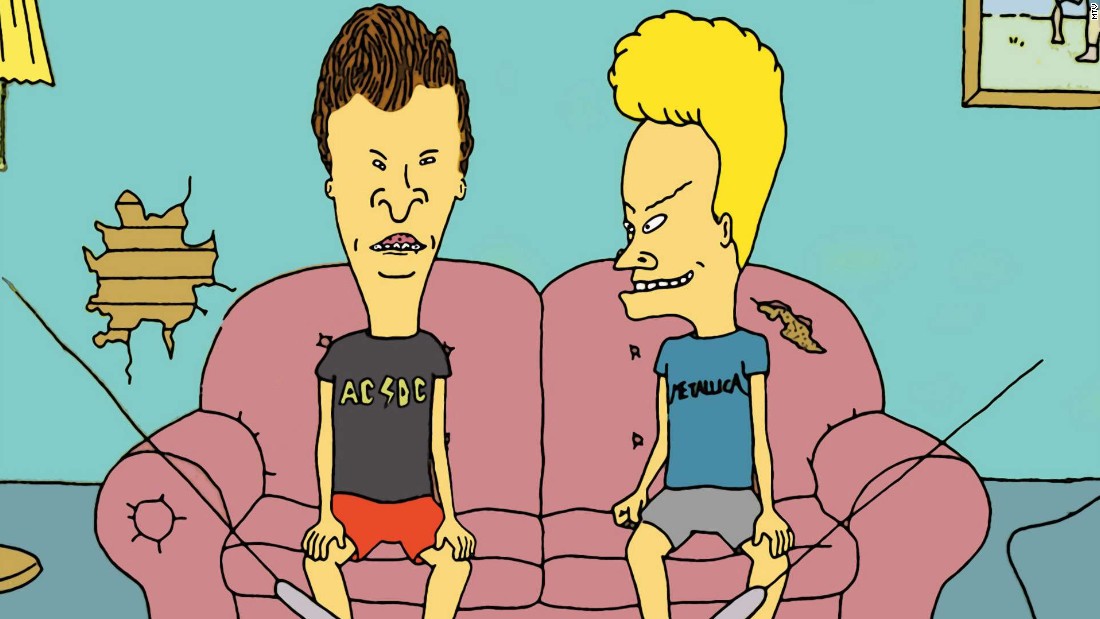
I wish I could do the laugh, but you’ll just have to use your imagination. It may take some paint fumes and expired soda, but it’ll help convey how cool this is. “Beavis and Butthead,” the lovable, dim-witted, foul-mouthed burnouts from the heart of 1990s MTV, are coming back to laugh, chuckle, and sneer at everything we hold dear in the 21st century.

It had been rumored for a while, but it was finally confirmed by The Hollywood Reporter.

THR: ‘Beavis and Butt-Head’ Returning With Two New Seasons (and Spinoffs) at Comedy Central

The Viacom CBS-owned cable network is reviving Beavis and Butt-Head, with series creator Mike Judge returning to relaunch and reimagine the franchise as part of a sizable deal that includes a two-season order and plans for additional spinoffs and specials.

Judge will return as the show’s central driving force and will write, produce and provide voices for both of the iconic characters, who became pop culture sensations in the early 1990s on Comedy Central’s corporate sibling MTV.

In the new incarnation, Beavis and Butt-Head will enter a “whole new Gen Z world” with meta-themes that are said to be relatable to both new fans, who may be unfamiliar with the original series, and old.

For this, we should all be grateful and not just because “Beavis and Butthead” promise the kind of crude laughter we all badly need right now. I genuinely believe that we, as a culture, need this not-so-dynamic duo back in our lives.

Those who weren’t alive or of age in the mid-90s neither understand nor appreciate the impact that “Beavis and Butthead” had. I don’t think it’s hyperbole to say that they were very much the pre-cursor to shows like “South Park,” “Family Guy,” and “Rick and Morty.” They pushed the envelope at a time when we could afford to push it and pop culture is better because of that.

They were very politically incorrect, even by the skewed standards of the mid-90s. I remember plenty of parents protesting their vulgar humor. They were also one of the few shows that my parents would not allow me to watch. They’d still let me watch R-rated movies like “The Terminator,” but “Beavis and Butthead” was off-limits. That’s how crude they were.

In hindsight, I’m sure my parents might feel differently. By today’s standards, “Beavis and Butthead” almost seem quaint. They were a couple of brain-dead teenagers mocking and scoffing at the world around them, not caring about larger issues or bigger pictures. They just wanted to hang out, slack off, and look at boobs. They are the antithesis of the hyperactive activists who swarm social media with politically-charged rhetoric.

That’s exactly what makes them so necessary at the moment. It feels like every show these days, be it an adult cartoon or a sitcom, has to take part in some larger discussion about politics or social issues. It can’t just be funny or entertaining. The professional whiners of this world won’t let that happen. I have a feeling those whiners will have a hard time with “Beavis and Butthead.”

They can yell, whine, preach, and criticize these two all they want. They could scold them for objecting women, perpetuating stereotypes, or offending the wrong people all they want. The reaction would be the same. Beavis and Butthead would just keep laughing and snickering, not at all moved by their rhetoric, and make some crude remark.

I believe, in some respects, that kind of reaction is what a lot of young people are feeling these days. They hear so many protests, criticisms, and complaints about the present and the past. Everyone is yelling, whining, and accusing the other side of being Nazis. At some point, it all just becomes noise. It burns out your mind, your soul, and your capacity to give a damn.

Beavis and Butthead” offers those tortured souls a breath of fresh air. They’re not going to preach to them. They’re not going to demand that they take a side on any issue. They’re just going to laugh, snicker, and make dirty jokes. Given how toxic the world has become in recent years, that’s just what we all need.

1 Comment

Filed under outrage culture, political correctness, television