Tag Archives: psychology

Sad/Tragic/Revealing Requests: Powerful Stories From Sex Workers

We all have certain assumptions about prostitutes and the people who hire them. We have just as many assumptions about drug dealers, politicians, spies, celebrities, athletes, CEOs, minorities, the elderly, and our next door neighbors. Most of the time, those assumptions are inaccurate or incomplete. Even those with a shred of truth are just a tiny tree in a vast forest.

When it comes to prostitutes, though, it’s hard to shake those assumptions. It’s easy to find horror stories about victims of human trafficking and people who fell into sex work because they were desperate or coerced. However, those stories don’t paint a full picture of what this illicit and taboo world is like.

I’ve talked about prostitution before and why decriminalizing it is a good idea, both for sex workers and their clients. I’ve tried to be fair and objective when it comes to assessing the issue. I try to paint it in a legal, logical, and moral framework that does justice to all those involved. However, there are real human stories within this issue that are worth telling that transcend the legal and ethical issues.

Forget for a moment that sex is so taboo and complicated. For a moment, just focus on the people involved. Specifically, focus on those who actually hire sex workers. The profession wouldn’t exist without them. Most have assumptions about who these people are.

When you picture someone who hires a sex worker, you picture some fat, ugly, self-professed misogynist who sees women as walking playthings and their bodies as nothing more than toys to rent. I won’t say there aren’t assholes like that in this world, but they make up a very small minority. The actual people who hire sex workers are very different and very diverse.

Below is a video from Radio TTS, a channel I highly recommend, that has former and current sex workers tell the stories of clients who have made sad, tragic requests. By that, I don’t mean kinky or perverse. These are requests that reveal real, damaged individuals who seek the comfort of a sex worker. Some of these stories are very powerful. I urge you to listen to them with an open and compassionate mind.

I do have to issue a bit of a trigger warning, though. The last story in this video is not for the faint of heart. It’s downright tragic, but it’s still a story worth telling.

https://youtu.be/REtZ7IGsQoU

I hope that shifted your perceptions about sex workers and their clients. Like I said, their stories are worth telling. Regardless of how you feel about sex, sex work, or the people who hire them, the industry will continue to exist and stories like this will keep happening.

Leave a comment

Filed under men's issues, prostitution, psychology, sex in society, sexuality, women's issues

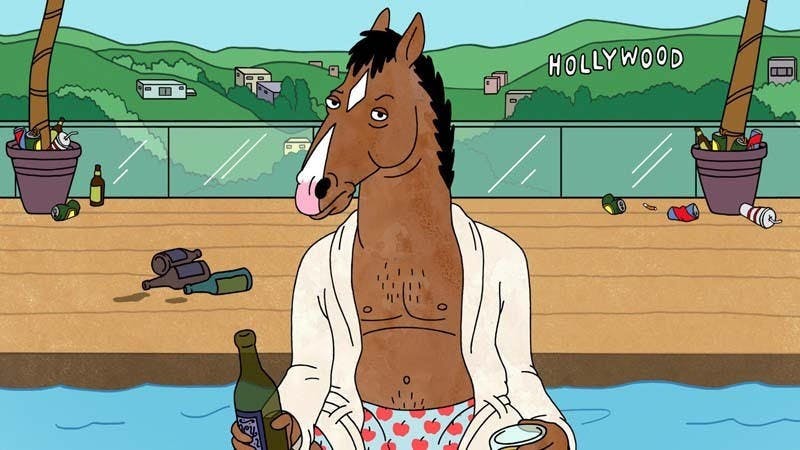
Why Do We Root For Characters Like Bojack Horseman?

Why do we root for people who do awful things?

Why do we root for the crazed killer in a slasher movie?

Why do we celebrate anti-heroes over traditional, upstanding heroes?

Why do we want people who do irredeemable things to be redeemed?

These are questions are similar in that they have a common theme, but they apply to a wide variety of situations. It feels like those questions have become more relevant in recent years as the standards for quality TV, movies, and characters has risen, which I’ve called the Walter White effect. While it can make for compelling stories, the questions themselves have distressing implications.

I’ve found myself contemplating those questions more seriously after the final season of “Bojack Horseman.” While I love this show and have praised its themes in the past, the final season really pushed the envelope on how far a show could go in telling stories about broken characters.

There’s no getting around it. From the first episode to the series finale, it’s abundantly clear that Bojack Horseman is not a respectable person. He’s a self-centered, narcissistic, alcohol, ego-centric asshole who has hurt people, exploited people, and taken full advantage of his celebrity status. If we knew someone like this in real life, we would never root for them. We’d probably root against them.

However, as I watched this show over the years, I still found myself rooting for Bojack. In following his story, learning about who he is, where he comes from, and how he deals with his problems, I genuinely hoped that he would find some semblance of peace in the end. Even as his sordid deeds started to come to light in the final season, a part of me didn’t want to see him fall, especially when he’d made so many strides.

Bojack isn’t the only character with this issue. There are countless other characters in popular culture, such as Don Draper and Wolverine, who do many awful things throughout their story. I’m a fan of those characters, especially Wolverine. At the same time, I can’t ignore the fact that he’s done terrible things that are on par with Bojack’s crimes.

At the same time, I root for Wolverine. I also find it easier to root for him over Bojack because while Wolverine is largely a product of what others have done to him, Bojack is a product of his own awful decisions.

Bojack has no special powers or excuses, outside being a celebrity. He has his share of issues and circumstances, from verbally abusive parents to substance abuse to legitimate mental illness. However, throughout the show, he’s still the one who makes the choices that ultimately hurt him and his loved ones. Moreover, he spends a great deal of time avoiding the consequences or downplaying them.

This is why I think the final season of Bojack Horseman” was so impactful. While I did often root for Bojack throughout the show, the final season made it a point to remind everyone of the terrible things he’s done. The show is brilliant in how it has everything collapse around Bojack, but not because of circumstance. Once again, his own terrible choices and endless excuses are what do him in.

Seeing him face real, actual consequences for his decisions helped give the show a sense of balance when it ended. Bojack didn’t have a happy ending. Very few characters did. At the same time, he wasn’t killed or endlessly punished. It just left him in an uncertain state where he faced consequences for his past choices. Now, he has to make new choices moving forward.

It’s not satisfying for anyone who’d been rooting for Bojack. At the same time, it’s cathartic for that part of us who wanted him to face consequences for the awful things he’d done. Even so, the fact we rooted for him in the first place is oddly jarring and I think it speaks to a part of our nature that’s difficult to understand.

On some level, I feel like people want to see horrible people redeem themselves. Redemption stories are powerful in both the world of fiction and the real world. I think it’s in our nature to want to see good in everyone, even when they’ve done awful things. The power and desire to forgive is real.

However, does that mean we should let horrible deeds go unpunished? It’s one thing to forgive someone for a lie, but what about someone who abandons his best friend when he gets fired? What about someone who nearly chokes a woman to death in a drug-fueled rage? What about someone who takes advantage of a woman with amnesia?

Those deeds are all things that Bojack did over the course of Bojack Horseman.” There are many others, some of which he never faced consequences for. Even though he’s an extreme example, even by fictional character standards, we still root for him. We still want him to find redemption. I think that says more about us than it does about him.

Awful people will do awful things, but when we see them trying to make things better, it’s hard not to cheer them on. I believe its in our nature to want to see others be the best they can be. The challenge is balancing that inclination to root for them and the need to punish shitty behavior.

Bojack’s story is over, but there are plenty of other characters like him that we root for. It’s not wrong to root for them, but it’s important to maintain a proper perspective. Redemption can be a powerful story. However, can there be any redemption without consequences?

I don’t know the answer. If you have some insights, please share them in the comments.

1 Comment

Filed under Bojack Horseman, human nature, media issues, psychology, television

What The “Mass Effect” Trilogy Revealed About Paragons, Morality, And Human Nature

I genuinely believe in the inherent goodness of humanity. I know that’s not a popular opinion, these days. I’ve even tried to remind people of it a few times. You need only look at the news, history books, or headlines from Florida to undermine your faith in human nature. I don’t deny that there’s plenty of bad, but there’s also a great deal of good. Sometimes, you find it in unexpected places.

In this case, the place is the epic space opera that is “Mass Effect.” It’s not just one of my favorite video game franchises of all time, which I often go out of my way to reference. It’s a game that dares to give players a choice in how moral or immoral they want to be. There are plenty of games out there that let you play virtuous heroes and deplorable anti-heroes. This game lets the player decide which path they want to follow.

In the original trilogy, it’s called the Paragon/Renegade system. Throughout all three games, you’re given choices on what to say or what to do in various situations. Some are inherently selfless and heroic, such as saving the Rachni from extinction. Others are just pure dick moves, like punching a reporter or shooting Mordin.

The path you choose doesn’t prevent you from completing the game, but it does affect the story. It also effects the endings of certain games and the plots of others. You can basically play the same three games and forge a very different story. You can be a pillar of virtue and nobility or you can be a total dick who still gets the job done. It’s entirely up to you.

I’ve played this game so many times that I’ve done both, but I prefer the path of the paragon. It just feels more rewarding at the end, even though it doing so does come at a price throughout the game. Recently, in an article by Forbes that featured one of BioWare’s developers, I found out that I’m not the only one who shares that sentiment. In fact, that sentiment is revealing in ways that go beyond the game.

Forbes: You’ll Be Surprised What Percent Of ‘Mass Effect’ Players Chose Paragon

The information comes from BioWare’s John Ebenger, who was retweeting a meme on Twitter about how devs give players choices to be evil villains in games, yet people always pick the nice options anyway. And it turns out that’s even more true than the meme suggests, as Ebenger laments that with all the work they put into the Renegade content in Mass Effect, that something close to a whopping 92% of players chose Paragon in any given moment.

Those bold parts are my doing. Regardless of your math skills, 92% is not a slim margin. That’s an overwhelming majority of players. Given the many stereotypes of gamers, it’s somewhat refreshing. When given the choice to be a hero or be a dick, they choose to be a hero.

That’s a profound notion because this is a video game. There are no real stakes outside beating the game. Players have no real incentive to be good or evil, but they still choose good. Even when making the renegade choices comes with legitimate advantages, players still go with the way of the paragon. I think that says more about people in general than it does about those who play games like Mass Effect.”

Say what you will about the genuinely evil people in this world. They exist. They make the news. They’re the kind of people we can’t overlook, but therein lies the critical context. We’re aware of such evil because it’s so rare. When most of the people are simply making paragon choices, it’s not noteworthy. It’s considered normal.

As someone who has faith in humanity and loves all things “Mass Effect,” I find that genuinely uplifting. It proves to me that most people are inclined to be good and decent. Even if you put them in a galaxy-spanning adventure against rampaging Reapers, they’ll still do the right things for the right reasons.

In a sense, Commander Shepard gave us insight into the nature of humanity and showed us that most of us have the heart of a true paragon. That’s something worth celebrating and cherishing.

Leave a comment

Filed under human nature, Mass Effect, psychology, video games

Telework, Online Learning, And What A Global Pandemic Can Teach Us About Both

See the source image

In general, people don’t radically change their habits unless there’s a huge incentive and/or a major disruption. By that, I don’t just mean habits relating to drug addiction, exercise regiment, or bedroom kinks. I’m mostly referring to peoples’ overall tendency to keep doing things the way they’ve been doing them, even if they have major flaws.

While it’s rare to get huge incentives to change those tendencies, it’s just as rare to face the kind of disruption that would force people to re-evaluate how they do things. People are, broadly speaking, pretty stubborn. It takes a lot of time and energy to abandon old habits in exchange for new ones. There’s no guarantee they’ll work. Sometimes, they’ll fail miserably.

In terms of disruptions, it’s hard to top a global pandemic. There’s just no way to overstate how big an impact something like that can have on a society. Pandemics have changed the course of history, as well as the course of society. They are the million-ton sledgehammer to whatever stable social system we have in place.

The ongoing crisis surrounding the Coronavirus/COVID-19 pandemic is the biggest disruption our society has faced in over a century. It has jarred us all from our comfort zone, to say the least. Between cancellations of major events and concepts like social distancing, we’ve had to reassess how we go about our daily lives.

As frustrating and frightening as it has been, these kinds of disruptions also present rare opportunities. We may never face a situation like this that affords such opportunities, so we would be wise to take advantage of it. In this case, it has to do with how we go about work and school.

We all have this time-tested notion of what it means to have a job and get an education. Having a job means going to an office or work site, doing your work there, and then coming home after a certain amount of time. It varies from person to person, but that’s the general approach.

Going to school is similar. You get on a bus, go to some building across town, stay there for six or seven hours while going to multiple classes, and then you come home. That’s what we think of when we think about getting an education and going to school.

Now, thanks to a global pandemic, this time-tested system has been disrupted. Going to crowded facilities is now a health hazard. Kids can’t go to some big school facility and workers can’t go to some crowded office for a third of their day. Instead, people are having to telework or utilize online classes. For now, this is just a temporary measure while we endure all this massive social upheaval.

At the same time, it also gives us a rare opportunity to see just how necessary it is to go somewhere else to do our work or get our education. It’s a relevant issue that goes beyond our current crisis. These questions are worth asking.

How necessary is it for us to go to some office or school to achieve what we seek?

Is that system really the best we can do?

What are the limitations of telework and online schooling?

What can be done to mitigate those limitations within the current infrastructure?

Can people be more productive with telework and online schooling?

How effective is our current system at supporting these options?

Now, I’m the last person who should defend the current school system. My past experiences with public school give me a somewhat heavy bias in assessing it. However, I doubt I’m alone in saying the current system has room for improvement.

When it comes to telework, I have less experience. In the past, I’ve had instances when I’ve been successful with telework. It depends on the situation and what I’m working on. I suspect that’s common for many jobs. An accountant and a brain surgeon work in very different spheres. One is easier to do at home. The other is a lot messier, to say the least.

It’s worth taking note of just how much we’re able to function over the next few weeks with respect to telework and online schooling. If a sizable chunk of the population demonstrates they can get the job done this way, be it with telework or online schooling, then that’s valuable insight that we should not ignore.

I understand that there are some jobs that cannot be done from home. There are also some things you can’t learn remotely. However, looking back at my experience in school, I’d say about 80 percent of what I learned could’ve been learned online. In terms of work, over half of what I did could’ve been done from home with a laptop and an internet connection.

There’s no reason we should be locked into this mindset that work involves leaving our house or that learning has to take place within a school. There are other ways to do these things and certain people might function better that way.

During a massive upheaval like this, things cannot and should not go back to exactly how things were. We have an opportunity to find a new approach to school and work. I say we take advantage of it as best we can.

1 Comment

Filed under Current Events, Environment, futurism, human nature, technology

How Much Money Do You Really Need?

Most people aren’t born into wealth. The vast majority of the population has no idea what it’s like to be a billionaire, a millionaire, or someone who just doesn’t live with the constant dread that they’re just one missed paycheck away from total ruin. There’s a reason why they’re called the one percent and it goes beyond basic math.

I admit I’ve often contemplated what it would be like if I suddenly became wealthy. I’ve even articulated some of those musings in detail. I suspect most people have day-dreamed at some point what they would do if they suddenly had a billion dollars at their disposal. For most people, it’s difficult to contemplate because, like it or not, money changes people and not always for the better.

When someone asks what you would do with a million dollars, it’s easy to come up with all sorts of answers. Some are inevitably going to be more absurd than others. The movie “Office Space” articulated that point perfectly. However, there’s another question that I feel is worth asking and I also feel it’s more revealing.

How much money do you really need?

I’m not talking about fantasy wealth here.

I’m not talking dream vacations, dream homes, or spending sprees.

How much money do you actually need to live a happy, comfortable life by whatever standards you define it?

That’s a harder question to answer because it varies for everyone. There are some people in the world who think a million dollars isn’t enough. Depending on where you live in the world, that’s not an unreasonable position. Even with those variations, it still doesn’t zero in on the answer. How much is enough?

I’ve seen how people act when the lottery gets above the $300 million mark. In my experience, once things get over $100 million, that’s when even a typical day dream isn’t enough to appreciate just how much money that is. I’ve tried to imagine it and in every case, I come to the same conclusion.

If I had that much money, I honestly wouldn’t know what to do with it.

It’s not that my needs are simple or cheap. I think my costs are fairly average for someone living in a suburban area. If I had $100 million, didn’t invest a penny in stocks or bonds, and stopped making money today, I still wouldn’t be able to spend it all before I turned 100.

I probably couldn’t even spend $50 million. When things get into the billion-dollar territory, it gets even more absurd. Even millionaires have a hard time fathoming how billionaires operate. Most people, even with decent math skills, don’t understand just how much money a billion dollars is.

At that point, you’re way beyond basic needs and wants. You’re in a domain in which you literally cannot spend all that money at once. You have to legitimately try to lose it all and while some people have done that, it often happens in the process of seeking even more billions to add to their fortune. It rarely occurs just by spending money on your day-to-day needs.

In that context, contemplating how much money you actually need says more about you and your situation than it does about your understanding of finance. If you need that much money to be comfortable, then that says something about your mindset and it’s not just about greed. Some want to change the world for the better with that money. Some want to impose their will on it. It depends on who you are and what drives you.

For me, personally, I don’t think I need anything above $10 million. I probably wouldn’t need more than $5 million just to maintain my current living costs, adjusting for inflation, and planning for my future. That might change if I ever get married and have kids, but for now, that’s my perspective.

I’m interesting in hearing how others would respond to this question. How much money is enough for you? How much would you need to be content, stable, and happy? Let me know in the comments. I’d be happy to revisit this issue again down the line.

Leave a comment

Filed under Current Events, human nature, philosophy, politics, psychology

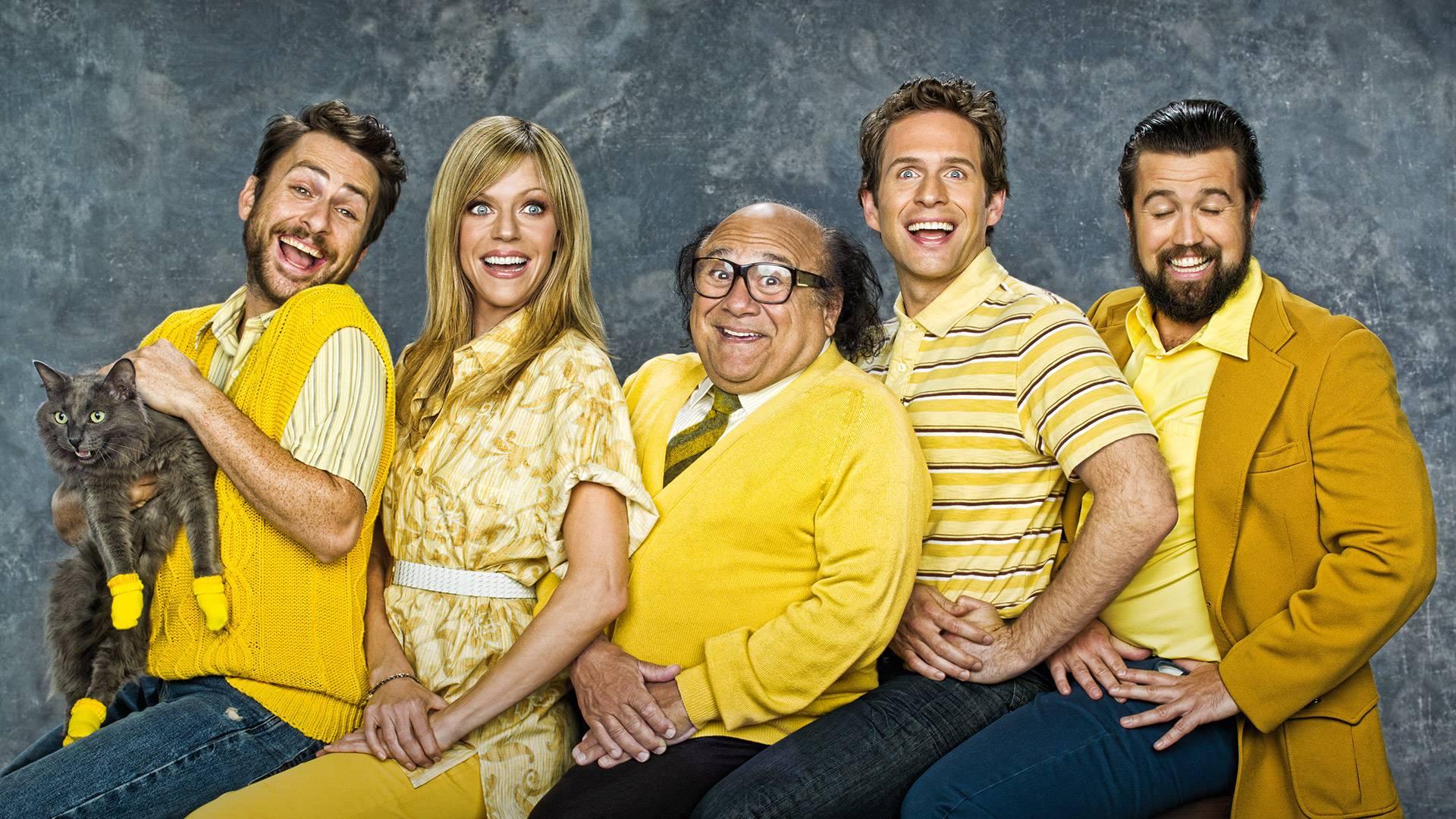
The “It’s Always Sunny In Philadelphia” Filter: A Simple Process For Making Choices

How do you make good choices?

How do you know when something is right, just, and ethical?

How do you go about determining the morality and ethics of any given situation?

These are the kinds of questions that lawmakers, philosophers, scientists, religious leaders, and YouTube commenters debate constantly. It’s one of those deep, fundamental issues that everyone contemplates regularly, but few can claim to understand. The world is so chaotic and complicated. It’s incredibly difficult to surmise a simple, concise, consistent standard for making good choices.

However, there are ways of simplifying that daunting process. It may still be impossible to completely resolve such issues for every person in every situation, but we can make it easier. As it just so happens, one of the greatest TV shows of all time, “It’s Always Sunny in Philadelphia,” provides us with an important tool that also happens to be hilarious.

Using that tool is simple. It goes like this.

If a certain choice, response, or recourse seems like someone that the Gang would do in It’s Always Sunny in Philadelphia,” then chances are it’s not the one you should follow.

To anyone who has watched this show in any capacity, that makes total sense. For those who haven’t had a chance to watch this hilariously obscene middle finger to every sitcom ever made, here’s just a sample of what I’m talking about.

Even if you’re not familiar with the show, this should at least get you familiar with the implications. I’ve written aboutIt’s Always Sunny in Philadelphia” in the context of its masterful handling of dark comedy. I concede that this is one of those shows that isn’t for everyone. It’s hard to explain to most people the appeal of a show that finds humor in baby funerals, crack binges, and unauthorized Lethal Weapon sequels.

At the same time, it’s because this show dives head-first into dark comedy that it paints a clear picture on what goes into making bad decisions. There’s no getting around it. The characters in this show, also known as the Gang, are not morally upstanding people. In fact, they don’t even try to be moral. Nearly every episode involves them pursuing some elaborate plot based entirely on selfishness, greed, ego, or misguided pettiness.

They’re not stupid on the level of Homer Simpson or Peter Griffin, but they aren’t very smart either. Everything they do, from hoarding gasoline in an oil crisis to stalking a waitress, is incredibly simplistic. It can always be reduced to a basic level of selfish narcissism that never goes beyond basic.

It’s because the Gang’s choices are so basic and self-serving that the show is so funny in the first place. “It’s Always Sunny in Philadelphia” essentially takes the unique setup of a sitcom to amplify all the terrible traits and tropes that frequently go along with other shows that try too hard to be deeper.

At its core, It’s Always Sunny in Philadelphia” doubles down on the simplicity of having characters who don’t even try to be moral. Through 14 seasons, the Gang actively avoids any effort to change or grow in a meaningful way. Charlie, Dee, Dennis, Mac, and Frank are the same selfish narcissists they are in Season 14 as they are in Season 4.

Even as the show has gotten bolder and more absurd with the Gang’s antics, their motivations are the same. They don’t need to be overly complex to be funny. That’s what makes these characters and the entire premise of “It’s Always Sunny in Philadelphia” such a great filter.

The next time you’re in a situation where you need to make a decision, try and apply this filter. What would Sweet Dee do? What would Frank Reynolds do? What would Dennis, Mac, and Charlie do? If you can determine that, then you can also determine exactly what not to do.

Even if it’s not specific, the moral filter of It’s Always Sunny in Philadelphia” can act as a reminder. If you’re going to be exceedingly selfish and narcissistic in making decisions, then you’re tempting fate the same way the Gang does with every absurd antic. Doing so will rarely pan out well for you and those around you.

If you need further proof, just look at Rickety Cricket.

Leave a comment

Filed under human nature, philosophy, political correctness, psychology, television

A Perspective On Generation Gaps

As a general rule, I try not to talk about politics with anyone. I avoid getting into political debates online, as well. I used to actively seek that out. I’ve since learned there are less frustrating ways to waste my time.

A significant part of that frustration comes from talking politics with people who are significantly older or significantly younger than me. I’m in my thirties now. I still remember my teen years, but I also can’t deny that I’m different now than I was back then. I’m still the same person. Time and perspective just have a cumulative effect.

I think most people experience the same thing, regardless of their age. I’ve talked about issues regarding generation gaps before. I imagine they’ll become even more prominent as Generation Z comes of age. It’ll only get more divisive as the Baby Boomers start to retire.

I know this because I’ve gotten into more than a few debates with older relatives and family members. Every time politics comes up, they’ll share stories with me about how things used to be, how they see things now, and how they think things are going to pan out in the future. I’m not going to lie. It has led to more than a few “Okay Boomer” moments.

Those moments shouldn’t define the discourse, nor should it be an intractable barrier. I’ve faced similar barriers in talking politics with people far younger than me. It’s hard to explain the complexities of the world to teenagers when their experiences are so limited.

With that in mind, I’d like to take a moment to offer a brief perspective on generation gaps and discussing controversial issues. Whether it’s politics, society, or life in general, I feel it might help to take a step back and try to see the forest from the trees. To that end, here’s a quick insight that I hope people from every generation can appreciate.

Your attitudes, beliefs, and assumptions are not the same as they were 10 years ago.

Your attitudes, beliefs, and assumptions will not be the same as they are 10 years from now.

However, at your core, you are still the same person.

The attitudes, beliefs, and assumptions of every functioning adult you’ll encounter are not the same as they were 10 years ago.

The attitudes, beliefs, and assumptions of every functioning adult you’ll encounter will not be the same 10 years from now.

However, at their core, they’re still the same people.

You and the people around you may change, but change is never anyone’s first inclination. It only takes hold when it feels right, necessary, or convenient.

Whether you’re young, old, or middle aged, I hope this helps make sense of things. I don’t claim to be smarter or more insightful than anyone else with an internet connection. I just believe that making sense of this chaotic world and the many people within it starts with a balanced perspective.

You won’t be able to understand every idea from every generation, but it’ll remind you that people have more alike than they are different. We don’t have to identify with all those differences. It’s just easier to get along when we remember just how similar we are.

Leave a comment

Filed under Current Events, human nature, philosophy, political correctness, politics, psychology

How To Combat Writer’s Block: A Few Simple Tips

See the source image

Writing is challenging. Anyone who has written a grade school essay can attest to that. It’s even challenging for those who do it every day. I’ve been writing constantly almost every day since I was 15 years old. I’ve more than met the 10,000-hour rule when it comes to mastering a skill, but I still find it challenging.

A big part of that challenge is dealing with writer’s block. I don’t care if you’re Stephen King, William Shakespeare, or Kurt Cobain. You’re going to hit a dead end at some point. You’re going to get to a point in your writing where you feel stuck. I can’t count how many times I’ve been in that position. I’ve thrown chunks of entire stories away, along with entire stories, because of it.

At the same time, overcoming writer’s block is probably the best way to progress as a writer. Overcoming a challenge forces you to refine your skill in unexpected ways. I’ve probably learned more by dealing with setbacks than I ever have navigating a successful idea.

I know there are tons of tips out there for beating writer’s block. Most are just glorified placebos, but some do offer meaningful advice. I know because I’ve tried most of these tips in some form or another over the years. Talk to any writer and they’ll probably tell you they have some special trick to getting around it.

I can say with relative certainty that there’s no one special trick that works for every writer. If there were, then someone would’ve patented it and overcharged for it by now. At best, there are strategies you can utilize. They don’t work the same way for everyone, but they do work in most situations. What follows are some of the most effective tips I’ve used over the years. I just thought I’d share them in hopes they work for others.


Tip #1: Create A Routine For Writing

This works well for me because I like working within a routine. I’m very regimented when it comes to work. I like having set times that I can plan around. Doing that with writing has always helped. I designated a certain chunk of time of day, usually an hour, specifically for writing. Doing so helps with more than just saying productive.

Even when I’m not feeling particularly inspired, I often find my brain starts working better when those times arises. Essentially, I’ve trained my brain to activate its writing function at set times. On some days, it works better than others. It still works and if you’re the kind of person who likes sticking to a schedule, this is a good way to essentially plan around writer’s block.


Tip #2: Exercise (To Get Your Brain Active)

This may not appeal to those who aren’t inclined to exercise. Even if you hate it, I still suggest doing some level of rigorous activity, be it a trip to the gym or a few walks around the block. Anything that gets your blood flowing helps you feel more alert and less lethargic.

For beating writer’s block, that’s important. It’s tempting to just stop writing and lounge about, eventually falling asleep in a stupor. In my experience, that makes writer’s block even worse. I can be stuck on an idea for hours. Then, I’ll just go jogging for a bit and something will come to me. Again, it doesn’t always work, but it works often enough to be a vital part of my approach.


Tip #3: Work On Something Else (That’s Smaller)

No matter how determined you are to finish something, a nasty bout of writer’s block just keeps you stuck in place. You can punish your brain all you want. Nothing will come out. In this case, it’s important to keep your brain working. That’s when having something else to work on can help.

I rarely have just one project to work on. I always have a few little stories here and there on the side. Some never pan out, but they help when I’m stuck on other stories. As long as I’m producing something, it keeps the creative juices flowing. Eventually, they’ll flow well enough to get me back on track with other projects. It can get chaotic, but the key is to just keep your brain chugging along.


Tip #4: Read Over Older Works

It may sound vain, but I’ve found that taking a step back and appreciating what you’ve finished in the past helps maintain a healthy perspective. Even if you haven’t written much and you think your previous works were awful, going back to read them shows that you can do this. You can finish a story.

That reassurance, on its own, helps give you the confidence you need to keep at it. One of the worst effects of writer’s block is how much it hits your confidence. The more you lose, the easier it is to get stuck. Reading over old works doesn’t just show you how you’ve succeeded in the past. It shows you how far you’ve come. It can inspire you in many ways, but you only need one to crack writer’s block.


Tip #5: Write Bits And Pieces (And Combine Them Later)

I find myself doing this often with stories I’ve yet to refine. Most of my work starts off with a focused idea. The challenge is building structure around that idea. While I usually try to go from start to finish in one fluid process, it doesn’t always work that smoothly. Sometimes, I start with the parts I’ve already fleshed out in my head and then just work around them.

It can be messy. Sometimes, the story you craft feels disjointed when it’s written in pieces. You can even tell at times when something was cut and pasted into a scene. Ideally, you fix that sort of thing when you revise it. It’s still a challenge, but it’s much easier to revise something that you’ve already written, as opposed to forcing something out for the sake of breaking writer’s block.


These are all just simple tips that have worked for me in the past. If you have others you’d like to share, please do so in the comments.

Leave a comment

Filed under Jack Fisher's Insights, psychology, writing

An Uplifting Story About Family, Baby Showers, And Unexpected Kindness (On An Airline)

Sometimes, your faith in humanity needs a little boost. Even as someone who genuinely believes in the inherent goodness of most people, I admit I sometimes need a reminder. It’s true. People can be horrible at times, but they can also be awesome. It’s easy for the horror to catch your attention because, in the grand scheme of things, it’s rare.

That, alone, is worth taking comfort in. However, it’s also worth noting those who go above and beyond to be awesome in a very special way. As such, here’s a brief story involving real people who did something amazing and were rewarded by an unexpected gesture that made it even more amazing.

On top of that, it happened in the middle of a flight from Colorado to California. That’s right. Being crammed into a giant metal tube flying at 500 miles-per-hour wasn’t enough to stop this incredible gesture. I wish I could do justice to how wonderful all the people are in this story. I’ll let the details speak for themselves.

Today: Strangers on plane throw baby shower for couple flying home with adopted newborn

Bringing a baby home is always a special moment, but it was made even sweeter for Dustin and Caren Moore on a Southwest Airlines flight. When the new parents flew home to California with their adopted newborn daughter, they were treated to an impromptu baby shower.

In a Twitter thread that has been liked more than 15,000 times, Dustin shared details of the kindness the family experienced from Southwest flight attendants and passengers. He said he was inspired to share the story last week after he was having a tough time and wanted to bring some positivity to Twitter.

“It’s been a difficult week. But, rather than publicly air my grievances, I’d like to share w/ you the kindness strangers offered us the day we brought our daughter home,” he wrote. “I hope our story uplifts you, and reminds you there is goodness to be had in this world.”

On Nov. 8, 2019, the Moores flew from Colorado to California. “Parents who after 9 years of trying had been blessed with their first child. Parents who felt scared, but determined in their new role,” he wrote of their emotional state during the trip.

When their daughter woke up from a nap and needed a diaper change, Dustin said a flight attendant named Jenny cleared space in the back of the plane and gave them privacy.

“After a change, Jenny and another passenger complimented my beautiful daughter and politely asked what had prompted a flight with such a young infant. I gave them the shortened adoption story, to which they hastily offered congratulations, and shared a few more kind remarks,” he wrote.

A few minutes later, another flight attendant named Bobby asked about their daughter, so Dustin said he shared a few details about their adoption story.

“Then, we heard the intercom,” he wrote. “The attendant Bobby came on and announced a special guest on the flight. Our daughter. ‘She’s just been adopted by her parents Caren and Dustin, and is making her way home.'”

The entire cabin erupted in cheers and applause.

Flight attendants then passed out napkins and asked passengers to share any words of wisdom they may have for the new parents. At the end of the flight, 60 napkins were handed to the Moores, which they have now placed in a scrapbook.

Dustin said he and his wife were blown away by the kindness of strangers. He added that some of the tips have already been helpful.

Take a moment to wipe the tears from your eyes. Then, take another moment to consider the scope of the kindness included in this one story. Two people were loving and kind enough to adopt a child and embrace her as their own. It’s a beautiful gesture that deserves praise, but never makes the news.

It doesn’t have to, though. The people on this flight, who were total strangers, mind you, saw this gesture and returned the favor. They gave this wonderful couple the kind of love and admiration that will likely stick with them for the rest of their lives. That’s the power of kindness. That’s how great people can be when given a chance.

Remember that the next time you’re feeling cynical and jaded. People can be wonderful when you give them a chance. It can be even more wonderful when you repay kindness with kindness.

3 Comments

Filed under Uplifting Stories

Hard Life Lessons You Can Only Learn Later In Life

Life is full of hard lessons that can only be learned through hardship. Anyone who isn’t rich, beautiful, or well-connected understands that. You’re going to go through periods in life when it feels like fate, luck, and divine forces are conspiring against you. That’s not a good feeling. I understand that. It’s also a feeling that’s worth embracing.

I say that as someone who stagnated and stumbled through much of his teen years and early 20s. In terms of social skills and overall outlook, I was behind the curve longer than most. I’ve shared my various struggles from high school. I’ve also shared personal stories of major low points in my life. I don’t doubt that others have endured far worse, but the over-arching themes are the same.

When you’re young and inexperienced, you see the world a certain way. When you’re older and more experienced overall, you see it another. Time, perspective, and basic human psychology has that effect on most people as they live their lives. An unfortunate byproduct of that is there are some lessons that you can’t learn until you’re older.

That’s a sentiment I’m sure many teenagers hear on a regular basis. Some will roll their eyes and I don’t blame them. I probably did the same when I was that age. It’s also a message that most adults have a difficult time conveying because they have the benefit of hindsight. Make no mistake. Some lessons are only visible through hindsight.

For those who struggled as teenagers, like me, I imagine that’s not news to them. I also imagine there are many other lessons that weren’t obvious until many years later in life. My own parents have shared some of those lessons with me. I’ve tried to share those lessons with younger friends and relatives. It’s hard to get across. In some cases, it’s impossible.

Those lessons are still worth putting out there, if only to act as reminders through the filter of hindsight. Here are just some of the lessons that I’ve learned personally or seen in others. If you have others to share, please do so in the comments.

Lesson #1: The world doesn’t owe you anything and whining about it won’t change that.

Lesson #2: You can’t know how right or wrong someone is for you until you’ve spent more than a few years with that person.

Lesson #3: You never know for sure what you want to do with your life before and during puberty.

Lesson #4: A single failure won’t ruin your life if you learn from it.

Lesson #5: Every opportunity is a gamble, but you can control the odds to some extent through determination, work ethic, and talent.

Lesson #6: There are people in the world who are far smarter and capable than you’ll ever be, no matter how hard you work or believe in yourself.

Lesson #7: Convincing people to change their minds about anything is one of the hardest things you’ll ever do.

Lesson #8: It’s okay to be disappointed or upset, but at some point, you have to try to get over it.

Lesson #9: Like or not, having the right attitude can be the difference between happiness and misery.

Lesson #10: It’s just as easy to fall out of love as it is to fall in love.

Lesson #11: Habits, both good and bad, are difficult to break, but can be managed to some extent.

Lesson #12: People may be driven by basic needs, but are more complicated than you realize.

Lesson #13: It’s never too late to change your path or reinvent yourself, but the longer you wait, the harder it will be.

Lessons #14: Many of the things you think are important now won’t be important years from now.

Leave a comment

Filed under human nature, Jack Fisher's Insights, psychology