Tag Archives: intimacy

Neuralink: How Brain Enhancement Will Make Us Sexier (And More Loving)

https://i0.wp.com/images.bwog.com/wp-content/uploads/2013/05/shutterstock_128387714.jpg

At the beginning of every year, millions people stand in front of the mirror, look at all the weight they’ve gained since Christmas, and promise to themselves that they’ll eat healthier and exercise more for the coming year. It’s an entirely noble promise, seeking greater health. It’s also a promise that most are destined to break.

Any effort to better ourselves, no matter how healthy or noble, is an uphill battle. That’s why the vast majority of diets do not work on a long-term basis. You can lose a little weight here and there, but it almost always comes back. Then, you hate yourself a little more, look for excuses, and go back to drowning your sorrows in a tub of ice cream.

However, it’s not entirely your fault that you broke that promise to yourself at the beginning of the year. It’s not even the fault of bullying, the media, or even food companies that insist on making unhealthy food that tastes too damn good. No, it’s the fault of one organ in your body. No, I’m not talking about your stomach either. It’s your brain.

Yes, your brain is the reason why you can’t keep your promises and stay health. Your brain is the reason why you can’t keep the weight off when you diet. Your brain is the reason why your body is shackled to unhealthy habits that keep our bodies flooded with greasy, sugary food and on the couch.

Naturally, this does affect our sex lives, our love lives, and everything in between. When we’re unhealthy, it makes it damn hard to get in the mood, sustain the mood, and make that mood meaningful. How can we when we’re craving sugar cookies, beer, and Netflix? Again, it’s our brains. It’s the reason why we can’t live healthier, sexier lives.

That brings me back to Neuralink. Yes, I’m not quite ready to shut up about it yet. There’s just so much to talk about and so many implications, some sexier than others. I’ve been talking largely about the big picture and the pragmatics of brain implants and brain enhancement so far. Now, I’d like to get to the sexy stuff.

Last year, I talked a bit about how I essentially shamed myself into adopting a healthier lifestyle. I went from a cookie-eating, soda-drinking couch potato to a guy who exercises almost every day and tries not to gorge on donuts every day. It shows in my health and my sex appeal. I can take my shirt off at the beach and be fairly certain that the women who see me won’t be disgusted.

That process of getting healthier was hard. My brain was my biggest enemy in that it fought me every step of the way. That’s because the human brain isn’t necessarily wired for a healthy lifestyle in an era where there are no famines and no hungry bears trying to eat us. It’s wired to basically do what makes it and the body happy.

Unfortunately, that often means eating copious amounts of the fattening sugar that used to be such a rarity in the natural world before modern sugar processing. Again, you can blame big corporations as much as the kale-eating hippies of the world, but the issue isn’t capitalism. It’s our faulty brain wiring that hasn’t been updated in 200,000 years.

Our brain is wired to value sugary, tasty foods that give us a quick dopamine rush. It’s also wired to maintain existing habits and mentalities over creating new ones because change is a stressful process. Being the crude piece of hardware that it is, the brain generally tries to avoid stress.

Naturally, this unhealthy brain wiring affects our sex lives as well. While we are a very social species, our brain often struggles between selfish and affectionate tendencies. That means that once the brain gets its dopamine rush from the sex and love we make, it’s generally pretty selfish about it.

That’s why we have men who will do a few casual humps, blow their load, and then look for an excuse to turn on Sportscenter. That’s why we have women who will just lie there, bark orders, and expect their partner to do all the work. That’s why we find ourselves in relationships where two lovers just aren’t on the same page, get bored with each other, and look for the next dopamine rush, whether it’s the pool guy or the babysitter.

It’s a sad and unpleasant byproduct of a brain that has been stuck on the same settings since the stone age and is at the mercy of crude, unguided chemistry. There are those who can overcome it to lose a lot of weight and form marriages that last more than half-a-century. Unfortunately, that’s the exception and not the norm.

That’s where Neuralink comes in. It’s doing what no diet pill, self-help book, or talk show host ever dared to do. It’s getting right to the root of these problems, which is in our brains. Tweak the wiring and suddenly, every weight loss guru is out of a job.

How would that work? Well, keep in mind that Neuralink‘s stated goal is to integrate computer technology directly into our brains to improve various brain functions. Well, that improvement part isn’t just limited to basic math and keeping up with the latest season of Scandal.

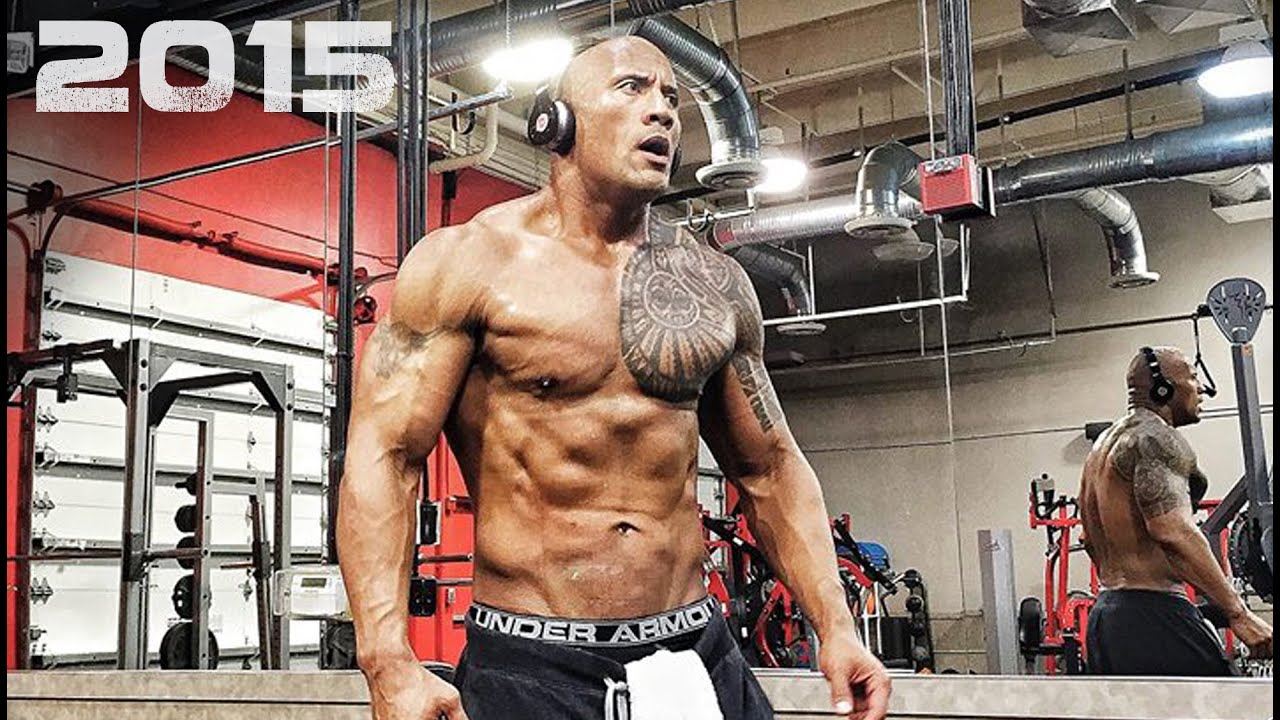
Picture the brain of someone who is insanely fit, like the Rock or Kate Hudson. How is their brain wired? How do they get themselves to do what they do? Well, we already know how to scan brains. It wouldn’t be easy to decipher the particulars of that wiring, but it’s not impossible. A neural implant would simply mimic that wiring, setting our brains up so that we have the right mindset for being healthy.
It goes even farther than that though. A neural implant means we’re not restricted to the brain’s traditional limits. That means it could, in theory, wire our brain in a way that makes us less hungry. We would no longer succumb to that powerful impulse to buy a dozen donuts every time we walk by a Krispe Kreme.

Beyond mitigating hunger, an implant could also wire our brains in a way that makes us feel an extra rush of dopamine when we exercise. Remember that so-called “coregasm” I mentioned when I talked about different kinds of orgasms? Well what if doing 100 sit-ups or 100 push ups gave us the kind of orgasm usually reserved for three-ways with cheerleaders and Hugh Jackman? You’d become a fitness junkie overnight.
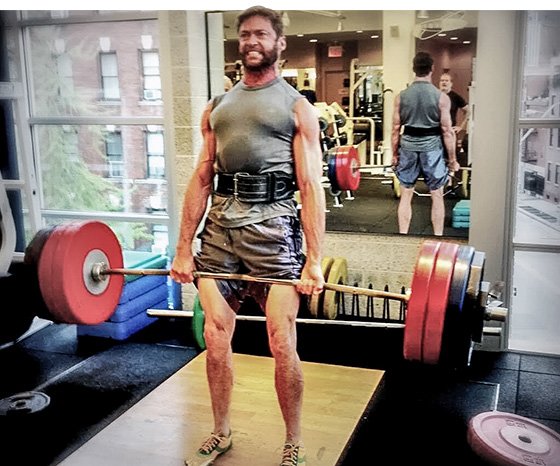
The same extends to food. One of the reasons why we can’t stop eating all the unhealthy shit we eat is because it tastes so damn good. It tastes good because our brains make us believe it tastes good. Well what if a neural implant could make it so a bowl of kale tastes like a slice of chocolate cake dipped in bacon grease? Suddenly, eating healthy isn’t just practical. It’s a goddamn party.

So a neural implant can wire your brain in a way that makes you eat better, exercise more, and feel healthier. That’s all well and good, but looks alone aren’t going to make you sexier. You can look like an Olympic athlete, but if you’re an amateur once the panties come off, then you might as well be Al Bundy.

A neural implant with just the right settings can change that. Ladies, have you ever had a man just hump you for a few minutes, blow his load, and then roll over and fall asleep before you even had a chance to get wet? Well, it’s not entirely his fault. He’s still an inconsiderate asshole, but there is a biological reason for it.

In the brain, there’s this chemical called prolactin. It has a lot of complex impacts on the brain, but it’s what keeps a man from going more than a few rounds between the sheets. When his brain is full of this chemical, his soldier will not be saluting you for a while. Add the shot of endorphins that comes with a typical male orgasm and he might as well have a tranquilizer dart in his head.

Now tweak that brain chemistry a bit. Make it so a man’s brain isn’t wired so he’s “one and done,” so to speak. Ladies, you now have a lover who can hang in there for multiple rounds, keep the mood sexy, and ensure you that special trip to O-Town you crave. That’s what a neural implant could do.

It’s not just for the men either. Guys, have you ever had one of those ladies who, despite your best efforts, can’t seem to make it all the way to O-Town? Well, there are any number of reasons why that could be and not all of them are your fault. Many, in fact, are in the woman’s brain.

Using the same approach, adjusting the wiring for female settings, a neural implant could install the mental equivalent of an express lane to O-Town. That means that men can feel like Brad Pitt on crack when they’re making love, sharing multiple round-trip vacations to that special place of sensual bliss. How much better would your sex life be if your brains were wired like that?

Go even farther than that. Go beyond having the kind of hot sex that sets bed sheets ablaze. Get a little romantic and suddenly, brain implants become the most romantic thing that doesn’t involve diamonds and Hugh Grant.

It’s true. Love also has a powerful basis in the brain. There even this chemical called Oxytocin, also known as the “cuddle hormone.” It’s basically your brain’s way of creating bonds and enhancing intimacy. It’s what helps mothers bond with children, husbands bond with wives, and children with dolls. It is basically the chocolate frosting of brain chemicals.

Normally, hormones like oxytocin are secreted erratically and chaotically in the brain. It’ll emerge whether you’re making love to your spouse on your anniversary or banging your tennis instructor. Nature is just too crude and too immature to wire the brain in a way that really makes those lasting bonds stick.

Add a neural implant to the mix and suddenly, you can channel oxytocin like a biological smart bomb. You want to be more intimate with your partner? Well, you don’t need to go on vacation or buy an expensive diamond. Just adjust the settings of your implant and just like that, you’ve got more love in your heart than every Barry White song ever made.

Are you excited/horny yet about Neuralink‘s full potential? Does the idea of getting a neural implant now feel like the equivalent of a VIP pass to the Playboy Mansion? I think I’ve done enough to pain a very rosy, very sexy picture of the future. Now there will be risks, as there are with all new technologies, but I honestly can’t think of a risk that’s more worth it.

If we have a way to fix our inherently flawed brains, then we won’t just be healthier and happier. We’ll be able to love, make love, and share love on a level that no human has ever experienced before. Sure, it’s still a ways off, but with Elon Musk at the helm and Neuralink providing the platform, that future is within our grasp. I say it’s worth embracing.

16 Comments

Filed under Jack Fisher's Insights

Neuralink: Elon Musk’s Latest Business And Why It’s The Most Important Venture In History

https://i.ytimg.com/vi/D33Aj5w061g/maxresdefault.jpg

There are a number of things I belabor on this blog. However, there’s one thing I tend to belabor more than most and for a good, wholly relevant reason. I’ll say it again and I’ll keep saying it for as long as it remains painfully relevant. Our collective brains are painfully limited.

For the past 10,000 years, we’ve been stuck in caveman mode. So much of our society and world has changed. Unfortunately, our brains might as well be stone tablets trying to compete against a top-of-the-line smartphone.

There are a lot of problems in this world that can be chalked up to the faulty wiring in our brain. Everything from the failures of democracy, the prevalence of religious dogma, and the rise of the Kardashians can be attributed to the inherent flaws in our brains.

https://i0.wp.com/www.gossipcop.com/wp-content/uploads/2017/03/Kim-Kourtney-Kardashian-Kids-Barred-Color-Me-Mine-Store.png

We’re just not wired for the civilization we’ve created. Our brains evolved on the plains of the African savanna. They’re optimized to function in small bands of closely-knit hunter/gatherer societies, wired to prioritize survival and reproduction over knowing our multiplication tables. Remember that the next time a math teacher gets snippy with you.

That method of operation worked damn well for thousands of years, but conditions have changed. We humans needed to grow, create cities, and build civilizations to survive. Unfortunately, our brains stayed stuck in hunter/gatherer mode. It’s like being stuck with the earliest version of Windows and never being able to update.

It’s frustrating to think about. It’s even tragic, knowing that all these problems have a basis in the wiring of our brains. We can do a lot to work around it, but we can never seem to avoid it and that’s a problem. If we can’t get around the base programming of our biology, what hope do we have? Are we doomed to a future of reality TV, professional trolls, and fake news?

https://thelastofthemillenniums.files.wordpress.com/2015/10/tea-party.jpg

Well, we can’t do anything about it at the moment. However, I’d like to offer a ray of hope. It’s actually part of a story that slipped under the radar in recent weeks, most likely due to everyone still processing how Bill O’Reilly got away with so much sexual harassment over the course of 13 years. That might be for the best because it’s impossible to understate the implications.

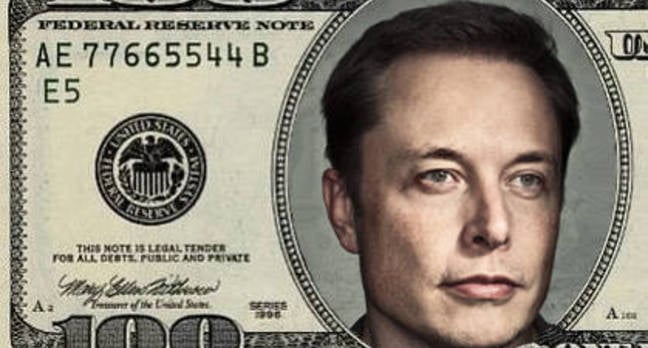
It has to do with a guy named Elon Musk. Perhaps you’ve heard of him. He’s a businessman, engineer, investor, and inventor. He created PayPal, founded Tesla Motors, is the CEO of SpaceX, and is worth an estimated $13.9 billion. He’s the closest thing the real world has to Tony Stark from Iron Man. In 2016, Forbes voted him the 21st most powerful person on the planet.

Some people like to dream about the future. This guy is actively creating it and making himself exceedingly rich in the process. He’s a perfect cross between Warren Buffet, Albert Einstein, and Nikola Tesla is what I’m saying. If that’s not superhuman, I don’t know what is and that’s coming from an admitted comic book fan.

Well, as accomplished as Musk is, the man just has to overachieve in the most obscene way possible. Creating awesome cars, space ships, and pollution-free power just isn’t enough for this guy. He just has to find new ways to make us all feel like losers. However, his latest venture may end up being the most important venture in human history.

No, that’s not a typo. That’s not me talking in hyperbole either. I mean it. What Musk plans to do with this venture may very well be the most important thing any human being has ever done since the invention of fire, electricity, and internet porn. It may actually hold the key to our survival, both as a society and as a species

It’s called Neuralink. Late last month, Musk announced the creation of this company in Dubai. It has a simple, but monumentally ambitious mission. According to the Walls Street Journal, that mission is as follows:

The company, which is still in the earliest stages of existence and has no public presence whatsoever, is centered on creating devices that can be implanted in the human brain, with the eventual purpose of helping human beings merge with software and keep pace with advancements in artificial intelligence. These enhancements could improve memory or allow for more direct interfacing with computing devices.

No, it’s not a rejected side-plot from the Matrix. This is happening in the real world. If it sounds like something that only Star Trek fans would talk about in between arguments about whether Captain Kirk could kick Captain Picard’s ass, then resist the urge to roll your eyes for just a few minutes. This really is that important.

A while back, I speculated on ways in which we could improve the wiring on our caveman brains. That was just a thought experiment though, not unlike my regular speculations on the prospects of human enhancement. I explore these issues with the understanding that they’re just ideas. There’s no time table in place for this sort of futuristic stuff to actually happen.

Well, now there is and Elon Musk, a man with an established track-record at making technology his bitch, is setting the stage for the kind of future that only once existed in the twisted thoughts of aspiring erotica/romance writers. It’s not some fancy experiment among sci-fi geeks. It’s an actual business enterprise by a man who knows how to use technology to make a fuckton of money.

https://regmedia.co.uk/2013/02/25/musk_money.jpg?x=648&y=348&crop=1

What makes Neuralink such a big deal is that it’s not just giving human beings another fancy tool for our caveman brains to use. It’s actually bypassing the caveman part and looking to hack the wiring that’s so badly in need of an upgrade. Beyond that, he wants to do that in a way that’ll turn a profit.

Make no mistake. There is money to be made here. Musk wouldn’t give a rat’s ass about it if it weren’t. The biotech industry is already a $157 billion industry, but it doesn’t have that high a profile because it lacks a “killer app,” so to speak. The industry is very much akin to the smartphone industry back in the early 2000s. It’s growing, but there’s no iPhone yet to really kick it into high gear.

Well, Elon Musk looks to do for biotech what Steve Jobs did for smartphones. Brain implants, like smartphones, do exist. They’re just very limited right now. It’s a very nascent technology, but the science is there. It is possible to put some type of computer hardware into the brain and have it effect the brain in some way.

https://i.ytimg.com/vi/Lpb_eTZIpkY/maxresdefault.jpg

At the moment, those effects are limited, just as smartphones were in 2002. With Musk leading the charge, those effects will definitely expand. Musk isn’t just looking to create implants that will treat stroke victims or mental illness. He’s serious about enhancing the human brain as a means of keeping pace with technology.

We know he’s serious because back in 2015, he signed an open letter with Stephen Hawking and a dozen other men who are way smarter than most of us will ever be expressing concern about the growth of artificial intelligence. Musk isn’t among those who thinks we’ll ever have to fight off actual Terminators, but he does see artificial intelligence as a potential existential threat to the human race.

https://heiscomingblog.files.wordpress.com/2015/05/terminator_3001397b.jpg

He’s not wrong either. He and many others understand that we humans are still cavemen running around with clubs trying to make sense of all the crazy things we experience. Our intelligence is severely limited by those caveman settings. A sufficiently intelligent machine really wouldn’t need to do much to outsmart us. It would just need to convince us that it had a video of Kim Kardashian going down on Justin Bieber.

Practically speaking, the only way we humans stand a chance at co-existing and thriving alongside artificial intelligence is to augment our own intelligence. To do that, we need to effectively hack and enhance the brains that struggle to determine whether Alex Jones is a credible news source.

It won’t happen over night. According to Musk, the first few products from Neuralink will specialize in treating stroke victims and those who have sustained brain damage. However, that’s just a step in a much larger process. Once we have products that can treat damaged brains, then we can make products that enhance healthy brains.

https://i0.wp.com/top-hotnews.com/wp-content/uploads/2016/12/1867897faj0vpjpg.jpg

It used to be we only needed cell phones for emergencies and drug lords. Now, we they have so many uses that enhance our lives. What kind of enhancements can we expect from something that actually affects our brains directly in ways that hypnotists and subliminal advertising can only dream of?

That is a very interesting and very sexy question. I hope to explore some of these questions in future posts, but I think it’s important to highlight just how huge Neuralink could be for the future.

Ford helped usher in the era of cars. Apple helped usher in the era of personal computing. Neuralink could usher in an era that will fundamentally change what it means to be human. It’ll also probably make Elon Musk another fuckton of money, but if it means saving the future of our species, I’d say he’s earned it.

41 Comments

Filed under Jack Fisher's Insights

How To Manage Your Excuse Bank (Within Reason)

https://i0.wp.com/www.caproasia.com/wp-content/uploads/2015/08/Professional-Banker-3.jpg

When I did my first post on reasons versus excuses, I challenged readers to take a closer look at their actions and decisions. Why did they end up doing what they did? Was there a reason for it? Was that reason actually an excuse? Did that reason or excuse end with you getting laid, fired, or slapped in the face?

Given how many actions and decisions unfold on a day-to-day basis in the massive doughnut shop that is life, it’s hard to make sense of them all. I’m sure those without OCD or a personality disorder was quickly overwhelmed by the sheer breadth of reasons and excuses they came up with for their behaviors. Don’t worry and put down the vodka. That’s entirely normal.

We’re all human. We’re all bound to make bad decisions or bad reasons and/or lousy excuses. That’s part of life. The key is learning from those bad decisions and improving the skills that help us better our loves, help those around us, and even get us laid from time to time. Since I’m an erotica/romance writer, that last one was worth adding.

It’s also worth offering whatever help I can to others in developing those skills. Again, I need to remind everyone that I’m an aspiring erotica/romance writer. I’m not a scientist, a therapist, a psychologist, or doctor. I may write about people in those occupations getting involved in sexy situations, but I’m not at all qualified to offer the kind of substantive advice, complete with technical charts and an hourly bill.

https://i0.wp.com/allennance.com/wp-content/uploads/2013/12/peanuts-blogging-advice-770x433.jpg

However, in dealing with plenty of colorful personalities throughout my life and writing various personalities in my novels, I do feel like I can at least offer some insight that can help people use my colorful ramblings in pragmatic ways. I can’t guarantee they’ll work, get you laid, or make you rich. This is just me trying to make my words both sexy and useful.

In discussing reasons versus excuses, I brought up the concept of excuse banking. It’s almost exactly what it sounds like. It’s the process of acting, believing, and learning in a way that effectively pockets an excuse to use to justify decisions later on. Since our brains are wired to decide first and then justify those decisions, excuse banking is very much a pragmatic manifestation of our collective psyche.

It’s not inherently good or bad. It can certainly get pretty darn bad, as I pointed out when I tied excessive excuse banking to political and religious extremism. Most people, though, don’t operate in extremes and if they do, it’s usually out of fear and survival, which are among the most valid reasons we can have for doing something. For the purposes of providing useful advice in excuse banking, I’d like to focus on the good.

In that spirit, I’d like to offer a quick rundown of tips and tricks for managing your excuse bank effectively. We’re all going to make excuses at some point. We’re all going to bank those excuses in some form or another. We might as well figure out how to do it in a way that improves our lives and gets us laid.


Tip #1: Maintain A Balance, But Avoid Hoarding

Like any useful bank account or credit card, it’s important to maintain a balance. You always want to have some reserves, just in case it’s an emergency and you need a valid excuse to explain why your pants are in the refrigerator. You don’t want to be stuck relying on reasons that may or may not apply. That’s just going to make you look stupid, incompetent, and decidedly unsexy.

Unlike a traditional bank account, though, you don’t want to let your excuse bank get too bloated. That’s because excuses aren’t hard assets. They’re intangible, malleable, and much easier to abuse. You may be able to use a dollar bill to snort a line of blow, but with an big enough excuse you can justify snorting blow off a stripper’s tits.

That’s why you should not hoard your excuses the same way I hoard comic books. As I noted in my post on extremism, having too many excuses that are too malleable creates all sorts of nasty temptations. Having those excuses is like having a loaded AK-47 in a traffic jam. Even if you can resist the temptation, the potential is still there and the danger of that potential can be pretty vast. Just ask any experienced traffic cop.


Tip #2: Invest With Other Peoples Whenever Possible

This part of excuse banking also highlights one of the key differences from other types of banking. In a sense, excuse banking is almost always a joint effort. It’s not enough to just have an excuse. You also need other people to believe them in order for them to be useful.

An excuse with a random stranger and an excuse with a close family member is not going to have the same value. At the same time, an excuse you bank on your own isn’t going to be as valuable as one you bank with other people. Human beings are very social creatures. When you forge close social bonds, be they with family or lovers, your excuses carry more weight and so do those of others.

In a sense, it’s a win-win investment. By banking excuses within a social group, you develop a sense of trust and understanding. That makes deposits and withdraws from your bank easier and less likely to blow up in your face. Just watch any Ben Stiller movie to see why that’s so important.


Tip #3: Know Which Investments Grow And Which Are Toxic

It’s true. Excuse banking sometimes deals in toxic assets. I’m not just talking about bad mortgages or too much stock in Enron either. When your excuse bank has toxic assets in it, you’re in big trouble.

A toxic asset in an excuse bank is often one we don’t realize is toxic. Sometimes, we even refuse to realize it. That’s what often happens with dictators, religious zealots, and child actors. Their excuse bank is so full of toxic assets that they don’t know how bad their excuses are and if someone tries to tell them, they don’t listen. That often leads to the kind of tragic self-destruction that becomes an A&E documentary.

That’s why it’s so important to identify these toxic assets before they poison you. Those assets will undermine your ability to work with others and gain their trust, two things everybody needs to survive in a functioning society. So how do you know if an asset is really toxic? Just follow these simple steps:

  • Step One: Ask yourself, “Would this excuse allow me to punch someone in the face and make them apologize for hurting my hand?”
  • Step Two: If you answered yes to the following question, then the excuse is toxic.

Tip #4: Understand An Investment’s Potential, But Don’t Ignore The Risks

Like any investment, there are risks and rewards that you have to weigh. Sometimes the risks are minimal. When you fake sick just a couple times and don’t announce to the world on FaceBook that you’re running a marathon, the risks are pretty minimal. Those risks escalate when you let them pile up, so much so that your girlfriend won’t believe you when you say you need to perform brain surgery on the President.

This is especially important for anyone in a position in power, be they the despot of a country or a manager at Walmart. Having power offers a lot of potential because it creates both excuses and reasons for people to do what you tell them. However, the risks are much greater, especially if you want to use that power competently.

It’s easy to lose yourself in power. Anyone who used cheat codes in old Mario games understands that. That’s what makes it so dangerous because it prompts us to ignore the risks. When we do that, we’re less likely to realize when our excuses become toxic. People don’t trust us and look for ways to get us out of the way. No matter how much power you have, you won’t be able to use it effectively if your excuses are toxic.


Tip #5: Avoid Banking Excuses As A Means To Improve Past Investments

This tip is directly tied to a little something called the sunk cost fallacy. Anyone who has ever had a gambling problem or knows someone who would bet their shirt at a blackjack table knows it well. It’s this annoying quirk in our psyche that compels us to keep throwing resources into a game we’ve already lost to justify past investments.

In a sense, it’s an excuse to justify stupid risks that didn’t pay off. It’s a way to alleviate the mental stress of knowing just how badly we’ve lost. In the context of excuse banking, it applies to more than just a bad run of luck at a casino.

Like trying to win back what you’ve lost, banking excuses to improve toxic assets rarely works out. When an excuse has become toxic, it usually stays that way. It’s like the boy who cried wolf. Even if the wolf does come once in a while, there isn’t much you can do to improve the utility of the excuse.

Excuses, like fresh fruit, can perish quickly. They can be finite and applicable only to specific circumstances. Once those circumstances pass, trying to cling to those excuses is like trying to make spoiled milk taste good. It just can’t be done.


Tip #6: Long Term Investments Usually Pay More Than Short Term Investments

This is where we kind of have to battle our inner caveman here. As I’ve covered before, caveman logic compels us to think primarily in the short-term. We prioritize the potential for avoiding tigers and mating with fertile partners. Those short-term investments worked well in the caveman days, but they work less well in more complex societies.

The key purpose of excuse banking is to ensure you can justify your decisions to others. If you can’t do that, then other people aren’t going to trust you, work with you, or want to have sex with you. Now there’s a time and place for short-term investments, but they’re usually very specific and rare.

Long-term excuse banking involves crafting excuses that build trust and understanding with others. Ideally, they have some amount of reason to support them, if only in part. Bank enough long-term excuses and you’ll find people who are eager to work with you, ready to trust you, and eager to take their clothes off with you.

That kind of investment usually takes a lot more time and effort, but the payoffs can be pretty damn awesome.


These are just a few tips to start out. If I come up with others or learn from someone else, I’ll share them in another post or list. If anyone else has investment advice in the world of excuse banking, please share it.

Excuses may be one of the most important investments we can make. It’s one of the few currencies that is valid in every country, culture, and society. Sure, we can’t use them to tip strippers, but they’ll help us in negotiating our lap dance.

3 Comments

Filed under Reasons and Excuses

How “Sexually Fluid” Can You Be?

https://confessionsofasomedaysomebody.files.wordpress.com/2013/01/threeway-kiss-spens-jesse-clark.jpeg

Whenever I ask a question on this blog, it’s usually for two general reasons. One, I want to get people thinking strange, sexy thoughts that may or may not require a change of panties later on. Two, I want to explore possible ideas for future novels, which may also require a change in panties at some point. In either case, the only real loser are the dry panties of the world.

I’ve asked questions about human enhancement, artificial wombs, and sex with robots. I admit I tend to think some oddly sexy thoughts in my everyday life. These aren’t exactly questions I can ask somebody on the bus without getting thrown out. I still think they’re worth discussing though. We’re all hear because of sex. It’s worth talking about.

This latest sexy question isn’t quite as colorful as sex robots, but it’s a lot more relevant. It has to do with recent trend that has been observed by GLAAD, the Gay and Lesbian Alliance Against Defamation, that the current generation of millennials is more sexually and gender fluid than previous generations.

What that means to those who took one too many sex ed classes in Texas is that more people today are not identifying as 100 percent heterosexual and more are not identifying 100 percent as a particular gender. I’ll give the Pat Robertsons of the world a moment to gasp and faint.

In terms of specifics, GLAAD’s 2017 Accelerating Acceptance report says that about 20 percent of millennials identify as something other than heterosexual and about 12 percent identify as something other than one particular gender. That’s quite an increase from previous decades where you couldn’t even get people to admit they masturbated.

GLAAD and their supporters say this is a positive thing and I agree to a large extent. It shows that more and more people are willing to come out as something other than what is considered “normal.” Given how the very concept of “normal” is flawed to begin with, especially in matters of sex, I think that shows that society is gaining a healthier attitude with respect to sexuality.

While this does count as progress in my mind, it does raise a bigger question that’s much harder to answer. Exactly how “sexually fluid” can we be in terms of our gender and sexuality? Does the report reveal a greater sexual flexibility in people? Or does it just reveal our current cultural trends?

Those are difficult question to answer. In some respects, they’re impossible to answer. Culture and attitudes do have an impact on our sexuality. Just look at last year’s trends in porn consumption for proof of that. At the same time, there are some components of our sexuality that are innate and inborn, a product of both genes and conditions in our mother’s womb.

The primary issue, and the one that neither GLAAD nor religious zealots can claim to know with certainty, is where cultural influence ends and biology begins. That line is not clear, poorly defined, and constantly changing as we learn more about our bodies and minds. Chances are it’ll keep changing for generations to come.

It’s still a relevant and interesting question to contemplate though. Is there a particular limit to how flexible a man or woman can be with their sexuality? I’m not just talking about the kind of flexibility that we see in “Orange is the New Black.” Prison is just one of those extreme situations that require us to be more flexible with our genitals than we’d usually be.

In this case, let’s try to avoid extremes and ask the question in the context of a functioning society. Just how fluid can a man and woman reasonably be? The answer for both genders might be different.

Current research indicates that women may be more sexually fluid than men. Is there a biological reason for this? Does the absence of testosterone or the abundance of estrogen make someone more likely to be attracted to both genders or not identify exclusively with one gender? Or is it possible that in a culture of internet porn, Lady Gaga, and Carl’s Jr. ads, female sexual fluidity is just more acceptable?

Again, it’s hard to pin down. The impact of sex hormones is always subject to change. We may discover tomorrow that pregnant women listening to boy bands may influence whether their child becomes homosexual, bisexual, or transgender. Human beings and biology in general are complicated, erratic, and as organized as a drunk stumbling through a Lego factory in the dark.

There may also be another factor to consider. These days, the worst thing you can be isn’t a communist, a Nixon insider, or an internet troll. Today, the greatest villain in Millennial crowds is the so-called “straight white cisgendered male.” Picture every villain inspired by Lex Luthor or Justin Beiber. That is who Millennials hate.

To be a straight white man who identifies as a man these days is to be a bad person by default. No matter who you are, whether you work for the peace corp or write erotica/romance, Millenials hate them because they think they’re the source of all the world’s problems. It’s one of those simple, believable, and wrong assertions that every generation believes to some degree.

The hippies had their villains. The yuppies had their as well. Millenials are no different. As such, they may be more inclined to identify as something other than straight, white, or male. It’s less a statement about their sexuality and more an elaborate display of virtue signaling, which is about as honest as genuine as a biology lecture from Jenny McCarthy.

So with these various complications in mind, I think it’s hard to conclude much of anything from GLAAD’s study. It’s one of those issues that’ll only become clearer in the future with the benefit of hindsight. By 2060, our descendants may look back on Millenials and say, “Wow! Those were some sexually confused motherfuckers.” They may also say, “Wow! I can’t believe we made that big a deal about sex back then.”

Until the day comes when we can all be shape-shifters like Mystique, this is going to be an issue. Sexual fluidity is one of those unavoidable outcomes from nature’s chaotic, often irrational forces. We can’t avoid it any more than men can avoid awkward boners.

It’s difficult to navigate, but I believe that Millennials are making a concerted effort to change that. The price, benefits, and extent of those efforts remain to be seen. All I know is that those efforts should give me plenty of interesting ideas for erotica/romance novels.

Leave a comment

Filed under Jack Fisher's Insights

Are We Becoming More (Sexually) Uptight?

https://www.alluvium-journal.org/wp-content/uploads/2017/03/13348205645_726ec0c1b7_k-1024x938.jpg

There was once a time in American culture where the media couldn’t even acknowledge that sex existed, let alone happened between wholesome scenes of family dinners and fishing trips. An average episode of “Scandal” would’ve horrified audiences in 1965, who were used to seeing a married couple sleep in separate beds on “I Love Lucy.”

Without a doubt, sex on TV has come a long way. We no longer bat an eye when Kevin Spacey goes down on Kate Mara in “House of Cards” or when Glen Quagmire raises the bar for sexual debauchery on “Family Guy.” By all accounts, we’ve become a lot more accepting.

That being said, is it possible that we’re becoming more sexually uptight? Bear with me. I promise I’m not being sarcastic here. This is part of an ongoing observation that I’ve explored in other posts.

Some of it has to do with trends in feminism. Some of it has to do with the various peculiarities of the gender dynamics in our sexual culture. I’m not saying what I’m seeing is definitive, but as an aspiring erotica/romance writer, this does concern me because it may very well affect my industry.

Now when I ask whether we’re becoming more sexually uptight, I don’t mean to say that we’re regressing to a point where women can’t show their ankles and men can’t acknowledge that the female orgasm exists. In an era of internet porn and Photoshop, that sort of prudishness just isn’t possible. Never-the-less, there are other ways for Puritan attitudes towards sex to manifest in new ways.

Picture the following scenario:

There’s a beautiful woman walking around topless on a sunny beach. A young man takes a moment to stare at her breasts and admire their beauty. The woman notices the man and is appalled. The woman points at the man, calls him a misogynist pig, and rallies every woman around her to scold and shame the man for daring to look at her exposed breasts.

What I just described isn’t necessarily something that happens on a day-to-day basis. It’s more a manifestation of the kinds of sexual attitudes that are evolving. We no longer censor sexuality or deny that it exists. Instead, we shame people who dare to appreciate it in ways we don’t approve of.

In many respects, this is just as bad as any censorship by the FCC because it isn’t imposed by a government body. It’s something that we’re doing to each other. Unlike government bureaucracy though, shaming actually works. In fact, shaming pre-dates government because it uses the built-in system of guilt that every human who isn’t a sociopath has hardwired into them.

Now trends in being sexually uptight aren’t new. For much of human history, civilization has gone through various cycles of sexual attitudes. Some ancient cultures, like Egypt, were relatively liberal in their sexual attitudes. Others, like Victorian era England, were so famously uptight for their sexual repression that visible ankles were considered scandalous.

Even in modern times, there are some parts of the world that are more sexually repressed than others. Places like India and Saudi Arabia, despite being thriving modern economies, have some very backwards attitudes towards sexuality. They don’t need shame to shun someone who has sex in a way they don’t approve of. They have the authority to just throw those people in jail, which they believe is sure to kill their sex drive.

What makes this trend in the west so disconcerting, though, is that it’s emerging from a society where equality and justice are among our highest values. Countries like America pride themselves, despite protests to the contrary, in their values towards gender equality. The problem is that, for some, equality just isn’t enough.

Here’s a real-world example that illustrates this issue. Back in 2013, an incident occurred at Occidental College wherein two freshmen had consensual sex while drunk, but only the man ended up getting expelled. Why did he get expelled? Well, by their standards, a woman cannot consent to sex while drunk. Therefore, the man committed sexual assault.

Think about that for a moment and try to make sense of it. Two people get drunk, but they’re not so drunk that they can barely stand. In this story, the two people involved could not only send texts. They could also talk about using condoms and practicing safe sex. How can such responsible behavior constitute assault?

It didn’t matter though. By the standards of the school, the man still committed sexual assault and was expelled. The woman didn’t get charged with anything. She was a victim who was traumatized by the act of having consensual sex after a few drinks.

Again, think about that for a moment. Think about what that kind of mentality indicates. Our sexual culture is becoming unequal again, but this time in a different way. Instead of women being shamed for their sexual practices, it’s men who are being shamed.

Today, a man who lusts for a woman and expresses his fondness of sex is considered a pig, a deviant, and a sexist. A woman who lusts for a man and expresses her fondness of sex is considered liberated, free-spirited, and strong. That is not equality. That is a recipe for repression and injustice, albeit in different way.

Ironically, this trend is regressing fashion trends among women. We’re already seeing it in superhero costumes. Female characters are less likely to show off their breasts or female curves. It’s as if highlighting the physical traits of women is now considered an act of misogyny.

As a man, I find these trends troubling and insulting. Am I somehow wrong, immoral, or sexist because I enjoy the sight of beautiful naked women? Are my attitudes towards women somehow flawed because I dare to admire their beauty? I wish those were rhetorical questions.

This troubles me even more as an aspiring erotica/romance writer because it means some of the novels I want to write might be rejected as being sexual in the wrong sort of way. I can easily imagine rejection letters saying “this book doesn’t have enough diversity” or “the man enjoys the sex too much” or “the woman is too feminine.”

I can just as easily imagine such regressive attitudes turning the erotica/romance I love into this target for those who claim it’s an affront to women. Never mind the fact that I write these stories to enchant, entertain, and titillate, some will still see it as some sort of egregious act of sexism.

This really does concern me. I’d rather not return to the days where people don’t even acknowledge sex exists and any attempt to discuss it is somehow taboo. We’ve already experienced that kind of repression and it doesn’t work. Let’s at least try to remain sane on matters as important and intimate as sexuality.

13 Comments

Filed under Jack Fisher's Insights

The Orgasm Gap: Biological Or Psychological?

When it comes to talking about an issue, I generally avoid the kind of crisis fear-mongering you’d see on a CNN special report, a Fox News segment, or an Alex Jones podcast. More often than not, those who resort to fear-mongering are a few steps too close to fitting their heads for tin-foil hats.

However, I’m about to bring up an issue that I believe really is a crisis. It does warrant a little fear-mongering, if only because it directly affects the erotica/romance industry, of which I’m trying to be part of. That’s because it involves orgasms.

Usually, my posts about orgasms are of the fun, positive, sexy variety. That’s to be expected. It’s not hard to make a discussion about orgasms fun. Unfortunately, it’s also not hard to make that discussion dire because when a significant portion of the population isn’t having them, then I consider that to be a big problem.

This isn’t just the sexy musings of an aspiring erotica/romance writer. This is a real issue. There really is an orgasm gap, so to speak. Men, not surprisingly, don’t have a hard time achieving orgasm. Thanks to an unfiltered imagination and internet porn, an orgasm for a man is as routine as a morning cup of coffee.

For women, however, it’s a very different story, one I wish were relegated to the kinds of sexy novels I write. The data doesn’t lie. Women are having a harder time taking a trip to O-town during intimate moments with their male lovers. Regardless of whether you’re a radical feminist or a douche-bag frat boy from an 80s teen movie, we know that’s not fair. Given the universal joys of orgasm, that kind of disparity just isn’t tenable.

Why is this an issue though? Why does this orgasm gap even exist in the first place? Evolution has given both genders a wonderful incentive to have sex, make love, and everything in between. What’s keeping us from enjoying it?

By and large, there are two major theories to explain this injustice. One theory says this gap is primarily due to biology, which is bad news for women because it means the gap is impossible to close. The other says the cause is psychological, which is somewhat less dire because it means the gap can be addressed, albeit with expensive therapy.

Most of the time, when there are two competing theories about why something exists, the truth often lies somewhere in between. In some instances, though, such as the case of creationism and evolution wherein one is definitively right and the other is a religiously-motivated fever dream, the truth is not so balanced.

So with respect to the orgasm gap, which theory is correct? I’m not a scientist and am woefully unqualified to be one. Thankfully, there are some scientists out there who value equal access to orgasms as much as I do and they have done research on this. These people are the true heroes of the erotica/romance world. So what did their research find?

Well, a recent TED talk by Peggy Orenstein does a nice job of summing up these results. I’m not saying her talk is definitive. These TED talks never are. However, her conclusions have some pretty powerful implications and not just for our collective sex lives.

There’s a lot to unpack here. As an aspiring erotica/romance writer, it reveals some major flaws in the proverbial narrative that is our intimate lives.

Parts of her talk definitely resonated with my own personal experience. I remember sex ed when I was in high school. Since my community wasn’t run by uptight religious zealots, I had the good fortune of receiving a fairly comprehensive education about sex, especially compared to Texas standards.

They were pretty thorough, talking about everything from contraception to childbirth. When it came to certain body parts, though, I do recall a distinct difference. Descriptions about male anatomy and how a penis works was fairly concise. Most of my male classmates didn’t learn anything they hadn’t already found out and were fairly assured that their manly bits were operating fine.

When the time came to discuss female anatomy, however, I sensed a distinct shift in mood. Everybody, girls and boys alike, shifted like they were trying to hide a nasty fart. The intricacies of female genitalia wasn’t so much about their beauty or aesthetics. It mostly boiled down to the idea that blood and babies come out of it. That’s about it.

On a personal note, I’ll just say I learned about the existence of the clitoris from “South Park.” What’s that say when a comprehensive sex education program from a major school overlooks something that can be gleaned from watching “South Park?” I’ll give everyone a minute to stop banging their heads against their desk.

Then again, self-image is something every teenager struggles with. I certainly did, but I had a damn good excuse because of my horrible acne problem. It’s one of those things that improves with maturity. Sure, some people mature faster than others, but most of the time, it’s women who do the maturing so how does that orgasm gap not disappear?

This is where the psychology, it would seem, overpowers the biology. Make no mistake. Our thoughts and attitudes can influence our bodies. Anyone who has tried to sleep the night before midterms knows this all too well. Then, there’s the attitudes that we, as a society, collectively impose on each other.

In this case, it’s an attitude we impose on women. Whether by the spirits of angry Puritans or the agendas of old men who vomit uncontrollably at the thought of their daughters having sex, we tell women that they’re not supposed to enjoy sex that much. They’re told the orgasm disparity is normal.

There’s supposed to be this orgasm disparity between men and women. Somehow, this disparity is supposed to keep society intact so that people don’t waste too much time enjoying orgasm. This is where Orenstein gets really personal when she recounts the woman who says:

“I guess we girls are just socialized to be these docile creatures who don’t express our wants or needs.”

The girl who said that claimed to be this fiery, assertive woman. That should reveal just how powerful these attitudes can be.

It’s not just one type of attitude either. Orenstein points out how girls see their vaginas with shame while boys let their dicks hang with pride. Being proud of a body part tends to affect it. I used to play baseball. This works with arms. It works just as well with genitals, if not more so.

However, I think Orenstein overstates genital attitudes in some areas, ignoring the fact that men will shave their balls and undergo circumcision to avoid being aesthetically unpleasing. That’s something that affects both genders more than she lets on.

That said, I agree with her wholly when she brings up one of the most telling details about the orgasm disparity. When same-sex partners are involved, that gap disappears quicker than a cold beer at a Red Sox game in July. This is where the biology theory starts to fall apart.

Now it may seem obvious on some levels, the idea that same-sex lovers can climax at the same rate. It makes intuitive sense. They’re two people working with the same equipment, so to speak. Naturally, they would know how to make that equipment perform.

I don’t doubt that’s part of it. I also think there’s more to it and Orenstein seems to agree.

“Girls’ investment in their partner’s pleasure remains regardless of the gender of the partner. So in same-sex encounters, the orgasm gap disappears. And young women climax at the same rate as men. Lesbian and bisexual girls would tell me that they felt liberated to get off the script — free to create an encounter that worked for them.”

How telling is that? Put women in a situation where certain attitudes about sex and female pleasure don’t apply and they can enjoy a trip to O-Town as much as any man. As an erotica/romance writer, it brings tears of joy to my eyes.

So the orgasm gap disappears with same-sex partners. That’s all well and good, but what about the women out there who can’t get too horny around other women? What about the women who actually want to share the joy of orgasm with men? Well, Orenstein gives hope to those women too when she cites surveys done in cultures that aren’t haunted by the spirits of angry Puritains.

Consider a survey of 300 randomly chosen girls from a Dutch and an American university, two similar universities, talking about their early experience of sex. The Dutch girls embodied everything we say we want from our girls. They had fewer negative consequences, like disease, pregnancy, regret — more positive outcomes like being able to communicate with their partner, who they said they knew very well; preparing for the experience responsibly; enjoying themselves. What was their secret? The Dutch girls said that their doctors, teachers and parents talked to them candidly, from an early age, about sex, pleasure and the importance of mutual trust. What’s more, while American parents weren’t necessarily less comfortable talking about sex, we tend to frame those conversations entirely in terms or risk and danger, whereas Dutch parents talk about balancing responsibility and joy.

Let’s all take a moment to thank the Dutch. Let’s also take a moment to understand what this reveals.

Again, no theory is truly definitive, but Orenstein lays out fairly concisely how the orgasm gap is largely a psychological issue. Men define satisfying sex by their orgasm. Women define it by the ability to please their partner, which sets the bar low and ensures an unequal outcome.

That means we, as a society, should set new standards and I can say with a fair amount of certainty that men are all for that. How do I know this? Well, let me let all the women out there on a little secret about us men that really shouldn’t be a secret.

We WANT you to have orgasms when you have sex with us.

It’s true. Men really do want the women they have sex with to orgasm. Most of the time, they don’t want women to just lie there and act like a glorified barbie doll with a pulse. They actually want their partners to feel pleasure.

It shouldn’t require a real stretch in logic. Men understand that if women feel a lot of pleasure during sex, then they’ll want to do it more often with them. More sex makes us happy. We have a powerful incentive to make sure you women share in the joys of orgasms. The problem, albeit a sexy problem, is that it requires a mutual effort.

I believe we can close that orgasm gap for coming generations. I can only do so much as an erotica/romance writer, but we collectively can do so much more. When the day comes where men and women can expect to have an equal potential for orgasms during sex, then we will have achieved true equality. I look forward to that day.

15 Comments

Filed under Jack Fisher's Insights

Cyclops And Jean Grey Of The X-men: A Prelude To The Future Of Romance?

Admit it. You knew it was going to happen at some point. I start talking about brain-to-brain communication, sharing thoughts, and techno-telepathy and eventually, I was going to relate it to comic books.

If you’ve been reading this blog in any capacity over the last year or so, you know how much I love comic books and superhero movies. I’ve also made clear how much I love X-men in particular. Hell, I even argued that Storm was a better female superhero than Wonder Woman. Make that argument on a comic book message board and you can expect a lot of angry responses, including certain remarks about your mother.

My point is that if I haven’t made my love of comic books and X-men clear now, then there’s not much more I can do that doesn’t involve tattoos. That’s why it really should surprise no one that I’m about to relate my recent discussions about the future of sex and intimacy to the X-men.

Yes, I know the X-men were created in 1963 and using them as a precursor to the future is like using old reruns of “The Simpsons” to predict the future. Then again, given the Simpsons’ track record, that may be a bad example.

Specifically, I’m going to focus on Cyclops and Jean Grey of the X-men in discussing the future of love and intimacy. They’re not just one of my favorite comic book romances of all time. I’ve also cited them before as an strong example of a relationship of equals. I’ve also cited them as a way to highlight just how mind-numbingly awful love triangles can be. Overall, they’re a pretty useful couple is what I’m saying.

Now in talking about them with respect to the future of love and intimacy, I’m not going to focus on the particulars of their relationship. There are plenty out there who despise this romance, just as there are plenty out there who despise every romance that involves vampires. I get that. There are vocal X-men fans who would rather see Cyclops and Jean Grey involved with someone else. I’m not here to argue with those fans.

Like every superhero romance, Cyclops and Jean Grey has been prone to many complications that go beyond bad love triangles. Look at any romance in comics. Without exception, there’s always some amount of uncertainty, drama, death, rebirth, and reboots. It’s just how comics work.

For the purposes of this post, I’m not just going to focus on what makes the Cyclops/Jean romance work. I’m going to focus on one of the unique components about it, namely the fact that Jean Grey is a powerful telepath. She can read, project, and manipulate thoughts and she doesn’t need future technology or hypnosis to do it. As a mutant, it’s just one of those talents she’s born with. In that sense, it’s definitely more useful than sewing.

Now Jean Grey isn’t the only telepath in the X-men or the Marvel universe, for that matter. She’s not even the most powerful. Professor Charles Xavier, who was played by the insanely-charming Patrick Stewart in the X-men movies, is often cited as the most powerful psychic in the X-men comics. However, Jean Grey is often cited as a close second.

I mention that to make clear that Jean’s talent for telepathy isn’t just good by comic book standards. It’s first team all-pro good. Why does that matter? Well, being such a powerful psychic, it’s hard for her to filter out the thoughts of others. She even remarked in “X-men Apocalypse” that she knows what everyone thinks. Not much surprises her.

This makes her relationship with Cyclops all the more intriguing in the sense that she develops such a strong romantic connection with him, despite being able to read his thoughts and sense his emotions. He, in turn, falls in love with her, knowing full-well she has this kind of power. There isn’t a dirty, deviant thought he can hide from her and he doesn’t mind in the slightest.

Think about that for a moment. Cyclops falls in love with a woman from which he can’t readily hide his thoughts. He can’t even hide his emotions from her. She’s even commented in the comics and in the movies on numerous occasions how she can pick up on his emotions.

Lying to her is impossible. Hiding his feelings from her is impossible. Now on many occasions, Jean Grey tries to make clear that she doesn’t read peoples’ thoughts without permission. The keyword there is she tries. It doesn’t always work. Sometimes she can’t help it. Just ask the recently-outed Iceman.

Regardless of how much Jean Grey respects the privacy of others, it doesn’t prevent her and Cyclops from forging a relationship. It also doesn’t stop that relationship from blossoming into one of the most iconic romances in the history of comics, culminating in X-men #30 where they got married. Even if you’re among those X-men fans who despise their relationship, it’s hard to deny that were pretty damn serious about their love.

Why does this matter? What does it have to do with the future of romance and relationships? Well, think about the dynamics of such a relationship. Cyclops and Jean Grey don’t just share love, intimacy, and legal obligations. They actually share thoughts, as in real, unfiltered thoughts. That’s a dynamic that doesn’t exist in the real world yet, but as brain-to-brain communication technology matures, it will exist soon enough.

If communication is the key to every relationship, then Cyclops and Jean Grey have a master set. With them, there’s no need to put thoughts and feelings into words. There’s no need to make these elaborate gestures to convey how they feel. They don’t even need to argue about it. Their own thoughts convey whatever sentiment they want, be it love, lust, or a craving for corn dogs.

How many relationships in the real world fail because two people can’t properly communicate certain feelings? It happens all the time. It manifests in all kinds of sitcoms, some more than others. Hell, it happens in my own novels, especially in “Skin Deep.”

In addition to those relationships, how many others form on a foundation of lies because two people don’t know what the other is thinking? Someone might think they really love someone. The other might just fake it to get back at an ex-lover or land some big inheritance. It happens and, because these thoughts can be hidden, they can’t know for sure how genuine the romance really is.

In a future where brain-to-brain communication is available and couples can wield it like Cyclops and Jean Grey, the entire dynamic of love and romance changes. There’s no need to carefully navigate social cues in an effort to figure out what someone it thinking, feeling, and wanting. Everything becomes that transparent.

On one hand, this means the self-obsesses douche-bags who see others as walking masturbation toys that breath can’t hide anymore. The pick-up artist, the ladies man, and the Regina Georges of the world are exposed for all to see.

On the other, it also means that people can be certain that they’ve found a lover who genuinely loves them. It means we can be sure that the thoughts our lovers think are honest and true. We’re not blindsided. We’re not mislead. We know because we can make our thoughts known.

From a practical standpoint, it means that society will have to reshape the way people find love, intimacy, and connection. For some, it’ll be downright scary, having to share intimate thoughts with one another. However, we’ve reshaped those concepts before. Remember, there was once a time when marrying for love seemed like a crazy idea.

As is often the case, though, popular culture tends to be ahead of the curve when it comes to social and technological evolution. Star Trek did it with cell phones. Cyclops and Jean Grey may end up doing the same for romance. With that in mind, I’ll leave you with this iconic panel that highlights everything I’ve come to love about the Cyclops/Jean romance.

5 Comments

Filed under Jack Fisher's Insights

The Future (And Caveman Past) Of Privacy

Let’s face it. There are just some things in the modern world that are destined to disappear. Things like coal power, overt racial discrimination, and the Macarena are destined to become relics of a bygone era. Some already have to some extent. Others, like snail mail, poor WiFi, and the Kardashians, can’t go away soon enough.

So what does this have to do with privacy? Why am I even bringing up privacy? Is this another case of an erotica/romance writer having a few too many glasses of whiskey when he writes? Well, except for the whiskey part, those questions already have answers.

For the past couple of days, I’ve been talking about the emerging technologies that will allow brain-to-brain communication. Like an updated iPhone, it’s one of those technologies that we know is coming. It’s just a matter of getting here and having a major company profit the hell out of it.

You may not think it’s likely now, but at some point someone will find a way to make sharing thoughts an obscenely profitable business. We get people to pay for bottled water and a haunted rubber duck. There are plenty of gullible people with money in this society is what I’m saying.

Going back to privacy, it’s fairly obvious that we’re already in the process of ditching it to some extent. It used to be that the craziest, dumbest, most asinine stuff we said in our day-to-day lives never left our close circle of friends. Now, we feel compelled to share all those crazy thoughts online.

Look at me. I’m doing that right now. I’m sharing thoughts I never would’ve shared in polite conversation 20 years ago. Then again, 20 years ago I had a horrible acne problem and the piss-poor social skills of a ferret so it’s not like I was in a position to do much sharing. The internet and social media has changed all that. It’s given us an opportunity to kick our concepts of privacy in the balls and beat it with a hammer into something else.

This has had consequences. Just ask anyone who had an Ashley Madison account a few years ago. It’s bound to have more consequences, especially as an emerging generation matures into a world that has never known the pain of dial-up internet. This is a generation for whom sexting will be akin to copping a feel in the back seat of a car. Admit it. You envy that generation to some degree.

However, it’s the generation after that who may really deliver the final nail in the coffin of privacy. That generation will likely come into a world where brain-to-brain communication has matured, is a growing business, and has people bitching about fees for sharing certain thoughts. How will that generation view privacy?

Well for once, we really don’t need a thought experiment or some exercise in existential logic. In fact, we need only a history book and a general understanding of how humans form tribes. Go to any message board that celebrates a certain romantic pairing on “Buffy The Vampire Slayer.” It doesn’t take much.

Nature has wired our bodies to be good at a lot of things, albeit in hilariously crude ways. Just look at the design of the male scrotum. However, one design that has been remarkably efficient is our ability to form tribes and groups. It’s that kind of coordination and cooperation that has helped us dominate this planet, build civilizations, and form Hugh Jackman fan clubs.

It’s also this uncanny ability to form tribes that’ll make the techno-telepathy of brain-to-brain communication so appealing to future generations. It may seem crazy now to those of us who still dread the thought of someone hacking our phones and sharing all the embarrassing pictures of us on FaceBook. I’ve always worked under the assumption that someone has already hacked my phone and that keeps me from capturing anything too compromising in my private moments.

However, with techno-telepathy, there’s nothing left to compromise. Everything is laid out for someone else to see. Your hopes, dreams, fears, and perverse sexual fantasies are all laid out in a beautifully rendered image. Can we even cope with that kind of transparency?

Well, the average congressperson notwithstanding, we have kind of done it before. In fact, we had that kind of transparency for a good chunk of human history. This brings me back to “Sex At Dawn,” a book that has been remarkably useful in discussing such sexy, taboo topics. In addition to talking about the shapes of penises and female orgasms, it does talk about privacy.

Granted, it’s not as sexy as the other topics discussed, but it is relevant in that it explores the pre-interent, pre-agriculture concepts of privacy. In short, there was none. In fact, from a purely practical standpoint, there couldn’t be any privacy.

That’s because those societies were hunter/gatherer societies. These societies were small, close-knit tribes of people who worked together, cooperated, and shared resources to survive. This is not some hippie commune out of John Lennon fantasy. These were very functional, very adaptive groups that played a big part in how human beings evolved.

In those societies, privacy is kind of redundant because they need to share resources. They don’t have big cities or elaborate infrastructure. They need to cooperate or they won’t survive. Part of cooperation means being overly transparent. That means sharing shelter, living space, food, and lovers. Yes, sharing can be sexy. It just comes at the cost of privacy. Some may think that’s a fair trade.

When you don’t have a lot of property or resources of your own, what’s the point of privacy? It’s not that it’s ignored. It’s not that it doesn’t exist to some degree. It’s just redundant in a hunter/gatherer setting. Keep in mind though, it’s in this setting that our species evolved. For the caveman in us, privacy is more a construct than an innate trait.

That’s because our concept or privacy really didn’t exist until the modern concept of property rights emerged. The concept of a public/private sphere is a fairly modern invention. Again, it’s largely out of necessity. When you have a society that relies heavily on accumulating and distributing resources on a large scale, the need for some measure of privacy is unavoidable, if only to avoid extortion and exploitation.

This is where the techno-telepathy of brain-to-brain communication really gets interesting. Whereas modern notions of privacy are relatively recent, less private habits of our cavemen ancestors are still hardwired into our tribal traits. That means the growth of techno-telepathy could be one of those tools actually complements our caveman nature rather instead of conflicting with it.

What could this mean for us as individuals and as a society? What could it mean for our love lives? Well, if our history as hunter/gatherers is any indication, this tool would make it far easier for us to form telepathic tribes, of sorts. We find people who appreciate and share our thoughts. We develop close bonds with those people. Some may even become romantic and sexual. When you’re sharing your most intimate thoughts with people, that’s kind of inevitable.

It could be disruptive or it could be productive for society. When we start sharing both literal and figurative thoughts with one another, privacy as we know it will take on a whole new meaning. It won’t disappear completely. It’ll just change. We’re terrified of sharing naked pictures of ourselves now. How will we feel when we start sharing are deepest, dirtiest, sexiest thoughts?

It’s an interesting notion to consider and one I hope to see play out in the coming decades. I have a feeling it’ll give me plenty of sexy ideas for future novels.

2 Comments

Filed under Jack Fisher's Insights

Sharing Thoughts: The Ultimate Intimacy?

What would you do if you could share your most intimate thoughts directly with your lover? That’s not a rhetorical question. That’s not another one of my sexy thought experiments either. It’s a real, honest question that may end up having major implications in the real world.

I like to keep up with technology. I’ve always been interested in what the future holds. However, I’m one of those guys who likes to contemplate how this future technology will impact our sex lives. It’s not just because it makes for some crazy sexy thoughts. As an aspiring erotica/romance writer, it helps give me new ideas. Some have already found their way into my novels, namely “Skin Deep.”

So why does something like sharing thoughts seem so relevant? It’s not like it’s a new idea. Sharing thoughts, or telepathy as some call it, is already a major part of popular culture. From movies like “Inception” to iconic superheroes like Charles Xavier from the X-men, it’s just one of those fun concepts that makes for interesting plots, but doesn’t exactly surprise anyone anymore.

That could change one day though. In fact, that day may come sooner than you think. Brain-to-brain communication, or techno-telepathy if you want to call it that, has been under development for a long time now. It’s not just so we can share our dirtiest fantasies, including those that involve clowns and steel dildos. There are major medical applications to this concept.

Earlier this year, the first major tests in brain-to-brain communication allowed two humans to exchange thoughts, albeit in a very limited fashion, to answer a series of yes-or-no questions. This isn’t David Blaine playing mind games with card tricks. These are ordinary people using extraordinary technology to share thoughts. For those trapped in comas or paralyzed by strokes, this technology is critical.

While I’m all for helping those in comas or those who are paralyzed communicate, I think the larger implications of techno-telepathy are more enticing, especially when applied to our love lives. All technology starts out bulky, expensive, and limited at first. Then, once it matures and people realize it has profitable, non-medical uses, it gets more compact and efficient. It happened with smartphones. It can happen with techno-telepathy.

This technology may still be a ways towards maturing, but it’s no longer something that’s just on the drawing board. This technology has already come out of the womb and is starting to grow. All the incentives are there. It’s just a matter of time and energy.

So going back to my original question, what would you do if it were possible to share your intimate thoughts with another? What kind of thoughts would you share? Would it make you and your partner closer? Would it make them run away in disgust, traumatized that anyone could think about their old history teacher in that sort of way?

Granted, there may be some awkward moments. The entire first half of the movie “What Women Want” explores those moments. However, we humans are capable of overcoming awkwardness. If we can overcome puberty, we can overcome pretty much very kind of awkwardness that doesn’t involve our mothers and the delivery guy.

There’s also a pragmatic element to sharing thoughts with someone. Poor communication is one of the quickest ways to kill a romance that doesn’t involve bankruptcy. Poor communication, or a failure to understand the context of someone’s words, isn’t just damaging to our love lives. It’s basically the plot to half of every episode of every sitcom and romance movie ever made.

It happens so often that we think it’s normal. Two people are in love. They want to build a relationship. They struggle because someone says something that gets taken the wrong way. They can’t be sure what they meant or how they meant it so they get all upset and agitated about it. Hilarity, heartache, and entertainment follow, usually culminating in some big romantic speech by Hugh Grant at the end.

Pretty much all of that crap could be avoided if those involved could just share their thoughts. There would be no ambiguity. There would be no doubt, uncertainty, or reservation.

Imagine a relationship where you knew your partner really loved you. They weren’t trying to get your money. They weren’t trying to impress their parents. They weren’t secretly gay or bisexual. They just really love you and you didn’t have to doubt that. What would that mean for your relationship and others like you?

If we live in a world where we can share our most intimate thoughts, then would that strengthen our romantic bonds? Would that reduce the amount of stagnant, passionless relationships? Would it also necessarily undermine the privacy of our thoughts?

These are all important questions to contemplate, especially for those of the coming generation who already share so much of themselves on social media. Is this the natural evolution of intimacy and romance? Only time will tell. I just hope I can turn it into some sexy stories before then.

7 Comments

Filed under Jack Fisher's Insights

Sexy Sunday Thoughts: Easing Holiday Stress Edition

When you’re trying to build a career out of telling sexy, romantic stories, you tend to think a lot of sexy thoughts. It’s part of the job description. To tell sexy love stories, you need to think sexy. To think otherwise would be like baking a cake while you’re not hungry. It helps to be vested in your work is what I’m saying.

My efforts, and all the sexy thoughts that come with it, are finally starting to bear fruit. Beyond my self-publishing endeavors, I’m finally getting the attention of a few small-time publishers. One book, “Embers of Eros,” is set for release later this month. The other, “Passion Relapse,” is poised for release in 2017.

If all goes well, these sexy thoughts may actually help me pay the bills one day. That day is still a ways off, but I won’t let that keep me from thinking about sexy things that will hopefully inspire more sexy stories. There’s always a market for sexiness. It’s one of the few recession-proof markets that doesn’t involve alcohol and I hope to carve my place in it.

As part of that effort, I want to keep sharing some of these sexy thoughts with the world. So long as I have sexy thoughts to share, I’ll keep sharing them through what I guess is my new weekly column, Jack Fisher’s “Sexy Sunday Thoughts.”

After a long week, we all need to think about something less stressful or overwhelming. The holidays make it even more challenging. There are gifts to buy, presents to wrap, decorations to hang, and eggnog to drink. I get it. The holidays are stressful. So in the spirit of the holidays, let these sexy thoughts help ease the tension.

“When we call someone a dick or a pussy, it’s an insult. But when that same person actually uses their dick or their pussy properly, it’s a point of pride.”

I’ve always found this kind of odd, using genitals to insult people. We love our genitals. We take pride in how they look and how we use them. So why use them as insults?

“Sex sells, but only a handful of people can get away with charging a premium.”

Let’s face it, not every woman looks like Kate Upton and not every man looks like Brad Pitt. I think that slogan needs to be revised. Sex does indeed sell, but only to a point. Seeing Jonah Hill drink a Pepsi isn’t going to make too many people horny enough to change their drinking habits.

“Cult leaders tend to be extremely horny, extremely jealous, and extremely reluctant to pay taxes. They’re basically every male slacker’s dream job.”

I’ve noticed that charismatic cult leaders often convince beautiful women, and even a few men, that salvation can be achieved through his penis in some form or another. Is it shady? Yes, it most definitely is. Then again, when you make sex a holy sacrament, it does cut down on the small talk so damn it if it isn’t uncomfortably practical.

“Being a good multi-tasker should be a prerequisite for seeking a three-way.”

This applies to both genders. It’s just common courtesy. If you’re going to get more people involved in your love life, at least make sure you can dedicate the necessary energy to sharing the joy.

“Orgasms are one of the few bodily functions that have been seen as both a disease and a cure.”

It’s no secret anymore. Orgasms have many wonderful health benefits. It’s the best medicine you can get without a prescription. Even so, there are certain conditions where orgasms can become a problem and the actions of uptight authority figures certainly doesn’t help.

“Words can hurt, but words can also make us horny so it balances out.”

Words have a great deal of power. Like most things in this complicated and imperfect world, it’s a matter of how you use them. Some use them to be assholes. Some use them to tell sex, steamy stories. I think I’ve made clear which one I prefer.

“The sexier a drug makes us feel, the less we care about the side-effects.”

We’ll tolerate all sorts of bizarre side-effects from the endless cocktail of drugs that flood the modern world, but if those side-effects include more erections and orgasms, then that tolerance grows considerably. We don’t care if it gives us seizures or turns our tongue black. If it helps us fuck like porn stars on crack, we’ll find a way to endure.

“The heroes and villains of every story either have too much sex or not enough. Is there no room for a healthy middle ground?”

As a comic book fan, I find this somewhat troubling. On one hand, we have Wolverine and James Bond, who get more ass than a toilet seat at Taco Bell. On the other, we have Captain America and Superman, who barely get any ass at all. I think there’s room for balance. Then again, if everyone got enough sex, there wouldn’t be many villains to begin with, would there?

“If you add the words ‘while masturbating’ to the end of every feat, it makes it all the more impressive.”

Go on. Try it! Go to any news feed. Look up any article about someone who did something amazing. Then, tack on those two extra words and let your dirty imagination run wild.

Hope this warms everyone up. Hope it gives everyone some sexy thoughts to think about. I’ll keep my dirty mind active for your sexy entertainment. It’s what I do.

3 Comments

Filed under Sexy Sunday Thoughts