Tag Archives: future society

Rick Sanchez: Hero Of Generation Z?

Every generation has heroes, icons, rebels, and blowhards. While they don’t always define that generation, they often act as their voice. Sometimes, they even become a metaphor that embodies their hopes, dreams, and struggles. Other times, they reflect just how screwed up certain parts of that generation became.

The Baby Boomers had the Beatles, JFK, MLK, the Rolling Stones, and the average hippie. Generation X had Nirvana, MTV, NWA, “The Simpsons,” “South Park,” and Bill Clinton. For better or for worse, these people embodied the spirit and attitudes of that generation. Sure, the worse tends to make more headlines, but those who are part of that generation fondly remember the better.

The book is still being written on the millennial generation, which I’m just barely a part of. They’ve still assembled their share of heroes and icons. Steve Jobs, Mark Zuckerberg, Elon Musk, and Barack Obama would definitely fit into that category. I would also list Taylor Swift, Lady Gaga, and Kanye West as musical icons. For heroes, I’d basically put the entire Marvel Cinematic Universe on that list.

That list of heroes and icons is still in flux for millennials because many of them are still young. They’ve yet to go through the natural evolution of a generation where spirits get crushed, rebuilt, crushed a few more times, and then stitched back together in a way that embodies the breadth of their story.

For Generation Z, who I’ve also been talking about, that story is barely beginning. Most of that generation isn’t even old enough to drive or buy a beer, let alone establish who their heroes and icons are. Right now, much of their identity is still tied to that of their millennial parents.

Make no mistake, though. They’re going to rebel against those parents. Every generation does that. It’s like laws that govern gravity, atoms, or the inherent appeal of female breasts. They see what they’re parents are doing, decide that it’s “uncool,” and try to forge their own path. Along the way, they often forge new heroes and icons.

I’ll give millennial parents a moment to dread this process. At the moment, though, Generation Z is still too young to latch onto any icon that isn’t a stuffed animal, a homework assignment, or a game they can play on a smartphone. However, that doesn’t mean some aren’t already emerging.

Once again, I’m going to try and speculate here. That means I need to make the same disclaimer I did with my last post about Generation Z where I say I am woefully unequipped to predict the future. I’m an aspiring erotica/romance writer. I’m as qualified to predict the future as an unlicensed plumber. Please keep that in mind as I attempt to make sense of a generation too young to pay its own phone bill.

I’m still going to take that chance because I feel like there is an icon emerging, as we speak. He already resonates with a sizable crowd of disillusioned individuals from previous generations. In some respects, he’s a force for utterly deconstructing everything that Generation X, Baby Boomers, and millennials held dear. As a result, he may very well be the first hero/icon that Generation Z rallies around.

To complicate matters even further, he’s not even a real person. He’s a cartoon character on a show that doesn’t air on Saturday mornings. I’ve talked about him before and I’ll probably talk about him again for any number of reasons. His name is Rick Sanchez, the raging alcoholic, nihilistic super-genius from “Rick and Morty,” the greatest show on TV that doesn’t feature a naked Emilia Clarke.

Those who watch “Rick and Morty” as avidly as I do are probably cringing at the idea of him being the voice of any generation, let alone the one the millennials are creating. This is a character who once turned himself into a pickle to get out of going to family therapy. I swear that last sentence is real. Trust me, it’s even crazier than it sounds.

I could spend multiple blog posts talking about the various antics, exploits, and traits of Rick Sanchez. I could spend even more posts talking about why a show like “Rick and Morty” is so unique compared to every other cartoon, sitcom, or TV show managed. I may end up talking about Rick Sanchez almost as much as I talk about X-men comics and Wonder Woman.

For now, though, I’m going to restrict the discussion to why Rick Sanchez may be their first iconic voice of a new generation. If you’ve read my post about the possible secrets that this generation may possess, I recommend you check that out first. That’ll help make sense of why Rick Sanchez embodies many of the traits that may shape Generation Z.

If there’s one trait that makes Rick Sanchez stand out, even more so than his raging alcoholism or trademark portal gun, it’s his unique brand of nihilism. Granted, it’s not the same nihilism that would’ve made sense to its champions in the 19th century. They probably would’ve drawn a line at turning themselves into a pickle. With Rick Sanchez and Generation Z, the context here is more subtle.

Throughout the various antics in “Rick and Morty,” there’s one common theme. Nothing you do really matters in the grand scheme of things. Nobody has an inherent purpose. There’s nothing mystical, special, or unique about you or the world you live in. Even Friedrich Nietzsche would find that extreme.

As a result, none of the conflicts that play out in “Rick and Morty” follow the traditional path of a story. It’s basically the antithesis of every cartoon, sitcom, or general narrative that we all follow in high school English classes. In the world of Rick Sanchez, all that crap is a total farce.

In many cases, especially in episodes like “Meseeks And Destroy” and “Ricksy Business,” the conflict is either forcibly contrived by someone or is revealed to have never been a conflict in the first place. In most cases, Rick Sanchez already knows this and usually can’t be bothered to make much of it. He’s so smart, so capable, and so devoid of ethical boundaries that there’s really no conflicts he can’t resolve with ease.

This is part of why I highlighted him as an anti-hero forged, in part, by boredom. The issue for him is that because he’s so smart, he’s aware that he’s part of a vast multi-verse filled with infinite versions of himself, his family, and everyone he’s ever dealt with. He’s even made allies and enemies with alternate versions of himself in some episodes. It basically reinforces the notion that nothing he or anyone does truly matters.

It doesn’t matter of he succeeds at anything. In another universe, he failed. Conversely, it doesn’t matter if he fails either because in another universe, he succeeds. The biggest example of this, by far, is the events of “Rick Potion Number 9.”

In that episode, Rick and Morty essentially destroy their entire world. Every human being gets turned into a monster and civilization collapses. Rick’s solution to this is as simple as it is pointless. He and Morty just travel to another universe where he did succeed, but died afterwards. They just go to that universe, bury their own bodies, and take their place.

It might be one of the most disturbing, but telling messages of the show. While Morty is horribly traumatized, Rick just shrugs it off. One minute, he’s burying his own body. The next, he’s drinking a beer and watching TV. That’s because he understands how pointless everything is in the grand scheme of things.

In a sense, Morty’s trauma is a metaphor for the millennial mindset. Many millennials are so driven by their sense of passion, social justice, and community. When that gets shattered, it’s pretty traumatic. That’s why a lot of millennials will suffer a major meltdown at some point in their lives. I know this because I’ve had more than a few.

Conversely, Rick Sanchez is the perfect response to that mindset. He’s so smart, aware, and informed that he understands all that drive means nothing in the grand scheme of things. In world that’s so small in a universe that’s unimaginably big, all those hysterical theatrics are pointless.

It’s because Rick’s attitudes are so utterly opposed to those of millennials like Morty that it’ll strike a greater chord with Generation Z than it will with any other generation. Unlike all previous generations, this is a cohort of people that is actually over-educated and over-informed.

Yes, it is possible to be too educated and too informed. The millennials, the most educated generation of all time, have already begun crossing that line. They helped forge a society that has unlimited access to information and is more socially accessible than any generation before it.

However, in recent years, all that information and education has unveiled a problem that only someone like Rick Sanchez could’ve foreseen. Given the sheer breadth of information, as well as the inherent chaos that comes with people in general, it’s impossible to know what’s real, what’s fake, and what’s just plain stupid.

Most of Generation Z isn’t even old enough to drive, but they’ll be entering a world where known falsehoods are alternative facts, all news is fake, everybody lies, and nobody can be trusted. The implications are unavoidable. If everyone is special, then nobody is special. If nobody is right, then it doesn’t matter how wrong everyone is.

That’s not to say there’s no meaning, whatsoever. Even Rick Sanchez shows throughout “Rick and Morty” that he is driven by something. It’s just not the same crap that drove millennials, Baby Boomers, or Generation X. In a sense, everything that drives Rick is more petty and personal.

Rick uses people, selfishly indulges in self-destructive vices, and crosses any line he has to, even before he knows its there. He does all of this because while he understands that there is no meaning to what he does, he still challenges himself. Sometimes it’s just because he can. Sometimes it’s because he really likes a certain flavor of dipping sauce.

Rick Sanchez doesn’t just understand this. He basically lives it in every episode and he’s fine with that. He doesn’t try to prove himself to anyone, even other versions of himself. He doesn’t bother virtue signaling or making excuses. He just does what he does, understands it’s meaningless, and enjoys himself along the way.

That, more than anything, is what will resonate with Generation Z. They’re inheriting a world where uncertainty is the only certainty. Their millennial parents whined and protested about it. They just accept it, shrug it off, and watch TV like Rick. That’s what will make him a true voice for a burgeoning generation.

4 Comments

Filed under Celebrities and Celebrity Culture, Current Events, Jack Fisher's Insights

The (Dark) Secrets Of The Millennial Mind

In recent years, it’s become a popular past-time to hate millennials and anything associated with them. Browse any non-pornographic part of the web for more than five minutes and you’re bound to find some angry anti-millennial rant about how their hashtags, safe spaces, and compulsive need to take selfies is ruining the planet.

I tend to roll my eyes at those articles, just as I tend to roll my eyes at any rant that bashes a particular generation. I’ve read enough random crap and talked to enough bitter old people to know that every generation bashes the other to some extent.
The World War II generation whined about all the hippie types in the Baby Boomer generation. Those same Baby Boomers whined about the brooding, selfish, cynical, I-don’t-care-and-I-don’t-need-anybody attitudes of Generation X. In many respects, the millennials are just next in line. It was bound to happen because it’ll always happen, for as long as old people complain about young people.

Never mind the fact that the millennial generation is the most education generation of all time. Never mind the fact that the millennial generation is the most diverse generation of all time and are coming into a world with the lowest crime rates in modern history. Let’s also not forget that, unlike any other generation before it, millennials are the first generation to have unlimited, near-universal access to information.

No matter what type of world the millennials inherit, or what sort of advantages they have, older generations will find a reason to complain about them. It’s not so much that young people actively rebel against old people, as we see in one too many teen movies. It’s more the fact that they’re young and old people are older. I know that sounds inane, but that’s usually the heart of the issue.

Young people don’t have the same life experiences as old people. They can’t understand their perspectives because they haven’t lived them. Their world, and how they see it, is just so different and that frustrates older people because they can’t relate to it. Some will try, but successes will be limited, at best. As such, every generation is going to seem strange, deviant, and/or frustrating to one another.

I’ve certainly experienced this myself, at times. I think everyone has to some degree. They’re young, they talk to an older person, and that older person tells them all about how much better their generation was. They overcame so much more and did it without the aid of smartphones. Somehow, that makes them inherently better and then they wonder why young people tune them out.

In general, I try not to have those kinds of arguments because they’re pointless. As someone who falls in age range of a millennial, I know there’s nothing I can say or do to convince an older person that my generation is as good or better than theirs. That’s not not an argument anyone can win. It’s also pointless, in the grand scheme of things.

However, I do feel as though the millennial-bashing has gotten out of hand in recent years. It’s not so much that older people are complaining about millennials constantly texting on their phones. It’s more a matter of them conducting themselves in such a strange, erratic way that neither Baby Boomers or Generation X can make sense of.

Anyone who has worked with millennials knows this first-hand. This new crop of young adults are incessantly needy, easily offended, and overly emotional about trivial issues. They are the kinds of people that John Lennon, Kurt Cobain, and Madonna would’ve made fun of at every turn.

Now, I’m not going to try and dispel every myth and stereotype of the millennial crowd. Again, that’s not an argument anyone can win. Since I am a millennial, though, and I’ve worked with many my age, I feel like I can offer some context to the general weirdness of my kind.

I have to warn you, though, that context has some dark undertones. Even other millennials don’t always understand it. In a sense, there are some distressingly subversive forces that inspired many of those annoying stereotypes that other generations despise. Some of them have a basis in events that took place long before their time. Some have a basis in simple human nature.

Whatever the case, the mind of a millennial isn’t all hash-tags and cat videos. It’s actually governed by some pretty dark forces that older generations don’t even try to understand. While I doubt this will earn millennials sympathy from Baby Boomers or the Generation X crowd, I hope it provides some critical insight.

With all that said, here are five dark secrets of the millennial generation. These aren’t necessarily guarded secrets, but they are very much a factor in how they see the world. If you know or work with millennials, I sincerely hope this fosters a greater understanding.


Secret #1: We Are Paralyzed With Uncertainty

This is the first and most critical secret that every generation, including millennials themselves, need to acknowledge. It will help make sense of so many of the weird, annoying things they do, albeit for less-than-flattering reasons.

If you’re wondering why uncertainty is such a big deal to us, then stop for a moment and think about how much or how little you knew about the world in your youth. Before the age of computers and smart phones, your world was small. Everything you knew and needed to know could fit in your street, your city block, or your farm. The only uncertainty you dealt with was what you would have for dinner.

For millennials, the world is much bigger and much more accessible. They are connected, plugged in, and in tuned with mind-bogglingly huge amounts of information, from news to personal insights. On top of that, and this is worth repeating, they are the most educated generation of all time.

While that’s great for trivia games, it does have a major side-effect. As a result of so much education, millennials are basically walking examples of a Socratic Paradox. The more they know, the more they realize they don’t know. It’s a byproduct of learning more than what your limited brain can handle.

I’ve felt this first-hand. Just getting into something like superhero comics is daunting when you start to learn how vast and convoluted their history is. That’s just comics, though. Apply this to the world, as a whole, and millennials are utterly paralyzed by knowing so much and realizing how much more they need to know.

That’s why it’s not uncommon to hear millennials constantly asking for clarification, certainty, or reassurance. They think they know, but they don’t know for sure. With so much information, as well as growing trends in “alternative facts,” it’s almost impossible to be totally certain of all the information at a millennial’s disposal.

Keep that in mind next time a young person is constantly checking their phone. It’s not that they’re detached or inconsiderate. They’re just plagued by uncertainty of not knowing what’s going on, what’s happening with their friends, and how everyone is reacting to them. All that uncertainty kind of requires them to be plugged in all the time and it can be exceedingly stressful, among other things.


Secret #2: We Have (Extreme) Trust Issues

This feeds directly off the crippling uncertainty that millennials deal with. It’s not just a by-product. It’s an inescapable obstacle that comes with being educated, informed, and connected.

Millennials have serious trust issues. I’m not talking about the kind of paranoid, conspiracy theory, the-CIA-put-a-chip-in-my-brain type trust issues either. The extreme trust issues that millennials have is more subtle and, in many ways, a side-effect of trends that began in previous generations.

It was the Baby Boomers and Generation X that began rebelling against authority. They were the ones that started youth protests, giving the finger to authority, and brooding with unending cynicism. They helped exposed leaders and icons as hypocrites, crooks, and frauds.

They exposed multiple presidents as liars. They exposed celebrities as monsters. They exposed the corruption of once-cherished institutions. While all that might have been important with respect to pursuing justice, it also created a world where millennials cannot or are very reluctant to trust anyone.

Thanks to all the information at a millennial’s disposal, they can find out that great figures of history were also racist slave-owners. They can find out that beloved scientists and inventors were bullies. They can find out that the celebrities they love are real assholes. In essence, they can’t trust anyone to be true or genuine.

You want to know why superhero movies have become so huge with millennials? Well, that’s because they have no real-life heroes anymore. They’ve all been destroyed or discredited. They’re basically stuck with fictional heroes. That’s all they have left.

Beyond a lack of heroes and leaders who aren’t total frauds, millennials are so flooded with information that they have a hard time trusting the source. Everything seems biased. Everyone has an agenda. There’s fake news everywhere and nobody seems to know what the hell is going on, which I’ve noted out before.

So when you’re dealing with a millennial and they seem detached, that’s part of the reason. It’s also why they seem misinformed and misguided. They don’t know what or who to trust because every generation before them has given them way too many reasons not to. Add unlimited access to abundant information, fake and real, and how can anyone expect them to trust anything?


Secret #3: We Are Drowning In Debt (That We Can’t Escape)

This is one of those quirky issues that does get reported fairly regularly, but not everyone truly grasps the implications. It’s an undeniable fact that millennials are the most indebted generation of all time. A lot of that has to do with the growth of student loan debt, which recently surpassed credit card debt. There are all sorts of factors that led to this growth, but I want to focus on the effects for this.

Now I’ve seen some Baby Boomers and Generation X people roll their eyes at this issue, claiming that young people are stupid for taking out so much debt, just to get a useless college degree in underwater basket weaving. When most millennials hear that, though, assume they’re gritting their teeth to hold back their blinding rage.

That’s because a huge consortium of parents, guidance counselors, and raunchy movies have glorified college as this important next step that ever young person needs to take after high school. If you don’t take it, then something must be wrong with you. You must be stupid, lazy, or unambitious.

Since so many young people now feel inclined to go to college, that drives up demand. When anything is in that much demand, it gets more expensive. That’s just basic economics.

As a result, millennials have no choice but to take out student loans to go to college, just like the older people said they should. Then, those same people give them crap for taking out so many loans in the first place.

Beyond the frustration, those debt loads can be downright debilitating. When I was in college, I had a friend who had around $120,000 in student loan debt. In years past, that wasn’t a student loan. That was a goddamn mortgage. That means there are entire generations of people coming out of college who basically have to pay the price of a house without being able to live in it.

On top of that, millennials still get crap for having to live with their parents. They are in multiple no-win situations, both in terms of stigma and their overall futures. Unlike most other forms of debt, student loans cannot be discharged in bankruptcy. A millennial is stuck with it, no matter what they do.

If that weren’t enough, and it’s already too much, the job prospects for anyone without a college degree are abysmal. If you don’t have a college degree, then your ability to get a job that keeps you out of poverty is very low. Sure, you can point out that Steve Jobs and Bill Gates didn’t go to college all you want, but they never had to pay off a goddamn mortgage before they were 25.


Secret #4: We Have No Margin For Error (Or Offense)

A lot has been made about how easily offended millennials are. That’s how the term, snowflake, actually became an insult. Now, I don’t deny that young people take political correctness way too far. I’ve even talked about it a few times on my blog. However, like most things, there is a context and it’s kind of dark.

A big part of the millennial desire to not offend anybody comes from the self-esteem movement that began before they left the womb. An entire generation has been conditioned to have a bloated sense of confidence in a world where they can’t trust anyone, are constantly uncertain about everything, and have huge debts to pay. Naturally, that’s going to cause some inner conflict.

It’s not just that millennials hate bullies, racists, sexists, and bigots. For one, millennials are a far more diverse cohort than their predecessors, thanks largely to the efforts of previous generations. They have to be a bit more sensitive and understanding to others who are different because there are so many different perspectives to consider now. Millennials have to temper their sensibilities in order to get along.

Beyond that, and this is where it gets dark, the consequences of screwing up are enormous. Entire lives have been ruined by one off-hand tweet. A single off-hand comment has ruined reputations. In a generation that’s plugged in and connected all the time, nothing you say or do goes without scrutiny. You can’t have any private sentiments. If you do and they’re somewhat problematic, then you’re in trouble.

It’s another reason why millennials are so obsessed with their online life and how people perceive them. They live in a world where one text, one tweet, or one offensive image that they shared on social media can destroy their reputation, their friends, and their livelihood.

People get fired for offending others. Peoples’ lives are ruined, both financially and socially. When you’re young and you have a massive amount of student debt to pay off, you have to walk on egg-shells every day because if you mess up, there’s little recourse. Once something happens and it’s documented on the internet, it’s there forever.

Millennials didn’t create the world that made such hypersensitivity necessary. They also didn’t create the technology that they obsess over either. They were just born into a perfect storm, of sorts. If they dare rock the boat in any direction, then they’re tossed overboard without a life preserver.

Remember this next time a millennial obsesses over offending or not offending someone. It’s not just out of hypersensitivity. It’s basic survival. Older generations who have already carved a place for themselves can afford to be offended, literally in some cases. Millennials don’t have that luxury.


Secret #5: We (Have To) Rely On Our Passion

With every new generation comes new circumstances and with those circumstances comes a need to adapt. The Baby Boomers had to adapt to the generation that won Wolrd War II. Generation X had to adapt to the generation that protested Vietnam. The way they adapted shaped a great deal of their culture and identity. With millennials, it’s no different.

With the other secrets, I’ve described a pretty rough set of circumstances for millennials to adapt to. They’re uncertain, can’t trust anyone, drowning in debt, and living in constant terror of offending someone in a way that will ruin their lives. How can anyone adapt to that?

Well, human beings are nothing if not adaptable. It’s one of our most defining traits. With millennials, the options are limited, but they’ve made the most of them by becoming a very impassioned, very vocal generation. Whereas the Baby Boomers had their rebellious streak and Generation X had their cynicism, millennials have their passions to guide them.

By that, I mean the millennial crowd will put a lot of passion into whatever they do, be it protesting pronouns or posting videos of their cat. Due to debt, uncertainty, and trust issues, there are a lot of boxes they need to check before they commit to something. That’s part of why millennials aren’t getting married and why they’re having less sex. They can’t afford to be too casual, literally in some cases. There needs to be passion.

That’s why millennials will make a big deal about making whatever job or hobby they enjoy having some sort of passionate undertone. It’s how they can fill the many gaps left by so much uncertainty and such limited trust. It’s also how they can justify working a job that they know probably won’t help them pay off that massive debt they have. Without that passion, why would they bother?

The most tragic part of that element is that having such passion is really the only option millennials have in some cases. It’s a big part of why they’ll make such a big deal about certain issues that seem trivial to older generations. The older crowd has options. Millennials don’t.

Having passion, and a lot of it, is a big part of how they drive themselves. Sure, they can get annoying about it. I’ve lost track of how many overly passionate arguments about Wonder Woman’s costume I’ve heard on comic book message boards. When that’s all you really have, though, then that’s what’ll drive you.


While I doubt this will make millennials seem less annoying to older generations, I hope it provides some insight into what makes this generation tick. I don’t claim for a second that these insights are definitive. Millennials, like every generation that came before it, are a diverse group of people full of many variations, some more annoying than others.

However, this is their situation. This is how the world is shaping them. It’s a never-ending struggle, one that’s sure to plague the next generation just as much. I’m sure millennials will find an entirely different set of excuses to whine about that generation. I don’t doubt those excuses will be every bit as petty. I just hope I can sell enough of my novels by then to not care.

13 Comments

Filed under Current Events, gender issues, Jack Fisher's Insights

Sex Robots, The Risks, And The Impact On Our Sex Lives

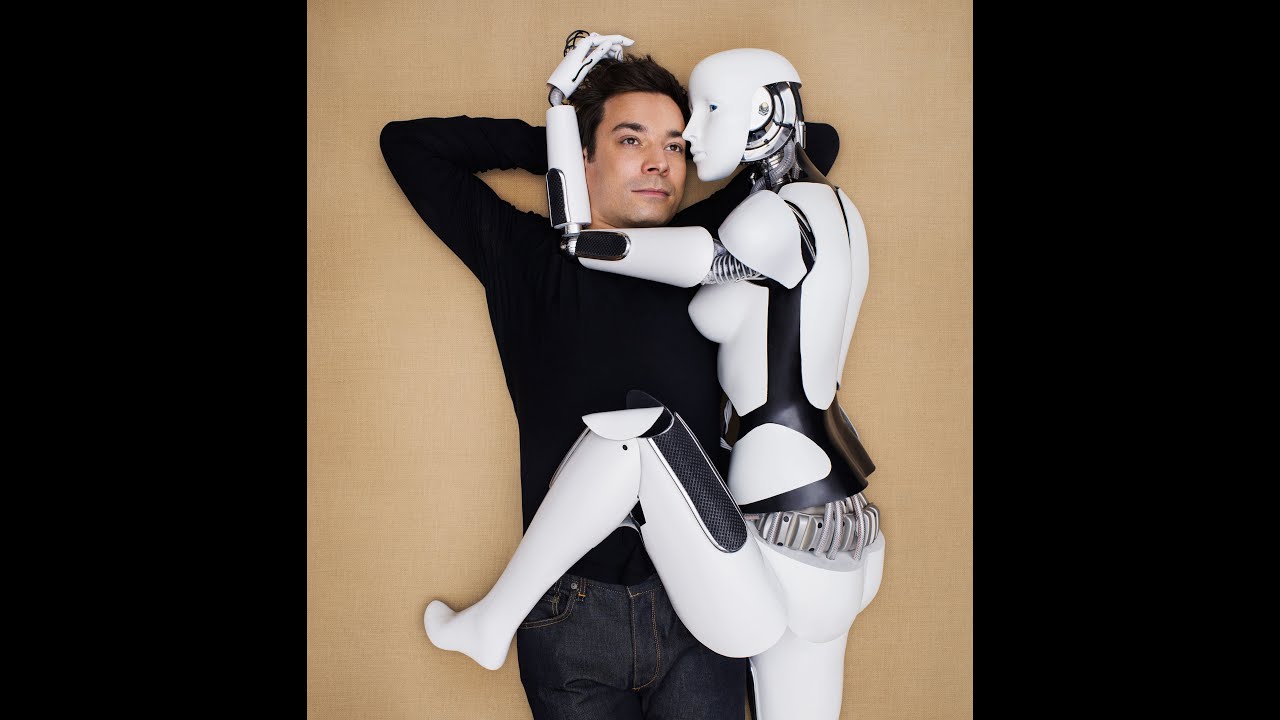
Talking about fascism and repressive governments is rarely sexy. I’ve yet to meet anyone whose panties ever got wet while talking about regressive free speech policies. You know what is fun, sexy topic to talk about, though? That’s right, I’m talking about sex robots again. Can you think of a better way to lighten the mood after all this political talk?

Traditionally, I don’t need a lot of reasons to talk about sex robots on this blog. I’ve even been known to make any excuse to talk about how sex robots will effect us, whether it’s how they’ll affect the prostitution industry or how they’ll make us better people. Granted, I do want to talk about something sexier than George Orwell, but there actually is a relevant reason for bringing up this sexy topic again.

It’s relevant because it tends to happen with all new technology to some extent. When there’s a clear trend emerging, it tends to generate this wave of irrational fear regarding its impact on society. We saw that with television when people though Elvis’ hips were part of a communist conspiracy to corrupt America. It’s only a matter of time before we see that with sex robots.

As such, it should surprise precisely no one that some people are already stoking the same fears about sex robots as their parents did with Elvis’ hips. This past week, the Salvation Army actually brought up the issue of sex robots and not in a very sexy way. These were their exact words.

It believes the technology could result in more people brought into the UK illegally for sexual exploitation instead of lessening demand for sex workers, the Birmingham Mail reports.

That’s not entirely surprising. Remember, the Salvation Army is a Christian organization. They do wonderful work, but religion have a long and stories history when it comes to sexual fear-mongering. The fact the Catholic Church still considers masturbation a sin in the age of internet porn shows how regressive religion can be on sexual matters.

It’s not just religion, though. Other more pragmatic organizations that don’t rely on people breeding uncontrollably expressed some concerns as well. A paper by Responsible Robotics, a non-profit that contemplates the sexy and non-sexy impact of robots on society, issued a paper called “Our Sexual Future With Robots” that expressed concerns similar to those of the Salvation Army. Here are some highlights.

“When we look at the question of whether or not sex robots could help to prevent sex crimes, there is major disagreement. On one side there are those who believe that expressing disordered or criminal sexual desires with a sex robot would satiate them to the point where they would not have the desire to harm fellow humans.”

“Many others believe that this would be an indulgence that could encourage and reinforce illicit sexual practices. This may work for a few but it is a very dangerous path to tread. It may be that allowing people to live out their darkest fantasies with sex robots could have a pernicious effect on society and societal norms and create more danger for the vulnerable.”

It sounds pretty dire. Then again, those fears about Elvis’ hips were pretty dire as well. Fears about cartoon violence, video games, and comic books were pretty dire as well. That’s not to say the concerns from Responsible Robotics and the Salvation Army are on the same level, but this kind of sentiment is nothing new.

I can see the logic behind these fears on some levels. The idea that people who fulfill their sexual needs with robots will somehow become socially isolated makes intuitive sense. It’s easy to imagine some creepy guy spending his every waking out in a windowless basement, acting out the most nauseating fantasies ever conceived with a sex robot that is programmed to be completely obedient.

It’s easy, but as is often the case with most fear-mongering, it focuses on an incomplete picture, of sorts. It simplifies and generalizes the impact that such a profound advancement would have on society. Given the sheer breadth of human society, that’s a crude, shallow understanding of the subject at best.

New technology always negatively affects some people. The simple advance of texting generated approximately 330,000 traffic-related injuries accidents in 2010 alone. It’s hard to know how many injuries sex robots will cause, but chances are it’ll be more than zero and heavily inflated if done while driving.

Despite the clear and documented harms of texting while driving, there’s no effort to un-invent the technology. It’s already here and it’s exceedingly profitable. Since the sex industry is already worth hundreds of millions of dollars, the incentives for sex robots are just too great to ignore, no matter how much religious organizations condemn it.

That’s not to say there won’t be issues. There are always issues with new technology. As advanced as smartphones had become, we still had faulty tech as recently as last year that caused some phones to explode. It’s terrifying enough to think about your phone exploding in your pocket. It’s hard to imagine how terrifying it would be if a sex robot malfunctioned in such a away.

Being an erotica/romance writer, I like to think I can imagine more than most. I also like to think that after hearing so many of the same arguments about video games, violent TV shows, and what not, I can sift the legitimate concerns from the agenda-driven fear-mongering.

Make no mistake. Sex robots will undermine certain peoples’ agendas. There are a lot of industries that cater to lonely, sexually frustrated men and women. It’s easier to convince a lonely, sexually frustrated person that a particular product will alleviate those feelings. Every marketing department in the world knows things get tougher when customers are happy, content, and satisfied.

There will also be cases of people who are already unhinged to begin with becoming even more unhinged due to sex robots. The rock band, Judas Priest, found that out the hard way in 1985 when two depressed teenagers listened to their music and committed suicide. While the band was found not liable for the deaths, it was still one case too many for the fear-mongers.

As soon as sex robots become more mainstream and more affordable, there will likely be a similar incident. Some poor loner will seek an outlet with a sex robot and somehow that will exacerbate, if that’s not too loaded a word, issues that are already festering inside his brain.

It could lead to people who become so isolated, they never leave their home again and end up dead.

It could lead to people who are so socially awkward that just being in public triggers a panic attack.

It could lead to people who can only have a functioning sexual relationship with a robot they can control and not a human being.

These are all possibilities and if I had to bet money on it, I’d say there will be at least one such case. Like the Judas Priest controversy, though, it’ll only take one to justify ramping up the fear-mongering. We may very well see governments and advocacy groups seeking to ban sex robots altogether or at least regulate them.

Seeing as how there’s too much money to be made in sex robots, it’s unlikely they’ll be banned. Chances are there will be some form of regulation or standards. Since the government is so uptight when it comes to regulating sexual matters, it’s more likely that the industry itself will try to regulate its own affairs. The last thing the industry needs is prudish bureaucrats telling sex doll manufacturers how big a pair of breasts can be.

It’s hard to say just how the sex robot industry will manifest. Unlike smartphones and TV, there’s far less precedent. While we do have sex dolls that are extremely realistic, we’ve yet to produce a sex robot that’s truly indistinguishable from the real thing and has a comparable measure of intelligence.

It will happen, though. The financial incentives are too strong and people are too horny. There will be issues. There will be reservations. However, we humans have proven incredibly adaptable over the centuries when it comes to bold new technology.

We adapted to cars and planes. We adapted to vaccines and contraception. We adapted to sexting and internet porn. We’ll find a way to adapt to sex robots. When people are that horny, they’ll find a way. It’s a beautiful, sexy thing that brings tears of joy to an erotica/romance writer’s eye.

20 Comments

Filed under Sexy Future

George Orwell, 1984, And The Perfect Totalitarian State

There were a lot of reasons I hated high school. I’ve listed more than a few of them on this blog. Somewhere on that list, but nowhere near the top, involved the books I had to read. To say they weren’t very sexy would be like saying a baseball bat to the head isn’t a very good massage.

However, every now and then, my English and social studies teachers managed to assign a book that didn’t make me want to make me stick my head in a deep fryer. One of my favorite non-sexy books of all time, which also happened to be a homework assignment, is George Orwell’s “1984.” It’s a book that always seems relevant and insightful, albeit for all the wrong reasons.

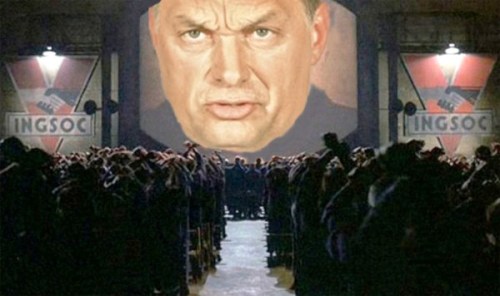
When I read Orwell’s depiction of the ultimate dystopian future, I see it as the ultimate thought experiment, of sorts. Orwell wrote this book in the 1940s, a time when there were actual, dystopian totalitarian regimes operating in the world. Sadly, one of them was a chief ally during World War II.

He had a lot to reference in his time, much more so than we have today. Other than North Korea, most people today aren’t as familiar with rigid, totalitarian governments. Since the fall of the Soviet Union, there’s an entire generation of people whose idea of a totalitarian regime is relegated to detention at a high school. They can’t even begin to fathom the kind of world that “1984” described.

That’s a good thing in some respects. In a sense, those governments are almost impossible these days. The rise of the internet, modern technology, and complex geopolitics makes it next to impossible for a regime to be as totalitarian as “1984.” North Korea comes close, but even that regime is wholly inept compared to Big Brother.

However, I believe there’s a unique value, of sorts, when it comes to understanding what makes a totalitarian regime work. I also think there’s value in knowing the tenets behind it, the ways in which it operates, and why it takes hold in the first place. Even in an age of people protesting the removal of the McRib from McDonald’s menu, we’re not immune from the threat of a totalitarian regime.

With that in mind, let’s dig a little deeper into Orwell’s extreme thought experiment that played out in “1984.” If you haven’t read the book or had even worse English teachers than I did, you might not be familiar with Big Brother, how it operates, what what it represents. You might have heard the term, but you might not be familiar with what it is.

For the sake of providing context, here’s a quick video from the Alternate History Hub channel on YouTube. It’s a channel that focuses primarily on alternate history scenarios, which I’ve touched on before, but it also provides remarkable insight onto other subjects. Given how many totalitarian regimes are involved in alternate history, it makes sense to explore the ultimate extreme, as it played out in “1984.”

It’s hard for most people in the industrialized world to imagine a system like this. The idea that facts, history, and the very thoughts we think are all controlled by this all-encompassing, all-powerful government seems insane. It’s hard to imagine living in a world like that. It almost seems impossible. In a sense, it is.

No government in history has ever come close to wielding the kind of power that Big Brother does in “1984.” Some have tried. There’s the first emperor of China, the sun king in France, and our old frenemy, Joseph Stalin. They only ever succeeded in part and often failed in the long run.

That’s because, as we’re seeing with the ongoing health care debate in America, human beings are impossibly chaotic creatures. We all have so many different needs and wants. We’re all petty about different things and apathetic towards others. No two people are completely wired the same. We all think different thoughts for different reasons, sometimes with downright kinky undertones.

It’s because of all that chaos/diversity within the human condition that no government can hope to achieve what Big Brother achieved in “1984.” It would require so much power, so much micromanaging, and so much information that it just wouldn’t be practical for any one human or party of humans.

Again, that won’t stop some from trying and that’s where Orwell’s thought experiment becomes relevant. In looking at the structure of Big Brother, we can observe the nuts and bolts of the perfect totalitarian regime. We can see what the ultimate fascist is seeking when they want to create an all-power, completely centralized government.

Impossible or not, the features of this government reveal some common themes that have a basis in the real world. Those are themes worth understanding because they help us know when someone is trying too hard to emulate Big Brother. Without getting too deep into the book, here are the key features of a perfect totalitarian regime.

  • There’s a single, unambiguous ruling party and no opposition of any kind

  • The ruling party makes up a small percentage of the population, never more than one or two percent

  • The members of the ruling party rarely, if ever, interact with the public directly

  • The public consists of two classes, a professional middle class that never makes up more than a quarter of the population and a working lower class that usually makes up over two-thirds of the population

  • The middle class is educated to some degree, but wholly controlled by the ruling party and is completely dependent on them for their livelihood

  • The lower class is uneducated, under-informed, and easily manipulated

  • All economic activity is controlled or guided by the party, ensuring the middle class has just enough to do their job and the lower class has just enough to propagate

  • The ideals for family structure and social structure are imposed by the party with any variations being deemed deviant

  • The lower classes are allowed to be more deviant and decadent in order to keep them content with their state

  • The middle class is held to a higher standard of conduct to ensure their loyalty and submission to the party

  • The flow of information, the accepted knowledge of the world, and the entire history of the state is dictated by the party and accepted by the masses

There are probably more features I could list, but these are the core elements of Big Brother and the society we see in “1984.” Now, some people will attempt to apply these features to whatever state, country, or office environment they’re in at the moment. Some might actually apply, but never to the same degree as Orwell depicted.

The biggest takeaway from these traits, as well as the themes in “1984,” is how a society structures itself in the face of such overwhelming control. At the top, there’s always a ruling class. That class has only one primary purpose, which is to preserve its power. From the Galactic Empire in “Star Wars” to the battle for the iron throne in “Game of Thrones,” preservation is always the top concern of a totalitarian regime.

Part of preserving that power means relying on a professional middle class, of sorts, to deal with the bureaucracy and administration of the state. It’s in this area where totalitarian regimes tend to be most vulnerable. History has shown that authoritarian states like Nazi Germany were anything but efficient, which in turn undermined the ruling party’s primary goal.

It seems like a paradox, but it’s more a matter of pragmatism. A state needs people to run these massive, complex machinations to maintain so much control. To not impose such control would mean granting people freedom and that’s dangerous to any ruling party that wants to preserve control.

This is why those in these middle class professions are subject to such greater scrutiny. A poor, unemployed man taking a piss on a street corner creates no controversy. However, if a highly educated professional did that, it would be a major scandal. We often see this in how major corporate scandals play out.

In a sense, the lower classes have more freedom in this system than the professional middle class. That’s because the ruling party doesn’t really care about them. They don’t have to because they’re not a threat.

Uneducated, lower class people are too stupid and gullible to really pose a threat. So long as they work and breed, the ruling party has no reason to micromanage them. They don’t care if they have orgies in the streets, drink paint thinner for breakfast, or wear horse masks to work. Their only purpose is to work and breed. If they do that, then the ruling party couldn’t care less.

In a sense, the ruling party will always be at odds with a certain segment of the population. In order to exercise control in an authoritarian regime, there needs to be a sizable number of loyal, competent underlings to carry out the functions of the state. Finding people who can act as such underlings with perfect loyalty is difficult, if not impossible.

It’s hard to say whether Orwell knew this on some level. Keep in mind, he was heavily influenced by what he saw around him, a massive world war and the rise of communist states. Perhaps he had studied how powerful, repressive governments had operated in the ancient past and saw parallels in the present. Perhaps he saw that as an inevitable recourse for humanity.

I choose to have a more optimistic, albeit cynical view of human affairs. I don’t believe a system like Big Brother could ever take hold in a world where people can’t even agree on pizza toppings, let alone a singular vision for human civilization. I also don’t believe any government is equipped to exercise the kind of control that Big Brother did in “1984.”

However, that still won’t stop some from trying and the very process of trying can be very dangerous. Seeking order within the chaos is a very human trait, but one that can easily get derailed by pettiness and corruption. That’s why Orwell’s lessons in “1984” are more relevant than ever and may always be relevant to some extent.

6 Comments

Filed under Jack Fisher's Insights

Superman Vs. Boredom: Why It Matters (For Your Love Life)

In talking so much about boredom, it can get kind of boring just dwelling on it so much. I don’t know if that counts as irony or a paradox, but I think it’s kind of poetic. The more we contemplate the impact boredom has on our lives and our society, the more we realize just how powerful it is and how quick we are to avoid talking about it.

We still don’t know the true impacts of crippling boredom on society because, for the moment, there are plenty of distractions, jobs, and obligations to keep people busy. Horrific stories like the murder of Christopher Lane, which was allegedly inspired by boredom, will continue to be rare and newsworthy, at least for the near future.

However, there may very well be future generations, including those that will emerge within our lifetime, that will have to deal with a growing glut of boredom. Between advances in biotechnology that will cure disease and the rise of automation, which may necessitate a universal basic income, this may be an issue that impacts us sooner than we think.

That brings me to Superman. Bear with me. I promise that’s not a non-sequiter. I’ve used comic book superheroes before to make my points, be they inspiration for one of my novels or examples of a sex-positive female character. I even cited comics when I singled out Vandal Savage as a villain forged by boredom. For the purposes of this post I need to cite him again, but Superman will be the primary focus.

Being the personification of our ideals and morals, the things that affect Superman also affect and I’m not just referring to kryptonite. If the epitome of our heroes and the icon of our most cherished values cannot handle a certain burden, then what hope do we have? That’s why when there’s a flaw with Superman, one of the most powerful characters in the DC Universe, we need to take notice.

Image result for Superman iconic

In a sense, Superman and the immoral villain, Vandal Savage, are indirectly linked. They’re facing the same overwhelming burden and neither of them has found a way to effectively deal with it. The only difference is that Savage had a huge head start. Superman will catch up eventually and that’s where the true struggle resides.

Based on his current power set, which has been prone to change over the years, Superman is functionally immoral. So long as he replenishes his powers with the energy of a yellow sun, he’ll never age and he’ll never die. That puts him in the same boat as Vandal Savage, who never ages and can’t die. That also means that, at some point, he’ll have to deal with the burden of crippling boredom.

That’s a burden that DC Comics has never had him deal with. Like so many other oversights, such as how glasses can be an effective disguise, it’s one of those flaws that’s easier to just ignore. However, it has been confronted to some extent and the implications for Superman, the real world, and our love lives is pretty distressing.

Image result for Superman struggling

Again, that’s not a non-sequiter. I brought up our love lives for a reason and it’s not just because I’m an aspiring erotica/romance writer, although that is part of it. While we might not be immortal, our lifespan is increasing. There are emerging technologies that may very well make us functionally immortal. That’s going to, by default, affect our love lives just as it will affect Superman.

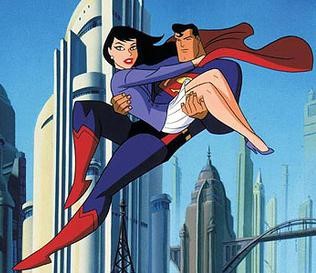
Nearly everyone, including non-comic book fans, know the extent of Superman’s love life. They may not know about that time he made a porno tape with Big Barda, but they know that Superman’s primary love interest is Lois Lane. His romance with Lois is, by nearly every measure, the most iconic romance in the history of superhero comics.

Image result for Superman and Lois Lane

While the romance has evolved a number of ways over time, the core themes remain the same. Lois Lane, being as human as they come, complements Superman in every meaningful way. She often acts as an emotional anchor of shorts, highlighting and strengthening the humanity within Superman. While she isn’t the primary source of Superman’s values, she is definitely a catalyst for strengthening them.

It’s a big part of what makes Superman so strong and so upstanding, with respect to his values. Lois Lane provides that sense of love and connection that reminds Superman that, despite being an alien, he has a strong sense of humanity. That is a humanity that Vandal Savage lost long ago.

While Superman’s romance with Lois Lane may be iconic, it still relies on one major flaw. Lois Lane, as beautiful, sexy, and charismatic as she might be, is still human. That means that at some point, she’s going to grow old and die. Superman may still love her all the same because he’s just that kind of person. However, she’s not immortal and he is. There’s just no way around that.

That’s not a primarily concern for him, though, because in the comics, Superman’s age is usually between 29 and 33 years old. There are some comics that explore an older version of him, but the bulk of his mythos is structured around him being the age of a typical man. That means, by default, the story can only cover a tiny sliver of Superman’s love life with Lois.

That has major implications because if Superman is functionally immortal, then he will outlive Lois Lane and that emotional anchor that helps him be the hero he is disappears. What will that do to him? Can he still be Superman without it?

Image result for Lois Lane Dies

Vandal Savage’s descent into madness sets a dangerous precedent. It’s entirely possible that Savage had someone like Lois Lane in his life at some point. The man has been alive for 50,000 years old. The sheer breadth of his lifespan makes that entirely possible.

Unfortunately, or tragically in some respect, that love died because everyone around Savage dies. It’s not because he kills them. He just outlives them. Being immortal, getting attached to anybody means enduring heartbreak and loss.

Even if someone he loves dies peacefully in their sleep, he still feels that loss. People in general, when they lose loved ones, feel emotional pain no matter what the circumstances. I had a relative live into her late 90s and die peacefully. When I went to her funeral, there were still people with tears in their eyes.

Imagine how many times Vandal Savage has endured that over his 50,000 year lifetime. Is it any wonder that he lost his humanity and has such a lower regard for human life? For him, forming human attachments of any kind just guarantees more pain. Whether you’re a human or a worm, you do whatever it takes to avoid that kind of pain.

That brings me back to Superman. He’s only lived a fraction of the life of Vandal Savage. However, he’s in a far worse position because while Savage may be a genius, he doesn’t have anything close to the power set that Superman possesses.

Superman is not just immortal and smart. He possesses the kind of speed, strength, and agility that allows him to do anything, go anywhere, and master every skill. Whereas someone like Savage may take centuries to master something, Superman can do it in seconds. That means he’ll run out of things to do even faster than Savage. It will not take 50,000 years for Superman to be overcome by crippling boredom.

Someone like Lois Lane might be able to keep Superman human, at least in his young age. However, there are many occasions in the comics where Lois Lane’s death leads to Superman becoming distant, detached, and despondent. While their love may be strong, the influence is at the mercy of time.

That’s not to say Superman will inevitably become like Vandal Savage. Granted, there are stories where Superman goes completely insane and becomes the kind of super-powered tyrant that North Korean dictators aspire to be. There are others where he ages gracefully and helps make the world a better place. In a sense, Superman’s potential reflects the uncertainty that such boredom will incur on immortals.

That’s an important concept to grasp because, as we humans live longer, healthier lives, we’ll have to contend with some of Superman’s burdens. Some people may be able to live centuries and maintain a strong sense of humanity. Others may end up like Vandal Savage and see humanity as a bunch of perishable meat bags.

This has huge implications for both our love lives, as well as the attachments we make. If we start living long, near-immortal lives, why even form romantic attachments? Why bother when time is just going to destroy it in the long run? Will we abandon those passions because it only leads to more pain? Will a world of functional immortals be completely devoid of love?

It’s impossible to say for sure and that’s what’s so disturbing about it. If someone as good and pure as Superman struggles to deal with the impact of crippling boredom, then what hope do we have?

1 Comment

Filed under Comic Books, Jack Fisher, Superheroes, Jack Fisher's Insights, Uncategorized

Will Sex Robots Make Us Better People?

https://i0.wp.com/mojidelano.com/wp-content/uploads/2016/10/15-58-55-special-report-sex-robots-a-psychological-perspective-sfw-jpeg-209057.png

I’m going to do it again. That’s right. I’m going to talk about sex robots. Do I have your attention now? I know it’s not the first time I’ve brought up this inherently kinky, but sexy topic. I doubt it’ll be the last. Honestly, there’s so much potential in this topic, sexy and otherwise, that I’m surprised I don’t talk about it more often.

There’s no way around it. Sex robots are coming, literally and figuratively. There’s already a brothel in Spain that employs sex dolls for customers. Companies like RealDoll are actively working on developing them. Given that sex still sells and there’s a lot of horny people in the world, the economic and personal incentives are just too huge.

Like any early technology, though, it’s going through some growing paints. It’s still a ways away from being refined, effective, and cheap. Like early cell phones and TVs, sex robots are going through that clunky phase where they seem more like a novelty than a practical reality.

https://i0.wp.com/dynamicmedia.zuza.com/zz/m/resized_gallery/0/f/0f055e1c-6678-4ec1-9bdf-0f3dcbebbc2f/01_realdolls3___Gallery.jpg

Eventually, we’ll work out the kinks, so to speak. I’m confident that everyone under the age of 30 will live to see a day where sex robots are almost indistinguishable from real partners. They won’t just look, feel, and sound real. They’ll be every bit as customizable and versatile as modern smartphones.

You want a meek, submissive partner who only lives to serve you? There will be a sex robot for that. You want a tough, dominant bondage enthusiast who makes you their personal bitch? There will be a sex robot for that too. The only limit is your own perverse imagination.

This leads to one vital question, which I’m sure hasn’t slipped the minds of those who still make weird faces when the topic of sex robots comes up. I imagine these same people used to think Twitter was a waste as well. Today, I imagine they’re still kicking themselves for not buying stock in it. It’s still a wholly relevant question, though.

How will sex robots affect society?

I’ve been dancing around this question for a while because I’m still not sure how to address it. Believe me, though, I’m working on it. I do want to keep talking about sex robots. I’ve noticed it gets my target audience uniquely excited.

However, there are others who think about this topic as well, sometimes more intently than even an aspiring erotica/romance writer would dare. The cast from ThinkTank, a fun and sometimes kinky YouTube channel that I’ve cited before, actually chose to ask that question in a different way.

How will sex robots make us better people?

On the surface, that does seem like a loaded question, if that’s not too inappropriate a term. It seems inherently bias that sex robots will only make people better. That’s like pretending ski masks are only used for skiing or that guns are only used for hunting.

Loaded or not, they do highlight an important dynamic of sex robots. It’s one that tends to get overlooked and underplayed, but one that has the potential to change society in a way that’s very positive by most measures. It has less to do with how we interact with sex robots and more to do with how they’ll interact with us.

Here’s the video that explores this discussion. I’ll give those who own fleshlights and vibrators a minute to collect their thoughts and steady their hearts. Take all the time you need.

At the core of the issue here is how the artificial intelligence within these sex robots is configured. There will be some that just obey orders. Like any appliance or gadget, you push a button and you get the effect you want. There will be a market for those sex robots, just as there’s still a market for old flip phones.

However, that’s not going to be enough for some people. I know this because those with vibrators and fleshlights still seek love and companionship. That’s because, in addition to being extremely horny, we’re a very emotional species as well. We are biologically wired to seek intimate connections with others. Incorporating that function into a sex robot just seems logical.

A sex robot with that kind of ability would do more than just provide the experience of sharing an intimate connection with a user. It’ll help people explore and develop their ability to seek such connections with others. It could be a teacher or a mentor of sorts. This is just one you have sex with and looks as sexy as you want it to be. There’s literally nothing unappealing about that concept.

https://i0.wp.com/www.collegemagazine.com/wp-content/uploads/2012/07/ef410b39aaacff80684620e12daf9175_b.jpg

Beyond the teenage fantasy, though, there’s another aspect to that idea that ThinkTank didn’t touch on. It has to do with our collective struggles to explore and deal with sexual issues. Given the erratic nature of our sexual attitudes, it’s an issue that’s bound to come up.

Think back to the heath classes or sex ed you got in high school, assuming you didn’t go to school in Texas. Those classes told you what sex was, how it worked, and the body parts involved. Some may have even touched on the dynamics of sexual relationships. Again, if you got your education in a state like Texas, your experience may vary.

Just knowing about sex isn’t enough, though. Most of those students are still horny teenagers who don’t know how to deal with their horniness just yet. They don’t have many outlets to explore that feeling. Other than internet porn and each other, their options are limited.

https://i0.wp.com/mydeepinside.info/wp-content/uploads/2015/05/neschastnaya-lyubov.jpg

Now, imagine getting that same information from health and sex ed. Then, imagine getting your own sex robot to help you explore your sexuality. Whether you’re a man or woman, gay or straight, you have something that will actually guide you through the intricacies of having sex and forging relationships.

It may sound like a bad scene from a porno, but throw an intelligent sex robot into the mix and suddenly, it’s not just pornographic. It’s wholly pragmatic.

As the clip said, sex robots with AI could be programmed to help teach users to interact and understand one another. It could teach men and women to better form genuine, intimate connections. Compared to the lessons that movies, video games, and fairy tales teach, which makes it seem like everyone needs to be a prince or princess, sex robots would be invaluable towards molding healthy minds and genitals.

https://i0.wp.com/www.dogubayazithalkinsesi.com/resimler/2/40794.jpg

So much of our struggles to get along, be they unequal gender dynamics or a poor understanding of what constitutes consent, stem from our limited ability to form relationships. They also may be a product of not getting laid often enough.

I know I’ve said this before, but it’s worth saying again. There are a lot of health benefits to regular sex. When someone has a rich, satisfying sex life, they’re generally happier and nicer to be around. A society full of sexually satisfied men and women who actually know how to forge intimate relationships can only be a good one.

https://i0.wp.com/consciouslifenews.com/wp-content/uploads/2013/05/image12.jpg

It’s still impossible to know just how sex robots will affect society. There may very well be other negative consequences that I either haven’t explored or thought of yet. Whatever they may be, expect me to talk about them or write about them in my novels at some point. It’s just too sexy a topic to ignore. In time, nobody will be able to ignore it.

13 Comments

Filed under Sexy Future