Category Archives: superhero comics

The Dark Phoenix Trailer: What’s There, What’s Missing, And What’s Uncanny

darkphoenix

It’s finally here! It was subject to delays, bogus leaks, and misinformation about the extent of reshoots. None of that matters now because it’s really here. The trailer for “X-men: Dark Phoenix” has finally arrived in all its fiery glory.

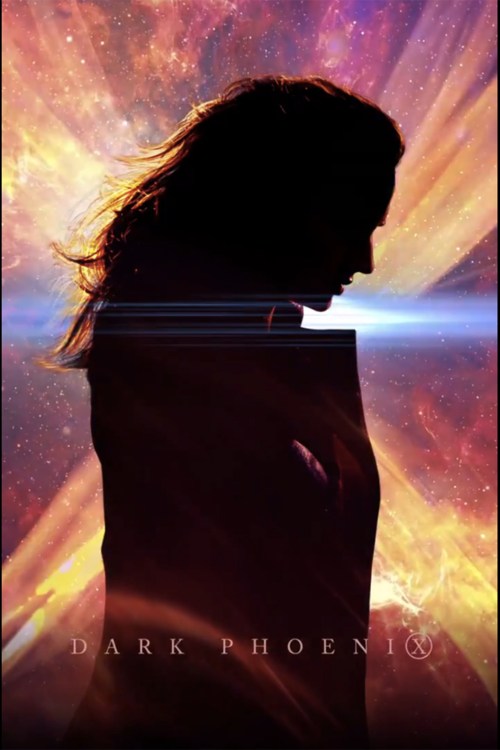
Before I write another word, let’s all just take a moment to watch it again and appreciate the promise of a movie that may actually do justice to the Phoenix Saga.

I’ll give everyone a minute to process it again. Whether you loved it or hated it, there’s no way around it. This movie is coming, despite the rumors that claimed otherwise. On February 14, 2019, this movie is coming out and I hope to be among the first to see it. That had been my intention since the movie was announced, but this just gave me more incentive.

For the next several days, there will be plenty of talk about the reaction to this trailer. I already have a pretty good feeling of how it’ll play out. X-men fans, like, me who were deeply disappointed by how this story was handled in “X-men: The Last Stand” will be elated. Those who just want the X-men to join the Marvel Cinematic Universe will whine about how this movie is a waste of time.

In between it all, there will be trolls and assholes who will find an excuse to hate the trailer and this movie, but that’s to be expected of any movie these days. There’s no helping those people. Instead, I’d rather focus on what we can and cannot glean from this trailer.

It goes heavy on the drama, which is perfectly appropriate for any movie involving the Phoenix Saga. It also answers some questions about the details of the story while posing a few others. I won’t break down every frame, but here are a few key insights that should get X-men fans like myself very excited.


What’s There
In short, there’s a lot. In fact, I would go so far as to say this trailer had more elements of the original Phoenix Saga from the comics than the entity of “X-men: The Last Stand.” Most importantly, this trailer established that the story of Jean Grey becoming Dark Phoenix will not be relegated to a side-plot.

That’s something I belabored last year when I listed several critical ways to avoid screwing up this movie. In fact, it was near the top of the list. One of the many mistakes “X-men: The Last Stand” made was trying to squeeze the most iconic X-men story ever written into several other plots involving completely unrelated themes. That’s just one of the many reasons it turned out so poorly.

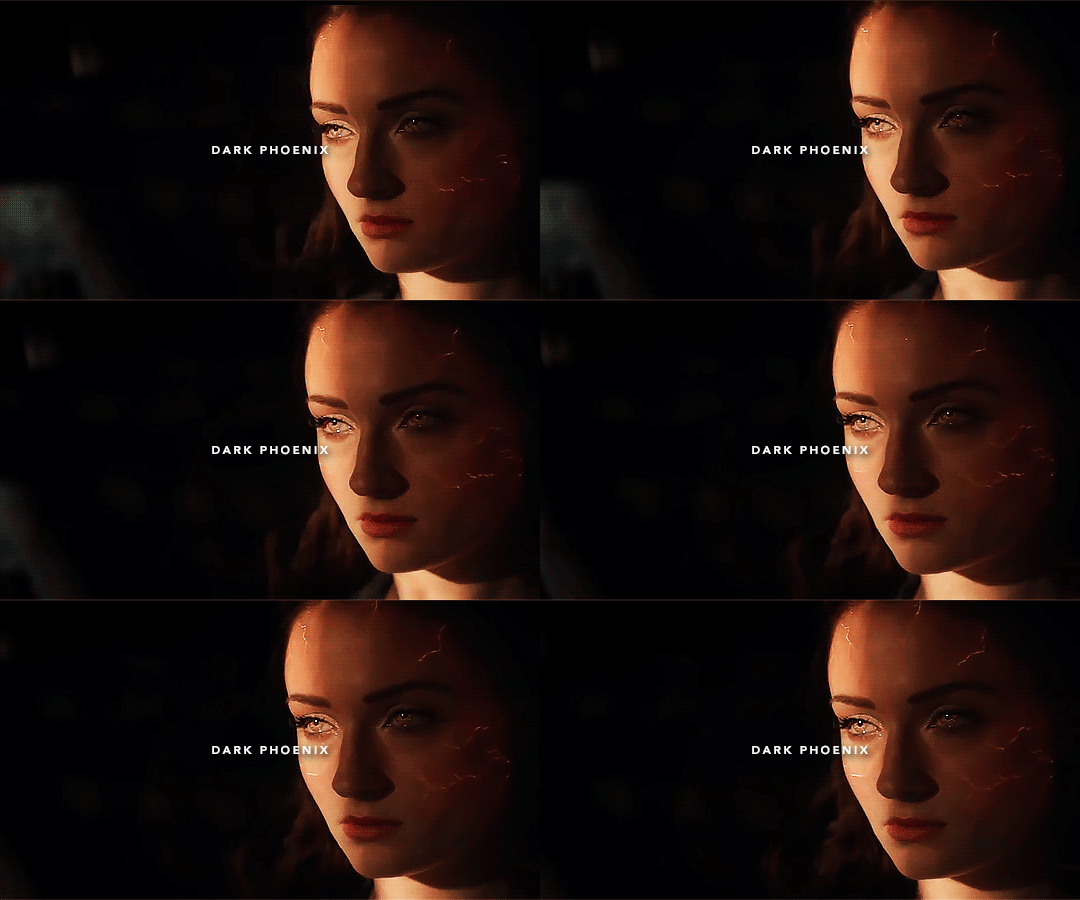
This trailer starts and ends with Jean Grey’s struggle against the emerging darkness. That’s not just key for the basics of any Phoenix Saga. It makes clear that the main plot of this movie will focus on her and give Sophie Turner plenty of opportunities to show off her fiery persona. That, alone, is very promising for those hoping for a competent movie about this iconic X-men story.

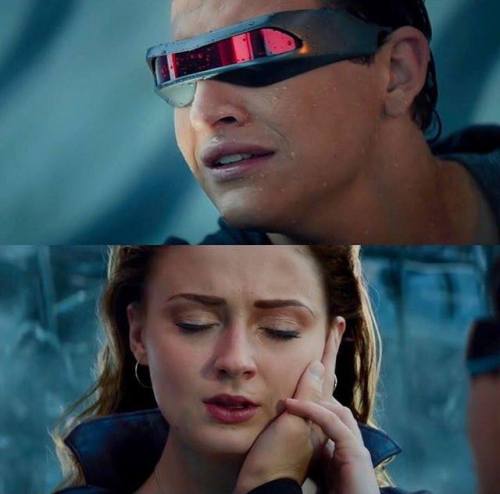
In addition, the trailer offered hints that this movie will actually develop the Cyclops/Jean relationship that’s so critical to the emotional weight of the Phoenix Saga. That was another massive mistake in “X-men: The Last Stand.” A big part of why this story is so powerful is because it’s fueled by a love story between two characters trying to overcome obstacles of cosmic proportions.
Phoenix

Those are two critical factors in ensuring that this movie has the necessary elements to make a Dark Phoenix movie work. The trailer also hints at a few other details that aren’t related to the main Phoenix story, but nicely connect with other moments from the recent movies.

The most ominous scene, in my opinion, was the brief shot of Beast and Mystique. If you saw the “Rogue Cut” of “Days of Futures Past,” you saw that these two have had some romantic undertones that began way back in “X-men First Class.” From the looks of it, something happens to Mystique that sends Beast over the edge. That could also be what pushes Jean further down the path of the Dark Phoenix.
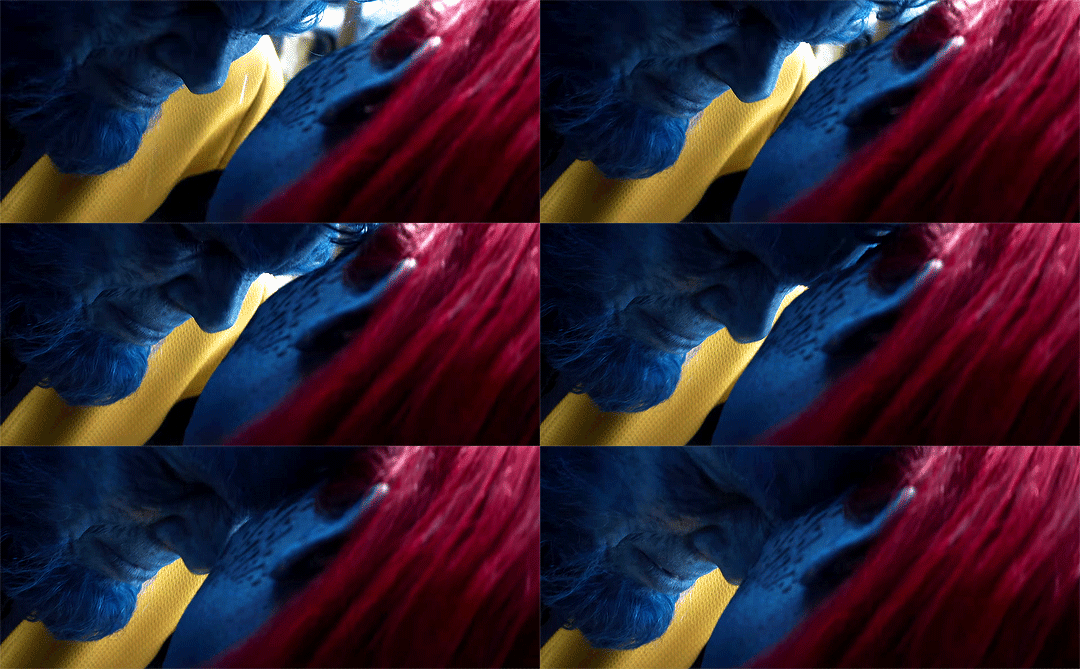
It’s hard to say what this means, but the shots of a funeral do not bode well for Jennifer Lawrence’s character. The fact that Beast is siding with Magneto later on in the trailer hints that he does not agree with how Xavier is handling Jean’s situation. Considering how Beast helped defeat Magneto in “Days of Futures Past,” that would be a major shift, but one that could add even more weight to the story.

There are so many hints and clues as to how the story will play out, but I’d rather not speculate too much. This trailer does manage to avoid excessive spoilers, but it’ll be interesting to see what else will be revealed as the release date draws near.


What’s NOT There
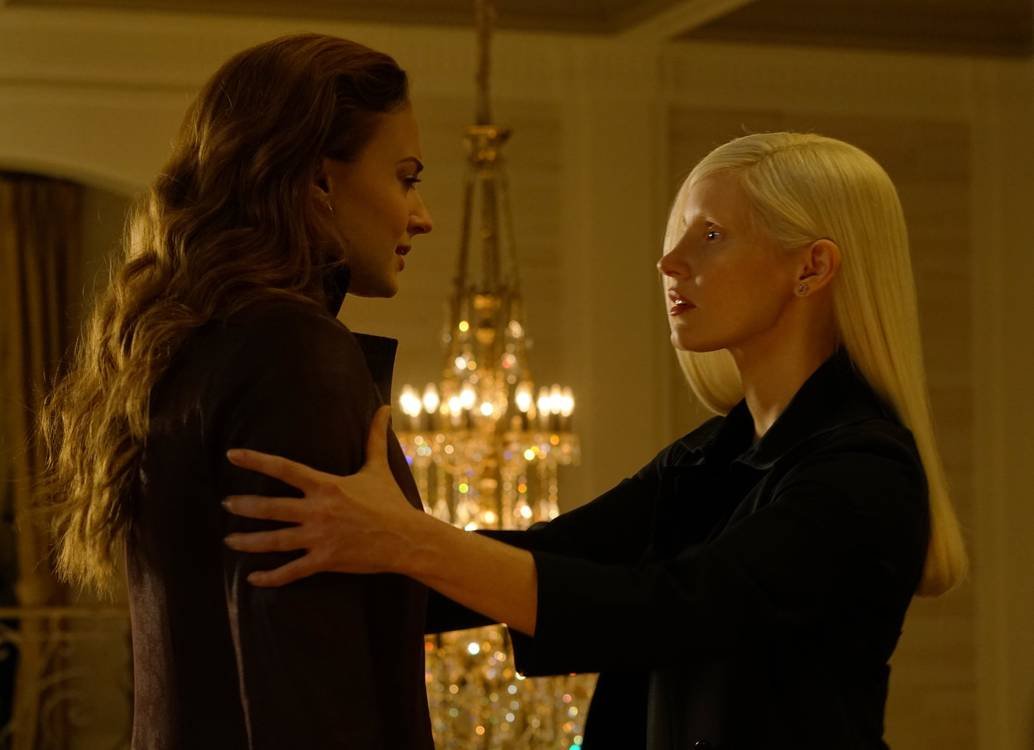
There’s not a lot, but I don’t deny that this trailer did have some glaring omissions. The biggest one, in my opinion, has to do with Jessica Chastain’s still-unnamed character. The only thing we know about her is that she plays the main villain of the story. While some took that to mean she would be playing the alien queen, Lilandra Neramani, that has since been debunked.

On her IMDB page, her character is only named Smith. That could mean any number of things. She could play a shape-shifting Skrull, who have clashed with the X-men many times in the comics. She could play Deathbird, an alien hunter with close ties to Lilandra’s alien race, the Shi’ar. She could be someone else entirely. We really don’t know.

Other than Chastain’s character, we don’t see much of Storm, Quicksilver, or Nightcrawler. They’re clearly present, but they don’t get to say or do much. That’s to be expected, though. This is a Dark Phoenix movie, after all. The focus should be on Jean Grey, Charles Xavier, and Cyclops.

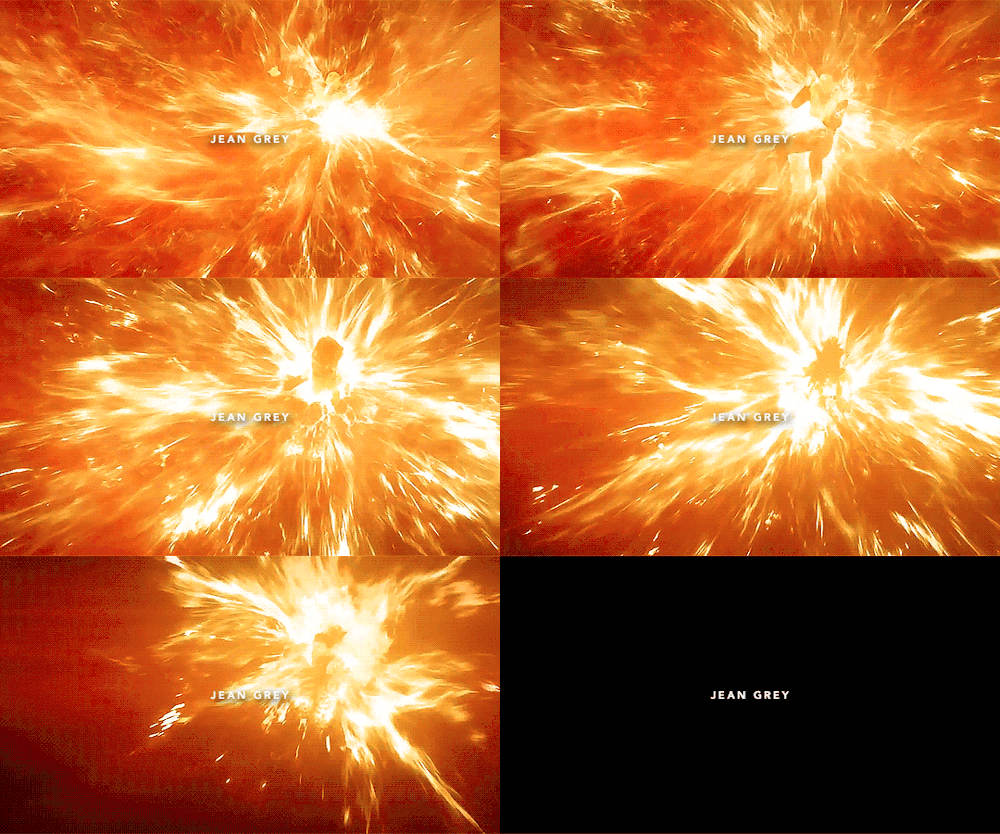
That said, the other glaring omission in the trailer has to do with the Phoenix Force itself. While we do get some signs, we don’t get anything like the fiery display Jean showed at the end of “X-men Apocalypse.” We also don’t get any signs of the more cosmic elements of the Phoenix. While there are a few shots that hint of a scene in space, it’s only a tiny part at most.

That’s to be expected, though. This movie just finished up reshoots so I imagine the effects aren’t fully polished yet. There’s plenty of time between now and February to make it look as beautiful and stunning as a Dark Phoenix movie should. Perhaps a second trailer will reveal more. It worked for “Venom” and it can definitely work for this.


What’s Uncanny
More than anything else, this trailer showed that Simon Kinberg, Fox, and everyone else who got crap from what happened in “X-men: The Last Stand” is making a concerted effort to right the wrongs of the past. Kinberg has said in the past that he did not like how things played out in that movie. I’m all for giving him a chance to do so.

This trailer doesn’t prove he managed to fix everything. However, it does offer hope that this time will be different. This time, the Phoenix Saga won’t be a sub-plot. The story won’t be radically changed to make it all about Wolverine. It’s going to genuinely try to tell this iconic X-men story in the most complete way possible.

As much as I hated the first attempt, I’m more than willing to give this one a chance and then some. I know as well as everyone else that this will be the last X-men movie of the era that began back in 2000. It has already been confirmed that Kevin Feige, the architect of the MCU, is going to take control of the X-men’s cinematic future after the Disney/Fox merger.

Some are already looking forward to a completely rebooted X-men movie, complete with a new Wolverine who isn’t played by Hugh Jackman and a new line of stories that’ll give the X-men a chance to participate in the global juggernaut that is MCU. I’m excited for that too. However, that makes it all the more important that “X-men: Dark Phoenix” be the best, most uncanny movie it can possibly be.
3 Comments

Filed under movies, superhero comics, superhero movies, X-men

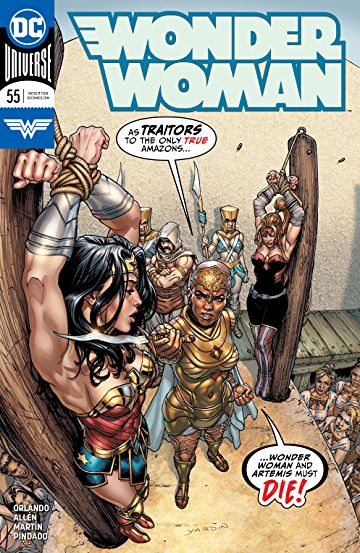
Jack’s Quick Pick: Wonder Woman #55

cover-_sx360_ql80_ttd_

I’m going to try a little something new here so please, if possible, tell me what you think. Every Wednesday, a crop of new comics come out. I’m usually up bright and early to read them, thanks to digital subscriptions through Comixology. It makes for many restless nights, but it’s worth it to start my day with an awesome comic. As such, I want to single out a particular comic that I feel really stood out.

This week, it’s Wonder Woman #55. Granted, I’ve written plenty about Wonder Woman and the many reasons why she’s an iconic female hero. Sometimes it’s easy to forget that she still has comic coming out regularly come out and this week, we got an especially wondrous treat.

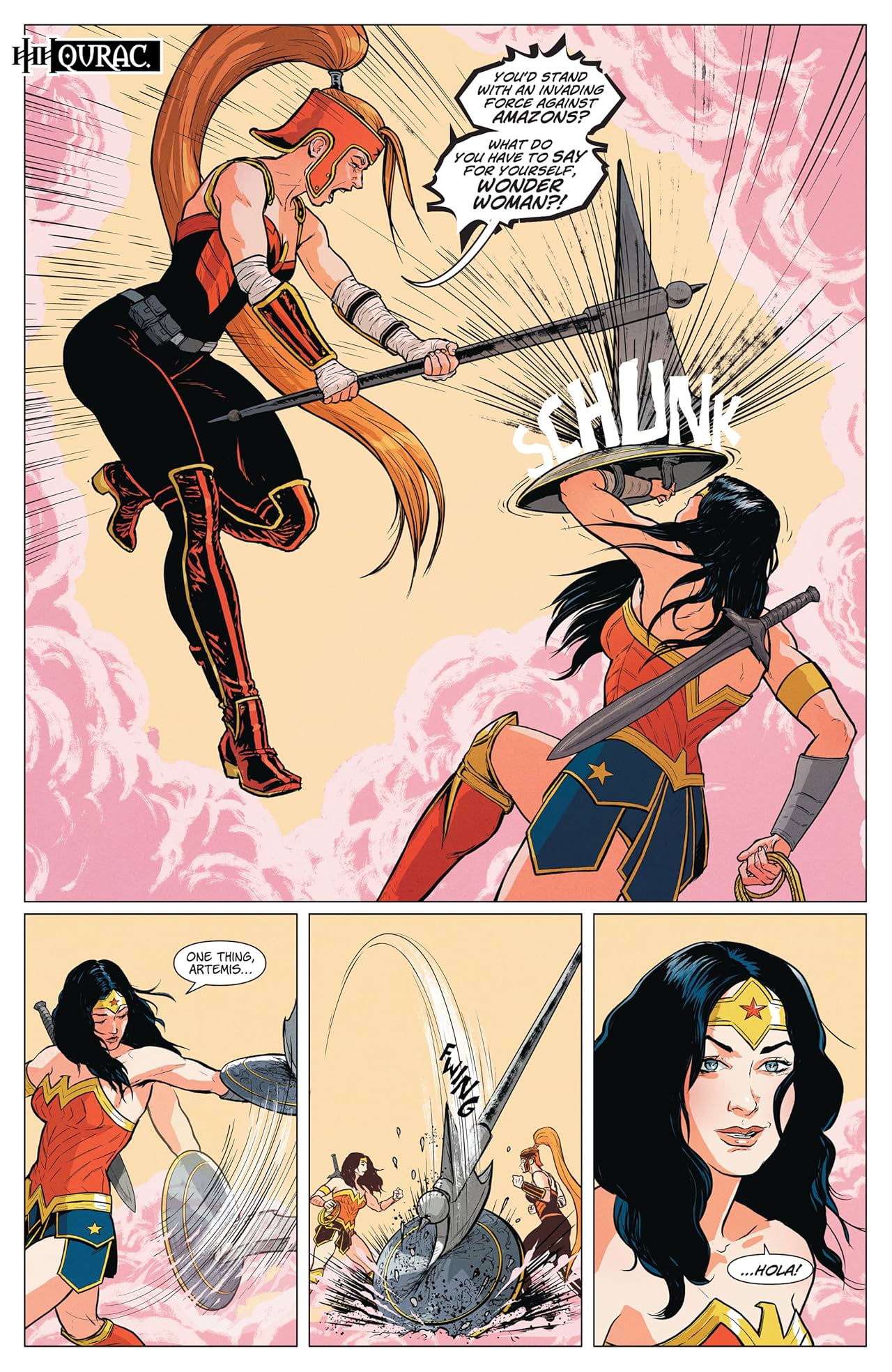
Steve Orlando and Raul Allen capped off a story that began several issues ago that had Wonder Woman reunite with her renegade Amazon sister, Artemis of Bana-Mighdall. While this isn’t the first time they’ve clashed, this particular comic beautifully demonstrated what sets Wonder Woman apart from her fellow Amazons and so many other heroes in general.

While Wonder Woman’s power set makes her one of the most powerful figures in the entire DC Universe, even those immense abilities don’t reflect her greatest strength. Sure, they come in handy whenever Darkseid invades Earth, but those are not the most important weapons in her arsenal.

More than anything else, Wonder Woman’s greatest power is winning battles with truth and compassion. She doesn’t seek to solve problems through domination. She seeks peace through truth and loving submission, a theme with some kinky undertones. She wields that power with effective grace in this, albeit not in too kinky away.

I could go on and on about the non-kinky aspects of the story that make it so awesome, but I’d rather let the book speak for itself. That’s why I’m proud to make this comic my first quick pick. Even if it doesn’t make you submit, it’ll fill your heart with Wonder Woman’s love and compassion. Any comic that can do that is a true wonder.

Wonder Woman #55

Leave a comment

Filed under comic book reviews, Jack's Quick Pick Comic, superhero comics, Wonder Woman

Jack Fisher’s Top Five Romance Comics

tumblr_m9f6wpy3tu1qjzyxso1_1280

I love comics. I love romance, too. When you put them together, it’s like putting bacon on pizza. It takes two inherently wonderful concepts and combines them, thereby compounding everything that makes them awesome.

I talk a lot about comics and romance. I’ve cited certain relationships that stand out in the current romantic landscape and praise certain comics that raise the bar for romance between superheroes. I think I’ve made the extent of my fondness for both fairly clear. Now, I’d like to offer some specifics.

For a while now, I’ve gotten comments and emails from people asking for recommendations of good romantic comics. I feel like I’ve contemplated this enough to craft a list of the comics I feel have the most to offer in terms of romance. While there are plenty of comics that cater specifically to romance, I’ve left those out in favor of those that offer a broader story that general comics fans can also appreciate.

What follows are my top five picks for the best romance comics. Please note that this is a personal list. I don’t wish to imply that this ranking is definitive. These are just my hand-picked comics that I feel offer the perfect blend of love and comic book level awesome.


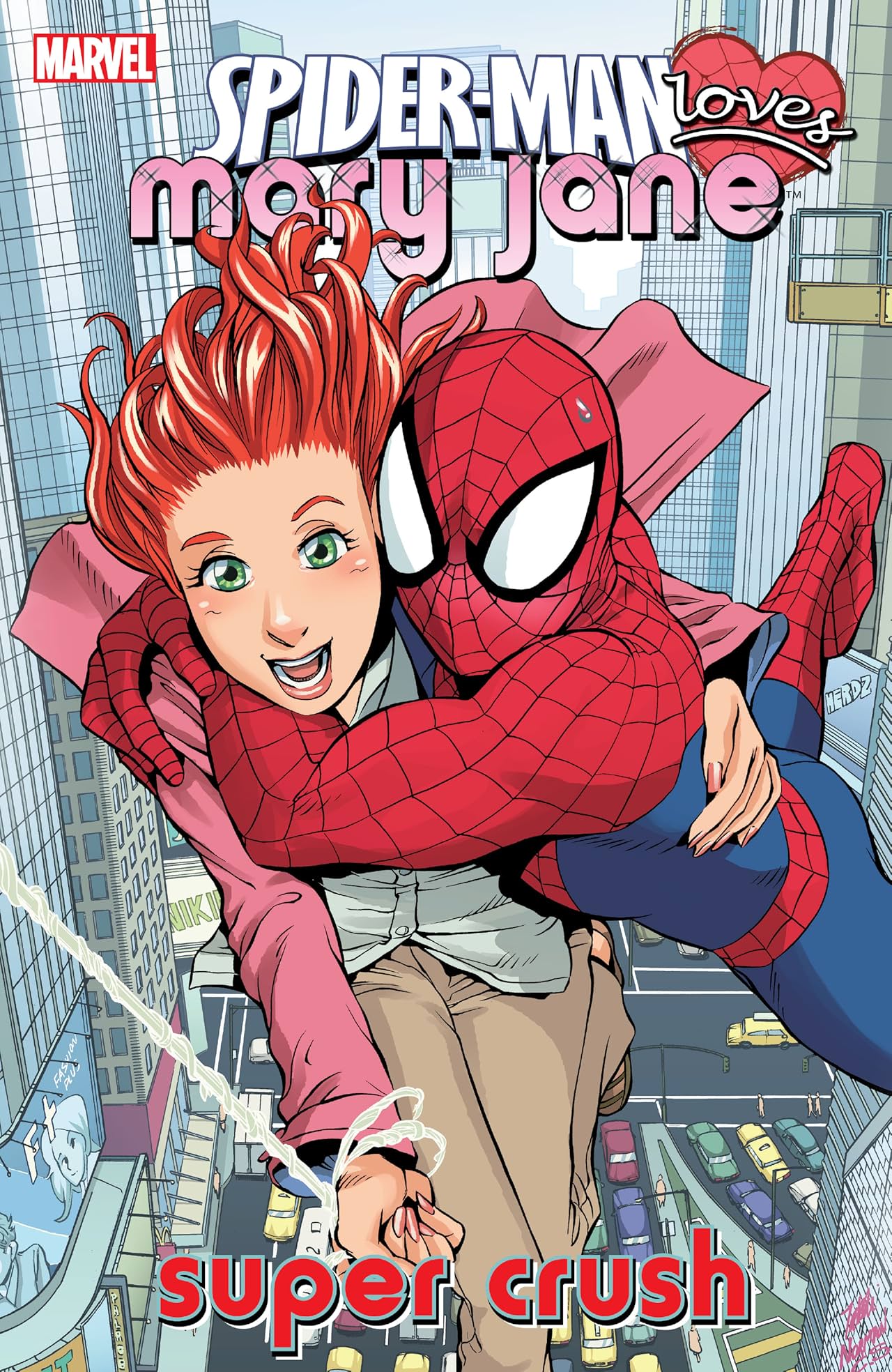
Number 5: Spider-Man Loves Mary Jane

This sweet, fun little series from the mid-2000s is one of Marvel’s more underrated gems. There’s a lot of drama, angst, and frustration surrounding the romance between Spider-Man and Mary Jane Watson. I’ve cited some of the “complications” these two have endured on more than one occasion.

This series basically avoids all of that and doesn’t rely on elaborate retcons to do it. The story is less about Spider-Man and more about Mary Jane Watson. Specifically, it’s about a young, pre-supermodel Mary Jane Watson who hasn’t quite become the gold standard for sex redheaded comic book characters. That’s critical to what makes this series so great in terms of story and romance.

For once, Peter Parker being Spider-Man is secondary. That story is unfolding behind the scene, but the real drama comes directly from Mary Jane. She’s at an age where she’s blossoming into a beautiful young woman, but still figuring herself out. She’s not sure of what she wants, how to love, or where she fits into this crazy world. On every level, she’s far more relatable than any superhero.

As she navigates that world, she makes touch choices and even a few mistakes. More than anything else, though, this series shows how and why Mary Jane came to love Peter Parker so much. It doesn’t rely on overt sex appeal or excessive heroics. The story focuses entirely on chemistry and growth.

On paper, it sounds like something that shouldn’t work in a superhero comic, but it totally does. It’s a romance story that’s balanced and well-developed. It also isn’t too mature. Anyone from age 8 to 80 can appreciate the romance here. On top of that, Takeshi Miyazawa’s artwork is gorgeous, bringing light and heart to a romance that badly needs it.


Number 4: Rogue and Gambit

This is a very recent entry on my list, but one that did more than enough to justify its position. Over the course of five issues, “Rogue and Gambit” accomplished something extraordinary. It took a well-known romance that had been deconstructed, denigrated, and mishandled for years and effectively rebuilt it into something truly uncanny.

Kelly Thompson, one of Marvel’s rising stars, took the baggage surrounding the Rogue/Gambit relationship and channeled it in a way that felt both rewarding and sincere. It starts as an undercover mission, but evolves into some overdue couple’s therapy. Thompson doesn’t ignore all the factors that kept them apart. She even lets them argue and agonize over them.

In doing so, this series presents this romance as one you won’t find in any fairy tale. This isn’t a case of star-crossed lovers destined to be together. It’s a romance in which the two people involved have to really work at it. They have to confront their flaws, their failures, and all the excuses they’ve made to avoid their feelings. It gets ugly, but beautiful at the same time.

I would go so far as to cite this series a template for how a modern superhero romance can work, even without an iconic legacy. The Rogue/Gambit romance isn’t ideal, but that’s exactly what makes it so enjoyable and endearing. These are flawed characters who have both found themselves playing villainous roles at some point in their history. Them coming together despite all that just feels so right.

The only reason this series isn’t higher on my list is because it’s so recent. It’s also still evolving through a companion series, “Mr. and Mrs. X.” I’ve reviewed and praised that series too, but it wouldn’t be possible without this series. Whatever complications the Rogue/Gambit relationship faces in the future, this series will remain one of its most defining moments.


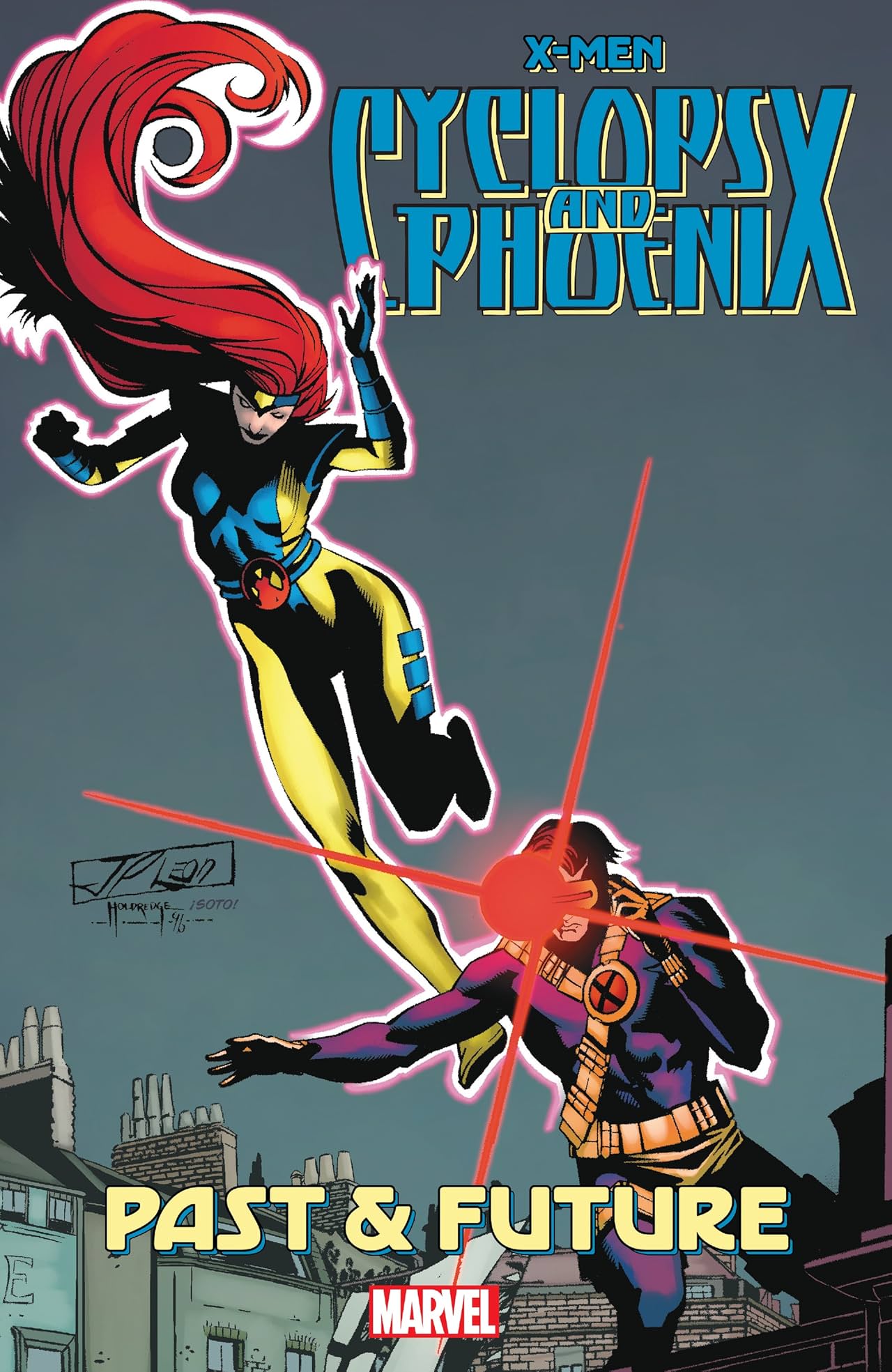
Number 3: The Adventures of Cyclops and Phoenix

I’ve made no secret of how much I love the romance between Cyclops and Jean Grey. I’ve cited them as one of those uniquely special relationships that is both iconic and balanced, a rare combination for a romance that has been unfolding for over 50 years now. While they’ve endured plenty of tribulations, complications, and retcons along the way, they remain iconic for a reason.

This series from the late 1990s is a testament to just how strong their romance can be when retcons, cosmic forces, and terrible love triangles are set aside. At their core, Cyclops and Jean Grey are two people don’t just want to love each other. They want to create a better world for their friends, their family, and their future children. They get to do all of that and then some here.

Much of the story takes place in one of the many dystopian futures that plague the X-men, namely one ruled by Apocalypse. It puts Cyclops and Jean in a position where they can’t fall back on their fellow X-men or the support of other superheroes. They have to navigate this wasteland of a world with only each other to fall back on. It’s a true testament to the strength of their relationship.

As the title implies, though, the story emphasizes the adventure more than the romance. While there are plenty of sweet moments between Cyclops and Jean, their relationship is not the primary focus. It’s certainly a factor driving them forward, but the meat of the story is how it drives them through the conflict. If you enjoy adventure with your romance, then this is definitely the series for you.


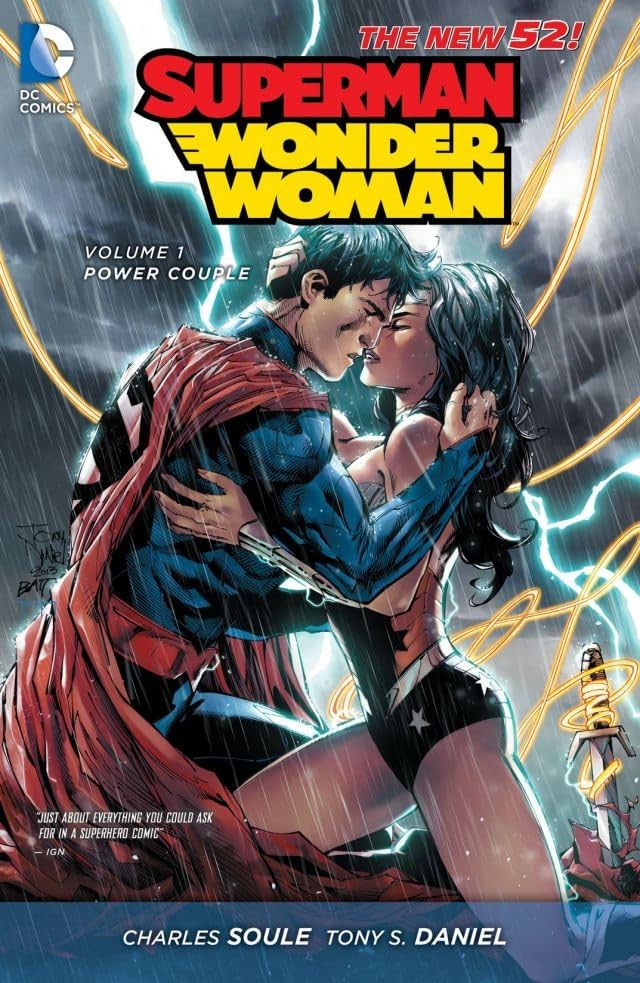
Number 2: Superman and Wonder Woman Volumes 1 and 2

Yes, I know Superman and Lois Lane are still considered the most iconic superhero couple of all time.

Yes, I know there’s an extremely vocal contingent of Superman fans that believe there’s something missing whenever he’s not with Lois.

No, I do not care. That’s because the run on this series by Charles Soule and Tony Daniel really raised the bar for just how great a romance can be for these two iconic characters.

There’s a lot I can say about the romantic potential between Superman and Wonder Woman. It would probably take me multiple blog posts and several essays to adequately describe what sets it apart from Superman’s relationship with Lois and why it works so beautifully. Thanks to this series, though, I don’t need to do that.

This particular series takes place during the controversial, but endearing New 52 era of DC Comics. During this strange, but amazing period of DC Comics, Superman and Lois aren’t married. They know each other, but they aren’t romantically involved. That opens the door for Superman to explore a relationship with Wonder Woman. However, this series makes clear that this romance is no gimmick.

They’re not forced together, nor is it presented as a gimmick. From the very beginning, as well as the events that led up to it, there’s a distinct sense that Superman and Wonder Woman find one another during tenuous times in their lives. They’re two powerful characters making their way through a world in which they feel isolated. When they’re together, though, they’re at their best.

This story brands them as a power couple and they do plenty to earn it. Together, they face threats from alien tyrants and renegade Greek gods. Their worlds collide, but they guide each other through. They make each other stronger. They make each other better. They fight as individuals and as equals. If that’s not the definition of a power couple, I don’t know what is.

Again, if you’re a die-hard supporter of Superman and Lois, that’s fine. This series does nothing to undercut that. However, it does plenty to prove that Superman and Wonder Woman can share a powerful romance, literally and figuratively. Even after DC has undergone extensive retcons and reboots, this series still captures the power of that romance in the best possible way.


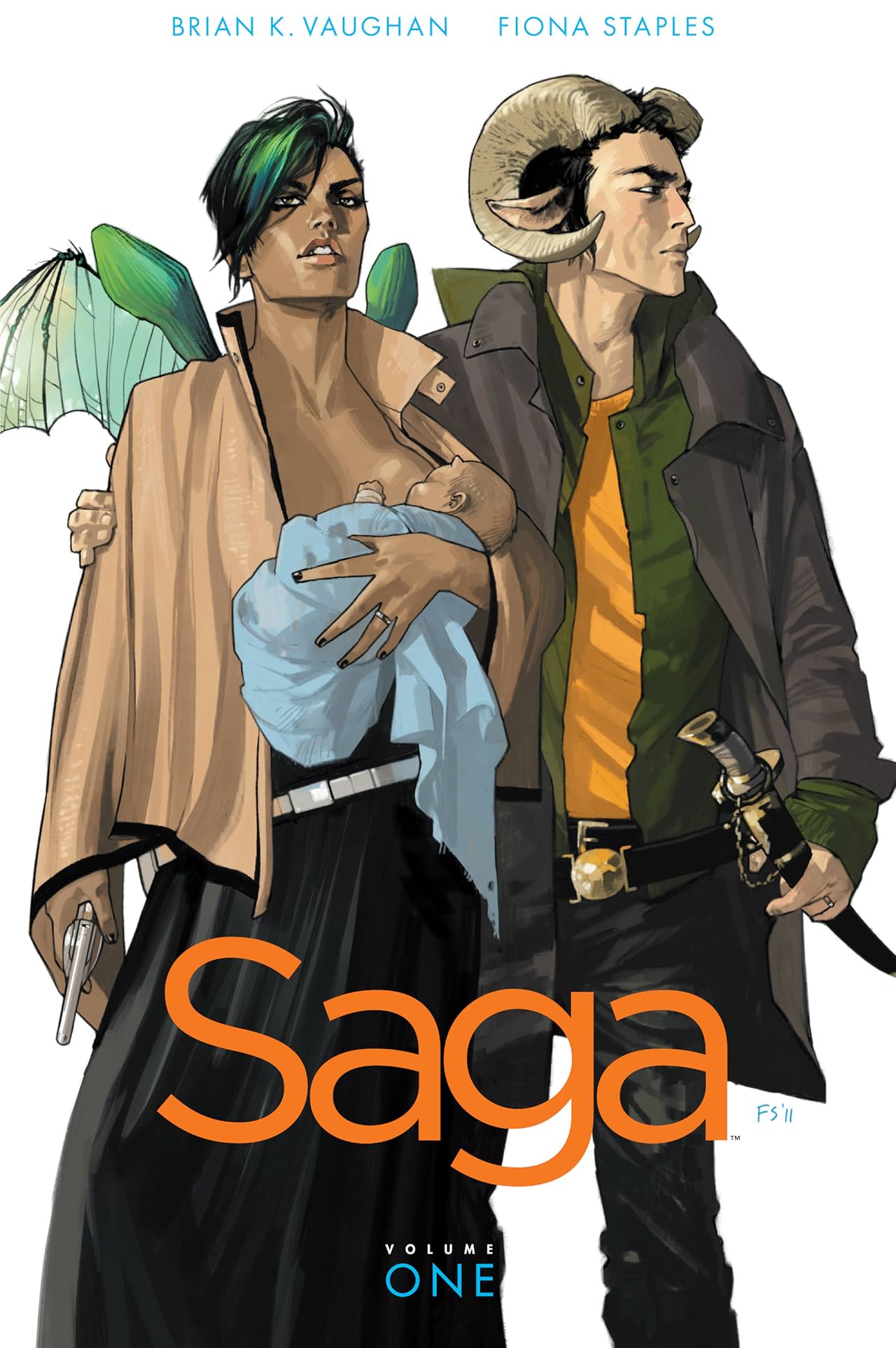
Number 1: Saga

This is probably a controversial selection for those who aren’t familiar with this series. It doesn’t involve superheroes. It’s not a product of Marvel or DC Comics. It’s an entirely different world full of bizarre creatures that include talking cats, a humanoid seal, and an entire race of beings with TVs for heads. I swear I’m not making any of that up.

However, at the heart of this amazing series by Brian K. Vaughan and Fiona Staples is an amazing love story between two characters from warring worlds. That love is very much the driving force between all the conflict and the characters that get caught up in it. It’s one of those romances that has every conceivable force working against it, but it still happens and it’s downright beautiful

Alana and Marko aren’t Superman and Lois Lane. They’re not even Rogue and Gambit. They’re not exactly heroes trying to live up to an ideal. They’re soldiers in a war between two worlds, but they somehow find each other, fall in love, and create a family together.

It’s not a fairy tale romance, though. Their romance involves more than a few explicit sex scenes, as well as a scene where Alana gives birth to their daughter. Nothing is filtered or polished. The sexy and unsexy parts of their relationship is laid bare within a world that is full of fanciful characters and locales.

It’s a genuinely epic journey, but one that all comes back to the romance between Alana and Marko. No matter what kind of romantic you are, these two find a way to check the right boxes. There are many moments of passion, sorrow, and loss. There are also plenty of moments that are funny, cute, and endearing. It has everything a great romance needs and then some.

I should offer a fair warning, though. You will get attached to these characters. You will feel it during certain moments. As a self-professed romantic, I can safely say that it’s worth the risk.

There you have it! These are my top five selections for romance comics. I’m sure some will disagree with my selections. The list may even change as other great romance comics emerge in the coming years. That’s perfectly fine and I welcome any debates on my list.


Romance is in every medium and comics are no exception. I would even argue that the romance in comics is under-appreciated and under-valued. As the genre continues to evolve, I have a feeling that’ll change and I hope to be part of that change.

5 Comments

Filed under Comic Books, Jack Fisher, Superheroes, Marriage and Relationships, romance, sex in media, superhero comics, X-men

A Quick Note About The “Captain Marvel” Trailer

It’s a simple note. Can we all just take a moment to admire how awesome the Captain Marvel trailer is? That is all.

Leave a comment

September 18, 2018 · 8:37 pm

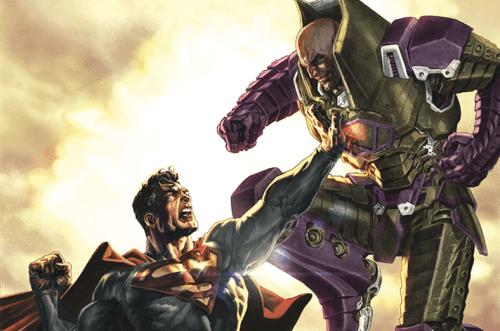
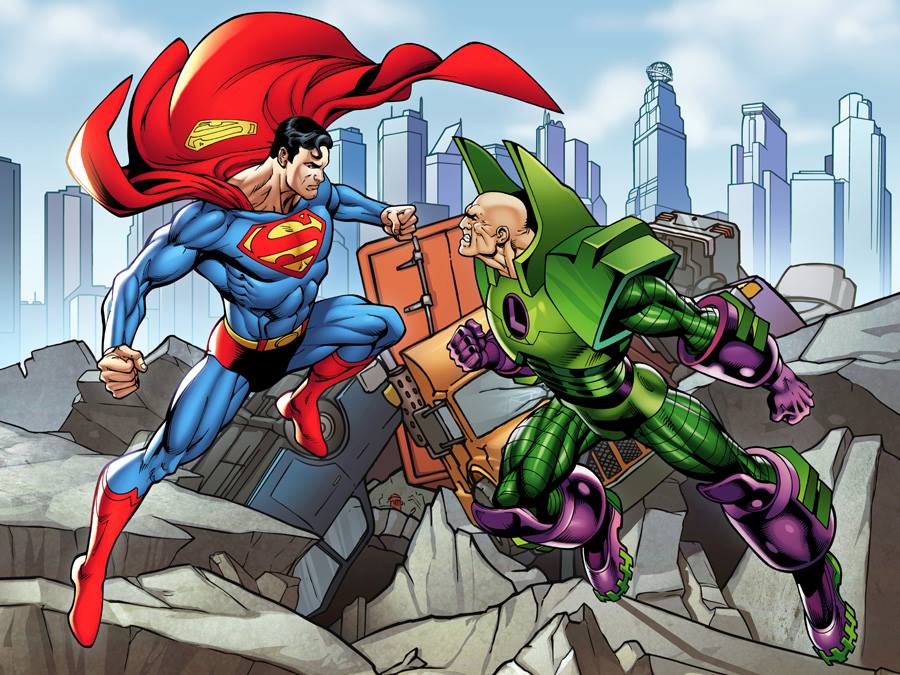
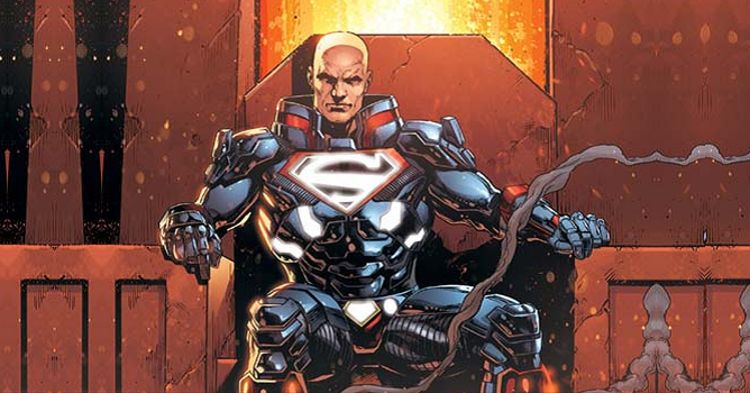
Understanding (And Learning From) Lex Luthor’s Hatred Of Superman

supes-vs-lex

As a lifelong fan of superhero comics and someone who enjoys shows like “Breaking Bad,” I’m genuinely fascinated by villains. Specifically, I’m intrigued by what makes them tick and why they walk the villain’s path. Their journey is distinct from that of a hero, but one that can be just as compelling.

In many cases, these villains have capabilities that allow them to solve many of the world’s problems. I’ve cited Dr. Doom as one of those villains who blurs the lines of villainy because of his intentions. Characters like Dr. Doom genuinely believe that their villainous actions are justified because it will lead to a better, safer, more prosperous world. Heroes also believe that too, which helps fuel their epic battles.

For a character like Lex Luthor, though, the line isn’t that blurry. He’s a villain, plain and simple. He’s selfish, callous, arrogant, cruel, and narcissistic to an extreme. If he existed in the real world, he would check every box for narcissistic personality disorder. In terms of personality, he’s the polar opposite of his nemesis, Superman.

That goes a long way towards giving Superman an enemy who stands against his heroic ideals. I would even argue that Superman couldn’t be the iconic kind of hero he is without Lex Luthor. At the same time, I also think Lex reveals something critical about humanity, morality, and superheroes in general.

That’s difficult to see because for much of Lex’s early years in comics, there wasn’t much depth to his motivation. He just wanted to dominate the universe and Superman was in his way. It’s basic and bland, but that was typical for the early era of superhero comics. Villains like Lex were mostly just obstacles for the heroes to overcome in their journey.

That changed in the late 80s and early 90s with the modern era iteration of Lex Luthor. Finally, Lex got more backstory and depth. He was still no Walter White, but these details helped set the stage for the kind of villain he became. It also helped establish why he hates Superman so much.

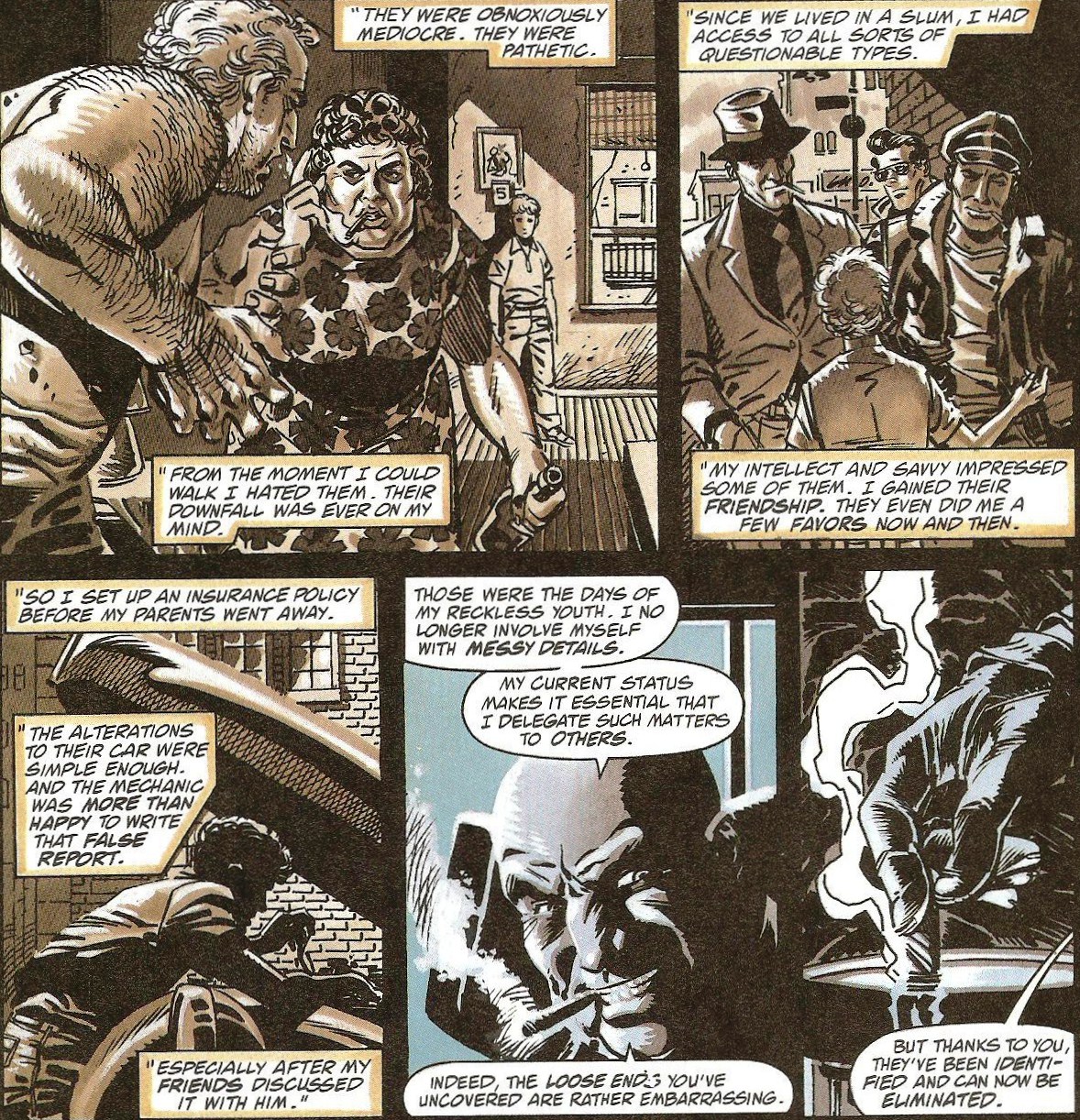
Whereas Superman landed on Earth and was adopted by loving parents, Lex grew up in a rough part of Metropolis called the Suicide Slums and was raised in an abusive household. Right off the bat, Superman gets lucky by having the best parents a child of any species could ask for while he’s unlucky enough to be born with the worst.

As a result, Lex had to be ruthless, manipulative, and cunning. Unlike other villains, though, he didn’t need much tempting. He didn’t agonize over his moral decisions, either. He just did it and didn’t feel a shred of guilt. That includes the role he played in the death of his parents.

That alone establishes Lex Luthor as the kind of ruthless villain who would oppose Superman for any number of reasons. However, as evil as that act was, it’s important to note the motivation behind it. Lex didn’t just kill his parents because murder makes him happy. He did it because they were an obstacle and an opportunity.

They were holding him back, but their deaths meant insurance money that he could use to strike out on his own and build something worthy of his genius. To him, the morality of his decision didn’t matter. Only the results mattered. That’s a critical detail and one that puts Lex Luthor’s villainy into a unique context.

Lex, being one of the smartest characters in the entire DC universe, doesn’t care much for things that are esoteric and obscure. He’s all about results that are tangible and measurable. That means things like truth, justice, and the American way are empty concepts to him. Superman champions those ideals, but for Lex Luthor, they’re just hindrances.

That kind of cold, callous approach to the world gives a unique substance to Lex’s behavior. He’s certainly not the first person to take such a materialistic approach to reality. Rick Sanchez of “Rick and Morty” does the same, but rather than misanthropic despair, Lex Luthor sees it as the key to producing the results he seeks.

Moreover, he has to produce those results without the god-like power that Superman wields. If Superman wants to move the Earth out of the way or destroy an oncoming asteroid, he doesn’t have to build anything or learn anything. He just has to flex his muscles, fly up into the sky, and destroy it with a single punch. There’s no tangible reason to his actions beyond it being the right thing to do.

To Lex Luthor, that’s not just an affront to someone who had to work for everything he ever gained. It’s an insult to his egocentric, results-focused worldview. Just saving the world because it’s the right thing to do doesn’t achieve anything. It does nothing to move humanity forward because nobody had to produce something of merit. It just allows them to continue in the same, unaltered state.

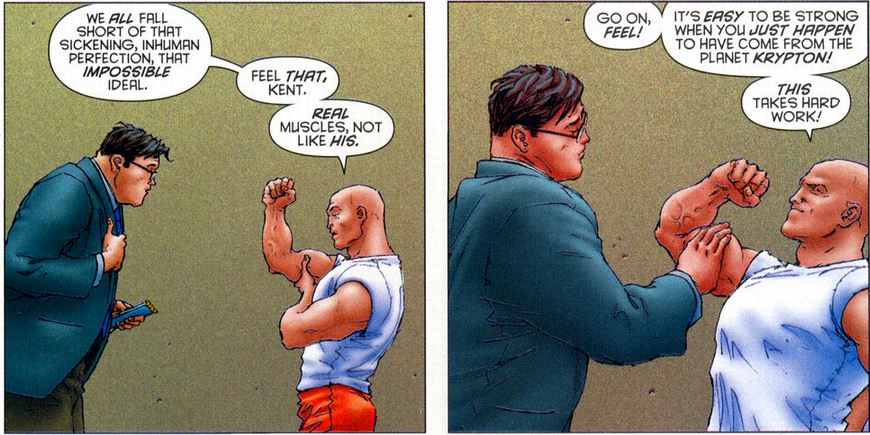
This gets to the heart of why Lex Luthor hates Superman. The extent of that hatred was fully articulated in one of the best modern Superman stories ever told, “All-Star Superman” by Grant Morrison and Frank Quitely. If you only read one Superman comic, make it this one because it perfectly encapsulates the pure heroism of Superman and the cold villainy of Lex Luthor.

In one critical part of the story, Lex tells Clark Kent, who he doesn’t know is Superman, what it means to actually work for his power. Superman, for all his idealism, did nothing to earn his abilities. He just happened to be an alien who landed on a planet with a yellow sun.

It’s like winning the lottery as opposed to working hard for a fortune. One is built on hard work and skill while the other is just dumb luck. Beyond basic jealousy, though, Lex makes another critical point about the ideal Superman sets.

From his perspective, that lofty ideal diminishes the entire human race. By being this other-worldly savior who achieves all these impossible feats, Superman reveals how inept the human race is. More importantly to Lex and his massive ego, it shows just how feeble his achievements are, despite all the work he put in.

Being the extreme narcissist he is, Lex takes that as the ultimate insult. In terms of the bigger picture, it establishes that neither he nor humanity can achieve their full potential. In that context, it’s understandable why Lex dedicated so much time and energy to killing Superman.

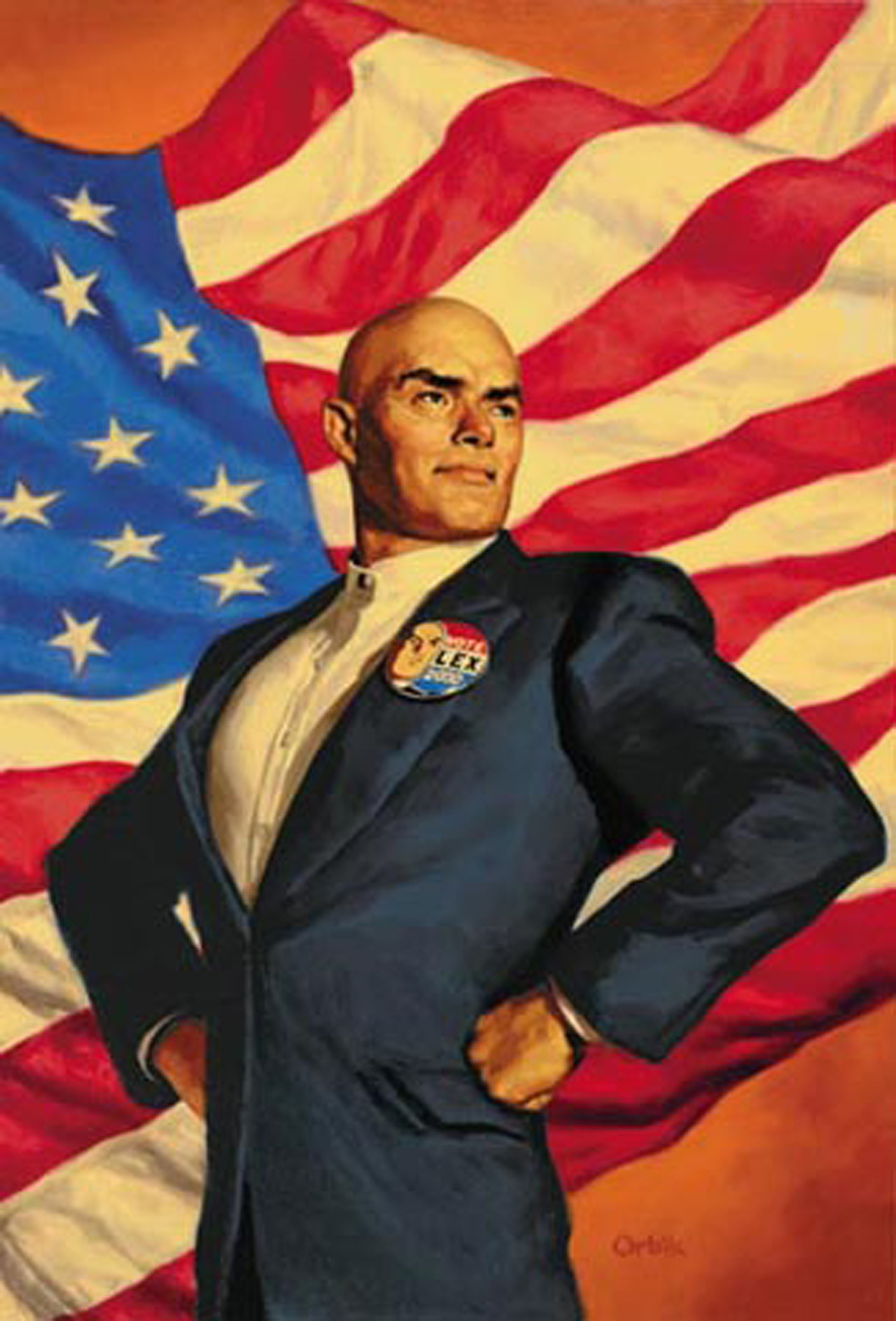
I won’t get into all the ways Lex has tried and failed over the years, although one of his plots did involve him becoming President of the United States. Whatever his methods, I think there’s a larger lesson to learn from Lex’s hatred and for once, it goes beyond his ego.

A big part of what turns someone into a villain is this sense that the world isn’t fair, but could be made better with the right guidance. Lex believes he’s capable of providing that guidance and not just because of his ego. He is, objectively, one of the smartest and most capable human beings on the planet. However, it’s Superman who keeps Lex from making the world less unfair.

Superman believes in the merits of truth and justice. He inspires others to uphold these ideals, even without his vast power. That’s a problem for Lex, who builds much of his power on lies and treachery. To him, though, he doesn’t see that as wrong. He just sees that as the most efficient way to get results.

To uphold truth and justice, in his brilliant mind, is to prevent the world from progressing. Granted, progress in Lex Luthor’s mind means him being in charge, but that doesn’t necessarily undermine the implications.

Like Dr. Doom, Lex is ambitious in that he doesn’t just want to save the world like Superman. He wants to fundamentally change it and he’s willing to cross any line to achieve that. Killing Superman is part of that change, but so is becoming a billionaire and a future President of the United States. If a billion people die in the process, then that’s acceptable because it means humanity is stronger because of it.

There have been times in the comics where Luthor’s vision has manifested. In another critically-acclaimed Superman story, “Red Son” by Mark Millar, Lex has a chance to lead the world into a brighter future. By and large, he succeeds. He’s still an unapologetic narcissist, but he still gets the results he seeks.

Like all great conflicts between superheroes and their arch-nemesis, the dichotomy between Superman and Lex Luthor is stark. They’re two extremes on opposite ends of a spectrum delineating heroism and villainy. By being on those extremes, though, it’s easier to see the inherent shortcomings of both.

While Lex’s shortcomings are easier to identify since he’s an outright villain, he does help identify an important flaw in Superman’s idealism and one that extends to superheroes, as a whole. Superman is willing to save the day, but he’s not willing to cross any lines. He will only ever do the right thing and that means not sacrificing innocent lives or usurping individual freedom.

Those heroics will keep the world turning, but they won’t move society forward. Superman believes in inspiring humanity rather than doing it for them, but Lex Luthor believes his heroism achieves the opposite. It just makes people complacent and dependent on heroes like him rather than crossing the lines that he’ll cross to get things done.

At the end of the day, both in the real world and the world of comic books, we have to determine how much we’re willing to pay for the results we seek. Lex is willing to pay any price. Superman isn’t willing to pay a cent beyond doing the right thing. Most reasonable people, including other superheroes, fall somewhere in the middle.

In the pantheon of super-villains, Lex Luthor is probably the easiest to despise and the hardest to understand. Like Superman, he exposes another side of an ongoing struggle between doing the right thing and achieving more. As society continues to progress, achieving abilities rivaling that of any superhero, it’s a struggle we’ll have to confront.

3 Comments

Filed under Comic Books, Jack Fisher, Superheroes, human nature, philosophy, psychology, superhero comics