The following is a video from my YouTube channel, Jack’s World. It’s a video about subverting expectations, but in a way that I hope won’t every fan of Star Wars or Game of Thones. A lot has been made of this narrative trope. It has gained a bad reputation and for good reason. However, I still feel it has merit and, as it just so happens, there’s one underrated movie that has show just how great it can be.
That movie is “Megamind,” a movie I’ve praised before and will likely praise again. This incredible animated gem once again shows it was ahead of its time in that it demonstrates how to properly subvert expectations. I hope this video makes the case that this tactic can still be done and done well. Enjoy!
I say all while also acknowledging that America isn’t perfect. I’ve taken plenty of history classes, both in high school and in college. I’ve also sought out information about America’s past and the facts are clear. The United States of America does have some undeniably dark moments in its history. Some could be classified as outright atrocities.
It’s not wrong to state that those events happened and they were awful. In fact, I believe it’s critical for any country, nation, or community of any kind to admit their past failures and flaws. We cannot learn, grow, or improve as a society if we ignore those less favorable parts of our history. If we only ever know the good stuff, then we have no reason to improve and that only breeds complacency, arrogance, and stagnation. That’s something the world needs less of.
This brings me the controversy surrounding critical race theory. I know that just uttering that phrase in passing these days is sure to draw ire from certain crowds, some more so than others. In general, I try to avoid touching on topics like this when the outrage machine is still going full-throttle. Even when I do discuss something controversial, like abortion, I try to focus on the bigger picture.
Now, the specifics of critical race theory are too vast for me to get into. I’m certainly no expert, nor would I ever claim to be. I encourage people to investigate it themselves on Wikipedia. However, do not seek sources from the likes of PragerU, the Heritage Foundation, or any information source that claims to espouse the “truth” about Critical Race Theory.
They’re just right-wing propaganda pushers who are lying to you on behalf of their donors. They are not credible on this matter.
While I don’t see Critical Race Theory as being completely neutral either, it does have some relative themes. It gives greater scrutiny to how racism and past racist policies in America have had lasting effects on minority communities, even after the progress made during the civil rights movement.
That’s not an unreasonable approach to studying the past and present. After all, it’s undeniable that racism and its past effects still exist. If you deny that, then you’re just denying reality outright. Certain aspects of racism can’t be resolved by simply passing a law or enacting a certain policy. People and societies are just too complex.
Now, the way in which Critical Race Theory scrutinizes these issues isn’t perfect. In terms of analyzing and making sense of history, I think it doesn’t paint the clearest picture in terms of America’s racist past and how that past affects the present.
That said, I support it being taught or, at the very least, explored within a school. I think this is something we should teach kids and young people about in order to get them thinking about history, race, and the society in which they live. At the same time, I also think it exposes a critical element with respect to appreciating history and its many lessons.
The reason I’m bringing it up now is two-fold. Firstly, I think those protesting it are absurd and their reasons for criticizing critical race theory are equally absurd. Some are going so far as to try and ban it. Instead, they favor a more “patriotic” education for school age children. I put “patriotic” in quotes because there’s nothing patriotic about it. It’s just pure propaganda, plain and simple.
A true patriot doesn’t need propaganda to be proud of their country.
A true patriot loves their country, despite their flaws. Just like you do with someone you love, you don’t ignore those flaws and use them as motivation to be better.
The second reason I’m bringing it up has less to do with the political rhetoric surrounding Critical Race Theory. It’s being framed as though this is somehow redefining the story of America. It’s seen as somehow diminishing America’s greatness and ideals. Those who are blindly patriotic or excessively nationalistic are going to have a problem with that.
Now, blind and excessive nationalisms is a problem all its own. I won’t get into that, but I do feel that it highlights another important point about protesting new forms of study. In essence, those complaining about Critical Race Theory are working against their own agenda. They seem to forget that the internet still exists.
It doesn’t matter if efforts to ban Critical Race Theory succeed. It doesn’t matter if every American textbook removes all mentions of slavery, Jim Crow, Japanese internment camps, or atrocities committed against Native Americans. That information is still out there. It’s on the internet and it’s easy for anyone with an internet connection to find.
In fact, by outright banning or opposing certain studies of history, it may only raise greater interest in it. Like it or not, people are going to get curious. Tell kids and teenagers that they should never learn about Critical Race Theory is only going to make them more curious. So long as they still have an internet connection, they will find that information.
That’s exactly why I’m in favor of teaching history that explores, analyzes, and dares to extrapolate from the uglier parts of history. It can do more than educate. It can also help us come to terms with our flaws and inspire us to be better.
A good example of this is the recent relevance of the Tulsa Race Massacre. There’s no getting around it. This event was a horrendous moment in American history and one that reveals just how ugly racism got in this country. Growing up, I never learned about this event. Most people probably never would’ve learned about it, had it not re-entered the news amidst recent pushes for racial justice.
This moment in history was awful. There’s no getting around that. Even if you’re an American who wasn’t alive during this event, we should still acknowledge it. We should still learn from it. That’s how we’ll get better. The past has so many painful lessons and we’ll never learn those lessons if we try to gloss over them.
I’m a proud American. I love my country and I celebrate its highest ideals. I also believe most Americans are good, decent people who cherish these values as well. I don’t deny its flaws, nor do I deny its mistakes in the past, as well as the present. I genuinely want America to be the best it can be.
That’s why I’d like to make a plea to America and all my fellow Americans at the moment.
Please, for the love of whatever deity you believe it, let’s not have another Satanic Panic.
This isn’t just about politics, although there are some distressing links. This isn’t just about culture, even though the imagery is certainly present. This is me, a proud American, urging his fellow Americans to not give into the temptation to start blaming demons and devils for their problems.
There was no reason for the panic. There were no Satanic cults secretly torturing or abusing children. It was all made up. It was basically Christian Conservative fan fiction that people took too seriously. Much like the character of the devil they fear has no basis in Christian theology. It’s just a boogie man for adults.
None of it amounted to anything other than baseless fear and ruined lives in the 1980s. Now, it seems too many people have forgotten what a huge waste of time that was because concern about Satanic cults abusing children are back and more political than ever.
Much of that is because of a bullshit conspiracy theory that I won’t name or link to. You probably know who I’m referring to. They’re the one that thinks Tom Hanks is part of a Satan worshipping cabal. As it just so happens, this same cabal includes everyone who leans right politically absolutely hates.
If they’re to the right of Ronald Regan, they’re a Satan Worshipper.
If they didn’t vote republican in the last four elections, they’re a Satan Worshipper.
If they support position that doesn’t involve cutting taxes, ignoring racist policies, or overfunding the military, they’re a Satan Worshipper.
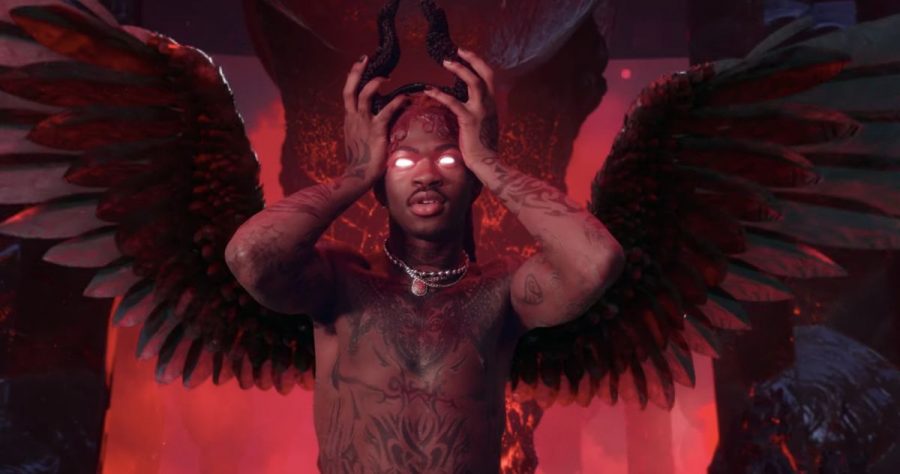
I’ve been avoiding this absurd, asinine, infuriating excuse for a conspiracy theory for years. It’s just too stupid to take seriously, let alone discuss in an honest, balanced way. However, thanks to the recent outrage surrounding Lil Nas X and his homoerotic, Satan-centered music video, I worry another panic is brewing.
Much of it is coming from the same part of the political spectrum as it did in the 1980s. This time, however, isn’t just a bunch of Christian conservatives with too much time and money on their hands. People who don’t even identify as religious are buying into this crap.
It’s not just about theology anymore. It all comes back to this age old belief that there’s a group of objectively evil supervillains who are causing all the problems in the world. Satan worshippers who eat children and deal in human trafficking is as evil as you can get. There’s nothing complicated or nuance about it. It’s the ultimate good versus evil match-up.
Except, and I cannot stress this enough, it isn’t real.
That evil conspiracy doesn’t exist. I could cite any amount of evidence, but I know that won’t convince those who ardently cling to it, even after its many predictions end up being wrong. Instead, I’m just going to point out one simple issue.
For any conspiracy of any level to function in any capacity, it requires that those involved are completely obedient, always keep their secrets, and never make mistakes. Since these conspiracies involve people and people, in general, are imperfect beings, they’re not just difficult to maintain. They’re impossible.
Human beings can’t keep secrets.
They can’t avoid simple mistakes.
When it comes to something as evil as Satan worship and child sacrifice, you’re just can’t keep that sort of thing a secret. Also, people that evil generally struggle to organize. It’s why most serial killers act alone. That kind of evil is an aberration. Building a conspiracy around that is like trying to herd a thousand cats all strung out on crack.
I’d sincerely hoped that after the events of the last election, the talk of evil Satan worshippers and conspiracies around them would die down. Sadly, I think Lil Nas X revealed there’s still a contingent of people out there who think the evil Satanic cabal is still out to get them.
That’s why I’m making this plea. My fellow Americans, this is not the way to a better tomorrow. Fighting invisible evil enemies will only ever succeed in making real enemies, both in our minds and among our fellow Americans. No good can ever come from something like that in the long run.
Moreover, believing and obsessing over a conspiracy of Satan worshippers acts as both a distraction and a delusion. Fighting something that isn’t there only keeps you from fighting actual problems involving actual people who are doing real harm, but not in the name of Satan.
It’s easy to think that there’s some centralized force of evil in the world. It makes the cause of all our problems seem tangible. It makes you feel like you’re a soldier on the front line of an epic battle, fighting alongside others who are every bit as committed as you. Unfortunately, this mindset is both dangerous and counterproductive.
There are real problems with America and the world. However, those problems don’t come from Satan, demons, or some secret cabal of lizard people. They come from other people. They come from your fellow humans, as well as your fellow Americans.
It’s complicated and messy. Just winning an epic battle against evil isn’t an option. We have to put in the work. We have to take responsibility. We have to operate in the real world with real people who have real issues. That’s how we do the most good for ourselves and our fellow Americans.
Once again, I urge everyone reading this to learn the lessons of the past and embrace the challenges of the present. Let’s hold off on another panic. Satan isn’t conspiring against us or our country or our fellow citizens. The cabal isn’t real, the conspiracy is fake, and Tom Hanks is a national treasure. If you really want to fight true evil, start by doing good by your fellow citizen.
Most religious people are not dangerous or ignorant, nor are most of the priests, rabbis, mullahs, and monks who lead them. I want to make that clear early on. I know I’ve been verycriticalof religion in the past and I stand by much of those criticism. However, I do not want to give the impression that it makes sincere adherents unworthy of respect.
I have religious people in my family. They are good, decent people and their religious beliefs means a lot to them. I do not want to denigrate that in any way.
That said, extreme religious cults are dangerous. They are worthy of criticism and, in some cases, outright scorn. People have died because of these cults, including innocent children. If we’re going to be a better people now and in the future, we need to be vigilant of these dangerous cults. Otherwise, more people will suffer.
How we go about that is beyond my expertise. There are organizations with people far more qualified to pursue that effort, such as Cult Escape and Dare To Doubt. I urge others to support those efforts, regardless of your religious affiliation. There are a lot of people out there trapped in these cults who need help.
However, there has been another troubling trend in recent years that may complicate that effort. It involves cults that aren’t necessarily religious, in nature. Some have religious elements, but also mix in politics and conspiracy theories. The goals and methods aren’t always the same, but the outcome is similar.
People get sucked into an ideology.
They get caught up in a trend that evokes strong emotions within them.
They connect with like-minded people who reinforce and reaffirm their beliefs.
They start attacking or shunning outsiders or anyone they don’t agree with.
They stop doubting their beliefs and are openly scorned if they dare raise questions, making it next to impossible to leave.
It’s a common story that many endure, but now it’s happening without the religious angle. Now, people are falling into cults that offer little in terms of theology, but still descend into a toxic mix of groupthink, hero worship, and self-delusion.
You have organizations like Nxivm, which billed itself as a self-help program that sucked people in and reshaped their thinking at the hands of a sociopath leader.
You have charismatic public personalities like Jordan Peterson and Tony Robbins, who may not set out to create cult-like movements, but still create a community wrought with cult-like behaviors.
Then, there’s Q-Anon.
Believe me, I do not want to go into details about that. I’m afraid to even post any links. I do not want someone to get sucked into that ultra-toxic rabbit hole, which has led to real-world violence and torn families apart.
These are serious issues that affect real people, as well as their families. Thanks to the world-wide reach of the internet and clunky nature of social media, it’s a lot easier to fall in with the wrong digital crowd. You don’t have to be religious. You just have to be willing to buy into a certain ideology or narrative. No miracles are necessary.
That is dangerous and I suspect it’s going to get worse in the coming years, especially as mainstream religion continues to decline. Will it be as dangerous as the religious cults of old? Well, that depends on a number of factors. At the moment, even the worst non-religious cults have major shortcomings.
Religious cults can, by definition, hide behind the guise of religion. That comes with plenty of benefits, including the kind that allows them to avoid paying taxes. Religion also has legal protections, as evidenced by the constant push for “religious freedom.”
Non-religious cults don’t have the same advantages. In fact, it’s not unreasonable to say that these types of cults couldn’t even exist without the internet or the widespread connectivity of modern media. They also don’t have the overall structure that many religious organizations have. That means they’ll only be able to do so much.
On top of that, the nature of the internet makes it a lot harder for cults to keep their members in line. At any point, an adherent could get curious and start looking up opposing views that could cast doubt on their beliefs. There’s only so much a cult can do to control a person from behind a computer screen.
Even with those limitations, they’ve still done plenty of damage. They’re likely to do plenty more and we should be very concerned about that. The world is already a chaotic place. Extreme religious cults have already done plenty to add to that chaos. The last thing we need is for non-religious cults to do the same.
I hate talking about “cancel culture,” a term I think has all the wrong connotations for all the wrong reasons.
I am a proud American and I believe in free speech to the utmost. I will gladly fight for that freedom and support those who do.
I say all that because, in wake of the terrible events at the Capitol recently, there has been a lot of whining from certain people. I won’t name names. I’ll just note that they’re whining and ranting about censorship and cancel culture. Watch the news for more than five minutes and you’ll know who they are.
Now, I don’t want to go on an extended rant about why censorship is different from not being allowed to post on your favorite social media site. Make no mistake. There is a difference. There’s actually a lengthy legal framework behind what constitutes censorship in a purely legal sense.
I’m not a lawyer, nor am I smart enough to break down the various complexities about censorship, cancel culture, and the various cases attributed to both. I doubt any point I make will change anyone’s mind, especially if they’ve been affected by perceived censoring from either side. Even so, I still think a point is worth being made.
In watching this debate, I’ve noticed something that’s both peculiar and revealing about this issue. Whenever there’s a case of alleged censorship or cancel culture, those who bemoan it only complain when it’s used against them.
For instance, say your favorite politician who you vote for and vocally support was kicked off Twitter, Facebook, and all major social media platforms for rhetoric that incited violence and spreads damaging disinformation. Chances are, you’re going to defend them more than you would if that politician was someone you vocally opposed.
Those same people might not raise an eyebrow if there was a case of an gay couple who denied service at a bakery. They might also be perfectly fine with laws on the books that actually ban atheists from holding public office. Those are both actual cases of discrimination, but it’s happening against people who they don’t agree with, politically. As such, they don’t care or actively support it.
The absurdity is the same. The only difference is the target and the political affiliation of those complaining about it. It’s just tribalism at its most basic. You support and make excuses for the people and things you support. You protest those you think are against you. There’s no logic to it. It’s all based on who you support or hate.
With respect to those who actually do get censored, there’s also another side of that coin. While I am a vocal proponent of free speech, I also believe in accountability, especially for people in positions of power. It’s one thing for me to say something stupid on social media. It’s quite another for someone who is an elected official.
Those words carry a lot more weight. When someone in that position encourages anger, outrage, and protest, it can lead to real world actions. We saw that at the Capitol. Real people suffered and died because of those actions. In that case, there are consequences.
When you incite violence against others, that’s not free speech. That’s a crime. When your words lead to tangible harm and destruction, that’s something that you are accountable for. It’s not censorship. It’s not cancel culture. It’s just accountability, plain and simple.
If you can’t understand that, then you don’t understand free speech and what it really means. Now, with respect to tech companies removing certain voices or having a bias, that’s another issue. It’s complicated and requires more nuance than simple whining.
However, when it comes to powerful people just wanting to use social media to exercise their power, that’s different. Powerful people must be held to a higher standard. If not, then people far less powerful will pay the price and we can’t have any kind of freedom in a society like that.
Also, blurring female nipples is still bullshit censorship. Can we at least agree on that?
Younger generations clash with older generations. The older people are appalled at how the youth are conducting themselves. They see them doing things and behaving in ways that they never would’ve imagined in their youth. It’s not new. In fact, it’s been happening since ancient times in some form or another.
It’s especially pronounced when sex enters the equation. Older people don’t like thinking about their kids having sex and young people don’t like thinking about their grandparents having sex. We know it happens. There are over 7 billion humans on this planet. It happens a lot. It just makes us both very uncomfortable.
From discomfort comes assumptions and from assumptions come irrational fears. It’s not always overt, but it’s present in popular perceptions. Personally, I’ve never heard someone over the age of 60 claim that young people today are far more responsible in managing their sexual behavior. I doubt anyone in that age group could say that with a straight face.
However, that’s not what actual, verifiable data says. According to recent research in Psychological Science, young people today are more responsible than ever when it comes to making decisions about their sex lives.
We examined risky sexual choice under the lens of rational decision-making. Participants (N = 257) completed a novel sexual-choice task in which they selected from among hypothetical sexual partners varying in physical attractiveness and in the probability that one would contract a sexually transmitted infection (STI) from a one-time sexual encounter with them. We found that nearly all participants evaluated the sexual-choice alternatives in a coherent fashion consistent with utility-based theories of rational choice. In subsequent analyses, we classified participants’ responses according to whether their sexual preferences were based on maximizing attractiveness or minimizing the risk of STIs. Finally, we established an association between sexual choice in our task and reported real-world sexual risk-taking.
It doesn’t just stop with responsible choices, either. There has been a relatively consistent trend over the past 40 years. Sexual activity, as a whole, has been going down, so much so that it’s a demographic concern. That has corresponded with a decline in teen pregnancy, abortion, and unwanted pregnancy.
That’s not to say there aren’t irresponsible young people in this world. There certainly are. I’ve known quite a few. Most people have. It’s just not this big, decadent trend. Cable news and popular media love to paint young people as these strange, tradition-hating deviants who seek to destroy our most precious institutions. They are simply wrong.
They’re also trying to sell you a bullshit narrative to get ratings, but that’s another story.
Even in matters not exclusive to sex, older generations still try to find ways to criticize these crazy young people. It’s become more popular in recent years to call anyone under 30 a cohort of over-confident narcissists. Some go so far as to say there’s a narcissism epidemic.
‘Somebody high in self-esteem values individual achievement, but they also value their relationships and caring for others,’ she says. ‘Narcissists are missing that piece about valuing, caring and their relationships, so they tend to lack empathy, they have poor relationship skills. That’s one of the biggest differences, those communal and caring traits tend to be high in most people with self-esteem but not among those who are high in narcissism.’
Again, this is a flawed and incomplete narrative. It’s also incompatible with with the notion that young people are somehow more decadent sexually. Among the key traits of narcissism is promiscuity and it’s not just related to the sexual kind.
It’s hard to be narcissistic and responsible for the same reason it’s hard to be relaxed and enraged. The human psyche just doesn’t work like that. Society, as a whole, doesn’t work like that either. It can’t. If young people really were as decadent and narcissistic as old people thought, then our civilization never would’ve made it this far.
I know I’ve brought up flawed assumptions about young people and their sex lives before. I doubt old people will stop complaining about the deviant, decadent behaviors of young people anytime soon, even if a mountain of data says they’re better-behaved than their predecessors.
The reason I bring it up now is because this is one of those years when we should all re-assess our perspectives. The grim events of this past year have affected everybody, young and old. It’s affected our society, our emotions, and our sex lives. A lot will change as a result of this year. Generations afterwards will feel it.
As someone who will one day become old and cranky, I hope to maintain a healthy perspective regardless of what happens. I don’t doubt that when I get to a certain age, I’ll see young people behaving in ways that I find shocking. Some of those shocking ways might involve their sex lives. If I ever have kids, that’s going to concern me.
At the same time, I imagine that part of me will envy those young people for having the time, energy, and passions to behave in such ways. On some levels, I think many older people share those feelings. Their youth is a memory. The days of breaking traditions and upsetting their elders is long gone because they’re not elder. It’s just part of life.
We can’t avoid it, at least not yet. I don’t know what kind of state the world will be in by the time I turn 60. I just know I’ll have plenty to complain about. The fact that young people are bucking those complaints gives me hope that it’ll be better than any false perception.
Call them any vulgar insult you want. It’s perfectly warranted, but it doesn’t change what they do. The liars, cheaters, and hypocrites of this world will keep doing it. They’ll keep lying to your face, cheating you out of money, and breaking promises or precedents without a second thought.
I know it’s a depressing thought. It has become a lot more in our collective faces in recent years, given how political rhetoric has become so heated. Both sides argue with one another. They each lie or cheat to varying degrees. They jump at the chance to call the other out on it, but nothing really changes.
They keep on lying and people who align with their politics buy into it, even when they know it’s a lie. It’s frustrating. I argue it’s gotten even more infuriating in recent years. It does, however, raise an important question.
Why do people who lie, cheat, and break promises keep getting away with it?
It’s a valid question. Nobody likes being lied to. Even kids know on some level how wrong it is. So, why does it keep happening and why does nobody seem to pay a price? Well, the very nature of those questions already answer that to some extent.
In short, people keep getting away with it because they never get punished, pay a price, or face any consequences for their dishonesty.
It’s not a very comforting answer, I know. It’s probably just as infuriating as being lied to. That doesn’t make it any less true.
Think about it. What price does someone really pay for lying? Sure, there’s the accompanying guilt that comes with it, but for some people, that’s not much of a price. You don’t have to be a psychopath incapable of guilt to lie. You just have to be capable of enduring the momentary discomfort that comes with it.
That’s not much of a price for certain people, especially when there’s money to be made and power to be gained. Granted, certain liars and hypocrites will lose credibility with certain people. Lie too much to one person and they won’t trust you, let alone be inclined to do you any favors.
On a larger scale, though, that’s less of an issue. Add mass media and the internet to the mix and it’s basically an afterthought. Right now, anyone can tweet or post some completely dishonest information to any number of major sites.
They could claim a certain politician beat up a child.
They could claim that a certain celebrity sexually assaulted someone.
They could claim that the theory of evolution is a plot by the Illuminati to keep people from finding out about the shape-shifting lizard people that secretly run our government.
Some of these lies may incur lawsuits or blocks, but again, is that really much of a price? Some people can afford frivolous lawsuits. Many don’t care if certain people block them. Even when major websites try to clamp down on it, that only seems to fuel the liars.
That’s another critical element as to why it keeps happening. Not only do liars, cheats, and hypocrites pay little to no price for their dishonesty. In some cases, they’re rewarded. In some cases, the reward is huge.
We may hate hypocrites and liars, but so long as they have something to gain and little to lose, not much will stop them. If they have no sense of guilt or shame, as many politicians and CEOs often do, they have every incentive to do what they do. There’s just too much money and power to be gained.
On top of that, there are some people who want to believe in their lies. Everyone has their own reason for doing so. It often boils down to the lies being more appealing than the truth or reinforcing some position they already have. Whatever their reason, they keep give even more incentives to those willing to exploit that inclination.
I say this not to be dire, although I don’t deny the election last month is a motivating factor. I offer this as a means of adding perspective to those frustrated by the dishonesty and hypocrisy that seems so prevalent, no matter where you look.
There’s a reason it’s there and is a painfully valid reason. As long as the liars, cheaters, and hypocrites we despise keep gaining so much and losing so little, they will continue with their deplorable behavior. They have no reason not to. It’s just the nature of our flawed world.
We can only do so much to make it less flawed. One way you can help is to keep voting, even if it’s just for the least dishonest candidate. It’s not a perfect fix, but it’s a start.
Let’s be honest. It’s very difficult to have honest, civil discourse with anyone these days. I won’t say it’s impossible, but it sure feels that way sometimes. Try expressing any opinion about any issue that’s even mildly controversial. Chances are you won’t spark a civil discussion. You’ll likely trigger a flame war, especially once Godwin’s Law comes into play.
Now, I’m not going to blame all of this on the internet and social media. I don’t deny that it plays a role, but let’s not miss the forest from the trees here. We, the users of these tools, are the ones driving the content. We’re the ones who guide these discussions towards angry, hate-filled outrage. The medium is only secondary.
There are a lot of reasons why civil discourse is so difficult, but I want to highlight just one that has become far more prominent in recent years. It’s an objectively bad trend and one I genuinely believe we need to reverse. It involves this inability to distinguish shaming someone from criticizing them.
It goes like this. Two people connect, either in person or via the internet. They have a disagreement. When there’s criticism, it tends to go like this.
Person A: I hold Opinion X.
Person B: I hold Opinion Y.
Person A: Why do you hold that opinion? I don’t understand how you could.
Person B: Well, it’s because of X, Y, and Z.
Person A: I don’t disagree with Y and Z, but I take issue with X.
Person B: Why is that?
Person A: Well, it goes like this…
Ideally, both people in this exchange get something out of this discourse. Person A offers Person B another point of view. Person B has their opinion challenged and they’re now in a position to defend it. In doing so, they may reaffirm or question their position. They may even convince Person A of the merit of their position.
That’s a healthy level of discourse, guided by fair and civil criticism. There’s certainly a place for that. I even see it on social media from time to time. However, that’s not what makes the headlines. It’s the shaming that usually generates the most noise. Shaming is very different from criticism, both by definition and by practice. At its worst, it goes like this.
Person A: I hold Opinion X.
Person B: I hold Opinion Y.
Person A: What? You’re a horrible human being for holding an opinion like that! You must be a fucking asshole fascist Nazi prick!
Person B: Fuck you! Your opinion is a goddamn atrocity! Only a true fucking asshole fascist Nazi prick would even entertain it! You should be fucking ashamed!
Person A: No, you should be ashamed! You should lose your job, your money, and all manner of sympathy for the rest of your fucking life!
Person B: No, you should be ashamed! You should cry like a baby, get on your knees, and beg everyone like me to forgive you! And you should also lose your job, money, and any semblance of sympathy until the end of time!
I don’t deny that’s an extreme example. I wish I were exaggerating, but I’ve seen stuff like this play out. I’ve seen it in comments section, message boards, Twitter threads, and Facebook posts. It’s not enough to just criticize someone for holding a different opinion. People have to outright shame them to the point where they’re mentally and physically broken.
In some cases, people look for that kind of rhetoric. Some people just love trolling others by posting opinions they know will piss people off and start a flame war. They don’t care about civil discourse. They just care about riling people up. It’s what gives them a cheap thrill.
Those people are trolls. The best thing anyone can do is ignore them.
They’re also in the minority. They may be a vocal minority, but they are the minority. Most people, in my experience, are inclined to be civil. They’ll give people a chance, even if they don’t agree with them. Things just go off the rails when they interpret criticism as shaming. It’s not always intentional, either. Some people just frame their criticism poorly, which sends all the wrong messages.
Whereas criticism is impersonal, shaming evokes some very basic emotions. There’s a tangible, neurobiological process behind it. It’s linked heavily to guilt, an objectively terrible feeling that most people try to avoid at all costs. Shame attempts to impose guilt. While there are some things we should definitely feel guilty about, holding certain opinions is rarely one of them.
Does someone deserve to be shamed for how they voted in the last presidential election?
Does someone deserve to be shamed for believing “Star Wars: The Last Jedi” was a terrible movie?
Does someone deserve to be shamed for thinking certain female characters in media are too sexualized?
Does someone deserve to be shamed for thinking they shouldn’t believe every claim a woman makes about being sexually harassed?
These are difficult, emotionally charged issues. With that kind of complexity, there’s going to be many points of criticism. Some have real merit and they should be discussed. That’s how we learn and make sense of our world and the people in it. Once shame enters the picture, though, the merit tends to vanish.
The problem is that once the shaming starts, it escalates quickly. It doesn’t even need to escalate that much before a person stops listening and gets defensive. At that point, there’s basically no going back. It’s less about understanding someone else’s perspective and all about defending yourself.
That’s not a metaphor, either. Like it or not, people take their opinions seriously. Attacking them with words, even if it’s through a computer screen, still feels like a physical attack on some levels. You’re not just attacking an opinion, anymore. You’re attacking a person. You’re throwing metaphorical punches that have non-metaphorical meanings to those you’re attacking.
With that in mind, look at it from a purely instinctual level. When someone is physically assaulting you, is your first inclination to engage in a reasoned, civil discussion? For most people, it’s not. You go into survival mode and that often involves attacking the attacker.
You throw your punches.
They throw theirs.
They call you a fascist, Nazi-loving bully.
You call them a worse fascist, Nazi-loving bully.
There’s no logic or reason to it. Once emotions override everything, criticism becomes a moot point. It’s all about hitting back to defend yourself. It’s not about being right. It’s about survival, at least from your brain’s perspective.
If there’s one silver lining, it’s that people get burned out quickly on this kind of discourse. You can only hear two sides call each other fascist for so long before the rhetoric loses its impact. It also gets boring. It takes too much energy to sustain that kind of hatred towards someone you don’t know. Most people who aren’t trolls have better things to do with their time.
As I write this, I understand that we live in contentious times. I see the same heated debates online and in person as everyone else. I know that civil discourse is a scant and precious commodity at the moment. That’s exactly why we should make the effort, regardless of what opinions we hold.
Once we stop shaming each other for daring to think differently, we’ll realize just how much we have in common. We don’t have to agree with one another. We don’t even have to like one another. We can and should still be civil with one another. That’s the only way we’ll make any real progress.
As proud as I am to be an American, I’ve grown increasingly frustrated with politics and discourse. I know that’s not saying much. I didn’t live through the turbulent eras of the 60s and 70s. My parents have told me it has been very bad before, but even they admit that this year is a special case of awful. They almost long for the hippie-style protests of the 60s.
I won’t get into why things have become so contentious, although most people can probably discern the most noteworthy source. I don’t have the patience or the sanity to digest that. Instead, I want to offer an observation that I’ve noticed as this election drama has played out. It has to do with both politics and religion, two incredibly divisive forces with a strong basis in absurdities.
I’ve done plenty to highlight the flaws, failures, and outright atrocities that have been committed or justified in the name of religion. I’ve also touched on some of the frustrations and annoyances that manifest in politics. Together, both can be extremely damaging to people and society alike. History has proven that on multiple occasion.
Lately, however, I get the sense that a new kind of zealotry has taken hold. It’s not entirely political or entirely religious. It just take the most destructive elements in both and channels them in a way that inspires some objectively deplorable behavior.
In essence, the same dogmatic stubbornness that often fuels religious extremists has now been applied to someone’s political leanings. By that, I don’t just mean what party they belong to or who they voted for in the last election. I’m saying they now see their political affiliation in the same light some see their religious adherence.
To some extent, this makes sense. Organized religion, in general, has been in a steep decline for decades. The rise of the internet, as well as a more educated public, has significantly undermined religion’s ability to lock in adherents for generations. However, a lack of a religion doesn’t make someone any less inclined to believe absurd, misguided, or demonstrably false concepts.
The same tribalism that often fuels religious rhetoric is becoming a larger factor in politics. I won’t go so far as to say that political ideology is replacing organized religion outright. I just think that same tribalism is becoming a more prominent factor.
It often goes like this. In the past, I often saw discussions like this play out.
Liberal: I believe the minimum wage should be raised to $15 an hour.
Conservative: I respectfully disagree. I think a minimum wage ultimately harms the working poor by limiting the number of entry level jobs.
Liberal: I don’t think the data bears that out, but can we agree to disagree?
Conservative: Of course.
That’s fairly civil. Ideally, that’s how political debates should go. It’s not an argument about whose deity is better and who’s going to Hell when they die. It’s just a simple exchange of ideas to further a discussion about real-world issues. It can get ugly at times, but it rarely ventures into the same damaging extremism that often comes with religion.
That kind of civil exchange now feels so long ago. These days, you need only look at a comments section or a thread on social media to see how outrageous the discourse has become. It tends to go more like this.
Liberal: I believe the minimum wage should be raised to $15 an hour.
Conservative: You American-hating, baby-murdering, politically correct cuck! What kind of Marxist wannabe are you? Get the fuck out of this country! You don’t belong here!
Liberal: Fuck you! You’re a racist, sexist fascist, gay-bashing hypocrite! Go back to Nazi Germany and beat your women somewhere else! You’re destroying America!
Conservative: No, you’re destroying America!
Liberal: No, you are!
Conservative: Fuck you!
Liberal: Fuck you!
I admit, this is a generalization, but it’s not that far off. Between Reddit, Twitter, Facebook, and 4chan, this kind of hateful rhetoric is fairly common. Even the street preachers who hold up signs, telling everyone that their deity wants to send them to Hell, isn’t nearly this vitriolic. Anyone who tries to be civil or inject some simple facts into the discussion is quickly drowned out by hateful dogma.
The internet and social media has acted as a catalyst, of sorts. It’s one thing to hold extreme, dogmatic political views. It’s quite another to share them in a community that constantly reinforces, reaffirms, and encourages those views. It’s become incredibly easy to exercise your own confirmation bias. If you have an opinion or want evidence for a crazy belief, chances are you can find it on some dark corner of the internet.
It’s at a point where if you try to criticize someone’s political leanings, it’s not just a point of disagreement. It’s treated as outright blasphemy. I’ve seen it on both sides, although I think those who lean right/conservative are worse offenders. Trying to convince any side that they’re wrong is akin to trying to convince a creationist or flat-Earther that they’re wrong. It just evokes more extremism.
This is not a healthy trend. Religious extremism is bad enough. Plenty of people have died because someone was convinced that a certain holy text was literally true and it was their duty to attack those who don’t agree. To religious zealots, the mere act of disagreeing and disbelieving as they do is seen as an insult, an affront, and an act of violence. That can’t be how we treat politics.
At the same time, the ugly forces of tribalism are still as strong as ever, if not more so in the age of the internet. Those influences aren’t going away anytime soon. Being part of a tribe or group is fine. We’re a very social species. It’s part of why we’re so successful. However, that same force that unites us can also inspire the ugliest kind of hate.
At its worst, it makes view anyone who disagrees with us as a non-person. They’re not sub-human, but they are someone we would rather not have in our domain. It’s not enough to disagree with them. We’d prefer they not even exist in any way that affects us.
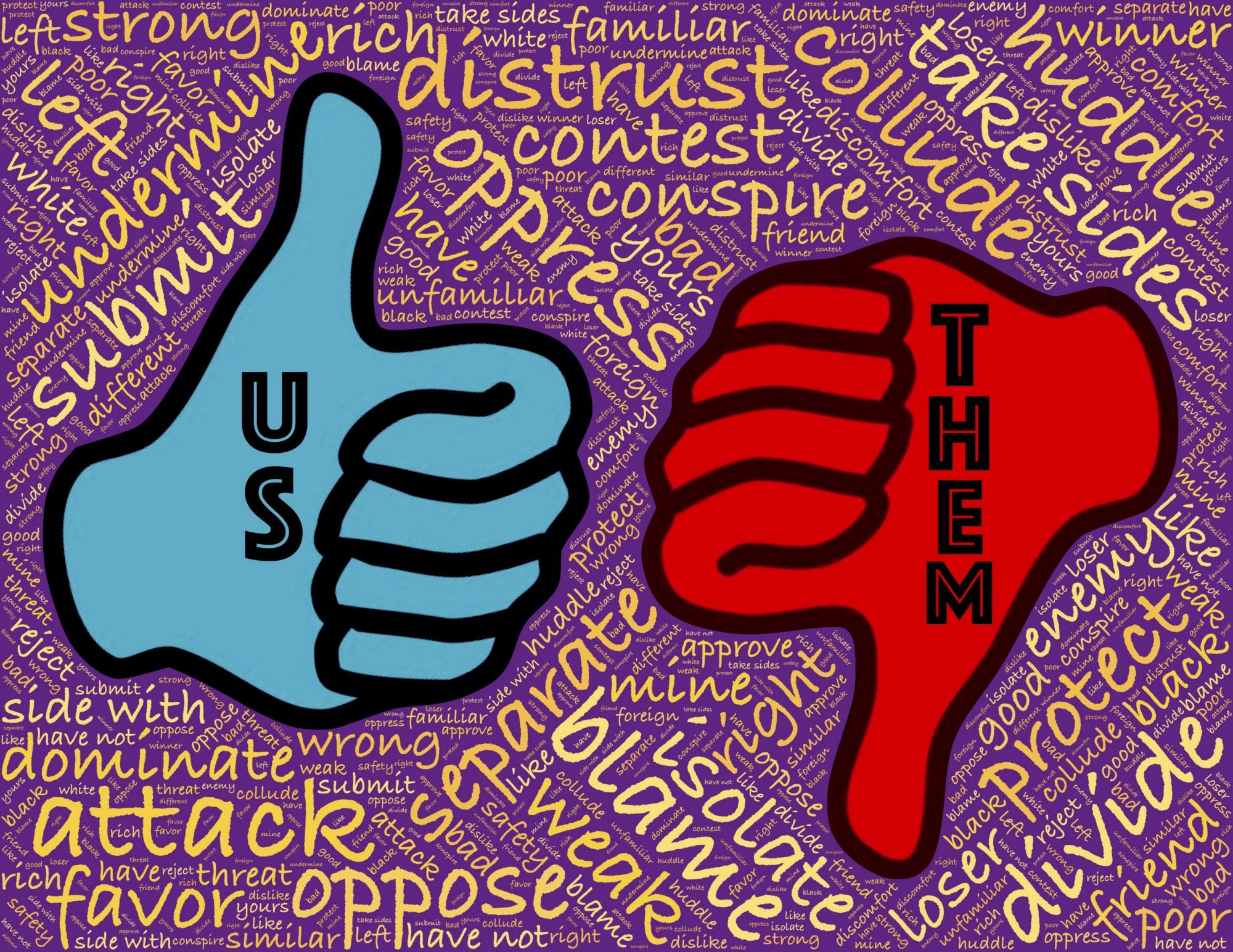
It’s a special kind of dehumanizing and something religion has done for centuries, weaponizing the age-old us-versus-them mentality. We can only do so much to temper our tribal nature, but there comes a point where the line between differences and hatred become too blurred. We share this same planet. We also live in countries full of people who don’t agree with us.
That’s okay. We can still be friends with these people. We don’t have to hate, scold, insult, demean, or dehumanize them. That’s a conscious choice we make and, unlike religion, it requires little in terms of indoctrination. As society becomes less religious, it’s important to remember why we’re moving away from organized religion in the first place.
In the same way most religious people are decent, good people, most people of any political affiliation are the same. We’re still human at the end of the day, but I sincerely worry that the increasing ugliness of politics is making us forget that.
I love the internet. In general, I think it does more good than harm. Our lives are objectively better because of it. I know it has its share of baggage and drawbacks. Like anything, you take the good with the bad.
However, there are times when taking the bad is just annoying as hell. I’m fine with challenges and struggle. Those help us become stronger, in the long run. The same can’t be said of annoyance. That helps no one. It just makes you want to bang your head against the wall.
This brings me to what I feel is one of the weakest, emptiest, most pathetic displays of internet outrage I’ve seen in recent years. It unfolded last year, but has become relevant again this year. Even in the midst of a global pandemic, certain people still find the time and energy to be so insanely petty about something so banal.
It stems largely from that scene in “Avengers: Endgame.” You probably know the scene I’m referring to. I doubt I have to be too specific. For general reference, here it is.
Just playing it again, I can easily imagine a certain group of people whining like babies, as though someone just stole a piece of their birthday cake. It’s a shot of some of Marvel’s most notable female characters, all in the same scene, getting ready to kick more ass in the final battle against Thanos.
Yes, people actually got upset over this.
Yes, it’s as dumb, pathetic, and petty as it sounds, and then some.
They’re not just men who complain about a female superhero’s bra size. They’re not just women who complain how these costumes are woefully impractical. They call this scene cringy. That’s usually code for, “This doesn’t pander exclusively to me and it hurts my precious feelings!”
Many probably whine about other people who whine about things they don’t agree with, be it politics, video games, or which celebrity had an opinion that hurt their precious feelings. This scene just caught more attention than most, being part of the highest grossing movie of all time.
The outrage unfolded as soon as the movie came out. Here’s just one of the responses on Twitter.
SO FORCED!!!! my goodness, the IW scene wasn't forced when they went up against Proxima Midnight in wakanda. But this one….ugh, I almost laughed out loud. And I have daughters and love seeing strong women, but yuck. Don't force it.
Trust me, this is tame compared to some of the other rage tweeting that went on. Most of it boiled down to people saying the scene was so forced and tried too hard to make a political statement. Naturally, you can’t make political statements these days without attracting trolls, assholes, idiots, and narcissists.
I say that as someone who has made his share of political statements, some of which I know won’t age well. I know I make certain people cringe with what I say and how I say it. Most of the time, it’s understandable. I have enough empathy to realize that hearing something you don’t agree with can be distressing.
This scene, however, is not one of those instances. To see this scene and assume Marvel Studios is making this bold political statement about feminism, female characters, and how men should be ashamed for not letting women shine isn’t just contrived. It’s just plain goddamn stupid.
I’m sorry. I wish there was a more articulate way to say that. Sometimes, you just have to be as blunt and straightforward as possible. There are things worth cringing over. There are things worth getting outraged over. This isn’t one of them.
It’s just a very brief, very colorful moment within a two-and-a-half hour movie that took all but seven second. Somehow, that was enough to evoke whining, outrage, and trolls? Seriously, how does that make sense?
The reason I’m bringing this up now is because this scene has become relevant again, thanks to Amazon Prime’s “The Boys.” Now, I love that show and the comic that inspired it. I hope I’ve made that clear. I love the scene that re-opened this old wound, too. It was a great scene. Watching Starlite, Maeve, and Kimiko beat up Stormfront was very satisfying.
There was nothing political about it, but now it’s getting political because of how it supposedly contrasts with the “Avengers: Endgame” scene. I say supposedly because they’re both very different scenes with very different stories told in a very different context. Linking one to the other to make a larger political statement is just asinine.
When I see the “Avengers: Endgame” scene, I don’t see anything political. I just see an epic shot of Marvel’s female heroes. That’s it. That’s all there is to it. It’s just a fun scene that nicely depicts how many great female characters have developed over the years in the MCU. Can’t it just be that?
The same goes for the scene in “The Boys.” Can’t that scene just be a fun display of three of the show’s best characters beating up some Nazi-loving bitch? There’s no politics in, either. It’s entertainment. It’s fun.
If you’re going ascribe politics to either scene, then you’re missing the point. You’re also whining like an immature child, incapable of accepting a world that doesn’t always pander to every one of your sensibilities at every hour of every day. I don’t care where you lean politically. That sort of misguided outrage isn’t the least bit justified. It’s just flat out pathetic.








 Jack Fisher's Official Publishing Blog