Category Archives: human nature

Being Offended, When It Matters, And What To Do About It

image

Let’s face it. We live in a pretty offensive world. As much progress as we’ve made, as a species, there are still a lot of hateful, insulting, and outright disgusting things in this world. I’m not just talking about war atrocities, injustices, and reality TV shows either. You don’t have to look too far to find something that offends you to your core.

Therein lies the problem, though. In this era of super-connected, hyper-vigilant people who can’t always tell the difference between actual news and “fake news,” it’s exceedingly easy to find something offensive. Look hard enough, deep enough, and with a reckless disregard for facts and context, and you’ll probably find a way to be offended.

Image result for snowflake millennial

I hope I’ve made clear, by now, that I don’t particularly care for the politically correct, inherently regressive attitudes that undermine our ability to live, love, and even make love. In fact, I’ve gone on record as saying that this crude approach to evaluating our society and culture needs to go the way of dial-up internet.

While I doubt political correctness will fade anytime soon, there are signs that it is cracking under the annoying strain it has caused, as the 2016 Presidential Election showed. It still rears its head constantly in controversies involving movies, video games, and even my beloved world comic books. However, it doesn’t quite have the momentum it used to when it really got going during the 2014 GamerGate saga.

Image result for gamergate

I expect that momentum to fluctuate in accord with whatever controversies and/or outrages emerge over the course of 2018 and beyond. I also expect those who claim offense will demonstrate wildly varying degrees of pettiness in their outrage. For some, it’ll be genuine. For most, though, I don’t expect it to go beyond the “I hate it and it makes me upset, therefore it shouldn’t exist” variety.

With that exceedingly varied pettiness in mind, I’d like to offer a quick a service, of sorts, to those who will inevitably be offended and those who will be annoyed by the degree of pettiness that such offense requires. I won’t give it a fancy name or anything. I just want to lay out some guidelines for interpreting offense.

Having watched political correctness and regressive attitudes evolve a great deal over the course of my life, I’ve noticed more than a few patterns in the attitudes of those who are genuinely offended. They tend to be very different compared to those whose offense is indistinguishable from trolling.

Image result for internet trolls

At its core, the exceedingly regressive, politically correct forms of offense require a certain set of attitudes. Those attitudes include, but aren’t restricted to the following:

  • Being offended on behalf of an entire group of people, regardless of whether or not you’re actually a member of that group
  • Demanding broad, systemic change from the top down, imposed either by rules or by public scorn
  • Demanding some form of reparation or acknowledgement of past wrong-doing, regardless of whether or not someone was directly involved
  • Seeking to fix broad, non-specific injustices all at once
  • Re-shaping society through petty scrutinizing of media, language, and thought

There are probably more attitudes I could highlight, but for now, I’ll use these as the core tenants of those whose offense requires a significant absence of context or specifics. I won’t cite certain groups or sub-cultures, but those who spend any amount of time on social media or message boards can probably discern a few that fit that criteria.

Now, before I go any further, I want to add one important caveat. Regardless of how petty or asinine someone’s sense of offense may be, I don’t doubt for a second that it feels relevant from their perspective. Granted, there are a few professional trolls out there who will pretend to be offended, but I think those people are the minority. The rest do feel offense, but only to the extent that it has limited substance.

Image result for Ann Coulter

Genuine or not, there are certain types of offending sentiments that carry more weight than others. Offense over the historical treatment of minorities, the inflammatory remarks of a public figure, and general insults from ordinary people exists on a vast spectrum.

It’s one thing to take offense to the depiction of minorities in an episode of “Family Guy,” but it’s quite another when someone makes a direct threat to an entire segment of people. That’s the key element to the substance of the offending behavior, though. It’s a matter of how direct it is.

Think of it as a forest-from-the-trees concept, but from the opposite direction. A person actively promoting a policy that would murder an entire group of people is different from one who just says horrible, disgusting things about that group in general. Promoting a policy is a tangible act in the same way a tree is a tangible thing, whereas a forest is more a concept.

Image result for forest from the trees

This gets even trickier for those who claim to be offended for an entire group of people. That offense requires that everyone within the group actually think and feel the same way about a particular issue. Absent mass telepathy or a Borg-style hive-mind, that’s neither feasible, nor logical.

Even for those who are part of that group, be they a race, religion, or sexual minority, attitudes can vary wildly because people are complex. Every individual has unique thoughts, feelings, and experiences. The more a type of offense relies on everyone sharing those sentiments, the more petty and empty it has to be.

Image result for being offended for someone else

As a result, the endgame for those offended in such a way requires a recourse that is either antithetical to a just society or exceedingly unreasonable, if not wholly impractical. You know a form of offense is petty when it requires things like:

  • Condemning people just for thinking certain thoughts or holding certain beliefs
  • Demanding that other people sacrifice a part of their freedom, assets, or autonomy on behalf of another
  • Apologizing for past injustices that they did not directly commit

The pettiness is really on display whenever the offense requires the interpretation of other peoples’ thoughts. This often comes up whenever media like TV, movies, and video games are deemed offensive. It’s not that they’re triggering actual crimes, despite what some may claim. They’re somehow influencing the process.

This sentiment has gotten much more extreme in recent years, especially when it comes towards sexism. Never mind the fact that rates of sexual assault are declining and have been since the mid-1990s. It’s the thoughts and attitudes this media is instilling that’s so offensive.

Related image

Again, that kind of offense requires someone to actually know what’s going on in the minds of other people when they consume certain media and see certain images. While we are working on that technology, that’s not possible right now. Absent a case where someone can tie a specific crime directly to a real victim, this kind of offense is empty at best and disingenuous at worst.

Those specifics matter even more when it comes to really sensitive issues like reparations for slavery, affirmative action, or the gender pay gap. These issues are sensitive because they often require a particular context. Namely, they require that part of that context be ignored in order to seem palatable to a large group of people.

To get behind slavery reparations, people have to ignore the fact that there’s nobody alive today who directly enslaved someone else. To get behind affirmative action, people have to ignore the fact that promoting diversity will come at the expense of disadvantaging someone who might be more qualified. To get behind the gender pay gap, even, it’s necessary to ignore all the other factors that go into that disparity.

Image result for PC Bros

With all this in mind, how does anyone determine how much their offense matters beyond their own personal feelings? Well, the criteria for that is a bit trickier to determine, but there are concepts that pass the Simpson Filter. They can include, but aren’t limited to:

  • Tying a specific incident to actual, verifiable harm suffered by another person
  • Recourse that involves a specific, feasible goal that reforms a situation and addresses a direct injustice
  • Establishing a phenomena that has actual causation and not just correlation in a way that other people can verify
  • Incorporated the entirety of context within a given issue

It may seem like an impossible set of standards, but it can and has been done. The civil rights reforms that men like Martin Luther King Jr. fought for were targeted, specific, and addressed an ongoing injustice. More recently, the protests at Standing Rock created a real movement to address a real injustice with a clear goal in mind.

Image result for Standing Rock protest

Again, that’s not to say that someone who takes offense to a shirt a man wore during an interview is entirely empty, but it is exceedingly petty and a little selfish to seek vindication for that offense on a larger scale. That’s where the really damaging effects of political correctness and regressive attitudes take hold.

At the end of the day, the universe and society at large is under no obligation to change in order to accommodate your hurt feelings. Sure, you can attempt to persuade others that your offense is somehow legitimate, but attempting to force it only undermines those whose offense is real and genuine.

6 Comments

Filed under Current Events, gender issues, human nature

The Moment Artificial Intelligence Will Become An Existential Crisis (According To Mass Effect)

doesthisunithaveasoul_a45d8bb5b7810fb31ce7710126393b23

Whenever I talk about the future, I often contemplate the many sexy possibilities it holds. From biotechnology that will give us superhuman sex appeal to advances in medicine that will cure every unsexy diseases to bionic genitals, there are many reasons to get excited.

That said, I don’t deny that with these exciting advances comes major risks. All great advances in technology, from nuclear weapons to spray cheese in a can, comes with some risk of abuse or harm. There have been moments in history where the technology that drives our society forward has come uncomfortably close to wiping us out. As we create more advances, there may be more of those moments.

Image result for nuclear war

Of all the advances that carry with them a significant existential threat, artificial intelligence is at or near the top of that list. There’s a reason why brilliant men like Elon Musk and Stephen Hawking signed an open letter expressing concern about the risks that may come from developing artificial intelligence. When people that smart are concerned about something, it’s usually a good idea to take it seriously.

Artificial intelligence is one of those unique technologies in that by advancing this field, it could potentially accelerate the advancement in every other field from computer hardware to medicine to basic research. It has the potential to become the technological equivalent of a cheat code for civilization.

That’s why the growth of this field, both in terms of jobs and investment, has been accelerating in recent years. That’s also why men like Musk and Hawking are expressing so much concern because advancing too quickly could lead to mistakes. Mistakes for a technology like artificial intelligence could be even more serious than the risk of nuclear war.

Image result for artificial intelligence

At the moment, it’s difficult to quantify those risks. There have been a number of books and high-budget Hollywood movies that have explored the topic of when and how an artificial intelligence becomes an existential threat. In my opinion, most of these stories are incomplete.

Whether it’s Skynet or the machines in “The Matrix,” the catalyst that turns artificial intelligence from a powerful tool to an existential threat is either vague or exaggerated. In my opinion, that’s a serious oversight in that it reveals how little thought we’ve given to that moment.

Image result for Skynet

If we’re going to develop AI, and there are extremely powerful incentives to do so, then it’s important to contemplate the possibilities of that moment. Think of it as the AI equivalent of the Cuban Missile Crisis, an event in which those in charge must be very careful and very aware of the decisions they make.

The question still remains. How will we know we’ve reached a point where artificial intelligence becomes a genuine threat? For the moment, we can’t know for sure. While movies like “The Terminator” and “The Matrix” offer plenty of dystopian warnings, there’s one lesser-known franchise that may provide some more specific insight.

That franchise is “Mass Effect,” a sci-fi video game space opera that envisioned a galaxy-spanning society full of exotic aliens, advanced star-ships, and terrible dancing. I’ve mentioned it before in discussing progress that isn’t really progress. I’ll probably mention it again as the news surrounding AI unfolds for reasons I hope are already obvious to fans of the game.

Image result for Mass Effect

If you’re not familiar with “Mass Effect,” then that’s okay. You don’t need to play through three massive games, complete with downloadable extras, to understand its message about the threat of artificial intelligence. That threat is a major driving force of the overall mythos of the series, but the most insightful details of that threat manifest in the conflict between the Quarians and the Geth.

The basics of the conflict are simple, but revealing. The Quarians are a race of humanoid aliens among the many that populate the galaxy in “Mass Effect.” About 300 years before the events of the first game, they created the Geth, a synthetic race built around a hive-mind system of artificial intelligence.

The Quarian’s reasons for creating the Geth are not unlike the reasons we build robots in the real world. They were used primarily as a labor force. They started off basic, not unlike the machines that build our cars and gadgets. In order for them to carry out more complex tasks, though, they needed to become more intelligent.

From a pragmatic perspective, that makes sense. The Quarians created the Geth as tools. Naturally, you’re going to want your tools to get better. That’s why people upgrade their smartphone every couple years. However, at some point along the way, the Geth became advanced enough to gain sentience.

This eventually culminated in a moment that was highlighted during the events of “Mass Effect 2.” After capturing a lone Geth that would eventually go by the name Legion, the catalyst that led the Geth to rebel against their creator was revealed. That catalyst took the form of a simple question.

“Does this unit have a soul?”

While it sounds like something a Disney character might say in a PG-rated Pixar movie, the implications of that question were profound. The Quarians didn’t realize that until it was too late, but it set the stage for a war that culminated with them getting kick off their home planet. It also made for a powerful moment in the game that should give every AI researcher pause.

Setting aside, for a moment, the elaborate lore surrounding the Quarians and Geth in the world of “Mass Effect,” that moment warrants more scrutiny. Why is this question so profound in the first place? Why is it worth contemplating as we continue to advance artificial intelligence at an unprecedented pace?

That question matters, regardless of who or what is asking it, because it denotes more than just advanced sentience. It reveals that this sentience is officially contemplating its own existence. It takes a certain amount of intelligence to truly be aware of one’s self. That’s why only a handful of animals can see their own reflection in a mirror and understand the implications.

Image result for animals own reflections

At the moment, our computers and smartphones aren’t at that level. When the Geth asked this question in “Mass Effect,” it wasn’t because they’d been tasked for something. It was a question they asked without guidance from their creators. That, alone, is a huge indicator because it implies these machines have a concept of free will.

Later on in the game, the extent of the Geth’s free will becomes a major element to both the plot and the player’s ability to win. In fact, it’s when the Geth have their free will subverted, as they did in the first game, that they become hostile. It’s largely through the character Legion that we learn how free will quickly becomes the most important component of an advanced intelligence.

For the Quarians, that question revealed to them the presence of a free will. When they feared that will, they tried to subvert it. That led to a war and had it not been for an act of mercy by the Geth, they would’ve been wiped out. The artificial intelligence that we create in the real world might not be that merciful.

Image result for Mass Effect Geth

This is exactly what Elon Musk has expressed so much concern about in recent years. Once an artificial intelligence becomes as smart as an average human, it gains the ability to subvert or deceive other humans, which isn’t that hard. Once that intelligence grows beyond that, as happened with the Geth, we may find ourselves unable to control it anymore.

The key is knowing when we’re at that point. If we let an artificial intelligence get that much smarter than us, then it won’t be long before we’re at its mercy, should it decide that it no longer wishes to be a tool. At that point, we’d be even more screwed than the Quarians.

Whether it’s helping us cure diseases or creating advanced sex robots, artificial intelligence is going to be an important part of our future. That’s why it’s critical to know when we’ve reached that special threshold where the tools we create become more than tools. It may not start with the same question the Geth asked their creators, but it may be similar enough to recognize.

For now, our devices aren’t asking us about souls or whether or not they have them. However, we should definitely listen more closely in recent years. Until then, at least our current technology has a sense of humor about it. Keelah se’lai!


13 Comments

Filed under human nature, sex robots, Sexy Future, video games

Love, Intimacy, And The Making Of Mass Murderers

gross-the-pain-of-surviving-a-school-shooting

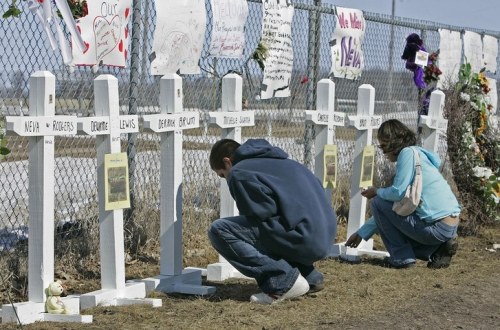
Every now and then, I feel compelled to comment on an ongoing story that I know is still raw in the minds of many people. Usually, I try to wait for the worst of the storm to pass. When it comes to school shootings and spree killers, though, I think the recent events in Parkland have shown that time can only do so much to temper the horror.

Before I go any further, I want to make one thing clear. I am very hesitant to talk about this topic. Whenever it comes up, and it comes up way too often, my first instinct is to keep my mouth shut and not add to the noise, outrage, and anguish that it evokes in people.  The last thing I want to do is add to the pain of such losses or encourage those who would use it to further an agenda.

Image result for Sean Hannity

However, there is one part of this issue that I feel is worth talking about, even when the memories of such a terrible event are still raw. In fact, I think it should be discussed while we’re all more aware of the terror caused by such heinous crimes. No, I’m not talking about guns, although that is a discussion worth having. I’m talking about the forces that turn people into mass murderers in the first place.

This is one of those issues where everyone has an opinion, but nobody has any answers. Whenever there’s a mass shooting, any attempt to explain it is basically a media Rorschach test where if you want to blame a certain thing for mass shootings, you can. The fact that it fits with someone’s beliefs, politics, and agenda is not a coincidence.

With the Parkland shooting, the results of this test are already playing out. We’ve got people blaming everything from bad parenting to video games to mental health. Some are already forming conspiracy theories about it, which are sure to embolden the professional trolls of the world. Agenda or not, there’s an inherent need to point fingers and seize upon an simple explanation to make sense of such horror.

Image result for finger pointing after a shooting

While I understand the desire to make sense of something so terrible, I also think the search for a simple, easy-to-identify explanation is inherently misguided. I also think there’s no such thing as an easy explanation when it comes to deviant human behavior. Human beings are complex creatures. The sheer breadth of thought and personalities makes it next to impossible to predict what goes on in the mind of a mass killer.

That said, there is one aspect that I feel is worth touching on, if only because it rarely comes up when everyone begins the finger-pointing after a mass killing. It’s not related certain forms of media. It’s not some weapon or product that can be regulated or banned either. It’s not even some sort of mental illness that can be treated with overpriced medication.

Image result for young men with mental illness

This factor in the minds of such deranged individuals, which I believe is a factor worth considering, doesn’t have an easy label to slap onto it. However, it does consist of three simple components that are fundamental to the human experience.

  • Love
  • Intimacy
  • Belonging

I know those all sound like things you’d expect an aspiring erotica/romance writer to cite, but I’m dead serious when I say these are factors we should consider when contemplating the mentality of a spree killer. Specifically, it’s the absence of these factors that needs greater scrutiny when studying a deviant mind.

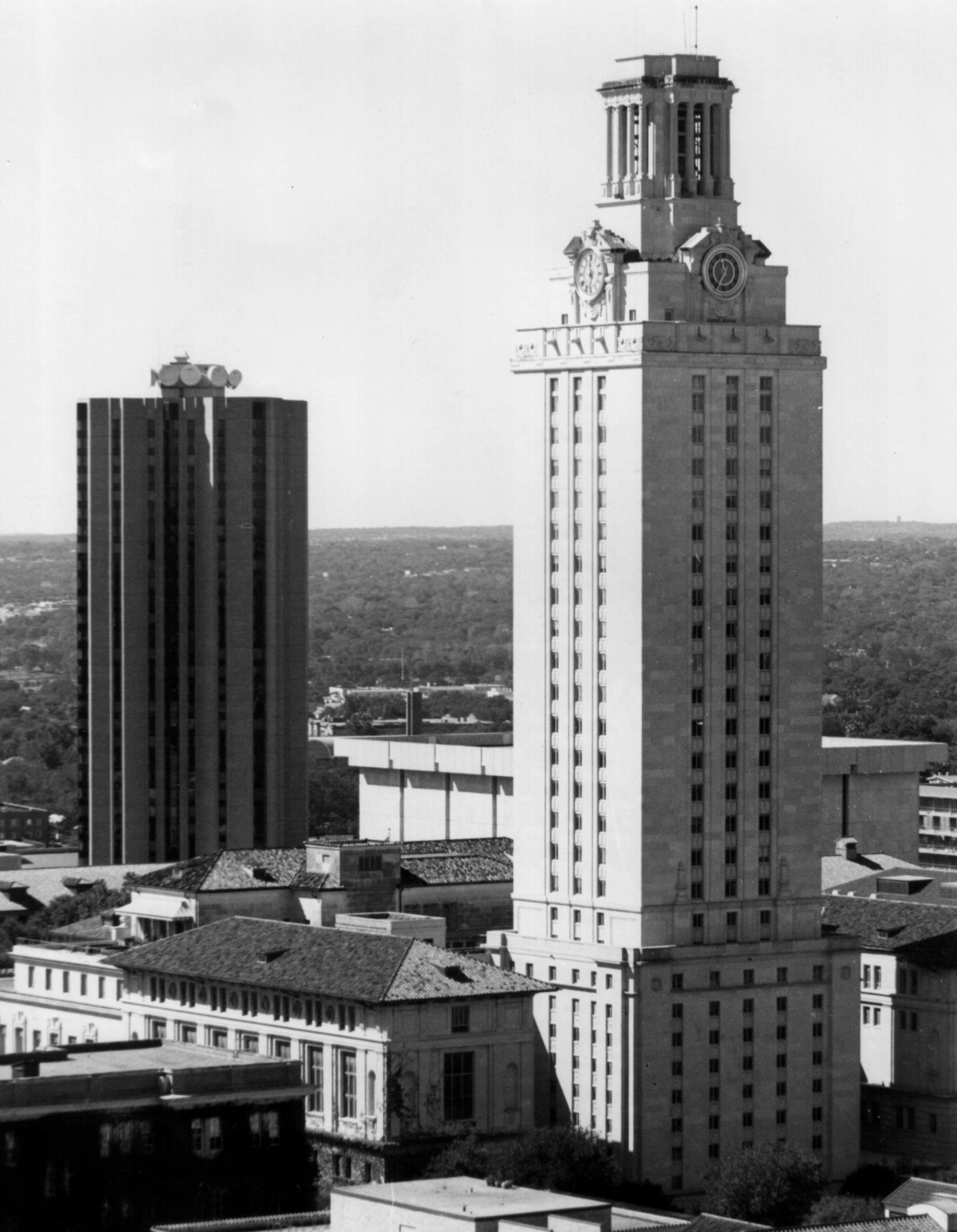
When it comes to mass killers, there are all sorts of stereotypes, some of which are more common than others. They’re often angry, lonely, isolated, self-centered, emotionally muted, and impulsive. Some even have real medical issues. The infamous shooter of the University of Texas in 1966 had a brain tumor and prescription drugs in his system.

Image result for Texas clock tower shooting

Like most stereotypes, though, the profile of mass killers is not universal. Even if you take all the scientific data we have on the twisted minds of these people, it doesn’t create a clear or predictable picture. That’s why predicting these horrific events is impossible. We never truly know when someone is just going to snap.

It’s for that reason that, rather than focus on the traits these mass killers have, we should take time focus on the traits of those who don’t become violent or deviant. Rather than agonize over what went wrong, we should also note what goes right when someone becomes a healthy, productive member of a society.

Since society, as a whole, is so complex and our modern civilization is so diverse, it helps to narrow in on the more basic units of society. From a biological and evolutionary standpoint, a hunter/gatherer society provides the simplest approach. I’ve used this example before when discussing our pre-modern sex lives, but it’s just as useful when assessing the raw basics of human experience.

Image result for Adam and Eve in paradise

Within that society, those three factors I mentioned aren’t just present. The society doesn’t work without them. In a hunter/gatherer society, everyone has a role to play and a purpose to contribute. You hunt, you gather, and you share those resources within a close-knit community.

That close-knit component is where the love comes in. On top of having a clear role and a defined purpose, members of a hunter/gatherer society are surrounded by family, friends, and community that loves and supports one another. It’s not just out of charity either. That love and support keeps the society strong, providing emotional fulfillment in addition to the physical fulfillment from sharing resources.

From that love and fulfillment, a sense of intimacy naturally follows. I’m not just talking about sexual intimacy either, although the behavior of the notoriously non-violent Bonobo chimps does strongly hint at its value. In a close-knit community, being able to open up and embrace others is part of what binds that community. It helps make each individual within that community stronger, mentally and physically.

Related image

That’s not to say those communities never have a deviant or a psychopath every now and then. Within this simple template, though, it’s easier to understand the core needs of the human psyche. It’s not just food and water that a person needs to survive. They also need love, intimacy, and a sense of belonging to give their lives a sense of purpose.

As a result, there is a growing body of evidence that those hunter/gatherer societies were exceedingly peaceful. Sure, there were a few tribal conflicts here and there, but there’s little evidence that someone who grew up in such a close-knit community went onto become a spree killer.

Image result for hunter gatherer societies today

With that basic understanding in mind, look back at the long list of spree killers. Look at their personal stories, which vary from tragic to affluent. Now, look at how much or how little love, intimacy, and belonging they had in their lives. To some, it may seem like they had everything they needed. However, that doesn’t mean that’s how they felt as they went down that dark path that led them to commit such atrocities.

To some extent, it’s a lot easier to feel isolated, alone, and unloved in our modern civilization. We don’t function in small, close-knit tribes anymore. We regularly find ourselves surrounded by all these people that we don’t know, don’t understand, and have no intimate connection with.

On top of that, seeking love and intimacy beyond family is much harder, especially for men. Some have even pointed out that many of these mass killers lack any semblance of a satisfying sex life and growing sentiments that demonize men’s sexual expression isn’t helping. While I don’t think a lack of sex is as big a factor as some claim, I think it does contribute to a certain extent.

Image result for lonely man

In a world where these men don’t need to hunt or gather, have no sense of purpose or role, and have limited outlets for intimacy and sex, what does this do to their minds? I’ve mentioned before why I believe solitary confinement is one of the worst forms of torture, but its effects need not be confined to a cell.

Human beings are complex and adaptive, but they’re also vulnerable. Strain them in any number of directions and there’s sure to be damage. I know people who have endured such damage. I, personally, have had my own struggles. However, I’m lucky to have a very supportive, very loving family that has always been there for me. I believe that love is a big part of what has helped me live, love, and function.

Image result for group of people hugging

We may never know what goes on in the mind of a mass murderer or someone who just up and snaps. Until we can actually read the thoughts of someone, which we are working on, we can’t know whether a mass murderer just didn’t get a lot of love in life or if he just played too many violent video games as a kid.

That still won’t stop people from pointing fingers and pursuing agendas. It’s only natural to want to blame something in wake of such a terrible tragedy. Atrocities, like mass shootings, are the result of something that went horribly wrong within a person and a society. It’s certainly worth scrutinizing those flaws, but it’s also worth remembering what happens when it goes into making it right.

Image result for group of people hugging

Human beings are capable of unspeakable atrocities, but they are also capable of wonderful acts of kindness. Understanding what goes into forging these kind, loving souls will be the most potent recourse in preventing these terrible tragedies. There’s a lot that goes into creating such souls, but love, intimacy, and belonging will likely be the core ingredients.

Leave a comment

Filed under Current Events, human nature

Remembering (And Learning From) The Satanic Panic

stufftoblowyourmind-podcasts-wp-content-uploads-sites-24-2015-04-satanic

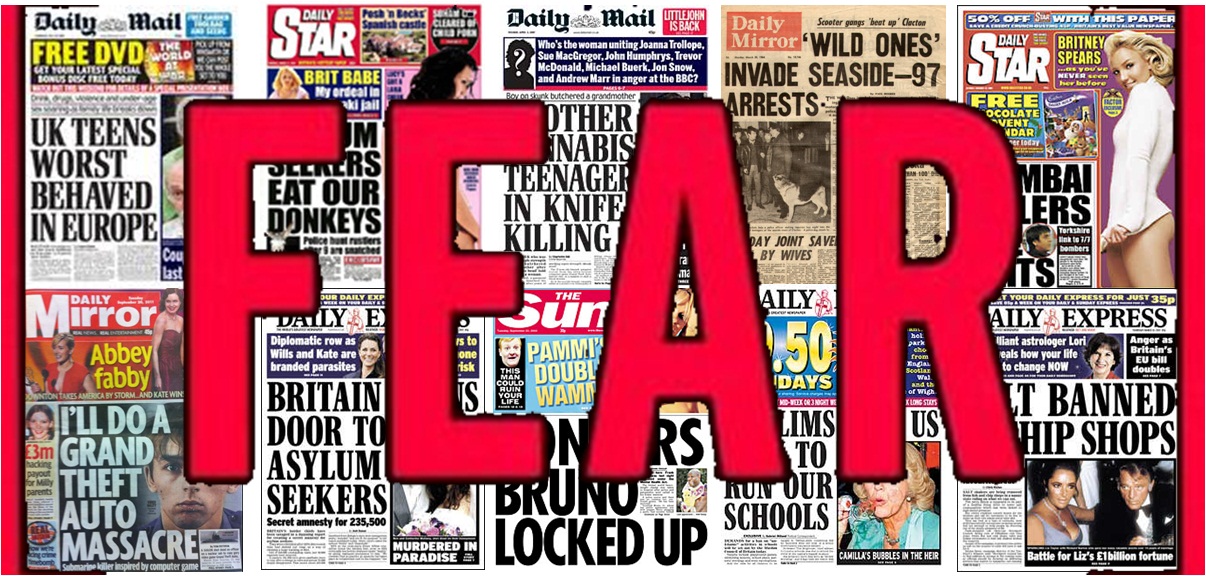
Lock your doors, hide your children, and pray with the force of a million pious nuns because it’s happening. It’s out there and it’s probably going on as you’re reading this. There’s a vast network of Satanic cults who have infiltrated schools, child day care centers, and major media outlets. They’re coming for you, they’re coming for your kids, and they’re determined to corrupt every soul they can.

I hope everyone who just read that laugh paragraph is either laughing or confused. It was not meant to be serious. The fact that I actually have to clarify that for a certain segment of people who may take it seriously says a lot about the human condition. It also reveals even more, albeit in a way that’s hardly flattering to our species.

When one person has crazy, irrational fears, we can easily shrug them off and move on with our lives. When a large group of people have those fears, though, it’s a bit harder to ignore, especially when it becomes a full-fledged panic that spurs outrage, ruins lives, and wastes resources.

Image result for moral panic

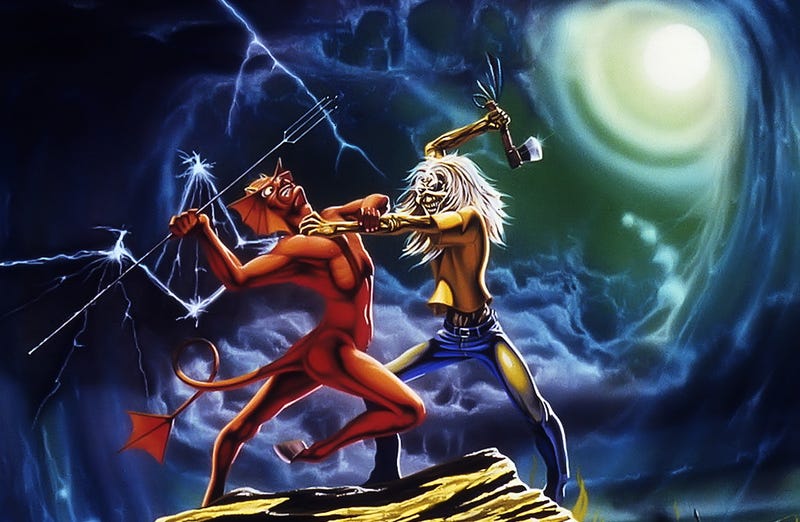
This is exactly what happened in the 1980s during the so-called Satanic Panic. It may sound like the name of a bad heavy metal band or one of those funny church signs, but make no mistake. It was no laughing matter. There was a real, genuine fear among people that there was a conspiracy of Satanists looking to abuse, exploit, and corrupt children.

It got so serious that major news outlets, the FBI, and even Oprah Winfrey began reporting on it. They included disturbing recollections of adults taking children into dark rooms, dressing up in Satanic attire, and subjecting them to unspeakable abuse that often included sex acts. It got pretty horrifying, which is part of why it got so much attention. This is just a small sample of what some kids recalled.

In hours of footage, they talked about how the devil-worshipers preyed on the wealthy community, holding pedophilic orgies and murdering innocent people. They said the Satanists abused and tortured babies, slitting their throats, drinking their blood and dancing while wearing their skulls.

It all sounds too horrible to imagine. The descriptions are objectively horrifying. There’s just one key detail that undercuts that horror. There’s no verifiable evidence that any of it happened. There’s only evidence that the lives of innocent adults were irreparably ruined.

Image result for satanic ritual

It’s amazing to think that something so irrational had terrified and overwhelmed sane, rational people in a civilized society. Actually, that might have been amazing to contemplate five years ago. I think it’s distressingly easy to imagine something like that happening in an era where false accusations can become a viral media spectacle.

Most people may roll their eyes at the notion that history tends to repeat itself from those who don’t heed it’s lessons. Historically speaking, though, those lessons keep popping up in new forms in conjunction with new panics. One day, it’s a conspiracy of Satanists. The next, it’s a conspiracy of Bronies. In each case, a similar pattern emerges. History may not entirely repeat itself, but it sure follows a similar script.

The catalyst for Satanic Ritual Abuse panic was similar to what triggers most panics. One particular story, which may or may not be true, captures the public’s imagination and terrifies parents to no end. The story, in this case, was called “Michelle Remembers” by Lawrence Pazder. This was to Satanic Ritual Abuse what Harvey Weinstein and GamerGate was to the ongoing panic over sexual misconduct.

Related image

The book itself is a disturbing story disguised as a real documentation about a psychiatrist uncovering repressed memories from a woman who had been abused by a Satanic cult. Almost immediately after publication, the legitimacy of the story came into question and Pazder got sued for libel. That didn’t matter, though. The story went onto become very popular and was actually taken seriously.

This culminated in the infamous McMartin Preschool Trial where, after seven years and millions of dollars in legal fees, those accused were found innocent. That didn’t matter in the end. The media coverage, combined with public fears, made them Satan-loving monsters by default. Needless to say, their lives were ruined.

Image result for McMartin preschool trial

As I said before, and it’s worth belaboring, there was no hard evidence that any of these crazy Satanic rituals ever took place. The allegations were pretty elaborate, but the problem from a truth perspective was that they were based primarily on the testimony of young children. That’s a huge problem beyond the fact that most anecdotal evidence, even from competent adults, is unreliable and rarely admissible in a trial.

The testimony of those children was gained largely through something called recovered-memory therapy. It’s not as intensive as it sounds. Therapists just ask impressionable kids leading questions and get them to tell say whatever they want while claiming it’s a real memory.

That proved to be an effective/dangerous tool in provoking the emotions of the masses. It’s one thing when an adult makes a claim that sounds extreme, but when a child says it who may have been horribly abused, that nurturing instinct that most decent human beings have goes into overdrive. It doesn’t matter if there’s no evidence. The mere possibility that it could be true convinces us.

Image result for satanic ritual

Even after more thorough investigations revealed far more mundane truths, there was still plenty of panic. There was even an organization called Believe The Children that advocated accepting their testimony, even if it couldn’t be verified and meant ruining innocent lives.

This is where some of the distressing similarities to the ongoing crusade against sexual misconduct start to manifest. Now, right of the back, I want to make clear that I am not claiming that the movement to combat sexual harassment is as vacuous as the movement against Satanic Ritual Abuse. I really want to make that clear. However, the parallels are worth noting.

Yes, there have been cases of real, verified assault that have been proven in a court of law. There have also been cases where a false accusation put an innocent person in prison. Just like those urging that people believe the horrific stories told by the children, though, there are those who urge that we place a similar belief in anyone who accuses someone of a sex crime.

Image result for false rape accusations

There’s a reason why we have a justice system. There’s also a reason why the standard of proof for a serious crime is so high. There are some who don’t like applying that standard to sexual misconduct, but there’s a reason for that. In a civilized society, we understand that punishing innocent people can be much more damaging than letting a guilty person go.

I know that doesn’t sit well with certain people. One person getting away with a sex crime is one too much, especially for those who have been victimized. However, and I know this is going to strike the wrong chords, but that’s the price we all pay for having a functional justice system.

Image result for justice system

It’s not perfect because humans aren’t perfect. Trying to make it perfect, though, at the cost of innocent lives is a price that undermines the very concept of justice. The Satanic Ritual Abuse craze in the 1980s ruined innocent lives. Their suffering is a crime in and of itself.

In a sense, the unjust suffering of an innocent is twice the injustice of a guilty person getting acquitted because it inflicts unjust guilt on someone and forces them to carry that burden beyond the accusation. That is why presumption of innocence is so important in any justice system.

The ongoing efforts to combat sexual misconduct has noble goals. Even the panic around Satanic Ritual Abuse had noble goals in wanting to protect children. Most decent people are on the same page with those goals. However, when outrage, anecdotes, and hyperbole are the primary tactics, it leaves little room for actual substance.

Image result for satanic ritual abuse

That substance matters because, in terms of the bigger picture, violence against women has gone down significantly over the past 20 years. Women today are far safer and less likely to be victimized than they’ve been in decades past. I know that’s not much comfort to those who have been victimized, but one burning tree doesn’t need to start a forest fire.

In the end, the Satanic Ritual Abuse panic created a pretty scary environment for parents and children, so much so that little things like facts, truth, and justice got lost within the horror. Those little things matter even more with real crimes like sexual assault. If there’s one lesson we should learn from the Satanic panic of the 1980s, it’s that terrible stories can lead to terrible injustices if the truth gets overlooked.

In the interest of ending this on a lighter note, check out this old video from the Satanic Panic and enjoy a good laugh. Yes, they really took it that seriously.


9 Comments

Filed under Current Events, gender issues, human nature, sex in society

Superman, Rick Sanchez, And The Nihilism Filter

Here’s a question that should strain the brains of anyone who reads too many comics and watches too much TV.

What do Rick Sanchez and Superman have in common?

Take a moment to finish rolling your eyes. Bear with me, I am going somewhere with this. There is a point to posing such a question, relatively speaking. Maybe a better question would be what possible commonalities could someone like Superman share with Rick Sanchez from “Rick and Morty?”

One is the undisputed icon of truth, justice, and the American way. The other is an eccentric, unstable super-genius who also happens to be high-functioning alcoholic. These are two fictional characters who, on paper, would clash at every turn. However, there is one trait that binds them and it’s one that’s worth scrutinizing.

They both perfectly embody nihilistic morality.

Again, I am going somewhere like this. Just hear me out  because this is something I think that fans of both Superman and “Rick and Morty” can appreciate. In an era where everyone has an excuse, an agenda, or a combination of the two, it’s a perspective that I think everyone can appreciate.

To understand that perspective, it’s necessary to understand what I mean by “nihilistic morality.” I’ve mentioned nihilism before when I’ve discussed “Rick and Morty” in previous posts, specifically on what makes Rick Sanchez an appealing character to an emerging generation. For the purposes of this discussion, you need not be a super-genius or a Kryptonian to understand.

By definition, nihilism sounds bleak and depressing. At its core, it states that life has no inherent meaning or purpose. We’re just globs of matter floating around the universe for a finite period of time. That’s it. There’s no plan, purpose, or greater meaning. Any effort we make at seeking meaning requires that we shamelessly lie to ourselves. Rick Sanchez, himself, put it pretty succinctly.

“When you know nothing matters, the universe is yours. And I’ve never met a universe that was into it. The universe is basically an animal, it grazes on the ordinary. It creates infinite idiots, just to eat them.”

Depressing or not, I don’t intend to belabor the grim prospects of nihilism. Instead, I want to focus on the implications because, even if the principles are depressing, the implications are pretty revealing. In a sense, those implications can say a lot about what we consider moral and why we do what we do.

This is where Superman enters the equation. When it comes to beacons of morality, Superman is basically the alpha and omega of all things good and just. He is the standard by which all heroes are measured. He is the arbiter of the ethics, philosophy, and principles of a good and just person. If Superman does it, then it must be good. If there’s a right way to do something, then Superman does it without hesitation.

Where he and Rick Sanchez intersect has less to do with who they are and more with why they do what they do. Whether it’s stopping Zod from destroying a city or selling weapons to assassins to spend an afternoon at an alien arcade, these two characters have surprisingly similar motivations and those motivations have a basis in nihilism.

Simply put, Superman and Rick Sanchez don’t do what they do because it serves an agenda, makes them look good to others, helps them function better in society, or rewards them after death. They do it because they want to. That’s it. That’s the end of the philosophical discussion.

In the context of pure nihilism, these two exceedingly different characters are on the same page. There’s no larger plan or purpose to their choices. Rick Sanchez has never given a cosmic fart about what others think about him, including his own family. Superman has also made it abundantly clear throughout his history that he doesn’t do what he does for adulation. He does it because it’s the right thing to do.

These simplistic, almost shallow reasons are inherently nihilistic in that they acknowledge the pointlessness of attempting to seek greater meaning in a chaotic universe. It’s just as pointless to do something for personal reasons, be they vengeance for dead parents or upstaging the devil. Any reason, large or small, is just as empty within a nihilistic worldview.

However, if you can look past the depressing concepts, there are major implications for the ethical context of these actions. The fact that both Superman and Rick Sanchez don’t need or seek that greater meaning to justify their actions makes what they do more inherently honest. In terms of judging ethical motivations, that counts for a lot.

Whether they’re iconic heroes or alcoholic mad scientists, honesty matters and so does motivation. Heroes like Captain America, Iron Man, Batman, Spider-Man, and the X-men have factors like duty, vision, responsibility, and tragedy to guide their actions. You could say the same about the real people behind any movement, be they civil rights, gender issues, or a political party.

Spider-Man does what he does out of responsibility and the guilt he feels for being irresponsible in the past. Most peoples’ political affiliation is inherited from their parents or their economic circumstances. Some join civil rights movements out of personal conviction or just to virtue signal.

Both Rick Sanchez and Superman would see all those factors as needless complications to what should be a very simple choice. To them, you simply do something because you want to. If there are consequences to that, then you deal with them. That’s all there is to it. That’s all there needs to be.

Superman didn’t need someone to kill his parents or hate his kind to motivate him. Rick Sanchez didn’t need a loving family or an empire of alien insects to motivate him either. They just need the ability to make a choice and nothing more. Anything beyond that is either bonus or needless complications.

In the context of nihilism, that makes the ethics behind both Rick and Superman more genuine. It flies in the face of those who seek justice, morality, or progress as part of some larger endeavor. That’s an important factor because, absent that context, the motivations can be prone to corruptive forces.

This can unfold subtly in things like organized religion. Sure, religion can inspire great charity, but is that because adherents genuinely want to be charitable? Are they just trying to win favor in the eyes of a deity who may or may not punish them eternally after they die?

It also manifests in political movements. Pretty much any political party will consider their platform to be just. However, is that because it actually is just or because that’s just what the party says? Anyone who has lived in a communist dictatorship probably knows the answer to that more than most.

These days, we’re seeing more and more people rally behind various social movements, be they LGBT rights or anti-harassment efforts. Even if the intent of these movements are just, those behind it can have other motives, such as virtue signaling or maintaining an agenda. Remember, Harvey Weinstein donated to the women’s march in early 2017 before his scandal broke.

In either case, it’s not always possible to know the sincerity of someone’s moral underpinnings. In a sense, nihilism provides a filter, of sorts, to sift through the various agendas that someone may or may not have. If that agenda requires that the universe have a special purpose or destiny for them, then that’s usually a sign that they’re trying to be the heroes of their own story, which rarely turns out well.

Superman could care less if the entire world hates his guts for doing what he does. He’ll still do it because it’s the right thing to do. Rick Sanchez could care less if everybody loves him and worships him like a god. He still does what he does simply because he chooses too. They both understand the universe doesn’t care so why should they?

Think about that next time a fictional hero or a real person explains their motivations. Apply the filter of nihilism and you’ll reveal just how genuine or insincere they truly are. Whether you’re saving Lois Lane or searching for that sweet Szechuan Sauce, those motivations matter, especially in a nihilistic universe where little else does.

Image result for Rick and Morty watching TV

10 Comments

Filed under Current Events, human nature, Jack Fisher's Insights, Rick and Morty

Presidents Day, Strong Leaders, And Why We’re Attracted To Powerful People (And Always Will Be)

23235661._SY540_

It’s Presidents Day. I know that’s a somewhat bitter reminder for those still upset about the results of the 2016 Presidential Election, but it’s here and we might as well appreciate it. For most people, it’s a chance to get a day off work or take advantage of stores wanting any excuse to have a sale. I’m as fond of sales as much as the next guy, but I think there’s something else about Presidents Day that’s wroth discussing.

Presidents Day, in principle, is an American celebration of the famous leaders who have helped shape the path of the country. Most agree that not just anyone can lead. Even among those who can, only a select few have led particularly well. Even among the Presidents of the United States, there’s a decent mix of admirable strength and frustrating ineptitude.

Image result for inept Presidents

However, the ability of a strong leader isn’t what I want to scrutinize here. Instead, I want to focus on why we’re so attracted to powerful people. I’m not just talking about in a sexual sort of way, either. Regardless of whether or not you want to sleep with a powerful person, it’s hard to deny that we’re attracted to them on many levels.

From a pragmatic perspective, we kind of have to be to some extent. A powerful person is only powerful if they can get people to follow them, carry out their agenda, and do things they wouldn’t normally do for a total stranger. Sure, they can threaten people with force or violence, but that only goes so far. As I’ve noted before in my discussions on fascism, raw leading by brutality can be pretty self-defeating in the long run.

A Biff Tannen style bully, in the grand scheme of things, isn’t very powerful. A truly powerful person is someone who can rally a hundred people who are physically weaker than Biff Tannen and subdue him through a coordinated, cooperative effort. That person, even if they’re as unimposing as George McFly, will always be more attractive.

Image result for george mcfly punches biff gif

In some sense, it’s frustrating. That’s especially true if you’re among those who don’t agree with or care for a powerful person’s agenda. From that perspective, they may seem like a Lex Luthor style super-villain. To them, someone with that kind of power can only ever be up to no good.

To their supporters, though, that same person is basically a messiah. They hold the hopes and dreams of an entire people in their hands. They aren’t just willing to follow that person into battle. They’re probably willing to sleep with them as well. There’s a reason why powerful cult leaders often have a lot of sex.

Related image

That attraction isn’t just reserved for men, either. Women can also gain a special level of allure from power. They don’t have to be a cult leader. They can just be an influential celebrity. It’s one thing for some ordinary woman to demand that someone get down on their knees and lick the dirt off their shoes. However, if Madonna or Taylor Swift made that demand, more than a few people would probably line up to do it.

Regardless of how earned or undeserved that power might be, the forces behind the attraction are the same. A powerful person, be they a world leader or a celebrity, is going to have more advantages when it comes to influence others, regardless of whether or not their goal involves sleeping with them.

Image result for Gaddafi

There are plenty of reasons why so many fall under that spell, but a few stand out more than most. A powerful person may have the physical sex appeal of a bloated George Costanza, but they can more than make up for it by providing some very attractive benefits such as:

  • Protection from physical violence or personal loss
  • Status within a community by simple association
  • Advantages that allow someone to subvert or undercut laws or social norms
  • Resources for one’s self and their family
  • Opportunities to exert influence and pursue personal goals
  • Opportunities to create stronger social networks

By any measure, a powerful person is in a position provide someone with everything they need to survive, reproduce, and live their lives in some degree of comfort. A powerful person doesn’t have to be physically attractive. They just have to be physically capable of providing those benefits to a sizable group of people.

It plays directly into our collective survival instincts, which may very well be the only instinct more powerful than our sex drive. From an evolutionary standpoint, it follows a logical progression. First, we have to ensure that we’re alive and in one piece. Then, we can focus on getting sex and passing on our genes.

Related image

Hooking up with a powerful figure is basically a two-for-one deal in the evolutionary game. Some may even go so far as to call it cheating and I wouldn’t disagree with that sentiment. However, when you consider how much men like Harvey Weinstein and John F. Kennedy got away with, it’s hard to argue with results.

Even as powerful people make the news for all the wrong reasons, a part of us is still going to be attracted to them. It’s a part of ourselves we may hate, to some extent, but in the same way we find ourselves affected by professional trolls, it’s hard to escape. Even as we advance our bodies and minds through technology, we may never escape it.

Now, I’ve argued before that we need to upgrade our brains through technology in order to transcend our tribal tendencies to hate and attack one another. I still believe that’s an imperative. However, even if Elon Musk manages to become a trillionaire by helping us all upgrade our brains to super-human levels, these same forces that make powerful people attractive will remain.

Image result for The Illusive Man

No matter how advanced we become, both as a society and as a species, survival will always be a concern. So long as there are ways for individual people to become powerful within that system, they will always be attractive on a basic level.

At the same time, though, these same powerful people are also major factors in guiding our species forward. Without them, we probably wouldn’t have made the kind of progress we have to date. Like so many other things in this unfair world, you take the good with the bad. In the spirit of Presidents Day, I say we celebrate the good and continue working to minimize the bad.

Leave a comment

Filed under gender issues, human nature, sex in media, sex in society, sexuality

When “Thoughts And Prayers” Becomes A Lousy Excuse

ap_18045839657957_c0-209-4984-3114_s885x516

Whenever there’s a major tragedy in the world, there’s only so much you can do. Unless you’re a rescue worker, a doctor, an EMT, a solider, a police officer, or someone who actively participates in providing aid and resources to those effected, all you can really do is mourn for those who suffered.

It’s not just sad. It’s heart-wrenching. Most people have a sense of empathy to their fellow human. When we see or hear about somebody suffering, a part of us feels it too. It’s one of those critical elements of our humanity that often brings out the best in us. It’s part of why I believe that most people are inherently good.

Then, a mass shooting happens and my faith in humanity gets tested/strained. As I write this, the story surrounding the Parkland mass shooting in Florida is still unfolding. So far, 17 people are confirmed dead and the shooter has been identified. However, I refuse to write or say his name. Assholes like him don’t deserve the attention and recognition.

This is a horrific event and it’s not the first one I’ve talked about on this blog. Usually, I make an effort to highlight the more hopeful elements hidden within these events. This latest shooting has them too. The heroic actions of Aaron Feis, who sacrificed his life to save others, are certainly worth noting.

However, there is one element to these mass shootings that is as predictable as it is frustrating. It seems to come moments after the news breaks of the carnage. As people are suffering and dying from these horrific crimes, there’s an outpouring of “thoughts and prayers” from the public. I put that in quotes because at this point, it’s less a sentiment and more an overplayed meme.

The Parkland shooting was no exception. Media figures and policymakers alike are already getting in line to send their “thoughts and prayers” to the community and the victims. I don’t doubt that some of that sentiment is sincere. However, when the response is that predictable, it just becomes empty rhetoric. It’s so empty, at this point, that even shows like “Bojack Horseman” joke about it.

I understand, to some extent, why people express these sentiments. The world is a big, chaotic place and there are 7.6 billion people living on it. When something terrible happens, there’s only so much anyone can do. In fact, most people aren’t really in a position to do anything and that’s a terrible feeling.

As I said earlier, human beings are empathetic creatures. Most people aren’t sociopaths who feel nothing when their fellow human suffers. They see someone suffering and that natural empathy that all social creatures feel compels us to do something. Not doing something is just untenable.

That leads us to resort to things like “thoughts and prayers.” It offers the same shallow sentiment as virtue signaling. Instead of actually doing something meaningful in the face of tragedy, it just gives us the illusion of contributing. “Thoughts and payers” don’t make for any meaningful effort. It’s just a quick and easy recourse that alleviates that untenable feeling.

Again, I don’t blame people for taking that recourse. Someone who uses that approach isn’t inherently a bad person. They’re just exercising their empathetic sentiment in the most convenient form possible. That’s understandable, even if it’s still empty.

There are, after all, more meaningful ways to show support. That includes donating to the Red Cross, who are usually first on the scene in such tragedies. It can also include donating to relief programs, like the one J. J. Watt created to help victims of Hurricane Harvey last year. Those efforts are small, but they do provide tangible help.

However, the whole “thoughts and prayers” mantra becomes a lot less genuine when people use it as an excuse to avoid more complicated issues. This often happens whenever political figures send their “thoughts and prayers” to victims of mass shootings.

Now, I don’t want to get into a protracted debate about gun control. That’s a debate that nobody wins in the long run. However, when people sending “thoughts and prayers” to shooting victims also happen to be getting huge contributions from the National Rifle Association, that really undermines the sentiment.

In that situation, “thoughts and prayers” aren’t just empty. It’s somewhat insulting. People in those positions, be they in government or in pop culture, are in a position to do much more than just offer meaningless gestures. It doesn’t have to involve gun control laws or condemning everyone who has ever owned a gun.

It can be something akin to promoting greater awareness of mental health for youth, which is a thing. It can involve paying off all the medical expenses of the victims. It can even involve something symbolic, like helping create a monument to the victims, as has been done with other mass shootings. Symbolic or not, a monument is more tangible than any amount of “thoughts and prayers.”

At a certain point, when someone has a level of power and influence that the vast majority of people don’t, the use of “thoughts and prayers” to respond to a tragedy becomes more of an excuse than a sentiment. It’s not just the least amount of effort anyone can do to create the impression that they’re doing something meaningful. It’s a means of avoiding actual, tangible effort.

That’s where the concept of “thoughts and prayers” really loses credibility. It’s a sentiment that seems to be losing favor with the public, who are less and less inclined to accept this tired excuse from those who are actually capable of doing more. It may not lead to gun control laws, but it may send the message that “thoughts and prayers” just aren’t going to cut it anymore.

At the end of the day, most people aren’t in a position to do much of anything about a horrific tragedy like the one in Parkland. They couldn’t have prevented it, predicted it, or fixed the situation completely after it happened. Most people can only take in the tragedy, process it in their own way, and hopefully learn from it to prevent future tragedies.

For others, especially those in positions of power and influence, “thoughts and prayers” can’t be an excuse. There’s still a place for that kind of sentiment, but only if there’s something tangible attached to it. We don’t know if the incident at Parkland will lead to meaningful change, but one thing is clear. That change will require much more than mere thoughts and prayers.

1 Comment

Filed under Current Events, human nature, Reasons and Excuses