Tag Archives: politics

A Quick Perspective On Controversy, Scandals, Politics, And Elvis’ Hips

Every controversy seems absurd when you look at it with enough hindsight. Think of all the big social and political controversies going on right now. From mansplaining and safe spaces to all-female movie remakes to sexy Super Bowl Halftime shows, there’s no shortage of outrage and moral panics. In general, I try to avoid contributing, but I’d be lying if I said I wasn’t affected to some extent.

Even if the issues feel genuinely serious, it’s worth taking a step back and maintaining a certain perspective. What seems serious now won’t always end up being that serious in the grand scheme of things. Things like the Cuban Missile Crisis were serious. The impact of playing Dungeons and Dragons don’t even come close. For the most part, these controversies become obscure footnotes in the history of pop culture.

In the interest of preserving a balanced perspective, I find it helpful to think back to Elvis’ hips. For anyone under the age of 50, I’m sure that sounds strange, but make no mistake. At one point in time, Elvis’ hips were the most controversial thing in the world.

It’s hard to imagine now, given the accessibility of sexy music videos and internet porn, but there was a time when Elvis Presley shaking his hips on live TV was the most scandalous thing in the free world. People at the time deemed his dancing too sexual and obscene. There was serious, genuine concern that this was just too shocking and lurid for innocent eyes to see.

Granted, this took place in 1956. The world was a very different place in 1956. However, that’s not exactly an ancient time period. There are plenty of people alive today who were alive in 1956. They lived through that controversy. They might have even watched that fateful episode of the Ed Sullivan show where Elvis dared to shake his hips in too sexy a way. Now, compared to a standard Beyoncé video, it almost seems quaint.

Even if it sounds absurd now, take a moment to appreciate the context of this controversy. There was a time when people genuinely thought Elvis shaking his hips was too obscene. These same people genuinely thought such overt sexuality would do serious damage to society.

Now, look at everything we deem too obscene, controversial, or damaging today. How much of it will seem just as absurd as the sexiness of Elvis’ hips several decades from now? We may think that our standards have been fully refined, but history has shown time and again that this rarely holds. What is obscene today may be mundane tomorrow and obscene again a decade from now.

Controversies are fleeting, petty, and often build on a foundation of absurdity.

People are often irrational, following emotions over logic while claiming every emotion is perfectly logical.

Trends are unpredictable and fleeting. In 1956 it was Elvis’ hips. In 2003 it was Janet Jackson’s nipple. Who knows what it’ll be this year or in the years that follows?

With time and perspective, it rarely ends up being as serious as we thought. Even if it was, people and society adapt. That’s what we have to do, as a species. We might make fools of ourselves along the way, getting worked up over something that ended up being so petty and contrived. The best we can do is laugh and learn from it.

Think about that the next time someone complains about a halftime show or a music video. Remember Elvis’ hips and the perspective they offer. It’s every bit as powerful as his music.

Leave a comment

Filed under censorship, human nature, media issues, outrage culture, political correctness, politics, psychology, sex in society, sexuality, Uncategorized

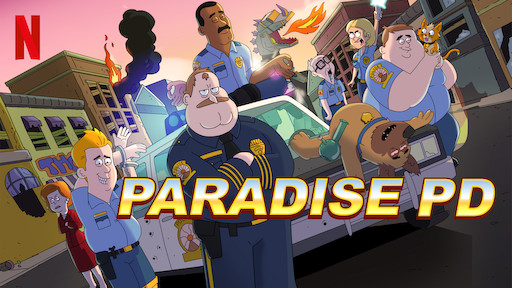
A Message For The Moral Crusaders Of My Childhood (Inspired By The Trailer For “Paradise PD” Season 2)

I’m old enough to remember when parents, teachers, and politicians protested incessantly about shows like “Beavis and Butt-Head” because they were too obscene.

I’m old enough to remember when parents, teachers, and politicians complained endlessly about the lyrics and themes of gangasta rap music.

I’m old enough to remember when parents, teachers, and politicians whined constantly about the violence depicted in every episode of “Power Rangers.”

Hell, I’m even old enough to remember when those same parents, teachers, and politicians said that “The Simpsons” were too immoral for prime-time TV. Those memories make me feel much older than I care to admit, but that’s beside the point.

I have a message for those same parents, teachers, and politicians of that era. I know some are no longer with us, but I know for a fact that plenty are still alive, healthy, and as vocal as ever about bemoaning anything obscene, objectionable, or fun. To those people, I have one simple request.

Watch the following trailer for “Paradise PD” Season 2 and then tell me how you feel about all those other shows you whined about throughout the 1990s. I’d love to hear what you have to say.

For the record, I’m a huge fan of “Paradise PD.” I’m very excited about Season 2. I know it’s a show that takes vulgarity, obscenity, and gratuitous violence to levels that even “South Park” won’t touch, but it’s more fun than a pervert in a panty factory and I intend to enjoy every second of it.

1 Comment

Filed under censorship, political correctness, politics, television

How Much Money Do You Really Need?

Most people aren’t born into wealth. The vast majority of the population has no idea what it’s like to be a billionaire, a millionaire, or someone who just doesn’t live with the constant dread that they’re just one missed paycheck away from total ruin. There’s a reason why they’re called the one percent and it goes beyond basic math.

I admit I’ve often contemplated what it would be like if I suddenly became wealthy. I’ve even articulated some of those musings in detail. I suspect most people have day-dreamed at some point what they would do if they suddenly had a billion dollars at their disposal. For most people, it’s difficult to contemplate because, like it or not, money changes people and not always for the better.

When someone asks what you would do with a million dollars, it’s easy to come up with all sorts of answers. Some are inevitably going to be more absurd than others. The movie “Office Space” articulated that point perfectly. However, there’s another question that I feel is worth asking and I also feel it’s more revealing.

How much money do you really need?

I’m not talking about fantasy wealth here.

I’m not talking dream vacations, dream homes, or spending sprees.

How much money do you actually need to live a happy, comfortable life by whatever standards you define it?

That’s a harder question to answer because it varies for everyone. There are some people in the world who think a million dollars isn’t enough. Depending on where you live in the world, that’s not an unreasonable position. Even with those variations, it still doesn’t zero in on the answer. How much is enough?

I’ve seen how people act when the lottery gets above the $300 million mark. In my experience, once things get over $100 million, that’s when even a typical day dream isn’t enough to appreciate just how much money that is. I’ve tried to imagine it and in every case, I come to the same conclusion.

If I had that much money, I honestly wouldn’t know what to do with it.

It’s not that my needs are simple or cheap. I think my costs are fairly average for someone living in a suburban area. If I had $100 million, didn’t invest a penny in stocks or bonds, and stopped making money today, I still wouldn’t be able to spend it all before I turned 100.

I probably couldn’t even spend $50 million. When things get into the billion-dollar territory, it gets even more absurd. Even millionaires have a hard time fathoming how billionaires operate. Most people, even with decent math skills, don’t understand just how much money a billion dollars is.

At that point, you’re way beyond basic needs and wants. You’re in a domain in which you literally cannot spend all that money at once. You have to legitimately try to lose it all and while some people have done that, it often happens in the process of seeking even more billions to add to their fortune. It rarely occurs just by spending money on your day-to-day needs.

In that context, contemplating how much money you actually need says more about you and your situation than it does about your understanding of finance. If you need that much money to be comfortable, then that says something about your mindset and it’s not just about greed. Some want to change the world for the better with that money. Some want to impose their will on it. It depends on who you are and what drives you.

For me, personally, I don’t think I need anything above $10 million. I probably wouldn’t need more than $5 million just to maintain my current living costs, adjusting for inflation, and planning for my future. That might change if I ever get married and have kids, but for now, that’s my perspective.

I’m interesting in hearing how others would respond to this question. How much money is enough for you? How much would you need to be content, stable, and happy? Let me know in the comments. I’d be happy to revisit this issue again down the line.

Leave a comment

Filed under Current Events, human nature, philosophy, politics, psychology

A Perspective On Generation Gaps

As a general rule, I try not to talk about politics with anyone. I avoid getting into political debates online, as well. I used to actively seek that out. I’ve since learned there are less frustrating ways to waste my time.

A significant part of that frustration comes from talking politics with people who are significantly older or significantly younger than me. I’m in my thirties now. I still remember my teen years, but I also can’t deny that I’m different now than I was back then. I’m still the same person. Time and perspective just have a cumulative effect.

I think most people experience the same thing, regardless of their age. I’ve talked about issues regarding generation gaps before. I imagine they’ll become even more prominent as Generation Z comes of age. It’ll only get more divisive as the Baby Boomers start to retire.

I know this because I’ve gotten into more than a few debates with older relatives and family members. Every time politics comes up, they’ll share stories with me about how things used to be, how they see things now, and how they think things are going to pan out in the future. I’m not going to lie. It has led to more than a few “Okay Boomer” moments.

Those moments shouldn’t define the discourse, nor should it be an intractable barrier. I’ve faced similar barriers in talking politics with people far younger than me. It’s hard to explain the complexities of the world to teenagers when their experiences are so limited.

With that in mind, I’d like to take a moment to offer a brief perspective on generation gaps and discussing controversial issues. Whether it’s politics, society, or life in general, I feel it might help to take a step back and try to see the forest from the trees. To that end, here’s a quick insight that I hope people from every generation can appreciate.

Your attitudes, beliefs, and assumptions are not the same as they were 10 years ago.

Your attitudes, beliefs, and assumptions will not be the same as they are 10 years from now.

However, at your core, you are still the same person.

The attitudes, beliefs, and assumptions of every functioning adult you’ll encounter are not the same as they were 10 years ago.

The attitudes, beliefs, and assumptions of every functioning adult you’ll encounter will not be the same 10 years from now.

However, at their core, they’re still the same people.

You and the people around you may change, but change is never anyone’s first inclination. It only takes hold when it feels right, necessary, or convenient.

Whether you’re young, old, or middle aged, I hope this helps make sense of things. I don’t claim to be smarter or more insightful than anyone else with an internet connection. I just believe that making sense of this chaotic world and the many people within it starts with a balanced perspective.

You won’t be able to understand every idea from every generation, but it’ll remind you that people have more alike than they are different. We don’t have to identify with all those differences. It’s just easier to get along when we remember just how similar we are.

Leave a comment

Filed under Current Events, human nature, philosophy, political correctness, politics, psychology

How Do We Regulate Artificial Intelligence? Seriously, How?

In general, I don’t pay much attention to doomsayers who claim the end is near and we should all cower, tremble, and give them our credit card number. Don’t get me wrong. I still believe there are serious existential threats facing humanity today. Some are worth taking seriously and dedicating resources to addressing. Others are not. Some simply require a more balanced perspective.

There’s a long list of failed apocalyptic predictions. The fact we’re surviving and thriving by most measures shows just how resilient, adaptable, and capable humanity is. There are some threats that I believe humanity will eventually resolve, thanks largely to our accelerating progress in science, technology, and logistics.

Others, however, have me more concerned. While some are more immediate than others, one in particular continues to confound me, as well as some of the smartest people in the world. It involves artificial intelligence, an emerging technology that’s as promising as it is unpredictable. Given the complexity of this technology, it’s difficult to explain in totality, but it can be best summed up by one simple question.

How do you regulate artificial intelligence?

That’s not a rhetorical question. It’s not a thought experiment either. It’s a serious, honest question that people far smarter and far more capable than me are just starting to ask.

Elon Musk is one of them. Very recently, he called for more regulation on artificial intelligence. That, alone, should be both telling and worrying. This man is a billionaire. Usually, billionaires are more inclined advocate removing regulations. Whenever they make an exception, that’s a sign they know it’s serious.

Even though Musk is one of the top advocates for solving big problems with technology, he still has concerns about the problems associated with artificial intelligence. In AI circles, it’s often called the control problem. It’s not a very creative name, but it gets the point across.

How do you control something that is potentially as smart, if not smarter than a human?

How do you manage something that thinks, adapts, and evolves faster than any machine or living thing?

How do you regulate an artificial intelligence that was built by humans, but isn’t at all human?

These are all difficult questions to contemplate, let alone legislate. Even Musk doesn’t provide specifics. Chances are he doesn’t know any more than the rest of the non-billionaire population. That’s a problem because if we’re going to try and regulate this technology, we need to understand it. On top of that, politicians and lawmakers have a long and embarrassing history of failing to understand technology.

However, this isn’t just about writing laws that protect citizens from being exploited by tech companies. Artificial intelligence, especially the kind that exceeds human intelligence, has capabilities that go beyond sending text messages from bathroom stalls. If handled improperly, it wouldn’t just be an existential threat. It could destroy humanity in ways we literally cannot contemplate.

Now, I try to be an optimist in most things involving emerging technology. Humanity has found a way to manage dangerous technology before, namely with nuclear weapons. However, artificial intelligence is a different beast entirely. Regulating it isn’t as easy as simply controlling the materials that make it. The very concept of regulating this technology lacks precedent.

The closest we have to date is Isaac Asimov’s famous three laws of robotics, which were introduced in 1942. Asimov was a brilliant writer and very ahead of his time on some concepts, but this is one issue where we need more than just three simple tenants. We need to think bigger and bolder. If we don’t, then an advanced artificial intelligence will quickly leave us behind.

After that, it won’t matter what kind of regulations we try to pass. It’ll be smart enough to circumvent them. That doesn’t mean humanity is doomed at that point, but we’ll be distressingly vulnerable. I know it’s in our nature to procrastinate on things we don’t see as vital, but if ever there was an issue to make an exception, this is it.

2 Comments

Filed under Artificial Intelligence, biotechnology, futurism, philosophy, technology, Thought Experiment

Martin Luther King Jr. Day: Pursuing A Dream

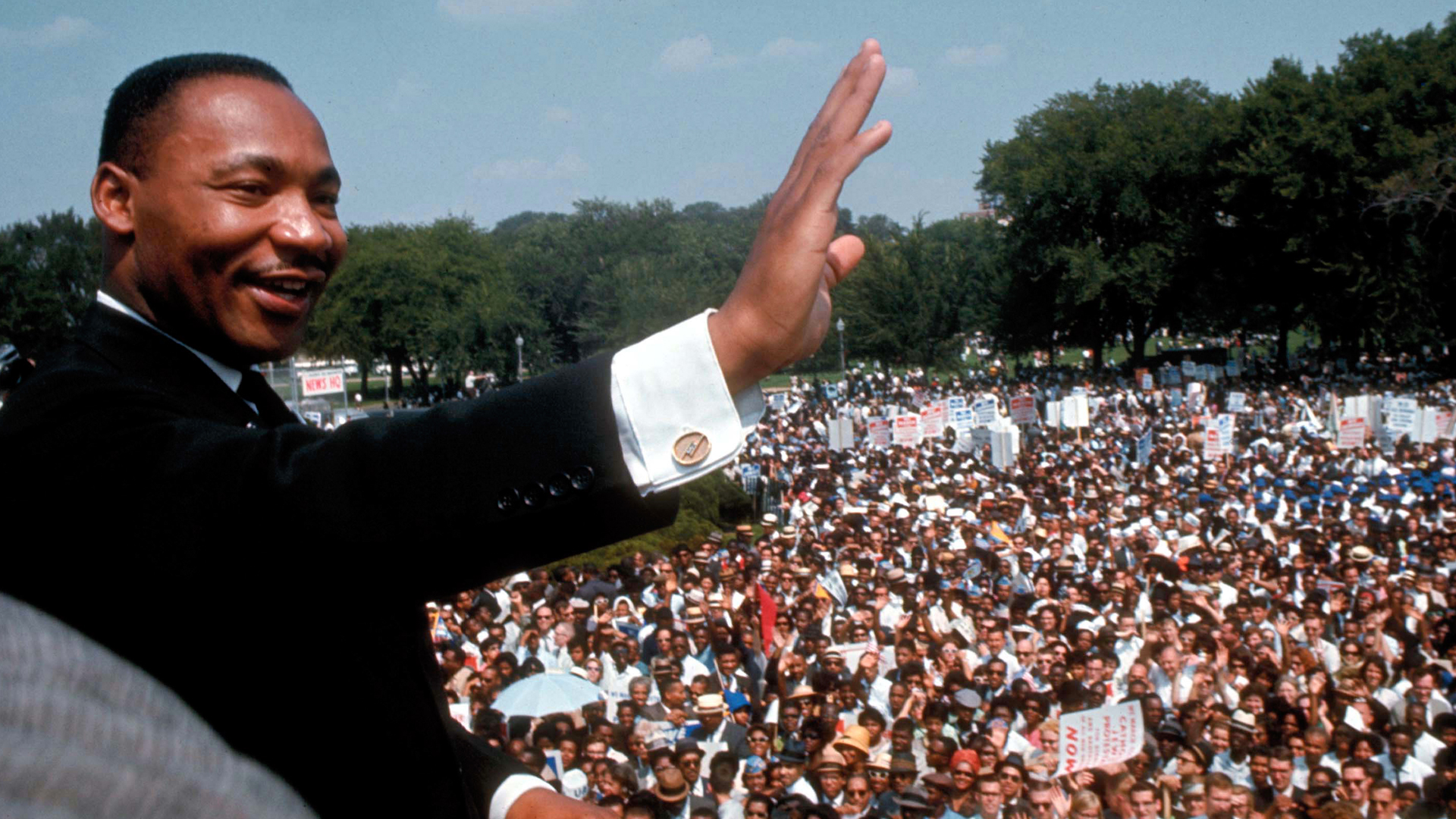
Today is a day in which we remember a dream. In a world that’s full of hard truths, fake news, and gross injustices, we need that dream more than ever. It’s a dream I like to think that humanity has always had on some level, but it took a remarkable man named Martin Luther King Jr. to put it into words that will resonate for generations to come.

In general, I don’t like talking about politics. I’ve written about sensitive issues before, but I honestly think it’s a waste of time. I don’t think it’s possible to change someone’s mind by just debating the issues. I also don’t think it’s possible to convince someone that they’re wrong through discourse alone. It’s not impossible, but it’s exceedingly difficult.

Dr. King did something remarkable during his tireless pursuit of justice and civil rights. He confronted hatred, but he didn’t fight back with it. He dared to inspire, appealing to ideals greater than politics or tradition. He presented a dream of a better world. He preached a message of hope and love. It might not have changed the minds of his opponents at the time, but it inspired generations of others to pursue that dream.

It’s a dream that’s still worth pursuing. Some may argue that we’ve regressed. I respectfully disagree. While we haven’t made as much progress as most would prefer, signs of progress are there. There’s still room for improvement, but the dream is relevant as ever. As Dr. King himself once said, “The arc of the moral universe is long, but it bends towards justice.”

If you need another reminder as to why that dream is still important, you need only listen to Dr. King’s most famous speech. It’s a speech that made the dream feel real and it’s a dream worth pursuing now and for generations to come.

Leave a comment

Filed under Current Events, human nature, political correctness, politics

Why Organized Religion Opposes Assisted Suicide (For The Wrong Reasons)

190613_vod_orig_assistedsuicide_hpmain_16x9_992

Most people under the age of 40 are too young to remember the controversy surrounding Dr. Jack Kevorkian, also known as “Dr. Death.” For a time, he was one of the most polarizing figures in the world because he made assisted suicide a major socio-political issue. From 1989 to 1998, he took part in approximately 130 assisted suicides. It’s because of him that every state has a law regarding the practice.

Before I go any further into this very sensitive, exceedingly emotional issue, I want to make one thing clear. I don’t have a strong position on assisted suicide. I’ve had a hard time arguing in either direction. On one hand, I can understand someone in chronic pain wanting to end their life. On the other, I also worry that making such a practice mundane could undermine efforts to treat debilitating conditions.

I have people in my family who have fought debilitating illnesses. Some have lost those fights. Others won out and are stronger because of it. I believe that if you had talked to them on a particularly bad day, they might have seriously considered assisted suicide as an option. It’s a heart-wrenching issue that I’m not qualified to debate.

Despite those qualifications, I believe I’m still capable of scrutinizing certain aspects of the debate. Reasonable people can make reasonable arguments for and against assisted suicide. I’ll leave that part of the debate to people smarter and more informed than me. For the bad arguments made by unreasonable people, however, I think I’m as qualified as anyone.

One of the most vocal opponents of assisted suicide come from organized religion, especially the Catholic Church. Their position is fairly clear. Suicide is an egregious sin and a crime against human dignity. Even if you’re in debilitating pain, it’s not your place to take your own life. Only the all-powerful, all-knowing deity of their faith can do that. Some go so far as to claim that suicide automatically condemns a soul to Hell.

Setting aside, for a moment, the kind of theology that would condemn suffering people to more suffering in the afterlife, it’s worth taking a step back to ask why assisted suicide is an issue for organized religion in the first place. What interest could any religion have for getting involved in such an immensely personal issue?

To answer that question, it’s also necessary to distinguish between organized religion and the personal faith that people have. Your personal faith is personal. It’s between you and your loved ones. When religions get organized, they become impersonal and subject to different influences. As demonstrated by corporations or governments, those influences aren’t always holy, to say the least.

An organized religion, be it a huge institution like the Catholic Church or just a small denomination of churches, temples, and mosques, are driven by the same incentives. They need money, adherents, labor, and support from as many followers as possible. How they go about obtaining those resources varies from faith to faith. When it comes to maintaining those assets, however, things get less varied.

I’ve noted before how religious institutions have used dogma to maintain and reinforce social inequality. Any institution, religious or not, has a strong incentive to keep its followers in a state of ignorance, poverty, and dependence. It also can’t have too many people questioning the dogma, nor can it have people with enough resources or comforts to function without its help.

With religion, those incentives are easier to codify because it can claim that their doctrine doesn’t come from law, money, or brute force. It’s ordained by a powerful deity that is on their side. People can argue against politicians, protest greedy businesses, and question long-standing traditions. They can only do so much against a powerful, invisible deity.

It’s within this context that organized religion clashes with assisted suicide. Like with inequality, assisted suicide directly undermines the manpower and resources of religious institutions. It doesn’t just take from them an adherent or a potential convert. It strikes at the foundation on which organized religion builds its influence on people.

In the same way that a business needs customers with money to spend on their goods, organized religion needs people who feel deficient, impoverished, or desperate. It’s a well-documented phenomenon. Those who are poor, hungry, and suffering tend to gravitate towards organized religion.

Sometimes, this is a good thing because there are religious organizations out there who provide food, comfort, and care. Even if doing so acts as an indirect way to recruit adherents, it still provides tangible help to people who need it. That’s an aspect of organized religion that deserves respect. When it comes to suffering and dying, however, the practices aren’t nearly as commendable.

When people are dealing with a suffering loved one, it’s incredible difficult. It takes an emotional toll on both the individual and their family. It’s heart-breaking on so many levels. It’s also an unscrupulous opportunity for organized religion.

While they won’t outright prey on someone else’s suffering, they’ll often act as a source of relief and comfort. They’ll try to act as a shoulder to cry on, telling both the person suffering and their families everything they want to hear. It earns them points from both them and the larger community. They can claim they’re helping a suffering family, but without actually helping them.

They stop short of paying for an expensive, life-saving procedure. They’ll also stop short of paying medical bills that might have piled up. They’ll sometimes promise to promote scientific research to treat whatever is causing so much pain, but in terms of over-arching incentives, that makes sense in the context that any organization wants to keep its adherents alive.

When assisted suicide enters the equation, the religious organizations miss out on that opportunity. Instead of comfort from a priest, mullah, rabbi, or monk, those suffering can get relief from a simple medical procedure. Their family can also enjoy a sense of closure in that their loved one isn’t suffering anymore. No religious influence is necessary here.

For some, that’s not just a problem. That’s a threat. Anything that subverts the need for the religious organization undermines its ability to maintain and grow its influence. Assisted suicide does all that and then some. However, it goes beyond simply not having the chance to endear themselves to sick people and their families.

From their perspective, assisted suicide sets a dangerous precedent. If too many poor, desperate, suffering people start killing themselves to escape, then they lose one of their best sources of new adherents. It’s the same reason why they discourage abortion and contraception, hoping that adherents produce more adherents for the organization. It all comes back to maintaining and growing the institution.

That usually isn’t the stated purpose. Almost every major religion that discourages assisted suicide will argue from a moral perspective. However, the indirect effect is certainly there. That’s not to say that the heads of these religious organizations secretly meet in dark rooms and craft their dogma with these factors in mind. It’s simply a byproduct of large groups of people responding to incentives.

Even if the implications of opposing assisted suicide are indirect, it’s still not a good reason to oppose the practice. It requires that people overlook the suffering and pain of others while convincing them that they don’t have the right to make important choices in their lives. That effort only leads to more suffering and that can never be justified, no matter how much dogma is applied.

As always, I want to make clear that I’m not calling all religious organizations malicious for opposing assisted suicide. I don’t believe that those within these organizations are out to cause more suffering. Most believe, in their heart of hearts, that they’re doing the right thing. The problem is that dogma, doctrine, and powerful incentives can overshadow those efforts.

There are good, legitimate reasons to oppose assisted suicide. Unfortunately, organized religion rarely relies on those reasons. On top of that, they have one too many incentives not to focus on those reasons.

2 Comments

Filed under health, philosophy, politics, psychology, religion

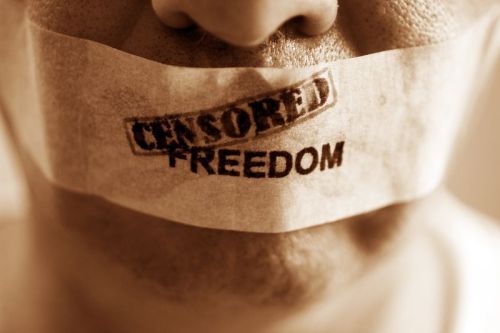
Why We Should Stop Bleeping, Blurring, And Censoring

free-speech-censored-min

Over the course of history, certain tools, traditions, and words have become obsolete. It’s just part of the ever-changing nature of society. It’s why we don’t use VCRs or cassette tapes anymore. It’s also why we don’t use words like jargogle, corrade, and kench. Those are all real words that used to be common in the English language. Now, they’re relics of history.

Given the chaotic, yet evolving nature of language, why do we still censor certain words in the media? I don’t ask that question as someone who thinks Big Bird should start dropping F-bombs on Sesame Street. I’m genuinely curious as to how we can still justify bleeping certain words when they’re said on TV or over the radio.

I know the history of censorship in mass media in the United States. I know there are laws like the Communications Decency Act and famous Supreme Court cases like FCC v. Pacifica Foundation. Many of these laws have a basis in protecting the eyes and ears of children from hearing or seeing something objectionable.

At a time when the media had only a handful of accessible channels, the might have made sense to some extent. I say might because I certainly don’t agree with bleeping or blurring anything. Hiding something, be it profanity or female nipples, doesn’t make it less real. If anything, it gives it a greater allure, but that’s beside the point.

We live in different times now. That FCC v. Pacifica Foundation decision was rendered in 1978, a time before the internet, smartphones, and comments sections. Today, anyone with a cell phone and an internet connection can look up any amount of obscene, indecent, profane content, plenty of which is accessible to children for free and without a credit card number.

Kids know what these words are. Chances are, they know what female nipples look like too. However, TV shows and radio stations still blur and bleep these things as though they’re as damaging as a pack of cigarettes. I know the law is often slow to catch up to trends in technology, but at this point, bleeping or blurring anything is more a joke than a legal mandate.

That’s easy for me to say as a legal adult with no kids, but I haven’t forgotten what it was like to be a kid. I remember hearing these dirty words and seeing these dirty images. I knew what they meant. My parents didn’t hide that from me. They didn’t like me saying those words or talking about those topics all the time, but they told me the truth and I understood it.

Kids may be impressionable, but they’re not stupid. Most kids are smart enough to understand that words carry certain meaning and the human body is composed of many parts, some more visually appealing than others. Censoring it doesn’t change that. If anything, it sends the message that everyone thinks they’re too stupid or weak to handle these concepts.

Aside from insulting kids as a whole, it also operates under the assumption that just hearing certain words or seeing certain images somehow damage them, as though human beings are ever that simplistic. While there is some research on this topic, the conclusions are fairly limited. The only common thread seems to be that, when it comes to dirty words, context matters.

There are times when we, as human beings, need to verbalize our emotions. When we’re angry, in pain, or upset, we’re going to want to communicate that. Profanity is just a byproduct of that. I know that when I stub my toe, I don’t stop to censor myself. I drop as much F-bombs as I have to and the world remains intact, even when there are children nearby.

That doesn’t mean I want kids to cuss like me all the time. Again, there is a context. There’s a time and a place for that sort of language. That’s an important lesson to teach someone at any age. That way, they’ll know not to sound like an asshole at a job interview or while on a date. Bleeping words doesn’t teach that lesson. It just gives these words more power than they deserve.

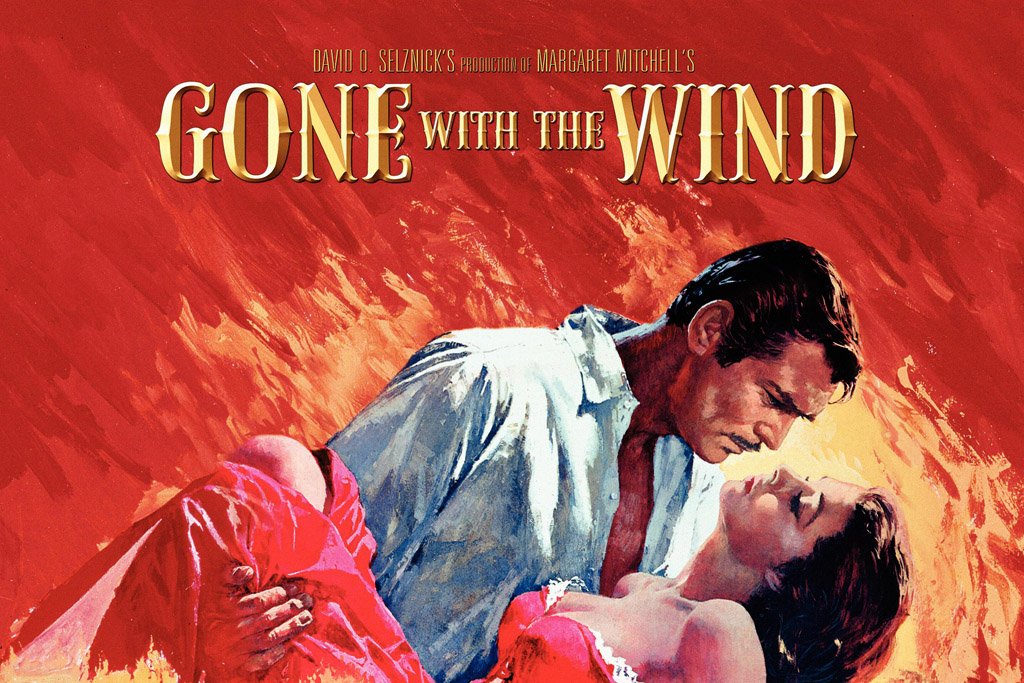
Standards are always changing. There was a time when Clark Gable saying “damn” in “Gone With The Wind” was considered shocking. When I was a kid, I certainly got plenty of scorn when I said words like that, even while not in public. However, hearing them on TV and movies didn’t change my understanding of these words. It just sounded stupid.

This used to be considered mature.

These days, it’s not uncommon to hear someone say “damn” in a TV show or song. It doesn’t get bleeped or censored. More and more, words like “shit” aren’t being bleeped either. Rick Sanchez says it at least once an episode on “Rick and Morty.” There was even an episode of “South Park” that made saying “shit” on a TV show a big deal.

In terms of knowing when something has become obsolete to the point of absurdity, that’s as clear a sign as any. The same goes for blurring certain body parts. The widespread availability and accessibility of internet porn has removed all sense of mystery from the imagery of breasts, butts, and genitalia. Kids today no longer need to find someone’s porn stash to see these parts in all their glory. They just need an internet connection.

Now, that’s not to say I’m okay with every prime-time network show depicting the same level of profanity, sex, and violence as an episode of “Game of Thrones.” Like anything, there can be too much of it and if overdone, even the most obscene or indecent concepts lose all meaning and are devoid of impact.

There are also some people who are genuinely uncomfortable using certain words and seeing certain images. That’s perfectly fine. That’s their choice. Since there are plenty of options in terms of channels, websites, and radio stations, they don’t have to listen to or see this kind of content. Even if they do, the world doesn’t end because they’re temporarily distressed.

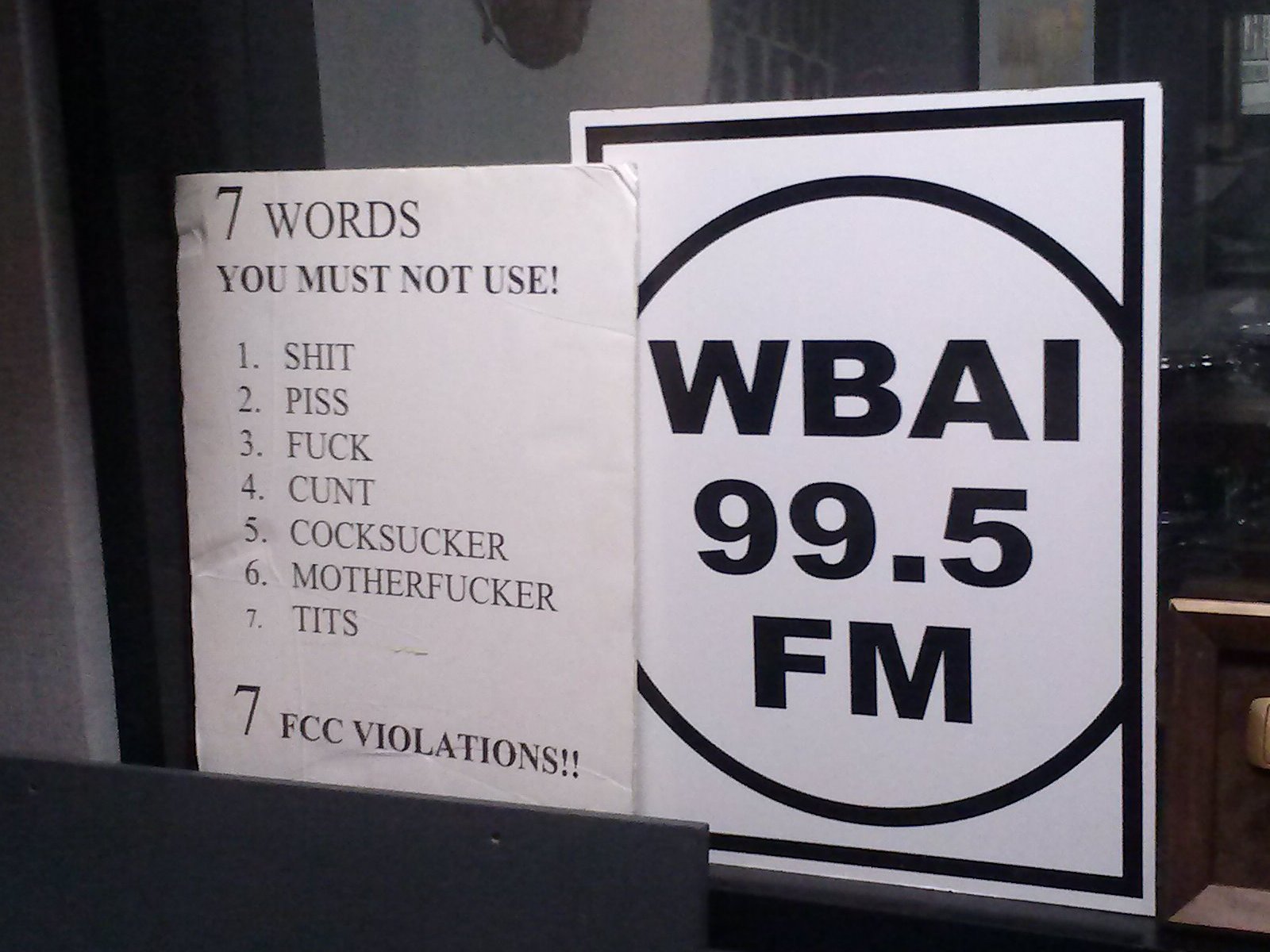
When the late, great George Carlin famously listed the infamous seven dirty words that became the basis of a Supreme Court case, there was a context and a situation at the time that made this kind of censorship seem reasonable. That context and those times are long gone. Carlin himself understood that. When it came to deconstructing the absurdities of language, he said it best when he made this observation.

These words have no power. We give them this power by refusing to be free and easy with them. We give them great power over us. They really, in themselves, have no power. It’s the thrust of the sentence that makes them either good or bad.


1 Comment

Filed under censorship, Current Events, media issues, political correctness, sex in media, sex in society, technology, television

How The Internet Has Weakened (But Not Destroyed) Organized Religion

pic

The current state of organized religion is ripe with conflict and mixed messages. On one hand, religious affiliation has significantly declined over the past 30 years. According to a 2018 survey from Eastern Illinois University, around 23 percent of the US population identifies as having “no religion.” For comparison, that number was only 5 percent in 1972.

In other industrialized countries, the decline is even more pronounced. Throughout Europe, more and more people are drifting away from organized religion. That’s especially true of young people, who are one of the least religious demographics in modern history. In terms of the bigger picture, organized religion is facing a generational time bomb that’s just starting to go off.

At the same time, however, religion still exercises an absurd amount of political power. Religious groups, particularly those who align themselves with conservative politics, have enormous influence. Its platform is tightly woven with that of a major political party. Many people in positions of power identify as religious. Many more rely on a religious base to get elected.

It’s a strange trend that seems counter-intuitive. How can something be weakening due to declining adherents, but still wield so much power? In an age where the egregious crimes of religious institutions have been exposed and more people are educated on the many absurdities of various holy texts, it feels as though organized religion should be on its death bed.

While there are many factors behind this situation, I believe that one particular factor is more influential than most. It also happens to be the same factor that has done the most to weaken religion while helping to sustain its political and social influence. It’s a force that has already radically changed everyone’s life, regardless of their affiliation.

That force is the internet and its impact on religion cannot be overstated.

I’m old enough to remember what it was like to talk about religion in the pre-internet days. You listened to your parents, relatives, priests, mullahs, rabbis, and monks. They told you the history and tenants of their religion. You might ask questions. You might not understand the philosophy behind it. No matter how curious or skeptical you were, you could only do so much to question it.

Most of the time, you just had to trust your elders that they knew what they were talking about. You also had to trust that they wouldn’t lie to you, which is often a risky bet. If you were really motivated, you might go to a library and do some research. Even then, you’d have an uphill battle a head of you, given the many complexities behind religion and why people believe in it.

These days, it’s exceedingly simple to fact check an absurd religious claim. If someone were to claim that a 900-year-old man built a 300-foot wooden boat that housed two of every kind of animal for 40 days during a global flood, you wouldn’t have to spend years in college to learn why that’s absurd. You could just pull out your phone, do a few simple searches, and find out why this claim is completely wrong.

Even a kid who has only taken a basic science class can look up any of the stories their priest, mullah, rabbi, or monk tell them to find out whether they’re based on real history or embellished folklore. Religious institutions, parents, and schools can fight to control the information their young people receive. Many organizations do engage in activities that are outright indoctrination.

However, as demographic trends show, the effectiveness of those efforts only go so far. The information about the absurdities, inconsistencies, lies, and agendas is still out there. It’s widely available to anyone who can access a smartphone or a computer. There’s only so much anyone can do to prevent someone from accessing that information.

As a result, organized religion will never have the same sway it once did in centuries past. No matter how much conservative reactionaries complain, it’s impossible to go back. The combination of modern education and accessible information ensures that major religious institutions will never wield the power they once did.

Given the complexities of modern societies and the geopolitics surrounding it, it’s just not practical for a centralized religious institution to exist. The Vatican can still make statements about morality, ethics, and spiritual matters. It just has no means of enforcing them, as evidenced by how little typical Catholics follow their edicts.

Even without this power, the same internet that has permanently weakened religion is also the same thing that sustains some of its considerable influence. In fact, the internet might act as a catalyst that can turn certain individuals from nominal adherents to ardent zealots.

Think back to the young people sitting in churches, mosques, synagogues, or temples. While some might casually look up the religious claims out of curiosities, others might go out of their way to find information that confirms these claims. Even if they’re factually wrong, they’ll look for any bit of information that they can twist to make it seem true and cling to it.

This is why creationism still persists, despite extensive resources that thoroughly debunk it. If someone is really determined to find information that affirms their beliefs, they’ll find it on the internet the same way people find cat videos and knife-wielding crabs. There will even be unscrupulous people to exploit them, including those who are convicted felons.

Like it or not, there are people who sincerely want to believe their preferred religion and will cling to anything that strengthens that belief. Given the open nature of the internet, shaped by the whims of users rather than objective truth, it’s distressingly easy for someone to customize what kind of information they receive.

If someone only wants news and memes about how their religion is true while everyone else is doomed to eternal torture in Hell, then that’s what they’ll get. They can get their news and information from exceedingly bias sources while brushing off others as fake news. There’s nothing from stopping anyone from using the internet in such a manner.

We already see how this has divided people along political lines in recent years. I would argue that this has been going on with religion for even longer. The rise of the religious right and the prevalence of religious media has done plenty to tighten their grasp on ardent believers. While less people may identify as religious, those who do tend to be more dogmatic about it.

Since those kinds of believers can be mobilized and pandered to, they’re a more unified political force. As such, appealing to them means gaining power. That power may be tenuous and limited, but it’s still viable power that plenty of politicians exploit, sometimes to an egregious extent.

In a sense, the internet has made it easy for both the extreme zealots and the inherently skeptical. Those who might have identified as religious out of tradition in the past are more comfortable identifying themselves as non-religious today. It also helps there’s not as much stigma to being a non-believer as there used to be.

At the same time, those who were devout before can become outright zealots if they consume enough extreme content. In fact, their declining numbers in the general population might give them more reasons to become zealous. History has shown that small bands of religious zealots can do a lot of damage. The internet might hinder their ability to gain adherents, but it might also make them more desperate.

It’s a scary possibility, but one I tend to believe is remote. While I might not be a fan of organized religion, I still have many friends and family members who are religious and wonderful human beings. The internet hasn’t changed that. In the long run, I believe that basic humanity that binds us all will win out in the long run. The internet won’t always help, but it’s certainly a valuable tool.

2 Comments

Filed under extremism, human nature, philosophy, politics, religion

John Oliver, Sex Dolls, And The (Unwarranted) Shaming Of Lonely Men

6732

There’s a general rule in comedy with respect to insults. If you’re going to demean, denigrate, or make fun of a particular person or group, you don’t want to punch down. Granted, you can do it. You can even get a few laughs out of it if you do it well and are exceptionally funny. However, in the grand scheme of things, you’re still an asshole.

It’s the main reason why comedians, be they stand-up comics or talk show hosts, generally direct their insults at the rich, powerful, and privileged. There’s a general understanding that if you’re doing well in this chaotic game of life, either through luck or talent, you can afford to take a few insults. At the end of the day, you can still go home and cry into a pile of money, fame, and affluence.

When you insult a group that has none of those things in any abundance, it’s usually not something people respect, even if they laugh. It’s why even great comedians like George Carlin had to be very careful and exceptionally skilled when he joked about rape.

We miss you, George. We miss you SO much.

Unfortunately, not everyone can be as funny or talented as George Carlin. Sometimes, insult comedy hits an undeserving target. It tends to reveal something about the comedian delivering the insult and where society is, in terms of sympathies. It’s often subtle, but the subtext is there and it has larger implications.

That brings me to John Oliver, the nerdy smart-ass British comedian who owes 95 percent of his fame to John Stewart. His show, “Last Week Tonight,” has won multiple Emmy awards and has garnered substantial praise for its colorful approach to tackling major issues, from the abortion debate to annoying robocalls to the flaws in standardized testing.

While I don’t agree with Mr. Oliver’s politics all the time or his approach to tackling certain issues, I consider myself a fan of his show. Compared to other satirical comedy shows, he tends to strike just the right balance between quality comedy and tackling serious issues.

However, he recently took a comedic jab that deviated from his usual style and not in a good way. It occurred during his episode that focused on China’s controversial One Child Policy. It’s an issue that has been subject to plenty of controversy for years and I think Mr. Oliver was right to talk about it.

One of the major consequences of this policy, which Mr. Oliver rightly pointed out, was how it led to a massive gender population imbalance. Due to a historic preference for sons, there are millions more men than women in China. The disparity is so great that it has caused major social upheavals.

While discussing some of those upheavals, the issue of sex dolls came up. In a country where there are so many lonely men, it makes sense that they would seek some form of outlet and it helps that the market of sex dolls is growing. This is where Mr. Oliver did a little punching down and, unlike his jabs at New Zealand, this didn’t have the same impact. See for yourself in this clip.

Take a moment to consider what he’s joking about here. There are millions of men in China who, through no fault of their own, are likely doomed to a life of loneliness. It’s not because they’re bad men. They’re not creepy, cruel, or misogynistic. They’re just at the mercy of math and demographics. There simply aren’t enough women in their country.

For these men, the old saying that there’s plenty of fish in the sea is an outright lie. Their options are limited and Mr. Oliver is making light of that. He essentially claims that men who use sex dolls are somehow even more pathetic and destined for more loneliness. He makes that claim as someone who is married, has a child, and doesn’t have to deal with those prospects.

It’s not just bad comedy. It’s hypocritical. Earlier in that same clip, he showed sympathy and understanding to a Chinese woman who was forced to have an abortion against her will. He’s shown similar sympathy to people in other situations, from women dealing with restrictive abortion laws to prisoners who had been screwed over by an unfair justice system.

Why would he show no sympathy for these lonely men?

Moreover, why would he make a joke about it?

To some extent, it’s not all on him. There is an egregious double standard when it comes to men who use sex toys. A woman can walk into a sex shop, buy a vibrator, and talk about using it without too much stigma. Sure, there will be a few repressive, sex-negative religious zealots who will complain about anything that gives anyone unsanctioned pleasure, but most people don’t take them seriously.

For men, however, there’s a taboo surrounding the use of sex toys in any capacity. Some of that comes from men more than women. There’s this not-so-subtle assumption that a man who needs a sex toy is somehow less manly. Any man who has to resort to one must be somehow deficient. It can’t just be that he’s lonely or wants to use new tools to please his lover. That would make too much sense.

For the men in China, and other areas where there’s a huge gender disparity, the situation is even worse. These are men who are facing both loneliness and sexual frustration. There’s more than a little evidence that this is not healthy for them on any level. That’s not to say that sex dolls or sex toys will help fill that void, but it will give them an outlet, just as a vibrator gives a lonely woman an outlet.

Unlike a lonely woman, though, these men can’t expect much sympathy. As Mr. Oliver demonstrates, they can expect plenty of shame and stigma. It doesn’t matter that they can’t do anything about their situation. They’re victims of circumstance, demographics, and basic math. Adding stigma and taboo to the mix is akin to kicking them in the balls on the worst day of their lives.

I won’t say that Mr. Oliver should apologize for his remark. He’s a comedian. He’s a citizen in a free country. He can say what he wants. However, the fact that he can joke about lonely men and still get a laugh says a lot about the current attitudes towards lonely men, in general.

We know they’re suffering. We know there’s not much they can do about it, especially in places like China. While we’ll give plenty of sympathy to the lonely women who resort to using sex toys, we’ll stick to shaming and stigmatizing the men who dare to do the same. Then, we’ll pretend to be surprised when they get angry and resentful.

Is that fair? No, it isn’t.

Is that funny? No, I argue that it’s not, especially with the way Mr. Oliver went about it.

He’s no George Carlin. He’s no John Stewart, either. In this particular case, he’s just an asshole.

4 Comments

Filed under Current Events, gender issues, human nature, men's issues, outrage culture, psychology, sex in society, sex robots, sexuality, women's issues