Tag Archives: human psychology

Neuralink: How Brain Enhancement Will Make Us Sexier (And More Loving)

https://i0.wp.com/images.bwog.com/wp-content/uploads/2013/05/shutterstock_128387714.jpg

At the beginning of every year, millions people stand in front of the mirror, look at all the weight they’ve gained since Christmas, and promise to themselves that they’ll eat healthier and exercise more for the coming year. It’s an entirely noble promise, seeking greater health. It’s also a promise that most are destined to break.

Any effort to better ourselves, no matter how healthy or noble, is an uphill battle. That’s why the vast majority of diets do not work on a long-term basis. You can lose a little weight here and there, but it almost always comes back. Then, you hate yourself a little more, look for excuses, and go back to drowning your sorrows in a tub of ice cream.

However, it’s not entirely your fault that you broke that promise to yourself at the beginning of the year. It’s not even the fault of bullying, the media, or even food companies that insist on making unhealthy food that tastes too damn good. No, it’s the fault of one organ in your body. No, I’m not talking about your stomach either. It’s your brain.

Yes, your brain is the reason why you can’t keep your promises and stay health. Your brain is the reason why you can’t keep the weight off when you diet. Your brain is the reason why your body is shackled to unhealthy habits that keep our bodies flooded with greasy, sugary food and on the couch.

Naturally, this does affect our sex lives, our love lives, and everything in between. When we’re unhealthy, it makes it damn hard to get in the mood, sustain the mood, and make that mood meaningful. How can we when we’re craving sugar cookies, beer, and Netflix? Again, it’s our brains. It’s the reason why we can’t live healthier, sexier lives.

That brings me back to Neuralink. Yes, I’m not quite ready to shut up about it yet. There’s just so much to talk about and so many implications, some sexier than others. I’ve been talking largely about the big picture and the pragmatics of brain implants and brain enhancement so far. Now, I’d like to get to the sexy stuff.

Last year, I talked a bit about how I essentially shamed myself into adopting a healthier lifestyle. I went from a cookie-eating, soda-drinking couch potato to a guy who exercises almost every day and tries not to gorge on donuts every day. It shows in my health and my sex appeal. I can take my shirt off at the beach and be fairly certain that the women who see me won’t be disgusted.

That process of getting healthier was hard. My brain was my biggest enemy in that it fought me every step of the way. That’s because the human brain isn’t necessarily wired for a healthy lifestyle in an era where there are no famines and no hungry bears trying to eat us. It’s wired to basically do what makes it and the body happy.

Unfortunately, that often means eating copious amounts of the fattening sugar that used to be such a rarity in the natural world before modern sugar processing. Again, you can blame big corporations as much as the kale-eating hippies of the world, but the issue isn’t capitalism. It’s our faulty brain wiring that hasn’t been updated in 200,000 years.

Our brain is wired to value sugary, tasty foods that give us a quick dopamine rush. It’s also wired to maintain existing habits and mentalities over creating new ones because change is a stressful process. Being the crude piece of hardware that it is, the brain generally tries to avoid stress.

Naturally, this unhealthy brain wiring affects our sex lives as well. While we are a very social species, our brain often struggles between selfish and affectionate tendencies. That means that once the brain gets its dopamine rush from the sex and love we make, it’s generally pretty selfish about it.

That’s why we have men who will do a few casual humps, blow their load, and then look for an excuse to turn on Sportscenter. That’s why we have women who will just lie there, bark orders, and expect their partner to do all the work. That’s why we find ourselves in relationships where two lovers just aren’t on the same page, get bored with each other, and look for the next dopamine rush, whether it’s the pool guy or the babysitter.

It’s a sad and unpleasant byproduct of a brain that has been stuck on the same settings since the stone age and is at the mercy of crude, unguided chemistry. There are those who can overcome it to lose a lot of weight and form marriages that last more than half-a-century. Unfortunately, that’s the exception and not the norm.

That’s where Neuralink comes in. It’s doing what no diet pill, self-help book, or talk show host ever dared to do. It’s getting right to the root of these problems, which is in our brains. Tweak the wiring and suddenly, every weight loss guru is out of a job.

How would that work? Well, keep in mind that Neuralink‘s stated goal is to integrate computer technology directly into our brains to improve various brain functions. Well, that improvement part isn’t just limited to basic math and keeping up with the latest season of Scandal.

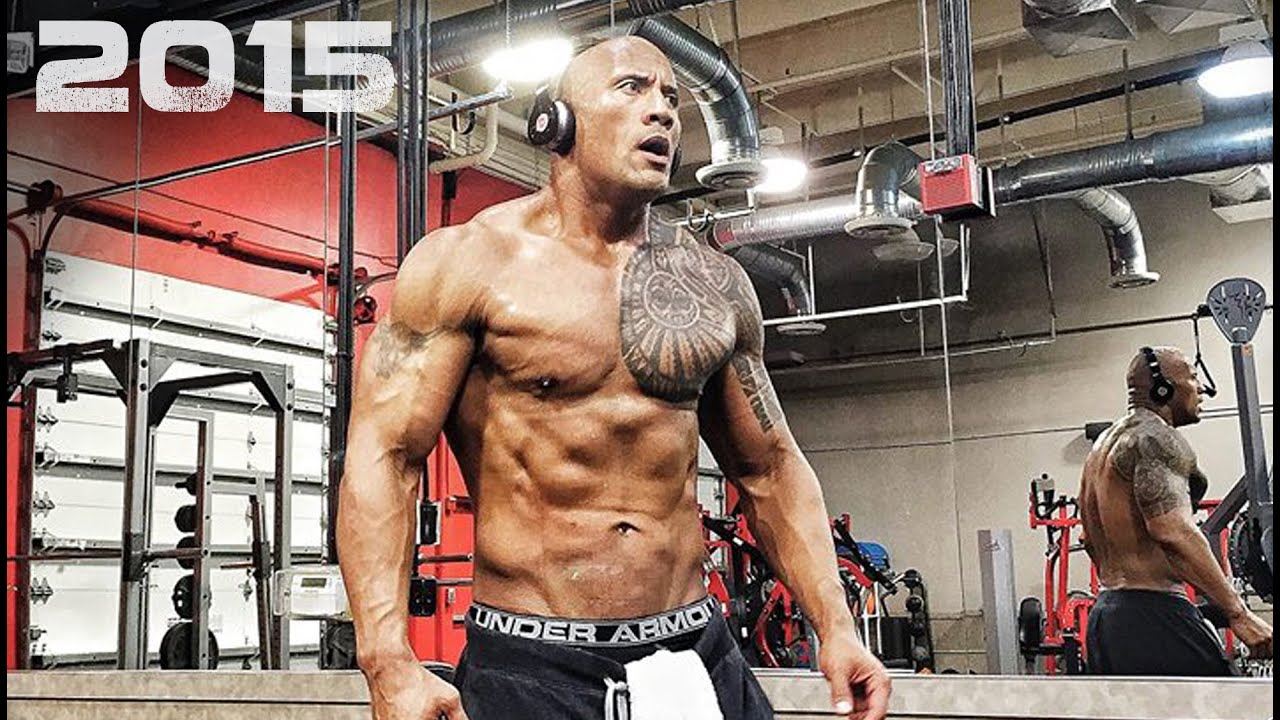
Picture the brain of someone who is insanely fit, like the Rock or Kate Hudson. How is their brain wired? How do they get themselves to do what they do? Well, we already know how to scan brains. It wouldn’t be easy to decipher the particulars of that wiring, but it’s not impossible. A neural implant would simply mimic that wiring, setting our brains up so that we have the right mindset for being healthy.

It goes even farther than that though. A neural implant means we’re not restricted to the brain’s traditional limits. That means it could, in theory, wire our brain in a way that makes us less hungry. We would no longer succumb to that powerful impulse to buy a dozen donuts every time we walk by a Krispe Kreme.

Beyond mitigating hunger, an implant could also wire our brains in a way that makes us feel an extra rush of dopamine when we exercise. Remember that so-called “coregasm” I mentioned when I talked about different kinds of orgasms? Well what if doing 100 sit-ups or 100 push ups gave us the kind of orgasm usually reserved for three-ways with cheerleaders and Hugh Jackman? You’d become a fitness junkie overnight.

The same extends to food. One of the reasons why we can’t stop eating all the unhealthy shit we eat is because it tastes so damn good. It tastes good because our brains make us believe it tastes good. Well what if a neural implant could make it so a bowl of kale tastes like a slice of chocolate cake dipped in bacon grease? Suddenly, eating healthy isn’t just practical. It’s a goddamn party.

So a neural implant can wire your brain in a way that makes you eat better, exercise more, and feel healthier. That’s all well and good, but looks alone aren’t going to make you sexier. You can look like an Olympic athlete, but if you’re an amateur once the panties come off, then you might as well be Al Bundy.

A neural implant with just the right settings can change that. Ladies, have you ever had a man just hump you for a few minutes, blow his load, and then roll over and fall asleep before you even had a chance to get wet? Well, it’s not entirely his fault. He’s still an inconsiderate asshole, but there is a biological reason for it.

In the brain, there’s this chemical called prolactin. It has a lot of complex impacts on the brain, but it’s what keeps a man from going more than a few rounds between the sheets. When his brain is full of this chemical, his soldier will not be saluting you for a while. Add the shot of endorphins that comes with a typical male orgasm and he might as well have a tranquilizer dart in his head.

Now tweak that brain chemistry a bit. Make it so a man’s brain isn’t wired so he’s “one and done,” so to speak. Ladies, you now have a lover who can hang in there for multiple rounds, keep the mood sexy, and ensure you that special trip to O-Town you crave. That’s what a neural implant could do.

It’s not just for the men either. Guys, have you ever had one of those ladies who, despite your best efforts, can’t seem to make it all the way to O-Town? Well, there are any number of reasons why that could be and not all of them are your fault. Many, in fact, are in the woman’s brain.

Using the same approach, adjusting the wiring for female settings, a neural implant could install the mental equivalent of an express lane to O-Town. That means that men can feel like Brad Pitt on crack when they’re making love, sharing multiple round-trip vacations to that special place of sensual bliss. How much better would your sex life be if your brains were wired like that?

Go even farther than that. Go beyond having the kind of hot sex that sets bed sheets ablaze. Get a little romantic and suddenly, brain implants become the most romantic thing that doesn’t involve diamonds and Hugh Grant.

It’s true. Love also has a powerful basis in the brain. There even this chemical called Oxytocin, also known as the “cuddle hormone.” It’s basically your brain’s way of creating bonds and enhancing intimacy. It’s what helps mothers bond with children, husbands bond with wives, and children with dolls. It is basically the chocolate frosting of brain chemicals.

Normally, hormones like oxytocin are secreted erratically and chaotically in the brain. It’ll emerge whether you’re making love to your spouse on your anniversary or banging your tennis instructor. Nature is just too crude and too immature to wire the brain in a way that really makes those lasting bonds stick.

Add a neural implant to the mix and suddenly, you can channel oxytocin like a biological smart bomb. You want to be more intimate with your partner? Well, you don’t need to go on vacation or buy an expensive diamond. Just adjust the settings of your implant and just like that, you’ve got more love in your heart than every Barry White song ever made.

Are you excited/horny yet about Neuralink‘s full potential? Does the idea of getting a neural implant now feel like the equivalent of a VIP pass to the Playboy Mansion? I think I’ve done enough to pain a very rosy, very sexy picture of the future. Now there will be risks, as there are with all new technologies, but I honestly can’t think of a risk that’s more worth it.

If we have a way to fix our inherently flawed brains, then we won’t just be healthier and happier. We’ll be able to love, make love, and share love on a level that no human has ever experienced before. Sure, it’s still a ways off, but with Elon Musk at the helm and Neuralink providing the platform, that future is within our grasp. I say it’s worth embracing.

16 Comments

Filed under Jack Fisher's Insights

Neuralink: How A Brain Enhancement Will Make Us Smarter (And More Romantic)

https://i0.wp.com/cdn-media-2.lifehack.org/wp-content/files/2012/07/shutterstock_74158666.jpg

It’s a sad/annoying fact of life. Most of us don’t have photographic memories. Unfortunately, most of our public schools and every major testing system they use works under the assumption that we are capable of retaining vast amounts of semi-trivial information and spitting it out on demand. Then, the people who run these schools are shocked when students complain.

Think back to the class you hated most in school. How much memorization did that class require? Unless you have a really good, semi-photographic memory, chances are you were expected to be half-machine to succeed. You had to spend no less than two hours of your day with flash cards, forcing your brain remember things it doesn’t want to remember. In the grand scheme of things, how productive was that time?

For me, the class I hated most was my Spanish class. I had one of those teachers that basically expected us to memorize a Spanish dictionary. Unless you actually grew up in Spain, it was about as pleasant as getting a rectal exam with boxing glove. Needless to say, I don’t speak a lick of Spanish anymore.

https://i0.wp.com/guardianlv.com/wp-content/uploads/2014/03/Forgetful-It-Could-Be-Genetic.jpg

Now I do have a fairly good memory. Ask me anything about a particular comic book character and chances are, I’ll tell you everything about that character, who they’ve hooked up with, and how many times they’ve been killed off and brought back to life. Ask me to translate a paragraph in Spanish on the spot and you’re bound to be disappointed.

This spotty memory that plagues high school students, adults, and people who just can’t keep track of their keys is an unavoidable part of modern life. It can even hinder our love lives. How many men have been denied some tender lovemaking because they forgot their lover’s anniversary, birthday, or favorite pizza topping? It’s downright tragic.

These limitations aren’t just the byproduct of stupidity. There’s a very good reason why we all don’t have photographic memories. There was no evolutionary need for them until very recently. Our bodies and brains evolved to prioritize survival, reproduction, social cohesion, and spacial awareness. The fact there are over 7 billion of us on this planet now shows that those priorities were not misplaced.

https://thebreakthrough.org/images/main_image/green_city.jpg

However, the world is getting more complicated. Society is becoming more complex than our caveman brains can make sense of. That’s why we have entire populations that are still woefully uneducated, which effectively guarantees that they will be left behind and impoverished.

It’s a sad situation because education is difficult when you’re dealing with caveman brains. It takes considerable resources to teach people and those resources are often finite, even in the era of the internet. Even resources like Khan Academy can only go so far.

So how do we fix this situation? A society that has a large population of impoverished, uneducated people is not a stable one, as the 2016 Presidential Election proved. Well, a solution is already in the works and it has even larger implications for our personal lives.

https://i0.wp.com/www.telegraph.co.uk/content/dam/men/2016/08/19/95575366_A_Donald_Trump_supporter_flexes_his_muscles_with_the_words_Build_The_Wall_written_on_them_a-large_trans_NvBQzQNjv4BqqVzuuqpFlyLIwiB6NTmJwe-AwJq9UWZxn9PUEcU-59k.jpg

Enter Neuralink again. Yes, I know I dedicated an entire article explaining why it’s the most important venture in the history of the human race. However, there’s no way I could explore the implications in just a single post. There are so many aspects about this venture with amazing possibilities that I need multiple posts to do it justice.

In case you’ve forgotten, which is entirely appropriate given the context of this post, Neuralink is a new company by tech mogul/Tony Stark wannabe, Elon Musk. The goal of the company is to create a line of neural implants that will go directly into peoples’ brains and fix or enhance their function. It’s a market that doesn’t exist yet, but one that is as untapped as a diamond mine on Mars.

Neural implants are not entirely new, but much like the electric car before Musk, they’re not well-developed. At the moment, most of the research is going into creating implants for people whose brain has suffered damage from an injury or stroke.

That’s an entirely noble use of technology, but let’s face it. We humans, especially billionaire businessmen like Musk, aren’t satisfied with just healing the sick. We also want to enhance the healthy. That’s where the potential of neural implants gets really exciting and even a little sexy.

https://i0.wp.com/simone-photography.com/wp-content/uploads/2015/06/Naughty_3_forweb.jpg

Think back to that class you hated so much in high school. Now imagine, if you can, that you just got the latest implant from Neuralink. The implant basically acts as an upgrade to your memory, taking it from caveman mode to one that’s actually useful in the 21st century.

That doesn’t just mean you now have a photographic memory. It also means that your brain can make connections and process concepts faster. It’s one thing to just spit out a Spanish translation of a passage from Shakespeare. To actually comprehend it and be able to analyze it faster is where the real benefits set in.

Suddenly, you don’t need expensive schooling or teachers with PHDs from Ivy League schools to effectively learn a concept. You can read a certain book or watch a few videos from Khan Academy and just like that, you know it. You can learn six grade levels worth of math in just under a year. Sure, you’ll probably be an annoying smart-ass, but you’ll have a wholly valid reason.

https://quotecatalog.imgix.net/posts/BWzHyBCI3Ah1.jpg

Economically speaking, it would be a diamond mine on top a gold mine on top an oil well. Even if the neural implant costs around $10,000, that’s still less than it cost to educate one American student for a single year. Just like that, education doesn’t just get cheaper. It becomes as easy and efficient as watching a few YouTube videos, something our current generation already is very good at.

With Neuralink, education becomes so much easier and so much more efficient because now it doesn’t have to circumvent our exceedingly flawed caveman brains that only want to survive, reproduce, and avoid hungry bears. Beyond the education, there’s also an even greater implications.

Just being able to memorize facts, equations, and Taylor Swift songs is all well and good, but there are other forms of intelligence that a neural implant could affect. Our brains are also the mechanism through which we process emotions. That’s a skill that schools struggle to teach even more than calculus. Emotional intelligence is a thing and it plays a huge role in how we get along as a society.

https://i0.wp.com/youmatter.suicidepreventionlifeline.org/wp-content/uploads/2015/07/bigstock-Woman-hiding-under-the-happy-m-110513.jpg

Think back to a time when someone had an emotional breakdown in a very public place. If you’ve been around teenagers in any capacity, chances are you’ve seen more than one. What you saw was a clunky human brain that struggled to process a vast array of emotions. With a neural implant, those kinds of breakdowns become less likely.

So what happens when you combine emotional intelligence with a robust education? That’s where the erotica/romance writer in me gets really excited because that’s a perfect foundation on which to build love. That’s not some coy way to add sex appeal to this exciting technology. That’s a real impact and one with plenty of inherent sex appeal.

According to research by Pew, couples who are both college educated are much more likely to have strong, lasting marriages. That should surprise no one. When you’re smart and educated, you’re better-able to forge a lasting, loving partnership with someone. Being uneducated means more chances for stupidity and stupidity tends to kill romance faster than a clogged toilet.

Now, imagine further enhancing that education and that ability to process emotions. Put it in the brains of two people seeking love, lust, and everything in between. How much depth and passion would emerge in such a romance? What kind of sex life would a couple like that have when they know both the breadth of their emotions and the intricate workings of each others’ anatomy?

https://i0.wp.com/cache.cosmopolitan.fr/data/fichiers/4m/couple-harmonie-large.jpg

Imagine a society that has these kinds of brains fueling this kind of romance. How much sexier would that society be? In that sense, Elon Musk will have ushered in a new era of love and passion, while probably making himself a few more billions. It’s a promising, romantic, inherently sexy future to contemplate.

I do hope I live long enough to see it manifest. I also hope to craft a few sexy novels along the way. Hopefully, Musk reads one of them and gets a few other sexy ideas. I say that any future that involves enhancing our ability to love one another and make love is one that’s worth pursuing.

18 Comments

Filed under Sexy Sunday Thoughts

Neuralink: Elon Musk’s Latest Business And Why It’s The Most Important Venture In History

https://i.ytimg.com/vi/D33Aj5w061g/maxresdefault.jpg

There are a number of things I belabor on this blog. However, there’s one thing I tend to belabor more than most and for a good, wholly relevant reason. I’ll say it again and I’ll keep saying it for as long as it remains painfully relevant. Our collective brains are painfully limited.

For the past 10,000 years, we’ve been stuck in caveman mode. So much of our society and world has changed. Unfortunately, our brains might as well be stone tablets trying to compete against a top-of-the-line smartphone.

There are a lot of problems in this world that can be chalked up to the faulty wiring in our brain. Everything from the failures of democracy, the prevalence of religious dogma, and the rise of the Kardashians can be attributed to the inherent flaws in our brains.

https://i0.wp.com/www.gossipcop.com/wp-content/uploads/2017/03/Kim-Kourtney-Kardashian-Kids-Barred-Color-Me-Mine-Store.png

We’re just not wired for the civilization we’ve created. Our brains evolved on the plains of the African savanna. They’re optimized to function in small bands of closely-knit hunter/gatherer societies, wired to prioritize survival and reproduction over knowing our multiplication tables. Remember that the next time a math teacher gets snippy with you.

That method of operation worked damn well for thousands of years, but conditions have changed. We humans needed to grow, create cities, and build civilizations to survive. Unfortunately, our brains stayed stuck in hunter/gatherer mode. It’s like being stuck with the earliest version of Windows and never being able to update.

It’s frustrating to think about. It’s even tragic, knowing that all these problems have a basis in the wiring of our brains. We can do a lot to work around it, but we can never seem to avoid it and that’s a problem. If we can’t get around the base programming of our biology, what hope do we have? Are we doomed to a future of reality TV, professional trolls, and fake news?

https://thelastofthemillenniums.files.wordpress.com/2015/10/tea-party.jpg

Well, we can’t do anything about it at the moment. However, I’d like to offer a ray of hope. It’s actually part of a story that slipped under the radar in recent weeks, most likely due to everyone still processing how Bill O’Reilly got away with so much sexual harassment over the course of 13 years. That might be for the best because it’s impossible to understate the implications.

It has to do with a guy named Elon Musk. Perhaps you’ve heard of him. He’s a businessman, engineer, investor, and inventor. He created PayPal, founded Tesla Motors, is the CEO of SpaceX, and is worth an estimated $13.9 billion. He’s the closest thing the real world has to Tony Stark from Iron Man. In 2016, Forbes voted him the 21st most powerful person on the planet.

Some people like to dream about the future. This guy is actively creating it and making himself exceedingly rich in the process. He’s a perfect cross between Warren Buffet, Albert Einstein, and Nikola Tesla is what I’m saying. If that’s not superhuman, I don’t know what is and that’s coming from an admitted comic book fan.

Well, as accomplished as Musk is, the man just has to overachieve in the most obscene way possible. Creating awesome cars, space ships, and pollution-free power just isn’t enough for this guy. He just has to find new ways to make us all feel like losers. However, his latest venture may end up being the most important venture in human history.

No, that’s not a typo. That’s not me talking in hyperbole either. I mean it. What Musk plans to do with this venture may very well be the most important thing any human being has ever done since the invention of fire, electricity, and internet porn. It may actually hold the key to our survival, both as a society and as a species

It’s called Neuralink. Late last month, Musk announced the creation of this company in Dubai. It has a simple, but monumentally ambitious mission. According to the Walls Street Journal, that mission is as follows:

The company, which is still in the earliest stages of existence and has no public presence whatsoever, is centered on creating devices that can be implanted in the human brain, with the eventual purpose of helping human beings merge with software and keep pace with advancements in artificial intelligence. These enhancements could improve memory or allow for more direct interfacing with computing devices.

No, it’s not a rejected side-plot from the Matrix. This is happening in the real world. If it sounds like something that only Star Trek fans would talk about in between arguments about whether Captain Kirk could kick Captain Picard’s ass, then resist the urge to roll your eyes for just a few minutes. This really is that important.

A while back, I speculated on ways in which we could improve the wiring on our caveman brains. That was just a thought experiment though, not unlike my regular speculations on the prospects of human enhancement. I explore these issues with the understanding that they’re just ideas. There’s no time table in place for this sort of futuristic stuff to actually happen.

Well, now there is and Elon Musk, a man with an established track-record at making technology his bitch, is setting the stage for the kind of future that only once existed in the twisted thoughts of aspiring erotica/romance writers. It’s not some fancy experiment among sci-fi geeks. It’s an actual business enterprise by a man who knows how to use technology to make a fuckton of money.

https://regmedia.co.uk/2013/02/25/musk_money.jpg?x=648&y=348&crop=1

What makes Neuralink such a big deal is that it’s not just giving human beings another fancy tool for our caveman brains to use. It’s actually bypassing the caveman part and looking to hack the wiring that’s so badly in need of an upgrade. Beyond that, he wants to do that in a way that’ll turn a profit.

Make no mistake. There is money to be made here. Musk wouldn’t give a rat’s ass about it if it weren’t. The biotech industry is already a $157 billion industry, but it doesn’t have that high a profile because it lacks a “killer app,” so to speak. The industry is very much akin to the smartphone industry back in the early 2000s. It’s growing, but there’s no iPhone yet to really kick it into high gear.

Well, Elon Musk looks to do for biotech what Steve Jobs did for smartphones. Brain implants, like smartphones, do exist. They’re just very limited right now. It’s a very nascent technology, but the science is there. It is possible to put some type of computer hardware into the brain and have it effect the brain in some way.

https://i.ytimg.com/vi/Lpb_eTZIpkY/maxresdefault.jpg

At the moment, those effects are limited, just as smartphones were in 2002. With Musk leading the charge, those effects will definitely expand. Musk isn’t just looking to create implants that will treat stroke victims or mental illness. He’s serious about enhancing the human brain as a means of keeping pace with technology.

We know he’s serious because back in 2015, he signed an open letter with Stephen Hawking and a dozen other men who are way smarter than most of us will ever be expressing concern about the growth of artificial intelligence. Musk isn’t among those who thinks we’ll ever have to fight off actual Terminators, but he does see artificial intelligence as a potential existential threat to the human race.

https://heiscomingblog.files.wordpress.com/2015/05/terminator_3001397b.jpg

He’s not wrong either. He and many others understand that we humans are still cavemen running around with clubs trying to make sense of all the crazy things we experience. Our intelligence is severely limited by those caveman settings. A sufficiently intelligent machine really wouldn’t need to do much to outsmart us. It would just need to convince us that it had a video of Kim Kardashian going down on Justin Bieber.

Practically speaking, the only way we humans stand a chance at co-existing and thriving alongside artificial intelligence is to augment our own intelligence. To do that, we need to effectively hack and enhance the brains that struggle to determine whether Alex Jones is a credible news source.

It won’t happen over night. According to Musk, the first few products from Neuralink will specialize in treating stroke victims and those who have sustained brain damage. However, that’s just a step in a much larger process. Once we have products that can treat damaged brains, then we can make products that enhance healthy brains.

https://i0.wp.com/top-hotnews.com/wp-content/uploads/2016/12/1867897faj0vpjpg.jpg

It used to be we only needed cell phones for emergencies and drug lords. Now, we they have so many uses that enhance our lives. What kind of enhancements can we expect from something that actually affects our brains directly in ways that hypnotists and subliminal advertising can only dream of?

That is a very interesting and very sexy question. I hope to explore some of these questions in future posts, but I think it’s important to highlight just how huge Neuralink could be for the future.

Ford helped usher in the era of cars. Apple helped usher in the era of personal computing. Neuralink could usher in an era that will fundamentally change what it means to be human. It’ll also probably make Elon Musk another fuckton of money, but if it means saving the future of our species, I’d say he’s earned it.

41 Comments

Filed under Jack Fisher's Insights

The REAL Alex Jones: Performance Artist Or Troll?

https://i0.wp.com/media.salon.com/2013/10/alex_jones.jpg

Recently, I talked about how media figures like Bill O’Riley, Ann Coulter, Michael Moore, and Lena Dunham are basically professional trolls who exploit your caveman brain’s love of outrage. In public, they’re walking controversies who inspire protests wherever they go. In private, they’re about as genuine as a Nigerian prince.

Within that who’s who of professional trolls, I mentioned a man named Alex Jones. I didn’t go into too much detail about him because there are cartoon animals that are more genuine than him. Think of the craziest, crackpot conspiracy theories this side of a Dan Brown novel. Then, triple it and give it an endless supply of crack. That’s Alex Jones.

If there’s a crazy, insane, downright stupid right-wing conspiracy theory, including those that involve aliens and lizard people, this guy believes it. Tell him that Barack Obama is a time-traveling alien who shot JFK from the grassy knoll and he’ll believe it. He’s just that crazy.

However, is he really crazy? Or is he just saying what he thinks his audience wants to hear so they’ll give him attention, money, and fame? Given how crazy people tend be poor managers of all three, as most hair metal bands from the 70s and 80s have shown, the latter is far more likely than the former.

A recent story that broke earlier this week may actually confirm it. According to the Independent, Alex Jones’ lawyer called him a “performance artist playing a character.” That’s not the same as calling him a professional troll. It’s a lot more polite, but the implications are the same.

Like David Copperfield doing magic at a Las Vegas show, Jones is just giving his audience a spectacle. He’s giving them something they want to see and for some reason, a lot of people want to see an overweight, middle-aged man drone on and on about how aliens and the Illuminati are mind-controlling us by putting fluoride in our water. I’m not judging. I’m just saying I’d rather see David Copperfield’s show.

A number of people, myself included, have claimed that Jones doesn’t believe even 99 percent of the crazy shit he says. Even if it makes a lot of sense, given how much money and attention that crazy shit earned him, his fans still brushed it off. Now, his own legal team may screw him over more than usual by pulling back the curtain, so to speak.

So why is he in this situation to begin with? Why are his lawyers spilling the beans on his secret persona? Well, there’s no alien agenda this time. It’s just part of a bitter custody battle between him and his wife. Sadly, sometimes the truth really is that inane.

His wife wants out of their marriage and she wants custody of his three children. If it’s an agenda by the Illuminati, it’s not a very elaborate one. This is something real people go through, regardless of whether or not they believe in shape-shifting lizard people.

Even without the aid of lizard people, Jones’ wife has a lot of advantages here, if only because she can use Jones’ own trolling against him. She says:

“He’s not a stable person. He says he wants to break Alec Baldwin’s neck. He wants J-Lo to get raped.”

Notice how she points out what he says. That doesn’t necessarily means he believes it when his head hits the pillow at night. His wife may even know that to some degree, but in a court of law where money and kids are at stake, sometimes truth is more expensive than lawyer fees.

She may just be saying that to win favorable treatment in a separation, as well as a chunk of Jones’ assets. That’s entirely understandable. It may also be part of a larger conspiracy against Jones, organized by Obama and funded by the George Soros. That’s far less likely, but something Jones’ fans would totally buy.

Whatever the case, the story offers insight into the world of professional trolls. While Jones’ most ardent supporters would never admit it, they’re playing us. They’re using our brain’s inability to differentiate between outrage and arousal to influence us. We get our little dopamine fix. He gets money, attention, and fame. It’s not quite as even as it sounds.

I won’t go so far as to say this news vindicates the points I made in my previous article. This is a legal battle between two people going through a bitter breakup. With lawyers involved, everything is basically a he said/she said shit storm where the truth is almost impossible to smell, let alone keep up with.

At the very least, it offers an inconvenient truth to those who either buy into the craziness or get overly outraged by the antics of trolls. In both cases, it only serves to benefit the troll. Jones may or may not believe most of what he says, but what he does still gets a response from people. Given his net worth is in the millions, he knows how to convert that response into money.

Remember this next time someone like Bill O’Riley or Lena Dunham says something that gets people outraged. What are the chances that behind the scenes, they’re just rolling their eyes and counting their money? I’d say those odds are far better than we care to admit.

They know outrage generates attention. They also know that attention is the first step in selling shit for money. They want to make money like the rest of us. The problem isn’t them. It’s us, the ones who succumb to the trolling. So long as we keep giving people like Alex Jones attention, money, and fame, they’ll keep doing what they do. No shape-shifting aliens need apply.

7 Comments

Filed under Jack Fisher's Insights

How To Manage Your Excuse Bank (Within Reason)

https://i0.wp.com/www.caproasia.com/wp-content/uploads/2015/08/Professional-Banker-3.jpg

When I did my first post on reasons versus excuses, I challenged readers to take a closer look at their actions and decisions. Why did they end up doing what they did? Was there a reason for it? Was that reason actually an excuse? Did that reason or excuse end with you getting laid, fired, or slapped in the face?

Given how many actions and decisions unfold on a day-to-day basis in the massive doughnut shop that is life, it’s hard to make sense of them all. I’m sure those without OCD or a personality disorder was quickly overwhelmed by the sheer breadth of reasons and excuses they came up with for their behaviors. Don’t worry and put down the vodka. That’s entirely normal.

We’re all human. We’re all bound to make bad decisions or bad reasons and/or lousy excuses. That’s part of life. The key is learning from those bad decisions and improving the skills that help us better our loves, help those around us, and even get us laid from time to time. Since I’m an erotica/romance writer, that last one was worth adding.

It’s also worth offering whatever help I can to others in developing those skills. Again, I need to remind everyone that I’m an aspiring erotica/romance writer. I’m not a scientist, a therapist, a psychologist, or doctor. I may write about people in those occupations getting involved in sexy situations, but I’m not at all qualified to offer the kind of substantive advice, complete with technical charts and an hourly bill.

https://i0.wp.com/allennance.com/wp-content/uploads/2013/12/peanuts-blogging-advice-770x433.jpg

However, in dealing with plenty of colorful personalities throughout my life and writing various personalities in my novels, I do feel like I can at least offer some insight that can help people use my colorful ramblings in pragmatic ways. I can’t guarantee they’ll work, get you laid, or make you rich. This is just me trying to make my words both sexy and useful.

In discussing reasons versus excuses, I brought up the concept of excuse banking. It’s almost exactly what it sounds like. It’s the process of acting, believing, and learning in a way that effectively pockets an excuse to use to justify decisions later on. Since our brains are wired to decide first and then justify those decisions, excuse banking is very much a pragmatic manifestation of our collective psyche.

It’s not inherently good or bad. It can certainly get pretty darn bad, as I pointed out when I tied excessive excuse banking to political and religious extremism. Most people, though, don’t operate in extremes and if they do, it’s usually out of fear and survival, which are among the most valid reasons we can have for doing something. For the purposes of providing useful advice in excuse banking, I’d like to focus on the good.

In that spirit, I’d like to offer a quick rundown of tips and tricks for managing your excuse bank effectively. We’re all going to make excuses at some point. We’re all going to bank those excuses in some form or another. We might as well figure out how to do it in a way that improves our lives and gets us laid.


Tip #1: Maintain A Balance, But Avoid Hoarding

Like any useful bank account or credit card, it’s important to maintain a balance. You always want to have some reserves, just in case it’s an emergency and you need a valid excuse to explain why your pants are in the refrigerator. You don’t want to be stuck relying on reasons that may or may not apply. That’s just going to make you look stupid, incompetent, and decidedly unsexy.

Unlike a traditional bank account, though, you don’t want to let your excuse bank get too bloated. That’s because excuses aren’t hard assets. They’re intangible, malleable, and much easier to abuse. You may be able to use a dollar bill to snort a line of blow, but with an big enough excuse you can justify snorting blow off a stripper’s tits.

That’s why you should not hoard your excuses the same way I hoard comic books. As I noted in my post on extremism, having too many excuses that are too malleable creates all sorts of nasty temptations. Having those excuses is like having a loaded AK-47 in a traffic jam. Even if you can resist the temptation, the potential is still there and the danger of that potential can be pretty vast. Just ask any experienced traffic cop.


Tip #2: Invest With Other Peoples Whenever Possible

This part of excuse banking also highlights one of the key differences from other types of banking. In a sense, excuse banking is almost always a joint effort. It’s not enough to just have an excuse. You also need other people to believe them in order for them to be useful.

An excuse with a random stranger and an excuse with a close family member is not going to have the same value. At the same time, an excuse you bank on your own isn’t going to be as valuable as one you bank with other people. Human beings are very social creatures. When you forge close social bonds, be they with family or lovers, your excuses carry more weight and so do those of others.

In a sense, it’s a win-win investment. By banking excuses within a social group, you develop a sense of trust and understanding. That makes deposits and withdraws from your bank easier and less likely to blow up in your face. Just watch any Ben Stiller movie to see why that’s so important.


Tip #3: Know Which Investments Grow And Which Are Toxic

It’s true. Excuse banking sometimes deals in toxic assets. I’m not just talking about bad mortgages or too much stock in Enron either. When your excuse bank has toxic assets in it, you’re in big trouble.

A toxic asset in an excuse bank is often one we don’t realize is toxic. Sometimes, we even refuse to realize it. That’s what often happens with dictators, religious zealots, and child actors. Their excuse bank is so full of toxic assets that they don’t know how bad their excuses are and if someone tries to tell them, they don’t listen. That often leads to the kind of tragic self-destruction that becomes an A&E documentary.

That’s why it’s so important to identify these toxic assets before they poison you. Those assets will undermine your ability to work with others and gain their trust, two things everybody needs to survive in a functioning society. So how do you know if an asset is really toxic? Just follow these simple steps:

  • Step One: Ask yourself, “Would this excuse allow me to punch someone in the face and make them apologize for hurting my hand?”
  • Step Two: If you answered yes to the following question, then the excuse is toxic.

Tip #4: Understand An Investment’s Potential, But Don’t Ignore The Risks

Like any investment, there are risks and rewards that you have to weigh. Sometimes the risks are minimal. When you fake sick just a couple times and don’t announce to the world on FaceBook that you’re running a marathon, the risks are pretty minimal. Those risks escalate when you let them pile up, so much so that your girlfriend won’t believe you when you say you need to perform brain surgery on the President.

This is especially important for anyone in a position in power, be they the despot of a country or a manager at Walmart. Having power offers a lot of potential because it creates both excuses and reasons for people to do what you tell them. However, the risks are much greater, especially if you want to use that power competently.

It’s easy to lose yourself in power. Anyone who used cheat codes in old Mario games understands that. That’s what makes it so dangerous because it prompts us to ignore the risks. When we do that, we’re less likely to realize when our excuses become toxic. People don’t trust us and look for ways to get us out of the way. No matter how much power you have, you won’t be able to use it effectively if your excuses are toxic.


Tip #5: Avoid Banking Excuses As A Means To Improve Past Investments

This tip is directly tied to a little something called the sunk cost fallacy. Anyone who has ever had a gambling problem or knows someone who would bet their shirt at a blackjack table knows it well. It’s this annoying quirk in our psyche that compels us to keep throwing resources into a game we’ve already lost to justify past investments.

In a sense, it’s an excuse to justify stupid risks that didn’t pay off. It’s a way to alleviate the mental stress of knowing just how badly we’ve lost. In the context of excuse banking, it applies to more than just a bad run of luck at a casino.

Like trying to win back what you’ve lost, banking excuses to improve toxic assets rarely works out. When an excuse has become toxic, it usually stays that way. It’s like the boy who cried wolf. Even if the wolf does come once in a while, there isn’t much you can do to improve the utility of the excuse.

Excuses, like fresh fruit, can perish quickly. They can be finite and applicable only to specific circumstances. Once those circumstances pass, trying to cling to those excuses is like trying to make spoiled milk taste good. It just can’t be done.


Tip #6: Long Term Investments Usually Pay More Than Short Term Investments

This is where we kind of have to battle our inner caveman here. As I’ve covered before, caveman logic compels us to think primarily in the short-term. We prioritize the potential for avoiding tigers and mating with fertile partners. Those short-term investments worked well in the caveman days, but they work less well in more complex societies.

The key purpose of excuse banking is to ensure you can justify your decisions to others. If you can’t do that, then other people aren’t going to trust you, work with you, or want to have sex with you. Now there’s a time and place for short-term investments, but they’re usually very specific and rare.

Long-term excuse banking involves crafting excuses that build trust and understanding with others. Ideally, they have some amount of reason to support them, if only in part. Bank enough long-term excuses and you’ll find people who are eager to work with you, ready to trust you, and eager to take their clothes off with you.

That kind of investment usually takes a lot more time and effort, but the payoffs can be pretty damn awesome.


These are just a few tips to start out. If I come up with others or learn from someone else, I’ll share them in another post or list. If anyone else has investment advice in the world of excuse banking, please share it.

Excuses may be one of the most important investments we can make. It’s one of the few currencies that is valid in every country, culture, and society. Sure, we can’t use them to tip strippers, but they’ll help us in negotiating our lap dance.

3 Comments

Filed under Reasons and Excuses

Excuse Banking: What It Is, How It Effects Us, And Why It Matters

https://i0.wp.com/www.dailyentertain.com/wp-content/uploads/2014/12/banker-laughing.jpg

If you thought I was done talking about reasons and excuses, I’m sad to report that you’re very wrong. If you thought there’s no other way to make funny, sexy, or relevant, then I’m not so sad to report that I’m eager to prove that wrong as well. Trust me. This is a huge topic, one with many implications for writing novels and so much more.

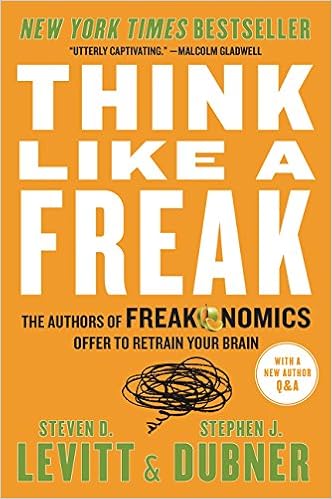
A big part of what inspired me to explore this topic is a new book I’m reading called “Think Like A Freak.” It’s a book by Stephen Levitt and Stephen Dubner, the two authors behind the best-selling “Freakanomics” books that I’ve enjoyed so much in the past.

There’s a lot to digest in this book and I’m still not done reading it yet, but the primary takeaway is fairly simple. It teaches you to step back from a situation, look at all the complex incentives and motivations surrounding it, and think in new, unorthodox ways to further your understanding. These posts on reasons and excuses are an exercise, of sorts, in understanding things from a new perspective.

I’ve already explored the basics of reasons and excuses. Now, I’d like to expand on those basics and create a new concept of sorts, one not unlike the idea of “caveman logic,” which I’ve cited so often on this blog. Please don’t mistake this for a real scientific concept. I’m as much a scientist as I am an astronaut ninja. This is just me, an aspiring erotica/romance writer, creating a term to encompass a larger concept.

With that said, ladies, gentlemen, and those of unspecified gender, I introduce to you the concept of “Excuse Banking.” It’s not in a dictionary. You won’t find it in any textbooks or erotica/romance stories yet, but it’s an idea that has affected us all to some extent.

Again, this is a term I’m inventing right now with no expertise and nothing but a blog to explore it. I understand that’s like a hobo walking into MIT and trying to build a star ship, but I want use this term to explore the more intimate aspect of reasons and excuses. As anyone who has read my books knows, I’m all for more intimacy.

First off, here’s a quick and dirty definition of what excuse banking is:

  • A form of rationalizing one’s actions by using one or more justifications that have been remembered, accepted, and understood as something of personal value;
  • A series of actions meant to mitigate or eliminate the emotional or mental stress of a decision or action that may occur in the future; and
  • The process of shaping ideas, beliefs, and morals in a manner that facilitates difficult ethical decisions.

In reading over these definitions, it should be easy to recall situations where excuse banking applies to you or someone you know on some level. Have you ever loaned someone money? Have you ever helped them with a chore? Have you ever done a favor and asked for nothing in return?

Well, in doing so, you’re effectively making deposits into the excuse bank that you can use as currency, so to speak. Sometimes those deposits gain interest over time. Sometimes they depreciate. In either case, we use this currency to either garner favors through reciprocity or mitigate stressful, demanding situations we may have at a later time.

Much like caveman logic, the idea of excuse banking reflects the understanding that our brains are wired a certain way. That wiring, unfortunately, is akin to an operating system that never gets upgraded. As far as our brain wiring is concerned, we’re still cavemen living in hunter/gatherer tribes in the African savanna.

That wiring, regardless of whether you believe it’s a product of nature or supernatural deities, is the guiding force behind everything from our social behavior to our sexual fantasies. For this particular topic, I’ll focus on the social behavior and save the sexual fantasies for my novels.

Like every other cognitive function, our social behavior does have a basis in neurobiology. That behavior helps guide what we do and why we do it. The behavior, and the wiring behind it, have two primary imperatives that take priority over pretty much everything else. Those priorities are, once again, survival and reproduction.

Nature may be blunt, imperfect, and messy at times, but you can never accuse it of misplacing priorities. When it comes to helping a species thrive, survival and reproduction have to be major priorities. Whether it involves surviving a bear attack or successfully making love to one hundred beautiful cavewomen, those priorities guide a significant part of our thoughts and actions.

It’s for that reason, as I stated in a previous post, that our process for making decisions is so different compared to what we believe. We like to think we’re rational creatures, assessing a situation logically like Spock or Dr. House, and then acting in accord with the utmost reason and morality. That’s the ideal and the basis of multiple superheroes, TV doctors, and scientists.

However, due to that pesky biological wiring that hasn’t been upgraded since the stone age, we do it ass-backwards. We first make a decision, often based on emotion and instinct, and then look for ways to justify it. It’s a good way to ensure we survive bear attacks long enough to get laid. It’s not a good way to promote rational decisions, much to the chagrin of Dr. House.

This is the domain in which excuse banking manifests. Regardless of whether or not we believe that this is how we make our decisions, excuse banking ensures we have a way to justify our actions and decisions, especially if they cause us physical or emotional distress.

We do this because there’s a 100-percent chance that at some point in our lives, we’re going to face a difficult decision. Maybe we have to decide whether to lie to a girl to get her attention. Maybe we have to decide whether or not we should trust the guy who claims to be a Nigerian prince wanting to help us collect an unclaimed lottery place. At some point, we will confront these decisions. It’s an inevitable fact of life.

Excuse banking is a way of hedging our bets, so to speak. It encompasses the actions, beliefs, and social connections we make prior to these decisions. We may have different reasons for seeking these connections, but they have the same secondary function. They help deposit excuses that we might be able to use in future situations.

The process of banking excuses is almost always secondary, in that sense. Nobody goes out of their way to do or believe something because they want an excuse to justify their actions. Nobody overtly think, “I’m going to work at this soup kitchen and provide medicine to sick orphans so I don’t feel as guilty when I strangle puppies with my bare hands.” Those that do are probably sociopaths or reality TV hosts.

Like real banking, sometimes the excuses we bank generate interest. This is especially true when actions involve forming a strong social network of people who support you, even when you screw up. They act as a safety net and over time, that net can become reinforced.

Also, like real banking, banked excuses require fees of sorts. You have to pay a price in order to bank a certain excuse. It can be the time and energy we put into crafting social networks. It can be the resources we expend to join a group, mold an identity, or sell our skills. Some fees are small. Some are much larger, but tend to be more flexible.

That’s where excuse banking starts to diverge from actual banking. Unlike hard currency, excuses can be malleable to a certain extent. You can turn past favors, past charity work, and all that money you gave to PETA into excuses you can use in multiple situations.

This is especially true of excuses built around beliefs. Since beliefs are intangible, unmeasurable, and unverifiable, they are extremely malleable. Take circumcision, a topic I’ve covered before, sometimes to an exceedingly personal degree. Absent a tangible medical condition, there’s no logical reason as to why we would cut off part of an infant’s penis.

However, if you inject a sincerely held belief that your particular religion has a tradition regarding circumcision, then that requires a hefty withdraw from the excuse bank. That excuse better be malleable and low cost as well. When it comes to beliefs, though, the cost is usually close to zero and it’s hard to beat that.

Now that’s not to disparage anyone’s sincerely held religious beliefs. I’m not saying that all religions exist as systematic forms of excuse banking. Human beings just aren’t that simple. If they were, then erotica/romance writers like me would have little to work with. Excuse banking is just one of those understated, unseen processes that emerges from our faulty brain wiring.

When put into a proper context, excuse banking can help make sense of an inherently irrational world populated by very crazy people, some of which have their own radio shows. At a time like this, when the concept of “alternative facts” is a thing, we need every tool we can get.

This is just one from an aspiring erotica/romance writer. I don’t know how useful it will be or if it’ll make anyone horny, but we can only hope.

29 Comments

Filed under Reasons and Excuses

Building Your Own Lover: Possibilities And Implications

Strap yourself in and put on a clean pair of panties because I’m going to talk about sex robots again. I know I’ve talked about it a lot, sometimes as a thought experiment and sometimes in response to new breakthroughs, such as the first robot brothel. If it sounds like I think about sex robots more than any straight man should, I apologize. It’s not my fault the subject is both titillating and relevant.

I say it’s relevant because, even when you remove the titillating parts, robots are becoming an increasingly large part of our society. They’re not just fancy toys and CGI characters in Michael Bay movies. Robots are a growing part of our economy. In some ways, they’re taking it over.

Forget China, Mexicans, and immigrants. According a Ball State study, robots accounted for 87 percent of the loss in manufacturing jobs from 2000 to 2010. People aren’t being put out of work because some foreigners are coming over and stealing jobs. Factories are just becoming more efficient because they’re using robots.

Have you ordered something from Amazon lately? Have you ordered something from any retailer? Well, chances are, a robot helped process that order and for good reason. Robots don’t get sick, they don’t unionize, they don’t get tired, and they don’t take coffee breaks.

The problem is that robots don’t respond to protests, intimidation, racism, and xenophobia. In addition, robots like the ones Boston Dynamics have created recently are kind of scary. Protest all you want. You are not going to win a fight against a robot. They may not kill you like the Terminator, but they will take over because they’re just that much more efficient.

Now I don’t want to get into a debate about how robots affect the economy and how people can possibly compete against robot workers. That’s a complex debate that isn’t going to make anyone outside of an economics class horny. Instead, I’d like to discuss the growing trends in robots in a more intimate manner.

Robots are going to be a bigger part of our lives in the coming years. There’s just too much money to be made and too many benefits to overlook. There will be those who take “The Terminator” and “The Matrix” too seriously and dread that robots will destroy us all. I’m not saying that’s an impossible scenario, but I do believe it’s one we can avoid.

That’s where the intimacy comes in. We can’t fight robots and win. Robots can’t get made without us. In a sense, we’re already two creatures that are intimately entwined. So perhaps a solution to embracing robots as part of humanity is to actually love them and teach them to love us back.

I know it doesn’t sound that sexy right now. When most people think of robots these days, they either think of the ones that took their jobs or the ones that blow shit up in every action movie ever made. On top of that, they don’t exactly much sex appeal.

https://tgc-cache.s3.amazonaws.com/images/uploads/articles/Ultron.jpg

However, I believe that will change. I believe it’s already changing with the way we interact with technology. We already have AI assistants that are steadily integrating themselves into our lives. We have Siri on our phones, Alexa in our homes, and Cortana in our computers. These AI’s don’t have bodies yet, but one day they will. The only question is how much sex appeal will we give them?

That’s progress for some and another step towards a robot apocalypse for another. What’s the endgame though? Well, nobody can really say right now, especially not an aspiring erotica/romance writer who gets most of his robot knowledge from comic books and TED Talks. However, there is one scenario that I might be able to explore, which may end up deciding whether we get along with them or become their pet meat-bags.

It starts with a simple question that I’m sure everyone who is single or stuck in an unsatisfying relationship has asked themselves in some form or another. If you could create the perfect lover, what would he or she be like?

With pace of advancement in robotics technology, that’s not entirely a rhetorical question anymore. If we can program a robot to keep our schedule, clean our carpets, and fill our Amazon orders, then why can’t we program one to love us? Again, that’s not entirely a rhetorical question.

I say not entirely because there’s still a lot about emotions we don’t understand. There are probably certain aspects about emotions we can never understand. Human beings are just too complicated. What else explains the love and devotion that some people put into lovers, family, and My Little Pony?

Even if we don’t fully understand our emotion, we still understand them well enough to know what want in a lover. Robots, being programmable and malleable, are an ideal medium for crafting those emotional connections. We’ve already made a movie about a man who falls in love with his phone. Someone falling in love with a life-like robot isn’t too great a stretch.

The concept has already found itself into plenty of narratives, including a Hallie Joel Osmont movie and a technical demonstration for the PlayStation 4 called “Kara.” Just watch “Kara” for a moment and let your dirty, sexy thoughts fill in the blanks.

Kara might have just been a demonstration, but it crafts a clear and believable scenario about how our future robot lovers may take shape. Like buying a custom computer, we specify how we want it to look. We specify which language it’ll speak. We even craft a personality that we find desirable. Anything we could possibly want in a lover, we could create.

Want your lover to look like a young Brad Pitt? You can have one. Want your lover to look like Jennifer Lawrence? You can have one. Want your lover to look like mix of Keith Richards and Snoop Dogg? You can have one of those too, even if it does reveal a lot about your tastes in lovers.

The gender of your robot lover could be fluid. It could be exceedingly masculine, like John Cena on steroids. It can be voluptuously feminine, like Pamela Anderson after a boob job. It can even be some sort of blend, a female body with a penis or a male body with a vagina. There’s no limit because robots aren’t confined by the limits of biology.

Those worried about the functionality of certain body parts wouldn’t have to worry. Lab-grown body parts are already in development. It’s even farther ahead than you think. I’ve already talked about the development of a bionic penis. Given a few more decades of refinement, artificial genitals won’t just be functional. They’ll function better than anything nature could create.

These robot lovers wouldn’t be slaves or servants, though. There would likely be other types of robots to fill these uses. These robots have one purpose and one purpose only. That’s to be your ideal lover. How can any other human possibly compete? Just as robots took our factory jobs, they may also take the job of every whore, gigolo, and match-maker.

For some, this is a scary scenario, people preferring the love of robots over other people. Some would even dread that this would lead to the extinction of the human race. Well, those same people probably haven’t heard about artificial wombs either. In fact, it’s probably a good idea not to tell them. If they have that big a problem with robot lovers, then chances are they won’t feel much better about robot wombs.

We create robots because we seek more efficiency. We seek lover because, as living beings, we seek connection. Robots, in their current form, aren’t alive and don’t need the same connections. However, once we create in them a desire for connection, what would that mean for them? What would that mean for us?

I’m not at all qualified to contemplate the full implications. At most, I’m qualified to take this concept and turn it into a sexy story. Chances are, I will at some point in the future. I can’t say it’ll be a prelude of things to come. I craft my stories with the intent of being fun, entertaining, and sexy.

However, there may come a day when a sexy story just doesn’t cut it. One day, our desire for connection may find its way into a robot. When that happens, what kind of connection will we create? What kind of intimacy will we forge? It’s a daunting, but sexy idea to contemplate.

3 Comments

Filed under Jack Fisher's Insights

An Ode To Hot Teachers

https://i0.wp.com/www.collegemagazine.com/wp-content/uploads/2012/07/ef410b39aaacff80684620e12daf9175_b.jpg

Being a teenager sucks. Going to high school sucks. Going through puberty sucks. Unless you’re a star athlete or a cheerleader with the body of a young Carmen Electra, chances are your adolescence in general sucked.

Mine sure sucked. As I’ve said before, I was socially inept shut-in who did little to take care of himself. On top of that, I had a horrible acne problem that eventually required medication. I wasn’t just a pain to be around. I wasn’t much to look at either. That basically guaranteed that my teenage years were going to suck, despite having great parents, great siblings, and an environment that gave me every opportunity to be less miserable.

I get the impression that my experience is not typical. Teenagers are walking cocktails of hormones, emotions, and ignorance. Everyone, from the nerds to the jocks, finds a reason to be miserable at some point. The fact anyone survives it at all is nothing short of a miracle.

https://i.ytimg.com/vi/vE5EiKPN4LQ/maxresdefault.jpg

I highlight this misery because I want to establish a certain context here. Life as a teenager, going to high school and enduring the monstrous transformation that is puberty, is fraught with misery. Anything that makes it just a little bit easier is akin to giving a starving child a lifetime supply of chocolate cake.

That leads me to hot teachers. No, I’m not talking about a porno sub-genre. I’m not talking about the scandals involving teachers sleeping with their students that make the front page of Fox News’ website at least three times a year either. I’m just talking about that one teacher during that one year in your teenage life that actually made going to school less miserable.

Don’t deny it. You had a teacher like that. I’m not saying he or she was a supermodel or an Olympian, but they definitely got your attention and not with their teaching skills. Something about them just sparked that chaotic cocktail of hormones in your body in just the right ways. It made you think thoughts you didn’t quite understand, even after you discovered internet porn.

https://i0.wp.com/www.successful-parenting.com/wp-content/uploads/2015/08/help-teen-stress.jpg

Hot teachers are a sliver of gold in the mountain of horse shit that is adolescence. In some ways, they’re a rite of passage. You only really feel like you’re growing up when your genitals start doing strange things around a teacher you find attractive. It can be awkward, as anyone who has ever had to hide a boner in the middle of algebra class can attest. Then again, awkwardness with teenagers is par for the course.

I believe that hot teachers are a gift to the world, if not an act of mercy to all those whose adolescence was more miserable than most. They remind miserable, emotional, melodramatic teenagers that there’s still beauty in the world. It’s not all just acne, homework, and standardized tests. For teenagers of every generation, their value cannot be overstated.

As a tribute to the hot teachers of the world, I’d like to share another personal story. Unlike some of my previous stories, though, this one doesn’t involve actual nudity. It does involve thoughts of nudity though. How can it not? It involves my teenage self.

It’s true though. I too once had a hot teacher, one I still remember fondly to this day. She was a rare beacon of light in the never-ending torment that was high school. She actually made me less miserable in high school. That’s something that therapy, anti-depressants, and Taco Tuesday can’t boast. She’s kind of a personal hero is what I’m saying.

https://i0.wp.com/www.childmolestationvictims.com/wp-content/uploads/2014/05/Sexy-Teacher.jpg

Out of respect for her privacy, I won’t reveal her name. For the sake of this story, let’s just call her Ms. Diana. I had Ms. Diana for a history class in my sophomore year. At the time, I was 16. My acne problem was just starting to become a crisis. My hormones were just starting to go into overdrive as well. I remember having to hide at least one awkward boner a day. Ms. Diana didn’t help in that effort, but with her, I didn’t mind.

Ms. Diana was one of those young, energetic teachers who loved to talk fast and fill the room with energy. She wasn’t the kind of teacher who would just give presentations, pass out worksheets, and lay out lists of facts. She actually tried to keep people engaged. She tried to get people excited. She might as well have been the high school equivalent of a lion tamer.

She was also hot. I hope that goes without saying. I don’t just mean hot, in terms of personality. I mean Ms. Diana was hot in that she would’ve looked awesome in a bikini and not because she had a beauty regiment on par with Gwenth Paltrow, complete with jade egg for a healthy vagina.

https://i.cbc.ca/1.3439725.1455006939!/fileImage/httpImage/image.jpg_gen/derivatives/16x9_620/gwyneth-paltrow.jpg

No, Ms. Diana’s beauty was a natural beauty. She didn’t need makeup. She didn’t need designer clothes. She came into class wearing something she probably bought on sale and she still made it look sexy. That’s a special kind of beauty, even by teenage standards.

That beauty definitely resonated with my teenage self. I can’t remember a class where I paid more attention and felt more engaged. I can’t say that about a lot of the teachers or classes I’ve taken. I also can’t say those classes got me thinking and feeling things that I didn’t feel without an internet connection. It was a strange, but beautiful thing.

Now I never went out of my way to tell Ms. Diana that I found her very attractive. That’s not because I wanted to avoid a scandal that would end with one of us being interviewed by Wolf Blitzer though. I didn’t tell her because it wasn’t necessary. It wasn’t necessary because I wasn’t the only hormonal teenage boy in that class and some of those boys did not have filters between their brains and their mouths.

It was very much an open secret in the school. The boys thought Ms. Diana was hot. Nobody really argued about it. Nobody denied it either. I get the sense she knew that. I don’t think she would’ve agreed to teach teenagers if she didn’t to some extent. Maybe she knew she could keep her students’ attention by being hot. I’m not saying it’s a little coy, but you can’t argue with results.

https://i0.wp.com/i670.photobucket.com/albums/vv68/Stilcho/sexy2/orig_Nikki_Cox_HOT_TEACHER_Sexy_-3.jpg

This eventually culminated in an incident I still laugh about today. It happened one day after lunch. We were filing into class. I was there a few minutes early and so were a couple of my male classmates. Then, out of nowhere, this exchange happened:

Male Student: Hey, Ms. Diana! Is your dad a terrorist?

Ms. Diana: Um…no. Why do you ask?

Male Student: Because you’re the bomb!

I laughed. We all laughed. Even Ms. Diana laughed. This after September 11th, by the way. The fact that we laughed about it should hint at just how hot Ms. Diana was and how much me and my fellow male students appreciated her.

To this day, Ms. Diana holds a special place in my heart and my memory. At a time when so many memories from that era were bleak and forgettable, she was a shining star that came along at just the right time for an awkward teenage boy. I like to think that the feelings she inspired in me helped inspire my future aspirations as an erotica/romance writer.

I doubt that’s what Ms. Diana intended to teach me. I’m pretty sure she just wanted me to pass my tests and exams. Thankfully, I did. That other inspiration was just a bonus. Maybe one day when I become a famous erotica/romance writer, I’ll thank her. She deserves as such for helping me survive high school.

Until then, I remain forever grateful to Ms. Diana. On behalf of all those who had lurid thoughts about their teachers, I thank those wonderful teachers who look good naked who helped inspire both minds and genitals. You may not think it, but you helped us in ways that went beyond teaching us. You helped make our teenage years slightly less miserable. For that, you should be proud.

With that, I leave you with the ultimate ode to hot teachers, courtesy of Van Halen.


8 Comments

Filed under Jack Fisher's Insights

How Professional Trolls Hack Your Brain

Here’s a quick non-rhetorical question. What do Milo Yiannopoulos, Ann Coulter, Bill Maher, Lena Dunham, Bill O’Riley, John Oliver, Alex Jones, and Sean Hannity all have in common? Other than being richer, more successful, and more well-connected than you or I will ever be, what could possibly tie them together in a way that would help them get along at a barbecue?

Take all the time you need. I know this is one of those questions that’s not going to have a very satisfying answer to anybody. I also know it’s one of those questions that pisses people off, even before they answer it. This is the internet. People get pissed off for far less.

Are you done? Well, knowing full-well that I’ve already pissed off plenty of people, here it is. They’re all trolls who use the exact same tactics to make themselves successful and relevant. They may not do it overtly. They may not even admit to it, but on some levels they understand what they’re doing and why it works. Sadly, it works very well.

Now when I say they’re all trolls, I don’t mean to imply that they’re the kind of internet trolls that harass people on social media with insults, death threats, or pictures animals eating their own shit. Those kinds of trolls are a different breed. Granted, they’re annoying and should be ignored at all cost, but these professional trolls are on another level in that they make a damn good living doing what they do.

What these professional trolls do is as brilliant as it is disturbing. Pick any notable public figure who says controversial things. It can be Milo Yiannopoulos making derogatory comments about Muslims. It can be Lena Dunham saying she wished she got an abortion. Just think about any controversial thing that any controversial figure has ever said.

Whether it’s entirely planned or one of those instances where they don’t shut themselves up fast enough, the results are the same. People get outrage. Hashtags get started. Protests erupt. Venomous hate clashes with vocal support. There’s basically all this noise full of anger and passion.

As all this is going on, Milo and Lena are probably laughing to themselves at how much free publicity they just got. Anyone who has ever been in show business, media, or publishing will probably agree. The hardest part of success in Hollywood is getting publicity. There’s only so much of it to go around and people have a very finite attention span. Being able to get free publicity is like being able to play a game with cheat codes.

Now we’ve all heard there’s no such thing as bad publicity before. That sort of sentiment pre-dates the internet, going all the way back to the days when Ozzy Osborne bit the head off of a bat. Today, there’s one key difference that takes this phenomenon, gives it an unlimited supply of crystal meth, and sticks a nine-inch needle in our collective brains.

That difference is immediate access to information. From the internet, to our computers, to our phones, and into our pockets, we no longer have to wait for the evening paper to hear about these atrocious events. Thanks to social media, alerts, and annoying text messages, we can know about them mere minutes after they happen.

While this is a marvel of modern technology and communication, it does have a downside and it’s one that the professional trolls of the world have exploited to the utmost. That downside has to do with how stupid our collective brains are.

By that, I don’t mean that people themselves are stupid. I may be in a minority, but I believe that people, in general, are fairly decent and competent in their day-to-day lives. When I say our brains are stupid, I’m referring to the overall functionality of the hardware involved.

This goes beyond caveman logic, which I’ve cited many times before on this blog. This even goes beyond humans being wired for survival and reproduction rather than logic and reason. This is a byproduct of nature being too much of a blunt instrument rather than a scalpel. In this case, it makes professional trolls rich, successful, and famous.

They do this by hacking an unfortunate quirk in the human brain and using it to their advantage. It’s called “Misattribution of Arousal.” Unlike other convoluted scientific phenomena, this is exactly what it sounds like.

Have you ever been on a roller coaster? Have you ever been really scared by something? Well, if your brain is in working order, it got you extremely aroused and alert. You were afraid, excited, anxious, or euphoric. You could’ve felt any number of emotions at the time.

From your brain’s perspective, though, it’s the goddamn same thing. You’re aroused. There’s a stimulus you need to respond to. That’s all there is to it. As brilliant and complex as the human brain is, it’s still a pretty crude organ. It can’t do math worth a damn. It can easily be tricked by the David Copperfields of the world. It can, however, be tricked into getting aroused for all the wrong reasons.

This is what professional trolls do. They do or say something that gets people aroused. It’s not enough to just get their attention. I’ve already covered how attention is a big part in the “Always Be Closing” approach to success. However, attention only does so much. Adding arousal to the mix does something far greater.

When your brain is in a state of arousal, it doesn’t care much for specifics. It just knows its aroused and needs to respond to something. When you have instant access to information that upsets, angers, or thrills you in any way, that triggers arousal. That arousal, even if its the bad kind, causes the release of dopamine and this is where it gets really dangerous.

For those of you who aren’t caught up on neuroscience, you should still know what dopamine is. That’s the feel-good, everything-is-awesome chemical that our brain uses to reward us for doing things we like. Naturally, it’s a big part of our sexual response. If your brain is swimming in dopamine, that means you’ve had amazing sex.

Now the outrage/interest/arousal we fell with professional trolls doesn’t release quite that much dopamine into our brains. However, it does release some. It releases enough to get a response and due to the crude wiring of our brains, that’s more than enough.

That means that, on some levels, we like being outraged or upset by professional trolls. We like the feeling we get when we despise certain people, groups, or ideologies. Anger, hate, and fear all trigger the same arousal. Our brains enjoy that arousal to some level and thanks to modern communication, it’s far easier to get today than it has ever been in human history.

It’s uncharted territory. If these professional trolls were around 40 years ago, they would probably have a much harder time building an audience. They could say some of the most horrendously-offensive things anyone could possibly say, but it wouldn’t get a lot of attention because word would spread too slowly. The internet, along with social media, is changing that in a big way.

The professional trolls are maximizing that change to their benefit. They’re finding all sorts of ways to anger, upset, or inspire us, even if it’s stressful. Again, our brain doesn’t care. It still arouses us. It still gives us a non-trivial dose of dopamine. That’s all it takes to get people going.

It’s the hidden, unknown, unacknowledged secret that we’re just starting to understand. Whether you’re a die-hard social justice warrior or an outspoken supporter of the alt-right, you use the same methods as the professional trolls. You say and do what you need to do to get people aroused.

It doesn’t matter if it’s true or honest. You don’t even have to believe it on some levels. There are probably many figures out there who, in their private moments, know that what they’re saying is wrong or foolish. They just don’t care though because they’re not looking to say something right or uplifting. They’re trying to get people aroused and worked up.

Now I don’t know which professional trolls feel this way in private. I believe that on some level, they all really believe in what they’re doing. I also believe that on some level, they understand that some of it is misguided and flawed. There’s this vast gray area of understanding that’s hard to grasp and we’ll probably never know for sure just how much these professional trolls believe their own rhetoric.

Whatever the case, this is the world we live in now. We’re all very much at the mercy of the flaws of our collective brains. It’s hard to say where we’ll go from here. I don’t see the methods of professional trolls changing anytime soon. What they’re doing works. It’s making them money, getting them attention, and earning them fame. Until that changes, they’ll keep doing it.

There’s a lot more I can say about this topic and the science behind it. I’ll probably do a few other posts on it, if only to explore the implications for my own efforts to become a successful erotica/romance writer. Until then, I’ll leave some of the other details the brilliant people at Cracked.com.

A while back, they did a podcast on this subject. They bring up some pretty interesting/disturbing points about professional trolls. I don’t agree with their sentiment on every issue, but I do think they make some valid points. For anyone who is generally annoyed by professional trolls, those points are important to understand, if only to maintain a healthy perspective on why trolling works so damn well.

18 Comments

Filed under Jack Fisher's Insights

Why Most Superheroes Are Woefully Incompetent (By Design)

Image result for incompetent superhero

I’ve been meaning to do a post like this for a while now. It’s a topic I’ve actually tried to discuss on comic book message boards. Unfortunately, most comic book message boards too readily devolve into debates about who can lift Thor’s hammer, who Wolverine is sleeping with, and whether or not She-Hulk shaves her pubic hair. Yes, it gets that bad.

Ignoring, for a moment, the immaturity of certain crowds on message boards, there are certain issues pertaining to comic books and superheroes that are too easy to overlook. I say this as someone who is plenty eager to overlook the flaws in a story if it means seeing Starfire, Wonder Woman, Emma Frost, and Storm of the X-men kick ass and look damn sexy while doing it.

One of those flaws, ironically enough, deals with the actual pragmatics that come with being a superhero. Granted, those practical details are usually an afterthought in most superhero comics. Why would anyone give much thought to that when they could instead focus on giant monsters, killer robots, and the Hulk’s penis?

Some of the problem has entirely to do with fans like me. I freely admit that, as a fan, I’m part of the problem. Superheroes, whether they’re in comic books, cartoons, or blockbuster movies, aren’t created with the intent of being really good at their jobs. They’re created as a product to sell. That means they have to be compelling, engaging, and part of a meaningful story.

That’s why we don’t care if Spider-Man fails miserably to stop a criminal or if Superman fails miserably to keep Lex Luthor locked in prison. So long as it’s part of a story, we keep buying in. We increase our emotional and financial investment. It keeps the narrative going and, by default, the money for the company producing the merchandise.

That’s also why there will never be a superhero who is too good at fighting crime, defeating enemies, and solving problems. After a while, they do too much good and the world they live in just doesn’t have enough flaws to be interesting anymore. Who wants to read about Spider-Man anymore after he’s effectively solved New York’s crime problem and spends his days taking photos of hobos pissing on trees in Central Park?

On some levels, comic book companies and movie studios of the world knows this. They’ll never admit it outright, but in the back of their mind, they have to know that they can never let a hero be too competent. Even Superman has to slip up every now and then. Make no mistake though. He definitely has throughout his 70-plus year history, sometimes in laughably disturbing ways.

There’s a very simple reason for this and unfortunately, it’s neither heroic nor sexy. I’ll give you a hint. It’s valuable, it’s green, and it fits perfectly in a stripper’s G-string. If you need more than one guess, you should probably see a doctor.

Yes, I’m talking about money. If anything, it’s kind of ironic, given the values that many superheroes hold and how broke many superheroes often are. They’re created to embody our greatest values, but they’re sole purpose, from an image standpoint, is to make money for the company that owns their rights.

Fortunately or unfortunately, depending on how you look at it, superheroes do succeed in that respect. According to The Hollywood Reporter, Spider-Man alone makes over a billion dollars a year in merchandising. That’s not a typo. I said billion. Batman is a very distant second with a little less than half-a-billion.

Superheroes are big business these days, both in terms of making money and spending it. According to rumors by Bleeding Cool, the next two Avengers movies could collectively cost a billion dollars. Again, that’s not a typo.

It’s because superheroes make so much money and generate so much money for the economy that they have to stay incompetent to some extent. Just look at the superheroes of old, from Greek mythology to the bible to the medieval legends of King Arthur. They all have one defining trait. They all had definitive endings.

Whether tragic or triumphant, the heroes of old were part of a finite narrative that had an ending. King Arthur dies. Hector dies. Jesus Christ triumphs over the Satan. If these were comics, they would never survive in the modern market because they’re too complete. Modern superhero stories can never truly end.

Even iconic comics like Watchmen, which was supposed to have a definitive end, but DC Comics nixed that by incorporating it into their mainline superhero comics. Granted, this thoroughly pissed off Watchmen’s creator, Alan Moore, but he’s been pissed off for any number of reasons for the past 30 years so that’s not saying much.

Instead of ending, modern superhero comics are prone to a tricky phenomenon that most comic book fans know all too well. It’s called retroactive continuity, also known as a “retcon.” This is basically the literary equivalent of a mulligan.

Has Spider-Man become too convoluted, mature, and dark? A retcon will make him a lovable loser again. See “Brand New Day.”

Has Batman become too campy and goofy? A retcon will make him dark and gritty again. See “Batman Begins.”

Have the Fantastic Four become too flat and boring? A retcon will make them a team of jaded young millennials. See 2015’s “Fantastic Four,” although pretty much every Fantastic Four fan would strongly advise against it.

Thanks to retcons, superheroes never age. They can always be reinvented, re-tooled, and adapted for a new audience. Granted, that won’t stop some audiences from whining about it, but it effectively ensures that the narrative never ends and the particulars of the story at every point in the timeline are subject to change.

This can be a good thing sometimes, such as when a retcon gives us a great character like the Winter Soldier in the Captain America comics. However, it can also splatter painfully disturbing details on an established narrative that didn’t need it. Just talk to Spider-Man fans about a story called “Sins Past” and watch them become visibly ill.

In the end, however, it often means that characters never really progress beyond a certain point and the problems they hope to solve never go away. The Joker always escapes. Lex Luthor always returns. Spider-Man’s girlfriend gets killed, injured, or impregnated by his worst enemy. It’s as frustrating as it sounds.

Most superheroes will gloss over this detail by taking a stand against killing. That’s perfectly understandable on some levels. The morality of killing someone is one of those few moral issues that don’t generate too much debate, unless it involves Nazis in video games. However, in some respects, the anti-killing is both an excuse and a sales tactic.

Batman is, by far, the best example in this respect. Despite being the alpha and omega of an ordinary man achieving extraordinary feats without superpowers, Batman still cannot and will not stomach killing any of his villains. No matter how many times they escape, kill, or torment others, he refuses to kill them.

Ignoring for a moment the debate on whether he’s responsible for the deaths those villains subsequently inflict, there’s one other issue that makes Batman’s anti-killing stance more a marketing gimmick than a morality stand. Batman’s villains are iconic characters in their own right.

Just look at the list of famous Batman villains. Then, remember how many of them are popular Halloween costumes. Also keep in mind one of them earned Heath Ledger an Oscar and another got Margot Robbie to put on hot pants. Creating characters this iconic isn’t easy. That’s why comic companies and movie studios are so reluctant to kill them.

This is the dilemma that all superheroes face in modern comics and movies. If Batman kills the Joker, then there are no more iconic battles between the two. If Superman kills Lex Luthor, then there’s no more epic struggle. That means there are fewer comics to sell, toys to make, and slutty costumes to create. That situation, from both a fan and business standpoint, is untenable.

As a result, every modern superhero is, by design, incompetent to some degree. On top of that, the villains are either insanely lucky or ridiculously resilient. That’s why we’ll never see a version of Batman, Superman, or Spider-Man who actually succeed at reducing crime. That’s why we’ll never see the X-men or the Justice League actually create a peaceful world.

It’s not that it’s impossible. It’s just that it ends the story and the ability for big companies to make a boatload of money off them. That ensures every modern superhero is a walking paradox. They can never truly achieve their goal, but they can never stop trying either. It’s not because it’s the right, moral thing to do either. It’s because movie studios and publishing companies still need to make money.

That’s not very heroic, to say the least, but that’s the world we live in. Until money and movie rights stop driving superhero narratives, we’ll never see a truly competent superhero.

5 Comments

Filed under Comic Books, Jack Fisher, Superheroes