Category Archives: health

When Crisis Brings Humor, Irony, And Religious Absurdities

Whenever the news is consistently awful, you tend to get numb to it. At some point, you just can’t bring yourself to get too worked up anymore. It’s not a good thing. Once you get numb to terrible news, you’re less inclined to do something about it. That’s not healthy for any society.

I don’t deny that the news surrounding the Coronavirus/COVID-19 has been awful. It might be the single worst news story we’ve collectively endured in over a decade. It’s bad, especially if you’re a sports fan. It may very well get worse before it gets better.

However, it’s for that same reason that we should all laugh and take comfort in stories that expose absurdities, frauds, and assholes who don’t deserve the notoriety they usually enjoy. Of all the things that fit every one of those criteria, faith healers are right up there with creationists, snake oil salesmen, and conspiracy theorists.

Now, I could go on an extended rant about how faith healers are one of the most perverse manifestations of organized religion. I’ve gone on similar rants before on far less serious subjects. However, this is one instance where no rant is necessary. The facts alone expose the absurdity, hypocrisy, and stupidity of the whole endeavor.

It comes courtesy of a megachurch in California and a story covered by Raw Story. Rather than describe all the crazy details, I’ll just leave a link and a brief summary of the best parts.

Raw Story: ‘Faith-healing’ megachurch cancels hospital sessions over coronavirus fears

A megachurch in California that regularly conducts “faith-healing” sessions at local hospitals apparently doesn’t believe the power of prayer is strong enough to cure coronavirus.

The Bethel Church in Redding, California, which serves as the spiritual home to an estimated 6,300 weekly worshipers, announced this week that it is canceling its regularly scheduled visits to hospitals as fears of the coronavirus pandemic take hold.

Think about that for a moment. Faith healers profess the power of healing through prayer, specifically through prayers to their favored deity. They claim that their spiritual service can bring wellness to the sick while protecting the healthy. That’s the power of their faith.

Then, a virus comes along that is utterly unaffected by their dogma. It infects everyone, regardless of what they believe, and no amount of prayers can stop it. The fact that these “faith healers” have ceased going to hospitals out of fear of infection is an indirect admission that their healing doesn’t work. It also exposes just how weak it really is.

A virus is not some invading army or repressive government. It’s a tiny bit of biomatter. Despite that, it’s still strong enough to defeat any prayers that a believer may offer. No matter how ardent they may be, the virus still infects because wishful thinking is no match for harsh reality.

Now, I’m not foolish enough to believe that this crisis will put all faith healers out of business. At the very least, this offers a huge red flag to anyone whoever crosses paths with someone claiming to heal by faith. If they can’t heal you from a simple virus, then what does that say about their faith, their religion, and their motivations?

In this case, washing your hands more powerful than any prayers you could offer.

2 Comments

Filed under Current Events, health, psychology, religion

The Joys Of (Briefly) Unplugging And Running

I freely admit that I love technology. I also admit I’m on my phone constantly, checking social media and playing games. I’m the kind of person who gets extremely stressed out when my phone battery is low or think I’ve misplaced it. I think that puts me in line with most people my age.

I cherish technology. I celebrate it and contemplate how future advances will change our society, for better and for worse. Mostly, I favor the better, but I don’t deny that it can negatively effect people in certain ways. Like anything, you take the bad with the good and determine whether the good will suffice.

That said, even I see the importance of disconnecting every now and then. It’s not about fighting an addiction. The whole concept of tech addiction dubious at best and deceptive at worst, depending on who stands to make money off it. It’s a good thing, but like cake or beer, you can have too much of it.

That’s why I make it a point to do something regularly that allows me to separate myself from my phone, my computer, and any other device that has more computing power than a calculator. It’s not pretentious. It’s not because I’m trying to make a stand or something. I just find it genuinely helpful for my physical and mental well-being.

The way I disconnect is simple. I put on my workout clothes. I put my wallet and keys in my pockets. Then, I go out for a nice long run around the various trails around my house. I don’t listen to music, podcasts, or radio. It’s just me, the trail, and my thoughts. It may sound boring and bland. For me, it’s anything but that.

Unlike running on a treadmill, with which I do listen to music and podcasts, running outdoors along trails is more active. You’re not staring at the same wall or hearing some outdated piece of gym equipment crack with every step. You’re actually traversing the real world. You watch trees, streams, and grasslands pass you by. Even when you haven’t gone far, you feel like you’ve gone somewhere.

It’s not just a nice dose of fresh air. Running without any device beyond my keys allows me to just organize my thoughts. Sometimes, I have a stressful day when it’s hard to keep up with everything. A nice run outdoors allows me to get my heart going while my brain just streamlines itself.

It’s a very therapeutic experience. Thoughts become more streamlined. Ideas become clearer. Perspectives feel more balanced. Some of the ideas that have made it into my novels and my sexy short stories have come to me while I’m running. I doubt I would’ve gotten those ideas if I’d been focusing on music, podcasts, or something else.

Again, I love technology. I love my phone and my music collection. It’ll always have a place in my world. However, there are times when I just need to be on my own with my thoughts and the natural world. It’s a simple pleasure that I’ve come to cherish in my adult life. I won’t claim it has the same effect for everyone, but I strongly encourage everyone to try something like it. You may be surprised by how much you enjoy it.

Leave a comment

Filed under health, Jack Fisher's Insights, technology

Staying In Shape, Eating Right, And How A New Appliance Helped Me With Both

Contrary to what every fad diet and overpriced exercise gizmo may tell you, there’s no real secret to getting in shape. You just have to eat right and exercise regularly. It’s not something you can do every once in a while. It’s not something you can condense into a few minutes and see the same results. It’s a habit that becomes a routine. If done right, it works. There are plenty of documented cases to prove this.

The exercise part is hard enough. I’ve shared my struggles with this before, but it’s the eating right part that most people find extremely challenging. I’m certainly among that crowd. One of the hardest things I did when getting into shape was changing my diet. At that point, I’d become very fond of sugary cereal, carb-heavy snacks, and candy of every kind. Just cutting back on that stuff was a huge test of self-discipline.

However, it can be done. In fact, there are many ways you can go about it, none of which involve buying into fad diets or purchasing overpriced meal kits. Trust me. If a guy like me can do it, then anyone can do it. I’m not that special, in that regard. I figured a lot of this stuff out through trial and error, but you don’t have to endure my errors.

When it comes to eating right, there’s only one way to avoid eating those sugary foods and overeating in general. You have to not feel hungry when you’re around them. That may sound like something that requires self-hypnosis, but it doesn’t. It just requires a little knowledge of which foods make you feel less hungry.

Those foods do exist and you can buy them anywhere. There’s no advanced science behind them. They’re just foods that are high in protein, fiber, and volume. They include chicken, fish, oatmeal, potatoes, fruits, vegetables, and eggs. For me, the one food that helped me the most was eggs.

This is where my favorite new appliance comes in. When I first got serious about eating right, one of my go-to meals after a workout was an omelet with tuna. It was tricky to make and if I was in a hurry, I wouldn’t bother. However, I knew eggs were a great food for feeling less hungry, so I tried to figure out a more efficient way of consuming them.

That’s where my favorite new appliance comes in. It’s nothing fancy. It’s just an egg cooker I bought off of Amazon. It cost me less than 20 bucks. It’s easy to use and it effectively streamlined the process of cooking eggs for me.

The way I use it is fairly simple. Before a meal, or as a snack, I use it to make three hard-boiled eggs. You just put the eggs in, poke a hole in the top, pour water in the device, and turn it on. The cooker does the rest. After just five minutes, I’ve got three hard-boiled eggs. Before I eat anything else, I make sure I eat those. As a result, I’m less hungry overall and end up eating less.

I cannot overstate the value of being less hungry when you’re trying to get into shape. It’s probably the biggest obstacle everyone faces when trying to eat better. It doesn’t help that we’re surrounded by so many delicious foods. Will power alone is not going to help you avoid them. In fact, relying on will power can be damaging in the long run.

Thankfully, the human body can be tricked, as can the mind. It’s not some fancy transcendental mind-body meditation strategy. It’s just simple chemistry. Eggs and foods like them have the chemistry that makes you feel less hungry. As a result, you’re less inclined to overeat. That’s what this egg maker has helped me do since I got it and if anyone is struggling to control their hunger, I highly recommend you check it out.

Please note that everyone’s body is different. Some people require more than just tweaks to their diet and a few extra eggs to get into shape. I am not a doctor or an expert. I’m just sharing some tips about what has worked for me in the past. I don’t make any bold claims or ask for your credit card information. This is just useful information that I thought I’d share.

Now, if you’ll excuse me, all this talking about eggs has given me a craving for an omelet.

3 Comments

Filed under exercise, health, psychology

Sounds Of Relaxation (And Productivity)

Let’s face it. There are a lot of distractions and I’m not just talking about cat videos, Baby Yoda memes, or FaceBook feeds. The world is a noisy, chaotic place. That’s just life in general. Finding peace and quiet can be difficult, especially if you want to work on something.

In college, I lived in an all-male dorm for a few years. It didn’t just get noisy. I heard sounds in those dorms that I can never unhear. I also smelled things I can never unsmell, but that’s beside the point.

Despite these distractions, I did manage to stay productive. I wrote many short stories, novels, and essays for my own enjoyment. It wasn’t easy with so many distractions. Thankfully, I discovered a useful tool that I’d like to share. It’s called brown noise.

It’s kind of what it sounds like. It’s just a steady flow of noise that you can play on your computer or phone that helps block out any external noise. In college, I had it as a two-hour MP3. Today, there are 10-hour YouTube videos that do the same and I can consider them a godsend. They help create this private domain in which I can focus, work, and conjure all sorts of ideas for novels and short stories.

If you’ve ever found yourself in a similar situation, I encourage you to give it a try. If you have an internet connection and a good pair of headphones, it’s completely free. Here’s a video of the noise I often use when I write.

If you want something that sounds a bit more natural, then try rain. It’s also great if you’re trying to nap in the middle of the day.

A few variations even incorporate thunder, which some find relaxing. One of my old roommates used to use that while studying.

If you need something with a bit of a rhythm, try a little light jazz music. While this has never worked well for me, I know some people who just need music to stay focused.

These aren’t the only sounds that can help with relaxation or productivity. I encourage everyone to experiment a little. Go on YouTube and find different videos. Eventually, you’ll find something that gets your mind in the right place and your world will be richer because of it.

Leave a comment

Filed under health, Jack Fisher's Insights

How I Made My Morning Cup Of Coffee More Awesome (By Accident)

As I write this, I have a fresh cup of coffee right next to my keyboard. If you’re reading this early in the morning, chances are you have some coffee too. We’re in good company. A nice cup of coffee is a great way to start your day. Whether you have a full time job, are an overworked college student, or retired, coffee is one of those magical elixirs that gets us going in the morning.

It’s not just a multi-billion dollar industry. It has real health benefits. Most functioning adults can’t imagine getting through their day without it. I didn’t always drink coffee, but I’ve come to appreciate it as I’ve gotten older. It’s one of the best parts of my morning.

For that very reason, I’d like to share a brief story about how I made this routine, yet enjoyable part of my day more awesome. Moreover, I did it by accident and I hope it inspires others to find new ways of making their morning coffee even better. Consider it a gift that I bought by complete accident.

It happened a while back around Halloween. It was around a time when everyone was stocking up on candy. Some friends of mine had more than done our part. We had a big bowl of candy in the kitchen that everyone picked at for days on end. I was one of them.

One morning, I grabbed a few peanut butter cups while brewing my coffee.  Typically, I drink my coffee black. I never use creamer or sugar. Sometimes, I will pour a little cocoa powder into the mix, usually around holidays or social gatherings. I wasn’t planning to do that on this particular day.

Then, something amazing happened.

After setting my cup of coffee down, I accidentally dropped a peanut butter cup right into it. At first, I felt stupid and clumsy. Then, I looked down at the frothy, chocolate-laden mixture forming in my cup. I soon realized that this might be the greatest accident I’ve ever had.

I took a sip of my coffee with the peanut butter cup now floating within it. A strange new convergence of tasty joy followed. It was like a revelation. It took two wonderful things and combined them into something that was even better. It made my morning and the rest of my day.

Again, this was a complete accident, but one from which something beautiful emerged. If you happen to love coffee and peanut butter cups, I highly recommend you give it a try. Just one or two cups will do. Give if a few minutes to melt and froth. You’ll be glad you did.

If you have another way of making morning coffee even better, I’d love to hear it. Just know that the sweet, potent combination of peanut butter cups and coffee will be hard to top.

Leave a comment

Filed under health, Jack Fisher's Insights

My Workout Playlist (For Those Still Committed To Get In Shape This Year)

The first few days of 2020 have gone by quickly. We’ve still got plenty more to go and for those still serious about their New Years Resolution, I applaud and encourage you. Anyone who has given up on theirs by now was probably not serious about them in the first place.

Since one of the most common resolutions is to get in shape, I thought I’d touch on that again. A few days ago, I wrote about how certain people at the gym I go to didn’t seem to be taking that effort very seriously. I tried to be fair and offer advice for those who genuinely want to improve their health, fitness, and overall well-being. In hindsight, I think I might have been a bit harsh.

To make up for it, I thought I’d share one aspect of working out that I genuinely enjoy. It involves listening to music during a workout. I know that’s not a novel concept. Chances are that when you go to a gym, most of the people working out will have headphones on. I know because I’m one of them. In fact, listening to music while working out is something that makes my workout genuinely enjoyable.

If you want to do something that’ll make exercise feel less tedious, a good playlist is a great way to achieve that. What constitutes a “good playlist” varies from person to person. Not everyone has the same tastes. I know people who can work out listening to classical, jazz, country, and rap music. There’s nothing wrong with any genre. As long as it helps get you in the right mindset, then it can only help.

I have a lot of music on my phone, but I have a special playlist that I call my “Workout Mix” that I listen to whenever I’m at the gym. Whether I’m lifting weights or running on a treadmill, I just put the list on shuffle and have at it. Before long, I’m rocking out and working out. It’s win-win.

If you intend to get into shape in 2020, I highly recommend putting together a workout mix. If it helps, I’ll share mine. Please note that mine is tailored to my tastes. Yours are likely different. Pick the music that works best for you. This just happens to work best for me.

Metallica – Enter Sandman

Metallica – Hardwired To Self-Destruct

Quiet Riot – Come On Feel The Noise

DMX – X Goin’ Give It To Ya

Lady Gaga – Applause

Flo Rida – Right Round

AC/DC – Thunderstruck

Motley Crue – Kickstart My Heart

Collective Soul – Shine

Collective Soul – December

Soundgarden – Spoonman

Robin Schultz – Sugar

Rick James – Superfreak

Nirvana – Smells Like Teen Spirit

Nelly – Hot In Here

James Labrie – Pretender

Guns N’ Roses – Welcome To The Jungle

Guns N’ Roses – Sweet Child Of Mine

Eve 6 – Inside Out

Drowning Pool – Step Up

The Beastie Boys – Fight For Your Right (To Party)

Bruno Mars – Uptown Funk

Leave a comment

Filed under health, Jack Fisher's Insights

A Bit Of (Obvious) Advice To Those Trying To Get In Shape In 2020

I know it’s just a few days into 2020. I also know that this is the time most people try to uphold their New Years Resolution to get in shape and get healthier. I completely respect that resolution. In fact, I encourage and applaud it. I’ve made a concerted effort to get into shape. I can personally attest that it’s worth it.

However, I noticed something when I went to the gym yesterday that’s worth noting.

As always, it was crowded a few days after New Years. I expected that. I try to plan around it. While I still applaud people for making the effort, I question their approach.

To illustrate, here’s what happened. I saw someone sitting at a weight bench doing butterfly curls, but stopping for a few minutes after every set to check their phone. I don’t know if they were discussing something urgent. For all I know, this person was a doctor trying to communicate life-saving medical advice.

Even if that were the case, it’s not the kind of thing that’ll help you get into shape. If your workout is easy enough for you to text in between sets, then it’s too easy. You’re not pushing yourself. You’re not burning calories. You’re not building muscle. You’re barely getting your heart rate up.

I also saw other people just sitting on the weight machines, doing a set every several minutes or so, but still focused more on the TV that was hanging from the wall than actually pushing themselves. Again, if you’re able to focus on a TV show in between sets, then your workout is too easy.

I know you shouldn’t push yourself too hard, especially if you’re new to working out. I made that mistake more than once when I started working out. I injured my foot and my back the first week I went to the gym. I also learned quickly that if your workout isn’t intense enough, then you’re not going to get much benefit from it.

Like it or not, you’re going to have to strain yourself. You’re going to have to grunt, groan, and sweat to actually make a difference, both for your health and for your appearance. You can’t do that and stay engaged with your phone or the TV.

I feel like in the age of the internet where a simple Google search will show you everything you need to know about getting a good workout, nobody has excuses. If it helps, just check out this video for simple workout tips and let that be your guide.

If your focus is on losing weight and shedding fat, check out this video. It offers a nice tutorial on how to make a trip to the gym successful.

Again, and this is probably the simplest advice I can give, if your workout isn’t intense enough to keep you from texting someone, then it’s not intense enough.

1 Comment

Filed under health, sex in society, technology

Nature Vs. Nurture: A Case Study In “The Big Bang Theory”

mv5bzjg4mgnlzdgtmmm5oc00zmmxltg3y2etzmzjogjlndu4ngnhxkeyxkfqcgdeqxvymtgxotiznzk40._v1_

What makes someone an uptight, narcissistic control freak who refuses to admit when they’re wrong and will never let anyone else sit in their spot on the couch?

What makes someone a needy, whiny, emotionally stunted man-child who is chronically insecure and in constant need of approval?

What makes someone an outgoing, overly social free spirit who is also habitually irresponsible, exercises poor judgement, and intellectually dense?

These are all personal questions that have a multitude of answers, none of which are definitive. There are entire fields of study devoted to answering such questions, none of which are perfect. It often comes down to a question of whether someone was born with certain traits or are simply a product of their environment.

It’s the classic nature versus nurture debate and, in almost every case, it’s neither one nor the other. Some people are born with certain traits or personality quirks that physically manifests in their brains. Others are heavily influenced by the people and environment they grow up around. In between all of this is a multitude of other factors that are difficult to quantify.

Figuring people out what makes them tick and how they got that way is challenging, even if you consider yourself a very insightful person. People, in general, tend to be complicated. Human beings might have basic drives to survive, reproduce, and find a tribe, but there are countless variations beyond those drives.

Many of those exaggerations are also pushed to hilarious extremes with fictional characters. Between the Hulk’s anger issues and Lex Luthor’s narcissism, fictional worlds can provide useful insights into the whole nature/nurture dynamic. Whereas someone like Lex Luthor was born with little empathy and way too much ego, the anger issues of the Hulk were a more complicated, as well as disturbing.

These characters, like real people, often have a combination of nature and nurture that helps influence who they, how they got that way, and what they eventually become. It’s often subtle and building a story around it is difficult. However, there’s one group of fictional characters that I believe embody the nature versus nurture dynamic better than most.

Those characters are the cast of “The Big Bang Theory,” a show that recently ended it’s remarkable 12-year run as one of the highest-rated sitcoms of all time. While the show has garnered plenty of criticism and outright hate, there’s no denying that the show struck a chord. No show involving the same group of characters lasts for 12 years without resonating with audiences on some personal level.

While there are certainly parts of the show that I don’t care for, I still consider myself a fan of it. I even admit that I got emotional when I saw the series finale. I thought it was incredibly well done and it marked a fitting end for the journey that Leonard, Howard, Raj, Sheldon, and Penny began 12 years ago. Many other fans of the show agreed with that sentiment.

Love it or hate it, and plenty did hate it, the show had a great deal of appeal outside its cheesy jokes and comical portrayal of geek culture. After seeing the finale and watching a few reruns, I think one of the most endearing appeals was how much the characters grew over the years. Given that it was a sitcom and character growth in sitcoms are notoriously slow, I think it’s one of the show’s biggest accomplishments.

From the beginning, the personalities of each character are established with distinct traits that were heavily exaggerated for comedic effect.

Leonard was needy, insecure, and weak-willed. He was basically the ultimate beta-male nerd from every 80s teen comedy.

Howard was obsessive, selfish, and immature. He also had some stalker-like creepiness baked into his approach towards getting women.

Raj was passive, effeminate, and quirky, but largely defined by his inability to talk to women.

Sheldon was self-centered, stubborn, and egotistical. He might have also been autistic.

Penny was a bubbly, upbeat, lovable free spirit. However, she was also irresponsible and exercised poor judgement, especially when it came to her personal life.

Like every sitcom, every major plot and iconic gag was built off these traits. From Leonard trying desperately to win Penny’s affection to Howard’s efforts to pick up women to Sheldon’s inability to keep a secret, “The Big Bang Theory” had plenty to work with in terms of eccentric personality quirks. I believe a large part of the show’s success is a direct result of how well it made use of those quirks.

As the show progressed and we learned more about these character, we also learn more about where they came from and what influences them. We find out that Leonard’s insecurities might stem from the relationship he had with his mother. He also learn how much living with his loud-mouthed mother has effected Howard. We learn where Penny came from and how that informed her personality.

We learn plenty about Sheldon too, but it would take a long time to go over his many issues. He was, by far, the most eccentric character on the show and one of the most controversial.

For each character, we get a strong sense of their nature. More than most sitcoms, “The Big Bang Theory” belabors and reinforces the core personality of each character. If you watch just a few episodes, you can get a fairly decent feel for their behavior and how they would react in most situations.

At the same time, however, the show also demonstrates how new influences change these characters over time. In fact, the foundation for this change is established in the pilot episode when Penny first moves in to the apartment across from Sheldon and Leonard. She is a very different kind of influence on these two and vice versa. You could even argue that it’s the most important catalyst for the entire show.

It’s only after we learn about the nature of each characters that we appreciate what a critical moment that was in the context of each character’s journey. Before Penny’s arrival, Sheldon and Leonard didn’t have many disrupting influences. They were surrounded in familiar territory. They had nothing prompting them to change or grow in new directions.

The same goes for Penny. Before she arrived, she was just a simple girl from the mid-west who had never lived around hardcore geeks and accomplished scientists. She never even showed much interest in science, geek culture, or anything of the sort. While it didn’t seem to affect her at first, there were signs of their influence as the show progressed.

Both Howard and Raj went through similar transformations. In the early seasons, there were many sub-plots built around both of them trying to get the attention of women, despite Raj not being able to talk to them without being drunk. Most of them fail spectacularly. Some were downright pathetic at times and not in a funny way.


Then, new influences came into their lives. Howard met Bernadette, who underwent her own transformation as she became a bigger part of the group. While their relationship had its upheavals, it did more than anything to humanize Howard. It still didn’t fundamentally change him. He was still immature and obnoxious at times, but he also showed that he could be a respectable family man.

Raj’s growth wasn’t quite as dramatic, but he did eventually learn to talk to women without the aid of alcohol. He also went from just wanting to get the attention of women to seeking love, marriage, and family. He even gains more self-confidence and assertiveness as the show went on, some of which was a result of interacting with Penny and the rest of the group.

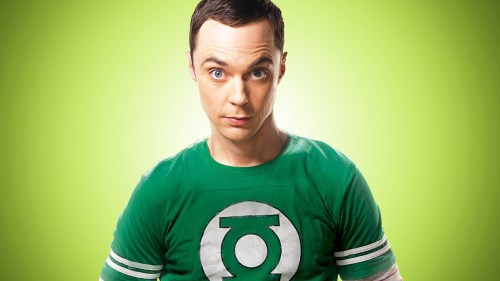
Then, there’s the growth of Sheldon Cooper. More than any other character, Sheldon demonstrated the value of having quality influences.
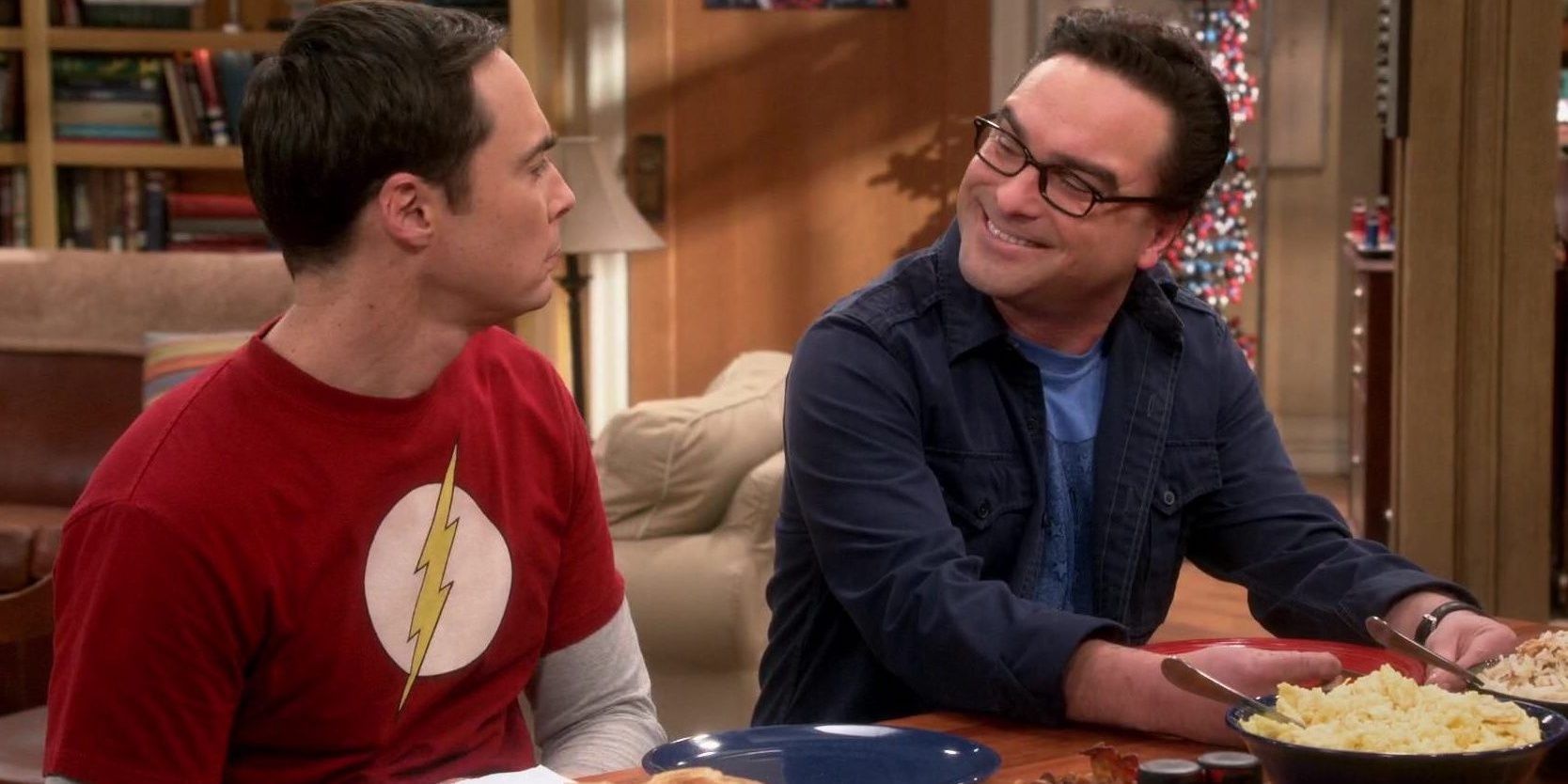
His nature is, by far, the most eccentric and extreme. It’s the nurturing forces, however, that I think had the greatest impact on both his character development and the overall progression of the of the show.

There’s no getting around it. In the first few seasons, Sheldon was a stubborn, selfish egotist. For a time, it was even a popular refrain to note that Sheldon was just one lab accident away from becoming a supervillain. Given that most supervillains tend to be petty, eccentric, and self-centered, I think that’s an accurate statement disguised as a joke.

Thankfully, that accident never happened. Instead, Sheldon was frequently nudged and, in a few cases, shoved into being less insufferable. Penny was usually the one to get him out of his comfort zone in the early seasons. Then, Amy Farrah Fowler came along and gave him a nurturing force that seemed almost impossible in the earlier seasons.

Amy brought issues of her own to the table, but like Bernadette did with Howard, she proved to be a stabilizing presence for Sheldon. She didn’t fundamentally change him, nor did she even demand it. She simply provided new influences. Granted, he stubbornly fought them, at first. He fought harder than anyone else in the group. In the end, though, he still embraced these changes and was better because of it.

It was that change that made his Nobel Prize acceptance speech at the end of the show so perfect. In that moment, he achieved something he’d been hoping to achieve since the earliest season. It was the ultimate affirmation of his genius and his abilities, which he’d bragged and boasted about to no end. It could’ve been the ultimate ego trip for him.

Instead, he thanked his friends. He demonstrated humility on a stage in front of a huge crowed of people. For someone who started the show seeming incapable of empathy and nuance, it was a powerful moment. It showed that this weird, colorful character that we loved and hated at times had really grown. He even acknowledged the source of that growth in a genuine, heartfelt gesture.

When you look at that moment in the context of the entire show, you can see just how powerful those influences can be. These chaLracters, all of which were set in their ways to some extent, showed just how much those influences can change. Even for characters with idiosyncrasies like Sheldon Cooper, people can change in positive ways.

Sheldon, Leonard, Howard, Raj, and Penny wouldn’t have undergone those changes without nurturing one another to some stent. At times, that nurturing took the form of annoyance and frustration. That only makes the change more fitting because most people resist that change. Even in the real world, our default reaction is to keep doing what we’re doing and make every excuse along the way.

While many sitcoms have their characters undergo plenty of upheavals, “The Big Bang Theory” goes the extra mile in showing how people can be changed by the people and influences around them. They’ll still stay true to their nature.

Sheldon will always have that distinct Sheldon-like persona, as will Penny, Leonard, Raj, and Howard. However, with the right kind of nurture, they can become endearing characters in their own right. Say what you will about the quality of the show, but its place in TV history has been secured.

Bazinga!

Leave a comment

Filed under health, human nature, Marriage and Relationships, media issues, psychology, romance

Why Organized Religion Opposes Assisted Suicide (For The Wrong Reasons)

190613_vod_orig_assistedsuicide_hpmain_16x9_992

Most people under the age of 40 are too young to remember the controversy surrounding Dr. Jack Kevorkian, also known as “Dr. Death.” For a time, he was one of the most polarizing figures in the world because he made assisted suicide a major socio-political issue. From 1989 to 1998, he took part in approximately 130 assisted suicides. It’s because of him that every state has a law regarding the practice.

Before I go any further into this very sensitive, exceedingly emotional issue, I want to make one thing clear. I don’t have a strong position on assisted suicide. I’ve had a hard time arguing in either direction. On one hand, I can understand someone in chronic pain wanting to end their life. On the other, I also worry that making such a practice mundane could undermine efforts to treat debilitating conditions.

I have people in my family who have fought debilitating illnesses. Some have lost those fights. Others won out and are stronger because of it. I believe that if you had talked to them on a particularly bad day, they might have seriously considered assisted suicide as an option. It’s a heart-wrenching issue that I’m not qualified to debate.

Despite those qualifications, I believe I’m still capable of scrutinizing certain aspects of the debate. Reasonable people can make reasonable arguments for and against assisted suicide. I’ll leave that part of the debate to people smarter and more informed than me. For the bad arguments made by unreasonable people, however, I think I’m as qualified as anyone.

One of the most vocal opponents of assisted suicide come from organized religion, especially the Catholic Church. Their position is fairly clear. Suicide is an egregious sin and a crime against human dignity. Even if you’re in debilitating pain, it’s not your place to take your own life. Only the all-powerful, all-knowing deity of their faith can do that. Some go so far as to claim that suicide automatically condemns a soul to Hell.

Setting aside, for a moment, the kind of theology that would condemn suffering people to more suffering in the afterlife, it’s worth taking a step back to ask why assisted suicide is an issue for organized religion in the first place. What interest could any religion have for getting involved in such an immensely personal issue?

To answer that question, it’s also necessary to distinguish between organized religion and the personal faith that people have. Your personal faith is personal. It’s between you and your loved ones. When religions get organized, they become impersonal and subject to different influences. As demonstrated by corporations or governments, those influences aren’t always holy, to say the least.

An organized religion, be it a huge institution like the Catholic Church or just a small denomination of churches, temples, and mosques, are driven by the same incentives. They need money, adherents, labor, and support from as many followers as possible. How they go about obtaining those resources varies from faith to faith. When it comes to maintaining those assets, however, things get less varied.

I’ve noted before how religious institutions have used dogma to maintain and reinforce social inequality. Any institution, religious or not, has a strong incentive to keep its followers in a state of ignorance, poverty, and dependence. It also can’t have too many people questioning the dogma, nor can it have people with enough resources or comforts to function without its help.

With religion, those incentives are easier to codify because it can claim that their doctrine doesn’t come from law, money, or brute force. It’s ordained by a powerful deity that is on their side. People can argue against politicians, protest greedy businesses, and question long-standing traditions. They can only do so much against a powerful, invisible deity.

It’s within this context that organized religion clashes with assisted suicide. Like with inequality, assisted suicide directly undermines the manpower and resources of religious institutions. It doesn’t just take from them an adherent or a potential convert. It strikes at the foundation on which organized religion builds its influence on people.

In the same way that a business needs customers with money to spend on their goods, organized religion needs people who feel deficient, impoverished, or desperate. It’s a well-documented phenomenon. Those who are poor, hungry, and suffering tend to gravitate towards organized religion.

Sometimes, this is a good thing because there are religious organizations out there who provide food, comfort, and care. Even if doing so acts as an indirect way to recruit adherents, it still provides tangible help to people who need it. That’s an aspect of organized religion that deserves respect. When it comes to suffering and dying, however, the practices aren’t nearly as commendable.

When people are dealing with a suffering loved one, it’s incredible difficult. It takes an emotional toll on both the individual and their family. It’s heart-breaking on so many levels. It’s also an unscrupulous opportunity for organized religion.

While they won’t outright prey on someone else’s suffering, they’ll often act as a source of relief and comfort. They’ll try to act as a shoulder to cry on, telling both the person suffering and their families everything they want to hear. It earns them points from both them and the larger community. They can claim they’re helping a suffering family, but without actually helping them.

They stop short of paying for an expensive, life-saving procedure. They’ll also stop short of paying medical bills that might have piled up. They’ll sometimes promise to promote scientific research to treat whatever is causing so much pain, but in terms of over-arching incentives, that makes sense in the context that any organization wants to keep its adherents alive.

When assisted suicide enters the equation, the religious organizations miss out on that opportunity. Instead of comfort from a priest, mullah, rabbi, or monk, those suffering can get relief from a simple medical procedure. Their family can also enjoy a sense of closure in that their loved one isn’t suffering anymore. No religious influence is necessary here.

For some, that’s not just a problem. That’s a threat. Anything that subverts the need for the religious organization undermines its ability to maintain and grow its influence. Assisted suicide does all that and then some. However, it goes beyond simply not having the chance to endear themselves to sick people and their families.

From their perspective, assisted suicide sets a dangerous precedent. If too many poor, desperate, suffering people start killing themselves to escape, then they lose one of their best sources of new adherents. It’s the same reason why they discourage abortion and contraception, hoping that adherents produce more adherents for the organization. It all comes back to maintaining and growing the institution.

That usually isn’t the stated purpose. Almost every major religion that discourages assisted suicide will argue from a moral perspective. However, the indirect effect is certainly there. That’s not to say that the heads of these religious organizations secretly meet in dark rooms and craft their dogma with these factors in mind. It’s simply a byproduct of large groups of people responding to incentives.

Even if the implications of opposing assisted suicide are indirect, it’s still not a good reason to oppose the practice. It requires that people overlook the suffering and pain of others while convincing them that they don’t have the right to make important choices in their lives. That effort only leads to more suffering and that can never be justified, no matter how much dogma is applied.

As always, I want to make clear that I’m not calling all religious organizations malicious for opposing assisted suicide. I don’t believe that those within these organizations are out to cause more suffering. Most believe, in their heart of hearts, that they’re doing the right thing. The problem is that dogma, doctrine, and powerful incentives can overshadow those efforts.

There are good, legitimate reasons to oppose assisted suicide. Unfortunately, organized religion rarely relies on those reasons. On top of that, they have one too many incentives not to focus on those reasons.

2 Comments

Filed under health, philosophy, politics, psychology, religion

Selling (And Exploiting) Human Enhancement: An Ominous Lesson From “Superior Iron Man”

tumblr_static_tumblr_static_251b2rz5uxz4s4sssw0skg04c_640

How much would you be willing to pay for perfect health, perfect beauty, and a greater capacity to enjoy life as you see fit? This is not a rhetorical question. I would even argue that it’s an increasingly relevant question. In the coming years, answering it might even become more urgent.

I’ve talked about the prospects of human enhancement through emerging technology before. From its impact on our concept of beauty to how our society will function, there are many impacts to consider. Some of those impacts are already manifesting before our eyes. Just last year, the first genetically modified babies were born in China. Like it or not, this is happening.

It’s impossible to overstate the benefits, risks, and upheavals that human enhancement will have on our species and our world. Nobody knows for sure what’s going to happen as this technology matures or how societies, economies, and governments will react to it. Even so, it’s worth contemplating. It’s even worth imagining elaborate scenarios in fictional worlds.

While plenty of noteworthy stories have imagined such scenarios, some more dystopian than others, there’s one in particular I’d like to single out. It’s not entirely dystopian, but it does offer some distressing lessons about the larger economics of human enhancement. It also helps that those lessons come through a forgotten, but criminally underrated Iron Man comic.

Given the rapid rise of Iron Man’s star power over the past decade, his character is uniquely qualified to explore these difficult questions surrounding technology and how we use it. He is, at his core, a visionary who uses technology to solve problems, save lives, and occasionally fight invading aliens. In the series, “Superior Iron Man,” he takes that vision several steps further and cross many lines along the way.

While there are some convoluted circumstances surrounding this series, the ideas it explores are profound, even by the standards of superhero comics. You don’t need to know the specifics of those circumstances. They involve forces like magic and inversion spells, which are far too complicated to explain to those who haven’t followed Marvel comics for more than two decades.

The only detail anyone needs to know about “Superior Iron Man” is that the Tony Stark in this story is not the same lovable character that helped make Robert Downy Jr. one of the most lovable stars in Hollywood. This version of Tony is less bound by concepts of heroism, selflessness, and sobriety. That’s not to say he’s evil, but he’s definitely no hero.

Within this ethically bankrupt state, Tony embarks on a new initiative that’s as selfish as it is lucrative. It revolves around Extremis, an exotic cocktail of nanotechnology and biotechnology that effectively rewrites the blueprint of the entire human body into something better, stronger, and more robust. In essence, it is the ultimate tool for human enhancement.

While the initial version of Extremis was lethal to most people who used it, Tony creates a more commercialized version in “Superior Iron Man” that gives everyone a chance to enjoy its benefits. He calls it Extremis 3.0 and people can access it through a simple smartphone app. With it, people can achieve what Tony describes as physical perfection.

Everyone can be perfectly healthy.

Everyone can be young and beautiful.

Everyone can be functionally immortal.

It sounds like a miracle drug and by every measure, it is. This isn’t some Dr. Oz wannabe pitching vitamins that do nothing other than give you false hope. This technology actually works. With it, Tony gives the entire city of San Francisco a chance to experience the fruits of human enhancement.

Understandably, once people get a taste of what Extremis 3.0 has to offer, they love it. They also take full advantage of it. At one point in the story, Pepper Potts says it’s turning the streets of San Francisco into a non-stop parade of debauchery and self-indulgence. Tony does not see this as a bad thing. If anything, it perfectly complements his plans and his renewed appetite for self-indulgence.

This is where “Superior Iron Man” attempts to answer that question about putting a price on physical perfection. Writer Tom Taylor, alongside artist Yildiray Çinar, doesn’t hide from the disturbing parts of that answer. By the end of the first issue, Tony puts a literal price on that perfection. Needless to say, it causes plenty of conflict and it escalates quickly.

When he initially released Extremis 3.0 onto San Francisco, he gives ordinary people a taste of what it’s like to be as fit as Captain America, as beautiful as Emma Frost, and as physically endowed as Thor. It’s not a drug that just attempts to match that feeling. It physically changes their bodies and their capacity for using them. That taste, however, was just a free sample. To keep enjoying it, they must pay $99 a day.

It’s crude trick right out of the playbook of subscription apps. People get a free trial period that’s just long enough to get them hooked. Then, before they even realize they have to pay anything, they get hit with a paywall. It’s a cruel bait-and-switch, but this isn’t just another streaming video service. This is physical perfection and unlimited self-indulgence. Is $99 a day really that unreasonable?

It certainly rubs plenty of people the wrong way, including many of Tony’s long-time friends and allies. Both Daredevil and Pepper Potts turn against him for such devious tactic. It also has some noticeable effects on the people who use it. By the end of the first issue, a stark class divide emerges between those who can afford Extremis 3.0 and those who can’t.

Naturally, it causes crime and conflict among the residents of San Francisco. Tony, now both feared and beloved by these people, takes it upon himself to manage it. He gains power, wealth, status, and an endless supply of eager party guests for whenever he seeks to indulge. It’s a perfect cocktail of recklessness and irresponsibility.

Without spoiling the rest of the story, which ended too soon, I think it’s worth taking a step back and looking at the bigger picture that “Superior Iron Man” presented. If you take away the iconic characters and the superhero themes, you get a story about a selfish business tycoon who has sole possession of the ultimate biotech product.

The goal isn’t to heal the sick, ease suffering, or evolve the human species. The goal is simply to make a lot of money, feed an inflated ego, and indulge in every conceivable vice without consequences. It’s a worst-case scenario for liberals and conservatives, alike. At the same time, it makes a compelling case that our current system can’t handle the impacts of large-scale human enhancement.

That doesn’t mean it can’t succeed in our current system. The size of the current biotech industry is already measured in the hundreds of billions. Overpriced drugs are nothing new, either. Just this past year, the FDA approved a drug called Zolgensma, which costs $425,000 a year for five years to treat a rare genetic disorder called spinal muscular atrophy.

By comparison, Extremis 3.0 is a bargain with far greater value. Even at $99 a day, the yearly cost of enjoying that physical perfection amounts to around $36,500 a year. That still takes up a good chunk of the average income for most Americans, but considering all the benefits of having a perfect body, is it still a bargain?

For anyone who has overpaid for inflated medical expenses, I suspect they would gladly pay that high price for Extremis 3.0. Tony Stark banked on that in “Superior Iron Man” and he was right. People did pay and it was very lucrative for him. The population of the San Francisco Bay Area in which he unleashed Extremis 3.0 is around 4.6 million. At $99 a day, that’s a potential annual revenue of $167 billion.

In terms of business ranking, that would put Tony’s venture in the top 20 in terms of largest companies by revenue. If he were to unleash Extremis on the entire United States, the potential annual revenue would be near $11.8 trillion. That’s a little more than half of the entire US economy.

Imagine one company, let alone one person, having that much money and influence over a population. Tony was already a billionaire before “Superior Iron Man,” but Extremis 3.0 rewarded him with more than just money. Tony, being the sole provider, held a great deal of power and influence over San Francisco. As is often the case in superhero stories, that power goes to his head.

That story plays out in the real world just as often. In some cases, it brings out the worst in people. For a product like Extremis 3.0, which provides human enhancement into a simple commercial package that anyone can access through an app, the potential for abuse is much worse.

Beyond the greed it would inspire and the recklessness it fosters, it would also widen and solidify a gap in society that might be impossible to close. The wealth gap is in the non-superhero world is already egregious. Adding something like Extremis 3.0 to the mix would only make it immeasurably worse.

More than a few people has expressed concern about the prospects of such an enormous societal divide. “Superior Iron Man” showed just how bad it could get and how quickly it could escalate. While the series only managed to explore this conflict to a point before it got canceled, Tom Taylor did enough to get a powerful point across.

In a world where human enhancement is real and commercially available, how do we go about distributing it among a population? Should we put a price on it? How high should that price be? Who should be in control of it?

Worst case scenario.

Superior Iron Man” never got a chance to explore the answers, but these are questions that will become increasingly relevant as advances in biotechnology accelerate. We may not be close to having a product like Extremis 3.0 and it’s uncertain whether we’ll even develop something like it in the next few decades.

Even if we do, “Superior Iron Man” made one thing clear. We, as a species and a society, are not ready for it.

1 Comment

Filed under biotechnology, futurism, health, human nature, Neuralink, Sexy Future, superhero comics