People are diverse, complicated, and erratic at times. If you’ve spent any amount of time on this planet, you’ve probably figured that out already. As a result, people are often turned on or aroused by weird things. The very existence of BDSM is proof of that. Some of the sexy stories I’ve written only add to that proof.
I know anything sexual tends to make people uncomfortable. That’s understandable. Sex has a lot of taboos and we, as a society, are still learning to deal with them. At the same time, no amount of stigma can stop people from getting turned on. The human body, the human mind, and the human sex drive is just that strong.
As a result, people will often uncover what turns them on or gets them aroused in unexpected ways. Sometimes, it’s by accident. Sometimes, it’s awkward as hell. It can also be both hilarious and hot. That’s just the extent of how complicated people can get.
To that end, I’d like to share some real stories of how people “accidentally” discovered what turns them on. It comes courtesy of the r/AskReddit subreddit and the YouTube channel, Reddit Legends. Please note that some of these stories are NSFW and some are less titillating’s than others, but they’re still fun and insightful. Enjoy!
The following is a video from my YouTube channel, Jack’s World. In the spirit of the 4th of July, I decided to do a deep dive into one of my favorite movies of all time, “Independence Day.” Given it’s timely, patriotic themes, I’m sure many will watch at some point in July. However, I believe this movie has more to offer than rousing speeches and alien battles.
I believe this movie presents us with a unique scenario for first contact with extraterrestrial aliens. While it’s a dark, destructive scenario, it may ultimately be the best scenario we can hope for. That may sound strange, but I try to make that case in this vide. Enjoy and have a wonderful 4th of July!
You’re at a prestigious awards ceremony. The nature of the ceremony and the award aren’t important. The only factor that matters is the awards are granted to only a few individuals who have achieved feats that few human beings have achieved. It’s an honor just to be nominated, but an even bigger honor to win.
With that in mind, imagine two different winners for two different feats. The first winner comes up onto the stage, accepts their award, and gives a heartfelt speech that’s something along the lines of this.
“Thank you so much for this incredible honor. It was a long, hard road to get to this point, but I’ve been so blessed with wondrous gifts and amazing support. To them and to the higher power that blessed me, I am eternally grateful!”
Chances are you’ve heard a speech like that before. We hear it all the time with athletes, celebrities, and major public figures. They achieve something spectacular and their first inclination is to say they are blessed. They don’t always thank a god for it, but it’s such a common refrain that most come to expect it. Some even joke about it.
That being said, try to imagine your reaction for the second winner. They come out on stage with the same immense joy as the previous winner. They also give a heartfelt speech of their own, but it goes like this.
“Thank you so much for this incredible honor. It was a long, hard road to get to this point, but I was just really lucky to be born with talent and amazing support. I like to think I’ve made the most of it. This award is just part of it. For that, I am so proud of myself and those who helped me!”
I doubt a celebrity has given an acceptance speech like this before. If they did, chances are it would either be a joke or an elaborate act of trolling, which some celebrities are known to do. For the sake of this little thought experiment, imagine the person was sincere. How would you feel about them? Would be different than the first?
I crafted this scenario as a way of illustrating the difference between being blessed and being lucky. These terms tend to get used interchangeably. In common language, they’re somewhat synonymous. Even though dictionary definitions have somekey distinctions, the standard usage of these words carries a particular meaning.
Part of that meaning stems from the general discomfort we feel about the universe being so chaotic and meaningless. We’re wired to seek patterns and surmise order. It doesn’t even matter if the patterns or order is real or an outright trick. When people can make sense of the world, we’re better able to function. It’s a big reason why humans have been able to adapt and survive with such success.
The ideas being lucky and being blessed reflect opposite sentiments of a similar principle. We see luck as a fluke. There’s no meaning behind it. It just happens randomly and without any defined goal.
A kid is randomly born with talent that makes them a great athlete.
A person randomly picks the winning numbers to win a big lottery prize.
A person just happens to be in the right place at the right time to meet the love of their life.
None of these situations are inherently right or wrong. That’s part of what makes it so distressing on some levels. The people who benefit from luck do nothing to deserve or warrant their good fortune. It goes against that innate sense of fairness that most sensible human beings have wired into their brains.
Being blessed, on the other hand, carries a very different connotation. To be blessed implies that some person, deity, or sentient force chose to grant someone such benefits. It’s not random. It’s part of a larger plan. It may not seem like one on the surface. It may even be an outright illusion. That ultimately doesn’t matter. The semblance of a plan is enough.
To be blessed also carried with it a sense of humility. Someone who just says they’re lucky doesn’t come off as moral or gracious. Even if they’re entirely ambivalent about it, they won’t inspire respect or admiration for acknowledging their luck. If they say they’re blessed, though, it changes the context.
A person who is blessed with talent means their achievements have a greater meaning.
A person who is blessed with picking winning lotto numbers means their good fortune is part of some larger plan.
A person who is blessed with meeting the love of their live means their love is somehow pre-ordained by fate.
The difference lies within the meaning. Being blessed conveys influence from a source greater than the person receiving the blessing. To show gratitude to that force is to accept that it’s not just about you. There’s a larger plan and you’re just part of it. That sounds humble, but at the same time, it detracts from the true extent of an achievement.
Luck or no luck, it takes effort and dedication to achieve something of value. Whether it’s an award for world’s largest nose ring or setting a record for most pop tarts consumed in a day, an accomplishment still requires work. Even lottery winners have to go out of their way to pick the numbers, get the ticket, and claim their prize.
To call that process a blessing is to dehumanize the actions involved. It undercuts the countless other factors in play. Some are entirely controllable. A champion of any sport usually has talent, determination, and a willingness to refine their skill. Others are simply beyond their control, from the conditions of an event to just the general randomness of a particular moment.
To assume these factors as part of some over-arching plan is to assume there’s a governing force that consciously cares about these random happenings. Whether that force is a deity or some idea of conscious fate, people will consciously devalue their own worth to believe they’re part of something greater. It might not be real, but that’s beside the point.
It helps us wrap our brains around incredible achievements and improbable events. It shows in how people can resent those who are just deemed lucky. Again, just look at lottery winners. Those who have enjoyed that rare level of luck can attest that they are generally looked down upon by those who gained their fortune in other ways.
This isn’t to imply that the whole concept of being blessed is inherently wrong. There may actually be a higher governing power behind certain peoples’ fortunes, be it an all-powerful deity or the shape-shifting lizard men of the Illuminati. There’s no evidence of it now, but as believers and conspiracy theorists will often point out, absence of evidence isn’t evidence of absence.
That said, I believe the dehumanizing aspect of blessings over luck does more harm than good in the long run. Humility is an admirable trait, but there are better ways to encourage it that don’t involve assigning some arbitrary meaning to random events. In addition, saying someone or something is blessed has some indirect implications that are even less desirable than a random universe.
If one person is blessed, then that implies other people were deemed undeserving.
If one moment is blessed, then those that came before it are nothing more than prelude, no matter how much they meant to those involved.
If a people or society are blessed, then that basically declares that everyone else is somehow beneath them and that mentality rarely brings out the best in people.
Human beings are capable of remarkable feats. Many of those feats don’t require a higher power or some conscious force. They simply require an opportunity and a willingness to strive for something greater. Granted, opportunities can be random and there’s only so much anyone can do to control the luck they get. However, I submit that gives it even more meaning in the grand scheme of things.
In general, I’m a pretty optimistic person. I have an overall positive outlook on life and the future. I’d even go so far as to say I’m excited about what the future will bring. My posts about sex robots should be proof enough of that.
However, I wasn’t always optimistic. In fact, anyone who knew me in high school or middle school probably saw me as the antithesis of optimism. I was always so dire and bleak with my outlook. I rarely had anything good or positive to say. I put myself down all the time and tried to bring the rest of the world with it.
It was not a healthy mindset, to say the least. I’m very glad I got out of it.
At the same time, it has given me some perspective. Having been on both extremes, I know what fuels that kind of thinking. I know and understand, to some extent, what leads someone to have that mindset.
Overall, I feel like having a positive outlook is more beneficial. That’s to be expected. When you’re more hopeful and optimistic, it tends to bleed into other aspects of your life. Optimism tends to attract optimistic people and those people are generally good for you. I certainly wouldn’t have the friends I have now if I’d remained so negative.
At the same time, there is a limit to optimism. There does come a point where being optimistic can be damaging, in the long run. I’m not talking about the kind of optimism that’s outright delusional, either. I’m more referring to the kind of mindset that makes someone too oblivious to the world.
I think that’s something people do struggle with. That might be a hard thing to say in wake of a global pandemic, but even before that dampened everyone’s spirits, it was easy to get caught up in that mindset. It often goes like this.
If everything seems to be going well, then why bother changing anything?
If things stop going well, then you try to get back to that particular mentality.
If what you do doesn’t work, then you double down and try even harder.
What made you happy and hopeful worked before. Why wouldn’t it work again?
This is a mindset I can attest to. When I was in college, my overall outlook improved. I got a lot less negative about the world. I got better at making friends. I even dared to be hopeful about the future.
Then, I faced some challenges. It was often small or minor. A girl I liked didn’t like me back. A class I took didn’t go well. My favorite team starts losing or I get into a fight with my roommate. It was very stressful, but I thought just maintaining a positive outlook would help work things out.
It didn’t. I won’t say it didn’t help at all. It just didn’t help as much as I’d hoped.
The same thing happened when I got anxious about my health and body image. As I’ve noted before, I did not have good health habits in my youth. I didn’t start regularly going to the gym until I was almost 30. Before then, I thought I just needed to rebuild my confidence and remain hopeful. I now know that was incredibly short-sighted.
Just having the right mindset is barely the first step. At some point, I had to make a more concerted effort. I had to work, grind, and struggle to get to where I wanted to go. If I had just stayed entirely within this positive mindset, I probably wouldn’t have gotten to where I am now, health wise. In that sense, being too positive worked against me.
This is the trap of overly positive thinking. Sometimes, if you’re too positive, you’re less inclined to put in the extra effort and make a meaningful change. Whether it’s about your health, your social life, or your politics, too much positive thinking can become an excuse to not change or do anything different.
That’s rarely healthy. That’s also why a little regular introspection can be a good thing. It’s something that’s encouraged by professionals who are far smarter than me on matters of psychology. If you need further details, check out this piece I found from Psychology Today.
When we suffer pain, rejection, disappointment, loss, disease, or another catastrophe, happy talk, whistling in the dark, or putting on a happy face do not work. Every cloud does not have a silver lining nor is there a pot of gold at the end of every rainbow.
Because the world is filled with all sorts of unhappy events, from not getting that dream job to losing a best friend to cancer, thinking only positive thoughts is delusional. Trying to maintain a happy face while tragedy engulfs us is unnatural, akin to trying to laugh when our hearts are breaking. Like Pagliacci, the clown who was intent upon making others laugh while tears streamed down his cheeks, we shortchange ourselves when we fail to deal with negative events and emotions.
I’ll sum this up by offering one last bit of insight.
Life isn’t easy, but it’s worth the effort. Things do generally get better and assuming the worst tends to be a self-fulfilling prophecy. However, just being positive is never enough. At some point, you have to make the effort. It’s often strenuous and frustrating, but it’s wroth doing.
In general, I try to respect the sincerely held beliefs of others. It’s something I hope most decent human beings can agree upon. Mocking, belittling, or denigrating someone else’s beliefs isn’t just bound to cause conflict. It’s just a dick move.
I say that as someone who has criticizedorganized religionmany times before. Within those criticism, though, I make it a point to say that I try to respect those who are sincere in their beliefs. I’ve no desire to mock them or make them feel lesser for believing what they belief.
All that being said, I draw a clear line when those beliefs get people killed.
This brings me to vaccines and the conspiracy theorists who love whining about them. These are people whose beliefs are hard to respect in any context. They’re not just skeptical about the efficacy of vaccines. They go out of their way to protest their use, even during a global pandemic that has killed millions.
I’m sorry, but I just can’t respect that. I don’t care if it’s for religious or non-religious reasons. This sort of thing is killing people. That’s objectively bad.
Now, I predicted last year that religious zealots would be among those who refuse to take vaccines and go out of their way to denigrate scientists. Unfortunately, that prediction proved distressingly accurate.
However, what I didn’t predict was how many self-professed “skeptics” would protest vaccines for non-religious reasons. I knew it was going to get absurd. I just didn’t know it was going to get “vaccines are making people magnets” absurd.
Seriously, I wish I were making that up. That’s a real testimony from a registered nurse, of all people, during an Ohio public hearing. Here’s the story from the Huffington Post. Be warned, though. Your faith in humanity will be shaken.
An anti-vaccine Ohio nurse attempted on Tuesday to prove that COVID-19 vaccines make people magnetic, but ― to use a gymnastics term ― she failed to stick the landing.
Registered nurse Joanna Overholt, testifying before the Ohio House health committee about what she said were potential coronavirus vaccine dangers, tried to use her own body as proof.
Overholt said she heard during lunch that vaccines cause magnetism in humans, so she decided to prove her point on herself by attempting to show how a bobby pin and a key would stick to her exposed skin.
Spoiler alert: It didn’t go well.
Wow. An anti-vaccine nurse in Ohio tried to prove the Vaccines Cause Magnetism theory in an state legislative committee. The demonstration did not go to plan pic.twitter.com/0ubELst4E8
Now, I don’t know this woman’s full story. I have no idea what’s going on in her life or what led her to belief something this absurd. I’m fairly certain she didn’t just wake up one day and decide to believe bullshit conspiracy theories about vaccines.
Whatever her story, it doesn’t change the implications or the consequences. What she’s promoting isn’t just wrong or absurd. It’s legitimately harmful. On top of that, we’re still dealing with a pandemic and rhetoric like this is going to get people killed.
That’s the main takeaway I glean every time I see stories like this. That’s what sets them apart from other absurd conspiracy theories. Believing there are alien bodies in Area 51 or that the moon is made of cheese doesn’t directly harm anyone. Just being ignorant of certain facts is also forgivable. The internet is full of dumb falsehoods these days.
Unfortunately, these anti-vaxx conspiracy theorists are only fueling a sense of vaccine hesitancy that was always going to be an issue. Even before the age of the internet or modern religion, there has always been a skepticism about scientific advancements. This is just making it worse and getting people killed.
It’s one thing to make yourself look foolish in public in a manner that’s recorded and spread throughout the internet. That usually doesn’t have major consequences beyond making certain people internet celebrities for all the wrong reasons. It’s quite another to be foolish in a manner that undermines public health and leads to undue suffering.
There’s just no getting around it. Lower vaccination rates mean more disease. More disease means more suffering. In this case, it’s not a minor inconvenience. It’s potentially fatal. I feel like that last detail is worth emphasizing.
The problem is that those pushing anti-vaccine conspiracies don’t see that detail, either by ignorance or by choice. They may, in their heart of hearts, believe they’re saving lives by preventing people from getting vaccines. However, basic biology and math say otherwise. The data is not in dispute.
These beliefs are killing people.
The people who push these beliefs are responsible for propagating that suffering.
These beliefs do not deserve respect.
Consider this both a plea and an angry rant of sorts. If you are pushing these conspiracy theories, you’re not just a misguided fool. You’re going to get people killed. After last year, we dealt with enough death. Please don’t add to it.
There are certain people, groups, and companies that are difficult to defends. It’s not impossible, as is the case with tobacco companies, criminal organizations, and whoever designs unskippable video ads. It’s just difficult and I’m certainly not qualified to carry out such with any real expertise.
I’m just not that smart or informed.
I make that disclaimer because I’m about to defend a company that doesn’t have a stellar reputation, to say the least. If anything, their name and its famous founder have gained such a negative connotation that they’re just a few steps away from being a tobacco company. Given how one actually sells products that gives people cancer, that’s saying something.
That company is Facebook. I know that just typing that word out for people to read is going to garner a reaction and not in a good way.
I get that. I really do. I’m very much aware of some of the many scandals and shady dealings that Facebook has engaged in since its inception. I’m also aware of the objectively negative impacts that Facebook has had on certain people. That’s not something I can defend, nor would I want to.
There are any number of bad things about Facebook and its impact that I can go over. However, there is one important aspect to those things that I would like to highlight. I don’t think it constitutes a defense of Facebook or its practices, but some may construe it as such. I’m still going to point it out, if only to add some perspective. It all comes down to this.
Facebook is still just a tool. At some point, all its damaging ills are on us, the users, and not the company.
I understand that’s an unpopular sentiment. It’s not that dissimilar from what gun advocates say about guns. Like any inanimate object, it’s not deadly or damaging until somebody willfully uses it. That’s certainly true to some extent. It’s just a matter of the extent that people disagree on.
However, Facebook is not akin to a firearm or some tool that can actually be used to cause tangible, physical harm to someone. It’s a website/software program. Using it requires people to go out of their way to access it. In addition, getting any meaningful use out of it requires active engagement. It’s not just something you can give to a kid and they would easily figure it out.
It can still be damaging, but in a very different way. Like it or not, some of those ways are ultimately our responsibility and not that of Facebook. I know it’s just a lot easier to criticize the company, its practices, and the conduct of its founder, Mark Zuckerburg. That doesn’t change the actual nature of the product.
Yes, there is objectively toxic content on Facebook that degrades, demeans, and deceives people.
However, that toxic content doesn’t come directly from Facebook. It comes from us.
I bring this up because I saw the hashtag, #DeleteFacebook, trending again. That seems to happen several times a year, often after a new scandal or in wake of an unpopular decision. It’s becoming so routine that it’s hard to take seriously.
On top of that, the hashtag rarely accomplishes anything. Despite all the scandals and negative press, the overall usership of Facebook is still growing. As of this writing, it has approximately 2.85 billion users. Criticism and hashtags aside, it hasn’t kept the company from growing. It hasn’t made Mark Zuckerberg any less rich and influential.
I know hashtags are notorious for presenting a false reality to those who seek it, but this particular hashtag has become more a virtue signal than an actual protest. More and more these days, the hashtag has become less about Facebook’s unscrupulous business practices and more about protesting Big Tech, as they’re called.
While there’s certainly a place for protesting the practices of large, powerful corporations, I feel like the substance of that effort gets lost in virtue signaling. People are more inclined to just whine about how bad Facebook is and say how much better their lives are after deleting it. It’s rare for anyone to actually highlight a substantive policy or practice that warrants protest. It’s all about people saying, “Look at me! I gave up Facebook, so I’m better than you!”
I know that’s a simplistic statement that doesn’t apply to everyone. I’m sure there are people whose lives did improve after deleting their Facebook account. At the same time, there are people whose lives are still enriched by Facebook.
Personally, I’ve met great people through Facebook. I’ve also been able to keep up with friends and family that I never would’ve been able to keep up with. I genuinely value those connections. They even prove critical when there’s a major family crisis that everyone is trying to keep up with. That happened several years back when my grandmother got sick. It happened more recently with helping my father connect with other relatives during the pandemic.
Facebook can be used for good. Like any tool, it can have a positive impact on its users. It’s just a matter of how it’s used.
There will always be people who seek to use any tool for something wrong, deviant, or nefarious. We don’t criticize ski masks the same way we criticize Facebook and for good reason. At the end of the day, it comes back to the individuals using it.
Again, that doesn’t excuse some of the shady things the company has done over the years. I’m not defending that. This extended rant is just me reminding people that some of the worst parts of Facebook only exist because of us, the users. At some point, we have to take responsibility for that. We can’t expect a multi-billion dollar software company to do it for us.
A year and a half ago, not many people knew what Zoom was. In fact, if you asked someone if you wanted to set up a Zoom call, they would probably just stare at you blankly and wonder if you had been watching too many cartoons. They were more likely to respond to Skype calls or FaceTime. That seemed to do the trick for most video conferencing needs.
Suddenly, we couldn’t just wake up, meet up with friends or family, and interact like we’ve always done. We had to rely more and more on technology, especially video conferencing, to fill that gap. In doing so, we realized that Skype and FaceTime just weren’t enough.
That’s where Zoom came in. We all learned quickly that this software wasn’t just much more useful. It was a vital link between friends, family, teachers, students, and so much more. We all came to rely so heavily on Zoom that it has basically supplanted all other forms of video conferencing in the span of a year. That’s a hell of a accomplishment.
Most people don’t fully appreciate the story behind Zoom. It’s actually really sweet in that it has a romantic sub-plot. Being a lover of romance, I certainly appreciate that. The basics are that the company’s founder, Eric Yuan, was struggling to maintain a long-distance relationship with his then-girlfriend, now-wife. He was familiar with video conferencing technology, but quickly realized its limitations.
Rather than lament on the frustrations of long-distance relationships, he decided to actually do something about it. That’s what led him to create Zoom. It really is a beautiful story and I just gave the bare basics of it. If you want a more complete story, check out this video by the YouTube channel, Company Man. Seriously, you’ll appreciate Mr. Yuan and Zoom even more.
Beyond the story behind this software, I can attest to how vital it has been to keep me connected with friends and family. When the pandemic hit, we had no idea how long it was going to last. I had still made plans to visit friends and family over the course of the year. As those plans were crushed by the pandemic, just maintaining contact became a challenge.
At first, we tried to use FaceTime, but that proved unreliable. It was also a pain in the ass to get multiple people on the same call. Once we discovered Zoom, an entire world opened up. It started simply with my mother organizing this big group Zoom call between the family and a relative who was getting married. It proved so successful that many of us started finding other uses for Zoom.
One of the most important to me, personally, came from my dad. While he’s usually reluctant to adopt new technology, he came to enjoy scheduling video chats with me and my brother every Saturday morning. We would just sit in our kitchens, open up a chat, and sip coffee while talking about this or that. It felt very much like a normal meet-up. Even after we’ve all been vaccinated, we still do it. It’s a much better way to keep up than a typical phone all.
On top of that, Zoom has helped me strengthen ties with siblings who don’t live nearby anymore. One of my favorite daily rituals during the week is to join my oldest sister in a Zoom call while she and her friends watch Jeopardy. It has been a great way to both meet new people and grow closer to her, even though she doesn’t live nearby anymore.
Without Zoom, none of this would’ve happened. It wouldn’t have even been possible, given how cumbersome FaceTime and Skype has been. For that, I’m grateful. I’m sure I’m not the only one. I imagine Zoom has helped plenty of people stay connected with friends and family in ways they wouldn’t have been able to do with simple phone calls. It has also helped people who usually resist new technology to embrace it. I consider that a good thing.
Even after the pandemic is over, I still plan on using Zoom to keep up with friends and family, especially during times of the year when it’s harder to travel. I hope others do the same. Connecting with loved ones is critical during a crisis. Staying connected when times are good is every bit as important.
To Mr. Yuan, on behalf of everyone who has benefited so much from Zoom, I sincerely thank you.
Let’s face it. We’ve had a lot of that lately. Last year gave us plenty of difficulties, to say the least. It certainly doesn’t help that good stories rarely make the news, mostly because it doesn’t garner ratings or shock value. I tried to do my part, but I admit it wasn’t easy.
I managed to find some silver linings, by they hardly made up for all the soul-crushing hardship that year wrought. My spirit is still not fully intact after being so broken by last year.
Even so, I still want to make that effort to highlight good news, especially when it’s unexpected or surprising. One such story involves the less-than-uplifting topic of suicide, something that is both emotionally charged and incredibly devastating for a great many people and their families.
If ever there was a year during which people could be forgiven for thinking such morbid thoughts, it’s 2020. If a story came out that indicated suicides went up during 2020 as the pandemic raged, then I doubt anyone would be surprised. It probably wouldn’t even be news.
However, according to a story from CBS, that’s not what happened. In fact, the opposite occurred. Against all dire assumptions and understandable cynicism, the number of suicides in the US declined significantly during 2020. I’ll give everyone a minute to wrap their heads around that.
The number of U.S. suicides fell nearly 6% last year amid the coronavirus pandemic — the largest annual decline in at least four decades, according to preliminary government data.
Death certificates are still coming in and the count could rise. But officials expect a substantial decline will endure, despite worries that COVID-19 could lead to more suicides.
It is hard to say exactly why suicide deaths dropped so much, but one factor may be a phenomenon seen in the early stages of wars and national disasters, some experts suggested.
“There’s a heroism phase in every disaster period, where we’re banding together and expressing lots of messages of support that we’re in this together,” said Dr. Christine Moutier, chief medical officer of the American Foundation for Suicide Prevention. “You saw that, at least in the early months of the pandemic.”
An increase in the availability of telehealth services and other efforts to turn around the nation’s suicide problem may have also contributed, she said.
I want to make one thing clear again before proceeding. Suicide is a serious issue that affects a lot of people. If at all you’re struggling with suicidal thoughts, please consider calling a help line or reaching out to someone. There are people out there who will listen.
Having said that, I also want to note that this news genuinely surprised me. Even as someone who tries to have more faith in humanity than most, this is pretty much the opposite of what I would’ve assumed and in the best possible way.
During a crisis, people tend to panic. We all saw that last year. Anyone who fought someone for access to toilet paper remembers that. When people panic, they get stressed out. When they get stressed, they tend to get depressed. How else are you supposed to feel when you see the death toll climbing every day?
Despite all that, fewer people fell beyond that darkest of dark points. More chose to endure. That bold part is something I highlighted because that is a real effect. Whenever a disaster strikes, people tend to come together. Things like political divisions, racial strife, and what not tend to fall to the wayside when we’re all at the mercy of something we can’t control.
It’s one of humanity’s greatest strengths. Our tribalism may divide us a lot during times of peace, but when the going gets tough, we come together for the sake of survival. That’s powerful sentiment and one that can bring out the best in people. During a global pandemic, we all have to come together to some extent to make it through.
In addition, some cite the rise of telemedicine and the ability to treat people with mental illness remotely as a contributing factor. I certainly think that played a part, but I suspect that the shared struggle and solidarity that often comes during a disaster was a larger factor.
That same shared sense of community and commonality directly counter some of the most powerful risk factors for suicide. Those who make that dire choice often feel alone and isolated. They feel they lack that core sense of community that’s so critical to any social species.
The fact it was strong enough to reduce suicide during a once-in-a-century pandemic is both revealing and encouraging. It shows that this shared sense of community has tangible benefits to large swaths of people. It also hints that the world we had prior to the pandemic wasn’t given enough people this sense of connection.
You can blame that on any number of things, from smartphones to outrage culture to politics. I certainly have my theories, but I’m not smart enough or informed enough to make them credible. I highlight this story because I think it offers and important perspective.
When things get really bad, people will come together. It’s only when they get bad enough that we realize how much more we can do as a community than we can as individuals. We shouldn’t forget that. Even after this pandemic is over and things revert to some semblance of normalcy, we can’t forget that we’re a social species.
We need each other.
We need friends, family, and neighbors. It doesn’t just make us all stronger during a crisis. It’s an integral part of being human.
I’m sure many have already heard the news, by now. Bill and Malinda Gates, one of the richest couples on the planet, are getting a divorce. Now, regardless of how much you despise the ultra-rich for hoarding so much wealth while avoiding taxes at every turn, divorce is a terrible thing. There’s no amount of money in the world that makes it less damaging to all those involved, especially the kids.
Now, we don’t know the particulars of Bill and Malinda’s relationship and I don’t think it’s fair to speculate. I’m sure there will be plenty of tabloid fodder over the course of the next several months or years, for that matter. I want no part of that.
At the very least, I think this would be a good time to take a step back and acknowledge how difficult divorce can be. I know many people personally who have endured it and its damaging effects. It has also affected my own family in profound ways. I’m sure plenty of others have felt it too.
To that end, I’d like to share some painful, but sometimes hilarious, divorce stories from real people who are nowhere near as rich as the Gates. This comes courtesy of Reddit and the YouTube channel, On Tap Studios. Also, if you have your own divorce story that you’d like to share in the comments, please do so. We all can’t be as well-off as the Gates, but we can still appreciate the pain and struggle that comes with every divorce.
I’m a proud American. I love my country and I celebrate its highest ideals. I also believe most Americans are good, decent people who cherish these values as well. I don’t deny its flaws, nor do I deny its mistakes in the past, as well as the present. I genuinely want America to be the best it can be.
That’s why I’d like to make a plea to America and all my fellow Americans at the moment.
Please, for the love of whatever deity you believe it, let’s not have another Satanic Panic.
This isn’t just about politics, although there are some distressing links. This isn’t just about culture, even though the imagery is certainly present. This is me, a proud American, urging his fellow Americans to not give into the temptation to start blaming demons and devils for their problems.
There was no reason for the panic. There were no Satanic cults secretly torturing or abusing children. It was all made up. It was basically Christian Conservative fan fiction that people took too seriously. Much like the character of the devil they fear has no basis in Christian theology. It’s just a boogie man for adults.
None of it amounted to anything other than baseless fear and ruined lives in the 1980s. Now, it seems too many people have forgotten what a huge waste of time that was because concern about Satanic cults abusing children are back and more political than ever.
Much of that is because of a bullshit conspiracy theory that I won’t name or link to. You probably know who I’m referring to. They’re the one that thinks Tom Hanks is part of a Satan worshipping cabal. As it just so happens, this same cabal includes everyone who leans right politically absolutely hates.
If they’re to the right of Ronald Regan, they’re a Satan Worshipper.
If they didn’t vote republican in the last four elections, they’re a Satan Worshipper.
If they support position that doesn’t involve cutting taxes, ignoring racist policies, or overfunding the military, they’re a Satan Worshipper.
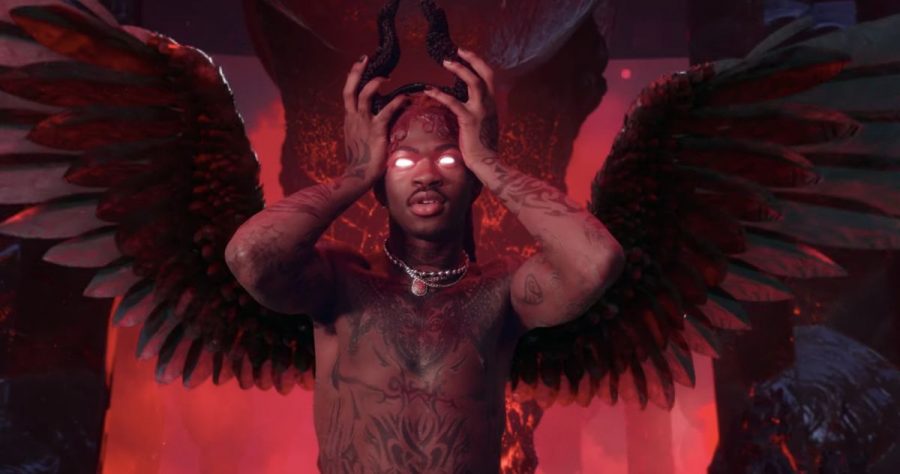
I’ve been avoiding this absurd, asinine, infuriating excuse for a conspiracy theory for years. It’s just too stupid to take seriously, let alone discuss in an honest, balanced way. However, thanks to the recent outrage surrounding Lil Nas X and his homoerotic, Satan-centered music video, I worry another panic is brewing.
Much of it is coming from the same part of the political spectrum as it did in the 1980s. This time, however, isn’t just a bunch of Christian conservatives with too much time and money on their hands. People who don’t even identify as religious are buying into this crap.
It’s not just about theology anymore. It all comes back to this age old belief that there’s a group of objectively evil supervillains who are causing all the problems in the world. Satan worshippers who eat children and deal in human trafficking is as evil as you can get. There’s nothing complicated or nuance about it. It’s the ultimate good versus evil match-up.
Except, and I cannot stress this enough, it isn’t real.
That evil conspiracy doesn’t exist. I could cite any amount of evidence, but I know that won’t convince those who ardently cling to it, even after its many predictions end up being wrong. Instead, I’m just going to point out one simple issue.
For any conspiracy of any level to function in any capacity, it requires that those involved are completely obedient, always keep their secrets, and never make mistakes. Since these conspiracies involve people and people, in general, are imperfect beings, they’re not just difficult to maintain. They’re impossible.
Human beings can’t keep secrets.
They can’t avoid simple mistakes.
When it comes to something as evil as Satan worship and child sacrifice, you’re just can’t keep that sort of thing a secret. Also, people that evil generally struggle to organize. It’s why most serial killers act alone. That kind of evil is an aberration. Building a conspiracy around that is like trying to herd a thousand cats all strung out on crack.
I’d sincerely hoped that after the events of the last election, the talk of evil Satan worshippers and conspiracies around them would die down. Sadly, I think Lil Nas X revealed there’s still a contingent of people out there who think the evil Satanic cabal is still out to get them.
That’s why I’m making this plea. My fellow Americans, this is not the way to a better tomorrow. Fighting invisible evil enemies will only ever succeed in making real enemies, both in our minds and among our fellow Americans. No good can ever come from something like that in the long run.
Moreover, believing and obsessing over a conspiracy of Satan worshippers acts as both a distraction and a delusion. Fighting something that isn’t there only keeps you from fighting actual problems involving actual people who are doing real harm, but not in the name of Satan.
It’s easy to think that there’s some centralized force of evil in the world. It makes the cause of all our problems seem tangible. It makes you feel like you’re a soldier on the front line of an epic battle, fighting alongside others who are every bit as committed as you. Unfortunately, this mindset is both dangerous and counterproductive.
There are real problems with America and the world. However, those problems don’t come from Satan, demons, or some secret cabal of lizard people. They come from other people. They come from your fellow humans, as well as your fellow Americans.
It’s complicated and messy. Just winning an epic battle against evil isn’t an option. We have to put in the work. We have to take responsibility. We have to operate in the real world with real people who have real issues. That’s how we do the most good for ourselves and our fellow Americans.
Once again, I urge everyone reading this to learn the lessons of the past and embrace the challenges of the present. Let’s hold off on another panic. Satan isn’t conspiring against us or our country or our fellow citizens. The cabal isn’t real, the conspiracy is fake, and Tom Hanks is a national treasure. If you really want to fight true evil, start by doing good by your fellow citizen.





 Jack Fisher's Official Publishing Blog