Tag Archives: Thanos

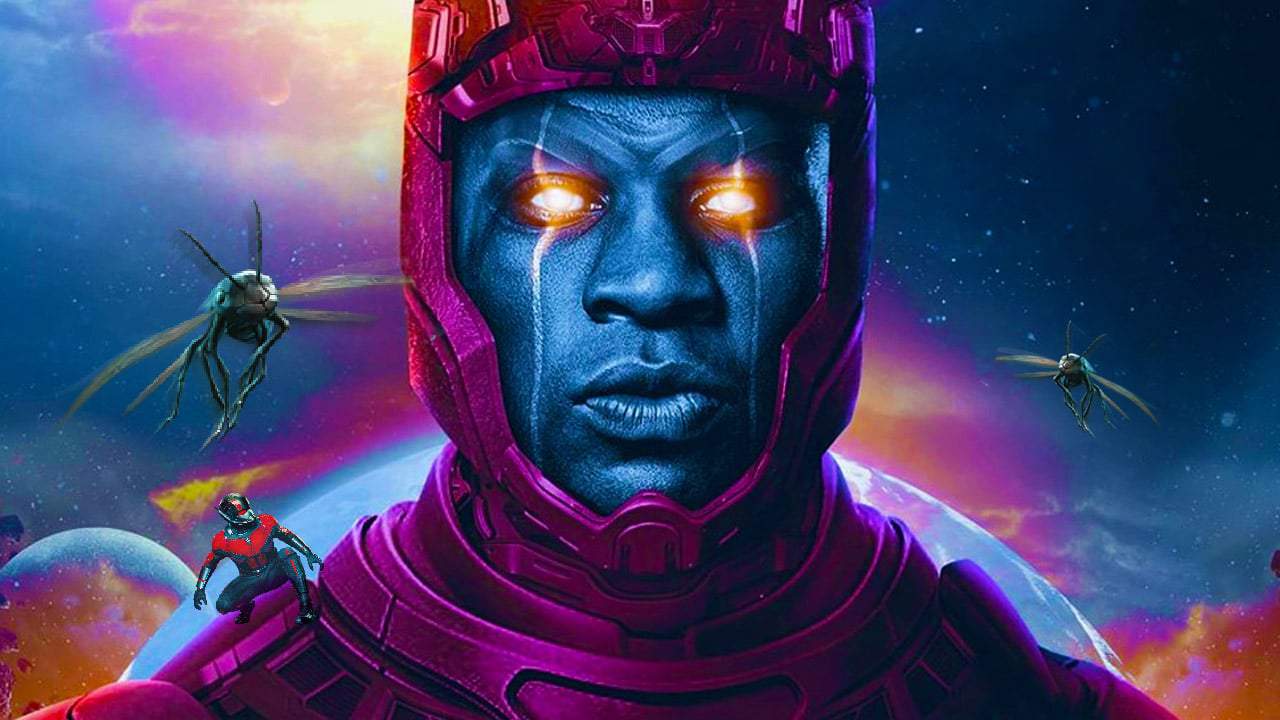
How Marvel Studios Can Salvage Kang The Conqueror

This is a video from my YouTube channel, Jack’s World.

Kang the Conqueror was supposed to be the next big threat for the Marvel Cinematic Universe. He was poised to usher in the events that would culminate in Avengers: Secret Wars.

However, that did not happen. Marvel Studios changed their plans and with the firing of Jonathan Majors, Kang’s role in the future of the MCU is uncertain. But his story need not end.

In this video, I make the case that Kang can be salvaged. With the right approach, he can still be a major threat in a future phase of the MCU. Enjoy!

Leave a comment

Filed under Jack's World, Marvel, Marvel Cinematic Universe, superhero comics, superhero movies, YouTube

Jack’s Comic Gems: Thanos Wins

This is a video from my YouTube channel, Jack’s World. This is video another addition to my “Jack’s Comic Gems” collection. And this gem is dark, in many ways.

In a story by Donnie Cates, we get a vision of the worst possible scenario for the distant future of the Marvel Universe. In that future, the Mad Titan, Thanos, that has unleashed such fear and dread…wins. But what does it mean for Thanos to finally mean? And what are the larger implications in the past, present, and future of the Marvel universe?

These are heavy questions that help make this gem as compelling as it is dark. Enjoy!

Leave a comment

Filed under Jack's World, Marvel, Marvel Cinematic Universe, YouTube

New Comic Book Day November 10, 2021: My Pull List And Pick Of The Week

We’re getting to that time of year in which easy to get stressed out. Once Halloween ends, everyone’s focus turns towards the holidays and the end of the year. Even if you’re not big on holiday festivities, it’s hard to avoid the impact on everyone around us. People aren’t just contemplating Christmas lists. They’re thinking about travel plans during Thanksgiving, Christmas parties, and family gatherings.

I love all of those things. I’ve already made major travel plans for the holidays this year. After being unable to leave my home state last year, I’m eager to make up for it. I don’t deny it’s stressful, but that’s exactly what I value New Comic Book Day even more this time of year.

Today is going to be a stressful day. This week is going to be stressful. This whole month is likely to be stressful in so many ways, some of which have nothing to do with the holidays. However, that feeling I get when I wake up early on a Wednesday morning, pour myself a cup of coffee, and read my new comics on my iPad is still as relaxing as ever. For just a brief moment, I’m as content as I’ll ever be during any time of year.

If you’re a comic book fan, I hope you all experience something similar. For the next couple of months, we’ll all need that more than usual. Don’t let the stress of this time of year damper your holiday spirit. Let a new stack of comics soothe you as only awesome comics can.

To that, here is my pull list and pick for the week. Relax and enjoy!


My Pull List

Action Comics #1036

Amazing Spider-Man #78

Avengers: Tech-On #4

Batman: The Imposter #2

Batman: Urban Legends #9

Deadpool: Black, White & Blood #4

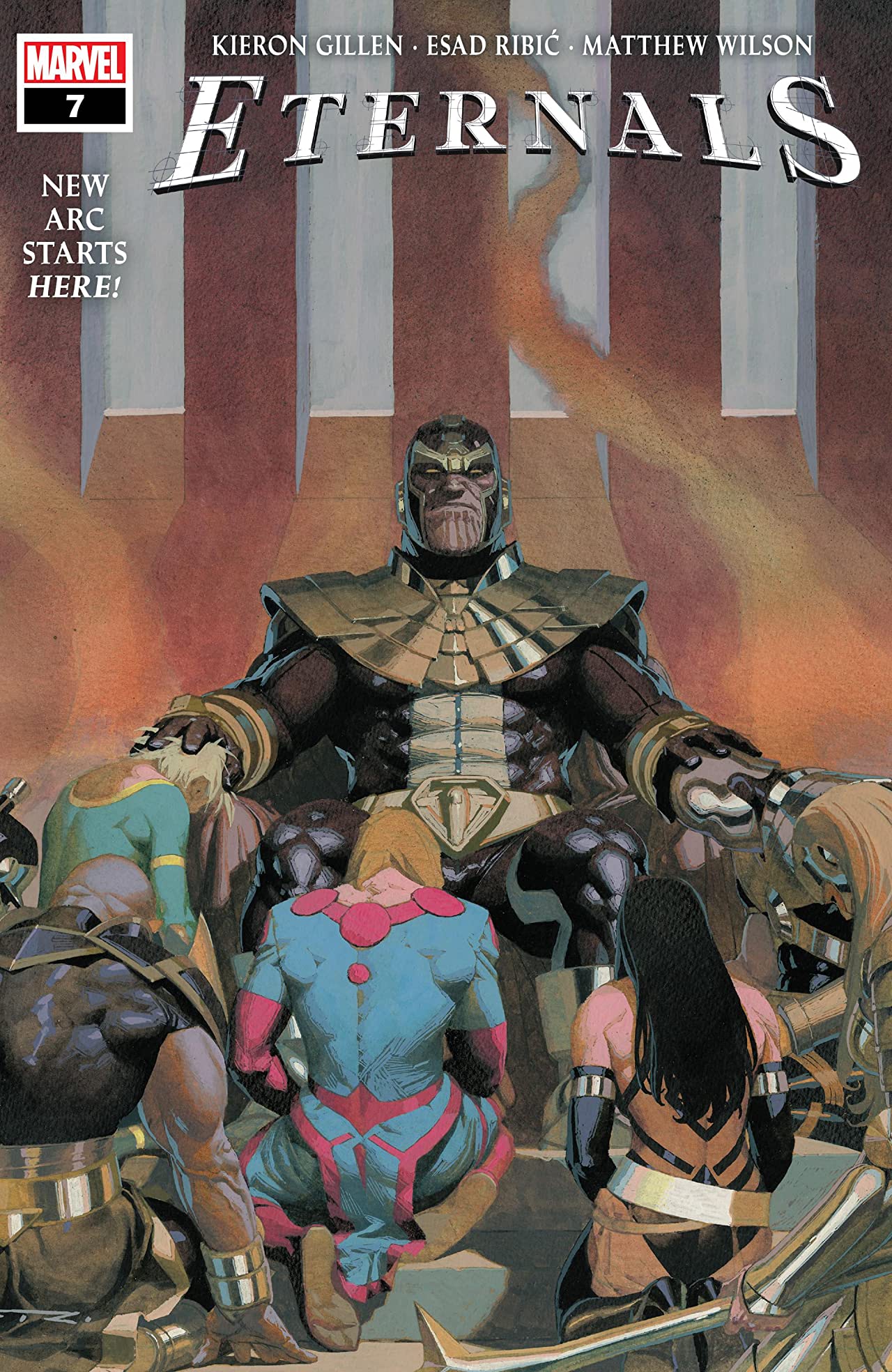
Eternals #7

Excalibur #25

Hellions #17

I Am Batman #3

The Joker #9

Justice League: Last Ride #7

Mighty Morphin #13

Miles Morales: Spider-Man #32

Power Rangers #13

Rick and Morty: Corporate Assets #1

Savage Avengers #26

Strange Academy #13

Titans United #3

Wonder Woman #781


My Pick Of The Week
Eternals #7

Leave a comment

Filed under Jack's Quick Pick Comic

Why Kang The Conqueror Could Be The Next Great MCU Villain (And Why He May Ultimately Fail)

See the source image

These are exciting times for the Marvel Cinematic Universe and fans of superhero media, in general. The COVID-19 pandemic may have disrupted and delayed certain plans, but things do seem to be back on track. The success of the recent Disney+ shows and the release of “Black Widow” are encouraging signs that the MCU will continue to grow, evolve, and bedazzle.

However, if the MCU is to continue its unprecedented streak of success, it’ll have to address one massive Thanos-shaped hole that has remained since “Avengers Endgame.” Even as it introduces a new generation of characters while continuing to explore others, it’ll still need one key detail to keep the awesome flowing.

It needs a powerful, over-arching villain who will require the Avengers to assemble once more.

That is no easy feat to pull off. Thanos set the bar very high through three phases of MCU movies. He raised the bar for villains of all kinds, both for the MCU and for movies in general. He presented a threat that required the full force of the Avengers to stop. That’s why so many of us cheered during the climactic battle in “Avengers Endgame.”

The idea of any character presenting a threat like that is difficult to imagine. However, Marvel Studios has proven time and again that they can keep raising the bar. It certainly helps that Marvel has no shortage of villains from the comics, but the recent events of “Loki” have already revealed that one in particular is poised to become that next great threat.

If you’ve seen the season one “Loki” finale, then you already know who I’m talking about. The next great treat for the Marvel Cinematic Universe will be Kang the Conqueror.

He was already confirmed to show up in “Ant Man and the Wasp: Quantumania.” He also has been cast to an accomplished actor in Jonathan Majors. Most importantly, he’s a character who has a lengthy history in the comics of being a huge threat to both the world and the multiverse. Much like Thanos, he has often required the Avengers to assemble in a big way in order to stop him.

By almost every measure, Kang has a lot going for him. He even has more to offer in terms of overall complexity. Both the comics and the “Loki” finale mention that Kang has multiple version of himself. You could argue that’s one of his most defining characteristics. Since he’s a time traveler, there are a near infinite version of him with varying levels of power, motivations, and malice.

One could be Immortus, who often carries himself as Kang’s final form.

One could be Iron Lad, a younger version of Kang who tries to walk a more heroic path.

One could be Rama-Tut, a version of Kang who ruled Ancient Egypt as a pharaoh.

It’s that flexibility that puts him in a unique position to be the MCU’s next great villain. It’s also something that helps him stand apart from Thanos in a big way. Thanos was big, bad, and menacing, but there was still only one of him to deal with. There are many version of Kang. Some are potential allies while others could be an even greater threat than Thanos. That could add a lot of drama and tension to every battle.

Since the rise of more complex villains like Killmonger and Baron Zemo, the Marvel Cinematic Universe has made a concerted effort to give depth to their villains. Kang, given his many variations, is in a better position to provide that than most villains. You can have version of him trying to avoid his ultimate fate of becoming a ruthless conqueror doing battle with others who’ve already embraced that fate.

In the comics, this has always been a major struggle for Kang. It’s also a personal struggle and the Avengers often get caught up in it. As shows like “WandaVision” have so nicely demonstrated, Marvel Studios have shown how much they can milk a personal struggle for emotional resonance. If they can do that with Kang in a way that builds further drama with the Avengers, then they could set up something every bit as epic as “Avengers Endgame.”

That is likely the ultimate goal. However, there’s still a chance this effort could fail or fall short of Marvel Studios’ lofty standards.

I offer this possibility as both a long-time Marvel fan and one who isn’t too big a fan of Kang. In fact, I’ll go on record as saying he’s one of my least favorite villains. My reasons are purely personal. I just think he’s one of those characters who’s too malleable. He’s also one of those characters who do a lot, yet still ultimately achieve so little.

That’s just an unpleasant side-effect of him being a time traveler. While plenty of other Marvel characters travel through time, Kang really overdoes it. You could argue it’s the only truly defining aspect of his character. As a result, it could also be something that seriously hinders his story.

It’s not unusual for stories involving Kang to get confusing and complicated, even by time travel standards. It’s also exceedingly common for his time traveling antics to be solved with more time travel. Every time he seems on the cusp of defeating the Avengers, something happens that either changes the timeline or undoes everything Kang did to that point. He’s one of those villains who can do a lot, but leave a very limited impact.

That’s why I’m not too fond of him. Too much of what he does is easily erased or retconned by more time travel. On top of that, his reliance on time travel basically guarantees that you’ll be confused by the sequence of events within a couple issues at least. I can’t imagine it being much simpler over the course of multiple big budget movies.

That’s not to say he can’t work as the MCU’s next main villain. Marvel Studios and Kevin Feige have proven time and again that they’re capable of making these seemingly impossible stories work. They were able to transform Thanos into this death-obsessed madman into someone with more complexity and emotional range. If they can do that with Thanos, then who knows what they can do with Kang?

Hopefully, we’ll find out soon enough. Jonathan Majors has already given us a taste in “Loki.” I look forward to seeing something even bigger in “Ant Man and the Wasp: Quantumania.” These are exciting and chaotic times for the MCU. Only time will tell how chaotic it gets and for a character like Kang, that’s all too fitting.

Leave a comment

Filed under Marvel, Marvel Cinematic Universe, superhero comics, superhero movies

New Comic Book Day January 6, 2021: My Pull List And Pick Of The Week

It’s the first week of 2021 and while things are still awful, they haven’t gotten considerably worse just yet. By 2020 standards, that counts as progress. That’s just how low the bar is these days. I hope it raises at some point, but I’m not getting my hopes up just yet.

In the meantime, I won’t let that stop me from enjoying the first New Comic Book Day of the year. In my experience, comic companies often use that first Wednesday to set the tone for the kind of year they’re going to have. That usually involves setting up or furthering stories that began late in the previous year and launching new titles to help set up events in the new year.

In addition, these efforts also mean I tend to spend a lot more than average on the first week of the year. That usually works out because I use the money I got from generous relatives over Christmas. So the first New Comic Book Day of a new year are usually very special for me and this year promises to be no exception.

New characters are being introduced.

New titles are launching from top tier talent.

New storylines are set to pick up.

These are exciting times for the world of comics. The world is still a mess and I’m still frustrated by it to no end. Even so, an extra large pile of new comics helps make it more awesome and that’s exactly what we need right now. As such, here’s my pull list and pick for the first of many New Comic Book Days in 2021. Enjoy!


My Pull List

Amazing Spider-Man #56

Dark Nights: Death Metal #7

Eternals #1

Future State: The Next Batman #1

Future State: Wonder Woman #1

Guardians Of The Galaxy #10

Hellions #8

Iron Man #5

Miles Morales: Spider-Man #22

Star Wars #10

Spider-Woman #8

Thor #11

Venom #32

X-Factor #6


My Pick Of The Week
Eternals #1

Leave a comment

Filed under Jack's Quick Pick Comic

Jack’s World: Why Conservatives Make Better Villains (For Now)

The following is a video I made for my YouTube channel, Jack’s World. It’s a video version of an article I wrote a while back. I added and removed a few details to the video. If necessary, I’ll do a follow-up. Enjoy!

Leave a comment

Filed under Current Events, extremism, human nature, Jack's World, media issues, philosophy, political correctness, politics, psychology, superhero comics, superhero movies, Villains Journey, YouTube

Why Conservatives Make Better Villains (For Now)

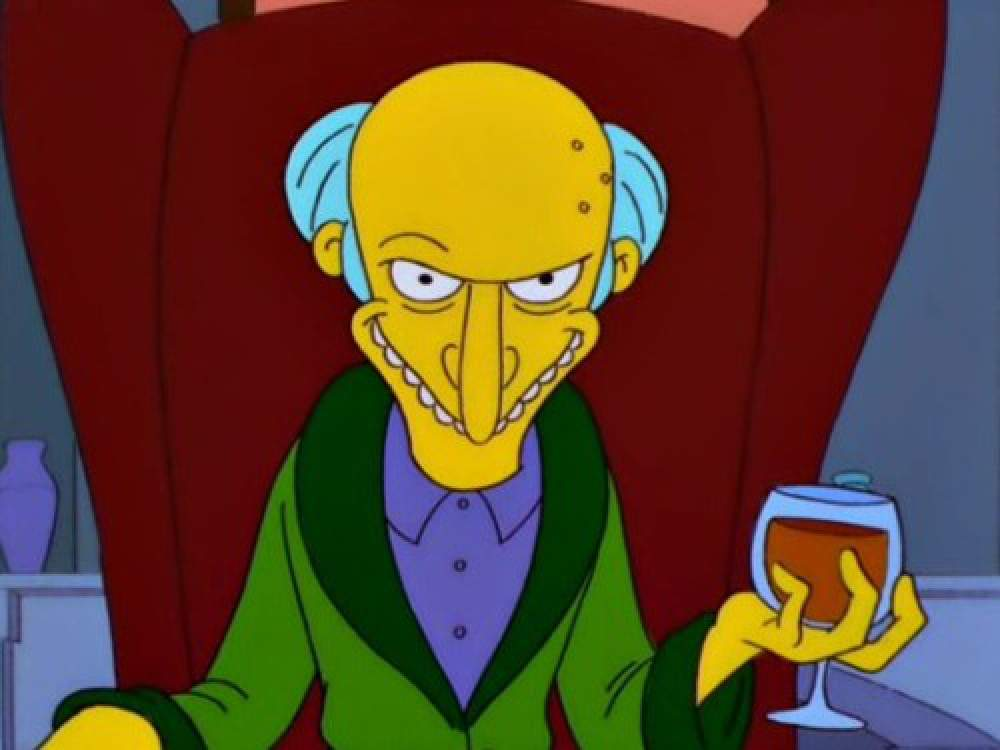
mr._burns_smile

We currently live in a golden age of villains. Between Thanos, Erik Killmonger, the Joker, and Walter White, there has been a veritable surge of complex characters who also happen to be compelling villains. While there’s still a place for the kind of pure evil that Disney villains have relied on for years, this trend in a more refined brand of villainy feels both refreshing and overdue.

I’ve written extensively on villains before. As a lifelong fan of superhero comics and movies, I’ve consumed, contemplated, and scrutinized hero/villain dynamics more than most. In doing so, I’ve noticed plenty of trends. Like most aspects of popular culture, it’s always evolving. Very few themes and details remain constant, especially when it comes to antagonists.

That said, there’s one trend in villains that has remained somewhat constant over the course of my lifetime. It’s also a trend that I see as intensifying, albeit in a subtle way. Some of it coincides with the growing complexity of villains in popular culture, but most of the trend precedes the current era of superhero-dominated media. If anything, superhero media helped accelerate it.

While most villains and heroes rarely identify with a certain political affiliation, it’s usually not hard to discern how most would vote in a contemporary election. I would even argue that it’s easier to surmise what a villain’s political leanings are compared to that of heroes. Take any villain from the past 10 years of movies, be they superhero or otherwise. Chances are a vast majority of them would identify as conservative.

Now, I understand conservatism is an exceedingly broad term. It has a dictionary definition, but as a political philosophy, there are many sub-sets, divisions, and variations. From fiscal conservatives to social conservative to neoconservatives, there are many wildly different ideologies that still identify as conservative. A few actively clash with one another.

Those complexities aside, there are some core tenants associated with conservatism and it’s those very tenants that make it such an effective basis for villains. Chief among conservative values is the idea that traditional norms, institutions, and values be maintained. Change isn’t actively dissuaded, but it is viewed with caution and suspicion. To be conservative is to affirm the status quo, to some extent.
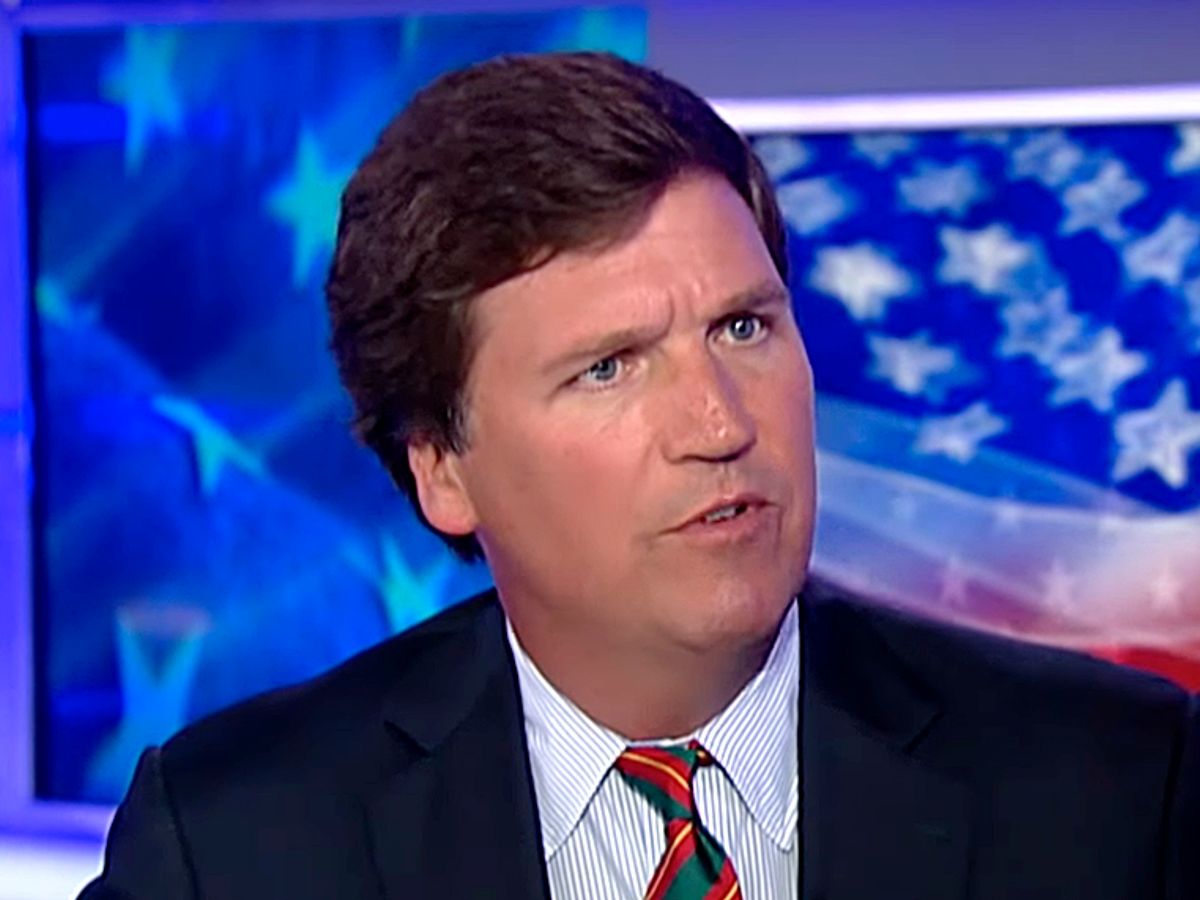
That’s all well and good if the status quo is beneficial to everyone. It’s not so preferable for those who either fail to benefit or are actively screwed over by that same status quo. Since there has never been a society in history that has achieved perfect prosperity for everyone, regardless of their minority status, there’s bound to be people who get left behind.

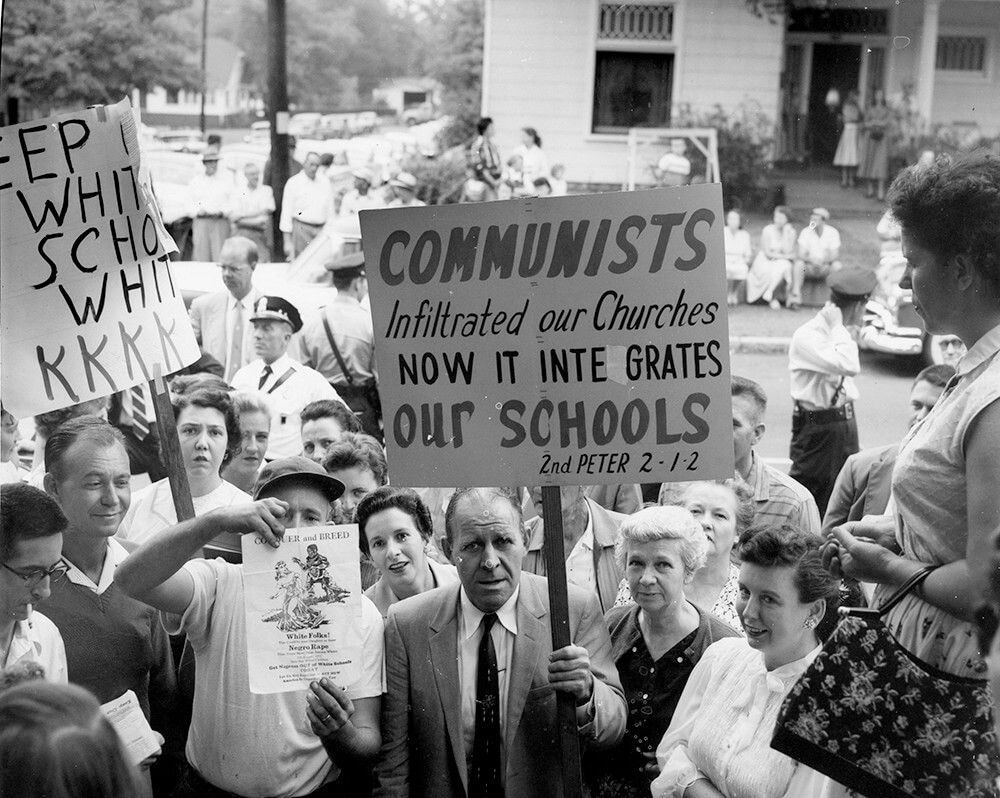
In our own real-world history, we’ve seen people from those disaffected groups organize and fight the status quo to better their lives. That struggle has played out in the Civil Rights movement of the 1960s, the movement for women’s rights, and the LGBT rights movement that’s still going on today. Those who oppose these movements tend to have, broadly speaking, conservative leanings.

Look at the groups that opposed the Civil Rights movement.

Look at those who actively oppose LGBT rights, women’s rights, and immigrants.
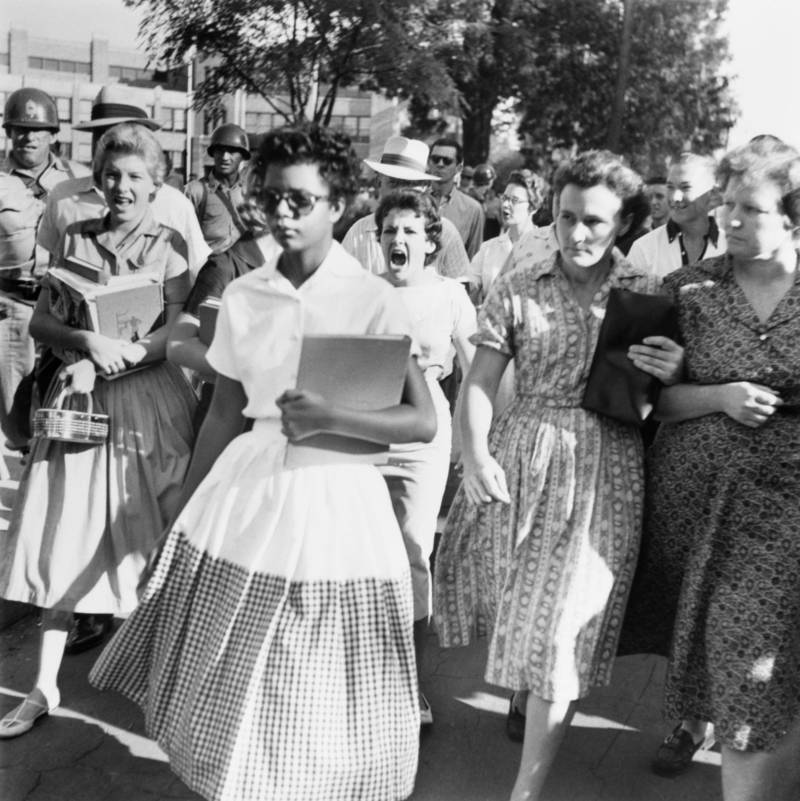
They all espouse rhetoric that would put them at odds with Superman, Captain America, and most other superheroes who value justice, truth, and peace. For some, their talking points sound like ideas that only villains in the mold of Lex Luthor would agree with. While not all of them identify as overtly conservative, the standard principles are there.

Anything too different from the status quo must be wrong or evil.

Anybody too different from the people everyone else in a society must be bad, evil, or devious.

Any idea, trend, or movement that is disruptive or deviant in any way is something to be opposed.

It doesn’t just manifest in superhero movies or underdog stories, either. Look at a movie like “Footloose.” In this story, the people who ban dancing are uptight, dogmatic, religious zealots who likely voted for Ronald Reagan in 1984 when this movie came out. They were the antagonists of that story and the kids, while not overtly liberal, dared to defy them.

It can even manifest subtly in other media. In kids shows like “Recess,” “Hey Arnold,” and “Rocko’s Modern Life,” the most common antagonists are uptight authority figures who have no tolerance for new ideas, big changes, or anything remotely fun. It’s hard to imagine any of these characters voting for someone who builds their slogan around change, reform, and reinvention.

They like things the way they are. Most of them benefit from the current system and will naturally seek to preserve their place in that system. While they won’t always see themselves as villains, it’s difficult for them to come off as heroes. You can only be so heroic when your side is closely aligned with predatory business practices, fun-hating religious zealots, and unabashed war-mongers.

That’s not to say it’s impossible for liberals to be villains too. It does happen and it can be done very well when done right. I would argue that Erik Killmonger in “Black Panther” was more in line with an extreme liberal revolutionary who didn’t just want to pursue change. I would make a similar argument for Ra’s Al Ghul in “Batman Begins.”

These characters didn’t just seek to change society from its current unjust state. They sought to violently destroy it and rebuild it from the ground up. That kind of liberalism exists in the real world and it can make for compelling villains.

However, the number of villains who align with the politics of Killmonger are far fewer than those who would align with the politics of Lex Luthor. In general, it’s easier to resist change rather than embrace it. It’s also necessary to some extent for those to resist change to be uptight authority figures who are okay with coercing others to maintain traditions. Logistically, the villains in many conflicts must be conservative.

Now, that’s not to say that villains will always lean conservative in popular media. What it means to be conservative changes over time. If you were to listen to conservative rhetoric 50 years ago, they would sound very different. They might even sound liberal by today’s standards.

The same goes for liberalism of previous eras. It hasn’t always been closely aligned with the politics surrounding minority rights, income inequality, or political correctness. The liberals of the 1920s would likely clash with the liberals of today. That’s just part of the ever-evolving nature of politics.
 

For the time being, though, being a villain in popular culture usually means being conservative to a certain extent. Conservatives are more likely to be the rich, greedy business people who would gladly burn down a rain forest or exploit slave labor to raise profits. Conservatives are more likely to be the rule-loving, fun-hating, curfew-enforcing religious zealots who wouldn’t mind electing theocrats with every election.

These types of individuals are far more likely to be villains in a story. At the very least, they’ll side or tolerate the villain. It’s easy to believe that those who side with the religious right and well-connected rich people will generally oppose a selfless, likable protagonist. From a narrative perspective, these kinds of villains are better in that we tend to root for heroes who oppose authoritarian bullies like that.

Again, it’s guaranteed that political and cultural trends will likely change what it means to be conservative, liberal, and everything in between. For the time being, if you were to bet on the political leanings of an antagonist, the odds are mostly in favor of that antagonist being conservative.

1 Comment

Filed under Current Events, extremism, human nature, media issues, philosophy, political correctness, politics, psychology, superhero comics, superhero movies, Villains Journey

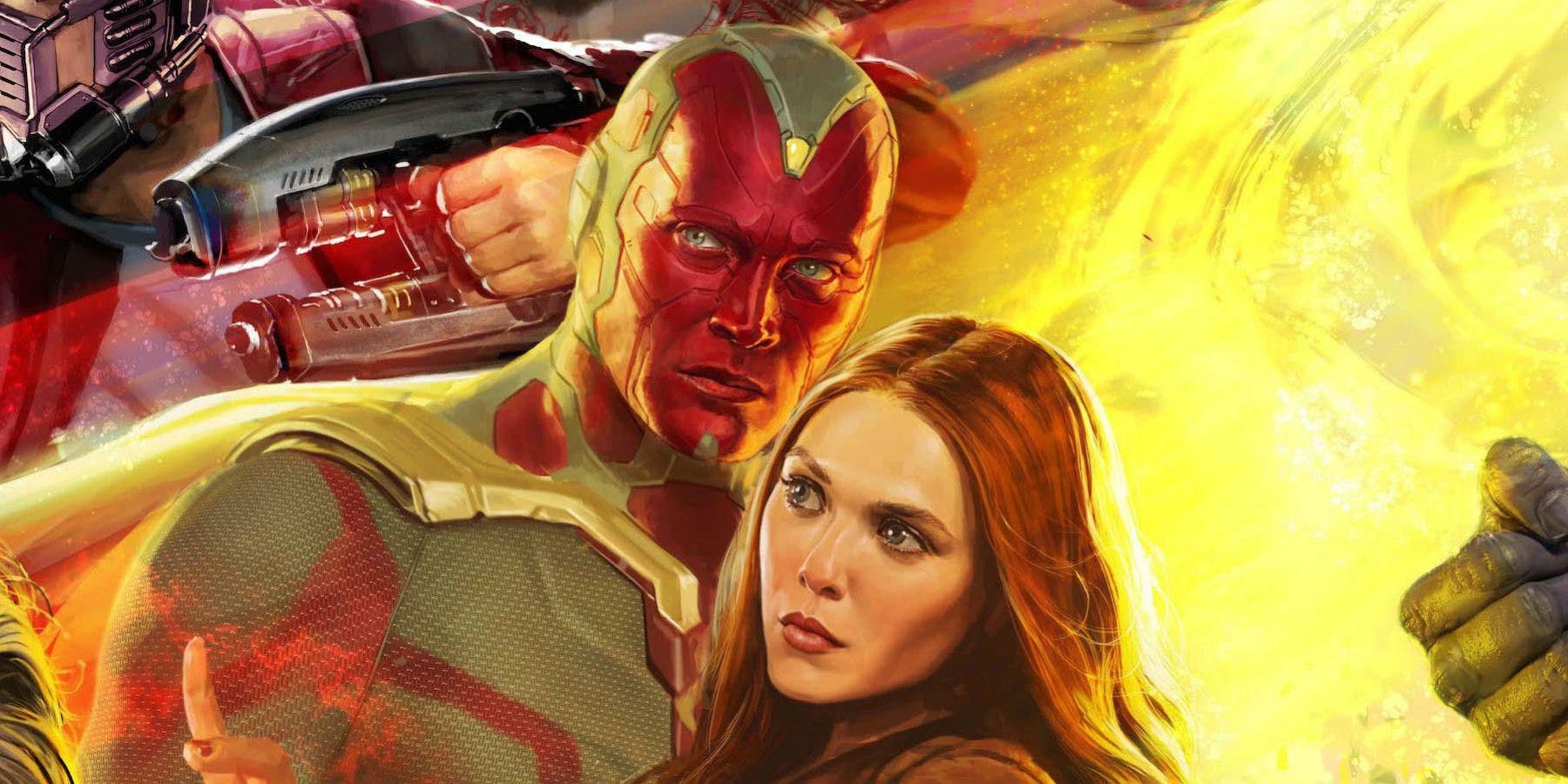
Vision, the Scarlet Witch, and the MCU’s Romance Problem

vision-and-scarlet-witch-avengers-infinity-war-sdcc-banner

Trying to find flaws in the Marvel Cinematic Universe these days is like trying to find a flaw in Mr. Rogers. It’s pretty much impossible, unless you’re willing to be exceedingly petty. Even the most ardent critic can’t deny the success of this now iconic cinematic universe. Such a franchise doesn’t make over $7 billion at the box office by having many egregious flaws.

That said, the MCU is not without its shortcomings and I’m not just talking about underperforming outliers like “The Incredible Hulk” or outright failures like “Inhumans.” One such shortcoming, which I feel has not had sufficient scrutiny, has to do with romance in the MCU. As someone who is a lifelong comic book fan and an admitted romantic, this stands out to me more than most.

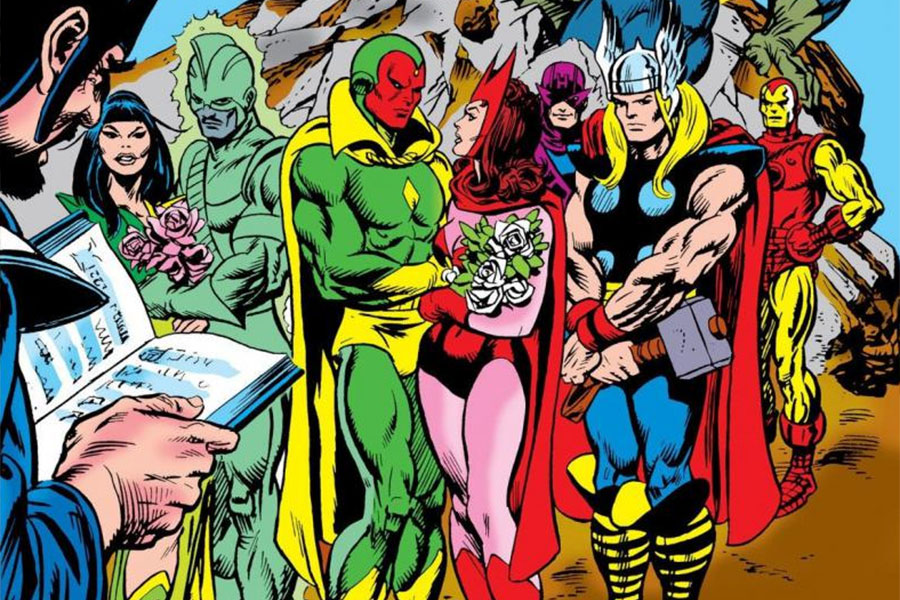
It only became more apparent with the upcoming a TV series starring Vision and the Scarlet Witch on the Disney+ streaming service. The romance fan and the comic book fan in me initially liked that idea because Vision and the Scarlet Witch are one of the Avenger’s most endearing and colorful romances in the comics. This is definitely one of those relationships that can carry an entire show.

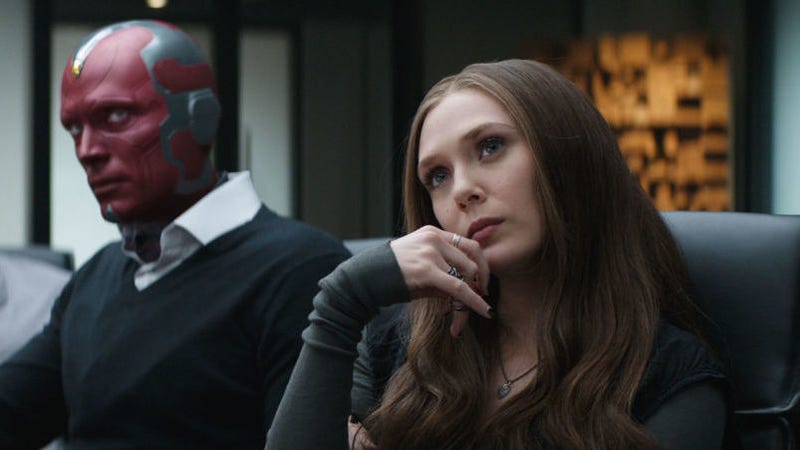
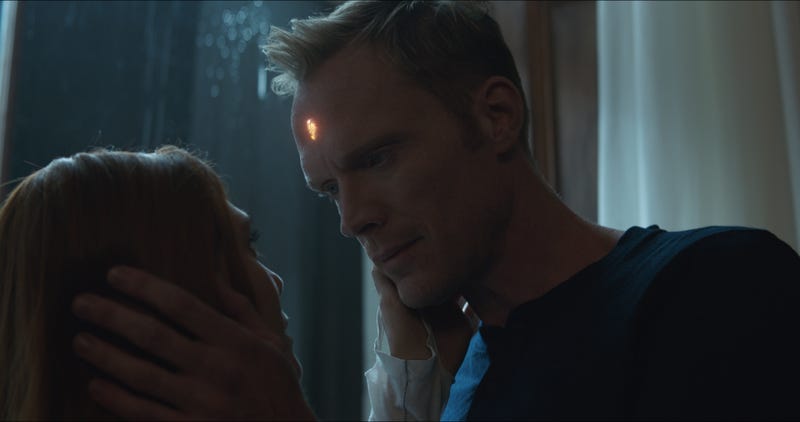
However, given that this takes place in the MCU, the concept is already on a shaky foundation. While the events of “Avengers: Infinity War” established that these two characters are romantically involved, there’s little in terms of how that relationship developed. As a result, the tragedy that played out in the Battle of Wakanda had little dramatic weight.

It’s one of the few glaring flaws in an otherwise stellar narrative. However, the lack of romantic depth between Vision and the Scarlet Witch is only the most obvious symptom of a much larger problem that has been unfolding in the MCU since the days of “Iron Man” and “Thor.”

Some parts of that problem are pure logistics. Building a cinematic universe on the scale of the MCU requires a lot of moving parts and, as a result, romance was often a secondary concern. Kevin Feige and the creative minds at Marvel Studios opted to prioritize other aspects of character development. Given the MCU’s unprecedented winning streak, it’s safe to say those priorities were well-placed.

It’s only recently that the lack of emphasis on romance has caught up to the MCU. From having Thor break up with Jane Foster prior to “Thor Ragnarok” to horribly mismatched romance between Hulk and Black Widow, there’s a glaring absence of successful, well-developed romances in the MCU.

Even the successful romances, namely Tony Stark and Pepper Pots or Ant Man and Wasp, had much of that success unfold off-screen. At most, a movie would show them getting together or enduring a major conflict, but there would rarely be any moments that fleshed out the romance in a meaningful way. Every bit of development only centered around defeating a villain, which is good catalyst for romance, but not much else.

Now, we’re getting an entire show about a couple who were on opposite sides of the conflict in “Captain America: Civil War” and inexplicably together in “Avengers: Infinity War.” In terms of meaningful romance, this is not a trivial oversight. If someone didn’t know their romantic history in the comics, then they would be understandably confused as to why they ended up together.

Not seen here is ANY hint that these two have been flirting.

It’s the same problem that the original “X-Men” movies made when developing the horribly flawed love triangle between Cyclops, Jean Grey, and Wolverine. The narrative in the movies relied too heavily on assuming peoples’ knowledge of the source material in lieu of providing an understandably reason as to why this romance is occurring. Again, that’s not a trivial oversight.

How is anyone who only saw “Captain America: Civil War” and “Avengers: Infinity War” supposed to buy into the relationship between Vision and the Scarlet Witch? The movies only establish that they’re together. They don’t establish why, how, or what they went through in establishing their relationship. Everyone is just left to assume, which is rarely a good strategy for developing meaningful romance.

Even if the relationship between Vision and the Scarlet Witch were entirely platonic, it would still be quite a stretch to believe that they have a genuinely intimate connection. It’s possible that the upcoming show will help develop that connection, but there’s no getting around how underdeveloped it has been to this point.

The same could be said for other relationships throughout the MCU. Some are so underdeveloped that when intimate moments do occur, they rarely have much impact. Captain America’s relationship with Peggy Carter in his first movie probably had the best foundation, of all the MCU romances, but that only made him kissing her niece, Sharon, feel downright wrong. Haley Atwell herself has said as such.

Romance, even among fictional characters, requires some level of chemistry to go along with the narrative. While that can be difficult to fit into a single movie, it’s not impossible. Movies like “Man of Steel” and the first “Spider-Man” movie were able to establish the necessary chemistry with only a handful of scenes. Such scenes have been absent or underdeveloped in the MCU.

Ironically, the most fleshed out romance in the MCU is between Starlord and Gamora, two characters who aren’t an endearing love story in the comics. I would even argue that the scene in which Starlord sacrifices himself to save Gamora in the first “Guardians of the Galaxy” movie shows more romantic depth than any other MCU movie to date.

https://www.youtube.com/watch?v=bseO_laCoXg

It didn’t take much to show that Starlord and Gamora have chemistry. From their first interactions to the many challenges they overcame over the course of two movies, they developed a powerful connection that just isn’t there for Vision and the Scarlet Witch. That connection is part of what made the events between them in “Avengers: Infinity War” so heart-wrenching.

That same sentiment just wasn’t there with Vision. We knew from the events of two previous movies that Starlord genuinely loved Gamora. We understood how strong it was by the time Thanos entered the picture. There’s none of that present with Vision and the Scarlet Witch. When they face a similar situation, it just doesn’t have the same impact.

It probably helps that Guardians of the Galaxy was a relatively obscure series before the first movie and has little history of iconic romances compared to the Avengers. However, it does show that the MCU is capable of meaningful romance. It just seems incapable of applying it to the more notable couples from the comics.

While such flaws haven’t stopped the MCU from succeeding on so many other levels, it still ensures that Vision and the Scarlet Witch have an uphill battle in terms of proving their romance is more than an assumed contrivance. It’s certainly not impossible, but there’s a lot to develop in terms of chemistry and depth.

Given on how “Avengers Endgame” played out, it may not matter how poorly past romances have been handled. However, the impact it has had in the “Guardians of the Galaxy” movies shows that there is a place for romance in the MCU. Perhaps Vision and the Scarlet Witch can be part of that with the upcoming show, but it has lot to overcome before it can be the iconic romance that the MCU needs.

4 Comments

Filed under Marvel, romance, superhero comics, superhero movies, television

“Spider-Man: Far From Home” Review: An Amazing Movie With One Spectacular Flaw

spider-man-far-from-home-teaser-poster

In this golden age of superhero movies, Spider-Man occupies a special place. Aside from being one of Stan Lee’s most famous creations, this franchise has undergone many triumphs, failures, scandals, upheavals, and everything in between. No matter where it stands among other franchises, Marvel just isn’t Marvel without Spider-Man.

The first “Spider-Man” movie helped revolutionize the superhero genre alongside “X-Men.” It’s not unreasonable to say that the Marvel Cinematic Universe wouldn’t exist without that first movie. That’s why when Spider-Man entered the MCU with “Spider-Man: Homecoming,” it carried a lot of weight.

With “Spider-Man: Far From Home,” both the standards and the stakes are higher. This movie is coming off the historic success of “Avengers Endgame” and is poised to close out Phase 3 of the MCU. It’s tasked with building on the foundation of its predecessor and dealing with the dramatic aftermath of the battle against Thanos. That’s a tall order for any franchise.

Look at this face and tell me I’m wrong. I dare you.

At the same time, it feels like Spider-Man has to be the franchise to pull this off. Between its special place in the genre and its cast of emerging stars, including the inherently lovable Tom Holland, “Spider-Man: Far From Home” feels like the only movie worthy of such a task. It has everything going for it. The question remains. Does it succeed?

In my humble opinion, I say it does, but not without some major flaws.

In terms of the big picture, “Spider-Man: Far From Home” is a quality Spider-Man movie that checks a lot of boxes, both for the franchise and for the MCU. It seamlessly weaves itself into the evolving narrative of the MCU in wake of “Avengers Endgame.” The first five minutes of the movie touch on the lingering aftermath of that climactic battle. It even injects some of that trademark MCU humor into some heavy moments.

On a more personal level, Peter Parker’s story builds upon the drama of Tony Stark’s death in “Avengers Endgame.” Throughout the movie, Iron Man’s presence looms large. Spider-Man is essentially stuck in the shadow of another hero who really affected his journey as a character in “Spider-Man: Homecoming.” It makes for plenty of dramatic moments that guide Peter throughout the story.

In terms of it genre, “Spider-Man: Far From Home” even succeeds in maintaining the increasingly high bar that Marvel Studios has set for its villains. While Jake Gyllenhaal’s Mysterio won’t rank as highly as Josh Brolin’s Thanos, he proves himself a daunting foe who doesn’t just test Spider-Man. He comes very close to breaking him.

I would even go so far as to say that Gyllenhaal’s take on Mysterio is worth the inflated ticket price. He makes “Spider-Man: Far From Home” work on multiple levels. I would argue that he’s the primary reason why the movie succeeds, despite its critical flaws.

Now, this is where I’m probably going to diverge from the those who have given this movie such glowing reviews. I may even upset some of my fellow Marvel fans who recoil at the idea of an MCU movie faltering. However, I believe the flaws are there and are being overshadowed by factors beyond the scope of the movie.

To me, the biggest failure of this movie isn’t in how it tells Spider-Man’s story. It’s in how it develops Peter Parker’s story. The battle between Spider-Man and Mysterio is beautifully developed. It’s what happens when Peter is out of his mask where the story stagnates and it has everything to do with Zendaya’s character, “MJ.”

I put “MJ” in quotes because she is definitively not Mary Jane Watson, Spider-Man’s most famous love interest in the comics and the character that Kirsten Dunst portrayed in the first three Spider-Man movies. That’s not the issue, though. “Spider-Man: Homecoming” established her and Peter’s friends as something very different from the comics. It wouldn’t be the first time the MCU made such changes.

The problem with MJ, Peter, and their shared role in “Spider-Man: Far From Home” is how poorly their romantic sub-plot plays out. It’s not a trivial sub-plot, either. A good chunk of the plot involves Peter following this elaborate plan to tell MJ how he feels about her. On paper, it’s pretty romantic. In practice, it’s a catalyst for too many cringe-worthy moments.

There’s no polite way to say it. The romance between Peter and MJ in this movie is awful. I won’t say it’s as awful as the nonsensical babble we saw between Peter and Gwen in “Amazing Spider-Man,” but it’s pretty close and for the high standards of the MCU, it’s just unacceptable.

While “Spider-Man: Homecoming” did an admirable job of establishing the dynamics between Peter and MJ, it falls incredibly flat in “Spider-Man: Far From Home.” In fact, if you didn’t see “Spider-Man: Homecoming,” Peter’s efforts to get with MJ seem more obsessive than romantic. At one point, he becomes downright vindictive when someone else tries to get with her. It does not reflect well on Peter.

MJ isn’t much better. Zendaya is a great actress, but she comes off as flat and unemotional throughout this movie. Say what you will about Kirsten Dunst’s portrayal of Mary Jane, but she still displayed a wide range of emotions throughout three movies. Zendaya’s tone and facial expressions barely change throughout this movie.

In essence, there’s no real chemistry between Peter and MJ. Given how critical this relationship is for the plot of the movie, that’s not a trivial oversight. It frames their actions and their decisions as something petty and selfish. There’s never a sense that Peter and MJ make each other better. If anything, they’re liabilities to one another.

In both the comics and the previous movies, this is not how the romantic sub-plots play out. While Spider-Man’s relationships have always complicated his efforts to be a better superhero, they ultimately make him stronger. They make his decision more heroic and his triumphs more satisfying. In “Spider-Man: Far From Home,” the romance was more a handicap than a challenge.

Compared to how other romantic sub-plots in the MCU, Peter and MJ’s is by far one of the weakest. It’s established that they’re attracted to one another. That’s the critical first step in any romantic sub-plot. However, “Spider-Man: Far From Home” skips the part where they actually start caring for one another before they develop deeper feelings.

Again, that’s not a trivial oversight. Compare that to other relationships like Starlord and Gamora, Pepper Potts and Iron Man, or even Thor and Jane Foster. It starts with attraction. The characters flirt and tease one another. Then, at some point, that flirting turns into genuine care. They show concern and emotion when they see one another in danger. From there, deeper feelings emerge.

None of that happens with Peter and MJ. Their interactions lack drama, which limits the personal stakes for Spider-Man’s battle against Mysterio. It helps that there are other personal stakes besides MJ that guide this struggle. If anything, those stakes would be a lot more powerful if the sub-plot with MJ were completely removed.

As bad as this romantic sub-plot is, “Spider-Man: Far From Home” still works because so many other elements of the movie are well done. Mysterio is a great villain who really capitalizes on the post-Thanos landscape of the MCU. Peter’s supporting cast, from his teachers to his Aunt May to his best friend Ned, all get a chance to shine. They help give this movie the right impact.

Compared to other Spider-Man movies, “Spider-Man: Far From Home” definitely exceeds the quality of the two “Amazing Spider-Man” movies that came before it. I would also say it’s slightly better than “Spider-Man 3,” albeit barely. If I had to score this movie, I would give it a 6 out of 10. It’s great, but not amazing.

For the MCU, especially after “Avengers Endgame,” the standards for a great superhero movie have never been higher. This movie met many of those standards, but a major flaw in a key sub-plot kept it from exceeding those standards. While I doubt this will hinder the franchise, I believe it’s a flaw that will only get worse if it’s not addressed in the sequels.

If you see the mid-credits scene, then you know what I’m talking about.

1 Comment

Filed under Comic Books, Jack Fisher, Superheroes, Marvel, Movie Reviews, movies, superhero comics, superhero movies

A Fitting Endpoint: My (Spoiler-Free) Review For “Avengers Endgame”

avengers-endgame-poster-square-crop

Starting an epic journey is a daunting challenge. Keeping people engrossed in that journey for over a decade is exceedingly difficult. Ending that journey in a way that’s dramatic, appropriate, and satisfying is damn near impossible. Despite those insane stakes, that’s the primary goal of “Avengers Endgame.” It attempts to cap off the story that began in 2008 with “Iron Man.”

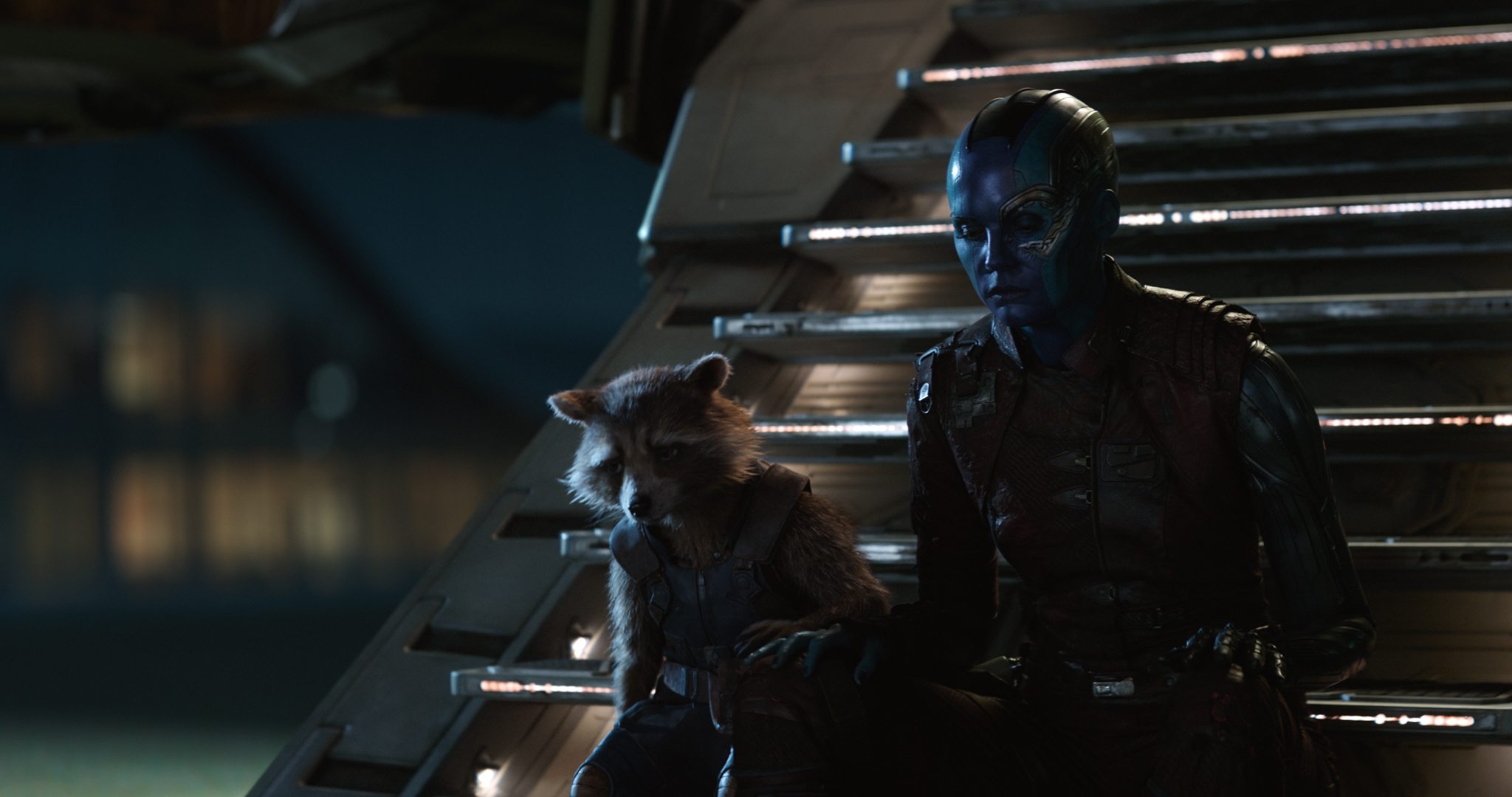
Without spoiling the many dramatic details of this three-hour cinematic experience, I can safely confirm that it did. “Avengers Endgame” achieved that seemingly impossible goal of completing a decade-spanning story that included 22 movies, a cast of top-notch actors, and one talking raccoon. It’s one of those feats that shouldn’t be possible, even with Disney’s deep pockets, but Marvel Studios pulled it off.

It isn’t hyperbole to say that “Avengers Endgame” is a historic cinematic achievement that fundamentally changes the standards for just how bold a movie can be. All the praise from fans and critics alike that this movie has garnered is well-earned, but still doesn’t do justice to what this movie achieved.

It’s not just another step in the ever-expanding saga that is the Marvel Cinematic Universe. This movie does not set the stage for another sequel or lay the groundwork for the next big battle between the Avengers and the next Thanos-level threat. The movie is true, polished ending that manages to beautifully encapsulate the scope and scale of the story it told.

As a life-long comic book fan and a fan of superhero media, going back to the days of Saturday morning cartoons, this movie was both satisfying and impactful. I came out of the theater with my heart still racing and my mind still reeling from what I just witnessed. Part of me was sad. Part of me was elated. In all, though, I felt like I’d completed a journey alongside these beloved characters.

Even if you’re not a fan of comics and only know these characters through the movies, “Avengers Endgame” still succeeds in terms of raw storytelling. Years of world-building and character development really come to ahead in this movie. The shared journeys of characters like Tony Stark, Steve Rogers, Thor, Black Widow, Hawkeye, and Bruce Banner provide plenty of dramatic weight to everything that happens.

Make no mistake, though. A lot happens. This movie will test your bladder almost as much as it tests your heart. There are so many characters to juggle and many of them have their own arcs. Tony, Steve, Thor, and Hawkeye are all in wildly different places throughout the story, literally and figuratively. Coming together again in a cohesive plot takes time and effort, something the Russo brothers do not shy away from.

As a result, “Avengers Endgame” is very different structurally from “Avengers Infinity War.” Whereas “Avengers Infinity War” played out like unfolding battle with Thanos leading the charge, “Avengers Endgame” is very much a reaction to the aftermath of that battle. To say it left some traumatic scars would be the understatement of all understatements.

There’s no getting around it. Thanos won and the Avengers failed. Before anyone can even contemplate undoing the damage, these characters have to adjust to a world that has been decimated on an unimaginable scale. Processing, exploring, and reacting to that decimation is a big part of what makes that final showdown sufficiently epic.

That means are sizable parts of this movie that don’t involve Hulk smashing things, Captain America fighting Hydra agents, or Iron Man blowing stuff up. “Avengers Endgame” puts much more time and energy into character moments and interpersonal drama, which were fewer and less developed in “Avengers Infinity War.” However, none of this time ever feels wasted or drawn out.

It helps make that final showdown all the more meaningful. It’ll get you to cheer, gasp, cry, and cringe every step of the way. I can even attest that there are moments in this movie that got the people in the theater out of their seats and cheering. In all my experience with superhero movies, I can’t remember the last time a movie got people that emotional.

There’s a lot I can say about how “Avengers Endgame” succeeds in making the emotional investment of the past 22 movies pay off. I don’t think I need to belabor how important this component was in making this movie work in a satisfying, climactic manner. While the movie succeeds in this critical aspect, there are other noteworthy details.

In terms of pure entertainment value, it is not as great as “Avengers Infinity War.” I would even argue the first “Avengers” movie had more spectacle and was more cohesive, overall. There were times when “Avengers Endgame” felt somewhat chaotic, due to all the character arcs it had to balance. While it managed to juggle them all effectively, there’s only so much that can be done to keep that narrative concise.

It’s also worth noting that some character narratives were managed better than others. I won’t cite specific characters for spoiler reasons, but they fairly obvious within the first hour of the movie. I’m sure fans of certain characters will be conflicted by how things play out, but I doubt those same fans will be too disappointed.

Fans of the distinct humor that often shows up in Marvel Studios productions will also have plenty to laugh at. Granted, the bleak circumstances of the movie make that tricky, but moments are there and they never feel too forced. They’re not quite as numerous as they are in other MCU movies, but given the various plots of the story, I’d say there’s just enough to balance the overall tone.

There are some other flaws within this movie, but the extent of those flaws is never more than minor. It would require an extreme level of pettiness and nit-picking to use those flaws to undercut the movie. “Avengers Endgame” is not perfect, nor does it try to be. Its primary goal is to end this era of the MCU and it does so beautifully.

The ending will leave many with tears in their eyes, both from joy and sorrow. There’s equal amounts of tragedy and triumph. Certain characters get a happy ending. Others must deal with loss and tragedy. Overall, it’s a perfect blend of satisfying conclusion and bittersweet finality. It reinforces the notion that these characters are true heroes.

For a movie that begins under such bleak circumstances, the ultimate conclusion really solidifies “Avengers Endgame” as an incredible cinematic experience. If I had to score the movie, I would give it a 9 out of 10. It hits all the right dramatic notes, evokes all the right emotions, and succeeds on a level that few could’ve imagined 11 years ago.

Like Captain America himself, this movie was willing to do whatever it takes to complete this superhero saga for the ages. Moving forward, it’s hard to say what will come of the MCU, especially in wake of the Disney/Fox merger, but it’s safe to say that “Avengers Endgame” has set a bold new standard for just how great a superhero movie can be.

Leave a comment

Filed under Marvel, Movie Reviews, movies, superhero comics, superhero movies