Tag Archives: tech

Streaming Music Into The Brain With Neuralink: Why I Want To Try It

Say what you want about Elon Musk. He’s an eccentric billionaire. There’s a lot to say and not all of it is good. Whatever you think of him, though, you can’t deny he has some big, bold ideas. You don’t become a billionaire tech icon without plenty of those.

I’ve talked about some of his bolder ideas before, namely the potential impact of Neuralink and brain/machine interfaces. I still contend those ideas are still as bold as ever. It’s just a lot harder to explore and contemplate them when we’re in the middle of a global pandemic.

Despite the grim circumstances clouding our world now, Musk still finds a way to drop a new idea into the mix. This one is actually related to Neuralink and the world of brain augmentations. While this effort is still ongoing and very early, he did imply that the neural implants that this company would offer might have another feature that hasn’t been highlighted. Specifically, it’ll allow you to stream music directly into your brain.

It wasn’t treated as groundbreaking. In fact, this topic came about during a Twitter conversation between Musk and an engineer of all things. Usually, Twitter conversations are about as productive as arguing with a creationist, but on rare occasions, something beautiful emerges. I say this is one of them.

Digital Trends: Elon Musk says Neuralink chip will let you stream music into your brain

Tesla CEO Elon Musk’s brain interface company, Neuralink, wants to let you stream music directly into your brain.

Musk recently said that Neuralink’s brain chip technology would allow people to stream music into their brains effortlessly. Musk confirmed the feature on July 19 over an exchange with a Twitter user who asked: “If we implement Neuralink – can we listen to music directly from our chips? Great feature.” Musk replied with a simple, “yes.”

Now, regardless of what you think of Musk’s claim or the technical feasibility of actually streaming music into the brain, I want to make one thing clear. I hope to leave no amgibuity.

I want to try this.

I really want to experience this at some point.

I love music as much as the next person, but my cumulative experience with headphones, stereo systems, and ear buds has been mixed at best. The idea of bypassing that entirely and streaming my favorite songs directly into my brain just has so much appeal and not just from a practical aspect.

Music can a powerful influence. That’s not just an opinion. There’s real science behind it. I’ve certainly experienced that. There are songs on my playlist that can affect my mood, my focus, and my emotional state. Those effects can be pretty diverse. That should be a given. You’re not going to react to a Metallica song the same way you react to a Taylor Swift song.

It’s a testament to how impactful music can be. Now, there might be a way to stream it directly into our brains? Sign me up!

It’s not an incredibly radical idea, when you break it down. In a sense, the music and all its powerful influences goes to your brain already. It’s just indirect. First, it has to go through your ear and then your ear has to process the sound and then the interpretations of those sounds has to go to various parts of your brain. Neuralink is just offering a more direct path.

Imagine hearing something that makes no sound.

Imagine experiencing the emotions and excitement of music in a unique and intimate way.

It may not be the most groundbreaking use of neural implants, but I still want to try it. If being stuck in lockdown has taught us anything these past few months, it’s that we need a diverse range of experiences. There’s only so much we can get from binge-watching Netflix, playing video games, and Zoom chatting family members.

We need those experiences to enrich our lives. We have no idea what kind of state the world will be in by the time this technology is refined. Who knows what kinds of experiences we’ll pursue? Hopefully, I’m around to stream my favorite playlist directly into my brain. It might not be the most profound use of this technology, but it will definitely rock.

2 Comments

Filed under futurism, Neuralink, Sexy Future, technology

Jack’s World: Why Neuralink Might Be The Most Important Venture Of All Time

The following is a video for my YouTube channel, Jack’s World. You may recognize the title from an article I wrote years ago in the before times when pandemics were still the subject of bad sci-fi movies. I miss those times too.

The news surrounding Neuralink is still of great interest to me. I still think it’s one of the most important technological advancements of the century. This video simply offers another general overview of why this technology is so important. Enjoy!

3 Comments

Filed under biotechnology, futurism, health, human nature, Jack's World, Neuralink, technology, YouTube

Jack’s World: A Balanced Outlook On Artificial Intelligence

The following is a video I posted on my YouTube channel, Jack’s World. It’s my attempt to offer some perspective on artificial intelligence, a topic I’ve covered many times before. I hope you find it informative and engaging. Enjoy!

5 Comments

Filed under Artificial Intelligence, futurism, Jack's World, technology, YouTube

Customizing Your Junk In “Cyberpunk 2077” And The (Potentially Real) Possibilities It’ll Inspires

Technology has and will continue to affect our sex life, our love life, our social life, and everything in between. It’s unavoidable. Whatever new technology we create will eventually affect or be applied to our sex life. Whether intentional or unintentional, it’ll find a way. Human beings are just too creative, passionate, and horny.

I’ve explored some emerging technologies that could have a significant impact on our sex lives. Many people alive today are likely to feel those impacts at some point. For the most part, it’s difficult to imagine. We can only speculate. However, we may gain unique insights from unexpected places.

Decades ago, shows like “Star Trek” and movies like “Demolition Man” imagined technology like smartphones and tablets. At the time, they didn’t seem like huge leaps, but they still seemed futuristic. They also offered some insight into how technology might find its way into our lives. It may have been innocuous to the story, but it was downright prophetic in envisioning the real-world implications.

This brings me to an upcoming game called “Cyberpunk 2077.” In a year where so many things that we love are getting delayed or cancelled, this had video game fans of all types giddy with excitement. It’s already one of the most anticipated games of the year and I count myself among those who have already made plans to play it for hours on end.

This is no standard Mario game. “Cyberpunk 2077” is “Grand Theft Auto” meets “Skyrim,” with a dash of Keanu Reeves for added awesome. It’s a mature journey into a futuristic world full of cyborgs, outlaws, and bloody brawls. If you can’t find something to enjoy in that, then you’re just being difficult.

However, the appeal of game isn’t the primary issue I want to highlight. Recently, some new details emerged that could offer the kind of futuristic insight that even “Star Trek” was too afraid to address. Specifically, the game revealed an option to customize the genitals of your character. An article in Kotaku went into detail.

Kotaku: Cyberpunk 2077 Has First-Person Sex Scenes, Will Let You Customize Your Genitals

Players can select a gender and customize their character; customization can include depictions of breasts, buttocks, and genitalia, as well as various sizes and combinations of genitals. Players can encounter events where they have the option to engage in sexual activities with other main characters or prostitutes — these brief sex scenes (from a first-person perspective) depict partially nude characters moaning suggestively while moving through various positions.

Now, this feature isn’t exactly new. Other games have played with similar options, such as “Saints Row.” However, “Cyberpunk 2077” promises to take this option even further.

That makes sense in the context of the game. It’s a futuristic world in which the line between technology and our bodies is essentially gone. You can augment limps, organs, and various other features. It makes sense that this extends to our genitals. Conceivably, it means men can have vaginas, women can have penises, and those who prefer a more ambiguous kind of sexuality can mix and match.

The possibilities are vast, as well as sexy. To some, it’ll be disturbing. I’m sure the Rick Santorums and Jack Thompsons of the world won’t sleep well. At the same time, it provides some insight into the future of our bodies, our sex lives, and our love lives.

While the technology in “Cyberpunk 2077” is a long way off, some parts of it are already starting to emerge. From Neuralink to lab grown organs, the principle of creating new body parts and augmenting the ones we have isn’t new. It’s not some magical concept that requires that we break the laws of physics. In theory, this sort of thing is possible. It’s just a matter of time, investment, and development.

What games like “Cyberpunk 2077” promise is the ability to explore how society reacts to having the ability to change, enhance, or adjust their bodies at will. If you can have one set of genitals one day and another by the end of the week, what does that do for people? How does it affect the way they conduct themselves? How does it impact our notions of gender?

It would definitely change. That’s for certain. While it may be a novelty in the game, it could offer some insights for the real world. A while back, a study of players who played “Mass Effect” revealed that the vast majority of them preferred the path of a paragon hero over that of a renegade. Both options were available, but one appealed more.

I find that kind of insight powerful because, unlike TV shows or movies, video games are more engaging. People play an active role in both the plot of the story and how the characters conduct themselves. In games like “Cyberpunk 2077” when there are so many options for customization, the possibilities are even greater.

One day, people in the real world will be able to reconfigure and customize their genitals just like players can in “Cyberpunk 2077.” It’s hard to know what kind of impact that’ll have on the world, but “Cyberpunk 2077” should give us a tantalizing glimpse.

Leave a comment

Filed under Artificial Intelligence, biotechnology, futurism, gender issues, Second Sexual Revolution, sex in society, sex robots, Sexy Future, video games

Lab Grown Vaginas Are A Real Thing (And The Sexy Possibilities They Entail)

Good news tends to slip through the cracks, especially in today’s world of misguided hashtags and contrived outrage. It’s unfortunate, but that’s just how people are wired. Bad news gets our attention. That’s just how we’re wired. During times of crisis, such as a global pandemic, good news might as well be an alien concept.

For that reason, and many others, highlighting good news is incredibly important. That’s especially true when it comes to breakthroughs in medical science. As of now, everyone is rooting for doctors, biologists, and researchers to find new breakthroughs in treating diseases like COVID-19. While that effort will likely to dominate headlines for months to come, there is another headline that I feel is worth citing.

It doesn’t involve COVID-19. Instead, it involves vaginas.

I’m assuming I have your attention now.

I promise this isn’t entirely an excuse to write about vaginas. This is a real, legitimate breakthrough with some major implications. Regardless of whether or not you have a vagina, it has the potential to effect you, your loved ones, and future generations. Seeing as how we’re all alive, in part, because of vaginas, those breakthroughs are worth taking note of.

Specifically, this development has to do with lab-grown body parts. It has been an emerging industry in recent years. It’s one of those industries that used to exist on paper, but has since become very real and very promising. Thanks to disease, accidents, and human stupidity, people have a tendency to damage their organs. With this technology, we we’ll be able to swap them out for perfectly functional replacements.

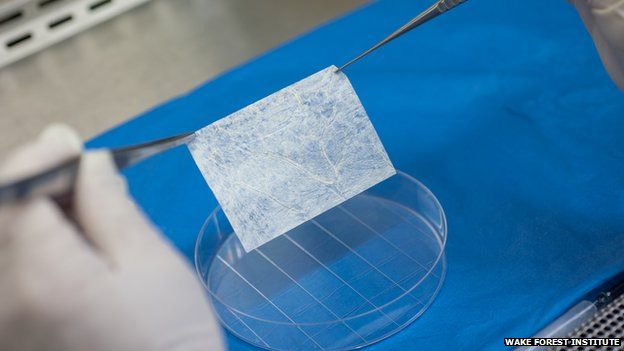
While some organs are much harder to grow than others, a vagina is one of the few we’ve successfully grown in labs and transplanted into actual patients. Like the bionic penis I wrote about a few years ago, this is real. There are currently women in this world who have a lab-grown vagina in them and it works as well as any other. This 2014 article from the BBC nicely documents the science behind this breakthrough.

BBC Health: Doctors implant lab-grown vagina

Doctors at Wake Forest Baptist Medical Centre in North Carolina used pioneering technology to build vaginas for the four women who were all in their teenage years at the time.

Scans of the pelvic region were used to design a tube-like 3D-scaffold for each patient.

A small tissue biopsy was taken from the poorly developed vulva and grown to create a large batch of cells in the laboratory.

Muscle cells were attached to the outside of the scaffold and vaginal-lining cells to the inside.

The vaginas were carefully grown in a bioreactor until they were suitable to be surgically implanted into the patients.

One of the women with an implanted vagina, who wished to keep her name anonymous, said: “I believe in the beginning when you find out you feel different.

“I mean while you are living the process, you are seeing the possibilities you have and all the changes you’ll go through.

“Truly I feel very fortunate because I have a normal life, completely normal.”

All the women reported normal sexual function.

I highlighted that bold part because it emphasizes the current goal of this technology. It’s intended to give women who have developmental issues, such as vaginal aplasia, a chance at normal sexual function. That’s usually how all medical breakthroughs start. It heals patience back to a level of normal functioning.

However, this technology has been working since 2014. It’s still in its infancy, but the reason I bring it up is because we’re currently in a situation where everyone is rooting for medical science to progress faster. This crisis, even though it doesn’t directly involve vaginas, could benefit from our current desire to see medical science progress.

As with the bionic penis, the science of lab grown body parts starts at restoring patients to normal function, but it doesn’t stop there. If anything, that just provides a baseline. As humans, with our wide capacity for kink, we’re rarely satisfied with just normal functionality in our bodies. That’s why breast implants are a multi-billion dollar industry.

Now, I’m not saying lab-grown vaginas will follow a similar path, but there’s definitely a market for them. As I’ve noted before, there’s still a wide orgasm gap between women and men. Some of that is psychological, but there’s also some biology behind it. Most women don’t achieve orgasm through vaginal sex alone and most sex ed classes never teach them that.

Education and insight can help, but that too has limits. As this technology matures, it’ll eventually graduate from simply restoring normal sexual function to enhancing it. That may sound somewhat radical, but it’s not that different from what people do now. People already take drugs, both illicit and prescription, to enhance sexual function. A lab grown vagina could just be a more ambitious effort.

How ambitious could it get? It’s hard to say. I’m not a woman and I can’t speak for women who might contemplate enhancing certain parts of their anatomy. I just know that the desire for a satisfying sex life transcends gender, taboos, and body image. As medical science advances, we have more and more tools with which to achieve that. Lab grown vaginas and bionic penises are just the latest and boldest.

Whatever form they take, they’ll ensure our future is a sexy one.

1 Comment

Filed under biotechnology, Current Events, futurism, health, sex in media, sex in society, sexuality, Sexy Future, technology

Six Technologies The Coronavirus/COVID-19 Pandemic Could Accelerate

Humanity is capable of amazing feats when given the right incentive and circumstances. The problem is that humanity is also rather stubborn when it comes to incentives and exceedingly evasive when it comes to changing circumstances. We’ll go the extra distance and beat the odds eventually. We just need to be dragged kicking and screaming for a while.

When it comes to the ultimate incentives and circumstances, few check more boxes than a global pandemic. I don’t think I need to belabor how bad the ongoing Coronavirus/COVID-19 pandemic has been. Even without media distortions and political agendas, there’s no getting around the damage it has and continues to inflict.

People are dying.

People suffering.

Societies and economies are teetering on the brink of collapse.

This is not a tenable situation and one nobody wants to see again. As bad as it is, there might be one silver lining to this global tragedy. It could help accelerate the development of technology that was already in the works, but lacked the necessary motivation to develop faster.

What follows are a few technologies that I believe this horrible pandemic might help in the sense that it’ll add some urgency. Nobody wants to see a mess like this again. Whether you’re rich, poor, powerful, or powerless, we have every reason to find new ways of preventing these plagues before they happen and these technologies are instrumental in doing just that.


Artificial Intelligence (Not Necessarily The Advanced Kind)

It’s impossible to overstate the potential benefits of artificial intelligence. I’ve certainly made a concerted effort when writing about it in the past. However, in the context of battling plagues, we don’t necessarily need the kind of super-advanced, super-intelligent AI to provide some of those benefits. When it comes to combating plagues, we don’t need an AI to be as intelligent as a human. We just need it to help us combat deadly disease.

This can be done without the kind of AI that finds its way into Skynet or Hal 9000. An AI that can better-analyze genetic data, run simulations on possible treatments, and track the spread of a disease can do plenty to prevent or mitigate future plagues. If it can just help us identify and isolate new cases in a short span of time, then that alone could save millions.

At a certain point, AI could get powerful enough to calculate entire treatment programs once it has the genetic data of a pathogen or condition. After this global, well-publicized crisis, it’ll have plenty of data to work with.


Space-Based Broadband Internet

When it comes to dealing with pandemics, the incentives don’t stop at treating the disease. Given all the closures and cancellations caused by COVID-19, we now know how challenging it is to endure an extended quarantine, especially for kids with no school and sports fans with no sports.

Enduring this crisis has revealed just how critical it is to have a strong, robust internet connection. It may not treat the disease, but it makes the measures recommended by the authorities more bearable. The problem is our current infrastructure for the internet is badly in need of upgrades and its role in helping us function has been made abundantly clear during this crisis.

For work, play, and just avoiding crippling boredom, we need a better internet. That’s where space-based internet, like the ones being developed by companies like FaceBook and Google come in. The idea is as simple as it is awesome. Use satellites and other high-flying crafts to deliver data more efficiently and reliably.

There are a few space-based internet service providers now, but they’re incredibly limited. This crisis, which needs reliable internet for so many reasons, might help pick up the pace in refining this technology. At the very least, it will allow people to binge-watch Netflix from the summit of Mount Everest.


Nanoparticle Vaccines

On the medical side of things, this crisis should go a long way towards teaching people the importance of vaccines. While I don’t doubt the anti-vax crowd will find an excuse to protest, even those skeptical of modern medicine can’t deny the need for better preventative measures for these treatments. Unfortunately, vaccine technology has been stagnant for decades.

This pandemic will hopefully change that and not a minute too soon. The current process for producing a vaccine is long and cumbersome, taking upwards of two years. It’s a process that has a lot of room for improvement. That’s where technology like nanoparticles come in.

The key to any medical treatment is the effectiveness of the delivery system. Vaccines have always had to take a messy path, but nanoparticles could change that. Instead of relying on the biological equivalent of a blunt instrument, nanoparticles could become biological smart-bombs, targeting pathogens with the precision we need to keep them from ever becoming pandemics.

Anti-vaxxers who refuse these just have a death with.


Gene Editing/Synthetic Biology

Not unlike vaccines, gene editing and synthetic biology stand to get a major boost from this crisis. I’ve written about gene editing tool like CRISPR in the past. I’ve touted it as a tool that could potentially treat all infectious disease, especially when combined with synthetic biology. That might have been hyperbole, but I stand by my claims on it’s potential.

Gene editing can do more than make pet fish glow. In theory, it can tweak and rewrite the DNA of organism, including the viruses that infect us. The challenge is refining the procedure so that we know how to modify diseases or create entirely new organisms that combat them through synthetic biology.

It’s not a small challenge. I’m grossly oversimplifying the obstacles in refining this technology into something usable. However, those obstacles are not insurmountable. It just requires time, resources, and motivation. After being economically and socially ravaged by a global pandemic, these efforts will have a lot more urgency.


Immersive Virtual Reality
While the scientists and doctors take up the challenge of fighting future pandemics, the rest of us are tasked with enduring the boredom they incur. I’ve noted before how boredom could become the plague of the future. I hope those stuck at home for weeks on end are done doubting me.

The entertainment industry may never be as vital as the medical industry, but it’ll play an important role in helping people stay sane, calm, and kind. Binge-watching TV and playing video games is helpful, but there’s room for improvement. At the end of the day, you’re still just sitting on a couch, looking at a screen.

To keep things both interesting and active, the development of virtual reality should get a major boost. It has existed for years and grown considerably from the days of the Virtual Boy, but it has room for improvement. Thanks to improving computer technology and more advanced interfaces like Neuralink, the experience could become even more immersive.

Beyond simply treating boredom, it could allow a greater sense of active engagement, which is critical when everyone is practicing social distancing. Being isolated and cut off from human contact may help temper a plague, but it’s not healthy. A way to immerse yourself in a realistic environment could help make future quarantines more bearable while also opening a new market, which gaming companies are sure to exploit.


Sex Robots (Obviously)

Does this one really need an explanation? When you’re stuck inside, horny, and run out of things to binge-watch, things are going to happen. Even if your partner or significant other is with you, they might get sick and you might feel lonely. Given how pandemics tend to temper the market for sex workers, a sex robot might be the best and only option.

If at least one company or horny entrepreneur hasn’t realized that by now, I’ll be shocked. The market for sex robots has been growing in recent years. After enduring a pandemic and weeks of social isolation, that market has likely grown. People rarely forget big global events like this. They’ll remember how lonely they were and that memory will fuel the development of sex robots more than any libido.

2 Comments

Filed under Current Events, futurism, technology

Who Will Be The First (Digitally) Immortal Celebrity?

Back in 2012, Tupac Shakur appeared in concert at Coachella in 2012. That’s quite a feat, considering he died in 1996. The Tupac at the concert was just a hologram, but even his digital presence helped make that concert an experience to remember.

In 2019, Samuel L. Jackson played a young Nick Fury in the “Captain Marvel” movie. That too is quite a feat, considering Mr. Jackson was 70 years old at the time. He was able to appear young, thanks to advanced CGI that effectively de-aged him.

Other dead celebrities have shown up in other media. The since deceased Peter Cushing reprised his role as Grand Moff Tarken in “Star Wars: Rogue One” thanks to similar CGI technology. Paul Walker was able to get a proper send-off in “Fast and Furious 7” after his tragic death thanks to this technology. As the technology improves and other famous celebrities pass on, this practice is likely to continue and expand.

That raises some interesting questions that has some profound, yet disturbing implications. Some of those questions are easier to answer than others. This is the easy one.

Will there eventually be a celebrity who becomes digitally immortal?

The short answer is yes.

The long answer is eventually, but there will be some complications along the way.

Modern CGI technology is amazing. We’ve come a long way from the flashy, but wholly unrealistic graphics of “Tron.” Through the development of technology like artificial intelligence deep fakes, which has its own mix of dystopian uses, it’s possible to replicate someone’s appearance, voice, and mannerisms. This replication isn’t perfect, but it’s getting to a point where it’s hard to tell it’s fake.

As this technology improves, it’ll get to a point where a rendering of a celebrity isn’t just indistinguishable from the real celebrity. It’ll be capable of saying, doing, and acting in any way a studio or producer would want. While that has some dangerous possibilities for political ads and porn, it could also completely change the entertainment industry.

That Tupac hologram I mentioned earlier was basically just a recording synched to a projection. Even though Samuel L. Jackson was de-aged in Captain Marvel,” the actor still had to be there to give him the necessary voice, mannerisms, and attitude. He couldn’t have been a hologram and be believable. The technology just isn’t there yet.

It will get there, though. There doesn’t need to be some huge leap in computer technology or artificial intelligence to make an entirely digital celebrity. It’s just a matter of processing power, data crunching, and better hardware. It will happen. It might even happen within the next couple decades. That raises another key question.

Who will be the first digitally immortal celebrity?

By digitally immortal, I don’t just mean recordings set to holograms or faces projected onto body doubles. A truly digitally immortal celebrity will be capable of starring in new movies and TV shows long after their dead. They’ll be able to make new music and perform it, albeit through a hologram. While their bodies might be gone, they’ll never stop contributing to pop culture.

That definitely has some legal implications. I doubt any studio could get away with creating a digital rendering of Carrie Fisher to star in a new movie. However, I suspect one celebrity will eventually license their figure and likeness so that they can keep being celebrities, long after they’re dead. Maybe they’ll do it so their families can be fincianlly set for life. Maybe they’ll do it because they never want to leave the public eye.

Whatever their reasons, someone will eventually do this. It’s just a question of who.

Will it be Taylor Swift?

Will it be Tom Cruise?

Will it be Jennifer Lopez?

Will it be Samuel L. Jackson?

It’s hard to say. If I had to bet money, I’d put it on Samuel L. Jackson. Knowing Disney and their vast resources, I’d be shocked if they weren’t investing in this technology this instant. Bankable celebrities are an increasingly precious commodity in the entertainment world. The incentives are there. It’s just a matter of time and a matter of whom.

Personally, I’d love to hear Samuel L. Jackson call people motherfuckers for generations to come. That’s just me.

1 Comment

Filed under Artificial Intelligence, Celebrities and Celebrity Culture, futurism

How Do We Regulate Artificial Intelligence? Seriously, How?

In general, I don’t pay much attention to doomsayers who claim the end is near and we should all cower, tremble, and give them our credit card number. Don’t get me wrong. I still believe there are serious existential threats facing humanity today. Some are worth taking seriously and dedicating resources to addressing. Others are not. Some simply require a more balanced perspective.

There’s a long list of failed apocalyptic predictions. The fact we’re surviving and thriving by most measures shows just how resilient, adaptable, and capable humanity is. There are some threats that I believe humanity will eventually resolve, thanks largely to our accelerating progress in science, technology, and logistics.

Others, however, have me more concerned. While some are more immediate than others, one in particular continues to confound me, as well as some of the smartest people in the world. It involves artificial intelligence, an emerging technology that’s as promising as it is unpredictable. Given the complexity of this technology, it’s difficult to explain in totality, but it can be best summed up by one simple question.

How do you regulate artificial intelligence?

That’s not a rhetorical question. It’s not a thought experiment either. It’s a serious, honest question that people far smarter and far more capable than me are just starting to ask.

Elon Musk is one of them. Very recently, he called for more regulation on artificial intelligence. That, alone, should be both telling and worrying. This man is a billionaire. Usually, billionaires are more inclined advocate removing regulations. Whenever they make an exception, that’s a sign they know it’s serious.

Even though Musk is one of the top advocates for solving big problems with technology, he still has concerns about the problems associated with artificial intelligence. In AI circles, it’s often called the control problem. It’s not a very creative name, but it gets the point across.

How do you control something that is potentially as smart, if not smarter than a human?

How do you manage something that thinks, adapts, and evolves faster than any machine or living thing?

How do you regulate an artificial intelligence that was built by humans, but isn’t at all human?

These are all difficult questions to contemplate, let alone legislate. Even Musk doesn’t provide specifics. Chances are he doesn’t know any more than the rest of the non-billionaire population. That’s a problem because if we’re going to try and regulate this technology, we need to understand it. On top of that, politicians and lawmakers have a long and embarrassing history of failing to understand technology.

However, this isn’t just about writing laws that protect citizens from being exploited by tech companies. Artificial intelligence, especially the kind that exceeds human intelligence, has capabilities that go beyond sending text messages from bathroom stalls. If handled improperly, it wouldn’t just be an existential threat. It could destroy humanity in ways we literally cannot contemplate.

Now, I try to be an optimist in most things involving emerging technology. Humanity has found a way to manage dangerous technology before, namely with nuclear weapons. However, artificial intelligence is a different beast entirely. Regulating it isn’t as easy as simply controlling the materials that make it. The very concept of regulating this technology lacks precedent.

The closest we have to date is Isaac Asimov’s famous three laws of robotics, which were introduced in 1942. Asimov was a brilliant writer and very ahead of his time on some concepts, but this is one issue where we need more than just three simple tenants. We need to think bigger and bolder. If we don’t, then an advanced artificial intelligence will quickly leave us behind.

After that, it won’t matter what kind of regulations we try to pass. It’ll be smart enough to circumvent them. That doesn’t mean humanity is doomed at that point, but we’ll be distressingly vulnerable. I know it’s in our nature to procrastinate on things we don’t see as vital, but if ever there was an issue to make an exception, this is it.

3 Comments

Filed under Artificial Intelligence, biotechnology, futurism, philosophy, technology, Thought Experiment

A Comment On Bill Maher’s (Dystopian) Rant About Sex Robots

Remember that time someone old, out of touch, and under-informed made an accurate prediction about the impact of emerging technology? That’s not a rhetorical question. Honestly, does anyone remember that ever happening to a meaningful extent?

I ask because it’s been happening for years. People keep seeing an amazing new technology and assume the worst. In some cases, they’re just dead wrong about trends that will or won’t catch on. Some just made dead wrong assumptions about how technology and society would evolve.

At the end of the day, nobody truly knows for sure. It’s fun to speculate, especially when that technology involves sex robots. I know I’ve entertained some colorful possibilities and potential issues, but I never claim I know for certain. I try not to be overly optimistic, but I don’t try to be downright fatalistic, either.

Then, there’s Bill Maher’s latest rant about the future of sex robots. I could try and break down every flaw in his commentary, but I’ll let the clip speak for itself.

Now, I need to disclose that I’m a fan of Bill Maher. I like his show. I think he’s funny. He’s got a great wit and a dry style that I’ve always found entertaining. When it comes to technology, though, he’s more a chronic whiner than a visionary.

He compares social media to cigarettes and complains about how technology has become too complicated. For a man who’s over 60, that’s not surprising. However, for someone smart enough to stay on TV for over three decades, it’s still absurd.

Deconstructing his rant is not that hard. Maher frames the impact of sex robots as an either/or position. To him, people will either completely reject human intimacy for robots or reject robots in favor of human intimacy. However, he never justifies why people would choose only one or the other.

Would people only interact with a sex robot because they can have sex on a level that humans just can’t match? That assumes people are really basic and would all react the same if they somehow had access to a life-like sex robot. However, people are not basic. People are complicated. They have many different wants, needs, and attitudes. Maher himself has noted this when discussing other issues.

Sex robots will change human dynamics significantly. It won’t destroy them. It won’t completely destroy the whole of society. They’re not nuclear weapons. They’ll just change how things are and for older people, especially in Maher’s demographic, that can be scary. It’s easy to assume the worst, but it’s still an assumption and those are notoriously unreliable for predicting the future. The stock market alone is proof of that.

There are many other things I can say about Maher’s rant, but it would all come back to the same point. It’s just flawed and misguided. It assumes there’s not room for both human connection and sex robots in the future. Considering how adaptive and social humans are, I believe we’ll find a way to incorporate them into a new social dynamic that nobody can predict.

It’ll be nothing like Maher can ever imagine.

It’ll be nothing like I can imagine, either.

The future will still come. It’s just a matter of how we’ll adapt, evolve, and grow with it.

1 Comment

Filed under Artificial Intelligence, futurism, sex in society, sex robots, sexuality, Sexy Future, technology