Tag Archives: superhero comics

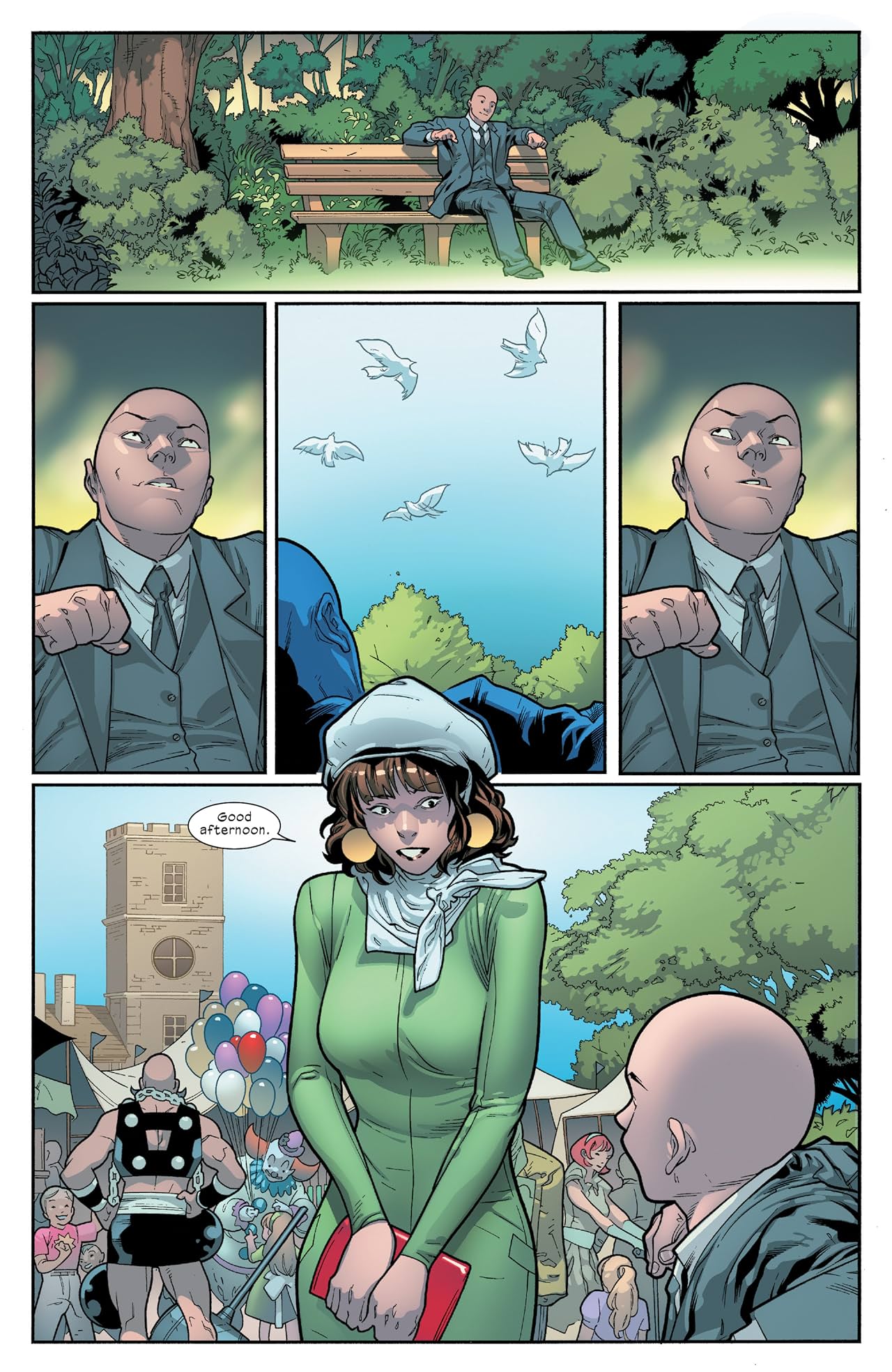
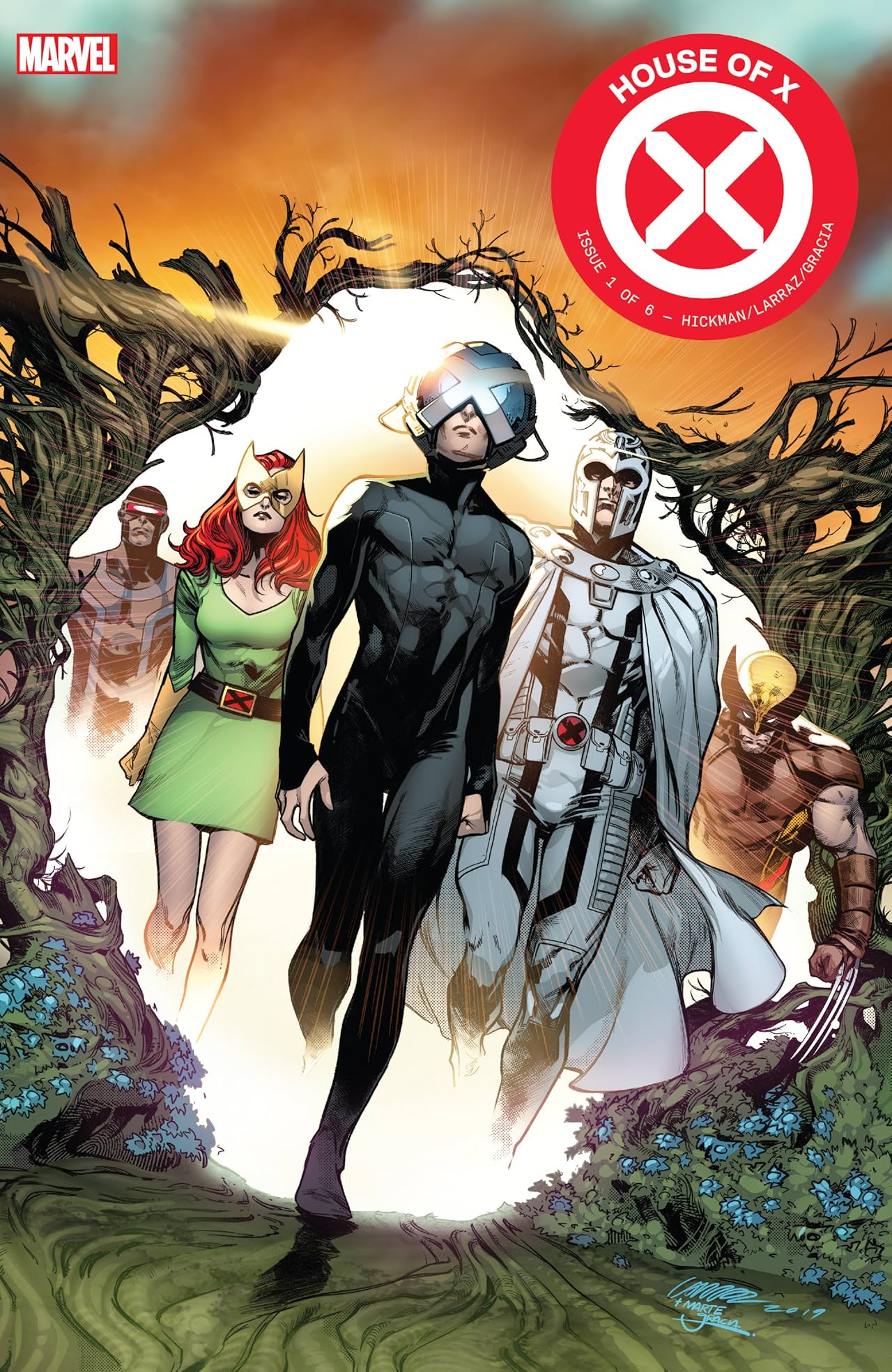
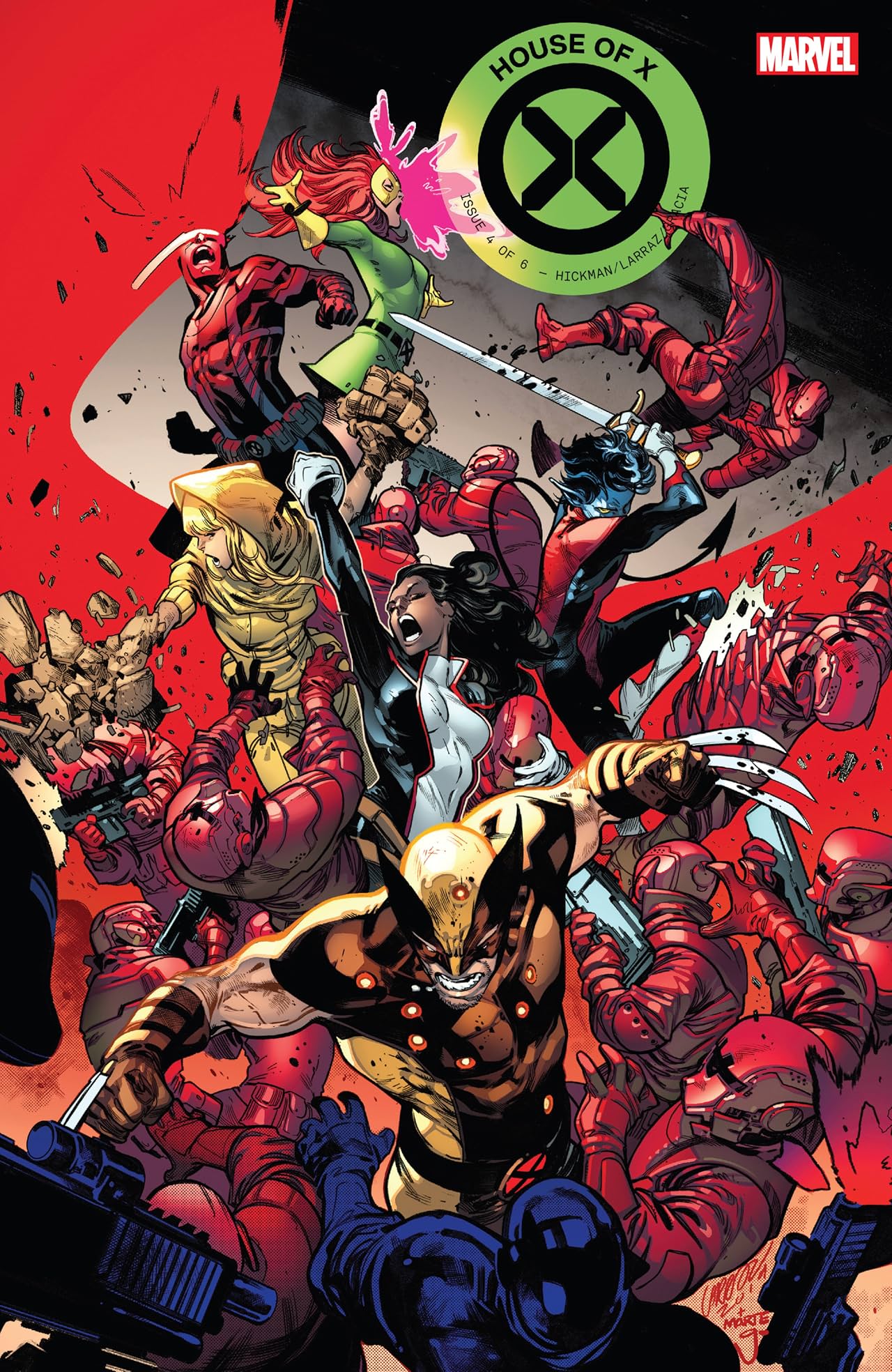
Jack Fisher’s Weekly Quick Pick Comic: House of X #4

In life, there are usually a handful of moments when you can say that you’ve had your finest hour. Whether it’s winning a championship, finding the love of your life, or winning a buffalo wing eating contest, those moments are special. They reveal just how good and capable you can be. For the X-Men, “House of X #4” is that moment.

Writer Jonathan Hickman and artist Pepe Larraz have been redefining, revamping, and at times revolutionizing who the X-Men are and what they stand for. As a lifelong X-Men fan who will find any excuse to write about them, I could fill a pool with the tears of joy I’ve shed while reading this series. With “House of X #4,” however, those tears are mixed with a host of other feelings besides joy.

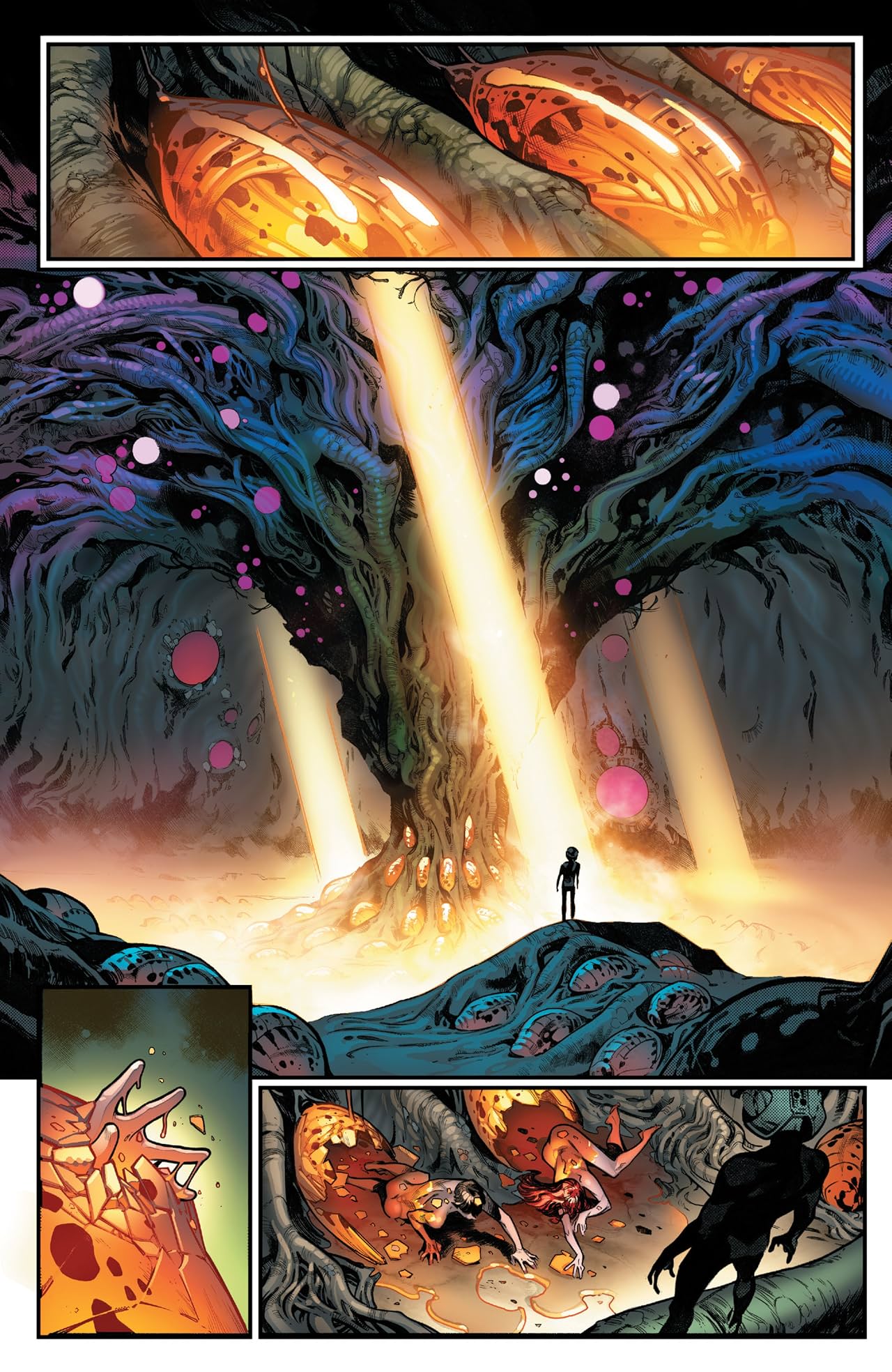
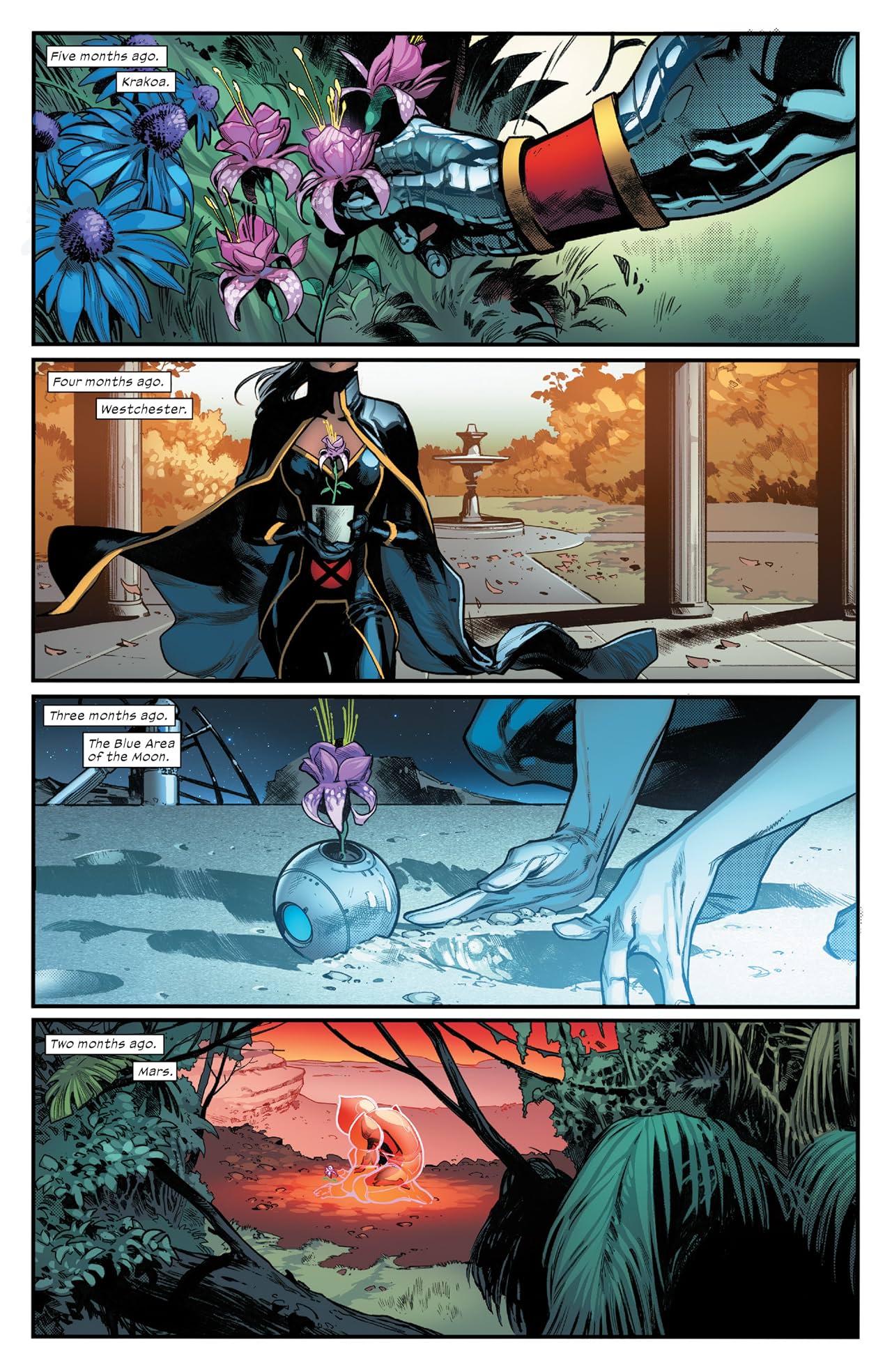
Since it began, House of X has put the X-Men and the entire mutant population in a bold new situation. They’re no longer hiding in fancy mansions, isolated islands, space stations, or hellish dimensions. Hickman has gone heavy on the world-building, turning the living island of Krakoa into a vast, expansive sanctuary for mutants. The results have been both functional and awe-inspiring.

However, building a new world for the mutants of the Marvel universe is just part of the story. Protecting their future and preventing their extinction at the hands of Nimrod and the Sentinels are a much larger part. That part of the story is what culminates in “House of X #4.”
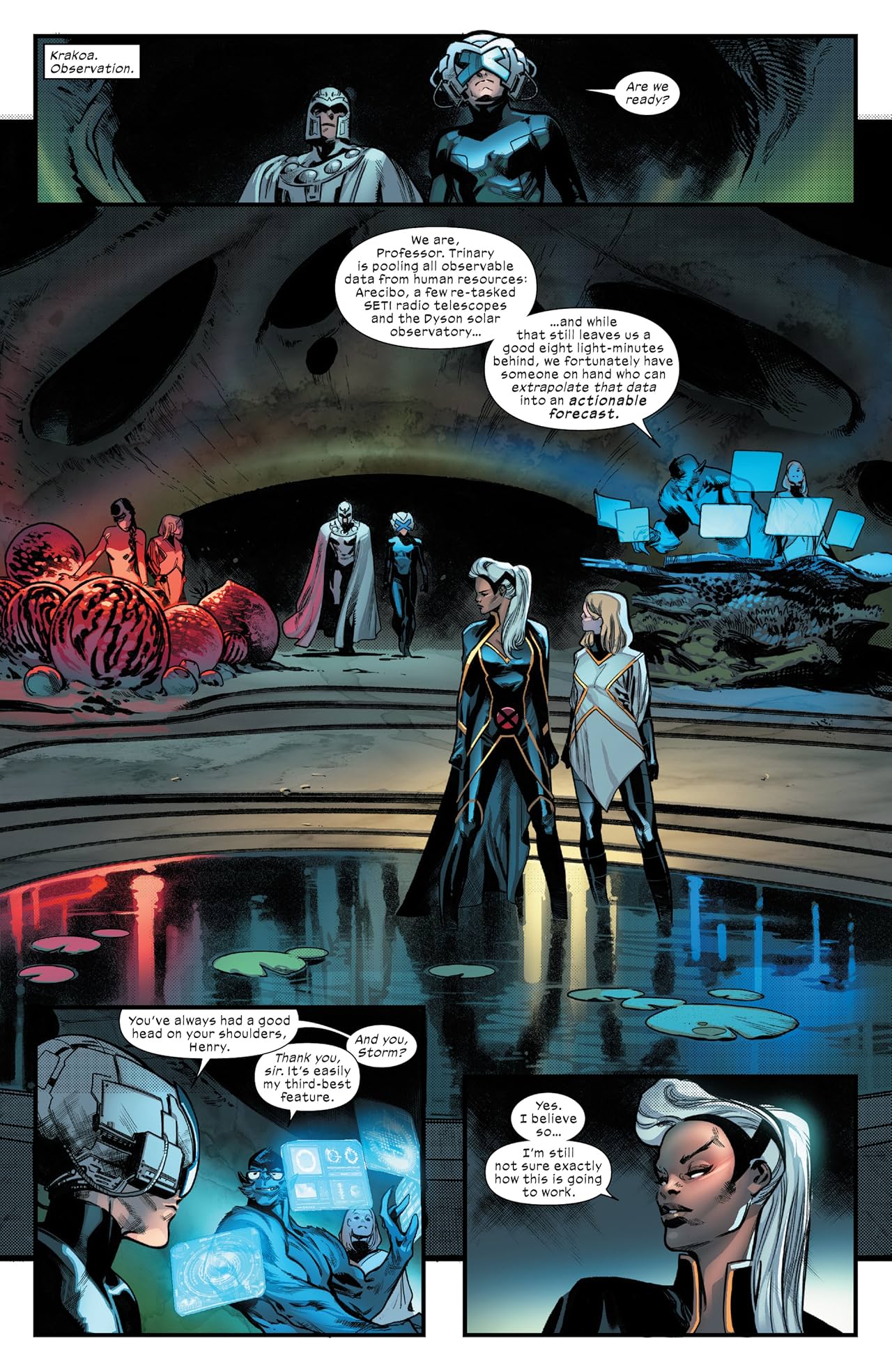
It’s not overly elaborate. Hickman doesn’t try to reinvent the nuts and bolts of how the X-Men go about saving the day and their species. He simply raises the stakes while Larraz makes it a visual spectacle. It effectively builds on what was set up through the events of Powers of X and the many lives of Moira MacTaggart.

For once, the X-Men aren’t on the defensive. They’re not the ones caught off-guard by an army of Sentinels or some new mutant-killing menace. They know what’s coming. They know that Mother Mold will give rise to Nimrod and Nimrod will be the end of mutants, humans, and everything in between. Now, they’re in a position to stop it.

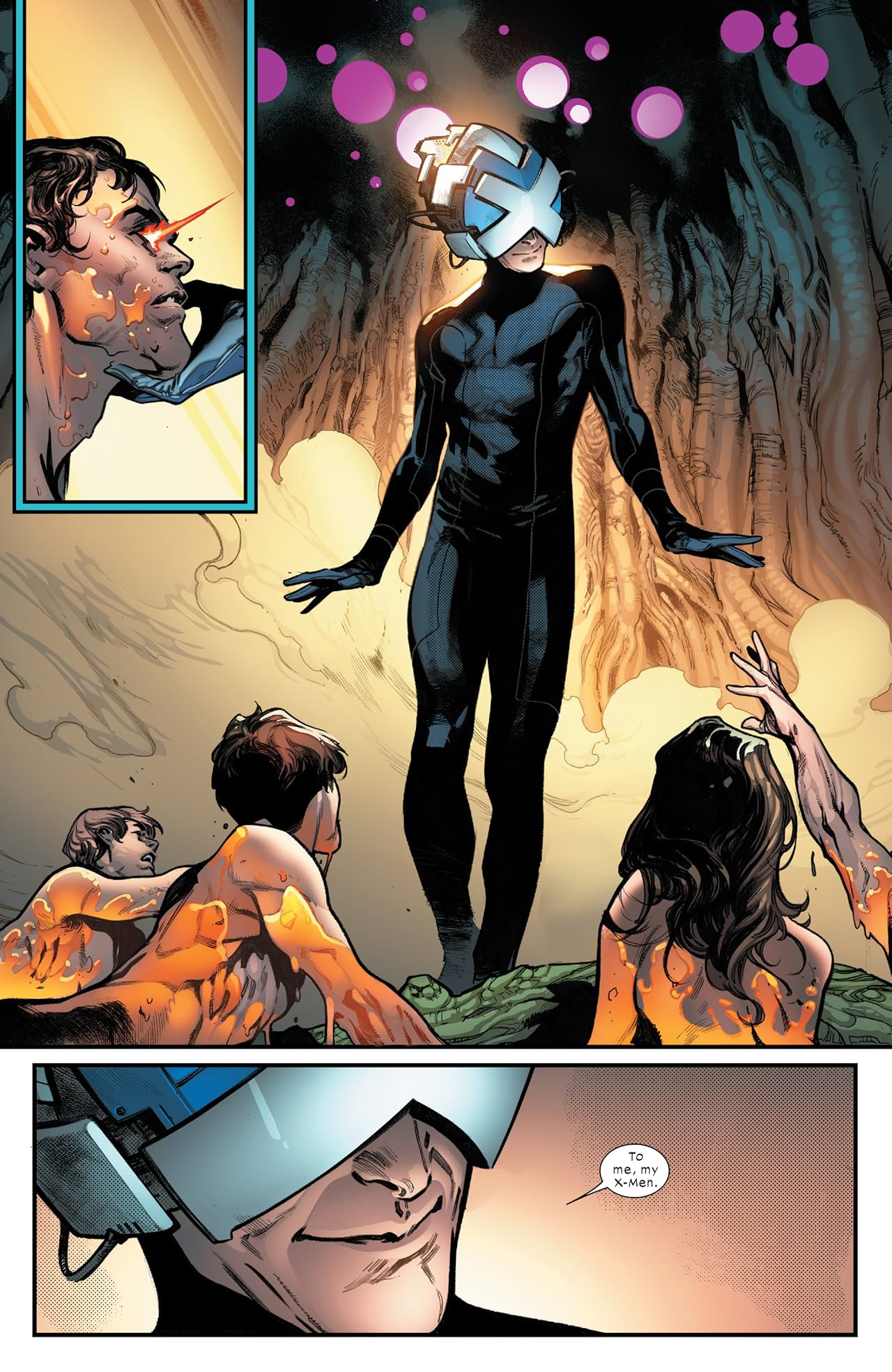
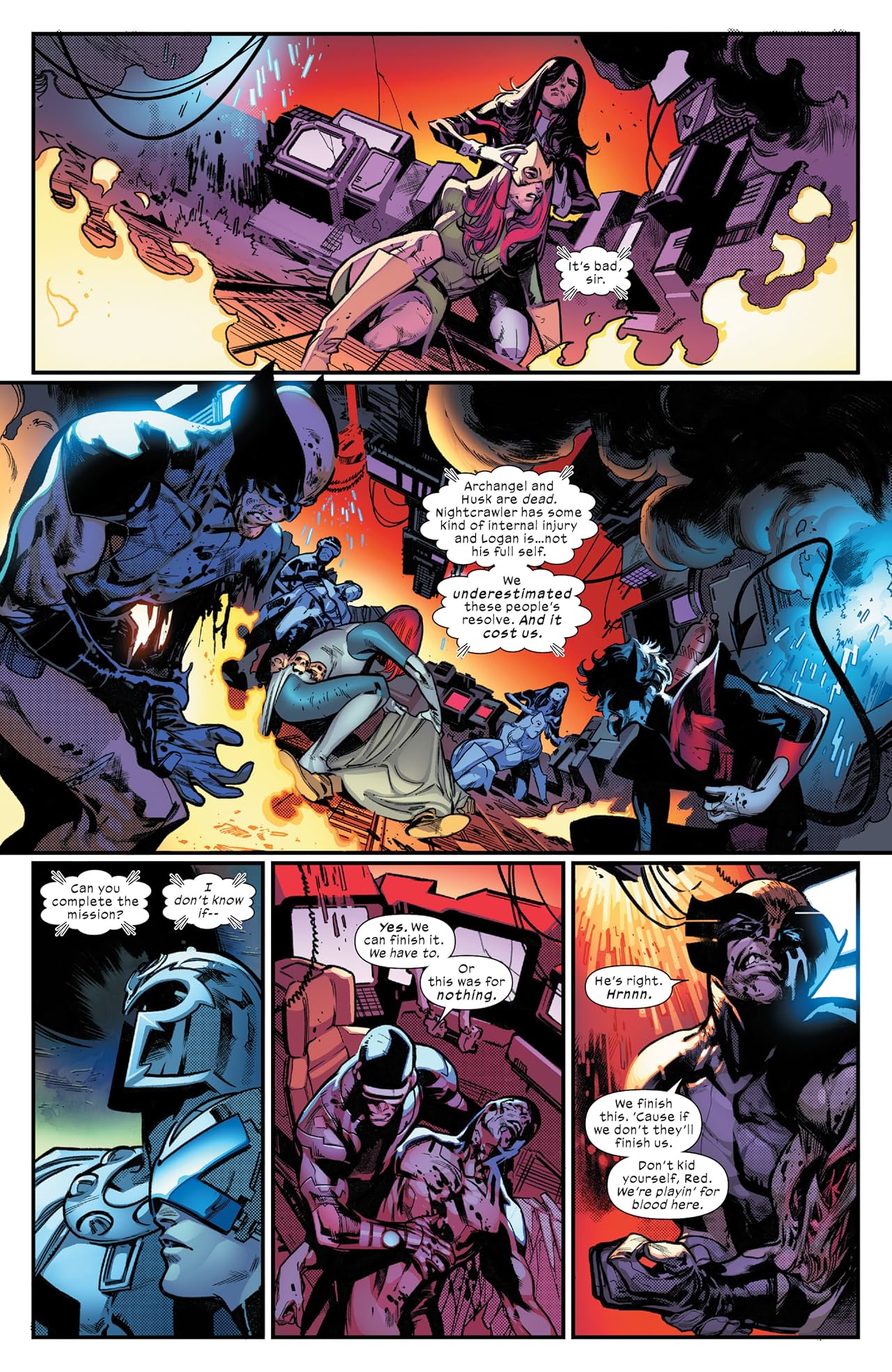
They don’t send the B-team for this mission, either. They throw the X-Men’s heaviest hitters with Cyclops, Wolverine, Jean Grey, Mystique, Arcangel, and Nightcrawler. They even add in some lesser-known, but still-effective names like Husk and Monet. Their mission is simple, but the logistics are not. It’s an opportunity for the X-Men to be at their best and they take full advantage of it.
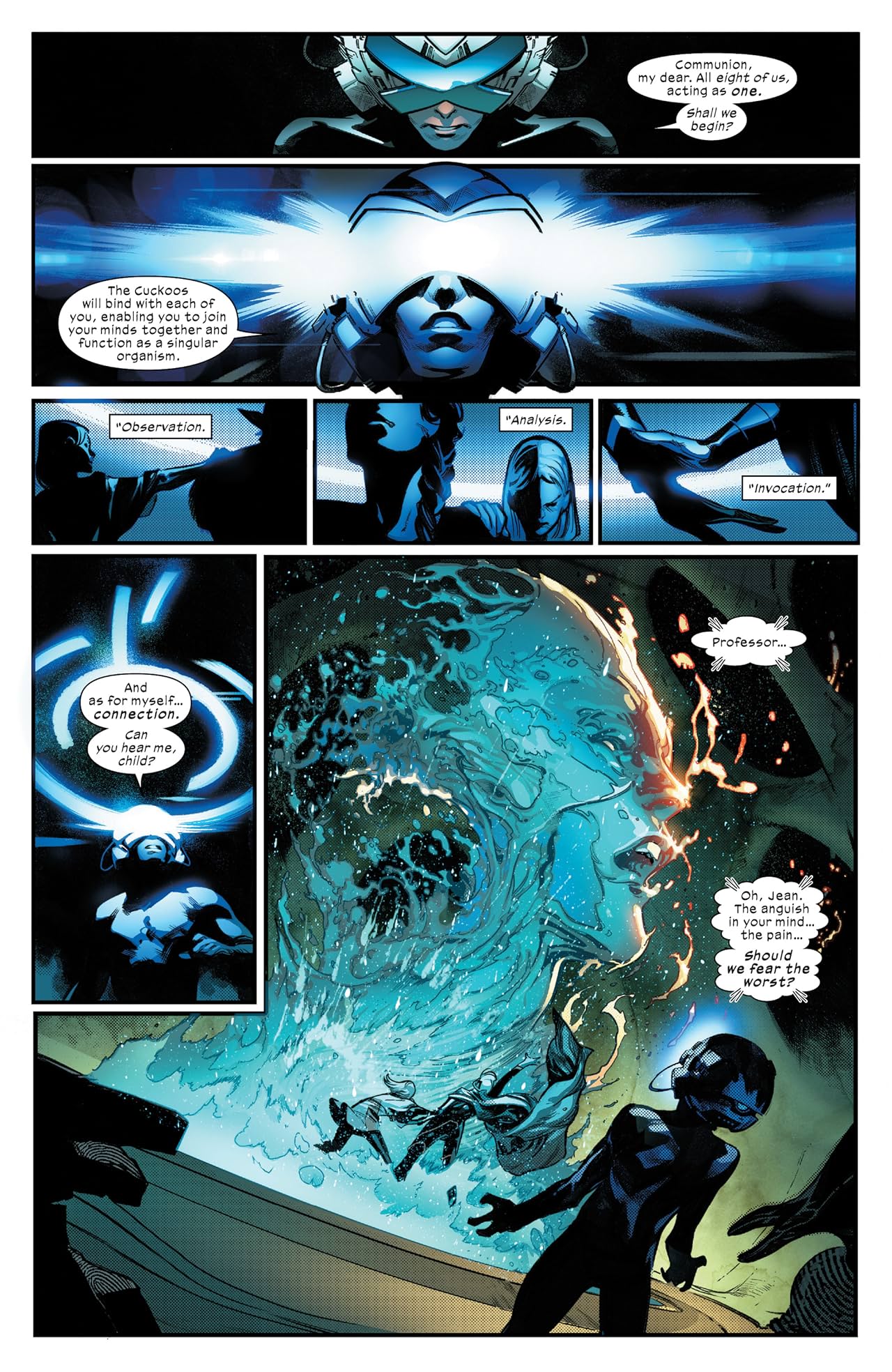
The struggle is intense. The battle is dramatic. Larraz’s artwork is simply stunning every step of the way. There’s never a sense that this is a mission from which the X-Men will escape intact, unscarred, and completely triumphant. This isn’t a Saturday morning cartoon or a movie where the good guys have to win outright. This is a battle for the present and future of the X-Men. Battles like that will come at a cost.

There’s definitely a sense that this mission is a suicide mission. There’s no teasing this mission will require heavy sacrifices. That sort of thing has been par for the course with X-Men comics for years, now. After they killed Wolverine for a while, the death of any character become much more trivial.

Making anything count in any comic these days is a challenge. Fans who have been reading the books for more than a few years know that nobody stays dead, nothing remains stable, and Deadpool never shuts up. The key is giving the conflicts weight and substance. In that, Hickman definitely succeeds in “House of X #4.”

The previous issues help establish why the X-Men need to take down Mother Mold. They also establish what happens if they don’t. The past, present, and future are all at stake at the same time and for once, it’s not because someone is abusing a time machine. For any superhero comic, especially an X-Men comic, that’s nothing short of revolutionary.

It all comes down to this single mission. Cyclops takes lead. Wolverine does something incredibly badass. Nightcrawler is astonishingly charming. Jean Grey has a flare for the dramatics. Even Monet gets a chance to cut loose. It’s a dire sequence of events, but one that has depth and meaning.
If someone ever wants to show who the X-Men are and why they’ve resonated so much since the Kennedy Administration, they would be wise to cite “House of X #4.” It doesn’t just depict heroes saving the day. It shows what the X-Men are willing to fight for and sacrifice for the sake of their future.

It’s not just about defeating the villains and winning the day. There are many personal moments in this battle that show the strengths and bonds of each character. Some shine more than others, but they never stray far from what makes them great. The stakes are high, but the characters stay consistent.

At their core, the X-Men are mutants and mutants are human. They’re not these larger-than-life icons in the mold of Superman, Captain America, or Spider-Man. They’re real people who didn’t get their powers by choice or circumstance. They were born that way. They can’t escape who and what they are. They don’t want to, either. They want a future for their kind and those who hate them.

They fight for that future in “House of X #4.” They know what will happen if they lose. There’s no ambiguity in what they do or why they do it. This is just X-Men being the kinds of heroes they need to be when everything is at stake. The story isn’t over, so their finest hour may still be ahead of them. However, the astonishing events of “House of X #4” are going to be very hard to top.
 

1 Comment

Filed under Jack's Quick Pick Comic, X-men

Jack Fisher’s Weekly Quick Pick Comic: Friendly Neighborhood Spider-Man #11

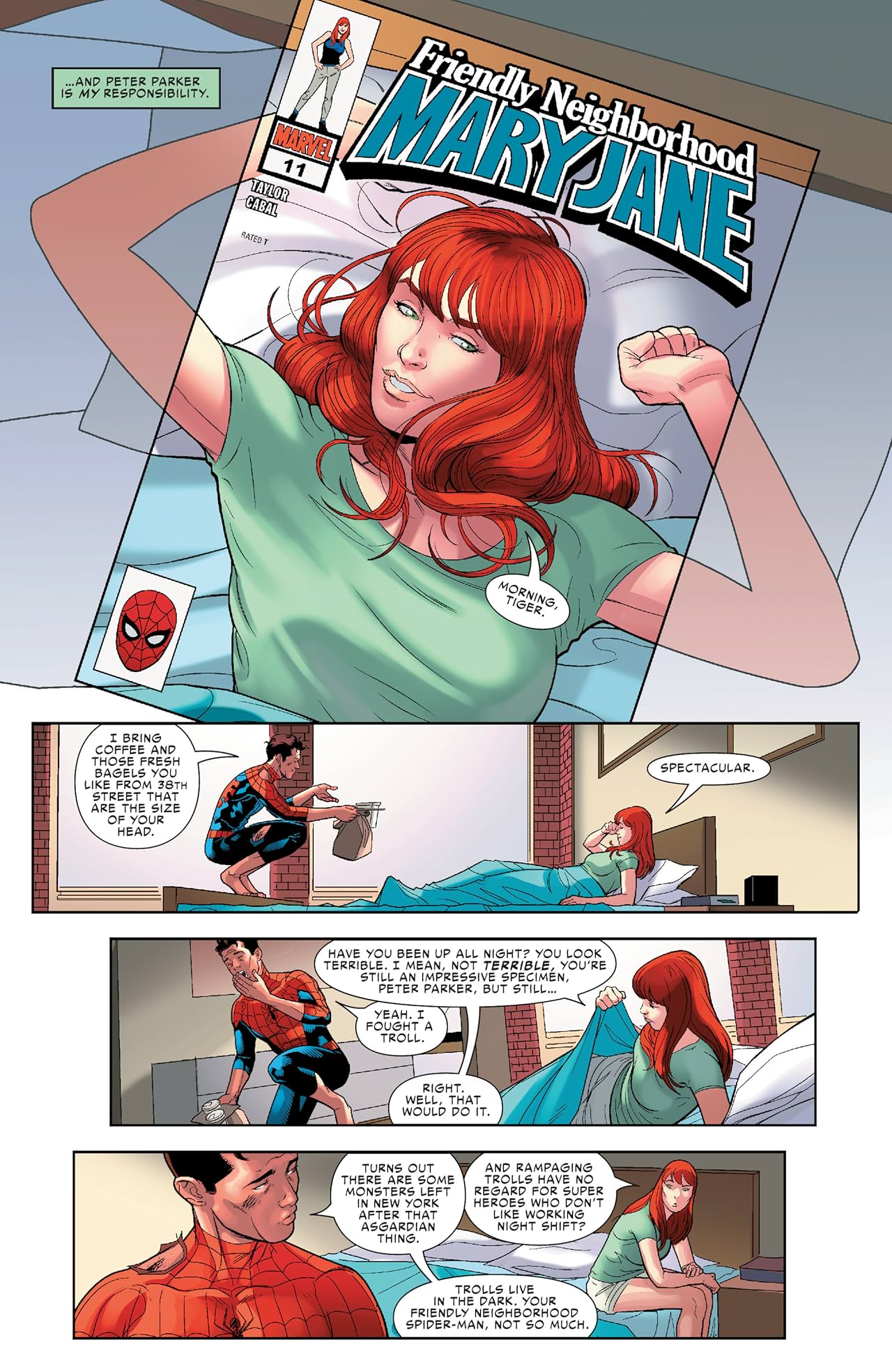
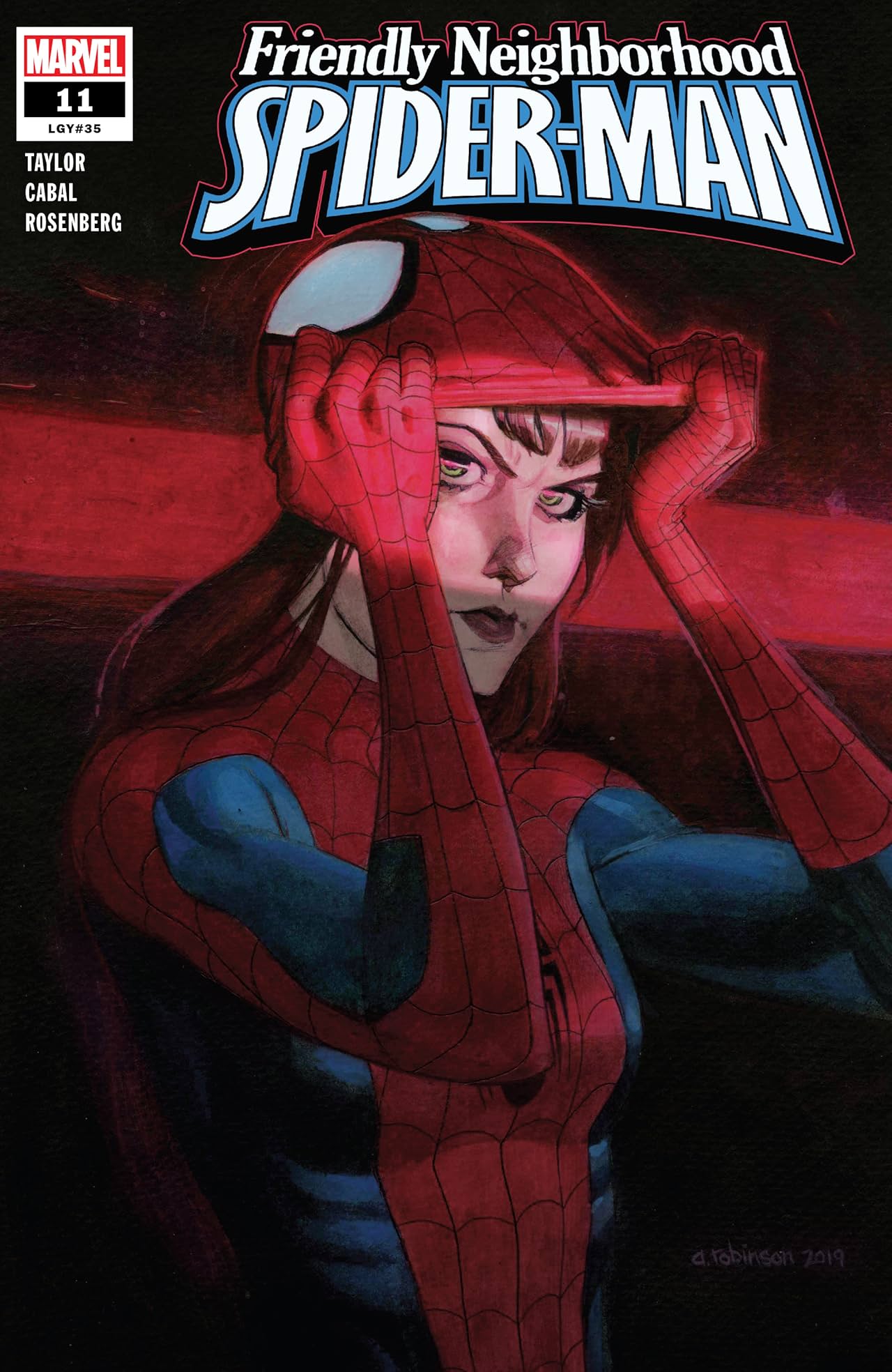
There’s an old saying for those of us who have read Spider-Man comics for a good chunk of our lives. Behind every strong Spider-Man is a beautiful redheaded woman. Sure, sometimes that woman is a cute blonde or a skilled thief, but it’s the beautiful redheaded woman who often makes Spider-Man the iconic superhero he is.

If ever you’ve doubted that, then “Friendly Neighborhood Spider-Man #11” should provide the definitive proof you’re looking for. Spider-Man, like many iconic heroes, derives as much of his strength from his supporting cast as he does his powers. For years, the bedrock of that power was his Aunt May. Then, Mary Jane Watson entered the picture and his bedrock hit the goddamn jackpot.

While their history, romantic and otherwise, has been convoluted by some rather infamous moments, Mary Jane Watson has proven to be one of the most integral components of Spider-Man’s story. It’s part of the reason why she’s his most iconic love interest and I say that as someone with the utmost respect for Gwen Stacy.

However, like many superhero love interests, Mary Jane often gets caught in the crossfire of Spider-Man’s heroic activities. There are times when she’s more damsel than lover and these days, that trope is prone to all sorts of unpleasantness.

It’s for that reason, and so many others, that “Friendly Neighborhood Spider-Man #11” is uniquely satisfying in how it affirms Mary Jane’s role in Spider-Man’s life. She doesn’t just prove herself and look sexy while doing it. She tells a side of Spider-Man’s story that isn’t often told.

Writer, Tom Taylor, has given plenty for both Spider-Man and Peter Parker to do since he took over the Friendly Neighborhood Spider-Man series. For this issue, however, he keeps Peter Parker on the sideline. Superheroes need rest too and Mary Jane understands that. She also understands that being Spider-Man’s girlfriend requires more than just looking great in skin-tight outfits.

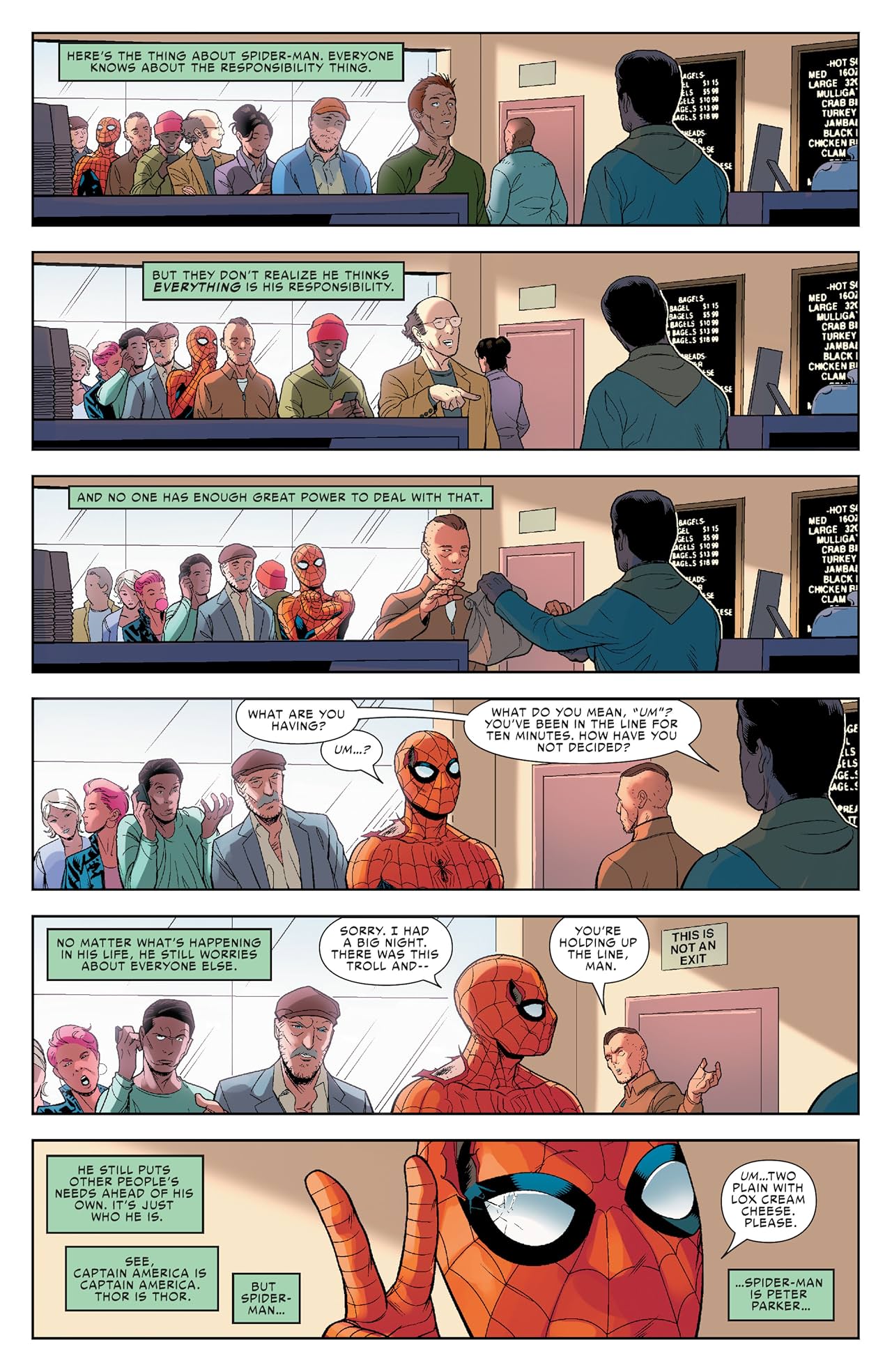
There are responsibilities, as well. Responsibility has always been a big part of the Spider-Man mythos, going all the way back to the days of Stan Lee and Steve Ditko. It doesn’t just apply to Peter, though. Mary Jane has her own share of responsibilities and not just with respect to being a good girlfriend.

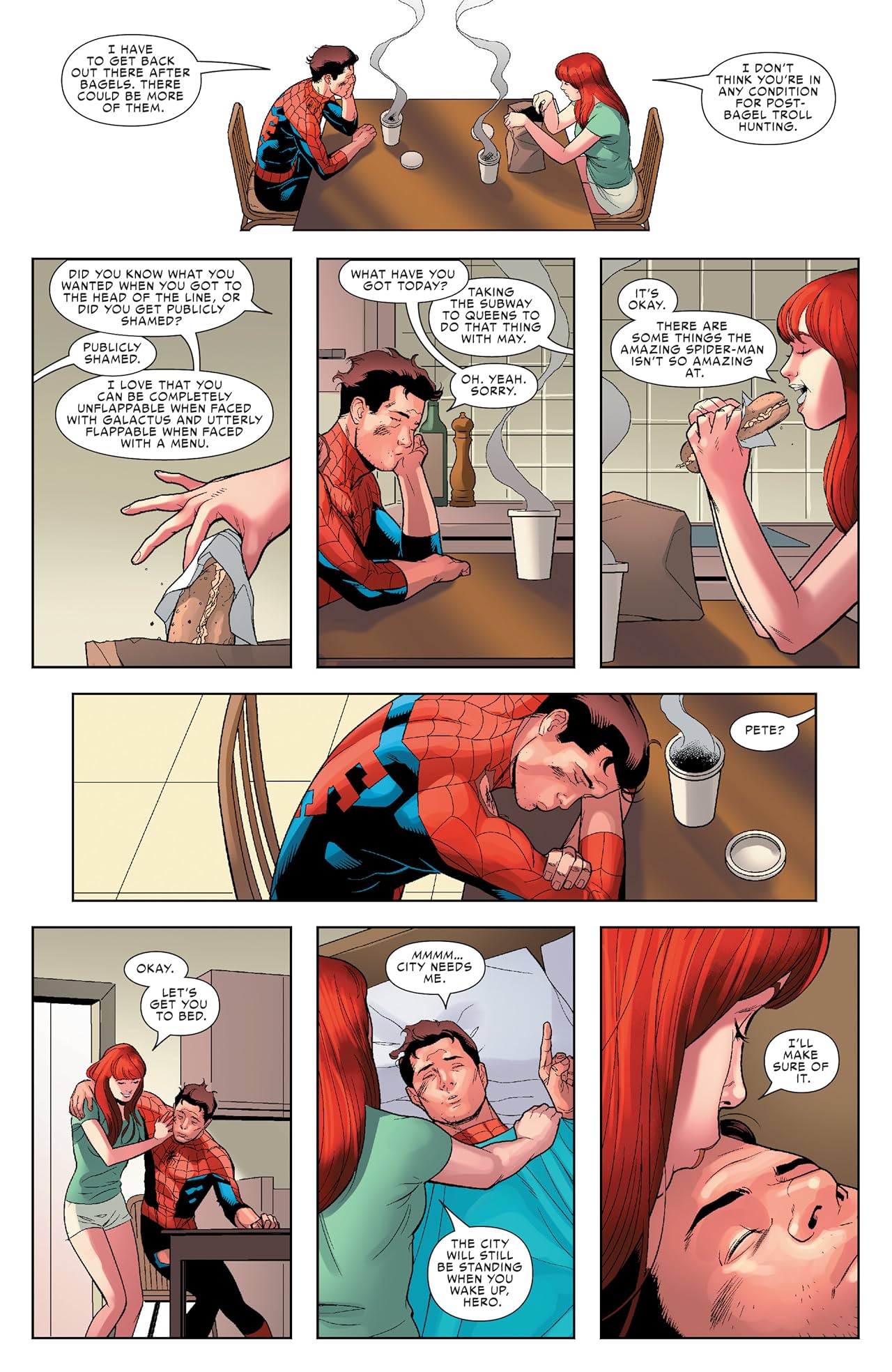
She narrates much of this issue. Taylor doesn’t rely heavily on melodrama or standard relationship issues. Much of the dynamic between her and Spider-Man resemble that of a couple who’ve already worked those issues out. They’re just two people, managing their lives, and doing their part.

For a couple whose romance is one of the most iconic in comic book history, that shouldn’t be such a novel concept. It really shouldn’t and yet, Taylor makes it feel like the most refreshing romantic sub-plot in years. That says more about the history of Spider-Man’s love life than it does anything else.

In addition to being the focus of the story, she finds herself in a situation that usually requires superpowers or billion-dollar gadgets to deal with. It’s not the most daunting situation she’s ever been in. There’s no Green Goblin or Sinister Six to deal with. Even so, it has all the traits of a conflict that usually requires her being rescued.

However, that’s not how it plays out. On top of showing why Mary Jane Watson is such a great superhero girlfriend, “Friendly Neighborhood Spider-Man #11” proves she’s just as capable in those situations. She doesn’t have super-powers, unless you count being irresistible to heterosexual men. For this particular story, she doesn’t need them.

Whereas most civilians would just run at the sight of a threat that requires a suit of armor or a magic hammer, Mary Jane steps up to help. She still can’t do it alone, but she still finds a way to seem as capable as any experienced her.
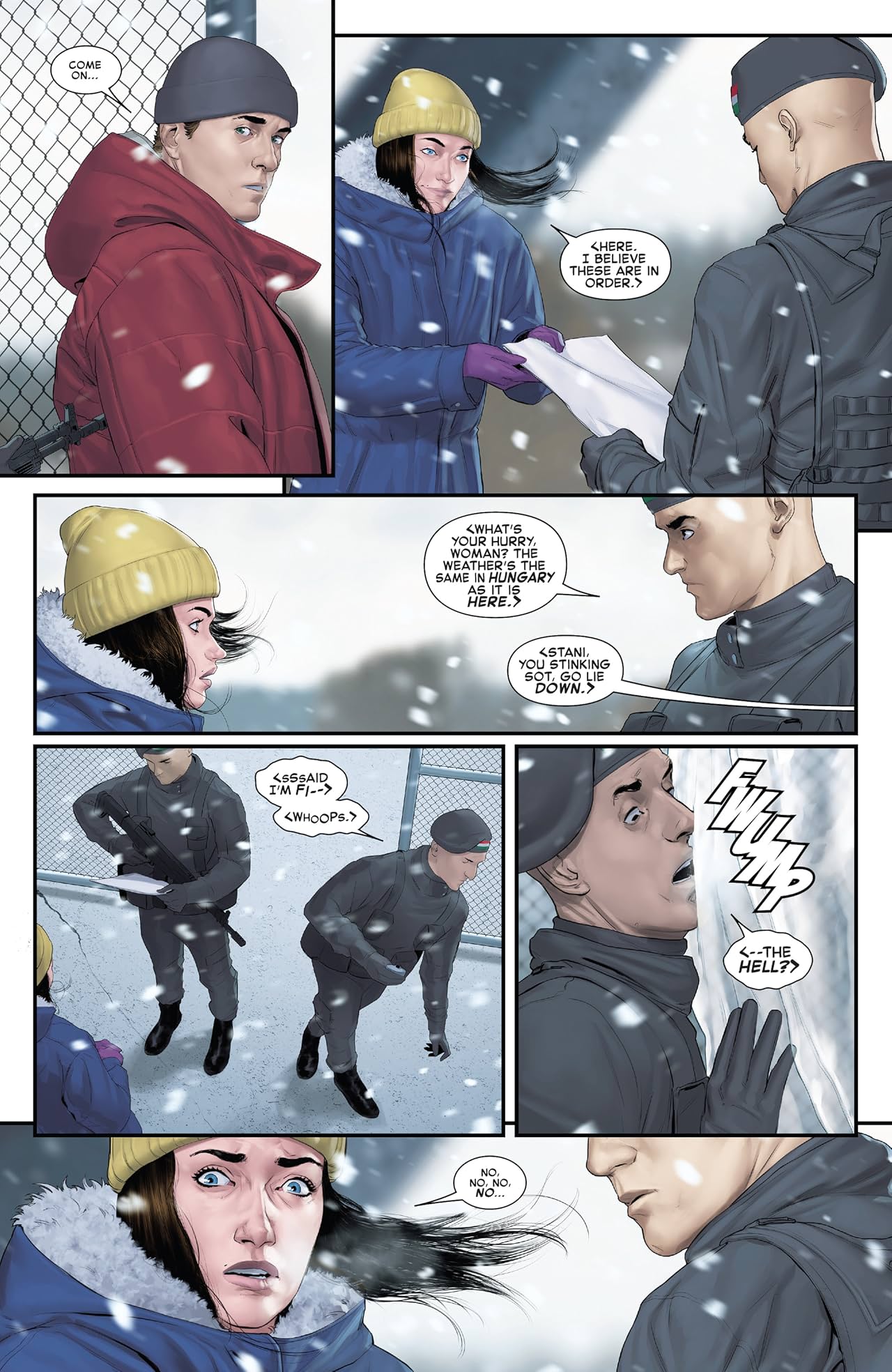
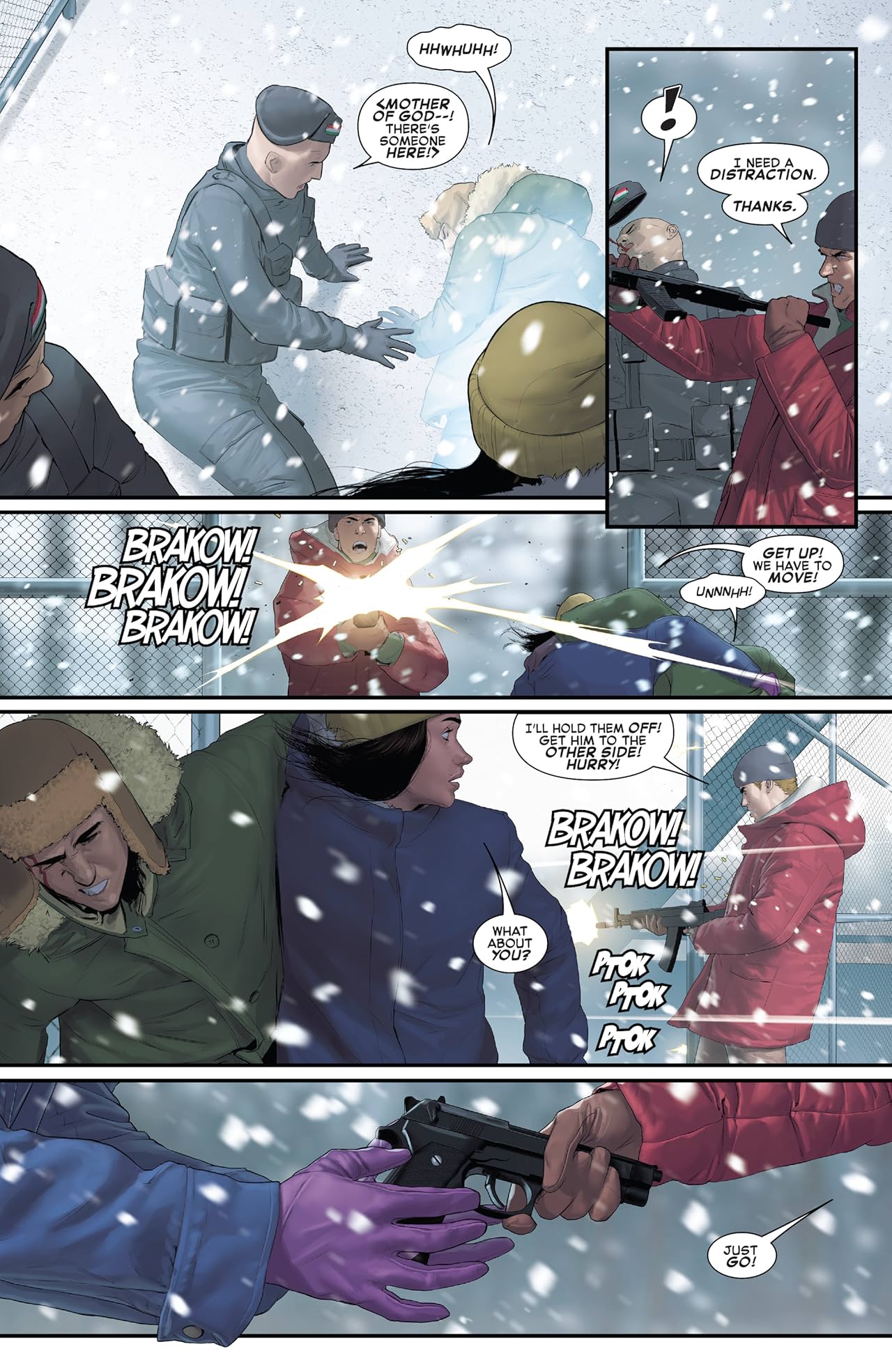
It’s not just her choice. She sees it at her responsibility. It shows that Spider-Man has influenced her every bit as much as she has influenced him. That doesn’t just belabor why she’s so important to both Spider-Man and Peter Parker. It perfectly reflects the larger themes of Spider-Man, as a whole.

While the news surrounding Spider-Man’s movies are making all the headlines, comics like “Friendly Neighborhood Spider-Man #11” prove why his story is so endearing. There have been countless comics that show Peter Parker rising to the occasion, fighting crazy super-villains, and saving the day. This comic shows how taking those responsibilities seriously help inspire others to do the same.

Mary Jane Watson may never win a fight against Rhino or the Green Goblin, but Taylor makes it abundantly clear that if she has the power to help in a situation, she won’t back down. She’ll fight when others run away. She’ll be strong when others can’t. She’ll look sexier than Peter Parker ever will in the process, but that’s more a bonus than a responsibility.

Throughout her history, Mary Jane Watson has shined in many ways, both on her own and as Spider-Man’s top love interest. A book like “Friendly Neighborhood Spider-Man #11” might not be her most iconic moment, but it shows in a single issue why she’s such an amazing part of Spider-Man’s spectacular story.

Leave a comment

Filed under Jack's Quick Pick Comic

Five Things I Hope To See In The Upcoming “Ms. Marvel” Show

ms-marvel-disney-plus-1184416

Every so often, I get news that excites me like a kid in a candy factory. It doesn’t happen often these days. As adults, it’s hard to get too excited when bills, the news, and traffic do plenty to dampen your spirits. Then, it happens and your world is better because of it.

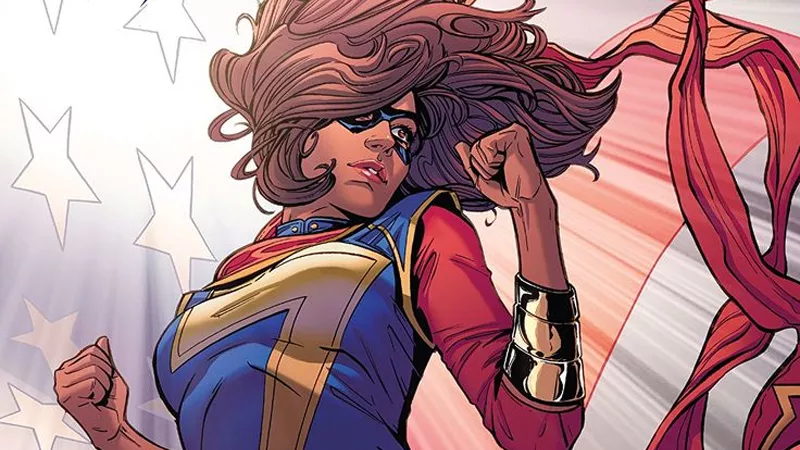
This past weekend, I got a much-needed dose of that excitement. At Disney’s annual D23 Expo, Marvel Studios announced that they’re making a live-action Ms. Marvel TV show for their Disney+ streaming service. As someone who has praised Ms. Marvel’s comics and her contributions to female superheroes, I freely admit I jumped for joy when I saw this.

I know the news surrounding Disney hasn’t been good lately, given what has been happening with Spider-Man. I also know they’re in a bit of a transitional period after the conclusion of “Avengers: Endgame.” Despite these issues, Marvel Studios and their Disney overlords still want to make money. They’ve got plenty of high-profile movies on their slate, but this could end up being a bigger deal.

I say that as an unapologetic fan of Ms. Marvel and all things Kamala Khan. I also know that Disney is looking for any possible edge to promote their new streaming service and take a bite out of the market share that Netflix currently dominates. I admit I wasn’t planning on subscribing. Shows about She-Hulk, the Scarlet Witch, Vision, and Moon Night sound fun, but not enough to justify the cost.

That all changed with Ms. Marvel. As far as I’m concerned, she’s the only reason I’ll be getting or keeping a Disney+ subscription. There’s a lot to unpack with this announcement. I doubt I’ll cover all of it here, but for now, I’d like to take some time to articulate the extent of my excitement.

To that end, I’d like to share five things I hope to see in this upcoming series. Kamala Khan is one of those characters who can capture the heart, soul, and spirit of the superhero genre. Her entry into the Marvel Cinematic Universe couldn’t be better. These are just some of the things that could make it even more marvelous.


Number 1: The (Many) Quirks That Make Kamala Khan Lovable

Any TV show, comic book, movie, or video game involving Kamala Khan must make its first priority to capture the essence of what makes her so endearing. Being a superhero is only small part of her overall story. What makes Kamala great is the many little things that define who she is.

She’s not just a teenager who gets superpowers and decides to start fighting criminals. She’s a self-professed fangirl. She loves playing video games, eating gyros, and writing fan fiction. These quirks are small, but numerous. They’re real things that people in the real world can relate to. That makes it easy to understand and appreciate her passions.

When I first read about Kamala in “Ms. Marvel #1,” I immediately grew to like her. She came off as the kind of girl I would’ve been friends with in high school. She presents herself as someone who behaves how you would expect a teenage girl to behave in a world where superheroes existed. She has a good family, a good heart, and an adventurous spirit. How can you not love that?

She’s also an outsider and not just because she’s a Pakistani Muslim girl living in Jersey City. Like most teenagers, she’s uncertain of her place in the world. She struggles with real issues, even before she gets superpowers. Those issues stay with her, even as she develops her superhero identity. It makes her easy to like and even easier to root for.

A TV show can’t just focus on her beating up bad guys and making witty one-liners. Plenty of other superheroes already do that, some better than others. It has to highlight, if not belabor, the distinct traits that have helped make her one of Marvel’s most successful female characters. There’s a lot to love and with a TV show, there’s plenty of room to explore it.


Number 2: Relatable Teenage Melodrama (Compounded By Being A Superhero)

Along with the traits that make Kamala Khan so lovable, there’s also the unavoidable battle that is teenage melodrama. Everyone faces it. Superpowers don’t make you immune to it. The last two Spider-Man movies have made that abundantly clear. A TV show provides more time and flexibility to flesh out that melodrama.

In the first few issues of Ms. Marvel’s comic series, which I highly recommend, she deals with a lot of teen angst and uncertainty. In fact, that sentiment is the very thing that prompts her to defy her parents and sneak out at night to a party that would ultimately end with her getting superpowers. In a very literal sense, teenage melodrama helped make Ms. Marvel who she is.

She’s not sure of where she fits in. She clashes with her parents. She argues with her friends. She also is starting to have feelings about other boys, which have made for some wonderfully sweet moments. She deals with all of this on top of being a superhero.

Like a young Peter Parker before her, these different aspects of her life often clash. One tends to undermine the other and it does plenty to overwhelm her at times. That often brings out the best in her and any TV show would be wise to present those moments.


Number 3: The Family And Supporting Cast That Help Make Her Who She Is

Like every major hero in the Marvel Cinematic Universe, Ms. Marvel’s greatest strengths often stem from her supporting cast. Tony Stark wouldn’t have achieved what he did without Pepper Potts. Carol Danvers wouldn’t have accomplished what she did without Nick Fury and Goose the Cat. Kamala Khan is no different.

In “Ms. Marvel #1,” we learn plenty about Kamala’s supporting cast. She has two loving parents who tend to be overprotective of her. She has an uptight brother named Aamir, who tends to intrude into Kamala’s personal life more than most siblings. She also has a friend/love interest in Bruno who had a front-row seat in seeing her become Ms. Marvel.

Each one of these characters helps shape Kamala into who she is, before and after she gets her powers. They support her, but they also complicate her efforts. While none of them have to die for her to be the hero she strives to be, they all make their on contributions to her story. In the same way Superman’s parents guided his heroic journey, Kamala’s friends and family informed hers.

Unlike Superman, Kamala endured a pretty rocky road to establishing herself. However, at no point did her creator, G. Willow Wilson, give the impression that her friends and family were just background decorations. They all care for her. They worry for her. They all want what’s best for her, even when they’re rarely on the same page.

A TV show featuring Kamala has to capture at least part of that family/friend dynamic. Even a fraction of Kamala Khan’s supporting cast from the comics can do plenty to make for a rich, engaging TV show.


Number 4: The Struggles (And Triumphs) Of A Growing Hero

There’s no getting around it. Kamala Khan screwed up more than once when she started off her superhero career in the comics. While she managed to save one life the first time she used her powers, she ended up getting shot the second time. Even before that, she struggled to master her powers in ways that were both understandable and hilarious.

It’s a critical part of every superhero’s journey. With new challenges come new struggles. Some of those struggles devolve into outright failures. Even the best heroes fail sometimes and Kamala had more than her share in the comics. Any TV show that tells the story of her journey cannot and should not gloss over those struggles.

With Kamala, however, the struggles matter even more than the triumphs. While many heroes may lament at their failure, Kamala tends to get a lot more animated. She’s passionate about what she does and has a tendency to wear those passions on her sleeve. It’s part of what makes her lovable. It also reminds everyone that she’s still a teenager. She’s still growing and maturing.

One of the things I love most about Ms. Marvel comics is seeing her grow with each passing story. The first dozen issues had more growth for Kamala than the last 100 issues of Amazing Spider-Man. Along the way, there were missteps, heartbreaks, and victories. They all just made me want to root for Kamala even harder and if a TV show can accomplish that, it’ll do plenty to justify a Disney+ subscription.


Number 5: A Vision For Young (Idealistic) Heroes In A World That Needs Them

From the beginning, Kamala Khan connected with fans like me because she radiated this ideal spirit that a lot of people once had in their youth. Time, age, and watching too much news has a way of crushing that idealism over time, but most of us still remember why it was so important to us.

As Ms. Marvel, Kamala carried herself as the kind of young, idealistic hero that many of Marvel’s traditional heroes grew out of years ago. The comics, themselves, became jaded as the very act of heroism gained major complications, both from events within the stories and influences from the real world. That’s part of what made Kamala a breath of fresh air.

She might be young, naïve, and impressionable, but she’s also exactly what we need right now. The MCU just suffered some devastating losses. The world, as a whole, is still recovering from the events of “Avengers: Endgame.” This world still needs heroes. Even though it still has plenty, it doesn’t have someone like Ms. Marvel.

She can be the hero that emerges from the chaos of this broken world and shows what dedicated heroes can accomplish. She can show everyone that, even in the face of heavy losses and broken hearts, there’s a place for pure, uncorrupted heroics. You don’t need to be a billionaire playboy genius philanthropist, either. You can just be a teenage Pakistani American girl from Jersey city.


I cannot overstate how excited I am for Ms. Marvel to get her own show. I imagine I’ll be writing about it a lot once it comes out. There’s a lot I hope to see for this show, the comics, and the MCU. If Marvel Studios can capture even a fraction of what makes Ms. Marvel great, then the future of that world and ours will be that much brighter.

1 Comment

Filed under Marvel, Marvel Cinematic Universe, superhero comics, superhero movies, television

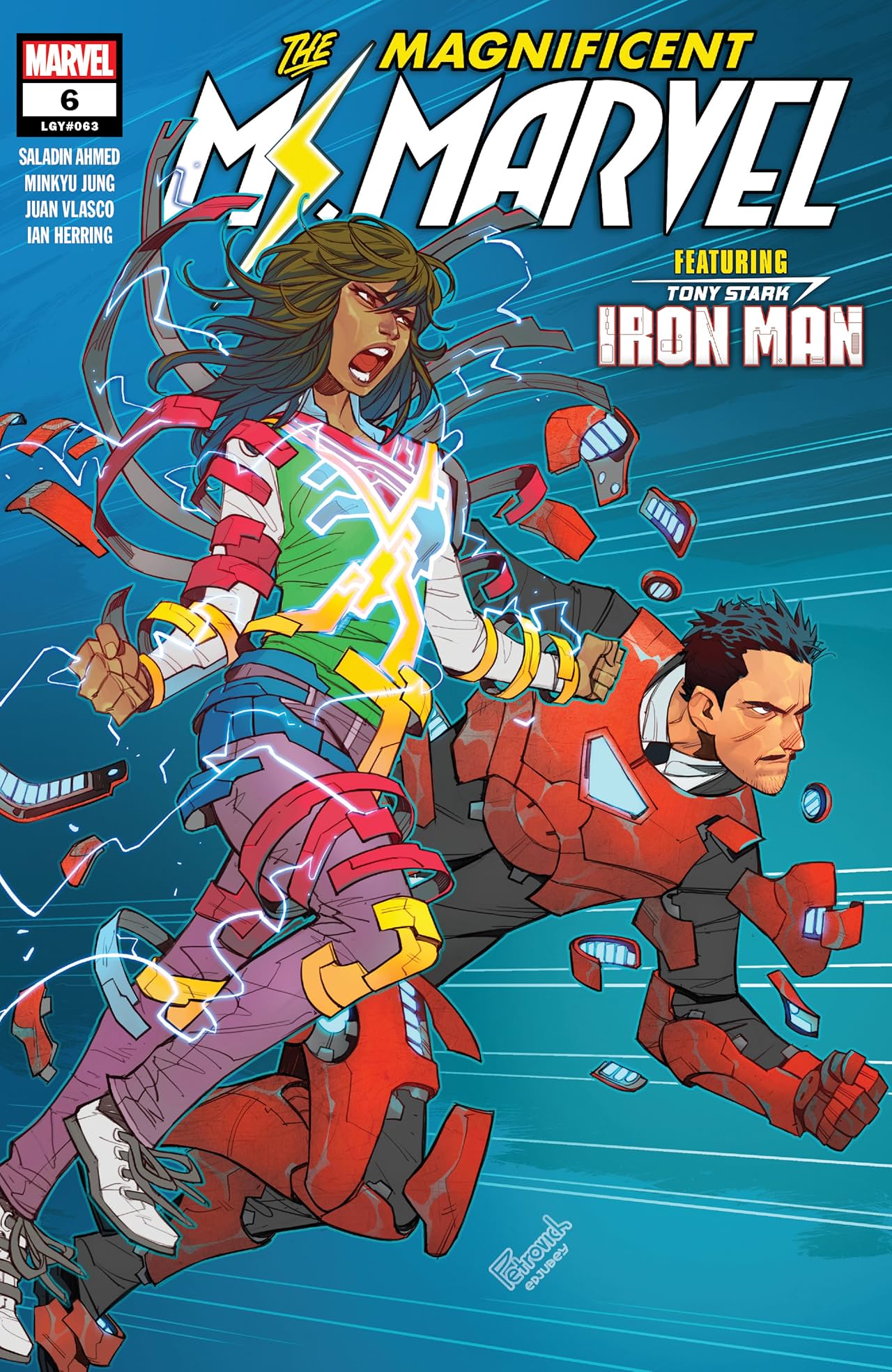
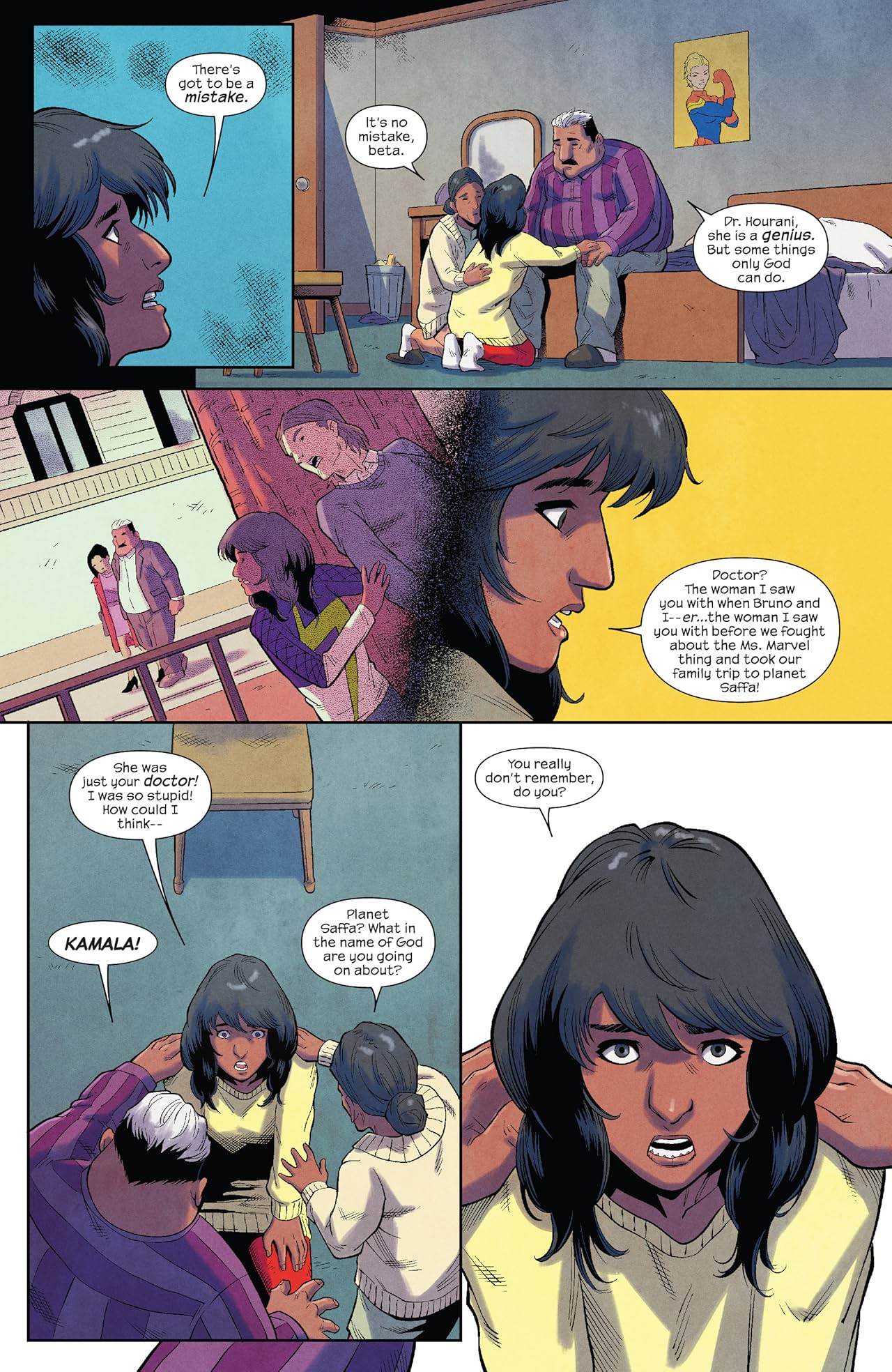
Jack Fisher’s Weekly Quick Pick Comic: Magnificent Ms. Marvel #6

Teenage superheroes have always had a unique appeal, as well as a unique set of challenges. It’s not just their youth, inexperience, and idealism that sets them apart. They deal with complications and obstacles that adult heroes rarely have to worry about. Say what you will about Hawkeye’s abilities. At least he doesn’t have to worry about turning in homework on time, dealing with parents, and enduring puberty.

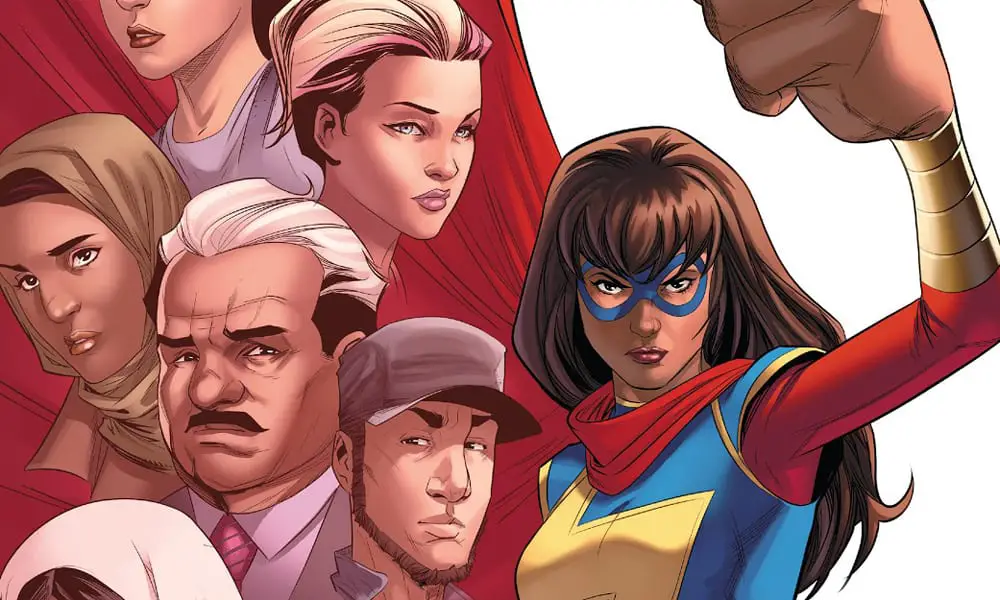
When it comes to teenage superheroes who embody that unique appeal, Ms. Marvel checks every box. She’s young, idealistic, lovable, tough, determined, awkward, and overwhelmed with balancing her superhero life with her personal life. Since her debut in 2014, some of her best moments have come from struggling to maintain that balance.

Now, that balance is completely thrown off in “Ms. Marvel #6” and for once, it has nothing to do with aliens, Hydra, or high school. What unfolds in this comic is more personal. It puts Kamala Khan in a position where no superpower or superpowered allies can make a difference.

It’s a difficult position, even for adult superheroes. Superman faces it almost every time he clashes with Lex Luthor. However, Kamala Khan isn’t Superman. She’s a teenage girl still growing into her superhero identity. What happens to her in “Ms. Marvel #6” is an impossible challenge as much as it is a turning point.

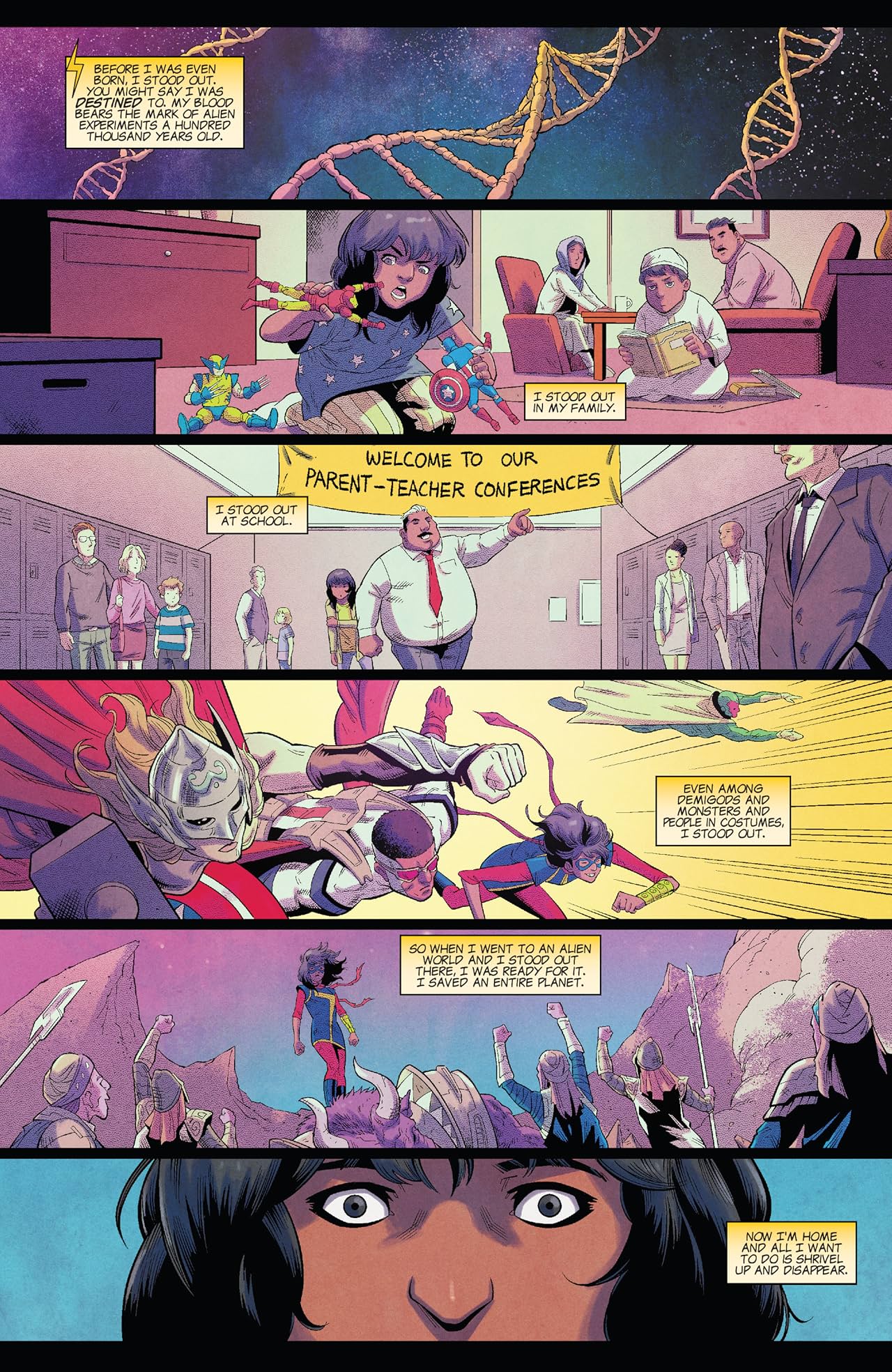
Since he took over, writer Saladin Ahmed has taken Ms. Marvel’s journey far beyond the limits of Jersey City. She’s teamed up with the Avengers, led a team of aspiring young heroes in the Champions, and fought in an alien war in which she saved an entire planet. She has had her share of triumphs lately, even when compared to adult superheroes.

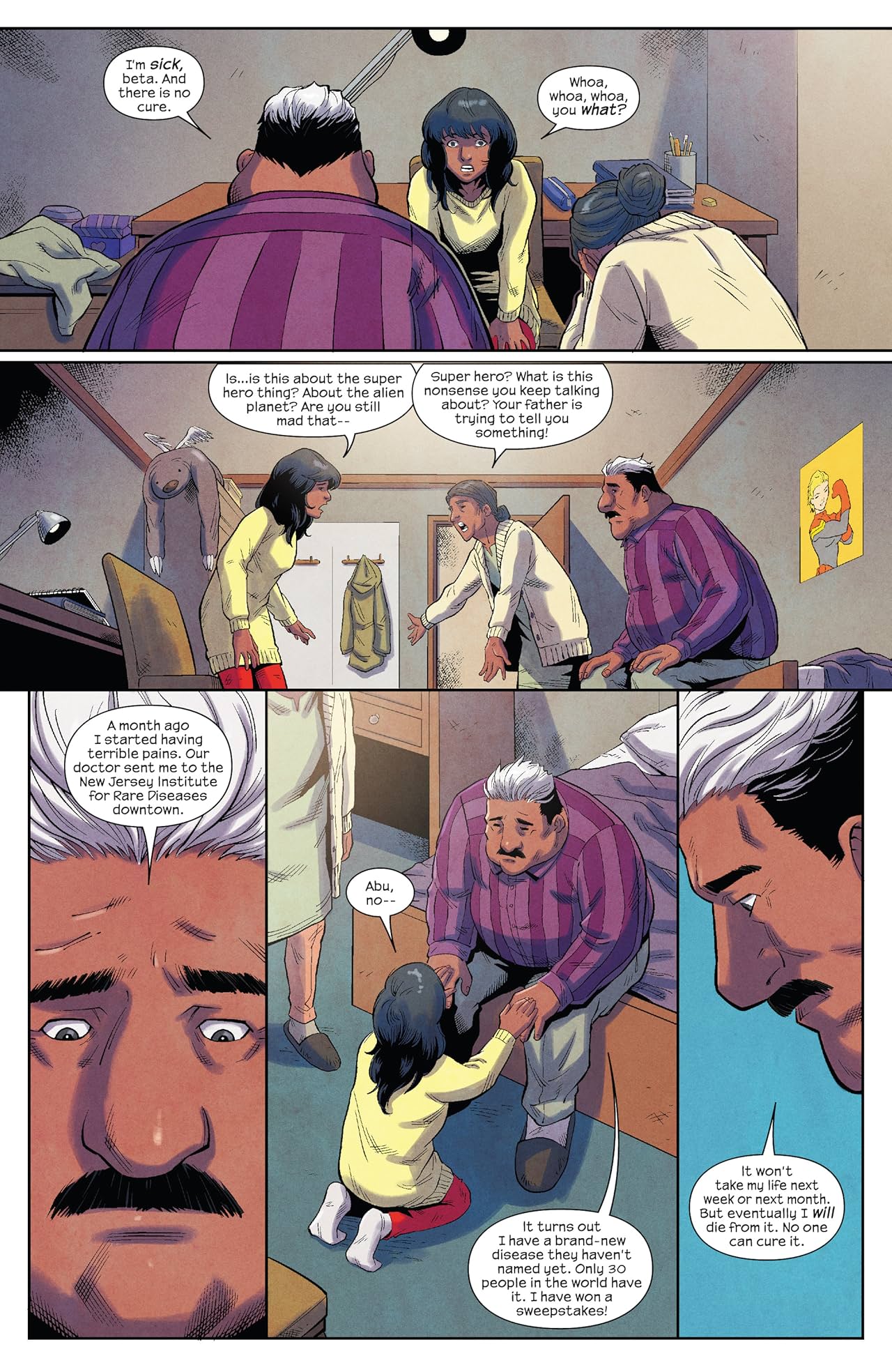
Then, just after she acquires a flashy new costume powered by alien technology, her parents drop a bombshell. Her father is dying. He’s not just sick. He’s not just facing some new condition that requires treatment and management. He is dying and there’s nothing anyone can do about it.

For a superhero who just saved an alien planet and is on a first-name basis with the Avengers, this is akin to the ultimate gut punch, followed by the worst hangover, and topped off with the most agonizing heartbreak. This is the kind of news that even adult struggle with, long after they’ve built lives apart from their parents. Kamala Khan is just a teenager. Superhero or not, this shatters her world.

It’s a heartbreaking turn of events for a character who has been on a solid winning streak lately. Almost every teenage superhero faces setbacks. Kamala has had more than her share, from love interests who ran away to idols who abused her trust. This is more than a setback.

Since her debut, Ms. Marvel has stood out in a great many ways. One particular way that sets her apart from the Peter Parkers and Bruce Waynes of the superhero world is that she didn’t need a parent or loved one to die to become a hero. Kamala comes from a loving, tight-knit family who instill in her the values that would make anyone a hero in their own right.

Her family has always been a big part of her story. Like many teenage superheroes, she struggles to navigate family life alongside her superhero life. At the same time, her family has largely been a source of strength, even when they hound her about being late for school. Now, her family is facing one of the worst situations that any family can face.

Ahmed doesn’t rush Kamala through the various stages of acceptance. The plot of “Ms. Marvel #6” starts with a heart-breaking revelation, but follows Kamala as she tries to make sense of it all. Being young and idealistic, her first instinct is to try and fix this. She’s a superhero. She’s supposed to do the impossible and succeed where others fail.

This is different. She can fight to save her father’s life, just as she fights a typical supervillain. However, even when saving the day, the effects of her father’s news is apparent. The art by Minkyu Jung even captures that mood at every turn.

Ms. Marvel #6” is one of those comics in which elaborate heroics and flashy costumes are secondary, at best. The events in this story signal a major upheaval in Kamala Khan’s superhero journey and it’s not one she can embiggen her way out of. Right now, her personal journey is more important than that of any hero. Tony Stark even shows up to remind her of that. He even brings gyros to belabor the point.

More often than not, when teenage superheroes are faced with loss and heartbreak, their first instinct is to lash out. You can usually set your watch to them doing something reckless or self-destructive out of anguish. That’s not just a trait common of superheroes. That’s something teenagers struggle with in the real world.

It once again strikes to the heart of why Kamala Khan is such an endearing character. It’s not just that she succeeds where other female superheroes falter. Her struggles, even though they involve Avengers and aliens, feel real and genuine. The idea that she’s poised to endure one of the hardest things any family can endure is both powerful and relateable.

After the events of “Ms. Marvel #6,” it’s not unreasonable to say that Kamala Khan’s life will never be the same. Even though that seems to happen with teenage superheroes every other week, this feels different. This isn’t part of some elaborate plot by a cunning supervillain. This is a terminally ill loved one.

Whether you’re a hero or a nobody, this is a challenge nobody is equipped to handle. Kamala Khan now faces the prospect of losing her father. It’s heartbreaking, but it also helps reaffirm just how much heart she has. That heart helped make her a hero. It also makes the prospect of watching it break feel that much more difficult.

1 Comment

Filed under Jack's Quick Pick Comic

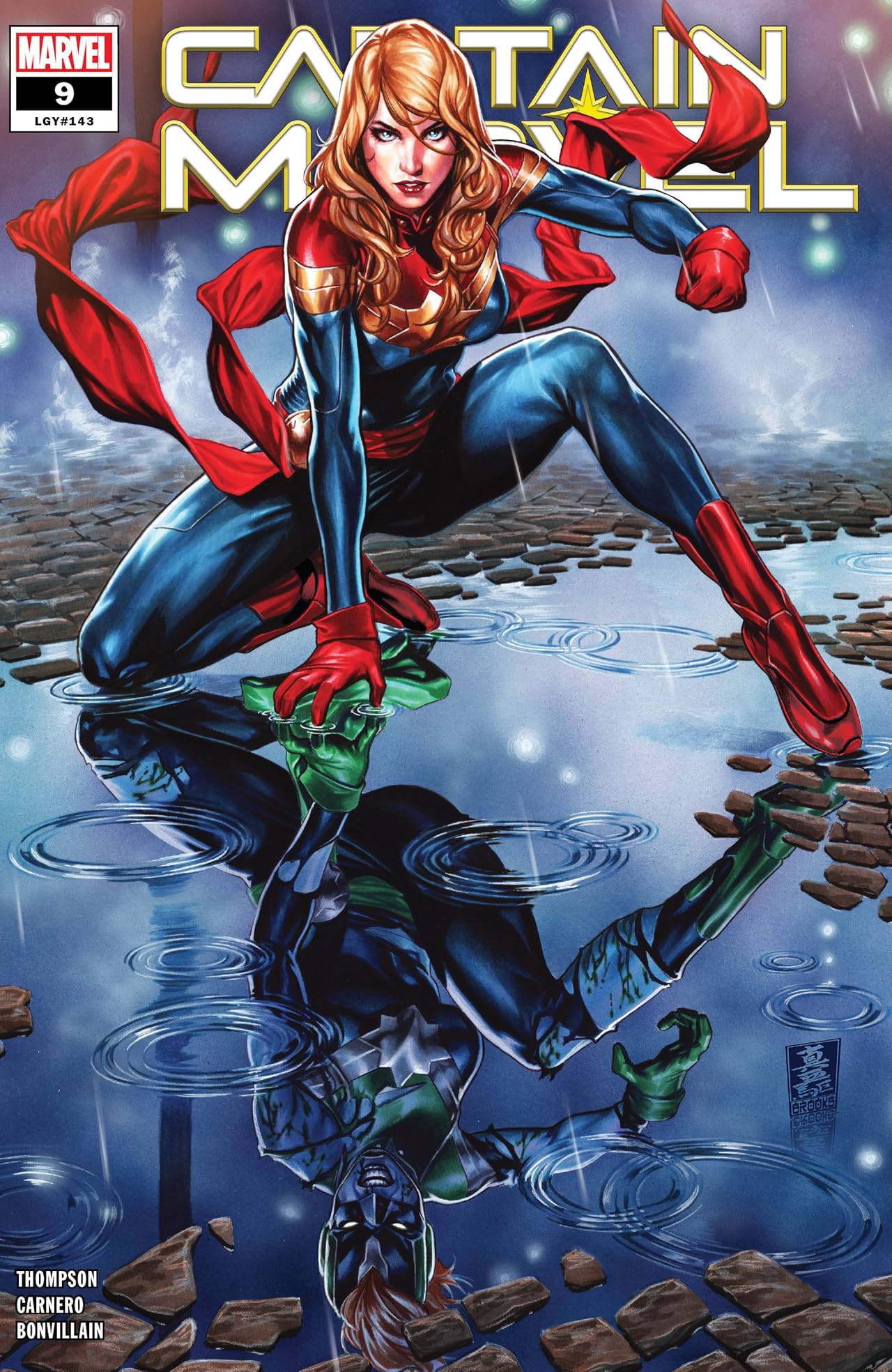
Jack Fisher’s Weekly Quick Pick Comic: Captain Marvel #9

If you want to know the true character of a superhero, then just look at how they handle themselves when their powers are weakened or removed. The heroes with the strongest character won’t change in the slightest. They’ll keep being a hero. They just have to adapt to their limitations. The lousy ones tend to cower and whine like a kid who lost their binkie.

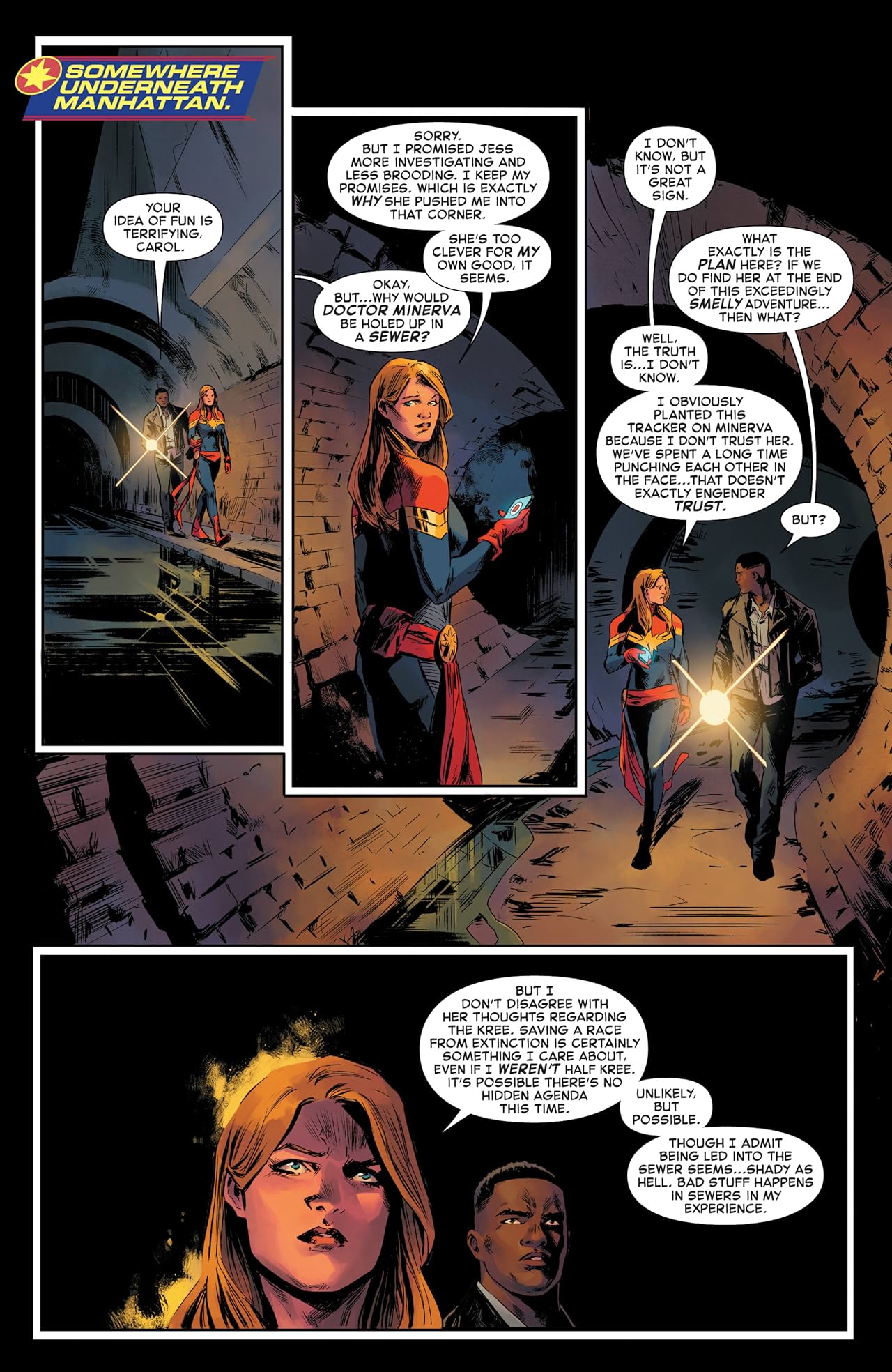
Carol Danvers has a history of losing her powers, her identity, and her bodily autonomy. Her character has been tested more than most and, through many setbacks and losses, she never stops being the hero she strives to be. Now, Kelly Thompson and Carmen Carnero are testing her again in “Captain Marvel #9,” but it’s a different test of character.

For the past few issues, Carol has been having issues with both her powers and her public image. She couldn’t handle a standard tentacle monster that seems to attack New York every other day in the Marvel universe. On top of that, news got out of her Kree Heritage, as revealed in “The Life of Captain Marvel.” Now, her status in the Air Force and the public trust she’s worked so hard to earn is in question.

If that weren’t challenging enough, there’s a new female hero in town named Star who may or may not be tied to her recent issues, but is already becoming more popular. That’s a lot of challenges, to say the least.

However, “Captain Marvel #9” does not devolve into another story about a superhero becoming paralyzed by vulnerability and self-doubt. It certainly has all the right ingredients for that kind of struggle, but that’s not the direction that Thompson goes and that’s refreshing. There are enough stories about superheroes losing their powers and whining about it. Carol Danvers doesn’t whine. She confronts that shit.

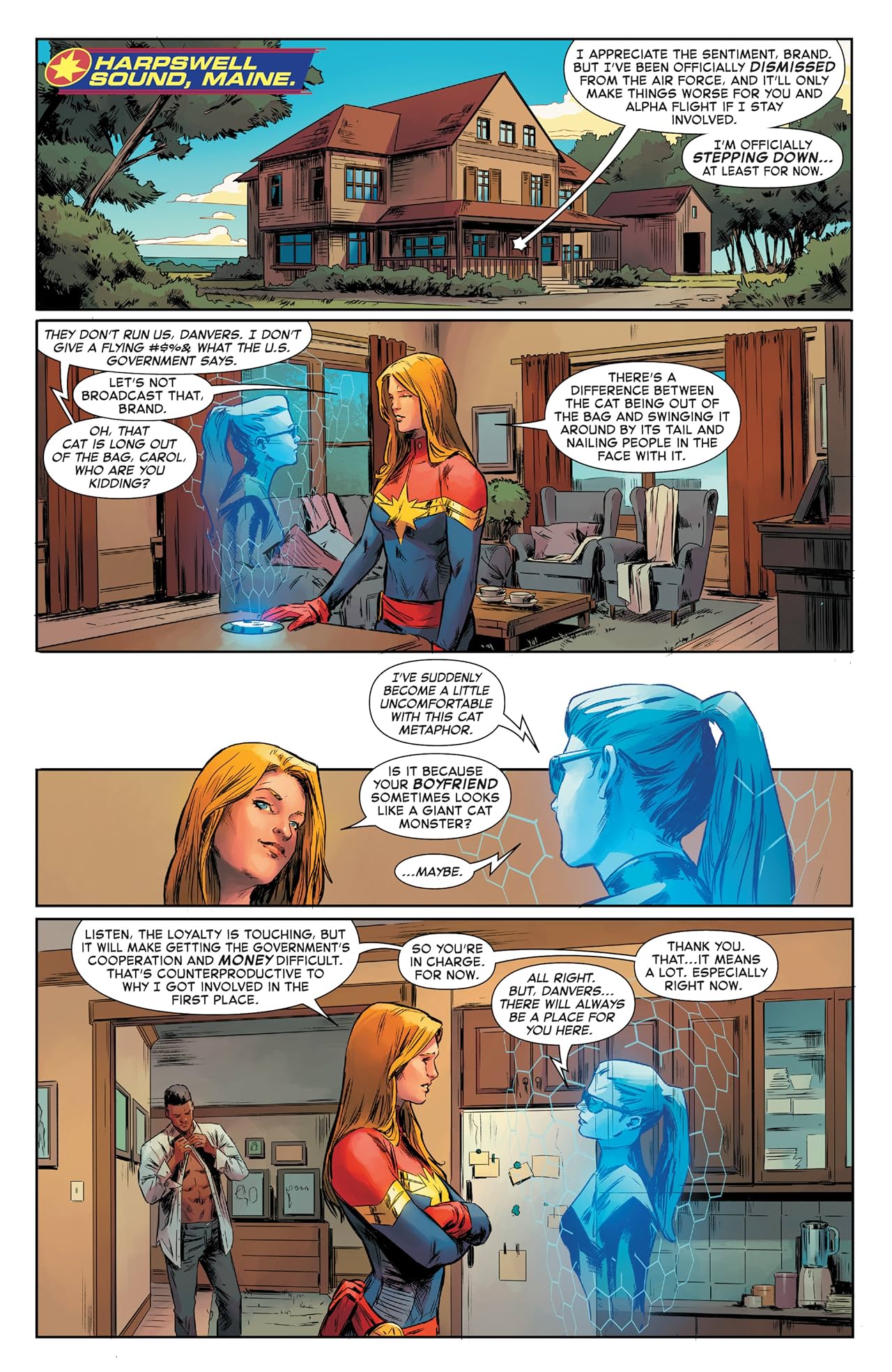
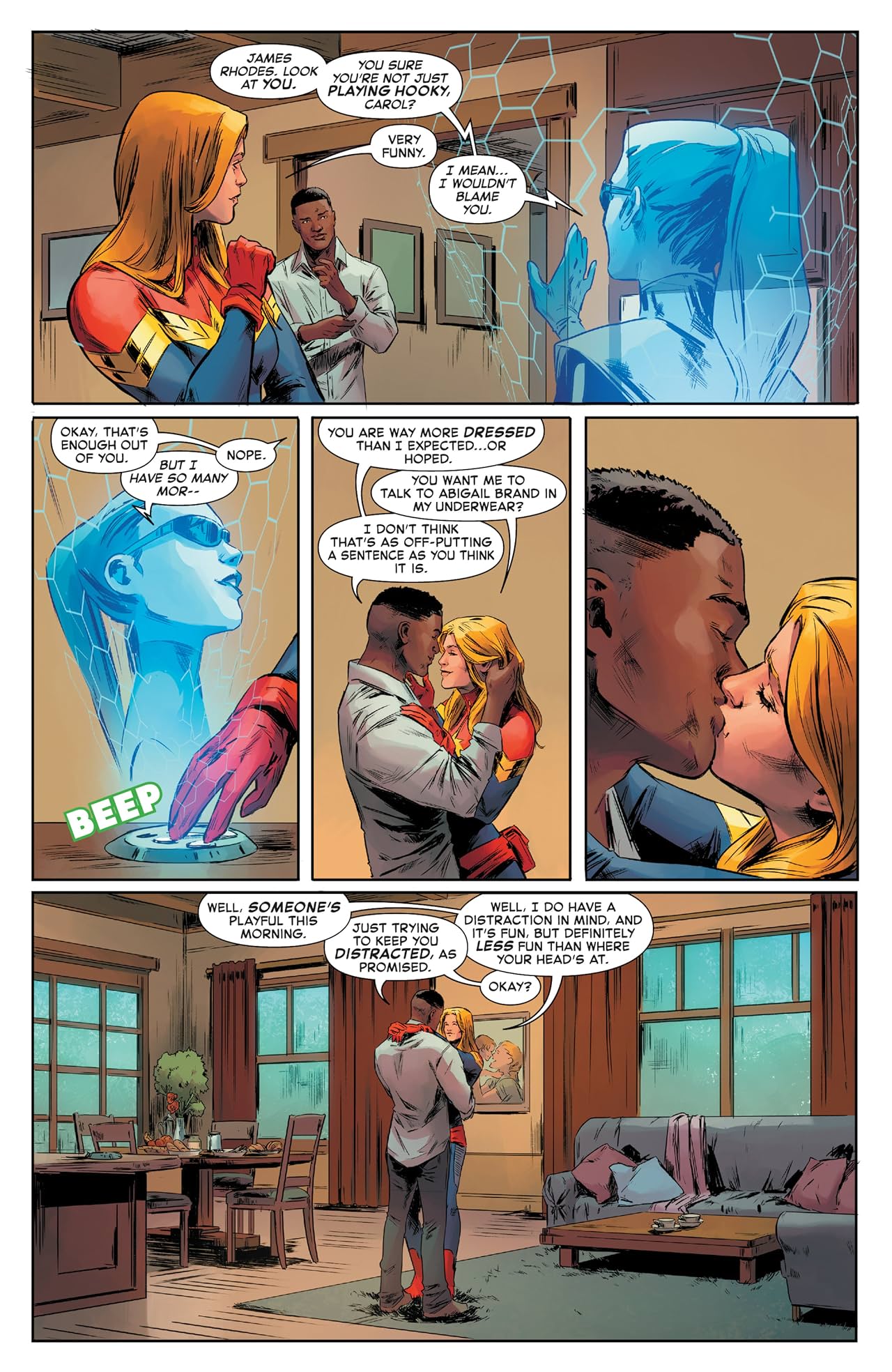
She even finds time to squeeze in a little sexy time with her boyfriend, James “War Machine” Rhodes. Powers and reputation are important, but so is spending quality time with her significant other. Say what you want about Carol, but she knows how to prioritize. That, alone, is a strong measure of her character.

It also establishes that Carol isn’t going to deal with these challenges alone. She accepts help from the likes of Rhodes, Tony Stark, and her long-time friend, Jessica “Spider-Woman” Drew. She doesn’t always accept it immediately, but she does accept it in the spirit of finding answers.

That’s not to say she does so without an attitude. She’s still Carol Danvers. She has an attitude, regardless of what’s going on with her powers and reputation. She may lose her strength, but she doesn’t lose her edge. Thompson makes it a point to demonstrate that on many occasions and not all of them involve a shirtless James Rhodes.

There’s a bigger mystery at work and it’s not just about Carol’s powers. There are issues surrounding the tentacle monster that Carol fought, as well as the recent appearance of Star. Some of those issues are explored more than others, but they all seem to have a common link.

Carol is still trying to be the same Carol she’s always been, but that’s just not possible anymore. She’s half-Kree. She knows this and now the entire world knows this. In a perfect world, that wouldn’t matter. She would still be the same person she’s always been and the people who adore her would just shrug it off.

However, the Marvel Universe is not a perfect world. It may have Deadpool and Squirrel Girl, but it’s far from perfect. People are still paranoid and untrusting for all the wrong reasons. It’s the same world that takes J. Jonah Jameson seriously. It has many flaws and they do put a strain on Carol’s efforts.

That’s what helps give “Captain Marvel #9” the necessary impact. Carol doesn’t lament or whine about the declining state of her powers, but she does show moments of frustration. It’s a fitting reminder that she still has a human side. It still bothers her when a part of her identity is taken because the public is uncomfortable with her heritage. It also bothers her that a new hero is in town to show her up in her weakened state.

She could whine about it like a teenage Peter Parker. She could use it as an excuse to be an asshole to her friends, as well. Plenty of other A-list superheroes have made similar excuses for less valid reasons. That’s not what she does, though. Thompson and Carnero don’t let Carol fall into that same trap. It’s a reflection of the kind of hero she is.

Beyond just providing Carol with a test of character, “Captain Marvel #9” also deepens the mystery surrounding her new Kree heritage. There are a few unexpected twists that add both complications and intrigue. For a story that could’ve easily become a predictable diatribe about a hero losing their powers, it’s both relieving and refreshing.

If nothing else, “Captain Marvel #9” proves that Carol Danvers has the character of a hero, regardless of superpowers or public perception. Having all those traits and still finding time to get sexy with James Rhodes further affirms that she deserves our admiration and respect.

Leave a comment

Filed under Jack's Quick Pick Comic

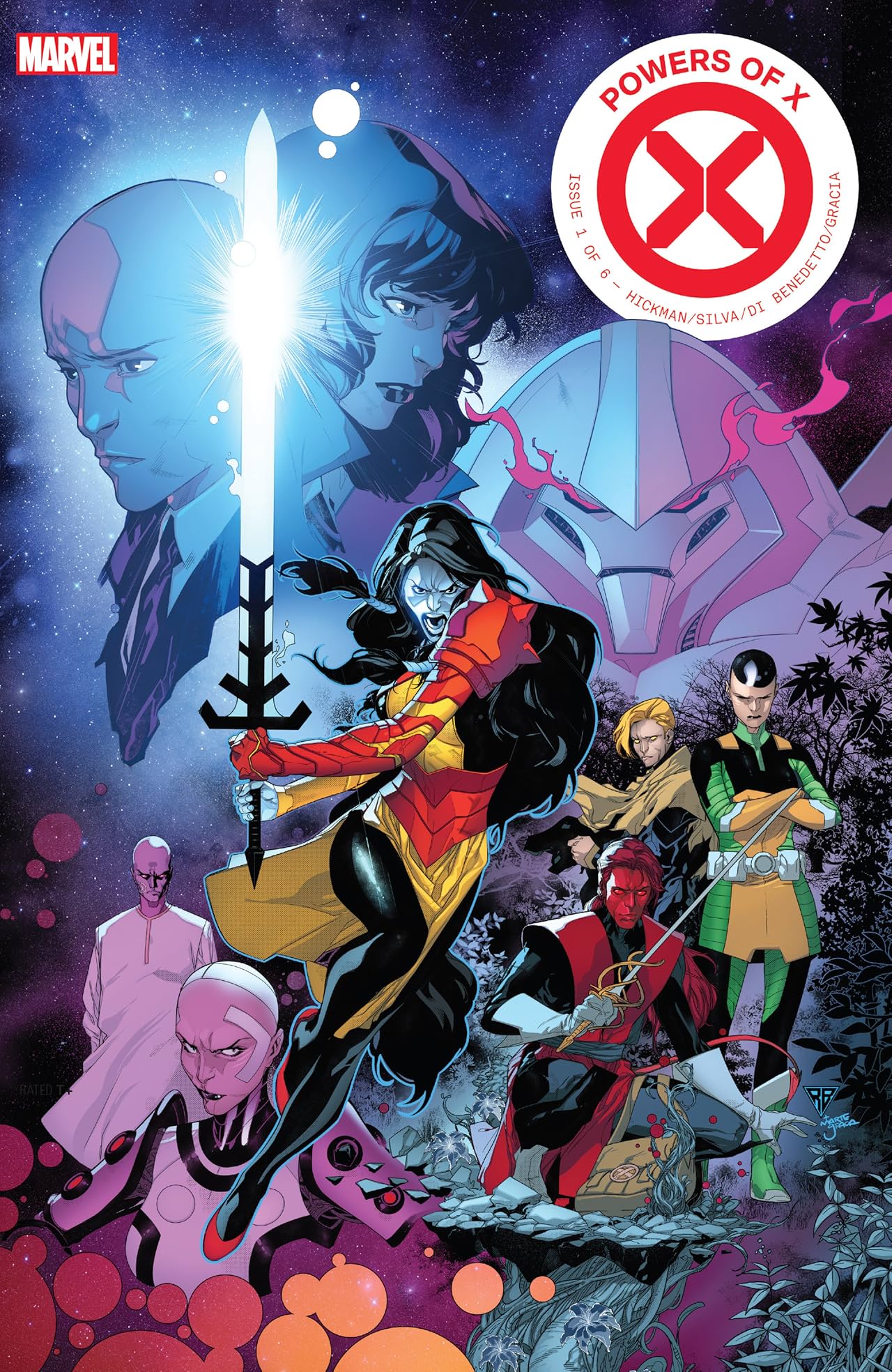
Jack Fisher’s Weekly Quick Pick Comic: Powers of X #1

Lifelong comic book fans like myself wake up every Wednesday morning with a mix of excitement, anticipation, and dread. It’s a weekly event in which the worlds we love grow just a little bit bigger. However, not all New Comic Book Days are treated the same. Some are more memorable than others and I have a feeling that “Powers of X #1” will make this particular Wednesday feel special for X-Men fans.

The X-Men comics are in a major state of transition and upheaval. In the past, that has usually meant they’re facing yet another extinction event. Whether it’s Sentinels killing 16 million mutants or the Scarlet Witch going crazy, big change usually means the X-Men have to stave off another genocide.

Writer Jonathan Hickman is not taking that approach. As someone who has been reading X-Men comics for a good chunk of his life, I find it both overdue and refreshing. In “House of X #1,” he set out to build a bold new world for mutants. In “Powers of X #1,” he puts this world into a much greater context that will likely have X-Men fans talking for years to come.

This new vision for the X-Men isn’t just causing major upheavals in the present. It’s having an impact on the past and future, as well. Historically, this usually means that there’s yet another terrible dystopian future about to unfold and the X-Men already have way too many of those.

With Hickman, however, it’s not nearly as clear-cut and that’s exactly what makes “Powers of X #1” so engaging.

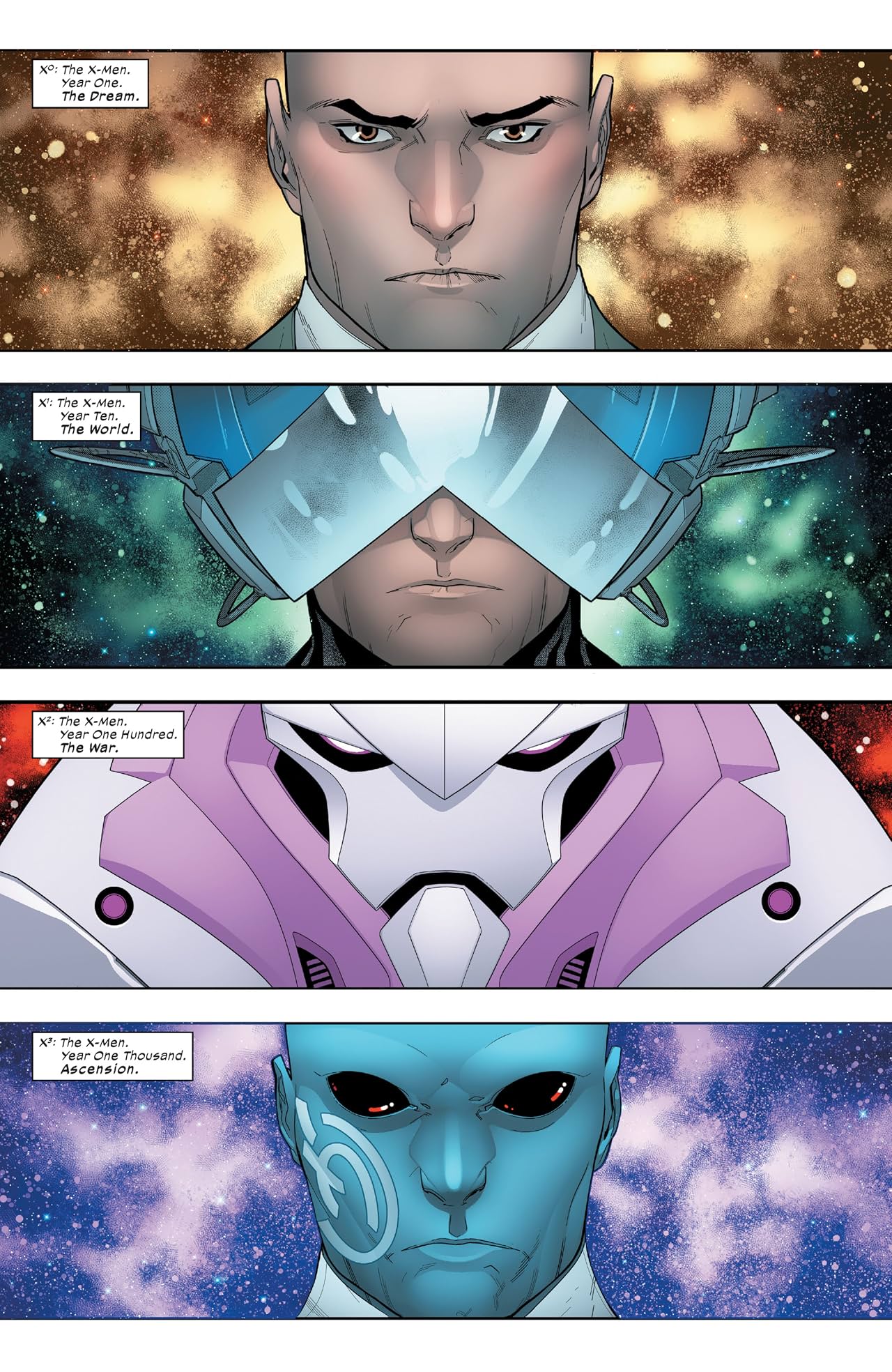
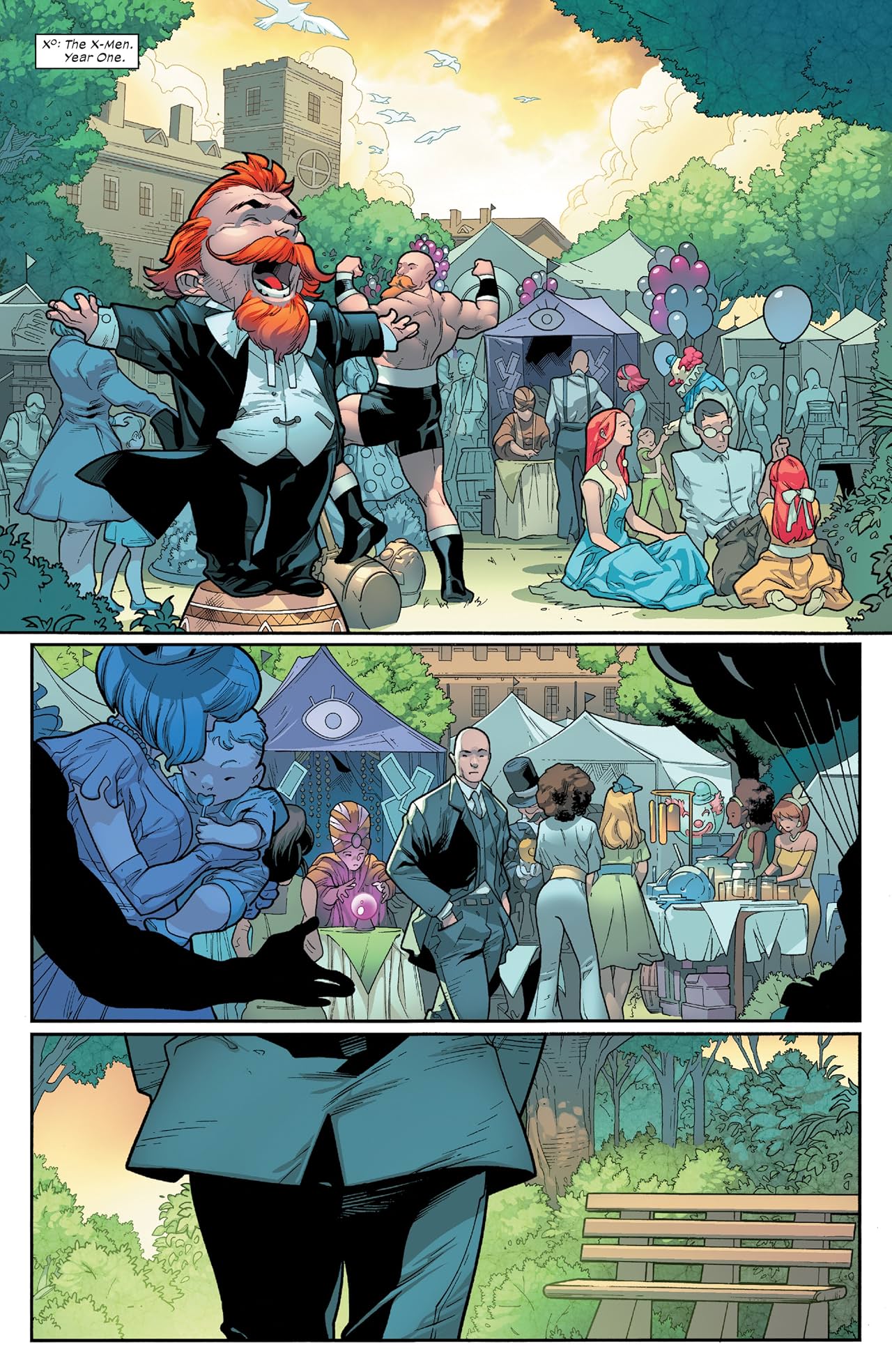
This isn’t just another case of some fateful decision in the past having dire consequences in the future. There’s no moment with Skynet or time traveling assassins. With “Powers of X #1,” the story unfolds across four distinct time periods. One takes place in the X-Men’s past. The other continues part of the story in the present that begins in “House of X #1.” The last two take place at multiple points in the future.

While much of the story unfolds in the future, there’s a never a sense that they’re too disconnected from the past or present. There are a host of new characters with familiar powers and appearances. Artist R. B. Silva is not subtle in who inspired the designs of these characters and that’s critical because a lot transpires in a short span of time.

We don’t get to know these characters very well, given their limited face time, but they do plenty to establish distinct personalities and motivations. We get a sense for what they’re after and what’s at stake. It’s not entirely dystopian in tone, but it is dire and not just for mutants.

Once again, Hickman goes heave on the world-building. In between Silva’s colorful depictions are little insights into how this future took shape. It’s not a simple as one fateful choice or one fateful death. It’s more a culmination of conflicts.

Mutants are on the brink, but it’s not because of a plague or a genocidal war. In this future, humans aren’t the enemy, but what they’ve become certainly is. They’re not just a bunch of fearful, mutant-hating zealots trying to product themselves with killer robots. They’ve actually become something more menacing.

The details aren’t all in place, but the hints are there. While mutants built on the foundation that Charles Xavier established, humanity went down a different path and it’s not one conducive to peace, love, puppies, and whiskey. Familiar faces like the Nimrod Sentinel make that abundantly clear, but it’s the new faces that add the most intrigue.

Nimrod and the other humans around it aren’t just human anymore. They’ve become part machine, as well. However, these aren’t Terminator knock-offs. They still have personalities. They even talk and converse like humans. They’re a whole new order of humans that Hickman identifies as the Man-Machine Supremacy. Given the events of “House of X #1,” it fits perfectly.

It also makes a twisted bit of sense in a not-so-dystopian way. In a world where mutants are suddenly organized, complete with a homeland and collective vision, humanity seems doomed to obsolesce. They’re only choice is to evolve in a new way so they have a chance at competing.

The story covers many concepts and raises many questions, but “Powers of X #1” works because there are just enough hints at the answers. It perfectly complements what “House of X #1” established with respect to setting, tone, and vision. Hickman creates a perspective that neither humans nor mutants want to go extinct. They both seek a bold vision for their future, but there’s only room for one in the future.

Every vision begins with a dream. Bold visions inspire bolder actions. This is the heart of what makes the X-Men who they are. It’s also the driving force behind the many conflicts they face. A book like “Powers of X #1” doesn’t attempt to subvert that conflict. It simply dares to evolve it in a new direction.

What this means for the X-Men comics moving forward remains to be seen, but it’s very likely that “Powers of X #1” will be one of those comics that gets cited for years to come as a major turning point. It affirms that while all New Comic Book Days are special in their own right, some will always be more special than others.

2 Comments

Filed under Jack's Quick Pick Comic

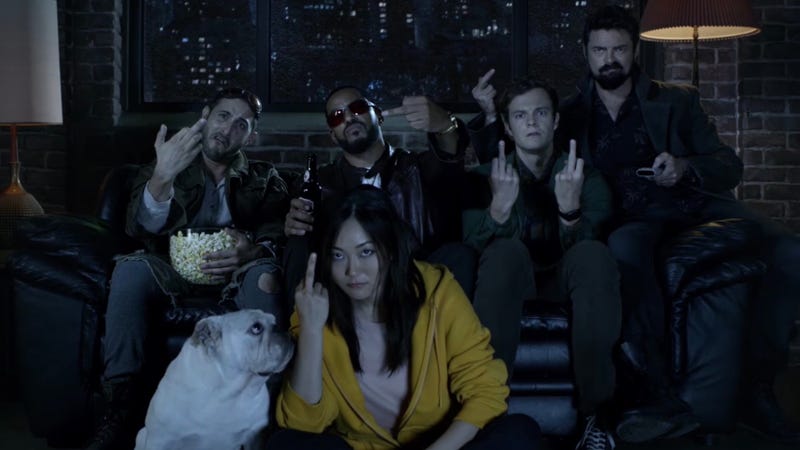
Why “The Boys” Is The Ultimate Superhero Satire

amazon-prime-the-boys-tv-show

In the history of superhero media, 2019 will likely go down as one of the greatest years of all time. This year included three superhero movies that grossed over a billion dollars, including the first female-led superhero movie to gross a billion dollars and one that became the highest grossing movie of all time. Whatever the future holds for the genre, there’s no doubt that 2019 will go down as a banner year.

Regardless of what the James Camerons of the world think, superheroes have made their mark on the pop culture landscape. They’ll likely keep making their mark for years to come, especially after Marvel’s latest announcements for the future of the Marvel Cinematic Universe. However, in the same year that superhero media achieved some of its greatest success, something comes along to utterly deconstruct it.

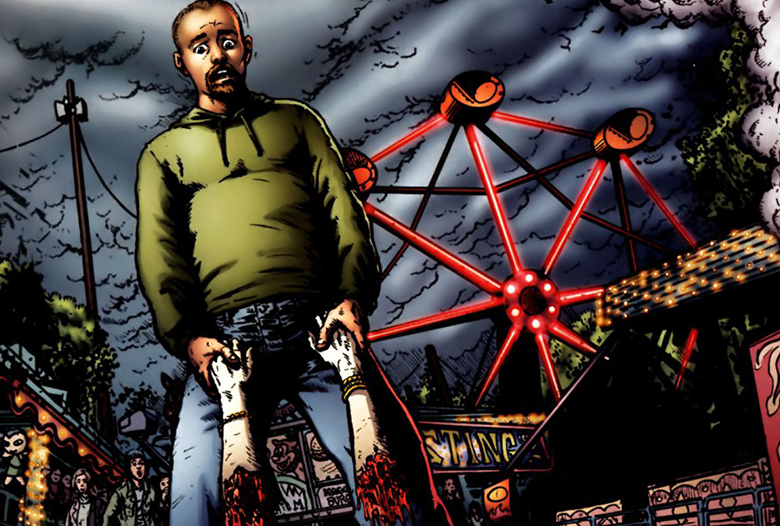
Whereas a movie like “Avengers Endgame” showed us just how great superheroes can be, a TV show like “The Boys” shows us just how depraved they can be. Being a comic book fan long before this golden age of superheroes, I already knew that. I followed the original comics when they came out in the mid-2000s. Now, thanks to a new TV show, everyone can experience the story that gave superheroes the ultimate gut punch.

Literally.

I’m not going to lie. I was genuinely surprised when I heard Amazon Prime was going to make this show. This is not the kind of story that you can turn into a Disney-approved, PG-13 spectacle for mass consumption. In anything, “The Boys” goes out of its way to explore the kinds of things that would make the censors at Disney and the MPAA throw up.

This is a story that does not hide the brutal violence, intense trauma, and unchecked hedonism that often seems unavoidable in the context of the narrative. Writer and co-creator, Garth Ennis, has a long history of embracing those darker elements of the genre. He did it with “Preacher” and his run on “The Punisher.” With “The Boys,” he took it to another level and beyond.

The world of “The Boys” is not unlike the early days of the MCU. The over-arching story tries to incorporate the fanciful ideals of superheroes into a real-world context. It doesn’t use fictional cities like Metropolis or Gotham. It doesn’t ignore how superheroes would affect society, government, or the economy. The many flaws of the real world are just as relevant in this world.

As are the sentiments about reality, in general.

From here, “The Boys” doesn’t necessarily portray a worst-case scenario for superheroes, but it comes pretty damn close. The “heroes” of this world are the Seven. They include the likes of Homelander, Black Noir, Queen Maeve, A-Train, and the Deep. They’re basically derivations of the Justice League, but in terms of heroic ideals, these characters have none of that.

The Seven conduct themselves as superheroes for the masses. They’re admired, respected, and idolized by many, just like their counterparts in the MCU. However, that heroic zeal is both a lie and a scam. Their entire image is built around a marketing ploy, courtesy of Vought American Consolidated, a defense contractor who incorporates superheroes into their arsenal.

Trust me. It’s even more corrupt than it sounds.

With that corruption comes greed, treachery, violence, and depravity the likes of which Batman would find too grim. These heroes basically get to smile for the cameras, enjoy the benefits of celebrity, and still conduct themselves as self-serving narcissist behind the scene. They can do whatever they want, get away with it, and still be beloved. It’s a recipe for all sorts of disasters.

On top of that, some of these characters are outright psychopaths. Homelander is a mentally unstable sadist who commits many vile acts throughout the comics, including rape. The TV show captures only a fraction of his depravity, but it’s more than enough to highlight the underlying message of “The Boys” and why it’s such a powerful story.

In essence, “The Boys” is the ultimate satire of the superhero genre. It’s entire narrative is built around exploring, exposing, and denigrating the ideals on which all superhero media is built upon. It’s not done for humor or comedic effect, either. The theme of “The Boys” is dead serious in showing how a world with superheroes becomes so depraved.

This is where the Boys themselves come in. They include Billy Butcher, Frenchie, Mother’s Milk, the Female, and Hughie. They both witness and directly experience the breadth of the Seven’s corruption. They take it upon themselves to expose these heroes for who they are.

However, their motivations aren’t entirely heroic. These characters often come off every bit as damaged, petty, and vindictive as the heroes they actively oppose. They don’t stick to high ideals, either. The Boys are brutal, albeit in a more focused and pragmatic sense.

It gets ugly.

It gets violent.

It gets downright traumatic.

It also gets the damn point across.

If “The Boys” has a unifying message that unites both the comics and the TV shows, it’s that superheroes can only ever make things worse in the long run. That ideal of a perfectly altruistic savior in the mold of Superman just doesn’t exist and wanting it to exist can be downright dangerous.

The people behind the scenes with the Seven feed into that. The government, big corporations, and the media glorify these heroes because the people latch onto them. They want these heroes to be the idealized figures that they read about in comics and see in blockbuster movies. They buy into it and both the Seven and the organizations that manage them keep selling it.

It’s a self-reinforcing cycle that only amplifies the corruption. The Boys dare to battle that corruption, but with the understanding they’re fighting a losing battle. They can attack, expose, and frustrate these superpowered sociopaths all they want. They’re never going to destroy those rosy ideals on which the entire genre is build upon. At most, they can just make them pay a price for their egregious misdeeds.

It’s hardly proportional to the many atrocities the Seven commits, but that’s kind of the point. These are superpowered beings who can only be hurt so much, even by other superheroes. The Boys can never punish them in a way that feels equitable, compared to the injustices the Seven inflict. That doesn’t stop them from making an effort and making it better than most would expect.

The right tool for the right job.

How they go about this and how the Seven reacts is a long, tortured story that has many shocking moments that are not for kids or the faint of heart. The trailer for the TV show offers a hint of that, but there are scenes from the comics that even the lenient censors of Amazon Prime wouldn’t dare put on film. I won’t spoil the bloody details, but if you have the stomach, I highly recommend you check out the comics.

More than anything else, the “The Boys” is a brutal reminder that the ideals behind superheroes are probably the most fanciful part of the genre. In a real world full of corruption and collateral damage, superheroes can be far more dangerous than the threats they confront. It’s almost impossible to be a superhero without becoming a self-absorbed asshole to some extent.

Even the Boys, who actively battle the superheroes that fuel this fantasy, never come off as entirely altruistic. They’re simply more respectable and less narcissistic. In that dynamic, nobody can ever come off as truly heroic. There’s just too much room for corruption and ego.

While “The Boys” wasn’t the first comic to satirize superheroes, it’s definitely the most complete. “Watchmen” may get more praise and respect, but even in that story, the heroes still try to act like heroes in their own perverse way. What characters like Ozymandias and Rorschach do is framed as something heroic, even if it gets violent and brutal. There’s none of that with “The Boys.”

In an ideal world, even assholes will find a way to be heroic under the right circumstances. Tony Stark proved that in “Avengers Endgame.” However, in the world of “The Boys,” there’s no such thing as right circumstances. If anything, the entire superhero genre has it ass-backwards. Heroes will inevitably find a way to become assholes and if nobody stops them, then they’ll just push their assholery to new heights.

The Boys” is a unique comic in its own right, but the TV adaptation is coming along at just the right time. I would even argue that this kind of satire is necessary in the current cultural landscape. We need something like this to remind us that the ideals of superheroes are still ideals. Like most things in the real world, ideals tend to crumble when subjected to scrutiny.

At a time when people are consuming the ideals of superheroes at an unprecedented level, it’s important to maintain a sense of perspective about the genre. A satire like “The Boys” may never have the same impact as anything from the MCU, but it’s still a story worth telling, if only to remind us that great power can also breed greater assholes.

1 Comment

Filed under political correctness, psychology, superhero comics, television

Jack Fisher’s Weekly Quick Pick Comic: House of X #1

Ever comic book fan has been conditioned to revere Wednesdays as New Comic Book Day. It’s basically Christmas every week. However, much like Christmas, not all Wednesdays are equal in terms of the presents they bring. Every now and then, a Wednesday comes along that a certain segment of comic fans come to revere for years to come.

For X-Men fans, this will likely go down as one of those Wednesdays because “House of X #1” is just that astonishing. Every now and then, a book comes along that is presented as a major paradigm shift for the characters, the themes, and the over-arching narrative of a series. In superhero comics, books like that are hyped up at least once a month. Very few deliver on that hype. “House of X #1” is one of those select few.

To say that the X-Men comics needed a book like this is like saying an insomniac needs a good night’s sleep. For years now, going back to the days of “House of M,” both the X-Men and the entire mutant population of the Marvel Universe has been in a constant state of extinction-level crisis. Even when they’re not about to go extinct, they’re caught up in something that has them just one slip-up away from another dytopian future.

In “House of X #1,” writer Jonathan Hickman dares to rebuild the X-Men’s world without first sending them to the brink of extinction. For anyone who has followed X-Men comics for more than two years, this is like a breath of fresh air, a massage, and a chocolate milkshake all rolled into one. It shouldn’t be that radical a concept, but between Hickman’s vision and Pepe Larraz’s beautiful artwork, it sure feels like it.

This bold new world for the X-Men isn’t built around mansions with high-tech jets hidden below the tennis court. You won’t find orbiting asteroids, isolated nations, or island sanctuaries in the middle of San Francisco Bay. This world is more than a nation or sanctuary. It’s a bold new form for Charles Xavier’s dream.

It comes courtesy of Krakoa, a name right out of one of the most iconic X-Men comics of all time. This living island has evolved and Charles Xavier is maximizing its potential with intriguing results. He comes off as more than just a visionary or messianic figure in “House of X #1.” He has a bold new plan for the entire mutant race and it’s big.

By that, I don’t just mean it’s big in terms of goals and scope. This plan is something that changes the way the X-Men operate. It’s not just flying around in X-Jets anymore. It’s not just peaceful protests and confronting bigotry. Charles Xavier is rallying mutants to his cause in a bold new way. He’s also dealing with humans in a new way, as well.

It’s here where “House of X #1” explores some very interesting concepts that take the X-Men into uncharted territory. For much of their history, the X-Men have been either reacting to attacks by their enemies or trying to counter intense hatred and mistrust of mutants. It hasn’t just hindered Xavier’s efforts at peace and understanding. It has kept them isolated and always on the brink.

Rather than simply brace for the worst, Charles Xavier decides to offer something tantalizing to both humans and mutants alike. I won’t spoil too many details. I’ll just say that he puts the X-Men in a unique position, in terms of how the world sees them. It may not win them the love and adulation that the Avengers get, but it does provide some bold incentives.

That’s something that few X-Men comics have ever attempted on this scale. It’s not enough to confront hatred and mistrust. Hickman puts the X-Men in a position to be more diplomatic with the world. They have something to offer the world. Accepting that offer benefits humans and mutants in a tangible, positive way.

Again, that should not be such a radical concept, but Hickman and Larraz present it in a way that feels both novel and vast. It’s not entirely utopian in its potential, but it has the potential to bring positive change to a world and a narrative that needs it.

As a lifelong X-Men fan, “House of X #1” fills me with both curiosity and awe. There’s a lot to love about this bold new world that Hickman and Larraz are building. For once, it’s not just another threat that puts the mutant race on the brink of extinction. There’s a larger effort to do something bigger.

That’s not to say the threats aren’t there. Just as Charles Xavier pursues his bold new vision in “House of X #1,” other visions forged by other characters emerge to present obstacles. Some parts of that vision are new, but there is some familiar imagery that X-Men fans will recognize. It ensures that there will still be plenty of mutant-powered fights in this new world.

At the same time, “House of X #1” creates a clear impression that fighting killer robots will only be a small part of this new vision for the X-Men. There’s so much more going on, both with the characters and with the larger Marvel Universe. After all the upheavals they’ve had over the past 15 years, it finally feels like they have room to grow again.

It’s an exciting time to be an X-Men fan. On top of Kevin Feige confirming that mutants are finally coming to the Marvel Cinematic Universe, Hickman and Larraz are taking X-Men in a bold, if not overdue direction in the comics. This sentiment is even captured perfectly in Charles Xavier’s first lines of the book.

“Humans of the planet Earth. While you slept, the world changed.”

Truer words were never spoken. In a world that gets invaded by aliens, Hydra, and renegade gods every other day, that’s saying something.

2 Comments

Filed under Jack's Quick Pick Comic

Jack Fisher’s Weekly Quick Pick Comic: Invisible Woman #1

There are some iconic characters whose iconic status acts as a double-edged sword. Being iconic helps give them staying power. Only a handful of characters are iconic enough to remain relevant for extended periods, especially when their relevance extends all the way back to the Kennedy Administration.

With that staying power, however, comes often baggage, circumstance, and complications. For much of her history, Sue “Invisible Woman” Richards has been defined by her role in Marvel’s First Family, the Fantastic Four. She’s not just the cute blond on a team of superheroes. She’s a wife, a mother, and a sister. She frequently acts as the anchor that holds the Fantastic Four together, as a family.

It’s a role that has helped make her iconic, but it has also limited her opportunities to explore stories outside that family role. It certainly didn’t help that she, Reed, and her children were MIA from Marvel’s comic book universe for an extended period, which may or may not have had something to do with movie rights.

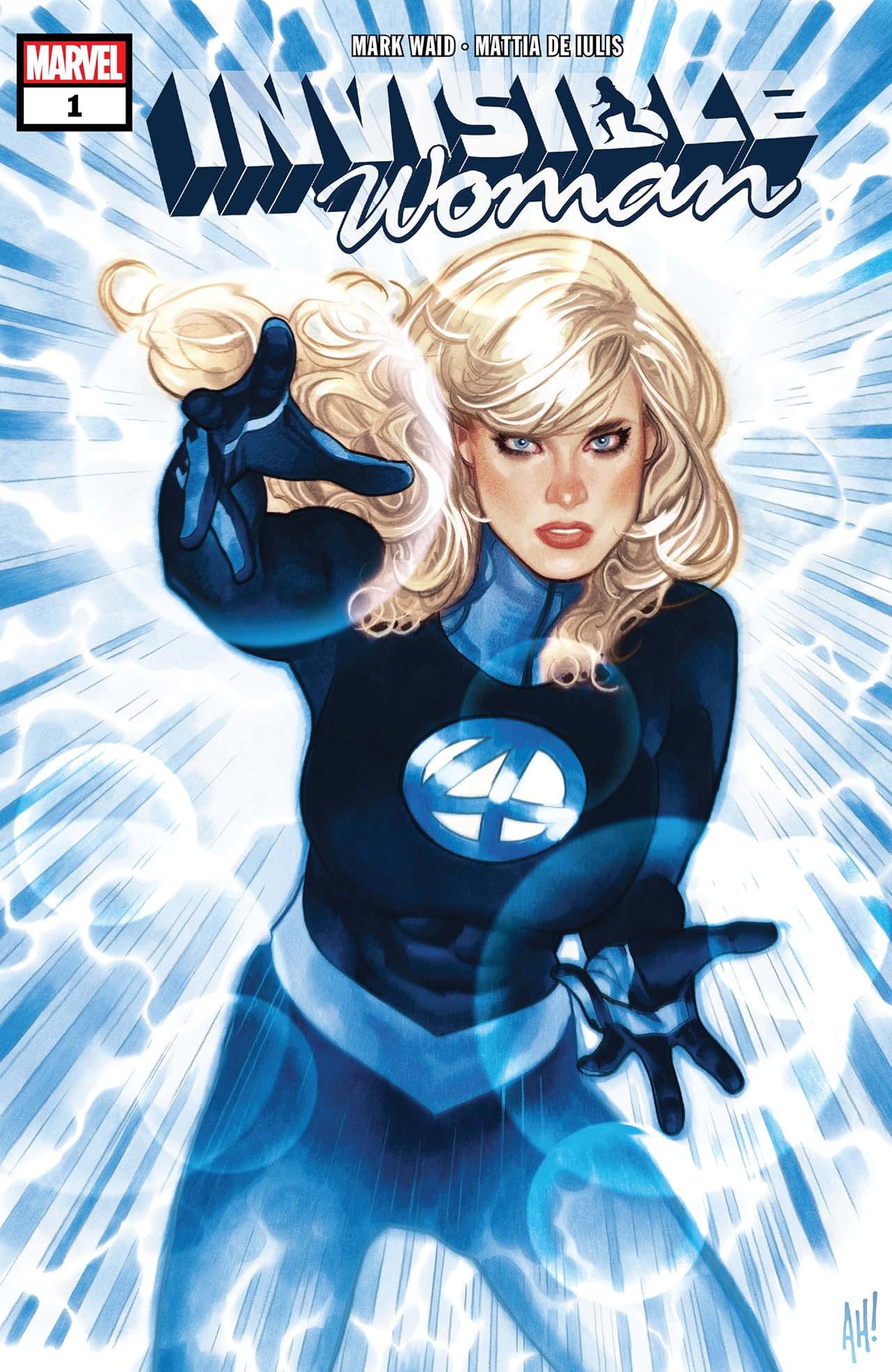
Even with those complications, Sue is one of those characters who has always had the potential to be something more than her iconic role on a famous superhero team. With “Invisible Woman #1,” Mark Waid and Mattia de Iulis finally take a chance at realizing that potential. At a time when the Fantastic Four are still recovering from years of negligence and a historically bad movie, the timing couldn’t be better.

This isn’t just another story about Sue holding her family together. It’s not about her trying to balance being a mom, a wife, a sister, and a superhero. Waid and de Iulis put Sue in a position to show that she can be iconic in her own right without sacrificing what makes her so vital to her family.

The premise of “Invisible Woman #1” is fairly simple. It establishes that there was a time in the past when Sue explored other types of superhero activities on top of her role with the Fantastic Four. One of those activities involved espionage on behalf of SHIELD. In the world of Marvel superheroes, it’s basically the equivalent of taking the night shift at a grocery store.

She was good at it too. She could get the job done and, unlike other trigger-happy SHIELD agents, she could do it without much bloodshed. It nicely reflects the loving, compassionate nature that makes her the lynch-pin of the Fantastic Four. It also shows that she can be tough and cunning when she needs to be.

It’s a side of Sue that hasn’t been explored much, but one that still reflects the greatest strength of her character. She’ll never be as cunning as Black Widow or as stoic as Nick Fury, but she’ll find a way to get the job done and she’ll make an impression on those who work with her. Even before she became a mom, she embodied that motherly love that many find comforting.

It’s because Sue did this job her own endearing way that she gets pulled back into the world of espionage. In many respects, the timing couldn’t be better. Waid builds on the recent developments with her family that have been unfolding in the current Fantastic Four comics under Dan Slott, which I highly recommend. She’s still the same mother figure she has always been, but her family is evolving.

Her children are growing up. One of her closest friends is married now. Her brother is always doing his own thing. Waid even explores how someone like her deals with the changing nature of her family. It makes diving back into the shady world of espionage feel like a golden opportunity and Sue embraces it.

It also helps that the stakes aren’t so high that the entire multiverse is in jeopardy. Whereas the Fantastic Four will routinely prevent reality from falling apart, this particular mission involves saving the lives of imprisoned students and a captured agent that she once worked with. The world isn’t at stake, but it feels personal for Sue and that’s all the motivation she needs.

It’s both refreshing and overdue, seeing a character like Sue take on a challenge that’s far different from cosmic, psychedelic adventures that often involve shape-shifting aliens and hostile planet-eaters. She does so while never deviating from what makes her so endearing, as a member of the Fantastic Four. Waid’s past history with the Fantastic Four helps make “Invisible Woman #1” feel like a perfect extension of an iconic character.

The pace of the story is slow and steady, but it never drags. It sets up plenty of intriguing elements, some of which are hinted at in the final pages. There’s a great deal of introspection, which makes sense for a character who has been subject to many upheavals in the world around her. It helps reaffirm why she’s so iconic in the first place.

Sue Richards will always be defined by her role in the Fantastic Four, but “Invisible Woman #1” proves that she still has room to grow. She can still be a mom, a husband, a sister, and a superhero. She can also be a spy on the side and not fall into the same trap as every female spy in a Jame Bond movie.

Both Sue Richards and the Fantastic Four have a long way to go in terms of recovering from the setbacks incurred by bad movies and vindictive CEOs. While it may be a while before they show up in the MCU, a book like “Invisible Woman #1” feels like a small step in that process.

It’s been a while since anyone has been able to say it with a straight face, but the future of the Fantastic Four looks genuinely fantastic.

Leave a comment

Filed under Jack's Quick Pick Comic

“Spider-Man: Far From Home” Review: An Amazing Movie With One Spectacular Flaw

spider-man-far-from-home-teaser-poster

In this golden age of superhero movies, Spider-Man occupies a special place. Aside from being one of Stan Lee’s most famous creations, this franchise has undergone many triumphs, failures, scandals, upheavals, and everything in between. No matter where it stands among other franchises, Marvel just isn’t Marvel without Spider-Man.

The first “Spider-Man” movie helped revolutionize the superhero genre alongside “X-Men.” It’s not unreasonable to say that the Marvel Cinematic Universe wouldn’t exist without that first movie. That’s why when Spider-Man entered the MCU with “Spider-Man: Homecoming,” it carried a lot of weight.

With “Spider-Man: Far From Home,” both the standards and the stakes are higher. This movie is coming off the historic success of “Avengers Endgame” and is poised to close out Phase 3 of the MCU. It’s tasked with building on the foundation of its predecessor and dealing with the dramatic aftermath of the battle against Thanos. That’s a tall order for any franchise.

Look at this face and tell me I’m wrong. I dare you.

At the same time, it feels like Spider-Man has to be the franchise to pull this off. Between its special place in the genre and its cast of emerging stars, including the inherently lovable Tom Holland, “Spider-Man: Far From Home” feels like the only movie worthy of such a task. It has everything going for it. The question remains. Does it succeed?

In my humble opinion, I say it does, but not without some major flaws.

In terms of the big picture, “Spider-Man: Far From Home” is a quality Spider-Man movie that checks a lot of boxes, both for the franchise and for the MCU. It seamlessly weaves itself into the evolving narrative of the MCU in wake of “Avengers Endgame.” The first five minutes of the movie touch on the lingering aftermath of that climactic battle. It even injects some of that trademark MCU humor into some heavy moments.

On a more personal level, Peter Parker’s story builds upon the drama of Tony Stark’s death in “Avengers Endgame.” Throughout the movie, Iron Man’s presence looms large. Spider-Man is essentially stuck in the shadow of another hero who really affected his journey as a character in “Spider-Man: Homecoming.” It makes for plenty of dramatic moments that guide Peter throughout the story.

In terms of it genre, “Spider-Man: Far From Home” even succeeds in maintaining the increasingly high bar that Marvel Studios has set for its villains. While Jake Gyllenhaal’s Mysterio won’t rank as highly as Josh Brolin’s Thanos, he proves himself a daunting foe who doesn’t just test Spider-Man. He comes very close to breaking him.

I would even go so far as to say that Gyllenhaal’s take on Mysterio is worth the inflated ticket price. He makes “Spider-Man: Far From Home” work on multiple levels. I would argue that he’s the primary reason why the movie succeeds, despite its critical flaws.

Now, this is where I’m probably going to diverge from the those who have given this movie such glowing reviews. I may even upset some of my fellow Marvel fans who recoil at the idea of an MCU movie faltering. However, I believe the flaws are there and are being overshadowed by factors beyond the scope of the movie.

To me, the biggest failure of this movie isn’t in how it tells Spider-Man’s story. It’s in how it develops Peter Parker’s story. The battle between Spider-Man and Mysterio is beautifully developed. It’s what happens when Peter is out of his mask where the story stagnates and it has everything to do with Zendaya’s character, “MJ.”

I put “MJ” in quotes because she is definitively not Mary Jane Watson, Spider-Man’s most famous love interest in the comics and the character that Kirsten Dunst portrayed in the first three Spider-Man movies. That’s not the issue, though. “Spider-Man: Homecoming” established her and Peter’s friends as something very different from the comics. It wouldn’t be the first time the MCU made such changes.

The problem with MJ, Peter, and their shared role in “Spider-Man: Far From Home” is how poorly their romantic sub-plot plays out. It’s not a trivial sub-plot, either. A good chunk of the plot involves Peter following this elaborate plan to tell MJ how he feels about her. On paper, it’s pretty romantic. In practice, it’s a catalyst for too many cringe-worthy moments.

There’s no polite way to say it. The romance between Peter and MJ in this movie is awful. I won’t say it’s as awful as the nonsensical babble we saw between Peter and Gwen in “Amazing Spider-Man,” but it’s pretty close and for the high standards of the MCU, it’s just unacceptable.

While “Spider-Man: Homecoming” did an admirable job of establishing the dynamics between Peter and MJ, it falls incredibly flat in “Spider-Man: Far From Home.” In fact, if you didn’t see “Spider-Man: Homecoming,” Peter’s efforts to get with MJ seem more obsessive than romantic. At one point, he becomes downright vindictive when someone else tries to get with her. It does not reflect well on Peter.

MJ isn’t much better. Zendaya is a great actress, but she comes off as flat and unemotional throughout this movie. Say what you will about Kirsten Dunst’s portrayal of Mary Jane, but she still displayed a wide range of emotions throughout three movies. Zendaya’s tone and facial expressions barely change throughout this movie.

In essence, there’s no real chemistry between Peter and MJ. Given how critical this relationship is for the plot of the movie, that’s not a trivial oversight. It frames their actions and their decisions as something petty and selfish. There’s never a sense that Peter and MJ make each other better. If anything, they’re liabilities to one another.

In both the comics and the previous movies, this is not how the romantic sub-plots play out. While Spider-Man’s relationships have always complicated his efforts to be a better superhero, they ultimately make him stronger. They make his decision more heroic and his triumphs more satisfying. In “Spider-Man: Far From Home,” the romance was more a handicap than a challenge.

Compared to how other romantic sub-plots in the MCU, Peter and MJ’s is by far one of the weakest. It’s established that they’re attracted to one another. That’s the critical first step in any romantic sub-plot. However, “Spider-Man: Far From Home” skips the part where they actually start caring for one another before they develop deeper feelings.

Again, that’s not a trivial oversight. Compare that to other relationships like Starlord and Gamora, Pepper Potts and Iron Man, or even Thor and Jane Foster. It starts with attraction. The characters flirt and tease one another. Then, at some point, that flirting turns into genuine care. They show concern and emotion when they see one another in danger. From there, deeper feelings emerge.

None of that happens with Peter and MJ. Their interactions lack drama, which limits the personal stakes for Spider-Man’s battle against Mysterio. It helps that there are other personal stakes besides MJ that guide this struggle. If anything, those stakes would be a lot more powerful if the sub-plot with MJ were completely removed.

As bad as this romantic sub-plot is, “Spider-Man: Far From Home” still works because so many other elements of the movie are well done. Mysterio is a great villain who really capitalizes on the post-Thanos landscape of the MCU. Peter’s supporting cast, from his teachers to his Aunt May to his best friend Ned, all get a chance to shine. They help give this movie the right impact.

Compared to other Spider-Man movies, “Spider-Man: Far From Home” definitely exceeds the quality of the two “Amazing Spider-Man” movies that came before it. I would also say it’s slightly better than “Spider-Man 3,” albeit barely. If I had to score this movie, I would give it a 6 out of 10. It’s great, but not amazing.

For the MCU, especially after “Avengers Endgame,” the standards for a great superhero movie have never been higher. This movie met many of those standards, but a major flaw in a key sub-plot kept it from exceeding those standards. While I doubt this will hinder the franchise, I believe it’s a flaw that will only get worse if it’s not addressed in the sequels.

If you see the mid-credits scene, then you know what I’m talking about.

1 Comment

Filed under Comic Books, Jack Fisher, Superheroes, Marvel, Movie Reviews, movies, superhero comics, superhero movies