Tag Archives: Marvel

The Potential (And Pitfalls) Of Polyamory In The X-Men Comics

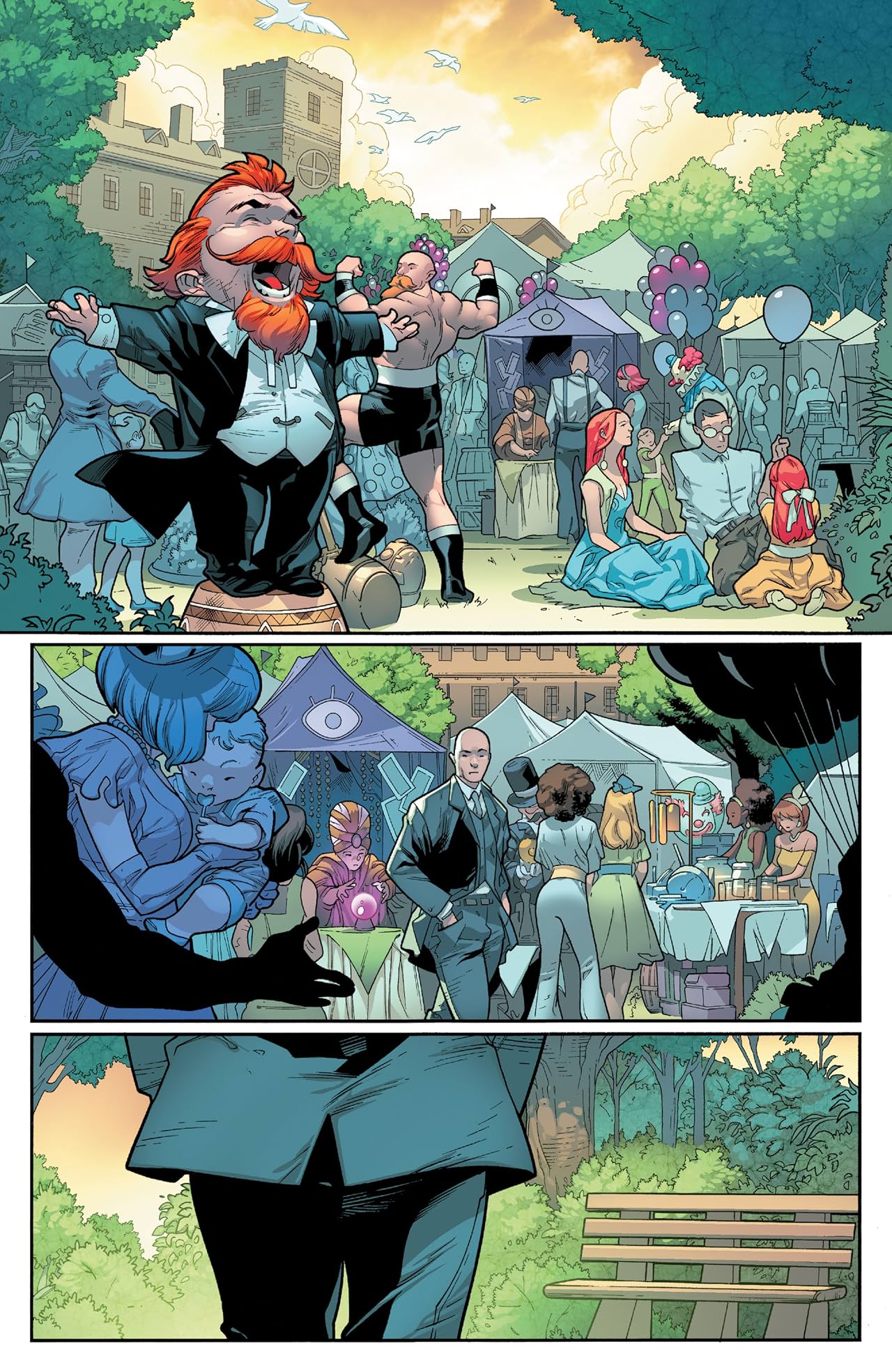
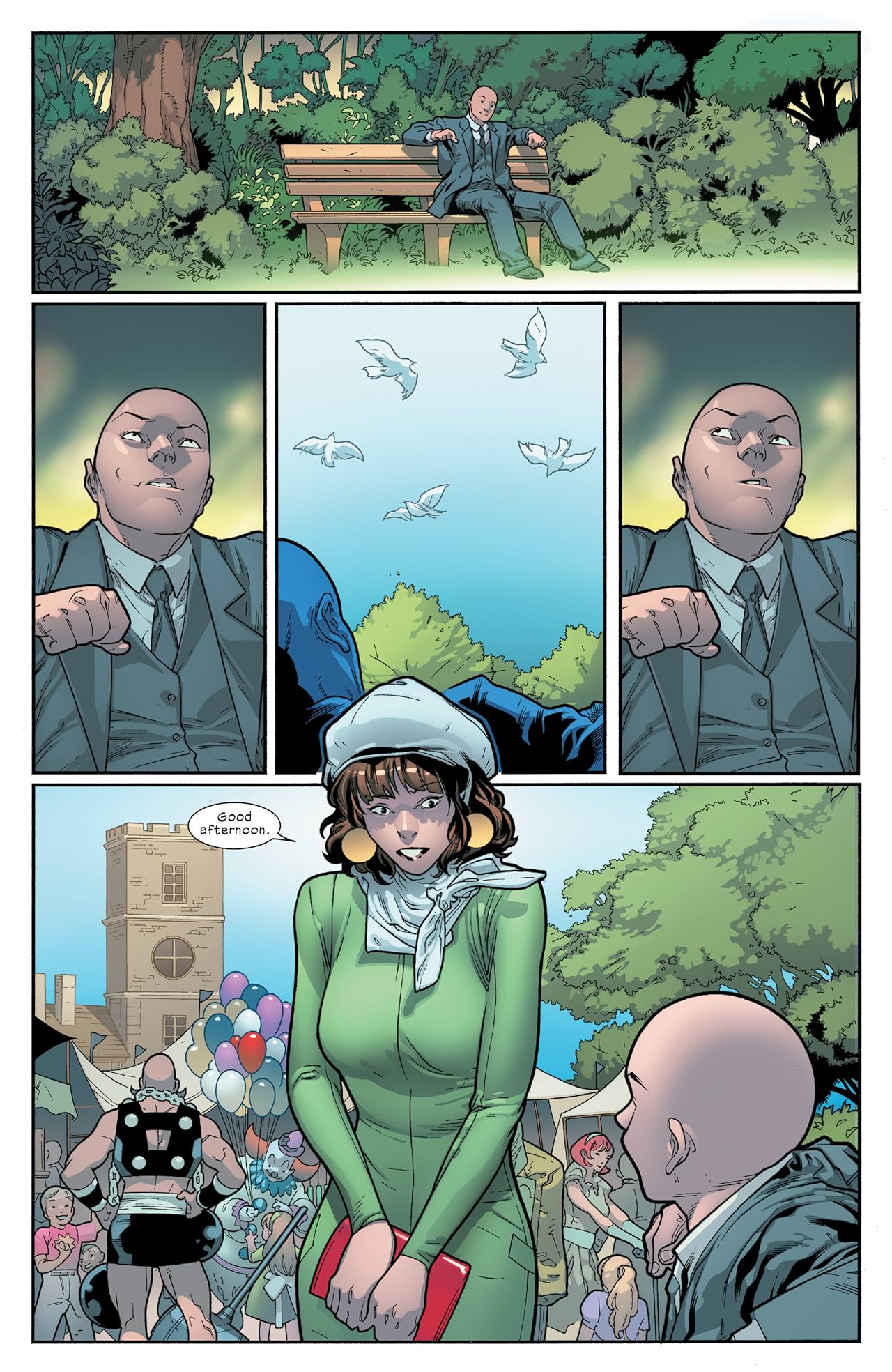
x-men-1-brooks-party

Two years ago, I wrote an article that explored the idea of using polyamory to resolve the infamous Cyclops/Jean Grey/Wolverine love triangle in the X-Men comics. I admit that it was primarily a thought experiment. It was my way of attempting to resolve what I believe to be the worst manifestation of a love triangle in all of fiction. I never expected it to manifest in any form outside head canon of fan fiction.

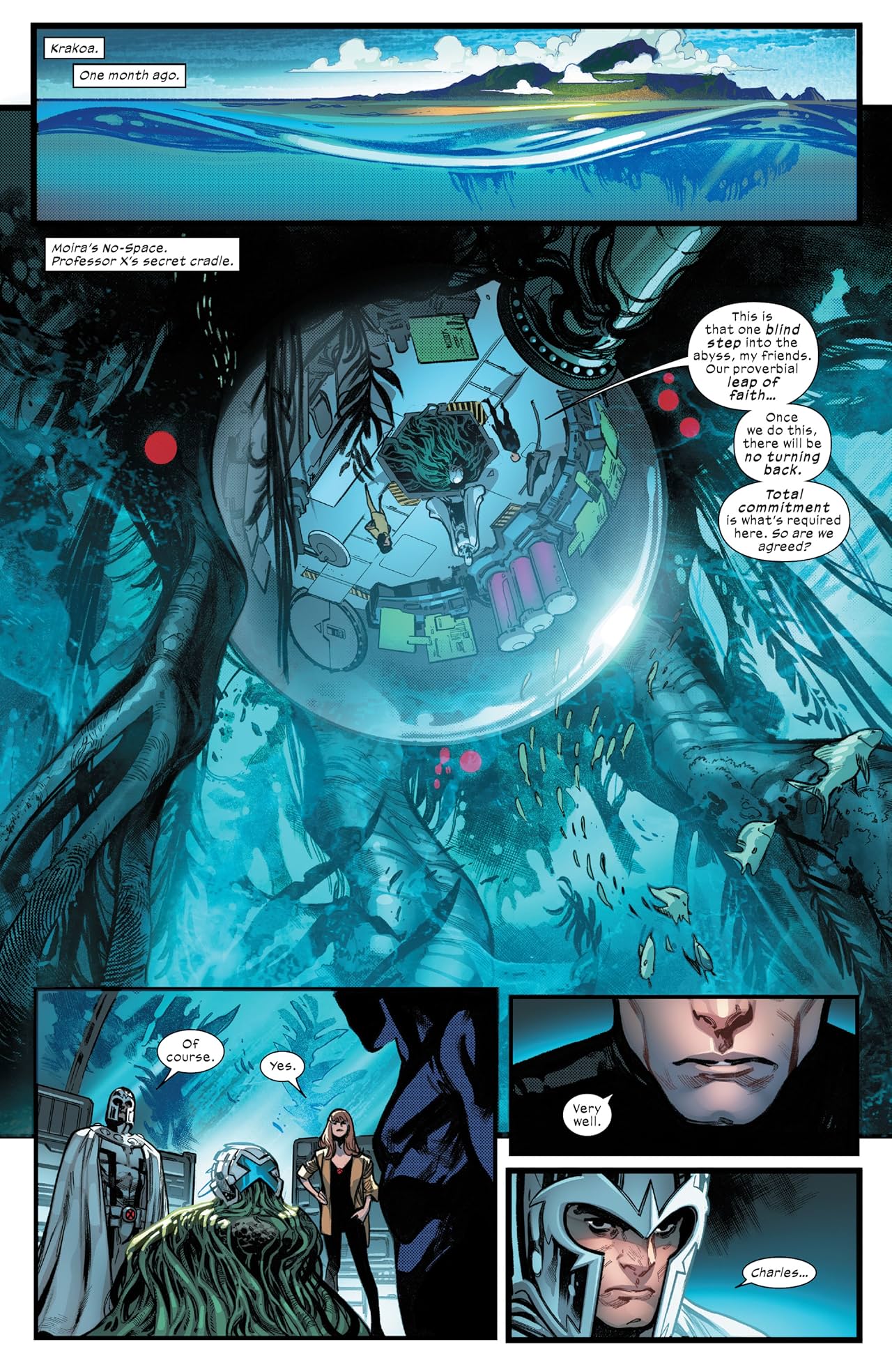
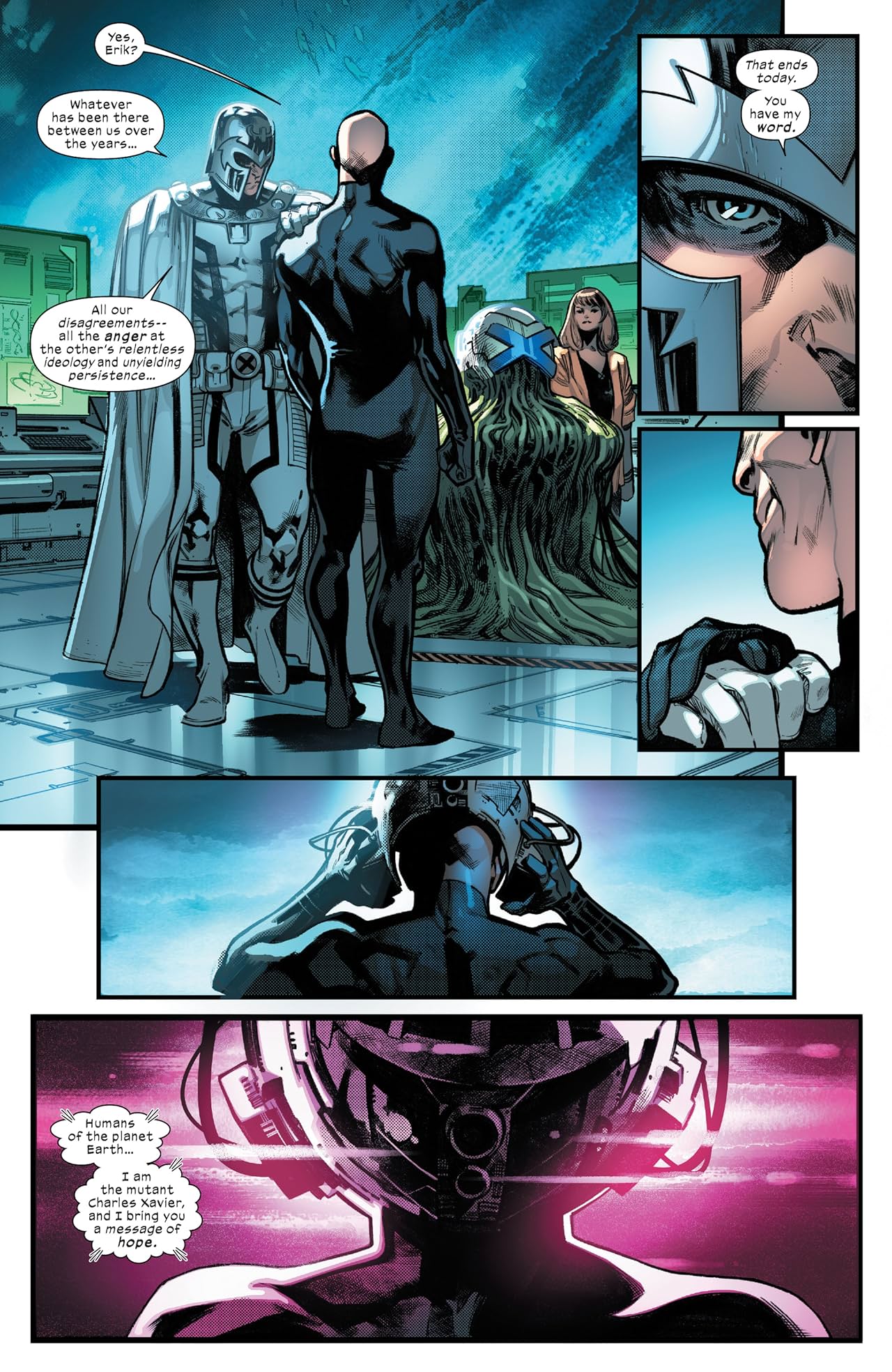
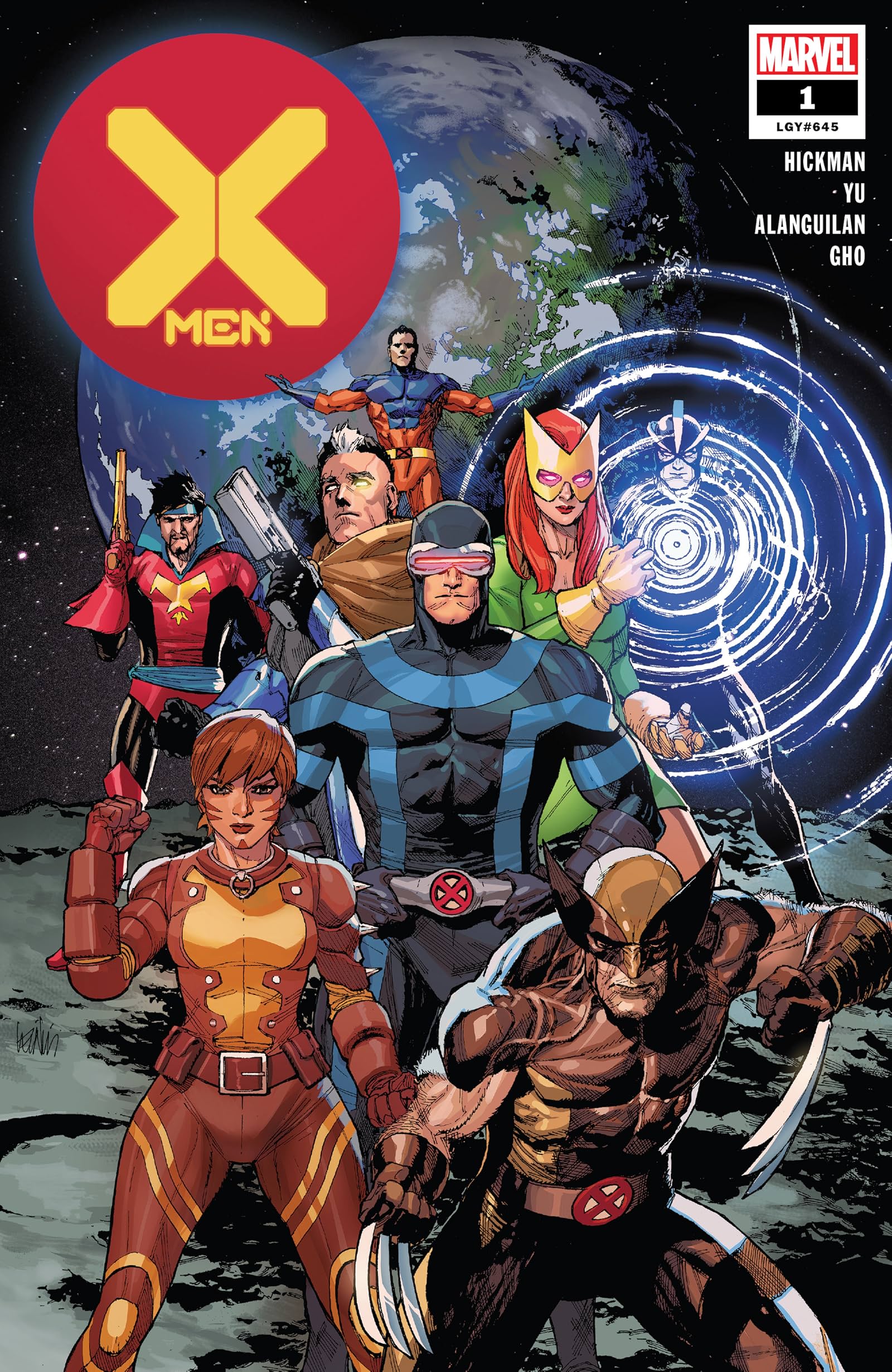
Then, “X-Men #1” by Jonathan Hickman and Leinil Francis Yu came out, almost two years to the day that I published that article. While it wasn’t overtly stated that polyamory is now a thing in the X-Men comics, there were certain details that strongly hinted at it, so much so that multiple outlets in the world of comics have taken it seriously.

I’m not saying the article I wrote was prophetic. I certainly didn’t predict that Marvel would ever pursue this recourse or even hint at it. At the same time, it’s kind of surreal that this is something that might actually play out in mainstream superhero comics. The fact that it’s playing out in a company owned by Disney makes that even more astonishing.

Now, before I go any further, I want to make one thing clear. After reading “X-Men #1” and all the speculation surrounding it, nothing has been definitively confirmed. The writers and editors at Marvel have not stated outright that they’re actually making Cyclops, Jean Grey, and Wolverine a polyamorous couple. It’s been hinted at, but not confirmed on panel.

In comics, that means a lot. Like a death without a body, if it doesn’t happen explicitly on panel, then you can’t assume it did. That’s just how comics work. That extends to love triangles, polyamory, and everything in between.

That said, I think Hickman and Yu have created the right circumstances. Two years ago, Jean Grey was still dead, Cyclops was dead, and Wolverine had just come back to life. The events of House of X and Powers of X establish that the X-Men, and the rest of the mutant race for that matter, have established a new world for themselves on the living island of Krakoa. It’s a chance to do things differently.

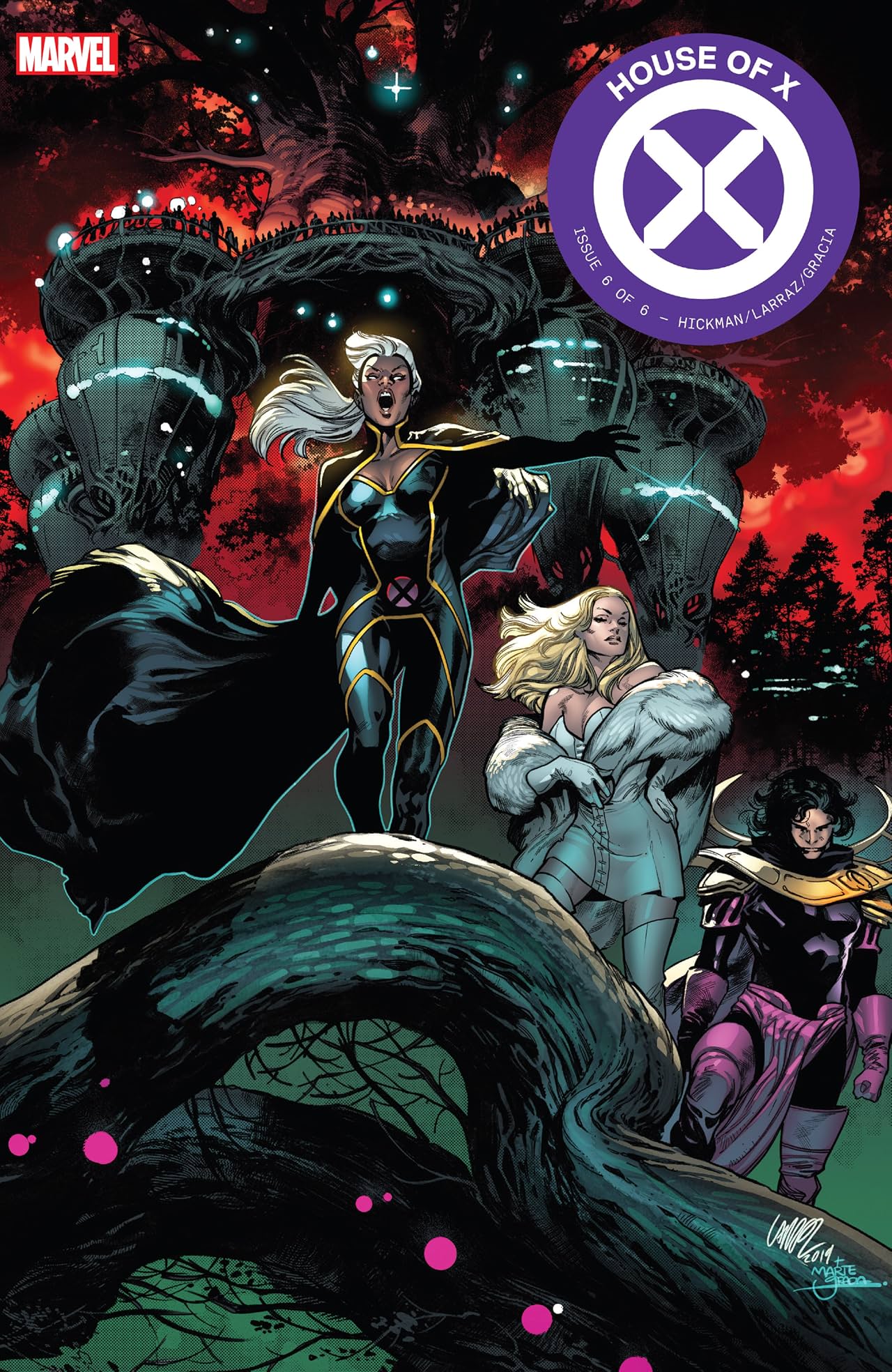
In this new setup, the tensions and melodrama of the past are left in the past. The final pages of House of X #6 make that clear, especially with Cyclops, Jean Grey, and Wolverine. There’s even a nice moment between Jean Grey and Emma Frost, who have been bitter rivals for years. Hickman makes clear that these characters are looking to move forward and not revisit old drama.

The only question is what does that entail? Does moving forward simply mean moving past these old romantic complications? The final pages of “Uncanny X-Men #22,” which predate House of X and Powers of X, establish on panel that Cyclops and Jean Grey are still a thing. They still love each other and don’t hesitate for a second to embrace one another, now that they’re alive again.

ScottJean

However, it’s not quite as clear that they’re content to pursue the same relationship they had before Jean died at the hands of Magneto back in 2004. On some levels, it makes sense to do something different. Both Cyclops and Jean Grey know what happens when they try to ignore these other feelings. They just fester under the surface and it hurts them both in the long run.

Even though their love for one another is very clear, the way they go about their relationship has shown plenty of flaws, going back to the days of Chris Clarmeont’s run on Uncanny X-Men. They still want to be together. They even want to be a family. The events of “X-Men #1” depict them as more a family than reunited lovers, which I thought was both sweet and overdue.

It’s also in this area that the potential for polyamory has already revealed itself. Most have pointed out the unusual arrangement of Cyclops, Jean Grey, and Wolverine’s rooms on the new moon-based Summer house. They’re all connected with Jean’s room in between Cyclops’ and Wolverine’s. They even have doorways between them, which is something the other rooms don’t.

It’s not definitive confirmation, but it certainly implies the possibility. Solicits of future issues have also hinted that Emma Frost may enter the picture as well. If Hickman, Yu, and Marvel are serious about pursuing this plot, then it could open the door for a very different kind of romantic sub-plot, the likes of which we haven’t seen in superhero comics.

While superhero comics have been quite progressive at times, and even somewhat daring, when it comes to pursuing non-traditional relationships, they’ve never attempted to tackle polyamory. Even though it exists in the real world, it’s not something superhero comics have ever taken seriously. This could change that.

A seriously, well-written polyamorous relationship between Cyclops, Jean Grey, and Wolverine could effectively redefine what it means for these characters to love one another. It helps that it’s happening at a time when the X-Men and the entire mutant race are redefining themselves on Krakoa. They’re building their own homeland and culture. Why wouldn’t they redefine how they handle relationships while they’re at it?

It could address some of the most egregious flaws that the love triangle has propagated over the years. Jean Grey would no longer be a prize to be won by Cyclops or Wolverine. Cyclops would no longer be an obstacle for Wolverine. More importantly, it would allow Wolverine to have his romantic connection with someone without being limited by it. For someone with his extensive romantic history, that’s very important.

However, that’s the best case scenario. It also assumes that Hickman is serious about pursuing this sub-plot. Like I said earlier, it has not be confirmed on-panel. There’s no hint in House of X, Powers of X, or “X-Men #1” that there’s something elaborate going on with them. They just carry themselves as though they’re on much better terms than they were before they all died on one another.

There are risks associated with pursuing this kind of relationship. While Hickman is a great writer with a great pedigree for superhero comics, he’s never tackled a love triangle with this much baggage. If handled poorly, it could do serious damage to all the characters involved.

It could devalue the depth and history of the Cyclops/Jean Grey romance, which is one of the most iconic in all of superhero comics. It could also take a character like Wolverine, who has a complicated history as a loner who rarely gets tied down by one relationship, and make him seem out of character. Him becoming a part of the Summers/Grey family would be like James Bond joining the clergy.

There’s also a chance that a polyamorous relationship with these three could devolve into something that is just played up for novelty. The fact that it’s so different can’t be the only reason for doing it. If it is, then it’s not going to be believable and the characters involved will suffer because of it.

Given how these characters have already suffered, I don’t think the time is right to deconstruct their relationships and romantic sub-plots the only reason for doing so is shock value. These are characters poised to enter the MCU at some point. I doubt Disney will want them overly complicated before that occurs.

Personally, it’s for that reason that I doubt Marvel will seriously pursue a polyamorous relationship between Cyclops, Jean Grey, and Wolverine. They may hint at it. They may tease it. They’ll do everything possible, except depict it on panel, which will keep readers guessing and speculating. It’s something they’ve done before, much to the chagrin of fans.

If they do try it, though, I sincerely hope that Hickman, Lu, and the rest of Marvel’s creative team takes the concept seriously. The X-Men, throughout their history, have depicted characters who are very different, if not downright weird compared to the rest of the world. If that’s going to extend to how they pursue romance and relationships, then it deserves a serious effort.

However, it cannot and should not come at the cost of the characters or the iconic romances that came before it.
1 Comment

Filed under polyamory, romance, sex in media, sex in society, sexuality, superhero comics, X-men

Jack Fisher’s Weekly Quick Pick Comic: X-Men #1

At their most basic, superhero comics involve extraordinary characters saving the day against extraordinary threats. Whether it’s battling invading aliens, fighting giant robots, or thwarting evil scientists, a simple superhero comic makes the most of this dynamic. To become something better, though, it has to do much more than the basics.

X-Men comics have never relied heavily on the basics. While they’ve fought their share of aliens, killer robots, and mad scientists, that has only ever been a small part of their story. From the early days of Stan Lee and Jack Kirby to the heyday of Chris Claremont, the X-Men are at their best when they’re more than just superheroes. They’re a family.

They may not be a family in the traditional sense. Then again, part of the X-Men’s defining trait is that they’re not traditional. They’re mutants. They’re outsiders. They’re different, but uncannily so. That’s the spirit that Jonathan Hickman and Leinil Francis Yu capture in “X-Men #1.”

They still fight bad guys. They still save the day, living and fighting in a world that can’t resist the urge to slaughter them with killer robots. They also live, love, and cherish one another, as any other family. Theirs just happens to be more uncanny than most.

Building on the foundation that both “House of X” and “Powers of X” so masterfully built, X-Men #1” establishes how the X-Men operate in a world where they have a homeland in Krakoa and unprecedented unity among their kind. There are still battles to be fought, some of which began during the events of “House of X.” Fittingly enough, Cyclops is at the front line of those battles.

For a character who has been denigrated, killed off, brought back to life, and endlessly criticized for how he’s handled his personal life, it’s nothing short of refreshing. Say what you will about Cyclops and the questionable choices he’s made, he’s still the X-Men’s consummate leader. He always has been and always will be. It’s one of the most defining aspects of his character.

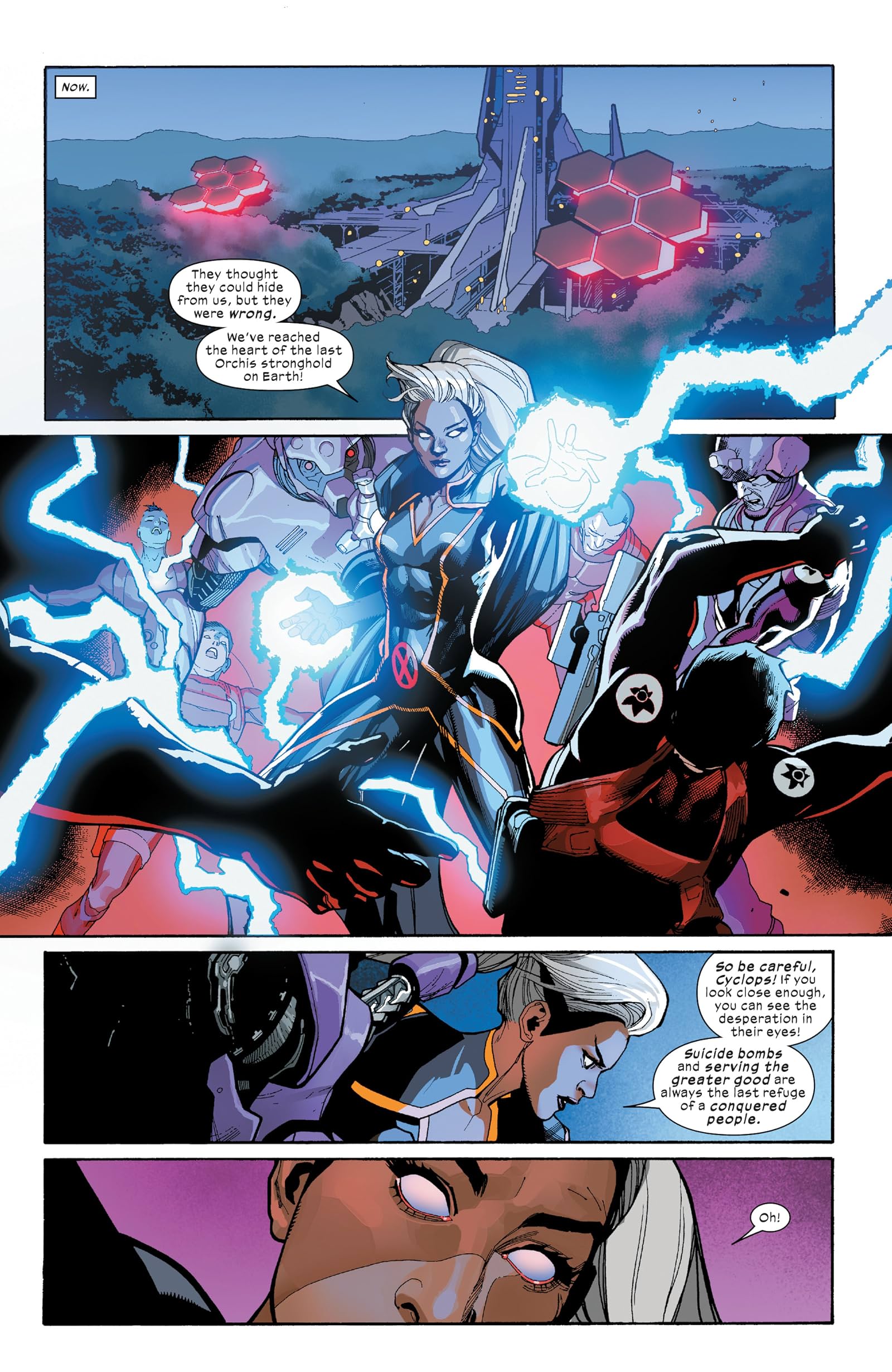
Hickman affirms that at every turn in X-Men #1.” Cyclops is the one who leads the charge against Orchis, the big human-led conspiracy to counter mutant evolution, who proved themselves quite capable in “House of X.” They may have lost a big chunk of their operation, but they’re still a threat and Cyclops leads the charge against them.

On paper, it’s simple. The way it plays out offers plenty of complexities. The exchanges between Cyclops, Storm, and Magneto highlight the strength of their personalities. They aren’t just costumed heroes saving the day. They have personal stakes in this battle and it only gets more personal at the story unfolds.

The battle they fight is only a small part of a more intimate story. Just saving the day and further crippling Orchis isn’t enough. The most endearing moments of X-Men #1” are the ones that show Cyclops living his life outside his heroic persona. They show that, when he’s not in battle, he has a home to go back to.

That home doesn’t just include his friends and fellow teammates. They include his father, his brothers, and his kids, including ones from dystopian timelines. Given the many complexities and complications surrounding the Summers family, it’s refreshing to see this family come together again. If anything, it’s downright refreshing.

It shows that the X-Men aren’t just about going from battle to battle, saving the day and stopping the next great extinction event. They have lives they wish to build. They have close personal connections they wish to foster. Beyond making them better superheroes, it helps show that they’re still very human at their core.

However, this personal touch doesn’t just apply to the X-Men, Cyclops’ family, or superheroes in general. Even their enemies have a personal stake in this new post-Krakoan world. Just as he did in House of X,” Hickman makes it clear that Orchis aren’t just another generic threat to mutants that rely heavily on killer robots. It’s personal for them too.

Many of the individuals involved in Orchis are still unknowns, but their motivations become much clearer in X-Men #1.” It’s also clear that they still have the resources and the will to become a much bigger threat. They may not be a family on the same level as Cyclops and his fellow X-Men, but they’re every bit as driven to protect it. That makes them more dangerous than any killer robot.

Overall, X-Men #1” has both the basics and the more advanced features that make for a quality superhero comic. Hickman sticks closely to the classic X-Men formula that has been subject to so many tweaks, overhauls, and upheavals in recent years. Yu’s dazzling artwork brings vibrant, colorful aesthetics to that formula. It’s as complete an X-Men comic as you’ll get without a Patrick Stewart voice-over.

It’s a bold new era for the X-Men. Hickman deconstructed and rebuilt the X-Men through “House of X” and “Powers of X.” However, the core components remain the same and as strong as ever. There’s heroics, killer robots, and sweet family moments. It’s a big part of what makes the X-Men so uncanny.

2 Comments

Filed under Jack's Quick Pick Comic, X-men

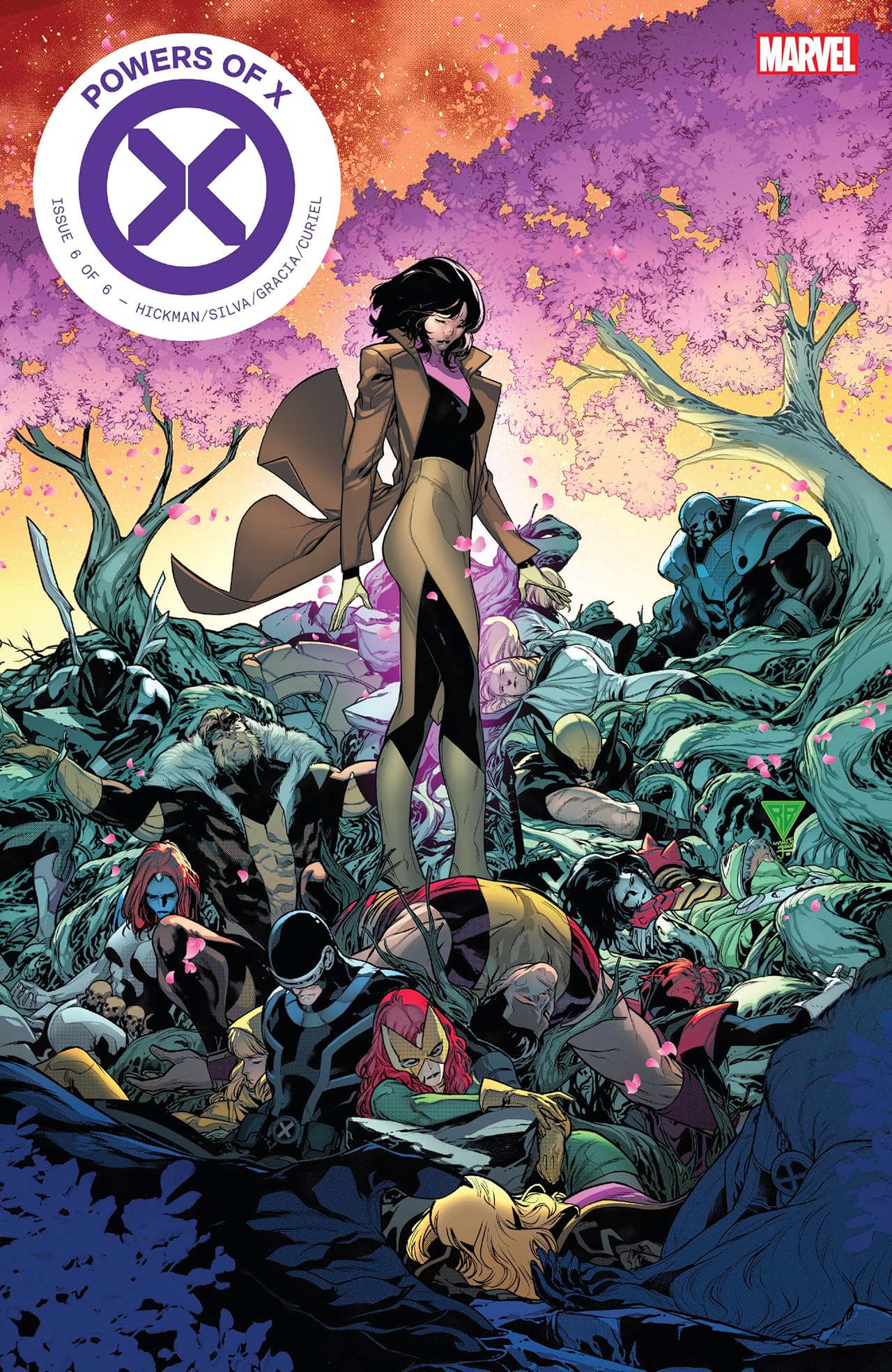
Jack Fisher’s Weekly Quick Pick Comic: Powers of X #6

When assessing the greatness of a particular story arc in comics, there are many factors to consider. There’s the quality of the writing, the strength of the characterization, the cohesiveness of the plot, the vibrancy of the artwork, and how it all fits together in terms of the greater narrative. Many comics succeed in some of these areas and are worth reading. Very few manage to succeed in most.

I usually try to avoid spoiling too much of a great story, but I will spoil one thing. “Powers of X #6,” and the overall story arc it capped off, is among those select few. In the history of X-Men comics, Marvel Comics, and superhero comics in general, this is one of those stories that will likely stand out as an example of what’s possible when all the right story elements are in place.

Writer Jonathan Hickman has always been someone with big ideas who builds even bigger stories around them. He starts with a concept. Then, he positions the characters around it in such a way that requires them to evolve in ways that they’ve never dared. From there, the story only gets bigger in terms of scope, scale, and impact.

He did it with the Avengers. He did it with the Fantastic Four. Now, he’s done it again with the X-Men. As a lifelong X-Men fan, who has seen some pretty awful runs and some exceedingly dark times, I cannot overstate how refreshing this story is. I honestly cannot think of a time when an X-Men story arc felt so meaningful and relevant.

I’ve highlighted and praised various issues of House of X and Powers of X before, but “Powers of X #6” faces a unique challenge that many story arcs fail to overcome. It can’t just end the story on a particular note. It has to fill in some lingering plot holes while leaving just enough unfilled for future stories to build on. It’s a difficult balance to strike and one past X-Men story arcs have come up short.

That balance never falters in “Powers of X #6.” It fills in a few key plot holes, most notably the events of Moira MacTaggart’s mysterious sixth life. At the core of this story, and everything that stems from it, is the impact of Moira MacTaggart. It’s not hyperbole to state that she is now the most important character in the X-Men mythos.

Her role doesn’t just involve revealing what worked and didn’t work in terms of mutants trying to survive in a world that hates and fears them. In “Powers of X #6,” she witnesses the ultimate endgame for the human/mutant conflict. She sees the inevitable result of this conflict, regardless of which side she takes.

It doesn’t matter if someone sides with Magneto.

It doesn’t matter if someone sides with Professor Charles Xavier.

It doesn’t even matter if someone swears allegiance to Apocalypse and fights by his side.

The events in “Powers of X #6” establish that none of these conflicting groups, who have been clashing in X-Men comics since the Kennedy Administration, will be vindicated in the long run. Ultimately, they will be defeated, but not by the forces they think.

It’s a point that Hickman makes clearly by building on key moments established in past issues of Powers of X and House of X. Within these moments, harsh truths are dropped and fateful choices are made. They help give the achievements that played out in “House of X #6” even more weight. They also establish the stakes the X-men, and the entire mutant race in general, face moving forward.

These are powerful moments that impact the past, present, and future of the X-Men. Through Moira, the greatest threats facing mutants takes a very different form. It’s not a menacing new Sentinel. It’s not some mutant tyrant, either. It’s not even some bigoted human who thinks interment camps are still a good idea. I won’t spoil the particulars, but c makes clear that the X-Men have an uphill battle.

That’s saying a lot, considering the mutant race is more united than it has ever been. They have a home in Krakoa. Teammates who have been dead or missing for many years are back. They have valuable resources that the world wants. They’ve even won over their greatest enemies, like Apocalypse.

However, even with Moira’s foresight, that still might not be enough.

It might be the greatest achievement of “Powers of X #6.” It is an ending to a bold new beginning for the X-Men, but it also redefines the challenges they face. Through Hickman’s skilled world-building and artist R. B. Silva’s brilliant renderings, it genuinely feels like a true paradigm shift for X-Men comics.

They’re still mutants. They’re still the same superheroes they’ve always been. Their goals haven’t fundamentally changed that much. What has changed are the stakes, the forces opposing them, and their approach to dealing with them. It feels both hopeful and dire at the same time.

Whereas “House of X #6” establishes the promise of a brighter future for mutants, “Powers of X #6” reveals the ultimate barrier to that future. It’s not something they can shoot, blast, stab, or punch. If they want to succeed, then they have to fundamentally change how they go about Charles Xavier’s dream. Moreover, the dream itself needs to evolve.

Years from now, X-Men fans will likely look back on “Powers of X #6” as a defining moment for a narrative that has been unfolding for over 50 years. Those moments are few, far between, and precious. This one in particular may go down as one of the most uncanny.

Leave a comment

Filed under Jack's Quick Pick Comic, X-men

The (Amazing) Sights, Spectacles, And Lessons Of New York Comic Con 2019

9FE52827-2897-4629-B24A-9FDE46A77E9A

Another New York Comic Con has come. Once again, I managed to experience it for a single day. While I would’ve loved to spend another day seeing everything I didn’t get a chance to see yesterday, it was an incredible experience. I enjoyed every minute of it and, like other New York Comic Cons before it, this one will be full of many treasured memories.

I could write several books, and even a couple sexy short stories, about all the things I saw while I was there. I attended panels, met incredible people, saw amazing costumes, saw some breaking comic book news, and even got a chance to connect with some real celebrities. I cannot overstate what a thrill that was.

New York Comic Con has always been so much fun, just as the entire city of New York always been fun. There are so many places to see and people to meet. I found myself running around the Jacob Javits Convention Center, trying to experience as much as I could. I like to think I took in as much as I can, given the constraints of time and only having a Friday pass.

By far, one of the best parts of New York Comic Con was seeing the costumes of fellow fans. This year might have been the most diverse, creative year yet. I saw plenty of typical costumes, like Batman, Superman, Deadpool, and the Joker. This year, however, had one of the most diverse set of costumes that I’ve ever seen.

It was so incredible that I nearly drained the batter on my phone, trying to get as many pictures as I could from those willing to share one. Here are just a handful of the ones I managed to get. Trust me when I say this is just a small sample of the creative passion I saw.

Every year, the fans who make these costumes find a way to surprise me. Next year, however, is going to be tough to be. That said, I’m sure the passion of these fans will help them find a way.

In addition to the costumes, New York Comic Con often leaves me with some unique takeaways that I could never get by just reading stories about it. Actually being there and seeing it first-hand will always have a more extensive impact. This year had some more nuanced lessons than previous years.

The first, and most apparent, lesson I learned is that the impact of anime is growing. This year, I saw more anime-inspired costumes than any previous year. I didn’t recognize all the anime that it came from, but there was definitely an uptick in anime costumes and that nicely reflects the growth of the genre.

The second lesson, which is more or less a reinforcement of what I’ve learned in previous years, is that most writers, creators, and celebrities are awesome in person. Many consider themselves fans, as well. I’ve interacted with plenty online, mostly through Twitter. They’re as nice in person as they are in real life.

I even had the privilege of meeting a few I’ve worked with. A while back, I reviewed “Swing Volume 2” after getting an advanced copy. While in artists alley, I had a chance to meet the writer, Matt Hawkins. He was an awesome guy and the insights he gave were incredible.

To those who think the details of that story were embellished or eroticized, I can attest that they weren’t. Everything Mr. Hawkins wrote about in that story was inspired by real people and real couples. I can’t thank him enough for sharing such insights and I’m already looking forward to Swing Volume 3.

The third lesson, which I guess is more an exercise in best practices, is that if you really want to get into a panel, you need to get in line at least 20 minutes early. While I managed to get into all the panels I wanted, the lines were long and I just barely got in.

For the advanced screenings of upcoming movies and cartoons, you need to be even more proactive. I was unable to get into a screening of “Wonder Woman: Bloodlines” or “Joker.” Those filled up very quickly and if I want to get in next year, I’ll have to be even more proactive.

There’s so much I experienced. There are many more things I wish I could describe, but it would take too much time and energy away from writing sexy short stories. I’ll just belabor that I had an amazing time. I saw so many amazing things and met so many awesome people. I’m already looking forward to going back next year.

3 Comments

Filed under Comic Books, Jack Fisher, Superheroes, Jack Fisher's Insights, superhero comics, superhero movies

Back (And Exhausted) From New York Comic Con 2019

9FE52827-2897-4629-B24A-9FDE46A77E9A

It was a long, eventful day, but it’s over now. I built my entire day around attending New York Comic Con 2019 and, without a doubt, it was a day well-spent. I saw so many amazing things. I met so many awesome people. Between the fans, the costumes, the panels, and the big news, there was just so much to experience. I’m still processing it all.

To be honest, it’s going to take a few days to fully appreciate what I experienced. That’s to be expected for the New York Comic Con. For as long as I’ve been going, it has always been this huge spectacle that overwhelms me with so many things I love. Every year I feel like it has to take a step back, it somehow surprises me.

This year was no exception. It was an incredible experience. Now, I’m exhausted and badly in need of some rest. As long and arduous as this day was, however, it was SO worth it.

2 Comments

Filed under Jack Fisher's Insights, Marvel, superhero comics, superhero movies

Jack Fisher’s Weekly Quick Pick Comic: House Of X #6

There’s an unwritten rule in superhero comics. Heroes can enjoy a happy ending every now and then. However, it can only go so far. For every happy ending, there must also be a setup for the next conflict. It also can’t be too happy. The struggle can never stop or slow down. More epic battles must follow. Where else will Marvel and their Disney overlords get ideas for new billion-dollar movies?

Sometimes, the happy endings are as short-lived as they are shallow. This is especially true of X-Men comics. Their struggle is more complicated than fighting hordes of Hydra soldiers or battling invading Chitari armies. Sure, they regularly battle killer robots, but the primary source of their problems come from hatred and fear. There’s only so much they can triumph over that. A typical internet comments section is proof of that.

As a result, any victory the X-Men enjoy seems fleeting. Any semblance of a happy ending or true progress comes off as shallow or temporary. That has been my experience, as a lifelong X-Men fan. Then, “House of X #6” comes along and in the span of a single book, those unwritten are bent, broken, and redefined.

Throughout the X-Men’s colorful history, there have been many defining moments. Unfortunately, most of them often involve tragedy, destruction, and decimation. The moments that involve a triumphant, happy ending that feels like real progress in their struggles are few and far between. That only makes “House of X #6” more precious in the grand scheme of things.

This epic, world-building narrative began with a simple proclamation from Charles Xavier. While humanity slept, the world changed. In “House of X #6,” the sheer breadth of that change becomes clear. Xavier doesn’t just announce to the world that things are different. He explains why and how they got to this critical point.

It’s the kind of speech that leaves you anxious, astonished, concerned, and elated, all at the same time. He doesn’t talk around the truth or rely on alternative facts. He lays out clearly what mutants have been through. Even if you haven’t been following the X-Men comics for the past several decades, you get a clear understanding of how they got to this point.

They’ve been bullied, attacked, ignored, and driven to the brink of extinction more than once. They’ve clashed with other superheroes while being held to a different standard. In a world where so many other people have superpowers and aren’t subject to constant killer robot attacks, mutants are seen as a menace.

Now, they’re not just outcasts fighting for their lives and working towards impossible dreams. They’re a full-fledged society. They now have a home in Krakoa, which is now a full-fledged nation. They have their own culture and identity that they’re willing to fight for. These all feel like changes that are exceedingly overdue. Writer Jonathan Hickman finally put it into words while artist Pepe Larraz gave it vibrant visuals.

It’s a beautiful, cathartic moment that X-Men fans of all kinds can appreciate. On top of this momentous announcement, Hickman adds a few more details to the world-building. Now that mutants have their own nation, they have to go about governing it. It’s the kind of detail that tends to get overlooked in most superhero narratives, but it’s those same details that give depth to this emerging status quo.

The government of Krakoa is not overly complicated, but it’s still comprehensive in its vision. Hickman does not skimp on the details. We even get to see how Krakoa handles difficult issues, such as major laws and what to do with those who break them. It’s not quite like watching a mutant version of C-SPAN, but it gets the point across.

This isn’t just mutants consolidating their power. They’re trying to function as a real nation with real connections in the international community. They’re not going to be some isolated enclave. They actually have something to offer the world with the miracle drugs Krakoa produces. However, they’re not treating them as bargaining chips or gifts. They’re real assets with which to create standing in the world.

It’s uncharted territory for mutants. It also opens the door to a new host of complications, but for once, they don’t involve drawing battle lines between humans and mutants. Xavier still seeks peace, but not through impossible dreams anymore.

This is a huge shift for Charles Xavier’s character. It’s a huge shift for the X-Men, as well. They’re not just a team of mutant superheroes anymore. They’re something greater and “House of X #6” is their way of announcing that to the world.

I won’t spoil the many other ways Hickman and Larraz explore this exciting new world. There are plenty of moments that set the stage for a very different kind of struggle with the X-Men. There are also a few hints that they’ll be dealing with a few threats down the line, some more familiar than others. That’s unavoidable, both for superheroes and blossoming nations.

However, I will spoil one critical detail. “House of X #6” gives the X-Men, mutants, and long-time fans a reason to celebrate. It wasn’t that long ago that the X-Men were in a dire state. Marvel was going out of their way marginalized them in favor of propping up the Inhumans. Major characters were being killed off, left and right. Now, in wake of this issue, those dark days feel like distant memories.

The events of “House of X #6” feel like the end of a long, tumultuous period of tribulations and the beginning of a new era. It’s not all doom and gloom, for once. There’s reason to be happy. There’s reason to grab a beer and celebrate. If the X-Men comics were to end with this issue, it would be a damn good ending.

A new world has been built. A new era has arrived for the X-Men. It’s as satisfying as it is overdue. To X-Men fans of all kinds, get some friends, grab a cold beer, and have a party. Hickman has given us a reason to celebrate.


1 Comment

Filed under Jack's Quick Pick Comic, X-men

Five Reasons Why Joss Whedon Should Direct The First X-Men Movie In The Marvel Cinematic Universe

x-men-mcu-disney

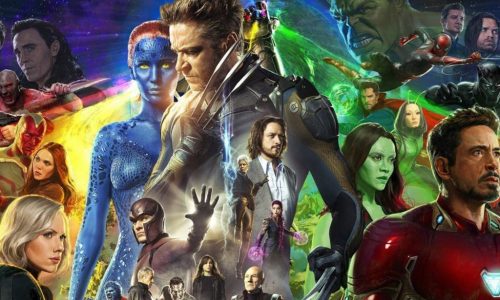
These are exciting times for X-Men fans. The Fox era of X-Men movies is over. With Disney’s purchase of Fox, a new era is set to begin. There are no more divergent timelines or soft reboots. The X-Men are coming to the Marvel Cinematic Universe. It may not happen for a while, but the process has already begun. It’s only a matter of time.

As a lifelong X-Men fan, I’ve discussed both the possibilities and the immense potential of this development. I’m sure I’ll discuss it plenty more as news, rumors, and what not emerge over the next few years. Until then, there isn’t much to go on.

While there are plenty of details to explore, in terms of story, there’s one logistical issue that I feel is worth addressing. It has to do with who will help guide the X-Men into the MCU. Now, it’s a given that Kevin Feige will be the mastermind behind it all. He is, after all, the alpha and omega of all things Marvel Studios. He’ll be the one with the vision, but he’ll still need someone to turn that vision into a tangible product.

That’s not going to be easy for the X-Men. This isn’t the same as making “Ant Man” a viable franchise. The scope and scale of the X-Men franchise is immense. There’s a reason why it lasted 19 years with Fox. It has a wealth of characters, iconic stories, and endearing themes that are as relevant as ever.

Bringing X-Men to the MCU will be a massive undertaking. With that in mind, I’d like to make the case that there’s one director who is uniquely qualified to take on this challenge. Most already know his name and he has already left his mark on the MCU. I think he’ll leave an even bigger mark by taking this on. That name, of course, is Joss Whedon.

Hold your applause/outrage, please.

Now, I know Whedon’s name doesn’t carry the weight it once does. His success really peaked with the first “Avengers” movie, but since then, he’s somewhat faltered. It hasn’t helped that he suffered some bad press, some of which I’ve touched on. Even with these setbacks, and even because of them, I believe he’s the best choice for leading the X-Men into this new era.

As always, I know there will be those who vehemently disagree. I understand that and even welcome those counterarguments in the comments. That said, I’d like to offer five reasons to make my case that Mr. Whedon is the man for the job.


Reason #1: He Has (Successful) Past Experience With X-Men

Joss Whedon is no stranger to the X-Men. In fact, he probably has more experience with this franchise than he did with the Avengers. He did script work on the first X-Men movie. He was also on the short-list to direct multiple X-Men movies at one point. He’s gone on record as saying that he’s an X-Men fan.

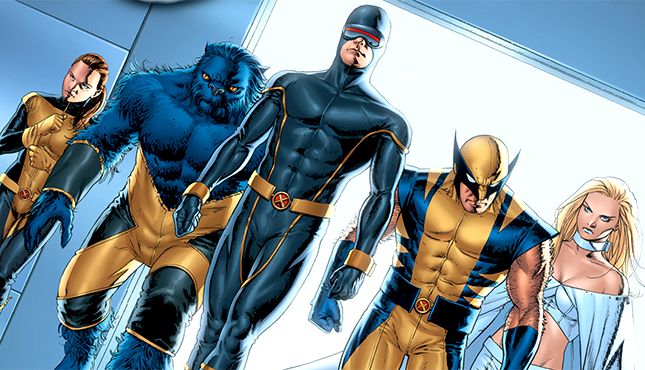
Outside the movies, Whedon’s credentials run even deeper. In the early-to-mid-2000s, he penned an acclaimed run for the Astonishing X-Men comic. If you were to talk to any X-Men fan during that time, myself included, they would’ve said the same thing. Whedon’s run on Astonishing X-Men was one of the best of its era.

Through that run, he demonstrated a strong appreciation of these character. It wasn’t just the female characters either, although they definitely shined. He understood the personalities, dynamics, and quirks with characters like Cyclops, Emma Frost, Wolverine, and Kitty Pryde. He gave them all a chance to demonstrate why they’re so iconic.

While the Fox era of X-Men movies did plenty for Wolverine, Charles Xavier, and Magneto, they rarely succeeded for other major characters. Some, like Cyclops and Rogue, were outright butchered. While Whedon has mishandled characters in the past, his experience with X-Men should help avoid that.

Given the size and scope of the MCU, the margin for error will be small. Having a director who knows, understands, and cares about these characters will go a long way compared to one who is unfamiliar with them. Just ask Josh Trank.


Reason #2: His Style Will Give The X-Men The Right Tone For The MCU

Whether it’s a movie or TV show, Joss Whedon’s work has a distinct tone and style to it. There’s often a tight blend of light-hearted character moments mixed with serious drama. There are also plenty of jokes and quips, but not nearly on the level of an Aaron Sorkin script. For the most part, Whedon works to humanize his characters while making them lovable and relatable in their own way.

That kind of approach is exactly what the X-Men need in the MCU. It’s an approach that has already been proven with the first “Avengers” movie, as well as “Avengers: Age of Ultron.” In each case, both the heroes and the villains had moments where they could joke around, but still have heated arguments when necessary. It was a big part of what made these movies so entertaining and memorable.

The X-Men have had their share of funny moments during the Fox era. Unfortunately, most of them came from Deadpool and the always-charming Ryan Reynolds. By the standards of modern superhero movies, the original X-Men trilogy was very serious and even a little dark. Granted, that was necessary, if only to distance itself from the excessive camp in “Batman and Robin.” Things are different now.

The X-Men franchise has had plenty of bleak, serious moments in recent years. As great as “Logan” was, the franchise could benefit from something more uplifting and Joss Whedon’s style fits that perfectly.


Reason #3: He Knows How To Balance Action, Character Development, And Melodrama

This is something else that’s readily apparent to anyone who read Joss Whedon’s run on Astonishing X-Men or seen at least one season of “Buffy: The Vampire Slayer.” Say what you will about his feminist credentials. The man knows how to strike that critical balance between action, character development, and melodrama.

He did plenty of balancing with action and character development in “Avengers,” but X-Men will need a lot more melodrama to succeed. That’s because all those soap-opera elements that tends to complicate other action franchises are a core part of the X-Men’s DNA. They have been since the heyday of Chris Claremont’s run on the comics.

I’m not just talking about romantic sub-plots and love triangles, which have been a detriment to previous X-Men movies. Being an X-Men and a mutant is full of both personal and interpersonal drama. It’s part of what makes these characters relatable and iconic. People might not be able to relate to the Asgardian God of Thunder, but they can relate to someone who is born different and struggles to cope with those differences.

Add clashes with killer robots and murderous bigots to the mix and you’ve got plenty to work with. In the MCU, where superheroes and super-powers already exist, these are exactly the kinds of complications that can keep things interesting and Whedon has experience doing just that.


Reason #4: He Has Something To Prove (And So Does The X-Men Franchise)

As I noted earlier, Joss Whedon’s career and personal life have taken quite a downturn in recent years. In addition to his divorce, his creative decisions during “Avengers: Age of Ultron” were subject to controversy. Some may argue the extent of that controversy, especially given the box office of that movie, it’s still telling that Whedon hasn’t been involved with the MCU ever since.

On top of that, Whedon name has been unfairly linked to the massive commercial failure of “Justice League.” Now, there’s a lot to be said about the problems with “Justice League,” but I think it’s wrong to lump them on Whedon. He came into a movie that was radically different from his usual style and was already grossly overbudget and behind schedule.

Fair or not, Whedon’s credibility has taken hits on multiple fronts. By spearheading the X-Men’s arrival into the MCU, he has a chance to rebuild it. His career is far from over. Even with the upheavals in his personal life, he hasn’t burned too many bridges or completely lost the trust of fans.

If he has any kind of ego, and most people in Hollywood do, he’ll be more motivated than most to succeed with the X-Men in the MCU. At the same time, the X-Men franchise has just as much to prove. Even with the success of “Logan” and “Deadpool,” not one X-Men movie has ever topped a billion dollars.

As a franchise, the X-Men have fallen behind in the superhero hierarchy. Entering the MCU is their chance to show that they deserve to be in the same world as these multi-billion dollar success stories. To some extent, both Joss Whedon and the X-Men franchise need each other.


Reason #5: He Knows How To Balance New Ideas With Classic Elements

The X-Men that show up in the MCU will be different from the X-Men we saw in the 19 years of movies. That’s a given. It’s only a question of how different they’ll be. That will likely be a key consideration because while the X-Men movies had their share of flaws, they did a number of things that worked exceptionally well, Deadpool being the most notable.

While it’s likely that Marvel Studios won’t do much to change Deadpool, there will definitely need to be some fresh nuance to the X-Men. As it just so happens, Joss Whedon is better than most when it comes to balancing new ideas with classic themes. He did that with Astonishing X-Men in the comics. He did that in both “Avengers” movies, as well.

While some elements worked better than others, they still came together in a polished product that made billions. The X-Men will need that balance as they enter the MCU. Unlike other characters and teams that have been introduced, the X-Men come in with 19 years of cinematic baggage. It must distinguish itself in this new era.

That’s not going to be easy. Depending on when they show up, the MCU could be very different from the one that just culminated with “Avengers Endgame.” Whedon, given his experience, is certainly up for that challenge.


There’s little doubt that mutants coming to the MCU will be a huge upheaval. How Marvel Studios and Disney go about it could determine whether the MCU continues to dominate at the box office or finally runs out of steam. This incredible cinematic world has delivered time and again, overcoming immense challenges and breaking box office records along the way. They’ve earned the benefit of the doubt.

Joss Whedon may or may not be the one to lead the MCU into this new era. I think he has what it takes. I hope he gets a chance. There’s a lot of uncertainty with the X-Men franchise right now, but this is a franchise that has overcome major struggles before. With the Disney machine and the MCU behind it, I don’t doubt for a second that it can become uncanny once more.

1 Comment

Filed under Marvel, Marvel Cinematic Universe, movies, superhero comics, superhero movies, X-men

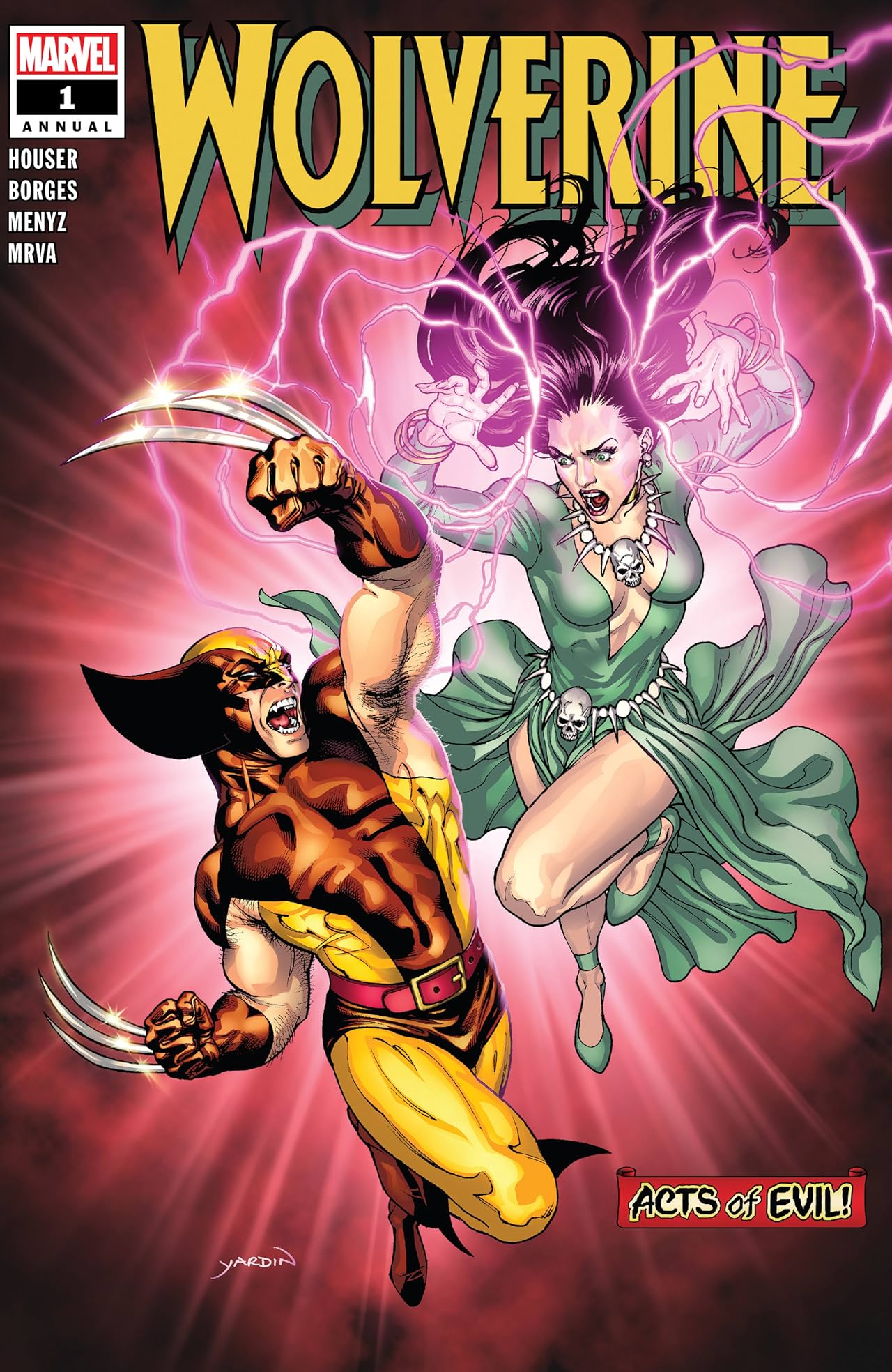
Jack Fisher’s Weekly Quick Pick Comic: Wolverine Annual #1

Certain characters will always be defined by tragedy. This is especially true of superheroes. What happened to Bruce Wayne’s parents was a tragedy. What happened to Peter Parker’s uncle was a tragedy. The impact of that tragedy is what helped send them down the path of being a superhero. It’s a common narrative and it’s powerful on so many levels.

On the other end of that spectrum, though, are characters defined by their choices. They weren’t being mind controlled. They weren’t replaced by clones or blackmailed by a villain. They do what they do out of choice. When you’re Superman, that helps make you an iconic hero and a paragon by which all others are measured. However, when you’re someone like Wolverine, those same choices only complicate his standing as a hero.

To say that Wolverine has made some questionable choices over his long and colorful history would be like saying Deadpool has a quirky sense of humor. Whether he’s Logan or James Howlett, he’s not some tragic figure of circumstance. He makes choices, they screw him over, and then he makes things worse by stabbing things.

There are many stories that demonstrate Wolverine’s questionable decision-making process. “Wolverine Annual #1” is just the latest and writer, Jody Houser, once again demonstrates why Wolverine’s journey to being the best there is at what he does tends to get so messy. On top of that, it’s his own damn fault.

It helps that annual comics are among my favorite types of comics. They’re just simple one-shots that tell a single, self-contained story. For a character like Wolverine, these stories don’t always follow the traditional superhero narrative.

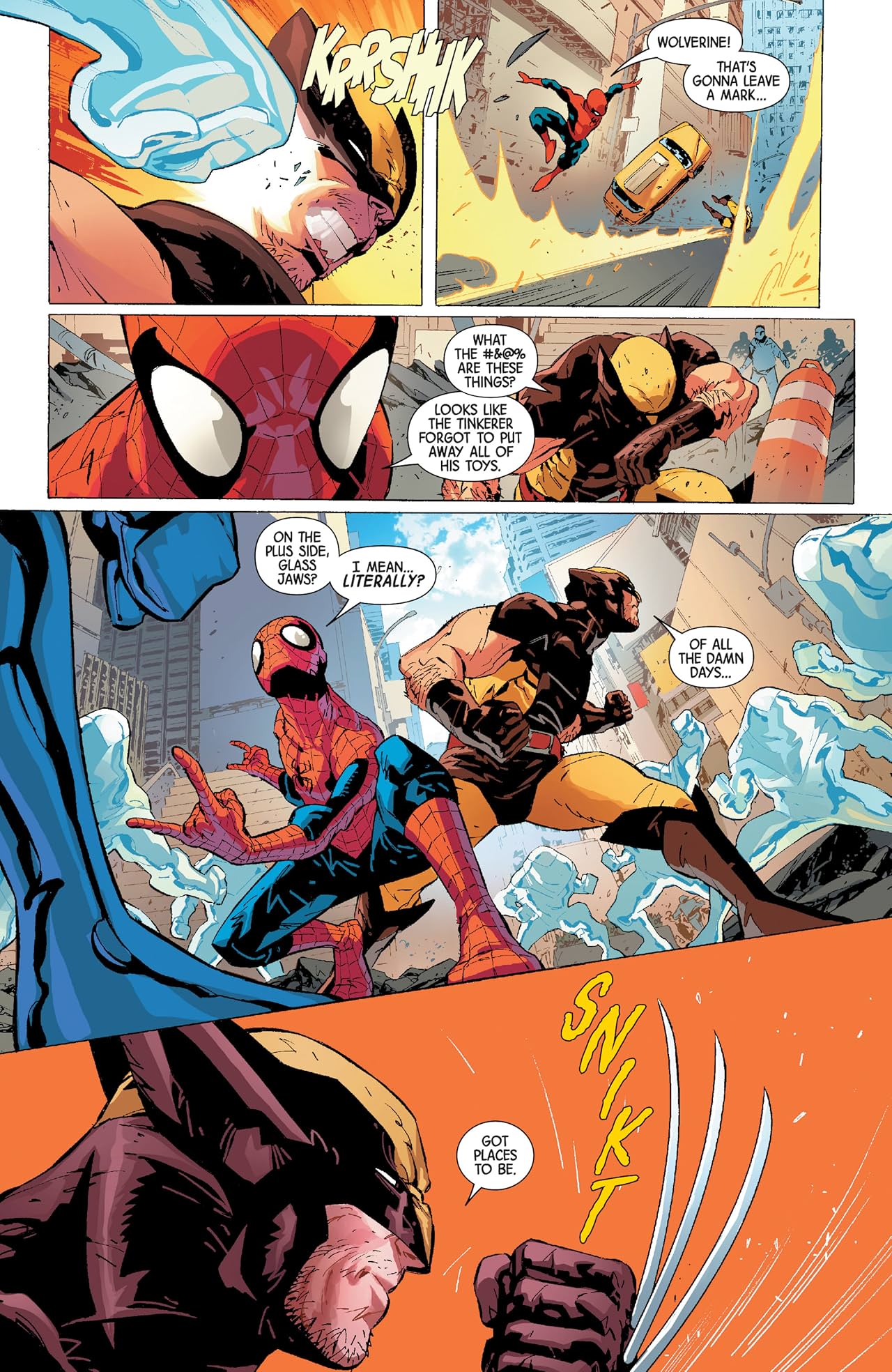
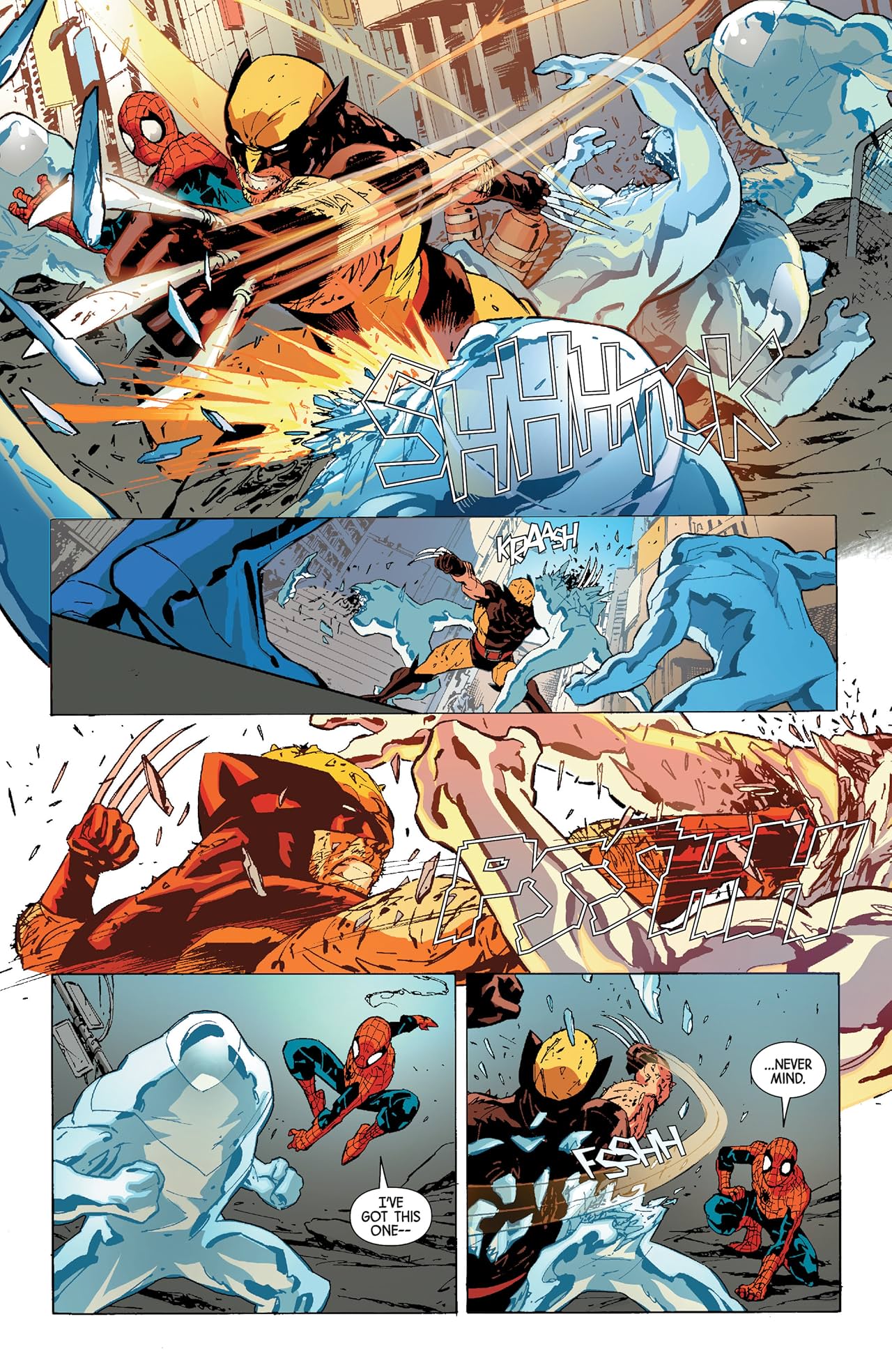
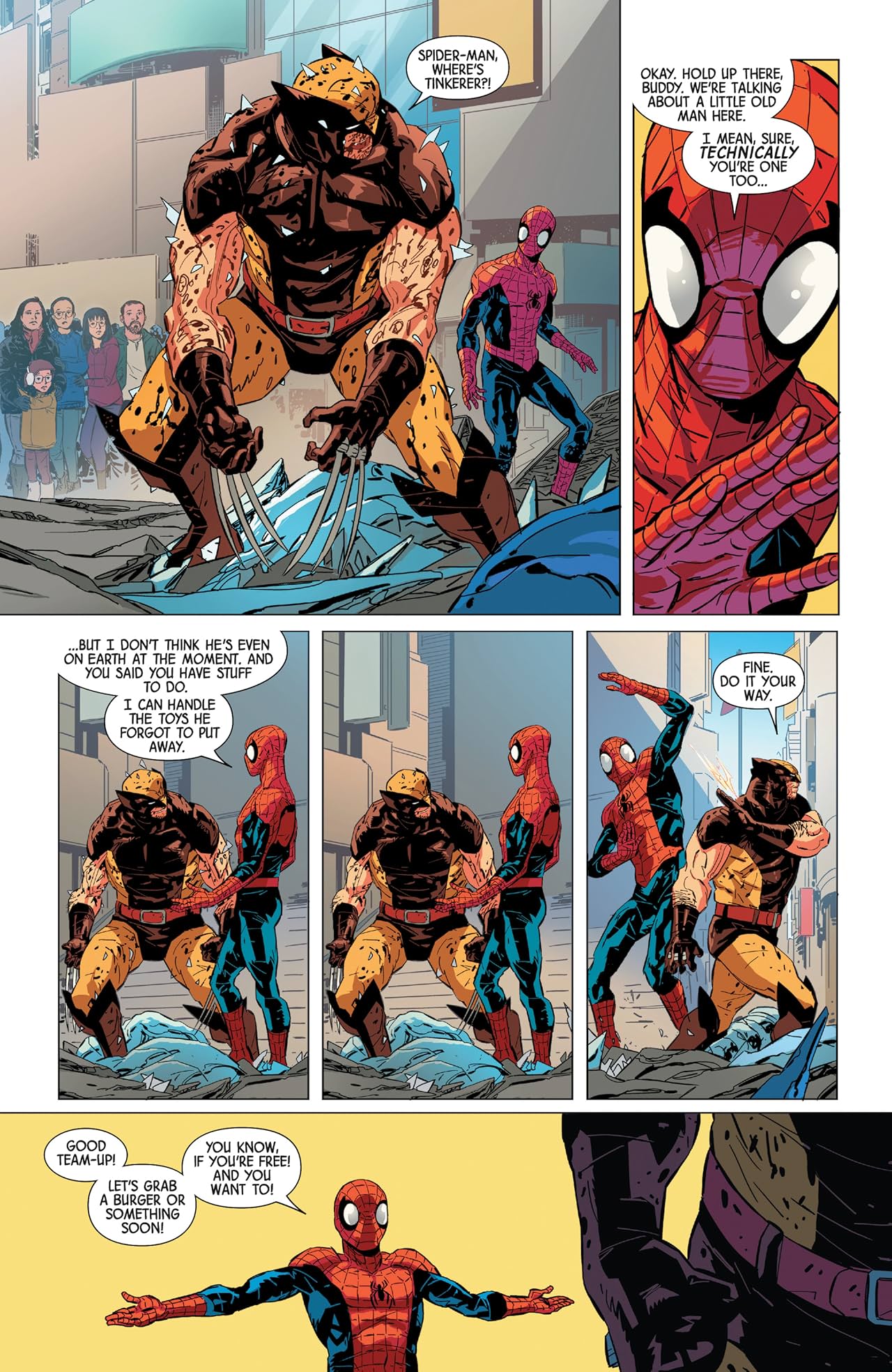
The first act effectively establishes Wolverine in the present time. At this point in his journey, he’s a full-fledged hero. He’s a member of the X-Men. He has close ties to the Avengers. He also occasionally teams-up with Spider-Man and resists the urge to stab him. By most measures, his status as one of Marvel’s top tier heroes is secure.

It’s in the same context that Houser digs a little deeper into Wolverine’s colorful past. Like so many other parts that got bloody, this is one he deeply regrets. As he often tries to do, with varying degrees of success, he confronts it. Things only get messier from there, but in the best possible way.

Houser doesn’t just build a story around Wolverine’s propensity to make bad choices. She also demonstrates what happens when the people around him make as many bad choices as him. It’s not just him that screws up. Sometimes, good people make bad choices and they drift away from being good people.

Throughout his history, Wolverine has always been in danger of becoming that person. His status as a major superhero shows that he avoided it. Not everyone was as lucky and that’s where Celia Stroud comes in.

On the surface, her story has all the traits of the many other women who got romantically involved with Wolverine and suffered because of it. They got together. Things got heated. They decide to leave where they are and build a new life. Then, things get messy. Usually, that means things get bloody and stab-happy as well, but that’s not entirely the case in “Wolverine Annual #1.”

Granted, there is plenty of stabbing and plenty of bloodshed. However, how it plays out is very different from the typical Wolverine-fueled tragedy. He still makes questionable choices, but it’s Celia Stroud’s choices that gives this story such a unique impact. Houser sets up Wolverine to face a similar backlash to his choices, but this time, his choices aren’t the most questionable.

It’s still tragic in a sense, but not in the way most Wolverine fans have come to expect from his stories. Celia Stroud comes off as the kind of character who seems destined to be corrupted by Wolverine. She’s romantically involved with him and history shows that rarely ends well.

Then, her questionable choices are revealed. For once, Wolverine’s judgment isn’t the worst. While there are other forces involved, her choices are still the thing that gives “Wolverine Annual #1” its impact.

I won’t spoil the details. I’ll just say that “Wolverine Annual #1” puts Wolverine in an unfamiliar position. Once again, he tries to confront his past. Once again, it doesn’t give him the closure he seeks. However, it’s not entirely his fault. If anything, he’s the only one who takes responsibility for his choices. For someone with his sordid history, that’s saying something.

When I read the first half of “Wolverine Annual #1,” I thought I knew how things were going to play out. I was pleasantly surprised by how Houser switched things up. It wasn’t overly shocking. It wasn’t one of those cases where a story went out of its way to subvert expectations, as has become so popular in recent years. It just told a different kind of Wolverine story and still found a way to make it work.

Wolverine is never going to be the kind of character who conducts himself like a paragon of virtue. It’s just not his style. He’s also never going to stop making bad choices. It’s just the nature of his personality. That’s a big part of what makes his story and his legacy so compelling.

Wolverine Annual #1” adds another chapter to that story. It also makes the case that other people in Wolverine’s life are just as capable of making bad choices and getting stabbed with adamantium claws isn’t the only possible consequence.

Leave a comment

Filed under Jack's Quick Pick Comic, Uncategorized

Jack Fisher’s Weekly Quick Pick Comic: Spider-Man #1

It’s an unwritten rule in superhero comics. Certain characters are only ever allowed to grow, evolve, and mature to a limited extent. Whereas some like Iron Man, Hulk, and Captain Marvel are allowed to grow and mature, others tend to revert to a rigid status quo that keeps them in a certain state, often for marketing purposes. Few characters are beholden to this rule as Spider-Man.

Whether he’s Peter Parker or your friendly neighborhood wall-crawler, Spider-Man is rarely allowed to grow beyond the down-on-his-luck, can’t-hold-a-job, struggles-with-relationships situation he’s been in since the Nixon Administration. Granted, he can still have plenty of fun, entertaining adventures in that state, but it can get predictable and monotonous after a while.

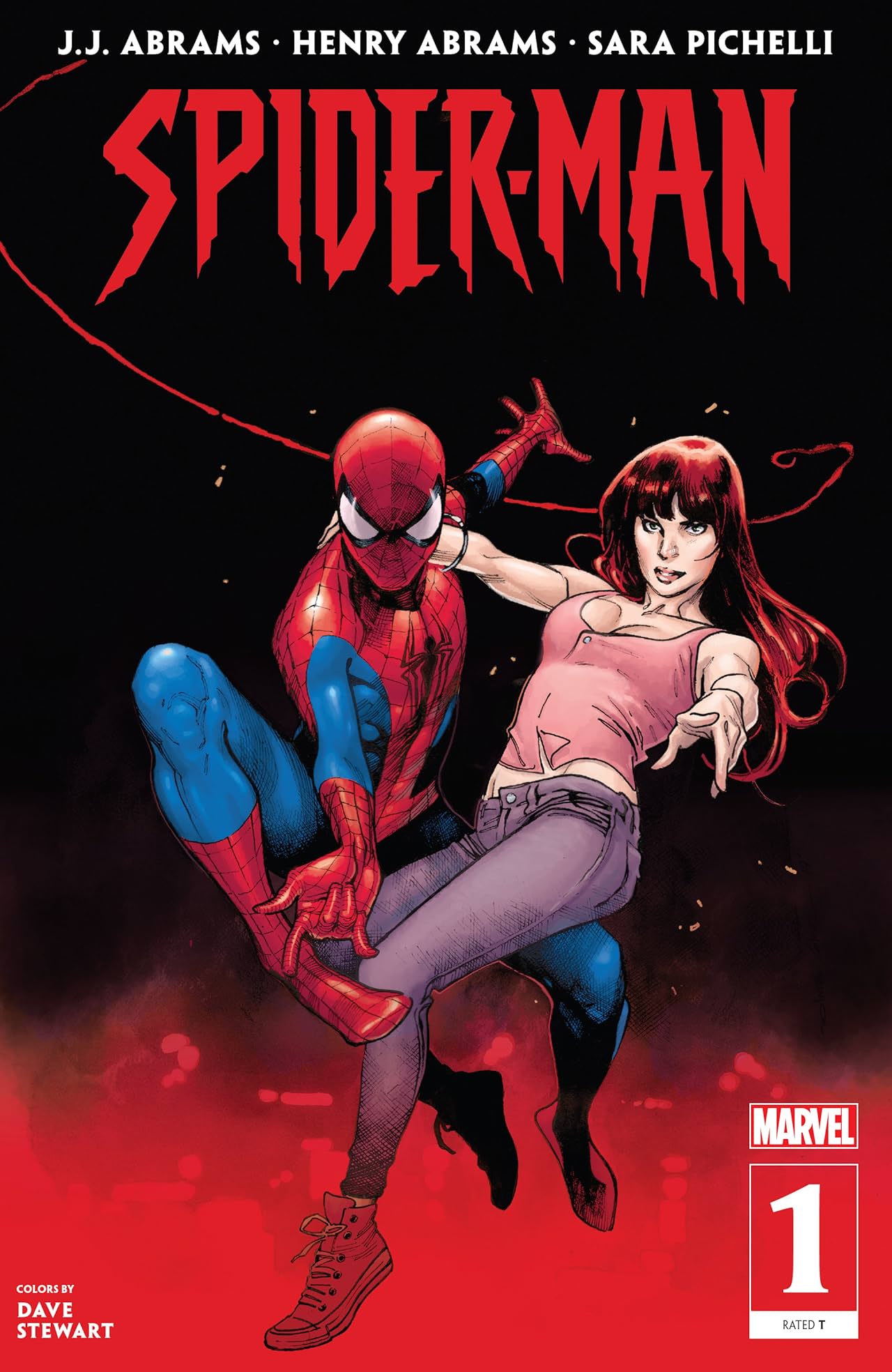
Then, every once in a while, you get a book like “Spider-Man #1” by J. J. Abrams, Henry Abrams, and artist Sara Pichelli that dares to shake things up with the standard Spider-Man formula. It’s not in the same continuity as the mainline Amazing Spider-Man books, but that’s exactly what helps it stand out. It has a chance to do something different with Spider-Man’s story and it takes full advantage of it.

Using the same approach as “Into The Spider-Verse,” this book tells a new kind of story that puts Spider-Man into a whole new situation. For once, it’s unpredictable. There’s no status quo to revert to. It has to build an entirely new world for Spider-Man. Both Abrams and Pichelli prove they’re up for the challenge.

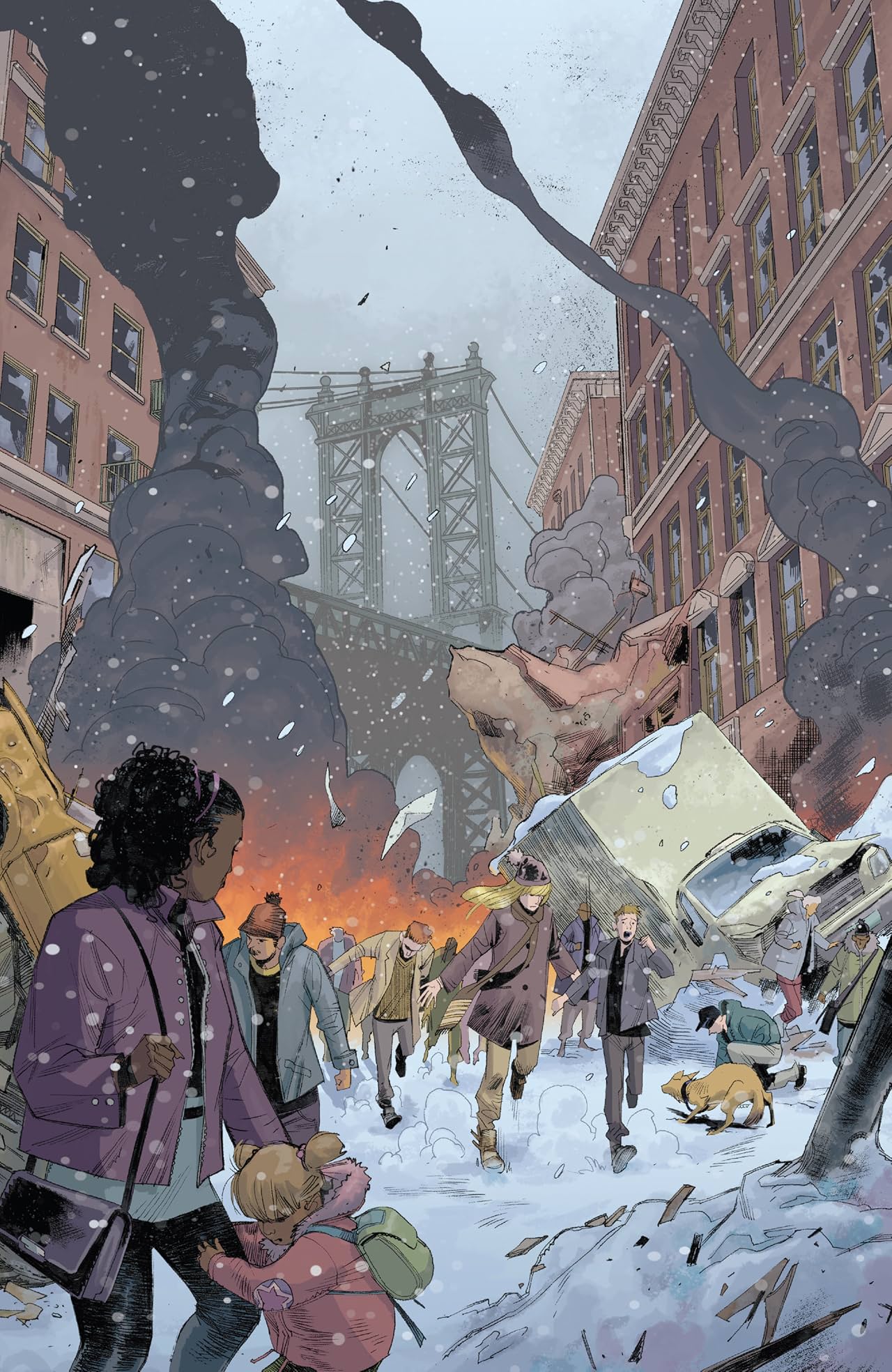
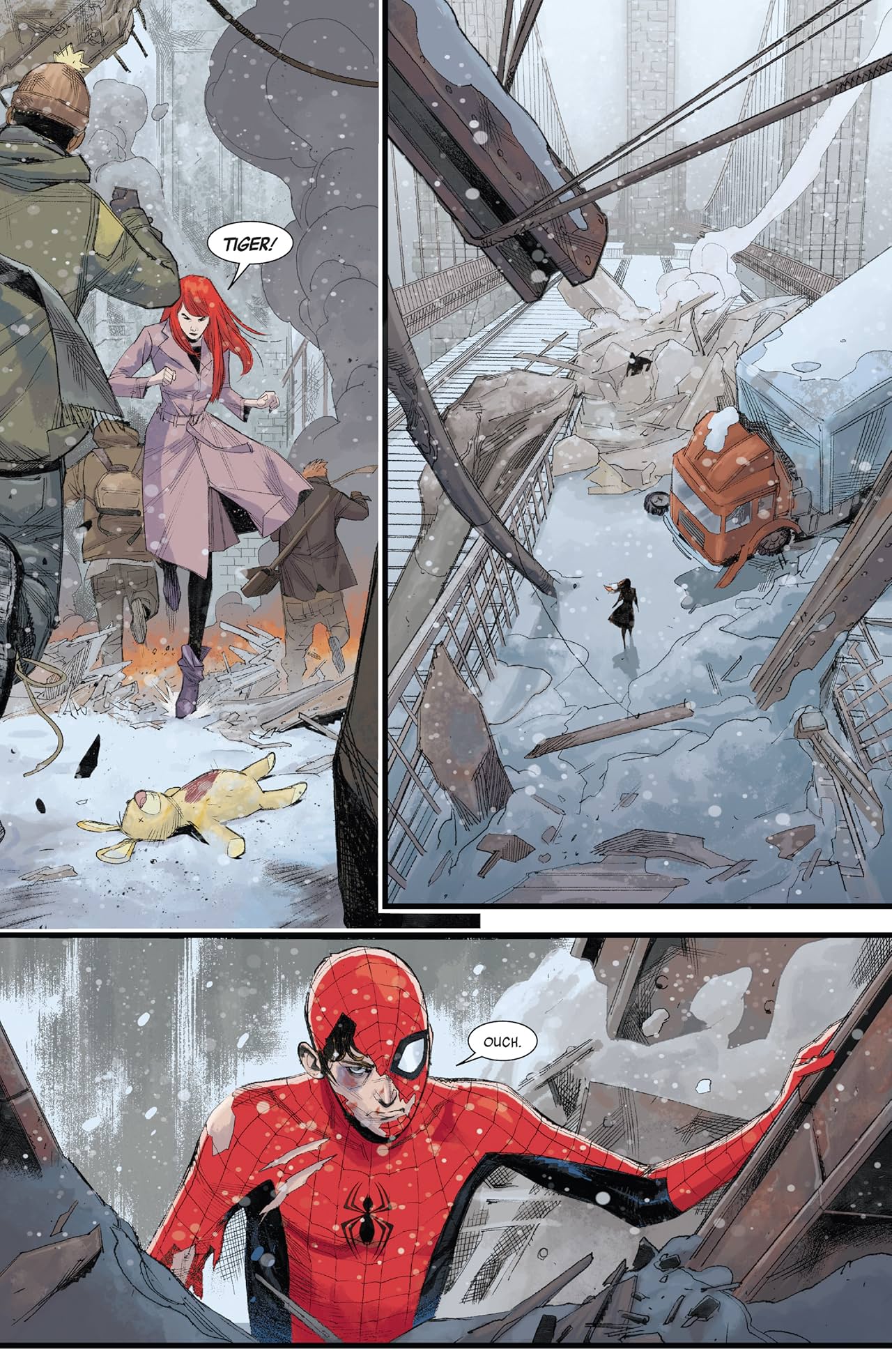
This new world is not for the faint of heart, especially if you’re a fan of Spider-Man never being allowed to mature past 30. It’s a world where Spider-Man’s responsibilities finally caught up with him. He was able to save the day. He was able to defeat a villain named Cadaverous, a name that isn’t quite as ridiculous as it sounds, but he paid a high price.

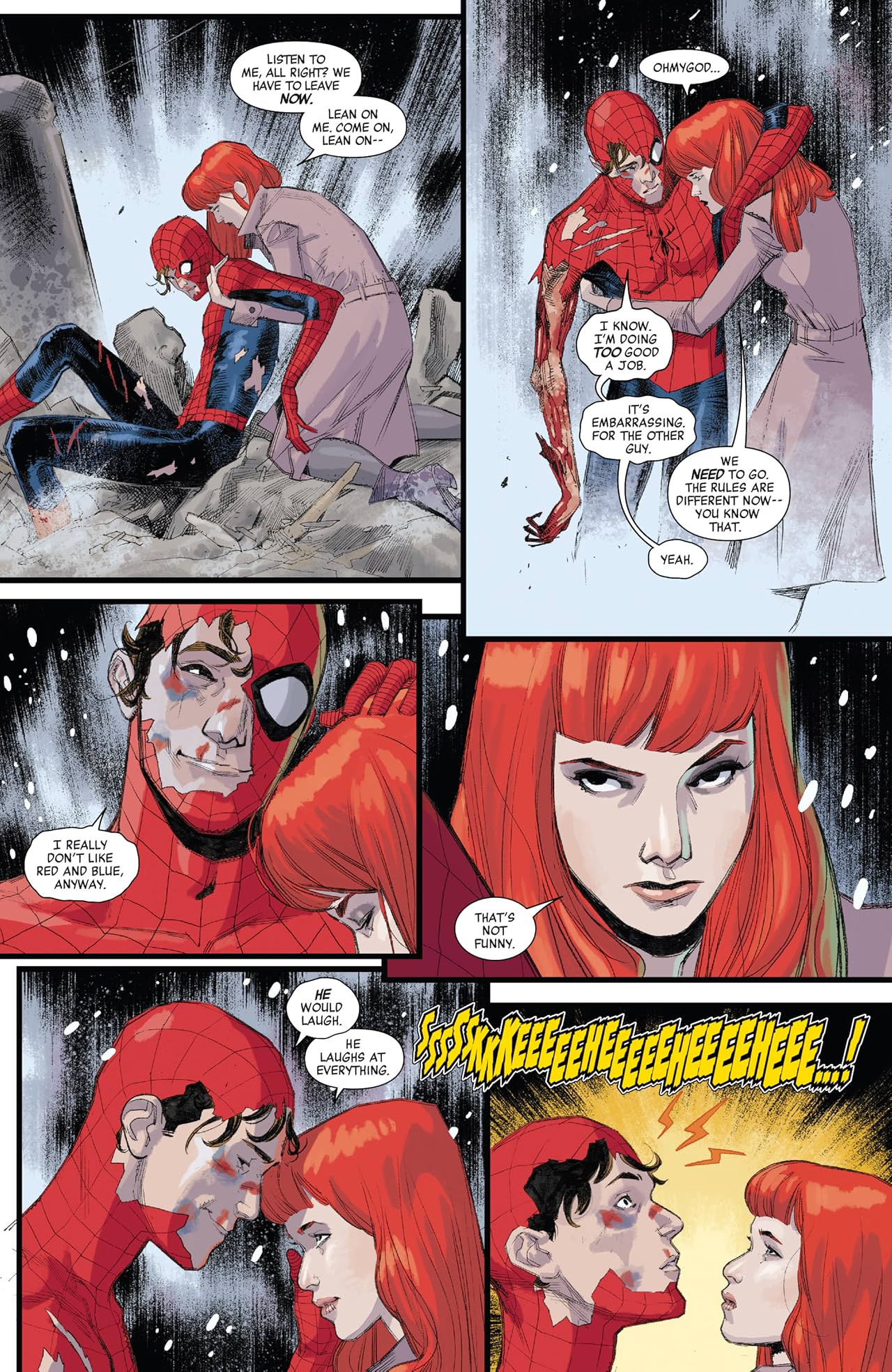
That’s because this version of Spider-Man wasn’t just late for work, late for a date, or missing his rent payment again. This Spider-Man had a lot more to lose. He had a family. He and Mary Jane are married and not just trying to schedule dates. They have a son named Ben. Peter Parker has every reason to come home safe, intact, and triumphant.

I won’t spoil too many details, but I’ll just say that doesn’t happen. In this case, saving the day doesn’t necessarily mean keeping Galactus from eating it. Yes, Spider-Man does save lives. However, the life he can’t save ends up changing his life, his responsibilities, and his ability to shake hands. That last one wasn’t a joke, by the way.

In other versions, including many alternate realities, some being more ridiculous than others, this sort of loss would’ve broken Spider-Man. It would’ve broken his family too. It’s one of Spider-Man’s most famous foils. When he loses too much, he quits being Spider-Man. While it rarely lasts, this is a world with different dynamics. He actually has a reason to not be Spider-Man anymore.

His son, Ben, gives him even more reason and not just because of the losses they’ve endured. Unlike some of Spider-Man’s other alternate reality kids, Ben is not nearly as endearing or likable. He’s young, he’s impulsive, and he’s angry at the world. Essentially, he’s not the kind of kid you’d want to continue Spider-Man’s legacy.

At the same time, Ben shows that he still has some of the traits that make Spider-Man the iconic hero he is. He’s not a lost cause. He’s not some brooding loser who looks for excuses to be miserable. He even comes off as genuinely relateable, more so than Peter Parker in some respects. You may not entirely sympathize with him, but you can still understand him.

This kid is every bit as haunted as his father. Unlike his father, though, he’s a kid who doesn’t have years of being a battle-hardened superhero under his belt. Even if he inherited his father’s super-powers, he didn’t inherit his ability to cope with loss. He didn’t have his proverbial Uncle Ben moment because so much of his situation was beyond his control.

Overall, “Spider-Man #1” is a different kind of Spider-Man story, but not just because it takes place in an alternate continuity. It doesn’t directly mirror old, time-tested Spider-Man tropes. It also doesn’t paint Peter Parker as someone who simply crumbles when he loses too much. He, Ben, and the supporting cast around him simply do their best to move forward with their lives.

For a superhero comic that tends to regress to the status quo more than most, it’s both refreshing and engaging. For once, we have a Spider-Man story we can’t expect to end with him sleeping on his Aunt May’s couch because he missed his rent again. We have a different Peter Parker with an emotionally unstable son trying to make the most of a tough situation.

On top of that, the villain responsible for that situation is still out there. We don’t know much about it or whether he’s related to any of Spider-Man’s long list of enemies, but that only adds to the intrigue. Abrams and Pichelli are taking Spider-Man’s story in a new direction and there’s no telling what might happen. As someone who has read more Spider-Man comics than most, I find that genuinely refreshing.

Leave a comment

Filed under Jack's Quick Pick Comic

Jack Fisher’s Weekly Quick Pick Comic: Captain Marvel #10


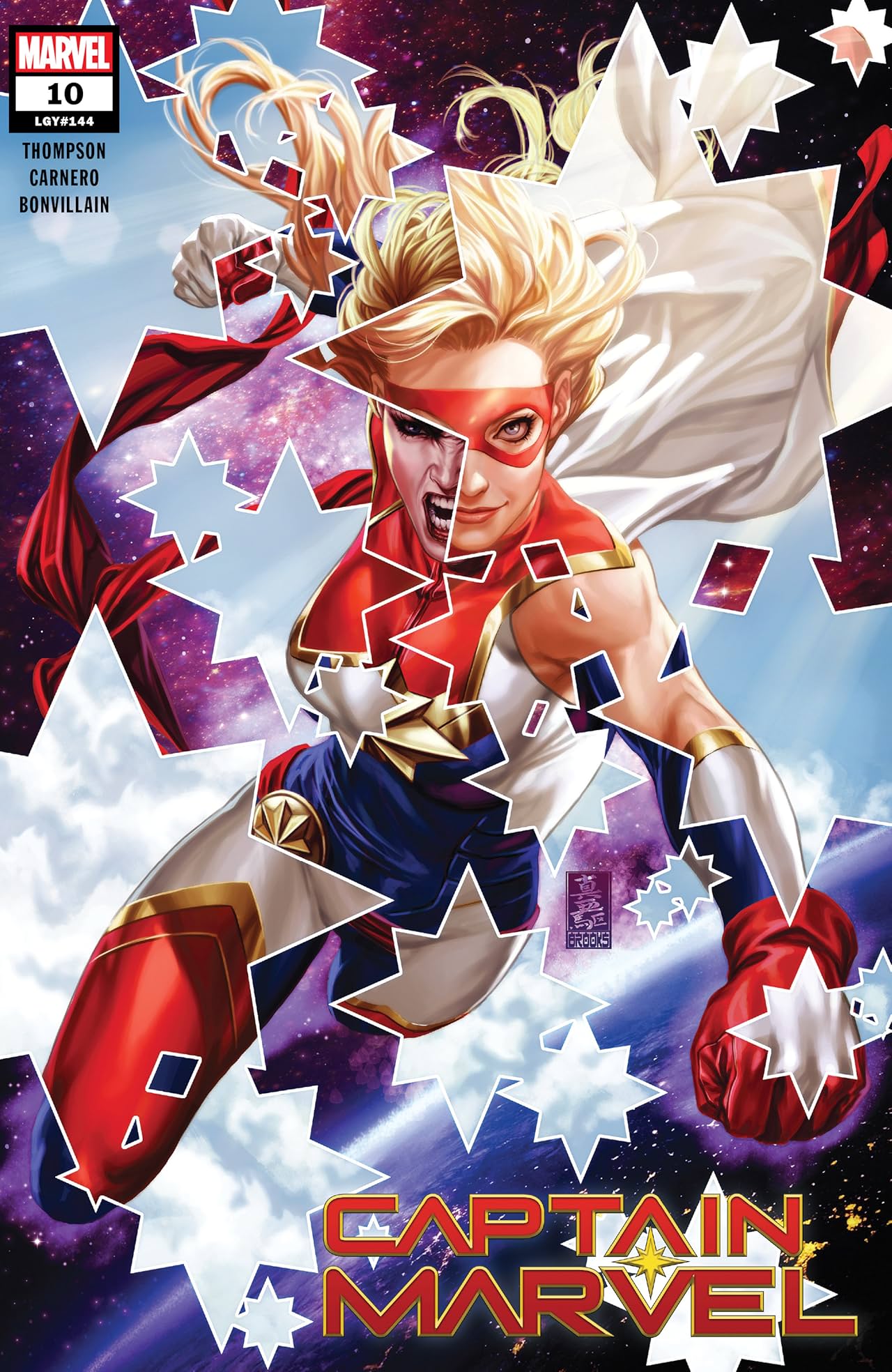
Captain Marvel (2019-) #10

Every so often, a new character comes along that you just know in your gut is going to be a big deal. I certainly felt it the first time I read about Kamala “Ms. Marvel” Khan back in 2014. I also felt it the first time I saw X-23 show up in a fateful episode of “X-Men Evolution.” It may be a bit premature on my part, but I definitely got that feeling about Ripley “Star” Ryan “Captain Marvel #10.”

For the past few issues of this series, writer Kelly Thompson has been teasing a new hero to challenge Carol Danvers in ways beyond who looks better in skin-tight outfits. Like Carol, she’s got blond hair, superpowers, and a fondness for punching the giant monsters that seem to invade New York City at least once a week. Marvel has even teased her as being the next big thing in their ever-evolving pantheon of heroes.

I admit, I was skeptical. Whenever a comic company goes out of their way to push a new hero like this, it tends to be hit or miss. Some, like Kamala Khan, work out wonderfully. Others become so forgettable that they’re relegated to punchlines for an entire era. For the most part, Star came off as just some generic woman trying to take advantage of Carol’s recent hardship. That all changed in Captain Marvel #10.”

After reading this book, I believe Star has the potential to be something special for both Captain Marvel and the larger Marvel universe. I’m not saying that potential could include a future phone call from Kevin Feige at Marvel Studios, but if I were Ms. Thompson, I would start preparing for that conversation.

Captain Marvel (2019-) #10

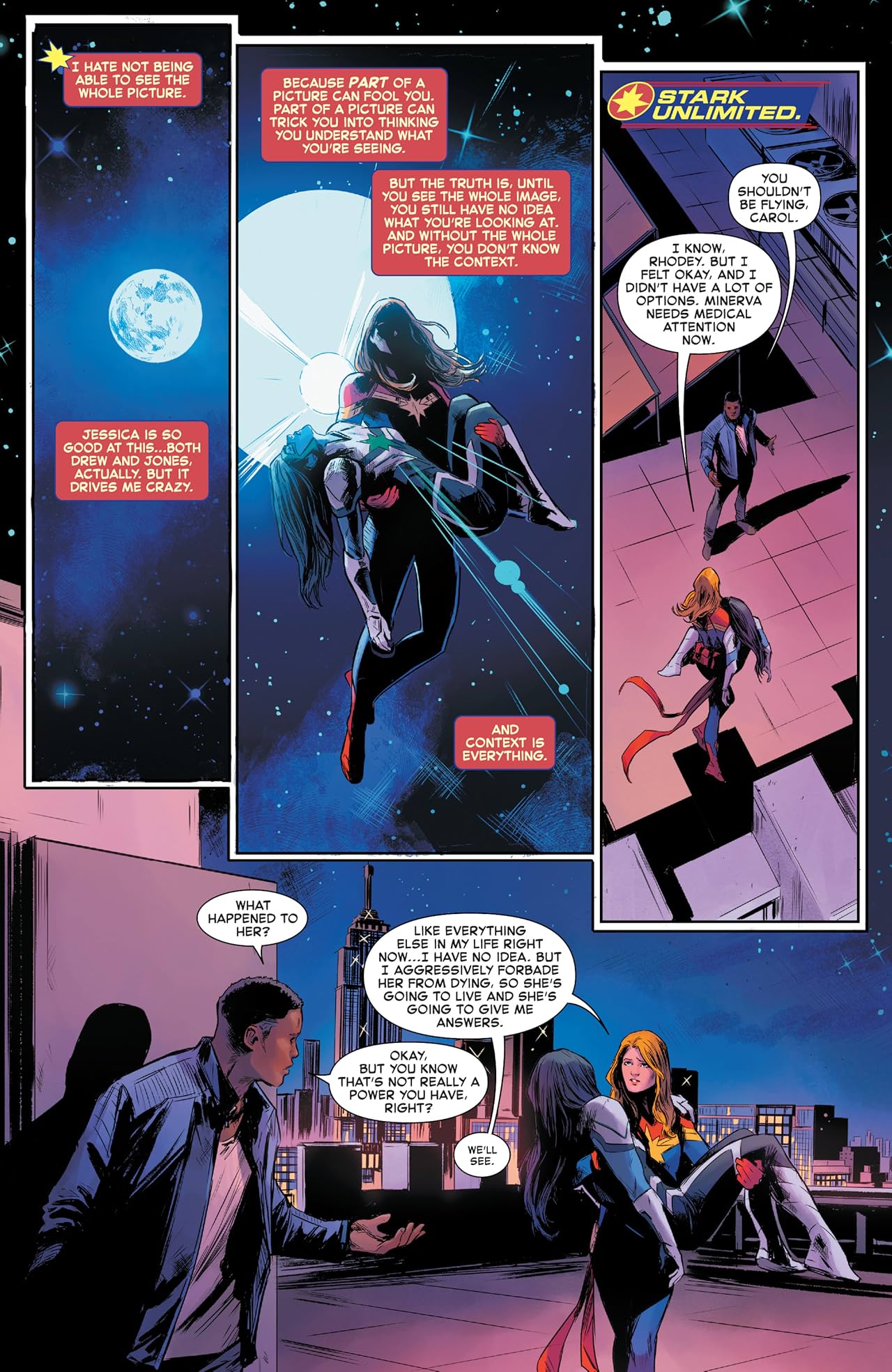
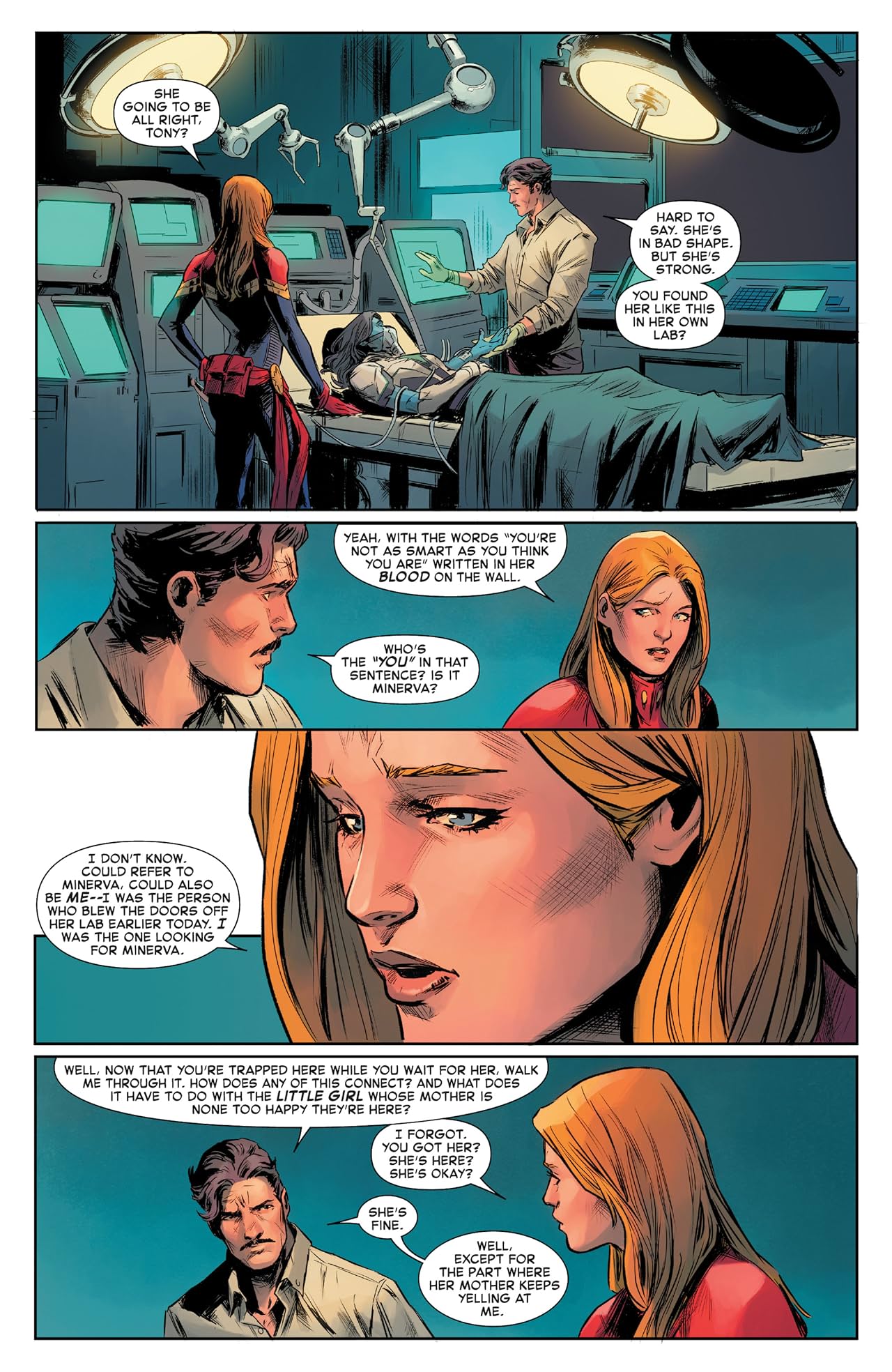
Whereas the past few issues have been full of questions, setbacks, and failures for Carol, “Captain Marvel #10” offers a fair amount of answers. Thanks to Tony Stark and an old adversary, Dr. Minn-Erva, who fans of the movie should recognize, Carol finds out why her powers have been acting up lately.

It has nothing to do with stress, mental blocks, or one too many grabs from Rogue. Someone infected her with a Kree-engineered virus and Dr. Minn-Erva doesn’t even try to make a mystery of it. She’s not exactly subtle and she gives Carol plenty of reasons to punch her senseless. On top of that, Dr. Minn-Erva is asking for Carol’s help. Let that sink in for a moment.

It’s not the charitable kind of help, either. It has been canon for a while that the Kree really screwed themselves, going all the way back to the “Black Vortex” event in 2015. They’re scattered, broken, and desperate. That gave Dr. Minn-Erva more than enough excuses to start experimenting with Kree and human DNA.

On paper, it seems like a good idea. Carol Danvers is half-Kree and she has proven on plenty of occasions that she can kick ass on an inter-stellar level. That’s exactly what the Kree needs in such desperate times.

As often happens with alien biology experiments in comics, things don’t go as planned.
Captain Marvel (2019-) #10

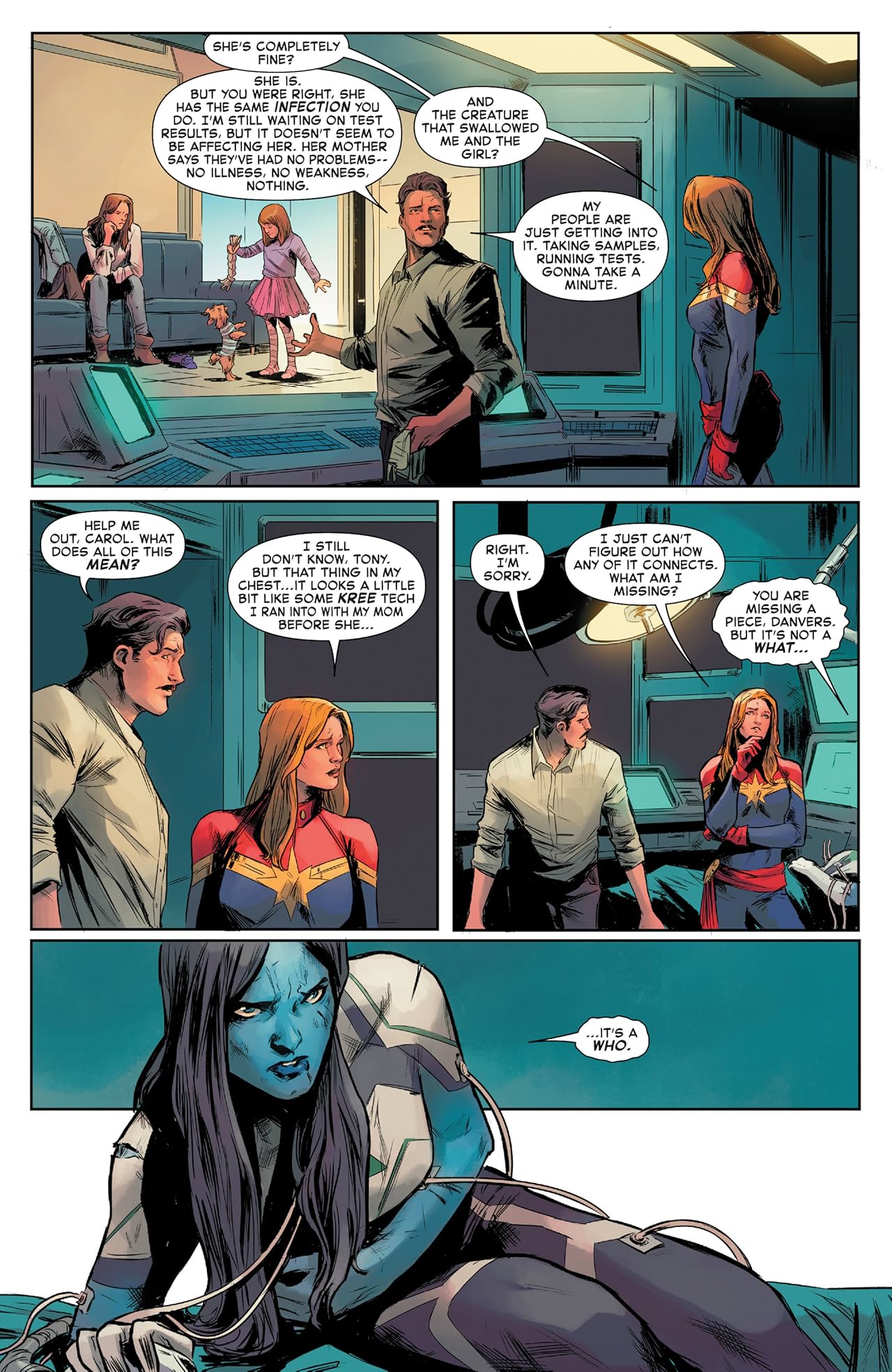
Without getting too deep into spoilers, I’ll note that Dr. Minn-Erva’s plans go beyond infecting Carol. I’ll also confirm that Star, who is revealed as Ripley Ryan, is a big part of those plans. Now, Ripley is very much a blank slate. Her first appearance was in “Captain Marvel #1” and she was just a sweet, hipster journalist looking to interview Carol.

Now, as Star, she’s a lot more than that. Between her powers and how she got them, her story is indelibly tied to Carol’s, more so than Kamala Khan’s. It’s also because of that connection that she has the potential to be Carol’s greatest ally or worst enemy. She proved in previous issues how capable she can be as an ally. In Captain Marvel #10,” she proves what she can do as an enemy.

Once the answers are laid out and the truth is revealed, the fighting starts. That’s where artist Carmen Carnero gives both Star and Captain Marvel the colorful spectacle that they deserve. It’s not just a clash between a new hero and an experienced veteran, either. There’s drama in this fight that you just can’t get from a typical rampaging monster or superhero brawl.

Captain Marvel (2019-) #10

The events of Captain Marvel #10 put Star at a unique crossroad. She can still become a hero. She can also become a dangerous new rival capable of challenging Captain Marvel, the Avengers, and anyone else who gets in her way. It’s not the least bit clear which path she’ll take, but the final pages hint that she’s willing to cross a few lines to realize her potential.

Thompson has achieved something special with both Star and Captain Marvel, which will likely make this comic a valuable collector’s item. Star isn’t the kind of superhero who got dragged into it by accident or circumstance. She chose to pursue it. She sought the kind of power and abilities that help make Carol Danvers the hero she is.
Star would not be on this path if someone like Captain Marvel hadn’t inspired her. It offers a unique perspective on the influence of superheroes. By doing what she does so well, Captain Marvel might have created her greatest rival. Like it or not, she’s a part of Star’s journey and “Captain Marvel #10” marks a critical stage of that journey.

It’s still hard to say whether Star will become the kind of character who will one day fight alongside Brie Larson in a Captain Marvel movie, but the potential is there. Since the world can never have too many charismatic female heroes, I’m certainly rooting for her.

Leave a comment

Filed under Jack's Quick Pick Comic