Tag Archives: Marvel Universe

Why Jennifer Lawrence’s Mystique Is The Best Version Of The Character

x-men-jennifer-lawrence_612x380jpg

Everybody has at least one unpopular opinion that draws ire from the vast majority of people. I’m not referring to extreme political stances, though. Those who identify as full-fledged communists, anarchists, or theocrats are more defined by an ideology than an opinion. I’ve shared plenty of opinions in the past, some of which I’m sure qualify as unpopular.

Regardless of what those opinions entail, I’ve tried to make my point and most of the time, I can find a substantial group of people who share my views. It’s part of why I enjoy doing what I do. However, there’s one particular opinion I have that might be the most unpopular position I’ve ever held.

It has nothing to do with politics or ideology. It has to do with comics and superhero movies, another popular topic I’ve discussed many times before. I’ve shared it before in other forums and in almost every case, I have a hard time finding anyone who agrees with me. Knowing how dangerous it can be to share unpopular opinions on the internet these days, I’m going to take a chance and share it here.

I believe that Jennifer Lawrence’s take on Mystique is one of the best version of the character in any medium.

I’ll give X-men fans, comic book fans, and fans of superhero movies a moment to stop fuming. Take all the time you need. Believe me, I’ve heard and read all the vile insults you want to throw at me. Before you flood the comments section with a fresh batch of frothing hate, please hear me out because I feel like there’s a point worth making here.

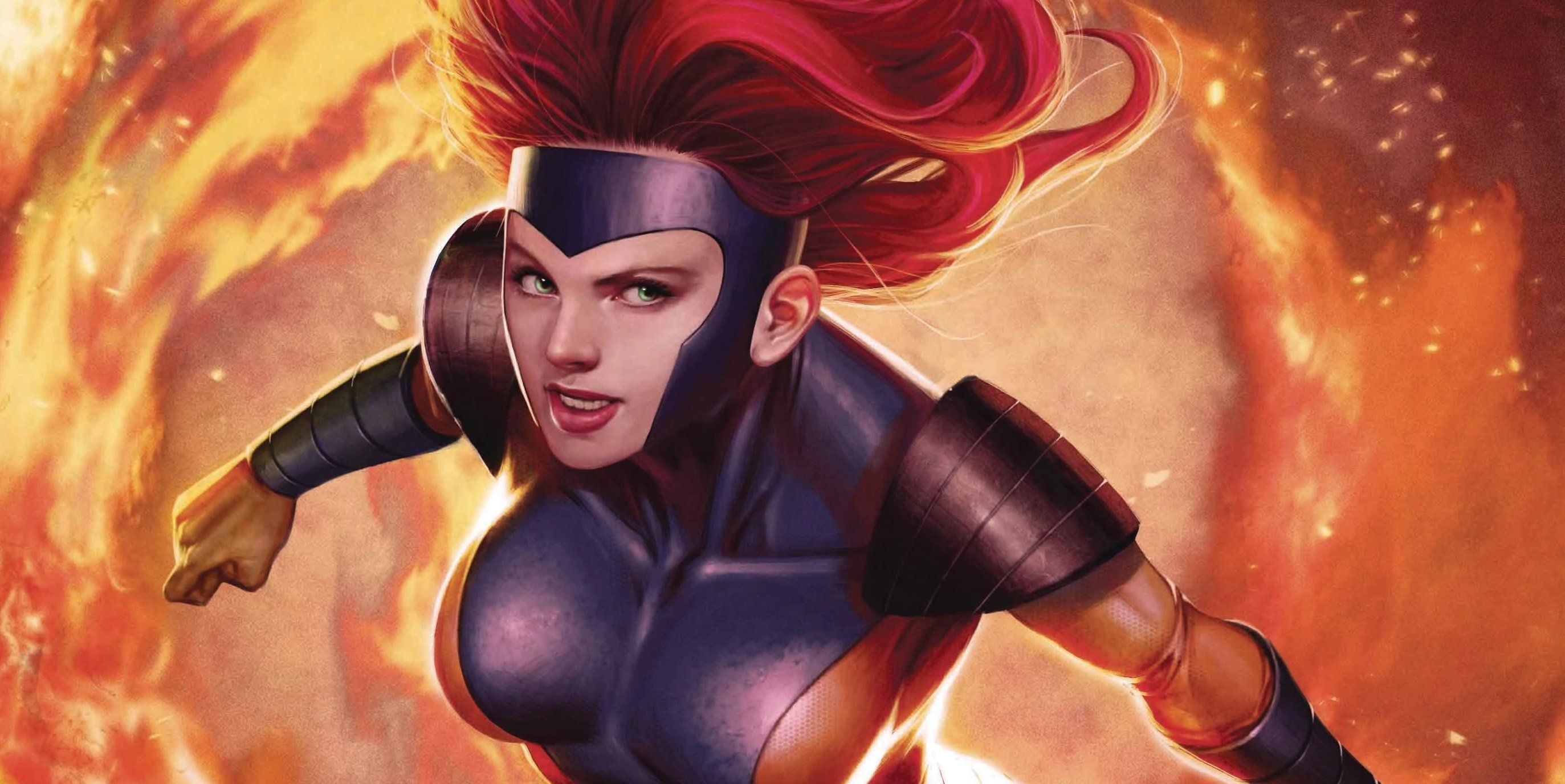
If not, please take this stunning image as a consolation prize.

Before I get into the details of the comics and movies, I freely acknowledge that Jennifer Lawrence is one of those high-profile celebrities for which many have mixed opinion. Ever since she rose to fame, she has been a polarizing figure. People either love her or hate her with very little in between.

Regardless of how you might feel about her, as an actress, there’s no denying that she played an instrumental role in revitalizing the X-Men movies, beginning with “X-Men: First Class.” As Mystique, she succeeded a very popular version in Rebecca Romijn, who set the precedent for blue-skinned shape-shifters who favored nudity. However, there was one important distinction with Ms. Lawrence’s version.

Unlike Ms. Romijn, and every other version for that matter, Ms. Lawrence’s take on Mystique included a backstory that provided unprecedented depth for the character. That story, and the depth that came with it, proved critical in the role that this Mystique would play in “X-Men: Days Of Future Past.” I would go so far as to argue that both movies work largely because of how Ms. Lawrence carried this character.

I can probably find more than a few people who agree that Ms. Lawrence’s Mystique was important in making her first two movies in the role work. Where I probably lose those people is when I go a step further and claim that this version of Mystique is superior to most other versions.

Some might call that hyperbole and maybe it is, to some extent. I still contend that there is an argument to be made and anyone familiar with Mystique’s history in the comics can appreciate it. I doubt I’ll change anyone’s mind, but it’s that very history, or lack thereof, that helped make Ms. Lawrence’s take on the character so compelling.

Mystique, like many other comic book characters, has a history that is more convoluted than most. She’s been around since 1978, but in all that time, her character has never been developed beyond a certain point. In fact, in the grand scheme of Marvel’s vast universe, it’s remarkable that she has managed as well as she has with so little backstory.

There’s no canonical information about where she was born, who her parents are, or even how old she is. She has never appeared as a child or a teenager. She’s always been an adult who goes by the name, Raven Darkholme. It’s not even clear that’s her actual name. Being a shape-shifter, it’s impossible to tell.

Beyond her unexplored history, Mystique’s personality has been pretty flat over the years. She’s a villain. That much is made clear. However, her brand of villainy is not nearly as refined as others. She’s basically a sociopath whose only purpose in life revolves around tormenting the X-Men, especially Wolverine.

How she goes about it varies, but why she does it rarely gets explored. Granted, there have been times when she has joined the X-men, but it never lasts and often ends with her betraying them. It has happened so often that it’s somewhat predictable. Even when it seems like she has undergone some major growth, she always ends up regressing back to her psychotic ways.

She still looks sexy every step of the way.

That’s not to say she has no depth. Being the biological mother of Nightcrawler and the adopted mother of Rogue has been a major source of drama over the years. Her romantic and sexual entanglements have also been colorful to say the least, albeit not always in a good way. However, this drama rarely ever adds depth to her villainy.

While Rebecca Romijn’s version had some nuance, especially in the second movie, she didn’t deviate much from her comic book counterpart. For three movies, she was one of Magneto’s top henchmen and little else. Jennifer Lawrence’s version of Mystique dared to be more than that.

The first minutes of “X-Men: First Class” did more for Mystique’s backstory than three movies and four decades of comics had done to that point. It established her as a mutant who’d run away and had nowhere to go, something that has real-life parallels for certain minorities. From there, she develops a close sibling bond with James McAvoy’s Charles Xavier, which does plenty to develop his character as well.

However, what truly makes this version of Mystique special is how she grows over the course of several movies. Like her comic version, she shifts her allegiances repeatedly. She starts off as an ally of Charles Xavier. Then, she leaves and follows Magneto. Eventually, she returns to Xavier’s side, but not without undergoing major personal upheavals.

In both “X-Men: First Class” and “X-Men: Days Of Future Past,” she finds herself at a crossroads on multiple occasions. Sometimes, she walks a more villainous path. Other times, she’s more virtuous. They’re all contingent on difficult choices and, regardless of where they take her, there’s an underlying sentiment to those choices.

In “X-Men: First Class,” she chooses Magneto because she believes Charles wants her to hide her true form. In “X-Men: Days Of Future Past,” she choose Charles because she realizes the consequences of her actions. Friends and enemies alike try to influence her. When she finally makes a choice, it feels like something a real character would make.

In the comics, you can always assume Mystique will make villainous choices and be right most of the time. With Ms. Romijn’s, you can assume she’ll choose whatever Magneto chooses and be right, as well. The choices of Ms. Lawrence’s Mystique are truly uncertain and for a character defined by her shape-shifting traits, that’s more than fitting.

It wouldn’t be accurate to call Ms. Lawrence’s Mystique a hero. In “X-Men: Apocalypse,” she resents that label. It wouldn’t be accurate to call her a villain either, even though she doesn’t always side with the X-Men. She adapts to whatever her situation requires, like anyone would expect of a skilled shape-shifter. It’s an understandable, and even admirable, take for a character in a superhero movie.

While her ultimate fate was tragic, as revealed in “Dark Phoenix,” her journey has been remarkable. Regardless of how the events of “Dark Phoenix” played out for everyone else involved, it’s still the most complete story that Mystique has ever had. That’s why I feel Jennifer Lawrence’s take on Mystique is the best we’ve seen to date.
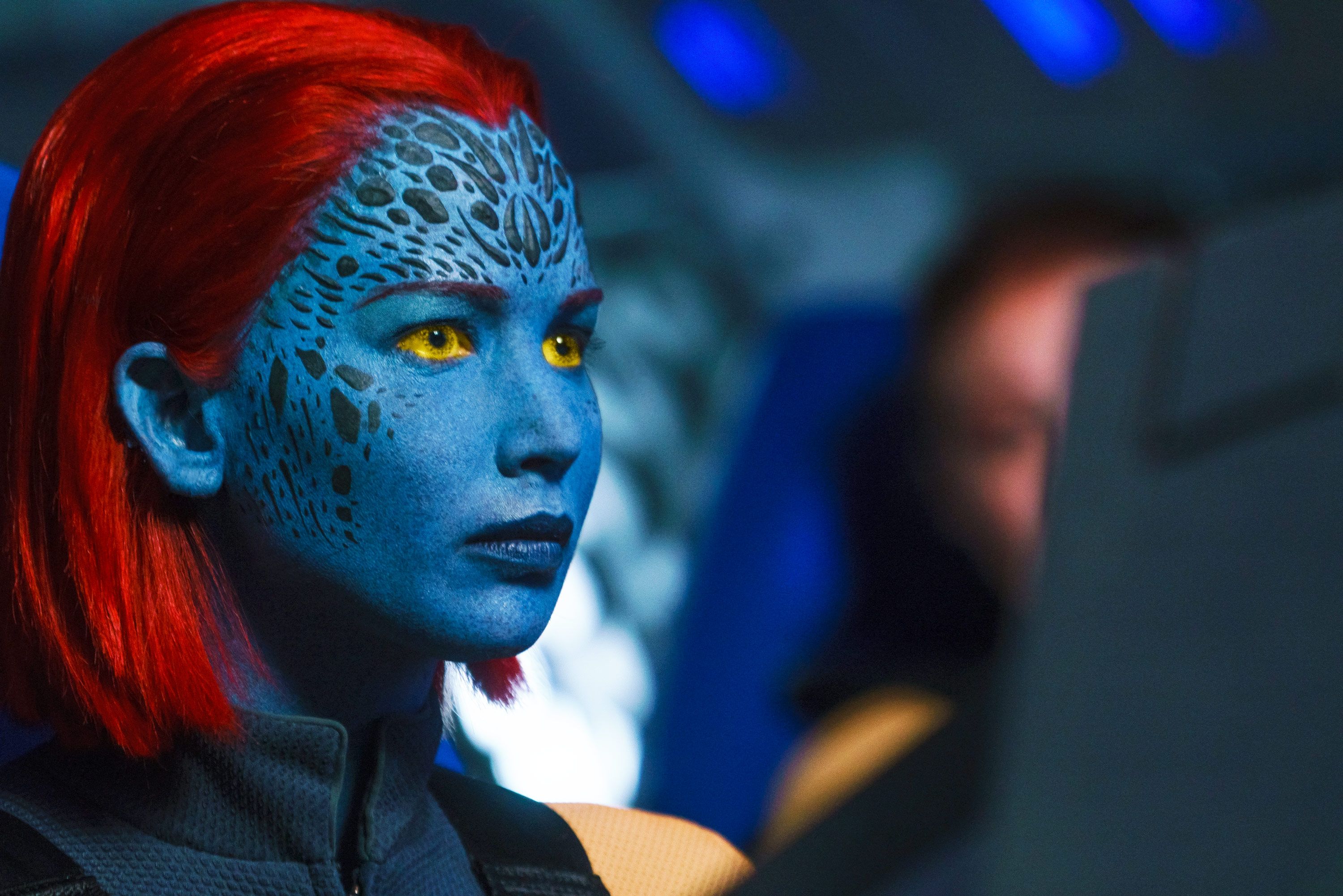
That’s not to say she’s without flaws. I don’t doubt that her diminished role in “X-Men: Apocalypse” undercut her development. Even with those flaws, she’s still more balanced than anything the comics or previous X-Men movies have given us. Whatever happens with the X-Men as they joint he MCU, I hope Ms. Lawrence’s Mystique inspires the future of the character for years to come.

To all those who disagree with me, and I’m sure there are many, I welcome your comments and thoughts. I only ask that you keep it civil.

4 Comments

Filed under Comic Books, Jack Fisher, Superheroes, Marvel, movies, superhero comics, superhero movies, X-men

Multiverses, Mutants, And The (Uncanny) Implications Of “Spider-Man: Far From Home”

download

Anyone who has read more than a few comics, seen a few movies, or consumed more than a little sci-fi knows what often happens when multiple universes enter the picture. First, the overall story becomes bigger in scope, scale, and complexity. Second, a host of major complications emerge. Third, when done poorly, it becomes next to impossible to follow.

In terms of a larger narrative, it’s a huge gamble. It’s one of those plot points that is easy to mess up, not unlike time travel, wizards, or clones. Very few franchises, be they movies, comics, or TV shows, can make that gamble pay off. If ever there was a franchise that could make it work, it’s the Marvel Cinematic Universe.

Between the record-breaking box office of “Avengers Endgame” and the adulation of countless fans, including myself, Marvel Studios is uniquely equipped to make the concept of a multiverse work within its over-arching story. To some extent, it has to. The finality of “Avengers Endgame” means it will have to find some way to grow without the iconic characters that helped make it.

The stage has already been set for a larger multiverse to emerge within the MCU. Just as fans like me are finally recovering from the emotional upheaval we experienced in “Avengers Endgame,” the second trailer for “Spider-Man: Far From Home” dropped and, beyond dropping some heavy spoilers, it revealed that the multiverse is officially a thing in this world.

There are a lot of implications for this, many of which go beyond Spider-Man’s story in the MCU. As the trailer reveals, the universe-altering events of “Avengers Endgame” opened a literal and proverbial door to new conflicts within the MCU. These conflicts offer many opportunities for some of Marvel’s many cosmic characters, but I believe the biggest opportunity is for the X-Men.

I say that not just as a huge X-Men fan who has already written extensively about their potential in the MCU. I believe that Marvel Studios could reinvent the X-Men and the entire concept of mutants in a way that’s fresh, engaging, and very relevant to events unfolding in the real world.

Marvel and their Disney overlords have already reported that the X-Men will be rebooted into the MCU in the coming years under the skilled hand of Kevin Feige. However, the method and details of that plan have yet to emerge and chances are, it’ll be several years before we see that full-on reboot that X-Men fans have been pining for since Hugh Jackman hung up his claws.

Imagining Wolverine without Hugh Jackman.

Even for Marvel Studios, it’s going to be a challenge. How do you introduce mutants, an entire race of super-powered beings, into a world in which they’ve never been mentioned? In fact, thanks to conflicts over movie rights, nobody in the MCU could even utter the word “mutant” without incurring the wrath of Fox’s lawyers.

That’s a problem because in over 10 years of movies, TV shows, and tie-ins, the Marvel Cinematic Universe has become populated with many super-powered beings that include gods, super soldiers, and teenagers armed with spider powers. On top of that, they already have a race of genetically modified people called the Inhumans, who basically acted as a stand-in for mutants at one point.

This complicates the whole premise of the X-Men. A big part of their story and their appeal is the parallels between mutants and real-world minorities. The X-Men emerged during the time of the Civil Rights Movement in the United States and have since come to represent oppressed minorities from many eras, from racial minorities to the LGBTQ community.

That’s a tougher parallel to establish in the MCU because how can mutants be hated and feared in a world where Asgardians, super soldiers, and talking raccoons exist? Granted, mutants have a unique aura of unpredictability in that anyone could potentially be a mutant. Unlike the Inhumans, there’s no catalyst or radioactive spider necessary to activate their powers. They need only survive to puberty.

It’s still a stretch because the hate and fear of the 1960s is very different from that of the early 2000s century. It’s one thing to just be afraid and hateful of mutants. It’s quite another to craft killer robots to hunt them while ignoring entire populations of similar super-beings.

This is where the multiverse could enter the equation. With the proper sci-fi machinations, it could both bring the X-Men into the MCU while framing mutants in a context that makes them very relevant to contemporary issues. The key is linking the struggle with mutants with that of refugees.

Whereas discussions over minority issues have become somewhat predictable in recent years, debates about refugees have been much more heated. It has triggered protests, empowered populist uprisings, and caused a rise in xenophobia that far exceeds the old-school racism of the mid-20th century. These are the kinds of heated politics in which the X-Men thrive.

The “Spider-Man: Far From Home” trailer establishes that something happened in the battle against Thanos that opened the door to the multiverse. It’s easy to envision a scenario in which a population from a more hostile universe seeks refuge in one that is already used to super-powered beings.

It’s not difficult to imagine things getting that bad for the X-Men or mutants. Both “X-Men: Days of Future Past” and “The Gifted” explored a world where mutants where hunted, imprisoned, and outright murdered. The comics also have a lengthy history of dystopian futures in which the X-Men could not stop humanity from hating and fearing their kind.

Then, just as things look hopeless, a doorway to another universe unexpectedly opens. Mutants suddenly have a chance to escape their rapidly-decaying world and start anew. It’s an opportunity many desperate and traumatized refugees seek in the real world. Their stories are full of horror and atrocity. It’s a story that resonates beyond the superhero genre.

In addition to providing a mechanism for entering the MCU, it also solves another critical issue with respect to narrative. It gives the X-Men a new type of story that hasn’t been told before in the movies. For the past 19 years, almost every X-Men movie has followed a similar formula.

Mutants are hated and feared.

The X-Men try to combat that fear.

Someone, often Magneto, tries to provoke a war between humans and mutants.

The X-Men stop that war from occurring.

It’s a story that has played out many times. Sometimes, it has been great. Other times, it has been god-awful. Just telling that same story again in the MCU won’t be enough. By making mutants refugees, the entire dynamics change in a way that could cause all sorts of upheavals that could impact many other MCU franchises.

One possibility.

Like real-life refugees, they come to a new world out of desperation, escaping horrors that they had no part in creating. The world they enter is inherently suspicious of them. They see them as strange, dangerous outsiders who could bring their problems to their homes. These are real concerns from people other than the reactionary radicals who often preach hate.

It’s one of those issues that has no good resolution. These people are victims of a war that they want to escape. They flee to wherever they feel they’ll be safe. Often, their options are limited and when an opportunity comes along, they have to pursue or die. If the events of “Avengers Endgame” somehow create such an opportunity, then why wouldn’t someone take a chance?

It would put mutants and the X-Men at odds with everyone in the MCU, from the Avengers to SHIELD to the average person still recovering from invading aliens in New York. It would also establish a clear divide that could one day manifest in a full-blown “Avengers Vs. X-Men” movie, which has already been teased.

All that being said, the powers that be at Marvel Studios may opt for an entirely different approach. In that case, everything I just described may be a moot point. This is just one approach that I found myself contemplating after seeing the “Spider-Man: Far From Home.” It’ll probably be a while before we know the full implications, both for the multiverse and for mutants in the MCU.

1 Comment

Filed under Deadpool, Marvel, movies, Spider-Man, superhero comics, superhero movies, X-men

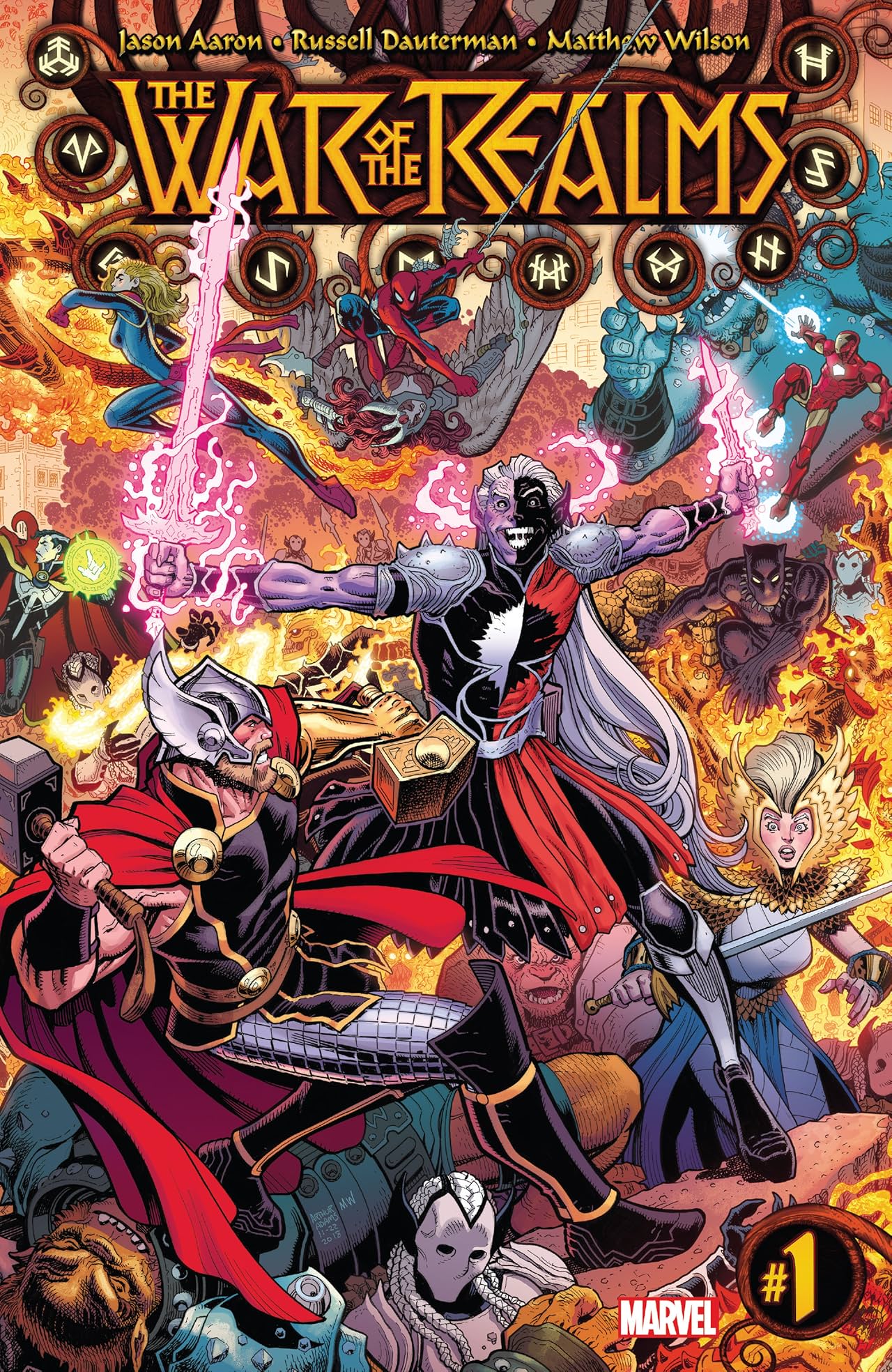
Jack Fisher’s Weekly Quick Pick Comic: War Of The Realms #1

Every week, the world is in desperate need of something to make it just a little more fun. As such, every Wednesday brings us a fresh batch of comics that achieves just that and then some. With the anticipation of “Avengers Endgame” at unprecedented levels, we all need something to tide us over until we cram into theaters and send piles of money to our Disney overlords.

Thankfully, a comic like “War of the Realms #1” does plenty to scratch that superhero itch and it doesn’t require anyone to deal with crashing websites. While the big gathering in the Marvel Cinematic Universe is taking shape, these kinds of gatherings seem to occur every other Tuesday in the comics. Some are more awesome than others and the one that unfolds in “War of the Realms #1” definitely qualifies.

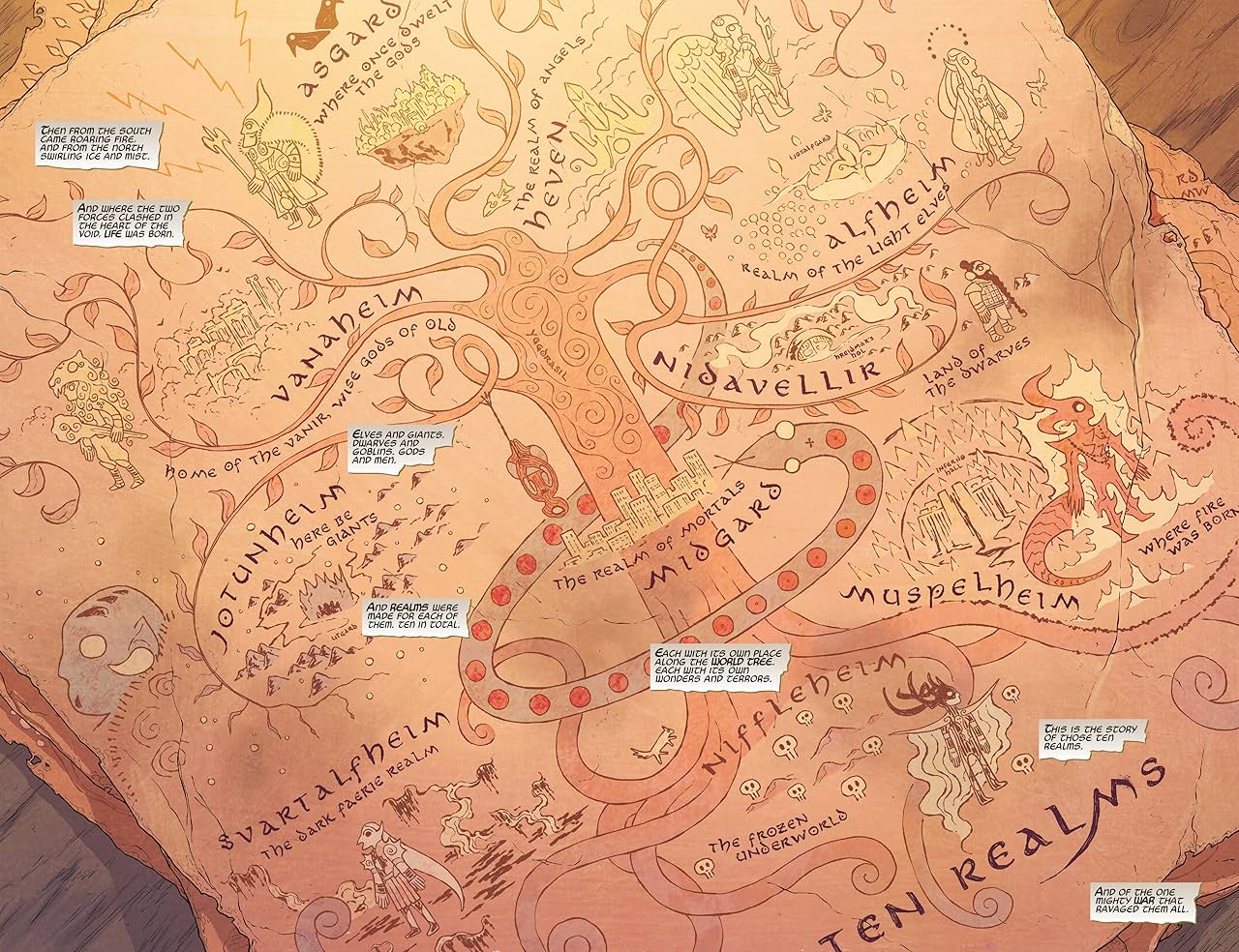
You don’t have to have followed to recent comics to appreciate it, although it certainly helps. The world of Marvel comics is always in flux with respect to the threats the heroes face and the situations in which they find themselves. “War of the Realms #1” is a confluence of compounding factors that started in Thor’s world of gods and mythical monsters. Now, it has erupted to a level that even comic book gods can appreciate.

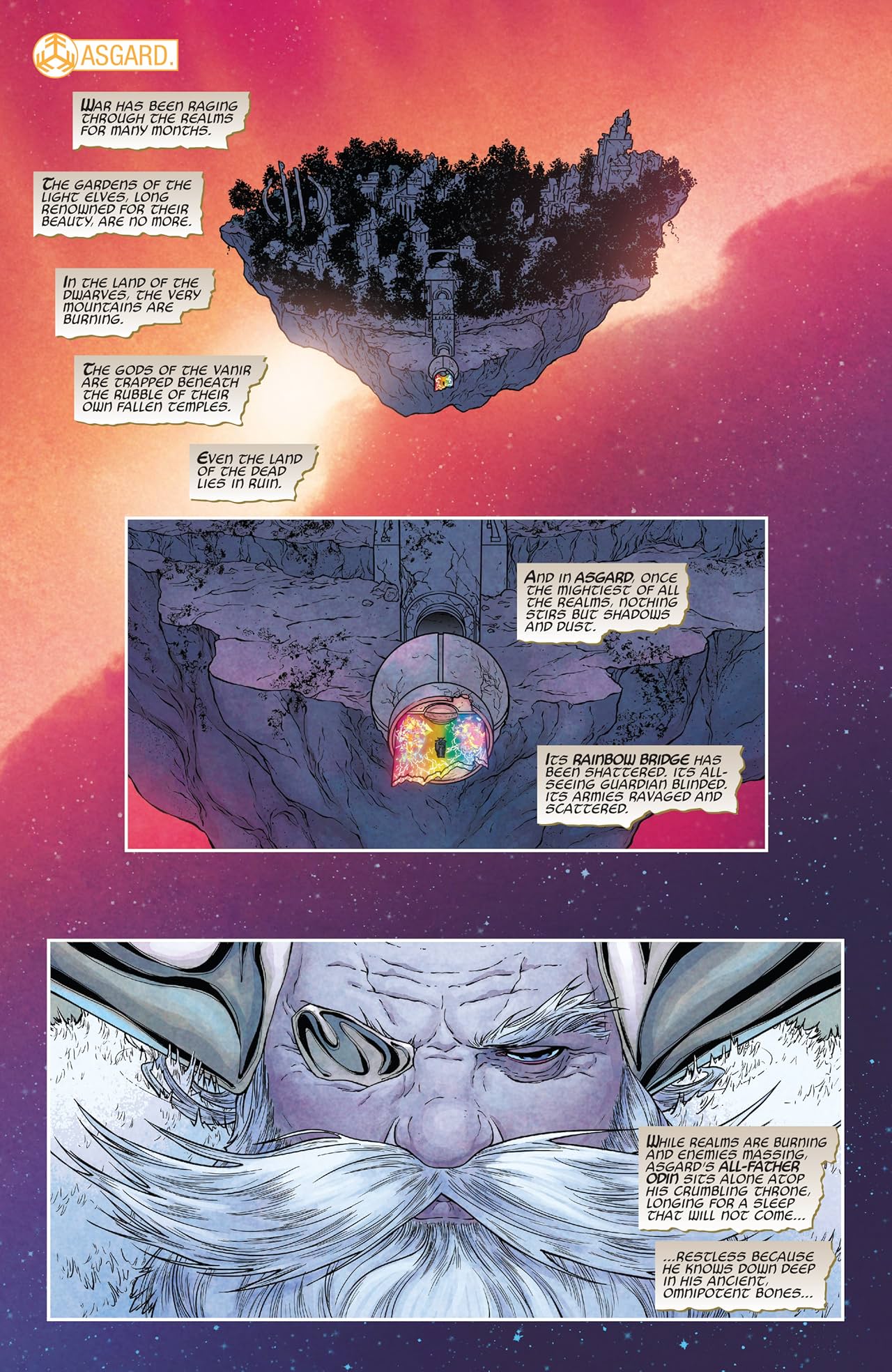
If you thought Asgard was in a rough place after “Thor Ragnarok,” then you’ll be unpleasantly shocked at how much worse it can get in the comics. However, it’s not solely because of giant fiery monsters set to 70s rock music. It’s largely because Odin, in stark contrast to the charm exuded by Anthony Hopkins, is a divine prick in the comics.

It’s because of him that Asgard is in ruins, much of his fellow gods have abandoned him, and the realms are ripe for invasion. Despite being the All-Father of gods, he’s powerless to stop it and the heroes of Earth/Midgard are the ones who have to fight it. Prick or not, it still makes for a hell of a spectacle that brings out the best in Russell Dauterman’s artwork.

The mystical machinations of the war aren’t overly complex, nor do they need to be. Asgard isn’t a shining bastion of order and stability anymore. That means Frost Giants, Dark Elves, and Trolls are free to organize and invade other realms. Leading the pack is Malekith the Accursed and if you thought he was a push-over in “Thor: The Dark World,” this comic should help shatter that notion.

Far from being the bland throw-away villain in the movie, Malekith is a forced to be reckoned with in “War of the Realms #1.” He has united gods, monsters, and entire races into one massive army right out of J. R. R. Tolkein’s worst nightmare. Now, he leads them into a full-scale invasion of Midgard and the battle that ensues is as epic as anyone could hope for.

It’s not just Avengers who rush to the front lines. We see the likes of Spider-Man, Wolverine, Daredevil, and the Punisher join the chaos. This is not just a battle for the Avengers. This is something that will bring in players from all ends of the Marvel Universe.

Even with the recent Disney/Fox merger closing, this isn’t something we’re going to see in the Marvel Cinematic Universe anytime soon. “War of the Realms #1” offers a taste of just how much bigger the world of Marvel can be when all its iconic characters occupy the same world. Even for those who can barely contain their excitement over “Avengers Endgame,” this comic should give those same fans plenty of possibilities to contemplate.

The underlying plot to “War of the Realms #1” may be basic, but Jason Aaron, who has been the architect of both Thor and the Avengers for years, finds plenty of ways to bring depth to such a colorful clash. He even finds a way to squeeze in a joke about colonoscopies and kidney stones. I promise I’m not making that up.

Much like the movies, there bits of humor that keep things from getting too dire. However, “War of the Realms #1” never feels like a joke or an excuse to see Thor beat up frost giants. Jason Aaron has shown, throughout his run, that he can incorporate layers into mystical, hammer-wielding spectacles. Those layers are definitely there and poised to affect the battle.

How that battle plays out is just starting to unfold. Even though this comic is padded with extra pages to go along with the inflated price, it’s very much a prelude to a much larger conflict. That conflict already has Spider-Man making dirty jokes and Loki getting eaten by a frost giant. If you can’t find entertainment in that, then you’re just being difficult.

Beyond the entertainment value, “War of the Realms #1” offers the kind of high-stakes superhero crossover story that movie fans have only recently come to appreciate while comic fans have been enjoying it for years. While Malekith the Accursed will never be on the same level as Josh Brolin’s Thanos, there’s something to be said about a character who can wage a cosmic war on the entire Marvel Universe.

Whatever your feelings about Malekith, Odin, or Spider-Man’s brand toilet humor, “War of the Realms #1” has plenty to enjoy while also setting up a much larger conflict. It’s a story that gives the superheroes we love a chance to unite, kick ass, and break stuff. It’s stories like that which remind comic fans why New Comic Book Day is truly the best day of the week.

Leave a comment

Filed under Jack's Quick Pick Comic

Marveling At The Second “Captain Marvel” Trailer

The second “Captain Marvel” trailer has dropped. There’s a lot I’d love to talk about. For now, though, let’s just take a moment to marvel at what awaits us in March 2019.

1 Comment

Filed under Comic Books, Jack Fisher, Superheroes, movies, superhero comics, superhero movies

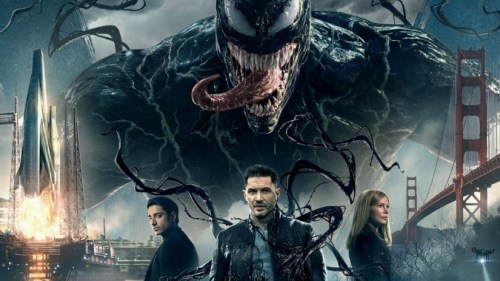
A (Partial) Symbiosis Of Awesome: My “Venom” Review

venom_movie_post_credits_explained

Certain movies are subject to unique standards. Nowhere is this more apparent than with superhero movies. A sci-fi movie can be flexible with its use of sci-fi elements. The same can be said for generic genres like romantic comedies, horror, action, and even stoner movies. A superhero movie, whether fairly or unfairly, will be judged by much stricter criteria.

This is the problem “Venom” faced before it even started shooting. Most fans, especially those who follow Marvel Comics, were probably intrigued by the possibility of a movie about Venom. Casting Tom Hardy in the lead role definitely help. No offense to Topher Grace, but he’s far more qualified to play Eddie Brock than he’ll ever be.

Even so, “Venom” had a lot of logistical problems from the beginning. It wasn’t going to feature Spider-Man. It wasn’t going to take place in the Marvel Cinematic Universe. It wasn’t even going to get input from Kevin Feige and everyone else at Marvel Studios, who have made creating billion-dollar movies seem inane. By some standards, that’s a serious handicap.

Most Marvel fans, and I consider myself one of them, aren’t too keen on the idea of a Venom movie that doesn’t involve Spider-Man or have any connection to the MCU. Even if you have a passing familiarity with Venom in the comics, you probably know that a lot of his story is connected with Spider-Man. Telling a Venom movie without Spider-Man is like telling a Joker movie without Batman.

Actually, that may be a bad example. Forget I said that.

Logistical issues aside, I was still intrigued enough to give “Venom” a try. Like many other Marvel fans, I was not pleased with how his story was handled in “Spider-Man 3.” The only good that came out of that was a slew of dancing Toby Maguire memes. I felt Venom deserved better.

Well, without getting too deep into spoiler territory, I can affirm that “Venom” definitely succeeded where “Spider-Man 3” failed. It’s not just a good movie about Venom. It’s a good movie, overall. It had a lot of things working against it, but it still worked.

I know that the movie didn’t exactly thrill critics, nor did it blow the minds of hardcore fans who saw it. At the same time, it wasn’t messy or cumbersome like the theatrical cut of “Batman v. Superman: Dawn of Justice.” Yes, this movie probably would’ve benefited by taking the “Deadpool” approach and gone for an R-rating. However, it still succeeds in many ways.

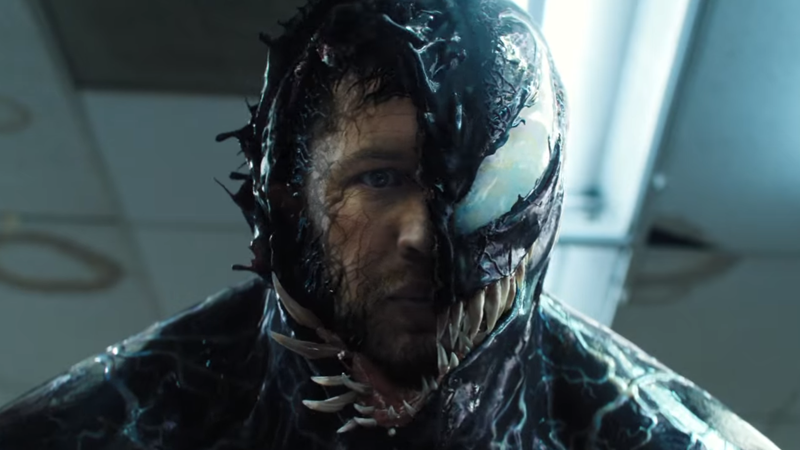
At its core, “Venom” works because it’s less about alien symbiotes infecting random people and more about Eddie Brock. This is his story and Tom Hardy does an excellent job capturing his persona. You don’t have to read a single comic to understand that Eddie Brock is not Peter Parker. He’s not exactly a hero, but he’s not a blood-thirsty villain, either.

Although that’s not necessarily obvious.

Eddie Brock is one of those guys who’s a loser and not just because he ends up bonding with a parasitic alien. One of the best things this movie did was show that Eddie’s life falls apart because of a decision that he makes. He’s not a victim of bad luck. In the beginning, his life is actually really good. However, he makes a fateful choice that completely changes that.

At the same time, the movie establishes that Eddie is not the kind of guy who jumps at the chance to be a hero. He has a few opportunities before he bonds with the Venom symbiote. He doesn’t take it and unlike Peter Parker, it’s not purely out of responsibility. He’s just not the kind of guy who embodies the selfless spirit of Superman or Captain America.

Then, when he encounters the symbiote, these personality flaws intensify. At first, he’s just overwhelmed. He reacts in a way most people would. His first instinct isn’t to help people or be a hero. He’s actually petty and self-serving for the most part. As the story unfolds, he and the symbiote literally and figuratively feed off one another. They both grow and evolve, as characters.

That process involves plenty of action, some of which is pretty visceral. If you’re looking for the kind of cartoonish beat-downs we got in “Spider-Man: Homecoming,” you’re going to be disappointed. The action here is quite violent. It’s not on the same gratuitous level as “Deadpool,” but it’s close and it even holds back at times.

Given Venom’s brutal nature in the comics, this can be a bit of a problem. In watching this movie, you get the sense that the effects team worked overtime to keep the violence just below PG-13 levels. At times, it feels forced and that impacts the story to some extent.

This moment could’ve been MUCH bloodier.

That’s not the only issue, nor is it the biggest. While I believe the story works, I also can’t deny that it’s missing some key components. Those not familiar Spider-Man’s history surrounding Venom probably won’t notice, but it’s hard for me to be a Marvel fan and overlook some of these flaws.

The story of how Venom and Eddie Brock come together is solid, concise, and compelling, as it’s presented in this movie. However, it still feels like it’s missing a lot of emotional depth without Spider-Man. A big reason why Venom, and Eddie by extension, becomes so menacing is because of Spider-Man’s role in his story. Removing him from that story is glaring, to say the least.

To fill in those gaps, the movie creates a new source of conflict through the Life Foundation, which acts as the primary antagonist through its unscrupulous Mark Zuckerberg wannabe, Carlton Drake. That’s not to say Drake isn’t a decent villain, but he’s not even in the same hemisphere as Erik Killmonger or Thanos.

Pictured here is NOT Thanos.

Even by non-superhero standards, these villains are pretty bland. It’s basically Venom versus and evil corporation who ends up serving an alien agenda. There’s nothing memorable or iconic about them, but that’s okay in the context of this movie because they still fulfill their primary purpose. They create the necessary moments that move Eddie’s story forward.

On top of that, the lack of connections with the MCU make this movie feel small by comparison, especially in a year when “Black Panther” and “Avengers: Infinity War” broke box office records. “Venom” has everything it needs to connect with the MCU. There’s nothing in the story that precludes it from having a role, but Sony has gone on record as saying that this movie is completely detached from that world.

The shared reaction of many Marvel fans.

As much as I’d love to see Tom Hardy and Tom Holland battle in a future movie, the lack of MCU connections still don’t take away from everything this movie does well. Overall, “Venom” is good movie that had a lot of factors working against it. This movie faced an uphill battle from the beginning, but still managed to achieve a lot. If I had to score it, I’d give it a 7 out of 10.

I’ve heard some claim that this movie belongs in the early 2000s and just doesn’t work within the current market of superhero movies. I say that’s bullshit. Good movies work, regardless of the year or era they come out. “Venom” is a good movie, but it’s also one that could’ve been much greater.

Coming out of the theater, I was satisfied, but felt as though there was a lot of potential left on the cutting room floor. It’s hard to know whether this movie would function better with an R-rating or as part of the MCU, but it manages to do plenty within its many constraints. Tom Hardy was handicapped in bringing Eddie Brock and Venom to life, but he still pulled it off.

Again, with all apologies to Topher Grace, Tom Hardy is now the definitive face of Venom and this movie sets him up for a promising future.

Leave a comment

Filed under Comic Books, Jack Fisher, Superheroes, Movie Reviews, superhero comics, superhero movies

Gabby Kinney: A Case-Study In Cuteness

Gabby.jp

What makes a character cute?

That’s a not an empty question. It’s one that movie studios, TV networks, toy makers, and novelists attempt to answer every day. I’m not just talking about the ones affiliated with Disney, either. While the House of Mouse is legendary for crafting a winning formula for the creation of all things cute and lovable, it’s worth breaking down the components.

Understanding them isn’t just important for creating likable characters. It can be pretty damn lucrative too. Just look at the merchandise sales for “Frozen.” Cute, adorable characters sell. They sell a lot. Plenty has been written about the cuteness of characters created by Disney, Fox, and a multitude of Japanese anime. However, I’d like to single out one particularly adorable character.

As it just so happens, this character is from the world of superhero comics. Specifically, she’s from the X-men comics. If you’ve followed this website for any length of time, this shouldn’t surprise you in the slightest. I promise this isn’t just another love letter to the X-men like the many I’ve crafted before. This is an exploration of a character who forged a unique path to cuteness.

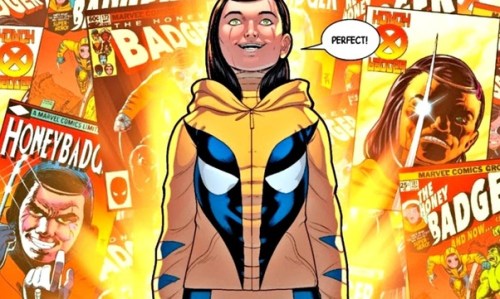
Her name is Gabrielle “Gabby” Kinney, also known as Honey Badger. You probably haven’t heard of her because, in the context of Marvel’s vast history, she’s very new. She has only been around for about three years. In that time, though, she’s done plenty to make her mark on the world.

Think of the cutest characters you’ve ever known. Whether it’s a talking animal, a princess, or a boy band, take a moment to contemplate all the traits that make them cute. From their looks, their personality, their story, and everything in between, think about qualities that make them so adorable.

Without hesitation, I can say Gabby has all those qualities, as well as a few you didn’t know could be so adorable in the first place.

That may sound like a bold claim, but it’s true. After reading every issue of All-New Wolverine, I genuinely believe that she has raised the bar for cuteness for any character, both within superhero comics and in the real world. To appreciate why her story is so remarkable, it’s necessary to know some key details about her backstory.

This should give you a few telling hints.

On paper, she doesn’t come off as the kind of character who can be overly cute. She’s a clone of Laura “X-23” Kinney, who herself is a partial clone of Wolverine. Given the number of clone-based character in comics, including a few who are notably infamous, she doesn’t have a lot going for her at first.

That changes quickly after she’s introduced. She’s actually one of three clones from Laura, but she ends up being the one who makes the greatest impression and not just because she doesn’t go evil, which tends to happen a lot with clones in comics.

From the beginning, Gabby sets herself apart as being the more upbeat, bubbly clone of the bunch. She’s not overly angry or vindictive. She isn’t even that bothered by the fact that she’s a clone. It helps that she’s just a kid, but it also helps that this has never been hidden from her. She knows what she is and doesn’t whine about it. That, alone, makes her more mature than the majority of adult heroes, even the non-clone ones.

She even has a sense of humor about it. She doesn’t take herself too seriously. She doesn’t get too uptight in tense situations, either. That even includes dangerous situations that involve dragons, zombie animals, and alien parasitic bugs. Gabby sees the world through a rose-colored lens, regardless of how ugly it is, and this is the key to what makes her so adorable.

Whether she’s helping Laura battle Sentinels or caring for a pet wolverine, Gabby always finds a reason to smile. She’ll always look for the lighter side of a complicated situation and help others see it. That sort of thing is becoming increasingly precious in today’s overly-cynical world, but it’s especially powerful in the world of superhero comics.

The very premise of any world involving superheroes requires that the world contain the kinds of chaos that can’t be contained with extra police and stiffer fines. In Gabby’s case, she inhabits a world full of evil organizations like Hydra, shape-shifting aliens like the Skrulls, and actual devil-like creatures that go out of their way to ruin marriages between iconic characters.

The fact that Gabby can lighten the mood under those circumstances helps amplify her lovability. Make no mistake. She is disturbingly lovable. I say that as someone who was extremely sick of clone character at the time All-New Wolverine debuted in June 2015. However, the writer of All-New Wolverine, Tom Taylor, went the extra mile with Gabby.

It’s not just in the light-hearted jokes that she makes. It’s not just the fact that she’s a cute kid full of youthful innocence, despite having been cloned in a lab by assholes who wanted to make her a living weapon. Any character can just say goofy things and ignore the horrible crap going on around them. Where Gabby really shines is how she affects those around her.

From the moment she meets Laura to her first hilarious team-up with Deadpool, Gabby has a positive influence on pretty much everyone she meets. She doesn’t get scared or overwhelmed by any given situation, even those involving parasitic aliens. She never lets these situations destroy her child-like innocence.

That, in and of itself, sets her apart in a major way. In so many other stories involving cute characters, their innocence is treated like fine china. It’s easy to crack, easy to taint, and irreparable when damaged. More often than not, a big part of a plot surrounding cute characters is how they become corrupted.

Tom Taylor basically turns that narrative upside down. Rather than build the story around how Gabby loses her innocence, he essentially surrounds her innocence in an adamantium shell that’s every bit as unbreakable as Wolverine’s claws.

This is critical to what makes Gabby uniquely cute, but it’s also important to the presence she brings to the X-men comics and the larger Marvel universe. Instead of having everyone try to protect her innocence, she basically has to shove her cuteness in their face and remind them that she doesn’t need protecting. In fact, they need her more than she needs them.

She gives them a reason to laugh and smile after Hydra has taken over the United States. She gives them a reason to feel good after the Red Skull comes back to life yet again to bring old-fashioned fascism to the world. She goes out of her way to be a positive presence on everyone she encounters. However, it’s her impact on Laura where her cuteness becomes genuinely endearing.

To appreciate why that matters, it’s worth recalling just how dark and brutal Laura’s story has been thus far. That story has closely followed that of her predecessor, Logan. She was born in a lab, subject to dehumanizing treatment, and turned into a living weapon. Unlike Gabby, she didn’t escape it until she’d committed soul-scarring atrocities, one of which included the death of her mother.

Since her introduction in the memorable, yet underrated “X-men Evolution” cartoon of the early 2000s, Laura has personified a worst-case-scenario for a cloned character. Her life, her story, and her personality are driven by loss, anger, and sorrow. Then, Gabby comes along and suddenly, there’s a light in her life.

Gabby is like a breath of fresh air to someone who has only been breathing smog for all their life. She’s like a hot shower after spending 4 hours shoveling snow in a blizzard. She provides an overdue balance to long-suffering characters like Laura that it’s more than just refreshing. It’s cathartic.

Gabby helps give Laura and her story something that benefits them both. She creates an outlet from the endless string of tragedies that plague the Marvel universe and the real world. She dares Laura and those following her story to not let all that ugliness destroy all that is good and pure. A cloud of darkness doesn’t have to cover the entire sky. There’s always room for a ray of light.

Gabby is that ray of light. Cute, adorable characters tend to shine brighter than most. That’s what gives them such a powerful presence. Whether it’s in a Disney movie or a superhero comic, they illuminate the darkness and make the characters around them do more than just lament. The fact that Gabby does all of this and cares for a pet Wolverine makes her a special kind of cute.

3 Comments

Filed under Deadpool, human nature, media issues, superhero comics, superhero movies, video games, X-men

A Quick Note About The “Captain Marvel” Trailer

It’s a simple note. Can we all just take a moment to admire how awesome the Captain Marvel trailer is? That is all.

Leave a comment

September 18, 2018 · 8:37 pm

The following is my review for “The Life of Captain Marvel #1” that I wrote for PopMatters. Enjoy!

‘The Life of Captain Marvel #1​’ Comic Preps Fans for the Upcoming ‘Captain Marvel’ Film

Leave a comment

July 19, 2018 · 4:39 pm

How Captain Marvel Can Be The Future Of The MCU (And How It Can Go Horribly Wrong)

558759l

When a team is on an epic winning streak, it creates the perception that they have some supernatural ability to defy the law of averages and bend reality to their will. It happened to the 2007 New England Patriots. It happened to the 2016 Golden State Warriors. They had this aura of invincibility that made it seem as though they could never lose.

That made their eventual loss, both in championship games no less, that much more painful. However, I would argue that the winning aura of those teams pales in comparison to that of the Marvel Cinematic Universe. If the MCU were a sports team, it would include the likes of Michael Jordan, Tom Brady, LeBron James, Wayne Gretzky, Tiger Woods, and Muhammad Ali in their primes and on crack.

To say that Marvel’s movie franchises are on a winning streak would be like saying a hungry lion has a slight edge over a wounded squirrel. The Marvel Cinematic Universe hasn’t just made superhero movies the gold standard of the box office by raking in $16.8 billion worldwide to date. It has set the bar so high that even close rivals have essentially given up.

Disney, Marvel Studios, and Kevin Feige are riding higher than anyone thought possible, especially for those who still have nightmares about “Batman and Robin.” With both “Black Panther” and “Avengers: Infinity War” breaking a fresh round of records this year, it seems as though that winning streak is only accelerating.

I say all this not just to belabor how much the MCU has accomplished over the past ten years. I say it as a fan who loves Marvel comics and wants to see it keep winning. However, even with “Avengers 4” set to come out next year and make another couple billion, I believe this streak of superhero movie excellence is vulnerable.

It’s no secret that “Avengers 4” will likely mark the end of an era. Kevin Feige has gone on record as saying that this movie will act as an endgame, of sorts. While makes clear that the MCU will continue, with movies planned out until 2025, he also indicates that there will be major upheavals.

That’s somewhat necessary because with the conclusion of “Avengers 4,” many of the contracts for MCU stalwarts like Robert Downy Jr., Chris Evans, and Chris Hemsworth are set to expire. While it’s possible that some may find a way to keep going, others like Chris Evans have made clear that their time in the MCU is almost over.

That means for the MCU to continue its winning streak, it needs to move forward with new characters, new actors, and new ideas. It has to find a way to keep this world moving forward, potentially without the likes of Captain America, Iron Man, and Thor. That’s a huge challenge, even for a franchise on an unprecedented winning streak, and the comics have already failed to fill those voids.

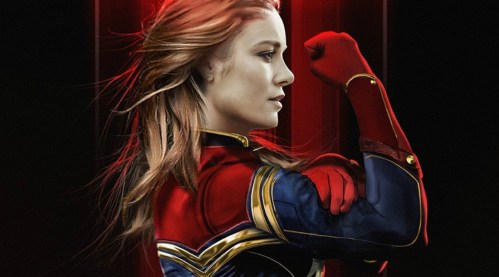
That’s where Carol “Captain Marvel” Danvers comes in. If you saw the post-credits scene for “Avengers: Infinity War,” you know why she’s about to become very relevant to the MCU. I’ve talked about her before and established how things could easily go wrong with her upcoming movie. I imagine I’ll have a lot more to talk about in the coming months.

I don’t think it’s unreasonable to say that Carol Danvers and her upcoming movie, which is slated for release in March 2018, is the most important movie in the history of the genre. I believe this movie may very well determine whether the winning streak of the Marvel Cinematic Universe continues or finally falters.

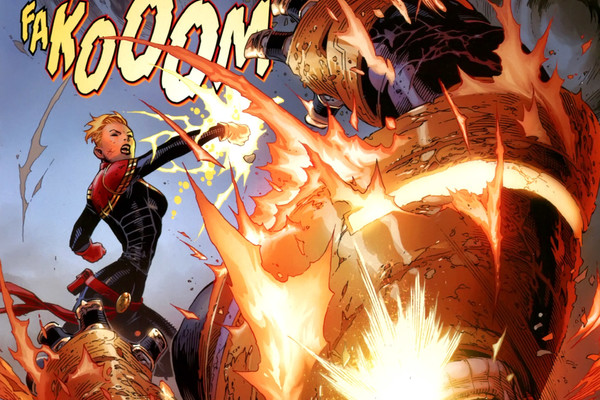
I say that as someone who loves Carol Danvers as Captain Marvel. Back in 2012, Kelly Sue DeConnick effectively reinvented the character in a way that convinced me that she deserves a prominent role in any Marvel universe. In my opinion, she’s essentially Marvel’s version Wonder Woman.

Her movie has so much going for it. “Wonder Woman” established that female superhero movies could be a hit at the box office and garner critical acclaim, despite the scars left by “Catwoman.” On some levels, “Captain Marvel” is facing a lot less pressure and it has the momentum of “Avengers: Infinity War” behind it.

However, the stakes are actually higher for this movie compared to everything “Wonder Woman” faced. Recently, Kevin Feige stated that Carol Danvers will be the new face of the MCU. From a purely logistical standpoint, that makes sense. The MCU needs a new unifying force if Chris Evans’ Captain America is to make his final stand in “Avengers 4.”

I believe Carol can pull it off, as well. She has taken on more leadership roles in the comics and has become a central member of the Avengers’ main team. Combine that with Brie Larson’s charisma and Carol Danvers has all the tools she needs to keep the MCU’s winning streak going.

I believe she can do this simply by being the kind of character that Kelly Sue DeConnick molded six years ago. That version of Carol Danvers emerged from years of being a secondary character in Ms. Marvel who rarely got a chance to achieve the same recognition as her peers. She’s a classic case of a character who elevated themselves by embracing a new identity, a new purpose, and greater ambition.

DeConnick established Carol as someone who achieves so much in one field, but dares to seek greater challenges beyond. She contributed to the Avengers for years, but never pursued a greater vision until she became Captain Marvel. That idea of someone looking to the stars, seeking to achieve more, and pursuing it with unmatched drive is what will help her succeed in ways on par with Wonder Woman.

At the same time, though, there are potential risks and Captain Marvel may be more vulnerable to them than Wonder Woman. While Kelly Sue DeConnick did a lot to reinvent Carol Danvers for a new era, she has faltered somewhat. Recent events in the comics have put her heroic merits into question for all the wrong reasons. Some of Brie Larson’s politically-charged rhetoric hasn’t helped either.

To some extent, Carol’s reputation has faltered because in elevating her status in the comics, she has been hit with the dreaded Galbrush Paradox. The quirks that DeConnick introduced, such as Carol being a Star Wars fan and having a love interest in James Rhodes, have eroded in recent years. In addition, even her artistic depictions have devolved by reducing her feminine features for no apparent reason.

In wake of the vitriol that Star Wars received for its portrayal of female characters, I worry that “Captain Marvel” runs the risk of inviting a similar backlash. If Carol Danvers is not sufficiently compelling, she runs the risk of getting hit with the Mary Sue label that has plagued Rey since “Star Wars: The Force Awakens.”

The worse case scenario, in my opinion, involves turning Carol Danvers into a Captain America or Iron Man stand-in. In the absence of these iconic characters, and their top name actors, Feige and those at Marvel Studios may be tempted to make her too much like them. That would be a huge mistake, especially for an organization on such a huge winning streak.

Carol Danvers is not Steve Rogers, nor is she Tony Stark. She’s not just a woman who takes on a man’s role either. She’s still a woman and, especially under DeConnick, her womanly traits were on display alongside her more badass features. It’s not groundbreaking because Wonder Woman struck just the right balance, having her fight alongside men while still acting like a woman.

In the best case scenario, Carol Danvers follows Wonder Woman’s example and establishes herself as someone worthy of carrying the MCU forward. Unlike Rey, she’s a character with plenty of compelling lore to work with. The key is finding the right blend that’ll help her fit into the Marvel Cinematic Universe.

At this point, without a trailer and only a few teases to go on, it could go either way for “Captain Marvel.” It could be the next in a long line of successes or it could be the MCU’s first failure. To date, Kevin Feige and those at Marvel Studios have shown time and again that they know what they’re doing.

Hell, they took an obscure series involving a talking raccoon and made it a global brand. Until they show they’re capable of screwing up, I’ll continue to give them the benefit of the doubt. At the same time, though, I think it’s worth bracing for that inevitable setback. All winning streaks come to an end. I just hope “Captain Marvel” isn’t the one that ends it.

1 Comment

Filed under Comic Books, Jack Fisher, Superheroes, media issues, movies, superhero movies

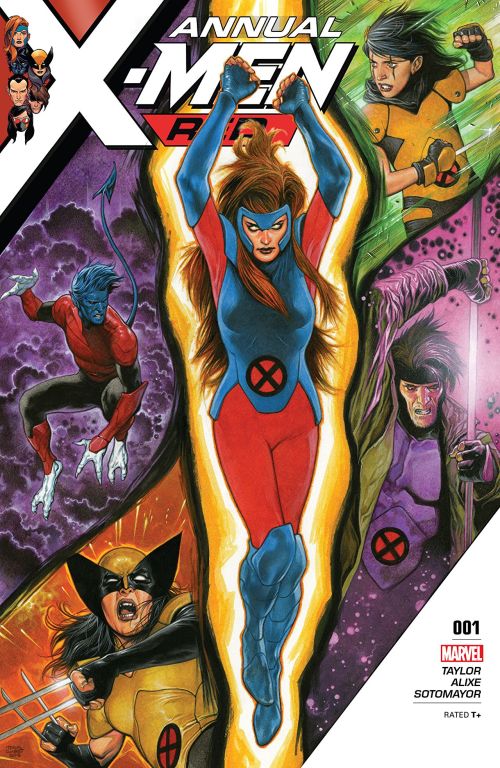
A (Welcome) Message Of Forgiveness And Compassion In X-men Red Annual #1

654226-_sx1280_ql80_ttd_

Who doesn’t enjoy a good revenge story? That’s not a rhetorical question. I’m dead serious. Is there anyone out there who isn’t enamored with a story about sweet, bloody revenge? I know the success of movies like “John Wick” and the iconic status of Batman do plenty to answer that question.

The question is still worth asking because the answer says just as much about the appeal of stories about forgiveness. To some extent, it shows that forgiveness isn’t as sexy as revenge. A revenge story can be bloody, action-packed, exciting, and cathartic. Almost every moment in “John Wick” and every issue of the Punisher is like that. It’s not hard to see why that is the basis of so many movies, TV shows, comics, and video games.

That’s not to say that a story about forgiveness can’t have appeal as well. It most certainly can. Forgiveness may not offer the same spectacle as revenge, but it can incur a uniquely powerful emotional impact. There’s a reason why forgiveness has been shown to have therapeutic effects and was the basis of a major religion.

This brings me to a very special comic book entitled “X-men Red Annual #1.” Yes, I am going to tie this powerful human experience to a comic book. No, I’m not going to apologize for it. If you’ve had a chance to read this comic, you’ll understand why.

It’s been a while since I singled out a specific comic that I believe conveys a much larger message, but sometimes a comic comes along at just the right time and strikes just the right emotional chords. This one does all that and so much more, especially for a die-hard X-men fan like me. However, it’s the forgiveness themes I want to focus on here.

Without spoiling too much about the comic itself, which I encourage everyone to go out and buy, it’s important to establish the circumstances that make those themes work here. Those circumstances revolve around Jean Grey, a character who is no stranger to death, resurrection, love triangles, and clones. Even by superhero standards, she deals with a lot of emotional baggage.

Until recently, though, she didn’t have to deal with any, largely because she was dead. From 2004 until earlier this year, Jean was among the numerous superheroes who were “officially dead.” I put that in quotes because “dead” in the world of comics tends to have a pretty loose meaning, well past the point of absurdity. The fact that Jean Grey stayed dead for that long is, in and of itself, pretty remarkable.

However, it was never a matter of if she would return from the dead or even whether Marvel would resort to time travel to replace her. It was only ever a matter of when. Her return was bound to have a huge impact on the X-men and the entire world of Marvel comics. “X-men Red Annual #1” simply built a story around it and it’s a damn good one.

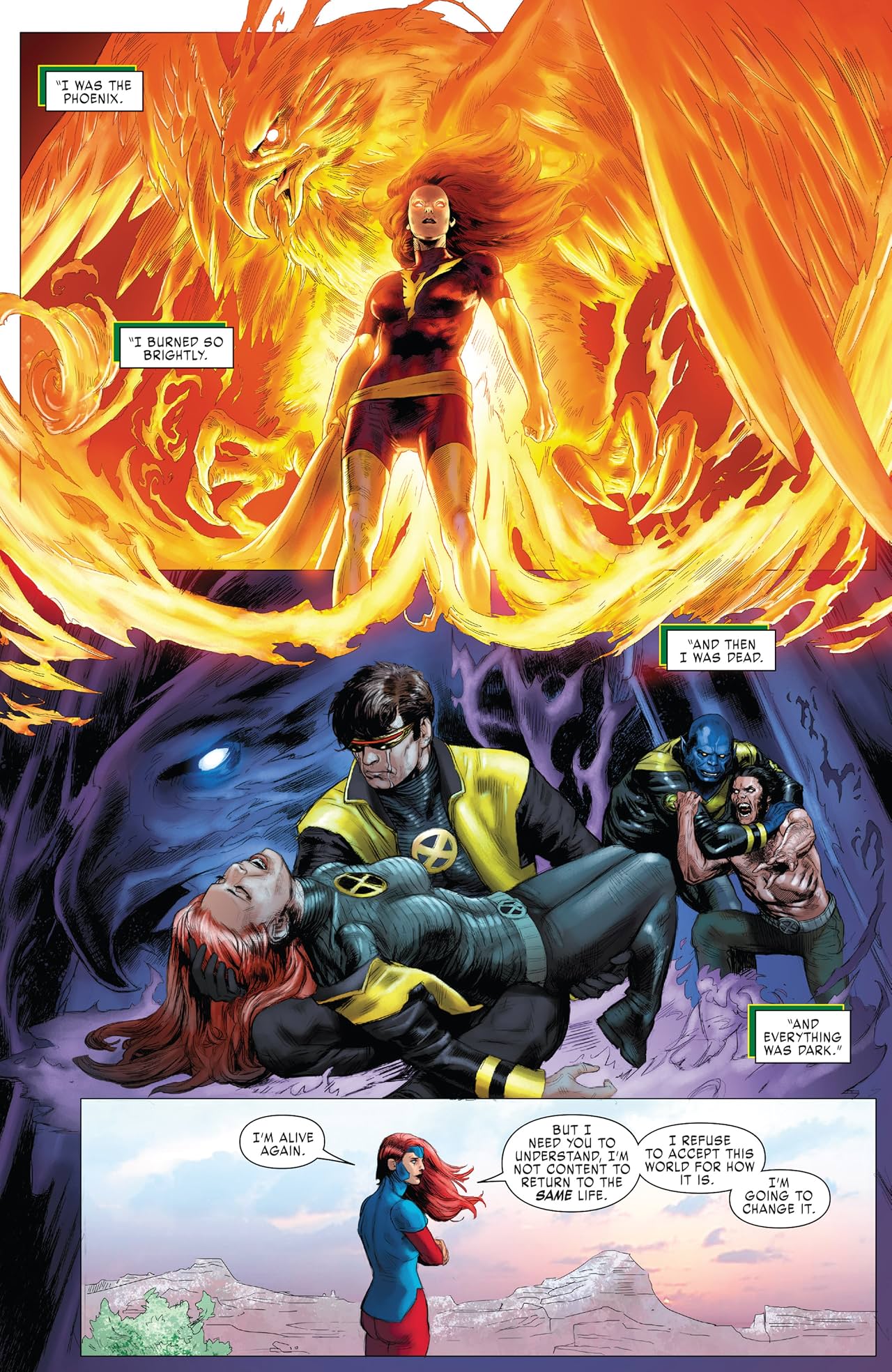
It unfolds mere moments after Jean officially comes back to life again on the final page of “Phoenix Resurrection #5.” That moment, in and of itself, is full of emotions that writer, Tom Taylor, captures beautifully. It provides insights into Jean’s thoughts, feelings, and emotions at that moment. It’s a lot to take in, but in addition to the joy, there’s also a heavy bit of sorrow thrown in.

In a sense, Jean Grey picked a lousy time to come back to life. She’s coming into a world where her mentor, Charles Xavier, is dead. Her best friend and occasional love interest, Wolverine, is also dead, although that’s already changing. Most painful, though, is that her husband, Cyclops, is dead due to the events that unfolded in a series aptly named Death of X.

These are people near and dear to Jean Grey. She’s not the kind of character who just brushes off that kind of loss, hardens her heart, and moves forward. She’s someone who wears her emotions on her sleeve and does it with pride. It’s part of what makes her such a lovable, endearing character. Sure, those passions attract destructive cosmic forces every now and then, but she makes it one of her strengths.

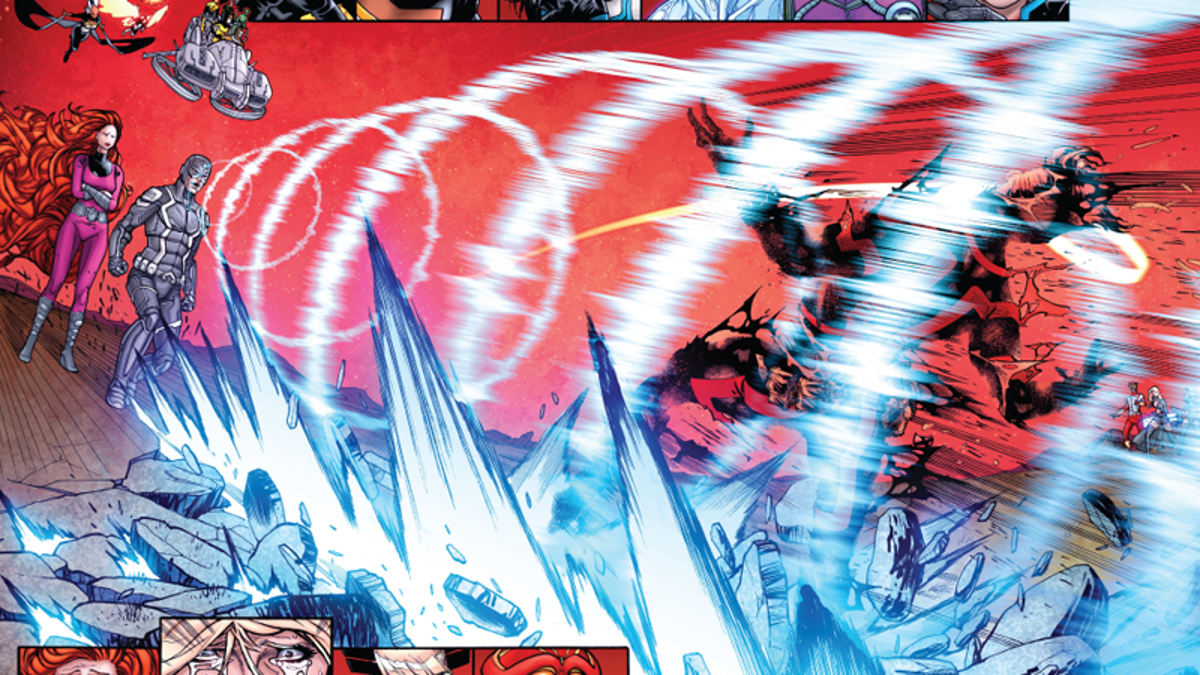
As she reconnects with those who’ve sorely missed her, she has an opportunity to confront the one most responsible for her husband’s death, namely Black Bolt of the Inhuman royal family. While Cyclops’ death was largely an accident, he’s still the one whose decisions ended up killing him and many other innocent mutants. For that, Jean has many reasons to hunt Black Bolt down and make him pay.

Had she gone that route, I don’t think anyone would’ve blamed her. Hell, some within the X-men would’ve gladly fought by her side, including a few who hate her guts. Accident or not, Black Bolt killed her husband by doing what he did. There’s no way around that. She has every possible excuse to channel her inner John Wick.

However, that’s not what happens. Yes, she still assembles a team of X-men to confront Black Bolt and the Inhumans. Yes, she has a very tense exchange with Black Bolt. What she doesn’t do, though, is seek vengeance for her husband’s death. Instead, she seeks forgiveness and that ends up being far more powerful.

Think about the mentality it takes to forgive someone like that. Imagine you knew there was someone responsible for the death of a loved one. Even if it was an accident or unintentional, chances are your first inclination wouldn’t be to forgive them. More than likely, you would rather see them suffer and pay for their crime.

Even if that person ends up going to jail or is held legally liable for your loved one’s death, you’re still going to resent them. They took the life of someone you loved and, assuming you’re not in a world where people regularly come back from the dead, you can never get back what you’ve lost.

That feeling would be even more intense if the person responsible never faces consequences for what they did. In the case of Black Blot, he didn’t face any repercussions for killing Cyclops. He wasn’t charged with murder or even for involuntary manslaughter. In fact, Cyclops becomes vilified for a while.

If anyone would be motivated to pursue retributive justice, it’s Jean Grey. She even has the perfect opportunity to do so when she fights her way towards Black Blot. At one point, she uses her telepathy to show him just how much she loved Cyclops and how much losing him hurt. She even admits she could make him feel some of that pain, if only to let him know why he deserves punishment.

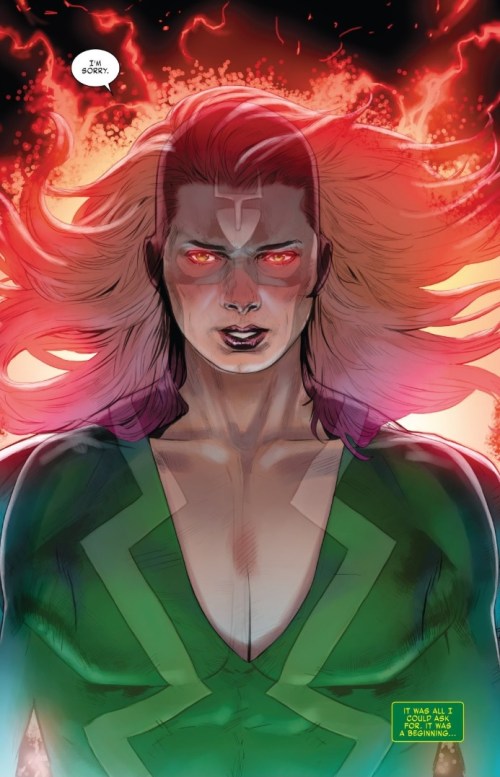
She doesn’t do that, though. She doesn’t attempt to impart her pain onto him. What she ends up doing is much more heartfelt and meaningful. She gives Black Bolt a chance to offer genuine, sincere remorse for his role in Cyclops’ death. He ends up taking that chance. He apologizes for what he did and, more importantly, Jean accepts it.

For a woman confronting a man responsible for her husband’s death, even if she is a comic book character, it’s a pretty powerful moment. It’s one that carries a unique emotional weight that you wouldn’t otherwise get if Jean had just shot him in the head with a 44 magnum. It very much reflects the power of forgiveness.

Forgive

It’s the kind of heart that is exceedingly rare outside of Superman comics. At a time when we expect our superheroes to be edgy and tough, Jean Grey offers a very different approach in “X-men Red Annual #1.” It’s one that Tom Taylor uses to full effect, reaffirming Jean’s incredible capacity for love and compassion. It’s an approach that feels refreshing in an era of superhero civil wars.

It also reminds us that while vengeance may still be more appealing to our most basic instincts, it’s also incomplete at times. No matter how many criminals the Punisher kills or how many villains that Batman beats up, their loved ones are still dead. The pain continues and so too does the struggle. Forgiveness, on the other hand, offers a way forward.

Jean Grey feels the pain of loss like anyone else. She also has the choice to seek retribution or forgiveness. Forgiveness is, by far, a much harder recourse because it means accepting painful circumstances and even a certain level of injustice. Given how most of us are wired with an innate sense of justice, such acceptance seems untenable.

That’s what makes forgiveness so hard, but that’s also what makes it more impactful. Rather than focus on making Black Bolt pay for her husband’s death, Jean chooses to channel that pain into something positive. The very end of “X-men Red Annual #1” has her acknowledging how much it hurts losing her husband, but it also shows how this pain has inspired her.

Jean Grey is, essentially, doing the most heroic thing a superhero can do and it doesn’t even involve her powers. She decides to forgive the transgression that killed her husband and chooses to use that pain as motivation to make the world around her better. It’s still not as big a spectacle as watching John Wick kill 77 people over a dog, but it’s more dramatic for all the right reasons.

7 Comments

Filed under Comic Books, Jack Fisher, Superheroes, human nature, philosophy, X-men