Tag Archives: comic books

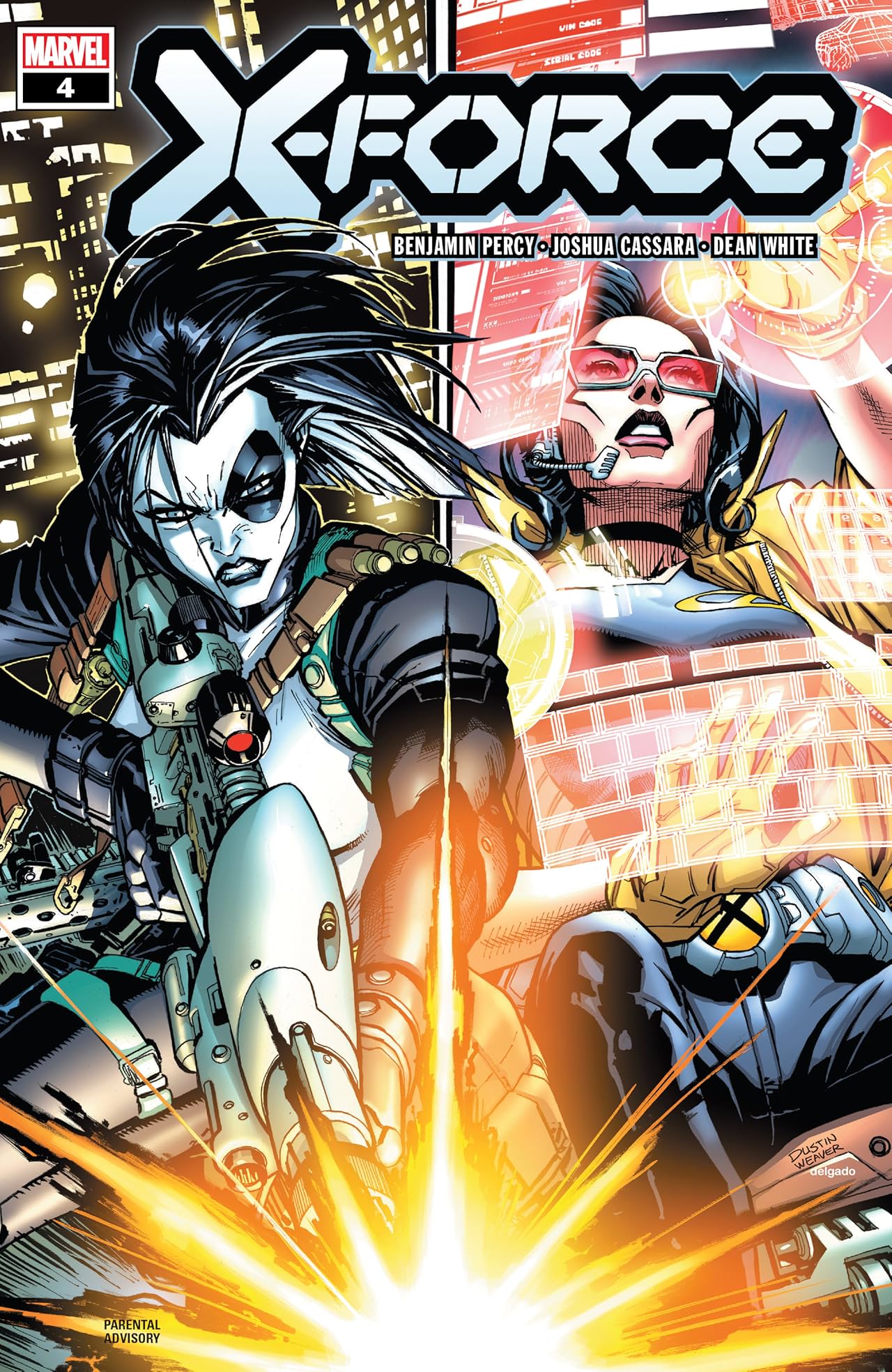
Jack Fisher’s Weekly Quick Pick Comic: X-Force #4

There are some people in this world, as well as fictional worlds, who will never be content to let things progress for the better. No amount of mutual benefit, understanding, or sincerity will be enough. They’ll always seek to destroy anything that might change the world they know, even if it’s for the better. They won’t just complain about it on social media, either. They’ll resort to the worst kinds of violence.

These are the people that X-Force deal with. Throughout their history in the X-Men comics, they’ve dealt with the dirty stains of humanity that never wash out, no matter how hard you scrub. They’re the ones tasked with confronting these threats, be they human or mutant, with a level of gratuitous violence that you won’t see outside of “Game of Thrones” reruns.

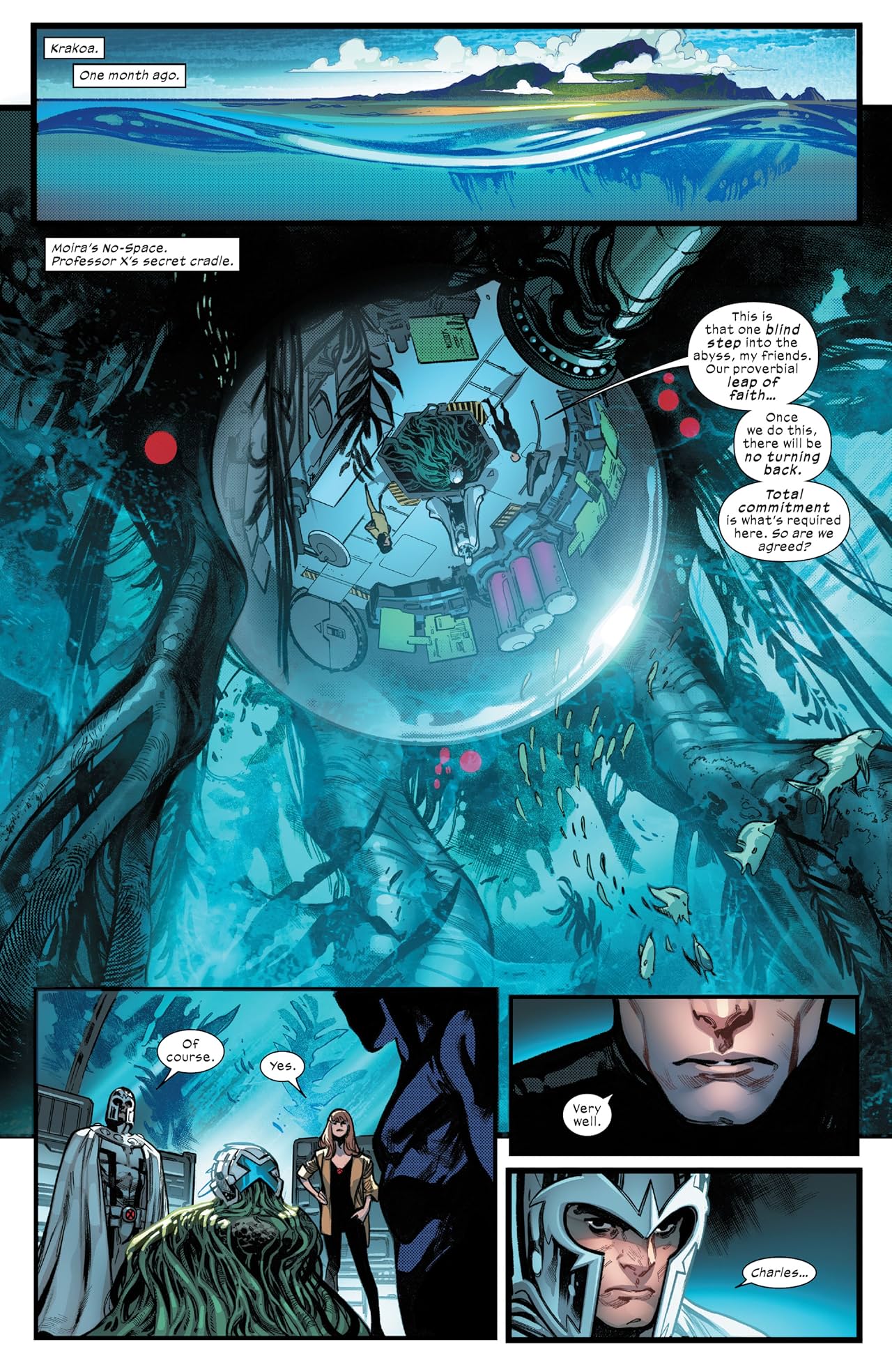
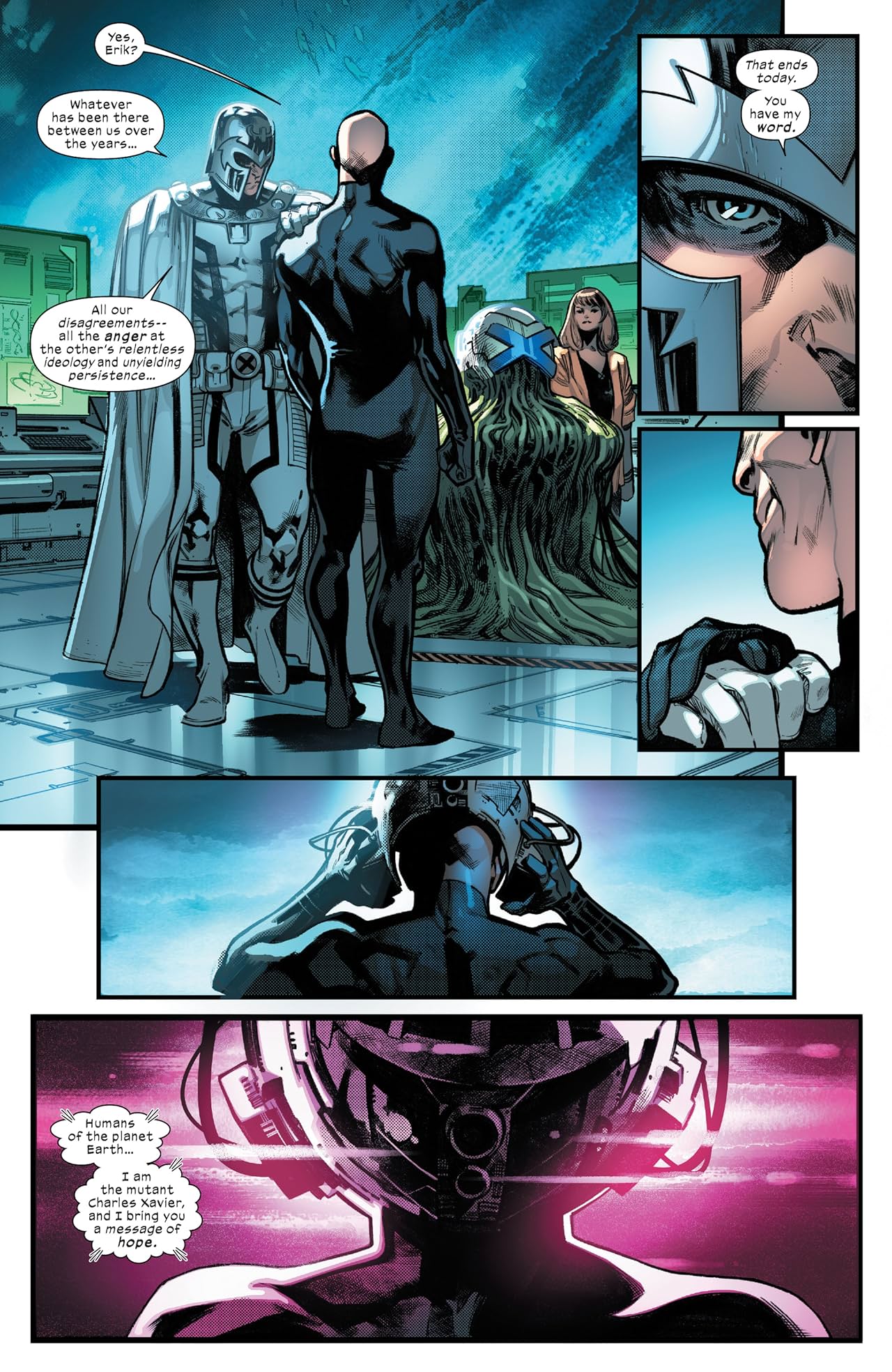
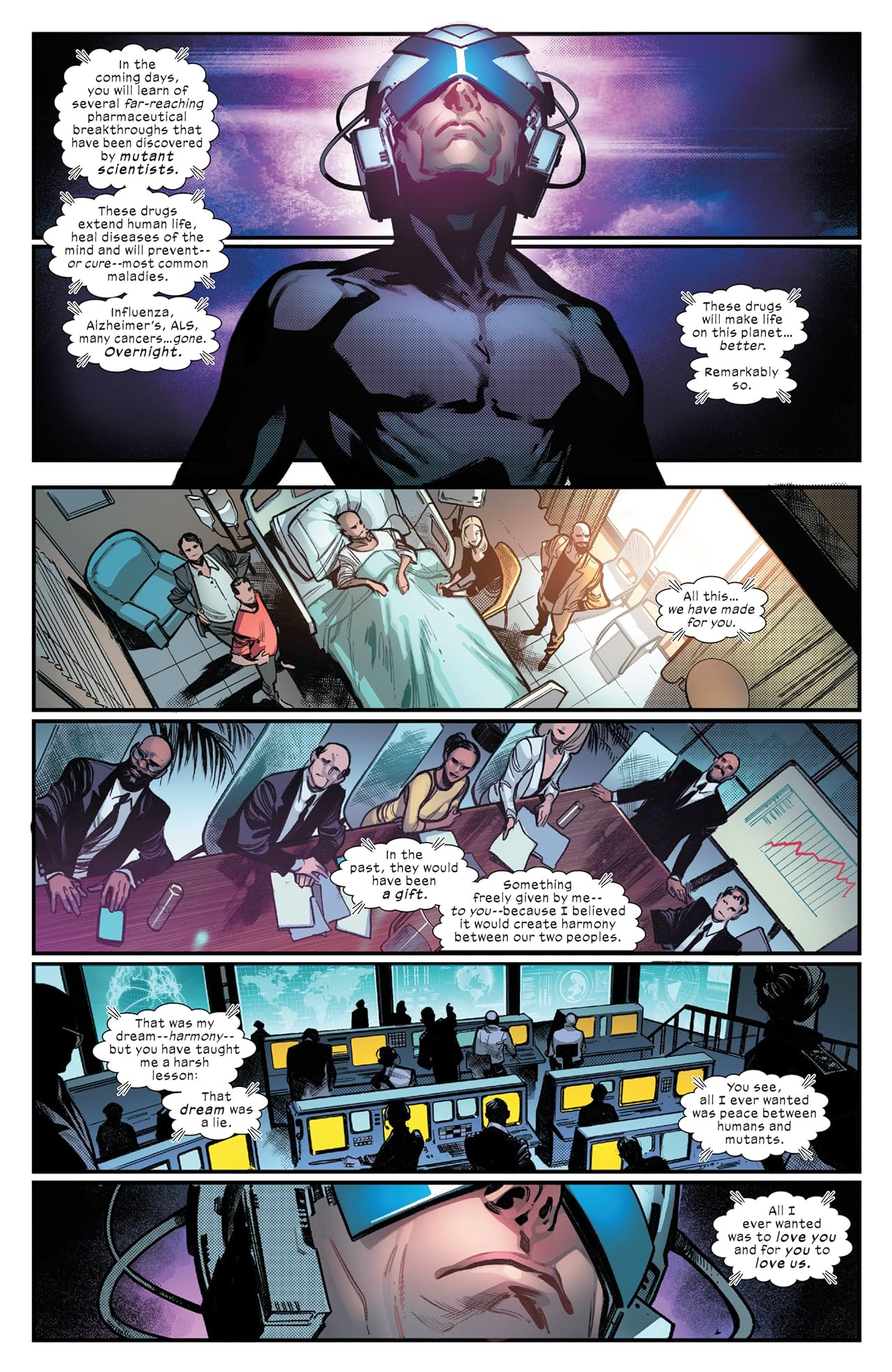
The need for X-Force, as well as their violent tactics, is one again reaffirmed in “X-Force #4.” At a time when mutants have made genuine progress through Krakoa and a new geopolitical role in the world, they’re still subject to hatred, attacks, and atrocities.

In the first three issues of the series, writer Benjamin Percy demonstrated that, despite having their own nation in the form of a living island and the ability to resurrect dead mutants, they’re still vulnerable.

Charles Xavier got shot. Domino was captured and had half her skin ripped off. The fact that any of this can happen, given all the resources at the X-Men’s disposal, is wake-up call and a reminder as to why X-Force isn’t just necessary. It needs an overhaul.
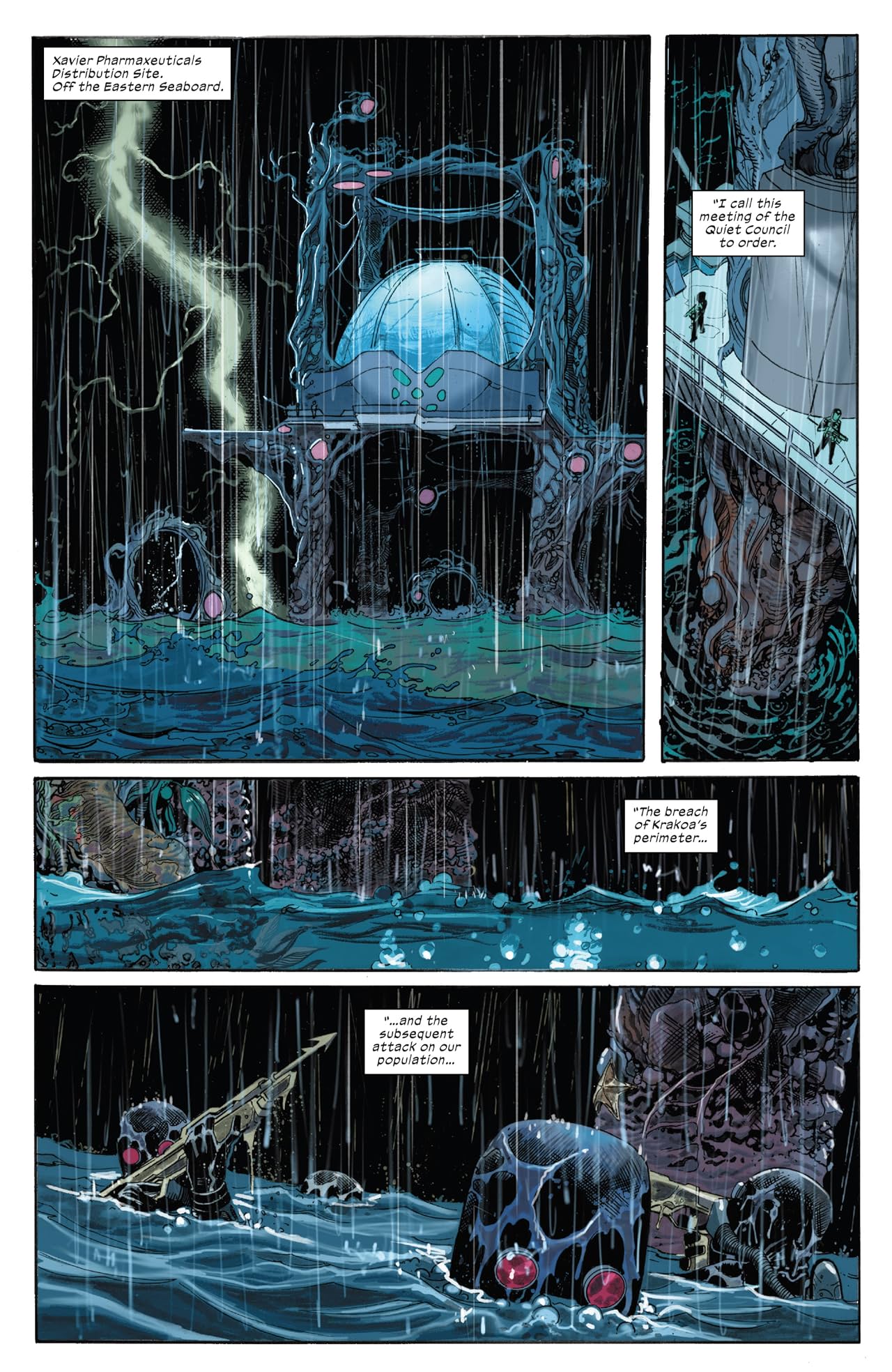
That overhaul begins to unfold in “X-Force #4” and in the midst of another mysterious attack, no less. While this one didn’t end with anyone getting shot or flayed, it did hit Krakoa in the wallet, which can hurt as much as getting shot. The nature of the attack and who is behind it remains a mystery, but X-Force is put on the front lines.

However, this is not the same X-Force that that Rob Liefeld brought to live during the grunge-fueled heyday of the 1990s. They’re not operating completely in secret as some secret kill-squad that everyone is better off not knowing about. Instead, Percy sets them up to be Krakoa’s version of the CIA, complete with its own Seal Team 6.

It’s somewhat of a shift for what X-Force has historically been in the X-Men comics, but it fits perfectly with the current situation surrounding mutants and Krakoa. Mutants are no longer scattered, isolated, and running from killer robots at least once a week. They have their own nation, language, and emerging culture. Protecting it requires something more organized than a shadowy kill squad.

That means more assistance from those who have traditionally argued against the merits of secret kill squads, such as Beast and Jean Grey. However, after seeing Charles Xavier get shot in the head and Domino get tortured, they’ve become a bit more pragmatic in handling these kinds of threats.
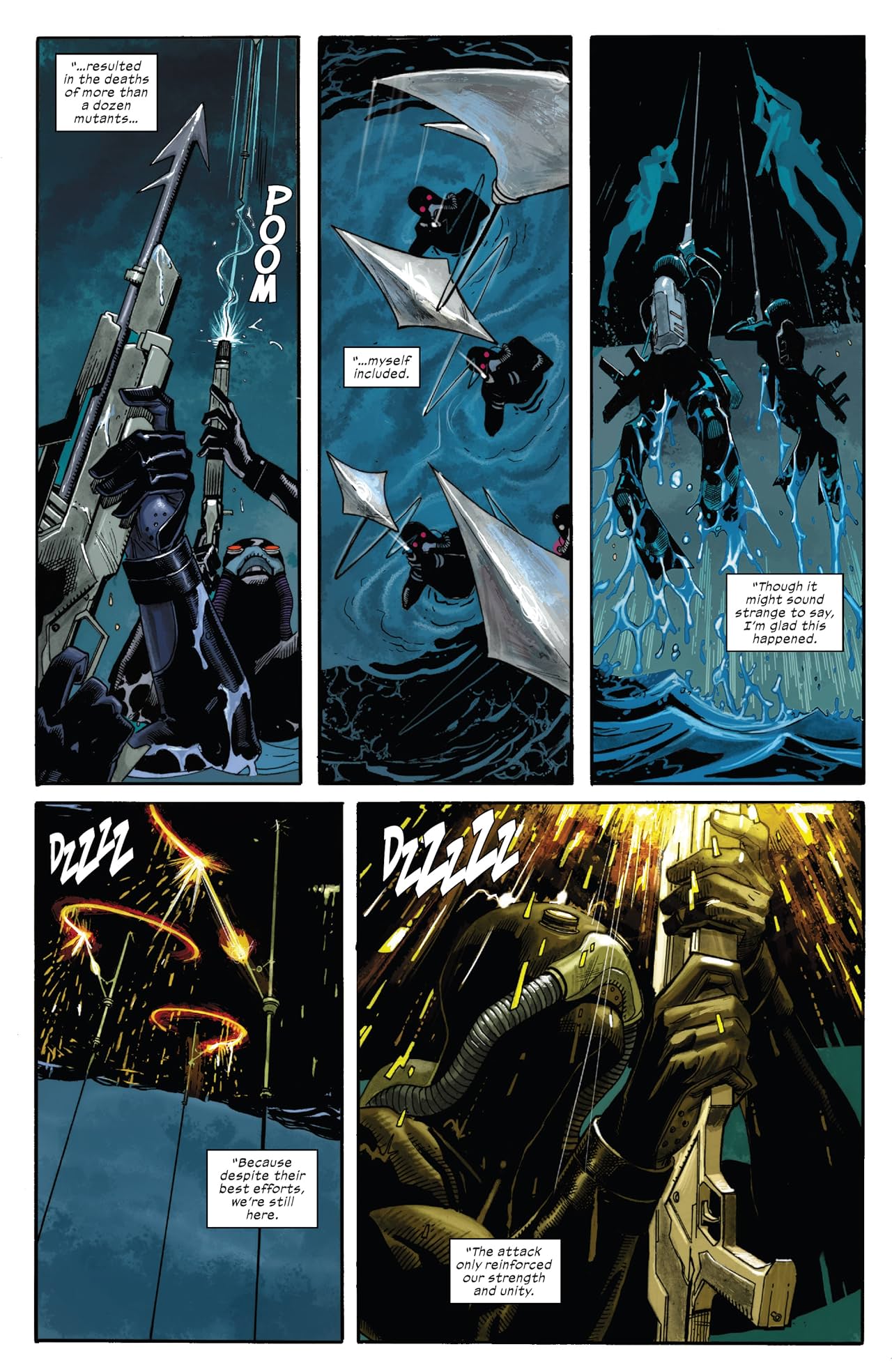
The events of the first three issues caught them off-guard. They try to be much more proactive in “X-Force #4,” investigating the attacks and organizing a response. Naturally, Wolverine is part of that response since many of the threats X-Force deals with require significant stabbing. Now, armed with Krakoan weapons provided by Forge and Kid Omega’s attitude, they’re ready to be a new kind of X-Force.

It may not be the kind of profane, brooding, blood-soaked X-Force we’ve seen in the past, but it feels appropriate for the X-Men’s current situation. Jonathan Hickman set up a very different set of dynamics for the X-Men through “House of X/Powers of X.” Percy just creates a version of X-Force that fits within the context of these dynamics.

Having a team like this doesn’t just feel necessary after the events of the first three issues. It feels personal. These weren’t just angry protests or hate threads on Twitter. Someone managed to attack their home and shoot one of their most powerful figures in the head. However one might feel about X-Force’s violent tactics, there’s no denying that they’re as motivated as they ever were.
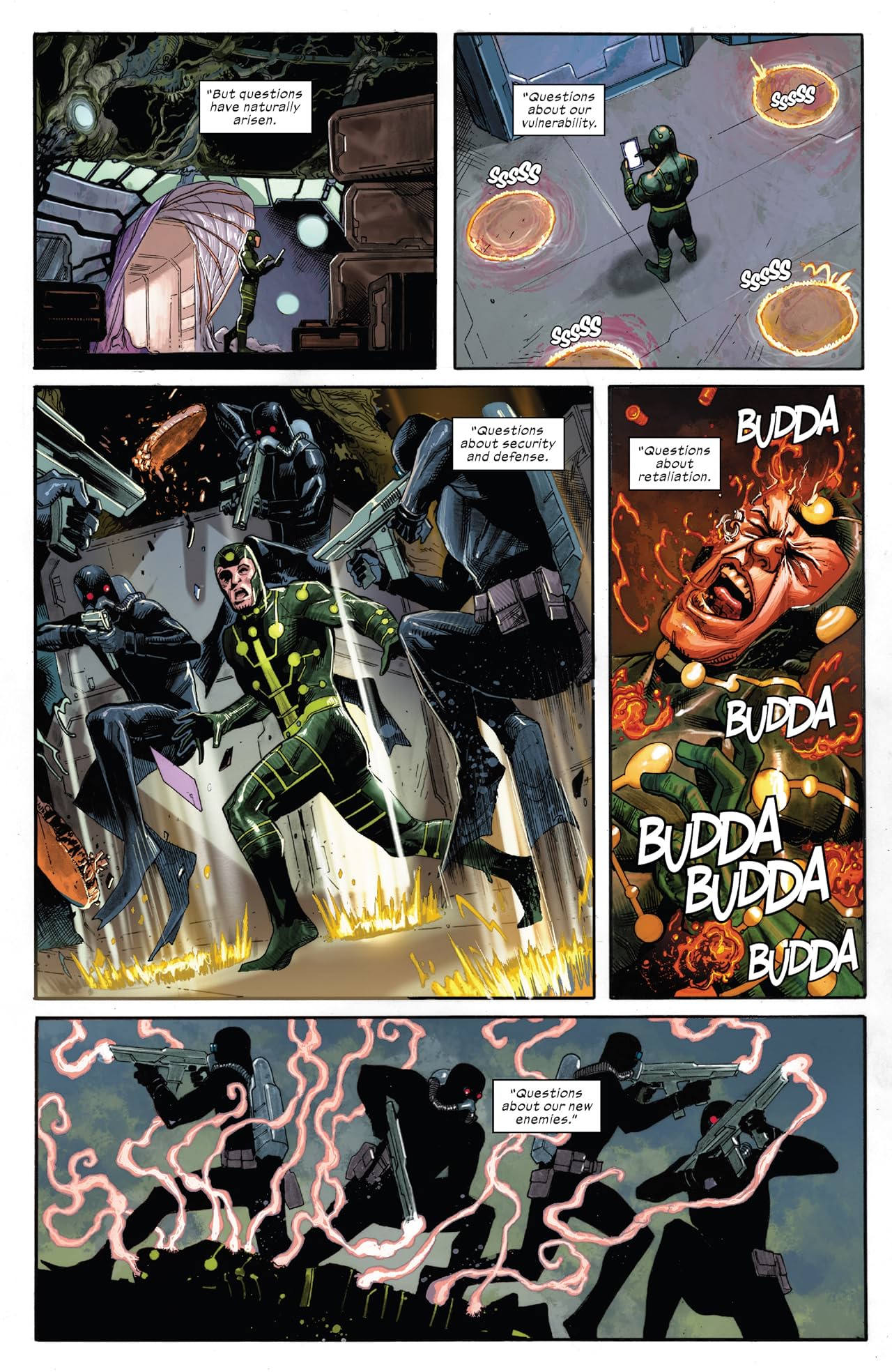
For a quality X-Force comic, it’s not enough to just have ample violence and an attitude ripped from mid-90s heavy metal music. There needs to be a greater context to the added violence, preferably one that complements the current status quo of the X-Men comics. With “X-Force #4,” Percy succeeds in creating that context and artist Joshua Cassara gives it the necessary grit.

The overall lineup for X-Force is still somewhat small, but it has plenty of room to grow. After what happens on the final page, it’ll have to for reasons that are as obvious as they are bloody. The threat X-Force has to kill is still somewhat vague. Only a few details have come out thus far, but the only detail that matters is that they can hit Krakoa where it hurts and they’re not inclined to be diplomatic about it.

X-Force has always billed itself as a superhero team that relies on less-than-heroic methods to get the job done. They’re not a team that wears flashy costumes and parades alongside other, more reputable heroes. They do what they do in the shadows and don’t mind incurring some extra bloodstains to do it.

X-Force #4” starts with something bloody, but ends with something bloodier. Given the nature of the emerging threats they face and the wounds they’ve already incurred, it promises to get even bloodier with future issues. It’s everything you want in an X-Force comic and then some.
Leave a comment

Filed under Jack's Quick Pick Comic

Jack Fisher’s Weekly Quick Pick Comic: Superman #18

Anyone who has read superhero comics for a sizable chunk of their lives knows the difference between a gimmick and a genuine plot upheaval. Gimmicks are shallow. They’re sales tactics disguised as shocking twists that promise to change a character, world, or team forever. Most of the time, they get retconned within a few years.

Plot upheavals that are real, genuine, and permanent are rarer, but that’s what makes them more precious. They often become defining moments in their own right for a character or a franchise. For comic fans, they’re like major life-changing events.

In the same way you vividly recall your first kiss or your first car, you remember where you were when Superman married Lois Lane.

You remember where you were when the Joker brutally beat up Jason Todd.

You remember where you were when Barry Allen died during Crisis on Infinite Earths.

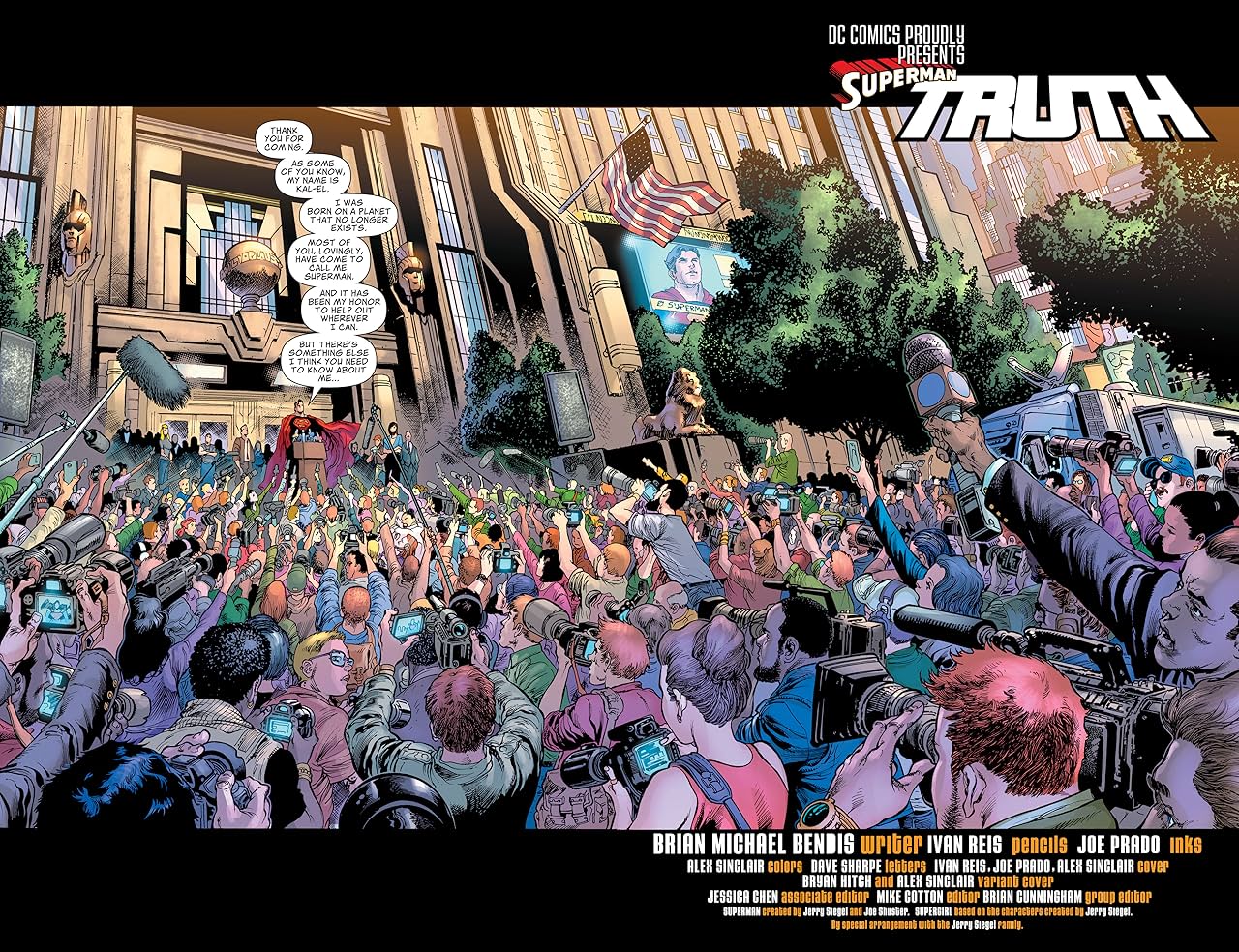
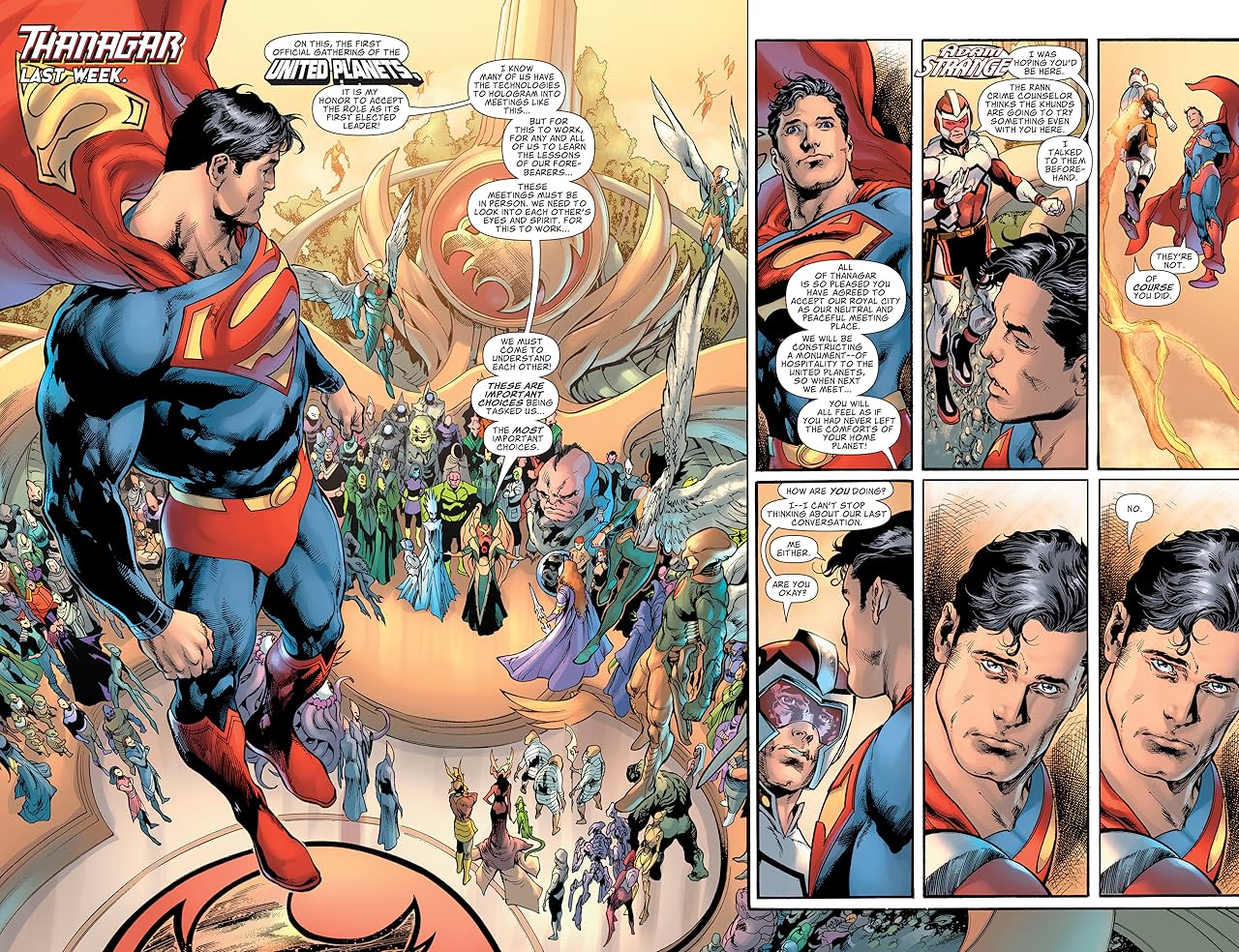
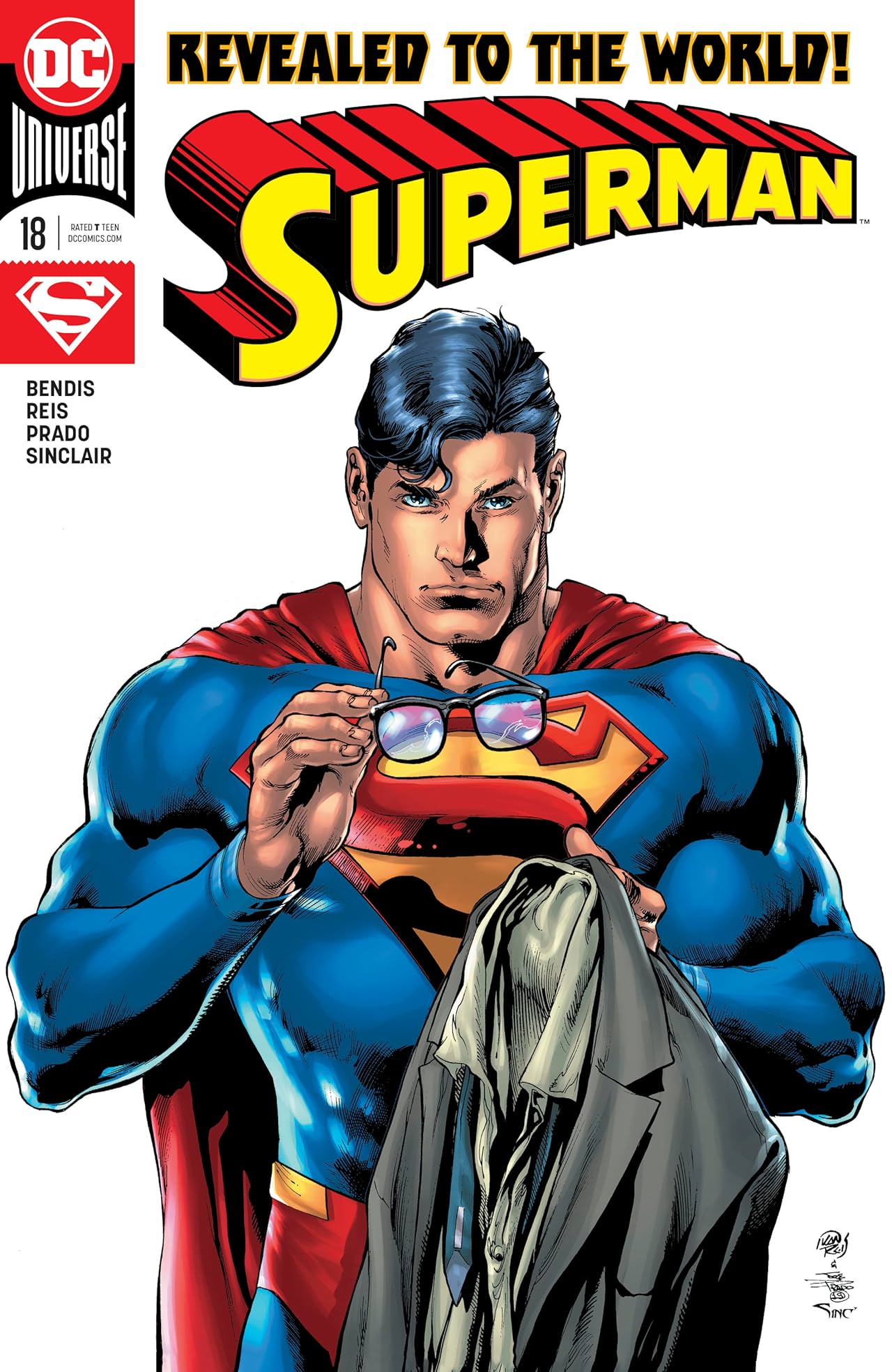
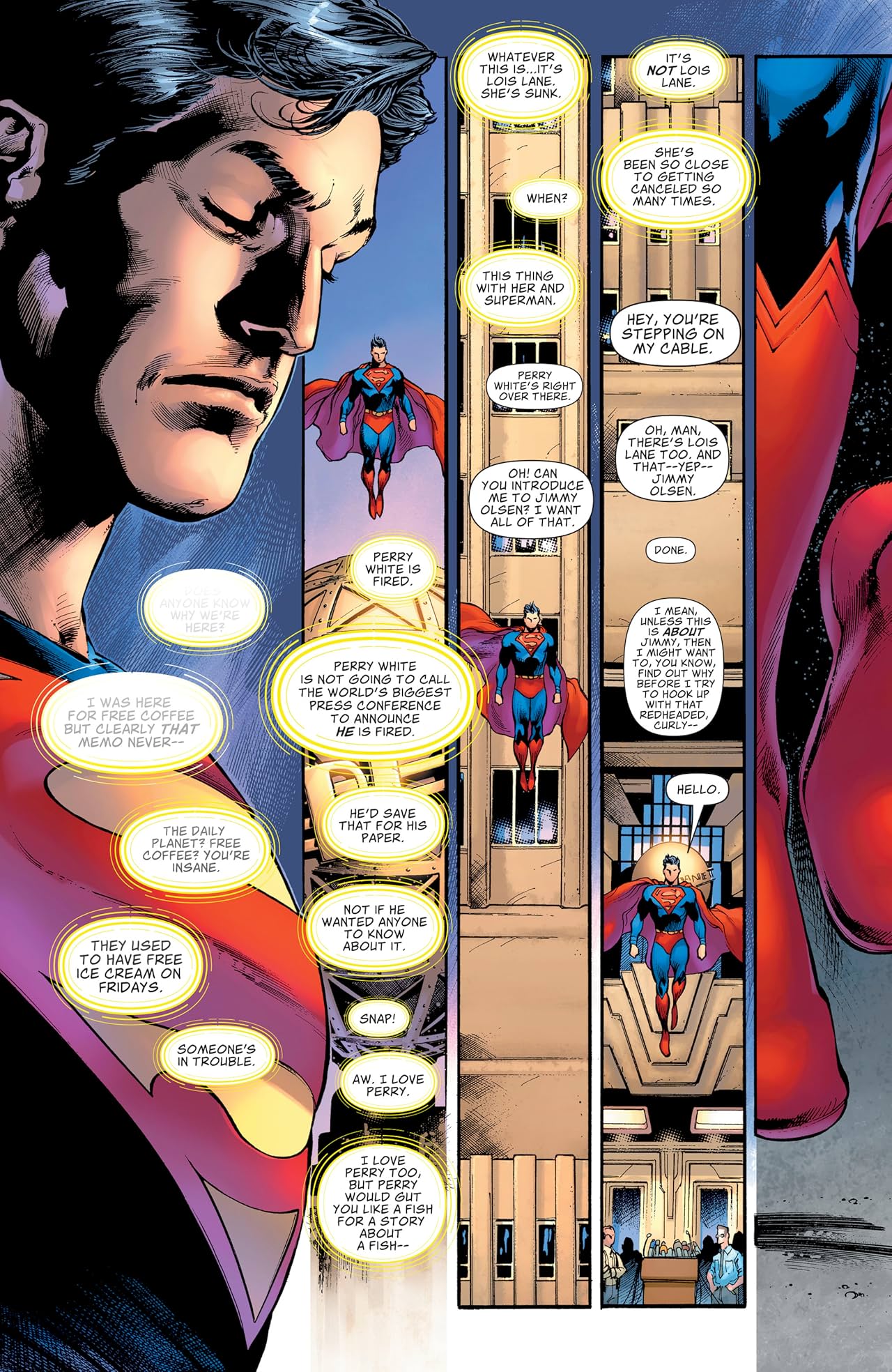
In that same tradition, you’ll probably remember where you were when you read “Superman #18.” This is a comic that promises to change Superman’s life and his story in major ways. It’s the comic in which he finally reveals his secret identity to the world. It’s not a gimmick this time. This is real and it has an impact that will likely resonate for years to come.

Writer Brian Michael Bendis has built a career on powerful, dramatic moments. He did it for years at Marvel with Spider-Man, the Avengers, and the X-Men. Since he began his run on Superman, he’s taken the Man of Steel through his share of upheavals. Superman’s semi-stable family life with his wife and son became a lot less stable, but he still hung onto the same identity that had kept him grounded for decades.

That finally changes in “Superman #18.” It’s not a snap decision, either. This isn’t Tony Stark going off the cuff at the end of “Iron Man.” That’s not how Superman does things. He’s thoughtful, thorough, and very much aware of the implications. He doesn’t agonize or brood over it, as many other heroes are prone to do, especially if they have egos like Tony Stark. He simply tries to determine the right thing to do.

It’s not easy. Before the big reveal, Bendis takes Superman through a round of self-reflection in which he goes over all the reasons why he maintained his secret identity as Clark Kent. Some of those reasons were entirely valid. They weren’t excuses that kept demanding more excuses. They genuinely felt like the right thing at the time.

Superman lived as Clark Kent so he could be human. That has always been important to him, going back to the Golden Age. He’s an alien from another world, trying to live and be part of this new home that he has come to love. Being Clark helped him be human, even though he is objectively not human.

While that might have been important before, a lot has changed for Superman. He no longer has anything to prove. He’s built a life as Clark Kent. He has established himself as Superman, a hero among heroes who sets the highest standards for humans and aliens alike. He couldn’t have done this without maintaining his secret identity. The only question is what more can he do to justify keeping that identity?

The tipping point in “Superman #18” comes when Superman recounts what happens when others in his life have kept secrets. Even if they were kept for good reasons, it never ended with just that secret. One secret demands another. As they compound over time, they become dangerous.

That’s still only part of the issue. Beyond the secrets, having that identity sends a message to the same people he’s trying to protect. It says that he doesn’t trust them to handle him being both Superman and Clark Kent. Maybe that made sense when he was still winning their trust, but it doesn’t make sense anymore. It also helps make the right thing to do very clear.

That effectively ends the debate. Whenever Superman is faced with a decision, his first and only instinct is to do the right thing. That’s exactly what he does in “Superman #18.”

It’s what helps make the big moment in “Superman #18” feel like something other than a gimmick. Bendis makes sure that Superman revealing his identity to the world is the right thing to do. It never comes off as the end of something, either. Whenever Superman’s identity has been revealed in the past, it has always been a complication or a last resort. That’s not how it’s framed here.

Superman #18” feels like another step in Superman’s journey to be the hero by which all other heroes are measured. He’s lived as a human. He’s become an iconic hero. Those lives no longer need to be separate. In Superman’s eyes, they shouldn’t be. He’s still the same man, whether he’s wearing glasses or his iconic cape.

In principle, it’s a minor distinction. However, at no point in “Superman #18” does it feel trivial. Superman acknowledges that this is going to change things. His life is going to change, both as Superman and as Clark Kent. He knows there will be difficulties, but he’s willing to face them. He’s also willing to trust in the same people he protects to face them with him.

It’s a beautiful, powerful moment made all the more memorable by the art of Ivan Reis. It doesn’t require Superman to save the world, defeat Lex Luthor, or punch a planet into dust. It just requires him to do the right thing. That doesn’t just make him a hero. That’s what makes him Superman.

Leave a comment

Filed under Jack's Quick Pick Comic

Jack Fisher’s Weekly Quick Pick Comic: Dr. Doom #3

Death has always been a running joke of sorts in superhero comics. Characters die all the time, but rarely stay dead. That includes important, iconic characters whose deaths resonate beyond the pages of comics. Sometimes, these deaths are incredibly dramatic, showing just how great these characters can be when everything is on the line. Regardless of how heroic their deaths might be, however, it rarely sticks.

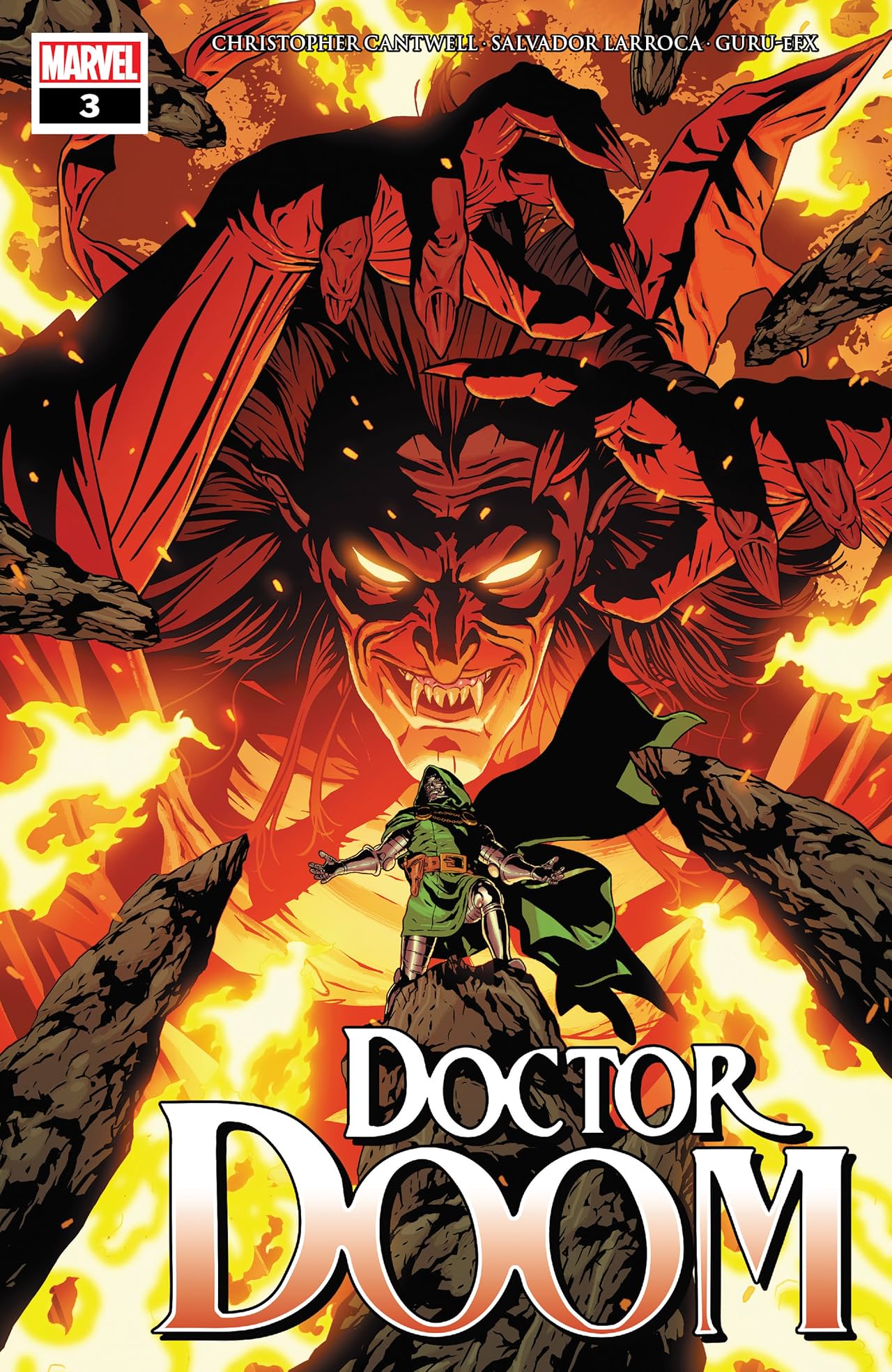
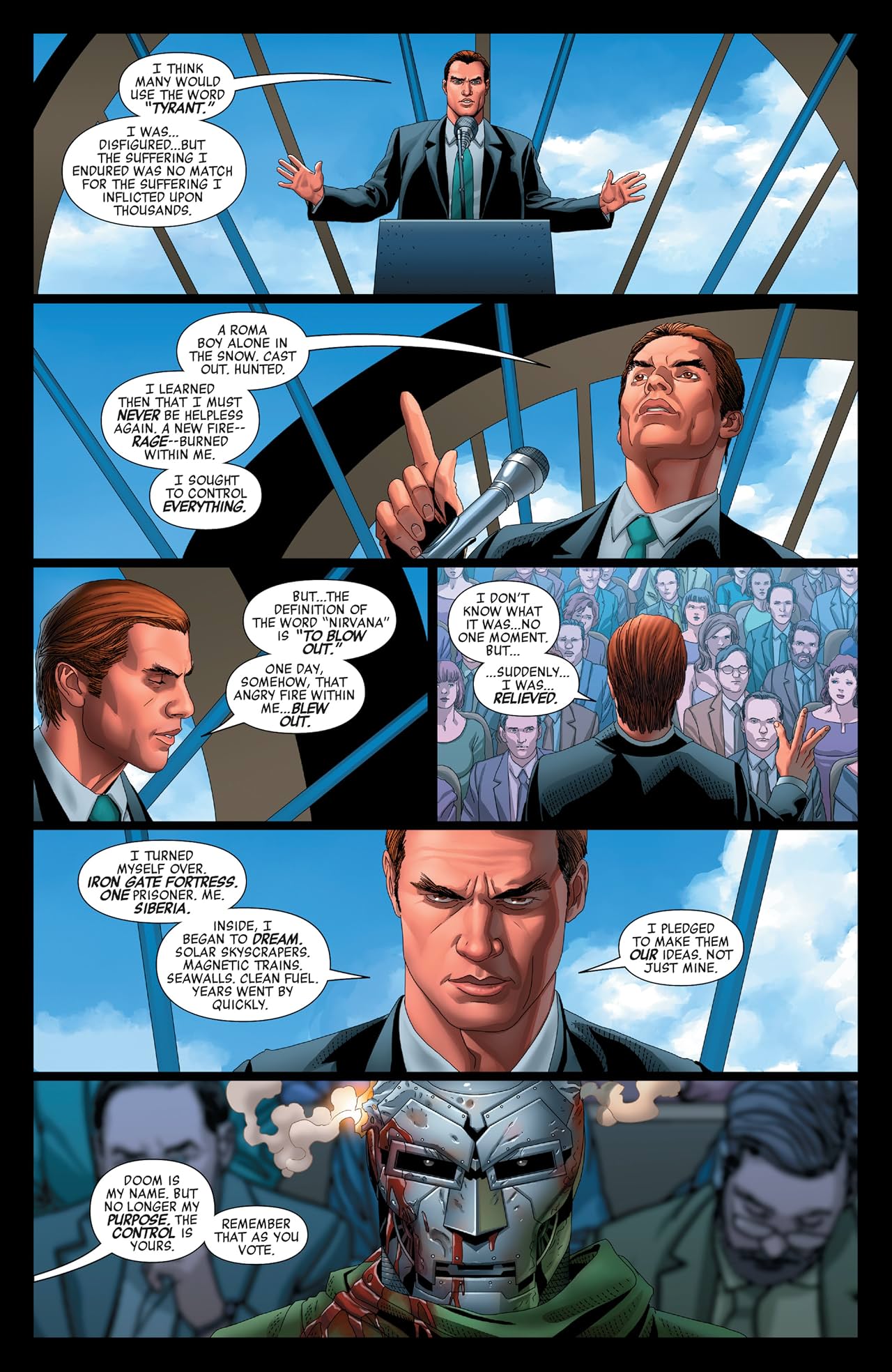
That’s why it’s often more interesting when major villains die. While they rarely stay dead as well, their postmortem journey is often more arduous. If ever there was a villain who constantly skews the concept of death, it’s Victor Von Doom. If anyone needs proof, then look no further than “Dr. Doom #3.”

While he has “died” before, he rarely stays dead. It’s not just because every one of his “deaths” can be attributed to a Doombot, either. This is a man who has been a God and won battles against Marvel’s version of the devil. To him, death is more an inconvenience than a permanent end. It’s just a lot more inconvenient than usual in “Dr. Doom #3.”

These are not good times for Victor Von Doom. The Fantastic Four are back. His brief stint as the new Iron Man ended before he had a chance to show up Tony Stark. He has also been deposed from Latveria, exiled from the country, and thrown into a world with a target on his back for every superhero and SHIELD agent. It is the most vulnerable Doom has been since he was stranded butt naked on Counter Earth.

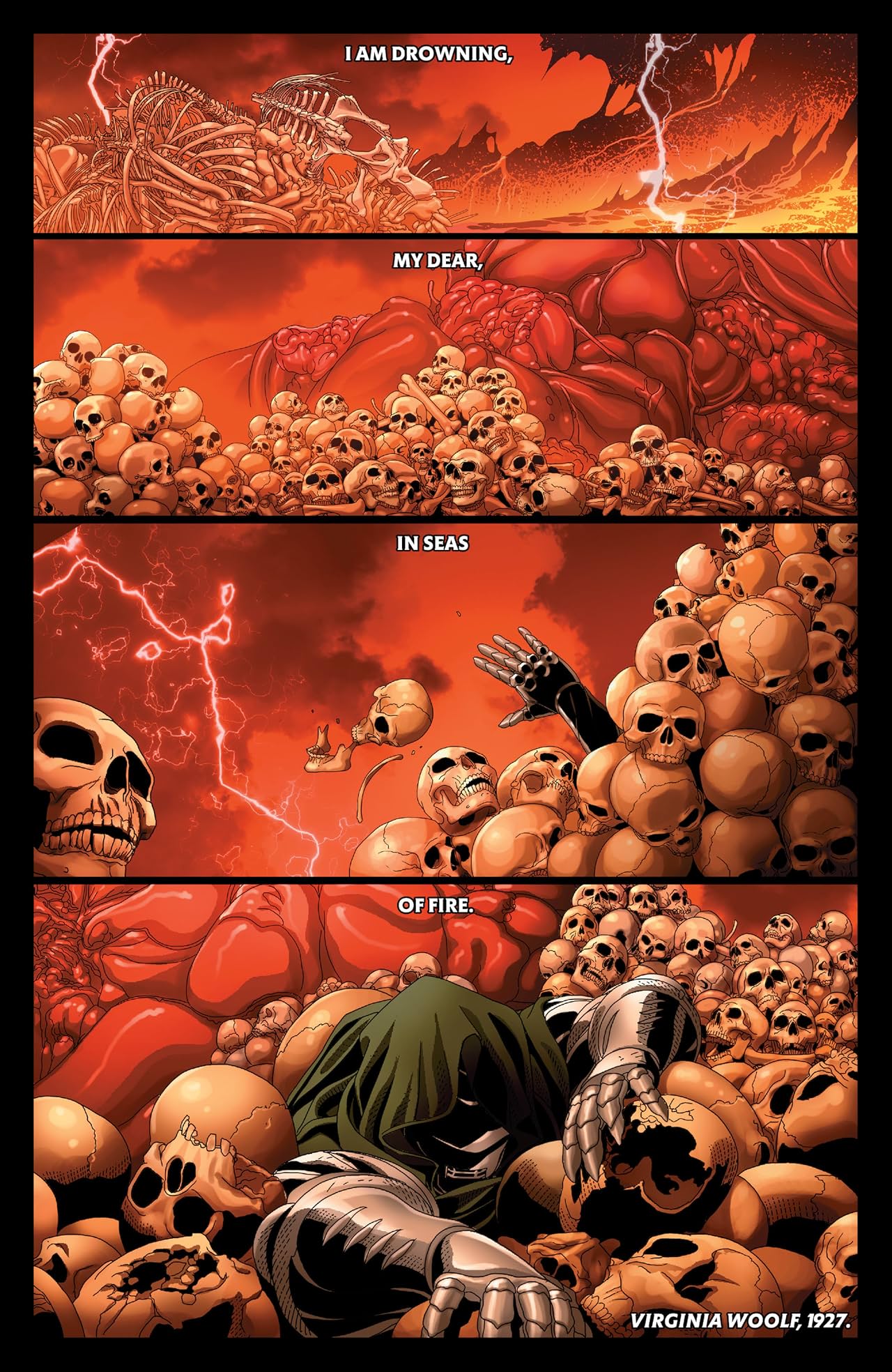
In short, he’s vulnerable, pissed off, and under constant attack. It’s precisely the situation that brings out the best and worst in Dr. Doom. While the events of “Dr. Doom #2” ended with him “dying” at the hands of Taskmaster, death only gives him a chance to remind everyone why no afterlife can hold him.

It also gives him a chance at another rematch with Mephisto, also known as Marvel’s devil and the one responsible for breaking up Spider-Man and Mary Jane’s marriage. It’s not the first time they’ve clashed, but to date, Dr. Doom has a winning record against Mephisto. That’s something Mephisto is eager to change in his own hellish way.

It makes for a battle full of hellfire. Artist Salvador Larroca brings beautiful depictions of the hellscape that is Mephisto’s domain and writer Christopher Cantwell captures their less-than-heavenly egos every step of the way.

Mephisto tries to torment Doom with what he has sacrificed in the past to achieve his goals. Doom tries torment Mephisto by reminding him that he has beaten damnation before and only got stronger because of it. Neither one of them comes off as heroic, but that’s exactly what makes Doom’s defiance of death’s grip so unique.

Dr. Doom is not the kind of man who makes heroic sacrifices, but he’s also not a man who does what he does for no reason. As I’ve noted before and as other comics have highlighted, Doom doesn’t terrorize innocent people, heroes, and even other villains for no reason. He does what he does because he truly believes that the only future in which people are free from want and suffering is a future in which he rules.

It’s a sentiment that the late Stan Lee himself echoed. The first two issues of this series effectively double down on this vision, but “Dr. Doom #3” presents it with a major challenge. There are obstacles in his way aside from the Fantastic Four and the Avengers. Death and damnation only compound those obstacles, but as is often the case, Doom raises to the challenge.

There are times when Mephisto tries to poke at Dr. Doom’s very few, but very real vulnerabilities. He tempts him with challenges and deals that test even his unshakable will. Cantwell never lets Doom come off as pure evil or pure ego, but he never comes off as a hero, either.

Heroes don’t beat death, Hell, and the Devil like this. At the same time, villains don’t prevail in ways that makes us want to cheer them on. That’s what Dr. Doom does in “Dr. Doom #3” and he’s somehow more menacing because of it.

There are only a handful of characters in comics that can truly die and stay dead, even if some of them do find roles in alternate universes. There are also certain characters who can die in any number of ways, but will never stay dead for long. Dr. Doom is definitely on that list, if not at the very top.

Dr. Doom #3” might very well be Doom’s darkest hour in the sense that his destiny to rule the world in a Utopian future seemed most distant. He has been dethroned, killed off, and sent to Hell to be tormented by a devil with plenty of motivation to see him suffer. For once, Doom has to beat the odds when they’re not stacked in his favor.

It’s a test of his will and resolve, but one we expect him to pass because he’s Dr. Doom. This is what he does. It doesn’t matter how many times every hero, villain, angel, or demon takes him down. Doom always finds a way to claw his way back. It’s not always easy to root for Dr. Doom, but when he’s beating the devil himself, it’s hard not to cheer him on.

Leave a comment

Filed under Jack's Quick Pick Comic

Jack Fisher’s Weekly Quick Pick Comic: Invisible Woman #5

Certain characters are held to very high standards. That’s especially true of superheroes. Not all heroes can or should be judged with the same criteria. Wolverine can go on a rage-fueled killing spree, lust after married women, and drunk a gallon of whiskey a day, but still get labeled a hero. That’s because he’s held to a different, albeit very lenient standard.

That sort of standard just can’t work for a character like Sue Richards. Aside from being a hero, she carries herself very differently from the likes of Wolverine, Tony Stark, and Black Widow. She’s not a career assassin, a playboy billionaire, or some cosmic tyrant. She’s a hero, a role model, a loving wife, and a caring mother. She knows who she is and cherishes that identity.

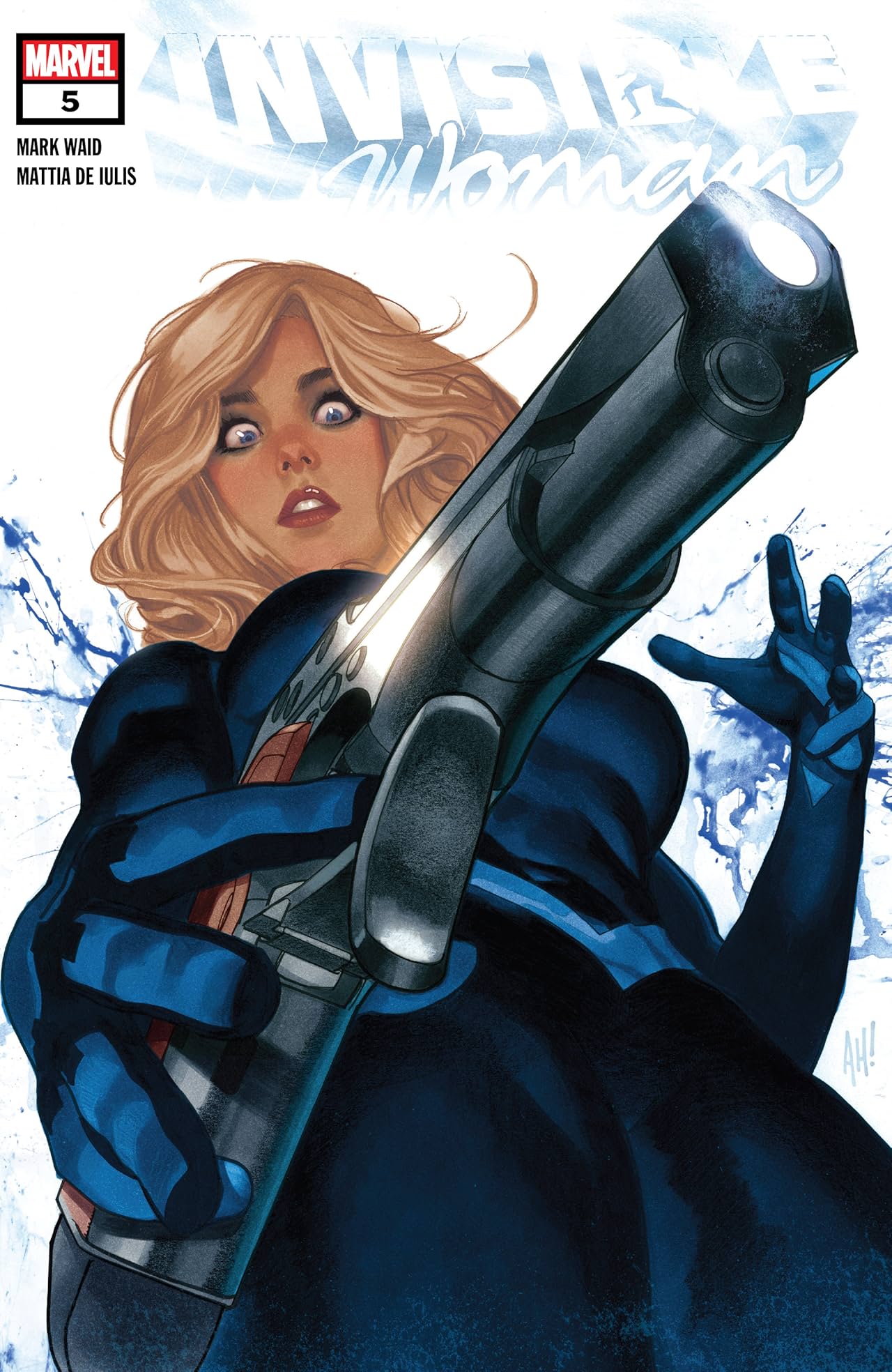
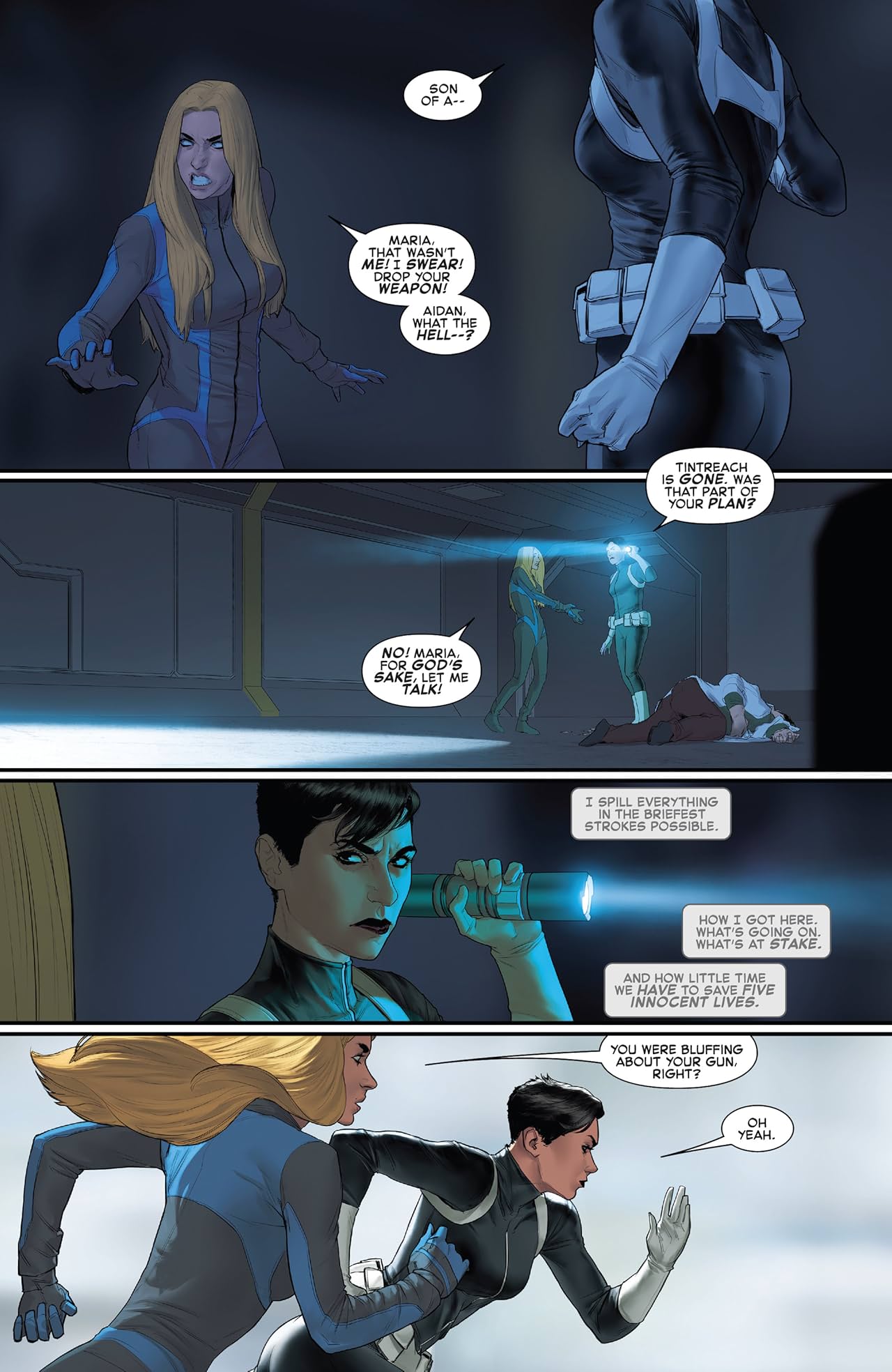
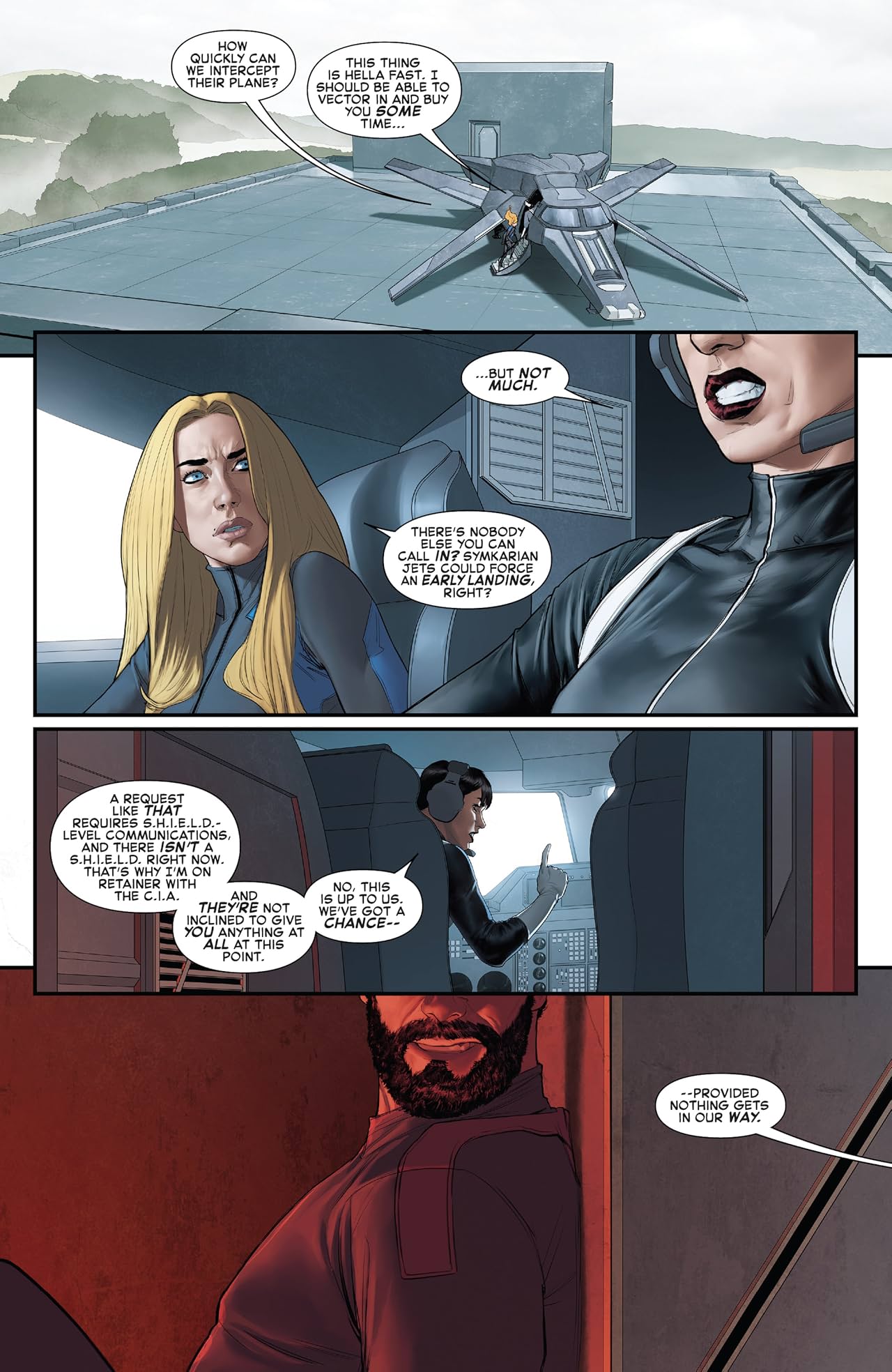
That same identity has been tested, strained, and pushed in her latest solo series, courtesy of writer Mark Waid. We’ve seen her revisit an old part of her life that almost took her down a very different path, one that would not have met those lofty standards ascribed to heroes like her and teams like the Fantastic Four. In “Invisible Woman #5,” she comes dangerously close to crossing lines she swore to never cross.

It’s the end of a story that has taken Sue Richards away from her family and her life of wild cosmic adventures. Instead of battling planet-eating cosmic beings, she navigates the shady world of espionage. By the end, it’s easy to see why she prefers battling Galactus.

At first, the mission was simple. Sue set out to find a former friend and partner, Aidan Tintreach. As is often the case in stories involving spies, espionage, and beautiful women, it gets exceedingly complicated very fast. Along the way, Waid explores just how capable Sue is on her own. She’s one of those characters who is often defined by her team and her family. She rarely gets a chance to show what she can do by herself.

As a spy, Aidan saw that potential in her. Throughout the series, he has forced her to realize it in ways that don’t always sit well. Initially, it was as an ally and someone in need of her help. The events leading up to “Invisible Woman #5” steadily revealed the kind of person he became. He now has Sue in a position to become that same person.

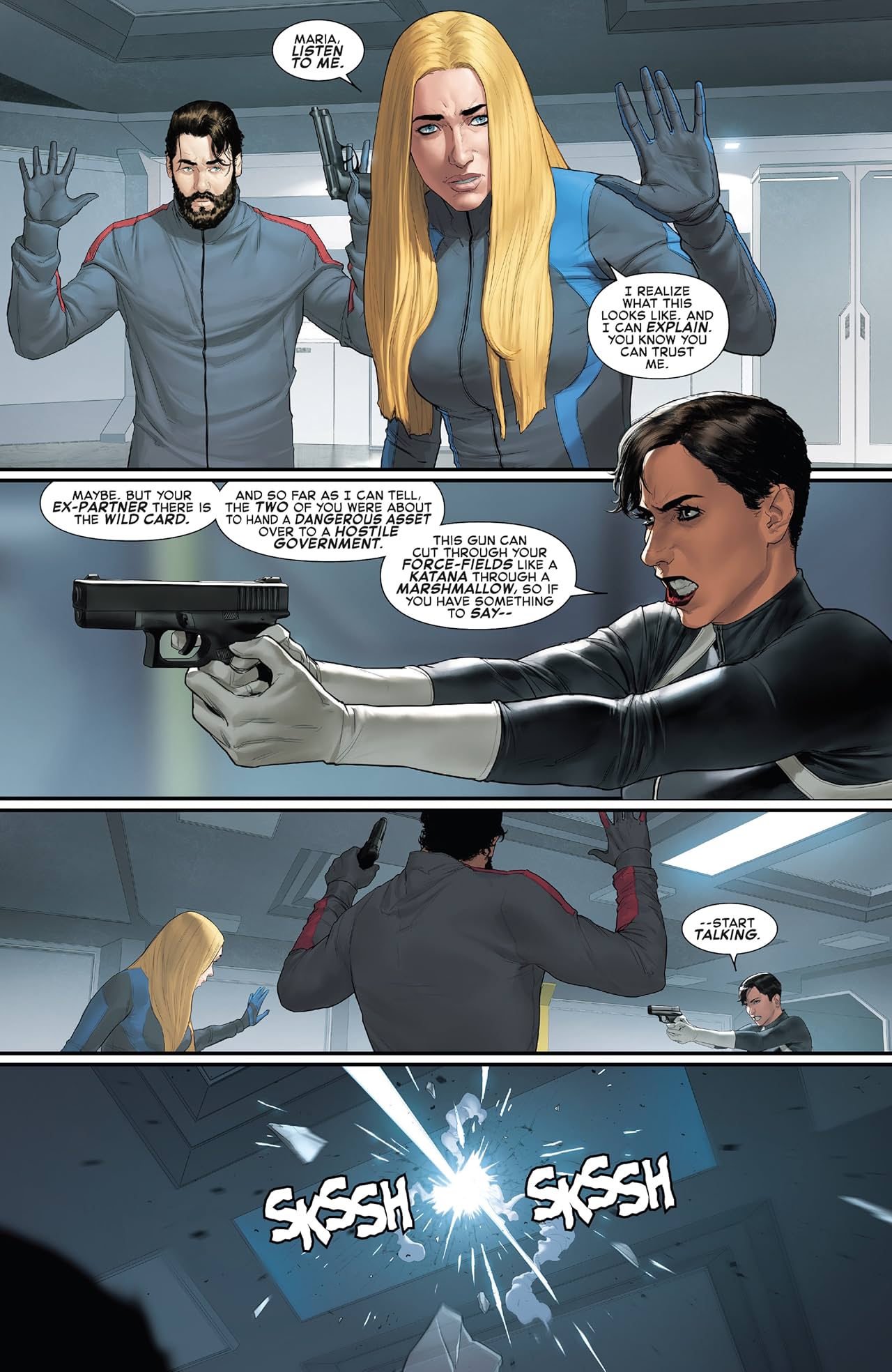
True to the high heroic standards that she holds for herself, Sue never stops trying to save her former partner. She keeps trying to reconnect with the man she once knew. At every turn, however, Aidan keeps shooting holes in their history and her faith in him. It puts Sue in a difficult position in “Invisible Woman #5,” one for which she can’t play by the same rules that help make her an iconic hero.

What starts as a rescue is now an unfolding tragedy and it comes dangerously close to becoming much worse. At this point, there’s no more room for betrayals and secrets. Sue has to confront Aidan, who at this point has a death wish. However, rather than poke the Hulk’s eye or kick a puppy in front of the Punisher, he wants Sue to be the one to stop him.

He seems so far gone, but Waid never paints Aidan as someone who has just lost their mind. He’s not the Joker, the Green Goblin, or a villain from a James Bond movie. He’s just someone who has crossed so many lines over the year as a spy, lying and betraying everyone along the way, that there’s no standard left to judge him. As a character and someone who used to ally himself with superheroes, he’s gone morally numb.

At times, Aidan comes off as a dark mirror for Sue. In him, she sees what she could’ve become if she’d remained a spy. He is living proof of what happens when you’re held to a high standard, but cross too many lines. It makes what Sue has to do to stop him feel so dramatic and impactful.

Along the way, she has to push herself and her powers in ways we rarely see outside of trips to the Negative Zone. Artist Mattia de Iulis does an excellent job showing off what Sue can do when she needs to use her powers creatively. The visuals make clear that, even without her family, Sue is very powerful.

Anyone who has read more then one Fantastic Four comic knows that. However, seeing her powers applied in such unique ways helps demonstrate what Aidan sees in her. If she held herself to a different standard, she could be a true force to be reckoned with and not just as a spy.

Between de Iulis’ renderings and Waid’s characterization, “Invisible Woman #5” shows the Fantastic Four’s perennial mother figure in a new light. We get to see glimpses of her past before she became this iconic hero that we hold to such lofty standards. We also see how her approach to heroism differs from those who immerse themselves in situations where heroes and villains alike have to lie, cheat, and deceive.

It’s not one of those stories in which Sue can rely on her family, teamwork, or her inherently endearing personality to save the day. She has to face down someone who ventured into the same shady world, but came out far worse. It’s not the kind of situations that Sue often finds herself in with the Fantastic Four, but “Invisible Woman #5” shows that she can handle it, albeit with a heavy heart.

In the end, that same heart is exactly why Sue Richards holds herself to such high standards. It’s the same reason why her heroism is judged by such a strict criteria compared to other characters in the greater Marvel pantheon. When she does have to cross a line, it breaks her heart, as it would for anyone who hasn’t been too hardened by circumstance.

The fact that there are still characters like Sue Richards, who hold onto those values and refuse to cross certain lines, is nothing short of refreshing. In an age where we expect heroes, celebrities, icons, and leaders to cross lines all the time, a hero like Invisible Woman stands out for all the right reasons.


Leave a comment

Filed under Jack's Quick Pick Comic

Jack Fisher’s Weekly Quick Pick Comic: Deadpool #1

Sometimes, the right job finds you before you find it. I would even argue that’s how most people find the right job. Only a select few of us are born with the natural talent and the right opportunities to do what we love. Unless your name is Tom Brady, Elon Musk, or Taylor Swift, you usually end up in a job you don’t expect, but still embrace.

Take that premise to an absurd, vulgar, and violent extreme, and you basically get the life of Deadpool in a nutshell. As a kid, I doubt Wade Wilson thought he would grow up to be a wise-cracking, fourth-wall-breaking, sharp-shooting mercenary who frequently teams up with time travelers played by Josh Brolin. Then again, is it really less absurd than wanting to be an astronaut?

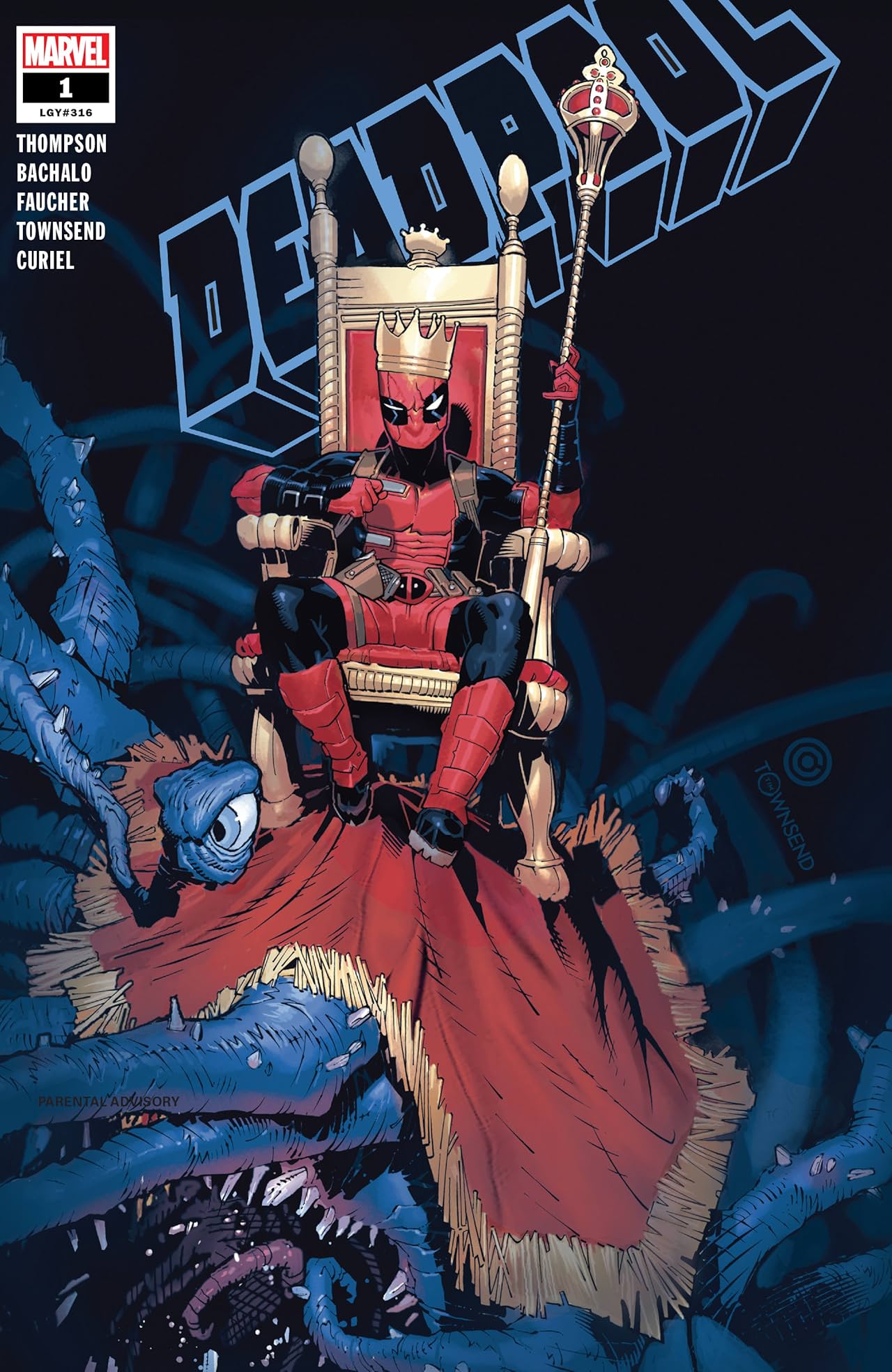
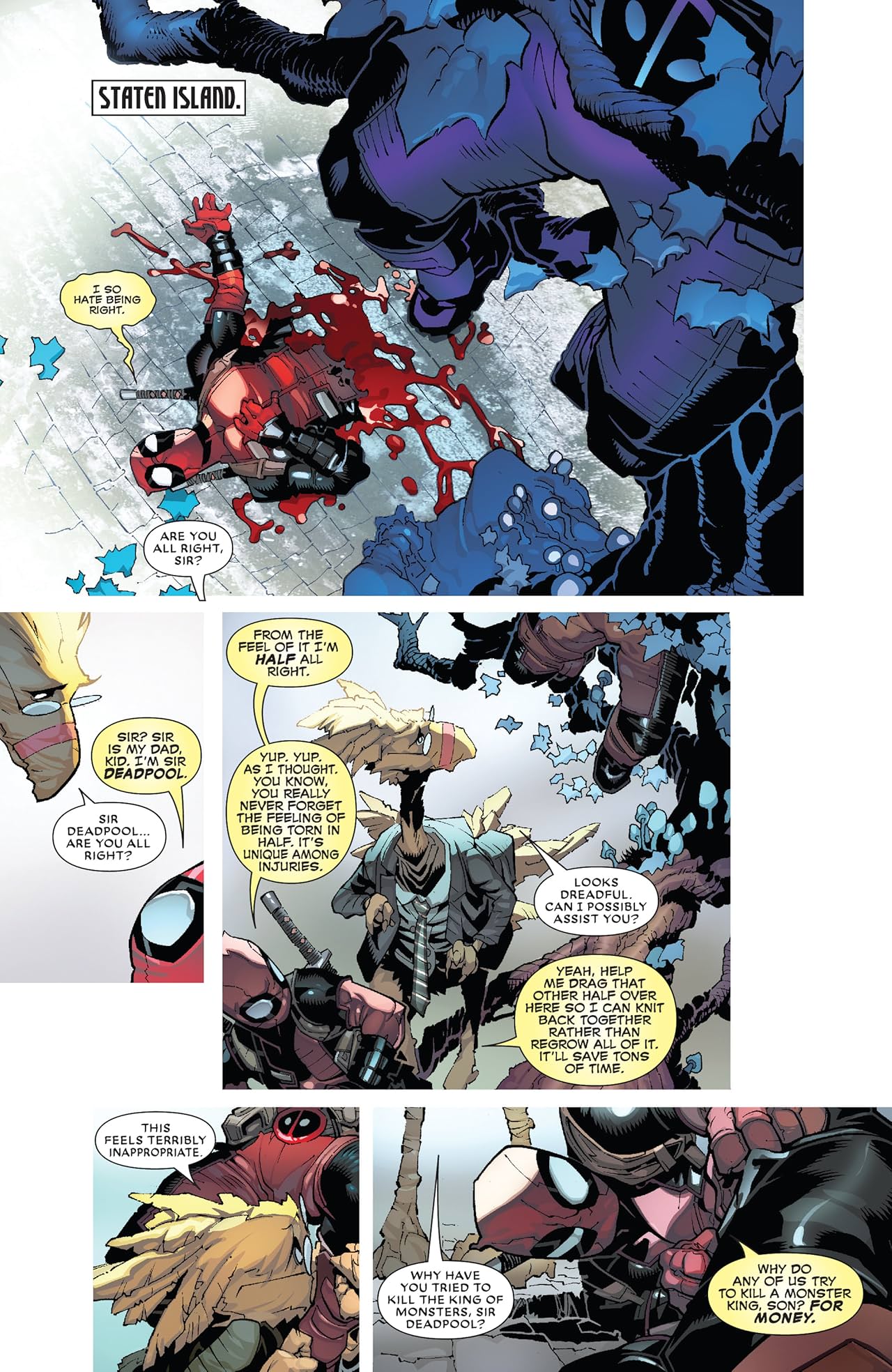
Deadpool, for all his insane antics and violent tendencies, often finds himself in in unexpected roles, but they’re usually roles that makes the most of his talents. Writer Kelly Thompson and artist Chris Bachalo take that concept, run with it, and inject it with some fresh absurdity in “Deadpool #1” by making him King of the Monsters.

That’s not a ceremonial title, either. That’s a real, actual role in the Marvel Universe and Deadpool essentially stumbles ass-backwards into it. It’s every bit as crazy, fun, and entertaining as it sounds.

Deadpool comics aren’t known for high concepts, cerebral plots, or fanciful world-building. These are comics built on a foundation of gratuitous violence, dirty jokes, and concepts that even a paste-eating fifth-grader can understand. Thompson embraces that style perfectly in “Deadpool #1” and even finds time to work in a few colorful cameos.

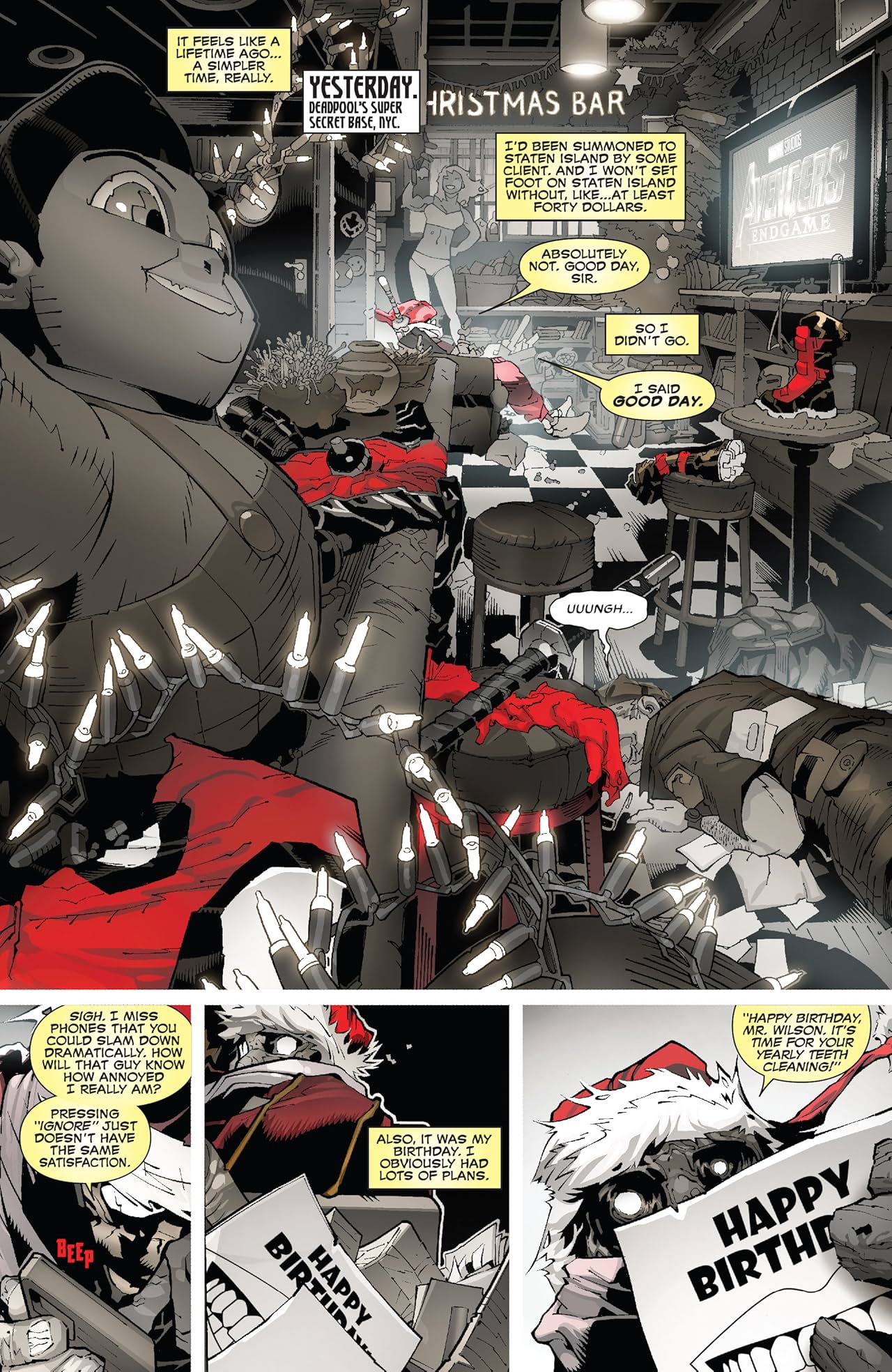
The story doesn’t begin with Deadpool making it his lifelong mission to become the new King of the Monsters. He’s not the kind of guy who thinks that far ahead. He’s just another gun-toting mercenary celebrating his birthday with a mailman he kidnapped. Like I said, he tends not to think that far ahead.

He then lands a new mercenary gig that involves traveling to Staten Island to slay someone who goes by the completely unsubtle title, King of the Monsters. The gig pays well and up front so Deadpool isn’t inclined to ask too many questions. There is a more detailed lore about who the King of the Monsters is and why they’ve set up shop in Staten Island of all places, but none of that matters to Deadpool

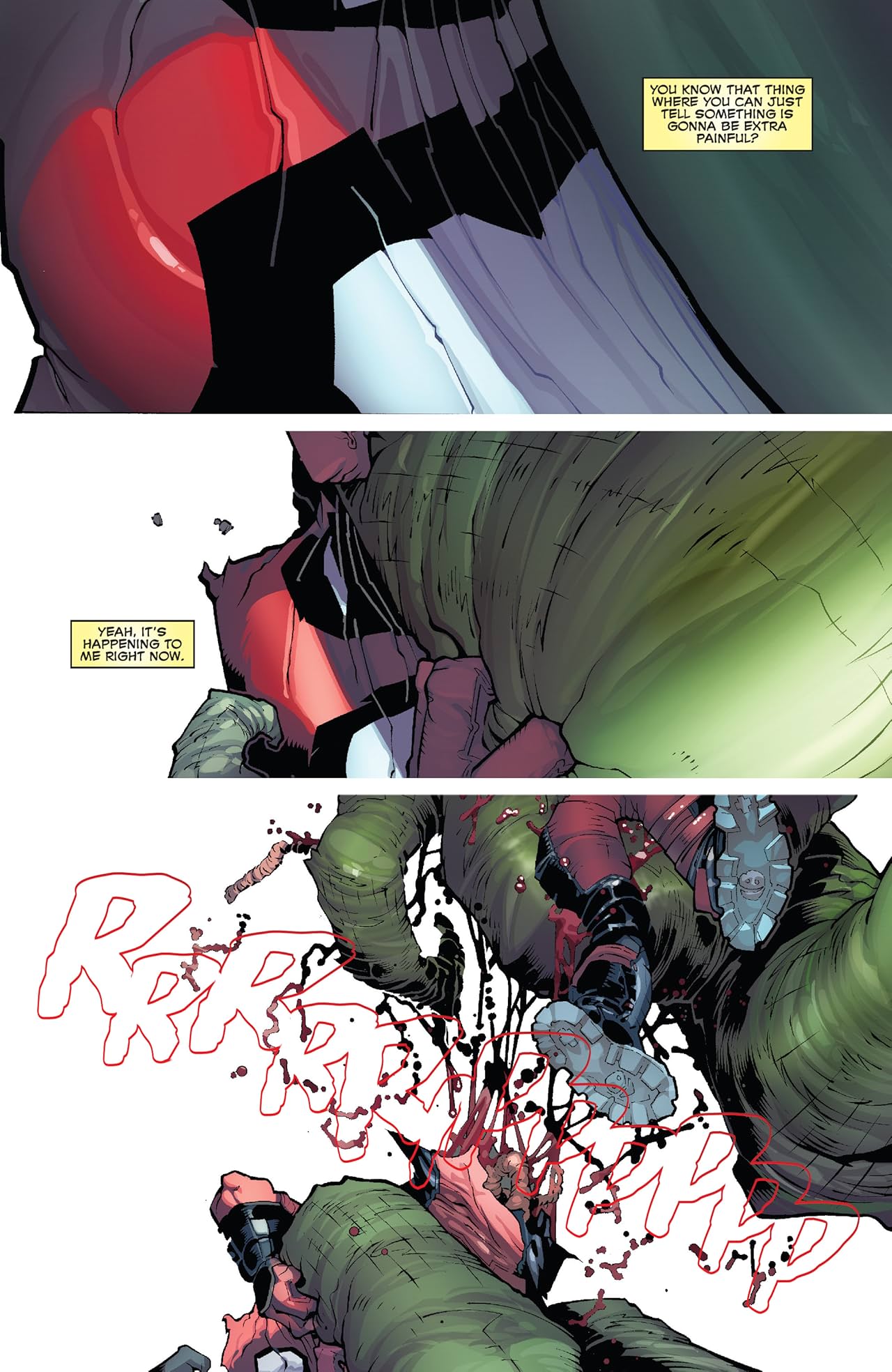
What matters is that it puts him in a position to inflict a little rampant destruction on a hideous, Lovecraftian monster that is beautifully rendered by Bachalo’s art. It’s simple. It’s fun. It’s everything you want a quality Deadpool comic to be.

Deadpool #1” checks all those necessary boxes, but it doesn’t stop at the basics. Thompson throws in a few bonuses as well, including appearances from Elsa Bloodstone and Gwenpool. While Elsa’s appearance is a bit more pragmatic, being that she’s Marvel’s premier monster hunter, Gwenpool just adds a little extra entertainment value.

Plus, she brings a baby shark with her. Yes, this comic has a baby shark in it too.

What other comic besides a Deadpool comic would that both work and make perfect sense? I challenge anyone to find one.

Even with those cameos and the quirky details, “Deadpool #1” still has a coherent plot. Deadpool becoming King of the Monsters is just part of it. Even if he didn’t set out to achieve that title at first, it’s not something he just shrugs off. He now finds himself in this strange new role that comes with responsibilities, crowns, and minions. He’s going to try and have a little fun with it. That’s just how Deadpool approaches things.

It ensures his story rarely has a larger, over-arching theme. Deadpool is not the kind of character who can carry an epic, Lord of the Rings level quest on his own. He just doesn’t have the necessary attention span. He just takes random jobs, follows them to whatever messy outcome they inspire, and takes it from there. The fact it includes so much R-rated entertainment along the way is just a nice bonus.

Deadpool #1” doesn’t reinvent the character or how his comics are crafted. Thompson and Bachalo stick to the basics, but still find a way to mix in some extras. Some of those extras even lend themselves to bigger stories that promise even more absurdities, some of which will require more monsters and more explosions. It’s every bit as appealing as it sounds.

It even makes the case that Deadpool is uniquely qualified for his new role as King of the Monsters. While he’s not a monster and is hardly qualified to be king of anything not associated with a Bea Arthur fan club, he knows how to handle himself around monsters. He knows how to slay them and get along with them. Isn’t that a prerequisite for any king?

Being so immature and unbalanced, Deadpool is uniquely suited to his new title. He may still be a mercenary at heart, but he now finds himself in an unexpected role that fully complements some of his most eccentric traits. It’s a fertile foundation on which to build Deadpool’s story. With monsters, violence, and baby sharks, I’d say Deadpool’s new reign is off to a promising start.

With that, I say all hail the new King of the Monsters!


Leave a comment

Filed under Jack's Quick Pick Comic

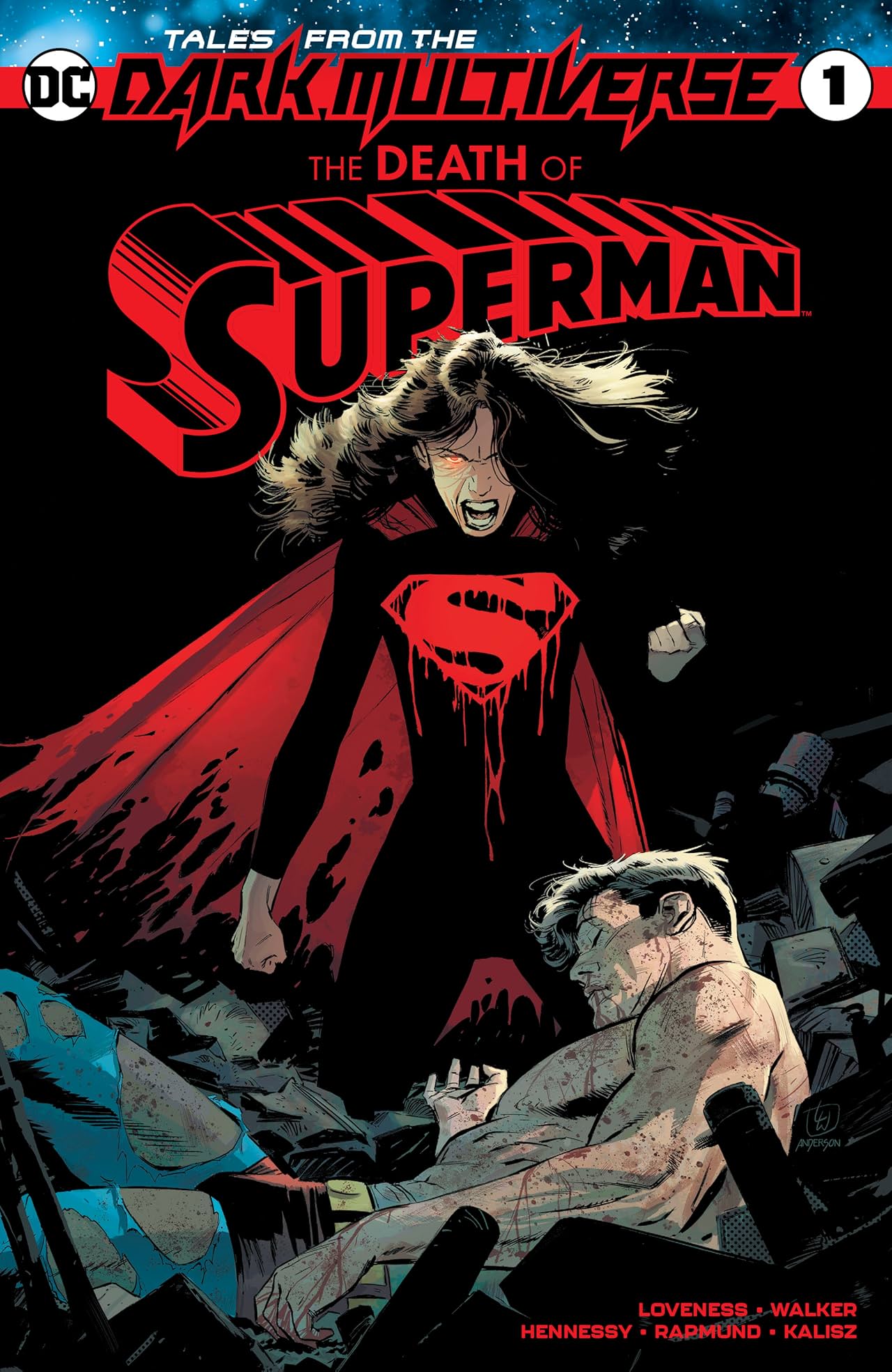
Jack Fisher’s Weekly Quick Pick Comic: Tales From The Dark Multiverse: Death Of Superman #1

In the world of comics, alternate universes and various “what if” scenarios tend to be hit or miss. Some stories become more than simple thought experiments that plays with the malleable timelines and multiverses surrounding certain characters. A few even go onto become beloved and acclaimed. Stories like “Superman: Red Son” or “Age of Apocalypse” are shining examples of just how great these stories can be.

However, they’re the exception rather than the norm. Most scenarios that deal in alternate universes and “what if” scenarios tend to be either entirely forgettable or too absurd to take seriously. The stories that do set themselves apart usually succeed because the concept is strong and compelling.

By that standard, “Tales From The Dark Multiverse: Death Of Superman #1” has a lot going for it. The original “Death of Superman” story is one of the most iconic stories in the history of superhero comics. It raised the bar for how dramatic, impactful, and heartfelt a superhero comic can be. It showed just how great these characters can be, even in the face of tragedy.

This comic dares to flip the script. It explores a very different, very bleak scenario that shows how tragedy can bring out the worst in people. It dares to contemplate how even those who once championed the ideals of characters like Superman can become corrupt. That’s exactly what happens to Lois Lane in this story.

The idea, alone, is intriguing. Lois Lane isn’t just Superman’s iconic love interest. She’s someone who actively fights for truth, justice, and the American Way without the aid of other-wordly powers. Whether she’s a reporter or Superman’s lover, she personifies these values in ways that few characters can match. She’s the last person in the DC Universe that you would expect to be corrupted by tragedy.

However, in this world when the events of “Death of Superman” play out, that’s exactly what happens. Moreover, writer Jeff Loveness makes it feel entirely believable. As the story unfolds, we see a version of Lois Lane that isn’t just consumed by grief. She’s hardened by it.

Instead of grieving the loss of her lover and hero, she’s consumed by anger. She sees a world full of heroes that Superman helped inspire. Then, when he needed them most, they failed him. They let him die. On top of that, his death didn’t inspire people to be better. Things just went back to the way they were, minus their greatest hero.

In that context, it’s easy to understand why Lois would get so angry. As a result, when she has a chance to embrace the power of the Eradicator, you almost want to cheer her on. Suddenly, she has a chance to carry on Superman’s legacy. At the same time, it’s easy to see how this kind of power will ultimately corrupt her.

Power corrupting fallible human beings is a fairly common recourse in superhero comics. It’s the basis for some of the most iconic stories of all time. However, the fact that this is Lois Lane becoming corrupt is what really gives this story its impact. It makes “Tales From The Dark Multiverse: Death Of Superman #1” feel like more than just another dystopian timeline.

What Lois is able to do with the power of the Eradicator is extensive, but her grief has her cross lines that Superman never would. Loveness never gives the impression that she crosses these lines because she’s a fallible human. There’s a progression that builds up inside her, driven by sorrow and anger. She never just snaps. It feels like a natural extension of her anguish.

Naturally, it puts her at odds with other heroes and major villains. I won’t spoil how it plays out, but it gets pretty dark. However, it never gets so dark that it seems gratuitous. Loveless still makes an effort to capture the drama and heart that helped make “Death of Superman” such an endearing story. While it’s impossible to match the impact of the original story, this story still strikes the right chords.

There are moments in “Tales From The Dark Multiverse: Death Of Superman #1” that defy the traditional conventions of the DC Universe. It’s appropriately dark. At the same time, though, it never feels like the characters completely deviate from who they are. This darker version of Lois Lane still feels like the Lois Lane we’ve known for over 80 years.

Loveness makes the case that even someone like Lois can walk a darker path in a believable way. The artistic style of Brad Walker, Andrew Hennessy, and Norm Rapmund give that story an appropriately dark tone. It’s dramatic, but it never feels like it’s just doing things for shock value. Granted, seeing Lois become so corrupt is shocking, but that’s not the only thing driving the story.

While “Tales From The Dark Multiverse: Death Of Superman #1” probably won’t garner the same acclaim as “Superman: Red Son,” it succeeds in ways that so many other “what if” comics fail. It takes an intriguing concept and develops it in a believable way. It doesn’t undermine the characters or the original themes behind them. It simply tells a darker version of a well-known story and tells it very well.

Lois Lane will always be defined by her connection with Superman. In so many stories within so many worlds, that connection is what brings out the best in her. In this one exceptionally dark world, it brings out the worst and that makes Superman’s death even more tragic.


Leave a comment

Filed under Jack's Quick Pick Comic

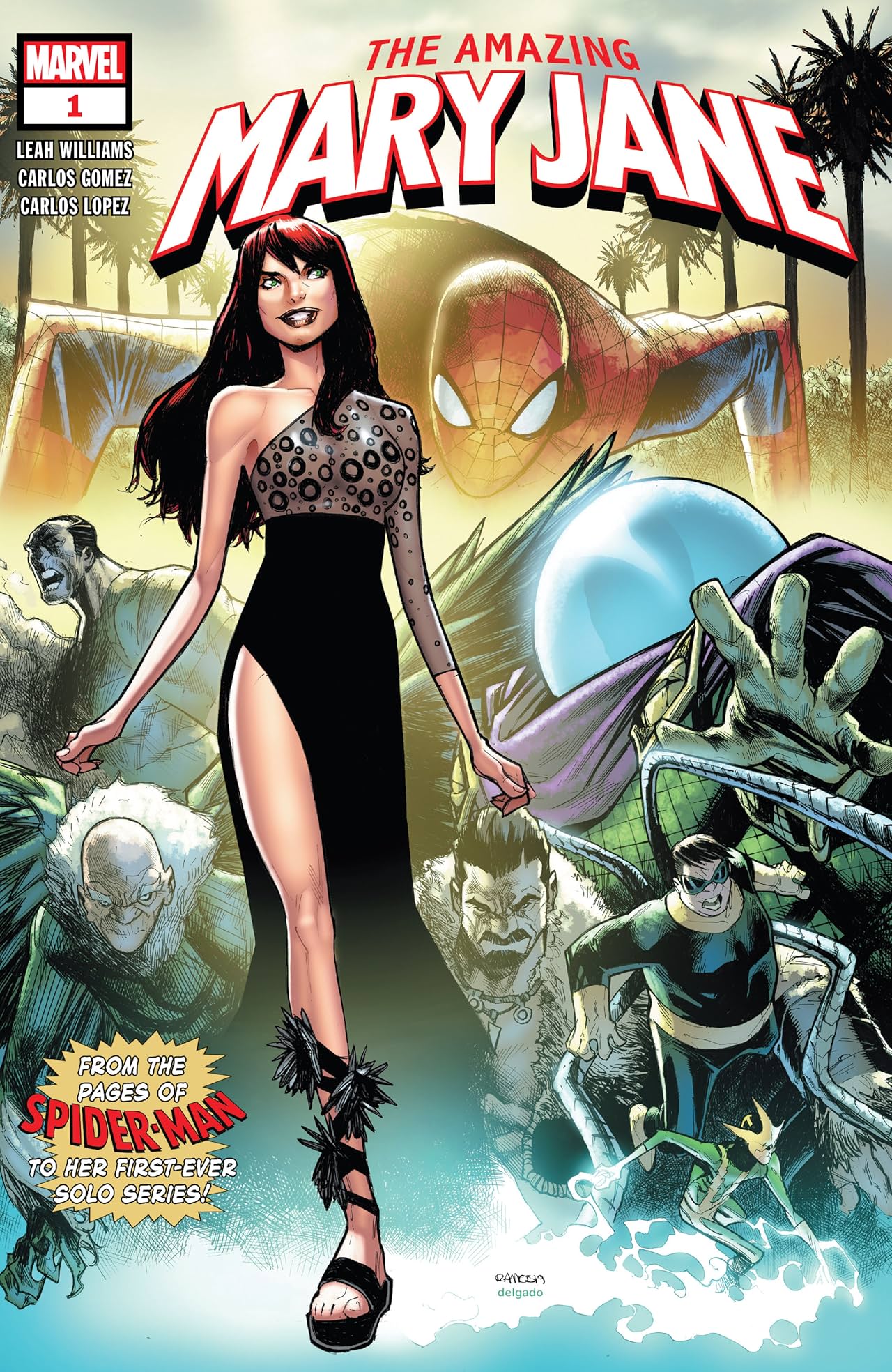
Jack Fisher’s Weekly Quick Pick Comic: Amazing Mary Jane #1

An iconic character is only as great as their supporting cast. On their own, icons like Batman, Superman, and Captain America can only do so much to carry their story. Like Santa Claus without his elves, they’re limited in how compelling they make that story without other characters around them adding dramatic fuel to the story.

This is especially true for characters like Spider-Man, whose supporting cast is one of the strongest and most in extensive in comic book history. If you need proof, just remember that a movie based around one of Spider-Man’s greatest villains grossed over $856 million. However, if you need further proof that Spider-Man’s supporting cast is what makes him so amazing, then look no further than Mary Jane Watson.

She’s not just Spider-Man’s girlfriend.

She’s not just the super-hot, super-sexy redhead who gets every straight man’s blood flowing for all the right reasons.

She’s not just the eye candy that makes for some of the best variant comic book covers of all time.

Mary Jane Watson makes Spider-Man a greater character because she’s a great character in her own right. She didn’t come into his story as some wide-eyed bimbo who existed only to make Peter second-guess the merits of male superheros wearing skin-tight outfits. She has her own story, motivations, and aspirations.

Most of the time, her story is relegated to secondary sub-plots in Spider-Man’s stories. While some of those stories are great for both characters, she’s never had a chance to carry her own story. Leah Williams and Carlos Gomez finally give her that chance in “Amazing Mary Jane #1.”

It’s still a story closely tied to Spider-Man, but Mary Jane is the one leading the charge this time. It’s not a radical reinvention of who she is or what motivates her. Williams and Gomez simply shift the spotlight to her and let her work her amazing charisma. It’s a simple approach, but it works.

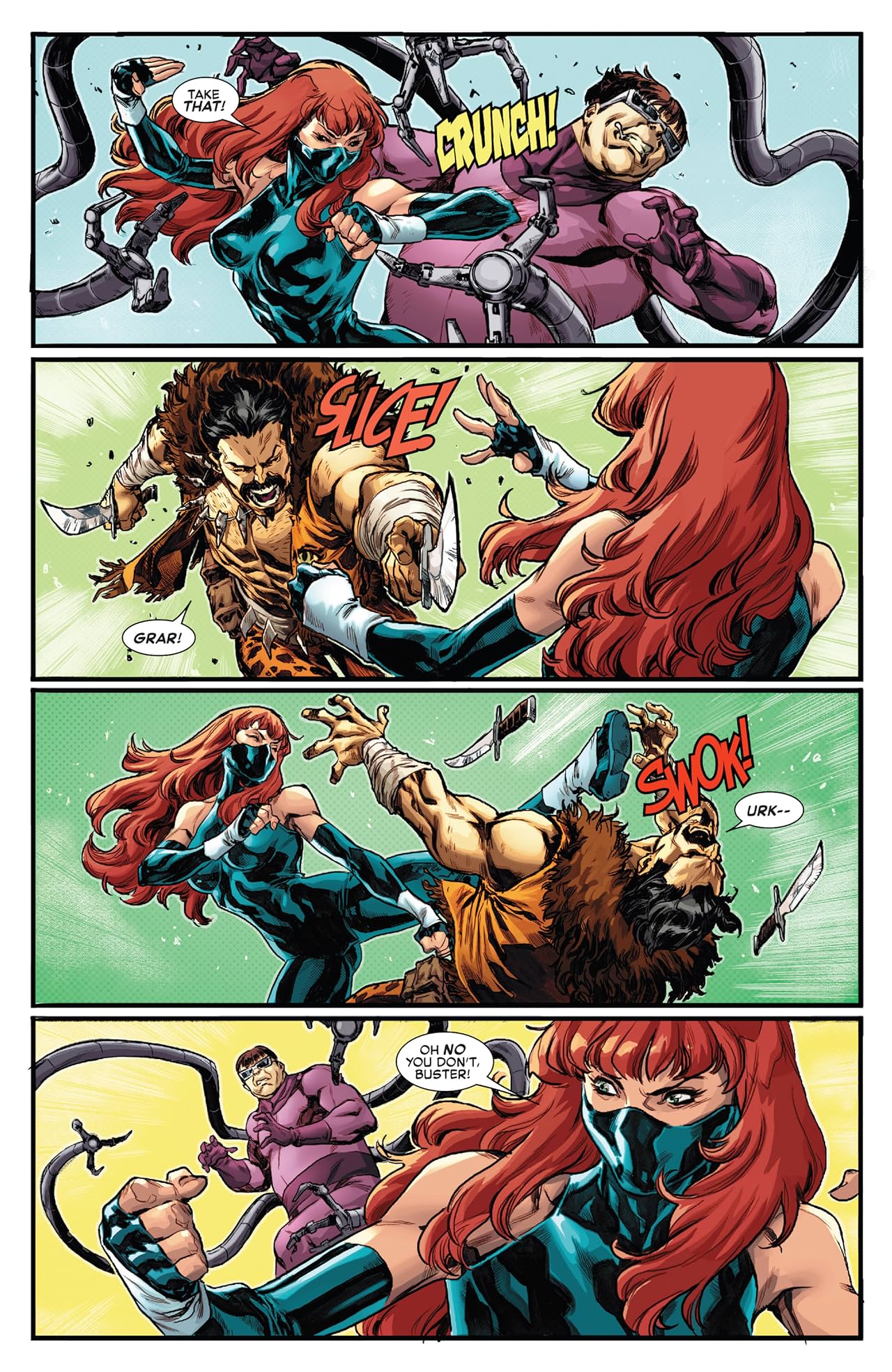
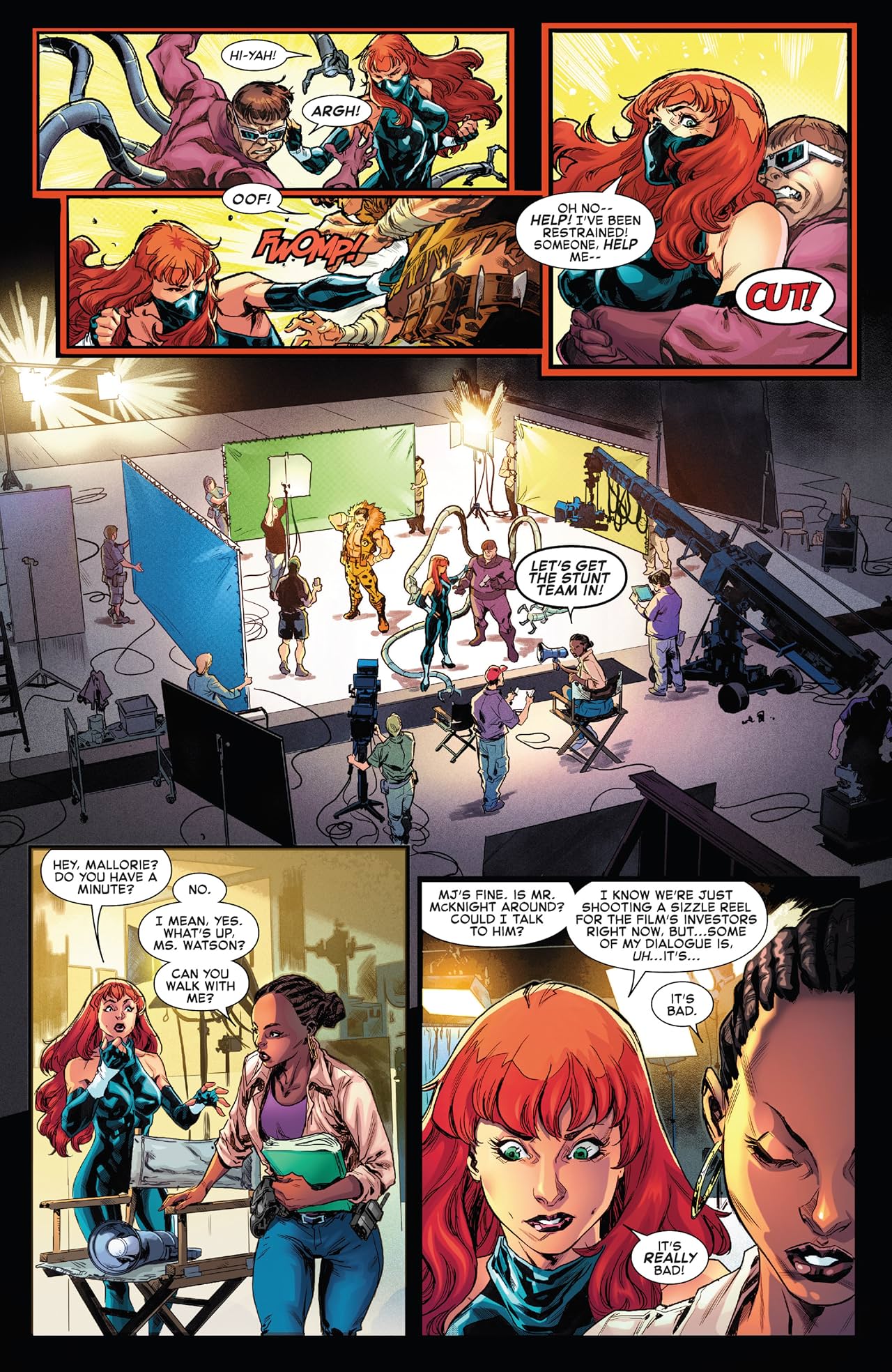
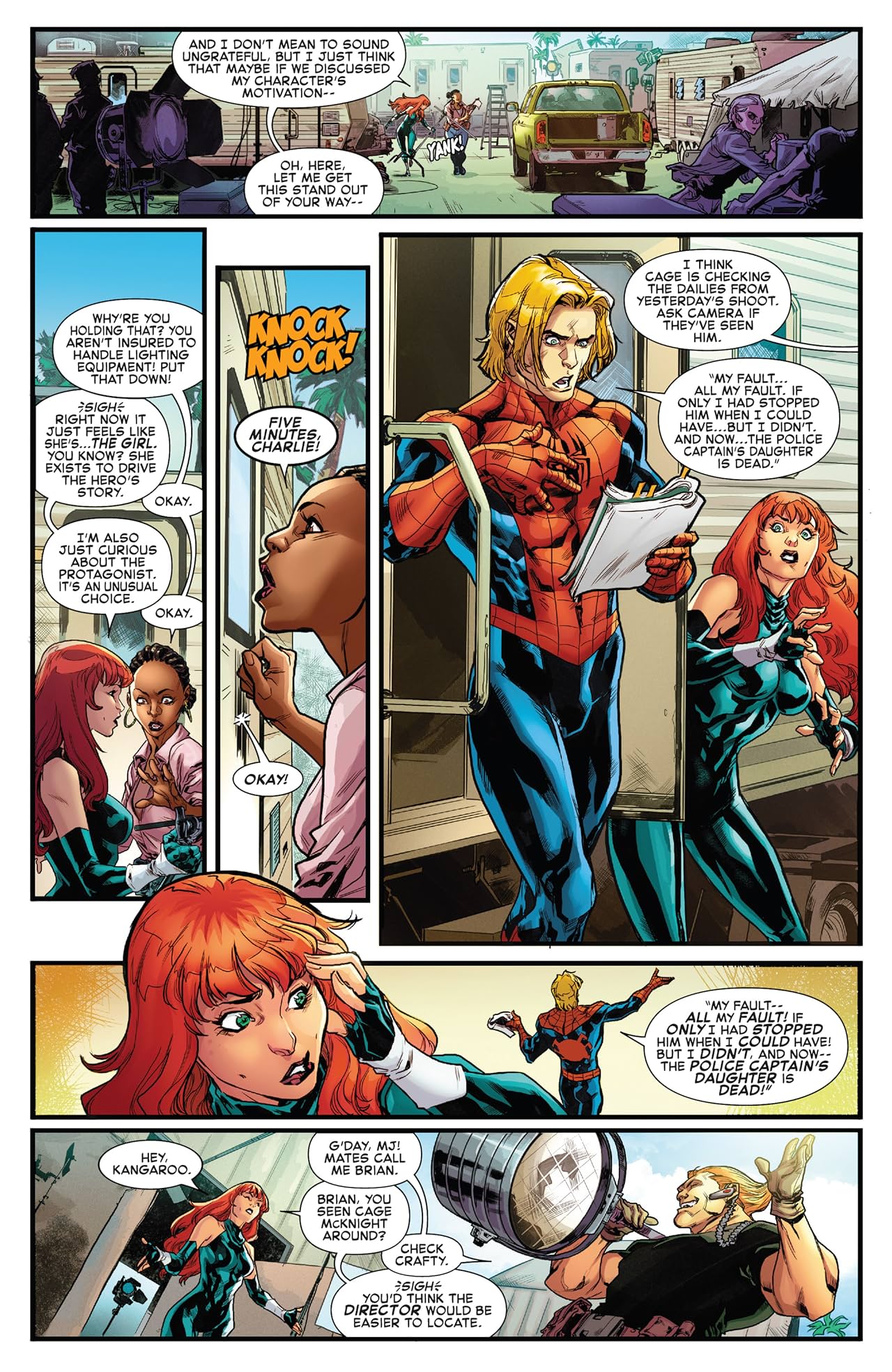
Mary Jane is still an aspiring actress. Like many aspiring actresses, she’s looking for ways to further her career. The basic premise of  “Amazing Mary Jane #1” is that she gets an opportunity to do just that. It even involves a role that she’s very familiar with. She’s caught up in a battle involving Spider-Man. For her, she really doesn’t need to do much acting.

There’s just one glaring problem and it’s not just that her role is reduced to being a beautiful woman in a skin-tight outfit. This opportunity that she desperately wants happens to be courtesy of Quentin “Mysterio” Beck, one of Spider-Man’s most colorful villains and one whose star really rose with “Spider-Man: Far From Home.”

It’s a situation that might make even the most ambitious actress hesitate. At the same time, it puts Mary Jane in a position to show her greatest strengths, none of which involve superpowers. She’s able to carry the story with her personality and William captures it wonderfully on multiple fronts.

Mary Jane doesn’t just smile and nod to go along with everything. She speaks her mind, but never in a way that makes her sound condescending or self-centered. She sees something wrong with the role she’s playing and she confronts it. When the nature of that role is objectively bad for both her and the movie, she says so.

It’s an issue ripped right from recent news surrounding the Hollywood horror stories that ambitious actresses have endured. It’s a sensitive, hot-button issue, but one that “Amazing Mary Jane #1” doesn’t ignore. The characters don’t ignore it, either. It’s a real issue that’s worth addressing, even in a superhero comic.

However, that issue never derails the story or takes away from the substance of the plot. “Amazing Mary Jane #1” is not about Mary Jane Watson calling out the predatory practices of Hollywood producers. It’s about her finding out that this major opportunity her in the center of Mysterio’s latest endeavor.

Being Spider-Man’s girlfriend, she knows better than most that this endeavor will likely involve something going horribly wrong. Since she’s in Hollywood and Spider-Man is in New York, she can’t count on being rescued this time.

It’s a great setup that perfectly blends Mary Jane Watson’s personal story with one of Spider-Man’s most well-known villains. She’s still part of Spider-Man’s story, but this is one in which she shoulders the responsibilities. On top of that, she has to do that without the aid great power.

At the same time, the very absence of that power is part of what makes Mary Jane such a strong supporting character for Spider-Man. She knows she’s not the one with the superpowers. Even Spider-Man knows this. That doesn’t stop her from accepting those responsibilities. She, more than anyone, shows Peter Parker that responsibility doesn’t end with stopping muggers, criminals, and guys with fish bowls for heads.

Even when she’s accepting responsibility, Mary Jane Watson still knows how to have fun. Williams goes out of her way to capture that in “Amazing Mary Jane #1” and Gomez makes her look great while doing it. The sweet, playful moments between her and Spider-Man often bring out the best in both characters. They’re the kind of moments that are sure to piss off Mephisto.

Peter Parker will always be the center of the greater Spider-Man universe, even when that universe involves talking pigs. However, Mary Jane Watson makes that universe more compelling and dramatic with her presence. She also makes it sexier, but that’s just a nice bonus. Amazing Mary Jane #1” further proves that she’s capable of being amazing in her own right. 

Leave a comment

Filed under Jack's Quick Pick Comic, Spider-Man

Jack Fisher’s Weekly Quick Pick Comic: Powers of X #6

When assessing the greatness of a particular story arc in comics, there are many factors to consider. There’s the quality of the writing, the strength of the characterization, the cohesiveness of the plot, the vibrancy of the artwork, and how it all fits together in terms of the greater narrative. Many comics succeed in some of these areas and are worth reading. Very few manage to succeed in most.

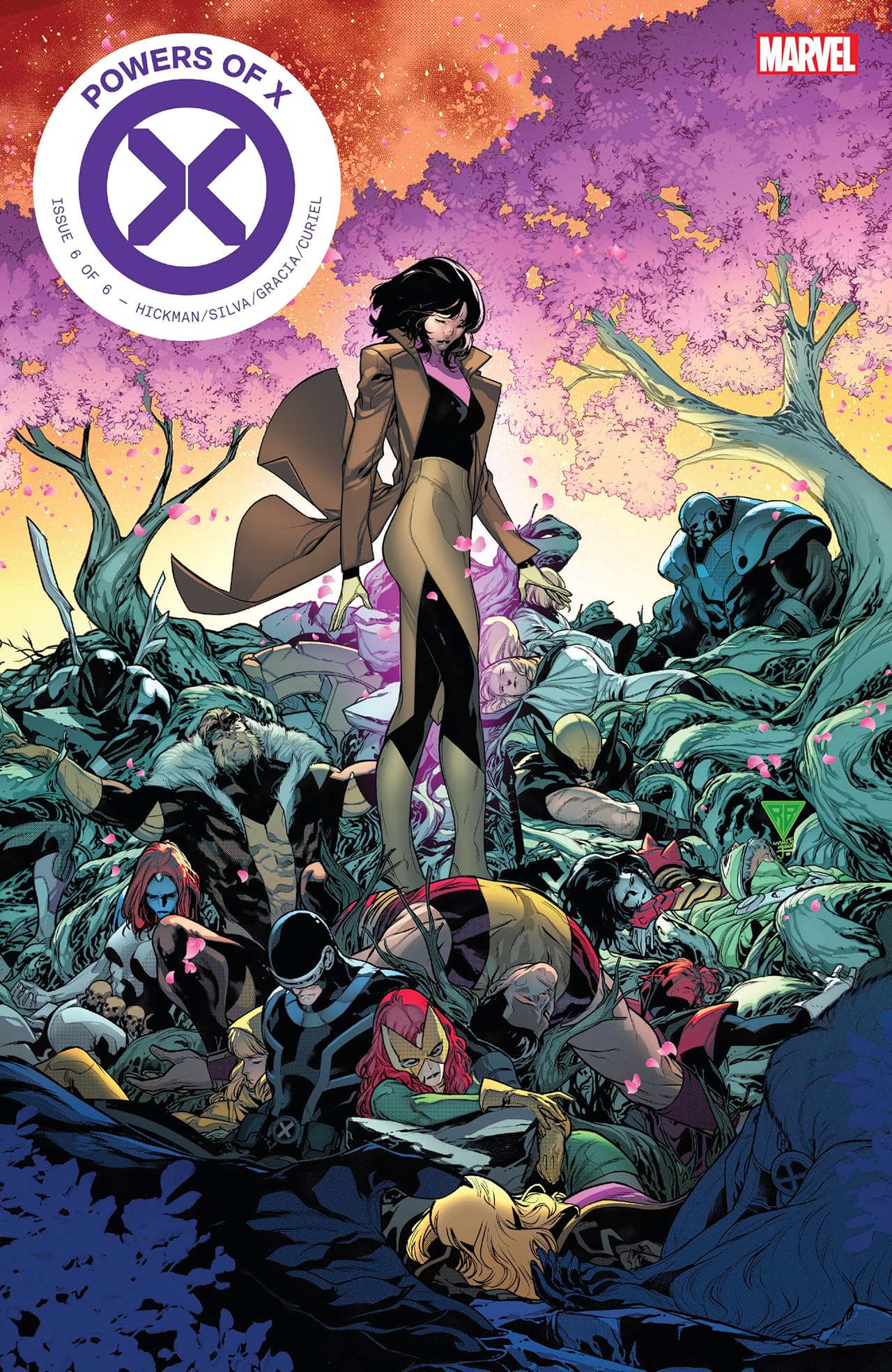
I usually try to avoid spoiling too much of a great story, but I will spoil one thing. “Powers of X #6,” and the overall story arc it capped off, is among those select few. In the history of X-Men comics, Marvel Comics, and superhero comics in general, this is one of those stories that will likely stand out as an example of what’s possible when all the right story elements are in place.

Writer Jonathan Hickman has always been someone with big ideas who builds even bigger stories around them. He starts with a concept. Then, he positions the characters around it in such a way that requires them to evolve in ways that they’ve never dared. From there, the story only gets bigger in terms of scope, scale, and impact.

He did it with the Avengers. He did it with the Fantastic Four. Now, he’s done it again with the X-Men. As a lifelong X-Men fan, who has seen some pretty awful runs and some exceedingly dark times, I cannot overstate how refreshing this story is. I honestly cannot think of a time when an X-Men story arc felt so meaningful and relevant.

I’ve highlighted and praised various issues of House of X and Powers of X before, but “Powers of X #6” faces a unique challenge that many story arcs fail to overcome. It can’t just end the story on a particular note. It has to fill in some lingering plot holes while leaving just enough unfilled for future stories to build on. It’s a difficult balance to strike and one past X-Men story arcs have come up short.

That balance never falters in “Powers of X #6.” It fills in a few key plot holes, most notably the events of Moira MacTaggart’s mysterious sixth life. At the core of this story, and everything that stems from it, is the impact of Moira MacTaggart. It’s not hyperbole to state that she is now the most important character in the X-Men mythos.

Her role doesn’t just involve revealing what worked and didn’t work in terms of mutants trying to survive in a world that hates and fears them. In “Powers of X #6,” she witnesses the ultimate endgame for the human/mutant conflict. She sees the inevitable result of this conflict, regardless of which side she takes.

It doesn’t matter if someone sides with Magneto.

It doesn’t matter if someone sides with Professor Charles Xavier.

It doesn’t even matter if someone swears allegiance to Apocalypse and fights by his side.

The events in “Powers of X #6” establish that none of these conflicting groups, who have been clashing in X-Men comics since the Kennedy Administration, will be vindicated in the long run. Ultimately, they will be defeated, but not by the forces they think.

It’s a point that Hickman makes clearly by building on key moments established in past issues of Powers of X and House of X. Within these moments, harsh truths are dropped and fateful choices are made. They help give the achievements that played out in “House of X #6” even more weight. They also establish the stakes the X-men, and the entire mutant race in general, face moving forward.

These are powerful moments that impact the past, present, and future of the X-Men. Through Moira, the greatest threats facing mutants takes a very different form. It’s not a menacing new Sentinel. It’s not some mutant tyrant, either. It’s not even some bigoted human who thinks interment camps are still a good idea. I won’t spoil the particulars, but c makes clear that the X-Men have an uphill battle.

That’s saying a lot, considering the mutant race is more united than it has ever been. They have a home in Krakoa. Teammates who have been dead or missing for many years are back. They have valuable resources that the world wants. They’ve even won over their greatest enemies, like Apocalypse.

However, even with Moira’s foresight, that still might not be enough.

It might be the greatest achievement of “Powers of X #6.” It is an ending to a bold new beginning for the X-Men, but it also redefines the challenges they face. Through Hickman’s skilled world-building and artist R. B. Silva’s brilliant renderings, it genuinely feels like a true paradigm shift for X-Men comics.

They’re still mutants. They’re still the same superheroes they’ve always been. Their goals haven’t fundamentally changed that much. What has changed are the stakes, the forces opposing them, and their approach to dealing with them. It feels both hopeful and dire at the same time.

Whereas “House of X #6” establishes the promise of a brighter future for mutants, “Powers of X #6” reveals the ultimate barrier to that future. It’s not something they can shoot, blast, stab, or punch. If they want to succeed, then they have to fundamentally change how they go about Charles Xavier’s dream. Moreover, the dream itself needs to evolve.

Years from now, X-Men fans will likely look back on “Powers of X #6” as a defining moment for a narrative that has been unfolding for over 50 years. Those moments are few, far between, and precious. This one in particular may go down as one of the most uncanny.

Leave a comment

Filed under Jack's Quick Pick Comic, X-men

On My Way To New York Comic Con 2019!

9FE52827-2897-4629-B24A-9FDE46A77E9A

It’s that magical time of year again! The New York Comic Con for 2019 has arrived! For lifelong superhero fans like me, this is like Christmas, the Super Bowl, Black Friday, and Halloween all rolled into one glorious event. I could write an entire book about how excited I am and it still wouldn’t get the point across.

I know I said that last year and the year before that. I’ll probably say it again next year. The sentiment will be the same. The New York Comic Con is one of my favorite times of year. It’s an event that’s near and dear to fans of superhero comics, movies, video games, and all things awesome. For that, it is special.

I hope to share plenty of details when all is said and done. Until then, excuse me while I soak in every glorious moment.

1 Comment

Filed under Jack Fisher's Insights, superhero comics, superhero movies, television

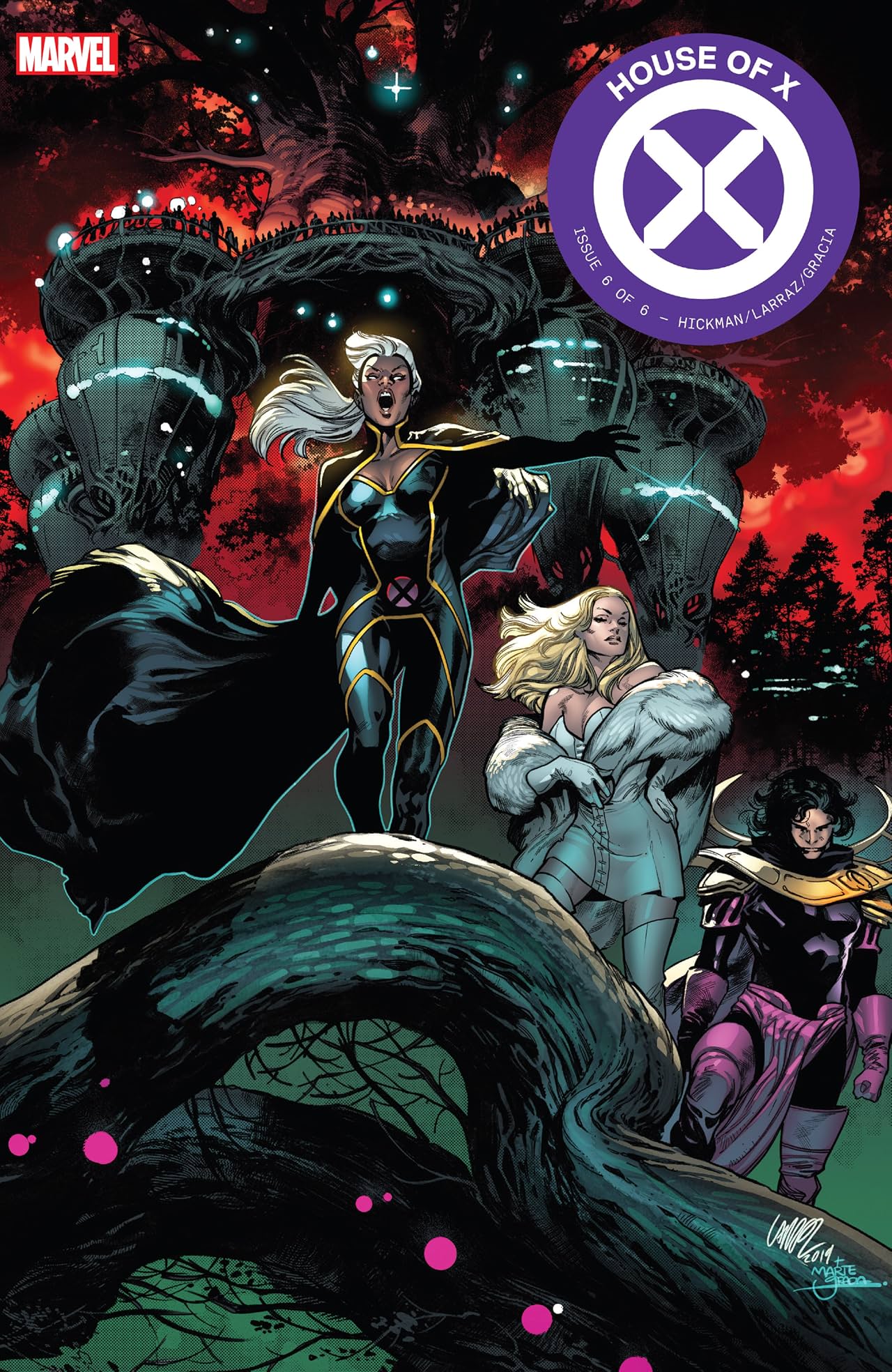
Jack Fisher’s Weekly Quick Pick Comic: House Of X #6

There’s an unwritten rule in superhero comics. Heroes can enjoy a happy ending every now and then. However, it can only go so far. For every happy ending, there must also be a setup for the next conflict. It also can’t be too happy. The struggle can never stop or slow down. More epic battles must follow. Where else will Marvel and their Disney overlords get ideas for new billion-dollar movies?

Sometimes, the happy endings are as short-lived as they are shallow. This is especially true of X-Men comics. Their struggle is more complicated than fighting hordes of Hydra soldiers or battling invading Chitari armies. Sure, they regularly battle killer robots, but the primary source of their problems come from hatred and fear. There’s only so much they can triumph over that. A typical internet comments section is proof of that.

As a result, any victory the X-Men enjoy seems fleeting. Any semblance of a happy ending or true progress comes off as shallow or temporary. That has been my experience, as a lifelong X-Men fan. Then, “House of X #6” comes along and in the span of a single book, those unwritten are bent, broken, and redefined.

Throughout the X-Men’s colorful history, there have been many defining moments. Unfortunately, most of them often involve tragedy, destruction, and decimation. The moments that involve a triumphant, happy ending that feels like real progress in their struggles are few and far between. That only makes “House of X #6” more precious in the grand scheme of things.

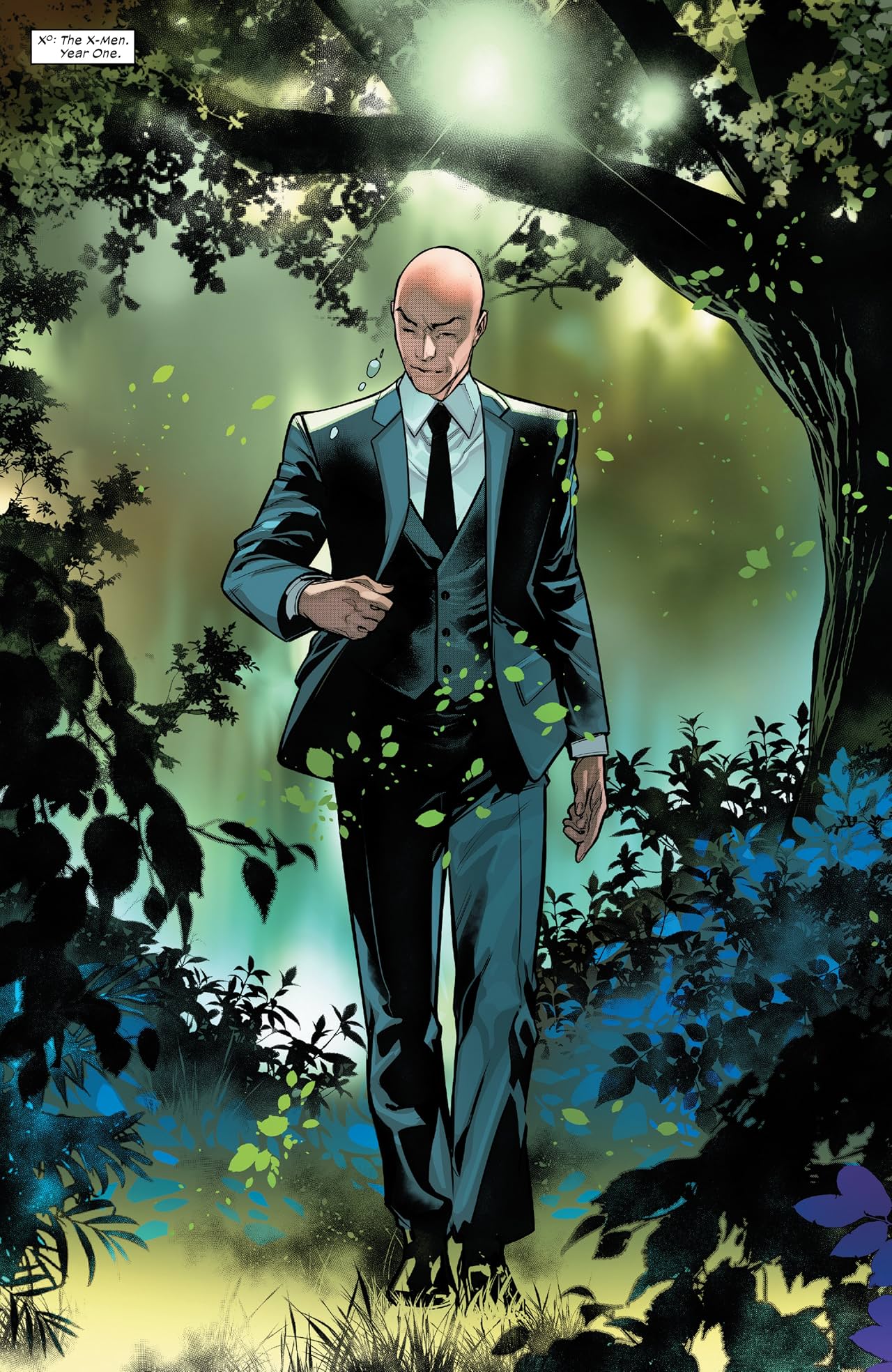
This epic, world-building narrative began with a simple proclamation from Charles Xavier. While humanity slept, the world changed. In “House of X #6,” the sheer breadth of that change becomes clear. Xavier doesn’t just announce to the world that things are different. He explains why and how they got to this critical point.

It’s the kind of speech that leaves you anxious, astonished, concerned, and elated, all at the same time. He doesn’t talk around the truth or rely on alternative facts. He lays out clearly what mutants have been through. Even if you haven’t been following the X-Men comics for the past several decades, you get a clear understanding of how they got to this point.

They’ve been bullied, attacked, ignored, and driven to the brink of extinction more than once. They’ve clashed with other superheroes while being held to a different standard. In a world where so many other people have superpowers and aren’t subject to constant killer robot attacks, mutants are seen as a menace.

Now, they’re not just outcasts fighting for their lives and working towards impossible dreams. They’re a full-fledged society. They now have a home in Krakoa, which is now a full-fledged nation. They have their own culture and identity that they’re willing to fight for. These all feel like changes that are exceedingly overdue. Writer Jonathan Hickman finally put it into words while artist Pepe Larraz gave it vibrant visuals.

It’s a beautiful, cathartic moment that X-Men fans of all kinds can appreciate. On top of this momentous announcement, Hickman adds a few more details to the world-building. Now that mutants have their own nation, they have to go about governing it. It’s the kind of detail that tends to get overlooked in most superhero narratives, but it’s those same details that give depth to this emerging status quo.

The government of Krakoa is not overly complicated, but it’s still comprehensive in its vision. Hickman does not skimp on the details. We even get to see how Krakoa handles difficult issues, such as major laws and what to do with those who break them. It’s not quite like watching a mutant version of C-SPAN, but it gets the point across.

This isn’t just mutants consolidating their power. They’re trying to function as a real nation with real connections in the international community. They’re not going to be some isolated enclave. They actually have something to offer the world with the miracle drugs Krakoa produces. However, they’re not treating them as bargaining chips or gifts. They’re real assets with which to create standing in the world.

It’s uncharted territory for mutants. It also opens the door to a new host of complications, but for once, they don’t involve drawing battle lines between humans and mutants. Xavier still seeks peace, but not through impossible dreams anymore.

This is a huge shift for Charles Xavier’s character. It’s a huge shift for the X-Men, as well. They’re not just a team of mutant superheroes anymore. They’re something greater and “House of X #6” is their way of announcing that to the world.

I won’t spoil the many other ways Hickman and Larraz explore this exciting new world. There are plenty of moments that set the stage for a very different kind of struggle with the X-Men. There are also a few hints that they’ll be dealing with a few threats down the line, some more familiar than others. That’s unavoidable, both for superheroes and blossoming nations.

However, I will spoil one critical detail. “House of X #6” gives the X-Men, mutants, and long-time fans a reason to celebrate. It wasn’t that long ago that the X-Men were in a dire state. Marvel was going out of their way marginalized them in favor of propping up the Inhumans. Major characters were being killed off, left and right. Now, in wake of this issue, those dark days feel like distant memories.

The events of “House of X #6” feel like the end of a long, tumultuous period of tribulations and the beginning of a new era. It’s not all doom and gloom, for once. There’s reason to be happy. There’s reason to grab a beer and celebrate. If the X-Men comics were to end with this issue, it would be a damn good ending.

A new world has been built. A new era has arrived for the X-Men. It’s as satisfying as it is overdue. To X-Men fans of all kinds, get some friends, grab a cold beer, and have a party. Hickman has given us a reason to celebrate.


1 Comment

Filed under Jack's Quick Pick Comic, X-men