And when you have a bad day, you often find yourself doing dumb, irrational things to make it less bad.
And when you do too many dumb, irrational things, you find that it’s too late and you’ve somehow made your day worse.
I promise that what you just read was not a direct quote from an episode of “Bojack Horseman,” although when you read it again, it sure sound like it ought to be. These admittedly bleak musings are just a byproduct of anyone navigating life, in general. I guarantee that anyone who has lived past the age of 24 has experienced this sort of thing more than once.
We all have bad days. They’re unavoidable.
Even if you’re rich, beautiful, and well-connected, you’re just going to go through periods where you feel like the universe wants to throw your soul into an industrial furnace. But even if these kinds of days are unavoidable, there are ways we can deal with it. And not all of them have to involve potent drugs or expensive therapy.
As someone who has had his share of bad days, I’ve uncovered numerous little ways to make them better over the years. Some are simple, common sense that most people with functional brain cells can figure out. Others are more personal that I prefer not to share.
I also understand that what makes my day better isn’t going to be the same for everyone. I can immediately make myself feel better by simply getting fully naked, reading some of my favorite comic books, and putting on a playlist that’s loaded with every song by AC/DC and Nirvana. That does plenty to boost my spirits, but it’s not for everyone.
But as unique as we all are as human beings, I also believe we all share certain commonalities that bind us. I also believe that through those commonalities, we can all find ways to make our bad days feel a little less awful. And in that spirit, I’d like to share a video I discovered a while back that has had an uncanny ability to put me in a better mood, no matter what kind of day I’m having.
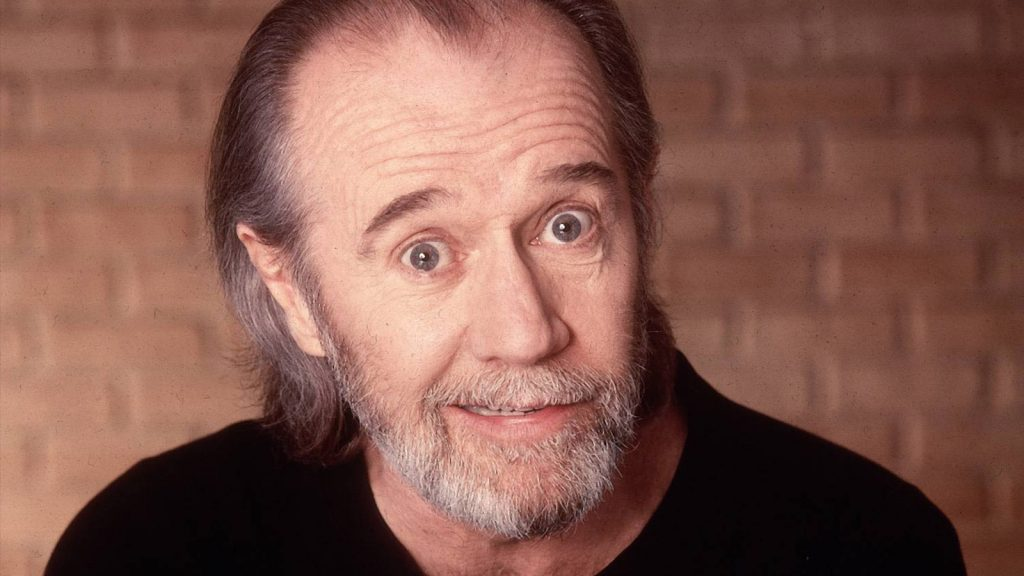
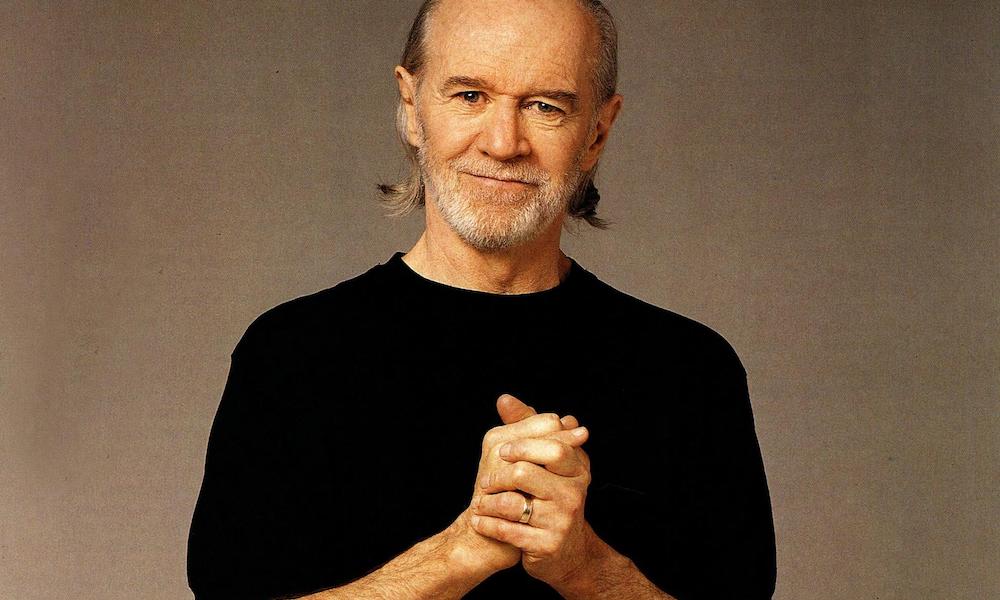
It involves the comedy of the late, great George Carlin.
It also involves the iconic and beloved children’s show, Thomas The Tank Engine.
I promise I’m being completely serious. This is real. This is not a product of AI. This is actually something George Carlin worked on while he was still with us. And while the kid-friendly version of Thomas The Tank Engine is beloved by generations of kids and adults, Carlin found a way to give it his own special/vulgar/hilarious twist.
And thanks to talented video editors and the wonders of YouTube, there’s a 45-minute video of George Carlin voicing numerous characters from Thomas The Tank Engine while mixing in the kind of brilliantly glorious comedy that still gives everyone who works at the FCC night terrors. I’ve made it a point to save this video and memorize the URL. Because it’s not just delightfully funny. It is the ultimate medicine for any and all jaded souls.
If you don’t believe me, watch for yourself. It may very well ruin your childhood to some degree if you’re a fan of Thomas The Tank Engine, but I promise you it’s worth it.
To this day, I still can’t get through this video without laughing so hard that my throat hurts. I’ve also watched this video, in part or in full, during some of the worst days I’ve ever had. It never fails to make me feel better. It’s like medicine for my mind, body, and soul.
It requires no prescription.
It has no side-effects.
You can even take it with alcohol and various other intoxicating drugs.
I don’t know how big the universe is or how vast the multiverse might be. I just know that I’m grateful to live in a plane of reality where a mash-up of George Carlin and Thomas The Tank Engine exist.
Things tend to move quickly in the world of technology and artificial intelligence. And since the arrival of ChatGPT, the pace seems to have accelerated. I try to keep up with it as best I can. And I only really write or make videos about it if I have something meaningful to contribute.
But there are some stories I follow more closely for personal reasons. One such story has been the controversy surrounding the AI-generated George Carlin special that came out in early January 2024. I certainly hope I made my feelings on that issue clear. As much as I support the development of AI, I felt like this was in really poor taste.
It didn’t sound much like George Carlin. The humor, while funny at times, didn’t hit as hard as Carlin’s unique brand of comedy. And, most importantly, it was done without the consent of George Carlin’s family, namely his daughter, Kelly Carlin. It’s one thing to impersonate a dead celebrity with living relatives. It’s quite another to use an AI to create what could amount to a post-mortem piece of work that’s done in the mold of that celebrity.
Well, not surprisingly, Kelly Carlin didn’t stop at just scorning the creators of this AI special. According to the Hollywood Reporter, she filed a lawsuit against the creators of the comedy special on the basis that it’s an unauthorized use of George Carlin’s copyrighted work, while also illegally using Carlin’s name and likeness for promotional purposes.
Make no mistake. This case will be of immense interest to those concerned about how we use, abuse, and develop AI in the future. This, on top of new concerns about deepfakes for artists like Taylor Swift, is set to create some major precedents. And they’re bound to affect users, companies, and the nature of the AI’s themselves.
However, the filing of this lawsuit has added a new wrinkle to this controversy that is definitely worth acknowledging. It has since come out that the script for this “special” wasn’t a result of an AI generating it from a compilation of all of Carlin’s past works, as claimed by the creators. It was entirely written by a human named Chad Kultgen.
And, with all due respect to Chad Kultgen, his is no George Carlin. That really showed in the special.
Also, fuck Chad Kultgen for thinking he could match Carlin’s brilliance or even the capability of a non-human AI.
Now, this complication isn’t going to stop the lawsuit. If anything, it might strengthen the case of Carlin’s estate because it makes this special a much clearer violation of illegally using someone’s likeness or brand for promotional purposes. It might even raise to the level of fraud by claiming to be the product of an AI, but was actually just some guy trying to write a special and using George Carlin’s likeness to sell it.
And, regardless of how you feel about the legal implications here, that’s still a dick move. I can’t imagine that makes this any less difficult for Kelly Carlin or the rest of the Carlin family.
But, based on what we now know in wake of this lawsuit, the only thing AI was used for in making this special was to create the not-so-compelling voice that delivered this human-made script and the images included within the video. In terms of capabilities, that’s not a very impressive use of AI. If anything, that makes this special even less impressive.
One of my biggest criticisms of it was that it sounded nothing like Carlin in terms of tone and style. Considering that there are many existing AI tools right now that can closely mirror the voices of celebrities, this just makes the creators of this special seem cheap and lazy. But the script being entirely human-written does help add another important perspective.
As impressive as AI is at the moment, it is a long way from fooling anyone that it could mimic the nuance or mannerisms of a human, let alone one as special as George Carlin. I do wonder if those behind this special actually tried, but quickly realized it couldn’t be done. I also wonder if maybe someone who is even more unscrupulous will actually try again at some point, possibly with better AI tools.
If they do, then this lawsuit becomes even more important. Because the law tends to move much slower than technology. And if AI continues to advance, then incidents like this will become more common. For now, only time will tell what this will mean for the future of AI and those it impacts, living or dead.
There are certain celebrities and pop culture icons that we tend to appreciate more after they’ve passed away. Like everyone else, they too must face death at some point in their illustrious lives. And when they do, all the work they did becomes inherently more precious because it is now finite. There can be nothing new added to their body of work. It’s as set as the strongest bedrock. It might be upsetting to many fans, but it’s just a fact of life.
Then, artificial intelligence comes along and suddenly, there’s a crack in that bedrock.
Recently, a couple of comedians utilizing an unspecified AI created an hour-long comedy special featuring the late, great George Carlin. That “special,” and I use that term loosely, is currently on YouTube right now. For reasons that I hope are understandable, I’m not going to link to it. Just know that, as of me writing this, it has racked up over 427,000 views and 11,000 likes.
Now, in general, I support the development of artificial intelligence. I still genuinely believe it is the most important technological advancement we could develop as a species. But this particular manifestation of its use has me both concerned and distressed.
For one, George Carlin is my favorite comedian. I would go so far as to call him the single greatest comedian of all time. And that’s an opinion many share. Ask most people who the best comedian of all time is and George Carlin is usually in the top five alongside the likes of Richard Pryor, Lenny Bruce, Rodney Dangerfield, Sam Kinison, and Robin Williams.
To me, George Carlin is the best and there’s no close second. He’s one of those comedians who didn’t just find success over the course of multiple decades. You can still go back and watch his specials from the 1970s and his material is still relevant. His jokes, his style, and his brilliant insights are still on point, as well as hilarious.
George Carlin really was a one-of-a-kind artist, comedian, and philosopher. And when he passed away in 2008, his death hit a lot harder than most. But his legacy has only strengthened in that time as more people discover or re-discover his comedy. But this AI version of him is sure to complicate that legacy and for all the wrong reasons.
For one, this “special” was done without permission, review, or compensation to George Carlin’s family. His daughter, Kelly Carlin, has gone on record as stating that she did not authorize this, let alone receive compensation for it. This was not an instance of a celebrity willingly licensing their voice or likeness to a company, as James Earl Jones did with Disney in 2022. This was done without any consideration whatsoever for how Carlin’s family might react to this or what it might do to his legacy.
As for the special itself, I do admit I have listened to it. And I can confirm that it sounds nothing like George Carlin. The voice sounds like a terrible impersonation of George that someone half-drunk would try to do on a five-dollar bar bet. I promise nobody is ever going to mistake the voice in this “special” for George Carlin. I don’t know if that’s by design or just a limit of the current technology.
But with regards to the actual substance, this is where it gets even more distressing. Because in many instances, there are jokes and comments that actually sounds like something Carlin would say. Yes, they lack his distinct delivery, tone, and mannerisms. But many of his comments on politics, pop culture, people, and society really do feel like they might come up in a real special.
That said, there are also instances where it says things Carlin probably wouldn’t say. There’s nothing too egregious. He never says anything that sounds so out-of-character that it’s jarring. But it’s also clear that the content was edited. There are distinct breaks in the audio that indicate someone edited this to sound more refined. That leads me to believe that, whatever AI was used to make this definitely conjured some content that would’ve been too obviously out-of-character.
I’ll even go so far as to say that there are some parts of the special that are funny. It still doesn’t resonate as well as one of Carlin’s classic comedy specials. But there are jokes in this special that probably will make some people laugh. It’s not entirely clear if those jokes were purely the product of the AI or if those behind it tweaked the language. But the humor is there.
Be that as it may, just listening to a small part of this special feels off. Beyond just sounding painfully synthetic, it establishes a precedent that the estates of other dead celebrities would be wise to consider. Because George Carlin isn’t the only one with a long catalog of comedy, writings, interviews, and movie credits.
Who’s to say that an AI like this won’t do the same for Robin Williams or Richard Pryor? It wouldn’t even be restricted to comedians, either. The works of musicians like John Lennon, Kurt Cobain, Michael Jackson, and Elvis Prestly could also be used to create entirely new songs that might sound eerily similar to something they might have created.
If that happens, what does it do to their legacy? What happens if an AI creates something in the mold of a dead celebrity that says or does something outrageous, offensive, or detrimental? What would it do to their legacy? What would it do to their still-living families?
I honestly can’t imagine how someone like Kelly Carlin must feel hearing a poor imitation of her dead father. But I can easily imagine other celebrity heirs or estates willingly licensing their dead relatives to make extra money somehow.
It could mean we’ll be seeing more strange, distressing content like this in the coming years. And as AI technology continues to improve, it will likely get to a point where it’s so capable that it’s almost too believable. I don’t claim to know what kind of world that might create or lead to. I just know that “specials” like this won’t stop with George Carlin.
These are scary times for many people. Between pandemics and politics, a simple scroll through your daily news feed might as well be a horror movie. However, for those concerned about abortion rights in the United States, it’s even scarier.
There’s a very real possibility that abortion rights could regress. Now, with a new vacancy on the Supreme Court, it’s very likely that the laws surrounding abortion will change considerably in the next several years, regardless of how the election pans out.
If you’re a woman, I feel for you. I honestly have no idea how frightening it must be, the prospect of going back to a world where abortion had to occur in the shadows.
Now, with abortion being such a relevant issue, I’m tempted to write about it more. I’m also considering doing a video about it for my YouTube channel, Jack’s World. I’m not quite sure I want to invite those kinds of politics to this site or my channel just yet. If I do, I’ll be sure to announce it.
In the meantime, I still want to leave those debating the abortion issue with something of substance. Thankfully, the late great comedian, George Carlin, already masterfully broke down this issue years ago. To date, I’ve yet to see anyone make a more effective statement on the abortion issue and the absurdities surrounding it. Just watch and see for yourself.
He could’ve said every word of this today and it still would’ve been relevant. It still would’ve been true, accurate, and concise. Honestly, it’s kind of sad that this didn’t end the debate completely. It’s even sadder that neither side has come up with better arguments.
We miss you, George Carlin.
This world really needs someone like you, right now.
Abortion is such a sensitive issue and one that will only get more divisive in the coming weeks. I don’t know what the endgame is. I just know it’s going to get a whole lot worse before it gets better.
There’s a general rule in comedy with respect to insults. If you’re going to demean, denigrate, or make fun of a particular person or group, you don’t want to punch down. Granted, you can do it. You can even get a few laughs out of it if you do it well and are exceptionally funny. However, in the grand scheme of things, you’re still an asshole.
It’s the main reason why comedians, be they stand-up comics or talk show hosts, generally direct their insults at the rich, powerful, and privileged. There’s a general understanding that if you’re doing well in this chaotic game of life, either through luck or talent, you can afford to take a few insults. At the end of the day, you can still go home and cry into a pile of money, fame, and affluence.
When you insult a group that has none of those things in any abundance, it’s usually not something people respect, even if they laugh. It’s why even great comedians like George Carlin had to be very careful and exceptionally skilled when he joked about rape.
We miss you, George. We miss you SO much.
Unfortunately, not everyone can be as funny or talented as George Carlin. Sometimes, insult comedy hits an undeserving target. It tends to reveal something about the comedian delivering the insult and where society is, in terms of sympathies. It’s often subtle, but the subtext is there and it has larger implications.
While I don’t agree with Mr. Oliver’s politics all the time or his approach to tackling certain issues, I consider myself a fan of his show. Compared to other satirical comedy shows, he tends to strike just the right balance between quality comedy and tackling serious issues.
However, he recently took a comedic jab that deviated from his usual style and not in a good way. It occurred during his episode that focused on China’s controversial One Child Policy. It’s an issue that has been subject to plenty of controversy for years and I think Mr. Oliver was right to talk about it.
One of the major consequences of this policy, which Mr. Oliver rightly pointed out, was how it led to a massive gender population imbalance. Due to a historic preference for sons, there are millions more men than women in China. The disparity is so great that it has caused major social upheavals.
While discussing some of those upheavals, the issue of sex dolls came up. In a country where there are so many lonely men, it makes sense that they would seek some form of outlet and it helps that the market of sex dolls is growing. This is where Mr. Oliver did a little punching down and, unlike his jabs at New Zealand, this didn’t have the same impact. See for yourself in this clip.
Take a moment to consider what he’s joking about here. There are millions of men in China who, through no fault of their own, are likely doomed to a life of loneliness. It’s not because they’re bad men. They’re not creepy, cruel, or misogynistic. They’re just at the mercy of math and demographics. There simply aren’t enough women in their country.
For these men, the old saying that there’s plenty of fish in the sea is an outright lie. Their options are limited and Mr. Oliver is making light of that. He essentially claims that men who use sex dolls are somehow even more pathetic and destined for more loneliness. He makes that claim as someone who is married, has a child, and doesn’t have to deal with those prospects.
It’s not just bad comedy. It’s hypocritical. Earlier in that same clip, he showed sympathy and understanding to a Chinese woman who was forced to have an abortion against her will. He’s shown similar sympathy to people in other situations, from women dealing with restrictive abortion laws to prisoners who had been screwed over by an unfair justice system.
Why would he show no sympathy for these lonely men?
Moreover, why would he make a joke about it?
To some extent, it’s not all on him. There is an egregious double standard when it comes to men who use sex toys. A woman can walk into a sex shop, buy a vibrator, and talk about using it without too much stigma. Sure, there will be a few repressive, sex-negative religious zealots who will complain about anything that gives anyone unsanctioned pleasure, but most people don’t take them seriously.
For men, however, there’s a taboo surrounding the use of sex toys in any capacity. Some of that comes from men more than women. There’s this not-so-subtle assumption that a man who needs a sex toy is somehow less manly. Any man who has to resort to one must be somehow deficient. It can’t just be that he’s lonely or wants to use new tools to please his lover. That would make too much sense.
For the men in China, and other areas where there’s a huge gender disparity, the situation is even worse. These are men who are facing both loneliness and sexual frustration. There’s more than a little evidence that this is not healthy for them on any level. That’s not to say that sex dolls or sex toys will help fill that void, but it will give them an outlet, just as a vibrator gives a lonely woman an outlet.
Unlike a lonely woman, though, these men can’t expect much sympathy. As Mr. Oliver demonstrates, they can expect plenty of shame and stigma. It doesn’t matter that they can’t do anything about their situation. They’re victims of circumstance, demographics, and basic math. Adding stigma and taboo to the mix is akin to kicking them in the balls on the worst day of their lives.
I won’t say that Mr. Oliver should apologize for his remark. He’s a comedian. He’s a citizen in a free country. He can say what he wants. However, the fact that he can joke about lonely men and still get a laugh says a lot about the current attitudes towards lonely men, in general.
We know they’re suffering. We know there’s not much they can do about it, especially in places like China. While we’ll give plenty of sympathy to the lonely women who resort to using sex toys, we’ll stick to shaming and stigmatizing the men who dare to do the same. Then, we’ll pretend to be surprised when they get angry and resentful.
Is that fair? No, it isn’t.
Is that funny? No, I argue that it’s not, especially with the way Mr. Oliver went about it.
He’s no George Carlin. He’s no John Stewart, either. In this particular case, he’s just an asshole.
I also understand that there are people who don’t share those passions. Some may even see them as childish and foolish. That’s perfectly fine. It doesn’t make them a bad person, by default. It doesn’t even mean I can’t get along with them or agree with them on other issues.
The fact I have to make that disclaimer only makes the current state of affairs more frustrating. I feel it’s more necessary now because I’m about to address a topic has evoked all the wrong emotions for all the wrong reasons. Normally, my first instinct is to avoid such controversy, but since it involves superhero comics, I feel inclined to respond.
It started late last year with a blog post by Bill Maher, a late night talk show host for the long-running HBO series, “Real Time With Bill Maher.” That blog post came shortly after the death of Stan Lee and, without going too heavily into details, attacked the culture behind comic books and superhero media.
Many took that post as an insult to the legacy of Stan Lee. Having read that post multiple times, I really didn’t get that sense. I won’t deny that I took some offense to it, but I’ve read far more offensive things in the comments section of YouTube videos. The fact that it got such a visceral reaction only skewed the conversation even more.
Then, this past week on his show, Mr. Maher finally addressed the issue again in the closing commentary on his show. If you haven’t seen it, here it is.
The long and short of it is his commentary had less to do with Stan Lee and more to do with people who think comic books warrant serious cultural weight. He goes onto bemoan how people cling to the things they loved as kids as a way of avoiding the adult world. It’s less an indictment on people who like comics and more a criticism of people who whine about adulting, in general.
To some extent, I understand his criticism. There are people in this world who try to avoid adult responsibilities at every turn. They don’t want to deal with the harshness of the real world and cling to fantasies about having superpowers that render those problems moot. Even as someone who loves superhero comics and movies, I think that’s an issue for some people.
For most people though, it’s just fun. Mr. Maher seems to completely overlook that. I don’t care how old you get. Having fun is fun. Comics are a lot of fun to read, follow, and enjoy. The more “serious” pieces of literature that he recommends in his commentary probably have plenty of merit, but they’re not nearly as fun.
The idea that he finds superhero media as childish is understandable. Bill Maher is over 60 years old. For most of his life, comic books and superheroes have been for children. It’s only within the last 30 years that they’ve matured to a point where they appeal to all ages, so much so that they’ve raked in over $20 billion at the box office. You don’t make that much money on childish things.
In addition to box office billions, some comics have gained serious acclaim. A select few have even been recognized as some of the greatest literary works in the past 100 years. I doubt Mr. Maher is aware of this because most of these amazing works happened after he became an adult. I imagine that if you were to ask most people his age, they would agree that comics shouldn’t be considered serious literature.
I respectfully disagree with that notion and I know many others disagree as well. That said, I doubt anyone will ever convince Mr. Maher that he’s wrong. He has made his politics very clear on many occasions and I don’t doubt he’ll say other offensive things in the future.
At the very least, I can offer Mr. Maher some perspective. I believe that, if he were to give comics a chance, he would see their literary value. He may still think they’re childish, but I think he would have a greater appreciation for the medium, if only because he sees how it has evolved since he was a kid.
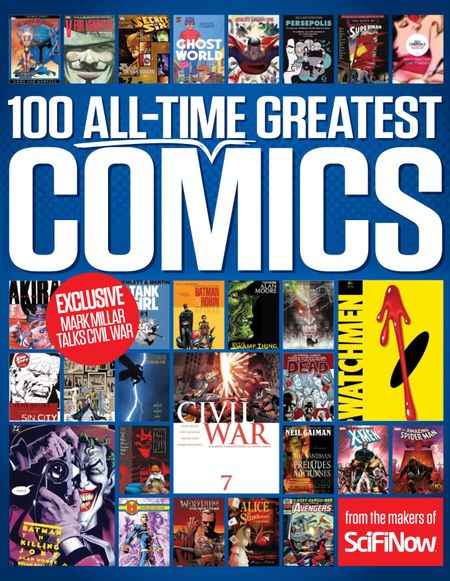
What follows are five comics that I would personally recommend to Mr. Maher. I feel these books would help show just how salient comics can be in terms of society, politics, and art. While I doubt he’ll give them a chance, I hope others who share his sentiments take a moment to see why comic books and superhero media have become such an integral part of our culture.
Watchmen
This is an easy choice and not just because Watchmen routinely ranks near the top as on of the greatest comic books of all time. This seminal work by Alan Moore and David Gibbons actually speaks to the same criticisms that Mr. Maher levied against superheroes. Watchmen is, at its heart, the ultimate deconstruction of the entire concept of superheroes.
This story isn’t just about heroes fighting villains or heroes fighting other heroes. Watchmen is a story with deep, philosophical overtones about what it means to wield power and make peace in a chaotic world. It casts a harsh light on the dangers of relying on superheroes or super-powered beings to solve big problems on the global stage. It’s a sentiment that Mr. Maher himself has made on more than one occasion.
Being a political person, I believe Mr. Maher would find a lot to enjoy about the world of Watchmen. Beyond the art and the complexities of the story, it has a message that goes beyond good guys fighting bad guys.
In many respects, Watchmen was the comic that broke all the rules and ushered the medium into a new era. It proved that a comic could make serious contributions to the world of literature. Between its unique place in the history of comics and the awards it received, I think Watchmen can prove to Mr. Maher that comics can be great works of art that tell relevant messages for the real world.
Sandman
This is another series that routinely gets mentioned in discussions surrounding the greatest comics of all time. Like Watchmen, Sandman pushed the limits on what a comic book could be. It’s not a standard superhero comic. It’s not about heroes searching for some ominous glowing object, which is something Mr. Maher pointed out in his criticism. Sandman is deeper than that.
The writer of Sandman, Neil Gaiman, dared to craft a more mature fantasy. This is a world where mythological figures like Morpheus, Lucifer, and even characters from the bible interact with one another in a complex narrative that provides insight into spirituality, religion, and philosophy.
I believe that insight would appeal to Mr. Maher more than most and not just because he’s a self-admitted stoner. Say what you will about him, but he’s a very intelligent man who went to an Ivy League school. He also majored in English, which I think would make Sandman that much more appealing to him.
The story in Sandman is not something most children will understand or appreciate. Even most adults may struggle to make sense of the various themes that Gaiman explores throughout the book. It’s a powerful story, but one that works best in the medium of comics. I think if Mr. Maher gave Sandman a chance, he would see that.
X-men: God Loves, Man Kills
Even though Mr. Maher singled out superheroes as the most childish element of comics, I believe there are still a select few that would still appeal to him, if only because of his political leanings. Mr. Maher has always identified as a liberal and routinely espouses the value of liberal principles. He grew up watching the civil rights movement unfold and it has clearly had an impact on him.
That’s exactly why a comic like X-men: God Loves, Man Kills would resonate with him. Even though it follows many common superhero themes, this classic X-men story by legendary X-men writer, Chris Claremont, goes much further in linking the struggle of the X-men with that of civil rights.
This story is less about the X-men fighting killer robots and more about confronting the depths of human bigotry. In addition to providing the inspiration for “X2,” it explores a kind of bigotry that feels like it was ripped from the real world. It even throws religion into the mix with the introduction of Reverend William Stryker, a man who has drawn more than a few comparisons with Vice President Mike Pence.
Mr. Maher will probably notice those parallels more than most. He has made no secret of his disdain for organized religion and the people who use it to justify their bigotry. X-men: God Loves, Man Kills tells a story of just how dangerous that kind of religiously-motivated bigotry can get. Even though it’s still a superhero story, it doesn’t hide from the real-world parallels.
Good literature, whether it’s a comic book or a novel, often reflects the controversies of its time. The X-men were created right at the onset of the Civil Rights Movement. Stan Lee has gone on record as saying that elements of the X-men were inspired by real life heroes of the Civil Rights Movement. As both a proud liberal and a critic of religion, Mr. Maher will find plenty to like about this classic X-men story.
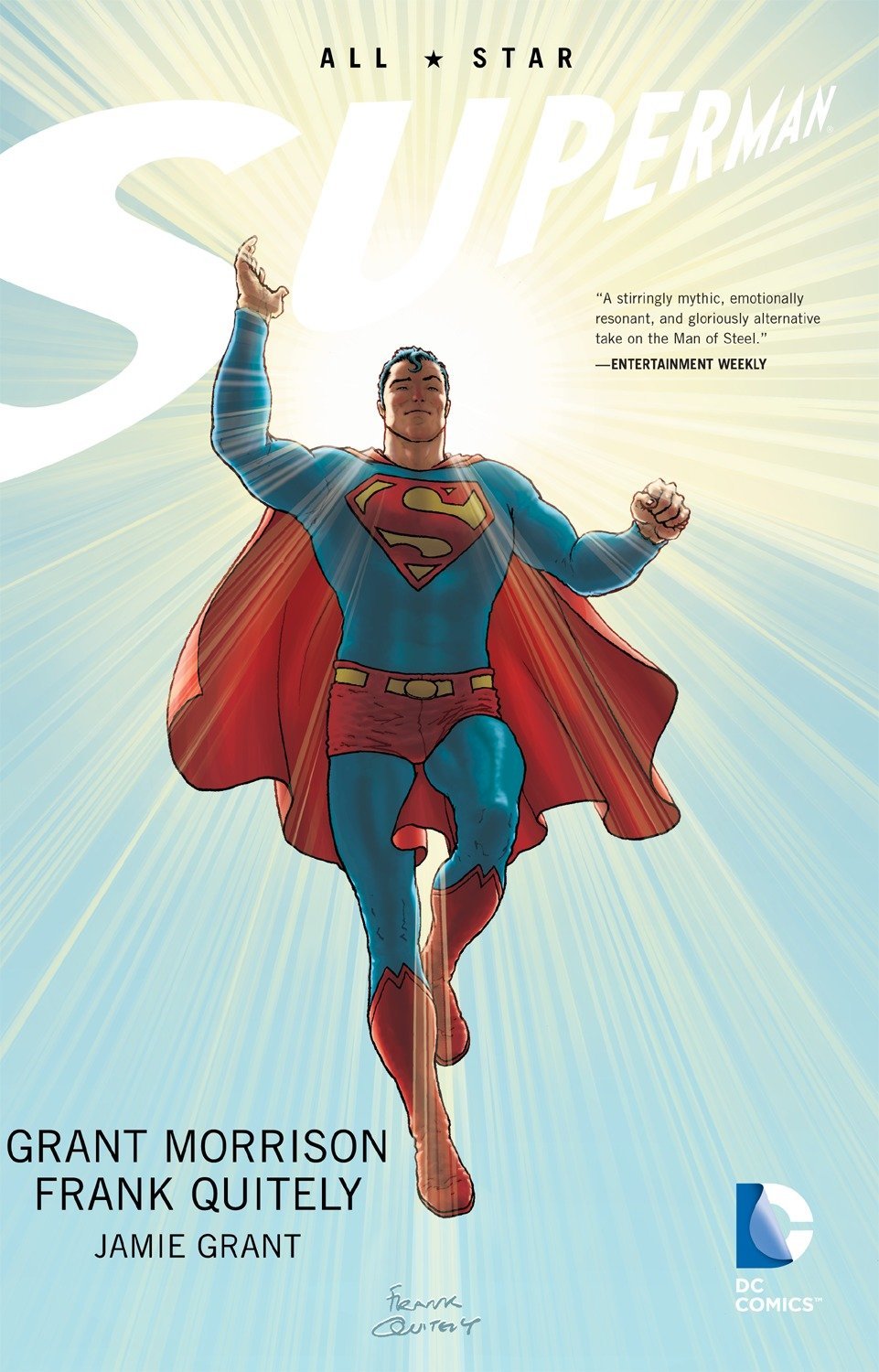
All-Star Superman
This story might be the toughest sell for Mr. Maher. However, I think if any comic can demonstrate the value of superheroes, it’s All-Star Superman. This love letter to Superman and all the fanciful themes surrounding him is a celebration of the ultimate hero. Even if Mr. Maher thinks idolizing heroes is dangerous, I think even he’ll appreciate why Superman is such an icon after 80 years.
What makes All-Star Superman special isn’t in how it depicts the Man of Steel at his best. It’s not just about him saving the day, defeating Lex Luthor, and winning the love of Lois Lane. More than anything else, the story that Grant Morrison and Frank Quietly tell demonstrates just how much Superman inspires those around him.
Throughout the series, there are many great moments that are full of heart, hope, and compassion. Some of it is cartoonishly over-the-top, but it never feels corny. There’s never a point where Superman takes a moment to tell a bunch of kids to eat their vegetables and stay in school. It doesn’t try to make Superman someone he’s not. He’s the ultimate paragon of virtue and this series just runs with that.
To further raise the stakes, this version of Superman is living on borrowed time. As powerful as he is, he has saved the day one time too many. He basically has to do what he can with what little time he has left to make the world a better place. It’s an endeavor that even Mr. Maher can appreciate.
More than once, Mr. Maher has tried to inspire others to be better. Even if his efforts are politically motivated, the will to inspire is something he’s always shown, going back to his days on “Politically Incorrect.” Even if he thinks Superman comics are for kids, he can still appreciate Superman’s efforts to inspire the good in others.
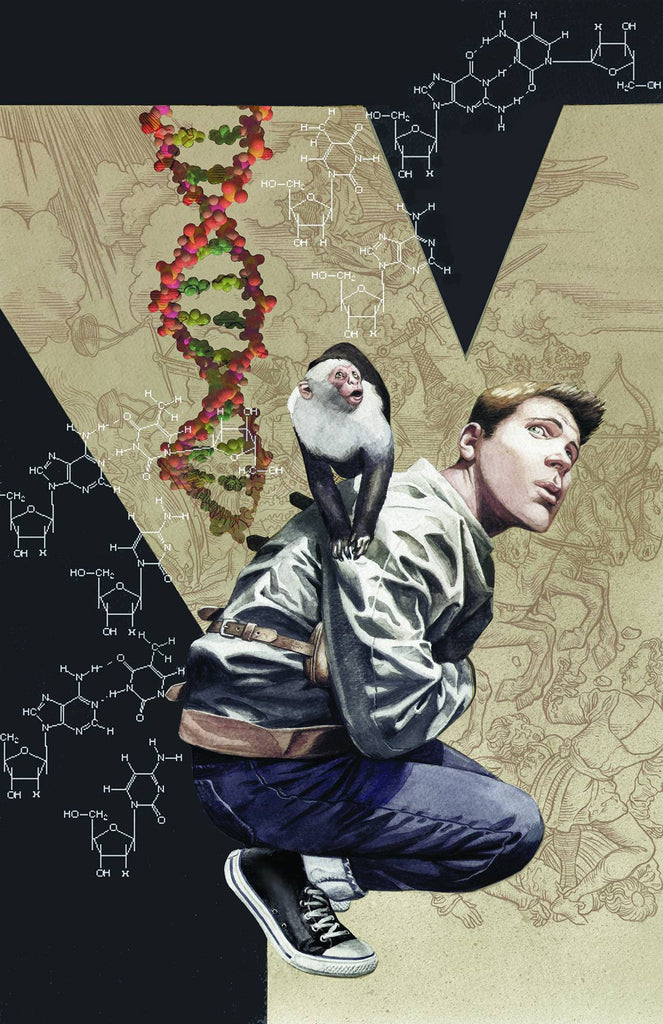
Y: The Last Man
This is another acclaimed comic series that doesn’t rely on superheroes, fancy costumes, or superpowers. At a time when gender politics are such a hot topic, a series like Y: The Last Man is more relevant than ever. This beloved comic by Brian K. Vaughan and Pia Guerra takes issues surrounding gender to an apocalyptic extreme.
As someone who has routinely criticized how the debate surrounding feminism and gender has evolved, I believe Mr. Maher will find a lot to like about Y: The Last Man. This is a story that puts men and women in the ultimate bind. One day, without warning, every creature on Earth with a Y chromosome just keels over and dies. Only one man, Yorick Brown, and his pet monkey, Ampersand, survive.
The story the follows is both a fight for survival and a critical insight into what happens when gender dynamics operate in extremes. The world that Vaughan and Guerra show just how much men and women rely on one another without realizing it. When one is completely removed from the equation, it pushes people beyond the brink.
At the same time, it shows just how resilient people can be in terrible situations. The will to survive knows no gender. It can bring out the best and the worst in someone, but the best is what usually keeps driving us. Mr. Maher has often spoken urgently about issues like climate change. The apocalyptic setting of Y: The Last Man shows why that urgency is necessary.
Again, I don’t expect Mr. Maher to change his mind on much. He has made it abundantly clear in the past that he is very set in his ways. However, if he is genuinely open to seeing the merits of comic books, these titles should help. Comic books may have been for kids when he was a kid. They have since become so much more and their legacy, like that of Stan Lee’s, will continue for generations to come.
In my experience, comedians offer the most memorable and insightful commentaries on otherwise serious issues. Even if they’re just trying to be funny, which is their job, I think those commentaries have worth beyond the laughs. There are even times I think comedians don’t realize just how insightful their humor can be.
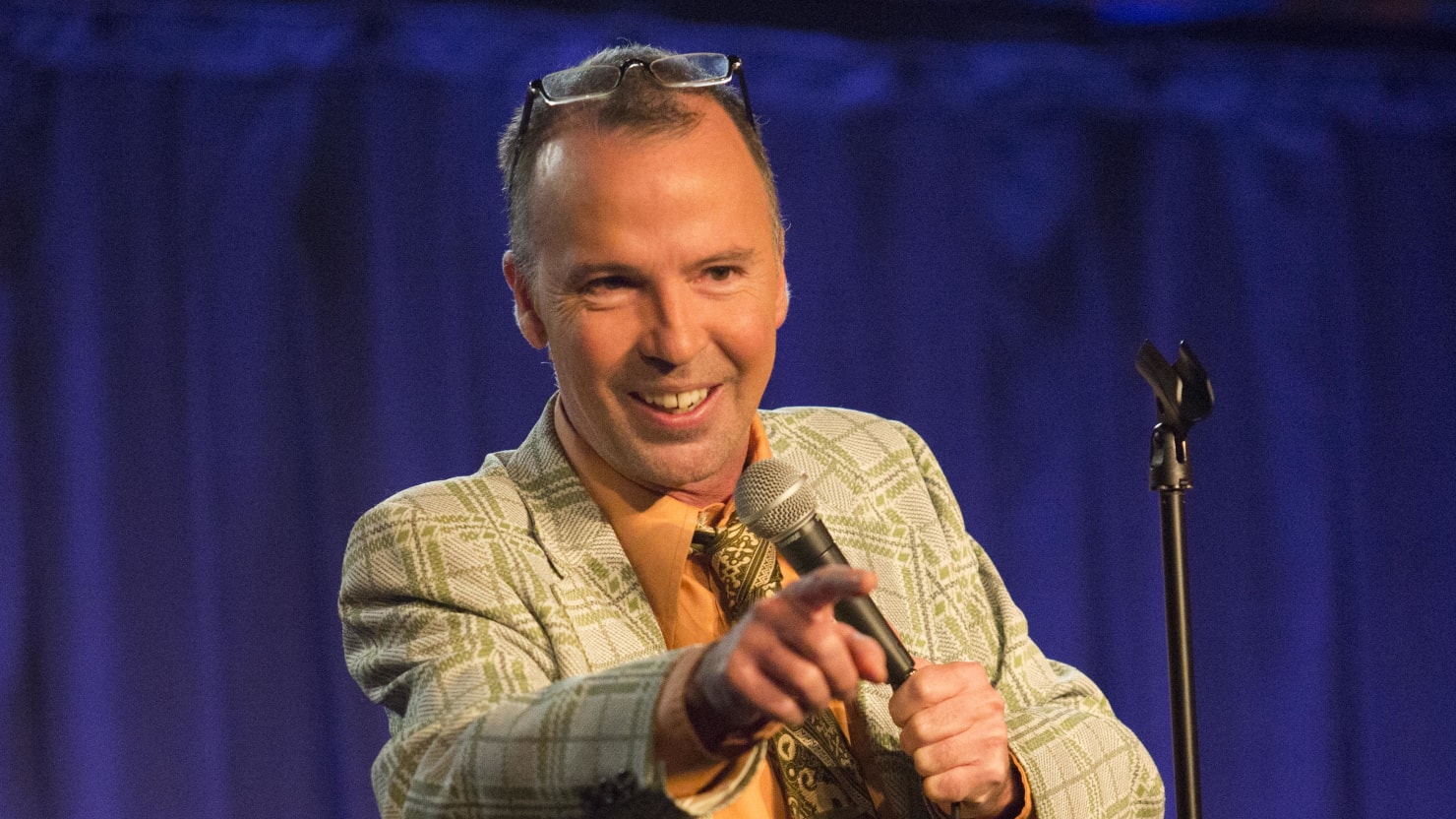
With that in mind, I’d like to cite a comedian by the name of Doug Stanhope. I’ve never mentioned before, but has been one of my personal favorites for years. He’s not on the same level as a Jon Stewart, George Carlin, or Lewis Black. However, given his brand of humor, that’s not too surprising.
Stanhope’s comedy is decidedly NSFW, touching on issues that would give most network producers brain aneurisms. His opinions are overtly harsh and unconcerned with your delicate sensibilities. If you’re wondering just how harsh he can be, here’s a quick taste.
That said, he is not a shock comic in the tradition of Howard Stern or Andrew Dice Clay. Stanope’s comedy, as crude as it can be at times, is very smart. One bit in particular stands out. It comes from his “Deadbeat Hero” album, one of my personal favorites and one I think every comedy fan should listen to at least once.
In that album, he talks about a number of issues, but one in particular stands out. That issue is marriage, one I’ve discussed too on this site, albeit not with the same level of humor. On this topic, he makes one of the most insightful observations I’ve ever seen on a treasured institution.
If marriage didn’t exist, would you invent it? Would you go “Baby, this shit we got together, it’s so good we gotta get the government in on this shit. We can’t just share this commitment ‘tweenst us. We need judges and lawyers involved in this shit, baby. It’s hot!”
The bolded parts are my doing because I think the implications of that question go beyond the comedy, more so than I think Stanhope himself intended. In a sense, it reflects the paradox of marriage and traditional romance that I’ve talked about before in that we see it as natural, yet we need all these social institutions to protect it.
The fact those institutions exist is a subtle, but telling sign that these traditions aren’t as natural as we think they are. More than anything else, they’re the product of taboos and social norms that people cling to out of fear, familiarity, and ignorance. I won’t go so far as to call it a form of excuse banking, but I think it highlights our imperfect understanding of human nature.
One of Doug Stanhope’s greatest strengths as a comedian is his ability to break down a treasured and cherished concept in a way that’s both revealing and insightful. What he did for marriage with this one question immediately makes us ponder the flaws in our current understanding of it.
Once we stop laughing at the punch-line, though, I would take it a step further. I would ask that question again in more general form as a means to help us scrutinize our traditions, values, and everything else we hold sacred. Sure, that’s bound to make some people uncomfortable, but that’s exactly the point of certain brand of comedy, especially Stanhope’s.
Like the Simpson Filter I coined earlier this year, let’s coin another using this question. Since I’m not a branding expert with only a fraction of the wit of Doug Stanhope, I’ll call it “The Stanhope Principle.” The core of that principle can be summed up in one simple question.
If something didn’t exist in its current form, would you invent it that way?
Sure, it’s not nearly as funny as Stanhope’s bit on marriage, nor is it meant to be. In essence, it’s a question meant to get your brain thinking about things that it usually doesn’t think about. In some cases, they’re issues you’ve gone out of your way to avoid.
Take any current issue, be it a major political controversy or a certain state in your personal life. Now, apply the Stanhope Principle and try to answer the question honestly. Here are just a few possible examples.
If our tax system existed in its current form, would we invent it that way?
If our health care system existed in its current form, would we invent it that way?
If our current relationship existed in its current form, would we invent it that way?
If the job we worked existed in its current form, would we invent it that way?
If our website/blog/product existed in its current form, would we invent it that way?
If you ask that question and answer it honestly, which is key, you might be surprised by what you find out. You might think your personal relationships are functional, but applying the Stanhope Principle could expose flaws that you’ve been overlooking or ignoring.
It can be distressing, acknowledging those flaws. That’s usually where the excuse banking enters the picture, but that can only further mask them. Another honest application of the Stanhope Principle will only remind us of those flaws and even reveal how we’ve made our situation worse.
Ideally, the Stanhope Principle should be a basis for improvement. A good example is Apple, one of the biggest, most successful companies in the world. Steve Jobs and Steve Wozniak probably didn’t know they were applying that principle, but they were.
They saw the current state of computers. They saw there was a lot of room for improvement. Given how cumbersome computers were for much of their early history, they decided to innovate and create a better way of using them. The result is a company that is worth over half-a-trillion dollars.
Applying the Stanhope Principle for worked out pretty well for Apple. I’m not saying it can make everyone a billionaire, but it does help break down a situation and an issue in a way that allows us to see the bigger picture.
More than anything else, it exposes the imperfections of our current situation. For some, it motivates them into improving their situation, be it a relationship, a business, or a social policy. For others, it’s an uncomfortable reminder that there’s a flaw in that they need to cover up or mask. In that sense, it should be easy to see who are more likely to become billionaires.
There are all sorts of way to apply the Stanhope Principle. I’ll certainly try to apply it to future issues that I discuss on this site. For now, I just want to offer my sincere thanks to Doug Stanhope and the principle he inspired. He has made the world inherently funnier and more interesting to explore.






/cdn.vox-cdn.com/uploads/chorus_image/image/59516921/avengers_thanos_concept.0.jpg)








 Jack Fisher's Official Publishing Blog