Category Archives: politics

From Stimulus To UBI: Has The Pandemic Made Basic Income A Relevant Issue?

Sometimes, it takes a big, jarring, and outright awful incident to spark meaningful change. It’s an unfortunate necessity, given the stubborn proclivities of human nature. People naturally resist change. Change is hard, risky, and potentially dangerous. Even when the current state of affairs is awful, we won’t pursue meaningful change without kicking, screaming, and whining every step of the way.

The murder of George Floyd was one such incident. As bad as previous acts of police brutality had been, this one was just too awful to stomach. It triggered a wide range of vocal protests that, while limited in their impact, has made the need for change more palatable. It’s frustrating that it takes this kind of horror to get us to change an objectively flawed system, but that’s just the cards we’ve been dealt.

While efforts at justice reform and tempering police brutality are important endeavors, there’s another major change that has been brewing in recent months. Again, it’s becoming relevant due to something utterly horrific. In this case, it’s the COVID-19 global pandemic that has upended our lives, our economy, and our politics.

Now, let me make one thing clear. This pandemic is fucking awful. It’s killing people. It is, by any measure, doing a massive amount of harm to people all over the world. There is no silver lining that’s worth all the lives that have been lost and all the suffering this disease has caused. From killing thousands to canceling major events, this pandemic is as bad as it gets.

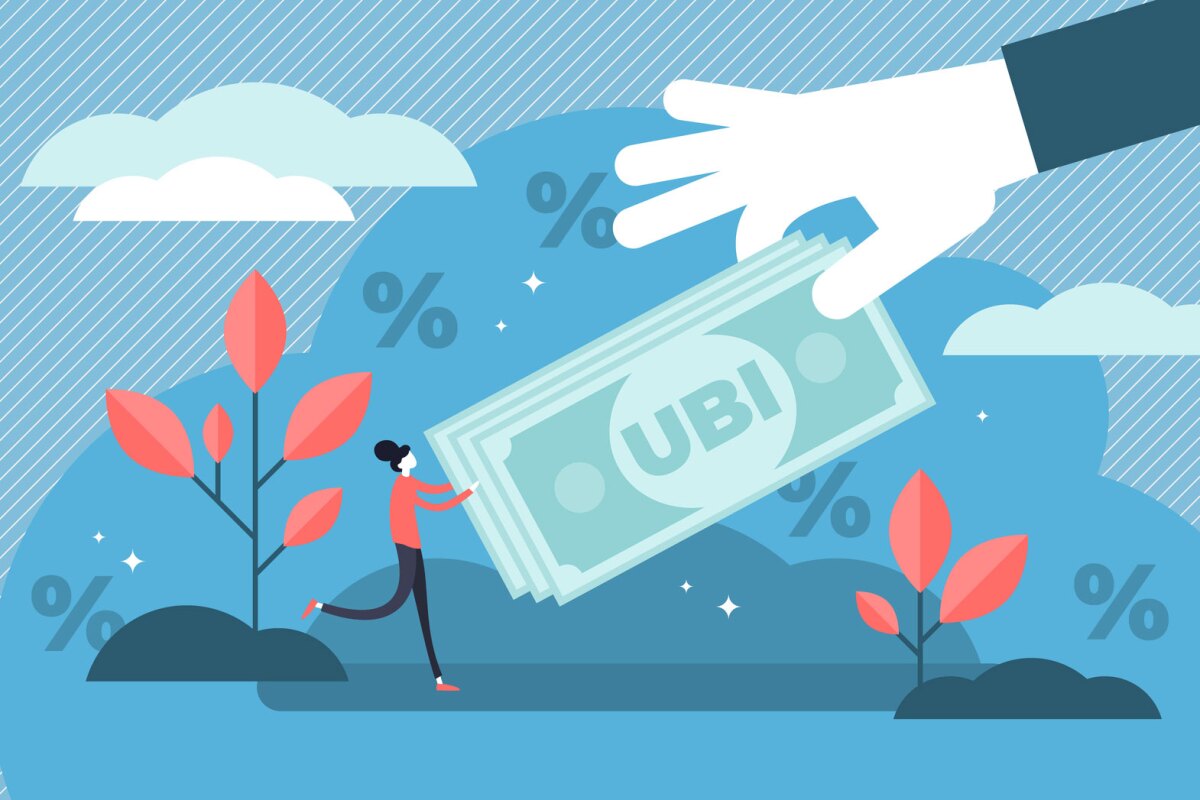
That being said, this might be the big, horrific event that makes Universal Basic Income a relevant issue and a feasible recourse for the future.

I wrote about Universal Basic Income, also known as UBI, a few years back. At the time, I considered it a fringe issue that wasn’t going to gain traction in the United States, or any other country, for at least a couple decades. It shouldn’t be that radical, giving people money directly instead of having them jump through so many bureaucratic hoops. Unfortunately, it was still seen as an extreme by ever political party.

That started to change with the surprisingly successful Presidential campaign of Andrew Yang, who made UBI the central pillar of his bid. That campaign helped expose more people to the idea while making it a legitimate political policy.

Then, as has been the common mantra of 2020, the pandemic hit and everything changed.

Now, with millions out of work and unemployment benefits being incredibly limited, the idea of UBI doesn’t seem so extreme anymore. If anything, it’s starting to feel necessary. That could ultimately accelerate this issue’s ascension to the mainstream much sooner than any could’ve expected.

In America, millions have already gotten a taste of it in the form of a one-time $1,200 stimulus check. It wasn’t much, in the grand scheme of things. It certainly wasn’t going to fix the many problems that were unfolding as millions of people lost their jobs, due to the pandemic. It was still real money that people desperately needed.

I can personally attest to how useful this money was. Like many, I received a stimulus check around mid-April. While I wasn’t in the same dire straits as millions of other working class families, that check still helped a lot.

At the time, I had some back-taxes that I was still trying to pay off from having purchased my current home. I wasn’t in a position to pay it back all at once. I would likely need a payment plan, which would’ve accrued interest over time. Then, the stimulus check came and I was able to pay it all off at once with no interest. I even had enough left over to do some overdue car repairs.

My situation was not typical. Millions of people spent their stimulus checks on a variety of goods and services, but therein lies the key. It still got spent. In economic terms, that’s critical for a functioning economy. While the state may take a short-term hit in its finances, a sizable chunk of that hit will be countered by people buying things and subsequently paying taxes on them.

While economics is an insanely complicated endeavor, most people understand the importance of having money to spend to keep businesses going and communities intact. Other countries are conducting even bolder experiments in this pandemic. The results vary, but the basic trends are the same. When you give poor, desperate people money, they spend it. They have to in order to survive.

If you’re rich, or even upper middle-class, you have the luxury of saving. An extra $1,200 isn’t going to do much. For some, it’s not even a single mortgage payment. However, since most people aren’t that rich, it’s guaranteed that money is going to get spent and push the economy along. It helps poor people and it generates business for the not-so-poor.

It certainly isn’t without cost, but the benefits thus far have been more than worth it. As more people who experience those benefit, the idea of UBI is only going to grow in terms of appeal. It’ll even become more feasible because these recent stimulus checks have proven that the government has the infrastructure to make this work. It just needs the scale.

Even after this pandemic ends, there will be huge upheavals for rich and poor alike. The economy is never going to be the same. Society will never be the same. The continued impact of automation and artificial intelligence is sure to accelerate that change. UBI might not have seemed feasible or necessary before, but 2020 has changed that. Expect more changes before all is said and done.

This pandemic has caused a lot of pain and irreparable losses. If, however, it can be the catalyst to make UBI a viable policy, then we might be able to draw some meaningful good from it. Only time will tell.
2 Comments

Filed under Current Events, politics, technology

Jack’s World: “F Is For Family” Larger Themes And Deeper Meaning

F0

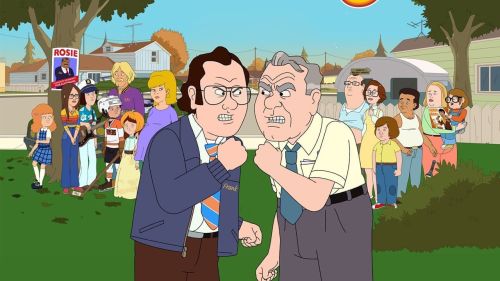
The following is another video for my YouTube channel, Jack’s World. Once again, it focuses on “F is for Family.” I know it’s a show I’ve talked about a lot, even on my burgeoning YouTube channel. I’d hoped to post something like this earlier, but I had to delay it a few times to ensure it had the necessary polish. I think it’s finally ready.

Please let me know what you think. Just be warned, some of the topics in this video are going to make you want to put someone through a fucking wall. Enjoy!

Leave a comment

Filed under F is for Family, Jack's World, philosophy, politics, YouTube

Violence Vs. Nipples: A Rant On (Misguided) Censorship

First off, I need to apologize in advance because I’m about to go on a rant. I promise it’s related to current events, relatively speaking. I can’t promise it’s the most serious issue in the world, but I still think it’s worth saying.

Let’s face it. We’ve seen a lot of terrible things these past few months. That includes, but isn’t restricted to, images of mass graves, angry protests, and videos of people committing egregious atrocities. It’s all over the internet, broadcast daily on network TV, and streaming in on news feeds of all kinds. We’ve seen so much violence and injustice. We’re outraged by it, and rightly so. It’s horrible. Most everyone agrees with that.

With all that in mind, I have one simple question that I think needs answering at some point.

With all this horrific imagery, why is it still so obscene to depict a female nipple?

I’m serious. I’m not trying to be funny or cute. I’d like an explanation.

Why the hell are we still censoring female nipples? What good does it do? What purpose does it serve? Blurring genitals? Okay, I can accept that to some degree. At least it’s blurred for everyone, regardless of gender. But why blur female nipples at this point?

We know what they look like. They’re not some graven images that’ll make people burst into flames. Granted, female nipples look different than male nipples, but not so radically different that they’re fucking alien. So, why censor them?

On TV, they’re still blurred. On social media, they immediately get labeled as porn, as though female nipples, by default, make something porn. That makes no sense. We’re not talking hardcore sex acts here. We’re talking about the slightest glimpse of female nipples.

Why, in a world where extreme violence finds its way into cable news, are female nipples so egregiously obscene? This isn’t the 1950s. This isn’t Victorian England. Anyone with an internet connection can see an unlimited number of uncensored nipples. Are they really that shocking anymore?

To those who whine about the innocence of children, here’s a quick anatomy lesson. They know what nipples look like too. They have them. They’ve probably been breast fed at some point. You really think they can’t handle it?

To those who think it’s too sexy, I have to ask why do you think that is? Do you really think censoring a basic body part makes it less sexy? I’m sorry to be the one to tell you this, but it doesn’t. It just doesn’t.

At most, you’re just fetishizing it, treating it as this powerful trigger that will turn anyone into perverts. People don’t work like that. You’re not doing them any favors by treating them like they’re that sensitive.

Also, if you’re a woman who hates being objectified, I have to ask. How do you feel about this? How do you feel that a part of you is deemed too obscene for network TV, yet that same network has no problem depicting people getting choked to death? How is it fair that a man can walk around a park without a shirt, but if a woman does the same, she gets arrested? That’s not just objectification. It’s insane!

Seriously, after everything we’ve experienced in 2020, isn’t it time we get over our hang-ups about female nipples? I know it won’t solve much, but we cannot be strong as a people, yet still too weak to handle depictions of female nipples. We’re better than that. We need to be.

Thanks for bearing with me on this rant. Again, I apologize. I just wanted to get that out. If nothing else, I hope this gives everyone something less awful to think about.

3 Comments

Filed under censorship, political correctness, politics, rants

Doing The Right Thing: Results Vs. Motivations

Recall, for a moment, an instance where you were faced with a difficult choice. You had a pretty good idea of what choices were right and what choices were wrong, but could not be completely certain. What choice did you make and why did you make it? What motivated you to do what you did? What were the results?

We’ve all been in situations like that at some point in our lives. Most of the time, it’s mundane. It effects only us and those in our immediate surroundings. In those instances, motivations tends to be basic. You make a decision you feel works best and you deal with whatever consequences that occur. However, when it comes to larger decisions by people in powerful positions, it tends to get more complicated.

Those complications have become a lot more visible in recent years, due to the internet and social media. Now, if you’re a rich celebrity or in a position of power, your choices are always scrutinized. Doing the right thing is not just a matter of morality anymore. It’s an added complication for public relations and advertising.

People will do the right thing because it’s good for their image.

People will do the right thing because it’s for a cause they believe in.

People will do the right thing because they’re being pressured, criticized, or condemned.

Whatever the case, the decision is usually the same. Even the moral components of the decision are the same. It’s just the motivation that’s different.

With that in mind, and given the dynamics I just described, I have one more question to add to this issue.

When it comes to doing the right thing, how much or how little do motivations actually matter?

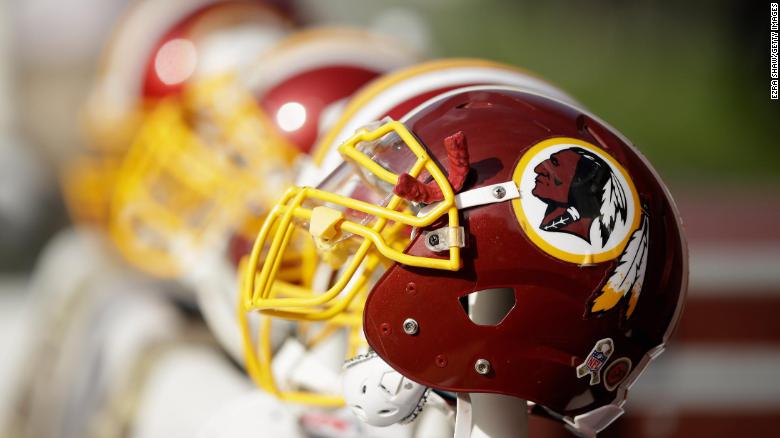
It’s a relevant question in a connected world where it’s painfully easy to overreact. Recently, I speculated on the reactions to the recent news that the Washington Redskins were changing their controversial nickname. It didn’t take long for those speculations to become real.

Less than a day after this announcement was made, people were already saying that it was too late. Even if it was the right thing to do and was the desired result that advocates had fought for, it’s somehow not enough. They’ll point out that the only reason the name was changed was because major sponsors pressured it.

That point is probably valid. If the franchise stood to lose a great deal of money over clinging to its old nickname, even if they sincerely believed it wasn’t offensive, the economic pressures were just too great. When it comes to impassioned pleas versus financial pressure, money usually wins out.

It’s unfortunate, but that’s the world we live in. Money talks louder than outrage. It always has. It always will. No matter how much we resent that, that’s not something we can change right now. Regardless of how you might feel about that system, the question remains.

Does it truly matter? Advocates got their wish. The name of the team is changing. It might not be changing for the reasons they want, but it is changing. Isn’t that enough?

Do the results matter more than the motivations? We can never see, touch, feel, or measure someone’s motivations. We can only ever experience the results. One is tangible. The other is not. Which matters more to you?

I think it’s a relevant question because those continue to complain, protest, and whine about the team are only doing a disservice to their cause and future causes like it. They’re setting it up so that, no matter what their opponents do, there’s no way they can ever appease them.

If they don’t change the name, they inspire more outrage and criticism.

If they do change the name, they’re still subject to outrage and criticism because they didn’t do it soon enough or for the right reasons.

How is that fair? How is that even logical? If anything, that kind of approach only gives everyone a good excuse to never engage with opponents. They know there’s nothing they can do to placate them, so what’s the point? Short of getting in a time machine and undoing history, there’s literally nothing they can do.

Either results matter or they don’t. It’s as simple as that. If you’re not happy with the results, then you’ll never be happy with anything.

Leave a comment

Filed under Current Events, human nature, philosophy, political correctness, politics

Jack’s World: Kamala Khan vs. America Chavez: How to Succeed (and Fail) With Female Superheroes

K0

Below is a video I made for my channel, Jack’s World. It’s based on an article I wrote a few years back by the same name. It tried to expand it in a few key areas, but the spirit of the piece is still there. I also added in a few visuals that I hope supplement my points. Enjoy!

Leave a comment

Filed under gender issues, Jack's World, Marvel, outrage culture, political correctness, politics, superhero comics, YouTube

The Catholic Church Got $1.4 Billion In Coronavirus Aid And That Pisses Me Off

Every now and then, you come across a headline that just makes your blood boil. It’s so frustrating that you want to punch your computer screen, kick the nearest brick wall, and bury your face in the thickest pillow you can find. In general, I try to avoid those headlines. There’s enough awful news in the world. Unfortunately, those headlines sometimes find me.

That happened once again this past week. I was just scrolling through the AP news headline while drinking my morning coffee. I almost choked on it when I saw this little gem.

AP: Catholic Church lobbied for taxpayer funds, got $1.4B

The U.S. Roman Catholic Church used a special and unprecedented exemption from federal rules to amass at least $1.4 billion in taxpayer-backed coronavirus aid, with many millions going to dioceses that have paid huge settlements or sought bankruptcy protection because of clergy sexual abuse cover-ups.

The church’s haul may have reached — or even exceeded — $3.5 billion, making a global religious institution with more than a billion followers among the biggest winners in the U.S. government’s pandemic relief efforts, an Associated Press analysis of federal data released this week found.

Now, whenever I talk about religion, which happens quite often, I always try to make a disclaimer. I respect peoples’ religious beliefs. I have people in my family who are devoutly religious. They’re wonderful, caring people who are enriched by their faith. I do not wish to disparage them in any way.

That said, I can’t say anything nice about the Catholic Church these days.

Never mind the fact that their history, as an organization, is wrought with absurdities and atrocities.

Never mind the fact that they’ve covered up and evaded responsibility for the systematic abuse of children.

This is an organization that has no business being bailed out of anything. They’re one of the largest, most powerful religious organizations in the world. They have their own sovereign country, for crying out loud. They pay no taxes and constantly seek exemptions from the law under the guise of “religious freedom.”

On top of that, this is the same organization that has blatantly and unapologetically opposed basic medical provisions for preventing the spread of AIDS in Africa. Even if they changed their minds, they refused to apologize for all the death and suffering that this wholly damaging policy had caused.

Now, they’re getting $1.4 billion in taxpayer money? Money that will likely go to paying off the millions they incurred by covering up scandals that involved the horrendous abuse of children?

Are you fucking kidding me?

Again, if you’re a devout Catholic, this is not directed at you. This is directed at the organization that simply uses your faith to make money, evade taxes, and avoid any kind of responsibility for the atrocities they commit or facilitate.

I know there are two sides to every story, but sometimes something is just plain wrong. This definitely qualifies. I could say more about this, but for the sake of my computer screen, I’ll end this by calling this an unholy justice of the worst kind.

Leave a comment

Filed under Current Events, politics, rants, religion

A (Longview) Question For Those Who Fought To Change The Name Of The Washington Redskins

It’s really happening.

I doubt anyone expected it to happen in their lifetimes, but after years of protesting and pushing, it’s finally happening. The Washington Redskins are changing their name. As someone who has followed NFL football his entire life and knows way too much about the history of every team, I am genuinely shocked. I really didn’t think this was going to happen, especially with how stubborn the owner of the team has been.

Shocked or not, it’s happening. The Washington Post announced it and the team made it official. They are changing their name.

Washington Post: Redskins To Retire Team Name

In an interview July 4, Coach Ron Rivera – who is working with owner Daniel Snyder to choose a name – said he hoped the new name would be in place by the start of the 2020 NFL season. Others have said it will be revealed as soon as within two weeks.

Two people with knowledge of the team’s plans said Sunday that the preferred replacement name is tied up in a trademark fight, which is why the team can’t announce the new name Monday.

Many are already celebrating this victory. In the battle against offensive sports mascots, this was the equivalent of Goliath. It’s one thing to get a publicly funded college to change their name. It’s quite another to get a private multibillion dollar sports franchise with an 80-plus years history. It’s a huge feat. Let’s not deny that.

Granted, it’s a feat that only happened once money became a factor. This was not done for moral reasons or because someone made an impassioned plea. This was a business decision done for the sake of doing future business. If there’s any lesson to be drawn from this endeavor, it’s that. Moral arguments do nothing. Money does all the talking.

It’s because of that, I suspect this is one of those issues that will still divide people. No matter what the new name is, people are still going to see them as “that team that used to be called the Redskins” or “that team that used to have a racist moniker.” Even though the team eventually did what some saw as the right thing, they’ll still be scorned because they didn’t do it soon enough.

That’s just the world we live in. The people who protested the name aren’t going to say “thank you.” They’re more likely to say, “It’s about damn time you racist piece of shit. Now, suffer for the rest of your life while we shame you, your children, and everyone you ever associate with and take it with a goddamn smile.”

That might be hyperbole, but that’s the power of outrage. It’s kind of addictive. The idea of turning anger into kindness, friendship, and harmony just feels like a bridge too far. People do get bored with outrage eventually, but only because they find something else to direct it towards.

That being said, I have a question to all those who are celebrating this feat. I want to ask that same question to everyone who passionately protested this name for years, protesting its racist connotations and use of caricatures. It’s a sincere, simple question that I hope people seriously contemplate.

What real, tangible benefit will changing the name of a football team accomplish for Native Americans communities in the long run?

The key word in that question is tangible. I’m aware of the various studies regarding the psychological impact of Native American mascots and caricatures. I’m willing to give them the benefit of the doubt on this. However, psychological impacts don’t always translate into tangible impacts. You can feel and think all you want. If you don’t do anything with it, then the impact never goes beyond brain chemicals.

As I write this, nearly a quarter of Native Americans live in poverty and the unemployment rate on many reservations is around 40 percent. That’s a trend that has not improved substantially in recent years, regardless of how many or how few mascots a sports team uses. The Native American community has a host of other critical issues to deal with that include, but are not limited to:

  • Violence against Women and Children
  • Native Americans are Less Educated
  • Poor Quality Housing
  • Inadequate Health Care
  • Unable to Exercise Voting Rights
  • Native Language is Becoming Extinct
  • Limited Financial Institutions in the Native Communities
  • Natural Resources Exploitation

These are complex issues. I’m certainly not equipped to discuss them in detail. Some are more urgent than others, but plenty involve real, tangible impacts on a community. A lack of adequate health care, decent housing, and good education all incur tangible impacts. That’s beyond dispute. How will changing the name of a football team affect any of these issues?

I’m not being facetious. I genuinely want to know how much or how little that changing the name of an NFL football team will impact Native American communities in a tangible way. I don’t doubt that some will feel better about not having a football team with a racially insensitive name, but is that the only extent of the impact? Does that impact justify all the time, energy, and resources that went into this effort?

Please don’t answer that question now. Preferably, I’d like someone who is in touch with the Native American community to answer at least four years from now. By then, there will have been enough time for the impact of this event to play out. Whether it’s a decrease in poverty or an improvement in life expectancy, it should be clear by then. If it isn’t, then that poses another question.

Was all that effort to change the name of a football team a quality use of time and resources?

Again, that’s not a facetious question. I ask this as someone who really wants to know just how much a football team’s name actually impacts a large number of people within a minority community. I don’t expect to get clear answers now, but I hope they become clearer in the next few years. I also expect those answers to raise even more distressing questions.

1 Comment

Filed under censorship, NFL, political correctness, politics, rants, sports

What Exactly Does “Canceling” Someone Solve?

In general, I try not to comment on “cancel culture.” It’s not because I don’t have an opinion. I just think it’s a waste of time, for the most part. I’ve never seen it lead to a productive conversation on anything. Most of the time, it just amounts to people publicly whining about something they find offensive to a point where others cave, if only to stop the whining.

I am not a fan of this, to put it mildly.

Every time I see it trend, I want to bash my head on my computer screen while telling some of these people to grow thicker skin.

The world is a chaotic, ugly, offensive place. We can only do so much to change it. No matter how much change we manage to implement, it won’t change the past or the context in which it transpired. That’s especially true if the people others are trying to cancel are long dead.

Now, as much as I despite the term and what it represents, I also understand that it’s not as simple as its critics make it out to be. At times, I find the people who whine about cancel culture to be just as insufferable. Their whining can basically be boiled down to, “Other people want to cancel the stuff I like and it hurts my feelings!” That’s just as pathetic as wanting to blackball a celebrity for old tweets from 2009.

Both efforts are equally absurd.

Both efforts do nothing to make the world a safer, more tolerant, more inclusive place.

Most of the time, I find the effects of “cancel culture” to be inconsistent, at best. People will complain about the lack of diversity in media, politics, business, and certain industries, but those same people can’t be bothered to vote or support the things that reflect those preferences. They always revert to whining.

People on both sides of the political spectrum will do this. The same people who laugh at those who complain about a video game character being too sexy while whine just as much because Brie Larson said something that hurt their feelings. They’ll claim their efforts are not contributing to cancel culture, but it’s the same damn concept.

Unfortunately, despite the best efforts of decent human beings with thick skin and a good sense of humor, cancel culture is still a thing. People are going to condemn celebrities and public figures for things they said or did years ago. We saw it with Kevin Hart, which cost him a chance to host the Oscars. We’re seeing that now with celebrities like Jimmy Kimmel and Sarah Silverman, who once did skits involving blackface.

All this is happening as statues of historical figures who did deplorable things are coming down. Never mind the context or bigger picture of why they’re historical in the first place. They did something awful. Any image that exists that may glorify them in any way is just too much for our tender sensibilities.

In addition to people, the urge to cancel all things offensive has extended to art. Movies like “Gone With The Wind,” which definitely had some offensive imagery, was removed from streaming recently. Shows like “Paw Patrol,” which is geared towards children, was seen as too offensive at a time when police brutality is a hot topic.

Now, I’m not going to justify old tweets or outrage about movies from a different era. I know there’s nothing I can say to change the minds of those who are so offended by statutes, celebrities, or the names of football teams that they want them all canceled. There’s also nothing I can say to change the minds who think it’s part of some elaborate censorship effort meant to destroy freedom.

Instead, I’d like to ask a few simple questions for both sides to consider.

What exactly does canceling something achieve in the long run?

At what point does canceling something amount to censorship?

Why is canceling something more viable than simply growing thicker skin?

At what point does context stop mattering for something that’s offensive?

How does condemning the ugly history of the past make the present or future any better?

What right do you have to be offended by the feelings and preferences of someone else?

I won’t claim these are easy questions to answer, but to those who are behind or protesting certain cancel-this hashtags, I hope they offer perspective. Like it or not, cancel culture isn’t going away anytime soon. People are always going to be offended by something or someone.

In years past, it was uptight religious zealots who were aghast at anything that didn’t reflect or promote the values of a 1950s sitcom. Now, it’s uptight activists who are aghast at anything that doesn’t reflect their utopian fever dream that just happens to align with their politics. The passion is real, but the motivations are misguided.

You can tear down every monument.

You can censor every byte of media.

You can rewrite every textbook or novel that ever reflected outdated attitudes.

It won’t change what happened in the past. It won’t prevent people from being assholes in the future. If anything, it sends the message that people are too weak, stupid, or traumatized to handle certain ideas. That, in my opinion, is the most offensive thing of all.

Leave a comment

Filed under Celebrities and Celebrity Culture, Current Events, media issues, outrage culture, political correctness, politics, rants, television

PSA: Wear A Mask (And Wear Condoms)

Under normal circumstances, we shouldn’t need to remind people to be safe and responsible.

Under normal circumstances, we shouldn’t have to explain why certain safety measures are worth the inconvenience.

These are not normal circumstances. Let’s not pretend otherwise.

We’re in the midst of a global pandemic that has killed hundreds of thousands of people. Thousands more are likely to die, even after we develop an effective treatment. This is serious. There’s a time for debating the balance between public safety and personal freedom. This is not it. Viruses don’t give a damn about politics, borders, race, economic trends, or who gets cast in a Disney movie.

With that being said, I have a simple statement/public service announcement.

Wear a mask when you go out in public.

Yes, it’s not convenient or comfortable.

Yes, it’s not stylish or flattering.

Yes, it’s infuriating that we’ve let it get this bad.

It’s still a simple, sensitive recourse that can help combat this crisis. The science is clear now . Wearing a mask helps in multiple ways. For someone who has the virus, it keeps them from spewing the droplets into the air around them, thus protecting others. For someone who doesn’t have the virus, it prevents those droplets from getting into your nose and mouth.

It’s essentially a double barrier. You protect yourself and you protect others. It doesn’t require a prescription or some overpriced medicine. Most people can make an effective mask with the right materials and a sewing machine. It’s not perfect, but it’s better than nothing. It doesn’t eliminate risk, but it does reduce it considerably.

It’s not unlike condoms, another protective measure that gets caught up in politics, albeit for different reasons. Like masks for your genitals, they do the same thing. They protect your body from outside invaders. It can be just as be as inconvenient and frustrating, but it beats the alternative of getting sick or pregnant. In fact, so long as we’re learning the value of masks, I’ll supplement my announcement.

Wear a condom when you have sex.

I understand the situation is different. Protecting yourself during sex is not like protecting yourself from an air-born virus. We all have to breathe every hour of every day. That’s not the same as sex. The principle is still the same, though.

It’s a simple safety measure that’s cheap, widely available, and effective when used properly. Granted, religious zealots love to make a big fuss about them both, but that’s part of a much larger problem and during a pandemic, you can’t be picky with priorities. Again, there will be a time to deal with them. This is not it.

I’ll say it again, just to belabor the point.

Wear a mask and wear condoms.

They protect you and the people around you. It’s the easiest thing anyone can do. During a global pandemic, that’s the best thing you can do to help stem the tide and save lives. That has to be our top priority now. Too many people have already died. We can prevent more deaths if we all do our part.


1 Comment

Filed under Current Events, health, media issues, politics