A while back, I wrote a piece about cops using the Punisher’s logo. In looking over news clips of that story, I decided that it warranted a full-fledged video on my YouTube channel, Jack’s World. I believe this is an important story and an important point worth making in multiple forms. I hope others feel the same.
There are some topics I generally avoid talking about. It’s not because I’m ignoring or downplaying the issue. I just feel like I don’t have anything meaningful to contribute. It’s for that reason that I haven’t touched on recent issues surrounding police brutality, Black Lives Matter, and defacing statues of historical figures. I’m neither qualified, nor knowledgeable enough to add anything to the conversation.
I support the efforts of Black Lives Matter to raise awareness of police brutality.
I’m against police brutality.
I’m in favor of prosecuting the officers responsible for George Floyd’s death to the fullest extent of the law.
I have little else to contribute beyond that. I acknowledge that my perspective is limited. I’m not a young black man living in an urban area that’s subject to significant police brutality. I won’t claim to understand anything about the issues people in that situation face every day for years on end. That’s not why I’m finally talking about this.
I only decided to throw my voice into the mix when I read a story about police officers using the famous emblem of the Punisher as a logo. As someone who is a lifelong comic book fan, and a general proponent of a fair and just society, this bothers me in so many ways. I’ll even take it a step further. I’ll make a larger statement that I hope other cops, comic book fans, and overall decent human beings can appreciate.
The cops who are co-opting the Punisher’s logo are hypocrites.
There’s no way around it. There’s no nicer way to say it, either. These police officers, who took an oath to uphold the law, are hypocrites on a level that would make Ted Haggard blush.
If they’d read more than one Punisher comic, they would understand why and think twice about plastering that logo on their cars. I doubt they know the Punisher as anything other than that tough, badass ex-soldier who kills criminals in the most brutal ways possible. That’s not even a half-accurate representation of who Frank Castle is and why he does what he does.
Now, I won’t get into the elaborate lore surrounding the Punisher. Most people can find that information easily. But you don’t have to know much of that lore to understand why cops using his logo is antithetical to Frank Castle’s mission.
The basics are simple. Frank was just a normal, law-biding citizen. He served his country. He loved his family. He did everything a decent, upstanding person is expected to do. Then, while picnicking with his family, a group of criminals who have no appreciation for the law, the people who uphold it, or human life in general, brutally murder his wife and children.
That’s what begins Frank Castle’s mission, but it’s a mission that decent, law biding people can’t take part in. That’s especially true if you’re a police officer and not just because Frank is a former soldier. A cop joining Frank’s mission would be like a vegan opening a chain of slaughterhouses.
At his core, the Punisher carries out this mission so others don’t have to. He’s already lost everything. He’s already broken. He’s got nothing left, other than the killer instincts he’d honed as a soldier. That’s why he chooses to channel those skills into taking out the kind of people who murder an innocent family just trying to enjoy a picnic.
It’s worth noting that the targets of this mission are not kids selling drugs, petty thieves, and assholes who park in a handicap spot. Those people may break the law, but they still live within the society the law helps foster. The kind of people who murdered Frank’s family do more than just break the law. They scoff at the very notion of it. They’ll hurt anyone they want and not give a damn about the consequences.
The Punisher is extremely selective. He reserves his wrath for those he knows deserve it. He also breaks the law to inflict it. That part is worth emphasizing too. Frank is a vigilante who murders. He is not and cannot be part of the justice system because he ignores it. He has to because the monsters he hunts ignore it too.
Someone still has to be around to both respect and uphold the law. That’s what good, respectable police officers are supposed to do. To use the Punisher’s brutal methods undermines that critical purpose.
Unlike Frank, Cops also have families, friends, and communities to uphold. They are supposed to enforcers of the law. They’re part of a system meant to serve and protect. If they start ignoring those critical parts, then the system just doesn’t work. It goes back to Frank doing what he needs to do so that others don’t have to.
When a cop usurps the Punisher’s logo, they’re sending a message that they don’t give a damn about a fair and just society. They just want to punish the people they think need punishing. That’s a crude, misguided interpretation that is antithetical to the basics of law enforcement. They may think they’re being badass heroes in their minds, but they failing to see the hypocrisy of subverting the law to enforce it.
This is a big reason why the Punisher’s creator, Gerry Conway, has gone on record as saying he opposes cops using the logo. They’re not just co-opting his creation. They’re using it to justify atrocities. That’s not just wrong. It’s disturbing that anyone who claims to champion the law would take that approach.
It’s also worth noting that in one iconic Punisher story, Welcome Back Frank by Garth Ennis, the Punisher encounters a group of people who tried to follow his example. They became vigilantes as well and tried to punish those who they thought deserved it. They said they admired him. They even wanted to join him. What was Frank’s response?
He shot them dead on the spot.
That, more than anything, proves the hypocrisy of cops who use that logo. They already have a logo. They have a badge and a uniform that tells society they’re there to uphold the law. If that’s not enough for them, then maybe they shouldn’t be cops.
How do you follow up a masterpiece? Whether it’s a painting, a TV show, a movie, or a video game, how can you improve on what many see as the best of the best? It’s a relevant question and one the “Terminator” franchise has failed to answer for 20 years.
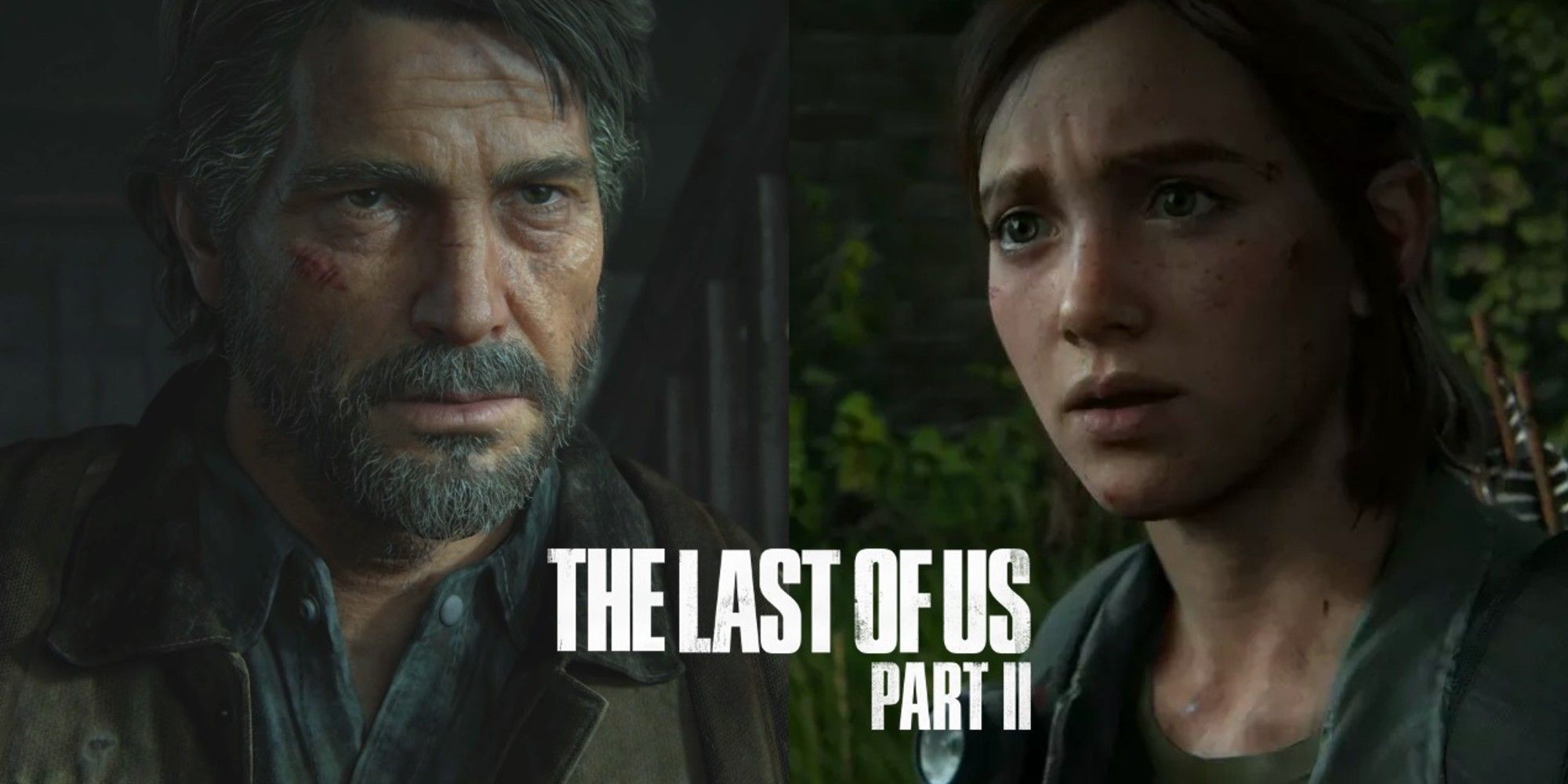
Now, “The Last of Us” is facing that same issue. Years ago, I cited this game as an incredible achievement in terms of storytelling and characterization. Like so many others, I eagerly awaited the release of the sequel. I wanted to see the next step in Joel and Ellie’s journey.
Then, the infamous leaks came out that spoiled large parts of the game. After that, my enthusiasm for the game quickly diminished.
Now, “The Last of Us II” has finally come out. Enough time has also passed to confirm how accurate these leaks are. In that sense, there’s some good news and bad news. The good news is, the leaks weren’t as disappointing as implied. The bad news is, they’re still pretty goddamn disappointing.
It’s akin to being run over by a Prius instead of a fully loaded dump truck.
The reasons for that disappointment are many. I haven’t bought the game. I actually canceled my pre-order after the leaks came out. I still intended to buy the game if the leaks were debunked, but that didn’t happen. I only confirmed them through both a friend and through a few Twitch streams.
I won’t get into the details of the spoilers. I’ll just note that they present a very bleak, very depressing resolution to this story that got us so emotionally invested in the first game. For a game company with as great a track record as Naughty Dog, that’s quite a downgrade. To appreciate just how bad it is, imagine if this was how the “Logan” movie played out.
In the first 20 minutes of the movie, some random character that nobody has ever heard of, let alone cared about, brutally kills Logan in front of Laura. Then, for the rest of the movie, it attempts to make us sympathize with this character who killed Logan. On top of that, when Laura gets a chance to avenge her fallen father, she opts not to for reasons that don’t make sense. She just lets this person go, offering no closure or catharsis.
Those who have played the game can probably fill in the blanks. Again, I don’t want to detail too many spoilers. I’ll just say that there’s a character named Abby in the game and she might very well go down in history as the most hated video game character of all time. It’s not just what she does that makes her deplorable. It’s how the game tries to make players care about her.
To some extent, I get the intention. The premise of the game actually has a novel concept. It attempts to send a message that violence and hatred is a brutal cycle. The more you pursue it, the more it perpetuates. In pursuing that path, you don’t know just how many people you hurt, destroy, or ruin. That’s a good message and a great premise, but this game just fails at every possible turn to make it fit the story.
It shows in how fans have reacted to it. As of this writing, the Metacritic score from users is in incredibly low. It stands in stark contrast to the critical reception of the game, which is always quite telling, as certain movies in recent years have shown. A recent Forbes article attempts to explain it away, using bigotry and bots.
However, I don’t think that’s accurate. I think that’s just making excuses for a story that clearly didn’t work with the audience. Now, even the creators behind the game are starting to attack that audience, which is a problem. I know I’m not a successful author or creator. The chances of me ever getting that success are very slim. However, I know enough to understand how idiotic it is to attack your audience/consumers.
It leaves me genuinely concerned about the larger impact of this game. It also has me concerned about what this will do to an industry that is already laden with controversies and negative hashtags. I’m already bracing for plenty of rants, excuses, and whining from every side. At this point, it’s inevitable. I also seriously doubt that “The Last of Us,” as a franchise, may have just destroyed its future.
There are some topics I try to avoid. Some are just things I’d rather not talk about, but others involve relevant topics that bring up relevant issues. While I will offer my opinion on some of those issues, I freely concede that I’m no expert. My opinion counts for nothing. I also know that some issues are so emotionally charged that it’s hard to contribute without making things worse.
With that in mind, I’m going to talk about the police. Believe me, I wish I were referring to the band.
Like many, I’ve watched the recent news unfold in wake of the death of George Floyd. The level of injustice within this story is simply atrocious. I cannot put into words how awful it is that something like this happened in what’s supposed to be a free society. I also don’t deny that this has happened before and, without significant reform, will happen again.
The reform part is still in the works. That’s something I don’t feel I can add to. While that process is underway, there are other things we can do in the meantime. Like it or not, we’re still going to have to deal with the police. If you’re a minority or a person of color, that’s still a daunting prospect that I can’t hope to understand.
The protests are doing their thing.
The reform is still in the works.
In the meantime, the best anyone can do is find an amicable way to deal with the police, if only to minimize the chances of another atrocity. To that end, I’d like to share this video that offers some simple, but effective rules in dealing with the police. It’s from a channel called Flex Your Rights. It’s an old video, but it’s still incredibly relevant and offers lessons that can help people navigate police encounters safely.
Please note, this is for an ideal situation. If you ever have to deal with a corrupt, dishonorable cop, then that’s another situation entirely. Hopefully, those encounters are very rare. For now, let’s try to err on the side of optimism.
I really wish this video wasn’t necessary. Hell, I wish this whole debate weren’t necessary. I’ve dealt with cops. I’ve been pulled over. I consider myself lucky. I never felt like my life was at risk. However, I know that’s not the experience of many people.
That needs to change.
I believe it will change.
It just won’t happen all at once.
While that change is happening, we still need to live our day-to-day lives in a civil society. Being able to effectively deal with the police can only help. Eventually, methods like this won’t be quite as necessary. We’ll never live in a perfect world, but at the very least, we can try making a better one.
In general, I try not to comment on an ongoing surge of internet outrage. In my experience, joining the digital riot often leads to misguided and misappropriated anger. Sometimes, it’s based on flawed assumptions that mirror the same flaws as the moral panics of old.
That said, I’m going to make an exception for the recent case of the “Central Park Karen,” as she’s come to be known. I hope this is a rare exception, but I feel compelled to comment because I think perspective is important when the outrage is fresh. In addition, I have some personal experience with some stereotypical “Karens.”
To those who don’t know the story yet, consider yourselves lucky. This is one of those stories that won’t damage your faith in humanity, but it will raise some challenging questions. The basics are as follows:
An African American man was bird-watching in Central Park
He saw a white woman walking her dog in the same area without a leash
He tells the woman to put her dog on a leash, as is required by law
She gets upset and threatens to call the cops on him, claiming he’s threatening her life
He records the incident, posts it online, and the woman is vilified
The woman is later fired from her job
Overall, it’s a case of a woman being an asshole and potentially putting a black man’s life in danger. Sadly, around the same time this incident unfolded, a black man was killed while being subdued by police in Minneapolis. She might not have realized how dangerous it was for her to threaten this man in such a manner, but it’s still a dick move. She could’ve gotten him killed or seriously hurt over a goddamn leash law.
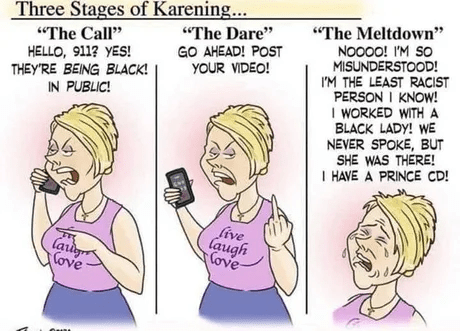
In this case, the facts are hard to dispute. The whole incident was captured on video. There’s no ambiguity on who was being the asshole here. It has become the ultimate manifestation of a stereotypical “Karen.” For those not familiar with this term, it’s an internet meme turned slur towards a certain type of woman. Here’s a quick rundown of those traits by Wikipedia.
The Karen archetype carries several stereotypes that are common to “basic white women”; the most notable is the stereotype that a Karen will demand to “speak with the manager” of a hypothetical service provider.[5] Further common stereotypes associated with the Karen pejorative include anti-vaccination beliefs, racism against black people, use of Facebook and a bob haircut with blonde highlights—pictures of Kate Gosselin during the airing of Kate Plus 8 were used in earlier memes about a “can-I-speak-to-your-manager haircut”,[6] and continue to be used in Karen memes[5]—engagement in multi-level marketing schemes, and Facebook posts sharing trite motivational messages.
With respect to this incident, the woman in question, whose name I won’t use out of privacy concerns, epitomized one too many of these traits. She acted like the law didn’t apply to her and threatened an innocent person of color, likely knowing that she had an advantage by being a white woman. In watching the video, it’s hard to much have sympathy for her.
I say that as someone with some admitted bias. That’s because I’ve had multiple jobs in the past in which I’ve encountered quite a few “Karens.” In fact, every job I’ve had has resulted in at least one encounter with someone who fits one too many traits of this stereotype.
When I worked at a fast food restaurant, I had Karen yell at me for trying to clean parts of a nearby table while her family was still eating.
When I worked at a software company, I had to respond to numerous Karens who demanded urgent assistance for issues that were trivial at best.
I know these kinds of women. I understand why they evoke so much animosity. I’ve harbored some of that resentment before. I don’t deny that my past experience affects how I interpret this story. While I try to be understanding in situations involving internet outrage, that’s considerably difficult in this case.
The outrage for this woman has already led to some major impacts. The woman has already been fired from her job and has had to make a public apology. On top of that, since her name has already been made public, she’s been subject to plenty of hate and harassment. By any measure, she has faced severe consequences for her actions.
That still raises one important question.
Has this woman been punished too harshly?
It’s not an unreasonable question, even from someone with a bias against stereotypical Karens. There’s a good chance that this woman’s life has been damaged for years to come. She lost her job. She’s being relentlessly harassed. She even had to give up custody of her dog. That’s quite a harsh punishment for someone who wasn’t arrested or charged with any crime.
At the same time, we can’t lose sight of the fact that she threatened an innocent man in a way that could’ve ended very badly for him. She openly and eagerly abused her status as a white woman flaunting the law. Had this not occurred, or had the video not gone viral, she wouldn’t have changed her ways. She would’ve just kept doing what she was doing.
That kind of behavior doesn’t just put innocent people of color at risk. It gives no reason for this kind of Karen-like behavior to stop. It’s only by facing consequences for her behavior that she realizes how wrong it was. Hopefully, others like her see what could happen to them if they were to behave in a similar manner.
That’s the best case scenario, but those scenarios are rarely the end result. At worst, this woman now has even more reasons to resent people of color. She might not have harbored overtly racist attitudes before, but she might feel differently now. She and others like her will now just have to be more tactful with their hate, which could subsequently lead to worse incidents that don’t go viral.
It’s hard to say without knowing the woman personally. I’m usually inclined to accept someone’s sincere apology. I genuinely hope that the woman was sincere. If the man she threatened accepts her apology, then I think the right thing to do is for the rest of us to accept it as well. She has faced plenty of consequences already. Forgiveness should be our first inclination when it is an option.
In a perfect world, the outrage would cease if the person wronged decides to forgive. Unfortunately, we don’t live in that world. I sincerely doubt the after-effects of this incident are over for the woman involved. It may take a long time for her to recover and in the long run, the outrage could do more harm than good.
It leaves me genuinely torn. I believe that asshole behavior like this should be confronted and punished, especially when it puts an innocent person’s life in danger. I also believe there should be a limit to that punishment. I just don’t know what that limit is and I think it’s worth contemplating.
Throughout the history of television, the best shows are often the ones that resonate with audiences through different eras, cultures, and places. It’s one thing for a show to be a hit when it’s on the air. It’s quite another for a show to still have appeal many years later.
Within that rare collection of TV shows with that special level of appeal, “Parks and Recreation” is in a class of its own. It started as a generic rip-off of “The Office.” It eventually developed into one of the most beloved and endearing TV shows of the past several decades.
For now, I want to highlight another element of “Parks and Recreation” that I believe has become much more relevant lately. At the rate we’re going, we’ll come to see certain themes in “Parks and Recreation” as prophetic warnings, of sorts. It might not be as prophetic as “The Simpsons,” but it’s still critical, given the current state of affairs.
To understand the importance of those themes, take a moment to think about politicians. I’ll give everyone’s inner Ron Swanson a moment to endure the nausea. What ideas and images come to mind when you think of politicians? What’s the most common perception that most people would agree with? If you walked up to a random person, they’ll probably describe politicians as follows.
They’re all corrupt.
They’re all crooks.
They’re all power-hungry.
They’re all evil.
They’re all arrogant.
They’re all narcissistic.
They’re all greedy.
They’re out to steal our money/land/guns/rights/whatever someone happens to value.
It’s easy to have negative perceptions about politicians. To their credit, they do plenty to affirm those perceptions. You don’t have to look hard to find cases of laughably corrupt or downright evil politicians who couldn’t care less about their constituents. It’s enough to make understand where Ron Swanson is coming from when he brilliantly chastises government.
That said, there’s another side of the story that rarely gets explored. A big part of the comedy in “Parks and Recreation” stems directly from how it explores the challenges that governments face. It doesn’t avoid cases in which government officials behave in deplorable ways. It also doesn’t avoid the role the voting citizens play in enabling those same officials.
It’s the lesser known, but equally distressing aspect of government corruption. It’s not always the case that they just muscle their way into positions of power. In fact, it’s not that uncommon for these deplorable human beings to be legally elected to office. Some don’t even need to rig the vote. They’re able to win within the existing democratic institutions.
That’s the case for multiple politicians in the world of “Parks and Recreation.” Some characters are so laughably scandalous that it’s easy to forget that some of them were inspired by real-world events. However, this only compounds the underlying issues that the show explores, both directly and indirectly. At the heart of those issues is a simple question about the nature of government corruption.
Is it us, the people, or the politicians who foster corruption?
It’s not a strict either/or question with a clear answer, but it’s one that “Parks and Recreation” does more than most shows to explore. Take, for instance, the chaotic town hall meetings that the department holds in multiple episodes. Just look at how the citizens of Pawnee conduct themselves.
Some of these people are just obnoxious. Others are downright malicious. However, every one of them still votes. They’re the ones who ultimately decides who gets elected and who wields the power in their city. As a result, the many absurdities surrounding the fictional city of Pawnee tend to reflect that sentiment.
Throughout the show, the citizens of Pawnee aren’t depicted as exceptionally informed. They often make unreasonable, absurd demands. They’re quick to react and cast blame on others. They hold government officials to impossible standards. Even genuine, sincere public servants like Leslie Knope get attacked for not delivering, even when their requests are unreasonable and/or misguided.
On top of that, many of these same people are easily swayed by corrupting influences. In Season 5, Episode 2, “Soda Tax,” Leslie works with her good friend and competent nurse, Ann Perkins, to implement a soda tax that would curb the sale of exceedingly unhealthy soda consumption. It’s based on a real-world proposal. It addresses a real-world health issue. It’s the kind of thing you’d want a caring government to address.
Take a moment to think about the bigger picture. In every season in “Parks and Recreation,” Leslie Knope conducts herself as an ideal politician who simply wants to do good for her community. She has to fight, tooth and nail, just to get elected in Season 4. Even when she does good by her citizens, they still vote her out.
Leslie dares to tell the truth and be honest with the people. Others, like Jeremy Jamm and Bill Dexhart, simply tell people what they want to hear and/or hire the right people to manipulate the public. They don’t force the public to vote a certain way. They don’t even rig the votes because, in the end, they don’t have to. The people are swayed by the necessary forces and vote accordingly.
Now, you can make the claim that the people of Pawnee are more gullible than most and, as the show often depicts, it would be a valid observation. They still have the power of the vote. They’re still the ones who ultimately make the choice to elect or depose public officials like Leslie Knope or Jeremy Jamm.
Politicians do all sorts of shady things with their power, but that power is still contingent on the will of the people, to some extent. Are the people not somewhat responsible for enabling the corruption that they so deplore? The plot and themes of “Parks and Recreation” don’t attempt to provide a definitive answer, but the show makes a relevant observation that has become even more relevant in recent years.
That’s not to say that the people who voted for such a deplorable human being are bad people. Chances are they either didn’t believe in the allegations levied against him or simply voted for him out of loyalty to a political party. Given the limitations of the democratic system, sometimes people are simply left with two bad choices and have to pick the one that’s least awful to them.
Limitations aside, the fact remains that very few of these corrupt politicians would be in positions of power if people just didn’t vote for them. Even if they had power, they wouldn’t have much influence if those same people didn’t support them, even if they aren’t overly corrupt. It’s why politicians often pander to their base supporters so much. They need that support, even if they’re corrupt.
There’s a lot of ugliness to go around in politics. Part of what made “Parks and Recreation” so endearing was how it forged humor in that environment. In doing so, it also shed some light on the absurdities surrounding politics, democracy, and society in general. It didn’t hide from the flaws. The show even magnified them in many cases.
As real-world politics gets uglier and meaner, the insights within the characters and plots of “Parks and Recreation” may prove more impactful in the long run. The show will always be funny, if only for the moments involving Ron Swanson and Jean-Realphio. It’ll give us a chance to laugh at how corrupt elected officials can be, but it won’t hide the fact that we still voted for them.
To some extent, a global crisis is the ultimate bullshit filter. You can bullshit your way through a lot of things. Things like politics, economics, theology, and philosophy can all be twisted and obscured by a skilled bullshitter who has little concern for the truth, ethics, or decency. However, no amount of bullshit can circumvent the grim realities of a global pandemic.
A disease like the coronavirus/COVID-19 doesn’t respond to fancy rhetoric, dogmatic beliefs, or ideological divides. It responds only to the immutable laws of physics and biology. To this virus, you’re not a liberal, conservative, Christian, Muslim, atheist, or Satanist. You’re just another host.
It’s a grim, yet sobering perspective. It’s also revealing in other ways. As I’ve noted before, I believe we’ll eventually beat this disease. Not since World War II has there been a crisis that has unified humanity’s effort to a singular cause. It will take time and people will still die, but we’ll ultimately save more lives because of the advances we make. The fact that nobody dies of Small Pox anymore is proof of that.
I’ve mentioned religion before in pointing out some of the humorous headlines they’ve inspired in this crisis, but there’s nothing funny about this particular issue. As always, I want to disclose that most religious people aren’t zealots. They don’t take their religion, their holy text, or their eccentric leaders too seriously. They believe what they believe, but live their lives as decent, loving human beings.
I single these people out because in a crisis like this, they can’t survive with the rest of society without being hypocrites in the highest order. I say that as someone who freely admits he can’t predict the future to any degree. However, I’ve met enough religious zealots in my life to surmise predictable patterns.
With that in mind, here’s how I predict religious zealots will react when a vaccine or treatment is found for COVID-19.
They’ll thank their deity and not the doctors or scientists.
They’ll eagerly get in line to receive the treatment, whatever it might be.
They’ll later claim that their deity protected them over the course of the crisis
They’ll then claim the crisis was a punishment for insert-hot-button-social-issue-here.
On top of that, they’ll do all of this with a straight face and a clear conscious. They won’t think of themselves as hypocrites, but that’s what they’ll be by the very definition of the word.
They’ll have claimed that prayer heals and protects adherents, but conveniently overlook how it failed to protect anyone during this crisis.
They’ll have claimed that any science that contradicts their theology, namely evolution, has no merit and should not be supported on any level. Then, they’ll gladly enjoy the fruits of that same science once a vaccine is perfected. Chances are they’ll go right back to bemoaning the same science because it doesn’t line up with their holy books.
Even those who openly defied orders by health officials will face few consequences for their behavior. Even if it’s proven that people suffered and died because of their reckless behavior in the face of a pandemic that doesn’t respond to prayers or preaching, they aren’t likely to change their ways. Even if their hypocrisy is thrown in their face, it won’t change them or their zealous dogma.
That’s the most frustrating part. Most reasonable people, regardless of their faith, understand that there’s a time for prayer and a time for working with the science we know to solve a big problem. Many of those working on a vaccine as I write this are religious. Some might even be motivated by their religion to save as many lives as possible. These people are truly heroic in their own right.
Those who build their religious zealotry on false promises, false hope, and even outright fraud deserve no such praise. Their theology depends on a foundation of bullshit and when a crisis like this cuts through it, then the only thing left is hypocrisy.
I take some comfort in the knowledge that, thanks to the internet and social media, a record of their hypocrisy will remain. They might try to bullshit their way around the facts, but at some point, all the bullshit in the world can’t overcome such hypocrisy.
Every controversy seems absurd when you look at it with enough hindsight. Think of all the big social and political controversies going on right now. From mansplaining and safe spaces to all-female movie remakes to sexy Super Bowl Halftime shows, there’s no shortage of outrage and moral panics. In general, I try to avoid contributing, but I’d be lying if I said I wasn’t affected to some extent.
Even if the issues feel genuinely serious, it’s worth taking a step back and maintaining a certain perspective. What seems serious now won’t always end up being that serious in the grand scheme of things. Things like the Cuban Missile Crisis were serious. The impact of playing Dungeons and Dragons don’t even come close. For the most part, these controversies become obscure footnotes in the history of pop culture.
In the interest of preserving a balanced perspective, I find it helpful to think back to Elvis’ hips. For anyone under the age of 50, I’m sure that sounds strange, but make no mistake. At one point in time, Elvis’ hips were the most controversial thing in the world.
It’s hard to imagine now, given the accessibility of sexy music videos and internet porn, but there was a time when Elvis Presley shaking his hips on live TV was the most scandalous thing in the free world. People at the time deemed his dancing too sexual and obscene. There was serious, genuine concern that this was just too shocking and lurid for innocent eyes to see.
Granted, this took place in 1956. The world was a very different place in 1956. However, that’s not exactly an ancient time period. There are plenty of people alive today who were alive in 1956. They lived through that controversy. They might have even watched that fateful episode of the Ed Sullivan show where Elvis dared to shake his hips in too sexy a way. Now, compared to a standard Beyoncé video, it almost seems quaint.
Even if it sounds absurd now, take a moment to appreciate the context of this controversy. There was a time when people genuinely thought Elvis shaking his hips was too obscene. These same people genuinely thought such overt sexuality would do serious damage to society.
Now, look at everything we deem too obscene, controversial, or damaging today. How much of it will seem just as absurd as the sexiness of Elvis’ hips several decades from now? We may think that our standards have been fully refined, but history has shown time and again that this rarely holds. What is obscene today may be mundane tomorrow and obscene again a decade from now.
Controversies are fleeting, petty, and often build on a foundation of absurdity.
People are often irrational, following emotions over logic while claiming every emotion is perfectly logical.
Trends are unpredictable and fleeting. In 1956 it was Elvis’ hips. In 2003 it was Janet Jackson’s nipple. Who knows what it’ll be this year or in the years that follows?
With time and perspective, it rarely ends up being as serious as we thought. Even if it was, people and society adapt. That’s what we have to do, as a species. We might make fools of ourselves along the way, getting worked up over something that ended up being so petty and contrived. The best we can do is laugh and learn from it.
Think about that the next time someone complains about a halftime show or a music video. Remember Elvis’ hips and the perspective they offer. It’s every bit as powerful as his music.
I’m old enough to remember when parents, teachers, and politicians protested incessantly about shows like “Beavis and Butt-Head” because they were too obscene.
I’m old enough to remember when parents, teachers, and politicians complained endlessly about the lyrics and themes of gangasta rap music.
I’m old enough to remember when parents, teachers, and politicians whined constantly about the violence depicted in every episode of “Power Rangers.”
Hell, I’m even old enough to remember when those same parents, teachers, and politicians said that “The Simpsons” were too immoral for prime-time TV. Those memories make me feel much older than I care to admit, but that’s beside the point.
I have a message for those same parents, teachers, and politicians of that era. I know some are no longer with us, but I know for a fact that plenty are still alive, healthy, and as vocal as ever about bemoaning anything obscene, objectionable, or fun. To those people, I have one simple request.
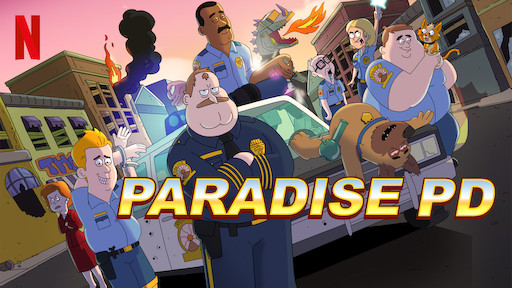
Watch the following trailer for “Paradise PD” Season 2 and then tell me how you feel about all those other shows you whined about throughout the 1990s. I’d love to hear what you have to say.
For the record, I’m a huge fan of “Paradise PD.” I’m very excited about Season 2. I know it’s a show that takes vulgarity, obscenity, and gratuitous violence to levels that even “South Park” won’t touch, but it’s more fun than a pervert in a panty factory and I intend to enjoy every second of it.
Most people aren’t born into wealth. The vast majority of the population has no idea what it’s like to be a billionaire, a millionaire, or someone who just doesn’t live with the constant dread that they’re just one missed paycheck away from total ruin. There’s a reason why they’re called the one percent and it goes beyond basic math.
I admit I’ve often contemplated what it would be like if I suddenly became wealthy. I’ve even articulated some of those musings in detail. I suspect most people have day-dreamed at some point what they would do if they suddenly had a billion dollars at their disposal. For most people, it’s difficult to contemplate because, like it or not, money changes people and not always for the better.
When someone asks what you would do with a million dollars, it’s easy to come up with all sorts of answers. Some are inevitably going to be more absurd than others. The movie “Office Space” articulated that point perfectly. However, there’s another question that I feel is worth asking and I also feel it’s more revealing.
How much money do you really need?
I’m not talking about fantasy wealth here.
I’m not talking dream vacations, dream homes, or spending sprees.
How much money do you actually need to live a happy, comfortable life by whatever standards you define it?
That’s a harder question to answer because it varies for everyone. There are some people in the world who think a million dollars isn’t enough. Depending on where you live in the world, that’s not an unreasonable position. Even with those variations, it still doesn’t zero in on the answer. How much is enough?
I’ve seen how people act when the lottery gets above the $300 million mark. In my experience, once things get over $100 million, that’s when even a typical day dream isn’t enough to appreciate just how much money that is. I’ve tried to imagine it and in every case, I come to the same conclusion.
If I had that much money, I honestly wouldn’t know what to do with it.
It’s not that my needs are simple or cheap. I think my costs are fairly average for someone living in a suburban area. If I had $100 million, didn’t invest a penny in stocks or bonds, and stopped making money today, I still wouldn’t be able to spend it all before I turned 100.
I probably couldn’t even spend $50 million. When things get into the billion-dollar territory, it gets even more absurd. Even millionaires have a hard time fathoming how billionaires operate. Most people, even with decent math skills, don’t understand just how much money a billion dollars is.
At that point, you’re way beyond basic needs and wants. You’re in a domain in which you literally cannot spend all that money at once. You have to legitimately try to lose it all and while some people have done that, it often happens in the process of seeking even more billions to add to their fortune. It rarely occurs just by spending money on your day-to-day needs.
In that context, contemplating how much money you actually need says more about you and your situation than it does about your understanding of finance. If you need that much money to be comfortable, then that says something about your mindset and it’s not just about greed. Some want to change the world for the better with that money. Some want to impose their will on it. It depends on who you are and what drives you.
For me, personally, I don’t think I need anything above $10 million. I probably wouldn’t need more than $5 million just to maintain my current living costs, adjusting for inflation, and planning for my future. That might change if I ever get married and have kids, but for now, that’s my perspective.
I’m interesting in hearing how others would respond to this question. How much money is enough for you? How much would you need to be content, stable, and happy? Let me know in the comments. I’d be happy to revisit this issue again down the line.