Call them any vulgar insult you want. It’s perfectly warranted, but it doesn’t change what they do. The liars, cheaters, and hypocrites of this world will keep doing it. They’ll keep lying to your face, cheating you out of money, and breaking promises or precedents without a second thought.
I know it’s a depressing thought. It has become a lot more in our collective faces in recent years, given how political rhetoric has become so heated. Both sides argue with one another. They each lie or cheat to varying degrees. They jump at the chance to call the other out on it, but nothing really changes.
They keep on lying and people who align with their politics buy into it, even when they know it’s a lie. It’s frustrating. I argue it’s gotten even more infuriating in recent years. It does, however, raise an important question.
Why do people who lie, cheat, and break promises keep getting away with it?
It’s a valid question. Nobody likes being lied to. Even kids know on some level how wrong it is. So, why does it keep happening and why does nobody seem to pay a price? Well, the very nature of those questions already answer that to some extent.
In short, people keep getting away with it because they never get punished, pay a price, or face any consequences for their dishonesty.
It’s not a very comforting answer, I know. It’s probably just as infuriating as being lied to. That doesn’t make it any less true.
Think about it. What price does someone really pay for lying? Sure, there’s the accompanying guilt that comes with it, but for some people, that’s not much of a price. You don’t have to be a psychopath incapable of guilt to lie. You just have to be capable of enduring the momentary discomfort that comes with it.
That’s not much of a price for certain people, especially when there’s money to be made and power to be gained. Granted, certain liars and hypocrites will lose credibility with certain people. Lie too much to one person and they won’t trust you, let alone be inclined to do you any favors.
On a larger scale, though, that’s less of an issue. Add mass media and the internet to the mix and it’s basically an afterthought. Right now, anyone can tweet or post some completely dishonest information to any number of major sites.
They could claim a certain politician beat up a child.
They could claim that a certain celebrity sexually assaulted someone.
They could claim that the theory of evolution is a plot by the Illuminati to keep people from finding out about the shape-shifting lizard people that secretly run our government.
Some of these lies may incur lawsuits or blocks, but again, is that really much of a price? Some people can afford frivolous lawsuits. Many don’t care if certain people block them. Even when major websites try to clamp down on it, that only seems to fuel the liars.
That’s another critical element as to why it keeps happening. Not only do liars, cheats, and hypocrites pay little to no price for their dishonesty. In some cases, they’re rewarded. In some cases, the reward is huge.
We may hate hypocrites and liars, but so long as they have something to gain and little to lose, not much will stop them. If they have no sense of guilt or shame, as many politicians and CEOs often do, they have every incentive to do what they do. There’s just too much money and power to be gained.
On top of that, there are some people who want to believe in their lies. Everyone has their own reason for doing so. It often boils down to the lies being more appealing than the truth or reinforcing some position they already have. Whatever their reason, they keep give even more incentives to those willing to exploit that inclination.
I say this not to be dire, although I don’t deny the election last month is a motivating factor. I offer this as a means of adding perspective to those frustrated by the dishonesty and hypocrisy that seems so prevalent, no matter where you look.
There’s a reason it’s there and is a painfully valid reason. As long as the liars, cheaters, and hypocrites we despise keep gaining so much and losing so little, they will continue with their deplorable behavior. They have no reason not to. It’s just the nature of our flawed world.
We can only do so much to make it less flawed. One way you can help is to keep voting, even if it’s just for the least dishonest candidate. It’s not a perfect fix, but it’s a start.
The following is a video for my YouTube channel, Jack’s World. It’s just a brief video essay on why Homelander from “The Boys” is the perfect villain for this particularly messed up era. Enjoy!
Election Day has come and gone. I won’t get into the drama leading up to it or the drama that’s still unfolding, as I write this. I just want to take a step back, catch my breath, and offer some perspective to those who will hear it.
I agree this was rough. I think most others will agree with me when I say this was the most chaotic, divisive, and downright stressful election in recent memory. I’ve spoken to relatives who voted for Kennedy in 1960. They agree that this year was, by far, the worst in terms of stakes, rhetoric, and tone.
That’s saying a lot, by the way.
However you feel about the candidates or who you voted for, I genuinely hope this election has been revealing, to a certain extent. It’s tempting to be cynical about it. I certainly wouldn’t blame anyone for feeling that way. At the same time, we should also take stock as to why this election was so harrowing, for lack of a better word.
The world is such a messed-up place right now. We’ve got wars, economic collapse, and a once-in-a-century pandemic has that killed over a million people in the span of nine months. Things are bad right now, more so than they’ve been at any point in my lifetime.
Most don’t question that, unless they’re rich and well-connected.
What I do question, however, is why people trust or even expect politicians to help solve these problems.
That’s a notion that, in my opinion, fuels stressful elections like this. An election is supposed to be a job interview for a position for a public-serving official. It’s not supposed to be some expensive spectacle in which we all get behind the candidate who says the right things to just enough people in a handful of swing states.
That’s not democracy.
That’s a bad reality TV show.
Now, it’s tempting to just blame the politicians and that’s understandable. Politicians are easy targets for mockery and they’ve no one to blame but themselves for that. We should criticize them. They are, after all, in positions of power and public trust. They should be held to a higher standard.
That standard, however, should not involve trusting them to fix everything that ails us, from the economy to who pays a fine for when a female nipple is shown during a halftime show. That’s not just asking too much of one person. It’s asinine.
It’s also self-defeating. Politicians make lots of promises and break plenty of them, but let’s not lay the blame entirely on their honesty or lack thereof. They’re only human. Even the most selfless, hard-working politician can only do so much to deliver on every promise. There just aren’t enough hours in the day or enough personnel to get it done.
That’s not even accounting for the times when politicians make objectively impossible promises. Certain policy pitches may sound like great slogans or taglines, but logistically speaking, they just cannot be done in the real world. It’s not that the sincerity isn’t there. There just isn’t enough people or resources.
Therein lies the source of the great cycle of toxic politics. It goes something like this.
Politician A makes a bold promise. People rally behind them. Politician A get elected.
Politician A cannot deliver on those promises. People turn against them.
Politician B comes along, offering new or better promises. People rally behind them. Politician B get elected.
Again, Politician B can’t deliver on all those promises. People turn against them.
Politician C comes along to make another set of promises and the cycle continues.
It goes beyond party affiliation, political systems, or shifts in power. It’s an unavoidable flaw in a democratic system. An election, by default, isn’t going to elect someone with the greatest governing skill. It can only elect someone with the skills to convince enough people that they can govern.
I won’t say it’s a terrible system. Compared to the alternatives, it’s probably the best we can manage right now in our current environment. However, it is not a system in which any politician, no matter how successful, can solve the problems we want them to solve. Even when the system is working at its best, it’s still limited.
That’s not to say politicians can’t be part of a solution. They definitely can be. A politician can be a facilitator of sorts, either by leadership or by policy. The specifics, though, are best left to people with the right drive, incentives, and know-how.
Whether it involves combating climate change, reducing poverty, or promoting public health, the bulk of the responsibility will still fall on the general public. We, as a people, have to collectively work on these issues together. That’s how any social species within a functional society adapts, grows, and prospers.
The role of government and politicians is always changing. The extent or details of that role depends heavily on the issue at hand. The Presidents we elect, as well as the various legislators and judges at all levels, will always have some impact on how we further our interests. The key is balancing that impact with actual, tangible efforts on our part.
The next four years are sure to be eventful. Hopefully, they’re eventful for all the right reasons. Whatever happens, use this past election as a teachable moment.
Politicians come and go.
Ambitious people will keep making bold promises and breaking them, either on purpose or through no fault of their own. At the end of the day, it all comes back to us. We have a part to play in making our world and our lives better. Let’s focus on doing ours before we trust anyone else to do it for us.
Let’s be honest. It’s very difficult to have honest, civil discourse with anyone these days. I won’t say it’s impossible, but it sure feels that way sometimes. Try expressing any opinion about any issue that’s even mildly controversial. Chances are you won’t spark a civil discussion. You’ll likely trigger a flame war, especially once Godwin’s Law comes into play.
Now, I’m not going to blame all of this on the internet and social media. I don’t deny that it plays a role, but let’s not miss the forest from the trees here. We, the users of these tools, are the ones driving the content. We’re the ones who guide these discussions towards angry, hate-filled outrage. The medium is only secondary.
There are a lot of reasons why civil discourse is so difficult, but I want to highlight just one that has become far more prominent in recent years. It’s an objectively bad trend and one I genuinely believe we need to reverse. It involves this inability to distinguish shaming someone from criticizing them.
It goes like this. Two people connect, either in person or via the internet. They have a disagreement. When there’s criticism, it tends to go like this.
Person A: I hold Opinion X.
Person B: I hold Opinion Y.
Person A: Why do you hold that opinion? I don’t understand how you could.
Person B: Well, it’s because of X, Y, and Z.
Person A: I don’t disagree with Y and Z, but I take issue with X.
Person B: Why is that?
Person A: Well, it goes like this…
Ideally, both people in this exchange get something out of this discourse. Person A offers Person B another point of view. Person B has their opinion challenged and they’re now in a position to defend it. In doing so, they may reaffirm or question their position. They may even convince Person A of the merit of their position.
That’s a healthy level of discourse, guided by fair and civil criticism. There’s certainly a place for that. I even see it on social media from time to time. However, that’s not what makes the headlines. It’s the shaming that usually generates the most noise. Shaming is very different from criticism, both by definition and by practice. At its worst, it goes like this.
Person A: I hold Opinion X.
Person B: I hold Opinion Y.
Person A: What? You’re a horrible human being for holding an opinion like that! You must be a fucking asshole fascist Nazi prick!
Person B: Fuck you! Your opinion is a goddamn atrocity! Only a true fucking asshole fascist Nazi prick would even entertain it! You should be fucking ashamed!
Person A: No, you should be ashamed! You should lose your job, your money, and all manner of sympathy for the rest of your fucking life!
Person B: No, you should be ashamed! You should cry like a baby, get on your knees, and beg everyone like me to forgive you! And you should also lose your job, money, and any semblance of sympathy until the end of time!
I don’t deny that’s an extreme example. I wish I were exaggerating, but I’ve seen stuff like this play out. I’ve seen it in comments section, message boards, Twitter threads, and Facebook posts. It’s not enough to just criticize someone for holding a different opinion. People have to outright shame them to the point where they’re mentally and physically broken.
In some cases, people look for that kind of rhetoric. Some people just love trolling others by posting opinions they know will piss people off and start a flame war. They don’t care about civil discourse. They just care about riling people up. It’s what gives them a cheap thrill.
Those people are trolls. The best thing anyone can do is ignore them.
They’re also in the minority. They may be a vocal minority, but they are the minority. Most people, in my experience, are inclined to be civil. They’ll give people a chance, even if they don’t agree with them. Things just go off the rails when they interpret criticism as shaming. It’s not always intentional, either. Some people just frame their criticism poorly, which sends all the wrong messages.
Whereas criticism is impersonal, shaming evokes some very basic emotions. There’s a tangible, neurobiological process behind it. It’s linked heavily to guilt, an objectively terrible feeling that most people try to avoid at all costs. Shame attempts to impose guilt. While there are some things we should definitely feel guilty about, holding certain opinions is rarely one of them.
Does someone deserve to be shamed for how they voted in the last presidential election?
Does someone deserve to be shamed for believing “Star Wars: The Last Jedi” was a terrible movie?
Does someone deserve to be shamed for thinking certain female characters in media are too sexualized?
Does someone deserve to be shamed for thinking they shouldn’t believe every claim a woman makes about being sexually harassed?
These are difficult, emotionally charged issues. With that kind of complexity, there’s going to be many points of criticism. Some have real merit and they should be discussed. That’s how we learn and make sense of our world and the people in it. Once shame enters the picture, though, the merit tends to vanish.
The problem is that once the shaming starts, it escalates quickly. It doesn’t even need to escalate that much before a person stops listening and gets defensive. At that point, there’s basically no going back. It’s less about understanding someone else’s perspective and all about defending yourself.
That’s not a metaphor, either. Like it or not, people take their opinions seriously. Attacking them with words, even if it’s through a computer screen, still feels like a physical attack on some levels. You’re not just attacking an opinion, anymore. You’re attacking a person. You’re throwing metaphorical punches that have non-metaphorical meanings to those you’re attacking.
With that in mind, look at it from a purely instinctual level. When someone is physically assaulting you, is your first inclination to engage in a reasoned, civil discussion? For most people, it’s not. You go into survival mode and that often involves attacking the attacker.
You throw your punches.
They throw theirs.
They call you a fascist, Nazi-loving bully.
You call them a worse fascist, Nazi-loving bully.
There’s no logic or reason to it. Once emotions override everything, criticism becomes a moot point. It’s all about hitting back to defend yourself. It’s not about being right. It’s about survival, at least from your brain’s perspective.
If there’s one silver lining, it’s that people get burned out quickly on this kind of discourse. You can only hear two sides call each other fascist for so long before the rhetoric loses its impact. It also gets boring. It takes too much energy to sustain that kind of hatred towards someone you don’t know. Most people who aren’t trolls have better things to do with their time.
As I write this, I understand that we live in contentious times. I see the same heated debates online and in person as everyone else. I know that civil discourse is a scant and precious commodity at the moment. That’s exactly why we should make the effort, regardless of what opinions we hold.
Once we stop shaming each other for daring to think differently, we’ll realize just how much we have in common. We don’t have to agree with one another. We don’t even have to like one another. We can and should still be civil with one another. That’s the only way we’ll make any real progress.
As proud as I am to be an American, I’ve grown increasingly frustrated with politics and discourse. I know that’s not saying much. I didn’t live through the turbulent eras of the 60s and 70s. My parents have told me it has been very bad before, but even they admit that this year is a special case of awful. They almost long for the hippie-style protests of the 60s.
I won’t get into why things have become so contentious, although most people can probably discern the most noteworthy source. I don’t have the patience or the sanity to digest that. Instead, I want to offer an observation that I’ve noticed as this election drama has played out. It has to do with both politics and religion, two incredibly divisive forces with a strong basis in absurdities.
I’ve done plenty to highlight the flaws, failures, and outright atrocities that have been committed or justified in the name of religion. I’ve also touched on some of the frustrations and annoyances that manifest in politics. Together, both can be extremely damaging to people and society alike. History has proven that on multiple occasion.
Lately, however, I get the sense that a new kind of zealotry has taken hold. It’s not entirely political or entirely religious. It just take the most destructive elements in both and channels them in a way that inspires some objectively deplorable behavior.
In essence, the same dogmatic stubbornness that often fuels religious extremists has now been applied to someone’s political leanings. By that, I don’t just mean what party they belong to or who they voted for in the last election. I’m saying they now see their political affiliation in the same light some see their religious adherence.
To some extent, this makes sense. Organized religion, in general, has been in a steep decline for decades. The rise of the internet, as well as a more educated public, has significantly undermined religion’s ability to lock in adherents for generations. However, a lack of a religion doesn’t make someone any less inclined to believe absurd, misguided, or demonstrably false concepts.
The same tribalism that often fuels religious rhetoric is becoming a larger factor in politics. I won’t go so far as to say that political ideology is replacing organized religion outright. I just think that same tribalism is becoming a more prominent factor.
It often goes like this. In the past, I often saw discussions like this play out.
Liberal: I believe the minimum wage should be raised to $15 an hour.
Conservative: I respectfully disagree. I think a minimum wage ultimately harms the working poor by limiting the number of entry level jobs.
Liberal: I don’t think the data bears that out, but can we agree to disagree?
Conservative: Of course.
That’s fairly civil. Ideally, that’s how political debates should go. It’s not an argument about whose deity is better and who’s going to Hell when they die. It’s just a simple exchange of ideas to further a discussion about real-world issues. It can get ugly at times, but it rarely ventures into the same damaging extremism that often comes with religion.
That kind of civil exchange now feels so long ago. These days, you need only look at a comments section or a thread on social media to see how outrageous the discourse has become. It tends to go more like this.
Liberal: I believe the minimum wage should be raised to $15 an hour.
Conservative: You American-hating, baby-murdering, politically correct cuck! What kind of Marxist wannabe are you? Get the fuck out of this country! You don’t belong here!
Liberal: Fuck you! You’re a racist, sexist fascist, gay-bashing hypocrite! Go back to Nazi Germany and beat your women somewhere else! You’re destroying America!
Conservative: No, you’re destroying America!
Liberal: No, you are!
Conservative: Fuck you!
Liberal: Fuck you!
I admit, this is a generalization, but it’s not that far off. Between Reddit, Twitter, Facebook, and 4chan, this kind of hateful rhetoric is fairly common. Even the street preachers who hold up signs, telling everyone that their deity wants to send them to Hell, isn’t nearly this vitriolic. Anyone who tries to be civil or inject some simple facts into the discussion is quickly drowned out by hateful dogma.
The internet and social media has acted as a catalyst, of sorts. It’s one thing to hold extreme, dogmatic political views. It’s quite another to share them in a community that constantly reinforces, reaffirms, and encourages those views. It’s become incredibly easy to exercise your own confirmation bias. If you have an opinion or want evidence for a crazy belief, chances are you can find it on some dark corner of the internet.
It’s at a point where if you try to criticize someone’s political leanings, it’s not just a point of disagreement. It’s treated as outright blasphemy. I’ve seen it on both sides, although I think those who lean right/conservative are worse offenders. Trying to convince any side that they’re wrong is akin to trying to convince a creationist or flat-Earther that they’re wrong. It just evokes more extremism.
This is not a healthy trend. Religious extremism is bad enough. Plenty of people have died because someone was convinced that a certain holy text was literally true and it was their duty to attack those who don’t agree. To religious zealots, the mere act of disagreeing and disbelieving as they do is seen as an insult, an affront, and an act of violence. That can’t be how we treat politics.
At the same time, the ugly forces of tribalism are still as strong as ever, if not more so in the age of the internet. Those influences aren’t going away anytime soon. Being part of a tribe or group is fine. We’re a very social species. It’s part of why we’re so successful. However, that same force that unites us can also inspire the ugliest kind of hate.
At its worst, it makes view anyone who disagrees with us as a non-person. They’re not sub-human, but they are someone we would rather not have in our domain. It’s not enough to disagree with them. We’d prefer they not even exist in any way that affects us.
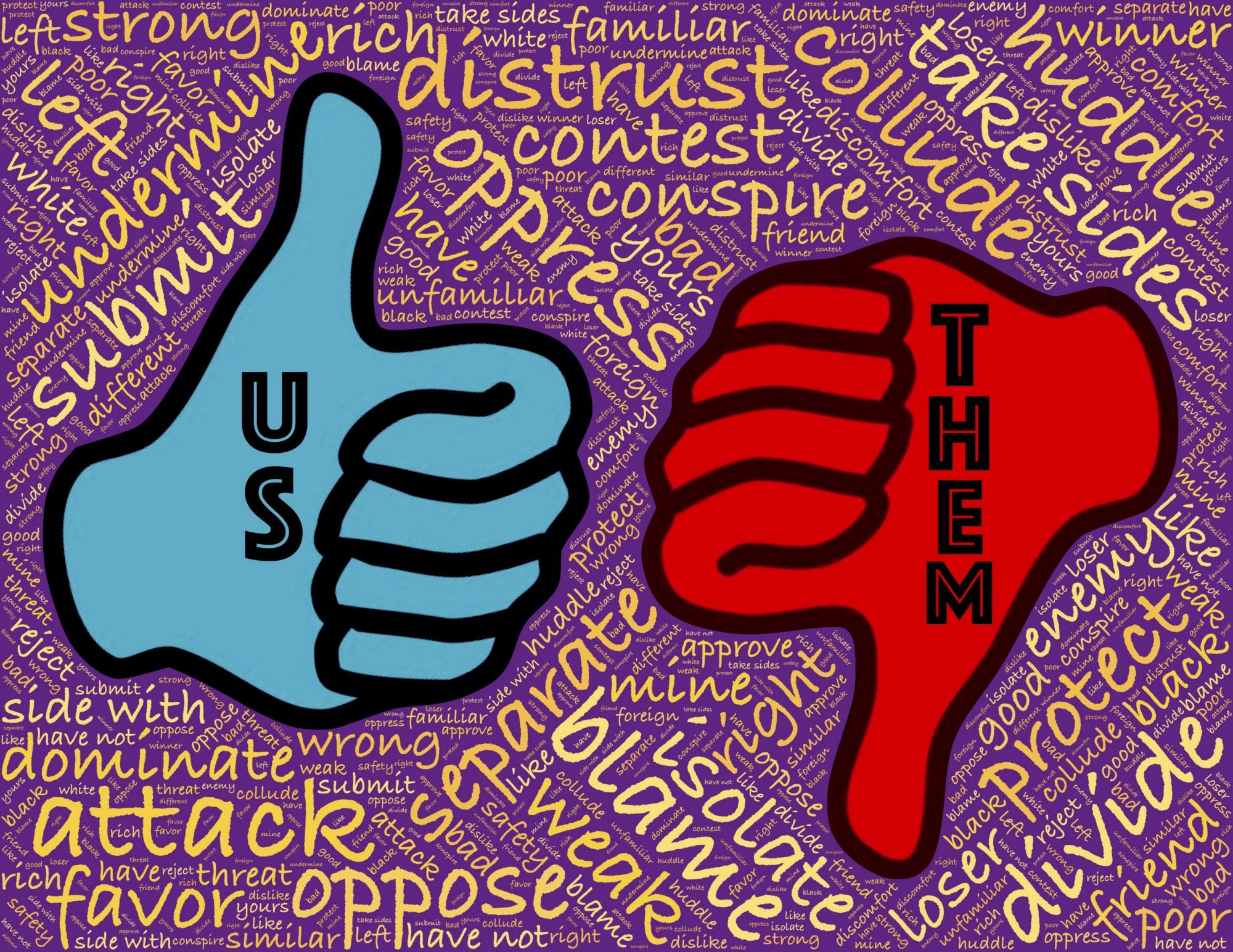
It’s a special kind of dehumanizing and something religion has done for centuries, weaponizing the age-old us-versus-them mentality. We can only do so much to temper our tribal nature, but there comes a point where the line between differences and hatred become too blurred. We share this same planet. We also live in countries full of people who don’t agree with us.
That’s okay. We can still be friends with these people. We don’t have to hate, scold, insult, demean, or dehumanize them. That’s a conscious choice we make and, unlike religion, it requires little in terms of indoctrination. As society becomes less religious, it’s important to remember why we’re moving away from organized religion in the first place.
In the same way most religious people are decent, good people, most people of any political affiliation are the same. We’re still human at the end of the day, but I sincerely worry that the increasing ugliness of politics is making us forget that.
I love the internet. In general, I think it does more good than harm. Our lives are objectively better because of it. I know it has its share of baggage and drawbacks. Like anything, you take the good with the bad.
However, there are times when taking the bad is just annoying as hell. I’m fine with challenges and struggle. Those help us become stronger, in the long run. The same can’t be said of annoyance. That helps no one. It just makes you want to bang your head against the wall.
This brings me to what I feel is one of the weakest, emptiest, most pathetic displays of internet outrage I’ve seen in recent years. It unfolded last year, but has become relevant again this year. Even in the midst of a global pandemic, certain people still find the time and energy to be so insanely petty about something so banal.
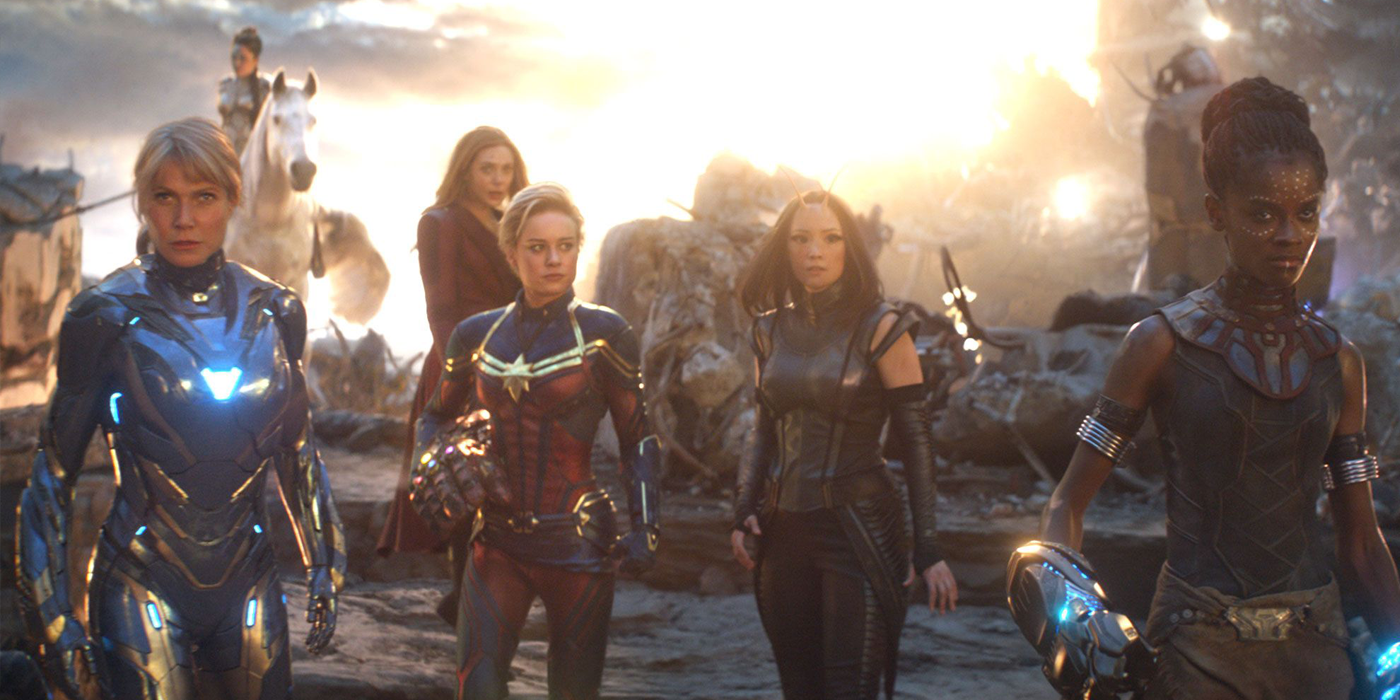
It stems largely from that scene in “Avengers: Endgame.” You probably know the scene I’m referring to. I doubt I have to be too specific. For general reference, here it is.
Just playing it again, I can easily imagine a certain group of people whining like babies, as though someone just stole a piece of their birthday cake. It’s a shot of some of Marvel’s most notable female characters, all in the same scene, getting ready to kick more ass in the final battle against Thanos.
Yes, people actually got upset over this.
Yes, it’s as dumb, pathetic, and petty as it sounds, and then some.
They’re not just men who complain about a female superhero’s bra size. They’re not just women who complain how these costumes are woefully impractical. They call this scene cringy. That’s usually code for, “This doesn’t pander exclusively to me and it hurts my precious feelings!”
Many probably whine about other people who whine about things they don’t agree with, be it politics, video games, or which celebrity had an opinion that hurt their precious feelings. This scene just caught more attention than most, being part of the highest grossing movie of all time.
The outrage unfolded as soon as the movie came out. Here’s just one of the responses on Twitter.
SO FORCED!!!! my goodness, the IW scene wasn't forced when they went up against Proxima Midnight in wakanda. But this one….ugh, I almost laughed out loud. And I have daughters and love seeing strong women, but yuck. Don't force it.
Trust me, this is tame compared to some of the other rage tweeting that went on. Most of it boiled down to people saying the scene was so forced and tried too hard to make a political statement. Naturally, you can’t make political statements these days without attracting trolls, assholes, idiots, and narcissists.
I say that as someone who has made his share of political statements, some of which I know won’t age well. I know I make certain people cringe with what I say and how I say it. Most of the time, it’s understandable. I have enough empathy to realize that hearing something you don’t agree with can be distressing.
This scene, however, is not one of those instances. To see this scene and assume Marvel Studios is making this bold political statement about feminism, female characters, and how men should be ashamed for not letting women shine isn’t just contrived. It’s just plain goddamn stupid.
I’m sorry. I wish there was a more articulate way to say that. Sometimes, you just have to be as blunt and straightforward as possible. There are things worth cringing over. There are things worth getting outraged over. This isn’t one of them.
It’s just a very brief, very colorful moment within a two-and-a-half hour movie that took all but seven second. Somehow, that was enough to evoke whining, outrage, and trolls? Seriously, how does that make sense?
The reason I’m bringing this up now is because this scene has become relevant again, thanks to Amazon Prime’s “The Boys.” Now, I love that show and the comic that inspired it. I hope I’ve made that clear. I love the scene that re-opened this old wound, too. It was a great scene. Watching Starlite, Maeve, and Kimiko beat up Stormfront was very satisfying.
There was nothing political about it, but now it’s getting political because of how it supposedly contrasts with the “Avengers: Endgame” scene. I say supposedly because they’re both very different scenes with very different stories told in a very different context. Linking one to the other to make a larger political statement is just asinine.
When I see the “Avengers: Endgame” scene, I don’t see anything political. I just see an epic shot of Marvel’s female heroes. That’s it. That’s all there is to it. It’s just a fun scene that nicely depicts how many great female characters have developed over the years in the MCU. Can’t it just be that?
The same goes for the scene in “The Boys.” Can’t that scene just be a fun display of three of the show’s best characters beating up some Nazi-loving bitch? There’s no politics in, either. It’s entertainment. It’s fun.
If you’re going ascribe politics to either scene, then you’re missing the point. You’re also whining like an immature child, incapable of accepting a world that doesn’t always pander to every one of your sensibilities at every hour of every day. I don’t care where you lean politically. That sort of misguided outrage isn’t the least bit justified. It’s just flat out pathetic.
It’s a sad fact of life. Certain movies, TV shows, songs, toys, and products just don’t age well. For every timeless classic, like “Citizen Kane” or Mozart operas or Betty White, there’s an “All In The Family” or “Gone With The Wind.” That’s not to say these pieces of popular media are bad or should be censored. They just have a cringy impact in today’s climate.
I love classics as much as the next guy, but even I can’t deny that the lyrics for songs like “Brown Sugar” or “Under My Thumb” by the Rolling Stones have some distressing connotations. I don’t judge anyone who still enjoys those songs or loves the Rolling Stones. Let’s just acknowledge that times change, societies change, and certain media just doesn’t fit anymore.
That being said, it’s also possible for something to age a little too well. Again, I’m not just talking about Keanu Reeves or Betty White. Every now and then, you revisit an old movie, show, or song that doesn’t just fit right into the current cultural climate. It almost fits too well.
That’s how I felt recently while going over some old music. I was updating my workout playlist when I came across some old songs I had from Rage Against The Machine, a band I hadn’t followed closely since high school. In re-listening to some of those songs, I realized two things.
One, they still rock. They rock every bit as much as they did when I was a teenager.
Two, their music has aged way too well in the current political climate.
Now, if you know anything about this band, the kind of music they play, and what they stand for, you’re probably not surprised. Rage Against The Machine is not subtle. Their music is very political. It always has been, going back to their formative years in the mid-1990s.
They’re anti-authoritarian, revolution-heavy act that you don’t see much outside the heyday of the hippie era in the 1960s. As a teenager, I didn’t appreciate that kind of political rhetoric in music. At the time, the only politics I cared about involved how many snow days we were allowed at school.
Now, having grown up and become painfully aware of the current state of politics, I find myself appreciating Rage Against The Machine even more. I know it’s a couple decades too late, but it’s still profound. Just listening to the songs I have, I feel like they could’ve come out today and be just as relevant.
The best example that I came across just happens to be my favorite Rage Against The Machine song of all time, “Sleep Now In The Fire.” When I hear this song, it blows my mind that it came out in 1999. It feels so long ago, but it still rings so true.
Even the music video, which I remember seeing on MTV regularly, has aged remarkably well. I would argue it aged too well. Just see for yourself.
To anyone born after the year 2000, please take a moment to appreciate what the band did here. They defied a decision made by New York City. They played on the steps of the Wall Street Stock Exchange for this video. That could not happen today. In a world after September 11, 2001, they wouldn’t get off with a fine or a warning. They’d go to prison.
Then, there are the lyrics. Just take a moment and read over these lyrics. How much more relevant are they now compared to 1999?
Yeah The world is my expense The cost of my desire Jesus blessed me with its future And I protect it with fire So raise your fists and march around Just don’t take what you need I’ll jail and bury those committed And smother the rest in greed Crawl with me into tomorrow Or I’ll drag you to your grave I’m deep inside your children They’ll betray you in my name
[Chorus] Hey, hey Sleep now in the fire Hey, hey Sleep now in the fire
[Verse 2] The lie is my expense The scope of my desire The party blessed me with its future And I protect it with fire
[Pre-Chorus] I am the Niña, the Pinta, the Santa Maria The noose and the rapist, the fields’ overseer The agents of orange, the priests of Hiroshima The cost of my desire Sleep now in the fire
[Chorus] Hey, hey Sleep now in the fire Hey, hey, hey Sleep now in the fire
[Verse 3] For it’s the end of history It’s caged and frozen still There is no other pill to take So swallow the one that makes you ill
[Pre-Chorus] The Niña, the Pinta, the Santa Maria The noose and the rapist, the fields’ overseer The agents of orange, the priests of Hiroshima The cost of my desire Sleep now in the fire Yeah
It’s downright eerie. The whole song is about how the rich, powerful, and well-connected can get away with anything. They lie, cheat, and steal with impunity. They’ll pay lip service to revolution and change, but never hesitate to throw people in a fire if they get out of line.
It feels like a perfectly dystopian indictment of the current political rhetoric. People on both sides of the political spectrum, liberal and conservative, jealously protect their power and influence. They’ll tell people what they think they want to hear, stoking hatred and fear, all while enjoying the fruits of their position.
Regardless of your politics, you can’t help but appreciate this kind of hard-hitting message. It feels like we’re always at the mercy of the rich and powerful. They play political games. We’re just brought along for the ride.
Rage Against The Machine was making music about this long before the internet, social media, and cable news made those politics so hateful. They dared to rage against a corrupt system before it became a common tool of political theater.
When you write a lot about sex robots and sex dolls, like I do, you tend to attract attention. It’s not always the fun kind of attention, but it’s still attention and I welcome it. I’ve been discussing this topic, and writing sexy short stories about it, long enough to make clear that my interest is serious. It really pays off when you connect with others who are equally serious.
That happened recently when some people from an actual sex doll brothel in Europe saw some of my articles. One of their representatives actually reached out to me and we organized a Skype call. I wasn’t entirely sure what to expect, but I was genuinely curious. It’s one thing to write about sex dolls and sex robots. It’s quite another to get actual insight from someone working in that field.
I’m grateful for the opportunity because the discussion we had was incredibly revealing. For the record, and in the interest of full disclosure, the sex doll company in question is called Naughty Harbor. Before you look them up, please note that their website has plenty of NSFW content. They work with sex dolls. That should be a given.
They currently operate out of the Czech Republic. They have facilities for both the manufacturing of sex dolls and for operating a small sex doll brothel. They haven’t been in business for very long, but they have been on the front line of this emerging industry.
The individual I spoke to, whose name I won’t disclose out of respect for his privacy, works closely with the founder and the owner of Naughty Harbor. He shared a great deal of information on the basics of the industry, the people who use it, the challenges of operating in 2020, and the emerging trends. Among the many issues that came up, here are some key highlights.
Issue #1: The Taboos And Stigma Of Sex Dolls Still Very Strong
This was probably the largest and most pressing challenge for Naughty Harbor and companies like it. Like most things related to sex, there are a host of taboos about sex dolls. From the people to use them to the people who buy them to the people who develop genuine connections with them, the stigma surrounding them is still incredibly strong.
At the same time, the demand for companionship and sexual experience is also strong. That’s never going away, no matter how much taboo or stigma is heaped upon it. Just ask the Catholic Church. That’s what drives the sex doll industry. With sex doll brothels now starting to emerge, the taboo is starting to wane to some degree.
The individual from Naughty Harbor explained how big a deal privacy was for customers. Some wanted absolutely no face-time with anyone. They wanted what amounted to a no-contact experience. They just call ahead of time, have someone set up a room with a sex doll, and have all the transactions occur behind a computer screen with complete anonymity.
It’s not unlike the type of no-contact deliveries that have become so common during the ongoing pandemic. It’s not like walking into a legal brothel, standing in front of a bunch of sex workers, and doing business out in the open. Even in places with liberal sex work laws, like Europe, the desire for privacy is still critical.
That’s likely to remain the same as more sex doll brothels open up. However, this is also where our discussion brought up other key insights.
Issue #2: The Pandemic’s Effect On The Industry
Like any industry, the ongoing that same pandemic I mentioned earlier is affecting the sex doll industry. The representative said outright that there has been a noticeable uptick in interest and sales. That makes sense too. People who have been stuck at home for weeks on end are bound to get lonely. Even if you live in a place with legal sex work, a pandemic is kind of a mood killer.
These sex dolls are suddenly seen as both a viable option and one that’s safer. You can clean a sex doll. In fact, Naughty Harbor reported that they’ve developed a very diligent process for sanitizing their sex dolls. It’s at a point where these sex dolls, including the ones being used at the brothel, are cleaner than your hands are this very instant.
For those who’ve become very conscious of germs and disease, as most of us have been under the pandemic, this is key. It’s an element of control and assurance you can’t get with a flesh and blood sex worker. It’s not even something you can get with a typical partner. There’s value in that and it outweighs any stigma or taboo.
While I wasn’t privy to exact numbers, Naughty Harbor did indicate that business has been strong for sex doll brothels during the pandemic. They’re expected to remain strong, even after the pandemic passes. If anything, it has shown people that this industry can provide a legitimate sexual outlet and that can be very beneficial for people.
Issue #3: Research And Benefits
Another interesting issue that came up was the ongoing research surrounding the use of sex dolls. Naughty Harbor is playing an active role in that effort. According to the representative, both manufacturers and sex doll brothel owners are coordinating with researchers who are interested in this field.
Make no mistake. The interest is growing and not just because of the pandemic.
Even before people were isolating in the name of public health, research into the effects of loneliness were painting some pretty bleak conclusions. Considering that humans are a social species, which I’ve belabored before, this makes a lot of sense. Can sex dolls help with this?
Naughty Harbor believes that it can. Researchers are interested in just how much or how little help that a sex doll can provide. Even though they’re not alive, the mere facsimilia of human companionship is certain to have a tangible impact on someone’s psyche. The nature and extent of that impact remains unknown, but will be a key point of interest.
Between social isolation due to pandemics and the emerging concerns regarding the incel phenomenon, sex dolls could provide key points of interest. We’ll need that perspective, especially as sex dolls become more lifelike and eventually become sex robots.
Issue #4: They’re Getting More Lifelike
In addition to the social impact, we also talked quite a bit about the technology. The sex dolls of Naughty Harbor are quite lifelike, but you’d never mistake them for an actual person from afar. They’re still getting incredibly close, though. They’re just on the edge of that uncanny valley in which most sex dolls and sex robots operate at the moment.
The fact they still look artificial may be part of what fuels the taboo, but the technology is changing rapidly. The individual I spoke to says it’s getting both better and faster. Companies like Naughty Harbor are already using technology like 3D printing to both build and repair sex dolls. They’re also using better silicone blends that better mimic the feel of real human flesh.
They’re getting to a point where they can look like real people. They’re also at a point where they can be made to look exceedingly unreal for those with specific fantasies. That was something Naughty Harbor said is a growing trend. Those who seek the use of sex dolls don’t just want sex. They want an experience and they’re willing to pay for it.
Accommodating those fantasies is currently a niche market, but one that’s getting easier as the manufacturing processes are improving. It’s getting to a point where the only issue is scale, which is more a logistics challenge than a technical challenge.
Issue #5: They’re Getting Cheaper
Five years ago, if you wanted to buy a well-made sex doll, chance are you’d have to spend upwards of $5,000 to $7,000. There are used cars that cost less than that. That kind of cost is also a major barrier for those seeking an experience with a sex doll. It’s also helped keep the industry shrouded in taboo.
Today, that cost is not nearly as big a barrier as it once was. While many high-end sex dolls still cost thousands, many quality models now can be bought for less than $3,000. It’s less the cost of a used car and more the cost of a large appliance, like a refrigerator or washing machine. The models offered by Naughty Harbor range between $3,000 and $1,800.
That’s still not cheap, but it’s trending in a cheaper direction. In our conversation, we both agreed that once the price drops below $1,000, then the market will start to expand. I think there’s a psychological component to seeing something that costs less than four figures that makes it seem less daunting as a purchase. If you’re lonely, that may be a price you’re more willing to pay.
Like I said, the main issue now is scale. It’s hard to make a quality sex doll and charge a low price for it. Manufacturing is still quite labor intensive, especially for those who want to customize their dolls. That process will need refinement, but once that happens, it could become as easy and routine as ordering a pizza.
Issue #6: They’re Being Customized In Unexpected Ways
Another issue that came up, which I actually brought up, was the kind of customization that people are asking for. Naughty Harbor does offer customization options for their sex dolls, as most other companies doo. However, the customization requests haven’t been too extreme.
One common request is for dolls that look like ex-lovers. That is apparently more popular than those who want sex dolls resembling their favorite anime characters, which is a niche field in and of itself. That surprised me, but it probably shouldn’t. I can understand someone missing the physical intimacy once provided by an ex-lover, even if the relationship didn’t work.
It helps affirm that there’s a real emotional component to those who use sex dolls. Again, it’s not just about the sex or the sweet release that comes with it. There’s a deeper connection at play and it’s different than the release someone gets with a typical sex toy.
This led us to discuss whether anyone has requested a sex doll resembling a celebrity. At the moment, Naughty Harbor says that has not been a very common request, but they expect that to change. It’s only a matter of time before someone requests a sex doll that looks exactly like a popular Marvel, Disney, or DC Comics character.
If there’s money to be made, the industry will find a way. However, that will send it into some legally contested territory. While American sex doll manufacturers cannot make dolls out of real people, other countries don’t have those same restrictions. According to Naughty Harbor, the Czech Republic has no such laws on the books. I doubt that’ll remain true for long.
That brought us to the last issue that is sure to become prominent at some point.
Issue #7: The Legal Issues Are Just Beginning
At the moment, the laws in both Europe and the Americas designate sex dolls as sex toys. They’re basically classified as a far more elaborate version of a vibrator. For now, given their current place in the uncanny valley, that makes sense. The question is what happens when sex dolls become both more lifelike and more accessible to the general public.
The number of sex doll brothels popping up all over the world is growing. The industry as a whole is evolving. With that come some significant legal challenges, some of which have prevented some sex doll brothels from opening. Those challenges are likely to gain greater complications in the coming years.
Can you classify a sex doll brothel the same way you would a traditional brothel?
Can you make the act of essentially renting a sex toy illegal?
How do you even classify and regulate a service like producing sex dolls?
Those questions cannot go unanswered because there have already been some issues. One of the biggest involves the sale of sex dolls that resemble children. That’s an issue that Naughty Harbor acknowledged is a growing concern. At the moment, those kinds of sex dolls are illegal to make in many parts of the world, but there is an emerging black market for them, mostly out of Asia.
Like with any black market, there will be nefarious customers seeking nefarious providers for an illicit service. Naughty Harbor did say they work with the authorities on addressing this issue. At the same time, they too are trying to figure out the best way to deal with it. Like with many issues involving the sex industry, there’s always a chance that one particular effort could do more harm than good.
It’s a serious issue, but one that is making clear that sex dolls are here to stay. There is a demand for them and that’s not going away anytime soon. The law is very behind the curve right now. Naughty Harbor and I both agreed on that. At the same time, it may also be what’s driving the industry.
As concerns about sex work and human trafficking remain highly contentious, sex dolls might emerge as both a recourse and a complication. If the demand for human prostitution goes down while the demand for sex doll brothels goes up, then is that something the public and the politicians they vote for will accept?
Only time will tell. Naughty Harbor is just one of many companies in this emerging field. They’ll certainly have a part to play, especially as the industry matures and more research is conducted. Once it gets to a certain point, lawyers will get involved. That’s sure to complicate the industry, but after talking to Naughty Harbor, I’m fairly certain it cannot be stopped.
Once again, I’d like to thank Naughty Harbor for taking the time to speak with me about this issue. I hope to have more like them in the future. The sex doll industry is growing and evolving alongside other emerging technologies. It’s going to happen faster than most of us expect. Are we ready for it? That remains to be seen. I have my doubts, but I’ll certainly be keeping an eye on this issue. A pandemic may have tempered our collective libidos, but our desires will eventually return. Like it or not, sex dolls may be a larger part of the sexual landscape from here on out.
Think of a person you knew in high school that you just didn’t like. The reason why you didn’t like them isn’t important. They’re just someone you don’t care for and would prefer not to think about them in any capacity.
Now, imagine that same person won the lottery.
Suddenly, this person you seriously resent has been gifted a glut of random, unfeeling luck. They now have access to wealth, resources, and opportunities that you can only dream of.
From afar, they look happy and thrilled. Their life seems destined to be one of excitement, leisure, and fulfillment. They did nothing to deserve it. They didn’t work for it or earn it. They just got lucky.
Would that make you resent them even more? Before you answer that question, ask yourself another.
Is it even right to resent a person who just got lucky?
Most reasonable people might have a problem despising someone, just because they got lucky. It’s petty, resenting someone for their good fortune. It implies that you don’t think they deserve it.
It also implies that you think you deserve it more. There’s something inherently wrong with a system that allows someone like that to get lucky while you are stuck in your current circumstances.
I bring this up because it helps illustrate the hot-button debates surrounding privilege. It has become somewhat of a dirty word in recent years. In many discussions surrounding race, politics, religion, and gender, the topic of which group has which privileges tends to come up. These discussions can get downright ugly, especially when they’re racially charged.
Now, I’m going to be very careful with my words here. I want to make a valid point, but I don’t want it to inspire even more ugly discussions. I also don’t want to give the impression that every side of the issue is equally substantive. Some arguments are more absurd than others. That’s an unavoidable pitfall when discussing sensitive issues. That’s where you’ll get argumentative equivalent of flat-earthers.
With that context in mind, I want to try and deconstruct the rhetoric surrounding which group has privilege, what it implies, and why it matters. The concept of social privilege is pretty simple. In a diverse, multi-cultural society, like the one we’ve established over the past few centuries, certain groups have inherent advantages over others. However, not all of those advantages are the same.
If you’re a straight, cis-gendered man, you have certain advantages.
If you’re a straight, cis-gendered woman, you have certain advantages.
If you’re white in a society that’s predominantly white, you have certain advantages.
The same concept applies to disadvantages. Being a minority in most societies, regardless of development, will incur some disadvantages. If you’re black, gay, Muslim, Jewish, transgender, bisexual, or disabled in a society where the majority is none of those things, you will face challenges that others won’t. For anyone who values fairness, justice, and equality, that’s an issue.
It can be even subtler than that. If you’re born with natural beauty, you’ll have advantages as well. Like it or not, people tend to help someone who’s physically attractive. The same applies if they happen to have a special talent, such as throwing a football or playing an instrument. People without those skills are at a disadvantage, if only with respect to attention.
As a social species, humans already have an innate sense of fairness. These disparities don’t go unnoticed by both the majority and minority. Like playing a game where someone is using cheat codes, people are going to strive for greater fairness.
Some will be more aggressive than others in that pursuit. At the same time, those who have those advantages will try to maintain them. They may not even see them as advantages.
While that seems simple in the context of a game, it gets exceedingly complex when you apply it to society at large. It also gets contentious, as both historic and contemporary protests have shown.
It has even become popular to tell people to “check their privilege” at the door when entering a conversation. Even if it’s done in the spirit of fairness, it can still come off as downright resentful.
That may be understandable, to some extent. It may even be acceptable for some because achieving perfect fairness and perfect equality just isn’t realistic. There’s always going to be someone who gets lucky or is just naturally more talented or beautiful. It’s the nature of reality. It still doesn’t answer the same question I posed earlier.
Is it right to resent a person who just got lucky?
For anyone attempting to answer it, there’s probably a short and long version of that answer. It may depend on the nature of the luck involved. Someone who wins the lottery is easy to envy, but difficult to resent. If you don’t know the person, then chances are you’re not going to resent them. You’ll just be jealous of their luck.
However, the random luck of a lottery winner isn’t that different from the random luck that makes someone straight, white, Christian, and male at a certain point in history within a certain society in which they have advantages. When we’re born, we don’t have a choice in the circumstances. We simply grow, develop, and react within them along the way.
Most reasonable, decent people are in favor of righting such injustices. However, the right way to go about it is where a lot of resentment starts to emerge. Some of that is unavoidable, given how easy it is to derail an argument, but there’s another component to discussions about privilege that goes beyond lottery winners.
Whenever someone protests the privileges of any group, be they white men, affluent middle-class women, or people born with natural beauty, there’s often an angry backlash and not just from those seeking to protect their privilege. In fact, most of that backlash comes from people who fit the generalization, but are not privileged.
There are straight white men who, despite their demographics and circumstance, have no advantages whatsoever. They’re poor, destitute, and miserable. They work every bit as hard as those in minority groups, but still struggle.
Then, despite their dire circumstances, they hear rhetoric that claims they’re somehow the most privileged people in the world. Chances are, they’re going to feel resentful too.
That’s because, statistically speaking, only a handful of people who fit the stereotype of “privileged” individuals really enjoy those advantages. These are individuals in positions of power and authority, both politically and economically. Some are identifiable by name. Others are just indirectly influential, due to their wealth, status, and resources.
The vast majority of men don’t have a say in how patriarchal or egalitarian society is.
The vast majority of white people don’t have a say in how racially segregated society is.
The vast majority of women don’t have a say in how men are disadvantaged men are in divorce court, child custody, or alimony.
The vast majority of straight people don’t have a way in how the law handles issues LGBTQ discrimination.
The vast majority of Christians, Muslims, Jews, Buddhists, and Hindus have no say in how their religion conducts itself as an organization.
However, since there’s rarely a single, mustache-twirling villain who exists solely to oppress on certain issues, our only choice is to generalize. We’re already a tribal species, by nature. It’s depressingly easy to channel that into what we perceive as the source of an injustice.
It’s also easy to resent people who are clearly privileged and go out of their way to abuse it. Those individuals deserve that kind of resentment. Like a lottery winner who becomes an insufferable asshole because of his luck, the resentment is both understandable and justified.
The problem with resenting the privilege of entire groups is that it’s difficult to see the forest from the trees. The existence of one asshole lottery winner doesn’t mean that every lottery winner is an asshole by default. By that same token, the existence of one group of people who enjoy egregious advantages doesn’t mean everyone like them enjoys them as well.
There are all sorts of complexities and nuances that go into what gives certain people advantages over others. Sometimes, it’s objectively unfair how certain people exploit their advantages and we should all work for a more fair and just system.
However, it’s a simple matter of removing the privileges to level the playing field. It’s also not realistic to yell at people until they purposefully disadvantage themselves for the sake of others. That’s akin to demanding that lottery winners give up their winnings in the spirit of fairness. It doesn’t just defeat the purpose. It makes us the resentful assholes.
I know that’s a somewhat political statement these days, but I’ll say it anyways, just to get it out of the way.
I’m not saying it to be political. These days, I try to be very careful about statements that can be even partially construed as political. That’s just the nature of the times we’re living in. We’re so divided, defensive, and tribal that it’s hard to see anything we don’t agree with as a politically-motivated attack.
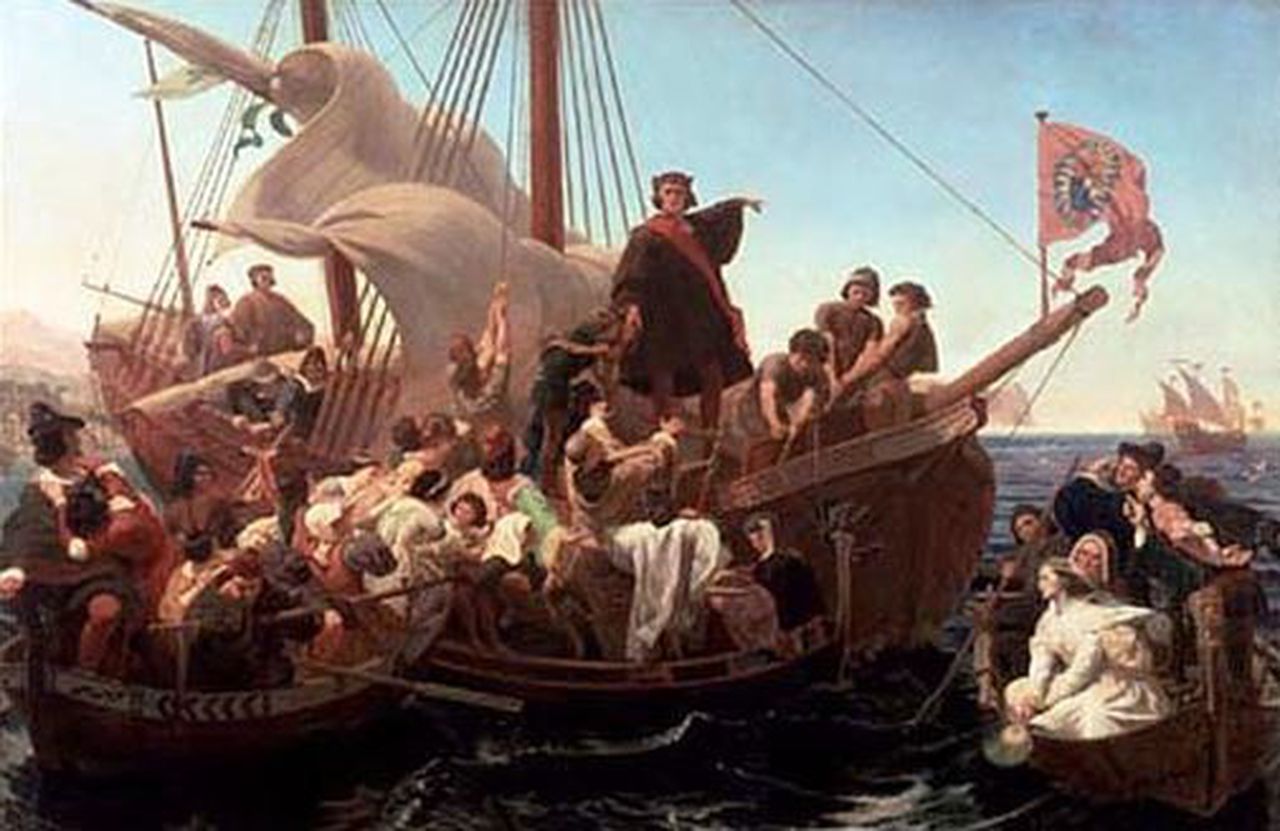
As a result, Columbus Day has taken on some very political overtones in recent years and not in a good way. It used to just be a day to celebrate the landmark voyage of a famous explorer from the 15th century. That voyage, regardless of the politics surrounding it, opened the door to a new age of exploration between the Americas and Europe. Some believe that is worth celebrating.
On the other side, there are those who rightly highlight the negative impacts and outright atrocities that Columbus’ voyage incurred. If you were a native living in the Americas at the time of his arrival, you had no reason to celebrate. The man ushered in an era that saw the utter decimation of the entire native population.
He was also, even by the standards of his time, quite the asshole. He took slaves. He wasn’t exactly popular with his crew. He might not have been the worst offender of his time, but he certainly didn’t raise the bar.
Like many historical figures from the distant past, Christopher Columbus was a complex figure. There’s a lot we’ve come to know about him, especially in recent years as the less savory parts of his story have become more accessible. With that knowledge and the benefit of hindsight, a critical question remains.
Should Columbus Day still be celebrated as a holiday?
I admit freely that, for most of my life, I saw Columbus Day as little more than an extra day off school. I didn’t know or care much about the man or his story, beyond what I was told in school. Since then, I’ve tried to keep a balanced perspective on him.
If you want a fairly comprehensive assessment on who Columbus was and how we should judge him in the modern era, I recommend the rundown from the YouTube channel, Knowing Better. He does make his biases and opinions very clear, but he still gets the point across.
If there’s one take-away worth gleaning from this video, it’s that we can appreciate the achievements of Christopher Columbus. We can even acknowledge the impact he had on world history, for better or for worse. However, celebrating him as a holiday at this point has connotations and implications that just don’t work in the modern era.
Columbus isn’t history’s greatest monster, but he’s not someone who deserves a state-sanctioned holiday in a country that has a diverse population, including groups that suffered greatly due to Columbus’ legacy. For that reason, I think at the very least, the name of the day should be changed.
Some have proposed calling it Indiginous Peoples Day to celebrate the legacy, as well as acknowledge the hardships, of the Native American populations of the Americas. I would certainly be on board with that.
Perhaps we can call it something more generic like World Exploreres Day or Unity Day. While Christopher Columbus may have been an asshole, he did succeed in one critical area. He took a major step towards connecting the world. Whether they called it the old world or the new world, the result was the same. We are now one world because we dared to explore and connect.
That, in my opinion, is worth celebrating and we can do it without glorifying Christopher Columbus.












 Jack Fisher's Official Publishing Blog